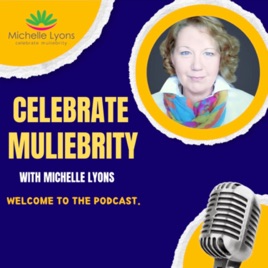
Advertise on podcast: Celebrate Muliebrity with Michelle Lyons
Rating
5from
This podcast has
134 episodes
Language
EnglishPublisher
Michelle LyonsExplicit
No
Date created
2023/05/23
Latest episode
2026/09/20
Average duration
33 min.
Release period
7 days
Description
Muliebrity is the art and state of being a woman and I think that should be celebrated! Join me as I discuss all things women's health, share new research and talk with some of the cleverest people in women's health...and don't forget to celebrate muliebrity!
Unlock Celebrate Muliebrity with Michelle Lyons podcast Email contact info,
Listeners & Audience details
Email contact information
Direct podcast contact details

Listeners
Audience numbers & engagement insights

Audience details
Podcast Insights

Podcast episodes
Check latest episodes from Celebrate Muliebrity with Michelle Lyons podcast
World GO Day! Living well after Pelvic Cancer: Episode 135 with Michelle Lyons
2026/09/20
Today is World GO Day!World Gynae Oncology Day, in my world, focuses on the importance of pelvic rehabilitation for women after gynecologic cancer treatment. In today’s episode, I’m discussing how pelvic rehabilitation extends beyond simple pelvic floor exercises to address comprehensive physical and psychological needs, including pelvic pain, bladder and bowel dysfunction, sexual health issues, and movement difficulties.
I think there’s not enough emphasis on the fact that pelvic cancer treatment affects the whole person, not just the tumor, and I think we should use this opportunity to highlight the need for multimodal approaches that include exercise, manual therapy, and of course education about what’s happening, why it’s happening and the importance of consistent self-care.
I’ve also introduced a new module on anal cancer rehabilitation in my online course, Female Pelvic Oncology Rehab!Female sexual dysfunction and bladder/ bone health issues after anal cancer treatment are common and often overlooked.
My call to action is to urge us all as pelvic rehab providers to broaden our conversation with cancer survivors AND their medical, surgical and wider oncology teams, to include not just survival but quality of life, of course emphasizing that pelvic rehabilitation should be integrated into cancer care from the beginning, throughout the journey as our patients move from surviving pelvic cancer to thriving afterwards.
For more information on my Female Pelvic Oncology Rehab course, and all of my online courses, please visit CelebrateMuliebrity.com or send me a message about the coursework!
Biopsychosocial pelvic rehabilitation isn’t defined by the organ where the cancer originated, it’s defined by the person, the treatment they’ve received, and the functions they want to regain.
Surviving cancer matters. But living well after cancer matters too.
Until next time, Onwards & Upwards! Mx #celebratemuliebrity 💚💝
Pubic Pain & Pelvic Health & Female Athletes: Episode 134 with Dr Helen McKeever
2026/09/13
Hello & Welcome to today’s episode! This is one for the pelvic health in sports medicine fans!
I’m interviewing Helen McKeever about pubic and inguinal pain in female athletes, based on Helen's chapter in Grainne Donnelly's book "Sports Medicine: The Pelvic Floor."
In this conversation, myself and Helen discuss the importance of considering multiple factors beyond just pelvic floor issues when treating groin pain, including musculoskeletal drivers, hypermobility, and REDs - encompassing reproductive, endocrine, digestive, and sleep factors.
We explored how pelvic floor physiotherapists should expand their assessment beyond mechanical issues to include questions about bladder and bowel function, menstrual cycles, and psychosocial factors.
Helen shared clinical insights about the anterior pubic ligament complex and the role of deep hip rotators in managing chronic groin pain.
The conversation highlights the need for collaborative approaches between pelvic health and sports medicine specialists, with Helen currently working at Aspetar in Doha where she sees female athletes presenting with complex pelvic and groin pain issues, as part of a multidisciplinary team approach.
We also talked about pelvic girdle pain in pregnancy, differential diagnosis and clinical reasoning for hip, pubic & groin pain, hypermobility and we discussed how pelvic floor physiotherapists should broaden their differential diagnosis beyond just pelvic floor issues, considering factors like motor control around the hip, deep rotators, and anterior-posterior tilt capabilities. Helen shared a case study of a tennis player where addressing both pelvic floor and musculoskeletal components was crucial for successful rehabilitation.
This was a rich conversation that I think really highlights the importance of pelvic health in sports medicine.
If you'd like to learn more, the textbook 'Sports Medicine & the Pelvic Floor' edited by Grainne Donnelly and of course, my online course 'The Menstrual Detective', includes access to 'Pelvic Health for the Young Female Athlete' as well.
You can find Helen and her research on ResearchGate and LinkedIn and you can follow my continuing adventures in women's health on instagram @michellelyons_muliebrity and all of my online courses can be found at CelebrateMuliebrity.com
Until next time, Onwards & Upwards! Mx #celebratemuliebrity
Pregnancy, Pelvic Health & Performance: Episode 133 with Michelle Lyons
2026/09/09
Hello and welcome to today’s episode – a bit off the normal schedule as I was teaching my Endometriosis Pain Management course over the weekend and then I was asked to come on the Claire Byrne show on Newstalk Radio to discuss the recent decision by the Spanish FA to support egg freezing for their female footballers.
Understandably, it was a brief overview on the radio but of course…I have thoughts that need a bit longer to explore so I thought – why not do a podcast episode!
In today’s episode, I’m exploring:
Why, at last, we are acknowledging that female athletes have reproductive lives!
How this should prompt a broader conversation about supporting female athletes throughout their reproductive lives rather than just focusing on fertility preservation. I believe that female-specific health is fundamental to performance and outline the need for individualized, informed decision-making regarding pregnancy and postpartum participation in sport; good resources for this include FIFA's "Stay in Play" and "Stepping into Play" decision aids.
I want to stress that supporting women requires addressing pelvic health, but also broader physical and psychological factors, and creating systems that allow athletes to make reproductive choices without compromising their sporting careers; advocating for an approach that recognizes women's physiological stages as integral rather than disruptive to athletic performance.
But it’s about physiology across the female lifespan, not just in elite sports. I believe that female athletes (actually all women!) should receive education about menstrual cycles, nutrition, fertility, and postpartum recovery, rather than being forced to choose between a sporting career and motherhood. I believe that supporting women's reproductive choices should be part of a broader conversation about creating an inclusive sporting environment that accommodates all women's life stages and decisions, from menstruation to menopause.
I really want to rephrase the question about women in sports from "can women have it all" to "what can we change about our systems so women don't have to choose." I believe there’s the need to create sporting environments that support women's health and bodies rather than requiring women to adapt to sports, a system that’s designed to support the needs of male athletes.
And of course…if you’d like to learn more about supporting female athletes, from recreational to high performance, at every age and stage…check out my online courses The Menstrual Detective, Pelvic Health for the Younger Female Athlete, Perinatal Pelvic Rehab (Preconception to Postpartum) and Flourish! The Menopausal Toolbox – all available at CelebrateMuliebrity.com
Until next time, Onwards & Upwards! Mx #celebratemuliebrity
Beyond the 'IC Diet' - Where Should We Go? Episode 132 with Michelle Lyons
2026/08/30
hello & welcome!
Today’s episode of the Celebrate Muliebrity podcast focuses on moving beyond the IC diet when working with women who have bladder pain syndrome.
When I started working in pelvic health, I used to find IC/ Bladder Pain Syndrome a really challenging diagnosis to work with so over the years, I’ve really been focused on integrating the latest evidence into clinical practice, from asking better questions to clinical reasoning and step by step treatment strategies.What the research says AND how to come up with a treatment plan for the woman in front of you
In today’s episode, I talk about the importance of adopting an individualised, evidence-based approach rather than prescriptive food restrictions, explaining that there is no single universally applicable IC diet.
I outline a four-step framework: observation to understand individual patterns, simplification through targeted and temporary elimination when appropriate, stabilisation of bladder, bowel, gut, and nervous system health, and gradual reintroduction to increase dietary variety.
I want to stress that the ultimate goal should be food freedom rather than creating anxiety around restricted food lists, and I encourage clinicians to help patients become experts in their own bodies through pattern recognition and data tracking.
I also cover:
Moving beyond a one size fits all to a bespoke approach to bladder pain syndrome
Bladder Pain Syndrome mechanisms - why we have to look OUTSIDE the bladder
Integrating a gut/bowel/nervous system approach as a current best practice approach to nurture self efficacy and empowerment
And more…
The IC/BPS updates are now available in the online Female Pelvic Pain Rehab course and come with clinical skills, shareable breath/bladder practices and a downloadable workbook for you to work through with the women you’re working with who are struggling with IC/BPS - all of the course info is at CelebrateMuliebrity.com
Until next time!
Live, Flourish, Thrive! #celebratemuliebrity
Endometriosis Associated Pain: What Can we Do? Episode 131 with Michelle Lyons
2026/08/23
Hello & welcome to today's episode where I'm going to explore our role as pelvic rehab clinicians when it comes to the management of EAP
I think an important question to consider is:
'What does a woman with endometriosis associated pain actually need from us, beyond medical/surgical treatment?'
(particularly when those approaches have not been effective in reducing her pain or increasing her quality of life)
I believe we absolutely need to understand the pathophysiology of endometriosis - but it is vital that we don't stop there!
The amount of pain someone experiences does not always correspond neatly to the stage, amount, size of location of her endometriosis lesions - two women can walk into your clinic and have very different pain experiences.
EAP can be complex - we need to understand nociceptive inputs from inflammation/ tissue pathology, neuropathic and visceral components, pelvic floor dysfunction, chronic overlapping pain conditions, as well as changes in central pain processing and nociplastic mechanisms.
Our job is to figure out - which mechanisms appear to be contributing in this woman right now - AND - how can we help her build capacity?
Asking her 'what would you like to be able to do that your pain is currently stopping you from doing?'
we are not necessarily trying to achieve zero pain but rather trying to increase capacity, confidence, participation, self-efficacy and quality of life
And that means a different rehab conversation, where we are asking better questions to get better outcomes
Questions about her pelvic floor, bowel, bladder, movement (and how to prescribe and dose it), sleep, stress, sexual health, breath, her pain management toolbox and how to talk about nervous system sensitivity....
I think a really key question for us to consider might be 'how can I help her increase her capacity to live well alongside a condition that will fluctuate?' - and what does that look like in clinical practice?
If you'd like to learn more, the Endometriosis module, as well as modules on IC/Bladder Pain Syndrome, Vulvodynia, Dyspareunia and more, have all gone through their 2026 update and are available now in my online course, Female Pelvic Pain Rehab course! (already enrolled? you have access!) All of the course info can be found at CelebrateMuliebrity.com
Until next time, Onwards & Upwards! Mx #celebratemuliebrity
Deconstructing The Female Pelvis: Episode 130 with Dr Suzanne Scott
2026/08/17
Hello and welcome to today's conversation where I'm delighted to chat with my new friend and colleague, Dr Suzanne Scott
Suzanne's early background in physics and data science, progressed to her work in modeling human movement data, spanning over 20 years in high-performance sports. She noted how the field has evolved to enable real-time measurement of performance changes through tracking devices and heart rate data.
Suzanne now wears a variety of hats, including her part-time lectureship at the University of Bristol Anatomy Centre and her work as a movement coach in high performance sport, particularly with football, rugby, and cricket teams. She shared her recent experience attending the World Cup in the US, describing the emotional journey from high expectations to the disappointing semi-final loss, though she noted the overall positive and unifying atmosphere throughout the tournament.
We also chatted about Suzanne's work with female athletes and the gaps in knowledge regarding pelvic health issues in women, especially young athletes. She explained the concept of "deconstructing the female pelvis," which aims to explore the structure, biomechanics, and endocrine physiology elements involved.
Our discussion also included the planned event on September 4th, which aims to bring together experts to discuss current issues and potential solutions in pelvic health for female athletes. I have a LOT of enthusiasm for this event, about the evolution in understanding pelvic health beyond just muscle weakness and the importance of considering factors like RED-S, hypermobility, and lower limb injuries. There are some amazing presenters on the day, including keynotes from Grainne Donnelly and I'm part of a panel discussion with Ros Cooke, Emma Brockwell and more AND there's a cadaver lab to see pelvic dissections in person!Although we have had different backgrounds, Suzanne & I are definitely on the same wavelength when it comes to the importance of addressing pelvic health issues, particularly how they impact women's physical activity and overall well-being.
The need for evolving evidence-based approaches and effective communication to help clinicians and the public make informed decisions about pelvic health is ever present and I'm sure the conversations we will have in Bristol on September 4th will advance the cause!
Here's the link for the study day in Bristol on September 4th: https://www.bristol.ac.uk/anatomy/vesalius/courses/deconstructing-female-pelvis/
Hope you can join us there!
Until next time, Onwards & Upwards, Mx
(and of course....if you are looking for online options in continuing education in women's health that's evidence based, biopsychosocial and clinically applicable, from pelvic pain to oncology to menstrual, maternal or menopausal health- I've got you covered - all of the course info can be found at CelebrateMuliebrity.com )
Better Together: Pelvic Rehab AND Oestrogen for GSM! Episode 129 with Michelle Lyons
2026/08/10
Hello & Welcome to the Podcast! In today's solo episode, I want to explore how asking better questions can lead to better outcomes for women dealing with GSM, via a COLLABORATIVE approach - let's jump in!
In the episode I'll discuss why GSM is more than just dryness, why tissue health is super important but..it doesn't function in a vacuum because healthy tissues don't necessarily lead to healthy movement
So what can pelvic rehab offer here? We need to move beyond a focus on keeping women dry, and move to emphasising keeping women MOVING!
The goals are to Live, Flourish & THRIVE!
I outline my clinical framework focusing on four key areas: healthy tissues, healthy function, healthy movement, and helping women achieve their life goals; I'm arguing that success should be measured by more than just symptom relief but by women's ability to participate fully in life. I want to encourage healthcare professionals to shift from asking which intervention is best to asking which combination will give women the best chance of thriving, and I want to stress the need for collaboration between different medical specialties rather than competition.
I'm talking about plans to teach women healthier pelvic floor muscle training, emphasizing the importance of a bespoke approach tailored to each individual rather than using the term "Kegels." I outlined a comprehensive program that extends beyond just pelvic floor muscles to include breathing, pressure management, hip mobility, glute strength, and various other physical components. The goal is to help women regain confidence in their bodies through a holistic approach that addresses their specific goals and activities - and how we can put this bespoke approach together for the women we serve.
And yes...there's some homework for you to think about - considering Capacity before Complexity!
What do you think - can we think about a 'philosophy' rather than a treatment plan? Let me know what you think!
And if you want to learn more...my online course, Flourish, The Menopause & Hysterectomy is available at CelebrateMuliebrity.com. Questions? You can find me on instagram @michellelyons_muliebrity
Until next time, Onwards & Upwards! Mx #celebratemuliebrity
Barriers & Enablers for Postnatal Exercise: Episode 128 with Dr Megan James
2026/08/03
Hello & welcome to this episode of the podcast, where I'm joined by Dr Megan James who has had a great year so far in terms of research output! Not only does Megan have a great chapter in Grainne Donnelly's book Sports Medicine and the Pelvic Floor, but she's published TWO other great papers on postpartum pelvic loading and return to exercise!
Megan discussed her academic journey from studying sport and exercise science to completing a PhD focused on pelvic injuries and running, particularly postpartum return to running. She explained her recent work developing a graded loading pathway using external pelvic acceleration variables, which aimed to create evidence-based return-to-run protocols for postpartum athletes by measuring pelvic acceleration rather than just ground reaction force.
We discussed the forces on the pelvic floor during different activities, particularly running. Megan explained that while vertical forces are significant, the direction and absorption of forces vary depending on movement patterns and landing techniques. We explored the concept of grounded running as a potential way to reduce pelvic acceleration by increasing duty factor, which is the ratio of ground contact time to stride time. Megan noted that grounded running naturally maintains a duty factor over 50%, which could help in reducing pelvic stress.
We also discussed Megan's research paper on postpartum return to running, focusing on the Double Diamond co-design framework used in the study. Megan explained that the framework was chosen to incorporate end users' perspectives throughout the research process, covering four stages: Discover, Define, Develop, and Deliver. I think this discussion highlights the importance of considering both barriers and enablers to postpartum exercise, so we can (hopefully!) see more research aiming to bridge the gaps between evidence-based studies and practical clinical applications
We also chatted about an online return-to-running resource that Megan and her team developed, which provides a flexible 150-minute weekly exercise plan tailored for women. Megan's PhD research focused on developing a postpartum exercise guide, which provides individualized exercise recommendations for new mothers based on their specific needs and symptoms. Megan explained that the guide offers a "buffet of choices" allowing mothers to select appropriate exercises, with POGP involvement adding credibility and trustworthiness to the resource.
We talked about potential future research directions, including testing the guide's effectiveness through controlled studies and validating the relationship between movement variables and pelvic floor dysfunction mechanisms. I really love this work's practical impact on improving maternal health and well-being and I think it gives such a strong foundation for future research in this field.
Here's a link the resource we talked about:
Guide for return to running: https://doi.org/10.25401/cardiffmet.26403592
want to learn more about supporting the postpartum woman on the road back to exercise and health? My online course, Perinatal Pelvic Rehab, covers the evidence and how to apply it, from pre-conception to pregnancy and postpartum (with a little bit of perimenopause as well!) All of the info on my online courses, from menstrual health to menopause, from female pelvic pain to back pain, bowel health to hysterectomy, breast cancer to pelvic oncology rehab, can be found at CelebrateMuliebrity.com
Until next time, Onwards & Upwards! Mx #celebratemuliebrity
Better Q's for Bladder Pain Syndrome: Episode 126 with Michelle Lyons
2026/07/29
Hello & welcome to today's episode where I'm doing a solo episode on doing a better subjective symptoms assessment for your clients with Bladder Pain Syndrome (formerly known as IC)
This is often an intimidating diagnosis for both clinicians and the women we serve - I want to expand our understanding of phenotypes, how to identify them and how we can direct our treatment strategies, local, regional and global, for better outcomes
I'm updating the relevant research in the modules of my online Female Pelvic Pain Rehab course - endometriosis and vulvodynia have already had their glow ups - and now its the turn of bladder pain syndrome
In this episode of the podcast, I want to start to explore the questions that might lead us to figuring out how best to help women with BPS - before we go near someone's pelvis.
We know that bladder pain is complex and often involves multiple contributing factors beyond just the bladder,
I also introduce the concept of a "capacity compass" to help clinicians understand what is contributing to a patient's sensitivity and where we can help to create more capacity for healing.
I want to highlight the importance of asking better questions during the subjective interview to identify the specific phenotype and direct treatment strategies effectively.
Some of the possible confounders and contributors include endometriosis, GSM, bowel issues, the nervous system, sleep, stress, someone's surgical AND psychosocial history and of course, pelvic floor muscle dysfunction.
I cannot overstate the importance of understanding both physical and nervous system explanations when addressing bladder pain syndrome, the need to consider how these systems interact and building our therapeutic alliance and TRUST between clinician and client.
For a deeper dive into all of this - it's covered in the updated section on bladder pain syndrome in my online course, Female Pelvic Pain Rehab. If you're already enrolled - you'll have automatic access - and if you'd like to join us - all of the course details are available at CelebrateMuliebrity.com
Until next time, Onwards & Upwards Mx #celebratemuliebrity
Athletes & Back Pain: Episode 126 with Dr Fiona Wilson
2026/07/19
Hello & Welcome! I'm so excited to share this discussion with a leader in the field of sports medicine, who brings her personal experience as a high performance athlete, her vast clinical experience and her research insights to today's conversation. I'm talking about Dr Fiona Wilson,who as well as all of the above is also a Deputy Editor of the BJSM; the highest ranking sports and exercise medicine journal globally. She is also a professor of physiotherapy in Trinity College Dublin, as well as Deputy Editor of the Journal of Science and Medicine in Sport, leading their Injury Prevention subsection, and she is on the editorial board of the Journal of Sport Sciences and the German Journal of Sports Medicine.
Her research focus is the role of sport and exercise on low back pain (LBP) and on brain health, and she's published many clinical practice papers that are changing how we manage back pain in athletes, as well as a growing interest in menstrual pain in athletes (she was a coauthor on the Harrison 2026 paper that I discussed in a recent episode on menstrual pain, as well as a co-author on Dr Ciara Everard's paper on menstrual health (check out episode 113 where I chatted with Ciara about that paper)
In today's episode, Fiona shared her personal journey from becoming an elite rower to transitioning into sports medicine research, including her experience with a career-ending back injury that motivated her to study athlete-specific approaches to back pain management.
Our conversation focused on how athletes' back pain differs from general population back pain due to the unique nature of using their bodies as tools for performance, and the importance of keeping athletes' voices centered in research rather than relying solely on average population data.
We discussed the specific challenges female athletes face with menstrual pain and pelvic health issues, highlighting gaps in knowledge and the need for better support systems. Fiona emphasised the importance of precision rehabilitation approaches that consider multiple factors including biomechanics, systemic inflammation, and the athlete's individual circumstances rather than using generic interventions like static exercises (planks - we are talking to you!)
Our conversation also covered the stigma surrounding menstrual health in sports and the need for athletes to lead conversations about normalising these issues, with Fiona noting that better support could help retain female athletes who might otherwise drop out of sports during their periods.
Some of Fiona's publications that we talked about today include:
Whittaker JL, Schulz JM, Galarneau JM, Moore IS, Ackerman KE, Butler M, Dane K, Dubé MO, Ferraz Pazzinatto M, Gomez CD, Hayden KA, Marmura H, Mizuta R, Mosler AB, Schneider G, Schneider KJ, Sharma S, Trease L, Wilson F, Thornton JS, Crossley KM, Emery CA., Prevention strategies and modifiable risk factors for spine, chest, abdominal and/or pelvic injury and pain: a systematic review and meta-analysis for the Female, woman and/or girl Athlete Injury pRevention (FAIR) consensus., British Journal of Sports Medicine, 2025
"The pain isn't the hardest challenge...it’s the frustration at how much it affects my day-to-day life, my mental health and my ability to train”: a qualitative thematic analysis of elite athletes’ lived experiences of persisting low back pain'' Trease et al 2026
'“I'm breaking my back for this sport and they're not supporting me” Trease et al 2024
Fiona is an absolute legend in the world of sports medicine - for good reason, I'm sure you'll agree after listening to this episode!
Want to learn more about supporting female athletes? When you join the online course 'The Menstrual Detective'. you'll get access to the bonus course 'Pelvic Health for the Young Female Athlete' for free! All the details are at CelebrateMuliebrity.com
Until next time, Onwards & Upwards! Mx #celebratemuliebrity
Scar Therapy -Prehab to Rehab: Episode 125 with Hannah Poulton
2026/07/12
Hello & Welcome to today's episode, where I'm delighted to welcome my friend & colleague Hannah Poulton back to the podcast, to continue our discussion about all things scar assessment and treatment
This was a very comprehensive discussion about scar assessment and management, and we discussed the effects that scars can have on both physical and mental health.
Hannah, who owns HLP Therapy in Leicester and is pursuing a part-time PhD at Loughborough University examining C-section scarring, detailed the key components of effective scar assessment including asking the right questions, identifying the patient's primary problem (P1), using validated outcome measures like POSAS and SCAR-Q, and taking proper photographs.
We discussed the high C-section rates (40-45% in some areas reaching up to 70%) and how women are often not adequately informed about post-surgical care and scar management.
Hannah shared her approach to prehabilitation for C-section patients, including hydration, nutrition, and preparation strategies, while emphasizing the importance of proper assessment rather than routine compression garment use.
The conversation covered Hannah's upcoming international work, including free webinars and a course at Johns Hopkins University in Baltimore, as well as the launch of her Scar Therapy Network platform and upcoming appearances at the Therapy Show and SCAR Symposium.
Hannah's links:
Three Free Webinars and Johns Hopkins Course: https://www.hlp-therapy.co.uk/usacoursesScar Therapy Network (free patient platform and private membership for scar professionals):www.scartherapynetwork.comScar Symposium (March 12th 2027):https://www.hlp-therapy.co.uk/scar-symposium-2027
Want to learn more about a bio psychosocialand lifestyle approach to women's health, with an evidence based clinical toolbox to translate the research into practice? I have a suite of online courses, from The Menstrual Detective (with FREE access to Pelvic Health for the Young Female Athlete, Perinatal Pelvic Rehab, (pre-conception, pregnancy & postpartum recovery), The Menopausal Toolbox, Hysterectomy Prehab to Rehab, Women's Health & Bowel Health, Women & Back Pain, Female Pelvic Pain Rehab, Female Pelvic Oncology Rehab & Breast Cancer Rehab - all of the details are at CelebrateMuliebrity.com and you can follow my continuing adventures in women's health on instagram @michellelyons_muliebrity
Until next time, Onwards & Upwards! Mx #celebratemuliebrity
Menstrual Pain: the missing part of phase based training? Episode 124 with Michelle Lyons
2026/07/06
Hello and welcome to today's solo episode!
I recently came across two 2026 articles that really got me thinking about how menstrual pain may be the missing link in phase based training...and so I thought a podcast episode would be a good idea!
In this episode, I discuss the overlooked impact of menstrual pain on female athletic performance, arguing that pain may be a more significant performance variable than hormonal cycle phases that currently receive much attention in sports science.
My goal was to highlight that primary dysmenorrhea affects approximately 60% of female athletes, with 50-100% reporting performance limitations due to period pain, yet this issue is often addressed through medication rather than comprehensive treatment approaches.
I wanted to emphasise that pelvic rehabilitation should be incorporated into discussions about menstrual cycle management, as pain affects brain processing, movement, breathing, and decision-making in ways that can substantially impact sporting performance.
I propose a "menstrual audit" consisting of seven simple questions to better assess and address menstrual pain symptoms rather than focusing solely on cycle phases, and of course if you want to learn more...this is exactly why I created my online course "The Menstrual Detective" for clinicians and coaches working with female athletes - to improve menstrual literacy, to understand how to have the MC health conversation and how to identify and manage menstrual dysfunction - when it hurts, when it's too much and when it disappears.
All the info is at CelebrateMuliebrity.com - or if you have questions about the course, you can find me on instagram at @michellelyons_muliebrity
Until next time, Onwards & Upwards! Mx #celebratemuliebrity
Training For Your Old Lady Body: Episode 123 with Elizabeth Davies
2026/06/29
Hello and Welcome to this episode of the podcast, where I'm in conversation with Elizabeth Davies, author of 'Training for your Old Lady Body'
We had a great chat, covering the dangers of 'skinnytok' and the mythology around 'bulking up' with strength training, as well as discussing strategies for behaviour change and strength training for women approaching menopause.
Elizabeth shared her personal journey from a non-fitness background to becoming a personal trainer after experiencing a mortifying incident of incontinence during exercise in 2016. They discussed practical strategies for overcoming barriers to gym attendance, including starting with small achievable goals, using specific scheduling rather than general plans, and implementing "domino actions" that trigger the full exercise routine.
Unsurprisingly, we discussed the importance of addressing pelvic health concerns and how to normalise the conversation around pelvic health, as well as signposting women on how to get the help they need - I was so delighted that Teresa Waser's brilliant paradigm ,TIIPPSSFC, can really help bring about change - if you're not familiar, go back and have a listen to the interview I did with Teresa in Episode 30!)
We also talked about demystifying strength training for women who may be intimidated by gym environments (spoiler - its more about asking for help and less about worrying what other people think!)
The conversation also covered how to make exercise sustainable by pairing it with enjoyable activities and being compassionate with oneself when plans don't go perfectly.
So many pearls of wisdom, not only about the benefits of strength training at menopause but also about using behaviour change strategies to make exercise realistic, sustainable and enjoyable
Make sure you're following Elizabeth on instagram @thiswomanlifts and her book is available for purchase - highly recommended!
And...if you're listening on the day this drops, you're running out of time to take advantage of my summer sale - make sure you are using the code JUNE26 at checkout to apply a €100 discount on any/all of my online courses - you can find them all at CelebrateMuliebrity.com
Until next time, Onwards & Upwards, Mx #celebratemuliebrity
Pelvic Health Comms with Athletes: Episode 122 with Dr Rachel Selman
2026/06/22
Hello and welcome to today's episode where I'm delighted to share my conversation with Dr Rachel Selman, all about better pelvic health conversations with athletes.
Rachel is a physical therapist and coach, who shares her experience integrating pelvic health into sports medicine practice and discussed her upcoming book aimed at educating athletes about pelvic health issues.
We explored challenges in communicating with athletes about pelvic health topics, including the need for sport-specific subjective questionnaires and annual in-services (for sports AND pelvic health pro's) to normalize these discussions. Rachel explained her approach to making complex pelvic health concepts accessible to athletes and coaches, emphasizing the importance of connecting pelvic health to overall performance rather than treating it as a separate specialized field.
We discussed the role of stress and anxiety in exacerbating pelvic floor symptoms, particularly during high-stakes competitions. Our conversation also highlighted the need for better integration between pelvic health and sports medicine professionals, emphasising the importance of training coaches and athletes to recognise and discuss these symptoms preventatively, comparing it to how they would address other orthopedic concerns. Rachel is doing her part to change the narrative, and is planning to release her first book, Floor It, this autumn and it is available for pre-order now!
Make sure you're following Rachel on instagram @dr.rachelselman for her amazing anatomy education and exercise strategies
Aaaaand...don't forget, my Summer Sale is still on for a few more days, so if you're interested in helping female athletes with their pelvic health, check out The Menstrual Detective, which includes the course 'Pelvic Health for the Young Female Athlete' for free! The code JUNE26 can be used for a €100 discount on ALL of my online courses, from Perinatal Pelvic Rehab, The Menopausal Toolbox, Female Pelvic Oncology and more - but only until June 30th!
All of the course info is at CelebrateMuliebrity.com or you can find out more on my instagram feed, a haven for women's health nerds, @michellelyons_muliebrity
Until next time, Onwards & Upwards, Mx! #celebratemuliebrity
Pain AFTER endo surgery? Episode 121 with Michelle Lyons
2026/06/15
'Why Do I Still Have Pain After My Endo Surgery?' This can be such a frustrating (and complex) situation that so many people with endometriosis find themselves in...but why?
I'm sharing this excerpt from the endometriosis updates in my online Female Pelvic Pain Rehab course - mainly because I've heard it so many times over the years, both from patients and the clinicians who are trying to help them.
There's actually been some interesting new research looking at why this happens and how we can actually help people restore quality of life and improve THEIR functional goals, so I really wanted to make this available even if you're not a student on this course (but if you work with people who have pelvic pain diagnoses like endometriosis, vulvodynia, dyspareunia...I hope you'll consider joining us!)
There are so many potential drivers of abdominopelvic pain that can amplify endometriosis associated pain, along with central sensitisation and pelvic floor dysfunction, including issues like IBS, neuropathic pain, hernias, hip problems and more.
I hope you find this excerpt from the course helpful AND if you're listening to this episode before the end of June... you can use the code JUNE26 at checkout for a €100 discount on any of my online courses, from Female Pelvic Pain Rehab to The Menstrual Detective, The Menopausal Toolbox and more. All of the course info is at CelebrateMuliebrity.com or if you have questions, you can send me a DM on instagram (@michellelyons_muliebrity) or email me at [email protected]
Enjoy the episode and if you found it useful, I would love it if you can rate, review and subscribe to the podcast!
Until next time, Onwards & Upwards! Mx and don't forget to #celebratemuleibrity
Podcast reviews
Read Celebrate Muliebrity with Michelle Lyons podcast reviews
Physical T. 2024/10/11
Thank you!
Excellent information! Thank you so much for helping us PTs stay informed!
MDmt09 2024/02/14
Love the podcast
I’m a PT and I really enjoy the info, the guests, the host. Thank you!
Sarah Glesmann 2023/05/27
Thank you
Thanks Michelle for all you do to contribute to staying informed about women’s health topics. I always learn a lot! Have fun!!!
Podcast sponsorship advertising
Start advertising on Celebrate Muliebrity with Michelle Lyons relevant audience podcasts
You may also like to advertise on these Podcasts
4.890581551
Fearless with Jason Whitlock
Blaze Podcast Network

4.6619562000
The Dan Bongino Show
Cumulus Podcast Network | Dan Bongino

4.7106572000
FantasyPros - Fantasy Football Podcast
iHeartPodcasts

4.7292612000
The Michael Knowles Show
The Daily Wire

4.838282000
Entrepreneurs on Fire
John Lee Dumas of EOFire

4.6253262000
The Glenn Beck Program
Mercury Radio Arts

4.762542000
The Lawfare Podcast
The Lawfare Institute
4.922321824
The Ten Minute Bible Hour Podcast
Matt Whitman
4.913551954
Wholesaling Inc with Brent Daniels
Find distressed properties for pennies on the dollar and turn them for huge profits!
4.827571696
Earn Your Happy
Lori Harder | YAP Media