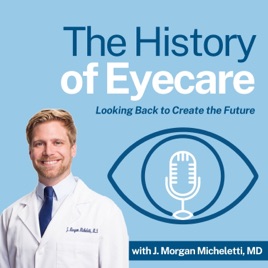
Advertise on podcast: The History of Eyecare
Rating
5from
This podcast has
25 episodes
Language
EnglishPublisher
J. Morgan Micheletti, MDExplicit
No
Date created
2023/06/23
Latest episode
2026/06/26
Average duration
56 min.
Release period
70 days
Description
Uncover the fascinating evolution of modern eyecare with "The History of Eyecare." Hosted by J. Morgan Micheletti, MD, a dedicated eye surgeon and history enthusiast, this podcast takes you on a journey through eyecare's landmark moments and untold stories as told by thought leaders, innovators, and legends who have shaped the field. From anterior segment and refractive surgery to retina, plastics, and glaucoma, every facet of eyecare's rich history is explored, helping us better understand and shape the future. Subscribe and join us as we reveal the milestones that have revolutionized eyecare.
Unlock The History of Eyecare podcast Email contact info,
Listeners & Audience details
Email contact information
Direct podcast contact details

Listeners
Audience numbers & engagement insights

Audience details
Podcast Insights

Podcast episodes
Check latest episodes from The History of Eyecare podcast
Tom Burns: Building Glaukos and a New Standard of Glaucoma Care
2026/06/26
In this Season 3 premiere of The History of Eyecare, host Dr. Morgan Micheletti is joined by Tom Burns, Chairman and CEO of Glaukos, for a wide-ranging conversation about company building, category creation, and the evolution of modern glaucoma care.
Burns’ career has crossed several major chapters in ophthalmic innovation. Before joining Glaukos, he held leadership roles at SmithKline Beckman, Allergan, Chiron Ophthalmics, Bausch + Lomb, and EyeTech, giving him a rare perspective across pharmaceuticals, refractive surgery, surgical devices, retina therapeutics, and venture-backed ophthalmic startups.
The conversation begins with Burns’ early career and his love of building companies from the ground up. He describes how his experience at Chiron shaped his understanding of startups, how EyeTech gave him a front-row seat to a new retina market, and how Bill Link eventually recruited him to a small company called Glaukos. At first, Burns admits he was skeptical. A tiny glaucoma stent sounded like a mini-shunt in a conservative, late-stage surgical category. But when he saw the device, he immediately recognized the possibility of something different: a simple intervention that could help reduce dependence on topical therapy and open the door to what he calls the “birthright” of Glaukos — interventional glaucoma.
From there, Dr. Micheletti and Burns explore what glaucoma treatment looked like in the early 2000s, when therapy was still dominated by topical drops, lasers were often viewed as second- or third-line options, and surgery was largely reserved for advanced disease. Burns explains how the original iStent pathway ultimately moved through cataract surgery, not because that was the original strategic intent, but because it became the viable regulatory path for introducing a new class of glaucoma intervention.
A major theme of the episode is that MIGS was not just a device innovation — it was a mindset change. Burns discusses the challenge of educating both glaucoma specialists and cataract surgeons, many of whom initially viewed glaucoma intervention as outside the scope of routine cataract practice. Over time, Glaukos helped build the educational infrastructure, clinical evidence, and surgeon confidence needed to make MIGS part of modern anterior segment surgery.
The episode also goes deep into the development of iDose TR and the broader idea of procedural pharmaceuticals. Burns describes the scientific, chemical, regulatory, and manufacturing challenges involved in creating a sustained intracameral drug delivery platform. From early questions about prostaglandin potency and elution rates to hand-filling tiny devices for early trials, building a dedicated manufacturing facility, navigating combination product review, and receiving FDA approval, the story captures the unseen work required to turn an idea into a clinically available technology.
Burns also shares several moments that tested the company’s resilience: early FDA uncertainty, venture financing challenges, a difficult PMA panel, CMS reimbursement threats, and even a fire that came dangerously close to the company’s San Clemente manufacturing facility. Through each of these stories, he returns to the importance of culture — a team that can “hit curve balls,” adapt quickly, and stay committed to building something meaningful.
Looking ahead, Burns offers a vision for glaucoma care over the next decade: more SLT, more procedural pharmaceuticals, longer-duration therapies, greater use of combination mechanisms, and a growing role for interventional glaucoma specialists. In his view, the field is moving away from passive, drop-dependent management and toward proactive, 24/7 pressure control designed to preserve vision over the lifetime of the “forever patient.”
This episode is a story about Glaukos, but it is also a broader story about ophthalmology: how innovation happens, how categories are built, how surgeons learn to adopt new ideas, and how persistence, culture, and timing can reshape the standard of care.
Key Topics:
Tom Burns’ early career at SmithKline Beckman, Allergan, Chiron Ophthalmics, Bausch + Lomb, and EyeTech
The founding era of Glaukos and the early vision for interventional glaucoma
What glaucoma care looked like before MIGS
Why the original iStent regulatory pathway moved through cataract surgery
The challenge of introducing a new surgical category to glaucoma specialists and cataract surgeons
The evolution from the original iStent to iStent inject and iStent Infinite
Surgeon education and the cultural shift toward treating glaucoma earlier
Why drop adherence remains one of the central problems in glaucoma care
The development story behind iDose TR and procedural pharmaceuticals
Manufacturing risk, clinical trial challenges, and FDA combination product review
The San Clemente fire and other moments that tested Glaukos’ resilience
Glaukos’ “we’ll go first” culture and investment in future technologies
The future of glaucoma care over the next 10–20 years
Why Burns believes interventional glaucoma may become as common as cataract surgery
Chapter markers:
00:40 — Welcome to Season 3 and introduction to Tom Burns01:34 — From history major to SmithKline Beckman, Allergan, and Chiron05:07 — EyeTech, aptamers, and early retina therapeutics06:18 — What glaucoma care looked like before MIGS07:22 — Joining Glaukos in 2002 and the “strip mall of hope”08:19 — Why the first iStent pathway moved through cataract surgery11:37 — Creating a new category: manufacturing, safety, skepticism, and surgeon adoption15:38 — From the original iStent to iStent inject17:23 — iStent Infinite and the path toward standalone glaucoma intervention19:12 — The safety profile of MIGS and the importance of education20:52 — Interventional glaucoma and the “forever patient”25:25 — The adherence problem and why glaucoma care needs a paradigm shift26:57 — Procedural pharmaceuticals and the origin of iDose TR31:26 — Manufacturing, early clinical trials, and building the San Clemente facility34:00 — FDA approval and the “joyous all-nighter”35:19 — The fire that nearly threatened the manufacturing facility36:55 — “We’ll go first”: culture, reinvestment, and building new markets40:18 — The meaning behind the Glaukos logo and the company’s focus areas41:30 — Preserving mission clarity with a growing pipeline42:31 — The future of glaucoma care over the next 10–20 years45:09 — What Burns is most proud of at Glaukos47:11 — Resilience, FDA challenges, CMS pressure, and “hitting curve balls”50:21 — The most important innovations in ophthalmology52:07 — Closing thoughts and sponsor acknowledgment
Tom Frinzi: Leadership, Mergers, and the Making of Modern Eyecare
2025/05/16
In this episode of The History of Eyecare, Dr. Morgan Micheletti sits down with legendary medtech executive Tom Frinzi to explore a remarkable career that has helped shape modern ophthalmology. With over 40 years of leadership across some of the most transformative eras in eye care, Tom reflects on his journey through legacy companies like Chiron Vision, WaveTec, and Johnson & Johnson Vision.
From the transition to phaco and the birth of LASIK to the rise of premium IOLs and intraoperative aberrometry, Tom shares behind-the-scenes insights into the technologies, teams, and timing that defined an era. This episode is a deep dive into the business, culture, and innovation cycles that continue to move our field forward.
Key Takeaways:
Tom shares how a rep job in Houston and early exposure to ophthalmic microsurgery with Ralph Berkeley and Steve Slade sparked a lifelong passion. He witnessed and led through the shift from extracap to phaco, the emergence of refractive surgery, and the dawn of the premium cataract era. Whether working in big strategics or venture-backed startups, Tom's work has impacted everything from LASIK and IOL development to aberrometry and refractive platforms. He discusses lessons from leading WaveTec to acquisition, the early promise of CK, and how timing can make or break a great idea. Tom emphasizes culture, mentorship, and building a "reservoir of goodwill"—offering hard-won insights for aspiring leaders in the medtech space.
Takeaways
-Tom Frinzi has over 40 years of experience in ophthalmology.
-He emphasizes the importance of mentorship in career development.
-Innovation in ophthalmology can come from both internal and external sources.
-The relationship between industry and practitioners is unique and beneficial.
-Frinzi believes that lens-based refractive surgery is the future.
-Patient fear and cost are significant barriers to elective surgeries.
-Collaboration among ophthalmologists and industry is crucial for advancement.
-Regulatory bodies have become more receptive in recent years.
-The myopic epidemic presents ongoing opportunities for innovation.
-Frinzi is optimistic about the future of technology in ophthalmology.
Keywords
ophthalmology, medical devices, innovation, refractive surgery, mentorship, patient care, mergers and acquisitions, regulatory changes, industry evolution, technology
Stephen Lane, MD: Chief Medical Officer of Alcon, Private Practice Research, Orbis
2025/02/14
Dr. Stephen Lane shares his journey into medicine and ophthalmology, his experiences in research, innovation, and teaching, as well as his involvement with Orbis. He discusses his father's influence, his decision to pursue ophthalmology, and his work with Alcon. Dr. Lane also highlights his research on corneal transplants, intraocular lenses, and bimanual INA, as well as his teaching experiences and involvement with Orbis. Dr. Stephen Lane discusses his experiences with Orbis, the establishment of a cataract program, and his transition to becoming CMO at Alcon. He also shares insights on industry innovation and the future of ophthalmology.
Takeaways
Dr. Lane's journey into ophthalmology was influenced by his father's experience and advice, leading him to pursue a career in medicine and ophthalmology.
His research and innovation in corneal transplants, intraocular lenses, and bimanual INA have contributed significantly to the field of ophthalmology.
Dr. Lane's dedication to teaching and his involvement with Orbis reflect his commitment to sharing knowledge and improving access to eye care globally. Dr. Lane's involvement with Orbis and the establishment of a cataract program highlights the importance of providing surgical care in disadvantaged communities.
The transition to becoming CMO at Alcon allowed Dr. Lane to contribute to industry innovation and strategic decision-making.
Efficiency and innovation in ophthalmology, particularly in diagnostic instruments and surgical procedures, are crucial for meeting the growing patient needs and expectations.
The impact of life cycle innovation in Faco and the potential of AI and cell therapy in ophthalmology are significant areas of development and change in the field.
Keywords
medicine, ophthalmology, research, innovation, teaching, Alcon, corneal transplants, intraocular lenses, bimanual INA, Orbis, Orbis, cataract program, Alcon, chief medical officer, industry innovation, ophthalmology, future of ophthalmology
Samuel Masket, MD: Dysphotopsias, Astigmatism, Hyphema, and The Masket Foundation
2024/12/06
Dr. Samuel Masket shares his journey into medicine, from initially planning to become a veterinarian to discovering his passion for ophthalmology. He recounts the serendipitous events that led him to pursue a career in ophthalmology and the pivotal moments that shaped his path. Dr. Masket discusses his interest in ophthalmic diagnostics and the excitement of being at the forefront of cataract technology. He highlights the collaboration between surgeons and industry in advancing the field of cataract surgery. Despite initial resistance, Dr. Masket and his colleagues played a significant role in popularizing phoacoemulsification and revolutionizing cataract surgery. Dr. Masket discusses his early years in California, his work with IOLs, research on dysphotopsia, efforts to prevent endophthalmitis, and the establishment of the Mask It Foundation.
Takeaways
Serendipitous events can shape one's career path and lead to unexpected opportunities.
Passion for a specific field can be sparked by personal experiences and exposure to innovative techniques.
Collaboration between surgeons and industry can drive advancements in medical technology.
Persistence and dedication to publishing research can contribute to the growth and development of a field. Dr. Masket's early years in California were marked by a progressive and supportive environment for ophthalmic advancements.
His work with IOLs included the development of a goal wing haptic design and the study of dysphotopsia.
Dr. Masket conducted research on endophthalmitis prevention, highlighting the importance of intracameral antibiotics.
The Masket Foundation, established by Dr. Masket and his partner Dr. Nicole Fram, provides assistance to uninsured and underinsured patients in need of anterior segment surgery.
Chapters
00:00 The Journey into Medicine
04:00 Discovering Ophthalmology
07:49 Research and Innovation in Eye Care
12:05 Military Service and Clinical Experience
15:56 Transitioning to California
21:46 The Rise of Cataract Surgery
29:57 Overcoming Resistance to Phaco Surgery
34:18 The Progressive Landscape of California Medicine
37:41 Innovations in Intraocular Lenses (IOLs)
50:19 Understanding Dysphotopsia in Eye Surgery
59:03 The Masket Foundation and Community Impact
Margeurite McDonald: Pioneering Laser Vision Correction, Overcoming Barriers, Retinoblastoma breakthroughs
2024/10/11
Dr. Marguerite McDonald shares her journey in medicine and ophthalmology, from her childhood experiences with poor vision to her groundbreaking work in refractive surgery. She recounts her introduction to ophthalmology through a retinoblastoma clinic and her research on isoenzyme patterns in retinoblastoma. Dr. McDonald discusses her residency and fellowship experiences, including her involvement in the PERK study on radial keratotomy. She then delves into the development of the excimer laser and the challenges and controversies she faced during the early stages of laser vision correction. Finally, she reflects on the current state of LASIK and the advancements in refractive surgery. In this conversation, Dr. Marguerite McDonald discusses her experiences and contributions in the field of ophthalmology. She talks about the challenges with LASIK and the importance of highlighting successful outcomes. Dr. McDonald also shares her journey as the first female president of ASCRS and ISRS, and her involvement with Ophthalmic Women Leaders (OWL). She reflects on her most meaningful contributions to the field, including her work on retinoblastoma and laser vision correction. Finally, Dr. McDonald discusses exciting developments in the field, such as the EVO ICL and temporary procedures for presbyopia.
Takeaways
Dr. Marguerite McDonald's journey in medicine and ophthalmology was shaped by her personal experiences with poor vision and her desire to help others see.
Her research on isoenzyme patterns in retinoblastoma and her work on the PERK study on radial keratotomy were significant contributions to the field of ophthalmology.
Dr. McDonald played a pivotal role in the development of laser vision correction, including the use of the excimer laser and the transition to LASIK.
Despite facing controversy and skepticism, Dr. McDonald's dedication to data-driven research and patient care has helped shape the field of refractive surgery. Highlighting successful outcomes is important to counteract negative publicity and encourage more suitable candidates to proceed with LASIK.
Dr. Marguerite McDonald's journey as the first female president of ASCRS and ISRS highlights the progress made in promoting diversity and gender equality in the field of ophthalmology.
Ophthalmic Women Leaders (OWL) provides a platform for networking and professional development for women in the ophthalmology industry.
Dr. McDonald's contributions to the field include her work on retinoblastoma, laser vision correction, and the development of the EVO ICL.
Chapters with Timestamps
00:00 - Introduction and Early Life
00:40 - The Near-Drowning Incident and Discovery of Myopia
03:00 - First Glasses and Introduction to Optometry
05:23 - Medical School Challenges and Rotation in Retinoblastoma
07:45 - Research on Retinoblastoma Isoenzymes
10:06 - Internship at Lenox Hill and Residency at Manhattan Eye
12:23 - Residency Interview Experiences and Film Festival Award
14:45 - LSU Fellowship and Refractive Surgery Involvement
17:08 - Work on Epicardifakia and Radial Keratotomy Research
19:34 - Transition to Excimer Laser Development
21:59 - Early Laser Research Challenges
24:29 - Animal Testing, First Human Case, and FDA Interactions
26:52 - The Alberta Cassidy Case and Human Trials
29:18 - LSU Trailer Experiments and Data Findings
31:40 - Controversy Over Blind Eye Study
34:01 - Advances in Laser Technology and Flying Spot Lasers
36:26 - First Sighted Patients and Scrutiny
38:48 - Evolution of LASIK and Femtosecond Lasers
41:11 - Barriers to LASIK Adoption
43:36 - Leadership Roles and Breaking Barriers
46:02 - Founding of OWL and Professional Networking
48:21 - Reflections on Career Achievements
50:49 - Exciting Future Developments in Ophthalmology
51:52 - Closing Remarks and Sponsor Acknowledgments
Richard Lindstrom, MD: Diffractive Optics, Ocular Surgery News, Corneal Preservation, and the Shift in Glaucoma Management
2024/09/13
Dr. Richard Lindstrom shares his journey in ophthalmology, from initially intending to join his family's construction business to becoming a renowned ophthalmologist and innovator. He discusses how medicine chose him and his path to specializing in ophthalmology. Dr. Lindstrom shares his experience in private practice and academia, as well as his involvement in research, teaching, and industry collaboration. He also highlights the importance of being open to innovation and the challenges faced by pioneers in the field. Additionally, he discusses his patents and his role as president of various ophthalmology organizations. Dr. Richard L. Lindstrom discusses the path to becoming a Key Opinion Leader (KOL) in the field of ophthalmology. He emphasizes the importance of being involved in clinical trials, conducting research, and teaching colleagues. Dr. Lindstrom also shares his experience as the Chief Medical Editor of Ocular Surgery News and highlights the importance of education and innovation in the field. He discusses his most impactful publications and the advancements in various areas of ophthalmology, including cataract surgery, glaucoma treatment, corneal refractive surgery, and retinal diseases. Dr. Lindstrom encourages young ophthalmologists to embrace innovation and continue learning throughout their careers.
Chapters
00:00 Dr. Richard Lindstrom's Journey in Ophthalmology
05:19 Balancing Private Practice, Academia, and Research
16:20 The Importance of Being Open to Innovation
28:53 Innovations in Ophthalmology: Accommodating IOLs
33:00 The Changing Landscape of Ophthalmology Education
35:00 Becoming a Key Opinion Leader
42:07 The Role of Education and Innovation
42:37 Dr. Lindstrom's Work with Ocular Surgery News
48:39 The Development of Diffractive Multifocal IOLs
53:16 The Most Influential Advances in Ophthalmology
59:00 The Shift in Glaucoma Treatment
01:03:22 Advice for Young Ophthalmologists
Keywords
ophthalmology, journey, medicine, private practice, academia, research, teaching, industry collaboration, innovation, patents, president, ophthalmology organizations, ophthalmology, Key Opinion Leader, clinical trials, research, education, innovation, cataract surgery, glaucoma treatment, corneal refractive surgery, retinal diseases
Steve Charles, MD: Modern Vitrectomy, Engineering Breakthroughs, Liaison to Cataract Surgeons
2024/08/09
Dr. Steve Charles discusses his early influences and career path, including his decision to become an ophthalmologist. He shares his focus on vitreoretinal surgery and the importance of collaboration and education in his field. Dr. Charles also talks about his experience with product development at Alcon and the challenges of finance in startups. He emphasizes the impact of his innovations in vitrectomy and advancements in surgical equipment. Dr. Charles discusses the importance of publications and education, as well as the global impact of his work. He also shares his thoughts on the most important technological advancement in his field. In this conversation, Dr. Steve Charles discusses his experience flying jets and the importance of flying like a professional. He shares his journey of becoming a pilot and the types of jets he has flown. Dr. Charles also talks about the concept of aspirational innovation and provides advice for starting a company. He emphasizes the importance of constant learning and building the right team.
Takeaways
Early influences and exposure to art, engineering, and medicine shaped Dr. Charles' career path.
Collaboration and education are crucial in the field of vitreoretinal surgery.
Product development requires a strong partnership with a company and a focus on solving problems.
Finance is a challenge in the medtech industry, and the return on investment has not been favorable.
Dr. Charles' innovations in vitrectomy and advancements in surgical equipment have had a significant impact.
Publications and education play a vital role in sharing knowledge and improving patient care.
Dr. Charles emphasizes the importance of global impact and sustainability in healthcare.
Technique and technology are key factors in the success of vitreoretinal surgery.
Anti-VEGF therapy has been a game-changer in the treatment of retinal diseases.
The most important technological advancement in Dr. Charles' field is high-speed disposable cutters. Flying jets requires skill and professionalism.
To become a pilot, it is important to learn from experienced instructors and fly like a professional.
Constantly learning about technology is crucial for success in innovation.
When starting a company, having a clear product and building the right team are essential.
Chapters
00:00 Early Influences and Career Path
03:08 Becoming an Ophthalmologist
08:24 Focus on Vitreoretinal Surgery
10:11 Product Development with Alcon
12:06 Importance of Collaboration and Education
19:07 Challenges in Medtech Finance
22:11 The Impact of Product Development
24:20 The Importance of Learning and Teaching
27:43 Early Innovations in Vitrectomy
29:05 Advancements in Surgical Equipment
34:06 The Role of Publications and Education
37:15 The Global Impact of Product Development
39:04 Writing the Book and Importance of Technique and Technology
42:37 The Evolution of Surgical Equipment
46:10 Advancements in Vitrectomy Techniques
48:07 The Impact of Anti-VEGF Therapy
49:31 Flying Jets
50:13 Becoming a Pilot
51:08 Flying Like a Pro
52:37 Aspirational Innovation
53:34 Advice for Starting a Company
54:03 Constant Learning
54:33 Building the Right Team
55:18 Closing Remarks
Kenneth J. Hoffer, MD: Origins of ASCRS and JCRS, Hoffer Q, and the First Multifocal IOL
2024/07/12
Dr. Kenneth J. Hoffer shares his journey into ophthalmology, starting from his humble beginnings as a high school student with a dream. He overcame financial obstacles and received scholarships to pursue his medical education. Initially interested in heart surgery, he was inspired to become an ophthalmologist after observing a cataract operation. Dr. Hoffer became a pioneer in intraocular lens (IOL) implantation and power calculation, founding the American Intra-Ocular Implant Society (AIOIS), now known as ASCRS, and the Journal of Cataract and Refractive Surgery (JCRS). He also played a role in the formation of the European Society of Cataract and Refractive Surgery (ESCRS). Dr. Hoffer reflects on his experiences as the editor of JCRS and his contributions to the field. He discusses the challenges of editing the journal and the meticulous process of typesetting and printing. Dr. Hoffer also shares his pride in the journal and its impact on lens implant surgery, calculations, and techniques. He also discusses his invention of the Hoffer Split Bifocal, the first multifocal intraocular lens, and his mentors who influenced his career.
Takeaways
Dr. Kenneth J. Hoffer's journey into ophthalmology started with a dream and overcoming financial obstacles.
He was inspired to become an ophthalmologist after observing a cataract operation.
Dr. Hoffer became a pioneer in intraocular lens (IOL) implantation and power calculation, performing the first A-scan ultrasound IOL power calculation in the United States.
He founded the American Intra-Ocular Implant Society (AIOIS) and the Journal of Cataract and Refractive Surgery.
Dr. Hoffer played a role in the formation of the European Society of Cataract and Refractive Surgery (ESCRS). Editing a journal requires attention to detail and a strong command of language.
The Journal of Cataract and Refractive Surgery (JCRS) has played a significant role in advancing lens implant calculations and surgical techniques.
Dr. Kenneth Hoffer invented the Hoffer Split Bifocal, the first multifocal intraocular lens.
Mentors, such as Drs. Karl Ossoinig, John Gilmore, Norman Jaffe, and Robert Drews, played a crucial role in Dr. Hoffer's career.
Keywords
ophthalmology, journey, scholarships, medical education, heart surgery, cataract operation, intraocular lens, IOL, power calculation, American Intra-Ocular Implant Society, AIOIS, Journal of Cataract and Refractive Surgery, European Society of Cataract and Refractive Surgery, ESCRS, journal editing, typesetting, printing, lens implant calculations, surgical techniques, multifocal intraocular lens, mentors
Dr. Mark Latina and Dr. Gus Gazzard: SLT, LiGHT Trial, Glaucoma
2024/02/02
In this insightful episode, Dr. Micheletti engages with two renowned ophthalmologists, Dr. Mark Latina and Dr. Gus Gazzard, discussing the evolution and impact of laser technology in the treatment of glaucoma.
Dr. Latina, known for developing Selective Laser Trabeculoplasty (SLT), recounts his journey from chemistry to ophthalmology, emphasizing the role of technology and innovation in his career. He shares his experiences with the excimer laser, dynamic laser spectroscopy, and the development of SLT, highlighting the importance of laser technology in treating glaucoma efficiently and safely.
Dr. Gazzard, on the other hand, discusses his medical journey and his involvement in pivotal clinical trials, such as the Light Trial, which demonstrated the effectiveness of SLT as a primary treatment for glaucoma. He elaborates on the long-term benefits of SLT, including its potential to rejuvenate the trabecular meshwork and maintain intraocular pressure more consistently compared to traditional medication.
The conversation also explores the future of glaucoma treatment, touching upon exciting developments like direct SLT, gene therapy, and stem cell research. Dr. Gazzard's interest in the genetics of response to laser treatment and Dr. Latina's perspective on genetic therapies suggest a promising direction for personalized medicine in ophthalmology.
In closing, both guests reflect on the most significant innovations in their careers. Dr. Gazzard highlights the importance of the capsulorhexis technique in cataract surgery, while Dr. Latina reaffirms the impact of SLT.
Uday Devgan, MD: Surgical videos, Cataractcoach.com, Mentorship
2024/01/19
In this episode of "The History of Eyecare," Dr. Morgan Micheletti talks with Dr. Uday Devgan, an accomplished ophthalmologist and expert in cataract surgery. Dr. Devgan recounts his journey into medicine, starting with his initial interests and leading to his specialization in cataract and refractive surgery. He discusses the role of mentors in his career and his experiences at the University of Southern California and UCLA.
The conversation then shifts to Dr. Devgan's contributions to ophthalmology education, particularly through his platform, CataractCoach.com. He emphasizes the importance of ongoing learning and sharing knowledge within the medical community. Dr. Devgan also shares experiences from his international work and involvement in early clinical trials, reflecting his patient-centered approach to ophthalmology.
Dr. Devgan offers advice for young surgeons and expresses his enthusiasm for future innovations in the field, especially in the development of accommodating intraocular lenses. His insights provide a comprehensive view of the advancements in eyecare and the potential for future technologies to enhance patient care.
Nick Curtis: Industry Evolution, Leadership in Innovation, and Surgical Breakthroughs
2024/01/05
In this episode of "The History of Eyecare," Dr. Morgan Micheletti sits down with Mr. Nick Curtis, a well-respected figure in the world of eyecare. The discussion begins with a look into Mr. Curtis's early life, where his passion for sports led to a scholarship at Northwestern and a pivotal career start at IBM. This foundation set the stage for his remarkable journey into the field of eye care.
As the conversation unfolds, Mr. Curtis shares his experiences during his time at American Hospital Supply's V Mueller division, marking his foray into ophthalmology. His significant role at Chiron Vision is a highlight, where he was instrumental in developing new surgical methods and devices. These innovations not only transformed patient care in eye surgery but also marked a significant advancement in the field.
Wrapping up the episode, Mr. Curtis offers his insights on his tenure with LENSAR, emphasizing the evolution of ophthalmic technology and the critical importance of customer-focused strategies. His reflections provide an inspiring look at the relentless pursuit of progress in eye care, offering listeners a unique perspective on the industry's ongoing evolution.
Denise Visco, MD: Femtosecond Lasers for Cataract Surgery, Embracing Innovation, Personalized Eye Care
2023/12/22
In this enlightening episode of 'The History of Eyecare,' host Dr. Morgan Micheletti discovers the inspiring journey of Dr. Denise Visco, an esteemed ophthalmologist known for her dedication to cataract surgery and innovation in eye care. Dr. Visco recounts her unique path into the world of ophthalmology, sharing the pivotal moments and decisions that shaped her career. Her passion for eye care shines through as she discusses the early challenges she faced and the exhilarating experience of starting her own practice.
Dr. Micheletti and Dr. Visco engage in a fascinating conversation about the latest advancements in eye care technology and surgical techniques. Dr. Visco shares her insights into the evolution of procedures like LASIK and SMILE, highlighting the transformative impact these techniques have had on patient care. The discussion illuminates the constant progression of eye care, underscoring the importance of embracing new technologies to enhance patient outcomes.
Concluding the episode, Dr. Visco reflects on the broader implications of these advancements for the field of ophthalmology. The dialogue emphasizes the significance of continuous learning, mentorship, and the drive to push the boundaries of what's possible in eye care. Listeners will leave with a deeper appreciation of the dynamic and ever-evolving nature of ophthalmology, inspired by Dr. Visco's commitment to excellence and innovation in the field.
James Loden, MD: Society for Excellence in Eyecare, Economics, Making IOLs
2023/12/08
In this engaging episode of "The History of Eyecare," host Dr. Morgan Micheletti sits down with the esteemed Dr. James Loden, a trailblazer in cataract, refractive, and anterior segment surgery. They explore Dr. Loden's early inspiration from his father and his path to becoming a leading figure in eye care. The episode highlights Dr. Loden's significant contributions to cataract and LASIK surgery, underscoring his innovative approach.
The discussion then shifts to Dr. Loden's experiences during his medical training and his involvement in developing new surgical techniques. His reflections on the evolution of ophthalmology provide a unique insight into the challenges and advancements within the specialty. Dr. Loden also shares his experiences in teaching and mentoring, emphasizing the importance of education in his career.
Finally, the episode concludes with Dr. Loden sharing his perspectives on the future of eye care. He stresses the importance of patient-focused care, drawing on personal anecdotes and experiences with his mentors. This episode offers a comprehensive look into Dr. Loden's professional journey and his profound impact on ophthalmology.
Ted Wojno, MD: Oculoplastics, Botulinum Toxin, Porous Polyethelyne Implants
2023/11/17
In this insightful episode of "The History of Eyecare," host Dr. Morgan Micheletti sits down with Dr. Ted Wojno, an eminent figure in ophthalmology and oculoplastic surgery. Dr. Wojno, renowned for his pioneering work, sheds light on the evolution and impact of Botox in eye care. He navigates through its journey from a substance of intrigue to a mainstay in both therapeutic and cosmetic treatments, elaborating on its transformative role in managing various ocular conditions.
The conversation then pivots to the realm of oculoplastic surgery, where Dr. Wojno's expertise truly shines. He discusses the advancements in surgical techniques and materials, particularly emphasizing the use of porous polyethylene, or Porex, in reconstructive procedures. Dr. Wojno illustrates how this material has revolutionized patient outcomes, offering improved integration with tissue and greater flexibility in surgeries.
Throughout the episode, listeners gain a deeper understanding of these innovative practices that have significantly influenced modern eye care. Dr. Wojno's experiences and insights offer a unique glimpse into the dynamic field of ophthalmology, making this episode a must-listen for professionals and enthusiasts alike.
Howard Gimbel, MD: Continuous Curvilinear Capsulorhexis, Optic Capture, and Divide & Conquer
2023/10/27
In this enriching episode, Dr. Morgan Micheletti delves into the professional journey of Dr. Howard Gimbel, a luminary in the field of ophthalmology. Dr. Gimbel shares his evolutionary path from adopting the continuous curvilinear capsulorhexis (CCC) technique, which became a cornerstone for further innovations in cataract surgery. His narrative brings to light the necessity-driven genesis of techniques like optic capture and divide and conquer, each building upon the foundational stability provided by a well-executed CCC. His recount of how posterior haptic tuck and other methods came about, particularly under challenging surgical scenarios, is a testament to his problem-solving ethos. Dr. Gimbel's humility shines through as he attributes his innovative strides to the quest for enhancing surgical outcomes rather than personal acclaim. This conversation not only provides a historical perspective but also underscores the iterative nature of surgical advancements, where each innovation opens the avenue for the next. Through Dr. Gimbel's lens, listeners are offered a rare glimpse into the meld of necessity, contemplation, and innovative action that has shaped modern ophthalmic practice.
Podcast reviews
Read The History of Eyecare podcast reviews
LeoEdward 2023/11/24
Wonderful chapters
Great perspective on the history of ophthalmology. So many of the key innovators sharing their stories on advancing the techniques that benefit so man...
BoomBacalaca 2023/06/23
Great Content!
Outstanding podcast ! Can’t wait for the next episode!
Podcast sponsorship advertising
Start advertising on The History of Eyecare relevant audience podcasts
You may also like to advertise on these Podcasts

4.7828515
The Home Service Expert Podcast
Tommy Mello: $200 Million Founder|Forbes, Inc., Entrepreneur Columnist

4.443391348
Something You Should Know
Mike Carruthers | OmniCast Media

4.7906254
Everything is Fine
Jennifer Romolini and Kim France

4.610783568
Serialously with Annie Elise
Annie Elise & Audioboom Studios

4.41171483
The Outlier Health Podcast
Matt Frazier, Matt Tullman, Isabelle Caputo, and Doug Hay

4.616099355
Giggly Squad
Hannah Berner & Paige DeSorbo

4.8219787
Imperfect Action
Steph Taylor

4.727445586
This Past Weekend w/ Theo Von
Theo Von

4.712994374
The Tim Dillon Show
The Tim Dillon Show

4.115936453
The Tucker Carlson Show
Tucker Carlson Network