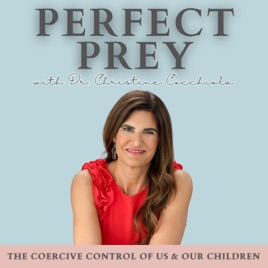
Advertise on podcast: Perfect Prey: A Coercive Control Podcast
Rating
4.9from
This podcast has
63 episodes
Language
EnglishPublisher
Dr. Christine Marie CocchiolaExplicit
No
Date created
2023/08/30
Latest episode
2026/09/25
Average duration
39 min.
Release period
17 days
Description
Dr. Christine Marie Cocchiola, DSW, LCSW is a Coercive Control Educator, Researcher, & Survivor. She has been an advocate since the age of 19, passionate about protecting children from abuse. Yet, even as a therapist, she didn't see the signs in her own relationship. How do we, as protective parents, support our children harmed by the coercive controller (aka Narcissistic Abuser)? Dr. Cocchiola's expertise provides the framework for supporting protective parents as they navigate parenting children harmed by the coercive controller. Protective parents can show their children a path to freedom.
Unlock Perfect Prey: A Coercive Control Podcast podcast Email contact info,
Listeners & Audience details
Email contact information
Direct podcast contact details

Listeners
Audience numbers & engagement insights

Audience details
Podcast Insights

Podcast episodes
Check latest episodes from Perfect Prey: A Coercive Control Podcast podcast
Reunification Camps, Coercive Control & Family Court with Kitty Mayo
2026/09/25
In this episode of Perfect Prey, Dr. Christine is joined by Kitty Mayo, child advocate and founder of Georgia Protective Parents, for an important conversation about reunification camps, family court, coercive control, and the experiences of protective parents.
Kitty shares her family’s experience with the family court system and how her children were ordered into a reunification program following allegations of abuse. She describes what happened during that process and why she believes these programs can be deeply harmful to children and families.
Kitty also discusses her advocacy work with Georgia Protective Parents, a nonprofit focused on child safety and legislation affecting children and protective parents. The organization works across political lines and advocates for legislation it believes protects children.
Together, Dr. Christine and Kitty explore what reunification programs can look like in practice, the importance of attachment, the use of isolation and coercion, and the lack of transparency and regulation that Kitty says exists within some of these programs.
What We Cover
• Kitty’s family court experience• Reunification camps and “repair” therapy• The impact of separation on children and attachment• Allegations of abuse and retaliation• Isolation, intimidation, and coercion• The experiences of protective parents• The lack of transparency and regulation surrounding some programs• The financial costs associated with reunification programs• Ethan’s Law and efforts to strengthen protections for children• Grassroots advocacy and contacting legislators• The importance of speaking up and creating systemic change
Why This Conversation Matters
For protective parents and survivors navigating family court, understanding how reunification programs operate and how children experience these interventions can be incredibly important.
Kitty’s story also highlights how advocacy can move beyond individual cases. Through Georgia Protective Parents, she is working with other advocates to raise awareness, support child-safety legislation, and encourage protective parents to use their voices.
As Dr. Christine and Kitty discuss throughout the episode, advocacy does not always mean being publicly visible. Sometimes it can be as simple as writing an email, contacting a representative, or sharing your story.
About Kitty Mayo
Kitty Mayo is a child advocate and founder of Georgia Protective Parents, a nonprofit organization advocating for legislation and policies focused on child safety. The organization works with both mothers and fathers and describes itself as bipartisan, with a focus on supporting legislation based on its impact on children rather than political party.
Connect with Georgia Protective Parents
Georgia Protective Parents:Instagram & Facebook: Search Georgia Protective Parents
Connect with Dr. Christine Cocchiola
Protective Parenting Program:Protective Parenting Program
Website:Coercive Control Consulting
YouTube:Dr. Christine Cocchiola on YouTube
TikTok:Dr. Christine Cocchiola on TikTok
Instagram:Dr. Christine Cocchiola on Instagram
TEDx:Dr. Christine Cocchiola’s TEDx Talk
Books:FRAMED: Women in the Family Court UnderworldEvery Moment of Every Day
If this episode resonated with you, please share it with someone who needs to hear this conversation.
— Dr. Christine Cocchiola & Kitty Mayo 🩵
When Family Court Fails to Protect Children with Hope Hooton
2026/09/11
In this episode of Perfect Prey, Dr. Christine is joined by Hope Hooton, child safety advocate and mother, for a deeply important conversation about coercive control, domestic violence, family court, and the urgent need to prioritize child safety.
Hope shares the heartbreaking story of her children, Alec and Lydia, and the devastating circumstances surrounding their deaths. She discusses the coercive control, domestic violence, and mental health concerns involved, as well as the warning signs and risk factors that she believes were not adequately recognized by the systems responsible for protecting her children.
The conversation also explores how temporary custody decisions can have life-altering consequences when courts fail to fully examine allegations of domestic violence and coercive control. Hope explains what happened in her case and how her experience has shaped the advocacy work she does today.
Rather than allowing her grief to be the end of Alec and Lydia’s story, Hope has turned it into a mission to help protect other children and families. She discusses the Alec and Lydia Act, her work with other protective and bereaved mothers, and the changes she believes are necessary to make child safety a true priority in family court.
What We Cover
• Hope’s story and the loss of Alec and Lydia• Coercive control and domestic violence• Warning signs and lethality risks in custody cases• The role of mental illness, psychosis, and perpetrator behavior• Family court failures and temporary custody orders• Why protective parents’ concerns can be minimized• The importance of recognizing patterns rather than isolated incidents• The Alec and Lydia Act and its focus on child safety• Hope’s advocacy and work alongside other mothers• Turning grief into meaningful systemic change
Why This Conversation Matters
Child safety should always be at the center of custody decisions. Hope’s experience raises important questions about how family courts assess risk, how coercive control is recognized, and what happens when serious concerns raised by protective parents are dismissed or minimized.
This conversation is for survivors, protective parents, advocates, attorneys, clinicians, and anyone working toward safer outcomes for children navigating family court.
About Hope Hooton
Hope Hooton is a child safety advocate and mother dedicated to protecting children and advocating for family court reform. Following the deaths of her children, Alec and Lydia, Hope has devoted herself to educating others, supporting fellow mothers, and working toward legislation that strengthens protections for children and holds systems accountable.
Connect with Hope Hooton
📖 Book: Hope Hooton’s Book on Amazon
🎙️ Podcast — Voices Against Filicide: Listen on Apple Podcasts
🌐 Linktree: Hope Hooton’s Linktree
▶️ YouTube: Hope Hooton on YouTube
📸 Instagram: Hope Hooton on Instagram
📘 Facebook: Hope Hooton on Facebook
🎵 TikTok: Hope Hooton on TikTok
Connect with Dr. Christine Cocchiola
Protective Parenting Program: Protective Parenting Program
Website: Coercive Control Consulting
YouTube: Dr. Christine Cocchiola on YouTube
TikTok: Dr. Christine Cocchiola on TikTok
Instagram: Dr. Christine Cocchiola on Instagram
TEDx: Dr. Christine Cocchiola’s TEDx Talk
Books: FRAMED: Women in the Family Court Underworld | Every Moment of Every Day
If this episode resonated with you, please share it with someone who needs to hear this conversation.
— Dr. Christine Cocchiola & Hope Hooton 🩵
When Coercive Control Doesn’t End After Separation with Jess Hill
2026/08/28
In this episode of Perfect Prey, I’m joined by award-winning journalist and author Jess Hill for an important conversation about coercive control, domestic abuse, victim-survivors, children, and post-separation abuse.
We explore what coercive control looks like, why it can be difficult to recognize, and how perpetrators maintain power through psychological, emotional, financial, and other forms of abuse. We also discuss how abuse can continue after separation through stalking, harassment, legal systems, and family court.
Jess and I examine the impact on children, the importance of recognizing coercive control when assessing risk, and her work toward criminalizing coercive control in Australia—while emphasizing that legal reform is only one part of creating meaningful change for victim-survivors.
What we cover
• What coercive control actually is—and why it is often misunderstood
• How coercive control can be difficult to recognize while you are experiencing it
• The psychological and emotional impact of living under coercive control
• Why leaving an abusive relationship does not necessarily mean the abuse ends
• Post-separation abuse, stalking, harassment, and continued control
• How children experience and are affected by coercive control
• The ways children can become part of an abusive dynamic
• Family court and the challenges faced by victim-survivors navigating legal systems
• Why understanding patterns of behavior matters when assessing risk
• The importance of listening to victim-survivors and taking coercive control seriously
• Jess’s work toward criminalizing coercive control in Australia
• Law reform, prevention, and creating meaningful systemic change
Why listen
Coercive control is often misunderstood because it does not always look like what people expect abuse to look like. There may be no single incident that explains what is happening. Instead, control can develop through patterns of behavior that gradually restrict a person’s autonomy, freedom, relationships, and sense of self.
This conversation is also about what happens after a victim-survivor leaves. Separation can become another stage of control, particularly when perpetrators use legal systems, children, stalking, or other mechanisms to maintain power.
For survivors, protective parents, clinicians, attorneys, advocates, researchers, and anyone trying to better understand coercive control, this episode offers an important conversation about recognizing patterns, understanding risk, and creating systems that better protect victims and children.
Guest bio
Jess Hill is an award-winning Australian journalist and author focused on domestic abuse, coercive control, and gender-based violence. She is the author of See What You Made Me Do, a groundbreaking examination of domestic abuse and coercive control. Through her journalism, research, and advocacy, Jess has helped shape conversations around domestic violence, prevention, and law reform in Australia.
Connect with Jess Hill:
Instagram: @jessicahelenhill
Website: www.jesshill.com.au
Book: See What You Made Me Do available on Amazon
Podcast: www.vwt.org.au/thetrap
Connect with Dr. Christine:
Protective Parenting Program: Protective Parenting Program
Official site: www.coercivecontrolconsulting.com
YouTube: www.
TikTok: @dr.c_coercivecontrol
Instagram: www.youtube.com/@DrCocchiola-coercivecontrol
TEDxTalk: https://youtu.be/gp2qByKOue4?si=jJpjpRewxHD9JdYg
Books:
FRAMED: Women in the Family Court Underworld
Every Moment of Every Day
Available on Amazon.
If this episode resonated with you, please share it with someone who needs to hear it, subscribe for more trauma-informed conversations, and consider leaving a review. Your support helps other survivors and protective parents find information, validation, and community.
— Dr. Christine Cocchiola & guest Jess Hill
When Coercive Control Turns Dangerous: Jayden Posen on Sexual Violence, Trafficking & Accountability
2026/08/14
Description
In this episode of Perfect Prey, I’m joined by Jayden Posen, a survivor and advocate who shares her powerful story of coercive control, grooming, sexual violence, trafficking, and systemic failure.
Jayden discusses how abuse can begin through manipulation and trust, how perpetrators use psychological tactics to gain control, and what happens when survivors speak up but the systems meant to protect them fail to listen.
This conversation is a reminder of why we need to recognize grooming, understand coercive control, and take survivors seriously.
What we cover
• Jayden’s experiences of sexual violence and systemic failure beginning at age 14
• How “boys will be boys” normalizes harmful behavior and prevents accountability
• The connection between coercive control, sexual violence, and power
• How threats of self-harm can be used as a coercive control tactic
• Social media, pornography, misogyny, and the influence of online personalities
• Human trafficking, exploitation, and the vulnerabilities within nightlife environments
• Why survivors are so often asked the wrong questions
• Victim-blaming, silence, and the pressure to protect institutions and reputations
• The role of bystanders and the importance of accountability
• Why young people need better education around consent, boundaries, power, and healthy relationships
• Jayden’s work toward the Nightlife Safety and Accountability Act
Why listen
Jayden’s story is a powerful reminder that abuse does not always begin with violence. It can begin with grooming, attention, manipulation, threats, and the gradual erosion of a person’s autonomy.
This conversation also asks us to look beyond individual incidents and examine the systems, cultural messages, technology, and institutions that can allow abuse to continue.
For parents, educators, advocates, clinicians, survivors, and anyone working with young people, this episode offers an important conversation about recognizing coercive control, challenging victim-blaming, and creating environments where accountability matters.
Guest bio
Jayden Posen is a survivor, advocate, and public speaker who uses her lived experience to raise awareness about sexual violence, exploitation, attempted trafficking, coercive control, and systemic failure. After experiencing repeated harm from a young age, Jayden now speaks publicly about survivor advocacy, nightlife safety, accountability, and the need for stronger protections for vulnerable people.
She is also developing the Nightlife Safety and Accountability Act, a policy initiative focused on prevention, accountability, trafficking prevention, public safety, and protecting vulnerable people in nightlife environments.
Connect with Jayden
Instagram: @jaydenposen on Instagram
Website: JaydenPosen.info
Email: [email protected]
Learn more about Jayden’s advocacy and the Nightlife Safety and Accountability Act through her website and social media.
Connect with Dr. Christine:
Protective Parenting Program: Protective Parenting Program
Official site: Coercive Control Consulting
YouTube: Dr. Christine Cocchiola on YouTube
TikTok: Dr. Christine Cocchiola on TikTok
Instagram: Dr. Christine Cocchiola on Instagram
TEDxTalk: It is ALL Coercive Control — TEDx
Books:
Framed
Every Moment of Every Day
If this episode resonated with you, please share it with someone who needs to hear it, subscribe for more trauma-informed conversations, and consider leaving a review. Your support helps other survivors and protective parents find information, validation, and community.
— Dr. Christine Cocchiola & guest Jayden Posen
Why Victims Stay: Understanding the "Cult of One" | Richard Grannon
2026/07/31
In this episode of Perfect Prey, I'm joined by Richard Grannon, author of A Cult of One, psychology educator, and internationally recognized voice on narcissistic abuse recovery.
Together, we explore one of the most misunderstood questions surrounding coercive control: Why do victims stay? Richard offers a thought-provoking perspective on trauma, attachment, power, and the psychological mechanisms that keep people trapped in abusive relationships. We also discuss how these same dynamics impact children growing up in coercively controlling family systems and why healing requires far more than simply "walking away."
This conversation challenges traditional ideas about codependency, explores the concept of the "cult of one," and examines how coercive control creates an environment where victims gradually lose trust in themselves while becoming increasingly dependent on the abuser.
What we cover
•The psychology behind coercive control
•Why victims stay in abusive relationships
•The "Cult of One" concept
•Trauma bonding and attachment
•Codependency versus subjugation
•Why children align with abusive parents
•Power dynamics in coercively controlling families
•Ego resilience and recovery
•Betrayal by family court and legal systems
•Why understanding abuse is essential for healing
Why listen
Whether you're a survivor, protective parent, therapist, attorney, or advocate, this episode offers a deeper understanding of why coercive control is so difficult to recognize—and even harder to escape. Richard Grannon provides a fresh perspective on recovery while challenging long-held assumptions about abuse, trauma, and victimization.
Guest Bio
Richard Grannon is the author of A Cult of One, a psychology educator, speaker, and internationally recognized expert on narcissistic abuse recovery and complex trauma. With a background in behavioral psychology and over a decade of educating survivors worldwide, Richard helps people understand coercive control, establish healthy boundaries, and rebuild their lives after psychological abuse.
Connect with Richard Grannon
Website
https://richardgrannon.com/
YouTube
https://www.youtube.com/@RichardGrannon
Instagram
https://www.instagram.com/richard.grannon/
Facebook
https://www.facebook.com/RICHARDGRANNON/
X (Twitter)
https://x.com/RichardGrannon
Connect with Dr. Christine
🩵 Protective Parenting Program
https://www.coercivecontrolconsulting.com/services/for-parents/
Official Website
https://www.coercivecontrolconsulting.com/
YouTube
https://www.youtube.com/@DrCocchiola-coercivecontrol/videos
TikTok
https://www.tiktok.com/@dr.c_coercivecontrol
Instagram
https://www.instagram.com/dr.cocchiola_coercivecontrol/
TEDx Talk
https://www.youtube.com/watch?v=gp2qByKOue4&t=24s
Books
Framed
https://url-shortener.me/c/FramedBook
Every Moment of Every Day
https://url-shortener.me/c/EveryMomentOfEveryDay
If this episode resonated with you, please subscribe, share it with someone who may benefit, and leave a review. Your support helps bring trauma-informed conversations about coercive control to more survivors, professionals, and protective parents.
—
Dr. Christine Cocchiola & Richard Grannon
How Predators Groom Children with Jeremy Indika
2026/07/03
In this episode of Perfect Prey, I’m joined by Jeremy Indika, child sexual abuse educator, survivor, speaker, and advocate. Jeremy shares his own experience of childhood sexual abuse and explains why understanding grooming, coercive control, and child exploitation has never been more urgent.Together, we explore how perpetrators identify vulnerable children, the similarities between child sexual predators and coercive controllers, and why abuse is so often hidden in plain sight. Jeremy explains how grooming happens both offline and online, why "stranger danger" misses the mark, and what parents can do to empower children without taking away their innocence. We also discuss the rise of online exploitation, the importance of body autonomy education, role-playing safety skills with children, and why creating confident, educated children makes them far less attractive targets for predators.This conversation is both deeply personal and incredibly practical—offering parents, caregivers, educators, and professionals the tools to better understand how abuse happens and, more importantly, how we can prevent it.What we cover•Jeremy Indika's story as a survivor of childhood sexual abuse•The connection between coercive control and child sexual abuse•The stages of grooming and how predators build trust•Why children are "perfect prey" for abusers•The dangers of online grooming, pornography, and sextortion•Why "stranger danger" is no longer enough•Body autonomy and age-appropriate abuse prevention•Teaching children confidence, boundaries, and safe disclosure•Why role-playing difficult situations helps protect children•Supporting children without creating fear•Why education—not shame—is the key to preventionWhy listenIf you're a parent, educator, clinician, advocate, or simply someone who wants to better understand how child sexual abuse happens, this episode provides practical, trauma-informed guidance that could help protect a child.Jeremy reminds us that abuse is rarely about force in the beginning—it's about grooming, trust, and manipulation. By understanding these tactics, adults can create safer environments where children are empowered to speak up and predators lose their greatest advantage.Guest BioJeremy Indika is a child sexual abuse educator, speaker, survivor, and advocate dedicated to preventing child sexual exploitation through education and awareness.Drawing from both his lived experience and years of advocacy, Jeremy works with schools, parents, law enforcement, and organizations to teach practical strategies for recognizing grooming behaviors, empowering children, and preventing abuse before it occurs. Through workshops, social media, YouTube, and his podcast, Jeremy is helping make conversations about child protection more accessible, practical, and impactful.Connect with JeremyWebsite: https://www.jeremyindika.comYouTube: / @jeremyindika Instagram: / jeremyindika TikTok: / jeremyindika Podcast: https://www.jeremyindika.com/podcastConnect with Dr. Christine:Protective Parenting Program: https://www.coercivecontrolconsulting...Dr. C's Community: https://go.drcocchiola.com/innercircl...Official site: https://www.coercivecontrolconsulting...YouTube: / @drcocchiola-coercivecontrol TikTok: / dr.c_coercivecontrol Instagram: / dr.cocchiola_coercivecontrol TEDxTalks: • It’s All Coercive Control | Christine Cocc... Books:https://url-shortener.me/c/FramedBookhttps://url-shortener.me/c/EveryMomen...If this episode landed for you, please share it with someone who needs to hear it, subscribe for more trauma-informed conversations, and consider leaving a review—it helps other survivors find validation and safety.— Dr. Christine Cocchiola & Jeremy Indika
The Hidden Impact of Trauma Across a Lifetime with Dr. Ann Burgess
2026/06/05
Description
In this episode of Perfect Prey, I’m joined by Ann Burgess, pioneering forensic nurse, researcher, educator, and author of Expert Witness. Ann’s groundbreaking work transformed how professionals understand trauma, victimization, sexual violence, and offender behavior. Her research has influenced criminal investigations, forensic psychology, victim advocacy, and some of the most well-known criminal cases in modern history.
Together, we explore the long-term impact of trauma, why victims are so often disbelieved, and how systems continue to fail those who come forward. Ann shares insights from decades of work studying victims, offenders, serial violence, child abuse, and the psychology of coercion and control. We also discuss institutional betrayal, trauma responses in children and adults, family court failures, pornography, grooming, and what it takes to create meaningful change within systems that were never designed to fully protect victims.
What we cover
Ann Burgess’s pioneering work in victimology and forensic nursing
How trauma impacts behavior across the lifespan
Why victims are often disbelieved by systems and institutions
Institutional betrayal and systemic failures
Coercive control, fear, and psychological abuse
Trauma responses in children and adolescents
Child sexual abuse and delayed disclosure
Family court, victim credibility, and expert testimony
The role of pornography and grooming in abusive behavior
The Menendez case and evolving understandings of trauma
Why trauma-informed education is critical for professionals
How offender thinking patterns develop and escalate
Why listen
If you are a survivor, clinician, attorney, advocate, educator, or protective parent, this episode offers a rare opportunity to hear from one of the most influential voices in trauma and victim research.
Ann Burgess’s work helped shape how we understand trauma today. Her insights illuminate why victims respond the way they do, why systems often misunderstand those responses, and why meaningful reform requires us to listen more closely to survivors’ experiences.
Guest Bio
Ann Burgess, DNSc, APRN, FAAN is an internationally recognized forensic nurse, researcher, educator, and author. She is a professor at Boston College and has spent decades studying trauma, victimization, sexual violence, serial offenders, and forensic mental health.
Ann's groundbreaking research on rape trauma syndrome helped transform the understanding of victim responses to sexual assault. She has consulted with the FBI's Behavioral Science Unit, contributed to offender profiling research, and served as an expert witness in numerous high-profile cases.
She is the author of several books, including Expert Witness, which chronicles her work at the intersection of trauma, criminal behavior, and justice.
Connect with Ann Burgess
Book: Expert Witnesshttps://www.amazon.com/stores/Ann-W.-Burgess/author/B0H13DQXPP?ref=sr_ntt_srch_lnk_3&qid=1780604748&sr=1-3&shoppingPortalEnabled=true&ccs_id=9489809f-1ae4-4998-b8db-a0cbcc536d23
Boston College Faculty Profile: https://www.bc.edu
Connect with Dr. Christine
Protective Parenting Program: https://www.coercivecontrolconsulting.com/services/for-parents/
Dr. C’s Community: https://go.drcocchiola.com/innercirclecommunity
Official site: https://www.coercivecontrolconsulting.com/
YouTube: https://www.youtube.com/@DrCocchiola-coercivecontrol/videos
TikTok: https://www.tiktok.com/@dr.c_coercivecontrol
Instagram: https://www.instagram.com/dr.cocchiola_coercivecontrol/
TEDxTalks: https://www.youtube.com/watch?v=gp2qByKOue4&t=24s
Books:
https://url-shortener.me/c/FramedBook
https://url-shortener.me/c/EveryMomentOfEveryDay
If this episode landed for you, please share it with someone who needs to hear it, subscribe for more trauma-informed conversations, and consider leaving a review — it helps other survivors find validation and safety.
— Dr. Christine Cocchiola & Ann Burgess
Why Traumatized Children Are Often Misunderstood
2026/05/22
In this solo episode of Perfect Prey, Dr. Christine Cocchiola explores the connection between coercive control, childhood trauma, attachment, and the growing number of children being diagnosed with ADHD and other behavioral disorders.
Dr. Cocchiola challenges listeners to consider a critical question: what if many of the behaviors we label as “problematic” are actually trauma responses? What if children living within coercively controlling family systems are being misunderstood rather than truly seen?
Drawing from the work of Dr. Bessel van der Kolk, Dr. Gabor Maté, Dr. Bruce Perry, and betrayal trauma theory, this episode examines how trauma can manifest as fight, flight, freeze, and fawn responses in children — and how coercive control fractures attachment, identity, safety, and regulation.
Dr. Cocchiola also discusses how predatory parents weaponize children, how attachment is intentionally disrupted, and why protective parents play such a critical role in healing and rebuilding safety for their children.
What we cover
This episode is essential listening for protective parents, clinicians, educators, advocates, and anyone trying to better understand trauma, child behavior, and coercive control.
How trauma can mimic ADHD symptomsFight, flight, freeze, and fawn trauma responses in childrenCoercive control within family systemsHow predatory parents fracture attachment intentionallyWhy dysregulated children are often misunderstoodAttachment, authenticity, and child developmentTrauma, dissociation, and emotional regulationThe impact of coercive control on school performance and behaviorWhy children exposed to abuse may appear oppositional or disengagedProtective parenting and reigniting attachmentBroken attachment, broken safety, and “broken brain”How systems often pathologize traumatized children instead of protecting themWhy listen
If you are raising a child impacted by coercive control, navigating post-separation abuse, or working professionally with children and families, this episode offers a trauma-informed framework for understanding behavior through the lens of attachment and survival.
Dr. Cocchiola invites listeners to shift away from asking “What’s wrong with this child?” and instead ask: “What happened to this child?”
Connect with Dr. Christine:
Protective Parenting Program: https://www.coercivecontrolconsulting.com/services/for-parents/
Dr. C’s Community: https://go.drcocchiola.com/innercirclecommunity
Official site: https://www.coercivecontrolconsulting.com/
YouTube: https://www.youtube.com/@DrCocchiola-coercivecontrol/videos
TikTok: https://www.tiktok.com/@dr.c_coercivecontrol
Instagram: https://www.instagram.com/dr.cocchiola_coercivecontrol/
TEDxTalks: https://www.youtube.com/watch?v=gp2qByKOue4&t=24s
Books:https://url-shortener.me/c/FramedBook
https://url-shortener.me/c/EveryMomentOfEveryDay
If this episode resonated with you, please share it with someone who may need this conversation, subscribe to Perfect Prey, and leave a review — it helps other survivors and protective parents find support and validation.
🩵
— Dr. Christine Cocchiola
Why Survivors Must Be Heard to Heal with Dr. Judith Lewis Herman
2026/05/08
In this episode of Perfect Prey, I’m honored to be joined by Judith Herman, one of the world’s foremost pioneers in trauma research and recovery.
Dr. Herman is the author of the groundbreaking books Father-Daughter Incest, Trauma and Recovery, and Truth and Repair—works that fundamentally changed how we understand trauma, complex trauma, institutional betrayal, and survivor healing.
Together, we discuss the origins of trauma theory, the women’s movement that brought survivor voices into public consciousness, the devastating lifelong impact of childhood abuse and coercive control, and why children living in unsafe family systems are so deeply affected—even when the abuse is not overtly physical.
We also explore the ACEs study, attachment, institutional failures, protective parenting, intergenerational trauma, and the critical role of safe relationships in healing.
This is an essential conversation for survivors, clinicians, advocates, educators, attorneys, judges, and anyone seeking a deeper understanding of trauma and recovery.
What we cover
The origins of trauma and complex trauma theory
How the women’s movement changed the understanding of abuse
Dr. Herman’s groundbreaking work on incest and child sexual abuse
The lifelong mental and physical health impacts of childhood trauma
The ACEs study and adverse childhood experiences
Coercive control, family violence, and child development
Isolation as a tactic of abuse and coercive control
Why children exposed to family violence are profoundly harmed
Protective factors that help children heal from trauma
Attachment, belonging, and the importance of safe relationships
Institutional betrayal and why survivors must be heard
Protective parenting and rebuilding connection with children
Why listen
If you are a survivor, protective parent, clinician, advocate, educator, researcher, or legal professional, this episode offers foundational insight into trauma, coercive control, attachment, and recovery.
Dr. Herman’s work helped shape the modern understanding of trauma and continues to guide how we think about healing, institutional accountability, and the long-term impact of childhood abuse.
Guest bio (short)
Judith Herman, MD, is a psychiatrist, researcher, professor, and internationally recognized pioneer in the study of psychological trauma. She is the author of Father-Daughter Incest, Trauma and Recovery, and Truth and Repair, groundbreaking works that transformed the understanding of trauma, complex PTSD, and survivor recovery.
About Dr. Judith Lewis Herman
Guilford Press: https://www.guilford.com/author/Judith-Lewis-Herman?srsltid=AfmBOopF18dr2S7Z0VoukbbZiSSvNFY7XqwmoLAmoT2OykKgsoR2T4fY
Wikipedia: https://en.wikipedia.org/wiki/Judith_Lewis_Herman
Psychology Today: https://www.psychologytoday.com/us/contributors/judith-l-herman-md
Connect with Dr. Christine:
Protective Parenting Program: https://www.coercivecontrolconsulting.com/services/for-parents/
Official site: https://www.coercivecontrolconsulting.com/
YouTube: https://www.youtube.com/@DrCocchiola-coercivecontrol/videos
TikTok: https://www.tiktok.com/@dr.c_coercivecontrol
Instagram: https://www.instagram.com/dr.cocchiola_coercivecontrol/
TEDxTalks: https://www.youtube.com/watch?v=gp2qByKOue4&t=24s
Books: https://url-shortener.me/c/FramedBook
https://url-shortener.me/c/EveryMomentOfEveryDay
If this episode landed for you, please share it with someone who needs to hear it, subscribe for more trauma-informed conversations, and consider leaving a review — it helps other survivors find validation and safety.
🩵
— Dr. Christine Cocchiola & guest Dr. Judith Herman
Greyson’s Choice: Ali Kessler’s Mission to Protect Children
2026/04/24
Description
In this episode of Perfect Prey, I’m joined by Ali Kessler, founder of Greyson’s Choice, child safety advocate, and a powerful voice for prevention, awareness, and systemic change.
Ali shares her deeply personal story of loss, resilience, and purpose—and how unimaginable grief became a mission to protect other children. Through Greyson’s Choice, Ali has transformed pain into advocacy, using her son Greyson’s legacy to create education, awareness, and meaningful change for families everywhere.
This conversation is both heartbreaking and inspiring, highlighting what it means to carry love forward through action, courage, and protection.
What we cover
The story behind Greyson’s Choice
Honoring Greyson’s legacy through advocacy
Turning grief into purpose and prevention
Why child safety awareness matters
Systemic gaps that leave children vulnerable
Supporting families after trauma and loss
Creating change through courage and community
Why listen
If you are a parent, survivor, advocate, clinician, or someone navigating grief after trauma, this episode offers compassion, courage, and hope.
Ali’s story is a reminder that even after devastating loss, love can still become action—and protection for others.
Guest bio (short)
Ali Kessler is the founder of Greyson’s Choice, a child safety advocacy organization created in honor of her son, Greyson. Through education, awareness, and reform efforts, she works to protect children, support families, and create lasting change in Greyson’s memory.
Connect with Ali Kessler:
Website: https://greysonschoice.org
Instagram:https://www.instagram.com/greysonschoice/
Facebook: https://www.facebook.com/GreysonsChoice
LinkedIn: https://www.linkedin.com/company/greysons-choice/posts/?feedView=all
YouTube:https://www.youtube.com/channel/UCjQd87p3UbsHmUWxVkxJlUw
Connect with Dr. Christine Cocchiola:
Protective Parenting Program: https://www.coercivecontrolconsulting.com/services/for-parents/
Official site: https://www.coercivecontrolconsulting.com/
YouTube: https://www.youtube.com/@DrCocchiola-coercivecontrol/videos
TikTok: https://www.tiktok.com/@dr.c_coercivecontrol
Instagram: https://www.instagram.com/dr.cocchiola_coercivecontrol/
TEDxTalks: https://www.youtube.com/watch?v=gp2qByKOue4&t=24s
Books:https://url-shortener.me/c/FramedBook
https://url-shortener.me/c/EveryMomentOfEveryDay
If this episode landed for you, please share it with someone who needs to hear it, subscribe for more trauma-informed conversations, and consider leaving a review — it helps other survivors find validation and safety.
🩵
— Dr. Christine Cocchiola & guest Ali Kessler
Children Are Not Witnesses: The Truth About Coercive Control with Emma Katz
2026/04/10
Description
In this episode of Perfect Prey, I’m joined by Emma Katz, criminologist and author of Coercive Control in Children’s and Mothers’ Lives. Emma is one of the leading researchers in the world examining how coercive control impacts children—not just as witnesses, but as direct victims navigating survival, attachment, and identity.
Together, we explore how children experience coercive control in deeply complex ways, how abusers strategically target the mother-child bond, and why so many systems continue to misunderstand—or completely overlook—the perpetrator’s role.
This conversation offers both profound validation and hope, highlighting the resilience of children and the critical role of protective parents in healing and recovery.
What we cover
Why children are not “witnesses” but direct victims of coercive control
How perpetrators strategically target and damage the mother-child relationship
The three ways children experience abusive fathers: dangerous, “admirable,” and omnipresent
How manipulation, intermittent reinforcement, and fear shape children’s attachment
Why children may align with the abusive parent—and why that is not a choice
The psychological impact of coercive control on children’s identity, safety, and development
The resilience of children and the power of attachment with a protective parent
What recovery can look like for families after coercive control
Why listen
If you are a protective parent, survivor, clinician, or professional working with families, this episode offers essential insight into how coercive control shapes children’s experiences—and why traditional frameworks often get it wrong.
Emma’s research brings clarity to what many families are living through, while also offering hope: children can heal, attachment can be rebuilt, and protective parenting matters more than anything.
Guest bio (short)
Emma Katz is a criminologist, researcher, and author specializing in coercive control and its impact on women and children. She is the author of Coercive Control in Children’s and Mothers’ Lives and writes extensively about domestic abuse, family dynamics, and systemic responses. Her work has been instrumental in shifting the understanding of children as active victims of coercive control rather than passive witnesses.
Learn more about Dr. Emma Katz
Substack:
https://substack.com/@dremmakatz
Official Site:
https://dremmakatz.com/
Instagram:
https://www.instagram.com/emmakatz_phd
LinkedIn:
https://www.linkedin.com/in/dr-emma-katz-5b911865/
YouTube:
https://www.youtube.com/channel/UCx1f7_MhfCmVufMQS0ZPRjQ
X(twitter):
https://x.com/DrEmmaKatzBook (Coercive Control in Children’s and Mothers’ Lives):
https://www.amazon.com/Coercive-Control-Childrens-INTERPERSONAL-VIOLENCE/dp/0190922214/
Connect with Dr. Christine
LinkedIn:
https://www.linkedin.com/in/dr-christine-marie-cocchiola-443a58204/
Protective Parenting Program:https://www.coercivecontrolconsulting.com/services/for-parents/
Official site:https://www.coercivecontrolconsulting.com/
YouTube:https://www.youtube.com/@DrCocchiola-coercivecontrol/videos
TikTok:https://www.tiktok.com/@dr.c_coercivecontrol
Instagram:https://www.instagram.com/dr.cocchiola_coercivecontrol/
TEDxTalk:https://www.youtube.com/watch?v=gp2qByKOue4&t=24s
Books:https://url-shortener.me/c/FramedBookhttps://url-shortener.me/c/EveryMomentOfEveryDay
If this episode landed for you, please share it with someone who needs to hear it, subscribe for more trauma-informed conversations, and consider leaving a review — it helps other survivors find validation and safety.
🩵
— Dr. Christine Cocchiola & guest Emma Katz
Jane Doe No More: Story of Survival and Accountability with Donna Palomba
2026/03/27
Description
In this episode of Perfect Prey, I’m joined by Donna Palomba, founder of Jane Doe No More and survivor of a violent home invasion and sexual assault that led to years of institutional betrayal.
Donna shares her harrowing story—from surviving a brutal attack in her own home to being disbelieved, interrogated, and re-traumatized by the very system meant to protect her. What followed was a seven-year legal battle against law enforcement, uncovering systemic failures, bias, and the devastating impact of not believing victims.
This conversation explores not only the trauma of the assault itself, but the profound harm caused by institutional betrayal—and the strength it takes to fight back, seek justice, and create change.
What we cover
Donna’s story of surviving a violent home invasion and sexual assaultThe immediate aftermath and failures in the investigative processInstitutional betrayal and being treated as a suspect instead of a victimThe long legal battle against law enforcement and systemic resistanceThe role of DNA evidence and delayed justiceHow perpetrators often live “double lives” and evade suspicionThe impact of statute of limitations laws on survivorsDonna’s advocacy work and the founding of Jane Doe No MorePrevention, education, and empowering communities to protect others
Why listen
If you are a survivor, advocate, clinician, attorney, or protective parent, this episode offers a powerful and deeply emotional look at what happens when systems fail victims—and what it takes to hold those systems accountable. Donna’s story is both heartbreaking and hopeful, showing that even in the face of profound injustice, change is possible.
Guest bio (short)
Donna Palomba is the founder of Jane Doe No More, an organization dedicated to improving the way society responds to survivors of sexual crimes and advancing prevention education. After surviving a violent sexual assault and years of institutional betrayal, Donna became a leading advocate for victims’ rights, helping change laws and educate communities on safety, accountability, and survivor support.
Learn more about Donna Palomba & Jane Doe No More:
Website: https://janedoenomore.org/Book (Jane Doe No More): https://www.amazon.com/Jane-Doe-No-More/dp/1642939709Podcast (Jane Doe No More Podcast): https://janedoenomore.org/podcast/
Instagram: https://www.instagram.com/janedoenomore/Facebook: https://www.facebook.com/janedoenomoreLinkedIn: https://www.linkedin.com/company/jane-doe-no-more/
Connect with Dr. Christine
Protective Parenting Program:https://www.coercivecontrolconsulting.com/services/for-parents/
Official site:https://www.coercivecontrolconsulting.com/
YouTube:https://www.youtube.com/@DrCocchiola-coercivecontrol/videos
TikTok:https://www.tiktok.com/@dr.c_coercivecontrol
Instagram:https://www.instagram.com/dr.cocchiola_coercivecontrol/
Books:https://url-shortener.me/c/FramedBookhttps://url-shortener.me/c/EveryMomentOfEveryDay
If this episode landed for you, please share it with someone who needs to hear it, subscribe for more trauma-informed conversations, and consider leaving a review — it helps other survivors find validation and safety.
— Dr. Christine Cocchiola & guest Donna Palomba
Family Court Harm and Institutional Betrayal with Dr. Elizabeth Dalgarno
2026/03/13
Description
In this episode of Perfect Prey, I’m joined by Dr. Elizabeth Dalgarno, founder and director of the SHERA Research Group and lecturer in public health at the University of Manchester. Dr. Dalgarno’s work focuses on the global harms caused by family court systems and the institutional abuse experienced by women and children navigating these legal processes.
Through SHERA’s groundbreaking research, Dr. Dalgarno and her international team have documented how family court engagement can produce profound health consequences for protective parents and children. Their studies reveal a disturbing pattern: when abuse is reported, mothers are frequently accused of “parental alienation,” their credibility is questioned, and the legal system often becomes an extension of the abuse rather than a source of protection.
Together, we explore how coercive control continues after separation, how courts can become tools of post-separation abuse, and why the health impacts of family court trauma are still largely ignored by institutions responsible for protecting families.
What we cover
The mission and global research of the SHERA Research Group
How family court systems create institutional betrayal for survivors
The health consequences of family court trauma for women and children
The “blueprint” pattern many protective parents experience after reporting abuse
Why parental alienation frameworks often silence abuse disclosures
The concept of malicious fracturing of attachment
How coercive control continues through legal systems after separation
Why systemic reform is necessary to protect children and survivors
Why listen
If you are a survivor, protective parent, clinician, researcher, attorney, or advocate, this episode offers crucial insight into how family court systems can perpetuate harm rather than stop it. Dr. Dalgarno’s research provides evidence-based documentation of what protective parents have been saying for decades—and highlights why systemic reform is urgently needed.
Guest bio (short)
Dr. Elizabeth Dalgarno is the founder and director of the SHERA Research Group, a global collective studying the health impacts of institutional abuse within family court systems. She is a lecturer in public health at the University of Manchester, where she teaches global women’s public health and health system challenges. Her research focuses on the intersection of coercive control, institutional harm, and the health consequences experienced by women and children navigating family courts worldwide.
Learn more about SHERA Research
Instagram: https://www.instagram.com/sherafamily_Twitter/X: https://twitter.com/sherafamilyBluesky: https://bsky.app/profile/sherafamilySubstack: Still Not Safe – Dr. Dalgarno
Connect with Dr. Christine
Protective Parenting Program:https://www.coercivecontrolconsulting.com/services/for-parents/
Official site:https://www.coercivecontrolconsulting.com/
YouTube:https://www.youtube.com/@DrCocchiola-coercivecontrol/videos
TikTok:https://www.tiktok.com/@dr.c_coercivecontrol
Instagram:https://www.instagram.com/dr.cocchiola_coercivecontrol/
Books:https://url-shortener.me/c/FramedBookhttps://url-shortener.me/c/EveryMomentOfEveryDay
If this episode resonated with you, please share it with someone who needs to hear it, subscribe to Perfect Prey, and consider leaving a review. Your support helps other survivors and protective parents find validation and clarity.
— Dr. Christine Cocchiola & guest Dr. Elizabeth Dalgarno
The Weaponization of Children in Coercive Control
2026/02/20
Description
In this solo episode of Perfect Prey, I explore one of the most heartbreaking dynamics of coercive control: the weaponization of children.
Children rely on their parents for safety, stability, and unconditional love. But when a predatory parent is operating within the family system, attachment can become fractured.
Instead of growing up with secure connection, children are often indoctrinated into false narratives, exposed to subtle undermining, and pulled into loyalty binds they cannot cognitively or emotionally process.
I explain how coercive control is the underpinning of all forms of abuse — psychological, legal, financial, physical, and emotional — and how, when an abuser can no longer control their partner, they often shift to controlling through the child.
We’ll talk about:
How attachment is formed — and how it can be fractured
Why children may come home dysregulated, angry, or oppositional
How subtle undermining and false narratives are planted
The difference between alienation rhetoric and attachment fracture
Why predatory parents rely on retaliation and loyalty conflicts
How protective parents can create “roadblocks” to manipulation
What it means to respond instead of react — even when you are traumatized
This episode is especially for protective parents navigating post-separation abuse and family court dynamics. The reality is painful: children are often placed in impossible positions, forced into emotional roles they should never have to carry.
But there are ways to respond differently.
If you are watching your child struggle, unravel, or lash out after time with the other parent, this episode will help you understand what may be happening beneath the surface — and how to stay grounded in your role as the secure base.
Protective parents are doing some of the hardest work there is. You are not alone.
Connect with Dr. Christine
Protective Parenting Program:https://www.coercivecontrolconsulting.com/services/for-parents/
Official site:https://www.coercivecontrolconsulting.com/
YouTube:https://www.youtube.com/@DrCocchiola-coercivecontrol/videos
TikTok:https://www.tiktok.com/@dr.c_coercivecontrol
Instagram:https://www.instagram.com/dr.cocchiola_coercivecontrol/
Books:https://url-shortener.me/c/FramedBookhttps://url-shortener.me/c/EveryMomentOfEveryDay
If this episode resonated, please share it with someone who needs this information, subscribe to Perfect Prey, and consider leaving a review. It helps other survivors and protective parents find validation and clarity.
— Dr. Christine Cocchiola
Coercive Control Is a War of Attrition with Laura Richards
2026/02/06
In this episode of Perfect Prey, I’m joined by Laura Richards, a criminal behavioral analyst, former New Scotland Yard specialist, and one of the leading global voices on coercive control. Laura has been instrumental in changing laws on stalking and coercive control in the UK and internationally, and her work has helped shape policy, legislation, and professional practice worldwide.
We explore why coercive control is not about isolated incidents, but a patterned strategy of domination, entrapment, and power imbalance. Laura explains why coercive control is best understood as a war of attrition, how patriarchy and misogyny shape institutional responses, and why women and children are so often disbelieved—even when the evidence is present.
This conversation examines how legal systems, family courts, and law enforcement frequently fail victims and survivors, particularly at the point of separation, when risk escalates most dramatically. We also discuss why coercive control must be criminalized, why gender matters in risk assessment, and how language itself can either obscure or reveal abuse.
What we cover
What coercive control really is and why it’s a patterned form of abuse
Why victims and survivors are often disbelieved by systems meant to protect them
Coercive control as “murders and suicides in slow motion”
The role of patriarchy, entitlement, and power imbalance in abuse
Why separation is the most dangerous time for women and children
How family courts can become a tool of post-separation abuse
Why protecting children requires protecting the non-abusive parent
The urgent need to criminalize coercive control globally
Why listen If you are a survivor, protective parent, clinician, attorney, advocate, or policymaker, this episode offers critical insight into how coercive control operates beneath the surface of relationships and systems. Laura Richards brings clarity to why abuse is so often minimized, misunderstood, or reframed—and what must change to prevent further harm.
Guest bio (short)Laura Richards is a criminal behavioral analyst, former New Scotland Yard specialist, and a leading international expert on coercive control, stalking, and violence against women. She helped create the DASH risk assessment model, founded the National Stalking Advocacy Service (Paladin), and played a central role in criminalizing coercive control in England and Wales. Laura is the author of Policing Domestic Violence and host of the Crime Analyst and Real Crime Profile podcasts.
Connect with Dr. Christine
Official site: https://www.thelaurarichards.com/
Instagram: https://www.instagram.com/crimeanalyst?utm_source=ig_web_button_share_sheet&igsh=ZDNlZDc0MzIxNw==
X (twitter): https://x.com/thecrimeanalyst
Tiktok: https://www.tiktok.com/@crimeanalystpod
Youtube: https://www.youtube.com/channel/UCksfRSwfwFqUCjcxKYju6_Q
Books: https://www.thelaurarichards.com/resources/books
Connect with Dr. Christine
Protective Parenting Program: https://www.coercivecontrolconsulting.com/services/for-parents/Official site: https://www.coercivecontrolconsulting.com/YouTube: https://www.youtube.com/@DrCocchiola-coercivecontrol/videosTikTok: https://www.tiktok.com/@dr.c_coercivecontrolInstagram: https://www.instagram.com/dr.cocchiola_coercivecontrol/TEDx Talk: https://www.youtube.com/watch?v=gp2qByKOue4&t=24s
Books:https://url-shortener.me/c/FramedBookhttps://url-shortener.me/c/EveryMomentOfEveryDay
If this episode resonated, please share it with someone who needs this information, subscribe to Perfect Prey, and consider leaving a review to help other survivors find validation and clarity.
— Dr. Christine Cocchiola & guest Laura Richards
Podcast reviews
Read Perfect Prey: A Coercive Control Podcast podcast reviews
CM5566778899 2026/08/17
I finally have answers
I randomly came across Dr. Cocchiola on LinkedIn and one of her posts about coercive control stopped me cold. I am 40 years old and for the first time...
Tara Unfiltered 2026/01/14
I wish I’d found this sooner!
I was introduced to Dr. C and her team just two weeks ago while in the midst of deep trauma caused by yet another instance of falling for a coercive c...
Chelsey Brooke Cole 2025/11/17
Excellent!
I absolutely love this podcast! I listen to it myself as a survivor of narcissistic abuse, and recommend it to my clients as a therapist. So much wisd...
Karebearbaby 2025/08/05
Incredibly Eye Opening
You are not wasting your time here! Listen up and believe in yourself!
Faithfully Driven11 2025/06/14
A must listen to show!
Every woman should inform themselves about coercive control, know the signs, and listen to this podcast to keep your head on straight. Dr. C is inform...
bspb33 2025/05/03
Educational and So Helpful
Dr. C’s ability to empathetically explore the dynamics of coercive control and how it affects children and adults is much needed in this world. Each e...
IceCubeCove 2025/03/13
Hopeful and Informative
This is the most hopeful and informative podcast I have found on this topic and I am incredibly thankful for Dr. Cocchiola’s work. There are so many o...
Aurora Luz 2024/09/13
Thank You
This podcast has given me the most succinct and helpful understanding of what happened to my family.
gourmetherapist 2024/05/03
So Grateful!
Thank you, Dr. C! Your podcast has been helpful to me and what I experienced with my two sons when they were younger with a parent who displayed these...
AnonymousButIntrigued 2024/03/21
Dr Cocciola’s Podcast on Coercive Control is So Inspiring
Dr. Cocciola is a resounding voice for the children everywhere who are raised in families with coercive control. The lens of coercive
control as a s...
Podcast sponsorship advertising
Start advertising on Perfect Prey: A Coercive Control Podcast relevant audience podcasts
You may also like to advertise on these Podcasts

4.824771860
Deck The Hallmark
Bramble Jam Podcast Network

4.916161609
The Kristian Harloff Show
Kristian Harloff

4.917101543
DarrenDaily On-Demand
Darren Hardy LLC

4.6221632000
Mark Levin Podcast
Cumulus Podcast Network

4.737121980
The Eric Metaxas Show
Metaxas Media

4.682401276
The Daily Beast Podcast
The Daily Beast, Joanna Coles
4.834891999
Conservative Review with Daniel Horowitz
Blaze Podcast Network

4.827571695
Earn Your Happy
Lori Harder | YAP Media

4.549052000
The Daily Stoic
Daily Stoic | Backyard Ventures
4.847052000
Pat Gray Unleashed
Blaze Podcast Network