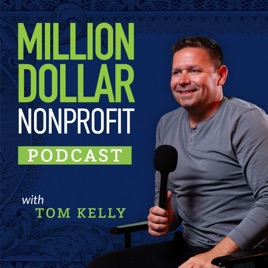
Advertise on podcast: Million Dollar Nonprofit
Rating
5from
This podcast has
381 episodes
Language
EnglishPublisher
Tom KellyExplicit
No
Date created
2023/10/31
Latest episode
2026/08/13
Average duration
7 min.
Release period
4 days
Description
Welcome to The Million Dollar Nonprofit — the daily podcast for small-but-mighty teams ready to scale their impact without burning out. Hosted by nonprofit growth strategist Tom Kelly, each episode delivers no-fluff strategies to raise more, automate smarter, and finally understand what’s working (and what’s not). Learn how to use AI tools, sharp messaging, and efficient systems to turn clicks into donations, casual supporters into loyal advocates, and your scrappy org into a million-dollar nonprofit. Whether you're solo or leading a small team, this is your playbook for sustainable, scalable fundraising that actually works.
Unlock Million Dollar Nonprofit podcast Email contact info,
Listeners & Audience details
Email contact information
Direct podcast contact details

Listeners
Audience numbers & engagement insights

Audience details
Podcast Insights

Podcast episodes
Check latest episodes from Million Dollar Nonprofit podcast
Live vs. Silent Auctions: The Data Behind the Hybrid Model
2026/08/13
Your board wants a live auction because they think it brings more energy. You want a silent auction because it is easier to run and lets guests mingle. It is the most common debate in event planning, and today we are ending it with data.
A live auction generates twenty to thirty percent more revenue on premium items, but it only engages the top five percent of your room. A silent auction engages the other ninety-five percent, making it your best donor acquisition tool. In this episode, we break down exactly when a live auction wins, when a silent auction wins, and how to structure the "Hybrid Model" timeline to maximize revenue from both without exhausting your guests before the paddle raise.
What You'll Learn:
• Why live auctions win on the "Revenue Per Item" metric and why you should never sell more than seven items with an auctioneer.
• How the silent auction dominates the "Audience Factor" by turning passive spectators into active, first-time donors.
• The exact timeline for the "Hybrid Model" that captures high-end competition without draining the room's energy.
Timestamps:
[00:00]: # "Introduction — the great auction debate"
[00:45]: # "Sponsor: CharityAuctions.com"
[01:30]: # "Revenue Per Item: Why live auctions dominate premium packages"
[03:30]: # "The Audience Factor: Why silent auctions win on participation"
[05:30]: # "The Hybrid Model: Structuring the perfect event timeline"
[07:30]: # "Recap & Free Resource"
Resources Mentioned:
• Free Event Night Checklist (50-Point): CharityAuctions.com/event-checklist
• Book a Free Demo: CharityAuctions.com/demo
Follow the show so you never miss a daily tip. Leave a 5-star review on Apple Podcasts — it takes 30 seconds and helps us reach more fundraisers. Visit CharityAuctions.com to see the platform behind the data we share every day.
What Donors Think in the 60 Seconds Before They Give
2026/08/11
A donor lands on your giving page, holding their credit card, ready to give. Then they pause, look at the form, and close the tab. You just lost a gift that was ninety-nine percent complete because you did not understand the sixty-second internal monologue happening before the transaction.
When a donor abandons your page, they are talking themselves out of the gift based on three predictable psychological triggers. In this episode, we map the exact 60-second decision sequence that happens when a donor lands on your site. We break down the silent questions they are asking and the specific page edits you can make today to capture the revenue you already earned.
What You'll Learn:
• How to pass the 10-second visual "Credibility Scan" before the donor reads a single word of your mission statement.
• Why you must tie specific dollar amounts to human outcomes to beat the "Impact Doubt" in the middle of the minute.
• How to identify and remove the "Exit Triggers" on your giving form that create friction and cause donors to quit.
Timestamps:
[00:00]: # "Introduction — losing the gift at the finish line"
[00:45]: # "Sponsor: CharityAuctions.com"
[01:30]: # "Seconds 0–10: Passing the visual Credibility Scan"
[03:30]: # "Seconds 11–40: Beating the Impact Doubt"
[05:30]: # "Seconds 41–60: Removing the Exit Triggers"
[07:30]: # "Recap & Free Resource"
Resources Mentioned:
• Free Event Night Checklist (50-Point): CharityAuctions.com/event-checklist
• Book a Free Demo: CharityAuctions.com/demo
Follow the show so you never miss a daily tip. Leave a 5-star review on Apple Podcasts — it takes 30 seconds and helps us reach more fundraisers. Visit CharityAuctions.com to see the platform behind the data we share every day.
The Post-Event System That Captures $41,000 in Hidden Revenue
2026/08/06
Your gala just ended, the room was full, and the paddle raise hit your goal. You go home feeling like you won. But a second revenue window opened the moment your event ended — and for most nonprofits, it closes without a single dollar coming through.
Organizations that understand post-event follow-up routinely capture $41,000 or more in secondary revenue, while those that skip it leave that money on the table. Donor responsiveness drops by more than 50 percent after two days with no contact. In this episode, we break down the exact three-part follow-up system that captures this hidden revenue before the 48-hour window closes.
What You'll Learn:
• Why sending a mission-anchored thank-you within 24 hours prevents the massive 48-hour drop in donor responsiveness.
• How to frame the Day 7 "Warm Re-Ask" as the next chapter of your event story rather than a cold solicitation.
• The exact "Lapsed Donor Rescue" email script that brings back supporters who skipped this year's event.
Timestamps:
[00:00]: # "Introduction — the second revenue window"
[00:45]: # "Sponsor: CharityAuctions.com"
[01:30]: # "The 48-Hour Lapse: Why speed beats perfection"
[03:30]: # "The Warm Re-Ask: Framing the 7-day follow-up"
[05:30]: # "The Lapsed Donor Rescue: Reconnecting honestly"
[07:30]: # "Recap & Free Resource"
Resources Mentioned:
• Free Donor Thank-You Email Templates (5-Pack): CharityAuctions.com/donor-emails
• Book a Free Demo: CharityAuctions.com/demo
Follow the show so you never miss a daily tip. Leave a 5-star review on Apple Podcasts — it takes 30 seconds and helps us reach more fundraisers. Visit CharityAuctions.com to see the platform behind the data we share every day.
What "Double Your Bids" Actually Means (And How to Do It)
2026/08/04
If your silent auction items are closing with only one or two bids, you are leaving half your potential revenue on the table. The frustrating part is that the bidders are already in the room — they just never came back to the bid sheet.
Doubling your bid count does not mean finding more bidders; it means re-engaging the ones who already raised their hands once. Most organizers accidentally suppress bidding by using default platform settings that were designed for convenience, not for charity auctions. In this episode, we break down the three specific mechanics you can implement before your next event to lower the barrier to entry, make competition visible, and pull outbid guests back to the table.
What You'll Learn:
• Why the "Bid Increment Trap" is the most common reason auctions underperform and the exact percentage to use instead.
• How to use the "Social Proof Nudge" to make bid activity visible and contagious, whether on mobile or paper.
• The exact 10-word "Re-Engagement Text" to send in the final fifteen minutes that lifts return bid rates by up to 40 percent.
Timestamps:
[00:00]: # "Introduction — why items close with one bid"
[00:45]: # "Sponsor: CharityAuctions.com"
[01:30]: # "Mechanic 1: Fixing the Bid Increment Trap"
[03:30]: # "Mechanic 2: The Social Proof Nudge"
[05:30]: # "Mechanic 3: The Re-Engagement Text (15-minute warning)"
[07:30]: # "Recap & Free Resource"
Resources Mentioned:
• Free Silent Auction Pricing Calculator: CharityAuctions.com/pricing-calculator
• Book a Free Demo: CharityAuctions.com/demo
Follow the show so you never miss a daily tip. Leave a 5-star review on Apple Podcasts — it takes 30 seconds and helps us reach more fundraisers. Visit CharityAuctions.com to see the platform behind the data we share every day.
What Donors Are Thinking in the 60 Seconds Before They Give
2026/07/30
Your donor clicked the link, they are on your donation page, and their credit card is ready. But something happens in that final minute: they hesitate, they look at the form, and they close the tab. You just lost a gift that was ninety-nine percent complete.
Every development director fears losing a donor at the finish line. When a donor abandons your page, it is almost never because they changed their mind about your mission — it is because the experience on the page killed the donation. In this episode, we break down the exact internal monologue of a donor in those final sixty seconds, the three silent questions they ask, and how to fix your page to capture the revenue you already earned.
What You'll Learn:
• How to pass the 10-second visual "Trust Check" before the donor reads a single word of your copy.
• Why you must tie specific dollar amounts to human outcomes to beat the "Impact Doubt" in the middle of the minute.
• How to conduct a "Friction Audit" to remove the fields and links that cause donors to abandon the transaction.
Timestamps:
[00:00]: # "Introduction — losing the gift at the finish line"
[00:45]: # "Sponsor: CharityAuctions.com"
[01:30]: # "Seconds 0–10: Passing the visual Trust Check"
[03:00]: # "Seconds 11–30: Beating the Impact Doubt"
[05:00]: # "Seconds 31–60: Conducting a Friction Audit"
[07:00]: # "Recap & Free Resource"
Resources Mentioned:
• Free Donor Thank-You Email Templates (5-Pack): CharityAuctions.com/donor-emails
• Book a Free Demo: CharityAuctions.com/demo
Follow the show so you never miss a daily tip. Leave a 5-star review on Apple Podcasts — it takes 30 seconds and helps us reach more fundraisers. Visit CharityAuctions.com to see the platform behind the data we share every day.
What the Top 10% of Silent Auctions Do in the Final Hour
2026/07/28
Most silent auction organizers spend the final sixty minutes of their event hoping guests will keep bidding. Elite organizers do not wait — they use the final hour to actively manufacture urgency and drive a late revenue surge that changes the total.
If your final hour feels like a slow deflation where guests drift toward the bar and ignore the bid sheets, you are leaving money on the table. In this episode, we break down the three specific tactics the top ten percent of auctions use to capture every dollar in the room before the doors close. These tactics cost nothing, require zero new technology, and can be implemented at your very next event.
What You'll Learn:
• How to rewrite your "Closing Countdown" script so it anchors to the mission rather than just the clock.
• The "Bid Clustering" geography tactic that saves slow-moving items in the final twenty minutes.
• How to train one volunteer for the "Floor Walk" to personally invite outbid guests back into the auction.
Timestamps:
[00:00]: # "Introduction — the final hour deflation problem"
[00:45]: # "Sponsor: CharityAuctions.com"
[01:30]: # "Tactic 1: The mission-anchored Closing Countdown script"
[03:30]: # "Tactic 2: Bid Clustering near high-traffic areas"
[05:30]: # "Tactic 3: The VIP Floor Walk to instigate late bids"
[07:30]: # "Recap & Free Resource"
Resources Mentioned:
• Free Event Night Checklist (50-Point): CharityAuctions.com/event-checklist
• Book a Free Demo: CharityAuctions.com/demo
Follow the show so you never miss a daily tip. Leave a 5-star review on Apple Podcasts — it takes 30 seconds and helps us reach more fundraisers. Visit CharityAuctions.com to see the platform behind the data we share every day.
The 3-Sentence Auction Item Description That Doubles Bids
2026/07/23
If your silent auction items are closing at the starting bid, the problem is not the item — it is the copy. Most organizations write item descriptions that read like receipts. And nobody bids on a receipt.
When you list an item as a "two-hour massage and facial, value three hundred dollars," you are selling facts. But bidders do not bid on facts; they bid on what the facts make them feel. In this episode, we break down the exact three-sentence copywriting formula that turns any silent auction item into an experience people actively compete for.
What You'll Learn:
• How to write an "Experience Hook" that places the bidder inside the moment before they read a single feature.
• Why the "Value Anchor" must go in the second sentence to make your starting bid feel like an immediate bargain.
• The "Exclusivity Kicker" that answers the one question every bidder asks and creates the urgency needed for a bidding war.
Timestamps:
[00:00]: # "Introduction — why nobody bids on a receipt"
[00:45]: # "Sponsor: CharityAuctions.com"
[01:30]: # "Experiential value framing: selling feelings, not facts"
[02:45]: # "Sentence 1: The Experience Hook"
[04:30]: # "Sentence 2: The Value Anchor"
[06:15]: # "Sentence 3: The Exclusivity Kicker"
[08:00]: # "Recap & Free Resource"
Resources Mentioned:
• Free AI Auction Item Description Generator: CharityAuctions.com/item-descriptions
• Book a Free Demo: CharityAuctions.com/demo
Follow the show so you never miss a daily tip. Leave a 5-star review on Apple Podcasts — it takes 30 seconds and helps us reach more fundraisers. Visit CharityAuctions.com to see the platform behind the data we share every day.
Why Donors Bounce from Your LinkedIn Profile in 8 Seconds
2026/07/21
A corporate sponsor just found you on LinkedIn, clicked your profile, and decided whether to reach out or move on in exactly eight seconds. Most fundraisers treat their LinkedIn profile like a resume, which gives potential major donors and corporate partners absolutely no reason to stay.
When a donor lands on your profile, they only see three things before scrolling: your headline, your photo, and the first line of your About section. If those elements do not immediately communicate what you make possible for them, they bounce. In this episode, we break down the three specific profile fixes you can make in under thirty minutes to turn your LinkedIn presence from a static resume into an active donor acquisition channel.
What You'll Learn:
• How to rewrite your headline from a static job title into a promise that ranks in LinkedIn search.
• Why the Featured section is the most valuable real estate on your profile and exactly what proof point to pin there.
• The one-sentence pivot for your About section that centers the donor's outcome instead of your past experience.
Timestamps:
[00:00]: # "Introduction — the 8-second LinkedIn bounce rate"
[00:45]: # "Sponsor: CharityAuctions.com"
[01:30]: # "The resume mistake: what donors see before they scroll"
[02:45]: # "Fix 1: The Headline Hook"
[04:30]: # "Fix 2: The Featured Section Trap"
[06:15]: # "Fix 3: The About Section Pivot"
[08:00]: # "Recap & Free Resource"
Resources Mentioned:
• Free 12-Month Fundraising Calendar Template: CharityAuctions.com/fundraising-calendar
• Book a Free Demo: CharityAuctions.com/demo
Follow the show so you never miss a daily tip. Leave a 5-star review on Apple Podcasts — it takes 30 seconds and helps us reach more fundraisers. Visit CharityAuctions.com to see the platform behind the data we share every day.
70% of First-Time Donors Disappear. This 14-Day Fix Stops It
2026/07/16
Seventy percent of first-time donors never give a second gift — not because they were unhappy, but because nobody gave them a reason to stay. The fourteen days right after your event are the only window that changes that number.
If your only follow-up touch after an event is an automated tax receipt, you are telling your newest supporters they are a transaction, not a partner. Retention is not won at year-end; it is won in the first two weeks with three specific, well-timed messages. In this episode, we walk through the exact 14-day, copy-and-paste sequence that interrupts the normal attrition pattern and converts one-time event attendees into durable, monthly supporters.
What You'll Learn:
• Why sending an "impact receipt" within 48 hours can lift second-gift rates by nearly 40 percent.
• The exact structure of the Day 7 "no-ask update" that builds trust and makes your next email welcome.
• How to frame the Day 14 soft recurring gift invitation so it feels like an easy, high-impact community upgrade.
Timestamps:
[00:00]: # "Introduction — the 70% first-time donor attrition stat"
[00:45]: # "Sponsor: CharityAuctions.com"
[01:30]: # "Why the first 14 days determine your retention curve"
[02:45]: # "Step 1: The impact receipt (Day 1–2)"
[04:30]: # "Step 2: The behind-the-scenes no-ask update (Day 7)"
[06:15]: # "Step 3: The soft recurring gift invitation (Day 14)"
[08:00]: # "Recap & Free Resource"
Resources Mentioned:
• Free Donor Thank-You Email Templates (5-Pack): CharityAuctions.com/donor-emails
• Book a Free Demo: CharityAuctions.com/demo
Follow the show so you never miss a daily tip. Leave a 5-star review on Apple Podcasts — it takes 30 seconds and helps us reach more fundraisers. Visit CharityAuctions.com to see the platform behind the data we share every day.
The 30% Starting Bid Rule That Triggers Silent Auction Wars
2026/07/14
Items that receive a bid in the first thirty minutes of your event attract three times more total bids by the end of the night. Items that sit empty early usually stay empty. The difference is almost never the item itself — it is the starting bid you set before the doors ever opened.
Most committees instinctively set silent auction starting bids at fifty percent of fair market value. This creates a "cold start" problem, where the opening price is just high enough to scare away the crucial first bidder. In this episode, we break down the exact three-step psychological formula for setting starting bids, engineering early action, and using premium pricing anchors to guarantee a bidding war.
What You'll Learn:
• Why setting your silent auction pricing at 30 percent of retail actually leads to higher final closing bids.
• How to leverage auction psychology and recruited early bidders to overcome the cold start problem in the first 15 minutes.
• The exact formula for setting a buy it now price that acts as a psychological anchor rather than an early exit ramp.
Timestamps:
[00:00]: # "Introduction — the loudest silence in the ballroom"
[00:50]: # "Sponsor: CharityAuctions.com"
[01:45]: # "Why most starting bids fail: the cold start problem"
[03:00]: # "Step 1: The 30% rule — set starting bids at 30% of fair market value"
[05:00]: # "Step 2: Engineer the first bid with recruited early bidders"
[06:45]: # "Step 3: Use Buy It Now at 150% of FMV as a price anchor"
[08:15]: # "Recap & Free Resource"
Resources Mentioned:
• Free Silent Auction Pricing Calculator: CharityAuctions.com/pricing-calculator
• Book a Free Demo: CharityAuctions.com/demo
Follow the show so you never miss a daily tip. Leave a 5-star review on Apple Podcasts — it takes 30 seconds and helps us reach more fundraisers. Visit CharityAuctions.com to see the platform behind the data we share every day.
Your Donation Page Is Losing Donors in the First 8 Seconds
2026/07/09
Your donation page has exactly eight seconds to earn a visitor's trust before they leave for good. Most nonprofit pages are designed as if donors have all the time in the world to read paragraphs of text — and it is quietly killing conversions on every campaign you run.
When someone lands on your page, their brain is not reading; it is scanning for trust signals. If your headline is about your organization instead of the donor, or if your page lacks immediate social proof, the visitor defaults to the safest decision: leaving. In this episode, we break down the three most common donation page conversion killers and the one-sentence fixes you can implement for each one in under twenty minutes.
What You'll Learn:
• How to rewrite your donation page headline so the donor becomes the hero of the story.
• Why your lowest suggested donation amount might be anchoring your donors downward and leaving money on the table.
• The exact type of social proof you need above the fold to convert a skeptical first-time visitor.
Timestamps:
[00:00]: # "Introduction — the 8-second donation page problem"
[00:50]: # "Sponsor: CharityAuctions.com"
[01:30]: # "What happens in the first 8 seconds: trust signals"
[02:30]: # "Killer 1: A headline about you instead of the donor"
[04:15]: # "Killer 2: Suggested gift amounts that anchor too low"
[06:00]: # "Killer 3: No social proof above the fold"
[07:45]: # "Recap & Free Resource"
Resources Mentioned:
• Free Donation Page Audit Checklist: CharityAuctions.com/page-audit
• Book a Free Demo: CharityAuctions.com/demo
Follow the show so you never miss a daily tip. Leave a 5-star review on Apple Podcasts — it takes 30 seconds and helps us reach more fundraisers. Visit CharityAuctions.com to see the platform behind the data we share every day
The 3-Email Sequence That Triples Monthly Donor Conversions
2026/07/07
Most nonprofits ask for a monthly gift at exactly the wrong moment and it is costing them two-thirds of their potential recurring donors. Donors who receive this specific three-message follow-up sequence convert to monthly giving at three times the rate of those who get a single thank-you email.
When someone bids at your auction or donates at your event, they are in a temporary, emotionally elevated state. If you wait until your annual appeal to ask for a recurring gift, you are treating it like a cold transaction. In this episode, we break down the exact timing and language for the 48-hour thank-you, the 14-day impact story, and the 30-day soft ask that turns one-time event attendees into reliable, long-term supporters.
What You'll Learn:
• The exact sentence to include in your 48-hour donor thank-you email to set up future contact.
• Why the 14-day follow-up must be a single human impact story with absolutely no ask attached.
• The exact word-for-word script for the 30-day soft ask that frames monthly giving as a low-risk community upgrade.
Timestamps:
[00:00]: # "Introduction — the wrong moment to ask for a monthly gift"
[00:45]: # "Sponsor: CharityAuctions.com"
[01:30]: # "Why timing matters: the emotional window after your event"
[02:45]: # "Message 1: The 48-hour thank-you that plants a seed"
[04:30]: # "Message 2: The 14-day impact story"
[06:15]: # "Message 3: The 30-day soft ask (word-for-word language)"
[08:00]: # "Recap & Free Resource"
Resources Mentioned:
• Free Donor Thank-You Email Templates (5-Pack): CharityAuctions.com/donor-emails
• Book a Free Demo: CharityAuctions.com/demo
Follow the show so you never miss a daily tip. Leave a 5-star review on Apple Podcasts, it takes 30 seconds and helps us reach more fundraisers. Visit CharityAuctions.com to see the platform behind the data we share every day.
The Last 10 Minutes of Your Silent Auction Are Worth $8,000
2026/07/02
The last ten minutes of your silent auction are worth more than the first two hours combined.
Most organizations have no idea, and because of that, they leave thousands of dollars on the table every single event.
In this episode, we break down the behavioral psychology behind the final-minutes bidding spike, why loss aversion is the most powerful force in your auction room, and the exact three-step system to engineer a last-minute surge intentionally.
This is one of the highest-leverage tactics you can implement before your next event, and it costs nothing to execute.
What You'll Learn:
• How to script a 10-minute warning announcement that activates loss aversion and drives a bidding spike.
• Why deploying volunteers to walk the room in the final minutes adds thousands in revenue.
• How a countdown close for your top items turns the end of your silent auction into a mini live auction.
Timestamps:
[00:00]: # "Introduction: The Final 10-Minute Revenue Window"
[00:45]: # "Sponsor: CharityAuctions.com"
[01:15]: # "The Psychology: Loss Aversion & Social Proof"
[02:45]: # "Step 1: Script Your 10-Minute Warning Announcement"
[04:30]: # "Step 2: Deploy Volunteers to Walk the Room"
[05:45]: # "Step 3: Use a Countdown Close for Top Items"
[07:30]: # "Recap & Free Resource"
Resources Mentioned:
• Free Platform Demo (see your real-time bidding data): charityauctions.com/demo
• Book a Free Demo: charityauctions.com/demo
Connect & Subscribe:
Follow the show so you never miss a daily tip. Leave a 5-star review on Apple Podcasts, it takes 30 seconds and helps us reach more fundraisers. Visit CharityAuctions.com to see the platform behind the data we share every day.
The 48-Hour Donor Thank-You Window That Saves Your Retention Rate
2026/06/30
Your event ended last night. Your donors are already forgetting. Not because they don't care, because life moves fast. And if you're not in front of them within 48 hours, you're losing donors you already earned.
In this episode, you'll learn the exact three-step follow-up system that turns one-time bidders into long-term supporters.
We break down why the 48-hour window is backed by donor psychology research, what a personal thank-you email must include to actually move people, and why a 30-second phone call to your top 25 donors is one of the highest-ROI activities in all of fundraising.
What You'll Learn:
• Why donor retention drops sharply when thank-yous are delayed past 48 hours.
• The three elements every post-event thank-you email must include to feel personal, not generic.
• How a 30-second phone call from your executive director can increase next-year giving.
Timestamps:
[00:00]: # "Introduction: The 48-Hour Window"
[00:45]: # "Sponsor: CharityAuctions.com"
[01:15]: # "Why Timing Is the #1 Retention Variable"
[02:30]: # "Step 1: Send a Personal Thank-You Email Within 24 Hours"
[04:00]: # "Step 2: Call Your Top 25 Donors Within 48 Hours"
[05:30]: # "Step 3: Post a Public Thank-You on Social Media"
[07:30]: # "Recap & Free Resource"
Resources Mentioned:
• Free Donor Thank-You Email Templates (5-Pack): charityauctions.com/donor-emails
• Book a Free Demo: charityauctions.com/demo
Connect & Subscribe:
Follow the show so you never miss a daily tip. Leave a 5-star review on Apple Podcasts, it takes 30 seconds and helps us reach more fundraisers.
Visit CharityAuctions.com to see the platform behind the data we share every day.
How to Raise $12,000 More by Fixing Your Silent Auction Timing
2026/06/24
Silent auction timing is the most overlooked revenue lever in nonprofit fundraising and today's episode shows you exactly how to fix it.
Most silent auctions close 30 minutes too early, costing nonprofits thousands in lost revenue. By adjusting your timeline and triggering the "scarcity effect," you can capture last-minute bids and consolation buyers. In this episode, we break down the exact 3-step closing strategy used by the highest-grossing events on the CharityAuctions.com platform.
What You'll Learn:
• Why staggering your closing times into three groups builds bidding urgency.
• The psychological power of the "10-minute warning" announcement.
• Why you should keep your final, highest-value items open during checkout.
Timestamps:
[00:00]: # "Introduction"
[00:42]: # "Sponsor: CharityAuctions.com"
[01:13]: # "The Problem: Closing Too Early"
[02:30]: # "Step 1: Separate Your Closing Times"
[03:30]: # "Step 2: The 10-Minute Warning"
[04:18]: # "Step 3: Keep the Auction Open During Checkout"
[05:00]: # "Recap & Free Resource"
Resources Mentioned:
• Free Silent Auction Pricing Calculator: charityauctions.com/pricing-calculator
• Book a Free Demo: charityauctions.com/demo
Connect & Subscribe:
Follow the show so you never miss a daily tip. Leave a 5-star review on Apple Podcasts, it takes 30 seconds and helps us reach more fundraisers. Visit CharityAuctions.com to see the platform behind the data we share every day.
Podcast reviews
Read Million Dollar Nonprofit podcast reviews
NDDillon 2026/09/25
Value
I was not aware of how to maximize our organization’s fundraising until I listened to Thanks!
Podcast sponsorship advertising
Start advertising on Million Dollar Nonprofit relevant audience podcasts
You may also like to advertise on these Podcasts

4.518765369
American Scandal
Audible

4.689281204
Get Sleepy: Sleep meditation and stories
Slumber Studios

4.79026375
Life is Short with Justin Long
Audible
4.714097347
Bad Friends
Bobby Lee & Andrew Santino

4.7125369
10 to Life
Annie Elise

4.76752461
Criminology
Emash Digital & Mike Ferguson, Mike Morford

4.87494971
The Dr. John Delony Show
Ramsey Network

4.512556659
RedHanded
RedHanded

4.942021993
Chente Ydrach
Chente Ydrach

4.959772000
Legal AF by MeidasTouch
MeidasTouch Network