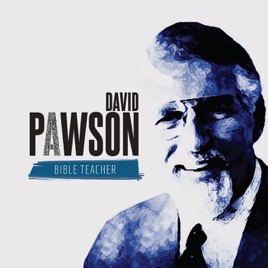
Advertise on podcast: David Pawson Ministry Podcast
Rating
4.9from
This podcast has
100 episodes
Language
EnglishPublisher
David Pawson Ministry CIOExplicit
No
Date created
2023/11/13
Latest episode
2026/09/29
Average duration
52 min.
Release period
7 days
Description
David Pawson - a speaker and author with uncompromising faithfulness to the scriptures, David brings clarity and a message of urgency to Christians looking to uncover hidden treasures in God’s Word. David is widely considered to be one of the world’s finest biblical expositors of modern times. In 2006 David established a Trust (now called The David Pawson Ministry CIO) as a nonprofit making trust designed to protect and promote his teaching for future years. David’s aim has always been to make all his teachings available freely worldwide. Find out more at www.davidpawson.org
Unlock David Pawson Ministry Podcast podcast Email contact info,
Listeners & Audience details
Email contact information
Direct podcast contact details

Listeners
Audience numbers & engagement insights

Audience details
Podcast Insights

Podcast episodes
Check latest episodes from David Pawson Ministry Podcast podcast
Problems of Faith - Part 3
2026/09/29
Part 3. God and Suffering
In these six talks, Problems of Faith, Pawson addresses major objections and dilemmas that often trouble Christian belief: other religions, war, suffering, miracles, healing, and capital punishment. He examines each topic through careful biblical exposition rather than simplistic slogans or isolated proof-texts. Presenting Christianity as uniquely grounded in God’s revelation through Jesus, while also wrestling honestly with the moral complexity of war, the mystery of suffering, and the possibility of divine intervention in miracles and healing. Throughout, he resists easy answers: suffering is not neatly explained, miracles cannot be dismissed by science alone, and healing requires discernment rather than rigid formulas.
A consistent thread running through the series is Pawson’s distinction between personal Christian conduct and the responsibilities of wider society or the state. He argues that believers must live by the values of Christ’s kingdom while also recognizing, in areas such as war and capital punishment, the biblical role of government in restraining evil and administering justice. His conclusions are often cautious and nuanced rather than absolute, but the overall emphasis is clear: Christians should think from the whole Bible, hold together truth and compassion, and approach difficult questions with humility, moral seriousness, and trust in God.
Problems of Faith - Part 2
2026/09/22
Part 2. Does God Approve of War?
In these six talks, Problems of Faith, Pawson addresses major objections and dilemmas that often trouble Christian belief: other religions, war, suffering, miracles, healing, and capital punishment. He examines each topic through careful biblical exposition rather than simplistic slogans or isolated proof-texts. Presenting Christianity as uniquely grounded in God’s revelation through Jesus, while also wrestling honestly with the moral complexity of war, the mystery of suffering, and the possibility of divine intervention in miracles and healing. Throughout, he resists easy answers: suffering is not neatly explained, miracles cannot be dismissed by science alone, and healing requires discernment rather than rigid formulas.
A consistent thread running through the series is Pawson’s distinction between personal Christian conduct and the responsibilities of wider society or the state. He argues that believers must live by the values of Christ’s kingdom while also recognizing, in areas such as war and capital punishment, the biblical role of government in restraining evil and administering justice. His conclusions are often cautious and nuanced rather than absolute, but the overall emphasis is clear: Christians should think from the whole Bible, hold together truth and compassion, and approach difficult questions with humility, moral seriousness, and trust in God.
Problems of Faith - Part 1
2026/09/15
Part 1. What About Other Religions?
In these six talks, Problems of Faith, Pawson addresses major objections and dilemmas that often trouble Christian belief: other religions, war, suffering, miracles, healing, and capital punishment. He examines each topic through careful biblical exposition rather than simplistic slogans or isolated proof-texts. Presenting Christianity as uniquely grounded in God’s revelation through Jesus, while also wrestling honestly with the moral complexity of war, the mystery of suffering, and the possibility of divine intervention in miracles and healing. Throughout, he resists easy answers: suffering is not neatly explained, miracles cannot be dismissed by science alone, and healing requires discernment rather than rigid formulas.
A consistent thread running through the series is Pawson’s distinction between personal Christian conduct and the responsibilities of wider society or the state. He argues that believers must live by the values of Christ’s kingdom while also recognizing, in areas such as war and capital punishment, the biblical role of government in restraining evil and administering justice. His conclusions are often cautious and nuanced rather than absolute, but the overall emphasis is clear: Christians should think from the whole Bible, hold together truth and compassion, and approach difficult questions with humility, moral seriousness, and trust in God.
Church Membership - Part 16
2026/09/08
Part 16. Into The World
Drawing on his experience of pastoring a church that modelled itself on the New Testament church, David Pawson argues that the latter’s governance was not that of a democracy but was instead founded on “corporate leadership”. This structure enables a church that adopts it to “become not only self-governing but also self-supporting”. David states that “the scriptural pattern for the church is elders with a distinction recognised between pastor elders and teacher elders,” including “a presiding elder”, and “elders and deacons” working “together”, crucially with Christ as head of the church. David regards this as a model for the modern church.
To those who view churchgoing as an optional extra, or select their church based on preference rather than proximity to their home, the emphasis on corporate leadership with an involved membership may come as a shock. It is a focus on structure and discipline that differs markedly from the approach taken in some denominations. In the New Testament church, the membership will experience every facet of church life with the goal of enabling the church body to worship as one, have fellowship with each other, evangelise, and establish the building as a prominent place of worship in the community. This requires obedience to God and the elders who serve him. The emphasis on discipline and obedience (to God and the leadership) will surprise some readers (and churchgoers) who are used to other approaches to governance.
There are further surprises. In tackling the issue of money, David discusses legitimate and illegitimate ways of earning for members of the church. In addressing the issue of giving, he critiques modern tithing, arguing that instead members should give in proportion to their wealth rather than a set sum. Giving, which he sees as a form of worship, must be motivated by a sense of gratitude towards God—a feeling that is also experienced when receiving communion. This is a vision of an inclusive church that enables fellowship between people from diverse backgrounds who are brought together as one body in Christ.
Church Membership - Part 15
2026/09/01
Part 15. Open my eyes
Drawing on his experience of pastoring a church that modelled itself on the New Testament church, David Pawson argues that the latter’s governance was not that of a democracy but was instead founded on “corporate leadership”. This structure enables a church that adopts it to “become not only self-governing but also self-supporting”. David states that “the scriptural pattern for the church is elders with a distinction recognised between pastor elders and teacher elders,” including “a presiding elder”, and “elders and deacons” working “together”, crucially with Christ as head of the church. David regards this as a model for the modern church.
To those who view churchgoing as an optional extra, or select their church based on preference rather than proximity to their home, the emphasis on corporate leadership with an involved membership may come as a shock. It is a focus on structure and discipline that differs markedly from the approach taken in some denominations. In the New Testament church, the membership will experience every facet of church life with the goal of enabling the church body to worship as one, have fellowship with each other, evangelise, and establish the building as a prominent place of worship in the community. This requires obedience to God and the elders who serve him. The emphasis on discipline and obedience (to God and the leadership) will surprise some readers (and churchgoers) who are used to other approaches to governance.
There are further surprises. In tackling the issue of money, David discusses legitimate and illegitimate ways of earning for members of the church. In addressing the issue of giving, he critiques modern tithing, arguing that instead members should give in proportion to their wealth rather than a set sum. Giving, which he sees as a form of worship, must be motivated by a sense of gratitude towards God—a feeling that is also experienced when receiving communion. This is a vision of an inclusive church that enables fellowship between people from diverse backgrounds who are brought together as one body in Christ.
Church Membership - Part 14
2026/08/25
Part 14. Personal Relationships
Drawing on his experience of pastoring a church that modelled itself on the New Testament church, David Pawson argues that the latter’s governance was not that of a democracy but was instead founded on “corporate leadership”. This structure enables a church that adopts it to “become not only self-governing but also self-supporting”. David states that “the scriptural pattern for the church is elders with a distinction recognised between pastor elders and teacher elders,” including “a presiding elder”, and “elders and deacons” working “together”, crucially with Christ as head of the church. David regards this as a model for the modern church.
To those who view churchgoing as an optional extra, or select their church based on preference rather than proximity to their home, the emphasis on corporate leadership with an involved membership may come as a shock. It is a focus on structure and discipline that differs markedly from the approach taken in some denominations. In the New Testament church, the membership will experience every facet of church life with the goal of enabling the church body to worship as one, have fellowship with each other, evangelise, and establish the building as a prominent place of worship in the community. This requires obedience to God and the elders who serve him. The emphasis on discipline and obedience (to God and the leadership) will surprise some readers (and churchgoers) who are used to other approaches to governance.
There are further surprises. In tackling the issue of money, David discusses legitimate and illegitimate ways of earning for members of the church. In addressing the issue of giving, he critiques modern tithing, arguing that instead members should give in proportion to their wealth rather than a set sum. Giving, which he sees as a form of worship, must be motivated by a sense of gratitude towards God—a feeling that is also experienced when receiving communion. This is a vision of an inclusive church that enables fellowship between people from diverse backgrounds who are brought together as one body in Christ.
Church Membership - Part 13
2026/08/18
Part 13. Obedience - John chapter 14
Drawing on his experience of pastoring a church that modelled itself on the New Testament church, David Pawson argues that the latter’s governance was not that of a democracy but was instead founded on “corporate leadership”. This structure enables a church that adopts it to “become not only self-governing but also self-supporting”. David states that “the scriptural pattern for the church is elders with a distinction recognised between pastor elders and teacher elders,” including “a presiding elder”, and “elders and deacons” working “together”, crucially with Christ as head of the church. David regards this as a model for the modern church.
To those who view churchgoing as an optional extra, or select their church based on preference rather than proximity to their home, the emphasis on corporate leadership with an involved membership may come as a shock. It is a focus on structure and discipline that differs markedly from the approach taken in some denominations. In the New Testament church, the membership will experience every facet of church life with the goal of enabling the church body to worship as one, have fellowship with each other, evangelise, and establish the building as a prominent place of worship in the community. This requires obedience to God and the elders who serve him. The emphasis on discipline and obedience (to God and the leadership) will surprise some readers (and churchgoers) who are used to other approaches to governance.
There are further surprises. In tackling the issue of money, David discusses legitimate and illegitimate ways of earning for members of the church. In addressing the issue of giving, he critiques modern tithing, arguing that instead members should give in proportion to their wealth rather than a set sum. Giving, which he sees as a form of worship, must be motivated by a sense of gratitude towards God—a feeling that is also experienced when receiving communion. This is a vision of an inclusive church that enables fellowship between people from diverse backgrounds who are brought together as one body in Christ.
Church Membership - Part 12
2026/08/11
Part 12. The Church is a Family
Drawing on his experience of pastoring a church that modelled itself on the New Testament church, David Pawson argues that the latter’s governance was not that of a democracy but was instead founded on “corporate leadership”. This structure enables a church that adopts it to “become not only self-governing but also self-supporting”. David states that “the scriptural pattern for the church is elders with a distinction recognised between pastor elders and teacher elders,” including “a presiding elder”, and “elders and deacons” working “together”, crucially with Christ as head of the church. David regards this as a model for the modern church.
To those who view churchgoing as an optional extra, or select their church based on preference rather than proximity to their home, the emphasis on corporate leadership with an involved membership may come as a shock. It is a focus on structure and discipline that differs markedly from the approach taken in some denominations. In the New Testament church, the membership will experience every facet of church life with the goal of enabling the church body to worship as one, have fellowship with each other, evangelise, and establish the building as a prominent place of worship in the community. This requires obedience to God and the elders who serve him. The emphasis on discipline and obedience (to God and the leadership) will surprise some readers (and churchgoers) who are used to other approaches to governance.
There are further surprises. In tackling the issue of money, David discusses legitimate and illegitimate ways of earning for members of the church. In addressing the issue of giving, he critiques modern tithing, arguing that instead members should give in proportion to their wealth rather than a set sum. Giving, which he sees as a form of worship, must be motivated by a sense of gratitude towards God—a feeling that is also experienced when receiving communion. This is a vision of an inclusive church that enables fellowship between people from diverse backgrounds who are brought together as one body in Christ.
Church Membership - Part 11
2026/08/04
Part 11. Church Government
Drawing on his experience of pastoring a church that modelled itself on the New Testament church, David Pawson argues that the latter’s governance was not that of a democracy but was instead founded on “corporate leadership”. This structure enables a church that adopts it to “become not only self-governing but also self-supporting”. David states that “the scriptural pattern for the church is elders with a distinction recognised between pastor elders and teacher elders,” including “a presiding elder”, and “elders and deacons” working “together”, crucially with Christ as head of the church. David regards this as a model for the modern church.
To those who view churchgoing as an optional extra, or select their church based on preference rather than proximity to their home, the emphasis on corporate leadership with an involved membership may come as a shock. It is a focus on structure and discipline that differs markedly from the approach taken in some denominations. In the New Testament church, the membership will experience every facet of church life with the goal of enabling the church body to worship as one, have fellowship with each other, evangelise, and establish the building as a prominent place of worship in the community. This requires obedience to God and the elders who serve him. The emphasis on discipline and obedience (to God and the leadership) will surprise some readers (and churchgoers) who are used to other approaches to governance.
There are further surprises. In tackling the issue of money, David discusses legitimate and illegitimate ways of earning for members of the church. In addressing the issue of giving, he critiques modern tithing, arguing that instead members should give in proportion to their wealth rather than a set sum. Giving, which he sees as a form of worship, must be motivated by a sense of gratitude towards God—a feeling that is also experienced when receiving communion. This is a vision of an inclusive church that enables fellowship between people from diverse backgrounds who are brought together as one body in Christ.
Church Membership - Part 10
2026/07/28
Part 10. The Local Church
Drawing on his experience of pastoring a church that modelled itself on the New Testament church, David Pawson argues that the latter’s governance was not that of a democracy but was instead founded on “corporate leadership”. This structure enables a church that adopts it to “become not only self-governing but also self-supporting”. David states that “the scriptural pattern for the church is elders with a distinction recognised between pastor elders and teacher elders,” including “a presiding elder”, and “elders and deacons” working “together”, crucially with Christ as head of the church. David regards this as a model for the modern church.
To those who view churchgoing as an optional extra, or select their church based on preference rather than proximity to their home, the emphasis on corporate leadership with an involved membership may come as a shock. It is a focus on structure and discipline that differs markedly from the approach taken in some denominations. In the New Testament church, the membership will experience every facet of church life with the goal of enabling the church body to worship as one, have fellowship with each other, evangelise, and establish the building as a prominent place of worship in the community. This requires obedience to God and the elders who serve him. The emphasis on discipline and obedience (to God and the leadership) will surprise some readers (and churchgoers) who are used to other approaches to governance.
There are further surprises. In tackling the issue of money, David discusses legitimate and illegitimate ways of earning for members of the church. In addressing the issue of giving, he critiques modern tithing, arguing that instead members should give in proportion to their wealth rather than a set sum. Giving, which he sees as a form of worship, must be motivated by a sense of gratitude towards God—a feeling that is also experienced when receiving communion. This is a vision of an inclusive church that enables fellowship between people from diverse backgrounds who are brought together as one body in Christ.
Church Membership - Part 9
2026/07/21
Part 9. Evangelism
Drawing on his experience of pastoring a church that modelled itself on the New Testament church, David Pawson argues that the latter’s governance was not that of a democracy but was instead founded on “corporate leadership”. This structure enables a church that adopts it to “become not only self-governing but also self-supporting”. David states that “the scriptural pattern for the church is elders with a distinction recognised between pastor elders and teacher elders,” including “a presiding elder”, and “elders and deacons” working “together”, crucially with Christ as head of the church. David regards this as a model for the modern church.
To those who view churchgoing as an optional extra, or select their church based on preference rather than proximity to their home, the emphasis on corporate leadership with an involved membership may come as a shock. It is a focus on structure and discipline that differs markedly from the approach taken in some denominations. In the New Testament church, the membership will experience every facet of church life with the goal of enabling the church body to worship as one, have fellowship with each other, evangelise, and establish the building as a prominent place of worship in the community. This requires obedience to God and the elders who serve him. The emphasis on discipline and obedience (to God and the leadership) will surprise some readers (and churchgoers) who are used to other approaches to governance.
There are further surprises. In tackling the issue of money, David discusses legitimate and illegitimate ways of earning for members of the church. In addressing the issue of giving, he critiques modern tithing, arguing that instead members should give in proportion to their wealth rather than a set sum. Giving, which he sees as a form of worship, must be motivated by a sense of gratitude towards God—a feeling that is also experienced when receiving communion. This is a vision of an inclusive church that enables fellowship between people from diverse backgrounds who are brought together as one body in Christ.
Church Membership - Part 8
2026/07/14
Part 8. Money
Drawing on his experience of pastoring a church that modelled itself on the New Testament church, David Pawson argues that the latter’s governance was not that of a democracy but was instead founded on “corporate leadership”. This structure enables a church that adopts it to “become not only self-governing but also self-supporting”. David states that “the scriptural pattern for the church is elders with a distinction recognised between pastor elders and teacher elders,” including “a presiding elder”, and “elders and deacons” working “together”, crucially with Christ as head of the church. David regards this as a model for the modern church.
To those who view churchgoing as an optional extra, or select their church based on preference rather than proximity to their home, the emphasis on corporate leadership with an involved membership may come as a shock. It is a focus on structure and discipline that differs markedly from the approach taken in some denominations. In the New Testament church, the membership will experience every facet of church life with the goal of enabling the church body to worship as one, have fellowship with each other, evangelise, and establish the building as a prominent place of worship in the community. This requires obedience to God and the elders who serve him. The emphasis on discipline and obedience (to God and the leadership) will surprise some readers (and churchgoers) who are used to other approaches to governance.
There are further surprises. In tackling the issue of money, David discusses legitimate and illegitimate ways of earning for members of the church. In addressing the issue of giving, he critiques modern tithing, arguing that instead members should give in proportion to their wealth rather than a set sum. Giving, which he sees as a form of worship, must be motivated by a sense of gratitude towards God—a feeling that is also experienced when receiving communion. This is a vision of an inclusive church that enables fellowship between people from diverse backgrounds who are brought together as one body in Christ.
Church Membership - Part 7
2026/07/07
Part 7. On Doing Good
Drawing on his experience of pastoring a church that modelled itself on the New Testament church, David Pawson argues that the latter’s governance was not that of a democracy but was instead founded on “corporate leadership”. This structure enables a church that adopts it to “become not only self-governing but also self-supporting”. David states that “the scriptural pattern for the church is elders with a distinction recognised between pastor elders and teacher elders,” including “a presiding elder”, and “elders and deacons” working “together”, crucially with Christ as head of the church. David regards this as a model for the modern church.
To those who view churchgoing as an optional extra, or select their church based on preference rather than proximity to their home, the emphasis on corporate leadership with an involved membership may come as a shock. It is a focus on structure and discipline that differs markedly from the approach taken in some denominations. In the New Testament church, the membership will experience every facet of church life with the goal of enabling the church body to worship as one, have fellowship with each other, evangelise, and establish the building as a prominent place of worship in the community. This requires obedience to God and the elders who serve him. The emphasis on discipline and obedience (to God and the leadership) will surprise some readers (and churchgoers) who are used to other approaches to governance.
There are further surprises. In tackling the issue of money, David discusses legitimate and illegitimate ways of earning for members of the church. In addressing the issue of giving, he critiques modern tithing, arguing that instead members should give in proportion to their wealth rather than a set sum. Giving, which he sees as a form of worship, must be motivated by a sense of gratitude towards God—a feeling that is also experienced when receiving communion. This is a vision of an inclusive church that enables fellowship between people from diverse backgrounds who are brought together as one body in Christ.
Church Membership - Part 6
2026/06/30
Part 6. Fellowship
Drawing on his experience of pastoring a church that modelled itself on the New Testament church, David Pawson argues that the latter’s governance was not that of a democracy but was instead founded on “corporate leadership”. This structure enables a church that adopts it to “become not only self-governing but also self-supporting”. David states that “the scriptural pattern for the church is elders with a distinction recognised between pastor elders and teacher elders,” including “a presiding elder”, and “elders and deacons” working “together”, crucially with Christ as head of the church. David regards this as a model for the modern church.
To those who view churchgoing as an optional extra, or select their church based on preference rather than proximity to their home, the emphasis on corporate leadership with an involved membership may come as a shock. It is a focus on structure and discipline that differs markedly from the approach taken in some denominations. In the New Testament church, the membership will experience every facet of church life with the goal of enabling the church body to worship as one, have fellowship with each other, evangelise, and establish the building as a prominent place of worship in the community. This requires obedience to God and the elders who serve him. The emphasis on discipline and obedience (to God and the leadership) will surprise some readers (and churchgoers) who are used to other approaches to governance.
There are further surprises. In tackling the issue of money, David discusses legitimate and illegitimate ways of earning for members of the church. In addressing the issue of giving, he critiques modern tithing, arguing that instead members should give in proportion to their wealth rather than a set sum. Giving, which he sees as a form of worship, must be motivated by a sense of gratitude towards God—a feeling that is also experienced when receiving communion. This is a vision of an inclusive church that enables fellowship between people from diverse backgrounds who are brought together as one body in Christ.
Church Membership - Part 5
2026/06/23
Part 5. The Lord's Table
Drawing on his experience of pastoring a church that modelled itself on the New Testament church, David Pawson argues that the latter’s governance was not that of a democracy but was instead founded on “corporate leadership”. This structure enables a church that adopts it to “become not only self-governing but also self-supporting”. David states that “the scriptural pattern for the church is elders with a distinction recognised between pastor elders and teacher elders,” including “a presiding elder”, and “elders and deacons” working “together”, crucially with Christ as head of the church. David regards this as a model for the modern church.
To those who view churchgoing as an optional extra, or select their church based on preference rather than proximity to their home, the emphasis on corporate leadership with an involved membership may come as a shock. It is a focus on structure and discipline that differs markedly from the approach taken in some denominations. In the New Testament church, the membership will experience every facet of church life with the goal of enabling the church body to worship as one, have fellowship with each other, evangelise, and establish the building as a prominent place of worship in the community. This requires obedience to God and the elders who serve him. The emphasis on discipline and obedience (to God and the leadership) will surprise some readers (and churchgoers) who are used to other approaches to governance.
There are further surprises. In tackling the issue of money, David discusses legitimate and illegitimate ways of earning for members of the church. In addressing the issue of giving, he critiques modern tithing, arguing that instead members should give in proportion to their wealth rather than a set sum. Giving, which he sees as a form of worship, must be motivated by a sense of gratitude towards God—a feeling that is also experienced when receiving communion. This is a vision of an inclusive church that enables fellowship between people from diverse backgrounds who are brought together as one body in Christ.
Podcast reviews
Read David Pawson Ministry Podcast podcast reviews
Yoo Jin 2025/11/15
One of my most respectful bible teachers
Mr. David Pawson’s teachings have truly changed my life. Through his messages, I’ve come to understand what it really means to live in the fear of the...
Podcast sponsorship advertising
Start advertising on David Pawson Ministry Podcast relevant audience podcasts
You may also like to advertise on these Podcasts

4.8258731484
Relatable with Allie Beth Stuckey
Blaze Podcast Network

4.6221632000
Mark Levin Podcast
Cumulus Podcast Network

4.834891999
Conservative Review with Daniel Horowitz
Blaze Podcast Network

4.858221909
Sara Gonzales Unfiltered
Blaze Podcast Network

4.827571695
Earn Your Happy
Lori Harder | YAP Media

4.549052000
The Daily Stoic
Daily Stoic | Backyard Ventures

4.813262012
The Jeff Cameron Show ~ Warchant.com
Jeff Cameron Show

4.861381091
The David Pakman Show
David Pakman

4.933781199
Tea Time UNFILTERED With Lovelyti
Lovelyti

4.6619502000
The Dan Bongino Show
Cumulus Podcast Network | Dan Bongino