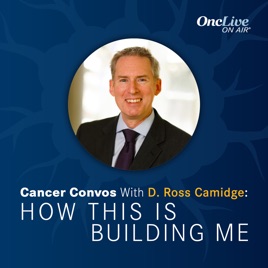
Advertise on podcast: How This Is Building Me
Rating
5from
This podcast has
64 episodes
Language
EnglishPublisher
How This Is Building MeExplicit
No
Date created
2024/01/18
Latest episode
2026/09/09
Average duration
66 min.
Release period
19 days
Description
World-renowned oncologist D. Ross Camidge, MD, PhD, sits down with guests to discuss the highs and lows, ups and downs of all those involved with cancer, cancer medicine, and cancer science across the full spectrum of life’s experiences.
Unlock How This Is Building Me podcast Email contact info,
Listeners & Audience details
Email contact information
Direct podcast contact details

Listeners
Audience numbers & engagement insights

Audience details
Podcast Insights

Podcast episodes
Check latest episodes from How This Is Building Me podcast
How Compassion and Research Build Palliative Care for the Precision Oncology Era
2026/09/09
How This Is Building Me, hosted by world-renowned oncologist D. Ross Camidge, MD, PhD, is a podcast focused on the highs and lows, ups and downs of all those involved with cancer, cancer medicine, and cancer science across the full spectrum of life's experiences.
In this episode, Dr Camidge sat down with Laura A. Petrillo, MD, a palliative care physician-investigator in the Division of Palliative Care and Geriatrics at Massachusetts General Hospital and an assistant professor of medicine at Harvard Medical School in Boston.
Drs Camidge and Petrillo discussed Dr Petrillo's evolution from a creative, science-curious student into a leader in palliative care research at the intersection of supportive care and cancer survivorship. Raised in New Jersey in a family of scientists, Petrillo initially considered medical illustration and science journalism before a research coordinator role at the University of California, San Francisco (UCSF) drew her toward clinical research. She completed medical school, residency, and fellowship training at UCSF, where formative encounters with patients revealed that early, sensitive communication could fundamentally reshape a patient's experience.
Petrillo credited the crystallization of her career path to a landmark early palliative care trial, which prompted her move to Boston to further her training. She reflected candidly on navigating academic culture, advocating that pauses in career productivity due to caregiving should be acknowledged, rather than hidden.
Petrillo explained how modern therapies, including targeted agents, checkpoint inhibitors, and CAR T-cell therapy, have transformed the patient experience, introducing prolonged survival, profound uncertainty, and new challenges, such as tapering opioids after disease control. She highlighted the POISE study (NCT04900935), which blends palliative care with survivorship, emphasizing the importance of lifestyle medicine and future preparation.
Petrillo also shared nuanced views on medical aid in dying, framing it against inequities in end-of-life care access. She concluded by reflecting on her reliance on running and research, as well as spotlighting her mission to expand patient access to high-quality supportive care.
How a Passion for Translational Research Fuses Surgery, Science, and Phase 1 Drug Development: With D. Ross Camidge, MD, PhD; and Funda Meric-Bernstam, MD
2026/07/08
How This Is Building Me, hosted by world-renowned oncologist D. Ross Camidge, MD, PhD, is a podcast focused on the highs and lows, ups and downs of all those involved with cancer, cancer medicine, and cancer science across the full spectrum of life’s experiences.
In this episode, Dr Camidge sat down with Funda Meric-Bernstam, MD, the department chair and Endowed Nellie B. Connally Chair in Breast Cancer, in the Department of Investigational Cancer Therapeutics, medical director of the Khalifa Institute for Personalized Cancer Therapy, and a professor of breast surgical oncology at The University of Texas MD Anderson Cancer Center in Houston; as well as a regular member of Cancer Biology at the University of Texas Houston Graduate School of Biomedical Sciences.
Drs Camidge and Meric-Bernstam discussed Dr Meric-Bernstam's evolution from a science-focused student into a leader in precision oncology and early-phase drug development. Dr Meric-Bernstam was raised in a hybrid fashion between the US and Turkey, attending a science-focused boarding school before beginning medical school in Turkey and ultimately restarting her medical education at the Yale School of Medicine in New Haven, Connecticut. Drawn to both the immediacy of surgery and the questions of basic science, she pursued a surgical residency with built-in research time, spending 2 years at the National Institute of Health studying translational regulation, an experience she credited with making her fearless in tackling the unfamiliar.
In this discussion, Dr Meric-Bernstam offered a candid look at building a career without a clear roadmap. She emphasized that clinician-investigators must work hard, arguing that a meaningful clinical presence sharpens translational research by revealing patients' true unmet needs. Her work spanning cell signaling, mTOR biology, window-of-opportunity trials, and genomic testing led her to direct MD Anderson's personalized cancer therapy efforts and grow its phase 1 program.
Beyond administration, Meric-Bernstam reflected on lessons from the lab, including a year of lost data that taught her to scrutinize primary results at every step, and her conviction in patient-derived models and co-clinical trials. Ultimately, Dr Meric-Bernstam described a transformational moment in oncology, where AI, comprehensive profiling, and newly druggable targets will reshape combination therapy. She concluded by reaffirming her mission to improve cancer outcomes, calling it the best job in the world.
How Strategic Focus Translates to Forward Momentum Across Cancer Immunology Frontiers: With D. Ross Camidge, MD, PhD; and Nora L. Disis, MD
2026/06/24
How This Is Building Me, hosted by world-renowned oncologist D. Ross Camidge, MD, PhD, is a podcast focused on the highs and lows, ups and downs of all those involved with cancer, cancer medicine, and cancer science across the full spectrum of life’s experiences.
In this episode, Dr Camidge sat down with Mary (Nora) L. Disis, MD, a professor in the Clinical Research Division at Fred Hutchinson Cancer Center; as well as a professor in the Division of Hematology and Oncology, an adjunct professor of pathology in obstetrics and gynecology, holder of the Helen B. Slonaker Endowed Professorship for Cancer Research, director of the Cancer Vaccine Institute, and associate dean for Translational Health Science at the School of Medicine at the University of Washington in Seattle.
Drs Camidge and Disis discussed Dr Disis’s evolution from a science-focused student to a global leader in cancer immunology. Raised in a family that prioritized education, Disis found her passion for chemistry as a young adult before pursuing an MD and a master’s degree. Although deeply drawn to practicing medicine in rural communities, she ultimately chose to focus on the field of tumor immunology.
In the discussion, Disis offered a candid look at the strategic discipline required to succeed as a clinician-scientist. She emphasized the importance of protecting research time and refusing to let clinical duties overshadow her lab work. Her pioneering research involved identifying HER2 as a tumor antigen and developing vaccines that demonstrated significant long-term survival through intermolecular epitope spreading.
Beyond the lab, Disis highlighted how her editorial roles allow her to observe scientific trends and maintain a broad understanding of the clinical landscape. Ultimately, Disis emphasized that the path to cancer prevention and vaccine licensing requires finance, focus, fortitude, and fearlessness. Having witnessed immunotherapy become a standard of care, she remains dedicated to climbing the mountain of vaccine development. By sifting through scientific “buzz” and maintaining deep focus, Disis believes the next frontier of cancer research lies in immunizing individuals to prevent cancer from ever developing.
How Curiosity and Empathy Build a Life of Meaningful Accomplishments and Deep Connections: With Erin Schenk, MD, PhD; and D. Ross Camidge, MD, PhD
2026/06/10
How This Is Building Me, hosted by world-renowned oncologist D. Ross Camidge, MD, PhD, is a podcast focused on the highs and lows, ups and downs of all those involved with cancer, cancer medicine, and cancer science across the full spectrum of life’s experiences.
In this episode, guest host Erin Schenk, MD, PhD, at the University of Colorado Anschutz in Aurora, an associate professor of medicine in the Division of Medical Oncology, sat down with D. Ross Camidge, MD, PhD, to highlight Dr Camidge's storied career and life. Driven by a relentless curiosity that often manifested in him "interrogating" those around him, Camidge chose a career in medicine because of the immediate effect he saw it could have on people's lives.
His path included a formative gap year working at McDonald's and serving as a caregiver for a man with cerebral palsy. After studying at Oxford, he faced a significant professional and personal low when pursuing his PhD at Cambridge. Struggling with a difficult project, he persevered by pivoting his research and finding resilience through peers, eventually returning to practicing clinical medicine and finding his calling in oncology due to its unique overlap of molecular biology and opportunities for deep patient connection.
Seeking further opportunities, Dr Camidge moved to the United States to lead the lung cancer program at the University of Colorado School of Medicine. He became a pivotal figure in the development of targeted therapies, specifically crizotinib for ALK-positive lung cancer. Beyond drug development, he championed the use of molecular profiling and established a global remote second opinion program.
In 2022, Dr Camidge’s perspective shifted profoundly following his own lung cancer diagnosis. This experience forced him to evolve from a "questioning machine" into someone more amenable to accepting love and support. He now integrates this dual perspective into his work, emphasizing that oncology must go beyond science to address the human experience of treating real people.
How Cancer Caregiving Shifts Perspectives in Oncology Practice: With D. Ross Camidge, MD, PhD; and Karen L. Reckamp, MD
2026/05/27
How This Is Building Me, hosted by world-renowned oncologist D. Ross Camidge, MD, PhD, is a podcast focused on the highs and lows, ups and downs of all those involved with cancer, cancer medicine, and cancer science across the full spectrum of life’s experiences.
In this episode, Dr Camidge sat down with Karen L. Reckamp, MD, director of Medical Oncology, associate director of Clinical Research, and the medical oncology director of the Lung Institute at Cedars Sinai in Los Angeles, California.
Drs Camidge and Reckamp discussed Dr Reckamp's journey as an oncology specialist and now a caregiver for her husband, who has cancer. Reckamp’s career was inspired by her family’s history with BRCA-related cancers. She pursued an academic path that eventually led her to Los Angeles, where she became a leader in thoracic oncology during an era of genomic breakthroughs.
In late 2024, her husband, a fellow oncologist, was diagnosed with pancreatic cancer shortly after a clear annual scan. Reckamp described the jarring transition of receiving the diagnosis and the ensuing emotions balanced with medical pragmatism. Bob underwent intensive treatments that have affected his physical health and daily life.
Reckamp offered a candid look at the dual role of a physician-caregiver. She continues to work, however, her husband's cancer diagnosis has changed her practice. Now, she is more sensitive to chemotherapy toxicities in her patients that she might have previously minimized. She also highlighted the invisible load of caregivers who must manage their own emotions and remain available for patient needs.
Ultimately, Reckamp emphasized the necessity of a support network, crediting their long-time nanny and overall community with maintaining her family’s stability. By allowing different people to hold different pieces of the emotional burden, Reckamp shared that her family is finding a way to move forward amidst the uncertainty of this cancer diagnosis.
How Reimagined Research Endeavors Intersect With Dignified End-of-Life Care: With D. Ross Camidge, MD, PhD; and Charles D. Blanke, MD, FACP, FASCO
2026/05/13
How This Is Building Me, hosted by world-renowned oncologist D. Ross Camidge, MD, PhD, is a podcast focused on the highs and lows, ups and downs of all those involved with cancer, cancer medicine, and cancer science across the full spectrum of life’s experiences.
In this episode, Dr Camidge sat down with Charles D. Blanke, MD, FACP, FASCO, a professor of medicine in the School of Medicine at the Oregon Health & Science University (OHSU) Knight Cancer Institute in Portland.
Drs Camidge and Blanke discuss Dr Blanke's unique career path from pioneering targeted cancer therapies to becoming a leading advocate for medical aid in dying. A Type 1 diabetes diagnosis directed Dr Blanke toward an interest in internal medicine and oncology. During his fellowship and early faculty days, he established a reputation for his hard work pursuing research opportunities, even when initial projects were unsuccessful.
Blanke’s most transformative scientific achievement occurred at OHSU, where he spearheaded the use of Imatinib (Gleevec) for the management of gastrointestinal stromal tumor (GIST). By targeting the KIT mutation, this research turned a previously untreatable malignancy into one with a high response rate, marking a landmark moment for personalized oncology.
Equally significant in Dr Blanke’s career is his role in medical aid in dying. Practicing in Oregon, the first state to legalize the option, he has written hundreds of prescriptions for patients with terminal diseases. Blanke views medical aid in dying as a vital extension of patient care.
As the former chair of SWOG, Dr Blanke modernized clinical research by introducing term limits, increasing access to clinical trials among, and championing the development of pragmatic trials with broader patient eligibility criteria. Throughout his tenure, he emphasized the importance of patient advocacy and the altruistic nature of cooperative research. Having recently stepped down from his leadership at SWOG, he intends to focus his future efforts on patient rights and medical aid in dying advocacy.
How Surgical Determination Intersects With Human Connection: With D. Ross Camidge, MD, PhD; and Robert A Meguid, MD, MPH, FACS
2026/04/29
How This Is Building Me, hosted by world-renowned oncologist D. Ross Camidge, MD, PhD, is a podcast focused on the highs and lows, ups and downs of all those involved with cancer, cancer medicine, and cancer science across the full spectrum of life’s experiences.
In this episode, Dr Camidge sat down with Robert A Meguid, MD, MPH, FACS, a thoracic and cardiac surgeon, as well as a professor of cardiothoracic surgery, at the University of Colorado in Aurora.
Drs Camidge and Meguid discussed Dr Meguid’s journey into medicine, which was heavily influenced by his parents, both of whom were academic physicians. A first-generation American, Dr Meguid grew up watching his father operate and working in his father's research lab, experiences that ignited a lifelong interest in the scientific method and patient care. Dr Meguid pursued a combined 8-year medical program before matching into a residency in general surgery. During his residency, he spent 3 years in research, earning a master’s degree in public health and shifting his focus toward surgical outcomes and risk analysis. After completing a cardiothoracic fellowship, he joined the University of Colorado, where he helped expand the thoracic surgery program and pioneered robotic-assisted techniques.
A shift in Dr Meguid’s perspective occurred when he suffered a life-threatening medical event during a family vacation in Australia. He contracted fulminant septic shock resulting from human metapneumovirus and group A strep, leading to respiratory and renal failure. After being intubated for several weeks and losing significant muscle mass, he was life-flighted back to his own ICU in Denver to begin recovery. This experience as a patient, during which he had to relearn how to stand and move, deepened his empathy and reinforced his commitment to patient-centered care.
Currently, Dr Meguid is a leader in his field, focusing on thoracic oncology and complex chest wall reconstructions, such as that of the adult pectus excavatum. He remains dedicated to academic research on surgical risk assessment, ensuring that patients are empowered to make informed decisions about their care.
How Strategic Partnerships Expand the Reach of Cancer Research: With D. Ross Camidge, MD, PhD; and Dajan O'Donnell, PhD
2026/04/15
How This Is Building Me, hosted by world-renowned oncologist D. Ross Camidge, MD, PhD, is a podcast focused on the highs and lows, ups and downs of all those involved with cancer, cancer medicine, and cancer science across the full spectrum of life’s experiences.
In this episode, Camidge sat down with Dajan O'Donnell, PhD, who is the director of Research Partnerships at Cancer Research Society in Montreal, Canada.
Camidge and O'Donnell discussed O’Donnell’s journey into science. After being steered away from a career in science during grade school but re-igniting his interest in the field as a young adult, O'Donnell earned a PhD in neurology and neurosurgery and then worked for AstraZeneca, where he helped build a Montreal-based research unit from scratch that specialized in identifying novel targets for chronic pain. O’Donnell’s transition to the nonprofit sector was sparked by the closure of AstraZeneca’s Montreal site and a personal diagnosis of a desmoid tumor that required multiple aggressive surgeries, an experience that fueled his passion for supporting research that directly affects patients. Before joining Cancer Research Society, O'Donnell worked for Exactis Innovation, where he navigated complex provincial health care barriers to create a national molecular registry for patients with cancer.
Since joining Cancer Research Society, O’Donnell has expanded the organization's reach. Despite its relatively small size, Cancer Research Society is highly efficient, focusing almost entirely on funding research across all cancer types. Under O'Donnell's leadership, the organization’s financial commitment to cancer research has increased. Currently, O’Donnell is spearheading an unprecedented initiative to support investigator-initiated clinical trials in Canada. By leveraging partnerships with other agencies and foundations, this project aims to enhance clinical trial capacity across the country. This initiative serves as a cornerstone of O'Donnell's legacy as he prepares to transition into an advisory role over the next few years.
How a Passion for Justice Leads the Fight in Tobacco Litigation: With D. Ross Camidge, MD, PhD; and Alex Alvarez
2026/04/01
How This Is Building Me, hosted by world-renowned oncologist D. Ross Camidge, MD, PhD, is a podcast focused on the highs and lows, ups and downs of all those involved with cancer, cancer medicine, and cancer science across the full spectrum of life’s experiences.
In this episode, Dr Camidge sat down with Alex Alvarez, a board-certified civil trial lawyer who specializes in tobacco litigation and jury selection. Camidge and Alvarez discussed Alvarez's career path, which he attributes to a deep-seated passion for upholding justice. Alvarez’s professional life began early, when he became one of the youngest police officers in Miami. After working in patrol during a period of significant civil unrest, he moved into the detective bureau, eventually joining the homicide division. There, he worked on high-profile investigations. During a federal trial for corrupt officers, Alvarez served as the lead investigator and sat at the counsel table, an experience that inspired him to become a trial lawyer.
Although Alvarez initially planned to be a prosecutor, a prominent trial lawyer convinced him to enter private practice, focusing on high-end products liability and medical negligence. Alvarez eventually founded his own firm and became a leading figure in tobacco litigation. His cases focus on corporate malfeasance, arguing that tobacco companies engineered cigarettes to be addictive. He also sues for fraud, citing the industry’s history of denying the health risks associated with cigarettes and the marketing flaws surrounding "safer" cigrette alternatives. A master of jury selection, Alvarez has tried several tobacco cases. He emphasized the importance of finding jurisdictions where jurors are less likely to blame the smoker and more likely to hold corporations accountable.
Alvarez's law firm is a family-run business involving his children and relatives. Today, Alvarez is shifting toward consulting and mentoring the next generation of lawyers to continue the fight against tobacco.
How a Devotion to Heath Care Conquered Societal Barriers: With D. Ross Camidge, MD, PhD; and Khari Reed, MHSA, FACHE
2026/03/18
How This Is Building Me, hosted by world-renowned oncologist D. Ross Camidge, MD, PhD, is a podcast focused on the highs and lows, ups and downs of all those involved with cancer, cancer medicine, and cancer science across the full spectrum of life’s experiences.
In this episode, Dr Camidge sat down with Khari Reed, MHSA, FACHE. Dr Reed is the vice president of Oncology Services at HonorHealth in Scottsdale, Arizona.
Drs Reed and Camidge dug into what sparked Dr Reed’s illustrious health care career. Dr Reed’s journey began on the south side of Chicago, where he was raised in the neighborhood of Chatham. Influenced by his parents’ investment in community building, he grew up with a commitment to education and giving back to those around him. Dr Reed pointed out how his affinity for health care came from his early time spent in the hospital due to childhood asthma, which caused him to develop an appreciation for the physicians and health care workers that helped him feel better.
Dr Reed’s career journey is exemplary of a commitment to clinical excellence, operational resilience, and diverse experiences. From his beginnings at the University of Michigan in Ann Arbor to a years-long career wearing many hats for The John Hopkins Hospital in Baltimore, Maryland, to now leading cancer care at Honor Health, Dr Reed has earned his stripes as a decorated and versatile health care professional.
Overcoming unfavorably stacked odds has been a common theme woven throughout every stop of Dr Reed’s career. At the Loyola University Medical Center in Chicago, Illinois, Dr Reed led the oncology service line through the COVID-19 pandemic, establishing an incident command center that kept ambulatory cancer care operational when other departments closed. Moreover, Dr Reed navigated institutional barriers by completing a rigorous self-designed career plan, mastering complex financial systems, volunteering to gain practical experience, and breaking racial stigmas in health care. Now at HonorHealth, Dr Reed continues to treat patients like family and eyes future career advancements at the hospital, focused on creating self-sustaining organizations that prioritize high-quality oncology care.
How an Interest in Scientific Intricacies Evolved to Transform the Biotechnology Field: With D. Ross Camidge, MD, PhD; and Tim Clackson, PhD
2026/03/04
How This Is Building Me, hosted by world-renowned oncologist D. Ross Camidge, MD, PhD, is a podcast focused on the highs and lows, ups and downs of all those involved with cancer, cancer medicine, and cancer science across the full spectrum of life’s experiences.
In this episode, Dr Camidge sat down with Tim Clackson, PhD. Dr Clackson is a biotechnology executive, and was most recently chief executive officer of IDRx.
Drs Camidge and Clackson discussed Dr Clackson’s career journey through the biotechnology field, which began when his innate curiosity about biology and evolution led him to study biochemistry. He then pursued his PhD and was part of the small team that developed antibody phage display libraries, a breakthrough technology that allows scientists to mimic the immune system in a test tube to find specific antibodies. This work was foundational to the discovery of major drugs and contributed to the awarding of a Nobel Prize in 2018.
In 1991, Dr Clackson moved to the US to pursue a postdoc at Genentech, where he was inspired by the company's vibrant and optimistic research environment. He then joined Ariad Pharmaceuticals, where he stayed for more than 20 years, evolving from a bench scientist to president of R&D. A major highlight of his tenure was the development of ponatinib (Iclusig) for the treatment of patients with chronic myeloid leukemia. He also navigated significant challenges, including ponatinib's temporary market withdrawal due to safety concerns, which the company eventually resolved by narrowing the drug's clinical application.
In the following years, Dr Clackson transitioned into chief executive officer roles at other biotech firms, such as IDRx. He noted that although acquisitions often result in leadership changes—humorously stating, "the higher you are, the quicker you go"—he enjoyed the storytelling aspect of pitching scientific strategies to investors. In the present day, Dr Clackson remains active in the biotechnology industry through board service and entrepreneurship.
How Patient Prioritization Paved the Way for a Legacy of Oncology Care: With D. Ross Camidge, MD, PhD; and Robert Kantor, MD
2026/02/18
How This Is Building Me, hosted by world-renowned oncologist D. Ross Camidge, MD, PhD, is a podcast focused on the highs and lows, ups and downs of all those involved with cancer, cancer medicine, and cancer science across the full spectrum of life’s experiences.
In this episode, Dr Camidge sat down with Robert Kantor, MD. Dr Kantor is associate medical director of Medical Oncology & Hematology at Private Health Management.
Drs Camidge and Kantor reflected on Dr Kantor's decades-long career. Inspired by his father’s devotion to patients, Dr Kantor fast-tracked his education, entering medical school at Wayne State University without completing an undergraduate degree. Following fellowship, he intentionally chose private practice over academic oncology to focus on direct patient care and making a difference in the lives of patients' families.
Dr Kantor’s career illustrates the shifting landscape of American medicine. He has navigated various oncology practice models, including a corporate merger that he felt compromised patient care. In 2008, he took the risk of launching his own solo practice, successfully bringing trusted staff and a dedicated patient base with him.
Dr Kantor eventually retired from clinical practice due to burnout, which was exacerbated by corporate management challenges and the inefficiencies of electronic medical records. His retirement evolved into an "encore career" as an associate medical director for Private Health Management. In this consultative role, he provides clinical oversight for complex oncology cases, helping patients navigate toward personalized cancer vaccines, clinical trials, and cutting-edge therapies. Dr Kantor expressed that this work has brought him renewed enthusiasm for the field of oncology, as it allows him to use his decades of experience with a basis of a better work-life balance. He remains passionate about how these high-end, personalized technologies will eventually make their way into routine clinical practice to benefit the broader patient population.
How Physics, Medicine, and Lived Experience Shaped a Career in Breast Cancer Research and Risk Evaluation: With Ross Camidge, MD; and Sofia Diana Merajver, MD, PhD
2026/02/04
How This Is Building Me, hosted by world-renowned oncologist D. Ross Camidge, MD, PhD, is a podcast focused on the highs and lows, ups and downs of all those involved with cancer, cancer medicine, and cancer science across the full spectrum of life’s experiences.In this episode, Dr Camidge sat down with Sofia Diana Merajver, MD, PhD, a physician-scientist whose career bridges physics, medicine, and population health. Dr Merajver is the scientific director of the Breast Cancer Program, director of the Breast and Ovarian Cancer Risk Evaluation Program, and a professor of internal medicine and epidemiology at the University of Michigan Rogel Cancer Center in Ann Arbor. In this discussion, she reflected on a lifelong journey shaped by immigration, intellectual curiosity, and a commitment to science in service of human health. 
How Community Oncology Experience Built the Foundation for a Dedicated Phase 1 Research Program: With D. Ross Camidge, MD, PhD; and Justin Call, MD
2026/01/21
How This Is Building Me, hosted by world-renowned oncologist D. Ross Camidge, MD, PhD, is a podcast focused on the highs and lows, ups and downs of all those involved with cancer, cancer medicine, and cancer science across the full spectrum of life’s experiences.
In this episode, Dr Camidge sat down with Justin Call, MD. Dr Call is a medical oncologist and hematologist at Utah Cancer Specialists in South Jordan.
Dr Call explained that he has taken a unique professional path, transitioning from practicing as a general community oncologist to becoming a full-time phase 1 principal investigator within a community practice setting. He explained that he grew up in Salt Lake City, Utah in a family of educators and accountants, though he was heavily influenced by several uncles who were physicians, including one oncologist. After completing his medical training at the University of Colorado, he chose community oncology over academia because he wanted to remain a generalist who could treat all tumor types rather than being restricted to a specific disease group. A formative rotation at Rocky Mountain Cancer Centers solidified this desire, as Dr Call noted he was impressed by the deep knowledge required to treat various cancers and the positive atmosphere of outpatient care.
Dr Call emphasized that his personal life significantly influenced his career choices. His son, Trevor, was diagnosed with autism at 18 months old. This diagnosis eventually led the family to move from a rural practice in Petoskey, Michigan, back to Utah to access better support services and be closer to family. His son’s experience also inspired Call's wife to earn a master’s degree in special education.
Upon returning to Utah Cancer Specialists, Dr Call initially participated in phase 3 trials. However, he retained an interest in early-phase research from his fellowship days. In 2016, he began building a boutique phase 1 program, initially starting with just 2 hours of dedicated time per week. In 2020, his practice partnered with START (South Texas Accelerated Research Therapeutics) to launch a dedicated, full-time, community-based phase 1 program. Dr Call noted that this model is rare because phase 1 trials are highly competitive and require specialized infrastructure, such as dedicated pharmacists, coordinators, and equipment for processing pharmacokinetic samples.
How Biostatistics Expertise Led to a Career of Propelling Ethical Clinical Trial Design: D. Ross Camidge, MD, PhD; and Tom Fleming, PhD
2025/12/24
How This Is Building Me, hosted by world-renowned oncologist D. Ross Camidge, MD, PhD, is a podcast focused on the highs and lows, ups and downs of all those involved with cancer, cancer medicine, and cancer science across the full spectrum of life’s experiences.In this episode, Dr Camidge sat down with Tom Fleming, PhD, a professor of biostatistics at the University of Washington School of Public Health in Seattle.Drs Camidge and Fleming discussed how Fleming's interest in biostatistics led to a multifaceted career in clinical trial design and analysis. Fleming pursued a PhD in math and statistics and spent his early career learning to bridge quantitative sciences with clinical medicine, working on landmark trials for adjuvant colon cancer and debunking megadoses of Vitamin C as a cancer treatment.A primary focus of Fleming’s career was pioneering the use of Data Monitoring Committees (DMCs) in oncology research to safeguard patient interests and trial integrity, later convincing organizations like SWOG to adopt DMCs to prevent premature data releases and biases. He also co-developed the O'Brien-Fleming monitoring boundary, a statistical framework that allows trials to stop early for efficacy only when the signal is undeniably compelling, thereby protecting scientific rigor.After moving to the University of Washington, Fleming expanded his focus into infectious diseases. He led international efforts that revolutionized HIV/AIDS prevention, including demonstrating a reduction in heterosexual transmission of the disease through antiretrovirals and significantly reducing mother-to-child transmission in resource-limited settings.Fleming remains a staunch advocate for confirmatory trials and the use of overall survival as the "gold standard" end point, often expressing skepticism toward surrogate biomarkers like progression-free survival. In the episode, he emphasized that rigorous science is possible even in the most challenging environments, provided there is a commitment to clinical equipoise and high patient retention. Outside of his professional life, Fleming prioritizes family and coaches youth soccer teams, reflecting his belief in the power of collaboration.
Podcast reviews
Read How This Is Building Me podcast reviews
cerb1958 2026/03/22
Exemplary Ross Camidge
Anyone that knows Ross would be stunned if every interview and every episode was not brilliant.
Every interview and every episode is, as I expected,...
MJLW1975! 2025/02/01
Insightful and intriguing storytelling
Dr Camidge does a fantastic job “building himself” in this podcast remaining true to the mantra that kicks off each episode. The thoughtful collection...
Cwood83 2024/11/15
Science, Storytelling and Humanity
How This Is Building Me balances science, storytelling, and humanity. The insightful conversations include topics that are interesting and relevant bu...
Kevin A Wolff 2024/10/12
Outstanding!
Informative, insightful, and engaging conversations…with patients and experts across a variety of disciplines. Always presented in such a entertaining...
Kirk M Smith 2024/08/04
Always insightful
As a cancer patient, I have been following dr camidge’s presentations for many years -because he does such a good job of presenting complex informatio...
runner456 2024/01/21
Great podcast!
Enjoy the different perspectives from patients to scientists to oncologists to biotech investors and many more.
Starsonmyheel 2024/01/18
This is a Must Listen to stay informed and inspired!
Ross Camidge is a one of a kind physician, researcher, and all around top notch individual. This podcast brilliantly intertwines his expertise, compas...
HTIBM fan 2024/01/18
How this is building me - now on apple
This has been hard to find for the last year. So glad it’s out there now on Apple Podcasts and Spotify at last.
Podcast sponsorship advertising
Start advertising on How This Is Building Me relevant audience podcasts
You may also like to advertise on these Podcasts

4.6687031104
Armchair Expert with Dax Shepard
Armchair Umbrella
4.9553842188
The MeidasTouch Podcast
MeidasTouch Network

4.639655
Only Murders in the Building Podcast
Straw Hut Media
4.7828513
The Home Service Expert Podcast
Tommy Mello: $200 Million Founder|Forbes, Inc., Entrepreneur Columnist

4.443351344
Something You Should Know
Mike Carruthers | OmniCast Media

4.7906254
Everything is Fine
Jennifer Romolini and Kim France

4.610758564
Serialously with Annie Elise
Annie Elise & Audioboom Studios
4.41171483
The Outlier Health Podcast
Matt Frazier, Matt Tullman, Isabelle Caputo, and Doug Hay

4.616069353
Giggly Squad
Hannah Berner & Paige DeSorbo
4.8219787
Imperfect Action
Steph Taylor