1734657941
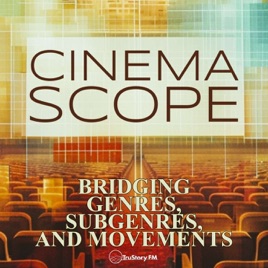
Cinema Scope: Bridging Genres, Subgenres, & Movements

Advertise on podcast: Cinema Scope: Bridging Genres, Subgenres, & Movements

Rating
★★★★★
5
from
4 reviews
This podcast has
24 episodes
Language
English
Publisher
TruStory FM
Explicit
No
Date created
2024/03/06
Latest episode
2026/02/04
Average duration
111 min.
Release period
35 days

Description

Cinema Scope charts the interconnected landscape of film genres, subgenres, and movements, revealing how cultural forces, technological advances, and societal shifts shape the evolution of cinema. Ever wonder how Blaxploitation cinema revolutionized Hollywood in the 1970s? Or what makes Nordic Noir distinctly different from other crime stories? Each episode bridges the connections between film styles that define our favorite movies. Join filmmaker and host Andy Nelson as he explores: The emergence and evolution of distinctive film movementsHow historical events spark new genresCultural impacts that reshape storytellingTechnological advances that enable new stylesThe cross-pollination between genres and subgenresEach episode features expert guests unpacking: Essential films that define the styleMembers get more conversation about additional films in extended episodesDeep analysis of techniques and influencesContemporary impact on filmmakingWhether you're a seasoned cinephile or simply curious about how movies evolve, Cinema Scope offers fresh perspectives on the art of film. Release Schedule: New episodes release on the second Wednesday of every monthMembers get exclusive ad-free, early access plus 30-60 minutes of additional analysisFull episode archive available to members Listen and learn more at TruStory FM, visit the website, or discover membership benefits. Part of The Next Reel family of film shows

Unlock Cinema Scope: Bridging Genres, Subgenres, & Movements podcast Email contact info,
Listeners & Audience details

Email contact information

Direct podcast contact details

Listeners

Audience numbers & engagement insights

Audience details

Podcast Insights

Podcast episodes

Check latest episodes from Cinema Scope: Bridging Genres, Subgenres, & Movements podcast


1950s Science Fiction: Atomic Age Anxiety (with Robert Horton)
2026/02/04
Cinema Scope is in the running for several awards at the Inaugural Podcast Tonight Awards, including Listener's Choice. If you're a fan of the show, please consider casting a vote for us. Thanks! 1950s Science Fiction didn’t just entertain—it became a pressure valve for Atomic Age dread, Cold War suspicion, and the fear that identity can be rewritten overnight. Andy talks with critic Robert Horton, a member of the National Society of Film Critics, about why the genre “blossomed” in this decade and what it was built to contain. The conversation offers a practical viewing lens: what these films externalize, what they imply about the body and the self, and how they frame science and authority when the unknown arrives. Expect recurring questions about containment vs curiosity, invasion vs conformity, and whether institutions can protect people—or simply pave over what they can’t explain. Essential films include The Thing from Another World, The Day the Earth Stood Still, Godzilla, Invasion of the Body Snatchers, and The Incredible Shrinking Man. Members: The extended conversation broadens the map with more “branches” of the era—outer-space spectacle, drive-in menace, domestic paranoia, mutation horror, and post-apocalypse patterns—including Forbidden Planet, Not of This Earth, I Married a Monster from Outer Space, The Fly, and The World, the Flesh, and the Devil. This episode is built for deep listening. Feel free to pause, return, and follow the threads over time—like a great book you can pick up again. Full version on YouTube If you want to keep going: Cinema Scope — Post‑War Westerns: The Moral Turn (with John Sanders) • The Next Reel — The Blob (part of our Horror series). Guest: Robert Horton — The Crop Duster • Bluesky • Scarecrow Video (Seasoned Ticket) • LinkedIn • Facebook. Essential films: The Thing from Another World — Apple TV, Amazon, Letterboxd • The Day the Earth Stood Still — Apple TV, Amazon, Letterboxd • Godzilla — Apple TV, Amazon, Letterboxd • Invasion of the Body Snatchers — Apple TV, Amazon, Letterboxd • The Incredible Shrinking Man — Apple TV, Amazon, Letterboxd. Letterboxd lists: Episode List • Robert’s Recommended Films. How to Listen (Cinema Scope): Long-form, multi-film conversations. Best enjoyed in chapters—jump in by topic rather than starting at episode one.Support The Next Reel Family of Film Shows: Become a member for just $5/month or $55/yearJoin our Discord community of movie loversThe Next Reel Family of Film Shows: Cinema Scope: Bridging Genres, Subgenres, and MovementsThe Film BoardMovies We LikeThe Next ReelSitting in the DarkConnect With Us: Main Site: WebMovie Platforms: Letterboxd | FlickchartSocial Media: Facebook | Instagram | Threads | Bluesky | YouTube | PinterestYour Hosts: AndyShop & Stream: Merch Store: Apparel, stickers, mugs & moreWatch Page: Buy/rent films we've discussedOriginals: Source material from our episodesSpecial offers: Audible
Post‑War Westerns: The Moral Turn (with John Sanders)
2026/01/14
Cinema Scope is in the running for several awards at the Inaugural Podcast Tonight Awards, including Listener's Choice. If you're a fan of the show, please consider casting a vote for us. Thanks! After WWII, the Western changed—heroes got complicated, communities got fragile, and violence carried consequences. Andy Nelson and John Sanders explore six key films: Red River, High Noon, Shane, Johnny Guitar, The Searchers, and 3:10 to Yuma. Listen in one go or in chapters—this one’s built for deep listening over time. Members: extended discussion on The Treasure of the Sierra Madre, The Gunfighter, Winchester ’73, Forty Guns, The Big Country, and Ride Lonesome. 🎬 Deep Dive 👤 Meet John Sanders (Appalachian State University) 🎥 Full Discussion on YouTube 🍿 Essential Films Red River — Apple TV • Amazon • LetterboxdHigh Noon — Apple TV • Amazon • LetterboxdShane — Apple TV • Amazon • LetterboxdJohnny Guitar — Apple TV • Amazon • LetterboxdThe Searchers — Apple TV • Amazon • Letterboxd3:10 to Yuma — Apple TV • Amazon • Letterboxd📋 View our full list on Letterboxd 🎞️ More Post‑War Westerns John Recommends (00:00) - Welcome to Cinema Scope • Post-War Westerns(02:17) - Meet John Sanders(07:32) - Westerns Pre-War(14:23) - Societal Shift Post-War(22:10) - Where It Fits in the Cinematic Family Tree(27:50) - Key Elements(46:34) - The Films(47:28) - Red River(57:48) - High Noon(01:11:11) - Shane(01:23:52) - Johnny Guitar(01:34:20) - The Searchers(01:47:14) - 3:10 to Yuma(01:57:29) - Influence and Impact(02:07:49) - Wrapping It UpHow to Listen: Long-form, multi-film conversations. Best enjoyed in chapters—jump in by topic rather than starting at episode one.Support The Next Reel Family of Film Shows: Become a member for just $5/month or $55/yearJoin our Discord community of movie loversThe Next Reel Family of Film Shows: Cinema Scope: Bridging Genres, Subgenres, and MovementsThe Film BoardMovies We LikeThe Next Reel with Andy Nelson and Pete WrightSitting in the DarkConnect With Us: Main Site: WebMovie Platforms: Letterboxd | FlickchartSocial Media: Facebook | Instagram | Threads | Bluesky | YouTube | PinterestYour Hosts: AndyShop & Stream: Merch Store: Apparel, stickers, mugs & moreWatch Page: Buy/rent films we've discussedOriginals: Source material from our episodesSpecial offers: Letterboxd Pro/Patron discount | Audible
British New Wave: Realism Without Mercy (with David Forrest)
2025/12/10
Cinema Scope is in the running for several awards at the Inaugural 2025/26 Podcast Tonight Awards, including Listener's Choice. If you're a fan of the show, please consider casting a vote for us. Thanks! Anger, Authenticity, and the Working Class Andy Nelson and special guest Professor David Forrest explore the gritty realism and social commentary of the British New Wave, a revolutionary film movement that transformed British cinema in the late 1950s and early 1960s. Through kitchen sink dramas and authentic portrayals of working-class life, these groundbreaking films captured the raw essence of post-war Britain through innovative storytelling and compelling performances. Key Films of the British New Wave The episode examines influential works like Room at the Top, Saturday Night and Sunday Morning, A Taste of Honey, The Loneliness of the Long Distance Runner, and This Sporting Life. Members can access bonus discussions about Look Back in Anger and The Entertainer at trustory.fm/join, offering deeper insight into this transformative period in film history. Through these films, viewers witnessed the emergence of new talent including Albert Finney, Rita Tushingham, Richard Harris, Tom Courtenay, Alan Bates, and Joan Plowright, while established actors like Richard Burton and Laurence Olivier embraced the movement's naturalistic style. Directors and Creative Vision Pioneering directors Tony Richardson, Lindsay Anderson, and Karel Reisz shaped the movement's distinctive visual style and storytelling approach. Professor Forrest illuminates how they challenged traditional filmmaking conventions by emphasizing location shooting, regional accents, and complex working-class characters. Additionally, the movement tackled previously taboo subjects such as sexuality, race relations, and class mobility, paving the way for future social realist filmmakers like Ken Loach and Mike Leigh. Impact and Legacy The conversation explores the movement's connections to other cultural phenomena, including the Angry Young Men literary movement and Free Cinema documentaries. Moreover, they discuss how the British New Wave's influence extends beyond British shores, inspiring filmmakers worldwide and establishing a lasting legacy that continues to resonate in contemporary cinema. About David David Forrest is Professor of Film and Television Studies at the University of Sheffield. His research explores questions of class, region and realism in British film, TV and literature.  Forrest’s monographs include Barry Hines: Kes, Threads and Beyond (2018; with Sue Vice), Kes: BFI Film Classics (2024), Film Audiences: Personal Journeys with Film (with Bridgette Wessels, Peter Merrington and Matthew Hanchard; 2023), New Realisms: Contemporary British Cinema (2020), and Social Realism: Art, Nationhood and Politics. He is he co-editor of Social Class and Television Drama in Contemporary Britain, and Filmurbia: Screening the Suburbs. He sits on the editorial boards of The Journal of British Cinema and Television and Studies in European Cinema.  🎬 Deep Dive 👤 Meet David Forrest: The University of Sheffield | Website | Twitter | Instagram | LinkedIn📕 Buy David’s Book “Kes: BFI Film Classics”🎥 Full Discussion on YouTube🍿 Essential Films:Room at the Top - Apple TV | Amazon | LetterboxdSaturday Night and Sunday Morning - Amazon | LetterboxdA Taste of Honey - Apple TV | Amazon | LetterboxdThe Loneliness of the Long Distance Runner - Apple TV | Amazon | LetterboxdThis Sporting Life - Apple TV | Amazon | Letterboxd📋 View Our Full List on Letterboxd🎞️ More to Explore: David's Recommended Films
Heist Films: The Plan and the Betrayal (with Luka Arsenjuk & Tim Palmer)
2025/11/12
Cinema Scope is in the running for several awards at the Inaugural Podcast Tonight Awards, including Listener's Choice. If you're a fan of the show, please consider casting a vote for us. Thanks! The Mechanics of the Perfect Score Join film scholars Luka Arsenjuk and Tim Palmer with host Andy Nelson for an exciting exploration of heist films. From meticulous planning to dramatic execution, this subgenre has captivated audiences for decades with its clever schemes, charismatic criminals, and intricate plots. The conversation delves into what defines a heist film, from assembling specialized teams and detailed planning to the tension-filled execution and often devastating aftermath. The guests examine how elements like technology, professionalism, and the relationship between individualism and collective action shape these stories of elaborate robberies. Ten Essential Heist Films Through the Decades The discussion covers ten landmark films: The Asphalt Jungle (1950), Rififi (1955), The Killing (1956), Bob le Flambeur (1956), Le Cercle Rouge (1970), The Taking of Pelham 123 (1974), Thief (1981), Ocean's Eleven (2001), Inside Man (2006), and Widows (2018). The public episode explores five of these classics – The Asphalt Jungle, Le Cercle Rouge, Thief, Ocean's Eleven, and Widows – while members can enjoy analysis of all ten films. A Genre That Keeps Evolving Though heist films emerged from crime film and film noir roots in the 1950s, they continue to evolve and reinvent themselves. The episode concludes by examining how modern filmmakers incorporate social commentary and diverse perspectives while maintaining the core thrills that make these criminal capers so compelling. Want to hear complete conversations like this every month? Join Cinema Scope at trustory.fm/join for just $5/month or $55/year. Members get early, ad-free access to all podcasts in The Next Reel family, plus exclusive bonus content and extended episodes. 🎬 Deep Dive 👤 Meet Luka Arsenjuk: University of Maryland, Cinema & Media Studies | Website👤 Meet Tim Palmer: University of Utah, Chair: College of Fine Arts | Film Matters Magazine | Wikipedia | Website🎥 Full Discussion on YouTube🍿 Essential Films:The Asphalt Jungle - Apple TV | Amazon | LetterboxdLe Cercle Rouge - Apple TV | Amazon | LetterboxdThief - Apple TV | Amazon | LetterboxdOcean’s Eleven - Apple TV | Amazon | LetterboxdWidows - Apple TV | Amazon | Letterboxd☑️ Charles Kunken’s 16 Conventions of Heist Films📋 View Our Full List on Letterboxd🎞️ More to Explore: Luka Arsenjuk's Recommended Films🎞️ More to Explore: Tim Palmer’s Recommended Films
Angry Young Man: Amitabh Bachchan and 1970s India (with Shivendra Singh Dungarpur)
2025/10/08
Cinema Scope is in the running for several awards at the Inaugural Podcast Tonight Awards, including Listener's Choice. If you're a fan of the show, please consider casting a vote for us. Thanks! In the turbulent landscape of 1970s India, a powerful cinematic movement emerged that would forever change the face of Bollywood—the Angry Young Man. This episode of Cinema Scope delves deep into this revolutionary movement through the lens of its most iconic star, Amitabh Bachchan, whose commanding presence and intense performances defined an era of Indian cinema. Andy Nelson welcomes distinguished film archivist and director Shivendra Singh Dungarpur to explore how the Angry Young Man movement captured the zeitgeist of a nation grappling with social inequality, political upheaval, and economic struggles. Through detailed analysis of landmark films like Zanjeer, Deewaar, and Trishul, they uncover how these stories resonated deeply with audiences by giving voice to their frustrations and hopes. The Evolution of India's Angry Young Man The discussion traces how the movement evolved from Bachchan's breakthrough role in Zanjeer (1973) to more complex character studies in films like Kaala Patthar and Shakti. Members can enjoy bonus coverage of three additional classics: Mili, Don, and Muqaddar Ka Sikandar. Dungarpur shares fascinating behind-the-scenes insights about the creation of these films and their lasting impact on Indian cinema. The episode particularly highlights the contributions of writing duo Salim-Javed, who crafted many of the movement's most memorable characters and dialogues. Furthermore, it examines how the Angry Young Man archetype reflected broader social changes while establishing Bachchan as one of India's most beloved cultural icons. Whether you're a longtime fan of Indian cinema or newly curious about this influential movement, this episode offers an illuminating look at how the Angry Young Man movement captured the spirit of its time while creating an enduring legacy that continues to influence filmmakers today. 🎬 Deep Dive 👤 Meet Shivendra Singh Dungarpur: Filmmaker, Archivist, and Director, Film Heritage Foundation | Web, Facebook, Twitter, Instagram, LinkedIn🍿 Essential Films:Zanjeer - Amazon | LetterboxdDeewaar - Amazon | LetterboxdTrishul - Amazon | LetterboxdKaala Patthar - Apple TV | Amazon | LetterboxdShakti - Amazon | Letterboxd📋 View Our Full List on Letterboxd🎞️ More to Explore: Shivendra's Recommended Films(00:00) - Welcome to Cinema Scope • India's Angry Young Man(02:13) - The Draw to Amitabh Bachchan(04:49) - How It Started(08:00) - India’s Society at That Time(12:08) - Around the World(13:26) - Different Genres and Different Dimensions(15:33) - Its Evolution(23:00) - Key Directors(28:18) - Other Actors(31:47) - Importance of the Scripts and Dialogue(38:14) - Writers(40:33) - Key Components(42:29) - Masala Films?(46:37) - The Films(47:28) - Zanjeer(57:26) - Deewaar(01:06:19) - Trishul(01:11:42) - Kaala Patthar(01:17:42) - Shakti(01:28:04) - Wrap UpSupport The Next Reel Family of Film Podcasts: Become a member for just $5/month or $55/yearJoin our Discord community of movie loversThe Next Reel Family of Film Podcasts: Cinema Scope: Bridging Genres, Subgenres, and MovementsThe Film BoardMovies We LikeThe Next Reel Film PodcastSitting in the DarkConnect With Us: Main Site: WebMovie Platforms: Letterboxd | FlickchartSocial Media: Facebook | Instagram | Threads | Bluesky | YouTube | PinterestYour Hosts: AndyShop & Stream: Merch Store: Apparel, stickers, mugs & moreWatch Page: Buy/rent films we've discussedOriginals: Source material from our episodesSpecial offers: Letterboxd Pro/Patron discount | Audible
J‑Horror: Fear Without Rules (with Lindsay Nelson & Dr. Colette Balmain)
2025/09/10
Cinema Scope is in the running for several awards at the Inaugural Podcast Tonight Awards, including Listener's Choice. If you're a fan of the show, please consider casting a vote for us. Thanks! In this spine-chilling episode of Cinema Scope, Andy Nelson is joined by Lindsay Nelson, an expert in Japanese horror and popular culture, and Dr. Colette Balmain, a specialist in East Asian cinema and cultures, to take listeners on a deep dive into the eerie world of J-horror. Together, they unravel the origins, evolution, and lasting impact of this captivating subgenre known for its atmospheric scares, vengeful spirits, and haunting visuals that have enthralled audiences worldwide. Starting with the 1988 film Psychic Vision: Jaganrei, an early representation of the subgenre, the episode traces the rise of J-horror through a carefully curated selection of 10 iconic films. From the groundbreaking Ringu and the unsettling Audition to the technophobic terrors of Pulse and the cursed house horrors of Ju-on: The Grudge, Andy and his guests explore the main pillars of J-horror. For members, the conversation delves even deeper, discussing lesser-known gems like the found footage nightmare Noroi: The Curse, the psychological thriller The Inerasable, the dark consequences of domestic abuse in Under Your Bed, the surreal exploration of grief in New Religion, and the haunting tale of societal pressures in Best Wishes to All. Throughout the discussion, Lindsay and Colette shed light on the cultural specificity of J-horror, its roots in Japanese folklore, and its reflection of modern anxieties in Japanese society. They also examine the subgenre's distinct aesthetics, slow-burn pacing, and psychological depth, which set it apart from its Western counterparts. Moreover, the episode touches upon the challenges of translating J-horror for international audiences, the representation of gender roles in the subgenre, and the evolving landscape of Japanese horror in the face of changing media consumption habits. In conclusion, this episode of Cinema Scope offers a fascinating and comprehensive exploration of J-horror, a subgenre that continues to captivate and terrify audiences around the world. Whether you're a die-hard fan or a curious newcomer, this insightful discussion will deepen your appreciation for the rich history and enduring legacy of Japanese horror cinema. So, dim the lights, grab your favorite lucky charm, and join Andy, Lindsay, and Colette on this chilling journey through the realm of J-horror. 🎬 Deep Dive 👤 Meet Dr. Colette Balmain: Web | Facebook | LinkedIn | Instagram | Threads👤 Meet Lindsay Nelson: Web | Instagram | Bluesky🎥 Check out Fake Documentary “Q” on YouTube🎥 Check out ZOZOZO on YouTube🎥 Check out Uketsu on YouTubeCheck out Strange Houses and Strange Pictures on Amazon🎥 Full Discussion with Lindsay on YouTube🎥 Full Discussion with Colette on YouTube🍿 Essential Films:Psychic Vision: Jaganrei - LetterboxdRingu - Apple TV | Amazon | LetterboxdAudition - Apple TV | Amazon | LetterboxdPulse - Apple TV | Amazon | LetterboxdJu-on: The Grudge - Amazon | Letterboxd📋 View Our Full List on Letterboxd🎞️ More to ExploreColette's Recommended FilmsLindsay's Recommended Films
Found Footage Horror: Reality as Evidence (with Ryan Verrill)
2025/06/11
Grab your camera and brace yourself as host Andy Nelson and guest Ryan Verrill dive headfirst into the spine-chilling world of found footage horror—a subgenre that transformed home videos into nightmares and made us forever suspicious of that sound coming from the basement. The Evolution of Found Footage Horror From the shocking cultural impact of The Blair Witch Project to the controversial origins in Cannibal Holocaust, this episode unravels how amateur-style filmmaking became horror's most immersive format. The conversation explores how these films tap into our primal fears by making the impossible feel frighteningly real, all while working with shoestring budgets and creative constraints. When Technology Becomes Terror Through deep-dive discussions of genre-defining films like [REC], Paranormal Activity, and Cloverfield, Andy and Ryan examine how found footage horror evolved alongside our changing relationship with technology. Whether it's surveillance cameras capturing supernatural entities or handheld cameras documenting monster attacks, these films transform our everyday devices into windows to the unknown. The terror doesn't stop there! Members get access to an extended conversation exploring five more groundbreaking found footage horror films: Lake Mungo, The Visit, Hell House LLC, Gonjiam: Haunted Asylum, and Host. This bonus segment delves into how the subgenre continues to innovate and terrify in the digital age. Don't miss this haunting exploration of how found footage horror makes us question everything we see through our screens. Just remember—sometimes the most terrifying thing isn't what's on camera, but what happens when the camera stops rolling. Visit trustory.fm/join to become a member and access the full conversation. Film Sundries Check out Sitting in the Dark’s episode Filtered Reality: Found Footage, Screenlife, and the Epistolary TraditionCheck out Movies We Like’s episode Actor Patrick Fabian on The Man Who Would Be KingFind Ryan on his website, Facebook, X, Instagram, Threads, YouTube, and PatreonCheck out Ryan’s podcastsCheck out The Physical Media AdvocateWatch our conversation on YouTube!Recommended and Discussed MoviesCannibal Holocaust on Apple, Amazon, and LetterboxdThe Blair Witch Project on Apple, Amazon, and Letterboxd[REC] on Apple, Amazon, and LetterboxdParanormal Activity on Apple, Amazon, and LetterboxdCloverfield on Apple, Amazon, and LetterboxdLake Mungo on Apple, Amazon, and LetterboxdThe Visit on Apple, Amazon, and LetterboxdHell House LLC on Apple, Amazon, and LetterboxdGonjiam: Haunted Asylum on Apple, Amazon, and LetterboxdHost on Apple, Amazon, and LetterboxdOur Letterboxd List
Blaxploitation: The Empowered Gaze (with Odie Henderson)
2025/05/14
Cinema Scope is in the running for several awards at the Inaugural Podcast Tonight Awards, including Listener's Choice. If you're a fan of the show, please consider casting a vote for us. Thanks! Join host Andy Nelson and Boston Globe film critic Odie Henderson for an electrifying exploration of Blaxploitation cinema, a revolutionary film movement that burst onto screens in the early 1970s. From its groundbreaking portrayal of Black heroes to its unforgettable soundtracks, this episode dives deep into how Blaxploitation challenged Hollywood's status quo and left an indelible mark on American cinema. The Birth and Impact of Blaxploitation Through detailed discussion of seminal films like Sweet Sweetback's Baadassss Song, Shaft, and Super Fly, Henderson illuminates how these movies created unprecedented opportunities for Black talent both in front of and behind the camera. The conversation explores how Gordon Parks Jr., Melvin Van Peebles, and other pioneering filmmakers crafted a new visual and narrative language that continues to influence cinema today. Iconic Performances and Soundtracks The episode highlights how stars like Pam Grier in Coffy and Max Julien in The Mack redefined Black representation on screen, while legendary musicians like Curtis Mayfield and Isaac Hayes created soundtracks that became cultural touchstones. In the member bonus segment, we discuss five additional influential films: Cotton Comes to Harlem, Blacula, Black Caesar, The Spook Who Sat by the Door, and Cornbread, Earl and Me, along with listener questions. Though the movement's peak was brief, its impact on American cinema and popular culture remains profound. Henderson shares insights from his book Black Caesars and Foxy Cleopatras: A History of Blaxploitation Cinema, offering a thoughtful examination of both the movement's achievements and its controversies. Through engaging storytelling and expert analysis, this episode celebrates how Blaxploitation forever changed the landscape of American film. Film Sundries Watch this episode on YouTubeRead Odie Henderson’s reviews at The Boston GlobeFind Odie on LinkedIn, Instagram and BlueSkyCheck out Odie’s book Black Caesars and Foxy Cleopatras: A History of Blaxploitation CinemaRecommended and Discussed MoviesSweet Sweetback’s Baadassss Song on Apple, Amazon, and LetterboxdShaft on Apple, Amazon, and LetterboxdSuper Fly on Apple, Amazon, and LetterboxdCoffy on Apple, Amazon, and LetterboxdThe Mack on the web and LetterboxdCotton Comes to Harlem on Apple, Amazon, and LetterboxdBlacula on Apple, Amazon, and LetterboxdThe Spook Who Sat by the Door on YouTube and LetterboxdBlack Caesar on Apple, Amazon, and LetterboxdCornbread, Earl and Me on YouTube and LetterboxdOur Letterboxd ListWatch Bill Duke talk about The Spook Who Sat by the Door on Trailers from Hell
Iranian New Wave: Poetry Under Pressure (with Kaveh Askari)
2025/04/09
Cinema Scope is in the running for several awards at the Inaugural Podcast Tonight Awards, including Listener's Choice. If you're a fan of the show, please consider casting a vote for us. Thanks! Embark on a cinematic journey through the Iranian New Wave, a revolutionary movement that transformed Iranian cinema and captivated global audiences. In this episode of Cinema Scope, host Andy Nelson welcomes Kaveh Askari, associate professor and director of the Film Studies Program at Michigan State University, to explore this groundbreaking era of filmmaking. The Evolution of Iranian New Wave Cinema From its roots in the 1960s through the post-revolution era, the Iranian New Wave challenged traditional storytelling while focusing on the lives of ordinary people. Through a combination of realism, social commentary, and artistic innovation, these films created a unique cinematic language that resonated worldwide. The movement bridged pre- and post-revolution Iran, adapting to changing social landscapes while maintaining its distinctive artistic vision. Five Essential Iranian New Wave Films The conversation explores five significant works: The House is Black (1962), The Brick and the Mirror (1965), The Cow (1969), Taste of Cherry (1997), and At Five in the Afternoon (2003). Each film demonstrates different aspects of the movement, from poetic documentaries to neorealist dramas and meta-cinematic explorations. Members can enjoy an extended discussion of five additional films: Bashu, the Little Stranger (1989); A Moment of Innocence (1996); Children of Heaven (1997); Tales (2014); and Taxi (2015). Legacy and Preservation The Iranian New Wave presents unique challenges in preservation and accessibility today. However, the movement's emphasis on authentic storytelling, visual poetry, and social consciousness has secured its place in cinema history. Through careful analysis of these groundbreaking films, we discover how Iranian New Wave cinema revolutionized not just Iranian filmmaking, but the global art house scene as well. Join us for this fascinating exploration of one of cinema's most influential movements, and discover how these pioneering filmmakers found beauty and meaning in the everyday lives of ordinary people. Film Sundries Watch our conversation on YouTube!Check out Kaveh Askari’s books:Relaying Cinema in Midcentury IranMaking Movies Into ArtRecommended and Discussed MoviesThe House Is Black on JustWatchThe Brick and the Mirror on JustWatchThe Cow on YouTube and JustWatchBashu, the Little Stranger on YouTube and AmazonTaste of Cherry on Apple, Amazon, and JustWatchA Moment of Innocence on YouTube, Amazon, and JustWatchChildren of Heaven on Apple, Amazon, and JustWatchAt Five in the Afternoon on Amazon and YouTubeTales on JustWatchTaxi on Apple, Amazon, and JustWatchOur Letterboxd List
Comedy: Why Jokes Age (with Adam “Tex” Davis)
2025/02/12
Cinema Scope is in the running for several awards at the Inaugural Podcast Tonight Awards, including Listener's Choice. If you're a fan of the show, please consider casting a vote for us. Thanks! Join Andy Nelson and screenwriter and podcast host Adam "Tex" Davis on a laughter-filled journey through the evolution of comedy in cinema. From silent-era slapstick to modern genre-bending masterpieces, this episode explores how comedy has entertained audiences while serving as a powerful tool for social commentary across decades of filmmaking. The Evolution of Comedy in Film History Beginning with early works like The Sprinkler Sprinkled, the episode traces comedy's development through silent legends like Charlie Chaplin and Buster Keaton. The conversation then moves through screwball classics like It Happened One Night, dark comedies such as Harold and Maude, and groundbreaking satires including Blazing Saddles and Dr. Strangelove. Davis, who wrote Just Friends, offers unique insights into how comedy writing and audience reception have evolved over time. Breaking Boundaries Through Laughter The discussion examines how filmmakers have used comedy to push societal boundaries and address serious issues. From Mel Brooks tackling racism to the Coen Brothers blending genres, comedy has proven to be a versatile medium for both entertainment and commentary. Additionally, the episode explores how different comedy styles – from slapstick to satire, parody to romantic comedy – reflect changing cultural attitudes and values. Looking toward comedy's future, Davis emphasizes the importance of "punching up" rather than down, suggesting that successful comedy relies more on honest storytelling and well-developed characters than outrageous premises. Whether examining classics like The Graduate or modern hits like Everything Everywhere All at Once, this episode offers valuable insights into why comedy remains an essential and enduring force in cinema. Film Sundries Find Adam at Atomic Entertainment, on BlueSky, or LinkedInTune in to The OSCARS: What Were They Thinking?Tune in to SlaycationTune in to Who Smarted?Our Letterboxd List*no member bonus content this month
Screwball Comedy: Seven More to Watch (Bonus) (with Grégoire Halbout)
2025/01/15
Cinema Scope is in the running for several awards at the Inaugural Podcast Tonight Awards, including Listener's Choice. If you're a fan of the show, please consider casting a vote for us. Thanks! In this special bonus episode of CinemaScope, host Andy Nelson continues his exploration of screwball comedies with film scholar Grégoire Halbout, author of Hollywood Screwball Comedy, 1934-1945: Sex, Love, and Democratic Ideals. Together, they dive deep into seven lesser-known gems of the genre that showcase the evolution and versatility of screwball comedy during its golden age. Essential Screwball Comedies You Might Have Missed The episode spotlights seven delightful films that deserve more attention: Elliott Nugent's Three-Cornered Moon (1933), Tay Garnett's Love is News (1937), George Stevens' Vivacious Lady (1938), Mitchell Leisen's Midnight (1939), Wesley Ruggles' Too Many Husbands (1940), Jack Conway's Love Crazy (1941), and Alfred Hitchcock's rare foray into the genre, Mr. and Mrs. Smith (1941). The Evolution of Screwball Comedy Through Seven Films From the proto-screwball elements of Three-Cornered Moon to the genre-defining characteristics of Midnight, these films demonstrate how screwball comedy challenged social norms and redefined marriage on screen. The conversation explores how each film contributes uniquely to the genre, whether through its treatment of class differences, gender roles, or marital relationships. Additionally, Halbout provides fascinating insights into how these comedies navigated the strict Production Code while pushing boundaries with clever innuendo and subversive themes. Through their discussion, Nelson and Halbout reveal how these seven films, though less celebrated than classics like It Happened One Night or Bringing Up Baby, exemplify the wit, charm, and social commentary that made screwball comedy such an influential genre. The episode offers both newcomers and fans of classic Hollywood a deeper appreciation for these overlooked treasures. Film Sundries Buy Grégoire Halbout’s book Hollywood Screwball Comedy 1934-1945: Sex, Love, and Democratic IdealsFind Grégoire on LinkedIn or BlueskyEmail GrégoireRecommended and Discussed MoviesThree-Cornered Moon on the webLove Is News on YouTube and JustWatchVivacious Lady on the web and JustWatchMidnight on the web and JustWatchToo Many Husbands on YouTube and JustWatchLove Crazy on Apple, Amazon, and JustWatchMr. & Mrs. Smith on Apple, Amazon, and JustWatchOur Letterboxd List
Screwball Comedy: Love, Class, Chaos (with Wes Gehring)
2025/01/08
Cinema Scope is in the running for several awards at the Inaugural Podcast Tonight Awards, including Listener's Choice. If you're a fan of the show, please consider casting a vote for us. Thanks! Join distinguished professor, film expert, and author Wes Gehring along with host Andy Nelson for a special extended episode exploring the delightful world of screwball comedy. In this unique presentation, listeners get access to the complete conversation typically split between public and member segments, covering ten essential films from this beloved subgenre that emerged during Hollywood's Golden Age. The Essential Elements of Screwball Comedy The discussion explores what defines screwball comedy, from rapid-fire dialogue and class conflicts to eccentric heiresses and befuddled leading men. Gehring explains how the Hays Code shaped the genre's signature wit and innuendo, while Depression-era audiences' desire for escapism led to lavish settings and wealthy characters. Ten Classic and Modern Screwball Comedies Andy and Wes analyze ten films spanning several decades: It Happened One Night (1934), My Man Godfrey (1936), Bringing Up Baby (1938), My Favorite Wife (1940), The Lady Eve (1941), I Married a Witch (1942), What's Up, Doc? (1972), Arthur (1981), All of Me (1984), and A Fish Called Wanda (1988). They explore how directors like Howard Hawks, Preston Sturges, and Peter Bogdanovich each brought their unique vision to the genre while maintaining its core elements. The Legacy Lives On Though screwball comedy peaked in the 1930s and early 1940s, its influence extends far beyond that era. The episode concludes by examining how modern filmmakers continue to draw from the genre's playbook, while acknowledging both its progressive elements and dated aspects. Want to hear complete conversations like this every month? Join Cinema Scope at trustory.fm/join for just $5/month or $55/year. Members get early, ad-free access to all podcasts in The Next Reel family, plus exclusive bonus content and extended episodes. Film Sundries Find Wes Gehring on his websiteRecommended and Discussed MoviesIt Happened One Night on Apple and JustWatchMy Man Godfrey on Apple, Amazon, and JustWatchBringing Up Baby on Apple and JustWatchMy Favorite Wife on Apple, Amazon, and JustWatchThe Lady Eve on Apple and JustWatchI Married a Witch on Apple, Amazon, and JustWatchWhat’s Up, Doc? on Apple and JustWatchArthur on Apple, Amazon, and JustWatchAll of Me on Apple, Amazon, and JustWatchA Fish Called Wanda on Apple, Amazon, and JustWatchOur Letterboxd List
Remakesploitation: Cinema’s Unauthorized Wilds (with Dr. Iain Robert Smith)
2024/12/11
Cinema Scope is in the running for several awards at the Inaugural Podcast Tonight Awards, including Listener's Choice. If you're a fan of the show, please consider casting a vote for us. Thanks! Discover the wild world of remakesploitation, where filmmakers boldly reimagined Hollywood hits with local flair and creative liberties. In this episode of Cinema Scope, host Andy Nelson welcomes Dr. Iain Robert Smith, author of The Hollywood Meme, to explore this fascinating film movement that flourished from the 1950s through the 1980s. Turkish Cinema's Creative Adaptations The episode focuses on five remarkable Turkish remakes: Fistik Gibi (based on Some Like It Hot), Tourist Omer in Star Trek, Three Giant Men (featuring Spider-Man as a villain fighting Captain America and Santo), Seytan (their version of The Exorcist), and the infamous The Man Who Saves the World (better known as Turkish Star Wars). Each film demonstrates how Turkish filmmakers balanced faithful adaptation with local cultural elements, often on limited budgets but with boundless creativity. Global Remakesploitation Phenomenon Members get exclusive access to discussions of five additional films from around the world: James Batman (Philippines), La Mujer Murcielago (Bat-Woman, Mexico), Lady Terminator (Indonesia), Shocking Dark (Italy), and Mahakaal (India's take on A Nightmare on Elm Street). Dr. Smith explains how these unauthorized adaptations reflect each country's unique approach to Hollywood properties. Though remakesploitation's heyday has passed due to strengthening global copyright laws, these films offer fascinating insights into cultural exchange and creative adaptation. Many survive only through restoration efforts by scholars like Dr. Smith, who continues working to preserve and share these unique pieces of cinema history. Whether you're a film buff or simply curious about this unauthorized corner of movie history, this episode provides an entertaining deep dive into a truly original film movement. Film Sundries Find Dr. Iain Robert Smith on his website, Facebook, Twitter, LinkedIn, and on his university pageRecommended and Discussed MoviesFıstık Gibi (Turkish Some Like It Hot) on YouTubeTurist Ömer Uzay Yolunda (Turkish Star Trek) on YouTube3 Dev Adam (Turkish Captain America and Spider-Man) on YouTubeŞeytan (Turkish The Exorcist) on Amazon and JustWatchDünyayı Kurtaran Adam (Turkish Star Wars) on Amazon and YouTubeJames Batman (James Bond meets Batman and Robin in the Philippines) on YouTubeThe Bat Woman (Mexican Batwoman) on Amazon and JustWatch and YouTubeLady Terminator (Indonesian Terminator) on AmazonShocking Dark (Italian Aliens and Terminator) on Amazon and JustWatch and YouTubeMahakaal (Bollywood A Nightmare on Elm Street) on Amazon and YouTubeCheck out the Italian Spider-Man remakesploitation spoofOur Letterboxd List
Nordic Noir: Crime in a Cold Key (with Jakob Stougaard‑Nielsen)
2024/11/13
Cinema Scope is in the running for several awards at the Inaugural Podcast Tonight Awards, including Listener's Choice. If you're a fan of the show, please consider casting a vote for us. Thanks! Join Cinema Scope as host Andy Nelson and guest Jakob Stougaard-Nielsen dive into the intriguing world of Nordic Noir. This episode uncovers the secrets that make this subgenre a global sensation, from its bleak landscapes to its complex characters. Unveiling the Mysteries of Nordic Noir Nordic Noir captivates with its atmospheric settings and gripping narratives. Jakob Stougaard-Nielsen, an expert in Scandinavian and comparative literature, explores how these films reflect the political and social undercurrents of the Nordic countries. Blending suspense with meaningful critique, Nordic Noir offers a unique lens on society. Exploring Iconic Films This episode covers a range of films: Insomnia, Jar City, The Girl with the Dragon Tattoo, Headhunters, and The Guilty. Discover how these stories delve into moral ambiguity, hidden secrets, and the dark sides of seemingly perfect societies. Themes of racism, misogyny, and human complexity are intricately woven into these narratives. Beyond the Screen: Nordic Noir's Impact In our member bonus, we delve deeper with The Man on the Roof, The Hunters, Smilla's Sense of Snow, The Pyramid, Department Q: The Keeper of Lost Causes, and The Snowman. These films extend the conversation, highlighting the genre's wide-reaching influence and its role in shaping global crime fiction. Don't miss this engaging exploration of Nordic Noir and its lasting impact. Tune in to Cinema Scope to uncover the stories that keep audiences on the edge of their seats. Whether you're a long-time fan or new to the genre, this episode offers a fresh perspective on the compelling world of Nordic Noir. Film Sundries Find Jakob on LinkedIn or on UCL’s siteNordic Noir Book ClubRecommended and Discussed MoviesMan on the Roof on YouTube (no English subtitles) or Scarecrow Video’s Rent by MailThe Hunters on Amazon and JustWatchSmilla’s Sense of Snow on JustWatch or Scarecrow Video’s Rent by MailInsomnia on Apple, Amazon, and JustWatchJar City on Apple and JustWatchThe Pyramid on YouTubeThe Girl with the Dragon Tattoo on Amazon and JustWatchHeadhunters on Apple, Amazon, and JustWatchDepartment Q: The Keeper of Lost Causes on Apple, Amazon, and JustWatchThe Snowman on Apple, Amazon, and JustWatchThe Guilty on Apple, Amazon, and JustWatchOur Letterboxd List
Italian Giallo: Style and Suspense (with Dr. Leon Hunt)
2024/10/09
Cinema Scope is in the running for several awards at the Inaugural Podcast Tonight Awards, including Listener's Choice. If you're a fan of the show, please consider casting a vote for us. Thanks! Join us on CinemaScope for a thrilling dive into the stylish and suspenseful world of Italian Giallo films. In this episode, host Andy Nelson is joined by expert Dr. Leon Hunt to unravel the mysteries behind this influential subgenre. From its origins in the 1960s and 70s to its lasting impact on modern cinema, we explore the key characteristics and themes that define Giallo films. Discover the Allure of Italian Giallo Italian Giallo films are a captivating blend of mystery, horror, and psychological thriller. These films stand out with their bold visual style and intricate plot twists. Dr. Leon Hunt sheds light on the cinematic techniques and storytelling elements that make Giallo films unique. Whether you're a seasoned fan or new to the genre, this episode will deepen your appreciation for these visually stunning films. Iconic Films and Influential Directors In the main episode, we discuss iconic films such as Blood and Black Lace, The Sweet Body of Deborah, Your Vice is a Locked Room and Only I Have the Key, Deep Red, and The House with the Laughing Windows. Delve into the works of legendary directors like Mario Bava and Dario Argento. Learn how these filmmakers crafted gripping narratives that kept audiences on the edge of their seats. Their innovative use of color and suspense has left an indelible mark on cinema. The Lasting Impact of Giallo Films Giallo films have influenced numerous genres, from slasher films to erotic thrillers. Discover how the themes of voyeurism and psychological tension continue to resonate in today's movies. Through engaging discussions, Andy and Dr. Hunt explore the ways in which Giallo films have shaped the cinematic landscape. Exclusive Member Content For our members, we also dive into The Girl Who Knew Too Much, One on Top of the Other, The Forbidden Photos of a Lady Above Suspicion, Who Saw Her Die?, and Tenebrae. These additional films offer more layers to the Giallo genre, providing rich material for aficionados and newcomers alike. Don't miss this captivating episode that celebrates the legacy of Italian Giallo films. Tune in to CinemaScope and uncover the secrets behind these masterpieces. Whether you're a cinephile or simply curious, this discussion will leave you eager to explore the mysterious and thrilling world of Giallo. Film Sundries Dr. Leon Hunt’s booksKung Fu Cult MastersMario Bava: The Artisan as Italian Horror AuteurRecommended and Discussed MoviesBlood and Black Lace on Apple, Amazon, and JustWatchThe Sweet Body of Deborah on the WebYour Vice Is a Locked Room and Only I Have the Key on Apple, Amazon, and JustWatchDeep Red on Apple, Amazon, and JustWatchThe House with Laughing Windows on the WebThe Girl Who Knew Too Much on Apple, Amazon, and JustWatchOne on Top of the Other on the WebThe Forbidden Photos of a Lady Above Suspicion on Apple, Amazon, and JustWatchWho Saw Her Die? on Apple, Amazon, and JustWatchTenebrae on Apple, Amazon, and JustWatchOur Letterboxd List (00:00) - Welcome to Cinema Scope • Giallo(00:58) - Dr. Leon Hunt(01:33) - Why Is Giallo Important?(05:45) - Origins(10:14) - Genre? Subgenre?(13:12) - Influences(16:34) - Italy at the Time(20:52) - Changes Over Time(28:28) - Growing Popularity(33:44) - Controversies(37:04) - Global View(42:23) - M. and F. Gialli(48:55) - Key Characteristics(54:37) - Evolution and Suspiria(57:40) - Blood and Black Lace(01:04:27) - The Sweet Body of Deborah(01:12:11) - Your Vice Is a Locked Room and Only I Have the Key(01:18:12) - Treatment of Race(01:20:02) - Back to the Film(01:21:13) - The Music(01:22:58) - Deep Red(01:34:42) - The House with the Laughing Windows(01:39:58) - What Giallo’s Influenced(01:42:04) - Neo-Giallo(01:44:57) - Wrap Up

Podcast reviews

Read Cinema Scope: Bridging Genres, Subgenres, & Movements podcast reviews


5 out of 5
4 reviews

Podcast sponsorship advertising

Start advertising on Cinema Scope: Bridging Genres, Subgenres, & Movements relevant audience podcasts


What do you want to promote?