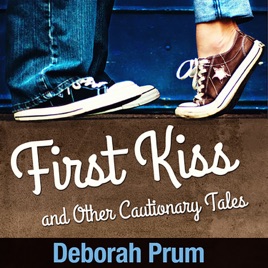
Advertise on podcast: DEBORAH PRUM
Rating
5from
This podcast has
75 episodes
Language
EnglishPublisher
DEBORAH PRUMExplicit
No
Date created
2024/03/07
Latest episode
2026/09/04
Average duration
5 min.
Release period
25 days
Description
Welcome to First Kiss and Other Cautionary Tales, a podcast where you can listen to observations on the quirkiness of life, hear short fiction read by a short person, and listen to book and movie reviews.
Unlock DEBORAH PRUM podcast Email contact info,
Listeners & Audience details
Email contact information
Direct podcast contact details

Listeners
Audience numbers & engagement insights

Audience details
Podcast Insights

Podcast episodes
Check latest episodes from DEBORAH PRUM podcast
PODCAST-DARK MATTER TV SERIES
2026/09/04
PODCAST-DARK MATTER TV SERIES
I attended seventh grade at Nathan Hale, a junior high school in a small industrial city. Much of the “educational” energy expended in the school involved teachers breaking up fights. Most of my personal energy was expended by running home from school every day to avoid getting beaten up. I wasn’t particularly unpopular, just slow, small, and available.
In seventh grade, a middled-aged, frail science teacher named Mr. Jaffee taught me general science. I loved the man and would linger after class to ask him one question after another. At twelve, the concept of possibilities fascinated me. Unfortunately, I conflated possibilities with the idea of probabilities. For my science project, I wrote my own interpretation of Blaise Pascal ideas about probability. Let’s just say I did not come close to nailing the topic, but Mr. Jaffee gave me an A for effort.
My slightly whack-a-doodle report led to an after-school discussion during which Mr. Jaffee covered the blackboard with words and diagrams that introduced me to the concepts of the uncertainty principle, superposition and quantum tunneling, although he did not name them as such. I’ve never fully understood, nor have I ever forgotten what he told me.
Years later, I realized two things about Mr. Jaffee, that he was brilliant and must have read Schrodinger, Dirac and Heisenberg. Also, it dawned on me that he was dying of cancer the entire year he spent indulging all my questions. He passed away at the end of the term.
His influence led me to a lifetime interest in physics, not Newtonian classical physics, but quantum physics. My minimal math skills enable me to comprehend 1% of quantum math and my ability to decipher physics writing enables me to understand about 30% of quantum theory, but the passion is there. Just ask my husband. He’s banned me from keeping Brian Greene’s Fabric of the Universe on our nightstand because of the number of times I’ve awakened him to tell him a mind-blowing physics fact. It’s gotten so bad that he won’t even engage in daytime conversations that include the words multiverse or entanglement.
Several people had to recommend the TV series Dark Matter before I relented. I dislike sci-fi movies that mangle the basic tenets of quantum theory. Given my 30% mastery of the topic, my opinion is that this series gets the science right, or close to right. The premise is not completely implausible. All any inventor would have to do is figure out how to make macro entities (people) behave like micro entities (for example photons) in a quantum field.
During the two weeks my husband was out of the country, I binge-watched the show. In episode one we meet Jason Desson (played by Joel Edgerton). He’s a physics professor who spends his life trying to get his students to look up from their phones. What makes his life worth living is his wife Daniela (played by Jennifer Connelly), to whom he’s devoted, and his son Charlie (Oakes Fegley), whom he adores. One evening, Jason, who I will call Jason 1, is kidnapped, drugged, and via a box, transported to another “universe” where he replaces Jason 2, an unmarried, highly successful, selfishly driven physicist who lives with his psychiatrist girlfriend, Amanda Lucas (Alice Braga).
I can’t tell you more without spoiling the plot. In fact, I’ve probably already told you too much. The story is a carefully constructed and makes sense within the world the writer has created which I appreciate. Actors play multiple nuanced versions of their characters, and they do a good job of it. The pacing is pretty good, although there is a grim and repetitive stretch midway when I almost gave up watching.
I became attached to the character, Amanda, the kind psychiatrist who accompanies Jason 1 in his quest to get back to his wife and son. I felt so worried about what might become of her that I could barely keep watching the show. But I stuck with it.
Pro tip: if you decide to watch the series, you don’t have to understand quantum physics to follow the plot, but you do have to keep track of multiple versions of the characters. For the iterations of Jason, watch for the wedding ring, dark cap, and varying facial scratches. For Daniela and Charlie, watch for hairstyles and clothing.
This movie is about regret, roads not taken, how specific choices lead to specific outcomes, and how the selfish drive of one person can ruin many lives. But it is also about generosity, loyalty, fidelity, gratitude, selflessness, and taking joy in the moment. The series wrapped up plot points in a satisfying way and left plenty of room for season two, which is already available. Should you watch it? I say go for it.
###
Interested in other quirky movies? Check out:
NINE DAYS
DADDIO
GHOSTLIGHT
0:00
/
0:00
Dark Matter
(Photo by Jen Fariello)Deborah Prum’s fiction has appeared in The Virginia Quarterly Review, Across the Margin, Streetlight and other outlets. Her essays air on NPR member stations and have appeared in The Washington Post, Ladies Home Journal and Southern Living, as well as many other places. Check out her WEBSITE. Check out her DEVELOPMENTAL EDITING SERVICES. Check out her PAINTINGS.
APPLE PODCAST
SPOTIFY PODCAST
PODCAST-THE BRAND NEW TESTAMENT–MOVIE REVIEW
2026/08/20
PODCAST-THE BRAND NEW TESTAMENT-A MOVIE REVIEW
Add Text Here….
0:00
/
0:00
The Brand New Testament
The Belgian film, The Brand New Testament, puts the “Q” in quirky. I love dark humor and unconventional films, but my husband, Bruce, does not. However, by the movie’s end, we agreed that this movie was a wild ride that we both enjoyed. (A miracle.)
Here’s the set-up: God is a mean-spirited, grungy, bathrobe-wearing old guy who sits at a computer in bleak apartment in Brussels, wreaking havoc on mankind. His actions range from petty annoyances, like making sure toast always falls on the jelly side, to devasting events (think heart failure, assassinations, weather disasters.)
This grumpy God shares his non-descript apartment with his timid wife, his son, JC, a sometimes-animated statue who sits on a shelf, and his feisty ten-year-old daughter, Ea, who is the hero of this tale.
Ea routinely tangles with her cruel father. One day she sneaks into the computer room and discovers how he intentionally causes great suffering for all of humanity. When she confronts him about his actions, he goes after her with a belt. Ea escapes and asks her brother, JC, for advice. He tells her to find six additional apostles and to write a brand new testament. Ea randomly chooses the names of the six apostles from her father’s data base. Then, she sends a text to the cellphones of all the people on earth that includes a countdown to each person’s specific time of death. After that, Ea finds a brilliantly inventive way to escape from the apartment. Then she roams the streets of Brussels looking for the specific apostles, all of whom seem like people who have just wandered out of a Fellini film. I’m not going to tell you any more of the plot except that it’s bizarre and in its own circuitous way, it works.
The nuanced acting in this film is a tribute to Jaco Van Dormael’s directing skills. The actors say and do the weirdest things without blinking an eye. Bruce and I especially loved Ea, the ten-year-old child who made the world a better place by marching around Brussels giving people truly insane advice. The only actor we recognized was Catherine Deneuve, playing the fifth apostle. Her choice of a romantic partner will astonish you.
The humor is both understated and absurd, my favorite kind. The film was a Golden Globe nominee and was shortlisted in the Best Foreign Film category at the 88th Academy Awards.
Bruce and I liked The Brand New Testament. If you watch it, you may not feel the same way. This movie is not for everyone. My mother would have hated it. You may think the movie is heretical and offensive. I would disagree. However, I don’t want to say why, because saying so would reveal too much of the plot. If you decide to watch the movie and want to discuss it, shoot me a message. That’s all for now.
###
Interested in other quirky movies? Check out:
NINE DAYS
DADDIO
GHOSTLIGHT
(Photo by Jen Fariello)Deborah Prum’s fiction has appeared in The Virginia Quarterly Review, Across the Margin, Streetlight and other outlets. Her essays air on NPR member stations and have appeared in The Washington Post, Ladies Home Journal and Southern Living, as well as many other places. Check out her WEBSITE. Check out her DEVELOPMENTAL EDITING SERVICES. Check out her PAINTINGS.
APPLE PODCAST
SPOTIFY PODCAST
PODCAST-STERLING POINT-TV SERIES
2026/08/12
PODCAST-STERLING POINT-TV SERIES
If you watch a trailer for the eight-episode series, Sterling Park, you might be tempted to dismiss it as a Disney-like teen show, but you would be wrong. Yes, there are a few “Disney” moments but on the whole director, Megan Park, delivers a tale well told, addressing important issues with nuance and wisdom.
Fraternal twins Annie (Ella Rubin) and Connor (Keen Ruffalo—yes, son of Mark Ruffalo) inherit an island in Canada from a maternal grandfather they’ve never met. They’ve been raised in New York City by Steven, their adoptive father, played by Jay Duplass, Their mother died when they were very young. Seventeen-year-old Annie, (who looks like a cross between Ann Hathaway and Julia Roberts) discovers a letter from her grandfather that gives her ambiguous instructions. Without telling her father, Annie flies to Cananda then hires a private plane to get to the multimillion dollar island she’s inherited. The pilot of the small plane is a teenager named Ellis (Jacob Whiteduck). The instant sizzle to their interactions does gives off a Disney vibe, but no worries, their relationship proceeds in a way that made me feel there is hope for the next generation.
This is not to say that the Ellis-Annie relationship is lacking in conflict and uncertainty. The presence of Rory (Daniel Quinn-Toye) provides plenty of drama. He is an ultra-wealthy former classmate of Annie’s from NYC who falls for her immediately when he sees her on the island. He’s not your typical chucklehead rich boy; he’s kind, generous, tender, and asks all the right questions. So, the love triangle is nuanced. The Ellis and Rory characters are not stereotypes. The screen writers go to great pains to develop robust back stories for both guys.
Connor, Annie’s twin brother, provides comedic relief throughout the series. Pay special attention to the scene where Connor and Rory help each other stretch their hamstrings after they play some sort of racket sport. It had me laughing out loud.
Some of the best acting is done by Ramona and Oona. Ramona’s mother is dead. She has been raised by her grandfather, a grandfather she just happens to share with Annie and Connor, siblings she does not know exist. Oona’s mother seems to have abandoned her and her twelve-year-old sister, Maple, whom Oona is raising. Oona and Ramona clearly are in love. At the same time, the two young women clearly have absent mother issues, which they both acknowledge. Their relationship is passionate, tumultuous, and angst filled.
The behavior of these teens does not always reflect best judgment. That being said, all of seven of the main characters, ranging from twelve to eighteen, are pretty darn smart, with the twelve-year-old, Maple, being the wisest of them all. At least five of them read fancy-schmancy books, one is a concert pianist, and Connor, who portrays himself as a party boy is a closet genius. Well, maybe not genius, but very bright.
The three adults in the film fall into the murky territory of not really bad guys, but also not parents their collective offspring would like to emulate. Two of the fathers regret the questionable choices they made in the past, and one woman (Rory’s mother) is a person who regrettably doesn’t not regret any of her actions.
The setting, the Muskoka Lakes region of Canada is gorgeous. If I had access to a private jet, I’d zip off there in a heartbeat. The soundtrack blew me away. When I heard a clip from Joan Osborne’s song, What if God is One of Us, I knew I was in for a treat. The songs are a mix of mainstream, indie, and folk music, with performers like Teddy Swims, the Head and the Heart, and Liza Minnelli. The cinematography and the soundtrack alone make the series worth watching.
Are there plot points that defy credulity? Yes, of course, I could name several but nothing egregious. There was a twist I did not anticipate that possibly wasn’t quite believable, but I liked it anyway. The end was satisfying in that wrapped up most of the major plot points and included two cliff-hangers that left room for an intriguing second season.
Sterling Point is an entertaining and thought-provoking series. I recommend it so long as you are not squeamish about occasional scenes of teens making questionable choices.
###
Interested in other TV series? Please check out my reviews of:
FIRE BUG
TASK
WIDOW’S BAY
0:00
/
0:00
Sterling Point
(Photo by Jen Fariello)Deborah Prum’s fiction has appeared in The Virginia Quarterly Review, Across the Margin, Streetlight and other outlets. Her essays air on NPR member stations and have appeared in The Washington Post, Ladies Home Journal and Southern Living, as well as many other places. Check out her WEBSITE. Check out her DEVELOPMENTAL EDITING SERVICES. Check out her PAINTINGS.
APPLE PODCAST
SPOTIFY PODCAST
PODCAST-EUPHORIA, MONTANA, & THE HOUSEKEEPER & THE PROFESSOR
2026/07/22
PODCAST-EUPHORIA, MONTANA, & THE PROFESSOR & THE HOUSEKEEPER
Are you looking for a book to read? Check out my mini reviews.
Euphoria by Lily King:
This work of historical fiction is loosely based on the life of anthropologist, Margaret Mead. The novel is set in 1930’s New Guinea, when anthropology was a nascent and not necessarily respected field of study. The narrative tension of the novel is created by both a love triangle and also the differing views the three anthropologists hold about the ways to pursue their research.
King skillfully presents this tale from two distinct points of view. We mainly hear from Andrew Bankson, a depressed and on-and-off suicidal British anthropologist who is in love with Nell Stone. She is an American anthropologist who is married to Fen, an Australian anthropologist. Excerpts from Nell’s diary provide a second point of view.
One takeaway for me is how often we have no idea what is going on in another person’s mind and how guessing wrong can result in tragedy. I thoroughly enjoyed this book.
Montana 1948 by Larry Watson:
This slim volume of 169 pages is a coming-of-age story, told by twelve-year-old David Hayden whose father is the sheriff of a small town, a job he took on unwillingly. David’s uncle is the town physician and local war hero, who, on the surface, is a charming fellow. His grandparents are wealthy folks who control the town and its members. This includes families that have settled the area and Native Americans, the people they’ve displaced and mistreated.
This spare story is elegantly told, with moving observations of disturbing events that forever shift David’s world view. The novel addresses themes of family loyalty, the harsh treatment of Native Americans, justice deferred, and the cost of living your life with integrity.
The pacing is great and the prose is engaging. I read the book almost in one sitting.
I wish Watson had spent more time talking about the interior life of the Native Americans who suffered greatly. And, at the end, I wanted to see all the “bad guys” and the institutional racism dealt with in a more vigorous manner. However, the ending I yearned for would not have been realistic for the times. Regardless, I enjoyed this book and highly recommend it.
The Housekeeper by Yoko Ogawa
I don’t care about baseball, and I’ve feared math since early childhood. Numbers hurt my brain. However, Yoko Ogawa’s novel gave me a deeper appreciation of both math and baseball. Although, I can’t see myself ever watching a full game.
The story is about a brilliant, but ornery mathematician who suffered a traumatic brain injury which left him with an eighty-minute short term memory. A housekeeper and her son become an integral part of his life.
The professor is forced to live entirely in the present. He doesn’t remember the housekeeper and her son from visit to visit. However, the professor communicates his passion for math to the woman and her boy. Ultimately, they both cine to share the professor’s passion.
The story is heartwarming in a non-sentimenal way. And, miracle of miracles, I happily learned about the beauty of math and the intricacies of baseball. The relationship between the three characters felt touching and realistic. I highly recommend the book. If you hate math, let me know if this novel changes your mind.
###
Interested in more reviews? Please check out:
THE GOD OF THE WOODS
FOSTER
0:00
/
0:00
THREE BOOK REVIEWS
(Photo by Jen Fariello)Deborah Prum’s fiction has appeared in The Virginia Quarterly Review, Across the Margin, Streetlight and other outlets. Her essays air on NPR member stations and have appeared in The Washington Post, Ladies Home Journal and Southern Living, as well as many other places. Check out her WEBSITE. Check out her DEVELOPMENTAL EDITING SERVICES. Check out her PAINTINGS.
APPLE PODCAST
SPOTIFY PODCAST
PODCAST-WIDOW’S BAY-TV SERIES
2026/06/22
PODCAST-WIDOW’S BAY-TV SERIES
I did not have helicopter parents. My first exposure to horror films was watching The Haunting at age ten with my father. Dear Dad, always the jokester, jump scared me at a tense moment of the movie, an event that shaved a decade off my life. Years later, in college, I stupidly re-watched the film with a bad boyfriend, who jump scared me at exactly the same moment. Based on Shirley Jackson’s The Haunting of Hill House, this movie is the reason I can never fall asleep while staying in an Airbnb in an old Victorian mansion.
My second exposure to the horror genre was watching The Sixth Sense which I thought was going to be a simple psychological drama. I spent the movie with my hands covering eyes and my thumbs stuck in my ears. After watching this film, I’ve never viewed kitchen cabinets in the same way.
Created by Katie Dippold for Apple TV, Widow’s Bay is billed as a comedy horror television series. After reading many intriguing comments about it, I broke my “no horror movies” rule. I binge-watched the series on my iPhone on a daunting car trip from Virginia to Long Island. We drove up in a snarl of cars that were headed to World Cup events, a golf tournament, and the Knicks parade. The bumper-to-bumper traffic, coupled with unhinged New Yorkers behind the wheel, made the trip terrifying.
So, to distract me from the terror, I decided to watch Widow’s Bay on my iPhone. Brilliant logic, I know. Here’s the plot: Tom Loftis, played by Matthew Rhys, is mayor of Widow’s Bay, an island that townies believe to be cursed. Tom is a widower with one son, Evan, a teen who hates the place and takes every opportunity to engage in shenanigans. A mainlander himself, Tom’s main goal is to convince everyone that Widow’s Bay is safe and is a great tourist destination.
The old-timer residents know better than to believe Tom and impede him at every turn. The ensemble cast of townspeople is a pitch perfect portrayal of quirky odd ducks, some of whom are innocuous, and some who are not. They are given the very best comedic lines and corporately are the highlight of the movie.
Compared to the sheer terror of our drive to Long Island, I found this series more funny than frightening. The movie is filled with the usual tropes: a sea hag, boogeyman, spooky fog, black skies, howling wind, dungeon, jump scares galore, and your two, not one, off-kilter people periodically screaming about impending doom. I loved the campy humor and the straight-faced delivery of some of the ridiculous things ever said. The film never takes itself too seriously. For example, during an intense scene when Tom is alone in a dark room interrogating a menacing specter, the mayor’s secretary pops in, saying, “Oops, sorry. I forgot my purse.”
Good pacing and the ever-building narrative tension kept me engaged. The storyline is so over-the-top ridiculous and implausible that I never felt scared, repulsed maybe, but not scared. If I’d watched this on a big screen or even a slightly bigger screen, the experience would have been more immersive and possibly more frightening.
British TV series tend to wrap up each season with a definitive ending. Not so with Americans. Widow’s Bay leaves the viewer with unresolved plot points which I found mildly annoying. Regardless, I enjoyed this character-driven dark comedy and recommend it.
###
Interested in other TV reviews? Check out:
TASK
SMOKE
THE PERFECT COUPLE
0:00
/
0:00
Widow's Bay
(Photo by Jen Fariello)Deborah Prum’s fiction has appeared in The Virginia Quarterly Review, Across the Margin, Streetlight and other outlets. Her essays air on NPR member stations and have appeared in The Washington Post, Ladies Home Journal and Southern Living, as well as many other places. Check out her WEBSITE. Check out her DEVELOPMENTAL EDITING SERVICES. Check out her PAINTINGS.
APPLE PODCAST
SPOTIFY PODCAST
PODCAST-WELCOME-A BOOK REVIEW
2026/05/07
PODCAST-WELCOME-A BOOK REVIEW
Welcome—Patterns of the Moral Life is an elegant, succinct, and persuasive book on the importance of welcoming others. This is both a well-written argument for the necessity of welcoming others and a practical guide to extending welcome in ways that are ethical and nurturing.
The book is co-authored by Lois Shepherd JD, a professor of biomedical ethics and law, and by Margaret Mohrmann, MD, PhD, a professor emerita of pediatrics, medical education, and religious studies. Given their credentials, you might be tempted to assume that this would be a dense, academic tome. Not so.
The prose is crisp and the concepts are described in a straightforward manner. The authors use vignettes to demonstrate their points, which makes the material accessible and memorable. The style is conversational and engaging. The tone mirrors the subject matter in that it’s warm and welcoming.
Chapter headings provide a clear map to the content. Here are examples of topics: Responding Rather Than Reacting, Stay Awhile, See a Human Being, Let People Tell You Who They Are, Check Your Agenda. This structure provides an easy way for the reader to approach the material and to head to chapters that might hold special interest.
The practical part of this book avoids giving superficial solutions. Instead, the authors make suggestions for change that consider myriad aspects of a situation. My husband and I have tried to be intentional about how we welcome people into our lives. I am grateful at this book challenged me to think about and change some of my beliefs and behaviors. I highly recommend Welcome.
###
Interested in other book reviews? Please check out:
The God of the Woods
Time of the Child
Without You Here
Allegiance
0:00
/
0:00
Welcome-Book Review
(Photo by Jen Fariello)Deborah Prum’s fiction has appeared in The Virginia Quarterly Review, Across the Margin, Streetlight and other outlets. Her essays air on NPR member stations and have appeared in The Washington Post, Ladies Home Journal and Southern Living, as well as many other places. Check out her WEBSITE. Check out her DEVELOPMENTAL EDITING SERVICES. Check out her PAINTINGS.
APPLE PODCAST
SPOTIFY PODCAST
PODCAST-NICK & MIKE, NICK & ALICE MOVIE REVIEW
2026/04/07
PODCAST-NICK & MIKE, NICK & ALICE MOVIE REVIEW
I loved James Marsden’s performance in the TV series Dead to Me. He did an excellent job playing identical twins who had completely different personalities. The series was dark and wickedly funny. It’s worth checking out, if you don’t mind quirky and sometimes shocking material. I also enjoyed Vince Vaughn’s performance in Bad Monkey, a TV series based on Carl Hiassen’s novel. The humor wasn’t quite as sharp as I’d have liked, but I found it entertaining.
When I noticed Marsden and Vaughn were starring together in the new movie Mike & Nick, Nick & Alice, I decided to watch it. Bruce happened to be knee-deep in March Madness so I watched it alone.
The movie starts out with a bang, figuratively and literally. Ben Schwartz, playing a science nerd named Symon, is in his gadget-filled lab dancing and singing to Billy Joel’s song, Why Should I Worry? He’s celebrating having put the final touches on a time machine. Turns out, Symon has plenty of reasons to worry, but so as not to spoil the plot, let’s just leave it at that. Symon’s singing is awful, but his performance is spectacular and he draws me right in. I wish we’d seen more of him in the movie.
The next scene takes place in a cocktail lounge full of gangsters and other shady characters. They’re at a Welcome Home from Prison party for young Jimmy Boy, the boss’s son. After warmly greeting his scary guests, Sosa the mob boss, announces he will find and kill the rat who caused his dear son’s incarceration.
Nick (Vaughn) and Quick Draw Mike (Marsden) are at the party. Nick works for Sosa. Quick Draw Mike works for Nick. Mike is having an affair with Nick’s wife, Alice. Hence, the reason for the long and somewhat clunky, movie title: Nick & Mike, Nick & Alice.
The first half of the movie is great, quirky humor, inside jokes, and interesting time travel conundrums. This movie is dripping in satire; it is a gangster movie making fun of gangster movies. The jokes are nuanced. For example, when a bunch of nefarious bad guys show up at Nick’s house, in a non-ironical way, he offers them Capri Suns to drink. Now I am realizing that my description of this scene does not seem all that funny. I guess you’d have to be there.
I had to stop watching the movie about two-thirds of the way through. I liked the first part so much that I persuaded Bruce to join me, which he did not want to do. To be fair, who likes to start watching a move in the middle? But I wore him down and he agreed.
Unfortunately, the last third of the movie lost its momentum. It felt as if someone else had written it. The screenwriter included a couple surprises, but mostly we watched many slow-motion fights during which combatants smashed couches, shelves, tables, glass objects, and each other’s heads. You’d think the altercations might have increased the narrative tension, but no.
Even though, the movie fell off the tracks for the last half hour or so, I enjoyed the heartwarming ending.
Should you watch it? If you are in the mood for an arthouse film, this is not it. However, James Marsden and Vince Vaughn give high energy performances, and the gangster satire is funny. If you take snack breaks during the fight scenes, this movie could be fun to watch.
###
Interested in other movie reviews? Check out:
Hamnet’s Jessie Buckley in: Wicked Little Letters.
Or, Olivia Coleman in: Joyride.
Or, James Marsden in: Dead to Me.
0:00
/
0:00
Mike & Nick Nick & Mike
(Photo by Jen Fariello)Deborah Prum’s fiction has appeared in The Virginia Quarterly Review, Across the Margin, Streetlight and other outlets. Her essays air on NPR member stations and have appeared in The Washington Post, Ladies Home Journal and Southern Living, as well as many other places. Check out her WEBSITE. Check out her DEVELOPMENTAL EDITING SERVICES. Check out her PAINTINGS.
APPLE PODCAST
SPOTIFY PODCAST
PODCAST-DECONSTRUCTING UNICORNS & MERMAIDS
2026/03/23
PODCAST-DECONSTRUCTING UNICORNS & MERMAIDS
Photo Courtesy of Alexander Grey
0:00
/
0:00
Deconstructing Unicorns & Mermaids
Streetlight Magazine just published this essay. You can read it HERE.
Longer version below:
My four-year-old granddaughter, Zoe, and her seven-year-old brother, Henry, (names changed) live out-of-state. We often meet via Zoom. We share a screen and explore their burning questions by searching YouTube videos.
Henry is interested in science, sort of. For a while, he wanted to watch presentations about black holes, natural disasters, and the multiverse. Now he’s moved on to the human body. He has questions like, what happens if you eat a worm? Or the latest, what happens if you never cut your fingernails? Diana Armstrong holds the record for the longest fingernails, 21 feet per hand. She can’t pick up items from the floor or open her refrigerator. Now Henry is convinced that trimming his nails is in his best interest.
Last Saturday morning, Zoe wanted to know: Do unicorns exist? Are mermaids real?
I believed the answers we’d find might shift her taste in clothing, movies, music, and even inform the choice of stuffed animal she snuggles with at night.
We discovered that unicorn sightings might have been skinny rhinoceros or possibly rare Italian one-horned deer. We also learned that mermaids likely were manatees basking on boulders, or the wishful thinking of sailors who had been at sea too long.
This news didn’t crush the child. A week later, when I asked Zoe what she wanted to be when older, she said, “A unicorn.” When I raised my eyebrows, she responded, “Okay, maybe a mermaid princess.”
I felt surprised that Zoe continued to believe in the existence of unicorns and mermaids despite watching videos that made a strong case that neither creature exists. However, she not only still believed unicorns and mermaids were real, but Zoe also thought they were viable career choices.
This led me to google: Why do people persist in clinging to convictions that clearly are not true?
Folks tend to believe both what they’ve been told and what they have experienced. In the face of indisputable facts, it’s difficult to let go of long held beliefs. All the adults in Zoe’s life supported her view that these magical creatures are real. All the books she’s read, movies she’s watched and songs she’s listened to confirm that these beings live rich and varied lives, lives filled with romance and adventure.
My not-so-scholarly internet search also revealed that emotionally charged lies can be more convincing than facts. They evoke strong feelings which impede critical thinking. Zoe possesses great affection for unicorns and mermaids. For now, she’s likely to ignore the obvious.
Lastly, I read about motivated thinking which is when people forgo rational thinking and cling to an erroneous belief, if it benefits them in a tangible way. Unlike unicorns and mermaids, Zoe has never questioned the existence of the Tooth Fairy. This pragmatic child probably wouldn’t want to endanger her primary source of income. Why mess with success?
I’ve been blind to my own false assumptions. Often, it takes a close friend or relative to point out what I’m missing. Years ago, I was convinced that I treated my two sons equally. However, a friend pointed out that whenever my three-year-old pitched a fit, I’d do anything to appease him. I appreciated her input, but believed she was wrong.
Later, at a family event, my father filmed me grabbing a tambourine out of my five-year-old’s hand and giving it to my screaming three-year-old who wanted it. A few weeks later, when we were watching the video, I realized my friend had given me accurate feedback.
I’d made the false assumption that since I was trying hard to be a good parent, I’d never make the rooky mistake of favoring one boy over the other. Until I watched the video, I couldn’t see what was right before my eyes.
Zoe’s belief in the existence of mermaids and unicorns isn’t hurting anyone. I’m happy she still can picture a rosy future for herself as a mermaid princess.
However, the stakes of ignoring the truth are higher for us adults. The assumptions we make affect our perception of reality. False assumptions have consequences. When we adults get our facts wrong, people can suffer and die. Democracy can collapse.
One trait that Zoe and Henry share is their curiosity. Like many children, they ask questions and take nothing for granted. Being curious requires an admission that you don’t know everything and that you are willing to explore in all directions for an answer.
Einstein advised, “Never lose a holy curiosity.” Einstein meant one should approach the world in a spirit of humility and in an open-minded search for truth.
I want so badly to state that maintaining a childlike curiosity will result in world peace, but I know there’s no quick fix. However, Einstein was no slacker, so maybe we should follow his lead. What if we approach our assumptions with a holy curiosity and thereby take an ever-so-tiny step in the right direction.
(Names of children changed.)
###
Read at STREETLIGHT.
(Photo by Jen Fariello)Deborah Prum’s fiction has appeared in The Virginia Quarterly Review, Across the Margin, Streetlight and other outlets. Her essays air on NPR member stations and have appeared in The Washington Post, Ladies Home Journal and Southern Living, as well as many other places. Check out her WEBSITE. Check out her DEVELOPMENTAL EDITING SERVICES. Check out her PAINTINGS.
APPLE PODCAST
SPOTIFY PODCAST
PODCAST-SON OF A BIRD-BOOK REVIEW
2026/03/17
PODCAST-SON OF A BIRD-BOOK REVIEW
Writers are often advised to leave out the boring parts. Nin Andrews did just that with her memoir in prose poems called Son of a Bird. I couldn’t put the book down.
In the first poem of her collection, Andrews describes her childhood home, a stone farmhouse with a barn where the horses and chickens slept, and where the kittens and foals were born each spring. This sounds bucolic, but not all was well.
One night when a horse named Ella dies, Andrews runs from the barn back to her bed where she can’t fall asleep. She writes a letter entitled, Dear Future Me, in which she says she would like to grow up to be a horse. (Later, she practices by eating grass, whinnying, and trotting. She cantors and gallops and tries to make the horse jumps, often falling and skinning her knees.)
In the letter, Andrews tells her future self not to forget her, to write about her, but when she writes about her, to make her prettier and fast. Then, at the end of this poem, adult Andrews observes what I believe to be the thesis statement of this memoir. Andrews says about herself as a child, “Back then you didn’t love you very much and hoped I’d make you better after the fact. Which is strange, I think, for a child.” This sentiment sets the stage for the rest of the volume.
The youngest of six children, Nin was born to parents who wanted a son, a fact she knew from a young age. Her father was an architect and a complicated man. Her mother had Asperger Syndrome. The woman has an aversion to showing physical affection, which is hard on Nin. Miss Mary, a nanny, provides Nin with nurturing and physical care for the first five years of her life. The nanny defends and protects Nin, too. At one point, Miss Mary is so angry with how the child’s parents treat her, she says, “Damn white folks—don’t even know how to raise their own chillens.”
I lost track of how many times Nin is hospitalized with eye surgeries, respiratory infections, and suicidal depression. In one poem, she describes her mother as shrugging as Nin stands at the edge of a stone ledge. Her mother doesn’t move to help, assuming Nin won’t fall. But, of course, Nin tumbles off the precipice and is injured. Another time, one morning, a truck driver finds Nin by the side of the road, unconscious and lying next to her bike. He drives her to the ER. Later in the afternoon, a doctor from the hospital calls and asks her father if he is missing a daughter, which he was, although he and no one else in the family had noticed.
All these stories are told without self-pity and are interwoven with gorgeous images of farm life and wise observations about the complexity of marriage and sibling relationships. Because Andrews tells these stories in a lyrical way, with a generous dollop of humor, the sadness is bearable and the prose is uplifting. For example, Nin nearly dies during sinus surgery because of a bad reaction to anesthesia. She wakes up gagging, with the doctor sobbing by her side. The doctor says, “We thought we lost you…Anesthesia is not your friend.” Andrews ends the poem by saying, “Anesthesia, I thought then, was a Russian princess or evil stepmother who poisoned me again and again.”
The pacing in this collection is brisk. The poems are not necessarily in chronological order, but the flow from poem to poem makes emotional sense, thereby creating a satisfying narrative arc. The prose is spare and succinct. Andrews never uses one word more than she needs to convey her life story, which is filled with beauty, courage, and resilience. I plan to re-read the volume soon. It’s that good.
###
Interested in reading more book reviews? Check out: The Caretaker, Time of the Child, and Without You Here.
0:00
/
0:00
Son of a Bird
Add Text here…
(Photo by Jen Fariello)Deborah Prum’s fiction has appeared in The Virginia Quarterly Review, Across the Margin, Streetlight and other outlets. Her essays air on NPR member stations and have appeared in The Washington Post, Ladies Home Journal and Southern Living, as well as many other places. Check out her WEBSITE. Check out her DEVELOPMENTAL EDITING SERVICES. Check out her PAINTINGS.
APPLE PODCAST
SPOTIFY PODCAST
PODCAST-HOW TO GET TO HEAVEN FROM BELFAST-MOVIE REVIEW
2026/02/20
PODCAST-HOW TO GET TO HEAVEN FROM BELFAST-MOVIE REVIEW
Elle Magazine describes the Netflix series, How to Get to Heaven from Belfast, as “Derry Girls meets Bad Sisters.”
I liked Derry Girls so much that I used many clips from it for a humor writing workshop I facilitated a few years ago. I loved Bad Sisters, too. The series is a perfectly structured mystery with the best ensemble cast ever. I watched it three times twice for pure enjoyment and a third time to study plot structure and comic timing. Lisa McGee created both Derry Girls and How to Get to Heaven from Belfast, so I looked forward to watching the new series.
Here’s the basic plot: Four best friends experience a traumatic event as teens. Three of them stay in touch, but because of the event, they estrange themselves from the fourth. Later, as adults, the three are summoned back to their hometown to attend the wake of that fourth friend. Perhaps out of curiosity or guilt, they decide to travel home to pay their respects. Not only do they discover that their friend may not be dead, but they also believe she might be in danger. Mayhem and hijinks ensue during the next eight episodes.
Each of the three women is dissatisfied with her life, which may be why they decide to task on the dangerous and complicated task of trying to unravel the disappearance. One is the head writer for a highly popular murder mystery series that she has come to hate. She is engaged to a man who can think of only himself. The second woman has three children whom she loves but drive her crazy. In our introduction to her, we see her imagining smashing her head on the steering wheel of her car as her kids bicker in the back seat. Out of shame and fear, the third woman gives up the love of her life and instead lives with her mother in her hometown. She has few outlets other than attending church, which she doesn’t seem to enjoy.
The shots of the Irish countryside are beautiful. All four of the women actors deliver high energy performances and they seem to have fun while doing so. The humor is dark and absurd, which I like. The story moves along at a pretty good pace, but there were so many twists and turns, I had difficulty keeping track of the plot.
The setting, especially the spooky parts, was great. Interesting fact–while working on Derry Girls, McGee visited the ruins of the convent where she attended elementary school. The visit brought her back to her school days. Some of the filming of How to Get to Heaven from Belfast took place in at the abandoned school.
What I loved about Derry Girls and didn’t quite see here, was an ensemble of distinctly different characters. Yes, the How to Get to Heaven from Belfast women all made different life choices in terms of career and marriage, but all three had a similar tone: bitter, angry, regretful, unsure if their lives had meaning. The truth is probably many women feel that way at this age but having all three of them be relentlessly negative felt exhausting.
The movie has lots of funny spots. Some of the cultural references went over my head, but that’s on me. If I decide to watch this a second time, I will read up on Derry, Belfast and Donegal. Even though How to Get to Heaven from Belfast wasn’t as crisp and punchy as Derry Girls, I’m glad I watched it.
###
More viewing possibilities:
WICKED LITTLE LETTERS
GHOSTLIGHTING
TASK
LOVE AT FIRST SIGHT
SMOKE
0:00
/
0:00
How to Get to Heaven from Belfast
(Photo by Jen Fariello)Deborah Prum’s fiction has appeared in The Virginia Quarterly Review, Across the Margin, Streetlight and other outlets. Her essays air on NPR member stations and have appeared in The Washington Post, Ladies Home Journal and Southern Living, as well as many other places. Check out her WEBSITE. Check out her DEVELOPMENTAL EDITING SERVICES. Check out her PAINTINGS.
APPLE PODCAST
SPOTIFY PODCAST
HOPING NOT TO HAVE TO SLEEP NEXT TO MYSELF
2026/01/08
HOPING NOT TO HAVE TO SLEEP NEXT TO MYSELF
Jim & Eva's Sunday School Class Led By Gaetano Boccaccio, Eva's Father
0:00
/
0:00
Hoping Not to Have to Sleep Next to Myself
(This essay was just published by Otherwise Engaged An Literature & Arts Journal. Reprinted with permission.)I watch a herd of disaffected teens ignore a traffic light near the high school. They slow-walk across the busy intersection. Some wear black hoodies, some wear camo hoodies, a few are bare headed in the drizzling rain. Most stare down at cellphones; all grimly cocooned in separate universes. Later, on a city road, I watch two young teachers stop traffic, then ferry a flock of four-year-olds to safety. Wearing bright rain slickers, laden with backpacks covered with stickers, the children poke each other, giggle, laugh out loud. They wobble, they skip, they gallop, airborne with glee. Finally, I arrive at Hospice House, a hundred-year-old, three-story Victorian home. I trudge up the winding staircase. My ninety-five-year-old mother is asleep, her expression placid. I choose to believe her mind is filled with moonbeams and music. In truth, though, when she’s awake, sometimes she believes she’s forty and late for work. She’s frantic because she can’t find her keys. No moonbeams. No music. My mind flashes to some thirty years ago. Late at night, she and I are standing in the dark in the kitchen of our family home in Connecticut. My smart, vibrant, always impeccably dressed mother is about sixty. I am microwaving a cup of Sleepy Time tea. We stare at the bright numbers counting down on the microwave pane. My mother who is neither introspective nor philosophical, says to me, “With the tick of each second, I am that much closer to death.” A few weeks ago, I’m trying to persuade my granddaughter (four) to stay in bed and go to sleep. She is a genius at stalling: One more book. A bowl of blueberries, please. A glass of water. One more trip to the potty. Her bottom itches. And finally, “Please…. I don’t want to sleep next to myself.” I sigh. My parents belonged to the same church when they were children. I have a picture of them together, one row apart, in a Sunday school class. She’s five and he’s nine.My father died over seven years ago. Since right after his death and even now at Hospice House, my mother senses my father’s presence, snuggled next to her at night. Not only that, but in the morning, she reports hearing him in the next room, making coffee. I realize that the tender universe is making sure that my mother is not having to sleep next to herself. On another day, a sunny one this time, I set up an iPad in front of my mother. She is a person who loves musicals. For years, she and my father watched many shows at the Schubert in New Haven. Today, I position an iPad on the bedside tray. I search for video clips from various productions, then settle on Oklahoma. She harmonizes with Gordon McRae: “Oh, what a beautiful morning, oh what a beautiful day, I have a wonderful feeling, everything’s going my way…” And at this exact moment, which is all we really have, all is well in the world.###(Note: My mother, Eva Mazzotta, passed away on December 3, 2025.) Interested in reading more essays? Check out:*MONKEY BUSINESS*MAISON MAGIQUE*GANGSTER GRANNY
(Photo by Jen Fariello)Deborah Prum's fiction has appeared in The Virginia Quarterly Review, Across the Margin, Streetlight and other outlets. Her essays air on NPR member stations and have appeared in The Washington Post, Ladies Home Journal and Southern Living, as well as many other places. Check out her WEBSITE. Check out her DEVELOPMENTAL EDITING SERVICES. Check out her PAINTINGS.
APPLE PODCAST
SPOTIFY PODCAST
PODCAST-LOOKING FOR SOMETHING TO WATCH?
2025/12/28
LOOKING FOR SOMETHING TO WATCH?
LOOKING FOR SOMETHING TO WATCH?Here are four possibilities:Doc: a TV seriesA life shattering event plunges Dr. Amy Larsen into bitterness and cynicism. Played by Molly Parker, the physician becomes chief of staff at a busy hospital. For the next eight years, her acid tongue and aggressive behavior make everyone’s life hell, colleagues, family members, and even patients. Then, she’s in a car crash that results in a brain injury. The extensive damage erases eight years of her life, including memory of the terrible event. After the crash, Amy Larsen emerges from the accident as her old self, kind and humble. As she re-enters her world, she is bewildered to discover that people hate and fear her.The premise, the screenplay and the acting makes this series worth watching. The writers deliver an insightful portrayal of how our attitudes and actions can affect others for both good and bad. Unfortunately, to create a hook for season two, writers came up with an episode that would have worked better in a soap opera. That decision diminished the power of the preceding nuanced exposition of plot. Despite the telenovella twist, the series is still entertaining. I probably will watch Season Two.One Battle After Another: A MovieBruce and I did not like this movie. Critics loved it and so did audiences, so we are probably wrong. We got off to a bad start. My husband and I are not computer geniuses. We inadvertently rented the movie twice ($14.00) while trying to figure out how to get the captions to work. Then, a heated discussion occurred because had differing opinions as to who was at fault. (Him.) So, we had a grumpy start to the movie. The grumpiness deepened when we realized the movie ran 2 hours and 41 minutes, which included about 41 minutes of chase scenes.Leonardo DiCaprio (who plays Bob) is a splendid actor. He delivered a pitch perfect performance of a whacked-out drug and alcohol addicted ex-revolutionary. The tone of the film is ironic with lots of tongue-in-cheek humor, especially regarding character names: Lockjaw, Toejam, Mae West, Perfidia Beverly Hills, and Ghetto Pat. Despite being on the run and trying to evade the law, DiCaprio spent a lot of the movie dressed in a long, plaid bathrobe. I felt irrationally obsessed by the impracticality and improbability of his continuing to wear the bathrobe during all the crazy events of the last hour of the movie. I kept mentioning the bathrobe to Bruce, which irritated him no end. Later, I realized I'd missed the point; the writers intended for viewers to enjoy the absurdity. My bad.Sean Penn should get an Oscar for playing Colonel Lockjaw, a despicable racist and supremely creepy man who is out to destroy Bob (DiCaprio) and his daughter Willa (Chase Infiniti). Willa is kidnapped by a good guy, then by a couple of bad guys, and later by a bad guy who turns out to be a good-ish guy. Bob remains one step behind the kidnappers. Willa’s simmering intensity keeps the tension high.One hot-tempered decision by Willa’s mother set off a tragic chain of events that badly affected her daughter's life. By the end of the movie, the violent acts of the revolutionaries hadn’t engendered the change they’d envisioned. However, that didn’t seem to inspire them to change their strategy or behavior. But maybe that was the writer’s point, that we continued to be mired in the mess. On second thought, I like this movie better now that I've written the review.Relay: A MovieReminiscent of John Grisham books and movies, in its first few minutes, this film lets the viewer know where the screenwriter stands regarding corporate greed. Ash, played by Riz Ahmed, is a virtuous man who defends whistleblowers who are hounded by their powerful employers. Sarah Grant (played by Lily James of Downton Abbey fame) is a whistleblower who hires Ash. She tells him she is terrified by the scare tactics of her former employers and wants to return incriminating documents to them. Ash agrees to facilitate the process.There is a tenderness in Ahmed’s portrayal of his character which makes this movie a pleasure to watch. Lily James delivers a great performance of a woman who is running for her life. I didn’t like the curve ball the writers threw at us viewers in the end. For a curve ball to be credible, the writer needs to have incorporated a hint at the onset. Maybe I missed the hint? All in all, I thought the movie was well-acted, kept a nice brisk pace, was not overly violent, and showed the lengths corporations will go to keep making money.Last Christmas: A Movie I am not a fan of Christmas movies. That being said, Last Christmas is not your normal Christmas movie. Emma Thompson who co-wrote the screenplay, gave a memorable, but slightly over-the-top performance of Petra, a Slavic mother. I love Emma Thompson and wanted to love this movie. But the emotional landscape did not quite make sense, and the plot made some confusing leaps. However, I admired the commitment of the actors—Emilia Clarke’s rendition of the feisty and erratic Kate, Henry Golding’s portrayal of the compassionate, yet ethereal Tom, and Emma Thompson’s robust delivery of the in-your-face mother, Petra. This movie did support the plot twist at the end. Film critics didn’t like the movie, but audiences were more forgiving of its flaws and gave it an 81% on Rotten Tomatoes and I would agree.###More viewing possibilities:WICKED LITTLE LETTERSGHOSTLIGHTINGTASKLOVE AT FIRST SIGHTSMOKE
0:00
/
0:00
Looking for Something to Watch?
(Photo by Jen Fariello)Deborah Prum's fiction has appeared in The Virginia Quarterly Review, Across the Margin, Streetlight and other outlets. Her essays air on NPR member stations and have appeared in The Washington Post, Ladies Home Journal and Southern Living, as well as many other places. Check out her WEBSITE. Check out her DEVELOPMENTAL EDITING SERVICES. Check out her PAINTINGS.
APPLE PODCAST
SPOTIFY PODCAST
PODCAST-MONKEY BUSINESS
2025/12/22
PODCAST-MONKEY BUSINESS
Photo Courtesy of Jamie Haughton
0:00
/
0:00
Monkey Business
(First appeared in Brevity.)I am not a monkey, but sometimes I act like one. Over the past couple years, I’ve had to put my writing and teaching career on hold as I’ve dealt with non-negotiable demands on my life. Those events knocked the stuffing out of me and trashed my self-esteem. I wondered if I still possessed the confidence, organizational skills, and knowledge I needed to continue in my profession. Despite being filled with self-doubt, I pitched a creative writing retreat idea to a group I’d worked with in the past. They’d always responded to my proposals with enthusiasm. Within a day, I received a warm email from the director saying she liked the concept but wanted me to expand the description section.I realized she was right. My proposal lacked substance.Normally, I welcome revision suggestions. I’d calmly flesh out the ideas and hit send. However, this reasonable feedback sent my fragile psyche into a death spiral. Had I lost my mojo? Why did I email such an ill-prepared document? I paused to relive many of my past failures, including losing the citywide spelling bee in third grade by misspelling “rhythm.”Once the self-flagellation petered out, I decided to scour the nether regions of my home. I stooped so far as to clean under the bathroom sink in the basement, a space that still contained hygiene artifacts from twenty-five years ago.After my zeal for scrubbing waned, I vowed to craft the perfect revision. But the pursuit of perfection paralyzed me. I stared at a blinking cursor for hours as I wrote and deleted many imperfect drafts. I knew what the director wanted but my self-doubt was messing with my ability to articulate it.While I am not a monkey, the embarrassing truth is that my unhinged behavior bore a striking resemblance to a group of lab monkeys that once flipped out over a banana in a basket.Years ago, researchers had taught these monkeys how to open a straw basket by pulling a latch and lifting the lid. All the monkeys became expert lid-lifters. Next, they divided the monkeys into two groups. Monkeys in one room observed someone putting a banana in each of their baskets. The other group was asked to unlatch and lift the lid but without the bananas—which they did, no problem.However, the banana-in-the-basket monkeys forgot how to open the lids. They jumped on baskets, chewed on baskets, and smashed baskets against the wall. Overwhelmed by their desire for those bananas, not one of them remembered a simple task they’d already mastered.Researchers found that the prospect of an enticing reward had interfered with the brain signals that enabled the monkeys to complete a simple task.Much like those lab monkeys, I felt so desperate for the director’s blessing that I couldn’t form a few simple, descriptive sentences. My fixation on receiving her affirmation made me forget how to unlatch my lid.Disgusted by my lack of progress, I decided to procrastinate in a non-housecleaning way. I took out my trumpet, an instrument I’d stared playing at nine, and practiced the St. Louis Blues, a syncopated tune with grace notes, slurs, and the nemesis of my musical existence, dotted eighth notes. I’ve been butchering this song for years. But this time, I focused on counting beats, remembering the sharps, and making the slurs work, despite my shot lip.I didn’t experience performance anxiety because I didn’t care about anyone’s opinion. I played for the joy of it.As my performance improved, I loosened up and lightened up—and gained the courage needed to go back to revising. St. Louis Blues had distracted me from anxiety and the drive for perfection. I added a little verve to the tone of the proposal and wrote one hundred words of what I hoped approximated a persuasive description. The upshot? A nightclub owner invited me to perform St. Louis Blues on stage in NYC.Just kidding. However, the director did like the revision and accepted the proposal, which ended my existential crisis. In retrospect, I wish I could have skipped the drama queen stage. After receiving the revision suggestion, I wish I had poured myself a cup of Good Earth tea, watched the sunset, then calmly written the requisite words. However, my bruised soul didn’t possess the bandwidth for rational thinking and a little self-care. I didn’t realize I had all I needed to complete the task. Like my simian counterparts, my overwhelming desire to achieve a specific outcome interfered with the brain signals that, without fanfare, would have enabled me to complete the simple task. What reassured me that my brain still worked was picking up an old friend, my trumpet, and mastering St. Louis Blues—a low-stakes, complex task that led to a small success. Music worked for me; maybe painting, solving a puzzle, or practicing a tennis serve would work for you.The lesson I learned: Find a way to stop obsessing about the banana!###Interested in other writing tips? Check out: Surviving RejectionAll About That BassCelestial VaultDon’t Arrive Before You Get There
(Photo by Jen Fariello)Deborah Prum's fiction has appeared in The Virginia Quarterly Review, Across the Margin, Streetlight and other outlets. Her essays air on NPR member stations and have appeared in The Washington Post, Ladies Home Journal and Southern Living, as well as many other places. Check out her WEBSITE. Check out her DEVELOPMENTAL EDITING SERVICES. Check out her PAINTINGS.
APPLE PODCAST
SPOTIFY PODCAST
PODCAST-TASK-TV SERIES
2025/10/24
PODCAST-TASK-TV SERIES
If you’ve read very many of my movie reviews, you’ll know that I love dark movies with redemptive underpinnings. The seven-episode TV series, Task, fits the bill. This crime procedural was written by Brad Inglesby, who also penned Mare of Eastown. Both series do a brilliant job of capturing gritty blue-collar life. Mare of Eastown is a mystery that keeps viewers in suspense, eager to discover the big reveal at season’s finale. The plot of Task is character driven; there’s no mystery to be solved. Instead, Inglesby creates narrative tension by exploration of the inner workings of his characters via back story and dialogue. For me, this worked. By episode one, I felt great empathy for several individuals and cared about what happened to them. The plot: unknown men commit a string of violent robberies that target drug houses of a fierce and powerful gang. As the violence escalates, police and FBI officials worry that an all-out gang war will ensue, endangering the public. The FBI chief, played by Martha Plimpton, insists that Tom Brandis (Mark Ruffalo) head up a task force comprised of three newbies to find the perps. In the middle of trying to deal with his own unspeakable tragedy, Tom begs the chief to find someone else. He’d rather be spending his time day drinking and bird watching, his current methods of coping. But the chief prevails. Tom is stuck with organizing a ragtag team of newbies: Grasso (Fabien Frankel), is a brash guy with mobster vibes, not anybody I’d let babysit my goldfish. Alison Oliver plays Stover, a young state trooper who hasn’t gotten over the trauma of a past incident. Her own colleagues ridicule her on a regular basis. The third is Aleah Clinton, played by Thuso Mbedu. This investigator knows what she is doing and is good at it, but is underestimated and unappreciated by just about everyone, including her law enforcement associates and the criminals. Tom Pelphrey, delivers a powerful performance as Robbie, a man with a good heart who can’t help himself from making awful, terrible, forehead-slappingly bad choices. I found myself yelling, “DON’T DO THAT!” at the screen quite a few times. I am a fan of Mark Ruffalo and have watched most of his movies. His nuanced and multi-faceted rendering of Tom Brandis is his best performance to date. Brandis is an ex-priest who went into law enforcement. In addition to fighting his own demons, he’s walked alongside his parishioners and members of the community as they struggle with grief and loss. Brandis is a wounded healer who approaches the world with enormous compassion. The chemistry among the actors in this ensemble cast is among the best I’ve seen. They portray both intense love and soul-scorching hatred in an understated way. No overacting was allowed on this set. Despite being nuanced, some scenes just plain sizzle. I wish the movie had spent more time unpacking the character of Maeve (played by Emilia Jones). She is Robbie's niece, a twenty-something woman who is saddled with the care of Robbie’s small children. All she ever wants to do is live a quiet life. But Robbie’s erratic behavior de-stabilizes and endangers her every day. Albeit damaged, Maeve is the moral compass of the story. She resists Robbie’s pressure to engage in criminal activities, faces down the bad guys who are after Robbie, and puts herself at great risk while trying to protect Robbie’s kids. Her uncle’s chaos lands Maeve in the crosshairs of the FBI investigators, who don’t offer her support or protection, but instead threaten to put her behind bars. Just a warning, there’s lots of violence in this film. I walked out of the room on several scenes. And, as you might expect, there’s enough profanity to set your hair on fire. Even though I have difficulty engaging with slower paced movies, one situation captured my heart so completely that I looked forward to each episode to dropping. The pace does pick up at the end. There are several plot twists and more gun fights. The tragic beauty of one of the last scenes made me weep. Despite leaving a few issues unresolved, the end felt satisfying. I wonder if there will be a season two. I hope so. I’d love to spend more time with the amazing cast and watch whatever else Brad Inglesby comes up with for them to portray.###Interested in other movie and TV reviews? Check out: SMOKE, THE PERFECT COUPLE, or HIGH POTENTIAL.
0:00
/
0:00
TASK
(Photo by Jen Fariello)Deborah Prum's fiction has appeared in The Virginia Quarterly Review, Across the Margin, Streetlight and other outlets. Her essays air on NPR member stations and have appeared in The Washington Post, Ladies Home Journal and Southern Living, as well as many other places. Check out her WEBSITE. Check out her DEVELOPMENTAL EDITING SERVICES. Check out her PAINTINGS.
APPLE PODCAST
SPOTIFY PODCAST
PODCAST-JOYRIDE-MOVIE REVIEW
2025/09/25
PODCAST-JOYRIDE-MOVIE REVIEW
I saw a snippet of Joyride on a long airplane flight. I found the film intriguing and always wanted to watch the whole movie, which I did last night with my fellow members of The Quirky Movie Club.The plot: Twelve-year-old Mully (played by Charlie Reid) is singing in a pub to raise money for a charity that benefits cancer patients, the disease that recently has taken his mother. While singing, Mully notices his reprobate father making off with the collected cash. He chases his father, grabs the money, and hops into the driver’s seat of a cab idling outside of the pub. As Mully peels off, he notices Joy, (played by Oliva Colman) and a newborn in the backseat. Clearly inebriated, Joy tells Mully to keep driving. She confesses that she’s going to give her baby to a friend. Mully is horrified. But Joy tells him, “People give babies away all the time! To Romanian orphanages, to child traffickers, to Chinese gymnastic academies.”The two are already familiar with each other. It’s a small town and everyone gathers at the pub. Mully refers to Joy as “Vodka and Tonic” because of her drinking proclivities. Joy knows him as the boy who lost his sweet mother (a schoolmate of hers) to cancer.They start off on a road trip that involves busting through police barriers, stealing two vehicles, and hitching a ride with an offbeat farmer. At times, the screenplay feels contrived and predictable. To enjoy this movie, you need to suspend your disbelief and relax into the improbable storyline. I encourage you to do so, even if it’s just to see the sparkly chemistry between Colman and Reid.Colman has won an Academy Award, an Emmy, a Golden Globe award and has stayed happily married to the same man for twenty-four years, all admirable achievements. Her acting range is impressive—the queen of England, an intrepid detective, and in this movie, an alcoholic woman who is about to give up her baby. She fully embodies the role of Joy, which made for a great viewing experience.Charlie Reid is mesmerizing on screen. In the opening scene, he sings a very silly song with such conviction and style, I wanted to pause and replay it. His acting is both nuanced and robust, providing a balanced counterpoint for Colman’s portrayal of Joy’s forceful character.The soundtrack complemented the film well. I especially enjoyed some of the upbeat tunes. Shots of the Kerry countryside made me want to hop on a plane and spend a few weeks exploring.I’d love to see Charlie Reid in another movie, but I couldn’t find much about him online, other than his appearing in a few plays. If you want to get to know Olivia Colman better, check Amy Poehler’s interview of her on the podcast, A Good Hang.Near the end of the movie, a street person refers to Mully and Joy as “Reckless Joy and the Half-Orphan,” which is an apt summation of the story. Is the movie worth seeing? My fellow members of The Quirky Movie Club couldn’t quite get past the farfetched plot. However, I loved the acting and the overall spirit of the movie so much I could easily watch it a second time.###Interested in other movie reviews? Check out: NINE DAYS, DADDIO, or GHOSTLIGHT.
0:00
/
0:00
Joyride
(Photo by Jen Fariello)Deborah Prum's fiction has appeared in The Virginia Quarterly Review, Across the Margin, Streetlight and other outlets. Her essays air on NPR member stations and have appeared in The Washington Post, Ladies Home Journal and Southern Living, as well as many other places. Check out her WEBSITE. Check out her DEVELOPMENTAL EDITING SERVICES. Check out her PAINTINGS.
APPLE PODCAST
SPOTIFY PODCAST
Podcast reviews
Read DEBORAH PRUM podcast reviews
Anne McCain Brown 2024/10/29
Smile, think and laugh
Debby’s podcast always make me smile, think about some thing a little differently, and belly laugh. She has such a way with words! I love her perspec...
Podcast sponsorship advertising
Start advertising on DEBORAH PRUM relevant audience podcasts
You may also like to advertise on these Podcasts

4.518774374
American Scandal
Audible

4.689351210
Get Sleepy: Sleep meditation and stories
Slumber Studios

4.79026375
Life is Short with Justin Long
Audible
4.714114348
Bad Friends
Bobby Lee & Andrew Santino

4.7127870
10 to Life
Annie Elise
4.76754463
Criminology
Emash Digital & Mike Ferguson, Mike Morford
4.87505975
The Dr. John Delony Show
Ramsey Network
4.512595664
RedHanded
RedHanded

4.858201918
Sara Gonzales Unfiltered
Blaze Podcast Network

4.922682003
First15 Devotional
First15