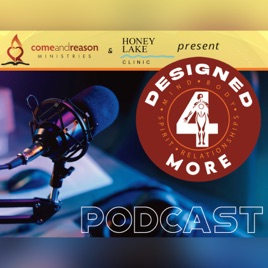
Advertise on podcast: Designed 4 More
Rating
5from
This podcast has
116 episodes
Language
EnglishPublisher
Dr. JenningsExplicit
No
Date created
2024/07/23
Latest episode
2026/10/06
Average duration
53 min.
Release period
7 days
Description
Designed 4 More is a joint production of Come and Reason and Honey Lake Clinic. Tim Jennings, M.D, Ed Anderson, HLC chaplain, and Danielle Rhome, HLC therapist, will seek to harmonize biblical principles with science and real-life experiences to find harmonized truths in which all three threads of evidence agree.
Unlock Designed 4 More podcast Email contact info,
Listeners & Audience details
Email contact information
Direct podcast contact details

Listeners
Audience numbers & engagement insights

Audience details
Podcast Insights

Podcast episodes
Check latest episodes from Designed 4 More podcast
The Psychology Of Belief: Why We Believe What We Believe
2026/10/06
Why do you believe what you believe? Some of your deepest beliefs about yourself, other people—and even God—may have formed long before you ever consciously chose them. Dr. Tim Jennings and Brett Durbin explore how beliefs are formed, why false beliefs are so difficult to change, and how truth can transform the mind.Where did your beliefs come from?Most of us can explain some of what we believe. But beneath those conscious convictions are assumptions about ourselves, relationships, the world, and God that may have been forming since childhood.Some were taught to us. Some came from our parents or culture.Others developed through relationships, trauma, rejection, success, failure, church, and countless experiences we may barely remember.In this episode of Designed 4 More, Dr. Tim Jennings and Brett Durbin explore the psychology behind belief—and why understanding our beliefs is essential to emotional health, spiritual maturity, and genuine faith. Because a belief can feel completely true...and still be wrong.WHAT YOU’LL EXPLORE✅ How beliefs are formed—sometimes before we're even old enough to understand them✅ Why childhood experiences can become powerful beliefs about our identity✅ How trauma can turn “something bad happened to me” into “something is wrong with me”✅ How beliefs influence identity—and identity reinforces beliefs✅ Why we become defensive when deeply held beliefs are challenged✅ What cognitive dissonance is and why it can feel so uncomfortable✅ Why people sometimes resist evidence that threatens an existing worldview✅ How false beliefs can contribute to anxiety, insecurity, and depression✅ Why knowing religious information isn't the same as knowing GodWhen evidence conflicts with a deeply held belief, we experience internal tension—often described as cognitive dissonance.Something has to give.We can reconsider our belief...or find a way to dismiss the evidence.That's why confronting false beliefs requires more than simply presenting someone with another fact. Sometimes the belief is protecting an identity, relationship, worldview, or sense of security.Changing our minds can mean admitting:“I was wrong.”And that can be painful.WHAT DO YOU BELIEVE ABOUT YOURSELF?One of the most hopeful ideas in this episode is that although we cannot rewrite our history, we can reconsider what that history taught us to believe.You cannot change what happened.But you can examine the meaning you attached to what happened.Maybe you weren't stupid.Maybe you weren't worthless.Maybe you weren't unlovable.Maybe something happened that your younger mind didn't yet have the ability to understand accurately.When truth replaces a false belief, our identity—and the choices flowing from that identity—can begin to change.This becomes especially important in faith.It's possible to believe God exists without actually trusting Him.Tim points out that even Scripture describes the demons as believing in God. Mere belief in God's existence isn't the same as knowing His character.So when someone struggles to trust God, an important question becomes:What kind of God are you struggling to trust?Could some of our fear of God come from ideas we've absorbed about Him rather than from who He actually is?DOUBT DOESN'T HAVE TO DESTROY FAITHDoubt can be frightening—especially when we've been taught that questioning our beliefs means we're losing faith.But sometimes doubt exposes a belief that needs deeper examination.Tim and Brett distinguish between simply knowing information about God and actually knowing God.You can study every fact available about a historical figure without ever having a relationship with that person.Faith works differently.Trust grows as we come to know someone as trustworthy.And truth doesn't require us to be afraid of investigation.You were Designed 4 More—more truth, more freedom, more understanding, more trust, and a mind continually being renewed.
Are We Living in the Time of 'Wars and Rumors of Wars'?
2026/09/29
WARS & RUMORS OF WARS: SHOULD CHRISTIANS BE AFRAID?
Wars, political unrest, AI, global instability, and nonstop frightening headlines—does it mean the world is coming apart? Jesus warned of “wars and rumors of wars,” but He also gave an instruction Christians often overlook: “See to it that you are not alarmed.”War. Political division. Economic uncertainty. Artificial intelligence. Social unrest. Natural disasters. Disease. International tensions.Open your phone and within minutes you can find another reason to be afraid.But is the world really more dangerous than ever—or are we experiencing something previous generations never faced: instantaneous exposure to crises happening everywhere, all the time?In this episode of Designed 4 More, Dr. Tim Jennings and Brett Durbin examine “wars and rumors of wars” through Scripture, psychology, neuroscience, and the larger biblical story.And they return to one critical statement Jesus made in Matthew 24:“See to it that you are not alarmed.”Why would Jesus tell us not to be afraid while describing war, persecution, disaster, deception, and instability?WHAT YOU’LL EXPLORE✅ What Jesus meant by “wars and rumors of wars”✅ Are today's events truly unprecedented?✅ Why 24/7 news can make distant events feel like immediate personal threats✅ How fear-based media can affect the brain and emotional health✅ Why political division can cause our “love to grow cold”✅ The danger of placing our ultimate security in governments or political systems✅ How Christians can remain engaged in society without making politics their source of hope✅ Why Jesus described end-time events as birth pains✅ How Christians should think about rapidly advancing artificial intelligence✅ The risks of replacing human relationships and human abilities with AI✅ How parents can talk to children about war, AI, uncertainty, and frightening world events✅ Practical ways to protect your peace without becoming uninformedWHAT IS ALL THIS FEAR DOING TO YOUR BRAIN?There is something genuinely different about our generation: we can experience the entire world's crises in real time.War thousands of miles away appears on the screen in your hand. Breaking-news alerts interrupt your day. Social media feeds expose us continuously to conflict, outrage, tragedy, and predictions about what might happen next.And our brains respond to what repeatedly captures our attention.Dr. Jennings explains that continually feeding the brain fear-based information can strengthen fear and survival circuitry—leaving us more anxious, suspicious, restless, and emotionally reactive.His practical challenge is simple:For every minute you spend consuming news or social media, are you spending at least that much time focusing your mind on God and Scripture?What might happen if you did?Jesus invites His followers to understand these events within a much larger story.Our hope isn't that human institutions will eventually engineer a perfect world.Our hope is ultimately in God's kingdom and the restoration He has promised.SHOULD CHRISTIANS BE WORRIED ABOUT AI?The conversation also turns toward one of today's biggest sources of uncertainty: artificial intelligence.Tim and Brett discuss both the usefulness and potential dangers of AI—from outsourcing our thinking and replacing genuine human relationships to the growing use of autonomous technology in warfare.The question isn't simply:“Is AI good or bad?”A better question may be:Are we using technology as a tool—or allowing technology to reshape what it means to think, relate, create, and live as human beings?You were Designed 4 More—more peace, more courage, more discernment, more love, and a hope that doesn't rise and fall with the headlines.
GOD OF REALITY Q&A – PART 4: HOW GOD CHANGES THE MIND, HEART & LIFE
2026/09/22
Can your thoughts affect your physical health? Why do Christians sometimes struggle with the same patterns for years? And how can you tell whether you’re actually hearing God—or simply hearing your own thoughts? In this fourth and final installment of our God of Reality: Answering Your Questions series, Dr. Tim Jennings and Brett Durbin tackle the remaining questions submitted during The God of Reality: Separating Truth from Fiction seminar.And this time, the conversation becomes intensely practical.How do our thoughts and beliefs affect the brain and body? Can chronic stress contribute to physical illness? Can someone with severe trauma or deeply unhealthy personality patterns genuinely change?
Why do people sometimes resist truth—even when it’s presented with love?And why can someone sincerely follow God for years yet continue struggling with the same behaviors they desperately want to change?The answers bring the entire God of Reality series back to one central idea:Real transformation must happen in harmony with how God designed reality to work.WHAT YOU’LL EXPLORE IN THIS EPISODE✅ Where the soul fits within what neuroscience tells us about the brain✅ How thoughts, beliefs, fear, stress, and worry can affect physical health✅ The connection between chronic stress, inflammation, and disease✅ The role of science and medicine in pursuing health✅ Whether people with severe trauma or unhealthy personality patterns can genuinely change✅ Why sincere people sometimes resist truth✅ How to respond when an adult child or loved one walks away from faith✅ How to establish healthy boundaries without becoming cold or unloving✅ How to discern God’s leading from your own thoughts and emotions✅ Why some Christians struggle with the same behaviors for yearsCAN YOUR THOUGHTS AFFECT YOUR BODY?Our patterns of thinking influence which brain circuits become active. Persistent fear, shame, worry, and stress can repeatedly activate the body’s stress systems and contribute to inflammatory processes.But patterns of love, trust, gratitude, awe, and connection engage the brain differently.The takeaway isn’t that every illness is caused by our thoughts. It’s that the mind and body are deeply interconnected—and our mental, spiritual, and physical habits matter.WHY DO WE RESIST TRUTH?Sometimes the problem isn’t that we can’t understand the truth.It’s that accepting it may require us to change.We may have to admit we were wrong. Leave an unhealthy relationship. Give up an identity. Change a behavior. Surrender our pride.Truth can be uncomfortable before it becomes freeing.HOW DO I KNOW IF I’M HEARING GOD?Was that God speaking—or was it simply my own thought?Tim and Brett discuss why spiritual discernment requires more than a powerful feeling.Does the impression align with Scripture? Does it lead toward truth, love, humility, and God’s character? Can it withstand examination?Rather than using “God told me” to avoid responsibility for our decisions, Christians are called to test, reason, pray, and discern.WHY CAN’T I CHANGE?One of the most practical discussions in this episode addresses why people can struggle with the same behavior for years.Trying harder isn’t always the answer.Willpower can temporarily restrain behavior, but lasting transformation goes deeper. Tim describes genuine change as beginning with the heart—our deepest motives and desires—and then gradually reshaping the habits and neural pathways we’ve developed over years.That means falling into an old pattern doesn’t necessarily mean transformation wasn’t real.New patterns require intentional repetition until a healthier response becomes increasingly natural.Transformation is not merely about controlling behavior.It’s about becoming a different kind of person.You were Designed 4 More—more truth, more freedom, more healing, more transformation, and a life increasingly aligned with the God who is love.
God of Reality Q&A – Part 3: Salvation, Truth & Being Born Again
2026/09/15
Can someone be saved without knowing the name of Jesus? What does it really mean to be born again—and how does God actually transform a person? Dr. Tim Jennings and Brett Durbin tackle these questions and more in God of Reality Q&A Part 3.The questions from the God of Reality: Separating Truth from Fiction seminar keep coming—and Part 3 takes us into some of the most challenging questions yet.In this episode, Dr. Tim Jennings and Brett Durbin explore salvation, spiritual transformation, truth, freedom, God's character, and what Scripture actually means when it says we must be “born again.”They also tackle a fascinating question from the God of Reality seminar: How could Satan remain in God's presence after rebelling against Him?The answer leads into a much larger conversation about why God doesn't defeat lies through force—but instead allows truth, evidence, and reality to expose what is false.What You'll Explore in This Episode✅ How Satan could appear in God's presence in the book of Job✅ Why God doesn't use force to make intelligent beings trust Him✅ Why the conflict between good and evil is ultimately a battle over truth, lies, trust, and God's character✅ Can someone who has never heard the name of Jesus still be saved?✅ What Romans teaches about people who haven't received Scripture✅ Why salvation is only possible through Christ—but may not depend upon knowing a particular name or terminology✅ Whether people outside Christianity can genuinely respond to God's truth and love✅ Why Christians can disagree doctrinally and still genuinely follow Jesus✅ The biggest misconception Christians may have about God's character✅ What it actually means to be born again✅ The difference between knowing truth intellectually and being transformed internally✅ How God changes our hearts and minds without overriding our freedomCan Someone Be Saved Without Knowing Jesus?This is one of the most provocative questions in the episode.Dr. Jennings is clear: there is no salvation apart from Jesus Christ.But does that mean every saved person throughout human history must have cognitively known the name “Jesus”?Drawing from Romans 1 and 2, the Old Testament, and other biblical passages, Tim explores the possibility that someone can respond to the truth God has revealed through creation and the work of the Holy Spirit—even without understanding everything happening behind the scenes.The issue isn't finding another way to salvation.Jesus is still the way.The deeper question is whether God can reach people with the reality of Christ's truth, love, and character even when they haven't yet heard the entire gospel story. What Does It Mean to Be Born Again?Being born again isn't simply learning new doctrines, joining a church, or becoming more religious.It's a transformation of what drives us from within.Dr. Jennings describes fallen humanity as naturally operating from fear, self-protection, insecurity, and survival. Spiritual rebirth begins when we surrender ourselves to God in trust and allow His Spirit to develop within us a new motivation based upon truth, love, trust, and freedom.And that transformation doesn't end at conversion.The God of Reality series isn't about telling people to stop asking difficult questions. It's about learning to examine our beliefs against Scripture, evidence, God's character, and how reality actually works.Because Christianity shouldn't require us to be afraid of questions.Truth can withstand them.And knowing the truth about God doesn't merely change what we believe.It changes who we become.You were Designed 4 More—more truth, more freedom, more transformation, and a deeper relationship with the God who is love.
God of Reality Q&A – Part 2
2026/09/08
What is God’s wrath? Why did Jesus have to die? Does God’s justice require punishment—or is biblical justice about healing and restoration? Dr. Tim Jennings and Brett Durbin tackle some of Christianity’s hardest questions in God of Reality Q&A Part 2.What if some of the hardest questions about God become clearer when we understand how His laws actually work?In Part 2 of God of Reality: Answering Your Questions, Dr. Tim Jennings and Brett Durbin continue responding to questions submitted during the God of Reality seminar—and this conversation goes straight into some of Christianity’s most challenging theological territory.What does the wrath of God actually mean? What does Scripture mean when God says, “Vengeance is Mine”? How can God's final judgment be just? Why couldn't God simply forgive Adam and Eve? And perhaps most importantly:Why did Jesus actually have to die?Dr. Jennings approaches these questions through the lens of God’s character and design law—the idea that God’s laws aren't arbitrary rules requiring imposed penalties, but principles upon which life and reality were created to operate.That distinction changes the conversation.What You’ll Explore in This Episode✅ What the Bible means by the wrath of God✅ What “Vengeance is Mine” reveals about God’s response to sin✅ The difference between punishment, discipline, consequences, and restoration✅ What biblical justice looks like through the lens of God’s character✅ Why God couldn't simply “forgive” humanity and leave everything else unchanged✅ Why Jesus had to die to heal humanity’s condition✅ What Jesus accomplished through the cross and resurrection✅ Whether Jesus experienced the “second death”✅ What Isaiah 53 actually reveals about Christ’s sufferingWhat Is God’s Justice?One of the most provocative moments comes when Brett raises the question of someone like Hitler:If a person responsible for unimaginable evil ultimately faces the final consequences of rejecting God, what does justice actually require?Our instinct may be to define justice as making someone suffer in proportion to what they have done.But is that how God defines justice?Dr. Jennings challenges us to consider whether God’s ultimate goal is retaliation—or the eradication of the very thing destroying His children.God’s ultimate war is against sin, fear, selfishness, lies, corruption, and everything that destroys His creation. Why Did Jesus Have to Die?This leads into one of the deepest discussions of the episode.If God already loved and forgave humanity, why was the cross necessary?Dr. Jennings uses a powerful analogy: imagine a child drinks something toxic despite a parent’s warning and suffers catastrophic organ damage.The parent can immediately forgive the child—but forgiveness alone doesn't repair the damaged organ.Something must actually be done to heal what has been damaged.From this perspective, humanity’s problem isn't merely that we broke a rule and need a legal pardon. Sin has damaged humanity itself.Jesus came not merely to change God’s attitude toward sinners, but to heal, restore, and recreate humanity, overcoming the fear and selfishness that entered the human experience through sin and restoring a life of perfect love and trust.The cross, then, becomes not a picture of a reluctant God finally being persuaded to forgive. It becomes the ultimate revelation of how far God was willing to go to save and heal His children. Punishment or Restoration?God of Reality Q&A – Part 2 invites us to rethink familiar theological questions—not by abandoning Scripture, but by asking whether our understanding of Scripture truly reflects the God revealed in Jesus.Because the goal isn't merely to win a theological argument.It’s to know God as He truly is.You were Designed 4 More—more truth, more freedom, more restoration, and a deeper understanding of the God who is love.
God of Reality Q&A – Part 1
2026/09/01
If God is love, how should we understand His judgment in the Bible? What really happened in the Flood, Sodom and Gomorrah, and what does Scripture actually teach about hell, God's wrath, and the “consuming fire”?Following the God of Reality: Separating Truth from Fiction seminar in Orlando, hundreds of questions remained—questions about God's character, Scripture, judgment, suffering, salvation, hell, free will, and some of the most challenging passages in the Bible.So we're answering them.In Part 1 of this special Designed 4 More Q&A series, Dr. Tim Jennings and Brett Durbin tackle some of the most thought-provoking questions submitted during the God of Reality seminar.At the heart of the discussion is one enormous question:If God is love, how should we understand the biblical stories in which God appears to bring judgment and destruction?What about Noah's Flood? Sodom and Gomorrah? The judgments described throughout the Old Testament? Does God actively impose these outcomes—or are some biblical descriptions communicating something deeper about what God permits and the natural consequences of separating from the Source of life?And then there's hell.What does Scripture actually teach about the final consequences of sin? What does the Bible mean when it describes God as a “consuming fire”? And could some traditional ideas about hell unintentionally distort the character of the God Jesus came to reveal?What You'll Explore in This Episode✅ If God is love, how should we understand divine judgment?✅ How should we understand the story of Noah's Flood?✅ What really happened at Sodom and Gomorrah?✅ Why preserving the pathway to the Messiah matters when reading difficult Old Testament stories✅ How people who lived before Jesus could receive salvation through Christ✅ Why Scripture sometimes describes God as actively doing something another passage describes Him as permitting✅ What the Bible means by the “wrath of God”✅ The difference between a divine warning and a divine threatIs God Really a Consuming Fire?One of the most fascinating discussions in this episode centers around the biblical imagery of fire.Isaiah asks who can dwell with the consuming fire and everlasting burning—and then describes the righteous as those who dwell there.Moses encounters God in a burning bush that isn't consumed.God descends upon Sinai in fire.God's glory fills Solomon's temple.Daniel describes rivers of fire flowing from God's throne.So what if the fire isn't primarily describing a punishment God imposes?Dr. Jennings presents a different way of understanding this biblical imagery: God's consuming fire represents the unveiled glory of God's own presence—His truth, love, holiness, and life.Why This Episode MattersMany people don't reject God.They reject a picture of God they have been taught.A God primarily defined by punishment.A God whose justice is understood through fear and coercion.A Father who sometimes seems fundamentally different from the Jesus we encounter in the Gospels.But Jesus said:“I and the Father are one.”So what happens when we return to Scripture and reconsider these difficult passages through the character of God revealed in Jesus?That's what this Q&A series is about.Not avoiding difficult questions.Not simply protecting religious traditions.But pursuing a coherent picture of God that aligns Scripture, reality, God's character, and the life and teachings of Jesus.Bring the difficult questions.Bring the passages that don't seem to make sense.Bring the beliefs you've always wondered about.Because truth doesn't need to fear investigation.And we're just getting started.God of Reality Q&A – Part 1 tackles the questions many Christians have wondered about—but may have been afraid to ask.You were Designed 4 More—more truth, more freedom, more understanding, and a deeper knowledge of the God who is love.
Depression: What Happens When the Mind Loses Hope?
2026/08/25
Depression affects mood, motivation, sleep, energy, concentration, and even our ability to feel hope—but what actually causes depression? Dr. Tim Jennings explores the brain, inflammation, stress, diet, sleep, and the search for underlying causes.Depression is often described as a chemical imbalance, a difficult emotional season, or simply feeling sad.But what if the real picture is far more complex?In this powerful episode of Designed 4 More, psychiatrist Dr. Tim Jennings joins Chad Richard for an in-depth exploration of depression—what it is, what it isn't, what may contribute to it, and why understanding the underlying factors matters.The bigger question is:Why is the brain struggling in the first place?This conversation explores why depression should not always be viewed as one single disease with one single cause. Genetics may increase vulnerability, but sleep deprivation, chronic stress, unresolved trauma, nutritional deficiencies, hormonal or thyroid problems, unhealthy relationships, inflammatory processes, and other physiological factors may all contribute to impaired brain function. That means effective treatment may require looking beyond the symptoms and understanding the whole person—mind, body, relationships, environment, and spiritual life.What You'll Learn in This Episode✅ The difference between sadness, grief, and clinical depression✅ Common symptoms associated with clinical depression✅ Why depression may have multiple contributing factors✅ How chronic stress affects the brain and immune system✅ The connection between inflammation and depressive symptoms✅ How highly processed foods may influence mental health✅ Why sleep is essential for healthy brain function✅ The connection between the gut microbiome and overall health✅ How sunlight, circadian rhythms, and vitamin D relate to brain health✅ Why someone can feel depressed even when life appears to be going well✅ Why depression can make you feel emotionally numb or disconnected✅ How severe depression can impair a person's ability to accurately process reality✅ Why finding wise, trustworthy help mattersDepression Is More Than Feeling SadOne of the most important ideas in this conversation is that depression involves changes in how the brain functions.Dr. Jennings describes how different brain systems involved in planning, concentration, threat detection, guilt, connection, decision-making, pleasure, and motivation can function differently during depression. Dr. Jennings discusses the relationship between chronic inflammation and brain function and explains how factors such as nutrition, sleep, stress, exercise, hydration, sunlight, and circadian rhythm can influence the body's overall physiological state. This doesn't mean every case of depression can be solved with better food or more sleep. It means mental health cannot always be separated neatly from physical health.Your brain is part of your body.And caring for the brain means caring for the whole person.Why This Episode MattersPerhaps the most hopeful message of this episode is that a diagnosis of depression shouldn't necessarily be the end of the investigation.It can be the beginning of asking better questions.What is happening in my life?How am I sleeping?What am I eating?Am I living under chronic stress?Could there be a medical or hormonal issue?Are unresolved trauma, guilt, fear, or unhealthy thought patterns keeping my brain in survival mode?If you're struggling with depression—or trying to understand someone who is—this episode offers a framework for approaching depression with greater compassion, curiosity, wisdom, and hope.Because sometimes the most important question isn't simply:“How do I stop feeling depressed?”It's:“What is preventing my mind and body from functioning the way they were designed to function?”You were Designed 4 More—more health, more understanding, more connection, and more hope.
Can The Bible Stand Up To Questions?
2026/08/18
Can the Bible be trusted? Is the Bible really true? What happens when Scripture is challenged by difficult questions, science, history, apparent contradictions, or doubt? Genuine faith shouldn't be afraid of honest questions—it should be strong enough to examine them.Can the Bible Stand Up to Questions?For many Christians, questioning the Bible can feel dangerous.What if I discover something I can't explain?What about passages that seem contradictory?How do we know the Bible is trustworthy?What happens when biblical claims appear to conflict with science, history, or our understanding of reality?And does questioning Scripture demonstrate a lack of faith—or could asking difficult questions actually lead to a stronger faith?
In this thought-provoking episode of Designed 4 More, we explore what happens when we stop being afraid of difficult questions and allow our beliefs about the Bible to be examined.Because if something is true, honest investigation shouldn't destroy it. Truth should be able to withstand scrutiny.Rather than encouraging blind belief, this conversation examines the relationship between faith, evidence, reason, Scripture, and reality. This episode challenges both unquestioning belief and automatic skepticism, inviting us instead to develop a faith grounded in an accurate understanding of God's character and the reality He created.What You'll Explore in This Episode✅ Can the Bible really withstand difficult questions?✅ What makes Scripture trustworthy?✅ Is questioning the Bible compatible with genuine faith?✅ What's the difference between questioning God and questioning our interpretation of God?✅ How should Christians approach difficult or confusing Bible passages?✅ What happens when our theology appears to contradict observable reality?✅ How reason and evidence can strengthen rather than threaten faith✅ Why context matters when interpreting Scripture✅ How our understanding of God's character affects the way we read the Bible✅ Why truth should never require us to be afraid of investigationWhat If You've Been Afraid to Ask?Many Christians quietly carry questions they don't feel comfortable saying out loud. Maybe you've encountered a Bible passage that doesn't seem to make sense. Maybe someone challenged your faith and you didn't know how to respond. Maybe you've wondered about science, suffering, violence in Scripture, apparent contradictions, or whether certain teachings you've heard actually represent what the Bible says.This episode encourages us to investigate rather than retreat—to distinguish between what Scripture actually says and what human beings have sometimes claimed it says.Faith, Reason & the MindGod designed human beings with the capacity to reason, investigate, evaluate evidence, recognize patterns, and pursue truth.Those abilities don't have to be enemies of faith.When our beliefs align with reality, evidence can strengthen confidence rather than weaken it. And when evidence reveals that we've misunderstood something, humility allows us to reconsider our interpretation without abandoning God.That distinction is incredibly important.Sometimes what is being challenged isn't the Bible.It's our interpretation of the Bible.And being willing to examine that difference can lead to a deeper, healthier, and more mature relationship with God.So bring the difficult questions.Bring the doubts.Bring the passages you've struggled to understand.Bring the things you've been afraid to ask.Because the goal isn't to protect our assumptions.The goal is to discover what is true.And perhaps a faith that has been questioned, examined, tested, and grounded in truth can become far stronger than one that was simply inherited.You were Designed 4 More—more truth, more understanding, more confidence, and a faith strong enough to ask difficult questions.
Sleep–Your Memory, Mood, and Willpower All Depend on This
2026/08/11
Sleep, brain health, memory, dementia prevention, anxiety, depression, self-control, and emotional health all begin with one overlooked habit. Discover why sleep may be one of God's greatest gifts for healing your mind and body.Sleep isn't wasted time.It's when your brain repairs itself, your memories are strengthened, your emotions are regulated, and your body restores what the day has depleted.Yet nearly one-third of adults are chronically sleep deprived—and the consequences reach far beyond simply feeling tired.In this eye-opening episode of Designed 4 More, Dr. Tim Jennings and Chad Richard explore the remarkable science behind sleep and why it is one of God's essential design laws for physical, mental, emotional, and spiritual health.You'll discover why poor sleep dramatically increases the risk of depression, anxiety, dementia, impaired judgment, irritability, weakened self-control, and even chronic disease. Dr. Jennings also explains why common misconceptions about sleep may actually be making your sleep worse—and why medications, alcohol, marijuana, excessive caffeine, and other "quick fixes" often interfere with the very restoration your brain desperately needs. Finally, the conversation turns to one of Scripture's most overlooked gifts: the Sabbath. Rather than being a burden or merely a rule, the Sabbath is revealed as God's weekly prescription for mental, emotional, and spiritual restoration—a built-in reset designed for human flourishing. What You'll Learn✅ Why sleep is essential for brain repair and memory formation✅ How chronic sleep deprivation increases the risk of dementia and Alzheimer's disease✅ The surprising relationship between sleep, depression, anxiety, and emotional resilience✅ Why your prefrontal cortex—the part of your brain responsible for judgment and self-control—depends on adequate sleep✅ The truth about sleep medications, alcohol, marijuana, and their effects on restorative sleep✅ Why all-night studying actually reduces learning and memory retention✅ How caffeine really works—and why it doesn't actually create energy✅ What healthy sleep architecture looks like and why waking during the night is often completely normal✅ The connection between sleep apnea, mental health, and long-term brain function✅ Why God designed both nightly sleep and weekly Sabbath rest for your health and restoration Why This MattersMany people believe exhaustion is simply part of modern life.We celebrate long work hours.We wear busyness like a badge of honor.We brag about functioning on four or five hours of sleep.But your brain tells a very different story.Every night your mind performs an extraordinary process of repair—clearing metabolic waste, strengthening memories, restoring emotional regulation, rebuilding neural pathways, and preparing you for another day.Without sufficient sleep, these restorative processes become compromised.The result isn't just fatigue.It's impaired judgment.Reduced willpower.Increased anxiety.Greater emotional reactivity.Poor decision-making.Higher rates of depression.And over time, a significantly increased risk of cognitive decline.Scientific & Psychological Insights• Memory Consolidation – During sleep, the brain strengthens newly learned information, making adequate sleep essential for learning and long-term memory. • Brain Cleaning System – Sleep allows the brain to remove metabolic waste products that accumulate throughout the day, supporting long-term brain health. • Emotional Regulation – Sleep deprivation weakens the prefrontal cortex, making anger, impulsive decisions, anxiety, and emotional overreactions much more likely. • Sleep & Depression – Chronic sleep problems and untreated sleep apnea significantly increase the risk of depression while reducing overall mental resilience. You were Designed 4 More—more peace, more clarity, more resilience, and more restoration than exhaustion could ever steal.
Faith, Healing & Chronic Disease–The Truth About Faith, Healing & Miracles
2026/08/04
Why didn't God heal me? Faith, healing, chronic illness, unanswered prayer, miracles, and trusting God are questions millions ask. Discover what the Bible really teaches about healing, faith, and hope.NEW VIDEOS EVERY TUESDAY!Why do some people experience miraculous healing while others faithfully pray for years without seeing their illness disappear?Can faith really affect physical health?And what does God promise to those living with chronic disease?In this powerful episode of Designed 4 More, Dr. Tim Jennings and Brett Durbin tackle one of the most difficult questions Christians face:Why are some people healed while others continue to suffer?Does unanswered prayer mean you lack faith?Does God choose not to heal some people?Should Christians rely on prayer, medicine—or both?Drawing from Scripture, neuroscience, medicine, and decades of clinical experience, Dr. Jennings dismantles some of Christianity's most common misconceptions about healing and replaces them with a biblical understanding of faith as trust rather than blind belief.The discussion explores why miracles occur, what true faith actually looks like, how God works through both medicine and natural design laws, and why many chronic illnesses improve when we begin cooperating with the principles God built into life itself. What You'll Learn✅ Why faith is trust—not blind belief ✅ Why miracles are often for those whose faith needs strengthening—not those with mature faith ✅ Why prayer and medicine were never meant to compete—but work together ✅ How lifestyle choices affect many chronic diseases ✅ The surprising connection between inflammation, nutrition, sleep, and mental health ✅ Why false hope differs from biblical hope ✅ How chronic illness can become part of your identity—and how to avoid it ✅ Why Christians should test miracle claims rather than fear examining them How This Applies to Your LifeLiving with chronic illness can be exhausting.The physical symptoms are often only part of the struggle.Many people wrestle with discouragement, unanswered questions, fear about the future, financial stress, changing relationships, and the painful feeling that life has been placed on hold.Some even begin questioning their faith."Did I not pray hard enough?""Does God see me?""Why hasn't He healed me?"This episode speaks directly to those questions with compassion, wisdom, and truth.Rather than asking whether God has abandoned you, Dr. Jennings and Brett invite listeners to discover how God walks with us through suffering, strengthening us even when circumstances remain difficult.Scientific & Psychological Insights• Hope & Recovery – Research consistently demonstrates that hope and optimism improve resilience, coping ability, and overall quality of life during chronic illness.• Stress & Inflammation – Chronic emotional stress increases inflammatory processes that contribute to many long-term diseases.• Neuroplasticity – Even when illness cannot be cured, the brain can develop healthier emotional responses that improve well-being and daily functioning.• Social Connection – Healthy relationships and supportive community improve both mental and physical outcomes for people living with chronic disease. Millions of people quietly carry burdens that others never see.Pain.Fatigue.Limitations.Medical appointments.Disappointment.Yet chronic illness does not diminish your value, your purpose, or God's love for you.This episode reminds us that our greatest hope has never been found in perfect health alone—it has always been found in the God who walks beside us through every season.Whether healing comes suddenly, gradually, or ultimately in God's eternal kingdom, your life still has incredible meaning today.You are more than your diagnosis.More than your symptoms.More than your limitations.You were Designed 4 More—more hope, more resilience, more peace, and more purpose than chronic disease could ever take away.
When Your Family Needs More
2026/07/28
Caregiver burnout, aging parents, family stress, guilt, and overwhelming responsibilities can leave you emotionally exhausted. How do you care for the people you love without losing yourself in the process?In this deeply practical episode of Designed 4 More, Dr. Tim Jennings and Brett Durbin explore the emotional, psychological, relational, and spiritual challenges of caring for family when the demands begin exceeding your capacity.For many adults, life has become a balancing act. You're raising children, maintaining a marriage, working, paying bills, caring for aging parents, navigating dementia or chronic illness, helping struggling siblings or adult children—and somewhere in the middle of all that, you're supposed to take care of yourself.But what happens when you can't do everything?And is saying "I can't do this anymore" selfish—or sometimes the healthiest and most loving thing you can say?This conversation examines caregiver burnout, family boundaries, guilt, resentment, aging parents, dementia care, financial support, addiction, self-care, and the difficult decisions families face when love alone can't solve the problem.What You'll Learn in This Episode✅ How to recognize caregiver burnout before reaching your breaking point✅ Why taking care of yourself is necessary for caring for others✅ How to prioritize competing needs between children, parents, work, and family✅ When helping someone can unintentionally make their situation worse✅ How to establish healthy boundaries without abandoning the people you love✅ The difference between appropriate guilt and false guilt✅ Why resentment develops in caregiving relationships✅ How to navigate dementia and difficult decisions with aging parents✅ When assisted living or additional professional care may become necessary✅ How to help family financially without enabling destructive behavior✅ What it really means biblically to honor your father and mother✅ How to say "I can't keep doing this" with love, clarity, and compassionDr. Jennings explains why healthy caregiving should focus on helping someone maintain as much function, independence, dignity, and responsibility as realistically possible.That might mean allowing an aging parent to continue doing tasks that take longer or feel difficult. It could mean refusing to repeatedly rescue an adult child from consequences caused by addiction. Or it could mean recognizing that a loved one's dementia has progressed beyond what can safely be managed at home.Love doesn't require us to deny reality.Sometimes accepting reality is one of the most loving things we can do.Caregiver Guilt, Resentment & BoundariesBut setting those boundaries can trigger powerful emotions."I'm their child. I should be doing more.""What kind of person puts their parent in memory care?""They sacrificed for me. How can I say no?""What happens if something goes wrong while I'm taking time for myself?"That distinction matters because false guilt can keep caregivers trapped in impossible situations, constantly sacrificing sleep, health, relationships, emotional wellness, and spiritual life in an attempt to meet needs no single person could possibly meet.And eventually, sacrifice without healthy boundaries can become resentment.Caring for family can be one of life's greatest expressions of love.It can also become one of life's greatest sources of exhaustion.Jesus modeled compassion—but He also withdrew, rested, prayed, and recognized human limitations. Caring for yourself isn't the opposite of caring for others. Maintaining your physical, emotional, relational, and spiritual health allows you to continue loving from a place of strength rather than exhaustion.You cannot be everywhere.You cannot fix everything.And you cannot carry every person you love.Sometimes the most loving thing you can do is recognize what belongs to you, what doesn't, what you can realistically provide—and then trust God with what remains.
Suffering Without Bitterness | How Pain Can Refine Rather Than Harden
2026/07/21
Why does suffering make some people bitter while others grow stronger? Discover the neuroscience of pain, forgiveness, resilience, bitterness, faith, and how God transforms suffering into lasting healing and hope. Everyone suffers.Loss. Betrayal. Illness. Rejection. Disappointment. Unanswered prayers. Broken relationships. Financial hardship. Sometimes suffering comes because of our own choices. Other times it comes through circumstances completely outside our control.But one question determines everything:Will your suffering make you bitter—or make you better?In this powerful episode of Designed 4 More, Dr. Tim Jennings and Brett Durbin explore one of life's most difficult realities through the lenses of Scripture, neuroscience, psychology, and God's design for healing.Why do some people emerge from tragedy with greater compassion, deeper faith, and stronger character, while others become trapped in resentment, anger, and hopelessness?This conversation reveals that suffering itself isn't what shapes us—it's how we interpret it, what we believe about God in the middle of it, and whether we allow pain to drive us toward truth or toward bitterness.You'll discover why bitterness changes the brain, how resentment quietly damages emotional and physical health, the difference between biblical lament and unforgiveness, and why forgiveness brings freedom long before circumstances change.Most importantly, you'll learn that God never wastes suffering. Even life's deepest wounds can become places where grace, healing, purpose, and transformation begin. What You'll Learn✅ Why suffering affects people so differently✅ The neuroscience behind bitterness, resentment, and emotional healing✅ The difference between biblical lament and bitterness✅ Why God doesn't promise a life without suffering✅ How pain can become a catalyst for spiritual growth✅ The difference between forgiveness and reconciliation✅ Why replaying past hurts keeps emotional wounds alive✅ How purpose transforms suffering into resilience✅ Practical ways to trust God when life doesn't make sense How This Applies to Your LifeEvery one of us will eventually face seasons we never wanted.A diagnosis.A betrayal.A failed relationship.The loss of someone we love.A prayer that seems unanswered.The temptation during those moments is to ask,"Why me?""Where was God?""Will life ever be the same?"This episode invites you to move beyond resentment and discover how God meets us in our pain—not to ignore it, but to transform it. Scientific & Psychological Insights• Bitterness & The Brain – Chronic resentment repeatedly activates the brain's stress response, increasing anxiety, inflammation, emotional reactivity, and physical illness.• Rumination & Trauma – Constantly replaying painful experiences strengthens neural pathways that keep emotional wounds active instead of allowing healing to occur.• Forgiveness & Mental Health – Research consistently shows that forgiveness lowers stress hormones, improves cardiovascular health, reduces anxiety, and promotes emotional resilience.• Purpose & Resilience – People who discover meaning through suffering consistently demonstrate greater psychological strength, hope, and long-term recovery. Pain is unavoidable. Bitterness isn't.God never promised a life free from suffering—but He did promise never to leave us in it.When suffering is filtered through fear, it hardens the heart.When suffering is surrendered to God, it refines character, deepens trust, and reveals hope that circumstances cannot take away.Healing doesn't begin when life becomes easier.Healing begins when we trust the One who walks with us through every trial.Because suffering may shape your story—but it doesn't have to define your identity.You were Designed 4 More—more hope, more healing, more freedom, and more peace than bitterness could ever steal.
Global & Economic Anxiety | Living Steady in Unsteady Times
2026/07/14
Anxiety, financial stress, world events, and economic uncertainty are affecting millions. Why does fear spread so easily—and how can faith, neuroscience, and God's design help you find lasting peace in uncertain times? Why does uncertainty grip us so deeply?Why do headlines about inflation, recession, war, political conflict, pandemics, and global instability create such overwhelming fear?And how can followers of Christ remain emotionally steady when the world seems increasingly unstable?In this timely episode of Designed 4 More, Dr. Tim Jennings and Brett Durbin explore the growing epidemic of global and economic anxiety through the lenses of biblical truth, neuroscience, psychology, and God's design for the human mind.This conversation goes far beyond financial planning or current events. It examines how fear changes the brain, why uncertainty makes us vulnerable to manipulation, and how our deepest anxieties often reveal where we've placed our trust.Drawing from Scripture, attachment to God, and modern neuroscience, Dr. Jennings explains why fear narrows our thinking, increases emotional reactivity, weakens reasoning, and pushes us toward control rather than trust. You'll discover why the Bible repeatedly says, "Do not fear," and how genuine faith is not wishful thinking—but a life anchored in reality and confidence in God's character. What You'll Learn✅ Why economic uncertainty creates so much anxiety✅ How fear literally changes brain function and decision-making✅ The neuroscience behind chronic worry and stress✅ Why uncertainty makes people vulnerable to manipulation✅ The difference between wise planning and fear-driven control✅ How scarcity thinking fuels anxiety✅ Why generosity reduces fear and improves mental health✅ How trusting God transforms both the brain and the heart✅ Practical ways to remain emotionally steady during uncertain times Many people today aren't just worried about money.They're worried about the future.Will I lose my job?Will inflation get worse?Will my retirement last?Will the economy collapse?Will my children have opportunities?Will the world ever feel normal again?Constant exposure to alarming news keeps our nervous systems in a heightened state of alert. Over time, chronic anxiety reshapes how we think, relate, worship, and even perceive reality.Instead of making decisions from wisdom and peace, many people begin making decisions from fear and survival.This episode helps you recognize those patterns while offering a radically different path—one rooted in God's design, truth, and trust rather than panic and uncertainty. Scientific & Psychological Insights• Threat Detection & The Brain – Chronic exposure to fear-based messaging activates the brain's survival systems while reducing thoughtful reasoning and emotional regulation.• Stress & Decision Making – Anxiety narrows perspective, making people more reactive, suspicious, and emotionally exhausted.• Scarcity Mindset – Fear of not having enough often creates more emotional suffering than actual financial need.• Generosity & Mental Health – Research consistently shows that generosity, service, and helping others reduce stress, improve emotional resilience, lower inflammation, and even increase longevity. The world has always offered reasons to be afraid.But God's invitation has always been the same:Trust Me.Peace isn't found when the economy stabilizes.Peace isn't found when the headlines improve.Peace isn't found when uncertainty disappears.True peace comes from knowing the One who remains faithful regardless of circumstances.If you've been feeling overwhelmed by financial pressure, global instability, political division, or constant anxiety about the future, this conversation will help you understand not only why your brain reacts the way it does, but also how God designed you to overcome fear through trust, love, generosity, and truth.Because fear shrinks your world.Trust expands it.
America 250 - What Are We Becoming?
2026/07/07
What happens when a nation begins to lose its moral compass? Can freedom survive without virtue? And where should Christians place their ultimate loyalty—in earthly kingdoms or the Kingdom of God? This episode explores America's future through the lenses of history, neuroscience, biblical principles, and God's design for human flourishing.In this compelling episode of Designed 4 More, Dr. Tim Jennings and Brett Durbin examine one of the defining questions facing not only America, but every nation:What are we becoming?As America reflects on its first 250 years, this conversation moves beyond politics and headlines to explore something far deeper: What allows a nation to flourish? What causes civilizations to decline? And how does God's design for freedom differ from the systems of power that have dominated history?Drawing from Scripture, history, psychology, and neuroscience, Dr. Jennings explores how healthy societies are built upon truth, freedom, moral responsibility, and respect for the dignity of every person. The discussion contrasts God's kingdom—where love, liberty, and self-governance transform hearts—with human systems that often rely on fear, control, and external coercion.The episode also examines why cultures become increasingly divided, how propaganda and misinformation shape public thinking, why critical reasoning matters, and how Christians can remain grounded when trust in earthly institutions begins to erode.Most importantly, this conversation reminds us that while nations rise and fall, our ultimate citizenship is found in God's kingdom. What You'll Learn in This Episode✅ Why America's founding principles were designed to maximize human liberty✅ The relationship between freedom, responsibility, and moral character✅ Why healthy societies require more than good laws✅ How truth and critical thinking protect both individuals and cultures✅ The psychological effects of fear, division, and chronic uncertainty✅ What Jesus meant when He said, "My kingdom is not of this world"✅ How Christians can live faithfully regardless of cultural or political change This episode reminds us that while governments and cultures influence our lives, they should never become the foundation of our peace.When our identity becomes rooted in political movements or earthly institutions, our emotional stability rises and falls with every election, crisis, or controversy. But when our identity is rooted in Christ and God's kingdom, we gain something no government can provide: lasting hope, inner peace, and the freedom to love others even in difficult times.Rather than reacting out of fear, this conversation challenges listeners to become people of wisdom, discernment, courage, and truth—living examples of God's kingdom wherever they are planted. Scientific & Psychological Insights• Fear & Decision-Making – Chronic fear narrows thinking, increases emotional reactivity, and makes people more susceptible to manipulation.• Critical Thinking & Human Flourishing – Healthy societies depend upon individuals who can reason, discern truth, and think independently.• Belonging & Identity – People naturally seek identity in groups, but lasting emotional health comes when identity is rooted in unchanging truth rather than shifting cultural movements.• Freedom & Responsibility – Psychological research consistently demonstrates that responsibility, purpose, and moral agency contribute to resilience and well-being. Why This Episode MattersHistory reminds us that no nation lasts forever.Cultures change. Governments rise and fall.But God's kingdom remains.The greatest need in any nation isn't simply better policies—it's transformed people.Because lasting cultural renewal begins with transformed hearts.And that's exactly what Christ came to accomplish.You were Designed 4 More—more wisdom, more discernment, more courage, and more hope than the kingdoms of this world can ever offer.
Your Soul Isn't What You Think—Here's What the Bible Actually Says
2026/06/30
Many people ask, "What is the soul?" Is it an invisible part of us that leaves the body at death? Is it our mind, our spirit, or something else entirely? This episode explores what the Bible actually teaches about the soul, while uncovering fascinating insights from neuroscience that reveal God's incredible design for human life.In this thought-provoking episode of Designed 4 More, Dr. Tim Jennings and Brett Durbin take a deep dive into one of the Bible's most profound—and often misunderstood—subjects:What is the soul?For centuries, theologians, philosophers, and scientists have wrestled with this question. Is the soul separate from the body? Is it the seat of consciousness? How does the Bible define the soul, and what does modern neuroscience reveal about the relationship between the brain, the mind, and our spiritual lives?This conversation carefully examines Scripture alongside neuroscience to explore what it truly means to be a living soul. Rather than separating the physical and the spiritual, the discussion reveals how God designed human beings as wonderfully integrated creatures—where mind, body, relationships, and spirituality work together according to His design.Together, Dr. Jennings and Brett uncover how a proper understanding of the soul changes the way we think about identity, emotional health, death, resurrection, and our relationship with God. What You'll Learn in This Episode✅ What the Bible actually means when it speaks about the soul✅ The difference between soul, spirit, mind, and body✅ How neuroscience helps us understand consciousness and identity✅ Why misunderstanding the soul affects theology and daily living✅ What Genesis teaches about becoming a "living soul"✅ How the soul relates to emotional and spiritual health✅ Why God's design integrates the physical, mental, relational, and spiritual✅ How understanding the soul brings hope for healing and resurrection How These Topics Affect You DailyYour understanding of the soul influences far more than theology.It shapes how you understand your identity, process grief, care for your mental health, experience relationships, and relate to God.Many people unknowingly separate the spiritual life from physical and emotional well-being. But Scripture presents a much more holistic picture. God designed human beings as integrated persons, where every part of life influences every other part.When we embrace that design, healing becomes more complete, relationships become healthier, and spiritual growth becomes more practical.This episode invites you to rediscover the beauty of God's original design—and to see yourself as He intended from the very beginning. Scientific & Psychological Insights• The Brain & Consciousness – Modern neuroscience continues to explore how thought, memory, identity, and awareness emerge through the remarkable complexity of the human brain.• Integrated Human Design – Mental, emotional, physical, relational, and spiritual health continually influence one another.• Neuroplasticity – The brain's ability to change demonstrates God's built-in capacity for growth, healing, and renewal.• Identity Formation – Our beliefs about ourselves profoundly affect emotional health, relationships, and decision-making. When we misunderstand what the Bible teaches about the soul, we often misunderstand God's character and His design for humanity. But when Scripture is understood in harmony with the principles woven into creation itself, a far more beautiful picture emerges.One that is deeply hopeful.One that is profoundly relational.One that reveals that God isn't interested in saving just a part of you.He desires to restore the whole person.Because you were never designed as disconnected pieces.You were created as an integrated masterpiece.You were Designed 4 More—more life, more wholeness, more understanding, and more hope than you ever imagined.
Podcast sponsorship advertising
Start advertising on Designed 4 More relevant audience podcasts
You may also like to advertise on these Podcasts
4.7906254
Everything is Fine
Jennifer Romolini and Kim France

4.610766567
Serialously with Annie Elise
Annie Elise & Audioboom Studios
4.41171483
The Outlier Health Podcast
Matt Frazier, Matt Tullman, Isabelle Caputo, and Doug Hay

4.616081354
Giggly Squad
Hannah Berner & Paige DeSorbo

4.8219787
Imperfect Action
Steph Taylor

4.727420586
This Past Weekend w/ Theo Von
Theo Von

4.712993373
The Tim Dillon Show
The Tim Dillon Show

4.115929452
The Tucker Carlson Show
Tucker Carlson Network
4.827992447
Huberman Lab
Scicomm Media

4.240683
To Be The Man
Podcast Heat | Cumulus Podcast Network