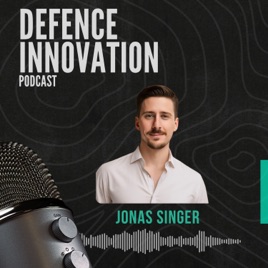
Advertise on podcast: Defence Innovation Podcast
This podcast has
49 episodes
Language
EnglishPublisher
Jonas SingerExplicit
No
Date created
2025/02/18
Latest episode
2026/07/29
Average duration
41 min.
Release period
13 days
Description
Welcome to the Defence Innovators Podcast, hosted by Jonas Singer. We explore groundbreaking technologies and innovations shaping the future of defence, featuring insights from leading experts in AI, autonomous systems, cybersecurity, and more. Each episode dives into the latest trends, real-world case studies, and the challenges and opportunities redefining national security. Some episodes are in English, others in German, reflecting the international nature of our guests and topics. Stay informed. Stay inspired. Discover how technology is transforming defence.
Unlock Defence Innovation Podcast podcast Email contact info,
Listeners & Audience details
Email contact information
Direct podcast contact details

Listeners
Audience numbers & engagement insights

Audience details
Podcast Insights

Podcast episodes
Check latest episodes from Defence Innovation Podcast podcast
Ohne Energie ist alles nichts: Energiesicherheit als Fundament der Verteidigung - Mit Philip Czasch
2026/07/29
Summary
In dieser Folge spricht Philipp Czasch über die kritische Rolle von Energie in der Verteidigung und beleuchtet, wie die Energieversorgung militärische Einsatzbereitschaft, hybride Kriegsführung und künftige technologische Entwicklungen beeinflusst. Er gibt Einblicke in Energiemanagement, Dezentralisierung und innovative Lösungen für die Resilienz von Militär und kritischer Infrastruktur.
Key Topics
Die Rolle von Energie in Militär und VerteidigungssystemenAuswirkungen hybrider Kriegsführung auf die EnergieversorgungDezentralisierung und Technologiediversifikation in der EnergieversorgungEnergiebedarf von Soldaten und militärischen SystemenLösungen für Energieresilienz in kritischer Infrastruktur
Chapters
00:00 Einführung in das Thema Energie in der Verteidigung03:46 Hintergrund und Einblicke von Philipp Czasch07:52 Der Energiebedarf moderner Soldaten12:42 Herausforderungen in der Energieversorgung19:19 Dezentralisierung und Lösungen im Energiemanagement26:49 Die Zukunft der Energie in militärischen Operationen
Startups, Primes and Soldiers: The EDA Model for Defence Innovation - With Federica Valente-Marinkovic
2026/07/15
Summary
Federica Valente, an aerospace engineer and defense innovation expert, shares insights on Europe's defense innovation ecosystem, the European Defence Agency's initiatives, and the Brave Tech EU program. Discover how Europe is accelerating defense technology adoption, fostering collaboration, and supporting startups in a complex geopolitical landscape.
Keywords
Defense Innovation, European Defence Agency, Brave Tech EU, Startups, Defense Technology, European Collaboration, Innovation Campaigns, Defense Testing, Ukraine, EU Defense Strategy
Key topics
European Defence Agency's role in defense innovationBrave Tech EU program and its impactTesting campaigns and collaboration with startupsEuropean defense ecosystem and innovation challengesUkraine's influence on European defense strategies
Chapters
00:00 Introduction to Federica Valente
01:57 The Role of the European Defence Agency
05:06 Establishing the Hub for Defence Innovation
08:45 Networking and Collaboration in Defence Innovation
11:06 Experimentation and Testing in Defence
18:28 Transitioning from Prototype to Product
20:49 Brave Tech EU: A New Initiative
24:25 Complementarity of HEDI and Brave Tech
26:40 Engaging Startups and Primes in Defence Innovation
29:30 Conclusion and Key Takeaways
Drilling Rock With a Laser: Europe's Answer to Its Mineral Crisis. - With Dr. Max Werner
2026/07/01
SummaryMax Werner, CEO of Hades Mining, discusses innovative laser drill technology and Europe's critical raw material challenges. Learn how advanced mining solutions can reshape Europe's supply chain independence and address energy and mineral dependencies.KeywordsMining, Laser Drilling, Critical Raw Materials, Europe, Energy Independence, ISR Mining, Innovation, Supply Chain, Critical Minerals, Sustainable MiningKey topics- Laser drill technology for mining- Europe's dependency on critical raw materials- In-situ recovery (ISR) mining methods- Challenges in European mining industry- Innovations in drilling and mineral extractionChapters00:00 Introduction to Hades Mining and Raw Materials02:43 The Critical Minerals Crisis in Europe05:33 The Need for Sovereign Capabilities in Mineral Production08:35 Challenges in Europe's Energy and Mineral Production11:18 Innovations in Mining Technology: ISR and Laser Drilling13:58 The Future of Mining: Vertical Integration and Refinement16:52 The Mechanics of Laser Drilling Technology19:56 Overcoming Challenges in Scaling Mining Operations22:34 The Call for New Mining Ventures in Europe25:23 Key Takeaways and Future Outlook
Scale, expand, create: Wie QFI ukrainische Drohnentechnologie skaliert - Mit Matthias Lehna
2026/06/17
Zusammenfassung
In diesem Interview spricht Matthias Lehna über die rasante Entwicklung und Produktion ukrainischer Drohnen in Deutschland und beleuchtet die wegweisende Zusammenarbeit von Quantum Systems und Frontline Robotics. Er gibt Einblicke in die strategische Bedeutung des Joint Ventures, die technologischen Fähigkeiten der Drohnen und die Wirkung auf die ukrainische Verteidigungsindustrie inmitten des andauernden Krieges.
Keywords
ukrainische Drohnen, Verteidigungsindustrie, Quantum Systems, Frontline Robotics, deutsch ukrainische Zusammenarbeit, Drohnentechnologie, militärische Innovation, Exportkontrolle, schnelle Produktion, Ukraine Krieg
Key Topics
- Wachstum der ukrainischen Drohnenindustrie
- Deutsch ukrainisches Joint Venture
- Schnelle Drohnenentwicklung und Produktion
- Herausforderungen und Lösungen bei der Exportkontrolle
Kapitel
00:00 Einführung in QFI und seine Bedeutung
05:44 Die Gründung von QFI und ihr Ziel
11:08 Produktionsprozesse und Anpassungsfähigkeit
16:57 Fazit und Gedanken zur Drohnentechnologie
The Future Is Here: Ground Robotics and Unmanned Systems in Modern Warfare - With Petri Suurnäkki
2026/06/03
Summary
The Future of Ground Robotics and Unmanned Systems in Modern WarfareExplore the evolving role of ground-based unmanned systems (UGVs) and UAVs on today’s battlefield, particularly in the context of the Ukraine conflict. Learn about technical challenges, tactical implications, and ethical considerations shaping the future of robotic warfare.
Key Topics
The increasing use of ground robots (UGVs) in Ukraine for logistics, reconnaissance, and combatDifferences between UAVs and UGVs: complexity, use cases, and advantagesThe impact of robotic systems on reducing soldier casualties and enabling maneuver warfareThe current state and challenges of autonomous capabilities in ground systemsEthical and strategic considerations of autonomous warfare, including human oversight and decision-makingThe importance of doctrine, training, and environment-specific adaptation for robotic integrationFuture outlook: Towards fully autonomous ground fighting systems within 5-10 years
Timestamps
00:00 - Introduction to ground robotics and their strategic significance00:24 - Petri's background and expertise in multi-domain armament systems00:48 - The role of ground robotics in reshaping land warfare and common misconceptions01:36 - Why ground systems are more complex than aerial drones02:36 - Key differences between UAVs and UGVs in capability and use cases03:50 - Challenges of navigating on the ground versus in the air04:37 - Recent deployments of UGVs in Ukraine and their operational benefits05:05 - How UGVs have decreased casualties by up to 30% in combat zones06:40 - Advantages of UGVs over UAVs and their specific use cases07:07 - Effectiveness of UGVs in effect operations and first-wave assaults08:37 - Combining aerial and ground systems for effective territory control09:06 - The emergence of weaponized UGVs and their tactical implications09:41 - The evolution of UGV use in Ukraine from logistics to weapon stations10:39 - How terrain and environment influence robotic system deployment11:49 - European national programs and the future development of ground robotics12:46 - Potential for UGVs to enable more maneuver warfare, past current limits13:12 - The impact of robotic systems on battlefield tactics and doctrine14:38 - Progress in autonomous capabilities of UGVs, UAVs, and existing challenges16:20 - Layered use of robotic and manned systems for achieving military objectives17:19 - The importance of doctrine, training, and environment-specific adaptation18:38 - The current state of autonomy: remote-controlled vs autonomous UGVs19:42 - Dealing with semantics and decision-making challenges in autonomous systems20:55 - Ethical considerations: human oversight, values, and decision speed in robotic warfare27:06 - How different nations' cultural and strategic contexts influence robotic ethics28:33 - The potential need for operational switches to toggle autonomous features30:33 - The trajectory towards fully autonomous systems in 5 to 10 years32:10 - Key takeaways: robotics are here to stay, their future might be unexpected, and values matter
Blast Exposure and Brain Health: Insights from a Military Veteran and Tech Innovator - With Daniel Pace
2026/05/20
Links
Support the Podcast: https://buymeacoffee.com/defenceinnovationpodcastAll other channels: https://linktr.ee/defenceinnovationpodcast?utm_source=linktree_profile_share
Summary
In this episode, Daniel Pace shares his journey from military service to developing advanced tools for monitoring blast exposure and protecting brain health. We dive into the science of blast impacts, data collection, evidence-based safety limits, and potential civil applications.
Main Topics:
Daniel's background as a Navy clearance diver and special operations veteranThe correlation between blast exposure, traumatic brain injury, PTSD, and suicideHow blast gauges and cognitive testing reveal exposure effectsThe development of BlastBuddy: software for predicting and mitigating blast riskApplication of dose-response models to sports and civil environmentsChallenges in data sharing with military organizationsPractical strategies for reducing neural inflammation, including sleep managementFuture plans for expanding research and international collaboration
Timestamps:
00:00 - Addressing changes in military blast monitoring software00:29 - Introduction of Daniel Pace and his background00:45 - The effects of blast exposure on mental health and military personnel01:27 - Connection between blast, neural inflammation, and long-term injury02:12 - Motivation behind creating innovative blast monitoring solutions03:22 - Limitations of traditional blast gauges and cognitive testing03:47 - Developing predictive models to plan safer blast exposures04:47 - The importance of rotation and exposure management in training05:17 - Defining safe blast exposure levels and current scientific understanding06:20 - Variance in individual blast exposure and dose management strategies07:17 - The system’s ability to predict exposure risk before it happens08:15 - How outlier exposure data can inform injury prevention09:12 - Analogy of blast exposure to sun exposure and injury prevention strategies10:10 - Collaborations with police and military agencies on blast data collection11:34 - Linking blast exposure data with cognitive performance and biomarkers12:25 - Early findings on individual resilience and susceptibility to blast effects13:24 - Changes in cognitive performance patterns post-blast exposure14:14 - Potential for identifying traits associated with blast resilience15:31 - How the software aids in operational blast planning and risk mitigation16:01 - Technical overview of BlastBuddy's deployment in training and field operations17:23 - Integration of environmental data and future technological evolutions18:51 - Confirming exposure data with sensors and real-time predictions20:21 - Tracking data since 2022, early results, and ongoing research22:37 - Impact of planning on behavior and safety during blast operations23:36 - Workflow improvements and operator adherence to safety Protocols24:41 - Expanding international collaborations with UK, US, Canadian, and other militaries26:22 - Civil applications: sports impact monitoring and brain health management27:45 - Opportunities to transfer military tech innovations into civilian sectors28:19 - Lessons learned from product development mistakes and enterprise solutions29:17 - The importance of rapid prototyping and customer feedback in tech development31:28 - What's next: upcoming conferences, awareness campaigns, and research dissemination33:52 - Key takeaways for tactical units: treating blast exposure as a serious hazard35:01 - Closing remarks: a call for awareness and proactive safety measures
Krieg ohne Regeln: Wenn Technologie schneller ist als das Recht - Mit Verena Jackson
2026/05/06
Links
Support the Podcast: https://buymeacoffee.com/defenceinnovationpodcastAll other channels: https://linktr.ee/defenceinnovationpodcast?utm_source=linktree_profile_share
ZusammenfassungDieses Interview beleuchtet die komplexe Schnittstelle zwischen Technologie, Recht und Verteidigung. Im Fokus stehen die rechtlichen Herausforderungen moderner Militärtechnologien, autonome Waffensysteme sowie internationale Regulierungsansätze im Kontext hybrider Bedrohungen.
SchlüsselwörterTechnologierecht, militärische Verteidigung, autonome Waffen, hybride Bedrohungen, internationales Recht, Cyberkrieg, KI-Regulierung, Militärtechnologie, rechtliche Herausforderungen, Verteidigungspolitik
Kernpunkte
Rechtliche Unterscheidung zwischen Krieg und FriedenHybride Bedrohungen und Grauzonen moderner KonflikteRechtliche Herausforderungen bei autonomen Waffen und KIInternationale Verträge und Regulierung militärischer TechnologienRolle privater Unternehmen in der MilitärtechnologieGeschwindigkeit technologischer Entwicklung versus rechtliche Anpassung
Kapitel00:00 Einführung in Recht und Technologie02:49 Rechtliche Rahmenbedingungen in Verteidigung und Kriegsführung05:49 Hybride Bedrohungen und rechtliche Herausforderungen08:40 Technologischer Fortschritt und rechtliche Implikationen11:40 Die Rolle des internationalen Rechts14:44 Beteiligung des privaten Sektors an Militärtechnologie17:24 Umgang mit rechtlicher Unsicherheit in der Innovation20:26 Einfluss privater Unternehmen auf militärische Entscheidungen23:14 Zukunft des Rechts angesichts schneller technologischer Entwicklungen
Hyperschallwaffen im Fokus: Was kann die Technologie wirklich? - Mit Christoph Müller
2026/04/29
Links
Support the Podcast: https://buymeacoffee.com/defenceinnovationpodcastAll other channels: https://linktr.ee/defenceinnovationpodcast?utm_source=linktree_profile_share
ZusammenfassungDieses Interview mit Christoph Müller beleuchtet die Welt der Hyperschalltechnologie, ihre strategische Bedeutung, aktuelle europäische Fähigkeiten sowie zukünftige Herausforderungen. Es zeigt, warum Hyperschallsysteme ein entscheidender Faktor moderner Verteidigung sind und wie sich Europa in diesem geopolitisch relevanten Feld positioniert.
SchlüsselwörterHyperschall, Hyperschallwaffen, Verteidigungstechnologie, europäische Verteidigung, Raketentechnologie, militärische Innovation, Hyperschall-Gleitflugkörper, Deep Strike, Raketenaufklärung, Luft- und Raumfahrtforschung
Kernpunkte
Definition und Bedeutung von HyperschalltechnologieAktuelle globale Fähigkeiten und europäische DefiziteTechnische Herausforderungen bei Detektion und AbwehrStrategische Relevanz für NATO und PartnerZukünftige Entwicklungen und industrielle Anforderungen
Kapitel00:00 Einführung in die Hyperschalltechnologie01:47 Hyperschall verstehen: Geschwindigkeit, Reichweite und Manövrierfähigkeit05:39 Europas Position in der Hyperschallentwicklung09:30 Deep-Strike-Fähigkeiten und Hyperschallsysteme11:21 Die Bedeutung von Hyperschallwaffen17:13 Technische Herausforderungen bei der Hyperschalldetektion20:48 Operative Strategien gegen Hyperschallbedrohungen22:51 Kosten und Entwicklung von Hyperschallsystemen25:49 Missverständnisse über Hyperschalltechnologie27:53 Fazit und Ausblick
RessourcenMBDA Hyperschallsysteme – https://www.mbda-systems.comHyperschallwaffen Forschung (NATO Bericht) – https://www.nato.int
Iran Spezial: Decoding the Iran war and what it means for Europe - Mit Dr. Bastian Giegerich
2026/04/22
Links
Support the Podcast: https://buymeacoffee.com/defenceinnovationpodcastAll other channels: https://linktr.ee/defenceinnovationpodcast?utm_source=linktree_profile_share
Summary
In this insightful interview, Bastian Giegerich, Director General of the ISS, discusses the complex geopolitical situation in Iran, the global implications of regional conflicts, and the strategic challenges faced by Europe in defense readiness and supply chain resilience.
Keywords
Iran, geopolitics, Europe, defense, supply chains, global security, military strategy, Iran-US relations, NATO, technological innovation
Key topics
Iran's nuclear and missile programsGlobal economic and political implications of Middle East conflictsEuropean defense spending and industrial capacitySupply chain vulnerabilities and strategic dependenciesLessons learned from recent military conflicts
Chapters
00:00 Introduction to the Conversation
02:46 Understanding the Crisis in Iran
07:41 Regional vs Global Conflict Dynamics
09:16 Concerns and Disconnects in Military Strategy
14:31 The Ideological Dimensions of Conflict
17:38 European Perspectives and Strategic Implications
22:51 Implications for Europe Amidst Global Tensions
23:34 Assessing Defense Preparedness in Europe
27:15 The Need for a Mixed Defense Strategy
32:37 Execution Gaps in European Defense
37:48 Supply Chain Vulnerabilities and Solutions
45:08 Urgent Changes Needed for European Defense
47:40 Key Takeaways from the Discussion
Wenn Licht zur Waffe wird: Was moderne Laserwaffen wirklich leisten - Mit Dr. Marius Lammers
2026/04/15
Links
Support the Podcast: https://buymeacoffee.com/defenceinnovationpodcastAll other channels: https://linktr.ee/defenceinnovationpodcast?utm_source=linktree_profile_sharesid=c10bdbfe-2790-4e6a-8d67-27c465b61444
Zusammenfassung
Dieses Interview mit Dr. Marius Lammers, Geschäftsführer der INLEAP Photonics GmbH, beleuchtet die neuesten Entwicklungen im Bereich laserbasierter Drohnenabwehrsysteme. Es wird aufgezeigt, wie Lasertechnologie die Abwehr asymmetrischer Bedrohungen verändert, welche technischen Innovationen hinter der schnellen Laserstrahlsteuerung stehen und welche Zukunftsperspektiven Laserwaffen sowohl im militärischen als auch im zivilen Einsatz bieten.
Keywords
Lasertechnologie, Drohnenabwehr, Militärische Innovation, Laserwaffen, Autonome Systeme, Kleine Drohnen, Laserstrahlsteuerung, Verteidigungstechnologie, Ukraine-Konflikt, Schnell einsetzbare Systeme
Kapitel
00:00 Einführung in Lasertechnologien und Drohnen02:49 Die asymmetrische Bedrohung durch Drohnen05:52 Gründung von INLEAP Photonics GmbH und deren Mission08:55 Hochenergie-Laserwaffen erklärt11:39 Herausforderungen bei der Implementierung von Lasertechnologie14:43 Operative Effizienz und Reaktionszeiten17:34 Kühlungs- und Energieversorgungslösungen20:29 Zielerfassung kleiner Drohnen: Definitionen und Fähigkeiten23:15 Detektions- und Tracking-Systeme26:08 Zukünftige Entwicklungen in der Lasertechnologie29:15 Fazit und zentrale Erkenntnisse
Warum Sicherheit schon im Hörsaal beginnt: Forschung für Europa - Mit Prof. Dr. Rafaela Kraus
2026/04/01
Links
Support the Podcast: https://buymeacoffee.com/defenceinnovationpodcastAll other channels: https://linktr.ee/defenceinnovationpodcast?utm_source=linktree_profile_sharesid=c10bdbfe-2790-4e6a-8d67-27c465b61444
Zusammenfassung
Entfesselung der Verteidigungsinnovation: Die Rolle von Bildung, Forschung und ÖkosystemenIn dieser Episode spricht Rafaela Kraus mit uns darüber, wie Bildung, Forschung und kollaborative Ökosysteme Innovationen im Verteidigungssektor vorantreiben können. Wir beleuchten die aktuellen Lücken in der verteidigungsbezogenen Akademie, die Bedeutung unabhängiger Forschung und Strategien zur Förderung eines lebendigen Verteidigungsinnovationsumfelds, insbesondere in Deutschland.
Hauptthemen
Der Bedarf an spezialisierter Ausbildung in Verteidigungswirtschaft und -ökonomie an UniversitätenDie Lücke zwischen technologischer Entwicklung und militärökonomischer AusbildungWie die Verteidigungsforschung von unabhängigen, nicht-kommerziellen Institutionen profitieren kannDas Konzept von Bildungshubs oder virtuellen Kooperationen zwischen UniversitätenDie Bedeutung von Umschulung und der Gewinnung junger Talente für die VerteidigungsindustrieDie Rolle von Reservisten und Brücken zwischen Industrieexperten in der militärischen InnovationHerausforderungen durch Zivilklauseln und gesetzliche Rahmenbedingungen in der Entwicklung von VerteidigungstechnologienChancen für den Aufbau von Ökosystemen rund um das Verteidigungscluster in München
Kapitel
00:00 - Einführung und Rafaela Kraus’ Hintergrund im Verteidigungstechnologie-Ökosystem
02:04 - Die Lücke in der Verteidigungswirtschaftsausbildung und -forschung an Universitäten
05:00 - Warum militärische und zivile Akademien unterschiedliche Schwerpunkte benötigen
06:42 - Veränderungen im Verteidigungsinteresse nach der Ukraine-Invasion und Reaktionen der Universitäten
08:55 - Mangel an branchenspezifischen akademischen Programmen für Verteidigungsfachleute
10:23 - Herausforderungen der zivil-militärischen Schnittstelle und Industriestandards
13:10 - Positionierung der deutschen Verteidigungstechnologiebereitschaft im globalen Kontext
15:09 - Gesellschaftliches Interesse und Nachwuchsförderung für Verteidigungsstudien
17:55 - Die Bedeutung von Forschung versus Executive Education in der Verteidigung
19:58 - Innovation in der Verteidigungsbeschaffung und Organisationsstrukturen
21:00 - Die Spillover-Effekte von Verteidigungstechnologie auf die zivile Wirtschaft
22:43 - Aufbau kollaborativer Ökosysteme durch Bildungshubs und virtuelle Universitäten
27:15 - Münchens Verteidigungscluster und Ökosystemstärken
29:07 - Ethische und soziale Überlegungen in der Verteidigungsinnovation und -bildung
30:46 - Nutzung von Reservisten und Brücken zwischen Industrieerfahrung für die Verteidigungsforschung
32:38 - Gesetzliche Herausforderungen, Zivilklauseln und der Bedarf an proaktiven Reformen
33:36 - Abschließende Gedanken: Verbesserung der Verteidigungswirtschaft, Forschung und Bildung
Von München nach Kiew: Wie TYTAN Technologies die Drohnenabwehr revolutioniert - Mit Balazs Nagy
2026/03/18
Links
Support the Podcast: https://buymeacoffee.com/defenceinnovationpodcast
All other channels: https://linktr.ee/defenceinnovationpodcast?utm_source=linktree_profile_share<sid=c10bdbfe-2790-4e6a-8d67-27c465b61444Zusammenfassung
In dieser Episode erzählt Balázs Nagy die inspirierende Gründungsgeschichte von Titan Technologies, erklärt, wie ihre integrierten Drohnenabwehrlösungen kritische Infrastruktur und militärische Frontlinien schützen sollen, und spricht über die Herausforderungen und Chancen beim Skalieren innovativer Verteidigungstechnologie in Europa. Erfahre mehr über die Bedeutung europäischer Zusammenarbeit, anpassungsfähiger Strategien im Krieg und darüber, wie unternehmerischer Geist im Verteidigungssektor gefördert werden kann.
Takeaways
Die Entstehung von Titan Technologies und der Einfluss des Kriegs in der Ukraine auf ihre MissionWie mehrschichtige Drohnenabwehrsysteme funktionieren, einschliesslich kinetischer und Soft-Kill-LösungenDie Bedeutung kontinuierlicher, iterativer Weiterentwicklung auf Basis von Echtzeit-Feedback aus der UkraineEuropas strategische Herausforderungen und Chancen im Bereich VerteidigungsinnovationDer Aufbau von Partnerschaften mit Branchenführern wie D-Drone, Hensold und AutomobilkonzernenDie Bedeutung von unternehmerischer Kultur und Agilität in Defence-StartupsDie Skalierung von Produktionskapazitäten zur Deckung hoher Nachfrage mit Fokus auf resiliente LieferkettenDer Umgang mit europäischer Förderung, Investments und der Stärkung europäischen Kapitals für VerteidigungsinnovationenDie Rolle von Talent, Mindset und Risikobereitschaft für schnelle InnovationAusblick: Intelligentere, stärker integrierte Drohnenabwehrsysteme für kritische Infrastruktur
Kapitel
00:00 - Einführung und Gastüberblick: Die Geschichte hinter Titan Technologies
00:46 - Die europäische Perspektive: Aufwachsen in Ungarn und Studium in München
02:12 - Die Gründung von Titan Technologies und erste Initiativen im Bereich Drohnentechnologie
05:34 - Der Ukraine-Hackathon und die Motivation hinter Anti-Schild-Lösungen
09:03 - Wie Titans kinetische Drohnenabwehr funktioniert: Integration von Hard- und Software
12:19 - Herausforderungen bei der schnellen Einführung und iterative Verbesserungen
14:10 - Lokale Teams in der Ukraine: Schnelle Reaktionsfähigkeit und Wissenstransfer sicherstellen
16:10 - Die Zukunft der Drohnenabwehr: Intelligentere, mehrschichtige Systeme für kritische Infrastruktur
20:02 - Der mehrschichtige Ansatz: Kombination aus kinetischen und elektromagnetischen Lösungen
22:07 - Die autonomen Fähigkeiten von Titans Drohnen: Software und menschliches Eingreifen
25:20 - Expansion in europäische Märkte und Zusammenarbeit mit der NATO und nationalen Armeen
30:08 - Skalierung der Produktion, Lieferkettenmanagement und Talentgewinnung
36:35 - Aufbau einer missionsgetriebenen, unternehmerischen Unternehmenskultur
43:54 - Erfolgreiche Industriepartnerschaften und kollaborative Entwicklungsprozesse
46:48 - Europäische Verteidigungspolitik, Finanzierungslücken und strategische Allianzen
50:49 - Vision für 2026: Intelligentere, resiliente Drohnenabwehrsysteme in kritischer Infrastruktur
Speed Beats Money: What Europe can do to win again - With André Loesekrug-Pietri
2026/03/06
Links
Support the Podcast
Join MEGA
All other Channels
Summary
In this conversation, Dr. Jonas Singer & André Loesekrug-Pietri from JEDI discusses the current state of Europe in terms of defence, technology, and global relevance. He introduces the Make Europe Great Again (MEGA) movement, emphasising the need for Europeans to take pride in their values and engage proactively. Loesekrug-Pietri highlights the challenges Europe faces on the global stage, particularly in defence, and the importance of strategic depth and innovation. He outlines the role of JEDI in fostering technological advancements and proposes moonshot initiatives to reinvigorate Europe's industrial strategy. The discussion culminates in a call for unity and a positive vision for Europe's future.
Takeaways
The Make Europe Great Again movement encourages pride and proactive engagement in European values.Europe is currently perceived as irrelevant on the global stage, particularly in defence.Diversity in Europe should be a strength, but strategic depth is lacking.JEDI focuses on addressing technological bottlenecks to enhance European competitiveness.Moonshot initiatives are essential for Europe to regain its technological leadership.The defence industry must adapt to rapid innovation cycles and decentralised production.Reindustrialisation in Europe is critical for future defence capabilities.Collaboration across sectors is necessary to tackle interdisciplinary challenges.A positive vision for Europe is needed to inspire citizens and policymakers.
Chapters
00:00 Introduction to André Loesekrug-Pietri and JEDI
02:41 The Make Europe Great Again Movement
05:33 Europe's Global Relevance and Defense Challenges
11:04 Understanding Europe's Strategic Depth and Naivety
17:46 The Need for a Technological North Star
24:36 Identifying Potential Moonshots for Europe
34:26 JEDI's Role in Shaping Europe's Future
42:18 Quantum Sensing and Drone Swarms
45:05 Moonshot Logic and Research Impact
52:51 Funding and Grant Structures
54:52 Reindustrialization in Europe
01:06:20 Agility in Defense Manufacturing
01:14:23 The Future of European Innovation
Münchner Sicherheitskonferenz (MSC) Spezial: Nur die Bad Guys haben einen Plan - Mit Nico Lange
2026/02/18
Zusammenfassung
In diesem Gespräch diskutieren Dr. Jonas Singer und Nico Lange die Ergebnisse und Implikationen der Münchner Sicherheitskonferenz, mit Fokus auf Europas militärische Dynamik, den Einfluss amerikanischer Verteidigungsstrategien und den dringenden Bedarf an technologischer Innovation im Verteidigungssektor. Sie beleuchten die Herausforderungen europäischer Staaten auf dem Weg zu strategischer Autonomie, die Lehren aus dem laufenden Krieg in der Ukraine und die Bedeutung konkreter Massnahmen gegenüber abstrakten Debatten bei der Bewältigung von Sicherheitsfragen. Das Gespräch betont die Notwendigkeit, dass Europa die Verantwortung für die eigenen Verteidigungsfähigkeiten übernimmt, sowie die zentrale Rolle von Ausbildung und Innovation für künftige Militärstrategien.
Kernaussagen
Die Münchner Sicherheitskonferenz hat kritische Fragen zur europäischen Verteidigung offengelegt.Einige europäische Länder reformieren ihr Militär schneller als andere.Deutschlands politische Reaktion auf Sicherheitsherausforderungen hinkt hinterher.Europäische Sicherheit und die Sicherheit der Ukraine sind miteinander verknüpft.Die Abhängigkeit von amerikanischer Militärtechnologie birgt Risiken für Europas Autonomie.Technologische Fähigkeitslücken in der Verteidigung müssen dringend adressiert werden.Innovation in der Verteidigung ist essenziell für wirtschaftliches Wachstum und Sicherheit.Elektronische Kriegführung ist ein entscheidender Faktor moderner Konflikte.Ausbildung und Training sind entscheidend für wirksame militärische Operationen.Deutschland muss eine Führungsrolle bei europäischen Sicherheitsinitiativen übernehmen.
Kapitel
00:00 Rückblick auf die Münchner Sicherheitskonferenz02:40 Europas militärische Dynamik und strategische Schlüsselfragen05:31 Die Rolle amerikanischen Einflusses auf Europas Verteidigung08:33 Technologische Lücken und industrielle Produktion in der Verteidigung11:17 Herausforderungen bei Beschaffung und Innovation14:12 Elektronische Kriegführung und Dynamik des Gefechtsfelds17:17 Die Bedeutung von Ausbildung und Training für militärische Operationen20:16 Technologische Entwicklungen der Kriegführung23:07 Die Zukunft militärischer Operationen in der Ukraine25:58 Deutschlands Führungsrolle in der europäischen Verteidigung28:55 Die Debatte um nukleare Abschreckung und europäische Sicherheit31:54 Der Weg zu einem nachhaltigen Frieden in der Ukraine
Defense VC: Why Silicon Valley is Missing the $100M Opportunity in Ukraine - With Deborah Fairlamb
2026/01/28
Dir gefällt unser Content? Unterstütze den Podcast
Summary
In this episode, Deborah Fairlamb, co-founding partner of Green Flag Ventures, shares her insights on the evolving landscape of defense technology in Ukraine. With a background in finance and a deep understanding of the Ukrainian tech ecosystem, Deborah discusses the unique challenges and opportunities that have emerged since the full-scale invasion in 2022. She highlights the innovative spirit of Ukrainian entrepreneurs who have pivoted their tech capabilities towards defense, creating solutions that are not only effective but also essential for the ongoing conflict. Deborah emphasizes the importance of understanding the human element behind technology, as well as the need for rapid procurement processes that can keep pace with the fast-evolving nature of warfare.
Keywords
Ukraine, defense technology, venture capital, Green Flag Ventures, innovation, electronic warfare, drones, military tech, investment, cybersecurity
Chapters
00:00 Introduction and Setting the Stage
05:55 Deborah's Background and Green Flag Ventures
10:12 The Evolution of Defense Tech in Ukraine
20:12 The Role of Drones and Unmanned Vehicles
30:10 Electronic Warfare and Its Implications
40:12 Frontline Innovation and Workshops
50:33 Procurement Challenges and Solutions
01:01:09 The Growth of Venture Capital in Defense Tech
01:09:58 Future Trends in Defense Technology
Podcast reviews
Read Defence Innovation Podcast podcast reviews
Podcast sponsorship advertising
Start advertising on Defence Innovation Podcast relevant audience podcasts
You may also like to advertise on these Podcasts

4.861371088
The David Pakman Show
David Pakman

4.8258691482
Relatable with Allie Beth Stuckey
Blaze Podcast Network

4.858221907
Sara Gonzales Unfiltered
Blaze Podcast Network

4.824771857
Deck The Hallmark
Bramble Jam Podcast Network

4.922301819
The Ten Minute Bible Hour Podcast
Matt Whitman

4.916161609
The Kristian Harloff Show
Kristian Harloff

4.917101543
DarrenDaily On-Demand
Darren Hardy LLC

4.549032000
The Daily Stoic
Daily Stoic | Backyard Ventures

4.737121980
The Eric Metaxas Show
Metaxas Media

4.682401276
The Daily Beast Podcast
The Daily Beast, Joanna Coles