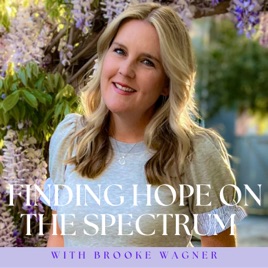
Advertise on podcast: Finding Hope on the Spectrum
Rating
4.9from
This podcast has
66 episodes
Language
EnglishPublisher
Brooke WagnerExplicit
No
Date created
2025/04/03
Latest episode
2026/09/28
Average duration
54 min.
Release period
12 days
Description
Are you worried about your autistic son's or daughter's future and quality of life? Do you want to feel empowered to be the intuitive parent you know you are? Or are you a curious professional, seeking to learn and discover how to best reach your autistic clients? I invite you to join our community of growth seeking individuals as we connect, share and support each other. This show will feature heart to heart conversations with parents, professionals, and autistic individuals sharing personal insight and life experiences. We will dive deep into supports, programs, and stories that inspire us.
Unlock Finding Hope on the Spectrum podcast Email contact info,
Listeners & Audience details
Email contact information
Direct podcast contact details

Listeners
Audience numbers & engagement insights

Audience details
Podcast Insights

Podcast episodes
Check latest episodes from Finding Hope on the Spectrum podcast
Caring for Your Autistic Child Without Losing Yourself: Small Habits, Meaningful Change
2026/09/28
Host Brooke Wagner welcomes Monica Packer, identity coach, About Progress podcast host, and author of Sticky Habits: A Woman’s Guide to Reclaim Happiness, Ditch Perfectionism, and Create Habits That Last to discuss burnout, perfectionism, and self-care for mothers—especially those raising autistic children. Monica shares how years of self-sacrificial motherhood and special needs in her children led her to lose her identity, and how therapy revealed perfectionism as an all-or-nothing, identity-based trap. She explains why women struggle to care for themselves due to invisible labor and cultural expectations, and reframes self-care as “putting yourself on the list,” not necessarily first. Monica emphasizes nervous system regulation, flexible habits with baseline options (e.g., 10 minutes counts), and viewing habits as helpers rather than measures of worth. She highlights failure as necessary for progress, including in parenting regulation skills, and describes her book as a practical, research-based guide designed for women.
00:00 Self Care Tradeoffs
00:50 Show Intro and Guest
02:35 Burnout and Lost Identity
05:07 Perfectionism Patterns
08:45 Why Moms Neglect Themselves
12:48 Do Something List
15:34 Values Creativity and Failure
17:59 Nervous System Regulation
21:54 Put Yourself on List
23:42 Simple Habits Starting Point
26:03 Practical Self Care Time
27:42 Self Help Needs Women
28:52 Modeling Care For Kids
30:30 Habits During Intense Seasons
32:32 Flexibility Beats Perfection
34:14 Habits As Support Nets
36:45 Trust Yourself Again
37:48 Failure Fuels Progress
42:38 Parenting Through Setbacks
45:28 Sticky Habits Book
49:15 Where To Find Monica
49:56 You Can Change
Connect with Finding Hope on the Spectrum:
Email: [email protected]
Facebook: https://www.facebook.com/profile.php?id=61574918739411
Linkedin: https://www.linkedin.com/in/brooke-wagner-4819233a/
Instagram: @findinghopeonthespectrum
TikTok: Findinghopeonthespectrum
Guest:
Monica Packer
Habit & Identity Coach
Websites: https://www.aboutprogress.com/
Instagram: https://www.instagram.com/Aboutprogress
Podcast: https://www.aboutprogress.com/blog
Autism Caregiving: Moving Beyond Survival Mode and Finding Yourself Again
2026/09/14
Brooke hosts Finding Hope on the Spectrum and interviews Tanya Jarkoni, a longtime family caregiver, writer, mindfulness teacher, and founder of Integrative Caregiving, about nearly two decades raising her non-speaking autistic daughter, Leia. Tanya describes early developmental concerns, inconclusive genetic testing, and years of trying therapies and approaches (including ABA, DIR, Son-Rise, homeschooling, biomedical supports, and later spelling/text-based communication), alongside cycles of effort and burnout and the realization that much of the responsibility falls on the caregiver. She explains how long-term caregiving without a “finish line” can keep the nervous system in survival mode, fueling hypervigilance and narrowing perspective so self-care feels unrealistic or unsafe, and shares how Vipassana and mindfulness helped her notice thoughts, shift attention, and widen her lens. Tanya also discusses the family’s ongoing travel and worldschooling, their move to Costa Rica, and upcoming webinars, a November retreat with Autistically Inclined, potential residencies, and her forthcoming book on how caregiving reshapes identity and possibility.
00:00 Caregiving as Transformation
01:06 Podcast Welcome and Guest Intro
03:10 Early Signs and Diagnosis Search
07:58 Therapy Quest and Burnout Cycles
10:42 Identity Shift and Rethinking Caregiving
13:45 Traveling and Worldschooling with Leah
18:44 Survival Mode and Hypervigilance
23:20 Vipassana and Mindfulness Breakthrough
29:13 Widening the Lens and New Possibilities
33:48 Manifestation and Creating New Reality
39:23 Offerings Camps Webinars and Book
42:29 Where to Find Tanya Closing
Connect with Finding Hope on the Spectrum:
Email: [email protected]
Facebook: https://www.facebook.com/profile.php?id=61574918739411
Linkedin: https://www.linkedin.com/in/brooke-wagner-4819233a/
Instagram: @findinghopeonthespectrum
TikTok: Findinghopeonthespectrum
Guest:
Tanya Yarkoni
Founder, Integrative Caregiving
Websites: https://www.integrativecaregiving.co/
Instagram: https://www.instagram.com/tanya_yarkoni/
The Gut Microbiome and Autism: What We’re Learning About Bifidobacteria, Immunity, and Children’s Health
2026/09/02
Host Brooke Wagner interviews Dr. Stephanie Culler, scientist and CEO/co-founder of Persephone Biosciences, about how the infant gut microbiome develops and why key Bifidobacterium species are missing in many U.S. babies. Culler explains that the gut microbiome supports digestion, immunity (with 70–80% of immune cells in the gut), and brain connections, and describes the seven-year MyBabyBiome study of 400+ infants, which found about 90% of babies missing one or more key Bifidobacterium; less than 8% had B. infantis. Missing these “keystone” microbes was associated with higher undesirable bacteria and higher risk for eczema, food allergies, and asthma by age two. Contributors discussed include antibiotics, C-sections, formula, and diet. They also cover early, non-causal signals relating dysbiosis and certain metabolites to autism, and Koehler details Persephone’s synbiotic product and Artemis trial showing safety and gut colonization.
00:00 Keystone Microbes Hook
00:49 Show Intro and Welcome
02:28 Stephanie’s Science Origin
03:03 Why the Microbiome Matters
04:25 From Cancer to Babies
06:12 Microbiome Basics Explained
07:24 MyBabyBiome Study Findings
08:51 Why Babies Lose Bifido
10:16 C-Section Microbiome Shift
11:20 Study Design and Timeline
13:20 Three Key Bifido Species
16:41 Autism Signals in Data
20:03 Building the Synbiotic
22:23 Poop Samples and Lab Work
23:45 Autism GI and FMT Research
26:39 Probiotic vs Prebiotic
27:14 Artemis Trial Results
28:48 Colonization and Dosing
31:29 Antibiotics and Microbiome
33:47 Practical Family Steps
35:22 What’s Next and Where
36:35 Final Hope Message
Connect with Finding Hope on the Spectrum:
Email: [email protected]
Facebook: https://www.facebook.com/profile.php?id=61574918739411
Linkedin: https://www.linkedin.com/in/brooke-wagner-4819233a/
Instagram: @findinghopeonthespectrum
TikTok: Findinghopeonthespectrum
Guest:
Stephanie Culler, Ph.D.
Co-Founder and CEO, Persephone Biosciences, Inc.
Get 30% off your first subscription order on our website: Finding30
Website: Persephone.bio
Instagram: https://www.instagram.com/persephone.bio
LinkedIn: https://www.linkedin.com/company/persephone-biosciences/
The My Baby Biome Study: https://www.nature.com/articles/s42003-025-08274-7
The ARTEMIS Clinical Trial: https://www.nature.com/articles/s41390-026-05318-4
Restoring a gut Bifidobacterium community in early infancy: https://www.cell.com/cell-host-microbe/abstract/S1931-3128(25)00451-2?rss=yes
The Nervous System and Autism: Why Connection Comes Before Behavior Change
2026/08/10
Host Brooke interviews Cameron Allen, translational neuroscientist, CEO and co-founder of Neuroprogeny/Sensorium Neurowellness, about optimizing brain and nervous system function for autistic individuals and families. Cameron shares his teen diagnosis (then Asperger’s), school struggles, and how neurotherapy (assessments plus neurofeedback, biofeedback, brain timing, filtered music, and cognition work) cleared his “fog” and enabled academic and social gains, inspiring his work in neuroplasticity. He contrasts traditional approaches (ABA, CBT, OT/sensory integration) with a neuroscience focus on capacity-building, state shifting, and oxytocin-based connection, explaining looping/hyperfixation via dopamine-stress cycles and the role of alpha for shifting gears. He describes supporting parents through assessments, regulation tools, values-based action, and technologies including VR biofeedback, neurofeedback, hyperbaric oxygen, and red light therapy, sharing a story of an 11-year-old using VR to self-regulate and even offering it to his stressed dad.
00:00 Hormesis Curve Teaser
00:44 Show Intro and Welcome
01:26 Meet Cameron Allen
02:47 Cameron’s Teen Struggles
04:41 Neurotherapy Breakthrough
09:03 Limits of Traditional Therapy
15:01 Connection and Oxytocin
18:54 Brain Loops Explained
27:04 Caregiver Regulation Skills
29:57 Neuroplasticity Basics
33:43 VR Biofeedback in Action
37:51 Activation and Calm Balance
38:41 Neuroplasticity for Connection
41:21 Why Kids Sense Dysregulation
44:13 Assessing Family Nervous Systems
47:57 Values Based Regulation Tools
54:15 Presence and Undivided Attention
58:36 VR Program How It Works
01:00:53 Success Story Self Advocacy
01:05:02 Tech as Foundation Not Cure
01:07:03 Results and Closing Resources
Connect with Finding Hope on the Spectrum:
Email: [email protected]
Facebook: https://www.facebook.com/profile.php?id=61574918739411
Linkedin: https://www.linkedin.com/in/brooke-wagner-4819233a/
Instagram: @findinghopeonthespectrum
TikTok: Findinghopeonthespectrum
Guest Contact:
Cameron Allen
Translational Neuroscientist
Websites: neuroprogeny.com & sensoriumneuro.com
Instagram: https://www.instagram.com/neuro_cameron/
Facebook: https://www.facebook.com/profile.php?id=61584563474539
Email: [email protected]
When Reading Is Hard: Dyslexia, Early Signs, and How to Help Your Child
2026/07/27
Host Brooke welcomes Faye Bankler Casell, a certified academic language therapist, dyslexia specialist, and founder of Home Reading Coach, to discuss reading struggles and dyslexia. Faye shares her path from early childhood/special education into dyslexia intervention, influenced by her son’s early delays and later diagnosis of ADHD and dysgraphia, and by seeing the psychological toll on students who feel ashamed when reading is hard. They define dyslexia as a neurodivergence rooted in phonological processing, note common misconceptions (not simply letter reversals), and describe warning signs, assessment options (public school testing, private psychologists), and the importance of early intervention. Faye explains multisensory, explicit, systematic instruction, the need for extensive repetition, variability in school services, and her Reading Breakthrough remote program with parent training and resources.
00:00 Why Reading Feels Risky
00:46 Show Intro and Guest
02:41 Faye’s Path to Dyslexia Work
06:20 Emotional Safety in Learning
09:11 What Dyslexia Really Is
12:16 Common Dyslexia Myths
14:41 Early Warning Signs
18:12 Testing and Getting Help
19:57 Who Can Diagnose Dyslexia
25:17 Multisensory Reading Approach
31:17 Why Early Intervention Matters
33:28 Public Schools Must Test
33:57 Why Schools Miss Dyslexia
36:23 IEPs and Service Quality Gaps
38:38 Reading Breakthrough Overview
43:06 Time Commitment and Routine
46:34 Multisensory Lesson Examples
53:18 Empowering Parents at Home
54:41 Advocacy Must Dos
59:02 Where to Find Resources
01:00:14 Closing Thanks and Wrap
Connect with Finding Hope on the Spectrum:
Email: [email protected]
Facebook: https://www.facebook.com/profile.php?id=61574918739411
Linkedin: https://www.linkedin.com/in/brooke-wagner-4819233a/
Instagram: @findinghopeonthespectrum
TikTok: Findinghopeonthespectrum
Guest Contact:
Faye B. Casell
Certified Academic Language Therapist
Dyslexia Specialist
Website: https://homereadingcoach.com/
Instagram: https://www.instagram.com/homereadingcoach/
Facebook: https://www.facebook.com/homereadingcoach
YouTube: https://www.youtube.com/@TeachMyChildToRead
Get the FREE Dyslexia Roadmap for Families E-Book
https://fayebankler.mysamcart.com/free-dyslexia-roadmap-for-families/
Autism, ADHD, and Chronic Illness: Why the Nervous System Comes First
2026/07/13
Host Brooke welcomes listeners to Finding Hope on the Spectrum and interviews neurologically focused chiropractor Dr. Tony about the link between the nervous system, childhood development, behavior, and healing. Dr. Tony explains that chiropractic originally centered on the brain–spine communication system and shares how his daughter’s healthy birth led him into pediatric specialty work and studying autism, ADHD, sensory challenges, and the “Perfect Storm” of maternal stress, birth trauma, and toxic overload. He recounts his son Oliver’s severe premature, traumatic birth and NICU recovery, which he attributes in part to frequent gentle adjustments, and contrasts this with medical skepticism. The conversation covers how birth interventions can injure the neck/brainstem, early infant warning signs (latching, sleep, reflux, constipation, infections, motor delays), how PX Docs uses scans (thermal, EMG, HRV) and gentle, flexible sessions, support for adults on the spectrum, and how families can find PX Docs, intensives, and training, emphasizing that children are not broken and hope guides healing.
00:00 Hope Starts Here
01:13 Meet Brooke And Dr Tony
02:07 Why Neurological Chiropractic
03:45 Addison Changes Everything
07:31 Oliver Birth Trauma Miracle
12:27 Birth Interventions And Brainstem
19:10 Early Infant Warning Signs
22:07 Clearing Congestion And Immunity
25:25 Spectrum Healing Sequence Explained
31:11 Healing Comes in Order
31:47 Soft Signs to Track
32:25 When Connection Returns
33:57 Fix the Foundation First
36:49 What a PX Visit Looks Like
38:14 Gentle Adjustments and Dosing
40:57 Adults and Teens Improve Too
46:54 Spellers and Efficiency Gains
50:55 PX Docs Network and Intensives
56:00 Your Child Is Not Broken
Connect with Finding Hope on the Spectrum:
Email: [email protected]
Facebook: https://www.facebook.com/profile.php?id=61574918739411
Linkedin: https://www.linkedin.com/in/brooke-wagner-4819233a/
Instagram: @findinghopeonthespectrum
TikTok: Findinghopeonthespectrum
Guest Contact:
Dr. Tony Ebel, DC, CPPFC, CCWP
Neurologically-Focused Chiropractor
Website: https://www.thepediatricexperience.com/
LinkedIn: https://www.linkedin.com/in/dr-tony-ebel-7372ab24a/
Instagram: https://www.instagram.com/pxdocs
Facebook: https://www.facebook.com/drtonyebel/
Website: https://pxdocs.com/ (to search for a PX Doc near you + free articles)
To inquire about an intensive with Dr. Tony: https://premierwellnesschiro.com/the-perfect-storm/
What If Non-Speakers Understand More Than We Ever Imagined? Lora's Inspiring Journey Through Spelling
2026/06/30
Brooke interviews Valeri Tompkins, a Spellers Method provider, and her daughter Lora about Lora’s path from being diagnosed with autism and ADHD at age two through years of speech therapy, OT, ABA, PECS, AAC, and sign language with limited success. Valeri describes discovering letterboard-based spelling after reading “Underestimated” in 2021 and how spelling leverages gross motor pointing to overcome fine-motor challenges and apraxia-related barriers, leading to open communication, increased confidence, and reduced frustration. Lora shares that spelling gave her a voice and meaningful participation in her own life, emphasizes that non-speakers are intelligent and deserve robust, age-appropriate education, and urges people not to write off non-speakers. They discuss presuming competence, vision issues, lesson-based spelling sessions, concerns about influence, and Valeri’s pivotal moment when Lora spelled “Mom and Dad, I love you.”
00:00 Emotional Cold Open
00:41 Podcast Welcome and Mission
01:20 Meet Valeri and Lora
02:24 Valeri’s Autism Journey
04:14 Discovering Spelling
06:05 Hope vs Expert Limits
07:32 Before Spelling Communication
09:05 What Is Spellers Method
10:53 Vision and Apraxia Pieces
12:54 Misconceptions About Nonspeakers
13:59 Lora Finds Her Voice
16:10 Education and Advocacy
19:34 Presuming Competence
22:11 Lora’s Message to World
26:03 Trust Your Parent Gut
28:58 Boards to Keyboard Progress
30:08 Inside a Spelling Lesson
32:26 No Magic Timeline
33:00 Lesson Question Hierarchy
34:06 Defining Open Communication
35:47 Confidence Through Age Level
37:10 Emotional Breakthroughs
40:22 Avoiding Influence
44:38 Nonlinear Progress
48:35 Hope Moment Hawaii
52:17 Presume Competence Daily
56:29 Parent Regulation Tools
59:18 Age Range And Prep
01:01:54 Never Give Up
Connect with Finding Hope on the Spectrum:
Email: [email protected]
Facebook: https://www.facebook.com/profile.php?id=61574918739411
Linkedin: https://www.linkedin.com/in/brooke-wagner-4819233a/
Instagram: @findinghopeonthespectrum
TikTok: Findinghopeonthespectrum
Guest Contact:
Valeri & Lora Tompkins
Spellers Method Provider
Instagram: https://www.instagram.com/tompkinsvaleri/ & https://www.instagram.com/lorasayswithlove/
LinkedIn: https://www.linkedin.com/in/valeri-tompkins-34558115/
Understanding the Gut-Brain Connection, Food, and the Biology Behind Behavior
2026/06/15
Brooke hosts Finding Hope on the Spectrum and interviews Dana Kay, an Australia-born, Seattle-based board-certified holistic health and nutrition practitioner and founder of the ADHD Thrive Institute, whose work was inspired by her son’s ADHD diagnosis and a medication cycle that escalated to multiple drugs by age five. Dana explains her view that ADHD symptoms are signals of underlying biological stressors, emphasizing the gut-brain axis, neurotransmitter production (about 90% of serotonin and 50% of dopamine made in the gut), inflammation, and nutrient absorption affecting focus, mood, and sleep. She describes functional lab testing (stool, urine, finger prick) including food sensitivities, leaky gut, organic acids, and cryptopyrrole (linked to zinc and B6 depletion). Practical strategies discussed include reducing common triggers (gluten, dairy, dyes, excess sugar), stabilizing blood sugar with the “no naked carb” rule, improving sleep and screening for sleep apnea, increasing movement and sunlight, limiting screens, and using picky-eating tools like a family food challenge and food chaining. Dana shares her programs, book, and podcast resources.
00:00 Gut Makes Serotonin
00:51 Show Welcome Intro
01:30 Meet Dana Kay
03:22 From Accountant to Advocate
05:08 Medication Spiral Wakeup
08:36 Symptoms Are Signals
10:06 Gut Brain Axis Explained
12:30 Inflammation Nutrients Behavior
15:26 Testing For Root Causes
18:26 Food Triggers To Watch
22:11 Going Gluten Dairy Free
24:03 Organic On A Budget
25:53 Sleep Clues And Apnea
29:44 Sleepwalking and Adenoids
31:41 No Naked Carbs
33:49 Why Kids Are Picky
36:02 Family Food Challenge
38:36 Food Chaining Strategy
41:47 Lifestyle Habits That Help
45:08 ADHD Misconceptions
47:55 Research and Food Policy
50:45 Thrive Institute Program
53:47 Book Podcast and Wrap
Connect with Finding Hope on the Spectrum:
Email: [email protected]
Facebook: https://www.facebook.com/profile.php?id=61574918739411
Linkedin: https://www.linkedin.com/in/brooke-wagner-4819233a/
Instagram: @findinghopeonthespectrum
TikTok: Findinghopeonthespectrum
Guest Contact:
Website: https://adhdthriveinstitute.com/
Facebook: https://www.facebook.com/adhdthriveinstitute
Instagram: https://www.instagram.com/adhdthriveinstitute/
YouTube: https://www.youtube.com/@ADHDThriveInstitute
Podcast: https://adhdthriveinstitute.com/the-soaring-child-podcast-thriving-with-adhd/
Rethinking Non-Speaking Autism: Vision, Motor Challenges, and Communication | Ep. 59
2026/06/08
Brooke hosts Finding Hope on the Spectrum and interviews developmental optometrist and expert Dr. Susan Daniel, who shares her groundbreaking work linking vision therapy, motor challenges like apraxia, and communication for non-speaking individuals and spellers. Inspired by her own experience with double vision and her son Matthew's diagnosis of autism and severe apraxia, Dr. Daniel describes her shift from general optometry to specializing in neurodiverse care. She outlines a unique, parent-driven coaching model born out of the COVID-19 pandemic that utilizes tools like syntonic phototherapy (color therapy), prism lenses, and visual-motor exercises to help individuals safely regulate their nervous systems, flatten gait issues like toe walking, and gain the physical visual control needed to reliably access communication methods.
00:00 Double Vision and Fighting the Court Lines
01:01 Podcast Welcome and Introduction
01:40 Meet Dr. Susan Daniel
02:56 From General Optometry to Special Needs Detective
05:38 Matthew’s Journey: Apraxia and Depth Perception
08:07 Collaborating with Spelling Practitioners
10:48 General Eye Exams vs. Developmental Optometry
12:01 High Rates of Ocular Disease in the Autistic Population
13:32 Connecting Body Apraxia to Eye Motor Planning
16:15 The Struggle of Fighting Double Vision Every Day
18:30 Breaking Exercises Down for Communication Desires
20:19 Managing Anxiety and Motion Sensitivity in Public
21:32 Pivoting to a Parent-Driven Coaching Model
22:39 The Power of Repetition and Once-a-Month Visits
24:19 Explaining the "Why" to Motor-Challenged Clients
25:32 Scoring Big Goals: From Letterboards to Pickleball
26:25 Sharing Protocols and Mentoring Global Doctors
29:56 Why Words Aren't Needed for a Complete Eye Exam
32:12 Finding Prescriptions with the Retinoscope Light
33:34 Revealing the Eye Turn Stats: 80% to 90% in Non-Speakers
36:37 Unlocking Purpose: Why Spellers Choose Stencils Over Keyboards
37:59 Balancing the Seesaw of Motor vs. Cognitive Demands
39:21 Syntonic Phototherapy: Balancing the Rest and Digest Spectrum
43:54 Regulating the Nervous System Before Challenging Work
46:30 Taking the Exam Out of the Chair (Floor, Swings, and Trampolines)
48:15 Travel Optometry and Working Across State Borders
51:32 Case Study: Correcting Posture and Mastering the Paragraph Track
52:48 Straightening Up Gait: Fixing Visual Toe Walking with Lenses
54:17 Finding Certified Practitioners Globally via COVD
Connect with Finding Hope on the Spectrum:
Website: www.findinghopeonthespectrum.com
Email: [email protected]
Facebook: Finding Hope on the Spectrum Facebook Page
LinkedIn: Brooke Wagner on LinkedIn
Instagram: @findinghopeonthespectrum
TikTok: @findinghopeonthespectrum
Guest Contact:
Dr. Susan Daniel
Neuro-Developmental Optometrist
Website: https://www.susandanieloptometry.com/
LinkedIn: https://www.linkedin.com/in/susan-daniel-o-d-4930b726/
YouTube: https://youtube.com/@susandaniel
From Denial to Warrior: The Autism Journey Every Father Needs to Hear | Ep. 57
2026/06/01
Brooke hosts Finding Hope on the Spectrum and interviews Pittsburgh-based autism advocate, author, and speaker Harry Psaros, who shares his family’s early autism journey with his son Gus, including missed warning signs, a preschool birthday party turning point, and a fast Cleveland Clinic diagnosis. Psaros describes shifting from anger to a “warrior” mindset rooted in empathy, self-care, and building a supportive village, and he outlines his “2% rule” of focusing on one daily skill to reduce overwhelm amid competing therapy demands. He discusses multiple therapies, highlighting Dr. Robert Melillo’s Brain Balance approach and reported gains in Gus’s presence, self-advocacy, and nutrition. Gus, 22, is graduating from Kent State in exercise science, pursuing a physical therapy assistant degree, and has won a National Courage Award. Psaros also explains founding North Fayette PALS and serving on the Autism Caring Center board, and he details how his book aims to engage fathers worldwide.
00:00 Overwhelm to 2 Percent
01:01 Podcast Welcome Intro
01:40 Meet Harry Passaris
02:56 Before the Diagnosis
05:38 Birthday Party Wake Up
08:07 Mindset Warrior Shift
12:01 Self Care as Strategy
16:15 Therapies and 2 Percent Rule
20:19 Brain Balance Breakthrough
22:39 Gus Today Milestones
26:25 PALS and Community Support
29:56 Why He Wrote the Book
32:12 Where Are the Dads
33:34 Book Impact Stories
36:37 Drop the Ego
37:59 Tandem Kayak Teamwork
39:21 Bestseller and Translations
40:34 Vision Boards for Goals
43:54 Progress Over Levels
46:30 Legacy and Helping Others
48:15 Find Your Village
51:32 Advice to Younger Self
52:48 What Thriving Means
54:17 Where to Find Harry
Connect with Finding Hope on the Spectrum:
www.findinghopeonthespectrum.com
Email: [email protected]
Facebook: https://www.facebook.com/profile.php?id=61574918739411
Linkedin: https://www.linkedin.com/in/brooke-wagner-4819233a/
Instagram: @findinghopeonthespectrum
TikTok: Findinghopeonthespectrum
Guest Contact:
Website: www.harrypsaros.com
Instagram: https://www.instagram.com/harrypsaros/
LinkedIn: https://www.linkedin.com/in/harrypsaros
Late Diagnosis, Burnout, and Finding Your Voice as a Neurodivergent Parent | Ep. 56
2026/05/25
Host Brooke welcomes Lisa Richer—an advocate, co-author, leader, and mom of two neurodiverse sons—who shares how being neurodivergent herself connects her experiences as an elite gymnast, corporate leader, and family advocate. Lisa describes growing up undiagnosed, receiving an anxiety label without tools, and later hitting severe burnout after a COVID-era vaccine injury that disrupted her nervous system and led her to therapy, healing, and reclaiming her intuition. She explains why corporate environments often felt combative given her “inside-out” thinking and sensitivity, and why she chose not to return despite a high-level role offer. Lisa discusses her child-led advocacy journey, her collaborative “work with you, not for you” approach at IEP/504 tables using her “three Cs” (clarity, confidence, courage) and RIPE framework, and shares outcomes including improved placements, student self-advocacy, and academic success. She also discusses her chapter in “Confident You: The Raw Conversations,” and upcoming Journey2Bloom workshops and resources.
00:00 Born Too Early
00:49 Meet Brooke And Lisa
02:08 Finding The Thread
03:10 Late Diagnosis And Burnout
06:38 Survival Mode To Service
08:08 Corporate Culture Clash
12:40 Choosing Not Corporate
14:37 Advocacy Begins With Son
16:37 Early Signs And Diagnosis
19:33 IEP Bridge Building
22:16 Three Cs Framework
25:14 Intuition And Trauma Responses
29:53 Authentic Partnership Model
31:30 Middle Ground Advocacy
33:41 Neurodiversity Prism Approach
37:42 Parent Success Stories
43:42 Student Voice and Trust
45:35 Co Authoring Confident You
48:45 Moving Through Fear
50:04 Vision for Journey2Bloom
53:16 Where to Find Lisa
54:36 Closing Thanks and Next Steps
Connect with Finding Hope on the Spectrum:
www.findinghopeonthespectrum.com
Email: [email protected]
Facebook: https://www.facebook.com/profile.php?id=61574918739411
Linkedin: https://www.linkedin.com/in/brooke-wagner-4819233a/
Instagram: @findinghopeonthespectrum
TikTok: Findinghopeonthespectrum
Guest Contact:
Website: https://journey2bloom.com/
Instagram: https://www.instagram.com/journey2bloom/
LinkedIn: https://www.linkedin.com/in/lisaricher/
Why Teens Pull Away: Understanding Teen Defiance, Anxiety, and Connection | Ep. 55
2026/05/18
In this episode of Finding Hope on the Spectrum, host Brooke talks with teen and parent wellbeing coach Laura Ollinger about why parenting teens is harder in today’s tech-driven, high-pressure world and how parents can better understand teen behavior. Laura shares how her daughter’s early anxiety and her nephew’s suicide shaped her calling to support ages 12–20, and explains teen brain development as a “renovation project,” where the amygdala and emotional sensitivity outpace the still-developing prefrontal cortex, fueling risk-taking and big reactions. They discuss fear of social rejection, healthy individuation and pulling away, red flags for withdrawal, and the need for balanced boundaries plus warmth (authoritative parenting). Laura addresses common misunderstandings like “defiance,” highlights teens’ needs for belonging and significance, notes similar core needs for neurodiverse teens, shares a coaching success story, and describes her Cracking the Parent Code course and HeartMath-based self-regulation tools.
00:00 Why Teens Feel Pressure
01:02 Meet Laura Ollinger
02:04 Her Calling to Coach
03:57 Parenting Four Teens
04:29 Teen Brain Renovation
06:34 Fear and Rejection
08:19 Pulling Away Is Normal
09:55 Red Flags and Check Ins
11:28 Boundaries With Warmth
13:04 Misread Teen Behaviors
17:32 Neurodiverse Teen Overlaps
18:49 Put Relationship First
21:30 A Coaching Success Story
23:53 Programs and HeartMath
27:37 Hope Through Perspective
28:39 Where to Find Laura
28:55 Final Thanks and Wrap
Connect with Finding Hope on the Spectrum:
www.findinghopeonthespectrum.com
Email: [email protected]
Facebook: https://www.facebook.com/profile.php?id=61574918739411
Linkedin: https://www.linkedin.com/in/brooke-wagner-4819233a/
Instagram: @findinghopeonthespectrum
TikTok: Findinghopeonthespectrum
Guest Contact:
Website: https://www.positivelyhealthycoaching.com/
Instagram: https://www.instagram.com/positivelyhealthycoaching/
LinkedIn: https://www.linkedin.com/in/laura-ollinger/
When Gifted Kids Struggle: Executive Function, Identity, and Finding Hope | Ep. 54
2026/05/11
Host Brooke interviews counselor, speaker, and consultant Mark Talaga of the Center for Identity Potential, who specializes in supporting gifted and twice-exceptional (2e) individuals and hosts the Hopelessly Gifted Podcast. Mark shares his own path from being an unrecognized gifted student to struggling in a video game job due to executive functioning and processing issues, then shifting into counseling and mentoring under Andy Mahoney. He explains giftedness as developmental extremes, 2e as giftedness plus diagnoses like ADHD, and asynchronous development as the gaps driving challenges such as anxiety, perfectionism, and shame. Mark describes identity work using the FIT Model across life systems, outlines evaluation including possible neuropsychological testing, emphasizes scaffolding and school collaboration for executive-function supports, and frames “Hopelessly Gifted” as accepting who you are and finding hope through difficulty.
00:00 Hopelessly Gifted Meaning
01:06 Meet Mark Talaga
02:18 From Gifted Kid to Counselor
04:22 Failure to Purpose
05:57 Vulnerabilities Not Weaknesses
08:13 What Twice Exceptional Means
11:21 Why Anxiety Shows Up
13:25 Identity as Expression
17:20 The FIT Model Framework
18:59 Building Positive Identities
21:21 Perfection and Self Kindness
21:56 Assessment Process Next
23:10 Intake And Systems View
24:27 When Testing Helps
25:46 Scaffolding In Action
30:25 Ego And Letting Help In
31:08 Breakthrough Case Story
33:23 Finding The Right School
36:32 Classroom Support Playbook
38:59 Why The Podcast Exists
41:32 Hope For Families
43:24 How To Reach Them
44:51 Wrap Up And Thanks
Connect with Finding Hope on the Spectrum:
www.findinghopeonthespectrum.com
Email: [email protected]
Facebook: https://www.facebook.com/profile.php?id=61574918739411
Linkedin: https://www.linkedin.com/in/brooke-wagner-4819233a/
Instagram: @findinghopeonthespectrum
TikTok: Findinghopeonthespectrum
Guest Contact:
Website: https://www.centerforidentitypotential.com/
LinkedIn: linkedin.com/in/marktalaga
Healing from the Inside Out: Cellular Health and Autism with Dr. Knight | Ep. 53
2026/04/20
Brooke interviews Dr. Knight, founder of the Autism Wellness Center of Utah, about his path from pre-med studies and business into chiropractic care and then cellular/foundational medicine to better serve children on the autism spectrum. Influenced by early experiences with individuals with special needs and family connections to autism, he pursued extensive training in digestion, nervous system support, cellular healing, and safe detoxification, prioritizing courses that improve his ability to help autistic individuals. He explains cellular inflammation as a barrier to nutrient and hormone signaling and links stressors like toxins, chemicals, mold, infections, and emotional stress to impaired cellular function and regeneration. In practice he starts with dietary changes (avoiding seed/vegetable oils and food dyes), supports detox pathways (liver, kidneys, bowel regularity, lymph), and provides cellular and nervous system support. He describes Health Empowered Families, a remote five-month, four-phase program with weekly access, education videos, phased detox, mitochondrial and gut support, and a lab-informed but cost-conscious approach.
00:00 Continuing Education Mindset
00:48 Welcome and Guest Intro
01:27 From Pre Med to Chiropractic
05:33 Calling to Serve Autism
08:56 Training in Detox and MAPS
13:10 Cellular Healing Explained
19:27 Practical First Steps at Home
23:50 Virtual Program Overview
30:27 Labs and Tracking Progress
33:24 Handling Detox Speed Bumps
35:25 Wrap Up and Resources
Connect with Finding Hope on the Spectrum:
www.findinghopeonthespectrum.com
Email: [email protected]
Facebook: https://www.facebook.com/profile.php?id=61574918739411
Linkedin: https://www.linkedin.com/in/brooke-wagner-4819233a/
Instagram: @findinghopeonthespectrum
TikTok: Findinghopeonthespectrum
Guest Contact:
https://autismwellnesscenter.org/
Finding Hope Through Art: Supporting Autism, Connection, and Growth | Ep . 52
2026/04/13
Brooke hosts an episode of “Finding Hope on the Spectrum” on art therapy with board-certified art therapist and RDI consultant Christine “Kiki,” and guests Debbie Zimmer and her 22-year-old son Ben. Kiki explains how she was drawn to art therapy, how RDI deepened her work through parent involvement, and clarifies misconceptions by distinguishing “art as therapy” from clinical art therapy with a trained mental health professional as a guide and witness. She describes focusing on process over product, observing engagement and family dynamics, and tailoring art materials to sensory and physical needs to support regulation, communication, and growth. Ben shares via his AAC device how art helps him move from frustration to calm, choose colors/tools, and give, sell, or keep his work. Debbie describes Ben’s post-COVID and post-surgery challenges, how art therapy improved family support, confidence, vocabulary, wellbeing, and led to exhibitions, community classes, commissions, and broader family connection through art.
00:00 Art Heals Without Therapy
00:53 Podcast Welcome and Guests
02:54 Kiki Origin Story
06:39 RDI Meets Art Therapy
09:29 Art Therapy Myths
13:08 Not Artistic No Problem
15:32 Brain and Nervous System
17:51 Why It Helps Autism
20:32 Sensory Smart Materials
24:56 Communication and Agency
27:43 Coping Through Sensory Discomfort
28:13 Strength Building With Art
29:28 Ben Joins The Conversation
30:07 Ben Shares His Art Story
31:36 Debbie Preps Ben’s Message
33:31 Before Art Therapy Challenges
34:47 Why They Tried Art Therapy
35:50 Mom’s Mindset Shift
38:31 Art Show Breakthrough
41:06 Confidence And Communication Gains
42:42 Regulation And Wellbeing
43:50 Family Connection Through Art
45:49 Advice For Unsure Parents
49:10 Village Support And Collaboration
52:18 Finding Art Therapy Resources
53:52 Final Thanks And Goodbye
Connect with Finding Hope on the Spectrum:
www.findinghopeonthespectrum.com
Email: [email protected]
Facebook: https://www.facebook.com/profile.php?id=61574918739411
Linkedin: https://www.linkedin.com/in/brooke-wagner-4819233a/
Instagram: @findinghopeonthespectrum
TikTok: Findinghopeonthespectrum
Guest Contact:
www.tagforgrowth.com
Resources:
https://atcb.org/
Podcast reviews
Read Finding Hope on the Spectrum podcast reviews
Smallft 2025/09/27
Varied content and engaging
Covers a good array of topics in an engaging format. Very useful!
Remington1977! 2025/04/15
Incredible Resource!
What an incredible resource of positive, proactive strategies to support families, educators and autistic children and autistic adults. Very grateful ...
JohnA1988 2025/04/08
Amazing
So glad for this resource - very informative and helpful! Thank you for putting this information out there!!
K_e_llz 2025/04/04
Inspirational! 💜👏💯
I was lucky enough to meet Brooke at the barn, her passion for empowering and educating the parent’s of special needs individuals is inspiring. Thank ...
ty270300 2025/04/03
Excited for this!
Brooke, you’re doing amazing! This show is very much needed in our community. We can all use some hope and support in our journeys. I’m lucky to know ...
Podcast sponsorship advertising
Start advertising on Finding Hope on the Spectrum relevant audience podcasts
You may also like to advertise on these Podcasts

4.79026375
Life is Short with Justin Long
Audible
4.714097347
Bad Friends
Bobby Lee & Andrew Santino

4.7125369
10 to Life
Annie Elise

4.76752461
Criminology
Emash Digital & Mike Ferguson, Mike Morford

4.87497972
The Dr. John Delony Show
Ramsey Network
4.512556659
RedHanded
RedHanded
4.959772000
Legal AF by MeidasTouch
MeidasTouch Network
4.890601556
Fearless with Jason Whitlock
Blaze Podcast Network

4.7292642000
The Michael Knowles Show
The Daily Wire
4.7106582000
FantasyPros - Fantasy Football Podcast
iHeartPodcasts