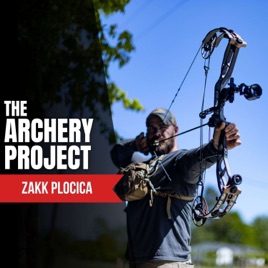
Advertise on podcast: The Archery Project
Rating
4.8from
This podcast has
73 episodes
Language
EnglishPublisher
Zakk PlocicaExplicit
No
Date created
2025/04/14
Latest episode
2026/10/06
Average duration
46 min.
Release period
8 days
Description
Welcome to The Archery Project where we sit down and have raw, unfiltered conversations discussing archery and bowhunting adventures in depth through the perspectives of unique individuals from all different backgrounds.If you enjoy the show be sure to subscribe to show your support!
Unlock The Archery Project podcast Email contact info,
Listeners & Audience details
Email contact information
Direct podcast contact details

Listeners
Audience numbers & engagement insights

Audience details
Podcast Insights

Podcast episodes
Check latest episodes from The Archery Project podcast
Lighted Nocks: What Every Bowhunter Needs to Know
2026/10/06
Lighted nocks are one of those upgrades that can feel like a no-brainer until they create a tuning problem, a durability failure, or a safety risk you never saw coming. We’re getting brutally practical about what a lighted nock really changes on your arrow and why the “boring” nock might be the most critical part of your entire setup.
We walk through the biggest benefits first: better visual feedback on shot impact, easier arrow recovery after a pass-through, and more confidence when you need to start tracking fast. Then we dig into what most people skip over, activation methods and how a nock can accidentally turn on in your quiver, the difference between micro diameter and standard diameter options, and why bushings and fit styles matter. If the nock doesn’t fit your string and shaft correctly, you can end up with erratic arrow flight, stubborn tuning issues, nock pinch at full draw, or worst case, a dry-fire type scenario if something isn’t seated the way it should be.
We also cover the part that costs hunters real opportunities: adding weight to the back of the arrow can shift your tune and your sight tape, especially if you’re shooting longer distances out west. Our takeaway is simple and repeatable: confirm fitment, paper tune again, shoot broadheads with the exact nocks you’ll hunt with, inspect for cracks after every shot, and verify legality in your state before the season starts.
Subscribe for more arrow-building and bowhunting setup breakdowns, share this with a buddy who’s swapping components before season, and leave a review if it helps. What lighted nock brand do you trust most?
🏹 Shop Extreme Outfitters for all of your archery & bowhunting needs: https://extremeoutfitters.com
Use code ARCHERYPROJECT to save 10%
Quick reads, pro tips, and the latest episodes—delivered straight to your inbox every week.
👉 Sign up here: https://thearcheryproject.com/
✅ Watch the video podcast here!
https://www.youtube.com/@thearcheryprojectpodcast
✅ Watch the podcast clips here!
https://www.youtube.com/@thearcheryproject
JOIN OUR COMMUNITY:
► Facebook: http://bit.ly/44UD7Vo
► Instagram: http://bit.ly/40Q2jLf
$1,500 Bow vs $750 Bow: Mathews Arc 34 vs Bear Alaskan Pro
2026/09/29
A $700 price jump should feel obvious the moment you shoot the bow, right? We put that assumption to work by running a true head-to-head between two of the most popular 2026 hunting bows: the Matthews Arc 34 (flagship) and the Bear Alaskan Pro (mid-price). We match the setup, shoot real groups, and talk through what matters when you’re actually buying a bow for bowhunting instead of arguing on the internet.
The first surprise is speed. With both bows set to 28.5 inches, roughly 68 pounds, 85% let-off, and a 400-grain arrow, the Bear Alaskan Pro averages 289.4 fps while the Arc 34 averages 292 fps. That gap is tiny, and it forces a better question than “is flagship faster?” We dig into what you can’t see on a spec sheet: draw cycle consistency, how the valley behaves when you hold and when you let down, what the back wall really feels like, and why post-shot noise and vibration can change confidence even when both bows are “good enough.”
Then we get into the real flagship edge: tuning and integration. We compare the work of shimming cams on the Bear to the Matthews limb shift technology that allows fast micro-tuning without a press, plus the Bridge-Lock style accessory ecosystem and the customization options that make a bow easier to tailor to you. We also lay out who should save money with a ready-to-hunt mid-price package, and who will actually benefit from paying for refinement, tunability, and long-term tinkering.
If you’re deciding between a flagship compound bow and a mid-price hunting bow, hit play, then tell us where you stand. Subscribe, share this with a hunting buddy, and leave a review so more archers can find the testing.
🏹 Shop Extreme Outfitters for all of your archery & bowhunting needs: https://extremeoutfitters.com
Use code ARCHERYPROJECT to save 10%
Quick reads, pro tips, and the latest episodes—delivered straight to your inbox every week.
👉 Sign up here: https://thearcheryproject.com/
✅ Watch the video podcast here!
https://www.youtube.com/@thearcheryprojectpodcast
✅ Watch the podcast clips here!
https://www.youtube.com/@thearcheryproject
JOIN OUR COMMUNITY:
► Facebook: http://bit.ly/44UD7Vo
► Instagram: http://bit.ly/40Q2jLf
Arrows for Beginners: What You Actually Need to Know
2026/09/23
Arrows shouldn’t feel harder than learning to shoot a bow, but for most new archers they do. We’re cutting through the noise and getting back to what actually matters when you’re buying your first set of compound bow arrows: the few decisions that make your setup safer, easier to tune, and more consistent downrange, without blowing money on upgrades you can’t even benefit from yet.
We walk through arrow anatomy in plain English, from carbon shafts to nocks, vanes, inserts, and points, and we spend extra time on the most overlooked detail: nock fit. A “small” nock problem can create accuracy headaches or even simulate a dry fire. From there, we cover the non-negotiables that keep your practice honest, like shooting the same arrows for practice and hunting, and matching your field point weight to your broadhead weight so your trajectory and tune don’t shift when it counts.
Then we simplify the big topics that usually derail beginners: arrow spine (stiffness, not grains), arrow length (why carbon-to-carbon measurement stays consistent), arrow diameter (why standard options are often the smartest start), and how to think about grains per inch and finished arrow weight. We also explain why tuning matters before broadhead testing and why a quality mechanical broadhead is often the most forgiving choice while you’re still learning.
If you want a beginner-friendly arrow buying checklist, realistic budget targets, and a clear way to talk to any pro shop tech without getting upsold, you’re in the right place. Subscribe for more practical archery guidance, share this with a new shooter, and leave a review with the one arrow question you want answered next.
🏹 Shop Extreme Outfitters for all of your archery & bowhunting needs: https://extremeoutfitters.com
Use code ARCHERYPROJECT to save 10%
Quick reads, pro tips, and the latest episodes—delivered straight to your inbox every week.
👉 Sign up here: https://thearcheryproject.com/
✅ Watch the video podcast here!
https://www.youtube.com/@thearcheryprojectpodcast
✅ Watch the podcast clips here!
https://www.youtube.com/@thearcheryproject
JOIN OUR COMMUNITY:
► Facebook: http://bit.ly/44UD7Vo
► Instagram: http://bit.ly/40Q2jLf
Whitetail Arrow Build Guide (FOC, Speed & Momentum)
2026/09/08
Your whitetail arrow does not need to be the fastest thing your bow can launch and it definitely does not need to chase a magic grain weight. We walk through what a dedicated whitetail arrow is actually supposed to do at 20 to 40 yards: fly true with a broadhead, survive hard impacts, and keep moving through resistance for consistent pass-throughs and better blood trails.
I share my framework for building a whitetail arrow as a complete system, starting with your bow and your specs. We dig into the practical difference between kinetic energy and momentum, why two arrows can show similar kinetic energy but deliver very different hunting results, and why momentum still is not the whole penetration story. Broadhead design, cutting diameter, tune, impact angle, and component alignment all matter, especially when you are trying to stack the odds in your favor on less-than-perfect shot angles.
From there, we get concrete about build decisions: where a 450 to 550 grain range often makes sense, why I like living around 270 to 290 fps for many whitetail setups, and how spine changes as you add point weight up front. We also compare affordable, proven shafts with premium 5mm options and explain why price never fixes a bad tune. The finish line is simple: paper tune, confirm broadhead flight, re-zero your sight, and validate the numbers after the build.
If you found this helpful, subscribe for more practical bowhunting setups, share it with a buddy who is rebuilding arrows for season, and leave a review with your draw length, draw weight, and current arrow specs so we can talk builds.
🏹 Shop Extreme Outfitters for all of your archery & bowhunting needs: https://extremeoutfitters.com
Use code ARCHERYPROJECT to save 10%
Quick reads, pro tips, and the latest episodes—delivered straight to your inbox every week.
👉 Sign up here: https://thearcheryproject.com/
✅ Watch the video podcast here!
https://www.youtube.com/@thearcheryprojectpodcast
✅ Watch the podcast clips here!
https://www.youtube.com/@thearcheryproject
JOIN OUR COMMUNITY:
► Facebook: http://bit.ly/44UD7Vo
► Instagram: http://bit.ly/40Q2jLf
Axle-to-Axle Length Explained: How to Pick the Right ATA
2026/09/01
One spec quietly decides whether your new compound bow feels like a cheat code or a fight every time you hit full draw: axle-to-axle length. We’re deep in bow buying season, and I keep seeing the same questions pop up from new and experienced archers alike. What does ATA actually measure, how is it different from brace height, and why does it change the way a bow holds on target?
We walk through the real trade-offs between short and long ATA bows with zero fluff: stability versus maneuverability, speed versus forgiveness, and why longer platforms often feel smoother and easier to shoot. The big sleeper topic is string angle. If your anchor and peep alignment feel inconsistent, especially as distance increases, the string angle on a shorter bow may be working against you. I also explain how draw length should shape your decision, including why a bow that’s too short for your draw can feel harsh, torquey, and tough to repeat.
Then we make it practical. I match axle-to-axle choices to hunting scenarios like tree stands, ground blinds, saddle hunting on public land, and Western spot-and-stalk where longer shots demand accuracy and repeatability. We also talk about the “speed chase” mindset and smarter ways to get performance without sacrificing shootability, including setup choices, mod options, and testing bows side by side at a shop.
If you’re about to buy a bow, use this as your checklist, then go shoot the options at your true draw length and trust what feels repeatable. Subscribe, share this with a buddy who’s shopping right now, and leave a quick rating or review so more archers can find it.
🏹 Shop Extreme Outfitters for all of your archery & bowhunting needs: https://extremeoutfitters.com
Use code ARCHERYPROJECT to save 10%
Quick reads, pro tips, and the latest episodes—delivered straight to your inbox every week.
👉 Sign up here: https://thearcheryproject.com/
✅ Watch the video podcast here!
https://www.youtube.com/@thearcheryprojectpodcast
✅ Watch the podcast clips here!
https://www.youtube.com/@thearcheryproject
JOIN OUR COMMUNITY:
► Facebook: http://bit.ly/44UD7Vo
► Instagram: http://bit.ly/40Q2jLf
Darton Bows FINALLY - What's All The Hype?!
2026/08/25
Darton bows have been the loudest request we’ve gotten for Bow Wars style conversations, and now they’re finally in our shop at Extreme Outfitters in Jacksonville, North Carolina. After hands-on time with the Darton TriTech series, the headline isn’t marketing fluff. It’s how fast these bows come together, how little you have to “fight” them, and how much practical tuning control Darton builds into the platform for both bow shops and DIY archery guys.
We walk through what we see at the paper tuner and why Darton’s micro-adjustability changes the experience. From the adjustable limb pocket system to press-free timing tweaks, the goal is simple: get clean tears fast without chasing your tail with big rest moves. We also talk real fit details, including quarter-inch draw length adjustment, standard vs speed mods, and how the draw cycle stays smooth and consistent without a harsh stack-and-dump feeling.
Then we put the big question on the table: speed versus comfort. We compare the TriTech feel and performance against familiar benchmarks like Hoyt and Mathews style shooting traits, including valley behavior, hold stability, noise, and post-shot feel. We also get into the bigger archery conversation, why brand loyalty gets toxic, why “overrated” is usually the wrong lens, and how to pick the right hunting bow by shooting it side by side within your budget. Plus, we call out the Darton Consequence 31 as a legit mid-price option if flagship pricing isn’t the move.
If you’ve been curious about Darton compound bows, listen through, then tell us where you think TriTech belongs among today’s top bows. Subscribe, share the episode with a bowhunter buddy, and leave a review so more archers can find the show. What matters most in your next bow: speed, forgiveness, tuning, or feel?
🏹 Shop Extreme Outfitters for all of your archery & bowhunting needs: https://extremeoutfitters.com
Use code ARCHERYPROJECT to save 10%
Quick reads, pro tips, and the latest episodes—delivered straight to your inbox every week.
👉 Sign up here: https://thearcheryproject.com/
✅ Watch the video podcast here!
https://www.youtube.com/@thearcheryprojectpodcast
✅ Watch the podcast clips here!
https://www.youtube.com/@thearcheryproject
JOIN OUR COMMUNITY:
► Facebook: http://bit.ly/44UD7Vo
► Instagram: http://bit.ly/40Q2jLf
Which Mid Price Bear Archery Bow Is Right For You? Adapt 2 HP vs Alaskan Pro
2026/08/18
You can spend flagship money on a compound bow, but you do not have to. We put two of the most requested mid-priced hunting bows side by side, the Bear Archery Adapt 2 HP and the Bear Alaskan Pro, and talk through what actually matters when your goal is to shoot better this season without blowing your budget.
We break down the real specs that change how a bow fits and feels: axle-to-axle length, brace height, draw weight ranges, draw length ranges, and let-off. The Adapt 2 HP brings a smooth, forgiving platform with a longer draw-length fit and a fixed 80% let-off. The Alaskan Pro steps into that “one bow for hunting and 3D” role with a longer 33-inch ATA, a draw length range that fits many average shooters, and let-off options that let you tailor holding weight and comfort.
Then we get practical. We talk ready-to-hunt packages and why they help new archers avoid accessory overload, plus the surprisingly premium touches in this price point like Picatinny sight mounting and integrated rest compatibility. You also get our real-world testing notes, including speed results with a hunting-weight arrow, draw cycle differences, post-shot vibration, string angle feel at anchor, and what to expect from the tuning systems (yoke tuning vs shim tuning).
If you are trying to decide which mid-priced Bear bow belongs in your hands, this is a straight, experience-based guide to picking the right tool for whitetail woods, western hunting, or a true hybrid setup. Subscribe for more bow comparisons, share this with a friend shopping for a new bow, and leave a review with what you want us to test next.
✅ Watch the Bow Wars Series here!
https://youtube.com/playlist?list=PLPjNFkJONNoAY7ilQyjTsKmx3PFVMh5OI&si=5Ocs8ZTOphR0EVRl
🏹 Shop Extreme Outfitters for all of your archery & bowhunting needs: https://extremeoutfitters.com
Use code ARCHERYPROJECT to save 10%
Quick reads, pro tips, and the latest episodes—delivered straight to your inbox every week.
👉 Sign up here: https://thearcheryproject.com/
✅ Watch the video podcast here!
https://www.youtube.com/@thearcheryprojectpodcast
✅ Watch the podcast clips here!
https://www.youtube.com/@thearcheryproject
JOIN OUR COMMUNITY:
► Facebook: http://bit.ly/44UD7Vo
► Instagram: http://bit.ly/40Q2jLf
Micro Adjust or Save the Cash? Bow Sight & Arrow Rest Breakdown
2026/08/11
Micro adjustability is everywhere in archery right now, and it’s easy to feel like you need the “best” version of every accessory to shoot well. We slow that hype down and ask a more useful question: where do micro clicks actually change your experience, and where do they just raise the price?
We start with bow sights, because that’s the one place I personally treat micro adjustability as a non negotiable. When you’re setting up a sight, correcting windage, dialing elevation, or leveling axes, tiny movements matter, especially at distance. I also dig into the new Black Gold Modd sight and why premium design can be worth it for durability, bright pins, smooth adjustments, and getting back to zero after your gear gets bumped during travel or a long season.
Then we pivot to arrow rests and the reality of modern tuning. With today’s compound bows, a lot of fine tuning happens through the bow’s built-in systems, not by constantly moving your rest. That’s why mid-price integrated rests can be a smarter buy for many bowhunters, especially if you set your center shot, confirm your tune, and mostly leave it alone. I break down the new AAE Prophet and Driven style options, plus Hamskea’s lineup from the R7 to the Everest and Primer, including why integration matters for low profile quivers and a streamlined hunting setup.
If you’re trying to build a reliable bowhunting setup without overspending, this is the framework I use: spend more where you adjust more, and save where you do not. Subscribe, share this with a buddy who’s pricing out upgrades, and leave a review with your take: where is micro adjustability most important to you?
🏹 Shop Extreme Outfitters for all of your archery & bowhunting needs: https://extremeoutfitters.com
Use code ARCHERYPROJECT to save 10%
Quick reads, pro tips, and the latest episodes—delivered straight to your inbox every week.
👉 Sign up here: https://thearcheryproject.com/
✅ Watch the video podcast here!
https://www.youtube.com/@thearcheryprojectpodcast
✅ Watch the podcast clips here!
https://www.youtube.com/@thearcheryproject
JOIN OUR COMMUNITY:
► Facebook: http://bit.ly/44UD7Vo
► Instagram: http://bit.ly/40Q2jLf
Hoyt vs. Mathews 2026: I Tested All 4 Aluminum Bows
2026/08/06
Hoyt vs Matthews is the argument that never dies, but it gets a lot more useful when you stop talking brand loyalty and start talking outcomes. We took four of the most talked-about 2026 aluminum compound bows and compared them the way most archers actually care about: how they tune, how they feel, how they aim, and what kind of real speed and accuracy you can expect with a practical hunting arrow. The matchups are simple and honest: Hoyt AX329 vs Matthews ARC 30 on the short platforms, and Hoyt AX333 vs Matthews ARC 34 on the longer platforms.
We get into the details that change your day in the woods and on the range, including draw cycle, valley forgiveness, back wall feel, and factory grip behavior. We also dig into why the ARC series feels so shockingly light for aluminum, why the AX3 series can feel planted on target, and how let-off and valley shape can either help you hold longer at full draw or force cleaner shot discipline. If you’ve been trying to decide between a whitetail tree-stand bow and a longer “do everything” build for hunting, 3D archery, and TAC-style shoots, the short ATA vs long ATA discussion is the part you don’t want to miss.
On the tech side, we compare Hoyt’s XTS tuning system (micro-adjustments with shim-based macro tuning) against Matthews Limb Shift (press-free left-right tuning). We also talk accessory integration, including Matthews Bridge-Lock stabilizers and sight mounting, plus what to watch for with low-profile quivers and rest clearance. Then we share our chronograph results and 30-yard grouping impressions so you can separate “fast on paper” from “easy to shoot” and “steady to aim.”
If you’re shopping for a 2026 hunting bow, listen through, then go shoot both at a local pro shop and decide based on your hands, your draw length, and your terrain. If this helped, subscribe, share it with a buddy stuck in the Hoyt vs Matthews loop, and leave a review with what you’re shooting this year and why.
🏹 Shop Extreme Outfitters for all of your archery & bowhunting needs: https://extremeoutfitters.com
Use code ARCHERYPROJECT to save 10%
Quick reads, pro tips, and the latest episodes—delivered straight to your inbox every week.
👉 Sign up here: https://thearcheryproject.com/
✅ Watch the video podcast here!
https://www.youtube.com/@thearcheryprojectpodcast
✅ Watch the podcast clips here!
https://www.youtube.com/@thearcheryproject
JOIN OUR COMMUNITY:
► Facebook: http://bit.ly/44UD7Vo
► Instagram: http://bit.ly/40Q2jLf
Bowtech Moves To Houston: A Dealer's Honest Breakdown
2026/07/30
Bowtech is packing up an entire bow operation and heading to Houston, Texas and it is not a quiet, incremental change. We’re talking manufacturing, corporate HQ, and the factory pro shop leaving Eugene, Oregon, with a seven-figure relocation and an aggressive timeline that runs straight through peak archery season. If you’re a dealer, a Bowtech owner, or someone shopping for a new compound bow, this shift has real consequences for inventory, warranty support, and how smoothly the brand can serve customers from September through January.
We also dig into the human side: the new president, Colin Legge, is 30 years old with an unusual path from oil and gas to building an archery business and club in Houston, then rapidly stepping into Bowtech leadership. That kind of fresh perspective can be exactly what a legacy bow brand needs, especially around modern marketing, media strategy, and rebuilding excitement. But execution matters, and moving CNC machines and retraining teams while customers need answers is a high-pressure test.
Then there’s the vision for what comes next: a renovated, nearly 100,000 square foot Houston facility that includes a pro shop and a 60-yard indoor 3D range, plus ambitions to host meaningful research and independent testing that benefits the broader archery community. We close with the specific signals we’re watching, from lead times and launches to whether the new experience center actually delivers on its promise.
Subscribe for more archery industry breakdowns, share this with a Bowtech shooter or dealer, and leave a review with your take: is this move a smart reset or a risky gamble?
🏹 Shop Extreme Outfitters for all of your archery & bowhunting needs: https://extremeoutfitters.com
Use code ARCHERYPROJECT to save 10%
Quick reads, pro tips, and the latest episodes—delivered straight to your inbox every week.
👉 Sign up here: https://thearcheryproject.com/
✅ Watch the video podcast here!
https://www.youtube.com/@thearcheryprojectpodcast
✅ Watch the podcast clips here!
https://www.youtube.com/@thearcheryproject
JOIN OUR COMMUNITY:
► Facebook: http://bit.ly/44UD7Vo
► Instagram: http://bit.ly/40Q2jLf
Bow Prep for Hunting Season: The Complete Pre-Season Checklist
2026/07/23
One loose mod screw, one worn serving, one rushed string order, and suddenly your “dream hunt” turns into a repair problem you cannot solve from a ridge or a treestand. We get ruthlessly practical about bowhunting season preparation and the exact checks that prevent those small issues from becoming catastrophic failures when it matters most.
We start with the basics that almost everyone skips: a full hardware check on your compound bow, plus a reality check on bowstring lifespan, bow shop lead times, and what worn fibers and separating serving actually look like. I also break down how to wax a bowstring the right way (silicone-based, less is more), how overwaxing traps grit, and why new strings still need time to settle and a follow-up tune after you put arrows through the bow.
From there we move into the changes that force a retune: new arrow builds, spine choices, sight tape updates, and why paper tuning is your fastest diagnostic tool. We talk lighted nocks and the real risk behind inconsistent nock fit, then shift into broadhead selection, broadhead flight verification, and matching vane steering to the broadhead you choose. We also cover release changes (hinge to button or index) and the practice habits that carry into the field: controlled let-downs, holding at full draw, and shooting from awkward positions you will actually face while hunting.
If you want a calmer, more confident start to the season, hit play, take notes, and build your checklist today. Subscribe for more archery tuning and bowhunting gear prep, share this with a hunting buddy who waits too long, and leave a review with the prep step you think most hunters still overlook.
🏹 Shop Extreme Outfitters for all of your archery & bowhunting needs: https://extremeoutfitters.com
Use code ARCHERYPROJECT to save 10%
Quick reads, pro tips, and the latest episodes—delivered straight to your inbox every week.
👉 Sign up here: https://thearcheryproject.com/
✅ Watch the video podcast here!
https://www.youtube.com/@thearcheryprojectpodcast
✅ Watch the podcast clips here!
https://www.youtube.com/@thearcheryproject
JOIN OUR COMMUNITY:
► Facebook: http://bit.ly/44UD7Vo
► Instagram: http://bit.ly/40Q2jLf
Best Broadheads for 2026 — Two Years of Flight Data Broken Down
2026/07/16
Broadheads decide the moment of truth, but most of what we hear about them is marketing and opinions. We go straight to controlled external ballistics data from the 2025 and 2026 arrow ballistic studies and translate it into choices you can actually make before season. Think real group size at 70 yards from a shooting machine, measured drag out to 60 yards, and sound testing weighted for how a whitetail deer hears.
We walk through the big findings that change how you build your arrow system: mechanical broadheads tend to be more forgiving, fixed blades demand tighter tuning and better form, and every single broadhead creates more drag than a field point. That last point matters more than most hunters admit, because it means a field point sight tape can be wrong at distance. If you’re shooting past 50 yards, a broadhead-specific sight tape stops being a “nice to have” and starts being basic due diligence.
Then we dig into the broadhead controversy around mechanical deployment testing and clear up the physics: static force tests can reveal premature deployment risk, while dynamic deployment on impact is a different problem with different forces. We turn that into buyer questions you can use on any mechanical head, regardless of brand loyalty. Along the way, we highlight standout performers like the Sever 1.5 Hybrid as a top all-around mechanical, Grim Reaper Fatal Steel for surprising accuracy, Thorn Rift 2.2 for an elite drag and accuracy combo, Evolution Jekyll for fixed blade accuracy, and Tulu as a quiet fixed blade option.
If you want a calm, data-backed way to choose a broadhead for western distance shots or tight-woods whitetails, hit play. Subscribe, share this with a hunting buddy who is still guessing, and leave a review with the broadhead you’re running this season.
🏹 Shop Extreme Outfitters for all of your archery & bowhunting needs: https://extremeoutfitters.com
Use code ARCHERYPROJECT to save 10%
Quick reads, pro tips, and the latest episodes—delivered straight to your inbox every week.
👉 Sign up here: https://thearcheryproject.com/
✅ Watch the video podcast here!
https://www.youtube.com/@thearcheryprojectpodcast
✅ Watch the podcast clips here!
https://www.youtube.com/@thearcheryproject
JOIN OUR COMMUNITY:
► Facebook: http://bit.ly/44UD7Vo
► Instagram: http://bit.ly/40Q2jLf
Good Better Best Hunting Arrow Builds for Every Scenario
2026/07/08
A lot of bowhunters build arrows the same way every year, then wonder why broadheads drift, groups open up, or deer react before impact. We want to change that by using real testing from the 2025 and 2026 aero ballistic studies to build a hunting arrow on purpose, not by habit. The core takeaway is simple: your broadhead choice sets your vane requirement, and everything else follows from there.
We walk through four honest questions that decide your priorities: what you hunt and the distances you actually shoot, mechanical vs fixed blade broadheads, how steady you are under pressure, and how much arrow noise matters in your woods. From there, we lay out the correct build order (broadhead, vane, shaft, then FOC) and explain why each decision constrains the next. Along the way, we hit the practical stuff bowhunters search for: arrow noise, vane steering and lift recovery, four-fletch tradeoffs, shaft diameter for wind drift, dynamic spine choices, and how FOC affects broadhead grouping without turning your trajectory into a rainbow.
Then we get specific with scenario builds. We share good, better, and best setups for whitetail hunters in tight timber, western hunters who need flatter trajectory and range forgiveness, and fixed-blade purists who want the most accurate fixed-blade arrow possible. We close with six rules that apply to every arrow build, including squaring the shaft ends, tuning and retuning, matching vane material to bow speed, and building the entire system so one loud part doesn’t ruin a “quiet arrow.”
If you get value from this, subscribe, share it with a hunting buddy, and leave a review so more bowhunters can build smarter arrows for this season.
See James Yates article on the study here: https://westernhunter.net/information/the-2026-arrow-ballistics-study-results/
See the interactive data from Precision Cut Archery here: https://www.precisioncutarchery.com/research/arrow-study-2026
🏹 Shop Extreme Outfitters for all of your archery & bowhunting needs: https://extremeoutfitters.com
Use code ARCHERYPROJECT to save 10%
Quick reads, pro tips, and the latest episodes—delivered straight to your inbox every week.
👉 Sign up here: https://thearcheryproject.com/
✅ Watch the video podcast here!
https://www.youtube.com/@thearcheryprojectpodcast
✅ Watch the podcast clips here!
https://www.youtube.com/@thearcheryproject
JOIN OUR COMMUNITY:
► Facebook: http://bit.ly/44UD7Vo
► Instagram: http://bit.ly/40Q2jLf
Bow Setup Mistakes + Best 2026 Releases Reviewed
2026/07/01
After struggling at Total Archery Challenge, Zakk went home and tore his bow completely apart. Turns out — a half-inch wrong draw length, a bow six pounds out of spec, a collapsing front shoulder, and inconsistent grip were all piling up at the same time. In this episode, he breaks down every change he made to the bow and his shot process, why he went back to a hinge release for training, and how blank bailing and intentional reps have made a bigger difference than anything else.
Zakk also breaks down the best new 2026 releases on the market right now: the Stan SX4 and Lynx hinge, the B3 Flow and Flow X, and the new UltraView UV Button 2 and UV Hinge 3 — including what makes each one different, why internals matter more than price, and how to run a two-release system for hunting vs. off-season.
If you've been chasing your tail trying to figure out why your shooting is inconsistent, this one's for you. Sometimes it's the bow, sometimes it's you — most of the time it's both.
🏹 Shop Extreme Outfitters for all of your archery & bowhunting needs: https://extremeoutfitters.com
Use code ARCHERYPROJECT to save 10%
Quick reads, pro tips, and the latest episodes—delivered straight to your inbox every week.
👉 Sign up here: https://thearcheryproject.com/
✅ Watch the video podcast here!
https://www.youtube.com/@thearcheryprojectpodcast
✅ Watch the podcast clips here!
https://www.youtube.com/@thearcheryproject
JOIN OUR COMMUNITY:
► Facebook: http://bit.ly/44UD7Vo
► Instagram: http://bit.ly/40Q2jLf
How to Build Hunting Arrows Using the 2026 Arrow Ballistic Data
2026/06/23
The fastest way to waste money on archery gear is to optimize one part of your arrow and ignore the rest. We’re back with Part Two of our 2026 Arrow Ballistic Study breakdown, where we stop staring at charts and actually use the data to make better arrow-building decisions for hunting and 3D. I share where the study challenges my current setup, including my 11.9% FOC, and how it changes what I’m testing next.
We start with broadheads because that’s where most arrow builds live or die. The data confirms mechanical broadheads tend to fly more forgivingly than fixed blades, but I’m careful to separate external ballistics from terminal performance. Flight, noise, and accuracy are measurable here; what happens on bone, pass-through, and blade durability is still on you to evaluate. Then we dig into arrow noise and why broadhead and vane choice must be treated as a system, especially if you hunt pressured whitetails or quiet timber where reactions happen fast.
From there, we turn vane drag and lift recovery into a simple decision process: pick the broadhead first, be honest about how you shoot under pressure, and decide how important a flat trajectory is for your hunting style. We also cover a key high-speed takeaway around 310+ fps: stiffer vane materials can outperform softer versions. Finally, we tackle FOC and why higher front of center keeps improving broadhead accuracy at distance, along with the real tradeoffs in trajectory and dynamic spine. The biggest constant through every “perfect arrow build” conversation remains the same: tune the bow, then retune anytime you change the system.
If this helps, subscribe, share it with a buddy who’s rebuilding arrows, and leave a review. What part of your setup are you changing after seeing this kind of data?
See James Yates article on the study here: https://westernhunter.net/information/the-2026-arrow-ballistics-study-results/
See the interactive data from Precision Cut Archery here: https://www.precisioncutarchery.com/research/arrow-study-2026
🏹 Shop Extreme Outfitters for all of your archery & bowhunting needs: https://extremeoutfitters.com
Use code ARCHERYPROJECT to save 10%
Quick reads, pro tips, and the latest episodes—delivered straight to your inbox every week.
👉 Sign up here: https://thearcheryproject.com/
✅ Watch the video podcast here!
https://www.youtube.com/@thearcheryprojectpodcast
✅ Watch the podcast clips here!
https://www.youtube.com/@thearcheryproject
JOIN OUR COMMUNITY:
► Facebook: http://bit.ly/44UD7Vo
► Instagram: http://bit.ly/40Q2jLf
Podcast reviews
Read The Archery Project podcast reviews
Hanes james 2026/02/02
Tac
I am the kid you saw at Tennessee tac and that came up the you and I am coming to Tennessee this year but I am about to get a new bow and I would love...
JonnyBluegill 2026/01/30
Pretty negative dudes
Feels like conversation with a pretentious shop owner or employee who is opinionated and would immediately make me feel uncomfortable in his shop. The...
actualtreecare 2025/06/14
Great down to earth Archery
Zack and the gang are great. I’ve been using extreme outfitters for years now and they’re just really good down to earth guys. They know a lot about a...
BK0317 2025/06/09
New podcast
Great information and easy to follow. Entertaining too
Dahughesjr 2025/05/08
Great stuff
Loving the content so far, there’s a lot out there for western hunts, while I’m not in NC, eastern Texas is pretty similar, enjoying the content that’...
Podcast sponsorship advertising
Start advertising on The Archery Project relevant audience podcasts
You may also like to advertise on these Podcasts

4.73400776
The Ancients
History Hit

4.89084309
The Why Files: Operation Podcast
The Why Files: Operation Podcast

51088171
Middle Children
Jessie Jolles and Chris Burns

4.9264962000
Morning Wire
The Daily Wire

4.518765369
American Scandal
Audible

4.689281204
Get Sleepy: Sleep meditation and stories
Slumber Studios

4.79026375
Life is Short with Justin Long
Audible

4.714103347
Bad Friends
Bobby Lee & Andrew Santino

4.7125769
10 to Life
Annie Elise

4.76752461
Criminology
Emash Digital & Mike Ferguson, Mike Morford