1812655622
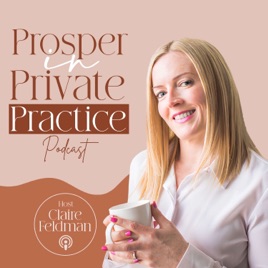
Prosper in Private Practice

Advertise on podcast: Prosper in Private Practice

This podcast has
17 episodes
Language
English
Explicit
No
Date created
2025/05/06
Latest episode
2026/08/13
Average duration
26 min.
Release period
31 days

Description

Welcome to the podcast for counsellors and therapists who want to grow a thriving private practice—without selling their soul, pretending to be a TikTok influencer, or using tactics that make their stomach turn. Hosted by Claire, a straight-talking business and marketing mentor for therapists, this show is your permission slip to build a practice your way—calmly, ethically, and with a CEO mindset that actually feels good. Whether you're just starting out or scaling up, you'll find: Honest conversations about what it really takes to grow a private practiceEthical marketing tips that won’t make you want to hide under a blanketMindset reframes to quiet the inner critic and ditch the "I'm not business-minded" storyPractical strategies for content, visibility, niching, and staying bookedAnd the occasional pep talk when you're wondering if you should just become a florist insteadIf you’re done with gimmicks, hacks, and “one-size-fits-all” formulas—and you’d rather build a sustainable, values-led practice that honours your brain, your energy, and your integrity—you’re in the right place. Pull up a chair. Let’s build a private practice that fits you.

Unlock Prosper in Private Practice podcast Email contact info,
Listeners & Audience details

Email contact information

Direct podcast contact details

Listeners

Audience numbers & engagement insights

Audience details

Podcast Insights

Podcast episodes

Check latest episodes from Prosper in Private Practice podcast


Is My Therapist Using AI? Disclosure, Consent & the New BACP Framework
2026/08/13
This episode isn't a debate about whether AI is good or bad, and it won't push you to adopt anything or shame you for going slowly. It's about the quieter question underneath all the noise: what do we owe our clients about the tools behind our work, and how do we answer honestly, in a way that deepens trust rather than denting it? We use the new BACP Ethical Framework as our anchor — the 2026 version, mandatory from 3 November, which addresses AI and digital technology explicitly for the first time. In this episode: Why clients are starting to ask about AI, and why it's a reasonable question rather than an attackWhat the new BACP framework actually asks of you — assessing any AI or digital tool before you use itThe good-practice essentials: training, insurance and informed consentWhere AI shows up in your practice, from high-stakes note-takers to everyday adminThe one line that does most of the work: never put identifying client information into a general AI systemA proportionate approach to what to disclose, when, and in plain language — including what to say if a client asks you out of the blueThe heart of it is simple. Accountability stays with you, not the tool. The framework isn't asking you to fear AI or to rush toward it — just to be able to answer for it. And that's the same thing your clients are asking for. If you're a therapist trying to think clearly about AI without the hype or the fear, I write a calm, practical newsletter on exactly this — what's changing, what it means for private practice, and how to make proportionate decisions you can stand behind. Come and join us: https://ainotes.prosperinprivatepractice.com/
Your client is using ChatGPT between sessions - what should you do?
2026/07/23
What should you do when a client tells you they have been using ChatGPT between therapy sessions? In this episode, I explore how therapists and counsellors in private practice can respond to clients’ use of AI with curiosity, professional discernment and ethical awareness, without shaming the client or immediately dismissing what they have found helpful. More clients are using ChatGPT to process their experiences, reflect between sessions and make sense of their mental health. Some are also using AI tools while deciding whether to seek therapy or looking for a therapist who specialises in a particular difficulty. That creates important questions for therapists: • How might our own feelings about AI affect the therapeutic relationship? • What should we do when ChatGPT gives a client an interpretation or insight? • How can we discuss privacy, accuracy and informed use without lecturing or shaming? • Could conversations with AI bring useful material into the therapy room? I share three helpful ways to respond when a client mentions using ChatGPT: Become curious about the conversation and what felt meaningful.Explore the information together rather than immediately correcting it.Gently support informed use, including awareness of privacy, context and possible inaccuracies.This is not an argument for AI replacing human therapy. It is an invitation for therapists to have more balanced, thoughtful and ethically informed conversations about something many clients are already doing. I’m Claire Feldman, a therapist and the founder of Prosper in Private Practice. My work supports therapists to think critically about ethical AI use, private practice and the changing therapy landscape. Find more resources for therapists at: https://www.prosperinprivatepractice.com/ Follow Prosper in Private Practice: https://www.instagram.com/prosperinprivatepractice/ This video is intended for professional education and reflective discussion. It does not constitute clinical, legal or data-protection advice.
Are Clients Asking ChatGPT to Find a Therapist? What Private Practice Needs to Know
2026/03/10
AI and therapy is one of the most talked-about — and sometimes most controversial — topics in the mental health space right now. Many therapists are understandably wondering what tools like ChatGPT might mean for the future of therapy and private practice. In this episode, I explore a recent statistic suggesting that around 37% of UK adults have used AI chatbots for mental health or wellbeing support, and what that actually means in practice. Are people really replacing therapy with AI? Or is something else happening? We’ll look at how many people are using tools like ChatGPT to ask questions about anxiety, burnout, relationships, and emotional struggles — often as a first step in understanding what they’re experiencing. More importantly, we’ll explore how this is beginning to change how potential clients search for therapists online. If the client journey used to start with “therapist near me” in Google, it may now begin with a question inside an AI tool. That shift has important implications for therapists in private practice — particularly when it comes to visibility, niche clarity, and having a strong online presence. In this episode we cover: • How people are actually using AI for mental health support  • Why AI is often a starting point, not a replacement for therapy • How search behaviour is changing for people looking for therapists • Why relying solely on directory profiles is becoming more fragile • What therapists in private practice can do to stay visible as technology evolves If you’re curious about how AI is changing the digital landscape for therapists — without the hype or fear — this episode will help you make sense of what’s happening. If you’d like to explore this topic further, you’re welcome to join my free Facebook community where I share how therapists can use AI ethically and practically in private practice: https://www.facebook.com/groups/aiforcounsellors
Private Practice Marketing in 2026: How Therapists Can Be Found Without Burning Out on Social Media
2026/01/22
The private practice landscape has changed. Quietly, steadily, and in ways that many therapists are feeling but haven’t quite named yet. In this episode, I talk through what marketing a therapy practice realistically looks like in 2026, and why so many of the strategies that worked ten or even five years ago no longer hold in the same way. Drawing on insights from a recent Open House event, I explore how client search behaviour has shifted, what clients are actually doing when they look for a therapist now, and why so many therapists feel exhausted trying to keep up with social media expectations that were never designed for them in the first place. We look at: How online therapy changed the competitive landscape, and why clients now search far beyond their local areaWhy directories alone are rarely enough anymore, even though they still have a placeWhat clients are really responding to when they land on a therapist’s websiteWhy clear, human, client-centred language matters more than professional polish or long lists of credentialsHow Google search still drives most therapy enquiries, and what that means for your websiteWhy SEO blogs work when they answer real client questions, not professional interestsHow tools like ChatGPT are beginning to influence how people look for therapists, and what helps you show up in those recommendationsThe role of FAQs, niche clarity, and simple site structure in future-proof visibilityWhy social media is better treated as a secondary trust-building tool rather than your main marketing strategyWhat sustainable marketing looks like if you only need a small, steady caseloadThis is a grounded conversation about marketing that prioritises capacity, clarity, and long-term visibility over trends, performance, or constant output. Especially relevant if you work online, want to attract self-funding clients, and are tired of feeling like you “should” be doing more on Instagram. If you want structured, ongoing support with your website, messaging, SEO, and future-proof visibility, you can explore the Prosper in Private Practice Hub here: https://www.prosperinprivatepractice.com/prosper-in-private-practice-hub It’s designed for therapists who want calm, sustainable growth, without turning themselves into content machines.
Starting 2026 in Private Practice: Why Pausing First Creates Clearer Direction (The Private Practice Compass)
2026/01/09
January often comes with pressure to be “back”, focused, and already making progress. In private practice, that pressure can push therapists into action before there’s any real clarity about direction. In this episode, I’m talking about why pausing first is not indulgent or avoidant, but a strategic and grounding step when building a sustainable private practice in 2026. I share why I deliberately take time at the start of the year to review my business, reflect on what’s working, and get clear on what I actually want from the year ahead. From there, I introduce the Private Practice Compass a simple framework I use with therapists to help them orient themselves before making decisions about marketing, visibility, or growth. We explore: Why rushing into action without direction often leads to overwhelm and comparisonHow values, capacity, and season of life should shape your business decisionsThe importance of holding a longer-term vision, especially in a changing therapy landscapeWhy strategy only makes sense once you’re clear on who you’re building your practice forHow your ideal client’s age, needs, and habits influence where your marketing energy is best spentThis episode is an invitation to slow down, step back, and think intentionally about your private practice before defaulting to what everyone else seems to be doing. If you’re feeling a bit rudderless, pressured by January energy, or unsure where to focus in 2026, this is a good place to start. You can find full details of my therapist membership community here:  https://www.prosperinprivatepractice.com/prosper-in-private-practice-hub Inside the membership, therapists get ongoing support with clarity, marketing direction, sustainable growth, and practical tools including AI support that’s ethical, grounded, and actually useful. Link to the Private Practice Compass: https://drive.google.com/file/d/12C5kxwcU7sd_OCTGmUKMImGiVDAe68ty/view?usp=sharing
Do Therapists Need Social Media to Get Clients? Where Clients Are Actually Finding Therapists in 2025
2025/11/07
Episode Summary: If you’ve ever felt pressured to show up on Instagram or TikTok just to get clients — this episode is for you. In today’s conversation, Claire unpacks the myths around social media marketing and explores where therapy clients are actually finding their therapists in 2025. Drawing on recent UK data (including the NCPS survey showing 66% of therapists get most of their new clients through directories), Claire shares a calm, reality-based perspective on what really works when it comes to private practice marketing. You’ll learn: Where clients in the UK are currently searching for therapists (Google, directories, social media, and even ChatGPT)Why social media is often a secondary stop, not the first place clients goThe key role of Google Business Profiles, directories, and your website in being discoverableHow client age and demographics influence search behaviourHow to decide whether social media is worth your time — or if your energy is better spent elsewhereThis episode is a grounded reminder that you don’t need to become an influencer to fill your private practice — you just need to be findable where your ideal clients are already looking.
Getting Found in the Age of AI: How Therapists Can Stay Visible When Clients Use ChatGPT to Search
2025/10/24
In today’s episode, we’re talking about how clients are starting to use tools like ChatGPT to look for therapists. Not instead of Google, but alongside it. And that changes how we think about visibility, websites, and how we talk about our work online. This is not about becoming “techy” or learning a new platform from scratch. It’s about something much simpler: making sure the way you describe your work online is clear, recognisable, and easy for both humans and AI search tools to understand. We explore: Why some therapists are already being recommended by ChatGPTHow AI-based searching is different from traditional Google searchWhat information AI tools are pulling from (it’s not just your website)The surprising importance of using client-friendly language, not clinical jargonHow directory profiles, Google Business listings, and service pages work together to support visibilityA gentle way to start making updates without burning out or re-doing your whole websiteI also share a few quick reflection prompts you can use right away: What would a client in your niche actually type if they were asking ChatGPT for help?Does your online presence reflect the way real clients describe their struggles?If someone searched your name in ChatGPT today, what might come up?The aim of this conversation is not to pressure you into marketing harder. It’s to give you clarity and confidence in how you show up online, so that the clients who need you can find you more easily. Even as search habits evolve. A calm, steady approach works here. No rushing. No “rebranding”. Just gentle clarity. https://www.prosperinprivatepractice.com/
How to Create a Profitable CPD Offer: 3 Mistakes Therapists Make (and the 5 Steps to Get It Right)
2025/10/09
If you’ve ever thought about running a CPD workshop but didn’t know where to start — or you’ve tried before and it flopped — this episode is for you. In this episode, Claire shares: The 3 biggest mistakes therapists make when creating CPD offersThe 5 essential steps to build and launch a profitable workshopReal examples from therapists who turned their expertise into new income streamsYou’ll hear stories from past participants who went from idea to fully booked workshops — like Louise, who created a training on working with insurance providers, and Emma, whose CPD on chronic illness has become her niche. You’ll also learn how to: Validate your idea so you know there’s demandKeep your content simple but valuableMarket your CPD effectively — without feeling “salesy”Automate your tech so it’s smooth and stress-freeWhether you’re dreaming of teaching other therapists or creating a workshop for your ideal clients, you’ll walk away knowing exactly what to do next. 💡 Mentioned in This Episode Beyond 1:1 — Launch Your CPD Program: Turn your expertise into a CPD workshop and create a new income stream for your practice. 👉 www.prosperinprivatepractice.com/beyond-one-on-one Follow Claire on Instagram: @prosperinprivatepractice
Email Counselling: How Therapists Can Work Creatively and Sustainably with Chloe Foster
2025/10/02
Email counselling might not be the first thing that comes to mind when you think about therapy—but as today’s guest Chloe Foster explains, it’s a powerful, flexible way of working that’s meeting the needs of many modern clients. Chloe is a counsellor, trainer, and founder of the Email Counselling Academy. In this episode, she shares her journey into online and email therapy, how the pandemic accelerated change in the profession, and why email counselling isn’t just “writing things down”—it’s a deeply therapeutic option for clients who need flexibility, privacy, or more time to process. We explore: Chloe’s journey from face-to-face work in Brighton to building a fully online practice in ScotlandWhy she was once sceptical of email counselling (and what changed her mind)The types of clients who benefit most from email therapy—Gen Z, shift workers, carers, first-time clients, and moreHow to manage the practicalities of contracting, security, and boundaries in email counsellingWhy proper training is essential (and how Chloe supports therapists through her specialist course)The business side: how Chloe diversified her income streams, moved beyond 1:1 sessions, and built a thriving CPD offerMoney mindset shifts that helped her raise fees and create space for training alongside client workWhether you’re curious about adding email counselling to your practice, or you’re simply interested in creative ways therapists are adapting post-pandemic, this conversation will give you plenty to reflect on. Resources & Links 👉 Take Chloe’s free quiz: Is Email Counselling Right for You? www.emailcounsellingacademy.com 👉 Connect with Chloe: LinkedIn Facebook 👉 Buy Chloe’s book: Buy my book on Email Counselling
Why Your Therapy Website Is Your Most Valuable Asset (and the Mistakes to Avoid)
2025/08/28
Your website isn’t just another box to tick off in private practice—it’s the most valuable marketing asset you own. Yet so many therapists are either neglecting their sites, DIY-ing clunky designs, or rushing to launch without clarity on who they want to work with. The result? Websites that repel clients instead of attracting them. In this episode, I break down the most common mistakes therapists make with their websites—from generic content and messy design to ignoring SEO—and explain why your site should be the hub of your marketing. You’ll also hear how investing time, energy, and strategy into your website pays off in client inquiries, freedom from directories, and long-term practice growth. And if this is striking a chord? I created Open House Week (starting 15th September) to help you fix these exact problems. It’s a free, practical week of training, feedback, and tools to make your website work for you—plus annual members will get access to a done-for-you Squarespace template. 👉 Register free here: www.prosperinprivatepractice.com/open-house-week What you’ll learn in this episode: Why your website is more valuable than Instagram or directoriesThe #1 mistake therapists make when rushing to launch a siteCommon DIY design pitfalls that drive clients awayWhy generic, jargon-heavy content doesn’t resonate with clientsHow neglecting SEO and updates makes your site invisibleHow Open House Week helps you turn things around
How I Built Multiple Income Streams as a Therapist in Private Practice
2025/08/13
Ever wondered what it really takes to create a sustainable therapy business beyond one-to-one client work? In this behind-the-scenes episode, I’m sharing an honest look at the different revenue streams I’ve built into my private practice, how they fit into my week, and the level of work that goes into running them. I’ll walk you through: How I run my private practice specialising in binge eating and ADHDThe role of digital products and why I don’t actively market themMy upcoming work as a clinical supervisorThe mentoring and membership side of my businessRunning a twice-yearly CPD programme for therapistsMy annual Prosper in Private Practice summit and how it became profitableThe real costs, time investment, and support I need to make it all workYou’ll get the truth about balancing multiple income streams – the wins, the challenges, and why it’s not about “easy money” but about creating flexibility, stability, and work you love. Links & Resources: 📸 Instagram: @prosperinprivatepractice 💬 1:1 Mentoring for Therapists: Mentoring Packages 🌱 Membership Community: Prosper in Private Practice Hub 🛠 Therapist Clarity Bundle: Get the Bundle
Finding Your Niche as a Therapist: Gemma Antcliffe on Infertility, Visibility, and Growing a Private Practice
2025/07/28
In this episode, I’m joined by Gemma Antcliffe (@fertilitycounsellorgemma), a Yorkshire-based therapist specialising in infertility, baby loss, and reproductive trauma. We talk about the winding path into private practice, the messy reality of starting out while juggling family life, and how Gemma eventually found the confidence to niche—and own her voice online. This conversation is honest, warm, and full of relatable moments for any therapist navigating visibility, niching fears, or the business side of private practice. 🔍 What We Cover: 00:00 – Meet Gemma Gemma introduces herself and her route into private practice—including how military life and motherhood shaped her career. 03:00 – Starting Private Practice with Two Young Children The behind-the-scenes juggle of evening sessions, nap schedules, and “please don’t wake up” moments. 05:00 – From Generalist to Niche: The Infertility Journey How personal experience led Gemma to her niche—and the internal debate about whether she was “healed enough” to support others through it. 10:00 – Overcoming the Fear of Niching Gemma shares how she used social media to announce her new niche (and why the “big scary announcement” wasn’t such a big deal after all). 13:00 – Visibility, Instagram, and Doing What Works for You We talk about finding the right marketing platforms for your personality and why Gemma leans into video content over Canva carousels. 16:00 – Speaking to Pain Points (Without Feeling Salesy) Why knowing your niche helps you write more powerful content—and how to market with heart and authenticity. 18:00 – Reflecting on Business Growth and Confidence From “side hustle” to serious business: how Gemma’s mindset shifted over the past year. 21:30 – What’s Next: Digital Products, Community, and a Book? Gemma shares her long-term vision for creating a bigger impact beyond 1:1 therapy. 24:00 – Ethical Self-Disclosure in Marketing How to navigate visibility and vulnerability as a therapist, especially when your niche is personal. 26:00 – Fear of Judgment and Comparisonitis We talk honestly about the fear of being visible—and how connection with peers helps ease it. 27:00 – Gemma’s Top Tip for Therapists Don’t do it alone. Why finding “colleagues” and therapist friends has been essential for staying motivated. 📲 Connect with Gemma: 🌐 Website: www.gemmaantcliffe-counselling.co.uk 📸 Instagram: @fertilitycounsellorgemma
Why Directories Alone Aren’t Enough to Fill Your Therapy Practice
2025/07/10
Directory profiles like Counselling Directory and Psychology Today can be helpful—but they’re no longer enough to consistently fill your private practice. In today’s episode, I’m talking about why relying solely on directories is risky, and what proactive steps you can take to become more visible, build trust, and attract your ideal clients in a changing therapy landscape. Whether you're an in-person or online therapist, you'll walk away with practical ideas and plenty of reassurance that marketing doesn't have to feel overwhelming, salesy, or inauthentic. ⏱️ Timestamps & Key Topics: [00:00] Welcome & why this topic matters How this episode was inspired by real questions in therapist Facebook groups—and why it’s time to stop relying on directories alone. [01:00] Why directory referrals are drying up The reality of increased competition, changing client behaviour, and why the “list it and leave it” strategy doesn’t work anymore. [04:00] Directories are passive marketing What passive marketing looks like—and why successful private practices require a more proactive approach. [05:30] Making your profile stand out Quick tips to write a more compelling, client-centred directory profile (and why that first paragraph matters most). [07:00] You’re a business owner now A mindset shift: therapists in private practice are also business owners, and visibility is part of the job. [08:00] Real-world marketing examples Claire shares how she marketed her disordered eating niche—through gyms, collaborations, Instagram Lives, and podcasts. [10:30] What local therapists can do Ideas for in-person therapists to grow visibility locally: community talks, Google profiles, Facebook groups, and relationship-building. [14:00] What online therapists need to focus on Why SEO matters more when you're online—and what makes your website (and blog) truly effective. [17:00] Using social media strategically An overview of platforms—Instagram, Threads, TikTok, podcasts—and how to choose what feels right for you and your energy. [22:00] Avoiding burnout with marketing How to layer your marketing efforts without spreading yourself too thin. [24:00] A final nudge about visibility The power of connection, video, and building trust—why it’s worth the effort for both your business and your future clients. 💡 Therapist Takeaways: Directories are helpful—but they’re just one tool, not a full strategy.Building visibility doesn’t have to be pushy—it can be grounded, values-led, and sustainable.Think about where your ideal client spends time—and show up there, in a way that feels doable.Your website, SEO, and social presence can work together to help people find and trust you.Marketing is a skill you can learn—and there’s no one right way to do it.🔗 Resources & Links: Learn more about the Prosper in Private Practice MembershipWork with me 1:1: Mentoring OptionsFollow me on Instagram: @prosperinprivatepractice
Will AI Replace Therapists? Or Help Us Work Smarter?
2025/06/26
In this episode, I explore the growing role of AI in therapy and private practice—from ethical debates to practical, everyday support. I share how I use tools like ChatGPT to save time, get creative, and better serve my clients and community. Whether you’re AI-curious or AI-cautious, this is a thoughtful look at the future of our work. ⏱️ Episode Timestamps: [00:00] Welcome & what to expect A little life update, why I’m back on the podcast, and what this episode is all about. [01:30] Why therapists are talking about AI The rise in AI discussions across therapy spaces—and why opinions are so mixed. [03:00] The scary side: concerns about AI A recap of the Stephen Bartlett podcast with an early ChatGPT developer—and why it made me pause. [04:30] The helpful side: AI as a time-saving tool How I use AI to support podcasting, content, admin, and daily tasks in private practice. [05:30] How AI is already being used in mental health From NHS triage tools to CBT-style chatbots—AI isn’t coming, it’s already here. [07:00] Will this impact private practice therapists? Thoughts on client expectations, younger generations, and the myth that human therapy is “safe” from tech. [09:00] What this means for our work going forward Why we can’t afford to ignore it—and how it might actually help us meet clients where they are. [10:30] A real example: repurposing my old course using AI How I used ChatGPT to breathe life into an outdated online course and create modern, accessible resources. [13:00] How AI could support your practice Practical ways to use AI for marketing, admin, session planning, and client resources. [14:30] Real feedback from my membership How therapists used my custom GPTs to clarify their niche and write standout directory profiles. [16:00] What you can and can’t do with the free version A quick comparison between free vs. paid ChatGPT—and why memory matters. [17:30] Why AI sometimes sounds naff (and how to fix it) The secret to getting better results from AI: teaching it your tone, values, and message. [18:30] Final thoughts: find what works for you I share my stance—and invite you to choose the path that aligns with your values and practice. Join the Prosper in Private Practice MembershipFollow me on Instagram: @prosperinprivatepractice
Building a Private Practice Niche in Medical Trauma Therapy: Marketing, Referrals & CPD with Emma Tynan
2025/06/12
In this episode, I’m joined by Emma Tynan, also known on Instagram as The Medical Trauma Therapist. Emma has built a thriving niche private practice supporting clients living with medical trauma and chronic illness — and today, she’s here to share how that journey has unfolded. We cover a lot of ground in this conversation, including: How Emma transitioned from her background as an A&E nurse into private practice.What medical trauma really looks like — and why it’s about so much more than flashing lights and hospital dramas.Why Emma initially hesitated to niche — and what gave her the confidence to do it.How she grew her visibility on Instagram as a therapist (even though marketing terrified her at first!).Where most of her referrals come from now — and how that has shifted over time.The practical changes she made to her website to attract her ideal clients.How she created and marketed her first full-day CPD workshop for therapists — and why she’s now adding free masterclasses to her marketing mix.Emma speaks with real honesty about the ups and downs of marketing a niche practice, building referral relationships, and experimenting with income streams beyond 1:1 therapy. This is an inspiring listen if you’re wondering how to own your niche and market your practice in a way that feels true to you. Whether you’re a therapist new to private practice or thinking about specialising in a niche — or simply want to hear how another therapist has done it — you’ll find lots to take away from this one. 👉 You can find Emma on Instagram: @themedicaltraumatherapist 👉 Emma’s website: emmacounselling.ie 👉 Sign up for Emma’s free masterclass on supporting clients with chronic illness: Free Masterclass

Podcast reviews

Read Prosper in Private Practice podcast reviews


0 out of 5
0 reviews

Podcast sponsorship advertising

Start advertising on Prosper in Private Practice relevant audience podcasts


What do you want to promote?