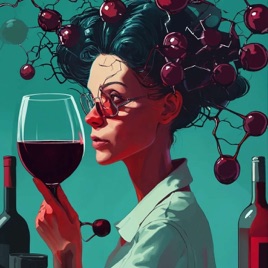
Advertise on podcast: The Wine Lab
Rating
5from
This podcast has
54 episodes
Language
EnglishPublisher
Andreea BotezatuExplicit
No
Date created
2025/07/29
Latest episode
2026/10/19
Average duration
24 min.
Release period
13 days
Description
A sciency podcast series about wine, chemistry, flavor, smell and everything in between hosted by wine and sensory scientist, book worm and food aficionado, Andreea Botezatu.
Unlock The Wine Lab podcast Email contact info,
Listeners & Audience details
Email contact information
Direct podcast contact details

Listeners
Audience numbers & engagement insights

Audience details
Podcast Insights

Podcast episodes
Check latest episodes from The Wine Lab podcast
Beaujolais Nouveau Explained: Gamay, Carbonic Maceration & Banana Aromas
2026/10/19
Send me your thoughts at [email protected]
Why does Beaujolais Nouveau taste so different from other red wines, and what exactly is carbonic maceration?
In this episode of The Wine Lab, we go inside the grape berry to explore the unusual fermentation science behind Beaujolais Nouveau. We’ll look at how intact Gamay grapes can begin producing alcohol before conventional yeast fermentation takes over, why carbonic and semi-carbonic maceration create such distinctive aromas and textures, and where those famous banana and bubblegum notes actually come from.
But Beaujolais Nouveau is also a remarkable cultural story. We travel from Philip the Bold’s 1395 attempt to ban Gamay from Burgundy to Lyon’s “third river,” the Beaujolais Nouveau races of the 1970s, a Harrier jump jet full of wine, Japanese wine baths, Michel Flanzy’s accidental discovery, and Jules Chauvet’s influence on modern natural wine.
Along the way, we separate carbonic maceration from whole-cluster fermentation, explore its effects on tannin and malic acid, and look at how winemakers now use the technique with Carignan, Grenache, Syrah, Cabernet Franc, Pinot Noir and even white grapes.
A young wine, an old tradition, and some very unusual grape biology.
The Wine Lab with Andreea Botezatu.
Stay curious, cheers.
Glossary
Beaujolais Nouveau — A young, early-release wine from the Beaujolais and Beaujolais-Villages appellations, made primarily from Gamay and released each year on the third Thursday of November. In 2026, release day is November 19.
Gamay / Gamay Noir à Jus Blanc — The principal red grape of Beaujolais. It is a natural cross between Pinot Noir and Gouais Blanc.
Carbonic maceration — A winemaking method in which intact grapes are placed in a carbon dioxide-rich, oxygen-depleted environment, allowing metabolism to begin inside the berries before conventional yeast fermentation.
Intracellular fermentation / intracellular metabolism — The biochemical activity occurring inside an intact grape berry under anaerobic conditions. The berry produces a small amount of ethanol and undergoes other metabolic changes before it ruptures and yeast fermentation takes over.
Semi-carbonic maceration — A related method in which grapes at the bottom of a tank release juice and begin conventional fermentation. The CO₂ produced creates anaerobic conditions around intact berries higher in the tank. This is closely associated with traditional Beaujolais winemaking. Decanter
Whole-cluster fermentation — Fermentation using entire grape bunches, stems included. Some intracellular fermentation may occur, but whole-cluster fermentation and carbonic maceration are not synonymous.
Isoamyl acetate — An ester strongly associated with banana-like aromas and one of the compounds linked with the distinctive aroma profile of some young Beaujolais wines.
Ester — A family of volatile aroma compounds responsible for many fruity and floral notes in wine.
Malic acid — One of the principal organic acids in grapes. A portion can be metabolized inside intact berries during carbonic maceration.
Beaujolais Villages — An appellation covering selected villages and vineyards in Beaujolais, generally producing wines with more concentration and structure than basic Beaujolais.
Cru Beaujolais — The ten named appellations at the top of the Beaujolais hierarchy: Brouilly, Côte de Brouilly, Chénas, Chiroubles, Fleurie, Juliénas, Morgon, Moulin-à-Vent, Régnié and Saint-Amour.
Morgon — A Beaujolais cru known for greater structure, depth and aging potential.
Fleurie — A Beaujolais cru often associated with aromatic, floral and elegant expressions of Gamay.
Moulin-à-Vent — One of the most structured and ageworthy Beaujolais crus.
Michel Flanzy — French scientist whose research beginning in the 1930s helped establish the modern understanding and application of carbonic maceration.
Jules Chauvet — Beaujolais négociant, winemaker and chemist whose work on fermentation, tasting and low-intervention winemaking influenced later producers associated with the natural-wine movement.
Les Sarmentelles — The annual Beaujolais Nouveau celebration in Beaujeu, held around the official November release.
Beaujeu — Historic capital of Beaujolais and the town from which the region takes its name.
Bouchon — A traditional Lyonnais restaurant associated with the food and wine culture of Lyon.
Support the show
For more detailed wine science checkout my YouTube channel here: https://www.youtube.com/@Enology_channel
Dictators and Their Favorite Wines: What Stalin, Castro and Other Strongmen Drank
2026/10/05
Send me your thoughts at [email protected]
Joseph Stalin drank the semi-sweet Georgian red Khvanchkara. Fidel Castro developed an unexpected enthusiasm for Chablis. Nicolae Ceaușescu’s preference for the obscure Romanian wine Zghihară de Huși reportedly helped determine what the communist state planted. Josip Broz Tito produced his own presidential wines. Mobutu Sese Seko accumulated an extraordinary wine cellar and sought out bottles from his birth year. And Kim Jong-il’s taste for luxury included imported Bordeaux and Burgundy.
In this episode of The Wine Lab, we explore the wines associated with six authoritarian leaders, and what their drinking habits reveal about wine, history, culture, wealth and political power.
Along the way, we explore Georgian wine and Khvanchkara, Chablis and Chardonnay, Romanian indigenous grape varieties, Bordeaux and Burgundy, vintage Port, wine aging and the fascinating relationship between wine and politics.
We also separate documented history from some of the myths surrounding famous dictators and their supposed favorite wines.
Because appreciating great wine doesn’t necessarily make someone refined and it most certainly doesn’t make them good.
Wine can tell us about taste, geography, nostalgia, wealth and power.
Character is another matter entirely.
Stay curious, cheers!
Support the show
For more detailed wine science checkout my YouTube channel here: https://www.youtube.com/@Enology_channel
Texas Wine on Its Own Terms
2026/09/07
Send me your thoughts at [email protected]
Texas is far too large and diverse to have a single wine climate, grape or style. In this episode of The Wine Lab, Andreea travels through the state’s major wine-growing regions, from the High Plains and Hill Country to North, West and Gulf Coast Texas, to look at what makes winegrowing here so distinctive. We explore Tempranillo and Tannat, the surprising promise of Picpoul Blanc, the versatility of Blanc du Bois, increasingly impressive sparkling wines, and why blends may ultimately make more sense than searching for a single signature grape. There’s also phylloxera, Thomas Volney Munson, the pioneers of the modern industry, international competition success, and more than 600 wineries, most of which Andreea apologizes in advance for failing to mention by name.
Glossary
American Viticultural Area (AVA) — A legally defined wine-grape-growing region in the United States distinguished by geographic features that can affect viticulture.
Texas High Plains — A high-elevation, relatively dry grape-growing region in northwest Texas that produces a large proportion of the state’s wine grapes.
Texas Hill Country — A large AVA and major wine-tourism region in central Texas, home to many wineries and tasting rooms.
Vitis vinifera — The European grapevine species that includes most familiar wine grapes, including Cabernet Sauvignon, Tempranillo, Chardonnay and Pinot Noir.
Pierce’s disease — A bacterial grapevine disease transmitted by insects such as sharpshooters. It strongly influences which grape varieties can be grown successfully in warmer, more humid parts of Texas.
Blanc du Bois — A Pierce’s disease-resistant hybrid white grape grown extensively in the southern United States. It can be used for dry, sweet, sparkling and fortified wines.
Black Spanish / Lenoir — A dark-skinned, Pierce’s disease-tolerant grape with a long history in Texas and other parts of the southern United States.
Tannat — A deeply colored, tannic red grape originally associated with southwestern France and now particularly famous in Uruguay. It has also shown considerable promise under Texas growing conditions.
Picpoul Blanc — A Mediterranean white grape known for retaining lively acidity. Its name is commonly interpreted as “lip stinger.”
Diurnal temperature variation — The difference between daytime and nighttime temperatures. High-elevation vineyard regions can have hot days followed by substantially cooler nights.
Phenolic ripeness — The development of compounds in grape skins and seeds that influence wine color, tannin, bitterness, aroma and mouthfeel. It doesn’t always progress at the same rate as sugar accumulation.
Traditional-method sparkling wine — Sparkling wine produced through a second fermentation in the bottle, followed by aging on the yeast lees, riddling and disgorgement.
Blending — Combining wines made from different grapes, vineyard sites, lots or sometimes vintages to create the desired balance of acidity, aroma, color, tannin, structure and flavor.
Phylloxera — A tiny grapevine pest that devastated European vineyards during the nineteenth century. Grafting Vitis vinifera onto resistant American rootstocks provided the long-term solution.
Thomas Volney Munson — Texas viticulturist and grape breeder whose extensive work with native American grape species contributed to the selection of rootstocks used to combat the European phylloxera crisis.
Support the show
For more detailed wine science checkout my YouTube channel here: https://www.youtube.com/@Enology_channel
From Seawater to Bullock’s Blood: A Strange History of Wine
2026/08/31
Send me your thoughts at [email protected]
For thousands of years, winemakers have been trying to solve the same problems: wines that were too acidic, cloudy, unstable, oxidized, or simply didn't taste very good. The solutions, however, could get interesting.
Ancient wines were treated with seawater, pine resin, herbs, honey, cedar oil, powdered marble, gypsum, ashes and, in some cases, dangerously, lead. Later winemakers clarified wine with egg whites, fish swim bladders, milk proteins and even bullock's blood.
In this episode of The Wine Lab, we travel through roughly 8,000 years of people trying to “fix” wine. Along the way, we look at what these strange additions were supposed to accomplish, the chemistry that sometimes made them surprisingly effective, and the practices that survived into modern winemaking.
From ancient aromatized wines to modern vermouth and from powdered marble to today's calcium carbonate, some historical ideas are much less bizarre than they first appear.
Others involve bullock's blood.
Those are harder to defend.
Support the show
For more detailed wine science checkout my YouTube channel here: https://www.youtube.com/@Enology_channel
Thomas Jefferson: President, Wine Geek, Failed Winemaker
2026/08/24
Send me your thoughts at [email protected]
Thomas Jefferson knew his Bordeaux, traveled through European wine regions taking meticulous notes, ordered Château Lafite directly from the source, and spent years trying - mostly unsuccessfully - to grow European grapes at Monticello. In this episode of The Wine Lab, we follow Jefferson from the vineyards of France and Italy to his own stubbornly uncooperative vines in Virginia. Along the way, we explore his surprisingly modern ideas about wine provenance, his legendary presidential cellar, wine as a tool of diplomacy, and why calling him the “father of American wine” may be giving him a little too much credit.
Glossary
Château Lafite — The Bordeaux estate now known as Château Lafite Rothschild, one of the most famous wine properties in the world. Jefferson visited Bordeaux and later ordered its wine directly from the estate.
Provenance — The documented origin and history of a wine, including where it was produced, bottled, stored and handled. Provenance is especially important for valuable and collectible wines.
Estate bottling — Wine bottled by the producer associated with the vineyard or estate rather than being transported in bulk and bottled later by a merchant or other intermediary.
Cask — A wooden vessel used for storing or transporting wine. Historically, large quantities of wine were shipped in casks rather than individual bottles.
Nebbiolo — A red grape variety from northwestern Italy, best known today for Barolo and Barbaresco. Jefferson encountered Nebbiolo in Piedmont and was particularly impressed by it.
Madeira — A fortified wine produced on the Portuguese island of Madeira. Jefferson used Madeira as one of his sensory reference points when describing Nebbiolo.
Champagne — Sparkling wine from the Champagne region of France. Jefferson was an enthusiastic buyer of Champagne, although eighteenth-century Champagne styles were not necessarily identical to those we know today.
Chambertin — A prestigious Burgundy vineyard associated with Pinot Noir. Jefferson purchased Chambertin among other important French wines.
Sauternes — A Bordeaux wine region famous for sweet white wines, traditionally produced from grapes affected by noble rot.
Hermitage — A historic wine appellation in France’s northern Rhône Valley, particularly famous for Syrah.
Tokay — An older English spelling associated with Tokaji, the celebrated wines of Hungary. Tokaji wines appeared at Jefferson’s presidential dinners.
Vitis vinifera — The European grapevine species responsible for most of the world's classic wine grapes, including Cabernet Sauvignon, Chardonnay, Pinot Noir, Riesling and Nebbiolo.
Phylloxera — A tiny insect native to North America that attacks grapevine roots. European Vitis vinifera is particularly susceptible to it.
Black rot — A fungal grapevine disease native to North America that became one of the major challenges facing early attempts to establish European grape varieties in the eastern United States.
Philip Mazzei — An Italian physician, merchant and agriculturalist who settled near Monticello in 1773 and worked with Jefferson on early attempts to establish European grapevines and wine production in Virginia.
Support the show
For more detailed wine science checkout my YouTube channel here: https://www.youtube.com/@Enology_channel
Sweetness in Wine: What the Numbers Don’t Tell You
2026/08/17
Send me your thoughts at [email protected]
What does “dry” wine actually mean? How much sugar can a dry wine contain? And why can two wines with the same residual sugar taste very different?
In this episode of The Wine Lab, Andreea explores the science and sensory side of sweetness in wine. We look at residual sugar, acidity, aroma, temperature, and balance; how winemakers create sweet and off-dry styles; and why Riesling, Champagne, Sauternes, Port, icewine, and other wines can make the language of sweetness surprisingly complicated.
We’ll also decode confusing terms like Brut, Extra Dry, Demi-Sec, trocken, Spätlese, and Auslese, and explain why sweetness is a wine style rather than a measure of quality.
Glossary
Residual sugar (RS) — Sugar remaining in wine after fermentation, usually expressed in grams per liter.
Dry wine — A wine containing very little residual sugar. Under OIV definitions, wines may qualify as dry at up to 4 g/L sugar, or up to 9 g/L when sufficiently balanced by acidity.
Off-dry — A wine with a small but noticeable amount of sweetness. Exact definitions vary between regions and regulatory systems.
Glucose and fructose — The principal fermentable sugars naturally present in grapes.
Acidity — One of the major structural components of wine. Higher acidity can reduce the perceived intensity of sweetness.
Perceived sweetness — How sweet a wine tastes, which may differ from its measured sugar concentration because of acidity, aroma, temperature, texture, and other factors.
Süssreserve — Sterile grape must traditionally used in some German wines to adjust sweetness after fermentation.
Noble rot — Beneficial infection of grapes by Botrytis cinerea under suitable conditions, causing water loss and concentrating sugars, acids, and flavor compounds.
Late harvest — Wines made from grapes harvested later than usual, often with higher sugar concentration.
Icewine / Eiswein — Wine traditionally made from grapes that freeze naturally on the vine and are pressed while frozen, producing highly concentrated juice.
Fortified wine — Wine to which grape spirit has been added. Depending on when fortification occurs, the resulting wine may be dry or sweet.
Brut Nature — A very dry sparkling-wine category, generally containing less sugar than Extra Brut or Brut.
Brut — A widely used dry sparkling-wine category.
Extra Dry — A sparkling-wine sweetness category that is, confusingly, sweeter than Brut.
Demi-Sec — A noticeably sweet sparkling-wine category.
Doux — One of the sweetest sparkling-wine categories.
Trocken — German term meaning dry.
Halbtrocken — German term indicating a wine with somewhat more residual sugar than trocken.
Kabinett, Spätlese, Auslese — German Prädikat categories related primarily to grape ripeness or must weight at harvest, not necessarily to the sweetness of the finished wine.
Support the show
For more detailed wine science checkout my YouTube channel here: https://www.youtube.com/@Enology_channel
Pop, Twist, or Pull: What’s Closing Your Wine?
2026/08/10
Send me your thoughts at [email protected]
Cork or screw cap? For many wine drinkers, the answer feels surprisingly personal.
In this episode of The Wine Lab, we explore the history, culture, science, and occasional drama of wine closures. We’ll look at how natural cork became part of the ritual of wine, why screw caps gained a serious following in Australia and New Zealand, how sparkling-wine corks get their familiar mushroom shape, and why the humble crown cap deserves more respect than it usually receives.
We’ll also talk about cork taint, oxygen, aging, synthetic and glass closures, sabrage, restaurant theatre, and the question that refuses to disappear: can a wine under screw cap age as well as one under cork?
The answer, as usual with wine, is more interesting than a simple yes or no.
Glossary
Agglomerated cork: A closure material made by binding small pieces or granules of cork together. It is commonly used in technical closures and in the bodies of traditional sparkling-wine corks.
Cork oak: Quercus suber, the Mediterranean tree whose bark is harvested to produce natural cork. The tree is not cut down during harvesting.
Cork taint: A wine fault most commonly associated with TCA. It may create musty aromas or simply suppress the wine’s fruit and make it seem muted.
Crown cap: A crimped metal closure patented by William Painter in 1892. It is used for beer, some pétillant naturel wines, and bottles undergoing traditional-method sparkling-wine production.
Disgorging: The sparkling-wine production step in which sediment from the second fermentation is removed from the bottle.
Glass closure: A reusable stopper, usually fitted with a flexible sealing ring and used with a specially designed bottle neck.
Lees: Deposits of dead yeast cells and other particles that settle after fermentation. Traditional-method sparkling wines may spend months or years aging on their lees.
Muselet: The wire cage that holds a sparkling-wine cork securely in the bottle.
Natural cork: A stopper cut from cork oak bark. It is elastic, renewable, and traditionally associated with wines intended for aging.
Oxygen transmission: The movement of oxygen through or around a closure over time. The amount varies according to closure type and design.
Pétillant naturel: A lightly sparkling wine usually bottled before its first fermentation is complete. It is often called pét-nat and may be sold under crown cap.
Reduction: A group of wine aromas associated with certain sulfur compounds, sometimes described as struck flint, rubber, onion, cabbage, or rotten egg.
Sabrage: The ceremonial opening of a sparkling-wine bottle by striking the lip with a saber or similar blade so that the top of the neck breaks away.
Screw-cap liner: The material inside a screw cap that creates the actual seal. Different liners can allow different amounts of oxygen transmission.
Synthetic closure: A manufactured stopper designed to resemble cork and provide predictable sealing and oxygen-transmission performance.
TCA: 2,4,6-trichloroanisole, the compound most famously associated with cork taint.
Technical cork: A cork-based closure manufactured from processed cork material rather than cut as one continuous piece of bark.
Traditional method: A sparkling-wine process in which the second fermentation occurs inside the bottle.G
Support the show
For more detailed wine science checkout my YouTube channel here: https://www.youtube.com/@Enology_channel
What’s in a name? That which we call Muscat by any other name would smell as sweet
2026/08/03
Send me your thoughts at [email protected]
Why is Pinot named after a pine cone? What makes Tempranillo “the little early one”? Why does Saperavi mean “the dyeing grape,” and who decided to call Xinomavro “sour black”?
In this episode of The Wine Lab, Andreea Botezatu explores the fascinating origins of grape names across France, Spain, Portugal, Germany, Italy, Romania, Greece, Georgia, Croatia, and beyond.
Some names describe color, aroma, cluster shape, or ripening time. Others preserve villages, saints, old dialects, cultural traditions, and mistakes that survived for centuries. Modern DNA analysis has added another layer to the story, revealing that Cabernet Sauvignon is the offspring of Cabernet Franc and Sauvignon Blanc, Syrah has French rather than Persian parentage, and Zinfandel, Primitivo, and Croatia’s Tribidrag are genetically the same grape.
Along the way, we meet the Black Maiden and the Black Old Woman of Romania, the fog-covered Nebbiolo of Piedmont, the aromatic Traminer of South Tyrol, and Georgian varieties whose names record precisely what growers saw in the vineyard.
Every grape has two histories: one written in its DNA and another written in its name. Pour a glass and discover the stories hidden on the label.
Glossary
Ampelography
The identification and classification of grape varieties through characteristics such as leaves, shoots, clusters, berries, and growing tips.
Cultivar
A cultivated plant variety selected and maintained because it possesses particular characteristics.
Clone
A vine propagated vegetatively from another vine and therefore sharing its basic genetic identity, although mutations may accumulate over time.
Vegetative propagation
The reproduction of grapevines using cuttings, buds, or grafts rather than seeds.
Mutation
A genetic change that may create a new characteristic within a variety, such as a different berry color or growth habit.
Synonym
A different name used for the same grape variety. Zinfandel, Primitivo, and Tribidrag are examples of names associated with the same genetic variety.
Homonym
The same name applied to two or more genetically different grape varieties.
Teinturier
A grape with pigment in both its skins and its flesh. Most red grapes have pigmented skins but pale flesh. Saperavi is a well-known teinturier variety.
Anthocyanins
Pigments responsible for many of the red, purple, and blue colors found in grape skins and red wine.
Monoterpenes
Aromatic compounds associated with floral, citrus, rose, and musky aromas in varieties such as Muscat and Gewürztraminer.
DNA fingerprinting
The comparison of genetic markers to identify grape varieties and determine relationships such as parentage.
Parentage analysis
The use of genetic evidence to identify the varieties that produced another grape through natural or deliberate crossing.
Natural crossing
The creation of a new grapevine from a seed produced when one variety pollinates another. Cabernet Sauvignon arose from a natural cross between Cabernet Franc and Sauvignon Blanc.
Berry bloom
The natural waxy coating on the surface of grapes. One proposed explanation for the name Nebbiolo connects this misty coating with the Italian word nebbia, meaning fog.
Pinot
A name generally connected to the French word for pine, referring to the grape’s compact, pine-cone-shaped clusters.
Tempranillo
A Spanish name derived from temprano, meaning early, referring to the variety’s relatively early ripening.
Primitivo
An Italian name connected to the idea of ripening first or early. It does not mean primitive in the modern English sense.
Fetească
A Romanian term derived from fată, meaning girl or maiden. It appears in names such as Fetească Albă, Fetească Neagră, and Fetească Regală.
Saperavi
A Georgian name associated with dyeing, coloring, or staining, describing the grape’s deeply pigmented juice and flesh.
Rkatsiteli
A Georgian name commonly translated as “red stem,” referring to reddish coloration in parts of the vine.
Mtsvane
A Georgian word meaning green.
Xinomavro
A Greek compound formed from words meaning sour or acidic and black.
Agiorgitiko
A Greek name associated with Saint George and historically connected with the Nemea region.
Gewürztraminer
A name commonly understood as aromatic or spiced Traminer. Traminer is traditionally associated with Tramin, or Termeno, in South Tyrol.
Spätburgunder
The traditional German name for Pinot Noir, combining words associated with late and Burgundian.
Nebbiolo
An Italian grape name commonly connected with nebbia, meaning fog, although the precise reason for the name remains debated.
Sangiovese
A name traditionally interpreted as “the blood of Jupiter,” from sanguis Jovis, although this explanation is not historically proven.
Tribidrag
An old Croatian name for the variety also known as Crljenak Kaštelanski, Primitivo, and Zinfandel.
Support the show
For more detailed wine science checkout my YouTube channel here: https://www.youtube.com/@Enology_channel
Rioja Wines Between Barrels, Branding, and the Bottle
2026/07/25
Send me your thoughts at [email protected]
Rioja is famous for Tempranillo, oak barrels, and the familiar classifications Crianza, Reserva, and Gran Reserva. But behind those words lies a remarkably diverse region shaped by the Ebro River, mountain ranges, changing elevations, and the meeting of Atlantic and Mediterranean climates.
In this episode of The Wine Lab, Andreea explores Rioja Alta, Rioja Alavesa, and Rioja Oriental; the influence of Bordeaux winemaking; the role of American oak; and the grapes that contribute to Rioja’s classic blends. She also looks beyond the cellar to discover Rioja wine in medieval poetry, traditional jotas, harvest celebrations, modern music, and the art collection of the Vivanco Museum.
From fresh, fruit-driven wines to bottles transformed by decades of ageing, Rioja offers an enduring conversation between place, blending, oak, tradition, and change.
Glossary
Rioja DOCa
The protected wine appellation extending along the Ebro River in northern Spain. Rioja became a Denominación de Origen in 1925 and received the higher Denominación de Origen Calificada status in 1991.
Rioja Alta
The western zone of Rioja, with a relatively strong Atlantic influence. It’s generally associated with cooler conditions, freshness, acidity, and age-worthy Tempranillo-based wines.
Rioja Alavesa
The northern Rioja zone located in Álava, within the Basque Country. Its vineyards often lie on calcareous clay soils beneath the Sierra de Cantabria.
Rioja Oriental
The warmer, more Mediterranean-influenced eastern zone of Rioja, formerly known as Rioja Baja. It has a long history of Garnacha cultivation.
Tempranillo
Rioja’s principal red grape. Its name is connected to the Spanish word temprano, meaning early, referring to its relatively early ripening.
Garnacha
A red variety that can add ripe red fruit, body, warmth, and generosity to Rioja blends. It has particular historical importance in Rioja Oriental.
Graciano
A traditional Rioja variety valued for its acidity, colour, aromatic intensity, and ageing potential.
Mazuelo
The Rioja name for Carignan. It can contribute acidity, tannin, colour, and structure to a blend.
Viura
Rioja’s principal traditional white grape, also known as Macabeo. It’s used for both youthful wines and distinctive barrel-aged whites capable of long development.
Tempranillo Blanco
A white grape that developed through a natural colour mutation discovered on a red Tempranillo vine in 1988.
Generic
Rioja’s broadest and most flexible wine category. It includes many young wines, as well as wines that don’t follow the prescribed maturation requirements for Crianza, Reserva, or Gran Reserva.
Crianza
For red Rioja, a category requiring at least two years of ageing, including a minimum of one year in a 225-litre oak barrel.
Reserva
For red Rioja, a category requiring at least three years of maturation, including a minimum of one year in oak and six months in bottle.
Gran Reserva
For red Rioja, a category requiring at least five years of maturation, including a minimum of two years in 225-litre oak barrels and two years in bottle.
American oak
Oak sourced principally from Quercus alba. It can contribute aromas associated with vanilla, coconut, sweet wood, dill, and spice.
Oak lactones
A group of oak-derived aroma compounds, sometimes called whisky lactones. They’re strongly associated with coconut and woody aromas.
Vino de Zona
A Rioja wine identified as originating from one of the three main production zones: Rioja Alta, Rioja Alavesa, or Rioja Oriental.
Vino de Municipio
A wine produced from grapes associated with a named Rioja municipality or village, according to the appellation’s geographical requirements.
Viñedo Singular
A certified wine from an individual vineyard or defined group of parcels meeting additional rules for vine age, yields, hand harvesting, traceability, and quality evaluation.
Jota riojana
A traditional regional style of song and dance whose verses may address rural life, local communities, humour, courtship, agricultural work, and seasonal celebrations.
Gonzalo de Berceo
A 13th-century poet from the region of present-day La Rioja, generally regarded as the earliest Castilian poet known by name. His writing includes the phrase un vaso de bon vino—a glass of good wine.
Vivanco Museum of Wine Culture
A museum in Briones devoted to the history, technology, archaeology, and artistic culture of wine.
Support the show
For more detailed wine science checkout my YouTube channel here: https://www.youtube.com/@Enology_channel
Alsace: White Wine with History, Acidity, and Soul
2026/06/08
Send me your thoughts at [email protected]
Alsace is one of France’s most distinctive wine regions: deeply French, shaped by Germanic influence, and known for aromatic white wines that can feel ripe and expressive while still staying fresh and focused. In this episode of The Wine Lab, we travel to northeastern France, between the Vosges Mountains and the Rhine, to explore why Alsace wines taste unlike anything else.
We look at Riesling, Gewürztraminer, Pinot Gris, Crémant d’Alsace, and Pinot Noir; the region’s dry climate, complex soils, tall flute bottles, and complicated history; and the science behind aroma, sweetness perception, acidity, aging, and texture. Along the way, we connect wine with food, memory, art, and identity — from choucroute and tarte flambée to the Isenheim Altarpiece in Colmar.
Alsace reminds us that white wine can be profound, that scent shapes expectation, and that a glass of wine can carry both chemistry and history.
Glossary
Alsace
A wine region in northeastern France, along the Rhine River and near the German border. It is known especially for aromatic white wines, dry climate, distinctive bottle shape, and a strong regional identity shaped by both French and Germanic influences.
Vosges Mountains
The mountain range west of Alsace’s vineyards. The Vosges create a rain-shadow effect, protecting much of Alsace from wet Atlantic weather and helping make the region relatively dry.
Rain shadow
A climatic effect where mountains block or reduce incoming moisture. In Alsace, the Vosges Mountains help create conditions where grapes can ripen well while still retaining acidity.
Riesling
One of Alsace’s most important grape varieties. Alsace Riesling is often dry, structured, high in acidity, and capable of aging, with flavors that can range from citrus and stone fruit to smoky, waxy, or petrol-like notes with time.
Gewürztraminer
A highly aromatic grape variety associated with rose, lychee, spice, and tropical fruit notes. In Alsace, Gewürztraminer can be dry, off-dry, or sweet, and is especially useful for discussing how aroma affects sweetness perception.
Pinot Gris
A color mutation of Pinot Noir with gray-pink skins. In Alsace, Pinot Gris is often fuller-bodied and more textured than the lighter Pinot Grigio styles many consumers expect.
Crémant d’Alsace
Sparkling wine from Alsace made using the traditional method. It is an important part of the region’s production and offers a fresher, more festive expression of Alsace wine.
Pinot Noir
Alsace’s main red grape variety. Historically lighter in style, Alsace Pinot Noir has become more serious in recent years as producers focus more attention on site, ripeness, and winemaking.
Flute bottle
The tall, slender bottle traditionally associated with Alsace wines. It is part of the visual identity of the region.
Alsace Grand Cru
A classification for specific vineyard sites in Alsace. Grand Cru wines emphasize the relationship between grape variety and place, with rules that have historically focused on Riesling, Gewürztraminer, Pinot Gris, and Muscat, though some rules have evolved.
Terroir
The combined influence of place on wine, including soil, climate, slope, exposure, and human tradition. In Alsace, terroir is especially important because the same grape variety can taste very different depending on vineyard site.
Residual sugar
Sugar remaining in a wine after fermentation. In Alsace, residual sugar can vary by producer, variety, vintage, and style, which can sometimes make sweetness level difficult for consumers to predict.
Sweetness perception
The way the brain interprets sweetness in wine. Actual sugar matters, but aroma, acidity, alcohol, texture, and expectation also influence whether a wine tastes dry, off-dry, or sweet.
Acidity
A key structural component in wine that gives freshness, lift, and energy. In Alsace, acidity helps balance ripe fruit and aromatic intensity.
TDN
A compound associated with the petrol or kerosene-like aroma that can develop in aged Riesling. In small amounts, it can contribute complexity; in excess, it can dominate the wine.
Terpenes
A group of aromatic compounds found in grapes, especially important in varieties such as Gewürztraminer and Muscat. Terpenes can contribute floral, citrus, and spice-like aromas.
Phenolics
Compounds found in grape skins, seeds, and stems that can affect texture, bitterness, color, and mouthfeel. In white wines, phenolics may be especially noticeable in fuller-bodied or skin-contact styles.
Orange wine
A wine made from white grapes fermented with extended skin contact. Some Alsace producers work with this style, especially using aromatic or textured varieties such as Pinot Gris and Gewürztraminer.
Vendanges Tardives
A late-harvest designation in Alsace. These wines are made from grapes harvested with higher ripeness and concentration and may range from rich and off-dry to sweet.
Sélection de Grains Nobles
A sweet wine designation in Alsace made from highly concentrated grapes, often affected by noble rot. These wines can be powerful, honeyed, and long-lived.
Noble rot
The beneficial form of Botrytis cinerea that can dehydrate grapes and concentrate sugars, acids, and flavors under the right conditions.
Choucroute
A traditional Alsatian dish based on sauerkraut, often served with sausages and smoked meats. Its salt and richness pair especially well with Riesling.
Tarte flambée
A thin Alsatian flatbread traditionally topped with cream, onions, and bacon. It is a classic regional dish and a natural partner for local wines.
Isenheim Altarpiece
A major early sixteenth-century artwork by Matthias Grünewald, housed in Colmar. It was created for a hospital monastery and is known for its intense depiction of suffering, healing, and compassion.
Support the show
For more detailed wine science checkout my YouTube channel here: https://www.youtube.com/@Enology_channel
A River Runs Through It: The Wines of the Loire Valley
2026/06/01
Send me your thoughts at [email protected]
In this episode of The Wine Lab, we travel through the Loire Valley, one of France’s most diverse and historically layered wine regions. Following the river from the Atlantic coast inland, we explore Muscadet, Chenin Blanc, Cabernet Franc, Sauvignon Blanc, Crémant de Loire, rosé, and lesser-known varieties such as Romorantin and Pineau d’Aunis.
The episode examines how geography, climate, limestone soils, lees aging, noble rot, aromatic compounds, acidity, and winemaking choices shape Loire wines. Along the way, we visit cultural landmarks and historical figures connected to the region, including the châteaux of the Loire, Joan of Arc at Chinon, François Rabelais, and Leonardo da Vinci at Clos Lucé.
Fresh, varied, food-friendly, and intellectually rewarding, Loire wines offer a remarkable lesson in how place, history, chemistry, and style come together in the glass.
Glossary
Loire Valley
A major French wine region following the Loire River from the Atlantic-influenced west toward central France. It is known for a wide range of wines, including dry whites, sparkling wines, sweet wines, rosés, and lighter reds.
Muscadet
A dry white wine from the western Loire, especially around Nantes, made from the Melon de Bourgogne grape. It is often crisp, saline, citrusy, and commonly paired with seafood.
Melon de Bourgogne
The grape variety used to produce Muscadet. Despite the name, the wines are generally lean, fresh, and mineral rather than melon-like.
Sur lie
A winemaking term meaning “on the lees.” Wines aged sur lie remain in contact with spent yeast cells after fermentation, which can add texture, subtle bread-like notes, and protection against oxidation.
Lees
The sediment left after fermentation, made up largely of yeast cells and other fine solids. Lees contact can influence mouthfeel, aroma, and stability.
Autolysis
The gradual breakdown of yeast cells after fermentation. During this process, compounds such as mannoproteins and polysaccharides may be released into the wine.
Chenin Blanc
A highly versatile white grape variety strongly associated with the Loire Valley. It can produce dry, off-dry, sparkling, and sweet wines, often with high acidity and aging potential.
Savennières
A Loire appellation known for structured, dry Chenin Blanc wines that can show firm acidity, savory notes, beeswax, quince, and strong aging potential.
Coteaux du Layon
A Loire appellation known especially for sweet Chenin Blanc wines, often influenced by late harvest conditions and sometimes noble rot.
Bonnezeaux
A prestigious sweet wine appellation within the Loire Valley, based on Chenin Blanc.
Quarts de Chaume
A famous Loire appellation for intensely sweet, age-worthy Chenin Blanc wines.
Botrytis cinerea
A fungus that can cause either destructive gray rot or beneficial noble rot, depending on conditions. In noble rot, it dehydrates grapes and concentrates sugars, acids, and flavor compounds.
Noble rot
The beneficial form of Botrytis infection that can produce complex sweet wines with aromas such as honey, dried apricot, marmalade, saffron, and spice.
Crémant de Loire
Traditional-method sparkling wine from the Loire Valley, often involving Chenin Blanc and other permitted varieties.
Traditional method
A sparkling wine production method in which the second fermentation takes place in the bottle. This process can contribute fine bubbles and lees-derived complexity.
Cabernet Franc
A red grape variety important in the Loire Valley, especially in Chinon, Bourgueil, Saint-Nicolas-de-Bourgueil, Saumur, and Saumur-Champigny. It often produces wines with red fruit, floral notes, herbal tones, moderate tannins, and freshness.
Chinon
A Loire appellation famous for Cabernet Franc-based red wines. The town is also historically associated with Joan of Arc and François Rabelais.
Bourgueil
A Loire appellation known for Cabernet Franc wines that can range from fresh and fruity to structured and age-worthy.
Saint-Nicolas-de-Bourgueil
A Cabernet Franc appellation near Bourgueil, often associated with fragrant, bright, red-fruited wines.
Saumur-Champigny
A Loire appellation known for Cabernet Franc reds, often showing freshness, aromatic lift, and moderate structure.
Methoxypyrazines
A group of aroma compounds associated with green, leafy, bell pepper, or herbaceous notes in grapes and wines.
IBMP
Short for 3-isobutyl-2-methoxypyrazine, an important methoxypyrazine associated with bell pepper or green vegetal aromas, especially in varieties such as Cabernet Franc, Cabernet Sauvignon, Merlot, and Sauvignon Blanc.
Tuffeau
A soft, porous limestone found in parts of the Loire Valley, especially around Saumur and Touraine. It has been used for buildings, caves, and wine cellars.
Touraine
A large and diverse Loire wine area producing Sauvignon Blanc, Chenin Blanc, Cabernet Franc, Gamay, Côt/Malbec, sparkling wines, rosés, and other styles.
Romorantin
A rare white grape variety associated especially with Cour-Cheverny. It can produce high-acid wines with citrus, apple, honeyed, and sometimes nutty or oxidative notes with age.
Cour-Cheverny
A Loire appellation dedicated to wines made from Romorantin.
Sauvignon Blanc
An aromatic white grape variety important in Touraine, Sancerre, and Pouilly-Fumé. Loire examples often show citrus, herbs, gooseberry, floral notes, flint-like impressions, and high acidity.
Volatile thiols
Aroma compounds that can contribute grapefruit, passion fruit, boxwood, tropical fruit, and related notes in Sauvignon Blanc and other wines.
Sancerre
An eastern Loire appellation famous for dry Sauvignon Blanc wines with acidity, citrus, herbal notes, and mineral impressions. Pinot Noir is also grown there for red and rosé wines.
Pouilly-Fumé
An eastern Loire appellation focused on Sauvignon Blanc, often associated with crisp acidity, aromatic precision, and sometimes smoky or flinty notes.
Pouilly-Fuissé
A Burgundy appellation for Chardonnay. It is often confused with Pouilly-Fumé because of the similar name, but the region, grape, and wine style are different.
Pineau d’Aunis
A Loire red grape variety that can produce pale, fresh, spicy, peppery wines with red fruit and savory character.
Grolleau
A red grape variety used in some Loire rosés, especially in Anjou.
Côt
The Loire name often used for Malbec. It can contribute dark fruit, structure, and color.
UNESCO cultural landscape
A landscape recognized for the long interaction between people and place. Part of the Loire Valley is listed by UNESCO for its river, historic towns, villages, châteaux, agriculture, and cultural history.
Clos Lucé
A château in Amboise where Leonardo da Vinci spent the final years of his life after being invited to France by King Francis I.
François Rabelais
A Renaissance writer born near Chinon, known for satire, wit, appetite, and literary references connected to the culture of his region.
Joan of Arc
A central figure in French history who came to Chinon in 1429 to meet the Dauphin Charles, the uncrowned Charles VII.
Support the show
For more detailed wine science checkout my YouTube channel here: https://www.youtube.com/@Enology_channel
Burgundy Explained: Pinot Noir, Chardonnay, and the Power of Place
2026/05/25
Send me your thoughts at [email protected]
In this episode of The Wine Lab, we continue our series on the great wine regions of the world with Burgundy, or Bourgogne, one of France’s most influential and fascinating wine regions.
Burgundy is famous for Pinot Noir and Chardonnay, but its true identity is built around place: villages, vineyards, slopes, soils, and precisely delimited parcels known as Climats. This episode explains the major Burgundy regions, from Chablis and the Côte d’Or to the Côte Chalonnaise and the Mâconnais, while exploring how Burgundy’s appellation hierarchy, monastic history, grape varieties, and wine styles shaped its global reputation.
We also compare Burgundy and Bordeaux as color names and as wine cultures, discuss the role of Pinot Noir and Chardonnay, explain terms such as Premier Cru and Grand Cru, and consider how climate change is affecting one of the world’s most place-sensitive wine regions.
Glossary
Bourgogne
The French name for Burgundy. You will often see “Bourgogne” on wine labels instead of “Burgundy.”
Burgundy
A historic wine region in eastern France, best known for Pinot Noir-based red wines and Chardonnay-based white wines.
Bordeaux
A major wine region in southwestern France, often associated with blends based on Cabernet Sauvignon, Merlot, Cabernet Franc, and related varieties. Also used as a color name for a deep wine-red shade.
Climat
In Burgundy, a precisely delimited vineyard parcel with its own identity, shaped by soil, slope, exposure, history, and human cultivation.
Terroir
The combined influence of place on wine, including soil, climate, topography, vine material, farming, and human decision-making.
Pinot Noir
Burgundy’s main red grape variety. It is thin-skinned and often produces wines with red fruit, floral, earthy, and spice notes.
Chardonnay
Burgundy’s main white grape variety. It can produce wines ranging from crisp, citrusy, and mineral to broad, creamy, and layered.
Aligoté
A traditional white grape of Burgundy, often producing crisp, fresh, high-acid wines. It has been receiving renewed attention from producers and consumers.
Gamay
A red grape associated most strongly with Beaujolais, but also present in some Burgundy-related appellations and blends.
Chablis
A northern Burgundy wine area known for Chardonnay wines with bright acidity, citrus character, and often mineral or saline impressions.
Côte d’Or
The central and most famous part of Burgundy, divided into the Côte de Nuits and Côte de Beaune.
Côte de Nuits
The northern part of the Côte d’Or, especially famous for Pinot Noir-based red wines.
Côte de Beaune
The southern part of the Côte d’Or, known for both Pinot Noir and some of the world’s most famous Chardonnay-based white wines.
Côte Chalonnaise
A Burgundy subregion south of the Côte d’Or, producing Pinot Noir, Chardonnay, Aligoté, and sparkling wines, often with strong value.
Mâconnais
A southern Burgundy subregion especially known for Chardonnay-based white wines, including wines from Pouilly-Fuissé, Saint-Véran, and Mâcon-Villages.
Regional appellation
A broad Burgundy appellation category, such as Bourgogne Rouge or Bourgogne Chardonnay. These wines usually come from wider geographic areas.
Village appellation
An appellation named after a specific commune or village, such as Meursault, Pommard, or Nuits-Saint-Georges.
Premier Cru
A classification for recognized high-quality vineyard sites within a village appellation.
Grand Cru
The highest vineyard classification in Burgundy. Grand Cru wines come from the most prestigious vineyard sites, where the vineyard name itself is the appellation.
Crémant de Bourgogne
Traditional-method sparkling wine from Burgundy, made from approved regional grape varieties such as Chardonnay, Pinot Noir, Aligoté, and Gamay.
Whole-cluster fermentation
A red winemaking technique in which some or all grape clusters are fermented with stems included. It can influence aroma, tannin, structure, and spice character.
Bâtonnage
The stirring of lees during wine aging, often used in white winemaking to influence texture, mouthfeel, and aromatic complexity.
Malolactic fermentation
A microbial conversion of malic acid into lactic acid. In white Burgundy, it can contribute to a softer texture and buttery or creamy impressions, depending on style and conditions.
Support the show
For more detailed wine science checkout my YouTube channel here: https://www.youtube.com/@Enology_channel
Bordeaux Wines Beyond the Château: Grapes, Climate, and Blending
2026/05/18
Send me your thoughts at [email protected]
Bordeaux is one of the most influential wine regions in the world, but it can also feel intimidating. In this episode of The Wine Lab, Andreea explains Bordeaux through the features that define it: rivers, climate, soils, grape varieties, blending, classifications, aging, and wine style.
The episode covers the differences between the Left Bank and Right Bank, the roles of Cabernet Sauvignon, Merlot, Cabernet Franc, Sauvignon Blanc, Sémillon, and other Bordeaux varieties, and why blending became both a sensory and practical strategy in this maritime region. It also introduces Bordeaux’s dry white wines, the noble rot wines of Sauternes and Barsac, food pairing ideas, serving temperature, decanting, vintage variation, and the impact of climate change.
The episode also discusses Bordeaux’s approval of new climate-adaptation varieties, including Arinarnoa, Castets, Marselan, Touriga Nacional, Alvarinho, and Liliorila, and what this reveals about tradition, resilience, and the future of classic wine regions.
Glossary
Bordeaux: A major wine region in southwest France, known especially for red blends based on Merlot, Cabernet Sauvignon, and Cabernet Franc, as well as dry white and sweet wines.
Left Bank: The area west and south of the Gironde Estuary and Garonne River, often associated with Cabernet Sauvignon-dominant red blends and gravelly soils.
Right Bank: The area north and east of the Dordogne River, often associated with Merlot-dominant red blends and clay-limestone soils.
Entre-Deux-Mers: A Bordeaux area between the Garonne and Dordogne rivers. The name means “between two seas.”
Maritime climate: A climate influenced by proximity to the ocean, usually with moderated temperatures and relatively high humidity.
Bordeaux blend: A wine blend based on traditional Bordeaux grape varieties, commonly Merlot, Cabernet Sauvignon, Cabernet Franc, Petit Verdot, Malbec, and sometimes Carménère for reds.
Cabernet Sauvignon: A late-ripening red grape associated with blackcurrant, cassis, firm tannins, cedar, graphite, and aging potential.
Merlot: A red grape associated with plum, black cherry, roundness, softer tannins, and a plush mouthfeel.
Cabernet Franc: A red grape often used in Bordeaux blends for aromatic lift, freshness, red fruit, floral notes, and spice.
Petit Verdot: A red grape used in smaller proportions in Bordeaux blends, often contributing color, tannin, and spice.
Carménère: A historic Bordeaux red grape that is now more strongly associated with Chile.
Sauvignon Blanc: A white grape that contributes citrus, grapefruit, herbal notes, and bright acidity to dry white Bordeaux.
Sémillon: A white grape that contributes body, texture, beeswax, lemon curd, and aging potential; also central to Sauternes and Barsac.
Muscadelle: An aromatic white grape used in smaller proportions in some Bordeaux white and sweet wines.
1855 Classification: A historic Bordeaux classification created for the 1855 Paris Exposition, ranking red wines from the Médoc and Château Haut-Brion from Graves, as well as sweet wines from Sauternes and Barsac.
First Growth / Premier Cru Classé: The highest tier in the 1855 classification for red Bordeaux wines.
Cru Bourgeois: A quality designation mainly associated with Médoc estates outside the 1855 classified growths.
Pessac-Léognan: A Bordeaux appellation known for both red wines and high-quality dry white wines.
Sauternes and Barsac: Bordeaux appellations known for sweet wines made from grapes affected by noble rot.
Botrytis cinerea / Noble rot: A fungus that, under the right conditions, dehydrates grapes and concentrates sugars, acids, and flavor compounds, producing complex sweet wines.
Tannin: Phenolic compounds from skins, seeds, and oak that create bitterness, astringency, and drying sensations in wine.
Polymerization: A process where smaller tannin molecules form larger structures over time, often changing how tannins are perceived in aged wine.
Decanting: Pouring wine into another vessel to separate sediment and/or expose the wine to oxygen before serving.
Vintage variation: Differences among wines caused by the weather and growing conditions of a specific year.
Climate-adaptation varieties: Grape varieties approved or studied to help wine regions adapt to warmer temperatures, drought stress, and other climate-related challenges.
Support the show
For more detailed wine science checkout my YouTube channel here: https://www.youtube.com/@Enology_channel
Grip, Weight, and Freshness: Understanding Wine Mouthfeel
2026/05/04
Send me your thoughts at [email protected]
Wine is usually described through aroma and flavor, but some of its most important qualities are physical. This episode of The Wine Lab examines wine texture and mouthfeel: body, viscosity, acidity, tannin, astringency, alcohol warmth, residual sugar, carbon dioxide, lees aging, malolactic fermentation, serving temperature, and aeration.
Andreea explains why two wines with similar flavors can feel completely different, how winemaking choices shape texture, and why service conditions such as temperature and decanting can change the way a wine is perceived. From crisp whites to structured reds and sparkling wines, this episode offers a practical and scientific guide to what the palate feels.
Glossary
Mouthfeel
The tactile sensations a wine creates in the mouth, including body, heat, grip, smoothness, roughness, creaminess, and astringency.
Texture
The overall physical impression of a wine on the palate. Texture includes how heavy, sharp, soft, drying, prickly, or smooth the wine feels.
Body
The perceived weight or fullness of a wine in the mouth. Body is influenced by alcohol, sugar, acidity, extract, flavor intensity, and other wine components.
Viscosity
A liquid’s resistance to flow. In wine, viscosity can contribute to impressions of body or richness, although it is only one part of mouthfeel.
Ethanol
The main alcohol in wine. Ethanol contributes to body, warmth, aroma release, and the perception of fullness.
Glycerol
A fermentation byproduct that can contribute slightly to viscosity, though its sensory impact at typical wine concentrations is often smaller than commonly assumed.
Acidity
The sourness and freshness in wine, mainly shaped by organic acids such as tartaric, malic, and lactic acid. Acidity also influences the physical impression of sharpness, brightness, and refreshment.
pH
A measure of how acidic or basic a solution is. In wine, pH influences microbial stability, color, sulfur dioxide effectiveness, and sensory perception.
Phenolic compounds
A broad group of grape- and oak-derived compounds that includes tannins, color pigments, and some compounds linked to bitterness, flavor, and structure.
Tannins
Phenolic compounds from grape skins, seeds, stems, and oak. Tannins contribute bitterness, structure, and especially astringency in wine.
Astringency
The drying, puckering, rough, or grippy tactile sensation caused largely by tannins interacting with saliva and oral surfaces.
Bitterness
A taste sensation detected by taste receptors. Bitterness can occur alongside astringency, but the two are not the same.
Maceration
The period when grape juice or wine remains in contact with grape skins, seeds, and sometimes stems. Maceration affects color, flavor, tannin, and texture.
Mannoproteins
Polysaccharides released from yeast cell walls during fermentation and lees aging. They can contribute to roundness, softness, and stability in some wines.
Lees
Spent yeast cells and other particles that settle after fermentation. Aging wine on lees can influence aroma, texture, and stability.
Malolactic fermentation
A microbial conversion of malic acid into lactic acid, usually carried out by lactic acid bacteria. It can soften acidity and contribute to a rounder mouthfeel.
Diacetyl
A compound associated with buttery aromas in wine. It can be produced during malolactic fermentation, depending on wine chemistry and winemaking choices.
Decanting
Pouring wine from the bottle into another vessel.
Support the show
For more detailed wine science checkout my YouTube channel here: https://www.youtube.com/@Enology_channel
A Rosé by Any Other Name Would Taste as Sweet...or Dry
2026/04/27
Send me your thoughts at [email protected]
A glass of rosé often feels effortless - light catching a pale pink hue, a hint of summer in the air - but its story runs deeper. In this episode, we trace how rosé is shaped, from fleeting skin contact to the saignée method and the precise art of blending in sparkling wines. Along the way, we place rosé within a longer human narrative, from early winemaking to Mediterranean tables where it accompanies food, heat, and conversation. What emerges is a style that carries both intention and ease - one that moves gracefully between technique and pleasure, and reveals more the closer you pay attention.
Glossary:
Anthocyanins: Pigments in grape skins responsible for red and pink color in wineSkin contact (maceration): Time during which grape juice remains in contact with skins, extracting color and compoundsSaignée: Method where juice is removed early from a red wine fermentation to produce roséBlending: Mixing red and white wines to create rosé (common in sparkling wine production)Terroir: The combined effect of soil, climate, and environment on wine characteristicsFamous Rosé Examples:
Provence Rosé (France): Typically pale, dry, and driven by Grenache and Cinsault; known for freshness and eleganceTavel (Rhône Valley, France): A deeper-colored, more structured rosé with notable body and aging potentialBandol Rosé (France): Often Mourvèdre-based, with more weight, spice, and complexityRosé Champagne (France): Produced by blending or short maceration; combines freshness with autolytic complexityWhite Zinfandel (USA): A sweeter, fruit-forward rosé style that played a major role in popularizing pink wines in the U.S.Support the show
For more detailed wine science checkout my YouTube channel here: https://www.youtube.com/@Enology_channel
Podcast reviews
Read The Wine Lab podcast reviews
Lauran s. 2026/10/15
A delightful treat
Equally informative and fun, this is a beautiful podcast that make a non-connoisseur learn quite a bit from an expert in the field. Andreea is a wonde...
MIV001 2026/10/14
The Wine Lab is a great podcast
Huge fan of the Wine Lab podcast! Andreea is a natural host—knowledgeable, fresh, and incredibly engaging to listen to. Every episode is a treat that ...
Podcast sponsorship advertising
Start advertising on The Wine Lab relevant audience podcasts
You may also like to advertise on these Podcasts

4.52257452000
The Joe Rogan Experience
Joe Rogan
4.499002914
Morbid
Ash Kelley & Alaina Urquhart

4.6908522
You Can Heal Your Life ™
Hay House

4.41164993
Extratime
Major League Soccer

4.8815227
ArtCurious Podcast
Jennifer Dasal/ArtCurious

4.9328211394
REAL AF with Andy Frisella
Andy Frisella

3.99008560
20/20
ABC News

4.91363711
The Learning Leader Show With Ryan Hawk
Ryan Hawk

4.92112501
the bossbabe podcast
Natalie Ellis
4.3385801993
The Megyn Kelly Show
SiriusXM