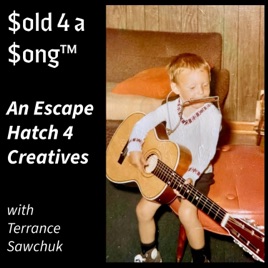
My mission for the Sold 4 a Song Brand™ is to pull back the curtain of the music and technology industries and reveal the structures that have historically kept creators at a disadvantage. I aim not only to demystify the business and tech side of music so that music creators can reclaim control over their careers but to guide artists by the hand with actual solutions.
Sold 4 a Song™ isn’t just a podcast — it’s a revolution for undervalued creatives. Hosted by Terrance Sawchuk, Billboard #1 writer & multi-platinum producer, each episode helps you rewrite your story from Undervalued to Unstoppable.
At the core, I guide creators how to:
• Own their art and intellectual property rather than give it away.
• Leverage their music and data to create opportunities and income streams.
• Streamline their creative and business processes so they can focus on making art while staying profitable.
• Sustain their careers by building long-term models of independence, resilience, and growth.
This mission is about evening the playing field—shifting the power back into the hands of the creators. It’s not just guidance, but empowerment: giving artists the tools, frameworks, and mindset to thrive in an industry that often undervalues them.
What’s the true worth of a songwriter or artist? For too long, artists have been selling themselves short — and today, the challenge has only grown with AI. $old 4 a $ong podcast reverse-engineers the ways creatives have been undervalued — and reveals how to build a sustainable career in the chaos.
Hosted by Billboard #1 multi-platinum songwriter and producer Terrance Sawchuk, this show is about reclaiming ownership and streamlining a sustainable creative life. Each episode brings real conversations with legendary hitmakers, executives, and disruptors who confirm, It’s time to start playing the game above the game.
Welcome to the Escape Hatch, Now Let's Begin... www.sold4asong.com
Advertise on Sold 4 a Song
Advertise on Sold 4 a Song to promote your brand to thousands of podcast listeners
Unlock Sold 4 a Song podcast Email contact info, Listeners & Audience details
Email contact information
Direct podcast contact details
Listeners
Audience numbers & engagement insights
Audience details
Podcast Insights
Podcast episodes
Check latest episodes from Sold 4 a Song podcast
#28: The True Value of Music
2026/06/30
In this episode the host introduces a documentary project exploring the social and historical impact of music, with a focus on Billie Holiday's "Strange Fruit" and other songs that shaped public memory.
On location in Marion, Indiana, the host reflects on local history tied to racial violence and the absence of acknowledgement at public sites, using the story to illustrate music's power to reveal and remember.
The episode previews upcoming travels across the United States to examine music's true value and to advocate for greater ownership and fair compensation for creators.
Resources & Next Steps
Pick up your copy of my new book, $old 4 a $ong (How Music Creators Lost Their Worth, and How to Take It Back)
sold4asong.com
Subscribe, rate, and review the podcast to help this message reach more creators
Share this episode with a songwriter who still believes “someone else is watching out for them”
About the Host
Terrance “Terry” Sawchuk is a Billboard #1, multi-platinum songwriter, producer, engineer and now author with over three decades in the trenches. Sold for a Song exists to challenge the systems that undervalue creators—and to offer real pathways back to ownership, leverage, and sustainability.
Sold 4 a Song™ Podcast
Hosted by Terrance Sawchuk, Billboard #1 multi-platinum songwriter, producer, artist, mixer, and entrepreneur.
The Book (How Music Creators Lost Their Worth, and How to Take It Back) is a living exploration of creative worth, ownership, and the true value of music—inside the systems that monetize it.
If this episode resonates, you can follow the work at sold4asong.com
#27: Reclaiming Artists from the Direct-to-Fan Trap
2026/06/23
This episode exposes the myth of "direct-to-fan" when artists rely on third-party platforms that own the data, APIs, and revenue streams. It explains how rented platforms can strip creators of rights, credit, and sustainable income.
Host Terrence Sawchuk outlines a better path: building private portals and owning your audience, data, and monetization. He shares practical thinking and resources to help artists and creators reclaim value, leverage their work, and build lasting careers.
Resources & Next Steps
Pick up your copy of my new book, $old 4 a $ong (How Music Creators Lost Their Worth, and How to Take It Back)
sold4asong.com
Subscribe, rate, and review the podcast to help this message reach more creators
Share this episode with a songwriter who still believes “someone else is watching out for them”
About the Host
Terrance “Terry” Sawchuk is a Billboard #1, multi-platinum songwriter, producer, engineer and now author with over three decades in the trenches. Sold for a Song exists to challenge the systems that undervalue creators—and to offer real pathways back to ownership, leverage, and sustainability.
Sold 4 a Song™ Podcast
Hosted by Terrance Sawchuk, Billboard #1 multi-platinum songwriter, producer, artist, mixer, and entrepreneur.
The Book (How Music Creators Lost Their Worth, and How to Take It Back) is a living exploration of creative worth, ownership, and the true value of music—inside the systems that monetize it.
If this episode resonates, you can follow the work at sold4asong.com
#26: Live in Mississauga: Sold 4 a Song Book Event
2026/05/26
Recorded live at a Mississauga book event, this episode features Terrence Sawchuk discussing his book "Sold for a Song" and the long history of undervaluing music creators. He explores self-worth, ownership of songs and data, and practical solutions to help artists build sustainable careers.
Terry shares personal stories from Toronto and Nashville, highlights the power of community, and outlines ideas for artists to reclaim control—through ownership, direct fan relationships, and new tech platforms. A call-to-action for creators and supporters follows the talk.
Resources & Next Steps
Pick up your copy of my new book, $old 4 a $ong (How Music Creators Lost Their Worth, and How to Take It Back)
sold4asong.com
Subscribe, rate, and review the podcast to help this message reach more creators
Share this episode with a songwriter who still believes “someone else is watching out for them”
About the Host
Terrance “Terry” Sawchuk is a Billboard #1, multi-platinum songwriter, producer, engineer and now author with over three decades in the trenches. Sold for a Song exists to challenge the systems that undervalue creators—and to offer real pathways back to ownership, leverage, and sustainability.
Sold 4 a Song™ Podcast
Hosted by Terrance Sawchuk, Billboard #1 multi-platinum songwriter, producer, artist, mixer, and entrepreneur.
The Book (How Music Creators Lost Their Worth, and How to Take It Back) is a living exploration of creative worth, ownership, and the true value of music—inside the systems that monetize it.
If this episode resonates, you can follow the work at sold4asong.com
#25: Break Your Neighborhood First Then The World
2026/04/13
Terrance Sawchuk urges artists to build their careers from the ground up by testing songs and performance in their own neighborhood, learning from real audience feedback rather than chasing online vanity metrics or moving to a bigger city.
He explains why local shows, selling directly to fans, and maintaining ownership of your work create sustainable momentum, help you develop as an entertainer, and protect you from being undervalued by the industry.
Practical takeaways include focusing on live performance, measuring real results like ticket sales and repeat attendees, and committing to the work and time required to grow a lasting career.
Resources & Next Steps
Pick up your copy of my new book, $old 4 a $ong (How Music Creators Lost Their Worth, and How to Take It Back)
sold4asong.com
Subscribe, rate, and review the podcast to help this message reach more creators
Share this episode with a songwriter who still believes “someone else is watching out for them”
About the Host
Terrance “Terry” Sawchuk is a Billboard #1, multi-platinum songwriter, producer, engineer and now author with over three decades in the trenches. Sold for a Song exists to challenge the systems that undervalue creators—and to offer real pathways back to ownership, leverage, and sustainability.
Sold 4 a Song™ Podcast
Hosted by Terrance Sawchuk, Billboard #1 multi-platinum songwriter, producer, artist, mixer, and entrepreneur.
The Book (How Music Creators Lost Their Worth, and How to Take It Back) is a living exploration of creative worth, ownership, and the true value of music—inside the systems that monetize it.
If this episode resonates, you can follow the work at sold4asong.com
#24: Reclaiming Creators’ Worth
2026/03/10
Big announcement: my first book is finished!!! In this episode I share why I wrote it, to expose how the music industry has historically overleveraged and undervalued creators, and to offer practical ways artists can reclaim their worth and attract abundance.
I also discuss the early book release, the official launch before SXSW 2026, upcoming projects like a docu‑series called The True Value of Music, workshops, and how I plan to help creators streamline their careers so they can focus on making art.
Join me as I break down the problem, the path to self‑worth, and actionable steps for creators to thrive in a changing industry.
Resources & Next Steps
Pick up your copy of my new book, $old 4 a $ong (How Music Creators Lost Their Worth, and How to Take It Back)
sold4asong.com
Subscribe, rate, and review the podcast to help this message reach more creators
Share this episode with a songwriter who still believes “someone else is watching out for them”
About the Host
Terrance “Terry” Sawchuk is a Billboard #1, multi-platinum songwriter, producer, engineer and now author with over three decades in the trenches. Sold for a Song exists to challenge the systems that undervalue creators—and to offer real pathways back to ownership, leverage, and sustainability.
Sold 4 a Song™ Podcast
Hosted by Terrance Sawchuk, Billboard #1 multi-platinum songwriter, producer, artist, mixer, and entrepreneur.
The Book (How Music Creators Lost Their Worth, and How to Take It Back) is a living exploration of creative worth, ownership, and the true value of music—inside the systems that monetize it.
If this episode resonates, you can follow the work at sold4asong.com.
#23: Stop Using Spotify — Build Your Private Portal
2026/03/03
In this episode Terrance Sawchuk argues that musicians and creators must stop giving their value away to big platforms and instead build their own “private portals” to own relationships with fans. Using AI and simple tech, artists can use TikTok and Spotify as billboards to drive traffic to their own hubs, sell directly, and reclaim income and control.
The episode outlines practical steps and a mindset shift: stop relying on third-party platforms that monetize your data, create unique fan experiences on your own site, and use tech to streamline and sustain a real music business.
Resources & Next Steps
Pick up your copy of my new book, $old 4 a $ong (How Music Creators Lost Their Worth, and How to Take It Back)
sold4asong.com
Subscribe, rate, and review the podcast to help this message reach more creators
Share this episode with a songwriter who still believes “someone else is watching out for them”
About the Host
Terrance “Terry” Sawchuk is a Billboard #1, multi-platinum songwriter, producer, engineer and now author with over three decades in the trenches. Sold for a Song exists to challenge the systems that undervalue creators—and to offer real pathways back to ownership, leverage, and sustainability.
Sold 4 a Song™ Podcast
Hosted by Terrance Sawchuk, Billboard #1 multi-platinum songwriter, producer, artist, mixer, and entrepreneur.
The Book (How Music Creators Lost Their Worth, and How to Take It Back) is a living exploration of creative worth, ownership, and the true value of music—inside the systems that monetize it.
If this episode resonates, you can follow the work at sold4asong.com.
#22: When Music Stopped Being The Product
2026/01/19
In this episode of Sold 4 a Song, Terry Sawchuk breaks down a quiet but fundamental shift in the modern music business: how platforms moved from distributing music to extracting data—and why most artists never see the upside of the value they generate.
Every stream, skip, save, replay, and share feeds an ecosystem designed to learn, predict, and monetize human behavior at scale. While creators focus on promotion and visibility, tech platforms quietly leverage analytics, audience data, and pattern recognition to build massive profit engines—often without artists realizing what they’re giving away.
This episode is a wake-up call for artists, producers, and songwriters who feel stuck in a loop of being controlled instead of being in control.
🔍 In This Episode, You’ll Learn:
Why fan behavior has become more valuable than the song itself
How artists unknowingly give up masters, publishing, and audience data
The real difference between reach and leverage—and why confusing the two keeps creators powerless
Why visibility without control leads to noise, not sustainability
What it truly means to own your audience in a data-driven industry
Why platforms thrive on your data—and why artists must build their own infrastructure
How small, leveraged audiences often outperform massive but disconnected followings
💡 Key Takeaway
If you don’t own your rights, your data, or your direct relationship with your audience, you’re not participating in the upside—you’re powering it.
Understanding the difference between being visible and being leveraged is the first step toward reclaiming creative freedom, financial stability, and long-term value.
Resources & Next Steps
Join the Sold for a Song community:
sold4asong.com
Subscribe, rate, and review the podcast to help this message reach more creators
Share this episode with a songwriter who still believes “someone else is watching out for them”
About the Host
Terrance “Terry” Sawchuk is a Billboard #1, multi-platinum songwriter, producer, and now author with over three decades in the trenches. Sold for a Song exists to challenge the systems that undervalue creators—and to offer real pathways back to ownership, leverage, and sustainability.
Sold 4 a Song™ Podcast
Hosted by Terrance Sawchuk, Billboard #1 multi-platinum songwriter, producer, artist, mixer, and entrepreneur.
The Book (How Music Creators Lost Their Worth, and How to Take It Back) is a living exploration of creative worth, ownership, and the true value of music—inside the systems that monetize it.
If this episode resonates, you can follow the work at sold4asong.com.
#21: Why It Is Illegal For Songwriters To Form A Union
2026/01/13
In this episode of Sold 4 a Song, Terrance Sawchuk answers the question why do musicians, singers, actors, directors, producers, screenwriters, even stagehands,have unions… but songwriters don’t?
In this episode of Sold for a Song, Terry Sawchuk breaks down a truth that shocks many creators: songwriters are legally prohibited from forming a union in the United States. Not discouraged. Not frowned upon. Illegal.
Drawing on 30+ years in the music industry, including real-world examples from his own Billboard #1 career, Terry explains:
How U.S. labor and antitrust law classify songwriters
Why owning a song and controlling it are two very different things
How compulsory licenses strip songwriters of the right to say no
Why publishers, PROs, and Congress—not creators—set the rules
Where live performance royalties break down (and often disappear)
And why the future of creator power depends on direct ownership, private portals, and cutting out intermediaries
This episode is about clarity, leverage, and practical survival in a system that was never designed to favor the inventor.
Key Topics Covered
Why songwriter unions are illegal under U.S. antitrust law
The difference between copyright ownership and price control
What a song actually is (before publishers enter the picture)
Advances vs. income, and why publishing deals behave like credit cards
How administrative fees quietly eat up royalties worldwide
The real story behind compulsory licenses
A firsthand case study: pulling unauthorized uses of a #1 hit
Why live concert royalties are one of the least transparent systems in music
How Congress, the Copyright Royalty Board, and PROs shape songwriter income
Elon Musk, platform leverage, and the future battle over music pricing
Why artist-owned “home bases” are the most powerful path forward
How education changes your leverage with labels and publishers
Key Takeaways
Songwriters are independent rights holders, not employees, which blocks collective bargaining
Once a song is released, key rights are permanently restricted
Publishers and PROs do not equal songwriter representation
Transparency failures aren’t accidental, they’re structural
Ownership without control is not freedom
The future belongs to creators who own, leverage, streamline, and sustain from their own platforms
Memorable Quotes
“Owning your song and controlling your song are two very different things.”
“The inventor is the only one in the system who isn’t allowed to set the price.”
“If you don’t like the cost of music, don’t use music. Don’t over-leverage it.”
“Spotify and TikTok should be billboards, not the destination.”
Action Steps for Songwriters & Artists
Understand your rights before releasing music
Stop confusing advances with income
Audit where your royalties are actually coming from
Build a private, artist-owned home base
Use platforms as traffic, not dependency
Educate yourself before signing your next deal
Resources & Next Steps
Join the Sold for a Song community:
TerranceSawchuk.com
Subscribe, rate, and review the podcast to help this message reach more creators
Share this episode with a songwriter who still believes “someone else is watching out for them”
About the Host
Terrance “Terry” Sawchuk is a Billboard #1, multi-platinum songwriter, producer, and industry veteran with over three decades in the trenches. Sold for a Song exists to challenge the systems that undervalue creators—and to offer real pathways back to ownership, leverage, and sustainability.
Sold 4 a Song™ Podcast
Hosted by Terrance Sawchuk, Billboard #1 multi-platinum songwriter, producer, artist, mixer, and entrepreneur.
Sold 4 a Song™ is a living exploration of creative worth, ownership, and the true value of music—inside the systems that monetize it.
If this episode resonates, you can follow the work at sold4asong.com.
#20: The Rhythm of My Heart with Marc Jordan
2026/01/07
In this episode of Sold 4 a Song, Terrance Sawchuk sits down with legendary songwriter Mark Jordan, the creator of “Rhythm of My Heart” and a writer whose songs have been recorded by Diana Ross, Rod Stewart, Joe Cocker, Manhattan Transfer, Bonnie Raitt, Cher, and more.
Mark shares the untold story behind writing “Rhythm of My Heart,” his lifelong relationship with dyslexia before it was understood, and how neurodiversity became a creative advantage rather than a limitation. From CBC transcription sessions and LA studio legends to publishing blind spots and royalty realities, this conversation explores how value is created—and often lost—inside the music industry.
This episode goes beyond hit songs. It’s a deep, human conversation about creative identity, confidence, ownership, and the quiet cost creators pay when their work outpaces their self-worth. It also examines music’s healing power through Mark’s work in music therapy with first responders, reminding us why music matters far beyond charts and market share.
Takeaways
Dyslexia and neurodiversity can be powerful creative strengths
Writing a hit does not guarantee understanding or ownership of value
Publishing systems often separate creators from awareness and control
Creative confidence is shaped early—and can be reclaimed later
Music’s value extends far beyond commercial success
Direct creative integrity leads to longevity
Industry myths often hide structural inequities
Ownership and self-worth are deeply connected
Music has measurable healing and therapeutic impact
True success comes from alignment, not just accolades
Titles
Writing “Rhythm of My Heart” & the Hidden Cost of a Hit
Dyslexia, Creativity, and Reclaiming Artistic Worth
Sound Bites
“Dyslexia isn’t a flaw—it’s my superpower.”
“You can write a worldwide hit and still be disconnected from your value.”
“Music heals people long before it pays them.”
Chapters
00:00 Writing “Rhythm of My Heart”
05:48 Dyslexia, Confidence, and Creative Identity
12:30 Early Career, CBC, and Learning by Ear
20:10 LA Studios, Publishing, and Industry Blind Spots
31:40 Rod Stewart, Hits, and the Cost of Success
41:55 Music Therapy and Healing Through Song
53:20 Reclaiming Worth, Ownership, and Longevity
Keywords
music industry, songwriting, Rhythm of My Heart, Mark Jordan, dyslexia, neurodiversity, creative worth, publishing, ownership, royalties, music therapy, artist sustainability, creative confidence, Sold 4 a Song
Sold 4 a Song™ Podcast
Hosted by Terrance Sawchuk, Billboard #1 multi-platinum songwriter, producer, artist, mixer, and entrepreneur.
Sold 4 a Song™ is a living exploration of creative worth, ownership, and the true value of music—inside the systems that monetize it.
If this episode resonates, you can follow the work at sold4asong.com.
#19: 2025 Year In Review
2025/12/29
In this episode of 'Sold for a Song', Terry Sawchuk discusses the evolving landscape of the music industry, emphasizing the importance of artists owning their copyright and data. He reflects on the past year, highlights key guests, and addresses the impact of AI on music creation and artist-fan relationships. Looking ahead to 2026, he shares his upcoming projects aimed at empowering creatives and raising awareness about the true value of music.
Takeaways
Artists must own their copyright and data to thrive.
Monetizing directly and leveraging art is crucial.
Empowering artists is essential for creative success.
AI will significantly impact the music industry.
Direct relationships with fans are vital for artists.
Ownership and sustainability are key for future artists.
The true value of music is often undervalued.
Feedback indicates a broader appeal for my upcoming book.
New projects aim to highlight music's societal value.
Building a community of support for artists is important.
Titles
Empowering Artists in the Digital Age
Reflections on 2025: A Year in Review
Sound bites
"AI will transform the music industry."
"Thank you for joining me today!"
"Let's build this movement together."
Chapters
00:00 Empowering Artists in the Digital Age
02:48 Reflections on 2025: A Year in Review
06:09 The Future of Music: AI and Artist Relationships
08:50 Ownership and Sustainability for Creatives
11:45 Looking Ahead: New Projects and Goals for 2026
Keywords
music industry, artists, copyright, AI, sustainability, ownership, creativity, fan relationships, digital age, music therapy
Sold 4 a Song™ Podcast hosted by Terrance Sawchuk, Billboard #1 multi-platinum songwriter, producer, artist, mixer, & entrepreneur.
Sold 4 a Song™ is a living exploration of creative worth, ownership, and the true value of music — inside the systems that monetize it.
If this episode resonates, you can follow the work at sold4asong.com.
#18: Dr. Connie Tomaino, Music Therapy and Neurologic Function
2025/12/16
In this episode, Terry sits down with Dr. Concetta “Connie” Tomaino — co-founder and Executive Director of the Institute for Music and Neurologic Function (IMNF) — for a mind-opening conversation on the true value of music far beyond streaming numbers.
They break down how music actually engages the brain, why rhythm can restore movement in Parkinson’s, how songs can “wake up” memory in dementia, and how music therapy helps veterans and trauma survivors access what words can’t. Then Terry connects it back to the core mission of Sold 4 a Song: the painful irony that the people who create the world’s most powerful healing tool are often the ones least valued inside the ecosystem built around it — and why access to music therapy should be reimbursed and available to everyone.
To go deeper, join Terry at TerranceSawchuk.com
👉 Watch for announcements for my Free Webinar coming in January 2026.
Keywords
music therapy, neuroscience, mental health, creativity, neurodiversity, music industry, healing, brain function, emotional connection, artist empowerment
Summary
In this episode of 'Sold for a Song', host Taren Saczek engages with Dr. Concetta Tomeino, a pioneer in music therapy, discussing the profound impact of music on mental health and neurological function. They explore the evolution of music therapy, its applications in treating various conditions, and the importance of recognizing the value of music creators in society. The conversation delves into the neuroscience behind music, the therapeutic techniques used in music therapy, and the challenges faced by artists in the industry. Dr. Tomeino emphasizes the need for greater accessibility to music therapy and the economic value of music in enhancing well-being.
Takeaways
Music therapy needs to be accessible to everyone.
The field of music therapy originated in the 1950s.
Music engages almost every part of the brain.
Music can help individuals with PTSD and cognitive impairments.
Therapeutic music experiences can enhance recovery and function.
Neurodiversity plays a significant role in creativity.
Music can evoke strong emotional responses and memories.
The economic value of music creators is often undervalued.
Music therapy can improve mental health and well-being.
Artists have a unique role in nurturing creativity in society.
Titles
Unlocking the Healing Power of Music Therapy
The Neuroscience Behind Music and Healing
Sound bites
"We need to get the word out."
"Music therapy is a profession."
"Music has power in healing."
Chapters
00:00 The Value of Music Therapy
06:07 Introduction to Dr. Concetta Tomeino
11:46 The Evolution of Music Therapy
20:04 Understanding Music's Impact on the Brain
30:11 Music Therapy Techniques and Applications
40:07 Neurodiversity and Creativity
50:03 The Economic Value of Music and Artists
#17: Panic at The Music Row
2025/12/09
In this episode of Sold For A Song, Terry Sawchuk discusses the undervaluation of music creators and the impact of AI on the music industry. He emphasizes the need for musicians to recognize their worth and leverage technology to reclaim control over their careers. The conversation highlights the challenges posed by AI, the exploitation of session musicians, and the importance of using technology to empower artists rather than diminish their value.
Takeaways
Empowering artists is crucial for redefining creative success.
Musicians must awaken their self-worth to thrive.
AI is changing the landscape of the music industry.
Session musicians are facing unprecedented challenges due to AI.
Technology should be leveraged to benefit creators.
Musicians need to create their own platforms for lessons.
The music industry is monopolized by a few major players.
AI companies are profiting from the work of musicians without compensation.
Musicians should reverse engineer technology for their advantage.
Building a community of empowered creators is essential.
Titles
Reclaiming Value in the Music Industry
The AI Revolution: Threat or Opportunity for Musicians?
Sound bites
"Why am I on your website?"
"AI is an absolute game changer."
"Let's build this movement together."
Chapters
00:00 Empowering Music Creators
01:46 The Impact of AI on Musicians
08:38 Leveraging Technology for Musicians
Keywords
music industry, songwriters, AI, musicians, technology, empowerment, creativity, copyright, session musicians, music lessons
Sold 4 a Song™ Podcast hosted by Terrance Sawchuk, Billboard #1 multi-platinum songwriter, producer, artist, mixer, & entrepreneur.
Sold 4 a Song™ is a living exploration of creative worth, ownership, and the true value of music — inside the systems that monetize it.
If this episode resonates, you can follow the work at sold4asong.com.
#16: Welcome to the AI Wild West — Why Artists Are Being Left Behind (Again)
2025/12/02
In this episode of Sold 4 a Song, Terry Sawchuk breaks down the AI Wild West currently reshaping the music industry — and who is really benefiting from it.
Terry exposes how AI platforms like Suno allegedly trained their models using music scraped from YouTube without permission, reached billion-dollar valuations, and were ultimately rewarded with licensing deals from major labels like Warner Music. Meanwhile, actual songwriters and artists are told by PROs that using “too much AI” could disqualify them from performance royalties.
This episode confronts the glaring double standard: AI companies can profit from creators’ work at scale, but creators themselves remain restricted, underpaid, and over-controlled. Terry explains how market power, ownership concentration, and pro-rata payment systems continue to suffocate artists — and why the flood of AI-generated music only accelerates the problem.
He closes by teasing artist-first solutions designed to reverse-engineer the system — where creators own their data, control their IP, and finally reclaim leverage in an industry built on undervaluation.
Takeaways
AI companies are being rewarded for actions artists would be penalized for
Major labels prioritize market share over creator protection
PRO rules around AI create a double standard for songwriters
AI is drastically increasing music saturation on DSPs
Artists are more lost in the shuffle than ever before
Ownership and leverage — not exposure — determine power
Major labels control most IP, limiting artist agency
The industry is designed to extract value from creators
Artist-owned platforms are no longer optional
The future belongs to creators who control data, IP, and audience
Titles
The AI Wild West: Who Really Wins in Music’s New Gold Rush?
Why AI Companies Get Paid — and Songwriters Don’t
Sound Bites
“We’ve got value going once, truth going twice.”
“They stole the music, built the platform, and got rewarded.”
“It’s okay for AI companies — but not the creators they took from.”
“Artists are always the ones being over-leveraged.”
“Welcome to the Wild West.”
Chapters
00:00 Value, truth, and the mission of Sold 4 a Song
02:39 How AI music models were trained
05:02 Warner’s deal with AI and what it signals
07:25 Why artists are more buried than ever
08:45 Reclaiming leverage through artist-first systems
Sold 4 a Song™ Podcast hosted by Terrance Sawchuk, Billboard #1 multi-platinum songwriter, producer, artist, mixer, & entrepreneur.
Sold 4 a Song™ is a living exploration of creative worth, ownership, and the true value of music — inside the systems that monetize it.
If this episode resonates, you can follow the work at sold4asong.com.
#15: How Fans Can Change Everything (And Why Artists Need You More Than Ever)
2025/11/25
In this Thanksgiving special episode of Sold 4 a Song, Terry Sawchuk speaks directly to music fans and creators alike, pulling back the curtain on why being a songwriter in the United States is anything but a free-market profession.
Terry explains how intermediaries — from Live Nation and Ticketmaster to DSPs and social platforms — control market share, inflate costs for fans, and extract the lion’s share of revenue while creators earn fractions of a penny. He walks listeners through how streaming royalties actually work, why songwriters make hundreds instead of tens of thousands where they once did, and how record labels reshaped streaming economics in their favor before Spotify was even allowed into the U.S. market.
The episode also explores a rarely discussed issue: the absence of a songwriter union, the centralized power of the U.S. Copyright Board, and how government-controlled royalty rates eliminate true market dynamics for creators. Terry contrasts this with how songwriters are paid internationally, particularly for live performances and film music.
At its heart, this episode is about bridging artists and fans directly — restoring connection, transparency, and value by bypassing gatekeepers. Terry closes by expressing gratitude to listeners and reaffirming that the future of music depends on ownership, direct relationships, and creator-controlled platforms.
Takeaways
There is no true free market for songwriters in the U.S.
Fans and artists both want connection — intermediaries disrupt it
Live Nation operates as a near-total monopoly in live music
Streaming payouts heavily favor master owners over songwriters
A million Spotify streams can earn songwriters only hundreds of dollars
Major labels reshaped streaming economics before launch
Social platforms monetize artists and fans as the product
Songwriters lack union protection unlike other entertainment roles
Many U.S. performance royalties never reach creators
Direct artist-to-fan relationships restore value and sustainability
Titles
Why Songwriting Isn’t a Free Market — and Never Has Been
A Thanksgiving Thank You to the Fans (And the Truth About Music Money)
Sound Bites
“There is nothing free market about being a songwriter.”
“Fans and artists are both looking for connection.”
“The middlemen control the experience — and the money.”
“You can’t cash likes at a bank.”
“Nobody leaves the driveway until someone writes a song.”
Chapters
00:00 The myth of the free market for songwriters
02:37 Bridging artists and fans
04:55 Live Nation, Ticketmaster, and market control
07:18 Streaming economics explained
11:55 Why songwriters earn the least
14:23 Copyright control and government-set royalties
16:45 Why U.S. songwriters miss live performance pay
18:30 Gratitude to fans & closing reflections
If today’s episode lit a fire in you, don’t let it fade.
Subscribe to Sold 4 a Song, leave a review, and share this episode with someone who needs to hear it.
Sold 4 a Song™ Podcast hosted by Terrance Sawchuk, Billboard #1 multi-platinum songwriter, producer, artist, mixer, & entrepreneur.
Sold 4 a Song™ is a living exploration of creative worth, ownership, and the true value of music — inside the systems that monetize it.
If this episode resonates, you can follow the work at sold4asong.com.
Keywords
songwriters, music industry, free market, Live Nation, Ticketmaster, Spotify, royalties, artists and fans, music monopolies, copyright board, PROs, streaming economics, creative ownership
I
#14: Fredric Dannen, New York Times Best Selling Author of The Hitmen. The book that shook the music industry.
2025/11/18
In this landmark episode of Sold 4 a Song, Terry sits down with legendary investigative journalist and author Fredric Dannen, whose book The Hit Men ripped the lid off payola, mafia influence, and systemic corruption inside the record business.
Fredric walks through the origin story of The Hit Men: how an innocuous business assignment on PolyGram led to Dick Asher’s shocking Pink Floyd “Another Brick in the Wall” experiment, the rise of independent promoters known as The Network, and how major labels effectively created an extortion machine that controlled radio airplay. He recounts Clive Davis’ attempts to block the book’s release, the legal battles that followed, and how one threatened lawsuit actually helped send the book to the New York Times bestseller list — “Thank you, Clive.”
The conversation dives into the darker corners of music history: the mob-connected promotion ecosystem, figures like Morris Levy, the pay-to-play reality behind Pink Floyd, The Who, Loverboy, and Michael Jackson’s Thriller era… and the uncomfortable role artists themselves sometimes played in fueling the system. Fredric shares the now-famous Maurice White quote — “Don’t make me your crusade” — and how that crystallized the tension between moral outrage and survival for artists.
From there, Terry and Fredric zoom out into cultural loss and censorship: race records, the R&B label slapped on Michael Jackson’s Off the Wall purely because of skin color, the disappearing tradition of truly society-shifting songs (“Strange Fruit,” “Born in the U.S.A.,” “Fight the Power”), and the way both government and corporate power still suppress and reshape creative expression. Fredric also explains how The Hit Men helped inspire Eliot Spitzer’s later payola crackdown — proof that one book really can change the system.
The episode closes on Fredric’s life in Mexico, his bilingual theater company La Troupe Mexico, the San Miguel Playhouse, his ongoing work for Billboard, and a new miniseries he’s writing set in 19th-century Mexico. It’s a masterclass in how one truth-teller can impact music, law, culture, and justice — and a reminder of why creators need to understand the game above the game.
Takeaways
The Hit Men remains the definitive inside account of music industry corruption
Independent promoters (“The Network”) wielded power not just to get records played, but to block airplay
Major labels built and funded the very extortion system that later threatened them
Global hits by Pink Floyd, The Who, and Loverboy were manipulated through payola-style schemes
Artists often felt forced to participate: “Don’t make me your crusade — I only have one career”
Race and genre labeling (“race records,” “rhythm and blues”) were historically tied to skin color, not sound
Cultural protest songs once shifted society in ways today’s landscape rarely allows
The Hit Men helped inspire Eliot Spitzer’s later payola investigation as Attorney General
Fredric’s obsession with justice has freed wrongly convicted people and reshaped his life
Art, journalism, theater, and songwriting remain powerful tools for exposing systems — if we dare to tell the truth
Titles
The Hit Men, the Mob, and the Music Industry’s Dark Secret
Fredric Dannen on Payola, Power, and the Price of Telling the Truth
Sound Bites
“You think you’re just writing a book — then you find out it changed the law.”
“There is power in being able to keep a record off the air.”
“Don’t make me your crusade. I only have one career.”
“If you can do that to Pink Floyd and The Who, you can do it to anyone.”
“Songwriting is one of the greatest art forms in human history.”
Chapters
00:55 Sold 4 a Song intro & why this conversation matters
02:50 How The Hit Men was born — from chemicals to corruption
04:41 Dick Asher, Pink Floyd, and the “Another Brick in the Wall” experiment
06:06 The Network, independent promotion, and mafia ties
14:27 Payola history: from $50 handshakes to full-scale extortion
19:10 Morris Levy, trials, wiretaps, and “Terrible!”
23:06 Major labels, rock & roll, and why indies couldn’t survive
30:46 Race records, R&B, and the categorization of Black artists
34:10 Thriller, Frank DiLeo, Al Sharpton, and the Jackson tour
39:38 Justice, banned books, and censorship from both sides
44:11 Revenge of the Green Dragons and the limits of adaptation
46:07 Why The Hit Men should be a series — and how Vinyl got it wrong
47:50 Eliot Spitzer, revived payola cases, and real-world impact
49:56 Cultural loss, protest songs, and the value of music
53:09 Life in Mexico, La Troupe Mexico & San Miguel Playhouse
55:30 New projects, miniseries, and closing reflections
Keywords
music industry, payola, The Hit Men, Fredric Dannen, mafia, independent promotion, Pink Floyd, Michael Jackson, Al Sharpton, Clive Davis, Earth Wind & Fire, race records, rhythm and blues, censorship, justice, San Miguel de Allende, theater, Billboard
📚 Buy The Hit Men here:
👉 https://a.co/d/4WcT7OR
Sold 4 a Song™ Podcast hosted by Terrance Sawchuk, Billboard #1 multi-platinum songwriter, producer, artist, mixer, & entrepreneur.
Sold 4 a Song™ is a living exploration of creative worth, ownership, and the true value of music — inside the systems that monetize it.
If this episode resonates, you can follow the work at sold4asong.com.
Podcast reviews
Read Sold 4 a Song podcast reviews
5 out of 5
7 reviews
★★★★★
S_DK 2025/10/27
Fresh, Addictive, and Full of Hidden Gems
$old 4 a Song promises to be on heavy rotation for me. Hosted by a true music industry insider, the show digs deep into the lives of the unsung heroes...