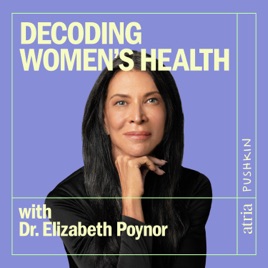
Why is it still so hard for women to find reliable, modern health information about their own bodies? On Decoding Women's Health, Dr. Elizabeth Poynor, chair of women’s health & gynecology at the Atria Health Institute, shares expert insights on women’s health, hormones, and longevity science to help you thrive at any stage of midlife and beyond.
Dr. Poynor, a world-renowned gynecologic oncologist and advanced pelvic surgeon, speaks with leading physicians, researchers, and educators to share the latest science on women’s wellness, disease prevention, and what it really means to age on your own terms. Each episode explores a different aspect of how to improve your health during midlife—from heart disease and genetic risks to metabolism, hormones nutrition, cognitive health, and beyond.
Whether you're in perimenopause, postmenopause, or simply looking for tools to prepare for the next chapter, take charge of your health—now and for the future—with expert guidance and practical advice to help you thrive.
Advertise on Decoding Women's Health with Dr. Elizabeth Poynor
Advertise on Decoding Women's Health with Dr. Elizabeth Poynor to promote your brand to thousands of podcast listeners
Unlock Decoding Women's Health with Dr. Elizabeth Poynor podcast Email contact info, Listeners & Audience details
Email contact information
Direct podcast contact details
Listeners
Audience numbers & engagement insights
Audience details
Podcast Insights
Podcast episodes
Check latest episodes from Decoding Women's Health with Dr. Elizabeth Poynor podcast
Decoding Sexual Health with Dr. Rachel Rubin
2026/10/06
Sex is supposed to be fun and feel good. So why are pain, low desire and changes in arousal so often treated as something women should simply live with?
Dr. Poynor is joined by urologist and sexual medicine specialist Dr. Rachel Rubin for a candid, joyful conversation about women’s sexual health. They unpack what’s behind common sexual concerns, available treatments, and why these issues deserve the same curiosity and care as any other part of our health. Along the way, Dr. Rubin makes the case for talking about sex more openly – and for expecting more from the care we receive.
Links to resources mentioned in this episode:
For more information on the treatment options for vulvar pain: https://journals.lww.com/greenjournal/fulltext/10.1097/aog.0000000000001645~committee-opinion-no-673-persistent-vulvar-pain
The American Urological Association’s clinical guideline on genitourinary syndrome of menopause: https://www.auanet.org/guidelines-and-quality/guidelines/genitourinary-syndrome-of-menopause
Dr. Rubin offers continuing medical education courses for clinicians, as well as free educational sexual health resources: https://www.rachelrubinmd.com/education
Learn more about Dr. Rubin’s Sexual Medicine Research Team: https://www.rachelrubinmd.com/research
Read the FDA’s update on estradiol transdermal patch availability: https://www.fda.gov/drugs/drug-alerts-and-statements/fda-update-estradiol-transdermal-patch-availability
Research on erectile dysfunction and its relationship to cardiovascular health: https://pmc.ncbi.nlm.nih.gov/articles/PMC10353735/
Research on hormonal contraception and sexual function: https://www.sciencedirect.com/science/article/abs/pii/S1743609515312881
More information on the FDA approval of flibanserin for hypoactive sexual desire in postmenopausal women: https://www.urologytimes.com/view/fda-approves-flibanserin-for-hypoactive-sexual-desire-disorder-in-postmenopausal-women
Information about testosterone treatment available for women in New Zealand: https://www.androfeme.nz/
Research on vibrator use among women: https://pubmed.ncbi.nlm.nih.gov/19453881/
Prosayla, a resource from the International Society for the Study of Women’s Sexual Health (ISSWSH), can help you find clinicians who specialize in women’s sexual health: prosayla.com
Dr. Rachel Rubin website: https://www.rachelrubinmd.com/
Dr. Rachel Rubin on YouTube: https://www.youtube.com/@DrRachelRubin
Dr. Rachel Rubin LinkedIn page: https://www.linkedin.com/in/rachel-rubin-7433b0134/
Dr. Rachel Rubin on Instagram: https://www.instagram.com/drrachelrubin
Dr. Rachel Rubin newsletter: https://www.rachelrubinmd.com/newsletter
Dr. Elizabeth Poynor substack: https://poynorhealth.substack.com/
Dr. Elizabeth Poynor on Instagram: https://www.instagram.com/poynorhealth
Atria Health Library: content.atria.org
Note: In this show, we use “women” as shorthand for people with XX chromosomes. We understand sex and gender are more complex, and acknowledge the experiences we describe reach beyond that word.
See omnystudio.com/listener for privacy information.
Decoding Cardiovascular Health with Dr. Anu Lala
2026/09/22
Heart disease is the number one killer of women, but unlike many other major diseases, there’s no single screening test that can tell you if you’re at risk. So how do you know where you stand? Dr. Poynor is joined by cardiologist Dr. Anuradha (Anu) Lala-Trindade (Lala), the program director for the Advanced Heart Failure and Transplant Fellowship at Mount Sinai and a professor of cardiology, population health, and obstetrics and gynecology.
Together, they unpack the many factors that can shape a woman’s cardiovascular risk and break down why midlife is an especially important time to start paying attention to them.
Resources mentioned during this episode:
Dr. Anu Lala’s 14-part framework for an initial cardiology assessment:
1. Family history
2. Gynecologic history — pregnancy journey, fertility journey, and gynecologic surgeries, including fibroid surgeries
3. Laboratory results — genetic risk markers plus microalbuminuria (protein in the urine, as an early marker of cardiovascular-relevant kidney health)
4. History of high blood pressure — personal history, in-office reading, and family history
5. Cholesterol panel
6. Insulin resistance and inflammation biomarkers
7. History of autoimmune disease or inflammatory conditions
8. An EKG to check for any abnormalities
9. Weight and weight redistribution
10. Sleep
11. Movement (her preferred term over "exercise")
12. Diet — specifically processed food intake, alcohol, and food timing
13. Tobacco use and cessation
14. Mindfulness and well-being, or mind-body medicine
Here are the numbers Dr. Lala wants women to know.
1. Blood pressure
2. Cholesterol panel
3. Lp(a) — a genetic marker of atherosclerosis, checked at least once
4. Hemoglobin A1c — a marker of insulin resistance, metabolic risk, or diabetes
5. Microalbuminuria
For some women, she also recommends:
1. ApoB — not for everyone; informative specifically when LDL is elevated
2. Coronary artery calcium score — not for everyone; useful for those at intermediate-to-high risk, with high LDL, or with a relevant family history
About Dr. Lala: https://profiles.mountsinai.org/anuradha-lala-trindade#about
CDC overview of women and heart disease: https://www.cdc.gov/heart-disease/about/women-and-heart-disease.html
National Heart, Lung, and Blood Institute resources for women and heart disease: https://www.nhlbi.nih.gov/health/coronary-heart-disease/women#How-do-symptoms-differ-for-women?
A Harvard Health article on the heart attack gender gap: https://www.health.harvard.edu/blog/understanding-heart-attack-gender-gap-201604159495
Systolic Blood Pressure Intervention Trial (SPRINT) Study: https://www.nhlbi.nih.gov/science/systolic-blood-pressure-intervention-trial-sprint-study
Hypertensive disorders of pregnancy and peripartum cardiomyopathy: A nationwide cohort study: https://journals.plos.org/plosone/article?id=10.1371%2Fjournal.pone.0211857
Increased risk of cardiovascular disease in women with endometriosis: A systematic review and meta-analysis: https://www.sciencedirect.com/science/article/pii/S0301211525003574
The 2022 hormone therapy position statement of The North American Menopause Society: https://menopause.org/wp-content/uploads/professional/nams-2022-hormone-therapy-position-statement.pdf
If you're interested in using a risk calculator you can toggle to the left on the American Heart Association tool: https://professional.heart.org/en/guidelines-and-statements/prevent-calculator
Auditory stimuli and heart rate variability: the role of music in cardiovascular regulation: https://pmc.ncbi.nlm.nih.gov/articles/PMC13229774/
Adjuvant music therapy for patients with hypertension: a meta-analysis and systematic review: https://link.springer.com/article/10.1186/s12906-023-03929-6
Effects of music in exercise and sport: A meta-analytic review: https://pubmed.ncbi.nlm.nih.gov/31804098/
Association between spirituality/religiousness and quality of life among healthy adults: a systematic review: https://pmc.ncbi.nlm.nih.gov/articles/PMC8529786/
Spirituality in Serious Illness and Health: https://jamanetwork.com/journals/jama/article-abstract/2794049
Acupuncture in persons with an increased stress level—Results from a randomized-controlled pilot trial: https://pmc.ncbi.nlm.nih.gov/articles/PMC7377446/
Effects of sleep deprivation and 4‐7‐8 breathing control on heart rate variability, blood pressure, blood glucose, and endothelial function in healthy young adults: https://pmc.ncbi.nlm.nih.gov/articles/PMC9277512/
Effects of voluntary slow breathing on heart rate and heart rate variability: A systematic review and a meta-analysis: https://pubmed.ncbi.nlm.nih.gov/35623448/
Note: In this show, we use “women” as shorthand for people with XX chromosomes. We understand sex and gender are more complex, and acknowledge the experiences we describe reach beyond that word.
See omnystudio.com/listener for privacy information.
Decoding Intermittent Fasting with Dr. Chris Rhodes
2026/09/08
How can the research behind intermittent fasting help us rethink the way we approach our nutrition and our daily habits? Dr. Chris Rhodes has spent much of his career studying the science of fasting. He joins the show to unpack how fasting works in the body and what the research tells us about its potential benefits.
Dr. Rhodes earned his PhD in Nutritional Biochemistry at UC Davis and is also the co-founder of Mimio. We discuss why someone might try intermittent fasting - from longevity to weight loss - as well as the importance of strength training and personalized nutrition.
Links to resources mentioned in this episode:
For more studies on autophagy, check out: https://physoc.onlinelibrary.wiley.com/doi/full/10.1113/JP287938
and https://pubmed.ncbi.nlm.nih.gov/41372565/
Here's a meta-analysis looking at the effects of time restricted eating: https://pubmed.ncbi.nlm.nih.gov/41586347/
Note: the glycine data we mention is only in mice: https://pmc.ncbi.nlm.nih.gov/articles/PMC6516426/
Important caveat for this episode: the evidence is strongest in animal studies and human markers of aging. No intermittent fasting regimen has been shown to extend human lifespan or reduce mortality in humans.
Note: In this show, we use “women” as shorthand for people with XX chromosomes. We understand sex and gender are more complex, and acknowledge the experiences we describe reach beyond that word.
See omnystudio.com/listener for privacy information.
Decoding Preventive Care with Dr. Jennifer McGugins Hill
2026/08/25
What can you do to make the most of your annual medical visit? Dr. Poynor is joined by Dr. Jennifer McGugins Hill, an internal medicine specialist at the Atria Health and Research Institute, to discuss how preventive care can help identify health concerns early. Plus, we unpack which labs and screenings are worth discussing with your primary care physician, why it's important to know your calcium score, and how to advocate for the care you need.
Links to resources mentioned in this episode:
Boston Heart Diagnostics offers specialty labs that your doctor can order for you, usually at a cost. They are not available as direct to consumer products, so if you're interested in them, talk with your care team. https://bostonheartdiagnostics.com/
For expert advice on how to properly log your blood pressure at home, please see this helpful article: https://content.atria.org/article/blood-pressure-cuffs-for-home-monitoring/
You can see the product she mentions here (no affiliate link): https://omronhealthcare.com/blood-pressure-monitors
An ECG or EKG stands for an electrocardiogram, which is a quick, safe, and painless medical test that records the electrical activity of your heart.
DEXA stands for dual-energy X-ray absorptiometry. It is an imaging test that uses low-dose X-rays to measure bone mineral density and body composition. They can be ordered by a physician in an academic medicine system and are also offered at standalone centers.
Cologuard is a stool test that looks for existing cancer. Colonoscopies look for cancer as well as polyps, which can be pre-cancerous and are removed during the colonoscopy procedure.
Note: In this show, we use “women” as shorthand for people with XX chromosomes. We understand sex and gender are more complex, and acknowledge the experiences we describe reach beyond that word.
See omnystudio.com/listener for privacy information.
Decoding Medical Marijuana with Dr. Staci Ann Gruber
2026/08/11
Many women are turning to cannabis to help with sleep, anxiety, chronic pain, and other major health concerns. But figuring out what actually works for your individual needs can be surprisingly complicated.
Dr. Poynor speaks with neuroscientist and world-renowned medical cannabis expert Dr. Staci Ann Gruber about the science behind THC, CBD, and other cannabinoids. Together, they break down the potential benefits of cannabis for women’s health, how to navigate different products safely, and best practices for first-time users.
Links to resources mentioned in this episode:
Marijuana Investigations for Neuroscientific Discovery (MIND) Program at McLean Hospital
Women’s Health Initiative at Mind (WHIM)
Medicinal Cannabis: History, Pharmacology, And Implications for the Acute Care Setting
The Health Effects of Cannabis and Cannabinoids: The Current State of Evidence and Recommendations for Research
Marijuana impacts mood in bipolar disorder: a pilot study
Note: In this show, we use “women” as shorthand for people with XX chromosomes. We understand sex and gender are more complex, and acknowledge the experiences we describe reach beyond that word.
See omnystudio.com/listener for privacy information.
Decoding Longevity with Dr. Eric Verdin of the Buck Institute
2026/07/28
What if aging isn't something that simply happens to us, but something we can actually influence? Dr. Poynor is joined by Dr. Eric Verdin - the President and CEO of the Buck Institute for Research on Aging, the world's first institution dedicated solely to understanding why we age and how to do it better.
We break down the science behind why we age, the role of NAD in cellular energy and repair, how inflammation quietly accelerates decline, and what metabolism has to do with how long and how well we live.
Dr. Verdin also walks us through what the latest research says about what we can actually do today—from how we eat and exercise, to the emerging interventions that may one day change the trajectory of aging altogether. He also shares which interventions he’s tried himself and what he’s chosen to skip altogether.
Links to resources mentioned in this episode:
Although epigenetics has been studied for decades, a major breakthrough came in 2013, when geneticist Steve Horvath, PhD, developed the first widely applicable epigenetic clock—a DNA methylation-based biomarker that estimates biological age across multiple human tissues. https://link.springer.com/article/10.1186/gb-2013-14-10-r115
A landmark 2026 Science study found that human lifespan heritability is roughly 50%, more than double earlier estimates — once researchers separated deaths from external causes (accidents, infections) from deaths driven by intrinsic aging biology. https://www.science.org/doi/10.1126/science.adz1187
Senescent cells promote tissue NAD+ decline during ageing via the activation of CD38+ macrophages: https://www.nature.com/articles/s42255-020-00328-w
CD38 inhibitor 78c increases mice lifespan and healthspan in a model of chronological aging: https://pubmed.ncbi.nlm.nih.gov/35263032/
CD38 Inhibition Ameliorates Age-Related CognitiveDecline via a Choroid Plexus-Cerebrospinal Fluid-Hippocampus Axis: (This refers to preclinical (meaning animal model) research that was published as a pre-print and has not yet been peer reviewed.) https://pubmed.ncbi.nlm.nih.gov/41542058/
Healthy aging and muscle function are positively associated with NAD+ abundance in humans: https://www.nature.com/articles/s43587-022-00174-3
Pilot Study Evaluates Weekly Pill to Slow Ovarian Aging, Delay Menopause: https://www.nyp.org/advances/article/womens-health/pilot-study-evaluates-weekly-pill-to-slow-ovarian-aging-delay-menopause
Dr. Yousin Suh at the Department of Genetics and Development at Columbia University - you can read more about Dr. Suh’s work here: https://www.crs.northwestern.edu/about/news/2025/nbs-2025.html
Ageing in Drosophila: The role of the insulin/Igf and TOR signalling network: https://pmc.ncbi.nlm.nih.gov/articles/PMC3087113/
NIA Interventions Testing Program: Investigating Putative Aging Intervention Agents in a Genetically Heterogeneous Mouse Model: https://pmc.ncbi.nlm.nih.gov/articles/PMC5514387/
Publications from the NIA Interventions Testing Program: https://www.nia.nih.gov/research/dab/interventions-testing-program-itp/publications
The use of semaglutide medicines and risk of non-arteritic anterior ischemic optic neuropathy (NAION): https://www.who.int/news/item/27-06-2025-27-06-2025-semaglutide-medicines-naion
Dr. Eric Verdin LinkedIn page: https://www.linkedin.com/in/eric-verdin-490212
Dr. Eric Verdin on Substack: https://substack.com/@verdinlabbuck
Dr. Eric Verdin on Instagram: @ericverdinmd
Dr. Elizabeth Poynor substack: https://poynorhealth.substack.com/
Dr. Elizabeth Poynor on Instagram: @poynorhealth
Atria Health Library: content.atria.org
Note: In this show, we use “women” as shorthand for people with XX chromosomes. We understand sex and gender are more complex, and acknowledge the experiences we describe reach beyond that word.
See omnystudio.com/listener for privacy information.
Decoding PMS and PMDD with Dr. Ruta Nonacs
2026/07/14
What happens to a woman's mental health when she experiences a major hormonal shift and what can she actually do about it? Dr. Ruta Nonacs is a reproductive psychiatrist at Massachusetts General Hospital and a faculty member at Harvard Medical School. Her work sits at the intersection of hormonal health and women's mental well being.
We break down how changes across a woman's reproductive life—from PMS and PMDD to perimenopause and beyond—can affect mood, anxiety, and emotional health. Dr. Nonacs also walks us through treatment options, and when to seek help.
Links to resources mentioned in this episode:
Dr. Ruta Nonacs: https://researchers.mgh.harvard.edu/profile/14143654/Ruta-Nonacs
So Glad You Asked with Dr. Ruta Nonacs and Allie Hales: https://podcasts.apple.com/us/podcast/so-glad-you-asked-with-dr-ruta-nonacs-and-allie-hales/id1802653992
Essential Reads: Ovarian Suppression for the Treatment of Severe PMDD: https://womensmentalhealth.org/posts/essential-reads-ovarian-suppression-for-the-treatment-of-severe-pmdd/
Chasteberry: https://www.nccih.nih.gov/health/chasteberry
Co-administration of St. John's wort and hormonal contraceptives: a systematic review: https://www.contraceptionjournal.org/article/S0010-7824(16)30164-0/abstract
Note: In this show, we use “women” as shorthand for people with XX chromosomes. We understand sex and gender are more complex, and acknowledge the experiences we describe reach beyond that word.
See omnystudio.com/listener for privacy information.
Decoding Your Gynecologic Questions with Siobhan O’Connor
2026/06/30
Dr. Poynor answers listener questions about HPV, UTIs, hormone support, self breast exams, pelvic floor therapy, and GLP-1s. Plus we address several questions about the condition, PCOS, recently renamed PMOS. Joining Dr. Poynor for this discussion is Atria Health Institute’s Chief Content Officer Siobhan O’Connor.
Links to resources mentioned in this episode:
HPV Vaccination: https://www.cdc.gov/hpv/vaccines/index.html
Women’s Perspective on Self-Breast Examination https://pmc.ncbi.nlm.nih.gov/articles/PMC11069221/
Decoding Dementia Prevention with Dr. Richard Isaacson: https://www.pushkin.fm/podcasts/decoding-womens-health-with-dr-elizabeth-poynor/decoding-dementia-prevention-with-dr-richard-isaacson
The Tyrer-Cuzick Model: Understanding the Assessment and Your Breast Cancer Risk: https://www.nationalbreastcancer.org/blog/tyrer-cuzick-model/
Note: In this show, we use “women” as shorthand for people with XX chromosomes. We understand sex and gender are more complex, and acknowledge the experiences we describe reach beyond that word.
See omnystudio.com/listener for privacy information.
Decoding Gut Health with Dr. Megan Rossi
2026/06/16
Could the secret to better health be hiding in your gut? Today, we’re exploring the powerful role the gut microbiome plays in overall well-being with Dr. Megan Rossi.
Dr. Rossi is a researcher and clinician at King's College London and founder of The Gut Health Clinic. She translates cutting-edge research into practical, everyday advice—including what to eat, what to avoid, and why your gut affects much more than digestion.
To meet your weekly plant-eating goals, try incorporating a variety of items from these "Super Six" essential groups:
Whole Grains: Quinoa, oats, barley, and wholegrain variations of rice or rye Nuts and Seeds: Walnuts, chia seeds, almonds, pumpkin seeds, and flaxseeds Vegetables: Leafy greens, carrots, aubergine, broccoli, and tomatoes Fruits: Berries, apples, pears, and peaches Legumes: Chickpeas, lentils, butter beans, and edamame Herbs and Spices: Basil, garlic, and dried mixed Italian herbs Links to resources mentioned in this episode:
The Gut Health Clinic: https://theguthealthdoctor.com/clinic
Is My Gut Healthy? Quiz - This is from Eat Yourself Healthy, published 2019 (UK). You can take the quiz online here: https://theguthealthdoctor.com/gut-health-quiz
The influence of demographic characteristics on constipation symptoms: a detailed overview: https://pmc.ncbi.nlm.nih.gov/articles/PMC7268616/
In one study women on a low-fat vegan diet that included soybeans had fewer symptoms than those on other diets - The Women's Study for the Alleviation of Vasomotor Symptoms (WAVS): a randomized, controlled trial of a plant-based diet and whole soybeans for postmenopausal women: https://pmc.ncbi.nlm.nih.gov/articles/PMC8462449/
You can see some common causes of bloating documented in this paper from 2021 - Management of Chronic Abdominal Distension and Bloating: https://www.cghjournal.org/article/S1542-3565(20)30433-X/fulltext
Plenty of research has supported the idea that plant-based and plant-heavy diets reduce menopausal symptoms, such as: https://pmc.ncbi.nlm.nih.gov/articles/PMC9812421/ and https://pmc.ncbi.nlm.nih.gov/articles/PMC9812421/
A randomized controlled trial of dietary improvement for adults with major depression (the ‘SMILES’ trial) - Study summary is here: https://link.springer.com/article/10.1186/s12916-017-0791-y
Eczema-protective probiotic alters infant gut microbiome functional capacity but not composition: sub-sample analysis from a RCT: https://pubmed.ncbi.nlm.nih.gov/30574802/
The Prevalence of Autoimmune Disorders in Women: A Narrative Review: https://pmc.ncbi.nlm.nih.gov/articles/PMC7292717/
Fermented-food diet increases microbiome diversity, decreases inflammatory proteins, study finds: https://med.stanford.edu/news/all-news/2021/07/fermented-food-diet-increases-microbiome-diversity-lowers-inflammation.html
New research presented at ECCO Congress on low emulsifier diet and Crohn's disease: https://www.kcl.ac.uk/news/new-research-presented-at-ecco-congress-on-low-emulsifier-diet-and-crohns-disease
The therapeutic efficacy of Bifidobacterium animalis subsp. lactis BB‐12® in infant colic: A randomised, double blind, placebo‐controlled trial: https://pmc.ncbi.nlm.nih.gov/articles/PMC6973258/
Chrononutrition and Gut Health: Exploring the Relationship Between Meal Timing and the Gut Microbiome: https://link.springer.com/article/10.1007/s13668-025-00670-z
Note: In this show, we use “women” as shorthand for people with XX chromosomes. We understand sex and gender are more complex, and acknowledge the experiences we describe reach beyond that word.
See omnystudio.com/listener for privacy information.
Decoding Plastic Surgery with Dr. Troy Pittman
2026/06/02
Have you considered getting plastic surgery? We’re separating the social media hype from the surgical reality with board-certified plastic surgeon Dr. Troy Pittman. He walks us through some of the most common procedures he performs, including his specialty: aesthetic and reconstructive surgery of the breast.
We also discuss how to spot red flags when looking for qualified surgeons and what he wishes every patient knew before sitting down for their initial consultation. Plus, he’ll weigh in on AI tools and the latest trends reshaping the industry.
Links to resources mentioned in this episode:
Hormonal therapies and venous thrombosis: Considerations for prevention and management: https://pmc.ncbi.nlm.nih.gov/articles/PMC9399360/
The American Board of Plastic Surgery, Inc.: https://www.abplasticsurgery.org/
American Academy of Facial Plastic and Reconstructive Surgery, Inc.: https://www.aafprs.org/
Note: In this show, we use “women” as shorthand for people with XX chromosomes. We understand sex and gender are more complex, and acknowledge the experiences we describe reach beyond that word.
See omnystudio.com/listener for privacy information.
Decoding Muscle and Bone Health with Dr. Jocelyn Wittstein
2026/05/19
What can we do today to protect our bones, our muscles, and our joints for the future? Joining the show today is Dr. Jocelyn Wittstein - a clinician and researcher at Duke University, whose work sits at the intersection of women's health and musculoskeletal health.
We break down the latest research, while outlining the effects of estrogen loss on muscle mass and function. But most importantly, we discuss what we can actually do about it. Dr. Wittstein has tips on which habits to adopt to maintain and strengthen your body.
Links to resources mentioned in this episode:
Tips to improve bone density: https://content.atria.org/article/how-to-support-your-bone-density/
What to know about grip strengtheners: https://content.atria.org/article/what-to-know-about-grip-strengtheners/
Anti-inflammatory diet tips: https://content.atria.org/article/your-guide-to-the-mediterranean-diet/
All about vitamin D: https://content.atria.org/article/your-guide-to-vitamin-d/
NOTE: DEXA scans are simple 15-minute tests that can be done at some gyms, standalone businesses, or through your doctor. You do not need a prescription for one, but since your insurance may cover it, it's worth asking your doctor to order it for you.
Postmenopausal hormone replacement therapy modifies skeletal muscle composition and function: a study with monozygotic twin pairs: https://pubmed.ncbi.nlm.nih.gov/19246654/
Association Between Hormone Therapy and Muscle Mass in Postmenopausal Women: A Systematic Review and Meta-analysis: https://pubmed.ncbi.nlm.nih.gov/31461147/
Estrogen deficiency accelerates lumbar facet joints arthritis: https://www.nature.com/articles/s41598-017-01427-7
Are there gender-specific differences in hip and knee cartilage composition and degeneration? A systematic literature review: https://pmc.ncbi.nlm.nih.gov/articles/PMC11101511/
Hormone replacement therapy (conjugated oestrogens plus bazedoxifene) for post-menopausal women with symptomatic hand osteoarthritis: primary report from the HOPE-e randomised, placebo-controlled, feasibility study: https://www.thelancet.com/journals/lanrhe/article/PIIS2665-9913(22)00218-1/fulltext
Beyond reproduction: the role of progesterone in neuropathic pain after spinal cord injury: https://pmc.ncbi.nlm.nih.gov/articles/PMC5020818/
Progesterone and Bone: Actions Promoting Bone Health in Women: https://pmc.ncbi.nlm.nih.gov/articles/PMC5020818/
Are there sex differences in the association between the incidence of knee osteoarthritis and its known risk factors? the Rotterdam study: https://pmc.ncbi.nlm.nih.gov/articles/PMC5020818/
Associations between testosterone and knee and hand osteoarthritis among males and females from the general population: https://www.sciencedirect.com/science/article/abs/pii/S1063458425008787
Is There a Relationship Between Kinesiophobia and Physical Activity Level in Patients with Knee Osteoarthritis? https://pubmed.ncbi.nlm.nih.gov/33372230/
Is Hormone Replacement Therapy Associated with Reduced Risk of Adhesive Capsulitis in Menopausal Women? A Single Center Analysis: https://scholars.duke.edu/publication/1616498
High-Intensity Resistance and Impact Training Improves Bone Mineral Density and Physical Function in Postmenopausal Women With Osteopenia and Osteoporosis: The LIFTMOR Randomized Controlled Trial: https://pubmed.ncbi.nlm.nih.gov/28975661/
A comparison of different exercise intensities for improving bone mineral density in postmenopausal women with osteoporosis: A systematic review and meta-analysis: https://pmc.ncbi.nlm.nih.gov/articles/PMC9615132/
Effectiveness of whole-body vibration on bone mineral density in postmenopausal women: a systematic review and meta-analysis of randomized controlled trials: https://pubmed.ncbi.nlm.nih.gov/36282343/
How (and Why) to Add More Fiber to Your Diet: https://content.atria.org/article/how-and-why-to-add-more-fiber-to-your-diet/
Your Guide to Omega-3s: https://content.atria.org/article/your-guide-to-omega-3s/
Why VO2 Max Matters: https://content.atria.org/article/why-vo2-max-matters/
Note: In this show, we use “women” as shorthand for people with XX chromosomes. We understand sex and gender are more complex, and acknowledge the experiences we describe reach beyond that word.
See omnystudio.com/listener for privacy information.
Decoding Better Sleep with Dr. Jade Wu
2026/05/05
Sleep in midlife can be complicated — shaped by stress, hormone fluctuations, and a lifetime of habits that may not be serving you. Dr. Jade Wu offers a reframe that challenges how many of us approach sleep. It’s not a problem to be solved. Sleep is your friend, one that responds better to patience than control.
Dr. Wu also explains why the real measure of sleep doesn’t come from a tracker or device but from how alert you feel during the day. We outline the difference between sleep deprivation, insomnia and sleep apnea. And we discuss the potential benefits of CBT-I or cognitive behavioral therapy for insomnia.
Links to resources mentioned in this episode:
Thrive Sleep Clinic FAQs
Hello Sleep: The Science and Art of Overcoming Insomnia Without Medications
Genome-wide association study identifies genetic loci for self-reported habitual sleep duration supported by accelerometer-derived estimates
Sleep Disturbance and Perimenopause: A Narrative Review
Sleep Apnea
Apnea-Hypopnea Index (AHI)
To learn more about at-home sleep studies, speak with your doctor and read this
See a breakdown of the evidence for different treatments for sleep
You can find a list of certified CBT-I therapists here
A 2023 paper in JAMA tested 25 over-the-counter melatonin supplements and found that 22 of them contained very different amounts of melatonin and did not match what was on the label: https://jamanetwork.com/journals/jama/fullarticle/2804077
Note: In this show, we use “women” as shorthand for people with XX chromosomes. We understand sex and gender are more complex, and acknowledge the experiences we describe reach beyond that word.
See omnystudio.com/listener for privacy information.
Decoding Skincare with Dr. Elizabeth Hale
2026/04/21
Figuring out how to take care of your skin shouldn’t be so hard. Leading dermatologist Dr. Elizabeth Hale joins the show to give us all the crucial information we need to take care of our skin all year around. Dr. Hale also walks us through the various regenerative treatments that are in high demand, from exosomes and red light therapy to microneedling, to other mainstays like Botox™ and fillers. Plus, some actionable tips for early skin cancer detection.
Links to resources mentioned in this episode:
Skin Cancer Foundation
See omnystudio.com/listener for privacy information.
Decoding Longevity with Dr. Nir Barzilai
2026/04/07
What if you could actually delay the process of aging? Dr. Nir Barzilai hopes to identify interventions that could do just that. He believes a class of drugs known as gerotherapeutics could be real game changers.
Dr. Barzilai walks us through his pioneering research and explains why your biological age may actually be different from your chronological age. And we break down the buzziest trends in the longevity space.
Links to resources mentioned in this episode:
Cellergy Therapeutics
How to measure biological aging in humans
Rapamycin, But Not Resveratrol or Simvastatin, Extends Life Span of Genetically Heterogeneous Mice
An Updated Prioritization of Geroscience- Guided FDA-Approved Drugs Repurposed to Target Aging
Comparative Effectiveness of Metformin Versus Sulfonylureas on Exceptional Longevity in Women With Type 2 Diabetes: Target Trial Emulation
The Super Ager Family Study
Nir Barziliai, MD, on what we can learn about longevity from SuperAgers and Centenarians
Cardiovascular advantages among the offspring of centenarians
Lower all-cause, cardiovascular, and cancer mortality in centenarians' offspring
Reduced Prevalence and Incidence of Cognitive Impairment Among Centenarian Offspring
What You Should Know About NAD+ Supplements
Abstract 4168: NMN supplementation enhances proliferation and aggressiveness in UV-induced skin cancer
Note: In this show, we use “women” as shorthand for people with XX chromosomes. We understand sex and gender are more complex, and acknowledge the experiences we describe reach beyond that word.
See omnystudio.com/listener for privacy information.
Decoding Trauma Healing with Dr. Robert Kachko
2026/03/24
Integrative health expert & naturopathic physician Dr. Robert Kachko shares his powerful framework for better understanding our biology, our ecology and our biography. His holistic approach helps patients navigate PTSD, trauma, and chronic conditions.
His work centers on some really powerful questions: Why does a body get sick? What are our symptoms trying to tell us? And how can that information be reverse engineered into a treatment plan?
Links to resources mentioned in this episode:
American Association of Naturopathic Physicians
Somatic Experiencing
Trauma and Violence
Veterans Administration National Center for PTSD
Remission from post-traumatic stress disorder in the general population
Remission from post-traumatic stress disorder in the general population
Recovery from DSM-IV post-traumatic stress disorder in the WHO World Mental Health surveys
Assessing Primary Care Contributions to Behavioral Health: A Cross-sectional Study Using Medical Expenditure Panel Survey
Clinician's Guide to Medications for PTSD
2023 U.S. Surgeon General - Our Epidemic of Loneliness and Isolation
‘Dunbar's number’ deconstructed
Why friendship and loneliness affect our health
Note: In this show, we use “women” as shorthand for people with XX chromosomes. We understand sex and gender are more complex, and acknowledge the experiences we describe reach beyond that word.
See omnystudio.com/listener for privacy information.
Podcast reviews
Read Decoding Women's Health with Dr. Elizabeth Poynor podcast reviews
4.8 out of 5
91 reviews
★★★★☆
Skipper patrol 2026/07/16
Comprehensive show notes and follow up
I am new to this podcast and appreciate the seriousness and value of the information. I do wish the episode about gut health had included the 6 pillar...
★★★★★
joanbologne 2026/04/17
I love this pod!!
I have learned so much listening to Dr. Poynor and I find myself sharing episodes with friends and family regularly.
Thank you for making this podc...
★★★★★
glynissr05 2026/03/14
Incredible podcast!
This podcast is incredibly informative while being easy to understand. Dr. Poynor and her guests do a great job breaking down complex ideas in a way t...
★★★★★
Curtiosity 2025/11/21
Timely well-researched topics
I’m really enjoying this podcast. The topics are interesting and relevant. The content is well-researched by area experts. Pros and cons are discus...
★★★★★
AlisonSaylor 2025/11/07
Smart info!
I am impressed with the science based level of information in the show and it is well needed. I am definitely adding this to my list of podcast to reg...
★★★★★
echo.prof 2025/10/21
Much Needed
Grateful for this valuable information.
★★☆☆☆
Asanamama 2025/10/19
Nothing to see here
This is the broadest most general information possible about brian fog. Exercise, eat healthy, sleep and that will help. Make lists, don’t get fluster...
★★★★★
Midlifechickeady 2025/10/16
We need to talk about midlife more!
Important information and great to hear from a physician and not influencer. Can’t wait for the next episode!
★★★★★
Shefine2 2025/10/16
Very informative
WOW, awesome and to THE POINT! Thank you!!!
★★★★★
LunarLady0209 2025/10/10
Important
I am thankful that a podcast is taking on these important topics. Really amazing first episode and I can’t wait for the next one!