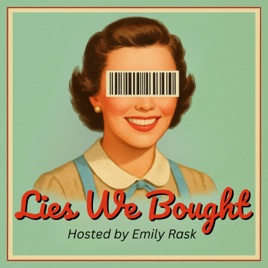
Advertise on podcast: Lies We Bought
Rating
4.8from
This podcast has
10 episodes
Language
EnglishPublisher
Emily RaskExplicit
No
Date created
2025/10/21
Latest episode
2026/02/03
Average duration
16 min.
Release period
12 days
Description
Lies We Bought is a marketing podcast with receipts. We unpack the slogans, myths, and shiny cultural truths we were sold. From “breakfast is the most important meal” to “clean beauty,” each episode peels back the glossy packaging. Hosted by Emily Rask, a marketer who knows the tricks because she used to build them, the show blends consumer psychology, vintage charm, and a wink of 1950s humor. It reached the Top 10 on Apple’s Marketing charts within two weeks of launching its teaser.
Unlock Lies We Bought podcast Email contact info,
Listeners & Audience details
Email contact information
Direct podcast contact details

Listeners
Audience numbers & engagement insights

Audience details
Podcast Insights

Podcast episodes
Check latest episodes from Lies We Bought podcast
The Forever Diamond Lie: How Marketing Made a Gem a Requirement
2026/02/03
Diamonds feel ancient. Inevitable. Like they’ve always been part of love.They haven’t.
In this episode of Lies We Bought, we dig into the marketing history behind diamonds and how one of the most successful advertising campaigns of all time turned a plentiful gemstone into a symbol of forever.
We explore how De Beers controlled supply, reshaped social expectations, and tied diamonds to love, sacrifice, and seriousness through repetition and psychology rather than tradition. From the invention of the Four Cs to the myth of the salary rule, this episode breaks down how diamonds became mandatory, why they still feel emotionally charged today, and what happens as lab-grown diamonds begin pulling at the threads of that story.
This is a cultural and marketing history of diamonds, not a judgment on personal choice. Understanding the story doesn’t mean rejecting it. It just means finally seeing it.
Welcome to Lies We Bought.They sold it. We bought it. Now we’re unpacking it.
Follow the show for future episodes.
Rethinking “Treat Yourself” | One-Minute What
2026/01/27
Does “treat yourself” actually work?
I love a good treat. Truly. But some fascinating research made me pause.
Studies show that while buying yourself something feels good in the moment, acts of kindness toward others tend to create deeper, longer-lasting happiness. Helping someone else does more for our well-being than another self-focused reward.
Marketing noticed this gap. For years, self-care has been sold as consumption. You deserve this. Buy this. Reward yourself. And sometimes that’s great. But the science suggests the real emotional payoff often comes from connection, not just consumption.
So maybe “treat yourself” doesn’t always mean buying something.Maybe sometimes it means showing up for someone else.
I still love a good treat. I just see it a little differently now.
And that’s your One-Minute What.
Clean Eating, Dirty Marketing: The Truth About Organic Food
2026/01/20
At some point, food quietly stopped being food.
A label on the package. A higher price. A feeling that one choice says something better about you than the other.
In this episode, I unpack how organic food became a moral signal rather than just a farming method. What started as early 20th-century fears around chemicals and industrialization evolved into a multi-billion-dollar industry built on purity, identity, and responsibility.
I trace the origins of the organic movement, from early food safety scares and biodynamic farming to Whole Foods, the USDA organic seal, and the rise of fear-based grocery marketing. We look at what science actually says about nutrition, pesticides, and health, and why the organic label feels so personal even when the evidence is far more nuanced.
This is not about telling you what to buy.It is about understanding how a label became a moral benchmark.
Welcome to Lies We Bought.They sold it. We bought it. Now we’re unpacking it.
If this episode resonates, follow the show and leave a review. It helps new listeners find the podcast and supports independent storytelling.
Is Multitasking a Scam? | One-Minute What
2026/01/13
Welcome to my new bonus series, One-Minute What?
Where I talk about something for one minute that makes you stop and go… what?
Is multitasking actually productive, or does it just feel that way?
Multitasking didn’t become popular because it works. It became popular because it sounds productive. It fits perfectly into hustle culture. Do more. Faster. At the same time.
The problem is, multitasking doesn’t make us more efficient. It makes us feel efficient. And feeling productive is much easier to sell than actually being productive.
That’s why companies love it. Productivity tools love it. And why “must be able to multitask” keeps showing up in job descriptions.
So the next time you see that phrase, just know what they’re really asking for.
And that’s your One-Minute What.
10,000 Steps Later: The Fitness Lie We All Walked Into
2026/01/06
At some point, a daily walk quietly turned into a performance review.
A buzz on your wrist. A glowing ring. A number that decides whether today “counts.”
This episode unpacks how ten thousand steps became the world’s most accepted fitness goal, despite never being rooted in science. What began as a 1960s marketing idea evolved into a global wellness rule that now lives on smartwatches, corporate challenges, insurance incentives, and personal guilt.
We trace the origin of the ten-thousand-step myth, what research actually says about walking and health, and why round numbers are so effective at shaping behavior.
This episode is not about walking less.It is about understanding how a marketing idea became a moral benchmark.
Welcome to Lies We Bought.They sold it. We bought it. Now we’re unpacking it.
Follow the show for future episodes.
Live, Laugh, Lie: The Marketing Behind “Live Laugh Love
2025/12/23
If you’re a millennial woman, you might want to sit down for this one.
This episode explores how “Live Laugh Love” became one of the most successful pieces of modern décor, not because it was profound, but because it was comforting.
What began as a reflective early-1900s essay quietly transformed into a cultural shorthand for optimism, warmth, and emotional safety, and eventually into a multibillion-dollar home décor industry.
We trace how inspirational language moved from meaning to merchandise, why people like words in their homes, and how familiar phrases began standing in for identity, reassurance, and the version of ourselves we were trying to become. Especially during a time when adulthood felt unstable, expensive, and overwhelming.
This episode is not about judging taste or mocking trends.It is about understanding why comforting words matter, and how marketing learned to scale that instinct.
Once you see how meaning, emotion, and commerce intertwine, you start seeing décor differently.
Welcome to Lies We Bought.They sold it. We bought it. Now we’re unpacking it.
Follow the show for future episodes.
All I See Are Red Flags: How Color Controls What We Buy
2025/12/09
Do you know why certain colors make you feel calm, hungry, energized, or oddly loyal to a brand you have never questioned?
This episode explores how color became one of the most powerful psychological tools in marketing, shaping reactions long before we realize we are reacting at all.
Red creates urgency. Blue signals trust. Green implies health. Black and white suggest power and restraint. None of it is accidental. Entire industries spend millions testing shades because color influences belief, behavior, and choice before logic ever enters the room.
We trace how color carried meaning long before modern advertising, rooted in history, symbolism, and emotion, then follow how marketers, psychologists, and corporations turned it into a behavioral shortcut. From packaging and apps to grocery aisles and “add to cart” buttons, color quietly guides movement, appetite, and impulse.
This episode is not about telling you what color to like.It is about understanding how emotion, culture, and strategy work together to shape preference and behavior.
Your instincts are wiser than any palette a company selects.Once you see the patterns, you cannot unsee them.
Welcome to Lies We Bought.They sold it. We bought it. Now we are unpacking it.
Follow the show for future episodes.
Hydration Nation: How Drinking Water Became a Lifestyle
2025/11/25
How did drinking water become a moral achievement?
Hydration used to be a biological need. Somewhere along the way, it became a wellness routine, a personality trait, and a daily metric to prove you are doing life correctly.
This episode explores how water went from necessity to lifestyle. From the eight-glasses-a-day rule and wartime nutrition guidance, to bottled water brands selling purity, performance, and identity, hydration became less about thirst and more about control.
We trace how nuance disappeared, how marketing filled the gap, and how a free public resource turned into a multibillion-dollar industry. We also look at how modern wellness culture, influencer routines, and WaterTok trends turned drinking water into content and competition.
This episode is not about telling you how much to drink.It is about understanding how belief is shaped, repeated, and sold.
Hydration should not feel like a moral scoreboard.It should feel like balance - Drink when you are thirsty and pause when you are not.Your body already knows what it needs.
Welcome to Lies We Bought.
They sold it. We bought it. Now we are unpacking it.
Follow the show for future episodes.
Marketing Made Me Eat This: How Breakfast Became a Billion-Dollar Belief
2025/11/11
“Breakfast is the most important meal of the day.”That belief didn’t come from nutrition science. It came from marketing.
This episode explores how breakfast became a moral obligation, something we were taught we should eat to be a good, healthy person. Cereal companies, early wellness movements, and strategic public relations turned a meal into a cultural belief worth billions.
We start in the late 1800s at Dr. John Harvey Kellogg’s sanitarium, where food was tied to purity, discipline, and moral control. From there, we trace the rise of cereal, the shift toward sugary convenience foods, and the emotional advertising that linked breakfast to family, productivity, and success.
We also look at Edward Bernays, the public relations strategist who used psychology and manufactured authority to sell bacon and eggs to America. His work reshaped how we trust experts and how we decide what is “healthy” or “correct.”
That same playbook never went away.Modern wellness culture, influencers, curated morning routines, and aesthetic meal prep follow the same behavioral cues once used in cereal ads. Different tools. Same emotional triggers.
This episode is not about telling you what to eat.It is about understanding how belief is shaped, repeated, and sold.
Eat when you are hungry. Skip it when you are not.Your body is wiser than any marketing campaign.
Welcome to Lies We Bought.They sold it. We bought it. Now we are unpacking it.
If this episode resonates, follow the show to catch future episodes.
Lies We Bought Trailer: The Myths, Marketing, and Stories That Shaped Us
2025/10/21
They sold it. We bought it. Now we’re unpacking it.
“Breakfast is the most important meal of the day.”“Live. Laugh. Love.”“Ten thousand steps.”“Diamonds are forever.”
We grew up believing these lines were truth, but they were marketing.
Lies We Bought is a narrative storytelling and cultural analysis podcast that explores how billion-dollar campaigns, catchy slogans, and pop culture myths shaped the way we live, shop, and see ourselves. It blends marketing psychology, history, and storytelling to uncover how everyday beliefs were built and sold to us.
From wellness trends to home decor mantras, we dig into the slogans that sold us serenity, success, and self-worth, and the emotional marketing that made them stick.
Because sometimes, the biggest lies are not the ones we are told. They are the ones we keep buying.
This one-minute teaser gives you a first listen inside the world of Lies We Bought, where nostalgia meets marketing and storytelling meets truth.
Launching November 2025.New episodes every other week.Follow now before the next lie drops.
If you love Offline with Jon Favreau, Work Appropriate, The Dream, or Marketing Made Simple, you will love Lies We Bought, a show for millennial women who love stories, strategy, and a little skepticism.
Podcast reviews
Read Lies We Bought podcast reviews
Chavez0811 2025/11/29
Like Neo taking the red pill of marketing
As a degreed marketing professional with history in the business I found this to be fascinating with its keen insights into a broad array of topics an...
Amberzahottoe 2025/11/27
Loving it so far!
Loving it so far! Really interesting and well thought out. Excited to hear future episodes! I think if you like podcasts like Maintenance Phase or If ...
Steve Jennette 2025/11/26
Too Old to Change!
Ms Rask, You're ruining my retirement. I feel like a schmuck for spending most of my 72 years on earth believing that skipping breakfast was just aski...
Tawndra99 2025/11/18
Loving it!
Loving it so far! Really interesting information and Emily has a great podcast voice! Would totally recommend!
Tori Millist 2025/11/12
Brilliant! Emily is a genius.
This podcast makes you think in the best way. The cereal episode was fascinating, super thought-provoking, clever and such a fun listen. Can’t wait fo...
Kissthecook84 2025/11/11
Marketing, but make it fascinating
This podcast is pure gold. I came for the vintage vibe and stayed for the storytelling. Emily somehow makes marketing history sound like a thriller. I...
Luvlucky 147 2025/10/21
Provocatively intriguing!
The voice, the deep dive, and the thoughtful process that analyzes every facet of marketing has me questioning everything I do and shop for! My notifi...
Podcast sponsorship advertising
Start advertising on Lies We Bought relevant audience podcasts
You may also like to advertise on these Podcasts
4.5631559
HugoDécrypte - Actus et interviews
Hugo Décrypte
4.9124504
D-Lo & KC
Audacy
4.7263100
Kimmer Show
Kimmer Show
4.7153839
Distraction Pieces Podcast with Scroobius Pip
Scroobius Pip
4.9178201
The Fire and Water Podcast Network
Rob Kelly, The Irredeemable Shag, Ryan Daly, Chris and Cindy Franklin, and Siskoid
5368683
Beyond the Image Podcast
James Patrick: Photographer, Marketer, Storyteller
4.9971053
Parks and Cons
Parks and Cons
4.82052735
Tangentially Speaking with Christopher Ryan
Chris Ryan
4.8420100
Why Today Doesn't Suck
The Ticket | Cumulus Media Dallas
4.5727898
Gamers With Jobs - Conference Call
Gamers With Jobs