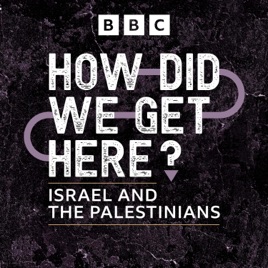
Advertise on podcast: How Did We Get Here?
Rating
4.8from
This podcast has
18 episodes
Language
EnglishPublisher
BBC Radio 4Explicit
No
Date created
2026/02/04
Latest episode
2026/08/31
Average duration
30 min.
Release period
15 days
Description
The deep back-stories behind the most consequential events in the world right now.
Unlock How Did We Get Here? podcast Email contact info,
Listeners & Audience details
Email contact information
Direct podcast contact details

Listeners
Audience numbers & engagement insights

Audience details
Podcast Insights

Podcast episodes
Check latest episodes from How Did We Get Here? podcast
No World Order: 6: A Multipolar World
2026/08/31
Tristan Redman is joined by the BBC’s International Editor, Jeremy Bowen, Professor Margaret MacMillan, an historian based at the University of Oxford, and essayist and novelist Pankaj Mishra, to examine the last decade of global upheaval.
Together they explore what the chaotic US withdrawal from Afghanistan in 2021 did to America’s standing on the world’s stage and examine the consequences of Russia’s full-scale invasion of Ukraine.
They also discuss what the capture of Venezuelan President Nicolás Maduro by US forces earlier this year tells us about where the rules-based order is today, and what might happen next in an increasingly fragmented world.
A BBC News Long Form Audio production.
Presenter: Tristan Redman
Producers: Keiligh Baker and Nik Sindle
Sound engineers: Neil Churchill, Gareth Jones and Mike Regaard
Production co-ordinators: Sophie Hill and Katie Morrison
Editor: Matt Willis
Radio 4 commissioners: Daniel Clarke and Hugh Levinson
No World Order: 5: Bonfire of the Agreements
2026/08/24
Tristan Redman is joined by Edward Luce, associate editor and columnist at the Financial Times in Washington DC, and Nicole Hemmer, political historian and associate professor at Vanderbilt University, to examine the years in which the United States, the architect of the post-Cold War order, began to turn away from it.
They begin with Barack Obama's Nobel Peace Prize acceptance speech in Oslo in December 2009, delivered less than a year into his presidency and defending the necessity of war even as it made the case for a rules-based world. They discuss the domestic fallout of the 2008 financial crisis, including the emergence of the Tea Party movement, and the disclosures made by WikiLeaks and Edward Snowden about US conduct abroad.
They trace the longer roots of American populism, through Pat Buchanan's presidential campaigns of the 1990s and a changing political landscape, culminating in Britain's vote to leave the European Union and Donald Trump's election as US president, both in 2016.
The episode concludes with the early months of Donald Trump’s first presidency, and the withdrawal of the United States from a series of international agreements, including the Trans-Pacific Partnership, the Paris climate accord and the Iran nuclear deal.
A BBC News Long Form Audio production
Presenter: Tristan Redman
Producers: Keiligh Baker and Nik Sindle
Sound engineers: Neil Churchill, Gareth Jones and Mike Regaard
Production co-ordinators: Sophie Hill and Katie Morrison
Editor: Matt Willis
Radio 4 commissioners: Daniel Clarke and Hugh Levinson
No World Order: 4: This Sucker Could Go Down
2026/08/17
Tristan Redman is joined by Cindy Yu, a columnist at the Times and author of the Substack newsletter Chinese Whispers, and Pierre Haski, a longstanding foreign correspondent and commentator on France Inter radio, to examine a five-year period in which China's confidence grew as the West's certainties came under strain.
They begin with the Beijing Olympics of August 2008, which opened as Russia invaded Georgia, and the global financial crisis that followed within weeks of the closing ceremony, when the collapse of Lehman Brothers triggered the largest bankruptcy in US history and shook confidence in the American economic model.
They also discuss the Arab Spring of 2011, and the Nato-led intervention in Libya that followed a UN resolution to protect civilians, an operation China and Russia came to see as having gone beyond its original mandate.
The episode also covers the crackdown on civil society and the internet that followed inside China, and concludes with Xi Jinping's appointment as General Secretary of the Chinese Communist Party in November 2012.
'How Did We Get Here: No World Order' is a BBC News Long Form Audio production
Presenter: Tristan Redman
Producers: Keiligh Baker and Nik Sindle
Sound engineers: Neil Churchill, Gareth Jones and Mike Regaard
Production co-ordinators: Sophie Hill and Katie Morrison
Editor: Matt Willis
Radio 4 commissioners: Daniel Clarke and Hugh Levinson
No World Order: 3. Russia goes its own way
2026/08/10
Tristan Redman is joined by Gabriel Gatehouse, an investigative journalist and former international editor of BBC Newsnight, and Luke Harding, the Guardian's senior international correspondent, to trace the decade in which Russia moved from a brief partnership with the West to open confrontation with it.
They begin in the immediate aftermath of the 11 September 2001 attacks, when Vladimir Putin was among the first world leaders to offer support to the United States, and Russian and American forces cooperated over Afghanistan. They discuss how that cooperation gave way, within two years, to Russian opposition at the United Nations to the US-led invasion of Iraq in 2003, an invasion carried out without Security Council authorisation.
They also discuss the near-fatal poisoning of Ukrainian opposition candidate Viktor Yushchenko during the 2004 presidential election, the murder of Alexander Litvinenko in London in 2006, and Vladimir Putin's speech at the Munich Security Conference in February 2007, in which he rejected the idea of a unipolar, US-led world order.
The episode concludes with Russia's invasion of Georgia in August 2008, an operation carried out on the pretext of protecting Russian citizens and peacekeepers in South Ossetia.
A BBC News Long Form Audio production
Presenter: Tristan Redman
Producers: Keiligh Baker and Nik Sindle
Sound engineers: Neil Churchill, Gareth Jones and Michael Regaard
Production co-ordinators: Sophie Hill and Katie Morrison
Editor: Matt Willis
Radio 4 commissioners: Daniel Clarke and Hugh Levinson
No World Order: 2. The View from Beijing
2026/08/03
Tristan Redman is joined by Carrie Gracie, former BBC China editor and a reporter in China throughout the 1990s, and George Magnus, an economist and research associate at the China Centre, Oxford University, and former chief economist at UBS.
Together they examine the decade in which China reshaped its relationship with the international system. They begin with Deng Xiaoping's Southern Tour of 1992, when the then-retired Communist Party leader travelled to China's special economic zones to press the case for economic reform, a trip widely seen as decisive in setting China's course for the following decades.
They discuss the handover of Hong Kong to Chinese sovereignty in 1997, under the "one country, two systems" framework, and the Asian financial crisis of the same year, which left China's capital controls looking vindicated while much of the region required IMF assistance.
The episode also covers the 1999 Nato bombing of the Chinese embassy in Belgrade, and concludes with China's accession to the World Trade Organisation in December 2001, an agreement built on Western assumptions that economic integration would bring political liberalisation, and one whose consequences are still being worked through today.
A BBC News Long Form Audio production
Presenter: Tristan Redman
Producers: Keiligh Baker and Nik Sindle
Sound engineers: Neil Churchill, Gareth Jones and Michael Regaard
Production co-ordinators: Sophie Hill and Katie Morrison
Editor: Matt Willis
Radio 4 commissioners: Daniel Clarke and Hugh Levinson
No World Order: 1. The Responsibility to Protect
2026/07/27
Tristan Redman is joined by Lindsey Hilsum, international editor of Channel 4 News, and Allan Little, former BBC correspondent in Moscow and Africa, to look back at the decade after the Cold War in which the question of international intervention was repeatedly tested.
They discuss Nelson Mandela's release in February 1990, the United States' retreat from Somalia after American soldiers were killed in Mogadishu in 1993, and the international community's failure to act during the Rwandan genocide the following year.
They discuss Srebrenica, where UN peacekeepers were present but around 8,000 Muslim men and boys were killed in 1995, and Nato's intervention in Kosovo in 1999, which went ahead without UN Security Council authorisation.
The episode traces how these events fed into debates around the principle that became known as the Responsibility to Protect, and ends on 31st December 1999, as Boris Yeltsin resigns and Vladimir Putin becomes acting president of Russia.
'How Did We Get Here: No World Order' is a BBC News Long Form Audio production
Presenter: Tristan Redman
Producers: Keiligh Baker and Nik Sindle
Sound engineers: Neil Churchill, Gareth Jones and Michael Regaard
Production co-ordinators: Sophie Hill and Katie Morrison
Editor: Matt Willis
Radio 4 commissioners: Daniel Clarke and Hugh Levinson
No World Order: Trailer
2026/07/22
At the end of the Cold War, the international system underwritten by American power, liberal democracy and free markets looked to many like the high-water mark of a new world order. Fast forward to 2026, and that certainty looks far less solid.
Tristan Redman is joined by journalists and experts who had ringside seats to the biggest moments since the end of the Cold War. Together, they ask whether this rules-based order is ending, what might replace it, and whether it ever really existed.
From the collapse of communism and the conflicts of the 1990s to the wars in Georgia and Ukraine and the realignment of global power today.
A BBC News Long Form Audio production
Presenter: Tristan Redman
Producers: Keiligh Baker and Nik Sindle
Sound engineers: Neil Churchill, Gareth Jones and Michael Regaard
Production co-ordinators: Sophie Hill and Katie Morrison
Editor: Matt Willis
Radio 4 commissioners: Daniel Clarke and Hugh Levinson
Israel and the Palestinians: 8: From the First Intifada to the Camp David Summit
2026/02/09
The eighth of ten programmes exploring the origins and tracing the history of the Middle East conflict begins five years after Israel’s invasion of Lebanon, with the outbreak in 1987 of a Palestinian uprising or intifada, in the occupied West Bank and Gaza Strip.
Presenter Jonny Dymond, the BBC’s International Editor Jeremy Bowen, and Mark Tessler, Professor of Political Science at the University of Michigan, USA, discuss what caused it – and the consequences for Israel and the Palestinians.
They then trace the beginnings of a peace process that led eventually to the Oslo Accords of 1993 and the establishment of a Palestinian Authority in the occupied territories. Why did the “Oslo process” gradually unravel?
Jonny and his guests look at the pressures on the agreement, and examine the assassination in 1995 of one of its architects, Israeli prime minister Yitzhak Rabin. The Camp David summit of 2000 was a final attempt to get the Oslo accords back on track. Why did it fail? And how did that failure contribute to the outbreak of a second intifada in 2000?
'How Did We Get Here? Israel and the Palestinians' is a BBC News Long Form Audio production.
The presenter is Jonny Dymond and the editor is Penny Murphy.
The Radio 4 commissioners are Hugh Levinson and Dan Clarke.
The studio engineers are Neil Churchill, James Beard, Rod Farquhar, Mike Regaard and David Crackles.
Israel and the Palestinians: 7: From the Six Day War to the Lebanon War
2026/02/09
The seventh of ten programmes exploring the origins and tracing the history of the Middle East conflict takes the story from the aftermath of the Six Day War in 1967 to its invasion of Lebanon in 1982.
Presenter Jonny Dymond, the BBC’s International Editor Jeremy Bowen, and Mark Tessler, Professor of Political Science at the University of Michigan, USA, begin by discussing the impact of Israel’s victory on both Israel itself and on Palestinians, many of whom now found themselves under Israeli occupation. They go on to look at the Palestinian struggle for nationhood in this period – and at terror attacks by some Palestinian groups, including the killing of Israeli athletes at the Munich Olympics in 1972.
They examine the beginning of Israeli settlement on the occupied West Bank, the electoral earthquake of 1977 in Israel which brought the right wing to power for the first time – and Egyptian president Anwar Sadat’s historic visit to Jerusalem, which led in 1979 to the signing of an Israeli-Egyptian peace agreement, the first between the Jewish state and an Arab country. The episode finishes by asking why Israel invaded Lebanon in 1982 – and what the consequences were for Palestinian refugees there, and for Israel itself.
'How Did We Get Here? Israel and the Palestinians' is a BBC News Long Form Audio production.
The presenter is Jonny Dymond and the editor is Penny Murphy.
The Radio 4 commissioners are Hugh Levinson and Dan Clarke.
The studio engineers are Neil Churchill, James Beard, Rod Farquhar, Mike Regaard and David Crackles.
Israel and the Palestinians: 6: From Israel’s Early Years to the Six Day War
2026/02/09
The sixth of ten programmes exploring the origins and tracing the history of the Middle East conflict examines the years from the end of the first Arab-Israeli war to the Six Day War of 1967.
Presenter Jonny Dymond is joined by Mark Tessler, Professor of Political Science at the University of Michigan, USA, and author of ‘A History of the Israeli-Palestinian Conflict’ and by the BBC’s International Editor Jeremy Bowen.
They discuss the early years of the new state of Israel, the influx into Israel of Jews from Arab countries, the Suez campaign by Britain, France and Israel against Egypt in 1956, the origins of the Palestinian national movement and the founding of the Palestine Liberation Organisation. They trace the origins of the Six Day War between Israel and its Arab neighbours, and look at how it ended in a dramatic Israeli victory.
'How Did We Get Here? Israel and the Palestinians' is a BBC News Long Form Audio production.
The presenter is Jonny Dymond and the editor is Penny Murphy.
The Radio 4 commissioners are Hugh Levinson and Dan Clarke.
The studio engineers are Neil Churchill, James Beard, Rod Farquhar, Mike Regaard and David Crackles.
Israel and the Palestinians: 5. From WWII to the First Arab-Israeli war
2026/02/09
In the fifth of ten programmes exploring the origins and tracing the history of the Middle East conflict, we reach the key years of 1945-49, when the United Nations voted for two states in Palestine, the State of Israel was established, and Israel and its Arab neighbours fought their first war – by the end of which 700,000 Palestinians had lost their homes.
Presenter Jonny Dymond is joined by Gudrun Kraemer, Professor of Islamic Studies at the Free University of Berlin, historian Simon Sebag Montefiore and the BBC’s International Editor Jeremy Bowen, author of ‘The Making of the Modern Middle East’.
They discuss the impact of the Second World War on British-ruled Palestine, British attempts to prevent Jewish immigration into the country after the Holocaust, Jewish paramilitary attacks on British targets, the UN decision in 1947 to partition Palestine, the outbreak of civil war between Jews and Arabs, the British withdrawal in 1948, the declaration of Israeli statehood, and the invasion of what had been British Palestine by neighbouring Arab states. They conclude by discussing how the 1948-9 war ended, and the origins of the Palestinian refugee problem.
'How Did We Get Here? Israel and the Palestinians' is a BBC News Long Form Audio production.
The presenter is Jonny Dymond and the editor is Penny Murphy.
The Radio 4 commissioners are Hugh Levinson and Dan Clarke.
The studio engineers are Neil Churchill, James Beard, Rod Farquhar, Mike Regaard and David Crackles.
Israel and the Palestinians: 4: The Balfour Declaration to the Arab Revolt
2026/02/09
In the fourth of ten programmes exploring the origins and tracing the history of the Middle East conflict, presenter Jonny Dymond is joined by Gudrun Kraemer, Professor of Islamic Studies at the Free University of Berlin, author and historian James Barr and Eugene Rogan, Professor of Modern Middle Eastern History at Oxford University.
They begin by discussing the origins, significance and consequences of the Balfour Declaration, Britain’s expression of support for a Jewish “national home” in Palestine. They go on to look at the establishment of the British mandate in Palestine, the changing demography of the country as Jewish immigration increased in the inter-war years, the causes and consequences of the Arab Revolt against British rule which broke out in 1936, and the Peel Commission report of 1937 – an early proposal for a “two-state solution”
'How Did We Get Here? Israel and the Palestinians' is a BBC News Long Form Audio production.
The presenter is Jonny Dymond and the editor is Penny Murphy.
The Radio 4 commissioners are Hugh Levinson and Dan Clarke.
The studio engineers are Neil Churchill, James Beard, Rod Farquhar, Mike Regaard and David Crackles.
Israel and the Palestinians: 3: From the Nineteenth Century to the First World War
2026/02/09
In the third of ten programmes exploring the origins and tracing the history of the Middle East conflict, presenter Jonny Dymond is joined by Hugh Kennedy, Professor of Arabic at the School of Oriental and African Studies, University of London, Eugene Rogan, Professor of Modern Middle Eastern History at Oxford University, and historian Simon Sebag Montefiore. What kind of people lived in Ottoman-ruled Palestine in the early Nineteenth Century? What were the origins of Zionism? How did Arabs react to Jewish immigration into Palestine in the late Nineteenth and early Twentieth centuries – and what was the nature of Palestinian Arab identity in this period? Why were the Great Powers so interested in the region at this time? And what was the significance of the Sykes-Picot Agreement – a plan by Britain, France and Russia to divide the Middle East between them?
'How Did We Get Here? Israel and the Palestinians' is a BBC News Long Form Audio production.
The presenter is Jonny Dymond and the editor is Penny Murphy.
The Radio 4 commissioners are Hugh Levinson and Dan Clarke.
The studio engineers are Neil Churchill, James Beard, Rod Farquhar, Mike Regaard and David Crackles.
Israel and the Palestinians: 2: From the Muslim Conquest to the Nineteenth Century
2026/02/09
The second of ten programmes examining the origins and tracing the history of the Middle East conflict takes the story from the Muslim conquest of the region in the Seventh Century AD through to the early Nineteenth Century. Presenter Jonny Dymond is joined by historian Simon Sebag Montefiore, author of ‘Jerusalem: The Biography’, and Eugene Rogan, Professor of Modern Middle Eastern History at Oxford University. They discuss the coming of Islam, the establishment of Arab rule, the significance of the Crusades, the Twelfth Century Muslim commander Salah ad-Din (Saladin) who fought the Crusaders , the persecution of Jews in the Diaspora in the Middle Ages and their relationship to the Holy Land, the Ottoman conquest of the Holy Land in the Sixteenth Century, and the nature of society there under Ottoman rule in the following centuries.
'How Did We Get Here? Israel and the Palestinians' is a BBC News Long Form Audio production.
The presenter is Jonny Dymond and the editor is Penny Murphy.
The Radio 4 commissioners are Hugh Levinson and Dan Clarke.
The studio engineers are Neil Churchill, James Beard, Rod Farquhar, Mike Regaard and David Crackles.
Israel and the Palestinians: 1: From Earliest Times to the Romans
2026/02/09
In the first of ten programmes examining the origins and tracing the history of the Middle East conflict, presenter Jonny Dymond is joined by Lloyd Llewellyn-Jones, Professor in Ancient History at Cardiff University, and historian and author Simon Sebag Montefiore, author of ‘Jerusalem: The Biography’. They discuss the value of the Bible as a guide to history, the concept of a “promised land”, the archaeological record of the various peoples who lived in the region in ancient times, the coming of the Romans, and the Jewish revolts against them in the First and Second Centuries AD.
'How Did We Get Here? Israel and the Palestinians' is a BBC News Long Form Audio production.
The presenter is Jonny Dymond and the editor is Penny Murphy.
The Radio 4 commissioners are Hugh Levinson and Dan Clarke.
The studio engineers are Neil Churchill, James Beard, Rod Farquhar, Mike Regaard and David Crackles.
Podcast sponsorship advertising
Start advertising on How Did We Get Here? relevant audience podcasts
You may also like to advertise on these Podcasts

4.8121051000
Mind Pump: Raw Fitness Truth
Sal Di Stefano, Adam Schafer, Justin Andrews, Doug Egge

4.8104512000
Steve Deace Show
Blaze Podcast Network

4.853532000
Men In Blazers
Men In Blazers

4.917101554
DarrenDaily On-Demand
Darren Hardy LLC

4.861411101
The David Pakman Show
David Pakman

4.732641948
The President's Daily Brief
The First TV

4.6652322197
The Charlie Kirk Show
Charlie Kirk
4.7292702000
The Michael Knowles Show
The Daily Wire

4.762552000
The Lawfare Podcast
The Lawfare Institute

4.92476946
The 1000 Hours Outside Podcast
1000 Hours Outside