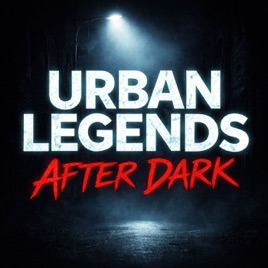
Advertise on podcast: Urban Legends After Dark
Rating
2.8from
This podcast has
36 episodes
Language
EnglishPublisher
Forbidden Knowledge NetworkExplicit
No
Date created
2026/02/14
Latest episode
2026/10/08
Average duration
26 min.
Release period
8 days
Description
Urban Legends After Dark explores modern myths, folklore, and stories that persist across generations. Each episode begins inside the legend, then examines its origins, spread, and cultural impact through a structured, documentary-style approach. Investigating documented sources, patterns, and variations, the series separates history from rumor and explores why certain stories continue to be believed. Unlock bonus content and full video episodes: https://www.patreon.com/theforbiddenknowledgenetwork
Unlock Urban Legends After Dark podcast Email contact info,
Listeners & Audience details
Email contact information
Direct podcast contact details

Listeners
Audience numbers & engagement insights

Audience details
Podcast Insights

Podcast episodes
Check latest episodes from Urban Legends After Dark podcast
The Momo Challenge: How an Internet Monster Created a Worldwide Panic
2026/10/08
The Momo Challenge became one of the most feared internet stories of 2018 and 2019. Parents, schools, police forces, and news organizations warned that a disturbing figure called Momo was contacting children, setting escalating tasks, appearing inside children’s videos, and encouraging self-harm. Some reports even connected the story to deaths.
But the image at the center of the panic had another history. It was associated with Mother Bird, a sculpture attributed to Japanese artist Keisuke Aiso and exhibited at Vanilla Gallery in Tokyo in 2016. By July 2018, cropped images of the sculpture were circulating online alongside posts reportedly inviting people to contact unfamiliar phone numbers. Officials in Tabasco, Mexico later described reports of impersonators using the image, threats, and requests for personal information.
This episode follows the image from an art exhibition to Reddit, Facebook, WhatsApp, school warnings, police statements, and international headlines. It examines the reported death of a twelve-year-old girl in Argentina, where a possible Momo connection was investigated but never established in the sources reviewed. It also traces the February 2019 wave, when warnings about hidden Momo clips in children’s videos spread faster than evidence for those clips.
The question is not whether online harassment and frightening content can be real. They can. The question is whether the records support the widespread, coordinated Momo game that so many people came to fear.
This podcast uses artificial intelligence in its research, writing, production, and narration. Episodes are editorially reviewed before publication.
#UrbanLegendsAfterDark #InternetBornUrbanLegendAndMediaPanic #MomoChallenge #InternetLegend #OnlinePanic
YES OR NO: Did public warnings make the Momo panic spread faster than the original rumor???????
Lavender Town Syndrome: Did a Pokémon Song Really Harm Children?
2026/10/01
Lavender Town Syndrome is one of the internet’s most durable haunted-media legends: the claim that music from the original Pokémon games made Japanese children ill, unstable, or dead after Pokémon Red and Green arrived in 1996.
The surviving evidence tells a different kind of story. Nintendo’s product page confirms the Japanese release date of Pokémon Red and Green. Horror posts published in 2010 and 2011 confirm that writers and readers were circulating a frightening account involving dangerous frequencies, altered game music, alleged victims, and supposed audio-analysis images. But those posts do not provide authenticated medical records, identified victims, original cartridge extractions, or a documented chain connecting game audio to real harm.
This episode follows the legend through its surviving digital artifacts: an early reported Pastebin story whose original cannot now be inspected, a blog post published under the name Inunah, reader comments that turned warnings into participation, and a later Creepypasta.com version that compressed the rumor into something resembling a historical summary.
It also examines the real Pokémon-related medical incident in Japan on December sixteenth, nineteen ninety-seven. That event involved television images, not Lavender Town music. Medical researchers studied visual stimulation, while later authors debated whether media attention affected the wider pattern of reported symptoms.
The question is not whether a fictional town can feel unsettling. It is how a horror story borrowed the appearance of evidence, attached itself to a real medical event, and became believable enough that readers began asking whether simply watching might be dangerous.
This podcast uses artificial intelligence in its research, writing, production, and narration. Episodes are editorially reviewed before publication.
#UrbanLegendsAfterDark #InternetBornLegendHauntedMediaChildhoodNostalgia #LavenderTownSyndrome #PokMonRedAndGreen #HauntedVideoGames
YES OR NO: Did the real 1997 television incident help make Lavender Town Syndrome believable???????
Squidward’s Suicide: The Lost Cartoon Episode That Never Existed
2026/09/24
On September 21, 2019, Nickelodeon aired “SpongeBob in RandomLand.” During its door sequence, a red-eyed image associated with the online legend “Squidward’s Suicide,” also called “Red Mist,” appeared in a real SpongeBob SquarePants broadcast.
That reference is documented. The alleged 2005 lost episode at the center of the creepypasta has not been authenticated in the available evidence.
This episode follows the story from its reported 2010 7chan posting through documented readings, visual adaptations, a 2013 Reddit authorship claim, and the 2019 broadcast cameo. It also examines Vincent Waller’s reported production-side explanation that the image was a joke about dark fan fiction, not confirmation of hidden series history.
A separate archival question remains: later versions of “SpongeBob in RandomLand” reportedly replaced the red-eyed image with Baby Squidward. The reason, first replacement date, and distribution scope have not been fully established. The legend’s alleged lost episode may remain unsupported, but the real broadcast shot has a version history worth tracing.
This podcast uses artificial intelligence in its research, writing, production, and narration. Episodes are editorially reviewed before publication.
#UrbanLegendsAfterDark #InternetUrbanLegendsAndAllegedLostMedia #SquidwardSSuicide #RedMist #SpongeBobSquarePants
YES OR NO: Did the 2019 cameo prove the alleged 2005 episode existed??????
The Grinning Man: Who Was Indrid Cold?
2026/09/17
On November 2, 1966, Woodrow Derenberger, a traveling appliance salesman from near Mineral Wells, West Virginia, said an unfamiliar vehicle blocked his route home. A dark-haired man in glossy blue clothing approached Derenberger’s truck, smiled, and communicated without visibly moving his lips. The visitor, Derenberger said, called himself Cold.
By the following afternoon, Derenberger was describing the encounter on W T A P television in Parkersburg. That surviving recording is the strongest piece of evidence in the case—not because it proves an unknown being stood beside his truck, but because it preserves his account before decades of books, films, UFO conventions, and online retellings reshaped it.
This episode follows the road encounter, the immediate police report Derenberger said he made, and the press coverage that turned a smiling stranger into a “spaceman.” It also examines John Keel’s later decision to connect Cold with a reported grinning figure seen by two boys in Elizabeth, New Jersey, and with the wider Mothman wave in the Ohio Valley.
The evidence leaves several possibilities open: an unknown external encounter, a misidentification, an altered or subjective experience, a deliberate invention, or a story that began with one event and grew through publicity and folklore. No photograph, physical trace, named road witness, or official finding confirms Cold’s existence. Yet the early television interview remains: a man, speaking within a day, using his hands to describe something no camera recorded on the road.
This podcast uses artificial intelligence in its research, writing, production, and narration. Episodes are editorially reviewed before publication.
#UrbanLegendsAfterDark #DocumentedUrbanLegendUfoContactNarrativeAndEvolv #IndridCold #WoodrowDerenberger #GrinningMan
YES OR NO: Did Woodrow Derenberger encounter a real unknown visitor???????
Polybius: Was an Arcade Game Secretly Used to Experiment on Players?
2026/09/10
In 1981, two young players became seriously ill around the same Beaverton-area arcade. Twelve-year-old Brian Mauro ended an extraordinary Asteroids endurance attempt after roughly twenty-eight hours when illness forced him to stop. Around the same period, fourteen-year-old Michael Lopez developed a severe migraine after playing Atari’s visually intense Tempest. That same year, the FBI really did seize coin-operated video machines from Oregon businesses during a gambling investigation.
Decades later, these facts would seem to fit an extraordinary story: Polybius, a supposedly experimental arcade machine placed around Portland to measure, alter, or manipulate its players. The legend says mysterious visitors collected records from the cabinets before the machines disappeared. It invokes secret behavioral research, military technology, and a developer called Sinneslöschen.
But no authenticated Polybius cabinet, circuit board, ROM, manual, invoice, advertisement, manufacturer, government file, or contemporary 1981 report has been established. The first securely documented appearance of the mature legend is an online Coinop.org entry from February 2000, nearly two decades after the alleged deployment.
This episode follows the real Oregon incidents, the federal machine seizures, Atari’s military-linked Bradley Trainer, CIA behavioral-research history, the Coinop entry, and a later unverified insider claim. Did an unknown storyteller assemble a legend from obscure but real Portland events? Or did a fragment of local arcade folklore survive long enough to reach the Internet?
This podcast uses artificial intelligence in its research, writing, production, and narration. Episodes are editorially reviewed before publication.
#UrbanLegendsAfterDark #TechnologyGovernmentConspiracyUrbanLegend #PolybiusArcadeGame #GovernmentExperiment #PortlandUrbanLegend
YES OR NO: Did an experimental game called Polybius ever operate in Portland???????
Jeff the Killer: How a Distorted Face Became an Internet Nightmare
2026/09/02
Jeff the Killer is one of the defining monsters of early internet horror: a pale face, blackened eyes, an unnatural smile, and the phrase “Go to sleep.” But Jeff was never a documented murderer. He was a fictional character assembled over years from an image, online role-play, creepypasta writing, fan art, rumors, and repeated retellings.
The strongest surviving evidence places recognizable versions of the infamous face on the Japanese website pya.cc in 2005. The image also appeared in a Japanese horror video circulating by 2007. Only later, in August 2008, did Newgrounds user Jeff Case, posting as killerjeff and Sesseur, begin publicly attaching the name Jeff and a horror persona to the face. Around 2011, a longer creepypasta associated with GameFuelTV, Josh Jordan, and possibly his brother Travis supplied the teenage-killer story most people now remember.
This episode follows the image backward through archived pages, deleted uploads, surviving comment threads, Japanese reposts, and the rumor that falsely linked the face to an alleged cyberbullying victim. That story fails a basic chronological test: the image was already circulating years before the alleged event.
The larger mystery remains open. Was the source a manipulated portrait, a mask, a video frame, a composite, or something else entirely? Jeff Case later said it involved a latex mask, but no independently authenticated original source has settled the matter. The fiction is well documented. The face beneath it is not.
This podcast uses artificial intelligence in its research, writing, production, and narration. Episodes are editorially reviewed before publication.
#UrbanLegendsAfterDark #InternetUrbanLegendDigitalFolkloreLostMediaMyste #JeffTheKiller #Creepypasta #InternetFolklore
YES OR NO: Do you think the original source image can still be found???????
The Backrooms: What If You Accidentally Fall Out of Reality?
2026/08/27
A preserved photograph from a 2002 renovation in Oshkosh, Wisconsin later became the image at the center of the Backrooms, one of the internet’s most enduring horror legends. In May 2019, an image thread on 4chan’s /x/ board and an anonymous reply commonly dated May 13 transformed an ordinary commercial interior into a story about falling through reality.
This episode follows the documented trail from Wikimedia Commons and archived HobbyTown renovation material to the online communities, wikis, games, and creators that developed separate Backrooms canons. It also examines Kane Parsons’s influential found-footage interpretation, the appeal of liminal spaces, and the difference between a real photograph, a collaborative legend, and claims of literal extradimensional access.
The original room has an ordinary history. Its later meaning is anything but ordinary.
This podcast uses artificial intelligence in its research, writing, production, and narration. Episodes are editorially reviewed before publication.
#UrbanLegendsAfterDark #InternetUrbanLegendsLiminalHorrorRealityGlitches #TheBackrooms #LiminalSpaces #NoclipReality
YES OR NO: Could someone accidentally fall out of reality??????
Smile Dog: The Cursed Image That Wants to Be Shared
2026/08/20
Smile Dog, also called smile.jpg or Smile.dog, is one of the defining image-based horror legends of the early internet. The story centers on a photograph of a dog, usually resembling a husky, with an exaggerated human-looking grin. According to the creepypasta, viewing the image brings nightmares, distress, and eventually a command: “Spread the word.” The victim can supposedly escape only by sending the image to someone else.
This episode follows the trail from the classic Smile Dog story, including its fictional account of a woman known as Mary E., to the documentable history of the legend. Know Your Meme commonly associates Smile Dog with 4chan’s paranormal board around 2008, while an Urban Dictionary entry from January fifteenth, two thousand nine shows the idea was already circulating publicly. But the exact creator, first post, and original image remain uncertain.
The investigation also reaches beyond the internet. Smithsonian folklorist Betty Belanus and archival chain-letter collections show that the dangerous-message formula existed long before JPEGs: receive a message, fear the consequences, and pass it on. Smile Dog gave that old pattern a new delivery system.
Could an image genuinely harm a viewer, or does its power come from suggestion, disturbing visual design, memory, and the act of sharing? The image may not be supernatural, but its transmission mechanism was real—and it worked.
This podcast uses artificial intelligence in its research, writing, production, and narration. Episodes are editorially reviewed before publication.
#UrbanLegendsAfterDark #UrbanLegendsAfterDarkInternetFolkloreCreepypasta #SmileDog #SmileJpg #CursedImage
YES OR NO: Do you think Smile Dog would have become famous without the command to share it???????
Sonic.exe: The Haunted Game That Turned Childhood Into Horror
2026/08/13
Sonic.exe began as a 2011 creepypasta attributed to JC-the-Hyena: a fictional account of a corrupted Sonic game, a warning from a friend, and a program that seemed to know who was playing it. In August 2012, MY5TCrimson released Sonic.EXE - The Game, a documented fan-made adaptation that gave the fictional premise a downloadable form.
This episode traces the path from the original story to fan games, YouTube playthroughs, artwork, remakes, parodies, mods, and the wider mythology that outlived the original page. It also examines the January 2014 removal of the story from the Creepypasta Wiki, the community criticism surrounding it, and the reasons a widely mocked horror story continued to spread.
What happens when a familiar childhood character is altered just enough to become frightening? And when a fictional cursed game can be downloaded, watched, recreated, and remembered, where does the story end and the legend begin?
This podcast uses artificial intelligence in its research, writing, production, and narration. Episodes are editorially reviewed before publication.
#UrbanLegendsAfterDark #InternetUrbanLegendsHauntedGamesCorruptedNostalg #SonicExe #HauntedVideoGame #CursedGame
YES OR NO: Did Sonic.exe become an urban legend after fan-made games made its fictional premise feel real??????
Ben Drowned: The Haunted Video Game Cartridge
2026/08/06
In September twenty ten, an online user named Jadusable claimed to have found an unlabeled Nintendo sixty-four cartridge of The Legend of Zelda: Majora’s Mask. The cartridge contained a save file named BEN. After deleting it, the game allegedly began calling the new player by that name, moving Link without control, playing distorted music, and placing the unsettling Elegy of Emptiness statue where it did not belong. Videos posted online seemed to document the haunting as it spread from console to computer, chatbot, website, and audience.
The case is now known as Ben Drowned, a fictional multimedia horror project created by Alex Hall. But its influence comes from the way it used evidence forms familiar to early internet users: gameplay captures, forum posts, video descriptions, hidden files, changing websites, and collaborative decoding. What began as a haunted-cartridge story grew into an alternate reality game involving the Moon Children, online rituals, and the question of whether BEN was a drowned boy, a larger digital entity, or something built from many identities.
This episode traces the original legend, the documented production methods, the game that made the story plausible, and the reason a known fiction still behaves like an urban legend.
This podcast uses artificial intelligence in its research, writing, production, and narration. Episodes are editorially reviewed before publication.
#UrbanLegendsAfterDark #UrbanLegendInternetFolkloreGamingHorrorAllegedHa #BenDrowned #HauntedVideoGame #HauntedCartridge
YES OR NO: Can a known fictional haunted cartridge still become a real urban legend???????
NoEnd House: The Haunted Attraction That Never Lets You Leave
2026/07/30
NoEnd House is one of internet horror’s most enduring haunted-attraction legends: nine rooms, one final exit, and a five-hundred-dollar prize for anyone who can finish. The story, credited to Brian Russell, follows David Williams after his friend Peter Terry tells him about a strange local challenge outside the city. David expects cheap props, actors, sound effects, and a harmless dare. Instead, the rooms begin to attack space, memory, identity, and finally the idea of escape itself.
This episode reconstructs the original creepypasta’s central premise as a story, then examines why it spread so effectively through internet horror communities, archive pages, audio readings, fan discussion, and the Syfy adaptation Channel Zero: No-End House. It separates Brian Russell’s original premise from sequels, fan theories, later reposts, and television changes.
The strongest conventional reading is that NoEnd House is fiction shaped like an urban legend, borrowing from haunted-house challenges, cash-prize rumors, funhouse tricks, impossible architecture, and voluntary-entry folklore. The stronger uncanny reading asks whether the attraction’s final room is not a monster-filled chamber at all, but a copied version of the outside world built from everything the house learned about David.
No verified physical NoEnd House has been documented. No confirmed address, operator, police case, or supernatural attraction record supports the story as real. But the question that keeps the legend alive is harder to dismiss: if the final room looked exactly like home, how would anyone know they had left?
This podcast uses artificial intelligence in its research, writing, production, and narration. Episodes are editorially reviewed before publication.
#UrbanLegendsAfterDark #InternetUrbanLegendsImpossibleArchitectureHaunte #NoEndHouse #BrianRussell #DavidWilliams
YES OR NO: Would you enter NoEnd House for five hundred dollars??????
Candle Cove: The Children’s Show Nobody Should Remember
2026/07/23
Candle Cove began as a short internet horror story by writer and cartoonist Kris Straub, first published online in two thousand nine. It was written as a thread on a fictional nostalgia forum, where adults compare memories of a disturbing local children’s puppet show: a girl named Janice, Pirate Percy, Horace Horrible, and the Skin-Taker, a skeletal pirate whose clothes were said to be made from stolen skin. The strongest moment in the legend comes when one participant asks his mother about the program, and she remembers something else entirely: as a child, he had been staring at television static for thirty minutes at a time. This episode examines how a known work of fiction became one of the most convincing modern urban legends, tracing the original forum structure, the lost-media setting, the false familiarity created by shared memory, the role of reposting and fan-made evidence, and the later expansion through Channel Zero. The harder question is why many readers can picture a show that was never made, and whether a fictional memory can become culturally real.
This podcast uses artificial intelligence in its research, writing, production, and narration. Episodes are editorially reviewed before publication.
#UrbanLegendsAfterDark #LostMediaHorrorChildhoodMemoryCursedTelevisionIn #CandleCove #LostTelevision #CursedBroadcast
YES OR NO: Did Candle Cove become real folklore despite never airing??????
The Red Room: Myth, Fear, and the Dark Web Stories
2026/07/15
A red room is one of the most persistent dark-web legends: a hidden site where anonymous viewers supposedly pay cryptocurrency to watch, vote on, or control live violence. This episode traces the story from older snuff-film rumors through early internet shock culture, the Japanese Red Room Curse, Tor hidden services, Bitcoin, Silk Road, countdown pages, YouTube exploration videos, and the heavily promoted alleged red-room broadcast of twenty fifteen. The strongest evidence for the legend is not a verified room, but a pattern of screenshots, anonymous stories, failed links, payment pages, forum claims, and staged or vanished broadcasts. The strongest conventional explanation is that the classic red room operates as internet folklore, scam design, horror fiction, and fear of anonymous spectatorship. But the case is not as simple as saying the dark web is harmless. Real cybercrime, exploitation networks, fraud, illegal marketplaces, and online murder-for-hire attempts have been documented in courts and investigations. The unresolved question is narrower: has anyone publicly proved the existence of a repeatable, commercial, interactive red-room service matching the legend, or does the story survive because the hidden internet gives an old fear a place where proof can always be one link away?
This podcast uses artificial intelligence in its research, writing, production, and narration. Episodes are editorially reviewed before publication.
#UrbanLegendsAfterDark #DarkWebUrbanLegendAndInternetFolklore #DarkWebRedRooms #DarknetUrbanLegend #LiveStreamedViolenceMyth
YES OR NO: Has the classic dark-web red room ever existed in a verified form???????
The Thing Seen Crawling Under Parked Cars
2026/07/09
https://www.FKNpods.com
🔒 Subscribe now for full access to all our video podcasts. Unlock exclusive bonus content and everything on The Forbidden Knowledge Network. 👉 https://www.patreon.com/theforbiddenknowledgenetwork
🎧 Search The Forbidden Knowledge Network wherever you listen to podcasts.
#UrbanLegend, #SuburbanMystery, #CreepyEncounters, #Folklore, #UnresolvedFear
The Unmarked Grave That Brings Bad Luck
2026/07/01
https://www.FKNpods.com
The legend of an unmarked grave that brings misfortune to those who disturb it has haunted the residents of Eldridge for generations. This eerie tale, rooted deep in local folklore, has become a symbol of the unknown, reflecting the fears and anxieties of the community. Reports of strange occurrences and unexplained events have only fueled the legend's enduring power. Follow the chilling journey through the history of this grave, as we explore its mysterious origins, the unsettling testimonies of those who have encountered its curse, and the geographic and social elements that have allowed it to persist. With each retelling, the legend grows, serving as both a warning and a source of fascination in this small, isolated town.
Through firsthand accounts, archival clippings, and folklore studies, we delve into the cultural layers that have shaped the legend of the unmarked grave. How did the story begin, and what keeps it alive in the minds of Eldridge's residents? Is it merely a tale to frighten children, or does it reveal something profound about our relationship with death and memory? As we unravel the mystery, we invite you to ponder the grave's place in the town's identity and consider the thin line between legend and reality in shaping our perceptions of the unknown.
🔒 Subscribe now for full access to all our video podcasts.
Unlock exclusive bonus content and everything on The Forbidden Knowledge Network.
👉 https://www.patreon.com/theforbiddenknowledgenetwork
🎧 Search The Forbidden Knowledge Network wherever you listen to podcasts.
#UrbanLegend, #HauntedGrave, #Folklore, #MythVsReality, #EldridgeTales
📊 Poll Question:
Do you believe that disturbing a grave can bring bad luck?
Yes
No
💬 What do you think might cause such legends to endure over time?
Podcast reviews
Read Urban Legends After Dark podcast reviews
hawks bnha 2026/05/23
just bad
ai slop and repeats itself over
and over again
The oracle of Thebes 2026/04/21
No🤖
Everything about this pod is AI, terrible be more like greeking out
Podcast sponsorship advertising
Start advertising on Urban Legends After Dark relevant audience podcasts
You may also like to advertise on these Podcasts
4.52256742000
The Joe Rogan Experience
Joe Rogan
4.498957912
Morbid
Ash Kelley & Alaina Urquhart

4.6908522
You Can Heal Your Life ™
Hay House

4.41164993
Extratime
Major League Soccer

4.8815227
ArtCurious Podcast
Jennifer Dasal/ArtCurious

4.9328151393
REAL AF with Andy Frisella
Andy Frisella

49002560
20/20
ABC News

4.91363710
The Learning Leader Show With Ryan Hawk
Ryan Hawk
4.92112500
the bossbabe podcast
Natalie Ellis

4.3385661986
The Megyn Kelly Show
SiriusXM