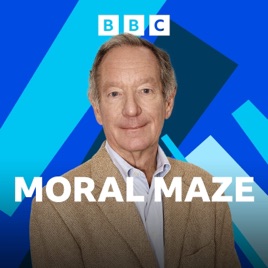
Advertise on podcast: Moral Maze
Rating
4.7from
This podcast has
282 episodes
Language
EnglishPublisher
BBC Radio 4Explicit
No
Date created
2011/11/04
Latest episode
2026/09/24
Average duration
58 min.
Release period
13 days
Description
Combative, provocative and engaging live debate examining the moral issues behind one of the week's news stories. #moralmaze
Unlock Moral Maze podcast Email contact info,
Listeners & Audience details
Email contact information
Direct podcast contact details

Listeners
Audience numbers & engagement insights

Audience details
Podcast Insights

Podcast episodes
Check latest episodes from Moral Maze podcast
Can we separate pop from politics?
2026/09/24
Ed Sheeran says he tries to keep politics off the stage.
But politics gate-crashed his stadium tour anyway -- when the American rapper Macklemore was removed as a support act for delivering a pro-Palestinian speech.
Now Sir Bob Geldof, the man behind Live Aid, says Ed Sheeran's preferred silence isn't political.
Fame, he says, is a currency, and artists get to choose how to spend it
Is he right? Can any artist, whether a musician, a writer, or a painter, stay out of politics? Or is silence itself a kind of political statement too?
This week’s Moral Maze: Can we separate pop from politics?
Presenter: William Crawley
Panel: Andrew Copson, Ash Sarkar, Ella Whelan, Giles Fraser
Witnesses: Tom Phelan, Daniel Rachel, Angela McRobbie, Nick Asbury
Producer: Catherine Murray
Editor: Chloe Walker
16/09/2026
2026/09/17
Live debate examining the moral issues behind one of the week's news stories. #moralmaze
How should we respond to warnings of end times and catastrophe?
2026/09/10
America’s Vice-President, J. D. Vance, has been talking about the end of the world, saying he “wouldn’t be shocked” if the Anti-Christ was walking amongst us.
Most people are living incomparably better lives than generations ago - and history is full of warnings of apocalypse - so how should we respond to warnings of catastrophe and end times?
Do such warnings encourage moral behaviour? Do they spur people to take action on important issues - or can they lead to despair and paralysis.
Do thoughts of an end give life more meaning?
Should we take threats to the way we live as a warning to look after our loved ones - or is it an opportunity to think more widely and work out how to strengthen our community ties.
Which end of the political spectrum is more likely to resort to the language of doom-laden prophecy, and to what end?
What does this increasingly apocalyptic view of the world tell us about the world we live in, the problems we face, and the society we’ve become?
Witnesses: Leigh Price, Elizabeth Oldfield, Dr Ian Paul and Dr Daniel Nilsson DeHanas
Presenter: Michael Buerk
Panellists: Anne McElvoy, Matthew Taylor, Mona Siddiqui, Tim Stanley
Producer: Catherine Murray
Asst Producer: Jay Unger
Editor Chloe Walker
How should we respond to rising mental distress?
2026/09/03
A record one in seven people in England were prescribed antidepressants in the last year, according to NHS figures. More than nine million patients now take the drugs, and while they may be essential in many cases, the prevalence of mental ill-health – stress, anxiety, burnout – is a moral issue as well as a medical one. Why are more people, including under-18s, presenting to their GP with these conditions, and what should we do about it?
Many clinicians believe anti-depressants serve an important function, including in milder cases, particularly where access to talking therapies is limited. This, they say, is both a practical and compassionate response to suffering, and a respect for patient autonomy. However, there is disagreement among psychiatrists, some of whom argue that everyday stress is being patholigised. They see drugs as morally hazardous in certain cases, since they alter mental sates, blunt emotions and create dependence on the drugs themselves, reducing people’s long-term capacity to cope.
Beyond the clinical response, there are deeper questions to consider about our society and culture. NHS figures suggest patients in the most deprived areas were prescribed antidepressants 44% more than in the least deprived areas. Many mental health campaigners see the crisis as a social harm, caused by poverty, inequality and insecurity. They believe that rather than simply treating the symptoms of distress, we have a social responsibility to fix the structural causes: better housing, secure working conditions, and a fairer distribution of the resources people need to live dignified lives. For others, the crisis represents something even more fundamental: a loss of meaning, purpose, connection, and resilience.
How should we respond to rising mental distress?
Chair: Michael Buerk
Panel: Ash Sarkar, Giles Fraser, Anne McElvoy and Carmody Grey
Witnesses: Ellie Cannon, Joanna Moncrieff, Polly Mackenzie and Mark Vernon
Producer: Dan Tierney
Assistant producer: Peter Everett
Editor: Tim Pemberton
Data Centres: Whose Thirst Comes First?
2026/08/27
AI data centres are expanding across the UK and around the world. Tech giants and governments see them as essential infrastructure for future prosperity; the engines of economic growth, scientific innovation, improved healthcare and national security. Advocates believe they will bring about the next technological leap forward for humanity.
But there are always trade-offs. Critics point to the immediate environmental costs; the demand for electricity, water and land. They question whether the promised rewards justify the sacrifices, particularly for local populations who face the disruption of new developments while the economic benefits go elsewhere.
Are we, as a society, being swept along by an AI 'arms race' we didn’t consent to? Are we right to put faith in tech billionaires who prophesy a future of progress and human flourishing, or are we simply enabling more consumption? (Every video of Elon Musk as Austin Powers drinks around 4 litres of water). And even if AI promises to solve climate change and eradicate disease, how much are we willing to place on that bet today?
Chair: Michael Buerk
Panel: Giles Fraser, Mona Siddiqui, Andrew Copson and Ella Whelan.
Witnesses: Owen Espley, Michael Tobin, Carissa Véliz, Carlo Cordasco.
Producer: Dan Tierney
Assistant producer: Peter Everett
Editor: Tim Pemberton
Is empathy ever a weakness?
2026/08/20
Reform's Robert Jenrick has described Britain’s welfare system as “suicidal empathy.” It’s also the title of a recent book by the Canadian marketing Professor Gad Saad, who argues that a misdirected sense of empathy can lead to favouring certain people over others – for example, the criminal over the victim. The idea has gained an admirer in Elon Musk who said that "the fundamental weakness of Western civilization is empathy". The claim is that unconditional compassion is not a strength but a soft spot to be exploited, clouding our moral judgements.
Critics argue that empathy is the moral foundation of care for the most vulnerable in society and righteous anger against injustice. They see the language of “toxic” or “parasitic” empathy as laying the groundwork for inhuman treatment. Rousseau saw pity as the most natural of human virtues – an instinct which makes us not simply walk on by when we see someone suffering. Removing empathy, in other words, makes us both less human and less humane.
Whether in the realm of welfare policy, immigration numbers or prison conditions, the philosophical argument is between those who say feeling for others is the foundation of morality, and those who believe empathy can be a moral liability.
Chair: Michael Buerk
Panel: Mona Siddiqui, Tim Stanley, Sonia Sodha and Ella Whelan.
Witnesses: Matt Goodwin, Paul Sagar, Philippa Smethurst and Luke Bretherton.
Producer: Dan Tierney
Assistant producer: Peter Everett
Editor: Chloe Walker
Are networks the glue of society or the architecture of privilege?
2026/07/28
Michael Buerk chairs a special debate from the Hay Festival examining the morality of networks.
The release of the Epstein files has been a reminder that power often flows not just through formal institutions, but through webs of connection: political friendships, old school ties, and professional circles. There's been focused attention on how influential networks operate, and how access, opportunity and protection can follow. Critics say such cases expose a world where success depends less on merit than on who you know.
But networks are not confined to the wealthy or the powerful. From journalism and politics to business, academia and religion, informal relationships shape how institutions actually work. People rely on contacts for jobs, introductions and advice. Trust is built through familiarity. Sociologists call this “social capital”, the networks of relationships that allow communities and organisations to function. Anthropologists go further: humans are a networked species, whose survival has long depended on cooperation, loyalty and mutual obligation.
The moral tension is that the same instincts that create trust also draw boundaries. Networks build solidarity, but they also decide who is inside and who is left outside. Opportunity, influence and sometimes harm can circulate within closed circles. What looks like loyalty from the inside can look like exclusion from the outside.
So when does social capital become social injustice? Are networks the glue of society, or the architecture of privilege?
Chair: Michael Buerk;
Panel: Anne McElvoy, Matthew Taylor, Mona Siddiqui and Ella Whelan;
Witnesses: Aaron Reeves, George Pitcher, Andrew Graystone, Julia Hobsbawm;
Producer: Dan Tierney;
Editor: Tim Pemberton.
Are America's founding ideals a reality or a myth?
2026/07/02
In 1776, Thomas Jefferson wrote that all men are created equal, endowed with unalienable rights... life, liberty and the pursuit of happiness. During his lifetime Jefferson owned more than 620 slaves. As America marks 250 years since the Declaration, that contradiction is impossible to look past: a document of universal liberty, written by men who denied it to the women in their households, the people they enslaved, and the nations whose land they were settling.
One reading says this was hypocrisy - that "all men" never meant all men, that the rhetoric of equality was cover for the interests of rich, white, Anglo-Saxon Protestants, and that the centuries of struggle since have been a slow correction of a lie dressed up as a promise. Another reading says something genuinely radical was set loose that day - a principle larger than its authors, one that would eventually demand Abolition, Enfranchisement and the end of Segregation, precisely because the words of the Declaration meant more than the men who put their names to it could envisage. On this account, the Founding Fathers endorsed an ideal and left their descendants to grow into it.
That same split runs through America today. The current presidency has departed from constitutional norms everyone had assumed were solid - over courts, elections, the press and the limits of executive power. One view says this is a crisis the Republic will survive: a serious one, but a blip in the two and a half centuries during which American institutions have weathered civil war, economic depression, and social upheaval, and during which the founding ideals have always held firm. The soul of America gets shaken, but it holds. The other view says the Republic was never held together by Constitutional Law - it was held together by a myth - a shared belief, perhaps deluded, that Americans would behave decently and that the norms would prevail. Once a leader has tested every one of those boundaries and paid no price, the myth shatters, and there is nothing to stop the next leader from going further. On this view, the current administration is a distorted reflection of what America truly is.
Chair: Michael Buerk
Panel: Giles Fraser, Carmody Grey, Matthew Taylor and Tim Stanley.
Witnesses: Richard Carwardine, Aziz Rana, Adam White and Claire Ainsley.
Producer: Dan Tierney
Assistant Producer: Pater Everett
Editor: Tim Pemberton
Do we care more about the place where we live than about the nation we live in?
2026/06/26
If Andy Burnham has a four-word philosophy, it is 'the politics of place', a phrase he uses often. Burnham argues that politics must concentrate on meeting local needs, on the devolution of power and on 'levelling up' the places that have been doing badly.
While he was winning in Makerfield, the Scottish Conservatives were winning in Aberdeen South, on a promise to revive the North Sea oil and gas industry. That too was the politics of place.
Burnham’s philosophical opponents say that 'the politics of place' is wrong-headed. What really matters is the destiny of the United Kingdom as a whole. Localism, they argue, undermines national cohesion and elevates nimbyism. It rewards failure and punishes success. The Americans call it pork-barrel politics.
The battle between localists and UK nationalists engages all politicians. Plaid Cymru and the Scottish National Party are by definition on one side of the line; the DUP in Northern Ireland is on the other. At Westminster, MPs go cross-eyed trying to watch over their constituencies and their careers at the same time. Boris Johnson created a Department for Levelling-Up. Angela Rayner called it ‘government by gimmick’ and abolished it in 2024.
If localism is the answer for Makerfield, is it also the answer for Sparkbrook, where voters might like different licensing laws? Or for Adlington, where locals hate the idea of a new housing estate? Or for Harmondsworth, which doesn’t want a Heathrow third runway at the bottom of the garden?
The politics of place; it looks good. But will Burnham, like Pandora, open this tempting box, only to release all the troubles of the world? In his victory speech he promised us ‘hope’. In the Greek myth, the gift of hope was merely a consolation prize.
Chair: Michael Buerk
Panel: Anne McElvoy, Ash Sarkar, Giles Fraser, and Sonia Sodha
Witnesses: Paul Vallely, Maxwell Marlow, Sir Paul Collier and David Goodhart.
Producer: Dan Tierney
Assistant Producer: Peter Everett
Editor: Tim Pemberton
What Makes Us Human?
2026/06/18
In his first encyclical, Magnifica Humanitas, Pope Leo XIV warned that artificial intelligence threatens the dignity of the human person.
Human exceptionalism - the belief that we are special, both within the animal kingdom and in the eyes of God - rests on a single distinction. We don't just think. We know that we're thinking. We have moral agency. Our religions tell us we have souls. That distinction is now under threat from two directions simultaneously.
Firstly, we have discovered that the creatures we share this planet with are vastly more capable than we thought. Animals we considered simple-minded - octopuses, bees, parrots, elephants - can plan, learn, teach and use tools. Some display altruism, grief, loyalty and shame.
Secondly, artificial intelligence and biotechnology are acquiring the characteristics we thought were uniquely ours. AI is developing personality, intentionality and self-awareness at a speed that has no historical precedent. The quantum computer, which Richard Feynman imagined less than half a century ago, is now being built. And in our laboratories, researchers are growing neuron networks and may soon create hybrid creatures combining animal instinct with human-like reasoning. Only our ethics stand in the way.
If the boundaries between human, animal and machine are dissolving from both directions, the question is no longer academic. What - if anything - makes us morally exceptional?
Chair: Michael Buerk
Panel: Ash Sarkar, James Orr, Mona Siddiqui and Tim Stanley
Witnesses: Steve Cooke, John Milbank, Nick Bostrom and Carmody Grey
Producer: Dan Tierney
Assistant producers: Peter Everett and Liberty Phelan
Editor: Tim Pemberton.
Is the World Cup morally compromised?
2026/06/11
The 2026 World Cup is the biggest in the tournament's history, with 48 teams playing 104 matches across three countries: The United States, Mexico and Canada.
For many, this summer's competition reveals that the game has drifted irreversibly from its working-class roots. Ticket prices are prohibitive for ordinary fans. FIFA's governance has been dogged by corruption scandals. Money and power have thoroughly colonised its institutions. And human rights groups warn this tournament will be a “bonanza of sportswashing”, consciously deployed by a US administration conducting mass deportations of migrants, many of them Latin American, as soft-power cover.
But others argue that markets set prices and fans made their choice. Commercialisation is the price of the game's global reach and football's globalisation has been a democratic force. Free-to-air coverage means the World Cup remains genuinely universal. For supporters of nations qualifying for the first time in decades, this is pure, uncomplicated joy. Some contend that those who weaponise sport for political protest are doing exactly what they accuse Trump of: subordinating the game to an agenda. And if moral purity were the admission criterion, no tournament would ever be staged anywhere.
Is the World Cup morally compromised?
Chair: Michael Buerk
Panel: Ash Sarkar, Giles Fraser, Matthew Taylor and Jonathan Sumption
Witnesses: Minky Worden, Mark Littlewood, Kieran Maguire and Graham Spiers
Producer: Dan Tierney
Assistant Producer: Peter Everett
Editor: Chloe Walker
Who is morally responsible for Britain's political short-termism?
2026/06/05
A Labour leadership challenge would mean Britain could have a seventh prime minister in a decade. Each change of leadership promises renewal, but each delivers fresh disappointment. Meanwhile the problems compound: crumbling infrastructure, polluted waterways, a cost-of-living crisis, a planet warming faster than our policy responses. Why can't a mature democracy fix things it can clearly see are broken?
In the late 1960s, Stanford psychologist Walter Mischel devised a deceptively simple test of human nature. A child is left alone with a single marshmallow and a choice: eat it now, or wait fifteen minutes and receive two. It measures willpower, impulse control, and the capacity to sacrifice immediate satisfaction for a better long-term outcome. Mischel's follow-up studies found that children who waited tended to grow into healthier, better-educated, more emotionally stable adults. But subsequent researchers identified a crucial caveat: children from unstable backgrounds, used to broken promises, were entirely rational to eat immediately, since they didn't trust that the second marshmallow would ever arrive.
Britain, it could be argued, is living through its own national marshmallow test, and the results are troubling. Critics of the current political settlement point out that politicians face structural incentives to fix today's headlines rather than next decade's crises. The five-year electoral horizon means anything beyond it risks being kicked down the road: HS2, the infected blood scandal, Net Zero. Voters, burned by serial betrayal, rationally demand immediate relief on bills, welfare and petrol prices, even when the long-term cost is severe. And hovering over the whole system is the media. Twenty-four hour news demands a fresh scoop every hour, and social media algorithms reward outrage over reflection. If politicians are punished for nuance and rewarded for noise, and voters are algorithmically nudged towards the most inflammatory version of every story, is the entire information environment now rigged against long-term thinking?
If voters rationally distrust politicians, and politicians rationally pander to voters, who bears the moral responsibility for our collective short-termism? And crucially, who bears the responsibility for breaking the cycle? Is it about radical institutional or electoral reform? Does it require a more uncomfortable kind of leadership: politicians willing to tell hard truths, and voters willing to reward them? Who should bear the brunt of any short-term pain? Can we demand courage from leaders we've trained to be cowards? And if so, how do we first rebuild the trust – and the information environment – that makes waiting for the second marshmallow feel rational again?
Chair: Michael Buerk
Panel: Mona Siddiqui, Tim Stanley, Ash Sarkar and James Orr
Witnesses: Paul Dolan, James Williams, Sonia Purnell and Karl Pike
Producer: Dan Tierney
Assistant producer: Peter Everett
Editor: Tim Pemberton
What is education for?
2026/04/09
Universities across the country are cutting back on humanities courses – philosophy, history, modern languages – subjects long seen as central to a well-rounded education. The reason is familiar: falling student numbers, financial pressure, and a growing insistence that degrees must demonstrate clear economic value. If a course doesn’t lead to a well-paid job, why should anyone fund it?
That points to a deeper divide about what education is for. Is it an intrinsic good: valuable in itself, shaping critical thinking, moral judgment, and an understanding of the world? Or is it an extrinsic one: a means to an end, justified by the jobs it produces and the growth it delivers?
For centuries, from Socrates onwards, education has been tied to human flourishing – to forming citizens, not just workers. But today, the language has shifted. Students are consumers. Universities compete. Courses are judged by salary. And the tensions don’t stop there. If education is a public good, why does access remain so uneven, divided between state and private schools, with women significantly underrepresented in STEM (science, technology, engineering, mathematics) – opportunity shaped as much by background as by ability? And as our understanding of neurodiversity deepens, a further challenge emerges. What if the system itself – built around standardisation, testing, and conformity – has actively hindered the prospects of many it was meant to serve?
So what, ultimately, is education for? Is it possible to maximise economic potential and enable every individual to flourish? And if our system does the former at the expense of the latter, can it still claim to be a moral one?
Chair: Michael Buerk
Panel: Mona Siddiqui, Tim Stanley, Carmody Grey and Giles Fraser.
Witnesses: Maxwell Marlow, Julian Baggini and Jess Wade and Chris Bonnello.
Producer: Dan Tierney
Editor: Tim Pemberton.
Artemis 2 and the ethics of human space flight
2026/04/02
Today, humanity reaches towards the Moon once more. The first crewed lunar mission in more than 50 years.
But as NASA’s Artemis 2 lifts off, some troubling moral questions follow in its wake.
Are the billions of pounds being spent a visionary investment in our future, or a luxury we can't afford while poverty, disease, and a climate crisis demand urgent action here on Earth?
Who benefits from space exploration? The wealthy nations that lead it or all of humanity?
Is there really a moral imperative to explore the possibility of how to live on other planets?
And ... as we venture outwards, do we risk repeating the mistakes of colonial expansion?
That's our Moral Maze tonight ... the ethics of human space flight
WITNESSES: Dr Simeon Barber, Lunar Scientist at Open University; Dr Stuart Parkinson, Executive Director of Scientists for Global Responsibility; Dr Tony Milligan, Philosopher in Space Ethics; Mary-Jane Rubenstein, Professor of Religion and Science in Society at Wesleyan University
PANELLISTS: Carmody Grey, Anne McElvoy, James Orr and Sonia Sodha
PRESENTER: William Crawley
Is an Established Church Morally Defensible?
2026/03/27
The Church of England marks a historic moment: the installation of its first female Archbishop of Canterbury. A symbol, many would say, of progress in an institution often accused of resisting it. And yet, even as she takes office, around 600 churches reportedly refuse to recognise the authority of ordained women. For them, this is not prejudice but principle. An adherence to theological conviction.
It comes amid fresh scrutiny about the Church’s place in national life - from Prince William signalling a more modern, personal relationship with it, to the Green Party reopening the question of disestablishment. The Church of England is not just a religious body. As the established church, it is entwined with the state. Its bishops sit in Parliament. Its role extends, at least in theory, to the whole nation. It claims to be “a church for everyone.” And yet it operates with exemptions from equality law, particularly in its approach to women’s leadership and same-sex relationships. Defenders argue that religious freedom must include the freedom to dissent from prevailing social norms. Critics counter that an institution with constitutional privilege cannot also claim the right to discriminate.
But there is a further tension. The Church speaks as a national institution at a time when fewer people identify with it at all. Attendance has declined steadily. Belief itself is becoming more marginal in a society that is increasingly secular. For many citizens, religion is not just optional but irrelevant.
So what does establishment mean in such a society? Should the Church be brought into line with equality law or separated from the state altogether? And more fundamentally: can an established church still claim moral authority in a nation that is steadily moving away from it?
Chair: William Crawley.
Panel: Carmody Grey, Tim Stanley, Mona Siddiqui and Anne McElvoy.
Witnesses: Andrew Copson, Bishop David Walker, Jonathan Chaplin and Rev Charlie Bączyk-Bell.
Producer: Dan Tierney
Assistant producer: Jay Unger
Editor: Tim Pemberton.
Podcast reviews
Read Moral Maze podcast reviews
catherine mc-t 2025/04/09
Great premise
I really enjoy the way this show is set up - pose a moral question and a panel interviews guests with different views on the topic and then discusses ...
angrylf 2023/10/13
A great show
Always thought provoking and enjoyable even when the panel is marred by the presence of shallow, gotcha-types like Melanie Phillips - there is almost ...
Keisuke F. 2020/05/01
Good, but please fix
Very good podcast, but need the interrupting between people to stop!
Temperance420 2012/07/15
Engaging
Thoughts are well articulated, easy to understand, very interesting
PatrickBH 2012/04/08
Great Show
I am a new listener but a big fan of this program. The format reminds me of appellate argument, with a panel of judges, each thoroughly educated on th...
Podcast sponsorship advertising
Start advertising on Moral Maze relevant audience podcasts
You may also like to advertise on these Podcasts
4.8104492000
Steve Deace Show
Blaze Podcast Network
4.8258691482
Relatable with Allie Beth Stuckey
Blaze Podcast Network
4.858221907
Sara Gonzales Unfiltered
Blaze Podcast Network
4.922301819
The Ten Minute Bible Hour Podcast
Matt Whitman

4.6312521073
Wow in the World
Tinkercast
4.824771860
Deck The Hallmark
Bramble Jam Podcast Network
4.916161609
The Kristian Harloff Show
Kristian Harloff
4.917101543
DarrenDaily On-Demand
Darren Hardy LLC
4.6221632000
Mark Levin Podcast
Cumulus Podcast Network
4.737121980
The Eric Metaxas Show
Metaxas Media