Advertise on podcast: The Conversation
Rating
4.5from
This podcast has
599 episodes
Language
EnglishPublisher
BBC World ServiceExplicit
No
Date created
2014/10/23
Latest episode
2026/10/12
Average duration
27 min.
Release period
7 days
Description
Two women from different parts of the world, united by a common passion, experience or expertise, share the stories of their lives.
Unlock The Conversation podcast Email contact info,
Listeners & Audience details
Email contact information
Direct podcast contact details

Listeners
Audience numbers & engagement insights

Audience details
Podcast Insights

Podcast episodes
Check latest episodes from The Conversation podcast
The healing power of wild landscapes
2026/10/12
Plunging into a remote mountain lake, camel-trekking for miles through empty desert… Natural landscapes have an incredible ability to change the way we think and behave. Datshiane Navanayagam talks to women from Wales and the Netherlands who spend their time in some of the world's most untouched spots.
Arita Baaijens is a Dutch explorer and environmental biologist. She spent decades exploring the vast empty reaches of the Sahara, where she lived with nomadic tribespeople and kept herself safe with a camel whip. In Siberian mountains and the jungles of Papua New Guinea, living among indigenous people, she learnt new ways of understanding the world.
Brigid Lowe is from Wales but moved to Scotland with her young children to recover from divorce and an assault. She set herself the challenge of swimming a thousand of Scotland's lochs, many of which are ignored and unnamed. Along the way she encountered monsters in the deep, and learnt to read the flow of water. Her latest book, Shiver, describes her time in this austere and challenging landscape.
Producer: Hannah Sander
(Image: (L) Brigid Lowe, credit Ide Crawford. (R) Arita Baaijens, credit Viktor Bentley.)
Crime scene and trauma cleaners
2026/10/05
Cleaning up after a death or violent incident is often far too traumatic and potentially dangerous for family members or for regular cleaning services to undertake. Instead, it’s a task carried out by a small but specialised group of individuals – often women.
Ella Al-Shamahi speaks to two female crime scene and trauma cleaners in South Africa and Northern Ireland who are the last point of contact for families after emergency services and forensic teams have completed their duties.
Alana Gillen initially made her name by taking care of the mansions of some of the Northern Ireland's richest people. She then transferred her skills and now runs the only female-led and owned company in Northern Ireland, specialising in biohazard, crime-scene and trauma cleaning.
Charleen Archibald was trained by two women, known across South Africa as ‘the blood sisters’ (Bloed Susters in Afrikaans). She’s been cleaning up crime and trauma scenes for the past ten years alongside her wife, Sheridan and says that it’s humbling to be invited into somebody’s home on what is often the worst day of their lives.
Listeners are advised that this programme will contain some sensitive content - including descriptions of the aftermath of violent crime, which some may find upsetting.
Producer: Hannah Dean
(Image: (L) Charleen Archibald, credit Charleen Archibald. (R) Alana Gillen, credit Graham Crichton.)
Women getting to the root of mushrooms
2026/09/28
Around the world, mycelium – the root part of fungi – is being used practically as a biological material due to its distinctive properties. Ella Al-Shamahi speaks to two women hoping to reduce the environmental impact of plastic packaging and the meat industry by creating mushroom-based alternatives.
Julia Bialetska is the co-founder and CEO of S.Lab, a company creating protective packaging for consumer products using mycelium to bind hemp. The idea was sparked when Jullia and her husband Eugene Tomilin were taking surfing lessons in Indonesia and witnessed mounds of plastic washed up on a beautiful beach in Bali. On returning home to Ukraine, the couple set out to find a biodegradable alternative to polystyrene. Their business was interrupted when the couple and their two children had to flee Ukraine following Russia’s full-scale invasion in 2022, and they had to start again in Spain.
Kimberlie Le is the co-founder and CEO of Prime Roots, a company making meat alternatives out of mycelium. At University of California Berkeley, Kimberlie took part in research at the Alternative Meat Lab, which kick-started the fungi-based product. Kimberlie spent her childhood in Canada around food, as her mother is a Vietnamese chef who used koji, a type of mycelium, when Kimberlie was growing up.
Produced by Elena Angelides
(Image: (L) Kimberlie Le, credit Prime Roots. (R) Julia Bialetska, credit Lens of Kate.)
Cricket’s top women umpires
2026/09/21
Datshiane Navanayagam talks to women from India and the UK who officiate international and domestic matches for the women’s and men’s games. They’re both on the ICC’s development panel for umpires.
Vrinda Rathi is an Indian cricket umpire. She was one of the first female umpires to stand as an on-field umpire in a men's domestic fixture in India. Earlier this year she became the first Indian woman to officiate in a Women’s World Cup final as one of the two on-field umpires for the final between England and Australia at Lord’s. Vrinda was a medium-pace bowler who represented the Mumbai University women’s team for four years. She couldn’t break into Mumbai’s senior side as a player so became a scorer before eventually switching to umpiring.
Anna Harris took up umpiring as a teenager to earn extra pocket money on the advice of her mother Yolanda, who's also an umpire. At age 22 she became the youngest ever umpire to officiate in an international match for a women’s one day international between England and New Zealand. Anna has played domestic cricket for Wales, Buckinghamshire and Berkshire. She also works as an NHS doctor in Hampshire.
Produced by Jane Thurlow
(Image: (L) Vrinda Rathi, credit Matthew Lewis - ICC. (R) Anna Harris, credit Uganda Cricket.)
Women bringing science to social media
2026/09/14
While the proportion of girls studying science subjects beyond high school is going up, physics, maths and engineering are still dominated by men. Ella Al-Shamahi talks to two women from Sweden and the UK who are using social media platforms to try and encourage greater equality in STEM subjects.
Eleonora Svanberg is a half-Swedish and half-Persian mathematical physics PhD student at the University of Oxford. With over three quarters of a million followers on social media platforms, @eleonorasvanberg discusses topics related to science, education and equality. Her first book in 2024 was about mathematical confidence, mainly aimed at young girls.
Dr Clara Nellist is a particle physicist and science communicator. She’s from the UK and has studied in France, Germany and the Netherlands. Clara’s work has focused on pixel detectors, the properties of the Higgs boson and the top quark, the heaviest known particle. She’s now working on the ATLAS experiment at CERN she’s has over a quarter of a million followers on social media where she posts videos @particleclara.
Produced by Jane Thurlow
(Image: (L) Eleonora Svanberg, credit Laura Smith. (R) Clara Nellist, credit Clara Nellist.)
What is a joyful life?
2026/09/07
Datshiane Navanayagam talks to two women from Sweden and the United States about what they've learned about treasuring moments of joy.
Kate Bowler is an historian, podcaster and author. She wrote Joyful Anyway after a stage IV bowel cancer diagnosis. Kate says joy isn't something that can be sold by influencers or found in daily journaling. It comes in both the surprising and the expected moments life brings us - and it's perfectly possible to be unhappy and filled with joy at the same time.
Marit Kapla is a Swedish author and journalist. For two of her books she's listened to hundreds of people talk about their lives. Her prize-winning Osebol is based upon interviews with almost all the residents of her home village. Love in Swedish consists of interviews with people all over Sweden about love. Marit says finding joy in one’s life can be difficult and complicated, and the people she's spoken to have many different approaches.
Produced by Jane Thurlow
(Image: (L) Marit Kapla, credit Ola Kjelbye. (R) Kate Bowler, credit Michaella Jelin.)
Fertility in your 40s
2026/08/31
Why does it become much harder for older women to become pregnant? And how does fertility treatment differ from one country to the next? Ella Al-Shamahi finds out what women need to understand about their bodies.
Ella speaks to Sarah Allison who underwent fertility treatment in India, Spain and Greece. Sarah is now a fertility advocate and writes under the name Solo Fertility 40s.
She also talks to Dr Alison Campbell, a clinical embryologist and chief scientific officer of the Care Fertility Group, and a fellow of the Royal College of Pathologists.
Presenter: Ella Al-Shamahi
Producer: Hannah Sander
(Image: (L) Sarah Allison, courtesy Sarah Allison. (R) Alison Campbell, courtesy Alison Campbell.)
The manosphere and its impact on women
2026/08/24
Datshiane Navanayagam discusses the impact of toxic masculinity in South Africa and South Korea. The United Nations has raised concern about online communities promoting misogynistic and anti-feminist views saying they’re a serious threat to gender equality.
Kutlwano Mokgwathi is a doctoral researcher from Botswana, studying at the University of the Western Cape in Cape Town, South Africa - a country with some of the world's highest levels of gender-based violence. Her work is examining the emergence of the “Africana Manosphere” – with a focus on South Africa and Botswana.
Seungsook Moon is Professor of Sociology at Vassar College in New York State. She grew up in Seoul, and her research includes gender and social change in South Korea. In particular, she focuses on the remaking of masculinities shaped by neoliberal transformation of economy, politics, and culture locally and globally. South Korea ranked the highest out of 30 countries for how citizens perceive tension between men and women, according to a study by King’s College London. But what is driving the country’s gender-divide and how is misogyny taking shape online?
Produced by Elena Angelides
(Image: (L) Kutlwano Mokgwathi, courtesy Kutlwano Mokgwathi. (R) Seungsook Moon, courtesy Seungsook Moon.)
Women saving seeds for the future
2026/08/17
Datshiane Navanayagam talks to two women from Uganda and the UK working at seed banks to secure the future of the world's plant life.
Gloria Otieno is a scientist and genetic policy specialist with Alliance Biodiversity CIAT working to create and support seed banks in Kenya, Uganda and Tanzania. She grew up on a farm in Uganda and witnessed her community lose access to the finger millet they used for ceremonial occasions and only got it back through a gene bank. She says it brought home to her the importance of preserving a diversity of crops.
Charlotte Lusty is head of seed collections at the Millennium Seed Bank at Kew in the UK, the world’s biggest wild seed bank. The underground vaults store millions of seeds from across the globe. With an estimated 45 per cent of flowering plants globally threatened with extinction, it’s an important insurance policy for the future.
(Image: (L) Charlotte Lusty, credit Sebastian Kettley. (R) Gloria Otieno, credit Sustlives.))
Women helping earthquake survivors
2026/08/10
When devastation strikes around the world there are groups of experienced, dedicated teams that will fly in to support local people in saving lives. Others support people in the long, slow task of dealing with the aftermath and impact on health, homes and livelihoods. Datshiane Navanayagam talks to women from Venezuela and the UK about their roles in disaster response.
Claudia González grew up in La Guaira, Venezuela which has recently been hit by two earthquakes. She works for World Vision Venezuela and was at a United Nations meeting when the disaster struck. On returning to Caracas she learned many of her school friends and their families had died in collapsed buildings. Since then she's been working round the clock to support her team working with UN agencies to coordinate the emergency response.
Lori Demontigny is a registered nurse with Doctors Without Borders (MSF) providing care in crisis zones. Lori was working in Myanmar when it was hit by its worst earthquake for over a hundred years in March 2025. It's thought over five thousand people were killed. She's now project coordinator for MSF in Bangladesh.
Produced by Jane Thurlow
Kickstarting girls' careers in construction
2026/08/03
The trades and construction sectors are crying out for new talent, yet many school leavers have no idea that this industry could offer a meaningful and lucrative career path.
Datshiane Navanayagam speaks to two women on a mission to get more young people, especially girls interested in jobs like electrician, carpenter and bricklayer. They also discuss the importance of having female role-models in the industry.
Judaline Cassidy is a plumber who honed her craft in her native Trinidad and Tobago before moving to New York where she set up Tools and Tiaras: an organisation that introduces girls and young women to trade skills.
Renee Preston is from the UK and founded Construction for Women to help tackle the industry’s growing skills shortage. She’s a passionate advocate for policy change that gives young people greater access to construction sites and hands-on industry experience.
Producer: Hannah Dean
(Image: (L) Judaline Cassidy, courtesy Judaline Cassidy. (R) Renee Preston, credit Emma Boyle.)
Are women the stronger sex?
2026/07/27
The weaker sex? The fairer sex? The female body has often been viewed as less strong and less powerful than that of men. Datshiane Navanayagam meets two female scientists who are challenging that assumption. They reveal the ways in which women’s bodies actually come out on top.
Starre Vartan is an Australian science journalist, based in America. In her book The Stronger Sex she explores the different areas where women have the physical edge over men, from endurance events to immune response.
Marlo Möller is Professor of Molecular Biology and Human Genetics at Stellenbosch University in South Africa. Her research explores why women appear to be better at fighting off and surviving diseases like tuberculosis.
Produced by Hannah Sander
(Image: (L) Starre Vartan, credit Starre Vartan. (R) Marlo Möller, credit Annecke Vermeulen.)
Giving stature to women
2026/07/20
Statues in parks and city centres are meant to celebrate history and inspire for the future. But it's thought that in nearly every country in the world, women only make up 2-3% of the public statues. Datshiane Navanayagam talks to sculptors from the US and Nigeria who are working to redress the balance.
Meredith Bergmann is an American sculptor creating giant bronzes of significant female public figures for parks and historical sites around the United States. Her “Women’s Rights Monument” was unveiled in 2020 for the 100th anniversary of the 19th Amendment, which granted women the right to vote. It was the first statue of a woman, joining 22 statues of historical men in Central Park in New York.
Sokari Douglas Camp makes steel sculptures that vary in size from 30cm to 5m tall. Influenced by her Nigerian heritage, her latest exhibition, Fashion and Fortune, explores clothing, commerce and emblems of wealth using elaborate headdresses and the incorporation of coins to highlight both oppression and creativity.
Produced by Jane Thurlow
(Image: (L) Sokari Douglas Camp, credit Jonathan Greet. (R) Meredith Bergmann, credit Michael Bergmann.)
Female film-makers join forces
2026/07/13
The film industry is massively dominated by men. But women-only film festivals are shaking things up, celebrating the female directors, producers, cinematographers and editors behind the camera. Datshiane Navanayagam meets two women who run female film festivals.
Bina Paul in India is the director of the Asian Women's Film Festival in New Delhi. As a film editor with decades of experience, she recently saw one of her films celebrated at the Cannes film festival in France.
Amal Ramsis in Egypt founded and runs the Between Women Filmmakers’ Caravan (BWFC), which showcases films directed by women from the Arab world and Latin America. She is also a documentary filmmaker.
Producer: Hannah Sander
(Image: (L) Bina Paul, courtesy Bina Paul. (R) Amal Ramsis, credit Rania Zahra.)
Women and the stigma of Tourette’s
2026/07/06
Tourette syndrome is a motor disorder that begins in childhood or adolescence. Characterized by movement tics and at least one vocal tic, it's often portrayed as unrestrained swearing. However, coprolalia only affects ten percent of people with Tourette’s. Datshiane Navanayagam talks to women from Argentina and the UK about their mission to talk about this widely misunderstood condition.
Lauren Wyatt says the most difficult part of having Tourette's is the public perception and reaction. Lauren says she experiences harassment almost every time she goes out with people mimicking tics, threatening her, or sometimes even throwing things. She's part of a campaign by Tourette's Action in the UK – #NoChoice – which is highlighting Tourette’s as a medical condition. Lauren says she lives in constant pain due to her tics which are out of her control and have damaged her body beyond repair.
Belén Prieto is an Argentinian psychologist currently living and working in Spain. She has Tourette's and is a volunteer with TTAG (Tics and Tourette's Across the Globe), an umbrella organisation for Tourette's Syndrome, raising awareness and supporting those with the condition.
Produced by Jane Thurlow
(Image: (L) Belén Prieto, credit Miguel Pereda. (R) Lauren Wyatt, credit National Diversity Awards.)
Podcast reviews
Read The Conversation podcast reviews
southoxford 2023/07/03
You did not challenge sportswashing by WTA spokesperson
So disapppointed that interviewer let’s Saudi talking points land with the response “right”.
camping crafter 2023/06/29
Appreciate this podcast so much!
Every episode is thoughtfully presented and always fascinating!!!
L.G❤️🤞🏽 2021/07/21
Love Gymnastics
Hi I love gymnastic. Lyla
guil_vasq 2020/05/11
Love it
I really do love your podcasts! Continue the great work.
Weencie 2019/08/28
Kim is amazing!
What a wonderful podcast with Kim as warm, smart and highly skilled interviewer! Don’t think that this is just some place for women to be angry and ve...
WindyMatters 2018/06/18
The Conversation
The best podcast available.
Wrobl1bn 2018/01/16
ADORE
I absolutely love this podcast, it’s always great to look into the lives of women in all fields of work. It gives me people to look up to and an insi...
Ccarr022 2018/01/07
Bias
I am listening to surrogacy. It's an interesting conversation, however I am struck by what appears to be biased behavior. The African woman always spe...
Podcast sponsorship advertising
Start advertising on The Conversation relevant audience podcasts
You may also like to advertise on these Podcasts
4.6313051080
Wow in the World
Tinkercast

4.762552000
The Lawfare Podcast
The Lawfare Institute

4.922321830
The Ten Minute Bible Hour Podcast
Matt Whitman
4.916151617
The Kristian Harloff Show
Kristian Harloff
4.847072000
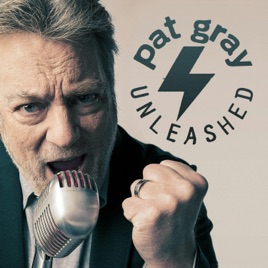
Pat Gray Unleashed
Blaze Podcast Network

4.672732000
Timcast News
Timcast Media

4.6221662000
Mark Levin Podcast
Cumulus Podcast Network
4.8258841490
Relatable with Allie Beth Stuckey
Blaze Podcast Network

4.92001926
The Wright Report
Bryan Dean Wright

4.814621637
The Big Honker Podcast
Andy Shaver & Jeff Stanfield