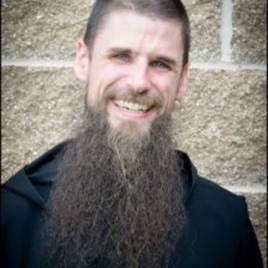
Advertise on podcast: Father and Joe
Rating
4.9from
This podcast has
484 episodes
Language
EnglishExplicit
No
Date created
2017/02/01
Latest episode
2026/10/06
Average duration
20 min.
Release period
7 days
Description
Father and Joe is a podcast series of a continuing conversation about struggles and successes of being close to God. Father Boniface provides spiritual direction through problems of daily life. According to statistics of the average American's church habits - We went to church when we were forced to but somewhere along the way, we drifted away. The ultimate goal of this podcast is to help us get back to church, regardless of what faith you hold, and create a stronger union with God.
Unlock Father and Joe podcast Email contact info,
Listeners & Audience details
Email contact information
Direct podcast contact details

Listeners
Audience numbers & engagement insights

Audience details
Podcast Insights

Podcast episodes
Check latest episodes from Father and Joe podcast
Father and Joe E482: The Story You're Telling Yourself Is a Choice
2026/10/06
A frustrating interaction can last seconds, but the story we build from it can shape an entire day. Joe Rockey and Father Boniface Hicks dig into where that story comes from, why it feels automatic instead of chosen, and how naming it — with curiosity instead of judgment — is what actually gives you power over it. This one lands on parenting, road rage, therapy, and the AI frustrations from last episode, all through the same lens.
Key Ideas:
The story running underneath a feeling usually isn't consciously chosen in the moment — it's already shaped by past experience. The choice comes after: noticing the story, naming it, and pressing back against it.Asking "why am I frustrated?" with curiosity and compassion (not more frustration) is what actually surfaces the hidden narrative driving a reaction.Validating a child's fear instead of dismissing it prevents layering a second, worse story on top: "I can't trust my own feelings."The same self-awareness that defuses road rage — noticing you're anxious about timing, not really wronged by the other driver — applies to any moment tempting a reaction before understanding what's underneath it.Rewriting deep, nervous-system-level stories isn't instant. It takes disconfirming experiences over time, often surfaced through therapy, prayer, or trusted people willing to mirror your patterns back to you.Links & References: None explicitly referenced with a clear official/source link in this episode.
If this helped, please leave a review or share this episode with a friend.
Questions or thoughts? Email [email protected].
Hello and welcome to another episode of Father and Joe. I'm Joe Rockey here with Father Boniface Hicks. And Father, you said something at the end of the last episode that I wanted to put in the last episode, but because of time limits, I figured it's probably better to bring up in this one. And who knows, it might be an entire episode in and of itself, which is you mentioned the story that we tell ourselves and how we use that to drive it. And there were a couple of internal thoughts that just jumped off the page as you said that, and one of them being that it's a choice. You know, you can have three different people watch the exact same movie, event, whatever, and have three different takeaways of it.
That's wildly proven throughout science in many different aspects, which gets back to the story that we're telling ourselves is a choice. And I think about the example that I do with my five year old, you know, I tell him bedtime stories and he takes away the part that he wants to hear of it nine times out of 10. And is the story sometimes have a purpose or sometimes? Yeah, like whenever it's bed timing, you're fighting me. One of your monster trucks magically gets in trouble for not listening to go to bedtime. And I just happen to pick his favorite one every single time when that's what we're trying to get across. And admittedly, sometimes it works. Sometimes it doesn't. But at any rate, it's what I go with there. And that's the story that I'm telling him.
I bring this up to say that we all have these choices over how we react and how we build our own narrative and what it is that we want to do with it. And it kind of astounds me how, given that fact, how little people actually look at the story they're telling themselves, especially in moments when they're not getting what they want, is if the story is against them that they made themselves. And that contradiction is something that I kind of want to spend an episode on because I think that it's something that when we find ourselves when things aren't going right, they're not the way that we want them. It can easily spiral. And using this practice could be a way to quote unquote, get your life back on track. So with that being said, I want to give you the floor and go from there.
Yeah, I love that you picked up on this point because it's, I think, so valuable to just make that realization. You said it's a choice. And I would I would actually peel that apart a little bit and say a lot of times the stories that are coming up are are not chosen in the sense that it's it's already happening in me. And one of the one of the steps of greater emotional intelligence and self-awareness is actually noticing even to name the story. So, you know, again, we were talking about these various examples that I that I hope are accessible to people. They're certainly things that are common enough, I suppose, or familiar enough in my own life.
You know, I'm driving and I hit every traffic light and I'm starting to get frustrated. So I'm noticing the frustration. That's actually the first thing that comes up. But if I start to ask myself the question of like, why am I frustrated? And I do that with curiosity and compassion, not in a frustrated way. Why am I frustrated? Rather, why am I frustrated? I wonder what's coming up here. Then I might be able to peel apart. Like, I feel like I'm never going to get there. I'm never going to arrive. I'm going to hit every traffic light. Nothing goes right for me. My day is going. So I can start to name. That's actually when I noticed the story for the first time that it's that's playing out inside of me.
And that story is shaped across a lot of experiences. My own woundedness, the the influence of various spirits in the moment. It's influenced by a lot of different things. But the first thing is actually noticing it and naming it and then counteracting it. And that's where the choice comes in. And we can start to press against those stories and say, well, you know, it's my life is I am going to make it. And it's going to be OK. I'm going to be five minutes later. It would be 20 or 30 minutes late, but I'm going to get there. And if there's somebody I need to call or, you know, you were so kind to schedule our recording a little bit later because I was running late today.
And I just realized at some point several things had cascaded that I was just like, yeah, this is not going to be recoverable. I need to just fall on my sword and see if Joe can start a little later. But but noticing the story of, you know, and with you, you've been so kind and flexible with me that already kind of in my nervous system, I'm a little bit less nervous because you are have been so flexible. And so I can say, well, let me see if he's willing to reschedule. And I don't have anxiety around that. But maybe somebody maybe there's a boss who gets really frustrated when you're late, never wants to reschedule.
Maybe there's a friend who is going to blow up if I say something, but I can notice my reaction. I'm going to have some fear and anxiety about even bringing it up even before I bring it up because I'm telling myself a story which may be based on truth. There may be real evidence there, but it's going to go badly. That's the story I'm telling myself. And that's why I'm afraid. And I don't want to bring up, you know, asking for a reschedule or telling somebody I'm running late or that I've done something wrong or whatever it is. So I can notice that story that's generating that that anxiety. I may be able to kind of rework that and say, well, I can't do anything about it.
I need to tell the person I'm running late or I need to reschedule. But I might also say, you know, I don't know why I'm so anxious because actually this person has always been very kind to me. Maybe I'm actually reacting against other people who haven't been kind to me. But that's not who I'm talking with in this particular case. So sometimes I can tease apart what's what's happening there. Now, again, changing that story is not as simple as, you know, flipping a switch. Those things tend to get written in our nervous systems there. We're responding to things before we're consciously aware of it most of the time. And so it takes a little bit of work to have the disconfirming experiences to show us that our built in story is wrong and can be refactored.
And again, all of this work, noticing it, naming it, being able to try to push against it and then developing new evidence that supports a different story. All of that is part of the process of of healing and growth, we would say. That's the kind of thing that we end up doing in therapy. If you're in therapy, you're sharing your experiences and the therapist is helping you to tease apart the story and to understand what was leading to that and what your thought process was and why those feelings were coming up and why you were reacting in that way. And then even in the context of therapy, sometimes we can rework that that story. Therapy is just a particular model for doing that in our friendships, sharing our experience.
We can help each other with this by the way that we just kind of mirror to them what they're going through and help a person to to refactor that story that's going on in them. Yeah, I think that there's a couple of big things here that I didn't give enough credit to in
Father and Joe, Joe Rockey, Father Boniface Hicks, the story you tell yourself, self-awareness, emotional intelligence, cognitive narratives, road rage, parenting, validating feelings, childhood fear, subconscious patterns, nervous system, emotional regulation, therapy, healing, personal growth, curiosity, self-compassion, humility, virtue, golden rule, keeping your peace, anxiety, frustration, reframing thoughts, mindfulness, self-reflection, relationship with self, relationship with others, relationship with God, prayer, spiritual growth, patience, communication, rescheduling, boundaries, emotional maturity, disconfirming experiences, habit change, self-talk, Catholic spirituality, Catholic podcast
Father and Joe E481: Don’t Give Away Your Peace — Breaking the Cycle of Anger Before It Spreads
2026/09/29
A frustrating interaction can last for seconds, but the anger it creates can follow us for hours. Joe Rockey opens this episode with a very modern example: getting increasingly angry at AI when it gives an obviously wrong answer. The deeper issue, though, has nothing to do with technology. It is what happens when frustration becomes a story—“nothing is going my way,” “everything is going wrong,” or “this always happens to me”—and that story begins shaping the rest of the day.
Father Boniface Hicks connects the experience to road rage and other situations where we attribute intentionality or injustice to something that cannot actually intend to harm us. His practical advice is simple: don’t give away your peace. Feelings can arise spontaneously, so we should not shame ourselves for having them. But we can create space between the feeling and the reaction—take a breath, step back, clarify what is actually happening, and choose what happens next.
The episode then goes deeper into the mechanics of anger. Before the feeling becomes a reaction, there is often an expectation that was not met and a story we are telling ourselves about what that means. Maybe the AI did not “fail” so much as misunderstand an underspecified request. Maybe being two minutes late is not actually a crisis. Maybe the person in front of us at the grocery store is simply having a human interaction that takes a little longer. Once we identify the expectation and the story underneath the anger, we have something we can actually examine and change.
The practical homework is straightforward: find your triggers, identify your story, and check whether that story is true. With greater self-awareness—and with trusted people willing to hold up a mirror—we can catch the “smoke alarm” earlier. That creates room for surrender, perspective, and a return to peace before one frustrating moment spills into our relationships, work, and relationship with God.
Key Ideas
Don’t give away your peace: frustration may be unavoidable, but escalating it is not.
Anger can create a false background narrative—“nothing is going my way”—that causes us to search for evidence supporting the mood.
Put space between the feeling and the reaction: breathe, step back, clarify, and reset.
Look for the unmet expectation beneath the anger, then examine the story you are telling yourself about it.
Self-awareness grows through practice and through trusted people who can help us notice our warning signs before we spiral.
Links & References
None explicitly referenced with a clear official/source link in this episode.
CTA: If this helped, please leave a review or share this episode with a friend.
Questions or thoughts? Email [email protected].
Tags
Father and Joe, Joe Rockey, Father Boniface Hicks, anger, frustration, anger management, emotional regulation, self awareness, triggers, road rage, AI frustration, artificial intelligence, AI, ChatGPT, Claude, peace, don’t give away your peace, surrender, perspective, unmet expectations, expectations, negative stories, background narrative, cognitive habits, self reflection, emotional awareness, stress, resentment, frustration tolerance, patience, breathing, reset, spiritual growth, prayer, God’s sovereignty, trust in God, surrender to God, relationship with God, relationship with others, relationship with self, business life, work stress, communication, conflict, anger triggers, habits, discernment, Catholic spirituality, Catholic podcast
Father and Joe E480: Small Offenses, Clear Boundaries, and the Work of Repairing Relationships
2026/09/22
Forgiveness is not only tested in major betrayals. Often, relationships are strained by smaller offenses: the grass clippings blown onto the wrong lawn, the gas tank left empty, the repeated household habit that quietly becomes a source of resentment. In this episode, Joe Rockey and Father Boniface Hicks continue the conversation on forgiveness by focusing on the practical middle ground: what do we do when a boundary has been crossed, but the situation is not catastrophic?
Father explains that the first step is recognizing the violation without immediately assuming the other person’s intention. A boundary may be crossed through malice, carelessness, forgetfulness, misunderstanding, or even by someone else entirely. If we rush straight to accusation, anger can distort the situation and damage the relationship further. But avoiding confrontation entirely also fails. Love requires enough courage to say, kindly and clearly, “This bothered me,” and then see whether apology, forgiveness, and reconciliation can begin.
Joe highlights the importance of proportion and consistency. If every small offense is treated like a “nine or ten,” people eventually tune out—or stop trusting the emotional scale altogether. But if the “twos and threes” are never addressed, they build into larger wounds. Healthy relationships need a reliable way to name smaller harms, repair them, and move forward before resentment hardens.
The episode also connects this pattern to our relationship with God. Venial sins matter because small compromises can accumulate when we stop confessing, repairing, and returning. The same is true in human relationships. Repair is not a sign that love failed; often, it is where love becomes stronger. Children, spouses, neighbors, friends, and communities all need room for failure, forgiveness, and reconciliation—because resilient relationships are built not by never breaking, but by learning how to repair.
Key Ideas
Small offenses matter because they can either be repaired early or build into deeper resentment.A crossed boundary does not automatically reveal the other person’s intention; avoid rushing to accusation.Confrontation can be loving when it is proportionate, clear, and rooted in the desire for reconciliation.Treating every issue like a crisis weakens trust; ignoring every issue also weakens trust.Repair can make relationships stronger, especially when apology, forgiveness, and consistency rebuild communion.Scripture Mentioned
Venial sin and confession are discussed by theme; no specific passage is named.Links & References
None explicitly referenced with a clear official/source link in this episode.
CTA: If this helped, please leave a review or share this episode with a friend.
Questions or thoughts? Email [email protected].
Tags
Father and Joe, Joe Rockey, Father Boniface Hicks, forgiveness, reconciliation, boundaries, small offenses, repairing relationships, relationship repair, healthy confrontation, proportionate response, consistency, trust, rebuilding trust, apology, asking forgiveness, offering forgiveness, resentment, anger, frustration, household conflict, marriage, married couples, parenting, children, neighbors, community life, grass clippings, snow shoveling, gas tank, toilet seat, communication, conflict resolution, venial sin, confession, sacrament of reconciliation, spiritual growth, humility, emotional self awareness, relationship with God, relationship with others, relationship with self, Catholic podcast, Catholic spirituality, mercy, love, communion, resilience, room for failure, unconditional love
Father and Joe E479: Forgiveness, Reconciliation, and Boundaries — How Love Rebuilds What Sin Breaks
2026/09/15
Forgiveness is one of the most important parts of Christian life—and one of the easiest to misunderstand. Joe Rockey and Father Boniface Hicks begin with the big picture: Jesus’ mission is a mission of forgiveness, and the whole Christian life is built around receiving that mercy and learning to extend it to others. But forgiveness does not mean pretending nothing happened, removing every boundary, or forcing reconciliation where trust has not been rebuilt.
Father makes a crucial distinction: **forgiveness can be one-sided; reconciliation requires both parties.** God is already turned toward us in mercy. He remains faithful, opens the door, and offers forgiveness—but reconciliation happens when we respond and return to Him. The same pattern matters in human relationships. Forgiveness is a personal decision toward another person; reconciliation is mutual repair, rebuilt trust, and a relationship that can move forward in truth.
The conversation then connects forgiveness to boundaries. God gives the universal moral law—the Ten Commandments and the call to love—as the broad foundation. Communities, families, marriages, monasteries, neighborhoods, and friendships also develop particular boundaries that help people live together well. When those boundaries are violated, whether gravely or in smaller daily ways, love requires honesty: acknowledge the harm, ask forgiveness, offer forgiveness, and rebuild trust with consistency.
Joe brings the episode into daily life with a practical challenge: examine your boundaries. Are they rooted in holiness, love, and the good of others—or only in personal preference, frustration, or convenience? Healthy boundaries are not opposed to forgiveness. They help create the conditions where forgiveness can become reconciliation, where relationships with self, others, and God can be repaired, strengthened, and made more whole.
**Key Ideas**
* Jesus’ mission is centered on forgiveness, and the Eucharist and confession keep that mystery at the heart of the Church.
* Forgiveness and reconciliation are related but not identical: forgiveness can be one-sided; reconciliation requires both parties.
* God’s forgiveness is already offered; reconciliation with Him requires our response, repentance, and return.
* Boundaries begin with God’s moral law, then extend into agreed community, family, and personal expectations.
* Consistency matters: trust is rebuilt when people understand the boundary, respect it, and repair what has been broken.
**Scripture Mentioned**
* The Our Father / “forgive us our trespasses…”
* Matthew 6 — forgiving others and receiving forgiveness
* Parable of the unforgiving servant
* “Father, forgive them, for they know not what they do”
* The Last Supper / chalice poured out “for the forgiveness of sins”
* The Ten Commandments
**Links & References**
None explicitly referenced with a clear official/source link in this episode.
**CTA:** If this helped, please leave a review or share this episode with a friend.
Questions or thoughts? Email [[email protected]](mailto:[email protected]).
### Tags
Father and Joe, Joe Rockey, Father Boniface Hicks, forgiveness, reconciliation, boundaries, healthy boundaries, Catholic forgiveness, sacrament of reconciliation, confession, penance, mercy, God’s mercy, Jesus’ mission, Eucharist, Last Supper, forgiveness of sins, Our Father, Matthew 6, unforgiving servant, Father forgive them, Ten Commandments, moral law, natural law, holiness, perfection of love, sin, missing the mark, trust, rebuilding trust, repentance, apology, human relationships, marriage, family life, friendship, community life, monastic life, grand silence, consistency, love, common good, relationship with God, relationship with others, relationship with self, spiritual growth, Catholic podcast
Father and Joe E478: Where God Meets You — Miracles, Personality, and the Challenge You Keep Avoiding
2026/09/08
God reaches people in different ways: miracles, Scripture, prayer, relationships, suffering, responsibility, and the ordinary events of life. But Joe Rockey and Father Boniface Hicks caution against turning those different encounters into a ranking system—as if one person’s miracle is automatically “better” than another person’s quiet conversion. The goal is not comparison. The goal is relationship with God.
Father explains that everything is equally easy for God, so our human scale of “harder” and “more impressive” does not apply cleanly to divine action. Raising Lazarus, healing a blind man, teaching through a parable, speaking through prayer, or working through a friendship can all serve the same purpose: inviting the person into trust, surrender, vulnerability, and love. The external event matters, but the deeper question is what happens inside the person who receives it.
The conversation then turns toward personality and holiness. Each person has a different point of resistance—surrender, trust, vulnerability, receiving love, giving love, letting go of control, or facing a weakness that has been quietly avoided for years. Joe reflects on how this applies in business, marriage, family, and friendship: some tasks can be delegated, but personal self-gift cannot. No one else can love your wife for you, surrender your will for you, or receive God’s love in your place.
The practical invitation is to stop driving “three miles around” the very place where God may be trying to meet you. Look honestly at the recurring challenge in your life, especially the one your personality most wants to avoid. That may be the place where Jesus is inviting you into the next stage of healing, courage, and deeper relationship.
Key Ideas
God reaches different people in different ways; the point is not comparison but relationship.Miracles, words, prayer, events, and relationships can all become invitations into trust and surrender.The same external event can produce very different interior responses depending on the person.Personality often reveals the specific place where holiness will be hardest—and most necessary.Some responsibilities can be delegated, but love, surrender, vulnerability, and receiving love cannot.Scripture Mentioned
Lazarus raised from the deadJesus healing the blindJesus teaching through parablesJesus cleansing the TempleLinks & References
None explicitly referenced with a clear official/source link in this episode.
CTA: If this helped, please leave a review or share this episode with a friend.
Questions or thoughts? Email [email protected].
Tags
Father and Joe, Joe Rockey, Father Boniface Hicks, God meets you, miracles, relationship with God, relationship with others, relationship with self, surrender, trust, vulnerability, receiving love, giving love, holiness, personality, personality types, spiritual growth, self knowledge, interior life, conversion, ongoing conversion, discernment, prayer, Scripture, Lazarus, healing miracles, parables, cleansing of the Temple, Saint Therese, trust in Jesus, avoiding weakness, control, letting go, delegation, business, marriage, family life, friendship, teamwork, community, human relationships, Catholic spirituality, Catholic podcast, courage, humility, self gift, love, God’s invitation, grace, sanctification
Father and Joe E477: Did Jesus “Grow” in His Mission? — Fully God, Fully Man, and the Universal Call of Salvation
2026/09/01
Sometimes the Gospels raise questions that feel dangerous to ask: if Jesus is fully God and fully man, how can Scripture also show Him growing, developing, responding, and acting within a specific mission? Joe Rockey brings that tension directly to Father Boniface Hicks through examples like the wedding at Cana, the Canaanite woman, the cleansing of the Temple, and Jesus’ outreach beyond Israel. The result is a careful conversation about Christ’s humanity, His divinity, and how God’s universal plan unfolds through particular people, places, and relationships.
Father explains that Jesus’ mission is universal in its final purpose—He desires the salvation of the whole world—but proximate in its historical method. Jesus ministers first to the lost sheep of the house of Israel, forms the apostles, fulfills the covenant, and then sends the Church outward to the Gentiles. The apostles themselves had to grow into that understanding, especially through Peter, Cornelius, the Holy Spirit, and the early Church’s discernment.
The conversation also turns practical: every Christian has a mission field. The whole world matters, but most of us serve the whole by loving, teaching, witnessing, and evangelizing the people directly entrusted to us—family, parish, workplace, friends, and the communities God places before us. Father’s own mission field as a parish priest becomes one example of how a specific assignment participates in the broader mission of Christ.
Finally, Joe and Father discuss how to read Scripture faithfully. The Gospels are not distortions of Jesus; they are true witness, written by human authors under the inspiration of the Holy Spirit. Sometimes the Holy Spirit preserves details whose full meaning becomes clearer later, like “Easter eggs” in salvation history. Jesus truly grows in His humanity, while His divine mission remains ordered by the Father from the beginning.
**Key Ideas**
* Jesus is fully God and fully man; His humanity truly develops without His divine mission being confused or incomplete.
* Jesus’ mission is universal in purpose, but historically begins with Israel and then extends through the Church to the Gentiles.
* The Canaanite woman reveals faith and order: the children first, then the household pets—not rejection, but mission unfolding.
* Every Christian has a mission field: not everyone all at once, but the people God actually places before us.
* Scripture is written through real human authors, but the Holy Spirit is the primary author guiding the deeper unity of salvation history.
**Scripture Mentioned**
* Wedding at Cana
* The Canaanite woman / “lost sheep of the house of Israel”
* Cleansing of the Temple / courtyard of the Gentiles
* Peter and Cornelius
* Council of Jerusalem
* The centurion / “Lord, I am not worthy”
* Luke 2:51–52 — Jesus growing in wisdom and grace
* Moses’ staff and the hyssop branch at the Crucifixion
**Links & References**
None explicitly referenced with a clear official/source link in this episode.
**CTA:** If this helped, please leave a review or share this episode with a friend.
Questions or thoughts? Email [[email protected]](mailto:[email protected]).
### Tags
Father and Joe, Joe Rockey, Father Boniface Hicks, Jesus Christ, fully God fully man, Incarnation, humanity of Jesus, divinity of Jesus, mission of Jesus, universal salvation, Israel, Gentiles, Canaanite woman, lost sheep of Israel, wedding at Cana, Mary, do whatever he tells you, cleansing of the Temple, courtyard of the Gentiles, Peter and Cornelius, Council of Jerusalem, centurion, Lord I am not worthy, Luke 2, Jesus grew in wisdom, Holy Spirit, inspiration of Scripture, Gospel writers, salvation history, Old Testament, New Testament, Moses, Moses’ staff, hyssop, covenant, chosen people, evangelization, mission field, parish mission, family mission, Catholic faith, relationship with God, relationship with others, relationship with self, discernment, Scripture study, Catholic podcast, Christology, faith questions, asking hard questions
Father and Joe E476: Spiritual Desolation — Don’t Make Permanent Decisions in Spiritual Darkness
2026/08/25
Most episodes of Father and Joe assume that we are either in a good spiritual place or at least trying to move toward one. But what happens when we are not? What happens when prayer feels empty, hope feels thin, God feels distant, and the temptation is to quit, change everything, or decide that we have failed?
Joe Rockey and Father Boniface Hicks use the wisdom of **Saint Ignatius of Loyola** to explore spiritual desolation: the heaviness of spirit that can bring darkness, sadness, tepidity, lack of faith, lack of hope, lack of love, and the feeling of being separated from God. Father is careful to distinguish spiritual desolation from an ordinary low mood. Desolation is spiritual in character, and it affects how we interpret God, ourselves, and the decisions in front of us.
The central warning is practical: do not make major spiritual changes while in desolation. Just as it is unwise to hire or fire someone from a place of panic or heaviness, it is dangerous to make permanent spiritual decisions when our interior state is clouded. In consolation, we see more clearly. In desolation, the enemy can distort our thoughts and make discouragement feel like truth.
But desolation is not proof that we are failing. It may reveal a bad choice or a neglected habit, but it is also a normal part of the spiritual life. God can allow it to purify us, humble us, increase our dependence on Him, and teach us that we cannot manufacture grace by ourselves. The response is not shame. The response is awareness, perseverance, prayer, examination, and small acts of resistance: stay in prayer a little longer, return to the habits you know are good, take care of the body, and remember that consolation is often closer than it feels.
**Key Ideas**
* Spiritual desolation is a real part of the spiritual life; it is not automatically a sign that you are failing.
* Do not make major spiritual changes or permanent decisions while in darkness, discouragement, or heaviness.
* Desolation can include lack of faith, hope, love, joy, energy, or a false feeling of separation from God.
* God may allow desolation to increase humility, dependence, perseverance, and deeper trust.
* Practical resistance matters: pray, examine what happened, care for your body, and hold on with sufficient grace.
**Links & References**
None explicitly referenced with a clear official/source link in this episode.
**CTA:** If this helped, please leave a review or share this episode with a friend.
Questions or thoughts? Email [[email protected]](mailto:[email protected]).
### Tags
Father and Joe, Joe Rockey, Father Boniface Hicks, spiritual desolation, spiritual consolation, Saint Ignatius of Loyola, Ignatian spirituality, discernment, discernment of spirits, prayer, perseverance, hope, faith, love, discouragement, spiritual darkness, feeling separated from God, consolation is around the corner, sufficient grace, abiding grace, humility, dependence on God, examination, examen, interior life, self awareness, spiritual habits, daily prayer, temptation, enemy, trust in God, low mood, spiritual heaviness, do not give up, Catholic spirituality, Catholic podcast, relationship with God, relationship with self, relationship with others, fear, sadness, tepidity, spiritual growth, prudence, decision making, grace, endurance, God’s will
Father and Joe E475: When Things Line Up — Meaning, Providence, and Seeing God’s Hand Without Becoming Superstitious
2026/08/18
Sometimes life feels fragmented, random, and exhausting. Other times, after months or years of effort, things suddenly begin to line up in a way that feels meaningful. In this episode, Joe Rockey and Father Boniface Hicks explore that experience through the lens of faith: how to notice meaning in our lives without falling into superstition, oversimplification, or the false idea that good behavior always produces easy outcomes.
Father explains that seeing meaning in the sequence of events already sets the believer apart. If everything is random, there is no deeper story to discover. But Christianity begins with the Logos—the Word, reason, meaning, and order through whom all things were made. That does not mean every faithful choice immediately produces health, wealth, success, or comfort. It means that God is good, that creation has meaning, and that even difficulty can play a role in our purification, humility, surrender, and growth.
Joe connects this to work, leadership, marriage, family, and group dynamics. Success is not measured the same way for every person, and motivations change throughout life. That makes discernment difficult, especially when leading people with different desires and definitions of “doing well.” But one through-line remains: choices that build relationship, love, service, and human flourishing tend to reinforce the story God is forming in us. Choices rooted in selfishness, control, or tearing down relationships tend to move us away from that story.
The practical takeaway is not “keep doing the exact same tactic forever.” It is deeper than that: stick with God, stick with the faith, and keep discerning the next right shift. When something is not working, the Christian response is not panic or desperation. It is to step back and ask: *Where is God drawing me? What direction is He pointing me toward now?*
**Key Ideas**
* Seeing meaning in life’s events is an act of faith, not automatically superstition.
* Christianity rejects a simplistic “health and wealth” equation where good behavior always produces easy outcomes.
* God’s providence includes both blessings and hardships; both can serve our growth and flourishing.
* Success looks different for different people, but love, relationship, and human flourishing remain central measures.
* “Sticking with it” means staying faithful to God—not refusing to adjust tactics, decisions, or direction.
**Scripture Mentioned**
* John 1:1–3 — the Word/Logos through whom all things were made
* Romans 8:28 — God working all things for good
* The parable of the wicked tenants
* Faith and the mountain / faith that moves mountains
**Links & References**
None explicitly referenced with a clear official/source link in this episode.
**CTA:** If this helped, please leave a review or share this episode with a friend.
Questions or thoughts? Email [[email protected]](mailto:[email protected]).
### Tags
Father and Joe, Joe Rockey, Father Boniface Hicks, providence, meaning, God’s hand, discernment, faith and meaning, Logos, Word of God, John 1, Romans 8:28, faith moves mountains, parable of the wicked tenants, health and wealth gospel, prosperity gospel, superstition, hope, human flourishing, relationship with God, relationship with others, relationship with self, purpose, vocation, work, business, leadership, marriage, fatherhood, family life, decision making, prayerful decisions, trust in God, surrender, humility, purification, spiritual growth, staying faithful, changing tactics, God’s will, Catholic podcast, Christian life, perseverance, hope in difficulty, meaning in suffering
Father and Joe E474: Loaves, Fishes, and the Eucharist — Receiving All of Jesus Without Fear
2026/08/11
The miracle of the loaves and fishes is often heard as a story of abundance: Jesus takes what is limited, blesses it, and feeds the crowd. But Joe Rockey asks a more personal question: What if I were actually there with my family? Would I trust enough to receive, or would I hold back because I could see how many people were still waiting behind me? That question opens a deeper reflection on faith, fear, scarcity, and the way we receive God’s gifts.
Father Boniface Hicks connects the miracle directly to the Eucharist. At Mass, Jesus does not give some people “more Jesus” and others “less Jesus.” Even when Father tells a parish story about running low on hosts and needing to divide them, the reality remains the same: each person receives the whole Christ. The limitation is not in Jesus’ gift, but in the capacity of our hearts to receive Him.
The conversation also connects the loaves and fishes to manna in the desert. God provided enough each day, yet the Israelites still struggled with trust, routine, and weariness. The same can happen to us. Even the greatest miracle can become ordinary if we stop paying attention. The Christian life asks us to keep opening our hearts: not taking God for granted, not shrinking back from fear, and not limiting what Jesus wants to do in our lives.
The invitation is simple but demanding: give God permission to be more present. Let go of the narrow spaces we protect for comfort, control, and self-preservation. Whether in parish life, family life, work, or prayer, the path of faith is learning to receive more fully, surrender more honestly, and love more perfectly through Christ.
Key Ideas
The loaves and fishes invite us to examine whether we receive God’s abundance with trust or hesitation.The Eucharist is not divided by amount: every communicant receives the whole Christ.The miracle of manna shows that even daily miracles can become routine when gratitude fades.Our fear, comfort, and need for control can limit how fully we receive what God offers.Giving Jesus more permission in our lives opens the path to deeper love, mission, and interior freedom.Scripture Mentioned
The miracle of the loaves and fishesManna in the desertBook of WisdomLinks & References
None explicitly referenced with a clear official/source link in this episode.
CTA: If this helped, please leave a review or share this episode with a friend.
Questions or thoughts? Email [email protected].
Tags
Father and Joe, Joe Rockey, Father Boniface Hicks, loaves and fishes, multiplication of loaves, Eucharist, Mass, Holy Communion, real presence, receiving Jesus, abundance, scarcity mindset, trust in God, manna in the desert, Book of Wisdom, gratitude, routine, spiritual complacency, daily miracles, first Mass, last Mass, only Mass, parish life, Catholic faith, Catholic podcast, surrender, permission to God, dying to self, comfort, fear, generosity, love, perfect love, family life, mission, discipleship, relationship with God, relationship with others, relationship with self, spiritual growth, interior freedom, Jesus gives himself fully
Father and Joe E473: Saint John Vianney — Parish Priests, Mission, and the Future of the Church
2026/08/04
Released on the feast of **Saint John Vianney**, this episode gives Father Boniface Hicks the floor to reflect on the patron saint of parish priests—at a personally meaningful moment, as Father Boniface begins serving in a parish in the Diocese of Pittsburgh. Saint John Vianney was not known as a brilliant academic. He struggled through seminary, lived through the turbulence after the French Revolution, and was assigned to a small parish in Ars. Yet by giving himself completely to the people entrusted to him—especially through confession, preaching, prayer, sacrifice, and pastoral care—he became one of the Church’s great models of parish priesthood.
Joe Rockey and Father Boniface then move from Saint John Vianney’s life into a practical question facing many parishes today: how do we keep the Church from becoming only “maintenance” when it must also be missionary? Father explains that parish life is where the rubber meets the road: baptisms, marriages, funerals, confession, Mass, religious formation, and daily pastoral care. But when those ordinary acts become routine, they can lose intentionality. Saint John Vianney reminds priests—and parishioners—that the ordinary work of the Church becomes holy when it is done with sacrifice, attention, and love.
The conversation closes with a concrete challenge for parish life: finances matter, but they are a trailing indicator. The deeper question is whether a parish is alive in mission. A parish can try to survive by asking more from the same people, or it can ask how to bring more families home. The stronger path is not merely “raise more money,” but rebuild the missionary life of the parish—supporting priests, forming people, inviting families, and creating a community where sacrifice makes sense because the Gospel is alive.
**Key Ideas**
* Saint John Vianney shows that holiness, sacrifice, and pastoral love matter more than brilliance or status.
* Parish priests carry the “ordinary” sacramental life of the Church—and that ordinary work must not become dull or careless.
* The parish is where the Church’s mission becomes concrete: confession, Mass, formation, families, marriages, funerals, and daily care.
* Many parishes face a tension between **maintenance** and **mission**; both matter, but mission has to drive the system.
* Parish finances are often a trailing indicator of deeper vitality: the real question is whether more people are being brought home.
**Links & References**
None explicitly referenced with a clear official/source link in this episode.
**CTA:** If this helped, please leave a review or share this episode with a friend.
Questions or thoughts? Email [[email protected]](mailto:[email protected]).
### Tags
Father and Joe, Joe Rockey, Father Boniface Hicks, Saint John Vianney, feast of Saint John Vianney, patron of parish priests, parish priest, parish life, Diocese of Pittsburgh, Benedictine, Ars, Cure of Ars, French Revolution, Reign of Terror, religious persecution, confession, sacrament of reconciliation, mercy of God, parish mission, maintenance to mission, missionary church, evangelization, parish renewal, parish finance, parish vitality, Catholic parish, pastoral care, baptisms, marriages, funerals, religious education, RCIA, OCIA, seminary formation, spiritual direction, Saint Vincent Seminary, parish families, bringing families home, Church growth, Catholic leadership, support your priest, relationship with God, relationship with others, relationship with self
Father and Joe E472: What Faith Actually Changes — Love, Business, and the Encounter That Reorders Everything
2026/07/28
If faith changes your life, how do you explain that to someone else without overselling it? Joe Rockey and Father Boniface Hicks continue the conversation about sharing faith by asking a practical question: what has Christianity actually done for you—and can someone else receive that same gift? The answer is not that faith magically fixes every external problem. The answer is deeper: Christ transforms the interior person, and that transformation changes how we love, work, lead, suffer, build relationships, and make decisions.
Father clarifies the promise: Christianity moves us toward the perfection of love. That may help a marriage, a business, or a hardship—but not by bypassing reality. If a business is failing because the market dried up, conversion will not magically create houses to sell. But if the business is failing because money, profit, or control replaced love and relationship, then Christian conversion can change everything. The more we become like Christ, the more we become harmonized with reality, because all creation is ordered through Him.
Joe brings a concrete business example: through years of these conversations, Mass, Scripture, and the Eucharist, he came to see that every business is defined by two relationships—the relationship with prospects/clients and the relationship with employees. If either one is broken, the business is in danger regardless of external circumstances. Faith taught him to see business through relationship first, and that framework has helped his clients think differently about success, service, and sustainability.
The episode closes with Father returning to the center: real transformation begins not with an idea, argument, or ethical rule alone, but with an **encounter with Christ**—an encounter with infinite, unconditional love that gives life a new horizon and a definitive direction. The weekly invitation is simple: notice where you are receiving love, where you are resisting it, and where you are being called to give love more freely.
**Key Ideas**
* Faith should not be oversold as a magic fix for every external problem.
* Christianity transforms the interior person toward greater love, humility, prudence, and relationship.
* Business practices rooted in relationship, dignity, and love are more aligned with reality than those built only on money or control.
* Every business can be examined through two relationships: clients/prospects and employees.
* Real conversion begins through an encounter with Christ’s unconditional love, not merely a concept or rule.
**Links & References**
None explicitly referenced with a clear official/source link in this episode.
**CTA:** If this helped, please leave a review or share this episode with a friend.
Questions or thoughts? Email [[email protected]](mailto:[email protected]).
### Tags
Father and Joe, Joe Rockey, Father Boniface Hicks, faith changes life, encounter with Christ, Jesus Christ, unconditional love, Christian conversion, interior transformation, perfection of love, love and business, business relationships, clients, prospects, employees, ethical business, leadership, service, relationship building, relationship with God, relationship with others, relationship with self, humility, prudence, virtue, peace, hope, suffering, Christian witness, testimony, evangelization, sharing faith, love is the most important thing, value hierarchy, money, success, pleasure, control, purpose, discernment, Eucharist, Mass, Scripture, Catholic podcast
Father and Joe E471: How to Talk About Faith Without Losing Confidence — Witness, Rejection, and Real Conversation
2026/07/21
Talking about faith can feel a lot like trying to offer someone a solution you know would help—only to watch them stare back with no connection at all. Joe Rockey and Father Boniface Hicks explore why that moment can be so discouraging, especially when the person already has negative impressions of Christianity, religion, or past faith experiences. The challenge is not just making a positive impression; often, it is gently overcoming a wounded or distorted one.
Father explains that sharing faith should never feel like a sales pitch or a demand. The starting point is witness: *this is what Jesus has done in my life*. That approach gives the other person freedom. It also protects the conversation from becoming pressure, argument, or performance. A sincere testimony begins with humility, personal vulnerability, and enough self-knowledge to answer basic questions: Why do I follow Christ? What difference has He made? Why do I pray, worship, and try to live the moral life?
The episode offers a practical structure for testimony: what life was like before, what Jesus did, and what life is like now. That story may be dramatic, or it may be a small recent change—more patience, more peace, more courage, more purpose. Joe brings in the relationship-building and sales lens: do not prejudge the person or assume their problem. Listen first. Learn what matters to them. Then share your experience in terms they can actually understand.
**Key Ideas**
* Sharing faith can be discouraging when people have prior negative experiences or assumptions about Christianity.
* Witness starts with your own life: “This is what Jesus has done for me,” not “Here is what you need to do.”
* Faith-sharing requires vulnerability because belief cannot be forced or scientifically proved into another person.
* A useful testimony structure: **before Jesus → what Jesus did → what life looks like now**.
* The best conversations begin with listening; speak in terms the other person can receive, without judgment or manipulation.
**Links & References**
None explicitly referenced with a clear official/source link in this episode.
**CTA:** If this helped, please leave a review or share this episode with a friend.
Questions or thoughts? Email [[email protected]](mailto:[email protected]).
### Tags
Father and Joe, Joe Rockey, Father Boniface Hicks, sharing faith, evangelization, witness, testimony, talking about Jesus, confidence, rejection, discouragement, vulnerability, personal testimony, faith conversations, family and faith, friends and faith, fallen away Catholics, Christianity, discipleship, relationship building, listening, trust, humility, sales analogy, ethical sales, no manipulation, no judgment, bad religious experiences, negative impressions, conversion, Easter converts, prayer, worship, moral life, Jesus changes lives, before and after, spiritual growth, Catholic podcast, relationship with God, relationship with others, relationship with self, courage, openness, freedom, Bob Ross analogy
Father and Joe E470: Escaping Analysis Paralysis — Recollection, Action, and the Presence of God
2026/07/14
When every decision has more data, more risks, and more possible outcomes, thinking can become a substitute for moving. Continuing their discussion about rest and reflection, Joe Rockey and Father Boniface Hicks explore analysis paralysis—the point where careful planning turns into anxious circles that keep us from acting on what we are called to do.
Father explains that the first step is noticing the energy beneath the overthinking. Fear, anxiety, excitement, or desperation for a particular outcome can make everything feel urgent, even when we do not yet have enough information—or do not need an immediate conclusion. The answer is not always more logic. Sometimes we need space, outside perspective, inspiration, and a gentler awareness of what is happening inside us.
The Christian response is recollection: returning to the interior place where God dwells and acting from relationship with Him rather than from fear. Like someone viewing an entire landscape before suddenly fixating on a nearby lion, we can become so locked onto success, failure, or control that we lose sight of the whole reality. Recollection does not eliminate planning or focused work. It reconnects our actions to God, ourselves, and the people we are serving.
The episode closes with a practical habit: throughout the day, pause for a few seconds and remember that Jesus is alive within you and present with you. That simple act of awareness can gradually become a way of living—strengthening your relationship with God, helping you treat yourself with greater care, and bringing more attention, freedom, and love into every relationship.
Key Ideas
Analysis becomes paralysis when fear or urgency keeps us circling without making meaningful progress.
More information and harder thinking are not always the answer; sometimes clarity requires space, patience, or outside perspective.
Do not confuse activity with results—planning matters only when it supports intentional action.
Recollection means remaining aware of God’s presence within you while doing the ordinary work of daily life.
A practical exercise: pause briefly throughout the day, remember that Jesus is with you, and act from that relationship.
Links & References
None explicitly referenced with a clear official/source link in this episode.
CTA: If this helped, please leave a review or share this episode with a friend.
Questions or thoughts? Email [email protected].
Tags
Father and Joe, Joe Rockey, Father Boniface Hicks, analysis paralysis, overthinking, decision making, discernment, recollection, presence of God, interior life, interior temple, prayer, spiritual reflection, fear, anxiety, urgency, burnout, rest, action, intentional action, planning, business decisions, relationships, attention, self awareness, self knowledge, Holy Spirit, Jesus within us, providence, trust in God, spiritual habits, daily prayer, silence, contemplation, focus, courage, leadership, meaningful work, relationship with God, relationship with self, relationship with others, spiritual growth, Catholic spirituality
Father and Joe E469: When Life Wears You Down — How to Step Back, Reset, and Make Room for God
2026/07/07
Something can begin with excitement—a job, project, relationship, or even a vacation—and gradually become exhausting. When the initial energy disappears, we may begin asking why we are doing it at all. In this episode, Joe Rockey and Father Boniface Hicks explore burnout, overstimulation, and the need to step away long enough to recover our sense of meaning and purpose.
Rest is not simply escaping, numbing ourselves, or replacing one form of stimulation with another. A genuine reset creates room for the mind and heart to settle. Vacations, retreats, holy hours, daily breaks, and even a few quiet minutes can interrupt repetitive mental pathways and help us return to our responsibilities with greater creativity, gratitude, and intentionality.
Father offers a practical way to begin. Set aside the time, disconnect from unnecessary stimulation, breathe, and allow racing thoughts to pass without following every one. Notice what is happening inside—anxiety, excitement, sadness, gratitude, or exhaustion—then bring it into a relationship with Jesus, the Holy Spirit, the Father, or a trusted saint. Christian reflection is not merely emptying the mind; it is making space for conversation with the God who already cares about everything we carry.
Key Ideas
Burnout does not always mean the work is wrong; sometimes we need rest to remember why it matters.
A real vacation or reset creates space rather than filling every moment with more activity and stimulation.
Smaller rhythms of reflection—a lunch break, evening review, holy hour, or quiet morning—can prevent exhaustion from accumulating.
Settling takes patience: allow thoughts to pass, notice your interior state, and resist the urge to solve everything immediately.
Christian silence is relational. We create room not for emptiness alone, but to listen, speak honestly, and invite God into daily life.
Links & References
None explicitly referenced with a clear official/source link in this episode.
CTA: If this helped, please leave a review or share this episode with a friend.
Questions or thoughts? Email [email protected].
Tags
Father and Joe, Joe Rockey, Father Boniface Hicks, burnout, rest, spiritual rest, vacation, summer, resetting, slowing down, overstimulation, silence, holy hour, prayer, Christian meditation, reflection, mindfulness, listening to God, making room for God, discernment, gratitude, anxiety, stress, exhaustion, purpose, meaningful work, daily habits, work life balance, mental overload, creativity, self knowledge, interior life, relationship with God, relationship with self, relationship with others, family life, parenting, perseverance, spiritual growth, peace, intentional living
Father and Joe E468: How to Become Friends With the Saints — Prayer, Biography, and Supernatural Friendship
2026/06/30
The saints can feel like distant, two-dimensional figures—names on churches, statues, feast days, and stories from another world. Continuing the conversation about Saint Boniface, Joe Rockey and Father Boniface Hicks explore how someone can move beyond simply knowing about a saint and begin developing a real relationship with that saint through prayer, curiosity, and time.
Father explains that the saints are alive in Christ and closer to us than we often realize. The process can begin simply: notice when a saint repeatedly captures your attention, speak directly to that saint in prayer, and begin learning about the person behind the image. A short biography may provide the introduction, while longer accounts, films, papal reflections, and continued prayer gradually reveal the saint’s personality, struggles, limitations, courage, and humanity.
As that relationship develops, a saint can move from “two-dimensional to three-dimensional”—becoming a spiritual friend whose example speaks into your own circumstances. Their lives show that holiness does not erase struggle. Saints endured failure, misunderstanding, temptation, conflict, unfinished work, and gradual conversion. Their friendship gives us examples to follow, encouragement for our own weaknesses, and intercession as we continue growing in our relationship with ourselves, others, and God.
Key Ideas
Begin simply: notice which saints keep appearing, address them in prayer, and ask for their help.
Use biographies, trustworthy films, and Church teaching to discover the saint’s humanity—not only the polished summary.
Saints become relatable when we understand their fears, failures, conflicts, limitations, and gradual conversion.
Learning about history through a saint’s life helps connect unfamiliar circumstances with the human struggles we still face today.
The goal is not collecting information; it is developing supernatural friendships that help us become saints ourselves.
Links & References
Saints for Sinners by Archbishop Alban Goodier:
https://sophiainstitute.com/product/saints-for-sinners/
The Chosen:
https://thechosen.tv/
Pope Benedict XVI’s General Audiences:
https://www.vatican.va/content/benedict-xvi/en/audiences.index.html
CTA: If this helped, please leave a review or share this episode with a friend.
Questions or thoughts? Email [email protected].
Tags
Father and Joe, Joe Rockey, Father Boniface Hicks, saints, communion of saints, friendship with the saints, supernatural friendship, intercession, prayer, Saint Boniface, patron saint, spiritual friendship, saint biographies, Saints for Sinners, Archbishop Alban Goodier, Pope Benedict XVI, general audiences, The Chosen, Saint Maximilian Kolbe, Saint Francis Xavier, Saint Camillus de Lellis, missionary saints, conversion, gradual conversion, holiness, sanctity, human weakness, failure, perseverance, martyrdom, Church history, Christian history, discernment, spiritual growth, Catholic prayer, relationship with God, relationship with others, relationship with self, becoming a saint, faith and imagination, Catholic books, lives of the saints
Podcast reviews
Read Father and Joe podcast reviews
LarsCLarsen 2025/02/28
Insightful
Father Boniface is one of the many gifts coming out of the Catholic Church🙏
Bona and Team Capsho 2023/07/12
A great listen!
Father and Joe’s conversations strike a balance between reflective and relatable, and are highly enjoyable to listen to! Joe’s conversations strike a...
374Mike 2022/05/04
Looking forward to hearing about just wars
Love that Joe brings the tough questions up. We are made to wrestle with God like Jacob, right?
Christy2255 2020/03/13
Getting to know God
Fr Boniface communicates God’s love for us in a gently powerful way.
Ostrich-cowboy 2017/05/28
Insightful
I really enjoy this podcast. The banter between father and joe is quite exceptional and thought provoking. Spread the good news!
Podcast sponsorship advertising
Start advertising on Father and Joe relevant audience podcasts
You may also like to advertise on these Podcasts
4.52255682000
The Joe Rogan Experience
Joe Rogan

4.498839908
Morbid
Ash Kelley & Alaina Urquhart

4.6908522
You Can Heal Your Life ™
Hay House

4.41164993
Extratime
Major League Soccer

4.8815227
ArtCurious Podcast
Jennifer Dasal/ArtCurious

4.9328041389
REAL AF with Andy Frisella
Andy Frisella

48977549
20/20
ABC News

4.91361709
The Learning Leader Show With Ryan Hawk
Ryan Hawk

4.92107498
the bossbabe podcast
Natalie Ellis

4.4384811967
The Megyn Kelly Show
SiriusXM