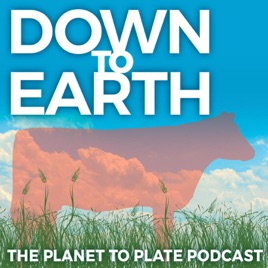
Advertise on podcast: Down to Earth: The Planet to Plate Podcast
Rating
4.8from
This podcast has
98 episodes
Language
EnglishPublisher
Quivira Coalition and Radio CafeExplicit
No
Date created
2017/08/19
Latest episode
2026/01/21
Average duration
51 min.
Release period
17 days
Description
Down to Earth is a podcast about regenerative agriculture, and it's for everyone who eats. We invite you to meet the people shaping a healthier food system—farmers, ranchers, scientists, land managers, writers, and many others. Designing a future that draws on both tradition and innovation, they're on a mission to change the paradigm so that the food we eat is healthy and long-term sustainable—for families and growers, for wildlife and water, for climate and planet. downtoearthradio.com
Unlock Down to Earth: The Planet to Plate Podcast podcast Email contact info,
Listeners & Audience details
Email contact information
Direct podcast contact details

Listeners
Audience numbers & engagement insights

Audience details
Podcast Insights

Social media
Check Down to Earth: The Planet to Plate Podcast social media presence
Podcast episodes
Check latest episodes from Down to Earth: The Planet to Plate Podcast podcast
Renewing farms with renewable energy
2026/01/21
Joe Heinrich comes from a multi-generation Iowa farming family. As executive director of the non-profit Farm-to-Power, he's helping farmers to navigate the new world of renewable energy. Solar and wind developers are looking for land, which farmers have; farmers are looking for extra income steams, which energy can provide.
But what happens to land with utility-scale energy installations? Some farmers are making sure that the panels are high enough off the ground that cattle can graze under them—and take advantage of the shade they provide. Others are grazing sheep under the panels, providing landscaping services and keeping the land healthy. Still others are growing crops. All of these are examples of agrovoltaics, or what Heinrich calls "double cropping"—harvesting food and energy at the same time.
Putting soil science to work
2025/12/02
Dr. Caitlin Youngquist started out wanting to be a veterinarian, but then discovered soil science and was so taken by it that she got a PhD, and has devoted her career to serving farmers, ranchers, and rural communities. A practitioner and promoter of regenerative agriculture, she has worked with Conservation Districts, non-profit orgs, Extension, and her own small business, Dirt Works Wyoming, a company that provides compost statewide. She uses science as a tool to solve on-the-ground problems, which range from crops and livestock issues to mental health, family dynamics, and food insecurity. She also guides hunting programs for women, is a volunteer firefighter.
TIMELINE
2'22 how Caitlin discovered agriculture and soil science
3'33 the value of applied science for solving real problems
4'23 what is Extension
4'52 the non-elitist focus of extension, taking academic research to the people
6'54 how extension actually works
8'40 food insecurity and food deserts in an agricultural state, starting a food garden
11'30 making sure initiatives last beyond their founder
13'17 taking the holistic/social work perspective as an extension educator
14'39 people get isolated on their farms
16'31 the importance of letting go of a scarcity/competition mindset and sharing knowledge
18'28 difficulty making generational transition of management
20'12 the difficulty in calling for help with family conflicts
22'17 the difference between complicated and complex systems
24'59 analogies between soil health and community health
27'17 efficiency vs resiliency
29'37 the one nation that feeds itself has high biodiversity and regenerative ag
30'21 making sure local food is not an elite activity
32'40 becoming a hunter
34'21 why hunting is so powerful for women in particular
40'05 whether hunting supports species conservation
42'29 compost company Dirt Works Wyoming
44'14 agriculture and soil science as a great career for young people to consider
45'47 drcaitlinyoungquist.com
Bringing bison back to indigenous lands
2025/11/12
Montana filmmaker Daniel Glick decided to make a film about bison just because he loved the animals and wanted to be around them. He teamed up with Blackfeet filmmakers Ivan and Ivy MacDonald to co-direct the documentary, Bring them Home, narrated by Lily Gladstone. The film explores the history of bison on the North American continent and the Blackfeet nation in particular; the parallel genocides of native people and the animal that provided them with sustenance, both practical and spiritual; and the movement to bring surviving herds of bison back to their ancestral lands. In this podcast Ivan and Daniel talk about the process of making the film, the significance of bison, and the challenges—and moments of grace—in the decades-long grassroots efforts to return them.
TIMELINE
2'28 WHY bring home buffalo
4'54 bringing back a wild herd that was once with Blackfeet people to their ancestral land
5'42 do the buffalo know they're coming home?
6'35 how the film came to be, Daniel wanted to spend time with buffalo
7'54 the creation stories and the relationship between Blackfeet and buffalo
9'35 vision of buffalo returning to the land, but it wasn't easy to implement
11'27 Blackfeet people were forced into ranching and farming and individual land ownership and this conflicted with the return of the buffalo
13'31 the system imposed on Blackfeet people antithetical to wildlife and healthy ecosystems
14'59 the different kinds of colonialism
16'02 Buffalo keystone species and how that affects other species
17'23 bison make grasslands a carbon sink
19'29 New York Wildlife Conservation Society got involved
20'40 the importance of patience in this process and building relationships, trust, community-building
22'58 potential for the buffalo to heal generational trauma, physical and spiritual genocide
24'23 Ini days celebration and ceremony
26'23 the spiritual aspect of Bison and all animals, relatives
26'35 everyone benefits from finding their reconnection to the natural world
27'20 the moment where the buffalo were set free, what was that like
28'13 a lot of risk and uncertainty in finally releasing them
29'55 cattle ranchers fell in love with buffalo
31'06 domesticated vs wild animals and how wildness affects us
32'47 how they are being monitored
33'51 Blackfeet acquired a 28,000 acre grassland ranch for the buffalo
34'45 conversations with other tribes
36'32 PBS screening starting November 24
38'05 beautifully made and crafted film, narrated by Lily Gladstone
40'56 a narrative of hope in a time of tragedy and pain
Meet Xochitl, Quivira's new Executive Director
2025/10/28
Xochitl Torres Small grew up in Las Cruces, NM, and started her career as an attorney who has working in water and natural resources law. She served as U.S. Representative for New Mexico's 2nd congressional district (2019-20); she was Under Secretary for Rural Development (2021-23); and she served as United States deputy secretary of agriculture (2023-25). She brings her wide-ranging experience Executive Director of Quivira Coalition, and in our conversation she talks about her background, government service, and visions for regeneration and collaboration across the food system.
TIMELINE
2'32 how Xochitl got into agriculture
4'11 the decision to go into politics
5'55 the difference between serving in Congress and in an agency
9'00 working in rural development
10'29 figuring out how to actually get money to rural communities
11'59 finding solutions that were energy efficient in rural areas
13'48 are agencies working together on common problems?
17'47 understanding the practicality of nature based solutions within government
22'46 soil health and why it's so important, and how Quivira does the work.
27'37 succession issues
30'26 vision for large scale transition of agriculture from industrial to regenerative
33'29 recognizing that solutions are all land-specific
35'06 how do you create local and regional food systems when a state like NM is exporting over 90% of its agriculture and importing over 90% of its food
36'11 systems that maximize only for efficiency tend not to be resilient in times of disaster
40'28 spectrum from regenerative to big ag but with lots of adoption all along the way
43'30 we need to stop "othering"
44'11 the challenges of scaling
45'59 going from government to grassroots, hopes and goals
Food, power, and hope in the American West
2025/10/21
In today's podcast, we talk to Jennifer Sahn, editor of High Country News, and writers Rick Bass and Laureli Ivanoff, about HCN's September issue, a collaboration with the Food & Environment Reporting Network (FERN). The issue covers a wide range of topics on Food and Power in the American West.
TIMELINE
1'57 High Country News and FERN collaboration on "Food and Power in the West" issue
3'17 stories in the issue including meat packing and pecan growing
6'10 the Indigenous Food Sovereignty Lab at Cal Poly, Humboldt
7'52 what is the Food & Environment Reporting Network
10'12 RICK BASS
10'57 the definition of sustainability and why it's not 100% attainable
12'41 forest service is part of the department of agriculture but really shouldn't be
12'59 old growth forests are a huge carbon sink and guard against climate change
13'48 the cooling effect of forests
15'49 art inspired by old growth forests
18'07 the role of old growth forests in not only climate defense but also global security
20'43 the paradigm shift from seeing the forest as a set of commodities to seeing it as a complex ecosystem—and that saving it is actually better for people than the industrial perspective
21'49 art to help people feel more deeply
22'48 the Yaak Valley Forest Council and the campaign to save it
23'38 defending the forest with love rather than litigation
24'48 trying to reach climate champions in power
25'22 Bass has been living in the forest for nearly 40 years, where he has worked as both a writer and an activist
26'10 trying to have the area dedicated as a climate refuge and a series of climate refuges in the northern forests
27'13 no extinctions since the last ice age
29'04 being a hunter in Montana looking for deer and elk
30'27 preserving the Black Ram forest, see montanaproject.org for art and yaakvalley.org for science
31'22 the importance of contacting elected representatives
31'48 LORELI IVANOFF
32'27 The Joyful Responsibility of Cutting Fish
38'46 the deeper meaning of "subsistence"
41'22 overharvest eventually results in collapse
43'07 the problem with thinking of the earth as possessions, rather than gifts
44'31 you don't take more than you need
45'47 the sense of belonging and community
49'55 the need to talk about community when community is threatened
50'55 how the climate has changed since she started cutting fish
51'41 it's hard to dry fish now because of wetter summer weather, and other climate problems
55'27 the difficulty of trying to live close to nature when you're in the city
The perils and poetics of being a fire lookout
2025/10/07
Philip Connors grew up on a farm in Minnesota, studied journalism, and got a job at the Wall Street Journal. But after the September 11 attacks and the death of his brother, he left New York behind and took a job as a fire lookout in the Gila National Forest in New Mexico. Following in the footsteps of other fire lookout writers, poets, and philosophers, like Gary Snyder, Jack Kerouac, and Jack Loeffler, he wrote his first book, Fire Season, in 2011. Since then he written three more books, the latest of which, The Mountain Knows the Mountain, incorporates poetry — particularly haiki — to engage both playful and profound ways of looking at the natural world and the state of our society.
Vermejo Park Ranch: Watching degraded ecosystems bounce back
2025/09/23
In 1996, media mogul Ted Turner bought a New Mexico ranch that's bigger than many national parks. A new film, Preserved, details its history, conservation projects, and influence. Previously owned by Pennzoil, the ranch was badly degraded from overgrazing, forest clearcutting, coal mines, fossil fuel extraction, railroads, and a long-term lack of environmental stewardship. Turner's goal was to restore the land and its wildlife, while keeping the ranch profitable through livestock and tourism businesses.
The film Preserved explores the history and conservation activities of Vermejo Park Ranch, including preservation of bison, mountain lions, cutthroat trout, and many other species. Lesli Allison, Executive Director of the Western Landowners Alliance, is one of the speakers in the film, and on this podcast we talk about the ranch, its place in the larger ecosystem, and its influence on agriculture and conservation.
TIMELINE
3'46 conservation projects on Vermejo Park Ranch
6'13 land badly degraded, but bounced back through stewardship
7'12 protecting land as an ecosystem and living community rather than species by species
9'43 the field of "sensory ecology"
12'08 learning from mistakes, trial and error
14'54 tried to introduce black footed ferrets but failed
15'50 Bison production at the ranch
18'02 migration of wildlife in the larger landscape
20'45 relationships with neighbors
21'37 the boom-bust model of economics
22'42 the benefits of staying in one place and working on it
24'09 we need economic support for the care of land, not just extraction from it
26'21 habitat leasing rather than reductionist systems like carbon credits
27'51 "land is a living community to which we belong" Aldo Leopold...thinking about ourselves as good for nature
30'57 is it the environment vs industry?
32'53 looking at the system rather than villainizing people
34'55 the problem of inequality
35'21 many landowners inspired by Vermejo Park Ranch
36'54 land conservation for the rest of us
40'14 the limiting factor of time
40'48 what's happening at Western Landowners Alliance
41'37 the role of private lands in conservation
42'37 taking care of the land needs to be compensated and become part of our economic system
44'03 the importance of stewardship in restoring land...the land doesn't restore itself
45'41 the next generation of land stewards
An outdoor classroom for land stewardship—and life skills
2025/09/09
Quinn Mendelson is Conservation Program Director of Rocky Mountain Youth Corps, a nonprofit that trains young adults to do conservation work in the "outdoor classroom" of New Mexico's landscapes. Not only do they learn skills like trail building, watershed restoration, and wildfire mitigation, but they also receive training that helps them to get jobs—as well as less quantifiable but just as important life skills like getting along with each other, finding their own authentic voices, and being in nature for long periods. The program has been going for three decades, and has led many of its alumni into fulfilling conservation careers.
TIMELINE
3'27 what the corps is all about
4'18 conservation skills, professional skills, life skills
5'52 example of a river project
6'59 so good for young people to have these outdoor opportunities
7'33 adjusting to outdoor work
9'30 people slowing down in the wilderness, and building self-confidence
11'31 paying living wages so the they can recruit from all demographics
13'50 bonding with people for life, and a tight alumni base, and those people work in every related field
15'43 the projects themselves, some using Bill Zeedyk techniques
18'13 showing the young people to see the big picture
18'46 creating a blueprint for post-fire restoration
19'52 coming back for additional years of work
21'12 relationship between the Corps and the surrounding communities
22'54 the connection between this work and regenerative agriculture
24'54 young people with an ag background, or wanting to get into ag through learning conservation work
26'10 learning about soil is central to all the work they do
27'36 as Corps alumni take their place in agency and roles of responsibility, this could change how policy is shaped
28'13 the way people are talking about fire now has evolved a lot in the last few decades
28'57 using beaver biomimicry
29'19 restoring firefly habitat in Chimayó, NM
31'06 people coming back to see the work they've done in future years
32'38 other similar corps all over the US
33'07 there are fewer than 100,000 young people doing this work; there should be millions
33'51 scholarships for higher education
34'20 dream job for a young person
35'32 this is part of Americorps
37'27 Quinn's work on therapeutic ranches
39'01 this is so much about hope for him and the org
40'43 potential careers
43'05 the need for an educated conservation workforce is and will continue to be great
44'37 what kinds of knowledge each generation is given
46'33 passing the torch to younger generations
48'02 working easily with partners, and providing labor for projects
The Good Meat Movement
2025/08/26
What is "good meat"? Michele Thorne has a lot to say on the subject. She is executive director of The Good Meat Project, a non-profit whose mission is to foster a healthy and humane meat system that centers local production instead of industrial monopolies that damage ecosystems and consolidate wealth. With the core value of transparency, they offer free services to butchers, ranchers, eaters, and chefs, and produce journals and that feature stories about people across the good meat universe.
TIMELINE
3'51 what is good meat?
4'52 soil stewardship
5'12 the core value of transparency
5'55 the importance of consumer trust
7'32 there's a reason big food companies are not transparent
8'33 the connection between food and health outcomes
9'50 hard to know how much of the country's meat industry is "good"
12'42 "Product of the US" labeling issues
14'52 greenwashing and humane-washing
15'20 Farm Forward study on greenwashing
17'21 the benefits of buying local
20'36 how the Good Meat Project serves producers, chefs, butchers, consumers
21'43 free marketing courses for meat producers
22'26 "features" vs "benefits"
25'05 BACON program—Butcher and Chefs Opportunity Network
25'46 butchers and chefs are important links to the community
27'00 more Good Meat Project resources...goodmeatproject.org
29'43 Olympia Provisions
31'48 educating consumers on the nuances of meat--industrial ag vs small producers
32'53 the risks of taking livestock off the land
34'37 meat substitute brands spend big bucks to message that meat is bad
36'23 Game Theory and how it can be used in the good meat movement
38'35 thinking about tradeoffs
46'52 trusting in healthy meat even if you can't measure the outcome
Navajo farming and entrepreneurship––for the next generation
2025/08/12
Zachariah Ben is a sixth-generation farmer from Shiprock, New Mexico. He and his family founded Bidii Baby Foods. Using traditional Navajo food traditions, they provide healthy, nutritious, and locally-grown food to Navajo people, many of whom are living in food deserts. And, through entrepreneurship and traditional farming, they seek to heal generational trauma by fostering not only physical health but also spiritual connection to land and community––from surviving to thriving.
4'12 traditional Navajo farming principles
5'01 trauma healing
5'31 farming with the stars, singing, birth rituals as strategies for successful farming
8'05 sharing/trading seeds to keep biodiversity, human beings as seeds
10'35 the ritualistic culture at the root of healthy food
11'36 corn at the base of all their foods
12'50 traditional Navajo foods
16'07 taking care of elders
17'43 majority of the market for the baby food is their own people
19'05 resistance of commercialization
20'22 goal of investing across the community through their non-profit
22'53 developing a business on tribal trust land, with all its legal and regulatory issues
25'48 the insanity of bureaucracy and red tape
28'19 dealing with water, irrigation, water rights
30'15 difficulty of local leadership because they've dealt with hardship all their lives
31'08 what "bidii" means
33'53 they don't believe in a diet that subtracts food, but one that adds
35'07 a lot of people on the reservation don't have access to electricity and running water
37'25 Navajo nation junk food tax on the food that is the only affordable food for many
40'24 building up the next generations to be thriving, not just surviving--and healing
42'14 a healed self is a healed community
43'37 annihilating the monsters of anxiety and depression
46'55 Zach is a sand painter
48'59 now he sees the farm as the medium for his art
49'43 looking not for return on investment but return of impact
50'16 contact Bidii via social media
Feeding a Divided America
2025/07/29
Gilles Stockton is author of the new book, Feeding a Divided America: Reflections of a Western Rancher in the Era of Climate Change, published by University of New Mexico Press. A third generation cattle rancher, he raises beef cattle and sheep on a 5000-acre ranch in Grass Range, Montana. He's also an international agriculture development specialist and an advocate for ranching and farming communities. The new book imparts a lifetime of wisdom and analysis of what happened to our agriculture system, why, and how we can create a system that gives power back to the farmers who are actually growing our food.
3'01 the book is an extension of his op-ed pieces
4'24 multi-generation ranch background
6'30 raises cattle and sheep, as well as hay
7'14 how Western ranching improves the land
7'46 overgrazing damaged the land; it developed from the collapse of homesteading
9'47 ranching the only sustainable model of large scale agriculture in the US
10'48 the decline of his town early 20th century, and the decline of farms in general
11'57 overproduction led first to subsidies, then to the elimination of small farms
13'37 200,000 farms produce 80% of our food. The rest are trying to survive in an industrial agriculture economic model that doesn't really want them
14'48 how megafarms came into being in the 1980s–the decision not to enforce antitrust laws, leading to monopolies/cartels
16'57 the problem of externalities
18'11 the difference between competitive capitalism (free enterprise where buyer and seller have equal power) and cartel capitalism–which is more like old-style communism
20'33 cartels can raise prices indiscriminately
21'14 not enough slaughterhouses–system is too centralized
21'52 agriculture has never had a golden age–it's always been difficult
22'48 farmer gets 15.9¢ out of consumer dollar
23'22 the system steals from the farmer and farm labor
24'25 the "illusion of economies of scale"
24'45 smaller farmers are better farmers
25'20 the role of the farmer has been squeezed out in the name of "efficiency"…then there's no advocate for the land and animals
26'24 what's lost when you don't have the farmer on the ground…the land, the workers, the animals
27'20 corporate boards instead of farmers are making decisions about things they know nothing about
28'23 why monocrops systems are so un-resilient, especially during climate instability
29'39 the problem of the super wealthy buying farm land–looks like colonialism
30'11 the wealthy neighbors don't understand how their elk sanctuary affects their ranching neighbors
32'02 rural people hate environmentalists more than they hate the corporations that are ruining them
32'36 the sense that their vote doesn't count
33'32 "they don't ask our opinion"
35'16 policy for the last 50 years has been anti-rural. Rural voters vote red, but they don't do anything for rural people. But blue doesn't either.
36'15 climate change is making things existential
36'46 there's a movement for anti-trust enforcement, which is encouraging
37'54 we need to decentralize in order to have a healthier food system — what that could look like
38'35 about 1/3 of food in France is sold locally, unlike the US where it's more like 3%
39'16 the US imports more food than it exports. So much for "feed the world"
39'47 the need for auction markets for all food commodities (instead of contract work)
40'46 we don't need new anti-trust laws, just enforcement of the existing ones
43'04 Citizens United decision of 2010 was a huge gain for the wealthy and corporate power
44'15 revitalizing rural communities = revitalizing democracy
45'05 the importance of being organized around an idea and staying with it
47'04 the local foods movement is extremely important. But it's very libertarian in its politics, which means that they don't deal with the globalized competition, they just do their own thing and stay a part of the 3% of local food
48'33 the Farm Bill isn't so much a farm bill as an ag business bill. The orgs doing good work need to organize with each other more
49'42 what gives him hope
50'35 what happens after Gilles, what is the plan for the next generation
Preventing Catastrophic Flooding: The Secret is in the Soil
2025/07/15
Bryan Hummel is a big-time water nerd. Specializing in nature-based solutions to watershed and land management issues, he has brought his expertise to the US Environmental Protection Agency, the US Air Force, industry, and agriculture. The key to preventing flooding, he says, is to restore degraded land so that the soil becomes like a sponge, absorbing water and recharging subterranean aquifers––and in the process preventing flooding and contributing to the success of farming and ranching businesses, which thrive with abundant water resources. His techniques include beaver and bison biomimicry and permaculture techniques that slow, spread, and sink water into the soil instead of letting it run off.
Thinking ecologically—about human health
2025/07/01
Doctor and professor of public health Wendy Johnson saw in her medical practice people who thrived against all odds, and those who suffered grave challenges due to environmental factors like toxicity, poverty, stress, loneliness, and isolation. Her new book, Kinship Medicine, explores the reality that 80% of our health is determined by factors outside of us—which are largely ignored by our industrialized medical system. What's missing is ecological thinking, and understanding ourselves as part of an environment—from our microbiome to our community, to our ecosystem.
Cultivating community in urban food forests
2025/06/17
Orion Kriegman and his friends started clearing a trashed vacant lot in Boston to create green space and grow food. City hall was not on their side at first, but with persistence and community effort they were able to secure that lot as permanent green space—and so The Boston Food Forest Coalition was born. A dozen more urban lots were acquired and put into Community Land Trust by the coalition, but the stewardship and management of each food forest belongs to the neighborhoods. These are spaces for food, community, shade, gardening, education, wildlife, kids, and more. With more food forests created every year, the Coalition is part of a web of urban ecosystems throughout the city that are little oases of greenery—and hope.
Women ranchers finding their power
2025/06/03
Montana rancher Amber Smith didn't grow up in agriculture, but ranching became her life's work.
As a young adult Kristen Kipp left the family ranch in the Blackfeet but felt a deep longing to go back to her home and the work of raising livestock.
Amber is the executive director of Women in Ranching, which was first a part of the Western Landowners Alliance and then later became an independent non-profit, and Kristen is a board member. They talk about raising families on the ranch, about discrimination against women and Native people in agriculture, and about leadership that challenges the dominant model––and is often more effective because it brings people together and gives them all their own voice.
Podcast reviews
Read Down to Earth: The Planet to Plate Podcast podcast reviews
Constantin Reader 2025/09/08
Always fascinating
Interesting and very timely conversations conducted by one of the smartest and best interviewers around. Not to be missed.
OldDogRun 2025/07/17
Great conversations
Love these interviews - fab information - Mary Charlotte is a polymath!
Lilliam628 2025/06/26
Inspiring
Mary-Charlotte is one of the most perceptive interviewers around! Always inspiring guests with lots of good ideas for reconnecting with Earth.
Dan from NM 2024/11/12
Virtual fence episode
Great review, but I wish there was discussion on costs. The guests avoided the question.
Trailrunnergal 2024/04/02
The BEST!
If you only listen to one podcast this month, even if you have no connection to livestock production or agriculture, please, please listen to this one...
JWeybright 2023/03/24
The radical middle
This is a great podcast, from a great organization that is doing regenerative work with farmers and ranchers in the US west. They don’t preach, they j...
Odin Farmer 2021/11/08
Favorite
Thoughtful, intelligent and knowledgeable moderator makes each podcast a joyful learning experience. As a farmer, I appreciate how prepared Mary-Char...
unicor Life🦄🦄🦄 2021/01/31
A Proper Podcast about Regenerative Ag
This pod is well managed, produced well and has a variety of guests around a topic everyone should have at the top of their minds. Keep up the good wo...
frankiedubs 2021/01/28
The best!
Informative, insightful and inspirational
bennirubber 2020/07/18
Yeah
Inspiring stuff!
Podcast sponsorship advertising
Start advertising on Down to Earth: The Planet to Plate Podcast relevant audience podcasts
You may also like to advertise on these Podcasts
4.766633
Habits 2 Goals: The Habit Factor® Podcast with Martin Grunburg
Martin Grunburg

4.2188103
Casual Swinger - A Sex Positive, Swinging Lifestyle Podcast
Mickey & Mallory

4.9179127
Curious Objects
The Magazine Antiques

4.7960
Jerusalem Radio - Pastor Pablo Shin - Servicio Dominical en la Iglesia Buenas Nuevas Central CDMX, México
Jerusalem Radio

592293
Science and Spirituality
Chris and Kevin Carton

55100
With All Due Respect
The WADR Project

3.623699
The Robinett's Nest with Chuck and Kristy
Chuck & Kristy Robinett

4.778815
The Hollow
GZM Shows

4.4247129
Dj candela Metiendo fuego
Djcandela

4.71048249
Hot and Bothered
Not Sorry Productions