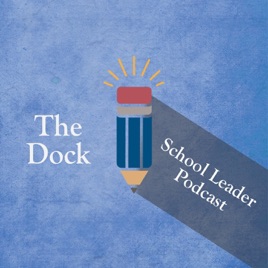
Advertise on podcast: The Dock School Leader Podcast
Rating
5from
This podcast has
42 episodes
Language
EnglishPublisher
The Dock for LearningExplicit
No
Date created
2017/10/11
Latest episode
2026/04/21
Average duration
44 min.
Release period
16 days
Description
Talks to inspire and equip Anabaptist school leaders.
Unlock The Dock School Leader Podcast podcast Email contact info,
Listeners & Audience details
Email contact information
Direct podcast contact details

Listeners
Audience numbers & engagement insights

Audience details
Podcast Insights

Podcast episodes
Check latest episodes from The Dock School Leader Podcast podcast
Special Q & R Feature: Healthy Families (Gerald Miller)
2026/04/21
In the last episode, we heard from Gerald Miller about the central role of the family. For this special question and response feature, I sat down with Gerald Miller, administrator at FBCS for a related conversation about the role school leaders have in growing healthy families in their communities. We talked about the current parenting scene, tried to paint a picture of what could be, and thought about the opportunity at hand.
We’re delving into this topic because it’s vitally important and often complicated. Messy, as we often say. How do teachers and school leaders avoid trespassing onto the territory of the parents? What do we do with all the knowledge we gain about families and parents? What do we do with problems in the home? How do we hear and respond to the concerns, frustrations, and aims of parents? In short, how can you as a school leader work to care for the families in your community? What is your role in growing healthy homes?
Links
Contact us: https://thedockforlearning.org/contact-us/
3-minute feedback: https://forms.office.com/r/1G564EGQkn
School at the Heart of the Church (Gerald Miller)
2026/04/07
What if we understood school as part of the heart of the church rather than a useful arm? Would this change the way we did school? What if we saw teachers as working in close collaboration with the ordained leaders of a church, as extensions of that ministry?
The New Testament points to the church established by Christ as the essential basis of the kingdom of God. In this episode, Gerald Miller says, “The church is where the kingdom of God finds its expression. And the local body of believers is the heart of the kingdom.” What does this mean for the school?
Gerald, a long-time teacher and school leader sees the school as a servant of the church. There’s at least two things to emphasize here, the work of education is essential, more like a heart than a hand. Secondly, the work of education is a corporate responsibility and never the exclusive domain of the school. Gerald describes the role of the individuals in a school as raising up young people that love God with everything and serve others and as transmitting the values of the church. In sum, this is a vision of educators working closely alongside of the church.
That’s the first half.
In the second half, Gerald offers basic practical outlines for roles that must work at pulling together if the church and school will be effective partners. He gives valuable advice for each one. Those roles are church leaders, board members, parents, teachers
A key idea you’ll hear in this talk is the critical importance of communication and of investment in people.
Links
This talk was first published as “It Takes a Community to Educate a Child” https://www.thedockforlearning.org/content/it-takes-a-community-to-educate-a-child
Contact us: https://thedockforlearning.org/contact-us/
3-minute feedback: https://forms.office.com/r/1G564EGQkn
Becoming a Storytelling Teacher (Steven Brubaker)
2026/03/17
Description
Drop us a question for the special, upcoming Q & R episode with Gerald Miller.
What does it take to cultivate love in our students? As teachers, we don’t just want to transfer important information to our students. We want to change their lives. We want them to love God with their heart, soul, mind, and strength. In Steven’s words, “Stories are one of the most powerful tools available to us as teachers for shaping loves.”
If you want to shape your students’ loves, carefully choose your stories. Steven Brubaker is the administrator of Faith Builders Educational Programs. He began his work in education as a principal and teacher in a grade school. In this talk, Steven implies that, in fact, there’s no avoiding the reality that you will shape the loves of your students by the story of your life and the stories that leak out of you or that you reference or approve. As you evaluate the loves of your students ask yourself how you’ve contributed to those loves, good and bad, by the stories that you’ve given to them. You are in a position to bend the desires of your students. Stories wield powerful influence in shaping and nurturing the hearts of your students.
Steven addresses numerous practical questions related to infusing your teaching with stories.
How do you use stories across the disciplines
How can you become a collector of stories?
Where do you find stories?
How do you use the stories that you’ve collected?
Included in Steven’s advice are systems for recording, organizing, and retrieving stories and tips for collecting stories through book sales, your personal experience, your reading, and our history.
Book titles referenced in the talk:
The Sunflower by Simon Wiesenthal
The Rest of the Story by Paul Harvey, Jr.
Let Me Tell You a Story, by Tony Campolo
Two Brothers One Mission by Mary Fretz
Chariots in the Smoke by Margaret Epp
Coals of Fire by Elizabeth Bauman
They Loved Their Enemies by Marian Hostetler
Annie Funk by Sharon Yoder
Small Man of Nanataki by Liam Nolan
Blood Brothers by Elias Chacour, David Hazard
The Brigade by Howard Blum
The Witch of Blackbird Pond by Elizabeth George Speare
Dragon’s Gate by Laurence Yep
To Kill a Mockingbird by Harper Lee
Les Miserable by Victor Hugo
God Spoke Tibetan by Allan Maberly
Twenty and Ten by Claire Huchet Bishop, Janet Joly
Henry’s Freedom Box by Ellen Levine
Story of Ruby Bridges by Robert Coles
Faith the Cow by Susan Bame Hoover
Links
This talk was first published as “Practices That Nurture God Love” https://thedockforlearning.org/lecture/practices-that-nurture-god-love-steven-brubaker/
Other recordings from Teacher’s Week 2013: https://www.thedockforlearning.org/series/teachers'-week-2013
Questions for the Q & R episode:https://forms.cloud.microsoft/r/KQnYsYgPAq
Contact us: https://thedockforlearning.org/contact-us/
3-minute feedback: https://forms.office.com/r/1G564EGQkn
library.upenn.edu
CAM Books
Christian Learning Resource
Christian Light
[Updated Audio] Effective Student Discipline (Glendon Strickler)
2026/03/16
Drop us a question for the special, upcoming Q & R episode with Gerald Miller.
As principals and administrators, it’s your responsibility to guide your teachers in effectively disciplining students and to get involved in handling the toughest cases. Many of you also teach and are on the first line of discipline yourselves. In this episode with Glendon Strickler, you will hear an overview of how to discipline students that will enable you to better equip your teachers as well as grow in your own approach to discipline.
Glendon’s ideas have been formed through his experience of some very challenging teaching assignments and through his experience as a principal. He backs up his points with numerous stories from those experiences. Throughout the talk you’ll hear him unpack lessons he’s learned such as: effective discipline takes time, why students misbehave, approaching discipline through a student’s perspective, building a strong defense, and more.
There are three main sections in the talk.
Basic discipline techniques (6:25)
The steps in a discipline session (28:00)
Techniques to avoid (41:15)
Links
This talk was first published as “Modeling and Teaching the Anabaptist Christian Faith in a Practical Way Through Discipline” on The Dock: https://www.thedockforlearning.org/content/modeling-and-teaching-the-anabaptist-christian-faith-in-a-practical-way-through-discipline
Other recordings from Teacher’s Week 2010: https://www.thedockforlearning.org/series/faith-builders-teacher's-week-2010
Questions for the Q & R episode: https://forms.cloud.microsoft/r/KQnYsYgPAq
Contact us: https://thedockforlearning.org/contact-us/
3-minute feedback: https://forms.office.com/r/1G564EGQkn
Great Opportunities (Stephen Gingerich)
2026/02/24
Drop us a question for the special, upcoming Q & R episode with Gerald Miller.
Sometimes problems come to us disguised as great opportunities. This episode with Stephen Gingerich addresses the challenge of working with high needs students. We’re not exploring specific learning disabilities here. That is sometimes part of the picture and deserves attention. This is more general and establishes a baseline for how we engage a high needs student.
Drawing on his years of experience in education, much of it gained through his work in Guatemala, Stephen develops his approach around the three great virtues: faith, hope, and love. He reminds us that our goal is to prepare children for life. And for that they need well-formed skills but they need well-formed character more. And this character they absorb from their role models. This means they will take a part of us with them through their life.
Stephen’s talk is generously sprinkled with stories of what relating to needy students looks like.
Links
This episode was first published as "Working with High Needs Students" on The Dock: https://www.thedockforlearning.org/content/working-with-high-needs-students-(stephan-gingerich)
Questions for the Q & R episode: https://forms.cloud.microsoft/r/KQnYsYgPAq
Contact us: https://thedockforlearning.org/contact-us/
3-minute feedback: https://forms.office.com/r/1G564EGQkn
[book] The Five Love Languages: https://a.co/d/03ROxKG0
How to Build Rapport and Why It Matters (Glendon Strickler)
2026/02/03
Drop us a question for our special, upcoming Q & R
We have different strengths and emphases as educators but probably none of us would deny the critical importance of having strong relationships with our students. Glendon Strickler brings a wealth of experience to this topic and conveys the mindset, some of the methods, and a illuminating stories of how he approaches student relationships. Glendon has taught and administrated at several schools including Ephrata Mennonite School and Faith Builders Christian School.
A key word here is rapport. Building a positive rapport is one of the most important things a teacher can do. Glendon argues that it looks like putting excellence and competence over likableness, leveraging the fact that students unconsciously imitate people that they like, ensure safety for all students, and patiently angling for loving influence. How do you earn rapport? Breaking the ice, wielding the rubber sword of humor, opening the door to connecting with students—hear Glendon reflect on how these and more have enabled powerful relationships with students.
Glendon also works to develop our understanding our generation of students by considering the impact of individualism, the generation of “me,” the priority of feelings over truth. He reminds us that: “Rules without relationship leads to rebellion.” But Glendon argues that in this climate Jesus doesn’t need to be modernized. Instead, what modern people need is spiritual mentors that bring Jesus to life. Living, breathing examples that put flesh on cold concepts and life into ideas.
There’s no replacement for experience, making a bunch of mistakes, and humbly learning from them. Next time you bump into a teacher you admire, ask them how they connect with student or how they wield humor in their teaching. Bring this up with your staff. Talk about mistakes you’ve made. Think together about how to build rapport. Keep listening for a bit of bonus content on a few more tools in Glendon’s toolbox.
Links
Contact us: https://thedockforlearning.org/contact-us/
3-minute feedback: https://forms.office.com/r/1G564EGQkn
[book] The Last Christian Generation by Josh McDowell: https://a.co/d/bdYEiZe
[book] Already Gone by Ken Ham and Britt Beemer with Todd Hillard: https://a.co/d/2BDJwgs
Airzooka: https://www.flinnsci.com/airzooka/ap6657/#variantDetails
What Are You Showing Them? (Stephen Gingerich)
2026/01/22
You can say it in different ways, but a Christian school isn’t worth the time and effort it takes unless it’s helping form disciples of Jesus. That doesn’t mean you’re practicing child evangelism or replacing the essential work of the church. It does mean that we are partnering with our churches and families and that we as school leaders and teachers are fully devoted to following Jesus ourselves. Like Stephen says, we should think of ourselves as wearing signs that say, “Follow me.” This is a call to evaluate and refocus our personal vision and witness in our relationships around schools that most definitely shape our teaching and our students.
Stephan Gingerich has been on this show before and brings a range of experience in teaching and school leadership, some of which he gained while growing up and teaching in Central America. He brings refreshing perspective and challenges us in this talk to be concerned with what’s beyond our school fences.
Stephen invites us to ponder with him.
Great opportunities are often disguised as problems.
Perhaps we witness the most when we don’t know that people are watching us.
How can our schools bring light to the world?
What does the Sermon on the Mount have to say about Christ-like community relations?
What are practical ways you can connect with your community?
Links
Contact us: https://thedockforlearning.org/contact-us/
3-minute feedback: https://forms.office.com/r/1G564EGQkn
Is Your School Swimming or Floating? (Steven Brubaker)
2026/01/08
“Genuinely Christian schools will not always fit what everyone else is doing in education. We need to give ourselves permission to go against the flow.” But it’s not sufficient to seek difficulty and resistance. We need a goal. A mission. A burning love. A beautiful vision. As Steven emphasizes in today’s episode, “Nonconformity is not enough. We need something to be conformed to. And for us, that something is a Someone.”
Educational orthodoxy. What is it and how does it impact us? You’ll hear about this in today’s episode, but basically, it’s the body of assumptions and principles that unify the majority of educational efforts around us. This orthodoxy shapes the way we describe a well-trained person and the educational experiences we dream of offering. Steven Brubaker, speaking from a long history in teaching and school leadership submits that the educational orthodoxy in north America is inadequate as a source of guidance for our schools and maybe even dangerously misguided.
But we will need a solid basis for doing something different, for swimming against the current. “Every nonconformity is a conformity to something,” Steven reminds us. Every resistance is a defense of something. What’s worth defending? Worth conforming to?
Drawing penetrating insights from the analogy of salmon, Steven lays out a challenge for Christian schools to identify and relentlessly pursue a worthy homing instinct.
What is a compelling and worthy final end for Christian education? The end beyond which we stop looking for some further fulfillment?
Schools conformed to Jesus. How could you and your staff make a practice of asking and seeking, “Jesus, how do I teach in my school?” And what would your school look like if you then boldly followed his leadership?
Links
Contact us: https://thedockforlearning.org/contact-us/
3-minute feedback: https://forms.office.com/r/1G564EGQkn
Stories with Jonas and Ken (Jonas Sauder and Ken Kauffman)
2025/12/23
It’s Christmas season and here on the Dock School Leader Podcast we’re running a special episode featuring a collection of stories chosen and read by two experienced educators that have appeared before on this show—Jonas Sauder and Ken Kauffman. Their selections range from fables to short stories to poems and all convey a timeless truth through the penetrating power of story. Take a break from the heavier content and enjoy these selections with us.
What we read often sticks with us at a subconscious level. Stories have the power to embed their message deep within us. They shape our worldview and affect our actions even after we’ve forgotten the details.
See below for the titles of the selections and the timestamps for each one.
Perhaps you’ll find something here for an upcoming devotional or a story time with family over the holidays.
[2:30] Wellspring of Wisdom – read by Jonas Sauder
The free lunch
The magic sticks
Practical sympathy
Community
[7:45] The King and the Seeds – read by Ken Kauffman
[16:30] George Washington Carver – read by Jonas Sauder
Selection from a biography
Testimony in Congress
[25:00] Dear Mrs. O’Neil – read by Ken Kauffman
[34:20] The Blind Man and the Elephant – read by Jonas Sauder
[37:30] The Church Walking With the World – read by Ken Kauffman
Links
Contact us: https://thedockforlearning.org/contact-us/
3-minute feedback: https://forms.office.com/r/1G564EGQkn
Why Teach Math?
2025/12/09
Why teach Math? John Swartz is ambitious here. Hear him connect the question of why he teaches math with the question of why he exists along with stories of Almanzo Wilder and his own experience. He brings teaching experience as well as specific training in mathematics. He’s worked in curriculum at Christian Light and also served as a minister for many years.
In this episode, John quotes Larry Zimmerman who states that, “Christian teachers motivate their students to learn mathematics in two ways: first mathematics exhibits the glory of God, second mathematics equips students to care for the creation.” This comes from Zimmerman’s book, Truth and the Transcendent. John recognizes the utilitarian value of mathematics but is most interested in exploring the proposal that, “Math is the language of the universe,” and that it is not a neutral subject.
This talk provides a thought-provoking investigation of an underexamined subject that occupies quite a bit of space in all of our schools.
Links
More recordings from CASBI 2013: https://thedockforlearning.org/series/casbi/casbi-2013/
This recording was first published as “Why Teach Math?” on The Dock: https://thedockforlearning.org/lecture/why-teach-math/
More information about Conservative Anabaptist School Board Institute: https://casbi.info/
Books
When Are We Ever Going to Have to Use This? By Hal Saunders and Jill Marino: https://a.co/d/cBKrSfT
Mathematics is God Silent? by J. Sire: https://a.co/d/56q16kb
Truth and the Transcendent by Larry Zimmerman: https://answersingenesis.org/answers/books/truth-transcendent/
Math Wonders to Inspire Teachers and Students by Alfred Posamentier: https://a.co/d/9v4c442
Fascinating Fibonaccis: Mystery and Magic in Numbers by Trudi H. Garland: https://a.co/d/c30zp0n
Teacher Generated Problems
2025/11/25
What images or models are your teachers taking into their classrooms? How do they see themselves and their students? What is really driving them?
Distorted images and motives can be difficult to identify but express themselves in all manner of persistent issues that do deep damage. Welcome to this episode where Anthony Hurst names a number of potential mindset problems, or areas of possible problems. He provides clarifying examples and concrete suggestions that will increase your perceptiveness about these mindsets and guide your response to problems. Anthony has experience as a teacher and school leader. What he explores here stems from his humility in learning from his own mistakes and allowing that to build his understanding of these mindsets.
Why does this matter? The work you do to develop the self-awareness of your teachers and aid the formation of healthy mindsets will have more to do with long-range fruitfulness than the best policies and policing that you can provide. It’s the difference between joyful labor and desperate survival.
The theme that runs through the talk is combatting disinterest, disrespect, and disorder in the classroom so that learning can be wholesome and fruitful for all involved.
Content vs. student
Teacher pets
Strictness vs. leniency
Inconsistency and mood swings
Respecting the personhood of every student
All work, no play
Criticism vs. complements
Unrealistic expectations
Winning students’ hearts
Interest in their personal lives
Passion for learning and for the subject
Special projects
Diversity of style
Model neatness
Know your subject
Plan your projects
Follow a schedule
Links
This recording was first published as “Teacher Generated Problems” on The Dock: https://thedockforlearning.org/lecture/teacher-generated-problems/
Other recordings from TW 2010: https://thedockforlearning.org/series/fbep-teachers-week/faith-builders-teachers-week-2010/
Surviving the Scientific Battles
2025/11/11
Description
How and why do we teach science in a time when for years we’ve been battling in the world of science trying to prove God’s existence? With what mindset do we approach the natural world? How are we seeing creation, and how does this shape the way we see the Creator? Rob Layne is quite interested in exploring some of what’s going on deep under the hood in science.
In this episode, you’ll find some ideas for what to cover in science and how to teach it. You’ll also hear Rob attempting to describe what an Anabaptist approach to science might look like. He speaks from a background in education that includes teaching and working for Christian Light.
Let me give you a little more context. Broadly speaking, Protestants and Anabaptists have somewhat divergent understandings of the relative importance of the hands and the head. On practice and reason. Rob highlights a problematic part of trusting too much in reason, in having things worked out in our heads compared to prioritizing a life of obedience and accepting a level of not understanding or having thorough reasoning for our practice. It almost goes without saying, but let’s not forget the reality that God did give us heads as well as hands, and there’s also a danger of giving too little time and attention to using our heads well. But back to the issues, where do we look for proofs of the Bible and God. Should we be looking to science? Do unanswered questions produce doubt? What do the examples of Christ and the Scriptures show us about the way God reveals Himself to the world?
Maybe there’s something in the world of science for us to reclaim and revive.
Links
This episode was first published on The Dock as “Why Teach Science?” https://thedockforlearning.org/lecture/why-teach-science/
More recordings from CASBI 2012: https://thedockforlearning.org/series/casbi/casbi-2012/
Teacher Support Is Not Optional
2025/11/04
3 minutes of your time to answer 5 questions will help us to serve you better. https://forms.office.com/r/1G564EGQkn
Description
Does supporting your teachers look overwhelming to you? You’re not alone. Caring for and nurturing teachers is not easy. Each teacher represents many relationships and responsibilities. Your teacher’s jobs matter. And they matter every day. That’s why teaching is hard. And why it’s hard to care for teachers. There is no autopilot at school.
Anthony Hurst, who is a school representative for Christian Light, addresses this reality with the experience of both a teacher and administrator. He also understands the perspective of a school board. There’s lots of combined talking to admin and school boards here. As you hear Anthony address school board members, ask yourself, “What is my place in cultivating a healthy principal to school board and staff to school board relationship?” In short, even for schools that have on-site principals or administrators, the presence of the school board is essential to providing a healthy support network for teachers. Teachers can’t do it alone. Administrators can’t do it alone. It takes all of us trying to understand each others’ perspectives and working together to welcome each others’ presence. This takes an inviting attitude, a strategic plan, and lots of patient dedication to make this happen. And Anthony has lots of ideas to get you started
Take heart, and may this talk strengthen you for your good work.
Links
Links
This recording was first published on The Dock as “Equipping and Supporting Your Teachers:” https://thedockforlearning.org/lecture/equipping-and-supporting-your-teachers/
More recordings from CASBI 2018: https://thedockforlearning.org/series/casbi/casbi-2018/
Episode 8: https://mcdn.podbean.com/mf/web/pkmyqvkteavwti3f/2024-12-03_Mixdownbby87.mp3
The Thread That Runs So True by Jesse Stuart: https://a.co/d/5EeEO4N
The Seven Laws of the Learner by Bruce Wilkinson: https://a.co/d/j7mJBaW
The Seven Laws of the Teacher by Howard G. Henricks: https://a.co/d/3HZi0uj
Language Arts and What’s at Stake
2025/10/07
3 minutes of your time will help us improve this podcast https://forms.office.com/r/1G564EGQkn
Take the survey!
Most people can readily see the importance of English. Why do so few enjoy it in school or find it fulfilling?
In this inspiring session, Kendall Myers reminds us of why language arts classes rightly take a significant slice of our energies at school. Kendall brings a wealth of experience and thought to this topic from his time in the classroom, in school leadership, and as a parent. He asks the question: What should we accomplish in our English classes? He unpacks the basic goal of producing students who are capable of listening and reading with comprehension and speaking and writing with clarity.
You’ll hear a profound philosophy of language woven in here. Language opens the world to our students; it changes the way they see and understand. Articulating what they have learned or are coming to understand is a vital part of knowing. Expressing what they know clarifies their understanding and increases their ownership of the material.
But this talk doesn’t just give the philosophy. While that’s essential to caring deeply about English, Kendall’s talk also points towards the kinds of activities that can turn this subject into something students look forward to. Specifically, he offers an overview of how to think about cultivating your students’ reading. What should our students be reading and how do we identify a good book?
Links
This recording was first published on The Dock as "Why Teach English?" https://thedockforlearning.org/lecture/why-teach-english/
More recordings from CASBI 2015: https://thedockforlearning.org/series/casbi/casbi-2015/
Info on how languages divide the color spectrum differently (two suggested links below; use some or all or other)
https://blog.duolingo.com/color-words-around-the-world/
https://www.pnas.org/doi/10.1073/pnas.0701644104?url_ver=Z39.88-2003&rfr_id=ori:rid:crossref.org&rfr_dat=cr_pub%20%200pubmed
https://www.newscientist.com/article/dn11759-russian-speakers-get-the-blues/ (summary of the 2nd link)
What They Won’t Forget
2025/09/23
3 minutes of your time will help us improve this podcast https://forms.office.com/r/1G564EGQkn
Take the survey!
You’ve heard it before; your school will develop a culture, a spirit. The question is: what kind of a spirit will it be and what can you do to form it?
Richie Lauer brings helpful insight and proactive ideas for you to consider as you get into your school year. Richie has taught and administrated and now fills a role at Anabaptist Financial. This talk comes from way back in 2001. Richie highlights the need to cultivate and guard respect, looks at ways to maximize participation, unpacks the significance of the various interactions around school, and offers examples of the kinds of traditions that bear a lot of weight in developing healthy school spirit.
Many of the details and too much of the information learned at school is forgotten. School plays a unique role in forming a child’s identity and that is something they never lose.
You can find the entire session from which this talk was excerpted at the link below. Jonas Sauder gives his thoughts and ideas in the second half of the session.
Links
This recording was first published on The Dock as “Developing School Spirit and Traditions:” https://thedockforlearning.org/lecture/developing-school-spirit-and-traditions/
7: Curriculum is Important, but What About Everything Else? https://administratorspodcast.podbean.com/e/curriculum-is-important-but-what-about-everything-else/
Podcast reviews
Read The Dock School Leader Podcast podcast reviews
bgqjhstn 2019/07/09
Thanks
Thanks for making this available!
Jon5905 2018/07/29
Effort
I appreciate all the good information!!!
Podcast sponsorship advertising
Start advertising on The Dock School Leader Podcast relevant audience podcasts
You may also like to advertise on these Podcasts
4.4371061566
The Megyn Kelly Show
SiriusXM

4.888901269
Fearless with Jason Whitlock
Blaze Podcast Network

4.8118931000
Mind Pump: Raw Fitness Truth
Sal Di Stefano, Adam Schafer, Justin Andrews, Doug Egge
4.8102131585
Tara Brach
Tara Brach

4.541561215
Something You Should Know
Mike Carruthers | OmniCast Media
4.513841343
Strictly Anonymous Confessions
Kathy Kay

4.8292781897
Fantasy Footballers - Fantasy Football Podcast
Fantasy Football

4.62382612
Football Weekly
The Guardian

4.45387666
Two Judgey Girls
Two Judgey Girls

3.8258501152
The Viall Files
Nick Viall