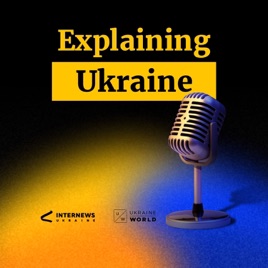
Advertise on podcast: Explaining Ukraine
Rating
4.9from
This podcast has
414 episodes
Language
EnglishPublisher
UkraineWorldExplicit
No
Date created
2018/01/09
Latest episode
2026/04/23
Average duration
52 min.
Release period
11 days
Description
A podcast by UkraineWorld.org, a multimedia project about Ukraine run by Internews Ukraine. Explaining Ukraine, its politics, society and its culture. Support us: patreon.com/ukraineworld
Unlock Explaining Ukraine podcast Email contact info,
Listeners & Audience details
Email contact information
Direct podcast contact details

Listeners
Audience numbers & engagement insights

Audience details
Podcast Insights



Podcast episodes
Check latest episodes from Explaining Ukraine podcast
Odesa in love and war - with Julian Evans
2026/04/23
Let’s travel for a moment. Imagine you are on the shore of the Black Sea, in Odesa—one of the most beautiful cities in Eastern Europe.
Odesa possesses multiple identities and refuses to be trapped by a single definition. It is Jewish, French, Italian, Ukrainian, Crimean Tatar, Romanian, Moldovan, Greek, Bulgarian, and more. Both the Russian and Soviet empires sought to flatten this multiplicity into a single imperial identity. They failed.
Today, in an act of resentment, Russia is attempting to destroy Odesa. Missiles and drones fall upon its historic center, a site of UNESCO World Heritage.
Meanwhile, Odesa is seeking a new identity. It is a work in progress—not yet fully formed—which makes the city incredibly vibrant and, in many ways, still misunderstood.
***
This is the “Explaining Ukraine” podcast.
Host: Volodymyr Yermolenko, a Ukrainian philosopher, chief editor of UkraineWorld, and president of PEN Ukraine.
Guest: Julian Evans, a British-Australian journalist, writer, traveler, and filmmaker. His latest book, Undefeatable: Odesa in Love and War, published by Scotland Street Press, shares his personal story of Odesa through his friendships and family connections.
Book: https://www.scotlandstreetpress.com/product/undefeatable-odesa-in-love-and-war
Explaining Ukraine is produced by UkraineWorld and brought to you by Internews Ukraine.
***
Listen on various platforms: https://li.sten.to/explaining-ukraine
UkraineWorld: https://ukraineworld.org/en
***
SUPPORT:
You can support our work on https://www.patreon.com/c/ukraineworld
Your help is crucial, as we rely heavily on crowdfunding.
You can also contribute to our volunteer missions to frontline areas in Ukraine, where we deliver aid to both soldiers and civilians.
Donations are welcome via PayPal at: [email protected].
***
CONTENTS:
0:00. Intro. Odesa's Multifaceted Identity and Current War
5:13 Julian Evans' Personal Connection and Wartime Challenges
10:20 Odesa's European Roots Versus Russian Imperial Claims
15:25 The Changing Ukrainian Identity of Odesa
20:45 Dismantling the "Russian World" Imperial Fantasies about Odesa
25:50 Cultural De-Russification and Personal Impact
31:00 Human Stories and the Spirit of Odesan Survival
36:10 Odesa's Enduring Beauty and Resilience Under Attack
39:27 "Undefeatable Odesa": A Spirit of Freedom
Can Europe become a security union? - with Borja Lasheras
2026/04/15
Can Europe become a genuine security union? Is it truly aware of the 21st-century geopolitical dangers that threaten its very existence? How central is Ukraine to Europe’s self-defense, and does the continent understand—and adapt to—the changing nature of modern warfare?
***
This is the “Explaining Ukraine” podcast.
Host: Volodymyr Yermolenko, a Ukrainian philosopher, chief editor of UkraineWorld, and president of PEN Ukraine.
Guest: Borja Lasheras, a Spanish book author and expert on Ukrainian and European security. Borja is an Associate Policy Fellow at the European Policy Institute in Kyiv (EPIK).
Explaining Ukraine is produced by UkraineWorld and brought to you by Internews Ukraine.
***
Listen on various platforms: https://li.sten.to/explaining-ukraine
UkraineWorld: https://ukraineworld.org/en
***
SUPPORT:
You can support our work on https://www.patreon.com/c/ukraineworld
Your help is crucial, as we rely heavily on crowdfunding.
You can also contribute to our volunteer missions to frontline areas in Ukraine, where we deliver aid to both soldiers and civilians.
Donations are welcome via PayPal at: [email protected].
***
CONTENTS:
00:27 - Borja Lasheras: a Spanish author and expert on Ukrainian and European security. The conversation is taking place in Kharkiv, 40 km from the Russian border, after overnight Russian shelling.
01:47 - Why it is important for experts to travel to Ukraine, as it "defies many expectations" and is a "beating heart," not just a victim of aggression.
06:03 - Lasheras discusses writing his book "Station Ukraine," which reflects his personal and professional evolution alongside Ukraine.
09:52 - Why Europe is in a hybrid war with Russia and can no longer rely on the US as before.
13:24 - Why it is necessary to define a new European security concept that includes Ukraine, as Ukraine is a "growing middle power" with an advanced defense industry.
15:40 - Can the European Union can become a military union? Why EU can be a key element but not necessarily replace NATO.
19:01 - Why Changing EU rules, such as moving to qualified majority voting, is challenging.
23:06 - A scenario of a "Europe of different speeds" or minilateral coalitions: is it possible?
26:25 - "Ukraine Facility": the European support has been significant and stable, unlike that from the US.
30:44 - Why technological cooperation is important, including instances of joint ventures and new programs aimed at integrating Ukraine's defense industrial base.
35:20 - Why it is important for Europe to use the technological impulse of the war to catch up with leaders in AI, electronics, and drones.
37:31 - Why awareness of Russia’s possible attack is growing across Europe.
40:03 - Why supporting Ukraine is a fundamental interest for European security
What Black Americans and Ukrainians can tell each other
2026/04/10
What do Ukrainians and Black Americans share in their historical and cultural experiences? Can we draw comparisons between serfdom and slavery, or find parallels in the colonial traumas and the struggle for human dignity? Furthermore, what role do culture, identity, and language play in overcoming these legacies?
In this episode of the Explaining Ukraine podcast, we share a recording of a vital discussion held at PEN Ukraine in Kyiv in October 2025. This conversation explores collective memory, the universal aspiration for freedom, and the growing solidarity between communities that have endured systemic oppression.
***
Our Speakers are:
- Terrell Jermaine Starr – Independent American journalist and host of Black Diplomats, a documentary news show covering civilian life in Ukraine. Over his 16-year career, he has reported extensively on the U.S. military, nuclear policy, and the Black Lives Matter movement.
- Christopher Atwood – Human rights and communications expert, Head of the Ukraïner International, which an international branch of Ukrainer, a popular Ukrainian media.
Host: Volodymyr Yermolenko, a Ukrainian philosopher, president of PEN Ukraine and the editor-in-chief of UkraineWorld.
***
Listen on various platforms: https://li.sten.to/explaining-ukraine
UkraineWorld: https://ukraineworld.org/en
***
SUPPORT:
You can support our work on https://www.patreon.com/c/ukraineworld
Your help is crucial, as we rely heavily on crowdfunding.
You can also contribute to our volunteer missions to frontline areas in Ukraine, where we deliver aid to both soldiers and civilians.
Donations are welcome via PayPal at: [email protected].
***
CONTENTS:
00:00:00 Guests: American journalist Terrell Jermaine Starr and American civic activist Christopher Atwood. Discussion at PEN Ukraine, October, 2025.
00:04:03 What can Black Americans and Ukrainians tell each other to make their shared struggles better understood by the world?
00:07:34 What are the three profound commonalities between the 2014 Maidan Revolution and the Black Lives Matter movement?
00:18:54 How do the legacies of Frederick Douglass and Taras Shevchenko reveal the universal trauma of being "born into unfreedom"?
00:22:56 How did the exploitative "sharecropping" system in the American South mirror the traps faced by Ukrainian peasants?
00:28:41 What is the historical link between the "slave catchers" of the 19th century and the architecture of modern American policing?
00:30:30 In what ways is the current political divide in America a shadow of the Civil War?
00:32:38 Why does the American democracy only have a "30-year jump" on Ukraine’s independence?
00:33:48 In what ways is "whiteness" weaponized as a tool of convenience by Western powers?
00:35:07 What is the difference between the "colonialism of racism" and the "colonialism of assimilation"?
00:36:18 How does Frantz Fanon’s Black Skin, White Masks explain language as a primary tool of domination?
00:37:15 Why does the Western intellectuals struggle to reject colonialism in practice?
00:42:48 Why is it a dangerous intellectual shortcut to blame systemic issues on "one bad man" like Trump or Putin?
00:53:32 What does the history of the Brooklyn Bridge reveal about the racial hierarchies?
00:57:17 How can Black Americans and Ukrainians build solidarity when they face the same systems of oppression but have "colonizers who look different"?
01:05:40 What are the "multiple layers of whiteness"?
01:12:50 How does Edward Said’s Orientalism help explain why Western scholars often treat Ukrainians as "objects" of study rather than "subjects"?
01:24:10 How did Western academics miss the "seething rage" that signaled Ukrainians would never welcome invaders as liberators?
01:26:56 Why does the American "dominant class" believe democracy is a finished project?
01:33:33 Can a government truly understand the cultural dynamics of another country if it refuses to reflect on the racial dynamics of its own?
Why Ukraine's resistance starts with ordinary people
2026/03/19
How did two friends save hundreds of civilians? How did one restaurant feed tens of thousands in a besieged city? What does a former entrepreneur feel while recovering the bodies of fallen soldiers every day? What is life truly like under Russian occupation? And most importantly—why is the Ukrainian resistance impossible to grasp without understanding the role of ordinary people, like you and me?
***
Explaining Ukraine is a podcast by UkraineWorld, an English-language media outlet covering Ukraine.
Host: Volodymyr Yermolenko—Ukrainian philosopher, editor-in-chief of UkraineWorld, and president of PEN Ukraine.
This episode features a conversation held at PEN Ukraine in late February with the authors of the book Dark Days, Determined People: Stories from Ukraine under Siege, written by journalists Bohdan Ben and Orysia Hrudka. Part of the "Ukrainian Voices" series, the book was published in English by Ibidem-Verlag and is available on Amazon. https://www.amazon.com/Dark-Days-Determined-People-Ukrainian/dp/3838219589
The book brings together 20 reportage stories documented between 2022 and 2024 across Ukraine. Originally published mostly by Euromaidan Press, these stories capture the lived experiences of Ukrainian soldiers, volunteers, artists, students, and children.
***
Listen on various platforms: https://li.sten.to/explaining-ukraine
UkraineWorld: https://ukraineworld.org/en
***
SUPPORT:
You can support our work on https://www.patreon.com/c/ukraineworld
Your help is crucial, as we rely heavily on crowdfunding.
You can also contribute to our volunteer missions to frontline areas in Ukraine, where we deliver aid to both soldiers and civilians.
Donations are welcome via PayPal at: [email protected].
***
CONTENTS:
00:00 — Why Ukrainian resistance is impossible to grasp without the effort of the ordinary people
01:51 — Writing a book together: natural or unthinkable?
04:40 — The first days of invasion: urgency to inform the world
06:20 — The “human spirit radar”: stories of unexpected courage
08:15 — Small decisions that changed the war’s outcome
09:30 — Beyond the headlines: the secret to Ukraine's first victories
10:45 — The political nature of freedom: why a state is a necessity
12:56 — Navigating hell: the raw motivation behind civilian evacuations
14:39 — When heroism isn't planned, but becomes survival
17:29 — Vulnerability revealed: when nothing is guaranteed anymore
21:00 — Farming in minefields: the sheer determination to feed a nation
23:15 — Stealing warmth: Russia’s war on basic human needs
25:19 — The psychological toll of recovering the fallen
27:45 — The physical limit: the truth about endurance
30:17 — A nation turned factory: drones, innovation and resistance
31:57 — Ukraine as Europe's military asset, not a victim
34:10 — Second Life: rediscovering the will to live
36:30 — Sniper theologian: when ethics collide with survival
41:24 — Orcs and adventures: how parents explain the war
45:23 — Why Ukraine needs its own films
51:30 — Rewriting in real time: the grind of wartime reporting
54:30 — Dark stories, real hope: what keeps them going
56:30 — Where Ukrainians find hope for the future
59:45 — Stories left untold: what didn’t make the book
01:02:45 — How the war shapes the Ukrainian society
01:05:30 — The intensity of life when facing death
Why the world needs Ukraine’s war tech - with Yulia Marushevska
2026/03/16
Why has Ukraine rapidly emerged as a global leader in advanced defense technology? What is the secret behind this innovation? How has warfare evolved over the past few years, and how are these shifts manifesting not only in the Russo-Ukrainian war but also in the Middle East? Are new drone technologies permanently altering the balance of power between major powers and smaller nations? Finally, what is required to defend the world against the Russian and Iranian regimes—and why is the Ukrainian experience the key to global security?
***
Explaining Ukraine is a podcast by UkraineWorld, an English-language media outlet covering Ukraine.
Host: Volodymyr Yermolenko—Ukrainian philosopher, editor-in-chief of UkraineWorld, and president of PEN Ukraine.
Guest: Yulia Marushevska, a civic activist, former head of the Office of Support for Reforms at Ukraine’s Ministry of Defence and currently Supervisory board member at Brave 1, a platform for Ukrainian defense innovations.
***
Listen on various platforms: https://li.sten.to/explaining-ukraine
UkraineWorld: https://ukraineworld.org/en
***
SUPPORT:
You can support our work on https://www.patreon.com/c/ukraineworld
Your help is crucial, as we rely heavily on crowdfunding.
You can also contribute to our volunteer missions to frontline areas in Ukraine, where we deliver aid to both soldiers and civilians.
Donations are welcome via PayPal at: [email protected].
***
CONTENTS:
00:00 Guest: Yulia Marushevska’s background in defense reform and innovation
01:52 Ukraine’s shift from security recipient to security provider.
03:49 What have Ukrainians learned about modern warfare?
05:58 High-precision weapons vs. cheap drone swarms
08:14 Can Western bureaucracy adapt to modern production needs?
11:04 What is a "Defense Ecosystem"?
14:15 Ukrainian civil society as a contributor to the Ukraine’s defense
16:13 A lack of urgency: key problem of Ukraine’s partners
19:03 Are authoritarian regimes better prepared for a war of attrition?
22:12 Why is joint air defense between Ukraine and the EU essential for European security?
28:18 How do volunteers "buy time" for state institutions?
34:59 Expectations for the new Ministry of Defense team
38:32 Hope through horizontal connections and people
40:10 How to support UkraineWorld.
Decoding Trump’s Ukraine policy - with Christopher Atwood
2026/02/19
Since Donald Trump’s return to the U.S. presidency, Russia has drastically escalated its missile and drone strikes on Ukrainian cities. In January 2026, launches exceeded 6,000—a sharp increase from approximately 2,000 in January 2025. The use of guided aerial bombs (KABs) also reached a record high of almost 6,000 per month. With the Trump administration significantly cutting military aid to Kyiv, Ukraine now finds itself in an increasingly vulnerable position.
What are the underlying causes of this policy shift, and what does it reveal about Trump’s vision for global order and human rights?
***
Explaining Ukraine is a podcast by UkraineWorld, an English-language media outlet covering Ukraine.
Host: Volodymyr Yermolenko—Ukrainian philosopher, editor-in-chief of UkraineWorld, and president of PEN Ukraine.
Guest: Christopher Atwood, an American human rights and communications expert and Head of Ukraїner International—the international branch of the popular Ukrainian media platform, Ukraїner.
***
Listen on various platforms: https://li.sten.to/explaining-ukraine
UkraineWorld: https://ukraineworld.org/en
***
SUPPORT:
You can support our work on https://www.patreon.com/c/ukraineworld
Your help is crucial, as we rely heavily on crowdfunding.
You can also contribute to our volunteer missions to frontline areas in Ukraine, where we deliver aid to both soldiers and civilians.
Donations are welcome via PayPal at: [email protected].
***
CONTENTS:
00:00 Intro
06:00 Why is it important to be in Ukraine?
10:08 Analysis of the US political shift: Biden VS Trump
13:58 Trump and violence
15:00 "Empathy Recession": How cruelty has become a cultural zeitgeist
21:10 The role of the media establishment
27:11 Trump`s perspectives on Ukraine: Is he a mediator or closer to Putin’s vision?
30:43 The threat to Europe
35:27 Trump’s economics
40:01 Public vs. Political support: Why most Americans still favor Ukraine
44:04 Building a coalition of the willing
Russia's energy terror against Ukraine - with Oksana Ishchuk
2026/02/10
During this record-breaking cold winter, millions of Ukrainians are regularly left without electricity, water, or heat as temperatures plummet to -20°C and below. Does Russia intend to make life in Ukraine unlivable? Can the country’s civilian infrastructure continue to withstand such a massive, relentless assault? And what are the alternatives for the future?
***
Explaining Ukraine is a podcast by UkraineWorld, an English-language media outlet covering Ukraine.
Host: Volodymyr Yermolenko—Ukrainian philosopher, editor-in-chief of UkraineWorld, and president of PEN Ukraine.
Guest: Oksana Ishchuk, an analyst specializing in international and energy relations at the Centre for Global Studies "Strategy XXI," a prominent Ukrainian think tank.
***
Listen on various platforms: https://li.sten.to/explaining-ukraine
UkraineWorld: https://ukraineworld.org/en
***
SUPPORT:
You can support our work on https://www.patreon.com/c/ukraineworld
Your help is crucial, as we rely heavily on crowdfunding.
You can also contribute to our volunteer missions to frontline areas in Ukraine, where we deliver aid to both soldiers and civilians.
Donations are welcome via PayPal at: [email protected].
***
CONTENTS:
02:05 — The real goal behind Russian energy strikes on Ukraine
05:10 — Is a "total blackout" in Ukraine possible?
09:00 — A Soviet-built system: pros and cons
12:20 — Why Ukrainian cities go dark all at once
14:40 — Why every citizen must prepare for the next winter now
16:40 — The reason Russia succeeded only this winter
18:30 — Fragmenting the grid: Russia’s new energy tactics
19:55 — Why can’t Ukraine defend every power plant?
22:30 — The terrifying reality of Russia’s "indirect" nuclear terrorism
27:40 — Rebuilding the grid for a long war
32:10 — Why sanctions policy should be improved
34:30 — How Russia bypasses sanctions via the Baltic Sea
36:40 — The kind of Ukraine’s resilience Europe tries to understand
Can Ukraine win the technological war? - with Volodymyr Havrylov
2026/02/05
What are the prospects for peace talks — and why are many Ukrainians skeptical about them? Does Ukraine have technological parity with Russia on the battlefield? And how has Ukrainian civil society become one of the country’s greatest assets during the war?
***
Host: Volodymyr Yermolenko, a Ukrainian philosopher, editor-in-chief of UkraineWorld, and president of PEN Ukraine.
Guest: Volodymyr Havrylov, retired major general of Ukraine’s Armed Forces, former deputy defense minister, and former Ukrainian defense attaché to the United States.
***
Explaining Ukraine is produced by UkraineWorld and brought to you by Internews Ukraine. This episode is created with support from Politeia, a Ukrainian NGO.
Listen on various platforms: https://li.sten.to/explaining-ukraine
UkraineWorld: https://ukraineworld.org/en
***
SUPPORT:
You can support our work on https://www.patreon.com/c/ukraineworld
Your help is crucial, as we rely heavily on crowdfunding.
You can also contribute to our volunteer missions to frontline areas in Ukraine, where we deliver aid to both soldiers and civilians.
Donations are welcome via PayPal at: [email protected].
***
CONTENTS:
00:00 - Intro.
01:26 - On peace negotiations.
08:31 - Who is winning the technological war?
15:30 - Key challenges of Ukrainian military technological progress
18:59 - Why we need integration of European and Ukrainian military production
24:19 - What’s next in war tech?
30:05 - Is Ukraine digitizing its defense?
33:38 - Can reliance on Chinese components become a risk?
38:44 - What to expect from Russia in the coming years?
47:53 - Where should we look for hope?
51:00 - Outro.
51:35 - Support us: patreon.com/ukraineworld
Cities without kings: humanity's prehistory on Ukrainian soil — with David Wengrow
2026/01/28
What can the deep past of Ukrainian lands reveal about the global story of humanity? Six thousand years ago, "mega-sites" flourished in what is now central Ukraine—but can these be considered the world’s first cities? How were they organized without central authorities, and how do they challenge everything we thought we knew about early social life?
***
This is Thinking in Dark Times, a podcast by UkraineWorld, an English-language multimedia project about Ukraine.
Host: Volodymyr Yermolenko, a Ukrainian philosopher, editor-in-chief of UkraineWorld, and president of PEN Ukraine.
Guest: David Wengrow, a renowned British archaeologist and Professor of Comparative Archaeology at University College London. He is the co-author, alongside David Graeber, of the international bestseller "The Dawn of Everything: A New History of Humanity".
***
Thinking in Dark Times is produced by UkraineWorld and brought to you by Internews Ukraine. It is supported by the International Renaissance Foundation and Politeia, a Ukrainian NGO.
***
SUPPORT:
You can support our work on https://www.patreon.com/c/ukraineworld
Your help is crucial, as we rely heavily on crowdfunding.
You can also contribute to our volunteer missions to frontline areas in Ukraine, where we deliver aid to both soldiers and civilians.
Donations are welcome via PayPal at: [email protected].
***
CONTENTS:
00:00 - Intro. What can the deep past of Ukraine reveal about the global story of humanity?
00:14 - Were the world’s first cities actually built in what is now Ukraine?
02:51 - Why does the Ukrainian soil play a key role in rethinking the origins of cities and states?
03:55 - Why are standard narratives of human history fundamentally wrong?
09:15 - What were the Cucuteni-Trypillia megasites?
17:23 - Why does the existence of egalitarian cities overturn political history itself?
20:35 - What does a circular city say about how people imagined the world?
21:27 - How did thousands of people govern themselves without rulers?
26:36 - Did democracy exist thousands of years before ancient Greece?
28:29 - Were Hobbes and Rousseau both wrong about human nature?
42:29 - Is Ukrainian history shaped by a tension between freedom and vulnerability?
47:22 - What do burning rituals reveal about cyclical views of life and nature?
50:51 - Why does Ukraine’s past matter for the future of humanity?
Ukraine in 2025: can peace talks succeed?
2025/12/17
In 2025, Ukraine is facing unprecedented pressure from one of its key partners, the United States. The Trump administration has chosen not to act as Ukraine’s ally, but rather as a mediator between Ukraine and Europe on the one hand, and Russia on the other.
This shift has fundamentally changed the geopolitical framework of Russia’s war against Ukraine. Around the world, the language of victory has largely been replaced by the language of peace. Yet under current conditions, “peace” often implies that Ukraine will not regain its occupied territories—and such a peace may, in fact, amount to Ukraine’s defeat.
In this episode, we explain why this is a dangerous path. We also look back at 2025 and summarize its key developments
***
Host: Volodymyr Yermolenko, a Ukrainian philosopher, editor-in-chief of UkraineWorld, and president of PEN Ukraine.
Guest: Tetyana Ogarkova, a Ukrainian journalist and public intellectual, the head of the international department at the Ukraine Crisis Media Centre, and author of the podcast “L’Ukraine face a la guerre”, “Ukraine facing the war”, in French.
***
Explaining Ukraine is a podcast by UkraineWorld, an English-language media platform about Ukraine, run by Internews Ukraine.
Listen on various platforms: https://li.sten.to/explaining-ukraine
UkraineWorld: https://ukraineworld.org/en
***
SUPPORT:
You can support our work on https://www.patreon.com/c/ukraineworld
Your help is crucial, as we rely heavily on crowdfunding.
You can also contribute to our volunteer missions to frontline areas in Ukraine, where we deliver aid to both soldiers and civilians.
Donations are welcome via PayPal at: [email protected].
***
CONTENTS:
00:00 - Introduction
01:46 - US's shift from ally to mediator in Russia-Ukraine war. The impact of the Trump administration's approach to military aid.
06:13 - Trump and Putin's similar world vision regarding spheres of influence.
07:03 - Key elements of proposed peace plans: territorial concessions, security guarantees, and military withdrawal.
08:38 - Ukraine's public opinion against territorial concessions.
13:55 - The "fog" of peace negotiations occurring amidst ongoing total war and Russia's strategy of buying time.
17:33 - Legal and moral challenges of territorial concessions and skepticism about the legitimacy of peace plan negotiators.
20:48 - The escalation of the war, increased civilian suffering due to infrastructure bombardments, and Ukraine's strategy to target the Russian economy.
25:01 - Ukraine's dilemma in peace talks and Russia's strategy of worsening conditions over time.
29:04 - Donald Trump's political weaknesses and Zelenskyy's strategy
30:57 - The security situation on the front line: the rise of drone warfare, its increasing danger to civilians, and the expanding "kill zone."
39:07 - Ukrainian internal politics: the war against corruption, the role of civil society, and Zelenskyy's responsiveness to public opinion.
46:45 - Concluding remarks and a call for support for UkraineWorld.
How Ukrainians fund their own defense: the story of “Come Back Alive”
2025/12/08
Imagine an NGO that has raised over one billion dollars to support the Ukrainian army. Imagine a civil society initiative that purchases armaments and military equipment. Imagine a transparent organisation with an independent board and detailed reporting. This NGO exists — it is called “Povernys Zhyvym”, or “Come Back Alive”. It is one of the largest Ukrainian civil society foundations supporting Ukraine’s defense.
In this episode, we will speak about its work — and about the ways you can help Ukraine.
***
Explaining Ukraine is a podcast by UkraineWorld, an English-language media platform about Ukraine, run by Internews Ukraine.
Listen on various platforms: https://li.sten.to/explaining-ukraine
UkraineWorld: https://ukraineworld.org/en
***
Host: Volodymyr Yermolenko, a Ukrainian philosopher, editor-in-chief of UkraineWorld, and president of PEN Ukraine.
Guest: Kateryna Leshchyshyn, head of the international partnerships at the Come Back Alive foundation.
***
SUPPORT:
You can support our work on https://www.patreon.com/c/ukraineworld
Your help is crucial, as we rely heavily on crowdfunding.
You can also contribute to our volunteer missions to frontline areas in Ukraine, where we deliver aid to both soldiers and civilians.
Donations are welcome via PayPal at: [email protected].
***
The podcast episode is produced by UkraineWorld with the support of the Askold and Dir Fund as a part of the Strong Civil Society of Ukraine - a Driver towards Reforms and Democracy project, implemented by ISAR Ednannia, funded by Norway and Sweden. The contents of this publication are the sole responsibility of UkraineWorld and can in no way be taken to reflect the views the Government of Norway, the Government of Sweden and ISAR
***
CONTENTS:
00:00 What is Come Back Alive (Povernys Zhyvym)?
02:09 Come Back Alive`s Role: at the crossroads of the military, defence industry, and charity
04:33 Why does Ukraine need charity foundations to win?
07:49 Povernys Zhyvym buys a lot of things: from arms and vehicles to drones and chairs
09:58 Come Back Alive tests and develops new solutions
13:27 Working with foreigners: Challenges and successful stories
16:09 Why foreigners are reluctant to fund military equipment
19:34 Reality of the Ukrainian army: 80-90% of soldiers are former civilians
22:07 Who are the main donors of Come Back Alive?
29:38 Ways to support Ukraine: Spreading information, demonstrations, literature
37:37 Why donors should choose Come Back Alive
Ukrainian geopolitical thought - with Danylo Lubkivsky
2025/12/01
Ukraine has its own tradition of geopolitical thinking — a tradition that reaches deep into the past and continues to shape the country’s strategic imagination today. What are its key traits? Why was it developed more by writers than by statesmen? And how does it relate to Ukraine’s current reflection on its identity?
***
Explaining Ukraine is a podcast by UkraineWorld, an English-language media platform about Ukraine, run by Internews Ukraine.
Listen on various platforms: https://li.sten.to/explaining-ukraine
UkraineWorld: https://ukraineworld.org/en
***
Host: Volodymyr Yermolenko, a Ukrainian philosopher, editor-in-chief of UkraineWorld, and president of PEN Ukraine.
Guest: Danylo Lubkivsky, a Ukrainian diplomat and thinker, deputy foreign minister in 2014, and currently director of the Kyiv Security Forum.
***
SUPPORT:
You can support our work on https://www.patreon.com/c/ukraineworld
Your help is crucial, as we rely heavily on crowdfunding.
You can also contribute to our volunteer missions to frontline areas in Ukraine, where we deliver aid to both soldiers and civilians.
Donations are welcome via PayPal at: [email protected].
Why the Ukrainian Greek-Catholic Church is unique - with Natalia Shlikhta
2025/11/28
What makes the Ukrainian Greek Catholic Church so unique? Why is it such a remarkable attempt to bridge the divide between Eastern and Western Christianity? How can its history help us better understand the history of Europe and of the Christian religion? How has it shaped Ukrainian national identity? And how did it survive the Soviet era, when the authorities sought to eradicate it?
***
Explaining Ukraine is a podcast by UkraineWorld, an English-language media platform about Ukraine, run by Internews Ukraine.
Listen on various platforms: https://li.sten.to/explaining-ukraine
UkraineWorld: https://ukraineworld.org/en
***
Host: Volodymyr Yermolenko, a Ukrainian philosopher, editor-in-chief of UkraineWorld, and president of PEN Ukraine.
Guest: Natalia Shlikhta, a well-known Ukrainian historian and professor at the Kyiv-Mohyla Academy.
***
SUPPORT:
You can support our work on https://www.patreon.com/c/ukraineworld
Your help is crucial, as we rely heavily on crowdfunding.
You can also contribute to our volunteer missions to frontline areas in Ukraine, where we deliver aid to both soldiers and civilians.
Donations are welcome via PayPal at: [email protected].
***
This episode is made in partnership with Kyiv-Mohyla Academy and under the framework of the project “HER-UKR: Challenges and opportunities for EU heritage diplomacy in Ukraine”, co-funded by the EU within the ERASMUS+ Jean Monnet Policy Debate action.
Ukrainian culture: how to reassemble a broken picture - with Olesia Ostrovska-Liuta
2025/11/27
Ukrainian cultural heritage is not something that quietly settles into national archives. In reality, it is the result of a dramatic struggle against destruction and oblivion. This makes this heritage so magnetic—precisely because it is not always visible or accessible, yet can be reconstructed like a lost mosaic.
In this episode, we talk about what the Ukrainian cultural heritage is, and how we can understand it. And also about the role of cultural institutions during Russia’s genocidal war against Ukraine.
***
Guest: Olesia Ostrovska-Liuta, a prominent Ukrainian public intellectual and art manager, director of the Art Arsenal (Mystetskyi Arsenal), one of Ukraine’s major cultural institutions. Olesia regularly appears on lists of the most influential figures in the Ukrainian cultural sphere compiled by various media and rankings.
Host: Tetyana Ogarkova, a Ukrainian literary scholar at the Kyiv-Mohyla Academy and the head of the international department at Ukraine Crisis Media Centre. She also runs the French-language podcast L’Ukraine face à la guerre.
***
Explaining Ukraine is a podcast by UkraineWorld, an English-language media platform about Ukraine, run by Internews Ukraine.
Listen on various platforms: https://li.sten.to/explaining-ukraine
UkraineWorld: https://ukraineworld.org/en
***
SUPPORT:
You can support our work on https://www.patreon.com/c/ukraineworld
Your help is crucial, as we rely heavily on crowdfunding.
You can also contribute to our volunteer missions to frontline areas in Ukraine, where we deliver aid to both soldiers and civilians.
Donations are welcome via PayPal at: [email protected].
***
This episode is made in partnership with Kyiv-Mohyla Academy and under the framework of the project “HER-UKR: Challenges and opportunities for EU heritage diplomacy in Ukraine”, co-funded by the EU within the ERASMUS+ Jean Monnet Policy Debate action.
How Russia built its myth of Kyiv - with Kateryna Dysa
2025/11/21
Russian propaganda claims that Ukraine is not a separate nation, but merely a “preliminary form” of Russia. Today’s Kremlin ideology seeks to annex Ukrainian history in order to justify its territorial aggression. But this myth has a birth certificate. It emerged in the 19th century, when the Russian Empire started inventing its “ancient” medieval roots. Before that, Russian travellers in Ukrainian lands showed little interest in such historical questions.
In this episode, we trace the genealogy of the myth that Kyiv is a “Russian city” and that its history somehow belongs to Muscovy.
***
Explaining Ukraine is a podcast by UkraineWorld, an English-language media platform about Ukraine, run by Internews Ukraine.
Host: Volodymyr Yermolenko, a Ukrainian philosopher, editor-in-chief of UkraineWorld, and president of PEN Ukraine.
Listen on various platforms: https://li.sten.to/explaining-ukraine
UkraineWorld: https://ukraineworld.org/en
***
Guest: Kateryna Dysa, a Ukrainian historian and Associate Professor at Kyiv-Mohyla Academy. She has been a visiting fellow at Harvard, Stanford, Paris, and Oxford, and a visiting professor at the University of Basel. Currently, she is researching how the image of Kyiv was constructed in travel literature from the late eighteenth to early twentieth centuries.
***
SUPPORT:
You can support our work on https://www.patreon.com/c/ukraineworld
Your help is crucial, as we rely heavily on crowdfunding.
You can also contribute to our volunteer missions to frontline areas in Ukraine, where we deliver aid to both soldiers and civilians.
Donations are welcome via PayPal at: [email protected].
***
CONTENTS:
00:00 Kateryna Dysa, a Ukrainian historian and associate professor at Kyiv-Mohyla Academy.
00:15 Where and when did the myth of Kyiv belonging to Moscow actually begin?
02:05 How did 18th-century Russian travelers initially view Kyiv, and why was their interest superficial?
04:05 How did the rise of history as a discipline change Russia's perception of Kyiv?
12:17 Why did the French philosopher Madame de Staël describe Kyiv as a "semi-Tatar" or nomadic place?
15:17 What were the two extreme ways Westerners described Kyiv?
21:04 When did the annexation of the past become an "aggressive policy" and a part of Russian imperial ideology?
35:03 Why were Russian travelers unwilling to communicate with locals, stressing that Ukrainians were "the other"?
38:07 Why did Russian travelers consistently feel "not at home" in a place the Empire claimed as its "cradle"?
39:16 What aspects of Kyiv's social and cultural history in the 19th century still remain "understudied"?
***
This episode is made in partnership with Kyiv-Mohyla Academy and under the framework of the project “HER-UKR: Challenges and opportunities for EU heritage diplomacy in Ukraine”, co-funded by the EU within the ERASMUS+ Jean Monnet Policy Debate action.
Podcast reviews
Read Explaining Ukraine podcast reviews
gabfanatico 2023/12/19
Extraordinary Olena Halushka interview
Very impressive knowledgeable analysis presented by Olena! Please make her voice known!! Thank you!
Stephen_Grant1977 2023/10/19
I love this podcast.
I’m really glad that there’s an English language podcast owned and edited by Ukrainians. So important!! Keep it up.
Gliiiiiitttttt 2023/10/17
Volume
I love this podcast but I wish he would speak louder! Even at top volume he’s very quiet and also compared to anyone else on the show he’s very quiet....
Susan, USA 2023/07/02
Explaining Ukraine by Ukraine World
Very informative podcast on current events of the war. Professionally produced; consice, yet complete. Keep up the good work.
Lord Newcomb 2023/03/31
An Egyptian Bigot
I was very disappointed with today’s broadcast concerning the Egyptian writer and the narrators characterisation of the land of the Jewish people as “...
k-bereza 2023/03/31
Ukraine news, as told by Ukrainians.
Excellent, top notch source of information about Ukraine with great Ukrainian scholars. A must for anyone wanting to get good information about Ukrain...
JennyMdUsa 2023/02/10
Great podcast on Ukraine
Excellent podcast, I have been listening to the shows since the war started. Greetings from Maryland.
D936275 2023/01/31
Incredible Work
This podcast brings a uniquely intimate and thoughtful insight. By far my favorite podcast.
Masami Kojima 2022/12/30
A window to Ukraine
I would urge all to listen to the episodes on Mykolaiv and Kherson, the latter trip taken at a considerable risk and an absolute must-listen. Although...
Tokyo side trips 2022/12/20
Art-related historical shows
All the podcasts are excellent, but I listen to the art history episodes carefully, often several times.
Podcast sponsorship advertising
Start advertising on Explaining Ukraine relevant audience podcasts
You may also like to advertise on these Podcasts

4.731091277
Money Guy Show
Brian Preston and Bo Hanson

4.82845663
Astronomy Cast
Fraser Cain and Dr. Pamela Gay

4.51217670
Design Matters with Debbie Millman
Design Matters Media

4.5183105
Cybersecurity Today
Jim Love
4.8290592000
The Michael Knowles Show
The Daily Wire

4.720231222
Everyone's Business (But Mine) with Kara Berry
Kara Berry
4.67662000
Mark Narrations - Reddit Stories
Mark B

4.687371057
Get Sleepy: Sleep meditation and stories
Slumber Studios

4.5349500
Locked On Mets - Daily Podcast On The New York Mets
Locked On Podcast Network, Ryan Finkelstein

4.71341662
Cybersecurity Headlines
CISO Series