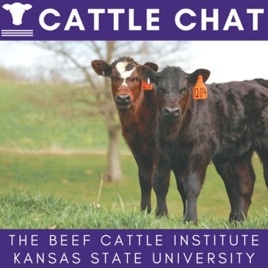
Advertise on podcast: Cattle Chat
Rating
4.8from
This podcast has
101 episodes
Language
EnglishPublisher
BCI Cattle ChatExplicit
No
Date created
2018/07/05
Latest episode
2026/10/02
Average duration
26 min.
Release period
7 days
Description
Listen to veterinary professionals from the Beef Cattle Institute at Kansas State University talk about a variety of topics within the beef industry.
Unlock Cattle Chat podcast Email contact info,
Listeners & Audience details
Email contact information
Direct podcast contact details

Listeners
Audience numbers & engagement insights

Audience details
Podcast Insights



Podcast episodes
Check latest episodes from Cattle Chat podcast
Lessons from the Birthing Center: Calving, Education, and Inspiring Future Agricultural Leaders
2026/10/02
Recorded live at the Kansas State Fair Birthing Center, this episode highlights the educational value of giving the public a firsthand look at animal agriculture and the birthing process. The hosts discuss how the birthing center has served as a popular attraction for decades, allowing visitors to observe calves, piglets, and lambs being born while learning more about animal health and livestock production.
The conversation explores the signs of impending calving, including behavioral changes, relaxation of structures around the tailhead, and the progression of labor. The veterinarians explain how they determine when a cow may need assistance and discuss common causes of calving difficulty, such as abnormal calf positioning. Throughout the episode, listeners receive practical insights into gestation lengths, fetal development, and the biological similarities between livestock and human births.
A major focus of the discussion is agricultural education and youth involvement. FFA advisor Mrs. Chase from Wellington shares how projects at the state fair help students develop agricultural skills, showcase their work, and gain exposure to industries they might not otherwise experience. The hosts also discuss strategies for encouraging students to consider careers in veterinary medicine and agriculture, emphasizing mentorship, hands-on experience, and a willingness to start with basic tasks and learn over time.
The episode concludes with a successful live birth at the birthing center, giving listeners a real-time example of normal calving behavior. As the newborn calf arrives and the cow immediately begins grooming it, the hosts explain how those maternal behaviors help stimulate the calf, encourage standing and nursing, and strengthen the bond between cow and calf. Overall, the discussion celebrates the value of agricultural outreach, hands-on learning, and helping the public better understand where livestock and food production begin.
Antibiotics, Antimicrobials & Recovery: New Insights in Beef Cattle Health
2026/09/25
In this episode of Cattle Chat, the team discusses post-treatment intervals for cattle treated for respiratory disease, featuring graduate research from our guest Katherine Shirley comparing three- and six-day intervals. The results suggest that allowing cattle more time to recover before retreatment may reduce treatment failures and the likelihood of chronic issues.
The conversation also explores the distinction between antibiotics and antimicrobials, antimicrobial resistance, and emerging alternatives such as probiotics, prebiotics, essential oils, plant extracts, and other natural compounds. The group discusses research into alternatives for rumen health and liver abscess prevention, including promising work with sorghum extracts. Throughout, the experts emphasize that successful cattle recovery involves more than drug selection—it also depends on nutrition, environment, comfort, and proper nursing care.
This episode is sponsored by Virbac. Learn more at virbac.com
Setting Calves Up for Success: Early-Life Health, Vaccination, and Management
2026/09/18
This episode is sponsored by Boehringer Ingelheim and focuses on the importance of early calf health and how management decisions made before and shortly after birth can influence lifetime performance. The discussion emphasizes that calf success begins long before calving, with proper nutrition, body condition, and vaccination programs for cows playing critical roles in producing healthy, vigorous calves. Dr. D.L. Step highlights the importance of preparing cows to provide quality colostrum and a strong immune foundation for newborn calves.
The group discusses how pre-weaning disease can have long-term impacts on growth and productivity, making prevention a key management goal. Beyond vaccination itself, the speakers stress the importance of proper vaccine handling, including correct storage temperatures, avoiding disinfectant residues in syringes, and using modified-live vaccines within the recommended time after mixing. Mishandling vaccines can reduce their effectiveness even when the correct products are selected.
The conversation also explores the role of stress management in successful vaccination programs. Calves respond better when they are handled quietly, maintained on an adequate nutritional plane, and processed in low-stress environments. The speakers note that vaccine response is influenced not only by the product itself but also by calf age, maternal nutrition, colostrum intake, and overall herd management.
A recurring theme is the value of recordkeeping, which allows producers to evaluate outcomes, identify trends, and continuously improve their health programs over time. Ultimately, the episode concludes that successful calf health programs rely on combining sound nutrition, effective vaccination practices, careful handling, and long-term management planning rather than relying on any single intervention.
Estrus Intensity Matters: Using Heat Activity to Improve Reproductive Success
2026/09/11
This episode is sponsored by Estrotect and features Dr. George Perry from Texas A&M AgriLife, who discusses how estrus intensity influences reproductive performance in beef cattle and how producers can use that information to improve breeding decisions. While many producers think of estrus as a simple yes-or-no event, the discussion highlights that the intensity of estrus, measured by mounting activity or other indicators, can provide valuable insight into fertility. Calves and cows that exhibit stronger estrus prior to fixed-time artificial insemination consistently achieve higher conception rates than those showing weak or no signs of estrus.
The conversation explains that estrus remains important even in synchronization and fixed-time AI programs, where breeding occurs on a set schedule. Research has shown that cattle displaying estrus before insemination can have conception rates more than 20 percentage points higher than those that do not. This information can help producers make more strategic decisions about which animals receive sexed semen or higher-value genetics.
The group also emphasizes that management factors such as nutrition, body condition score, postpartum interval in cows, and puberty status in heifers often have a greater influence on estrus expression than genetics alone. Advances in estrus detection technology, including activity monitors and improved heat-detection aids, now provide producers with more detailed information than traditional visual observation methods.
Ultimately, the discussion concludes that estrus intensity is not merely a biological curiosity but a valuable management tool. By combining sound nutrition, synchronization protocols, and improved estrus detection, producers can make better breeding decisions that improve conception rates, calf performance, and the long-term productivity of the herd.
High Cattle Prices, Smart Investments, and Getting Started in the Cattle Business
2026/09/04
This episode focuses on how producers can take advantage of strong cattle prices, both by improving existing operations and by helping the next generation enter the industry. The discussion begins with ideas for reinvesting profits into long-term improvements such as water systems, fencing, grazing infrastructure, land enhancement projects, and other investments that may take years to fully pay off but can improve productivity and quality of life on the ranch.
The hosts also explore diversification strategies, including alternative livestock enterprises, hunting-related income, and other complementary businesses that can provide revenue streams not directly tied to cattle markets. A key theme is balancing short-term opportunities with long-term sustainability through careful planning and strategic investments.
The conversation then shifts to the challenges facing young people who want to enter the cattle industry during a period of historically high cattle values. The group emphasizes that aspiring producers do not need to start large and should instead look for ways to leverage labor, management skills, and relationships to gain access to cattle, land, or grazing opportunities. Examples include leasing cattle, custom grazing stocker cattle, entering partnerships, or gradually building an operation through small-scale opportunities.
The hosts stress the importance of developing a written business plan, understanding costs and potential revenue, and seeking advice from experienced professionals such as lenders, extension agents, veterinarians, nutritionists, and other producers. Building strong personal networks and identifying mentors can be just as valuable as obtaining financial capital. Ultimately, the episode encourages producers to think strategically, invest wisely during profitable times, and recognize that successful cattle operations are often built gradually through planning, patience, and strong relationships.
Maintaining Beef Demand and Building the Next Generation Workforce
2026/08/28
This episode explores two important topics for the beef industry: long-term consumer demand for beef and strategies for workforce development. The discussion begins with a listener question about how changing cattle inventories, feed costs, and finishing weights could affect beef quality and consumer demand in the future. The hosts note that while heavier cattle and extended feeding periods have contributed to quality improvements, genetic progress has played an even larger role in maintaining high levels of marbling and eating satisfaction. They emphasize that taste, freshness, safety, and price remain the key drivers of beef demand, making it essential for producers to continue delivering a high-quality product.
The group also discusses how shifts in feed costs and cattle numbers may influence production decisions, but they do not expect a dramatic decline in beef quality because of the industry’s long-term genetic improvements and management practices. Food safety and Beef Quality Assurance programs are highlighted as critical components for maintaining consumer trust and protecting demand.
The second half of the episode focuses on labor shortages and workforce development in agriculture. Rather than expecting to hire fully trained employees, the hosts encourage producers to view workforce development as an investment, recognizing that inexperienced workers require training, mentorship, and time to become productive. They recommend creating internship or trial opportunities, partnering with organizations such as 4-H and FFA, and focusing on individuals who show enthusiasm and a willingness to learn. The discussion emphasizes that successful workforce development often requires patience, realistic expectations, and a commitment to helping employees build skills over time. Ultimately, the episode concludes that both sustaining beef demand and developing future employees require long-term thinking, continuous improvement, and a willingness to invest in future success.
Finding Value in Every Class of Cattle: Records, Flexibility, and Management Decisions
2026/08/21
This episode features Nebraska cattle producer Rylee Blomenkamp, who discusses how her family’s operation manages a diverse mix of cattle, including feeder calves, yearlings, bred cows, open cows, bulls, and other opportunistic purchases. A central theme is the importance of identifying value in different classes of cattle and adapting management strategies to changing market conditions. Rylee explains that their operation succeeds by remaining flexible and taking advantage of opportunities that arise in local auction markets rather than focusing on a single type of livestock.
The discussion highlights the role of detailed recordkeeping in evaluating profitability across multiple enterprises. Rather than treating the operation as one large business unit, the family tracks expenses, feed costs, and returns for different classes of cattle, allowing them to determine where value is being created and which enterprises are most profitable. Experts emphasize that even cow-calf producers can benefit from separately evaluating replacement heifers, cull cows, and feeder calves to improve decision-making.
The group also discusses the importance of keeping cattle separated by age, size, and production purpose to better manage health and nutrition. Different groups require different feeding programs, health protocols, and marketing strategies, making thoughtful organization critical to success. Nutritional management is tailored to each class of cattle, from growing calves to bred cows and finishing animals, helping maximize performance while controlling costs.
A key takeaway is that successful producers combine strong records with practical experience, using both data and market awareness to guide decisions. Ultimately, the episode emphasizes that having a plan is important, but maintaining flexibility and adapting to changing conditions is often what creates long-term profitability and sustainability.
This episode is sponsored by Ambrook.
Research Frontiers and Pain Management: Improving Cattle Health Through Better Decisions
2026/08/14
This episode features a discussion with several Beef Cattle Institute researchers who share updates on current projects aimed at improving cattle health, welfare, and production efficiency. Topics include new technologies for semen evaluation, investigations into feeding patterns associated with interstitial pneumonia and liver abscesses, machine learning tools for detecting pain in cattle, and research on how water quality affects livestock performance. These projects highlight the growing role of technology and data analysis in solving practical problems faced by producers.
The group also addresses a listener question about weaning calves from large grazing allotments where producers have limited opportunities to handle animals before weaning. Rather than focusing solely on vaccines or medications, the discussion emphasizes reducing stress through strategies such as favorable weather conditions, low-stress weaning methods, gradual adaptation to feed and water sources, and thoughtful management of the overall system.
A major segment focuses on pain management in cattle and how attitudes toward animal welfare have evolved over time. The panel discusses procedures such as castration, dehorning, branding, dystocia management, and prolapse repair, noting that pain mitigation can improve welfare even when production responses such as average daily gain are difficult to measure. Researchers argue that producers should consider broader outcomes, including animal comfort, health, recovery, and public expectations for livestock care.
The conversation emphasizes that many producers genuinely want to provide the best care possible and are often willing to use pain-control tools when practical options are available. Ultimately, the episode highlights the value of systems thinking, continuous research, and proactive management in advancing both cattle well-being and industry sustainability.
BRD Around the World and the Economics of Creep Feeding
2026/08/07
This episode features a discussion with guest Dr. Selwyn Headley from Brazil, who shares insights into bovine respiratory disease (BRD) and how it compares to cases seen in North America. The group notes that many of the same bacterial and viral pathogens are involved in both regions, including Mannheimia, Histophilus, and several respiratory viruses, although some differences in prevalence and diagnostic findings exist. They emphasize that BRD is best viewed as a syndrome involving multiple pathogens and risk factors rather than a disease caused by a single organism. Common stressors such as transportation, commingling of cattle from multiple sources, and feedlot arrival continue to play major roles in disease development across both countries.
The conversation then shifts to creep feeding, defined as providing feed that nursing calves can access while their dams cannot. The hosts explain that creep feeding is often considered when forage quality or quantity declines late in the grazing season and producers want to maintain calf growth. While creep feeding can increase weight gain, its economic value depends on feed costs, calf prices, forage conditions, and how much feed is actually converted into additional gain.
The panel discusses how creep feed often substitutes for forage intake rather than reducing milk consumption, meaning it may not significantly improve cow body condition. They also note that feed type matters, with high-fiber feeds typically providing better supplementation and less forage substitution than starch-heavy grain sources. Additional considerations include the impacts on replacement heifers and breeding stock, where excessive energy intake at certain developmental stages may have long-term consequences. Overall, the episode highlights the importance of evaluating both biological responses and economic returns when deciding whether creep feeding is the right strategy for a particular operation.
Mineral Sources, Microbiomes, and Managing Cattle Health Beyond the Basics
2026/07/31
This episode explores two important but often misunderstood topics in cattle production: mineral supplementation and the microbiome. The discussion begins with a listener question about whether the source of minerals in a supplement matters. The hosts explain that mineral bioavailability can vary significantly depending on whether minerals are supplied as sulfates, chlorides, oxides, or organic complexes, and that not all sources are equally effective. For example, copper oxide has relatively poor bioavailability compared to copper sulfate, while other mineral sources differ less dramatically.
Resource: https://ksubci.org/tools/calculators/ “Evaluating mineral feed tags for beef cattle”
The group emphasizes that mineral needs are highly dependent on local soils, forage quality, and the presence of antagonistic compounds such as sulfur, iron, or molybdenum. As a result, selecting the right mineral program requires more than simply comparing prices and nutrient percentages on a feed tag.
The conversation then shifts to the microbiome, defined as the community of microorganisms living within and on animals, particularly in the digestive tract. These microbes play critical roles in digestion, nutrient utilization, and overall health, especially in ruminants that depend on microbial fermentation to break down forage. The hosts note that research is increasingly showing links between the microbiome and broader physiological outcomes, including metabolism, disease susceptibility, and animal performance.
They also discuss how management decisions, diet changes, stress, and antibiotic use can alter microbial populations, though many of those effects are not yet fully understood. While microbiome research remains in its early stages, the episode highlights its potential to reshape how producers think about health and nutrition, moving beyond the traditional view that all microbes are harmful and toward a more systems-based understanding of cattle production.
Separating Fact from Fiction: Evaluating New Technologies and Common Cattle Nutrition Myths
2026/07/24
This episode explores how cattle producers can make informed decisions when considering new technologies, products, or services for their operations. The discussion emphasizes the importance of evaluating both costs and benefits, including upfront expenses, recurring fees, labor savings, and potential productivity gains. Producers are encouraged to use tools such as partial budgets and spreadsheet-based “what-if” analyses to determine whether a technology is likely to provide a positive return in their specific operation.
The hosts also stress that research results from other operations may not always translate directly to a producer’s own environment, making careful evaluation and limited on-farm testing valuable when possible. Examples such as virtual fencing, electronic identification systems, and feed additives illustrate the challenges of assigning economic value to both direct and indirect benefits.
In the second half of the episode, the team tackles several common nutrition myths. They explain that while lush green grass often supplies adequate energy and protein, mineral supplementation may still be necessary depending on soil and forage conditions. They also note that mineral consumption is often driven more by salt intake than by a specific mineral deficiency. Discussion of creep feeding reveals that calves frequently substitute supplemental feed for forage rather than reducing milk consumption, making the economics highly situation-dependent. Finally, the hosts clarify that overfeeding replacement heifers can contribute to calving difficulty if they become excessively fat, but moderate increases in nutrition have relatively little effect on calf birth weight. Overall, the episode encourages producers to rely on careful analysis and evidence rather than assumptions when making management decisions.
Bigger Cattle, Bigger Questions: Feed Costs, Corn Demand, and Pasture Lease Strategies
2026/07/17
This episode tackles two listener questions with significant implications for cattle producers. The first explores how increasing cattle carcass weights affect corn demand and feed efficiency. The discussion estimates that an average increase of 36 pounds in carcass weight requires roughly 257 additional pounds of corn per animal, adding up to a substantial amount nationally, although it represents less than 1% of total U.S. corn use. Despite declining feed efficiency and average daily gain as cattle get larger, feeding cattle to heavier weights can remain profitable because a greater proportion of the added weight ends up in the carcass rather than in non-marketable tissues.
The hosts explain that heavier cattle help offset the effects of historically low cattle inventories by increasing total beef production without requiring more animals. This additional production helps meet strong consumer demand and moderates beef prices that might otherwise be even higher.
The second topic focuses on leasing cropland for pasture when improvements such as fencing, water infrastructure, and forage establishment are required. Panelists emphasize that successful pasture lease agreements begin with clear communication and should account for who pays for improvements, how long the lease will last, and what happens to infrastructure when the lease ends. They note that arrangements can vary widely, from landowners paying for materials to tenants absorbing costs in exchange for longer lease terms or reduced rental rates. Written agreements and careful financial planning are strongly encouraged to protect both parties and ensure that long-term investments can be recovered. Overall, the episode highlights how thoughtful economic analysis and upfront communication can lead to better decisions throughout the cattle production chain.
Is Graduate School Worth It? Navigating Career Goals, Curiosity, and Lifelong Learning
2026/07/10
This episode focuses on the decision to pursue graduate school and explores how advanced education can shape careers in animal agriculture and beyond. Guest Maddie Manke shares her journey from taking a gap year after high school to earning a PhD, explaining how a desire to understand the science behind cattle nutrition sparked her interest in research and advanced study. The discussion emphasizes that graduate school is fundamentally different from undergraduate education, requiring students to move beyond memorization and develop critical-thinking, problem-solving, and independent research skills.
The hosts highlight that successful graduate students are often driven by curiosity and a desire to answer complex questions, even though every answer tends to generate new questions. They also stress the importance of choosing the right program, advisor, and academic environment, noting that relationships with professors and fellow students can have lasting impacts on both personal and professional development.
A recurring theme is that graduate school should be viewed as an investment in a future career rather than simply a way to delay entering the workforce. The group discusses opportunity costs, career goals, and the importance of understanding whether a desired profession truly requires an advanced degree. They encourage prospective students to visit multiple programs, talk with current graduate students, and carefully evaluate their long-term objectives before making a decision. Ultimately, the episode presents graduate school as a valuable pathway for those motivated by curiosity, lifelong learning, and careers that benefit from advanced analytical and research skills.
Heat Stress, Screwworm Awareness, and Making Summer Employees Successful
2026/07/03
This episode covers three timely topics affecting livestock producers during the summer months. The discussion begins with strategies for preventing heat stress at livestock shows, where cattle face added challenges from transportation, unfamiliar environments, limited airflow, and changes in water sources. Producers are encouraged to closely monitor water intake, provide adequate air movement, and watch for warning signs such as rapid breathing or open-mouth panting.
The conversation then turns to the New World screwworm, a parasite that has received increased attention recently. Experts explain ongoing educational efforts, including webinars covering the biology of the pest, treatment options, public health implications, and potential economic impacts. A key message is the importance of regularly inspecting livestock for wounds, since screwworm infestations begin when flies lay eggs in open wounds and the larvae feed on living tissue. Producers are encouraged to stay informed through state animal health agencies and USDA resources as surveillance and response efforts continue.
The final segment focuses on managing summer employees, particularly temporary workers or students with limited experience. The hosts emphasize the value of clear communication, structured training, and safety education from the very beginning of employment. They stress that effective onboarding includes explaining expectations, providing hands-on guidance, and following up throughout the summer rather than assuming everything was understood on day one. Ultimately, the episode highlights the importance of preparation, communication, and proactive management—whether caring for cattle, responding to emerging animal health threats, or mentoring the next generation of agricultural workers.
Adding Value and Managing Grass: Practical Decisions in Cow-Calf Operations
2026/06/26
This episode of Cattle Chat focuses on practical management strategies for improving profitability in cow-calf operations, driven largely by listener questions. A major topic centers on how to add value to cull cows, emphasizing that even though calf sales make up most revenue, cull cow income is still significant. Experts discuss options like breeding open cows before sale, combining them into a single group, or simply adding weight through grazing or feeding to improve market value. Timing decisions based on forage availability and market conditions are highlighted as key to maximizing returns.
The conversation then shifts to grazing management, particularly the differences between cool-season and warm-season grasses. While rotational grazing has well-documented benefits in cool-season systems, research shows less consistent improvement in native warm-season pastures. Factors like lower rainfall, reduced fertilizer response, and greater plant diversity may explain why responses differ.
Speakers note that successful grazing management of warm-season systems often requires more flexibility and observation, blending science with practical “art.” Strategies like deferred rotation—changing grazing timing across pastures—may support long-term grass health, even if immediate livestock gains are less obvious. Overall, the discussion emphasizes tailoring decisions to each operation, using observation, records, and adaptability to balance forage productivity, animal performance, and economic outcomes.
Podcast reviews
Read Cattle Chat podcast reviews
Carthage Cattle Company 2021/12/10
Finally!!
Finally a cowboys podcast I can listen too. Informative and gets to the point. I hate those other podcasts where they just need out. This one speaks...
mr dollabillz 2020/12/08
Fast paced, relevant current information
This show, is a great thing to listen to, because it is fast-paced, and super informational. It is easily the best cattle podcast out there.
Great jo...
eatarock17 2020/02/25
Needs audio production improvement
Great content and knowledgeable hosts/guests but frequently seems like they are whispering. When I normally listen at 50% volume I need to turn it up ...
phishcowdoc 2018/09/22
BCI podcast
Great podcast with lots of practical information for beef cattle producers and veterinarians!
BeefCattle 2018/08/02
Wonderful Podcast!
This is a great podcast for anyone interested in the beef cattle industry! I would highly recommend listening and sharing with anyone you know.
Podcast sponsorship advertising
Start advertising on Cattle Chat relevant audience podcasts
You may also like to advertise on these Podcasts

4.7278012000
The Matt Walsh Show
The Daily Wire

4.732631937
The President's Daily Brief
The First TV

4.819462000
Football Ramble
Stak

4.735971300
The Bonfire with Big Jay Oakerson and Robert Kelly
SiriusXM

4.827591699
Earn Your Happy
Lori Harder | YAP Media

4.816561992
Juicebox Podcast: Type 1 Diabetes
Scott Benner

4.682431282
The Daily Beast Podcast
The Daily Beast, Joanna Coles

4.8121021000
Mind Pump: Raw Fitness Truth
Sal Di Stefano, Adam Schafer, Justin Andrews, Doug Egge
4.92002919
The Wright Report
Bryan Dean Wright
4.6221652000
Mark Levin Podcast
Cumulus Podcast Network