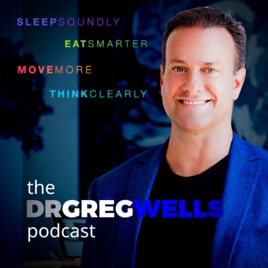
Advertise on podcast: The Dr. Greg Wells Podcast
Rating
4.4from
This podcast has
78 episodes
Language
EnglishPublisher
Dr. Greg WellsExplicit
No
Date created
2018/09/01
Latest episode
2026/10/02
Average duration
-
Release period
17 days
Description
Healthy High Performance for a Limitless Life You can get healthier, improve your wellness, and live a limitless life and physiologist Dr. Greg Wells would love to be your trusted guide on that adventure. Dr. Greg is one of the rare scientists who can take research and make it understandable so that you can have a clear path to achieving your goals. In every episode, Dr. Greg and his expert guests will explain the science of how your body and brain work in a way that you can understand so you that you can get healthy, perform better, and live a limitless life.
Unlock The Dr. Greg Wells Podcast podcast Email contact info,
Listeners & Audience details
Email contact information
Direct podcast contact details

Listeners
Audience numbers & engagement insights

Audience details
Podcast Insights

Podcast episodes
Check latest episodes from The Dr. Greg Wells Podcast podcast
Great World Race Preparation Update
2026/10/02
This episode is less about extreme sport and more about rebuilding capacity. Greg explains why the easy work has mattered more than the hard work, why the boring fundamentals have made the biggest difference, and how small, consistent actions can turn something that once felt impossible into something that begins to feel achievable. Along the way, he invites listeners to think about their own version of “possible” and to use the 777 challenge as a spark for health, performance, and personal growth.
All About Healthy Fats with Dr. Richard Bazinet
2026/08/21
In today’s conversation Dr. Bazinet explores the science of healthy fats through the lens of brain biology, inflammation, cholesterol, and real-world nutrition. He and Dr. Wells unpack the differences between saturated, monounsaturated, and polyunsaturated fats, then dig into omega-3s, DHA, EPA, and why the brain’s relationship with fat is more fascinating than most people realize. They also discuss why the research on cardiovascular risk can be messy, why nutrition debates get oversimplified, and why a whole-food approach still makes the most practical sense. The result is a grounded, science-first conversation that brings clarity to one of nutrition’s most misunderstood topics.
You will learn how Dr. Bazinet distinguishes saturated, monounsaturated, and polyunsaturated fats; why DHA is such an important structural fat in the brain; how omega-3 and omega-6 pathways interact with inflammation; why the evidence on fish oil, cognition, depression, and heart health is more nuanced than social media suggests; and how to think practically about whole foods, fish, olive oil, grass-fed animal foods, and supplements. You will also hear why he remains careful about overclaiming in nutrition science, especially when randomized trials and observational data do not fully agree.
You will discover that one of the biggest mistakes in nutrition is talking about “fat” as though it is a single thing. Dr. Bazinet shows that the real story lies in the type of fat, where it comes from, what it replaces in the diet, and what question the research is actually able to answer.
This episode helps solve the challenge of trying to eat well in the middle of noisy, contradictory fat advice. Dr. Bazinet gives listeners a more intelligent framework for understanding fats so they can move beyond fear, hype, and internet certainty and make calmer, better food decisions.
The Ripple Effect - Sleep Eat Move & Think Better
2026/08/07
In today’s conversation Dr. Greg Wells shares the core message of The Ripple Effect: if we want to feel better, think better, and perform at a higher level, we need to improve the fundamentals together. He explains how sleep, food, movement, and mental state amplify one another and why even small changes can create powerful downstream effects. The masterclass blends physiology, practical strategies, and real-world examples to show how healthier habits lead to better performance and a better life. At its heart, this is a science-based framework for turning potential into action.
You will learn why sleep is the foundation of recovery, energy, learning, and mood; how movement acts like medicine for the body and brain; how food quality influences energy, inflammation, and long-term health; why mindset and mental clarity affect every other behaviour; and how 1% improvements can build real momentum over time. You will also learn why dreams matter, how to turn knowledge into action, and how to stop chasing quick fixes in favour of sustainable habits that compound.
You will discover that health and performance are deeply interconnected. When you sleep better, you make better food decisions; when you move more, you think more clearly; and when you improve one part of the system, the others get stronger too.
This masterclass helps solve the challenge of knowing you want to feel better and perform better, but not knowing where to begin. Dr. Wells gives the listener a clear starting point: begin with one small, meaningful upgrade in sleep, eating, movement, or thinking, and let that improvement create a ripple effect through the rest of life.
Key take aways:
Sleep is the foundation of performance.
Movement is medicine for body and brain.
Food quality shapes energy and recovery.
Small changes create powerful momentum.
Health habits work best together.
The Art of Finding Joy with Jessica Janzen
2026/07/24
In today’s conversation Jessica Janzen explores how joy can become a deliberate practice even in the middle of grief, uncertainty, and pressure. She and Dr. Wells discuss the lived experience that shaped her work after the loss of her son Lewiston, and how that pain became the foundation for a new philosophy of resilience, service, and energy. The conversation moves from radical acceptance to practical tools for protecting mental health, choosing powerful thoughts, serving others, and creating moments of joy on purpose. It is a deeply human conversation about how to lead yourself well when life does not go to plan.
You will learn why Jessica believes joy is something we bring rather than simply choose, how radical acceptance creates the starting point for resilience, why brain health and mental health are tied to what we consume physically and emotionally, how movement and community can shift our internal state, and why service and simple acts of encouragement can change the emotional temperature of a room. You will also hear practical language she uses in real life, including how to challenge unhelpful thoughts, how to stop feeding negativity, and how to create more intentional energy in your day.
You will discover that joy is not passive, soft, or reserved for easier seasons. Jessica’s core insight is that joy becomes available when we stop waiting for circumstances to improve and start taking responsibility for the energy, thoughts, and actions we bring into the moment we are in.
This episode helps solve the challenge of feeling emotionally buried by stress, grief, burnout, or negative momentum. Jessica gives listeners a more usable framework for moving from victim energy and reactivity toward agency, perspective, connection, and meaningful action.
Why I’m Doing The Great World Race
2026/07/10
In today’s conversation Dr. Greg explores the decision he and his sixteen-year-old daughter Ingrid made to attempt seven marathons on seven continents in seven days. He shares how persistent injuries led them to stop, recover, and rebuild their health from the ground up before they were ready to begin endurance training again. The episode traces the project from a series of small rehabilitation sessions to a potential Guinness World Record attempt, while introducing the Great World Race as a living exploration of human physiology, adaptation, and possibility. The event is scheduled for November 15–21, 2026, beginning at Wolf’s Fang in Antarctica and finishing in Miami.
Rest Refocus Recharge: Dr. Greg Wells’ Masterclass on Slowing Down to Speed Up
2026/06/26
In today’s conversation Dr. Greg Wells shares the core ideas behind Rest, Refocus, Recharge and explains why true performance is built on cycles of stress and recovery rather than nonstop output. He shows how rest, reflection, focus, creativity, and flow are linked to different physiological and cognitive states, and why learning to move between them is essential in a high-pressure world. The masterclass blends neuroscience, physiology, and practical routines to help listeners recover deliberately, think more clearly, and perform with greater consistency. At its heart, this is a guide to slowing down strategically so you can speed up where it matters most.
You will learn how deliberate recovery improves mental and physical performance, why sleep is foundational for health, learning, and emotional regulation, how reflection and metacognition sharpen decision-making, how mindfulness and movement improve focus and attention, and why creativity and flow emerge more easily when tension gives way to recovery. You will also learn how different brainwave states relate to recovery, learning, concentration, ideation, and extraordinary performance, and how small, repeatable rituals can help you access those states more consistently.
You will discover that recovery is not a break from performance. Recovery is part of performance. When you deliberately create space for sleep, reflection, movement, and renewal, you give your brain and body the conditions they need to grow stronger, think more clearly, and perform at a higher level.
This masterclass helps solve the challenge of feeling chronically busy, mentally overloaded, and physically depleted while still wanting to do meaningful work at a high level. Dr. Wells gives the listener a practical framework for escaping reactive busyness and replacing it with deliberate recovery, better focus, and healthier, more sustainable performance.
The Science of Finishing What You Start With Chris Bailey
2026/06/12
Chris Bailey is trying to solve the gap between setting goals and actually following through on them. In this episode, we dig into helping you to stop relying on vague motivation or willpower and instead align your goals, priorities, and daily actions with what matters most to you.
In today’s conversation Chris Bailey explores why intention is deeper than goal setting and why follow-through depends on aligning daily actions with values and priorities. He and Dr. Wells unpack Bailey’s “intention stack,” the science of human values, and the hidden role of aversion in procrastination. They also examine how people can redesign goals so they feel more meaningful, attractive, and realistic. The conversation ultimately turns productivity into something more human: a way of acting with purpose instead of simply doing more.
You will learn how Chris defines intention, how values quietly shape motivation and follow-through, why priorities sit between values and goals, how procrastination is often driven by aversion rather than laziness, and why time awareness is one of the most practical tools for becoming more intentional. You will also hear a simple daily practice he uses himself: setting three clear intentions for the day before the noise begins.
You will discover that a goal is not just a wish or an ambition. In Bailey’s framing, it is a prediction about where your current and planned actions will take you, which means better follow-through depends on designing those actions far more carefully.
This episode helps solve the challenge of knowing what you want but repeatedly failing to act on it. Bailey gives listeners a framework for making goals more doable by connecting them to values, reducing aversion, and translating them into concrete daily intentions.
Key take aways:
Goals fail when they clash with values.
Priorities connect values to goals.
Aversion drives procrastination.
Time awareness creates better action.
Three daily intentions sharpen focus.
Create Behavior Change That Lasts with Dr. Marc Mitchell
2026/05/29
Dr. Mitchell is trying to solve the problem that most people know what healthy behaviors are, but struggle to start and sustain them in real life. His work focuses on using behavioral science, digital health tools, and practical design strategies to help people make small, realistic changes that last and improve health at scale.
Crafting a Life of Adventure and Health with Dr. Alex Hutchinson
2026/05/15
In today’s conversation Alex Hutchinson explores the mind-body relationship at the heart of endurance, effort, and human performance. He and Dr. Wells unpack how the brain interprets fatigue, why self-talk changes perceived effort, and how challenge can become a source of meaning rather than something to avoid. They also discuss adventure, curiosity, and the science of exploration, bringing the conversation back to a practical truth: consistent movement and a healthy relationship with effort are foundational for a better life.
From Prescription to Prevention with Dr. Kwadwo Kyeremanteng
2026/05/01
In today’s conversation Dr. Kwadwo Kyeremanteng explores how an ICU “aha moment” and the pandemic reshaped his mission toward prevention over prescription—keeping people healthier and out of acute care. He unpacks his PRESS Method™ (Purpose, Restoration, Eating, Strength, Social connection) and explains how to identify your personal “kryptonite” so you can plan around it instead of relying on willpower. Together, he and Dr. Greg discuss why consistency beats intensity, and why strength, protein, and community are foundational for healthspan and resilience.
This episode helps solve the challenge of feeling overwhelmed by health advice by showing you how to pick the highest-impact habits (80/20) and apply them in a way you can actually maintain—without perfection.
Jake Ernst on Co-Parenting With the Internet
2026/04/17
Jake Ernst is focused on solving a modern, high-stakes problem: technology and algorithm-driven platforms are replacing real human attachment and co-regulation, contributing to distraction, distress, and disconnection—especially for kids and teens, but increasingly for adults too.
In today’s conversation Jake Ernst explores how modern tech is reshaping our brains, relationships, and family life—and why many parents are effectively “co-parenting with the internet.” He breaks down the rising pattern of distraction, distress, and disconnection, and explains how screen-mediated communication can undermine the social and emotional signals we need to feel truly connected. Jake and Dr. Greg then pivot to solutions: digital hygiene, restoring face-to-face connection, and helping kids build the real-world skills that screens can quietly erode.
All about the latest science on creatine with Dr. Scott Forbes
2026/04/03
Dr. Scott Forbes is trying to cut through the hype and misinformation around creatine so listeners can understand what creatine actually is, what it truly does (and doesn’t do), and how to use it safely and effectively for performance, brain health, and healthy aging.
In today’s conversation Dr. Forbes explores why creatine has become one of the most talked-about supplements—and how to separate real science from social-media noise. He explains what creatine is (and why it’s not a steroid), how it supports short-duration high-intensity performance, and what the research says about strength, muscle, endurance “bursts,” and recovery. Scott also dives into emerging findings on brain energy demands—especially under stressors like sleep deprivation and mental fatigue—and why creatine may matter more as we age.
You will learn how creatine works in the body’s energy systems, what benefits are realistic (small but meaningful), and how those gains can compound over time. You’ll also learn practical dosing strategies (loading vs. steady daily use), why creatine monohydrate is the best-studied form, how timing fits into the routine, plus the science behind common concerns like hair loss and kidney markers.
You will discover that creatine’s biggest strength is “quiet consistency”: it can modestly expand rapid-energy capacity and help maintain performance during physical or mental stress—without needing complicated protocols.
Scott helps solve the challenge of making a confident, evidence-based decision about whether creatine belongs in your routine—without fear, myths, or marketing-driven confusion.
Longevity, Telomeres, and the Real Foundations of Health with Dr. Elaine Chin
2026/03/20
Dr. Elaine Chin is trying to solve the problem of people aging into chronic inflammation, fatigue, and disease because they are surrounded by confusing wellness advice and are guessing instead of using a science-based, personalized approach to healthspan. In this episode, she frames the answer as precision medicine built on measurable biology and consistent daily habits.
In today’s conversation Elaine Chin explores how precision medicine and lifestyle medicine can work together to improve healthspan and lifespan. She and Dr. Wells discuss telomeres, inflammation, Mediterranean-style eating, hydration, movement, recovery, and the role of purpose in healthy aging. The conversation stays grounded in practical decisions people can make every day while also emphasizing the value of understanding biomarkers and hormones. Overall, this episode helps listeners cut through health misinformation and return to a more evidence-informed foundation for wellbeing.
You will learn how Dr. Chin thinks about lifestyle medicine as an “orchestra” that requires sleep, nutrition, movement, mindfulness, and social wellbeing to work together. You will also hear her explain why she pays close attention to telomeres, chronic inflammation, hydration, ultra-processed foods, omega-3 fats, and biomarker testing. The episode also clarifies the difference between exercise and general activity, and why small daily habits can shape long-term health more than extreme interventions.
You will discover that many of the most powerful longevity tools are still the fundamentals: sleep, purpose, movement, hydration, and food quality. Dr. Chin’s core insight is that these are not just “healthy habits”; they are biological signals that shape inflammation, recovery, and the pace of aging.
This episode helps solve the challenge of not knowing where to start with health and longevity when the wellness space feels noisy, extreme, and contradictory. Dr. Chin brings the listener back to a simpler model: understand your biology, focus on the basics, and use data to guide smarter decisions.
Key take aways:
Lifestyle medicine works best in combination.
Telomeres reflect the wear of aging.
Ultra-processed foods drive inflammation.
Movement all day matters.
Know your biology before guessing.
Mind, Movement, and Mood With Dr. Shimi Kang
2026/03/06
Dr. Kang is tackling a modern, high-impact problem: our relationship with technology (and “perma-crisis” busyness) is driving stress, disconnection, and attention fragmentation—especially in kids and teens—unless we build a healthier “tech diet” and lifestyle that restores regulation, connection, and play.
In today’s conversation Dr. Shimi Kang explores how brain science can help us thrive in a world shaped by stress, constant change, and persuasive technology. She shares her origin story—from early fascination with the brain to work with the World Health Organization—and explains why mind and body are inseparable in real life. Together, Dr. Kang and Dr. Wells unpack the “tech diet” (toxic, junk, and healthy tech), why kids are uniquely vulnerable, and how simple daily practices—movement, connection, downtime, and music—restore brain health and motivation.
How to Choose Hope Even When It’s Hard
2026/02/20
People are navigating stress, setbacks, and uncertainty by trying to control everything and doing it alone—which amplifies anxiety and drains performance.
Dr. Robyne’s work in this episode reframes hope as a trainable, practical skill (not “toxic optimism”), and gives listeners a grounded pathway to regain agency, build support, and move forward—especially when life feels wobbly.
In today’s conversation Robyne Hanley-Dafoe explores why hope is not the same thing as optimism—and why clinging to outcomes can backfire when life gets hard. She and Dr. Wells unpack “agency thinking” as the antidote to control spirals, then translate that mindset into practical micro-steps: get safe, get resourced, and choose the next right move.
You will learn how Dr. Robyne distinguishes hope from optimism and why that matters under pressure, how to replace control-chasing with agency, and how to use “pathway thinking” to identify one realistic next step instead of trying to solve everything at once. You’ll also learn her “get to the shore” approach for moments when you’re overwhelmed.
You will discover that hope is a skill you can practice to keep moving forward without needing perfect certainty or a guaranteed outcome.
This episode helps you break out of the loop of “I must fix this right now” and move toward a more proactive approach that is achievable and sustainable.
Podcast sponsorship advertising
Start advertising on The Dr. Greg Wells Podcast relevant audience podcasts
You may also like to advertise on these Podcasts

51088171
Middle Children
Jessie Jolles and Chris Burns

4.8265062000
Morning Wire
The Daily Wire

4.518778373
American Scandal
Audible

4.689361214
Get Sleepy: Sleep meditation and stories
Slumber Studios

4.79026375
Life is Short with Justin Long
Audible

4.714119349
Bad Friends
Bobby Lee & Andrew Santino

4.7128571
10 to Life
Annie Elise

4.76755463
Criminology
Emash Digital & Mike Ferguson, Mike Morford

4.87509977
The Dr. John Delony Show
Ramsey Network

4.512608666
RedHanded
RedHanded