1455367949
Retrain the Brain for Chronic Illness | Anxiety and Stress Relief, Immune Dysregulation, Nervous System Regulation, Food and

Advertise on podcast: Retrain the Brain for Chronic Illness | Anxiety and Stress Relief, Immune Dysregulation, Nervous System Regulation, Food and

Rating
★★★★☆
4.4
from
11 reviews
This podcast has
100 episodes
Language
English
Date created
2019/03/06
Latest episode
2026/04/17
Average duration
11 min.
Release period
7 days

Description

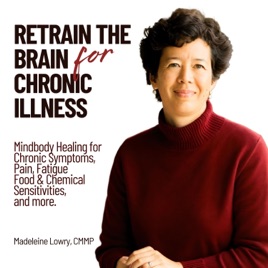
**Get unstuck from chronic illness with an advanced method of brain retraining!** Are you grappling with persistent chronic symptoms, pain, fatigue, anxiety, or sensitivities that simply won't resolve? Have you tried countless diets, medications, therapies, or lifestyle changes, only to find yourself still feeling stuck, overwhelmed, or hopeless? This podcast is for you if you're ready to move beyond endlessly searching for the next supplement or treatment modality, and address the emotional and mental root causes of your health issues. We will talk about the profound mind-body connection in chronic illness and how accumulated stress can impact our physical health. We explore how chronic conditions often stem from emotional and psychological factors, including repressed emotions, inner conflicts, unresolved trauma, and habitual responses to stress, rather than solely structural issues. Hi, I'm Madeleine Lowry, a neural retraining specialist for emotional, mental and physical health. I will introduce you to the advanced brain retraining approach that I use with my clients that works directly with the subconscious mind to unlock and transform the deeply embedded patterns keeping you stuck. Unlike basic brain retraining methods requiring hours of practice, repetition of scripts and affirmations, or self-directed emotional excavation, this advanced approach is efficient, gentle, and effortless with practitioner-led sessions over Zoom. The rewiring happens in the session - no practice needed! The goal is to change neural patterns and fundamentally rewire your response to stress, moving you out of the constant "fight, flight, and freeze" mode and into a "rest, digest, and heal" state for a calmer nervous system and improved immune function. In this podcast we will delve into the crucial role of trauma healing, particularly early life trauma, which shapes your nervous system's stress response for a lifetime unless effectively addressed. Further, we'll explore how common personality traits—such as being a perfectionist, people-pleaser, caretaker, or fixer—often lead to the suppression of our own emotions and needs, adding to accumulations of stress and setting the stage for chronic illness. For highly sensitive individuals, empaths, and intuitives, these emotional burdens and reactions can be even more pronounced, making this process invaluable. If you are experiencing chronic health issues, chronic pain, chronic fatigue, anxiety, or food or chemical sensitivities, and feel like you've tried everything, please give a listen. If you are looking to calm your nervous system, resolve stress at its roots, and achieve deeper, more comprehensive healing, this series offers a fresh perspective and a proven path forward.  Tune in to uncover how advanced neural retraining can lead to remarkable improvements, from reduced anxiety and quieted worry loops to better digestion, improved sleep, and significant decreases in symptom frequency and intensity. Discover how you can gain self-awareness, build self-acceptance, assert boundaries, and become more centered and grounded, making daily stresses feel more manageable.  Could an advanced method of neural retraining be your best next step to healing? Take our free quiz at TCNeuralRetraining.com Learn more: 🌐 Visit our Podcast page 🎙️ Watch our YouTube videos: @TCNeuralRetraining 📚 Check Out Our Free Courses and Programs 📩 Schedule a Free Consultation

Unlock Retrain the Brain for Chronic Illness | Anxiety and Stress Relief, Immune Dysregulation, Nervous System Regulation, Food and podcast Email contact info,
Listeners & Audience details

Email contact information

Direct podcast contact details

Listeners

Audience numbers & engagement insights

Audience details

Podcast Insights

Podcast episodes

Check latest episodes from Retrain the Brain for Chronic Illness | Anxiety and Stress Relief, Immune Dysregulation, Nervous System Regulation, Food and podcast


Sensitive People, Multiple Sensitivities, and Chronic Illness
2026/04/17
Food sensitivities. Chemical sensitivities. Reactions to environmental irritants that seem to come out of nowhere—and often worsen over time. If you’ve experienced this, you may have been told your body is “overreacting” or that you simply need to avoid more and more exposures. But what if there is a deeper explanation? In this episode Madeleine Lowry, a neural retraining specialist, introduces the role of the limbic system—the part of the brain responsible for threat detection, emotional processing, and survival—and how it can become overprotective in people with sensitive nervous systems. You’ll learn how the brain continuously scans both the internal and external environment for potential danger, and how—after periods of stress, illness, or trauma—it can begin to associate previously neutral substances (like foods, smells, or environments) with threat. These learned associations can lead to increasing sensitivity over time, where the list of triggers grows rather than shrinks. Madeleine also explains why avoidance alone often reinforces the problem, confirming to the brain that these substances are dangerous. Instead, she introduces how neural retraining works to calm the limbic system, dissolve these learned threat patterns, and restore a sense of safety. As the brain begins to reinterpret these inputs as safe, many people experience a gradual reduction in sensitivity and an expansion of what they can tolerate again. In this episode, you’ll learn: What the limbic system is and its role in threat detection Why sensitive people are more prone to developing multiple sensitivities How food, chemical, and environmental sensitivities are learned by the brain Why sensitivities often expand over time The unintended consequences of strict avoidance How neural retraining helps calm the limbic system and reverse sensitivity patterns Why restoring a sense of safety is key to recovery Learn more about subconscious neural retraining and how it can support emotional and physical wellbeing. Visit TCNeuralRetraining.com to take our free quiz, schedule a free phone consultation, or private sessions via Zoom.
Sensitive People, Personality Patterns, and Chronic Illness
2026/04/10
Many people who develop chronic illness share a similar set of personality traits: they are conscientious, responsible, empathetic, and deeply caring. They often strive to do the right thing, help others, and maintain harmony in their relationships. But over time, these admirable qualities can quietly turn into patterns of over-responsibility, perfectionism, people pleasing, and emotional caretaking that place a significant burden on the nervous system. In this episode of Retrain the Brain for Chronic Illness, Madeleine explores how these patterns often begin in childhood—particularly for highly sensitive people who grow up in environments with conflict, stress, or difficult personalities. In an effort to restore stability and safety, sensitive children may learn to manage their surroundings by being especially responsible, agreeable, or helpful. These coping strategies can evolve into adult personality patterns that involve constantly trying to fix problems, prevent conflict, or carry other people’s emotional burdens. Over time, this level of responsibility and emotional labor can keep the nervous system in a chronic state of stress. Madeleine explains why the brain does not distinguish between physical threats and emotional ones, and how long-standing patterns of overgiving and hyper-responsibility can gradually contribute to nervous system dysregulation and chronic illness. She also discusses how neural retraining can help dissolve the subconscious stress patterns that drive these behaviors, allowing sensitive people to maintain their empathy and caring nature without sacrificing their health. In this episode, you’ll learn: Why highly sensitive people often develop people-pleasing and perfectionistic tendencies How childhood environments can shape lifelong coping patterns Why sensitive people often feel responsible for other people’s emotions How emotional caretaking and over-responsibility create chronic stress Why the brain does not distinguish between emotional and physical threats How these patterns can set the stage for chronic illness How neural retraining helps release the subconscious patterns behind these behaviors Learn more about subconscious neural retraining and how it can support emotional and physical wellbeing. Visit TCNeuralRetraining.com to take our free quiz, schedule a free phone consultation, or private sessions via Zoom.
Highly Sensitive People (HSPs) and Chronic Fatigue
2026/04/03
Chronic fatigue and burnout are often approached as purely physical conditions—but for many highly sensitive people, there is a deeper story. In this episode Madeleine Lowry, a neural retraining specialist, explores the connection between sensitivity, chronic stress patterns, and the experience of persistent fatigue. She explains why highly sensitive individuals are more likely to take on multiple roles, internalize pressure, and push themselves beyond their limits—often without realizing the cumulative toll on their nervous system. Over time, patterns such as overgiving, overthinking, perfectionism, and an inability to rest or say no can keep the body in a prolonged stress response. Even when life circumstances improve, the nervous system may continue operating as if the demands are still there. Madeleine discusses how burnout is not simply about doing too much—it is often about how the brain has learned to respond to responsibility, expectations, and stress. For sensitive people, the drive to meet expectations and care for others can override the body’s signals to slow down, leading to exhaustion that doesn’t resolve with rest alone. She also introduces how neural retraining works to identify and shift the subconscious patterns that keep the nervous system in a cycle of depletion. As these patterns begin to change, many people experience improvements not only in energy, but also in emotional resilience and overall well-being. In this episode, you’ll learn: Why highly sensitive people are more prone to chronic fatigue and burnout The role of over-responsibility, perfectionism, and overgiving in energy depletion Why rest alone is often not enough to resolve chronic fatigue How the nervous system becomes conditioned to operate in a state of overdrive The connection between subconscious stress patterns and physical exhaustion How neural retraining helps restore balance and energy Learn more about subconscious neural retraining and how it can support emotional and physical wellbeing. Visit TCNeuralRetraining.com to take our free quiz, schedule a free phone consultation, or private sessions via Zoom.
Dysautonomia and the Sensitive Nervous System
2026/03/27
Many people with chronic illness experience symptoms that seem confusing or unpredictable—dizziness, racing heart, fatigue, temperature swings, digestive issues, or sudden energy crashes. Often these symptoms are related to dysautonomia, a condition involving dysregulation of the autonomic nervous system. In this episode neural retraining specialist, Madeleine Lowry, explains what dysautonomia is, why it occurs so frequently in people with chronic illness, and why sensitive nervous systems may be particularly vulnerable to this type of imbalance. You’ll learn how the autonomic nervous system regulates the body’s automatic functions—including heart rate, circulation, digestion, and energy—and what happens when that system becomes stuck in a chronic stress response. Madeleine also explains how neural retraining helps restore balance by calming the underlying stress patterns stored in the brain, allowing the autonomic nervous system to regulate itself more effectively. In this episode you’ll learn: What the autonomic nervous system does What dysautonomia means and why it develops Common symptoms including dizziness, palpitations, fatigue, and brain fog Why highly sensitive people are more prone to autonomic dysregulation The role of chronic stress in dysautonomia How neural retraining can help the nervous system regain balance Learn more about subconscious neural retraining and how it can support emotional and physical wellbeing.  Visit TCNeuralRetraining.com to take our free quiz, schedule a free phone consultation, or private sessions via Zoom.
Why Sensitive People Are More Impacted by Stress and Trauma
2026/03/20
Many people who consider themselves highly sensitive or empathic notice that life’s experiences seem to affect them more deeply than others. In this episode neural retraining specialist, Madeleine Lowry, explores the connection between sensitivity, trauma, and nervous system regulation. Sensitive individuals don’t necessarily experience more traumatic events—but their nervous systems often process experiences more deeply, which can lead to lasting stress patterns. You’ll learn why events that may appear minor on the surface can have a profound impact on a sensitive nervous system, and how those stored stress responses can later contribute to anxiety, fatigue, immune dysregulation, and chronic symptoms. Madeleine explains how unresolved emotional charge from past experiences becomes embedded in subconscious patterns—and how advanced neural retraining can gently neutralize those patterns, allowing the nervous system to return to balance. If you’ve ever wondered why your body or emotions react more strongly than others’, this episode will help you understand your nervous system in a new and empowering way. In this episode, you’ll learn: Why trauma is defined by nervous system overwhelm—not just major events Why sensitive people process experiences more deeply How smaller life events can become long-term stress patterns The connection between trauma, chronic symptoms, and immune dysregulation Why highly sensitive people often respond well to neural retraining How neutralizing emotional charge helps restore nervous system balance Learn more about subconscious neural retraining and how it can support emotional and physical wellbeing. Visit TCNeuralRetraining.com to take our free quiz, schedule a free phone consultation, or private sessions via Zoom.
Why Sensitive People Experience More Immune and Nervous System Dysregulation
2026/03/13
Many people struggling with chronic symptoms describe themselves the same way: Sensitive. Sensitive to stress. Sensitive to other people’s emotions. Sensitive to foods, chemicals, medications, or environmental triggers. In this episode neural retraining specialist, Madeleine Lowry, explores the connection between high sensitivity, nervous system reactivity, and immune dysregulation. Drawing from research on Highly Sensitive People (HSPs) and the science of psychoneuroimmunology, she explains why people with sensitive nervous systems are more prone to developing chronic symptoms such as inflammation, sensitivities, fatigue, and immune imbalance. But sensitivity is not simply a liability. The same nervous system traits that make someone more reactive to stress can also make them especially responsive to neural retraining and mind-body healing approaches. In this episode, you’ll learn: What it means to be a Highly Sensitive Person (HSP) Why sensitive nervous systems often become overloaded in modern life The connection between stress responses and immune dysregulation Why sensitive individuals are more likely to develop food, chemical, and environmental sensitivities How unresolved emotional stress can amplify nervous system reactivity Why advanced neural retraining can be particularly effective for sensitive people How sensitivity can become a strength in the healing process If you’ve ever felt like your body reacts to everything—or that your nervous system is constantly on high alert—this episode will help you understand why that happens and what you can do about it. Learn more about subconscious neural retraining and how it can support emotional and physical wellbeing.  Visit TCNeuralRetraining.com to take our free quiz, schedule a free phone consultation, or private sessions via Zoom.
Immune System Dysfunction, Stress, and the Brain: The Science of Psychoneuroimmunology
2026/03/06
Have you ever wondered about the Brain–Immune Connection? And how stress patterns impact immune function? In this episode neural retraining specialist, Madeleine Lowry, explores immune system dysfunction through the lens of psychoneuroimmunology (PNI)—the science that examines how the brain, nervous system, and immune system affect each other. If you’ve experienced: Lingering or recurrent infections Viral reactivations Delayed wound healing Food or chemical sensitivities Chronic inflammation Mast cell activation syndrome (MCAS) Autoimmune symptoms Stress-related flare-ups …this episode offers a deeper explanation of what may be happening beneath the surface. You’ll learn: How chronic stress alters immune signaling Why the HPA axis and cortisol rhythms matter The difference between immune suppression and immune overactivation How trauma and long-standing stress patterns affect inflammation Why symptom flares often follow emotional triggers How advanced neural retraining helps reduce subconscious threat patterns Why brain retraining is not a replacement for medical care—but can be a powerful adjunct This episode is educational, science-based, and grounded. It does not suggest that illness is “all in your head.” Instead, it explains how immune dysregulation often reflects a nervous system that has been in survival mode for too long. When subconscious threat perception decreases, immune regulation often improves. Learn more about subconscious neural retraining and how it can support emotional and physical wellbeing.  Visit TCNeuralRetraining.com to take our free quiz, schedule a free phone consultation, or private sessions via Zoom.
Neural Retraining Explained: Not Hypnosis, Not Therapy—Something Different
2026/02/27
What if working with your mind didn’t mean giving up control—but reclaiming it? In this episode neural retraining specialist, Madeleine Lowry, explains how advanced neural retraining actually works in practice, in clear, grounded language for anyone who may feel hesitant about mind-based approaches. If you’ve never considered working with your subconscious—or have concerns about hypnosis, control, or safety—this episode offers a calm, practical overview of what happens in a session and why the process feels gentle rather than overwhelming. You’ll learn: What advanced neural retraining is (and what it is not) How it differs from EMDR, tapping, and traditional talk therapy Why it’s not hypnosis—though it offers similar benefits How subconscious patterns are built from emotionally charged memories What happens during a session, step by step How emotional, behavioral, and physical patterns are neutralized Why symptoms like pain, fatigue, brain fog, and neuropathies respond to this work Why healing doesn’t require reliving trauma or “figuring it out” This episode is an invitation to understand the mind as an ally in healing—and to explore a method that works with the nervous system, not against it. Learn more about subconscious neural retraining and how it can support emotional and physical wellbeing, visit TCNeuralRetraining.com. Take our free quiz, schedule a free phone consultation, or private sessions via Zoom.
Identity, Stress, and Healing in Midlife
2026/02/20
Neural retraining specialist, Madeleine Lowry, explores a powerful and often overlooked driver of chronic stress and symptoms in midlife: long-held roles, expectations, and identity patterns. Many women have spent decades identifying as “the responsible one,” “the caretaker,” or “the strong one”—roles that once ensured belonging, safety, or stability. Over time, these identities quietly shape the nervous system, keeping it in a chronic state of vigilance and over-responsibility. Midlife is often the moment when these identities begin to loosen. Hormonal shifts, changing family roles, and emotional bandwidth limitations can make old coping strategies unsustainable. What once worked suddenly doesn’t—and symptoms like anxiety, fatigue, brain fog, and pain can emerge or intensify. In this episode we explore: How identity becomes encoded in the subconscious nervous system Why the body often resists letting go of familiar roles—even painful ones Why midlife symptoms are often signals of misalignment, not failure How neural retraining helps gently update identity-based stress patterns What becomes possible when survival roles give way to self-aligned living This conversation reframes midlife not as a breakdown, but as a reorganization—one that can open the door to deeper regulation, resilience, and healing. Learn more about subconscious neural retraining and how it can support emotional and physical wellbeing, visit TCNeuralRetraining.com. Take our free quiz, schedule a free phone consultation, or private sessions via Zoom.
Nervous System Dysfunction in Midlife: Why Pain, Fatigue, and Symptoms Increase
2026/02/13
In midlife, many women experience physical symptoms that feel confusing, persistent, and unexplained—pain, fatigue, digestive issues, neurological sensations, and more. Medical tests may come back “normal,” yet the body is clearly signaling distress. In this episode neural retraining specialist, Madeleine Lowry, explores why physical symptoms often intensify in midlife and how they are frequently driven by long-standing nervous system stress rather than structural damage or aging alone. You’ll learn how years of emotional load, responsibility, and suppressed stress can finally surface through the body when its ability to compensate diminishes. This conversation reframes symptoms as meaningful communications from the nervous system, not failures or flaws. Madeleine explains how subconscious stress patterns shape physiology, why midlife is a tipping point for many women, and how advanced neural retraining can help recalibrate the system so healing becomes possible. This episode is for women who feel unheard, dismissed, or frustrated by persistent symptoms—and who are ready for a more compassionate, empowering understanding of what their body is asking for. To learn more about subconscious neural retraining and how it can support emotional and physical wellbeing, visit TCNeuralRetraining.com. Take our free quiz, or sign up for a free phone consultation.
Midlife Symptoms: What Perimenopause Reveals About Your Nervous System
2026/02/06
Midlife often arrives with unexpected symptoms—heightened stress sensitivity, emotional volatility, sleep disruption, physical tension, or a sense that your body can no longer “hold it all together.” In this episode, Madeleine Lowry explores why midlife is such a turning point for women’s health, not simply because of hormonal changes, but because the nervous system has reached its limit after decades of cumulative stress, responsibility, and subconscious conditioning. You’ll learn why symptoms that emerge in midlife are often signals from a system that has been overcompensating for years—and how working directly with the subconscious mind through advanced neural retraining can help restore emotional regulation, resilience, and physical balance. This episode offers a new framework for understanding midlife symptoms—not as failures or degeneration, but as invitations to recalibrate how your mind and nervous system respond to stress. To learn more about subconscious neural retraining and how it can support emotional and physical wellbeing, visit TCNeuralRetraining.com. Take our free quiz, or sign up for a free phone consultation.
Why Anxiety, Brain Fog, and Fatigue Increase During Perimenopause and Menopause - and How Neural Retraining Helps
2026/01/30
Anxiety often shows up or intensifies during perimenopause and menopause—even for women who have never struggled with it before. In this episode neural retraining specialist, Madeleine Lowry, explores why midlife can be such a tipping point for anxiety, fatigue, brain fog, and emotional overwhelm, and why these symptoms are not a personal failure or something to “just push through.” You’ll learn how long-term stress affects the adrenal glands and nervous system, why women are often the shock absorbers of stress in families and society, and how subconscious stress patterns formed earlier in life can become amplified during hormonal transitions. Madeleine explains how neural retraining can help reset your stress response even when changes in your responsibilities are not possible. This episode offers a compassionate, science-informed look at midlife anxiety and introduces neural retraining as a way to restore calm, emotional resilience, and physical balance by working directly with the subconscious mind. To learn more about subconscious neural retraining and how it can support emotional and physical wellbeing, visit TCNeuralRetraining.com. Take our free quiz, or sign up for a free phone consultation.
Neuropathies, the Nervous System, and Why Retraining the Brain Can Help
2026/01/23
Neuropathic symptoms—such as tingling, burning, itching, numbness, trembling, or unexplained weakness—can be just as distressing as chronic pain, yet they are often misunderstood or difficult to treat. In this episode neural retraining specialist, Madeleine Lowry, explains why these symptoms are closely related to pain patterns and how the nervous system plays a central role in generating and maintaining them—especially when medical tests don’t offer clear answers. You’ll learn how the brain interprets sensory input, why prolonged stress or trauma can keep the nervous system in a heightened state of vigilance, and how fear and hyper-focus can unintentionally reinforce symptoms. Madeleine also shares examples from her practice, including long-standing chronic itching and post-traumatic tingling that resolved through neural retraining. This episode offers an educational, compassionate framework for understanding neuropathic symptoms—without minimizing their reality—and explores how working with the subconscious mind can help restore balance when the nervous system is stuck in survival mode. To learn more about subconscious neural retraining and how it can support emotional and physical wellbeing, visit TCNeuralRetraining.com. Take our free quiz, or sign up for a free phone consultation.
Retrain the Brain for Chronic Pain: Why Pain Persists and How It Can Change
2026/01/16
Chronic pain is real—but it isn’t always caused by ongoing tissue damage. In this episode of Retrain Your Brain for Chronic Illness, Madeleine Lowry explores how the brain processes pain, why pain can persist long after the body has healed, and how subconscious stress patterns keep pain cycles active. Drawing on the foundational work of Dr. John Sarno and modern advances in neural retraining, Madeleine explains how emotional suppression, nervous system dysregulation, and subconscious conditioning can drive chronic pain conditions such as migraines, back or joint pain, fibromyalgia, nerve pain, and unexplained pain syndromes. You’ll learn why chronic pain is best understood as a learned neural pattern—and how working directly with the subconscious mind can help update those patterns so the body can return to balance and healing. To learn more about subconscious neural retraining and how it can support emotional and physical healing, visit TCNeuralRetraining.com. Take our free quiz, or sign up for a free phone consultation.  
Men and Chronic Pain: Retraining the Brain versus Talk Therapy
2026/01/09
In this episode of Retrain the Brain for Chronic Illness, Madeleine Lowry explores a topic that is rarely discussed: men and their pain. While chronic pain is often approached as a purely physical issue, this conversation looks at how emotional suppression, nervous system overload, and societal expectations uniquely impact men’s health. Madeleine discusses how men are often conditioned to bury emotions such as grief, fear, anger, and sadness, and how these unresolved emotional experiences can become stored in the body as chronic pain, tension, fatigue, or other physical symptoms. She unpacks the mixed messages men receive about emotions—needing to control anger while also being rewarded for aggression, needing emotional awareness while fearing vulnerability. You’ll learn how long-held roles and expectations—provider, protector, achiever—can keep the nervous system in a constant state of stress, and why pain may be the body’s signal that something deeper needs attention. Madeleine explains how subconscious neural retraining can safely release trapped emotional pain, helping the nervous system reset and allowing physical symptoms to shift. This episode is an invitation to rethink pain—not as a personal failure or weakness, but as a meaningful message from the body that healing is possible. To learn more about subconscious neural retraining and how it can support emotional and physical healing, visit TCNeuralRetraining.com. Take our free quiz, or sign up for a free phone consultation.  

Podcast reviews

Read Retrain the Brain for Chronic Illness | Anxiety and Stress Relief, Immune Dysregulation, Nervous System Regulation, Food and podcast reviews


4.4 out of 5
11 reviews
★★★★★
CaliDMB 2024/11/08
Fascinating
I’ve learned so much about the way the subconscious drives emotional patterns and health issues. It’s fascinating to hear different guests share their...
★☆☆☆☆
Dr_Sus 2026/02/07
No solid tips
Just one big advertisement after another to get you to sign up and pay money.
check all reviews on apple podcasts

Podcast sponsorship advertising

Start advertising on Retrain the Brain for Chronic Illness | Anxiety and Stress Relief, Immune Dysregulation, Nervous System Regulation, Food and relevant audience podcasts


What do you want to promote?