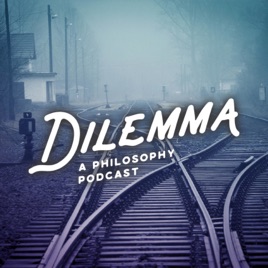
Advertise on podcast: Dilemma Podcast
Rating
4.6from
This podcast has
135 episodes
Language
EnglishPublisher
Jay ShapiroExplicit
No
Date created
2019/06/27
Latest episode
2026/09/18
Average duration
90 min.
Release period
11 days
Description
Solving the problems of what to do next with some of today's top thinkers and writers. Hosted by Jay Shapiro.
Unlock Dilemma Podcast podcast Email contact info,
Listeners & Audience details
Email contact information
Direct podcast contact details

Listeners
Audience numbers & engagement insights

Audience details
Podcast Insights

Podcast episodes
Check latest episodes from Dilemma Podcast podcast
It Ain't Gonna Happen: How to Find Meaning in a World Headed Over The Cliff w/ Eliot Jacobson
2026/09/18
Is humanity simply a bacteria in a petri dish, heading for the inevitable edge? Do the climate markers prove it? I spoke with Professor Eliot Jacobson, a mathematician and former casino game protection expert who now spends his days tracking the most shocking climate data on the planet. From record-breaking ocean temperatures to the Earth's plummeting "albedo," we discuss the numbers that are painting a terrifying picture of our immediate future.But this conversation is about more than just graphs. It dives deep into the often misunderstood philosophy of "doomerism." What does it really mean to be a doomer? Eliot dismantles the straw-man arguments of inaction and hopelessness, instead presenting a philosophy rooted in ecological activism, grief, and a clear-eyed acceptance of our current trajectory. We explore why policy changes "ain't gonna happen" and why the goal might not be to save civilization, but to preserve what we can of the natural world.We discuss the societal "pain point" that might be needed for change, the statistical reality of our climate future, and what it means to be an activist when the odds are overwhelmingly against you. Is collapse an inevitability, or is there still time for an "anthro-shift"? Join us for a profound and honest conversation about the end of the world as we know it, and how we might learn to live with that knowledge.00:00 Coming Up...00:01:15 Intro To Eliot & Doomerism00:03:34 From Casinos To Climate00:05:13 The Charts That Eliot Shares Everyday00:10:48 Is Doomerism Hopeless or Helpless or Inactive?00:16:37 Strawmanning Doomers00:21:47 Ecological Activism00:26:08 Can Technology Save Us?00:30:01 How To Shake People Into Action00:35:31 What Is Fueling Climate Change... Population?00:40:42 What Would It Actually Take?00:47:22 Passive House, Insulate Britain, Fix Buildings00:51:11 Exponential Growth And David Suzuki00:55:43 The Great Stink? The Pain Point Is Coming?01:05:31 Should I Be A Doomer? Or Is Collapse Bad?01:11:33 Final Thoughts, David Deutsch Is Wrong And Meaninful Existential DoomerismBECOME A MEMBER - MONTHLY MEMBERS ONLY LIVESTREAM https://www.youtube.com/channel/UC5NIku35U9thGG9WBJjE0sw/joinFor more from Jay visit whatjaythinks.com
Is the American Left Finally Rising? Radhika Desai on DSA, Trump and Capitalism’s Crisis
2026/09/18
Radhika Desai returns to the Dilemma Podcast for a wide-ranging conversation about the state of the American left, the Democratic Socialists of America, the Marxist Unity Group, and the increasingly open discussion of socialism and communism in American politics. Is something genuinely changing in the United States—or are we simply seeing a new electoral moment inside the same old political system? As Radhika puts it, the emergence of these movements is itself evidence that the traditional two-party system is losing its ability to contain growing discontent with neoliberalism.We also get into the much bigger question: **why is capitalism in crisis, and what happens when a system can no longer deliver meaningful concessions to working people?** Radhika argues that the growing appeal of socialism has to be understood alongside the deterioration of working-class life, the financialization of capitalism, and the rise of increasingly authoritarian politics. The conversation takes us from Trump and the erosion of the old party system to fascism, anti-communism, imperialism, and the relationship between capitalist crisis and political repression.But should the left actually be excited about what is happening in America? We discuss whether the current wave represents a genuine opening for transformative politics or risks becoming a watered-down electoral version of socialism that never challenges the underlying structure of society. Radhika makes the case for taking the moment seriously—and for understanding communism not simply as a political label or historical ideology, but as a movement emerging from the contradictions of capitalism itself.00:00 Coming Up...01:32 Intro to Radhika Desai02:16 My Intellectual Path, Oct 7th, Parenti, Marx and More06:05 The History of the Left in America11:46 The Parasitical Capitalist Class13:38 What To Make of the DSA and Marxist Unity Group20:57 Rational Fascism & Capitalists28:08 Marx The 18th Brumaire of Louis Bonaparte32:39 Finkelstein and Corbyn Overeducated & Underemployed is Out Of Control39:18 Socialism Decays Capitalism Explodes52:21 Is the DSA Actually An Important Thing?58:22 Leftists Support Every Revolution Except The Ones That SucceedBECOME A MEMBER - MONTHLY MEMBERS ONLY LIVESTREAM https://www.youtube.com/channel/UC5NIku35U9thGG9WBJjE0sw/joinFor more from Jay visit whatjaythinks.com
Inside the Moral Collapse of Israel: Hadas Emma Kedar on Zionism and Its Future
2026/09/17
Israeli-born artist, teacher and activist Hadas Emma Kedar joins me for a wide-ranging conversation about Zionism, Israel, Germany, the IDF, and the possibility of a radically different future. Hadas grew up inside Zionist culture and gradually came to see the ideology she had inherited as morally indefensible. We talk about that transformation, her experiences as an anti-Zionist activist, the particular German obsession with Jews and Israel, the anti-German movement, and what she sees as the depravity of the Israeli military and the society that sustains it.We also talk about what a future beyond Zionism might actually look like, what would have to change for Israelis and Palestinians to escape the present system, and whether such a transformation is possible. Hadas also discusses her new performance piece, Together We Lose, which draws on her own experiences and explores the emotional and political realities behind the subjects we discuss. This is a long, personal conversation about ideology, identity, guilt, violence, art, and the possibility of something different.00:00:00 Coming Up...00:01:28 Intro to Hadas00:03:06 From the Galalie00:16:14 What Kind of Zionism Was It?00:20:27 Are We Always Talking To Our Haters?00:31:21 Going Elsewhere... Not Israel00:40:01 Breaking The Silence?00:47:54 Hadas's Art And What Happened In Israel00:54:50 The Conversation Across the Wall?01:01:52 A Zoom Call On October 8th01:07:43 Humans Do Evil Things. Monsters Don't Exist.01:26:31 The Out Group Of "Jewish Nationality"01:38:03 What's Up In Germany?01:51:36 The Anit-Deutsch01:56:22 Fascism Is Capitalism In Crisis02:03:09 "Together We Lose" Hadas's New ArtBECOME A MEMBER - MONTHLY MEMBERS ONLY LIVESTREAM https://www.youtube.com/channel/UC5NIku35U9thGG9WBJjE0sw/joinFor more from Jay visit whatjaythinks.com
Ex-Settler Explains Why Israel Is Spiraling and Why Zionism Can Shapeshift So Easily
2026/08/20
Daniel Klein was born and raised in Efrat, one of the largest religious Zionist settlements in the occupied West Bank. His family helped build the settlement movement, and he grew up immersed in its schools, institutions, theology, politics, and culture before serving as an IDF tank commander. In this conversation, Daniel shares an insider's account of life inside the religious Zionist world, the psychology of belief, the realities of the settlement project, and how Zionism can present a different face to different people while maintaining a powerful hold over identity and belonging.We discuss Efrat, the West Bank, violent settlers, the relationship between Judaism and Zionism, the dehumanization of Palestinians, military service, nationalism, religious identity, cognitive dissonance, moral injury, and the personal costs of dissent. Daniel explains why leaving Zionism can mean losing family, friends, community, status, and purpose. He describes the process by which ideological systems reproduce themselves, how Israelis are taught to understand Palestinians, and why so many people remain trapped inside narratives.We also explore Daniel's awakening during COVID, what caused his worldview to unravel, why he believes Israeli society is entering a period of profound crisis, and what lessons his journey offers for all of us.00:00:00 Coming Up...00:01:44 Three Big Announcements00:04:44 Introducing Daniel & Centering Jewish Trauma00:09:26 Growing Up in Efrat00:12:07 Who Are Settlers?00:15:02 Zionist Schools Are Crazy00:20:53 Zionism Meets You Where You're At00:23:34 When Daniel Visited Auschwitz00:26:57 Israelis Were Celebrities To Me00:35:22 Supporting Israel Except The Settlers00:42:12 The Intellectual And Emotional Crack00:50:23 It Happens Quickly, During COVID01:02:30 Free Fall Collapse Of Israel01:09:47 A Smiling Grandmother With a Sweater01:19:44 The Violent Supernova At The EndBECOME A MEMBER - MONTHLY MEMBERS ONLY LIVESTREAM https://www.youtube.com/channel/UC5NIku35U9thGG9WBJjE0sw/joinFor more from Jay visit whatjaythinks.com
Trump, Greenland, The Fight For the Top of the World - Militarization of the Arctic w/ Mia Bennett
2026/08/19
In this conversation with geopolitical scholar Mia Bennett, we explore why the Arctic is no longer a frozen periphery but the front line of global power. From Vladimir Putin planting a Russian flag beneath the North Pole seabed to renewed nuclear tensions across the polar region, the Arctic has become a stage for military posturing, resource competition, and great-power rivalry. As climate change rapidly melts sea ice, new shipping routes open and vast reserves of oil, gas, and critical minerals become accessible — intensifying what some call a new era of frontier capitalism. We discuss the long history of colonization in the far north, the strategic obsession with places like Greenland (including Donald Trump’s attempt to purchase it), and the often-overlooked role of Indigenous Arctic peoples navigating sovereignty, survival, and self-determination amid global ambition. The Arctic is a “cold canary in the coal mine” — revealing how environmental collapse, geopolitical rivalry, and extractive economics converge at the top of the world. What happens there will shape the century ahead.00:00 Coming Up01:18 Intro (Epstein News cycle )05:13 Mia's Path to the North07:51 Where is the Arctic?16:48 The Very Crowded Arctic20:59 The Cold Canary24:25 Why Does Trump Want Greenland?26:45 Colonialization of the Arctic30:58 Who Would Fight?33:01 Frontier Capitalism37:21 Global Warming and Getting Attention in the Arctic41:20 Taking Greenland Who Fights Back?44:11 A Story about Space and the Arctic46:58 Who Owns Space?50:39 Trusting Russia and the Arctic53:56 The Broken Global Order and the Arctic59:53 Does WW3 Start in the Arctic?BECOME A MEMBER - MONTHLY MEMBERS ONLY LIVESTREAM https://www.youtube.com/channel/UC5NIku35U9thGG9WBJjE0sw/joinFor more from Jay visit whatjaythinks.com
What Do We Owe People Who Commit Horrific Crimes? Joseph Margulies on Forgiveness & Punishment
2026/08/14
In this conversation, Joseph Margulies and I explore the difficult moral territory at the heart of his new book Cast Out: A Call for a Forgiving Society in an Age of Incarceration. What does a society gain—or lose—when it decides that certain people are beyond redemption? We talk about the stories of people Margulies encountered through his work, including Lisa Montgomery, David Medina, Klete Keller, Lucas Whaley, and Eric Matthews, and the disturbing realities of the American prison system. We also confront a fundamental question about who gets to tell the stories of people who have committed horrific crimes, and whether understanding those stories can coexist with genuine accountability.Margulies brings decades of experience as a criminal defense attorney to this question, including his defense of Palestinian Abu Zubaydah, who remains imprisoned at Guantánamo Bay without ever having been charged and who was subjected to brutal torture by the United States. We discuss what American prisons reveal about our attitudes toward human beings who have done terrible things, and how these questions extend beyond the prison system into Israel-Palestine and the broader politics of punishment, victimhood, and moral judgment.At the center of the conversation is a distinction that may be essential to any meaningful idea of forgiveness: an explanation is not an excuse. To understand why someone committed a terrible act does not mean absolving them of responsibility. But if accountability is part of forgiveness rather than its opposite, what should accountability actually look like? And can we build a society capable of condemning terrible acts without deciding that the people who commit them are themselves irredeemable? This conversation is an exploration of punishment, responsibility, storytelling, torture, forgiveness, and what it means to remain human in the face of the worst things human beings do.00:00:00 Coming Up...00:01:39 Introduction to Cast Out00:06:29 Joseph Margulies Story And Work00:08:08 A Book Not About Prison But About Us00:09:50 The Problem is Not Drug Offenders, Let's Be Honest00:13:09 Klete Keller Gets His Story Told00:17:03 Accountability Matters And Lisa Montgomery00:20:21 What Happened? With Lisa Montgomery00:32:05 Lucas Whaley And The Addiction to Rage00:45:18 The Belief Of Just One Person and Eric Matthews00:54:31 What Should Prison Look Like In a Forgiving Society?01:02:02 "Abu Zubaydah Is My Client" & The Palestine Narrative01:09:10 But What About REALLY Bad People? & Abu Zubaydah's Story01:20:27 The Desperate Need For Radical Extension of Compassion01:25:21 My Own Frustrations And Failure To Tell A Story01:28:23 Go Watch "Alabama Solution" and "The Work"BECOME A MEMBER - MONTHLY MEMBERS ONLY LIVESTREAM https://www.youtube.com/channel/UC5NIku35U9thGG9WBJjE0sw/joinFor more from Jay visit whatjaythinks.com
AI Acceleration, Climate Heating, Nuclear War: When The Global Goliath Collapses w/ Luke Kemp
2026/07/30
Luke Kemp is a researcher of existential risk whose work spans the rise and fall of civilizations, the psychology of empire, and the future of humanity. In this wide-ranging conversation, we explore whether history follows deeper patterns than we usually recognize—from the Paleolithic origins of human society and the agricultural revolution to the emergence of empires, colonialism, capitalism, and today's "Silicon Goliaths." Along the way, we discuss Madrid's Royal Palace, Montezuma and the Spanish conquest, October 7th, Donald Trump, and why understanding the past may be the key to understanding the crises of the present.At the center of our discussion is Luke's idea of the "Goliath Curse": the tendency for increasingly large and complex societies to generate extraordinary power while simultaneously becoming more fragile, unequal, and difficult to govern. We examine what made European capitalist colonialism historically unique, how the global expansion of empire transformed the planet, and whether today's technology giants represent the latest evolution of the same pattern. We also dive into the role of Dark Triad psychology in leadership, why civilizations repeatedly overextend themselves, and how power scales from kingdoms to multinational corporations.Finally, we turn to the existential risks confronting humanity in the twenty-first century. From climate change, artificial intelligence, and engineered pandemics to nuclear weapons and geopolitical instability, we ask whether modern technology is accelerating humanity toward an increasingly dangerous future—or whether history offers reasons for cautious optimism. This conversation connects archaeology, psychology, philosophy, geopolitics, and big history to ask one of the biggest questions imaginable: how did we get here, and where are we going next?00:00:00 Coming Up...00:01:36 Intro to Luke Kemp and Goliath's Curse00:09:09 Kemp To Harari, Pinker, Wengrew, Diamond00:14:08 Goliath Fuel and The Material Conditions for Domination00:18:59 Are Goliath's Inevitable? And The Indus Valley Exception00:21:27 Paleolithic Anti Dominance Strategies00:24:06 Is Collapse Actually Good?00:29:09 Did We Choose Goliaths?00:32:50 Dark Triad Psychology00:38:34 Romanticizing the Paleolithic00:43:47 Drought and Climate Change As the Final Nail?00:49:05 European Capitalist Colonialism As A Supercharged Global Goliath00:55:45 The "Nation State" As Empire?00:59:43 Collaborators Of The Goliath01:03:00 The World Wars of the 20th Century and Global Goliath Stumbling01:08:07 The Silicon Goliath and Climate Change01:14:16 Do All Goliath's Collapse?01:20:15 Slaying Goliath Through Democracy or Anarchy01:29:30 The Surveillance of Goliath and Distrust of Ourselves01:34:56 Human Agency... Even of Our Own Death?01:41:13 Outro and Luke's Next BookBECOME A MEMBER - MONTHLY MEMBERS ONLY LIVESTREAM https://www.youtube.com/channel/UC5NIku35U9thGG9WBJjE0sw/joinFor more from Jay visit whatjaythinks.com
From the Middle Passage to Elijah McClain: The Persistence Of Anti-Black Bewilderment
2026/07/29
Michael Sawyer is the author of The Door of No Return, a sweeping work that challenges conventional ideas about race, history, memory, and modernity. In this conversation, we explore his concept of anti-Blackness as something deeper than prejudice or discrimination—an organizing logic embedded within the modern world itself. Sawyer explains why the Middle Passage remains central to understanding contemporary society, dismantles Hegel's philosophy of history, critiques the limitations of Négritude and Afro-pessimism, and introduces the idea of "rememory" as a radically different way of relating to the past.We also discuss the killing of Elijah McClain, the evolution of Ta-Nehisi Coates' writing after Palestine, and Sawyer's deeply personal reflections on racism, including experiences growing up and playing basketball. Along the way, we examine how Shakespeare's Macbeth, the music of Bob Marley, and the lyrics of The Notorious B.I.G. illuminate questions of violence, identity, power, and survival in ways that philosophy often cannot.This is an expansive conversation connecting literature, history, music, politics, and lived experience. Whether unpacking the legacy of slavery, questioning the assumptions of Western philosophy, or imagining what might exist beyond the structures of anti-Blackness, Michael Sawyer offers a powerful framework for thinking about the past—and what a genuinely different future could look like.00:00 Coming Up...01:27 Intro to Sawyer & Why Bob Marley Is Doing Philosophy08:41 Paralysis & The Anti-Black World After the Middle Passage14:14 The Diagram That Explains the Entire Book21:55 W.E.B Du Bois & What Hegel Got Wrong About History27:17 The Free Throw Line as The Racial Bursting Apart36:44 What Is The Title of This Book... Actually?39:19 Tackling Hegel's Philosophy & Where it Fails To Be About Blackness51:25 The Murder of Elijah McClain1:02:50 Sawyer Illuminates The Words of McClain In The Anti-Black World1:09:10 Slavery's Afterlife and Anti-Blackness as Gravity1:14:00 Whitey On The Moon and Who Gets To Participate in Language Architecture1:23:25 Mick Jagger Couldn't Clap Along to Aretha1:30:38 Your Oppression Will Not Save You and Why Ta-Nehisi Coates Changed1:37:55 Final Thoughts and Upcoming GuestsBECOME A MEMBER - MONTHLY MEMBERS ONLY LIVESTREAM https://www.youtube.com/channel/UC5NIku35U9thGG9WBJjE0sw/joinFor more from Jay visit whatjaythinks.com
Sam Harris's Israel Defense & The Unchallenged Assumption He Seems To Know Is A Problem
2026/07/08
In this essay, I respond to Sam Harris's recent comments on Israel, Gaza, Hamas, and why he refuses to debate many of his critics. My argument is not primarily about genocide, proportionality, international law, or even the details of Israel's military response. It is about something more fundamental: the framing of violence itself.Sam Harris often frames Hamas and similar movements as expressions of jihadism—forms of violence rooted primarily in religious belief, metaphysical commitments, and interpretations of sacred texts. If that framing is accepted, then the moral conversation largely becomes a discussion about how to manage or contain a dangerous ideology. But what happens if that framing is incomplete? What if history, colonialism, dispossession, and resistance are not peripheral details but central parts of the story?Drawing on examples from anti-colonial struggles around the world, Zionist historical sources, and broader questions about moral reasoning, I explore why historical context matters when evaluating violence. The question is not whether violence is horrific—it always is. The question is whether our explanation of that violence determines the moral conclusions we reach before the discussion even begins.Pre-order my upcoming book: *Insufficient Rewards: How We Traded Integrity for Comfort and Outsourced Morality*https://www.simonandschuster.com/books/Insufficient-Rewards/Jay-Shapiro/9781803419985#SamHarris #Gaza #IsraelPalestine #Philosophy #History #Colonialism #Zionism #MiddleEast #Politics #EthicsBECOME A MEMBER - MONTHLY MEMBERS ONLY LIVESTREAM https://www.youtube.com/channel/UC5NIku35U9thGG9WBJjE0sw/joinFor more from Jay visit whatjaythinks.com00:00 Another Response to Sam Harris00:20 The Jihadism Framework02:34 Why This Leads to "Mowing the Lawn"04:59 Why Critics Can't Reach Harris07:36 The Real Disagreement: Framing Violence09:15 Can the Jihadism Frame Be Challenged?11:23 Harris's "Five Myths About Gaza" Give Away The Game & The Colonialism Question14:20 Resistance, Religion, and History and Intertwined Ideas and Motives16:53 What Zionist Sources Actually Say19:00 Reframing Hamas as Resistance Plus Other Things20:38 What Changes If The Frame Changes? & Why History Matters23:00 Peace As Emergent Property of Justice Pursued24:43 Why Genocide Debates Miss The Point26:32 Preorder My New Book
The Overlooked Idea That Could Solve The "Genocide" Problem with Scholar Dirk Moses
2026/07/08
For decades, the word "genocide" has occupied a unique place in international law, collective memory, and political debate. But what exactly does it mean—and has the definition become too narrow to describe the forms of violence we witness today? In this conversation, Holocaust and genocide scholar Dirk Moses joins me to discuss the crisis unfolding within genocide studies, the fierce disputes over how the term should be defined, and why debates about Gaza have exposed deep fractures in academia, international institutions, and public discourse.We explore the controversy surrounding Moses's influential essay on Germany's "catechism," the role Holocaust memory plays in shaping political culture, and whether modern societies have become trapped by an understanding of evil that struggles to recognize violence outside familiar historical frameworks. Along the way, we discuss Anne Frank and Hind Rajab, the stigma attached to genocide accusations, colonial violence, the ICC and ICJ, and the growing generational divide over how atrocities are remembered and understood.Most importantly, we examine a little-known proposal put forward by the Dutch delegation during the drafting of the UN Genocide Convention in 1948. The proposal attempted to address what its authors called "camouflaged genocide"—forms of destruction that operate indirectly and may not fit neatly into the legal framework that ultimately emerged. Moses argues that revisiting this forgotten history may offer a way to repair a definition many scholars now see as increasingly inadequate. Whether you agree or disagree with his conclusions, this discussion raises fundamental questions about memory, law, history, and the language we use to describe humanity's gravest crimes.Pre-order my upcoming book: *Insufficient Rewards: How We Traded Integrity for Comfort and Outsourced Morality*https://www.simonandschuster.com/books/Insufficient-Rewards/Jay-Shapiro/9781803419985BECOME A MEMBER - MONTHLY MEMBERS ONLY LIVESTREAM https://www.youtube.com/channel/UC5NIku35U9thGG9WBJjE0sw/joinFor more from Jay visit whatjaythinks.com00:00:00 Coming Up...00:01:52 Intro To the Genocide Tug-o-War00:11:34 The State of Genocide Studies Now00:15:20 Dirk Touched The Third Rail In Germany00:21:32 The Five Elements of the Catechism00:24:32 The Problems of Genocide And Can Something Be Worse?00:28:32 Israel Testimony Of Genocide00:33:24 The Stigma Of Genocide00:37:07 Las Casas on the Devastation of the Indies and Language of Outrage00:41:24 The Word As Advocacy or Legal Crime00:47:15 The Question of Intent The Rohingya and Gaza00:52:05 What The Court Says And Hind Rajab And Anne Frank01:01:34 The Symbolic Term And The Focus on Palestine01:07:18 The ICC Trial Israel Didn't Want To See01:13:52 Convincing People They Aren't Free And Hamas's Undemocratic Choice To Act01:18:55 Camouflaged Genocide The Key To the Door01:27:44 Proving Camouflaged Genocide As A TestBECOME A MEMBER - MONTHLY MEMBERS ONLY LIVESTREAM https://www.youtube.com/channel/UC5NIku35U9thGG9WBJjE0sw/joinFor more from Jay visit whatjaythinks.com
Trita Parsi on Iran, Israel, Zionism, and America Finding It's Limits in Iran
2026/06/03
Born in Iran in 1974, just years before the Iranian Revolution transformed the country forever, Trita Parsi has spent his life at the intersection of some of the most consequential political conflicts of the modern era. In this conversation, we trace his journey from childhood in pre-revolutionary Iran to exile and life in Sweden, exploring how displacement, identity, and history shaped his understanding of power, nationalism, and the Middle East. Along the way, we discuss the rise of the Islamic Republic, the experience of the Iranian diaspora, and how growing up between cultures influenced his worldview.From there, the conversation turns to Israel, Zionism, American foreign policy, and the decades-long struggle to reshape the political order of the Middle East. Parsi reflects on the assumptions that have guided policymakers in Washington and Tel Aviv for generations, the repeated efforts to isolate or transform Iran, and why so many of those strategies failed to produce the outcomes their architects expected. We explore the deep historical roots of today's conflicts, the changing balance of power in the region, and the gap between political rhetoric and geopolitical reality.Finally, we look ahead. What happens when the world's most powerful countries fail to achieve their stated goals? What new order emerges from that failure? Has the era of unchallenged American influence come to an end? And what does the future hold for Iran, Israel, the United States, and the wider world? This conversation is not only a look back at one remarkable life, but also an attempt to understand a historic turning point whose consequences will shape the decades ahead.00:00 Coming Up01:05 Intro to Trita Parsi 05:08 Parsi Born Into a Political Earthquake in Iran07:17 Growing Up In Sweden And Accepting It08:31 An Enemy of the Shah and The Islamic Republic10:06 Not Going Back To Iran13:48 What Don't We Get About 1979?18:01 The Simmering Revolution, Delayed By Intervention22:05 Dispersed Power of the Islamic Republic24:52 Iran's Incentives For Prolonging War28:40 Israel's Intentions Revealed About Turning Iran Back34:00 What About the Iranian Women's Freedom?40:48 Does Iran Care About the Palestinians?44:16 Zionism And Israel's Capacity Problem of Friends and Enemies47:01 Zionism Is The Problem47:57 The New Reality for the GCC and Saudi52:03 Who Would Be The Problem Then?52:47 Like, Subscribe, Share, Comment, And Next GuestsBECOME A MEMBER - MONTHLY MEMBERS ONLY LIVESTREAM https://www.youtube.com/channel/UC5NIku35U9thGG9WBJjE0sw/joinFor more from Jay visit whatjaythinks.com
DEBATE: Did Zionism Steal Judaism? | Joshua and Amalek | The Jewish God | Animals and Morality
2026/05/26
In round two with Rabbi Yaakov Shapiro, the conversation expands far beyond politics into morality, theology, identity, and the strange psychological world created by modern Zionism. We explore the deep divide between Judaism as a religious covenant and Zionism as a nationalist political project, asking whether the modern state of Israel fundamentally transformed — or even replaced — Judaism for millions of Jews in the diaspora. Along the way we discuss figures like Benjamin Netanyahu and Itamar Ben-Gvir, the rise of religious nationalism in Israel, and why some Orthodox rabbis see Zionism not as the fulfillment of Judaism but as a revolt against it.The discussion also turns surprisingly personal and philosophical. We debate veganism, eating animals, moral obligation, atheism, divine command theory, and whether morality comes from God, reason, empathy, or something deeper built into consciousness itself. Rabbi Shapiro lays out the highly legal and covenantal logic of traditional Judaism, while I push from a humanist and philosophical perspective shaped more by moral intuition and existential questions than religious law. What follows is not a hostile debate but a genuinely curious and wide-ranging exchange about free will, suffering, identity, tradition, and the uncomfortable contradictions many modern Jews feel when trying to separate Judaism from Israel.We also get into antisemitism, pro-Palestine activism, Holocaust memory, diaspora identity, and the growing confusion around what words like “Jew,” “Zionist,” and “anti-Zionist” even mean anymore. Can someone reject Zionism without rejecting Jews? Did Zionism “steal” Judaism and redefine Jewish identity around nationalism and the state? Why do so many secular Jews feel trapped inside an identity they no longer religiously believe in? And what happens when a centuries-old spiritual tradition becomes fused to military power and ethnic politics? It’s a dense, funny, provocative, and deeply philosophical conversation that moves from Talmudic reasoning to modern propaganda, from theology to vegan ethics, and from suburban American Judaism to the crisis unfolding in Israel and Palestine today.For more from Jay visit whatjaythinks.com 00:00:00 Coming Up…00:01:43 Roadmap To the Conversation00:05:28 A Strange Debate About Veganism and the Jewish God00:07:53 Golda Meir’s Masada Complex00:13:25 Dear Palestine, on Jewish Pacifism and the IDF00:18:35 Amalek and Canaan00:25:40 Interpretation of Texts00:29:06 How Flexible are the Texts00:37:41 How Popular Are His Views? Can You Tell By Looking?00:47:00 The Zionists Have A Country, What Do We Have?00:53:49 The Illusion of Zionism00:59:12 Real Jews and Rabbi Shach01:03:31 Palestine or Zionism? The Moral Character of the Jewish God01:09:59 1967 and The Diaspora Jew01:13:53 Jonathan Pollard and the Diaspora Jew01:21:11 DEBATE: Is Judaism Pacifist?01:28:02 David Hume, the Is-Ought Problem, and the Uncaused Cause01:34:07 God, Perfection, and Free Will01:41:03 Child Drowning in a Shallow Pond01:47:33 Humanism, Veganism, and Human Access to the Oughts01:54:40 If the Theology is Right The Slaughterhouse Disgust is a misguided Feeling01:58:08 Rabbi’s Daughter Stopped Eating Chicken02:01:13 Feelings Versus Theology And the God Question02:06:43 Why Is There Something… Moral? And Literal Torah02:13:13 Why Does This Moral Grounding Difference Matter?02:17:26 Rabbi Calls Me Authoritarian02:18:16 Rabbi Choses Veganism All Things Being Equal02:25:07 Rabbi’s 51st State Solution Actually Ends Yaakov’s Problem02:27:53 Alex Hershaft Holocaust Survivor Turned Animal Rights Activist02:29:14 OUTRO Moral Philosophy Response - Steel manning God02:33:53 What Humanism Actually Means02:39:30 Strange Bedfellows Against Zionism
Why This Holocaust Survivor Is So RARE In His Opposition to Zionism w/ Stephen Kapos
2026/05/15
In this conversation, Holocaust survivor Stephen Kapos reflects on surviving Nazi-occupied Hungary, the trauma of the Holocaust, and why he believes Israel’s actions in Gaza amount to genocide. Kapos describes the terrifying atmosphere of Budapest in 1944, the yellow star houses, the deportations to Auschwitz, and his family’s connection to the infamous Kastner rescue train, one of the most morally controversial episodes of the Holocaust. Together, we unpack the legacy of Rudolf Kastner, the negotiations with Adolf Eichmann, Bergen-Belsen, and the impossible moral dilemmas faced by European Jews under Nazi rule.But this conversation goes beyond history. We explore how the Holocaust shaped Zionism and the creation of a “new Jew” in early Israel, one that rejected weakness, compromise, and even many Holocaust survivors themselves. Kapos explains why some survivors became fiercely nationalistic while others, like him, came to see the dehumanization of Palestinians as a tragic repetition of history. We discuss Hannah Arendt, the Eichmann trial, the discrimination Holocaust survivors faced in Israel, and the psychological transformation of trauma into permanent militarization and fear.This is not a simple conversation, and it is not always comfortable. It is about memory, nationalism, survival, collaboration, propaganda, and the moral weight of history. Whether you agree or disagree, Stephen Kapos offers a perspective that is increasingly rare: a firsthand witness to the Holocaust speaking openly about Gaza, Zionism, and the lessons he believes humanity failed to learn. If this conversation matters to you, please like, subscribe, and share it so these stories are not lost.00:00 — Coming Up...01:21 — Intro Essay: Why This Conversation Matters06:18 — The Story of Rudolf Kasztner & the Rescue Train09:22 — The Moral Dilemma of the Kasztner Deal11:47 — Eichmann, Hannah Arendt & the “Banality of Evil”18:00 — Interview: Why Stephen Speaks Out at 88 Years Old22:15 — Nazi Occupation of Hungary & the Fall of Budapest28:13 — Jewish Life in Hungary Before the Holocaust30:22 — Why Stephen’s Family Rejected Zionism34:33 — Adolf Eichmann Arrives in Hungary38:45 — Who Was Rudolf Kastner?42:30 — “Blood for Goods”: Negotiating With the Nazis44:29 — Inside the Kasztner Holding Camp Columbus Street Camp46:35 — Escaping the Holding Camp & Going Into Hiding47:47 — Bergen-Belsen & Waiting for Switzerland51:14 — Hiding From the Nazis in Hungarian Villas53:31 — Was Kastner a Hero or a Collaborator?56:45 — Why Holocaust Survivors Were Discriminated Against in Israel59:32 — Stephen Kapos on Kastner’s Guilt01:02:55 — How Trauma Turned Into Israeli Nationalism01:04:30 — Fear, Propaganda & the Creation of Racism01:06:18 — “I Was Just Happy to See a Jewish Soldier”01:08:13 — When Zionism Became Impossible to Defend01:09:03 — Gaza, Dehumanization & the Failure to Learn From History01:11:35 — Trauma Loops and Seeing Nazis Everywhere01:15:22 — Germans Platoons Avoiding Children01:19:20 — Stephen Kapos On Hope And What Has Changed01:22:00 — Become A Monster To Avoid Monster01:25:00 — Why Are The Palestinians So Forgiving?01:27:40 — Palestinians Understand The Holocaust01:31:07 — "I Am Not Risking Anything At This Stage"01:32:28 — Outro And Next GuestBECOME A MEMBER - MONTHLY MEMBERS ONLY LIVESTREAM https://www.youtube.com/channel/UC5NIku35U9thGG9WBJjE0sw/joinFor more from Jay visit whatjaythinks.com
Is There Something Modernity Refuses to See? | Justin Smith-Ruiu
2026/05/12
Philosopher Justin Smith-Ruiu joins me for a deep conversation on Metaphysics, Consciousness, Philosophy of Science, Anthropology of Mind. Psychedelics, Ritual, Religion, Phenomenology, and the limits of modern materialism, centered around his new book ON DRUGS. Drawing on thinkers like Plato, Heidegger, Husserl, Descartes, Leibniz, Huxley, McKenna, and Claude Lévi-Strauss, Smith explores whether psychedelic experiences merely distort reality or instead reveal hidden dimensions of consciousness that modern Western philosophy has trained us to suppress. We discuss qualia, synesthesia, dreams, analogy versus truth, and the strange inadequacy of language when attempting to describe altered states. Along the way we explore object-oriented ontology, mysticism, the “excluded middle,” and why psychedelic experience often feels more real than ordinary waking life.The conversation moves far beyond the usual clichés about mushrooms and self-help. We discuss Aldous Huxley, R.C. Zaehner, Gordon Wasson, shamanism, cave paintings, ritual dance, Scythian burial mounds, Norse berserkers, Aztec peyote ceremonies, and the long human history of using drugs not merely for pleasure but for metaphysical exploration, warfare, revelation, and meaning-making. Smith argues that psychedelics do not contain some universal message, but instead “release a latent discourse,” amplifying symbols and structures already embedded within culture and consciousness itself. We explore why Western modern secular realism became so hostile to inner experience, why dreams and visions were downgraded in Western thought, and whether technological modernity flattened older modes of awe, transcendence, and participation in the cosmos.Toward the end, the discussion becomes deeply personal: atheism, ritual, Judaism, nostalgia, political religion, collective belief, and the moral dilemma of disenchantment. We talk about the difference between icons and idols, why ritual may possess value independent of literal belief, and whether humans—as Smith beautifully puts it—are creatures who “need the unnecessary.” From Apollo astronauts experiencing cosmic consciousness to psychedelic experiences that dissolve the boundary between self and world, this conversation asks a difficult question at the center of Smith’s book: do psychedelics actually help us think more clearly about reality, or do they simply force us to confront how mysterious consciousness already is?00:00 Coming Up...01:52 Intro to Justin Smith, Caveats on Drugs05:04 Mind and World: Philosophies Biggest Puzzle08:38 Some Channel Organization10:41 What Problem Is This Book Trying to Solve?16:13 Psychedelics, Synesthesia & Consciousness19:54 Breaking the Hallucination22:38 Plato vs Heidegger on Psychedelic Experience29:55 Phenomenology, Qualia & Reality33:24 Auto Experimentation39:46 Psychedelics and the “Excluded Middle”42:51 Oneiromancy vs Aristotle and Modern Science49:43 Witchcraft and Taking Seriously the Non Scientific52:48 Psychedelics as Rediscovery and Coming Home01:00:23 Levi-Strauss & “Latent Discourse”01:03:50 The Ethnographic Wassons01:09:45 “Humans Need the Unnecessary”01:15:21 Drugs In History01:19:03 More Than a Feeling01:21:31 The Apollo Astronaut Psychedelic Experience01:21:09 Galaxy Brain & Cosmic Consciousness01:25:05 Liebniz and Christianity01:30:52 Icon vs Idol01:40:46 Ritual, Religion & Collective Experience & The Moral Dilemma of Disenchantment01:48:00 Theology and Belief Commitment Variations01:54:40 Final Thoughts on Thinking Through PsychedelicsBECOME A MEMBER - MONTHLY MEMBERS ONLY LIVESTREAM https://www.youtube.com/channel/UC5NIku35U9thGG9WBJjE0sw/joinFor more from Jay visit whatjaythinks.com
Deepfakes, AI Influencers, and Why Verification Is Failing
2026/04/30
How do we know what is real anymore?In this conversation with Professor Siwei Lyu of the University at Buffalo, one of the leading researchers in AI generated imagery and deepfake detection, we explore the unsettling world of synthetic images, cloned voices, fake influencers, and manipulated video. From AI girlfriends and scam artists to political propaganda and fake breaking news, we are entering a world where seeing is no longer believing.We talk about why “AI detectors” may be the wrong solution, why most people are already past the point of spotting fake images with the naked eye, and how verification itself is becoming unstable. If every image is already a processed representation of reality, what does authenticity even mean? We also discuss deepfake scams, revenge pornography, misinformation, metadata, provenance systems, and whether regulation can keep up with a technology that mutates faster than anyone can track.This is less about robot apocalypse fantasies and more about the quieter, more immediate danger, the erosion of trust, truth, and human connection. If AI is our generation’s splitting-the-atom moment, the real question is not whether the technology is good or bad, but whether society is prepared for what comes next.00:00 Intro01:43 The Real AI Threat Nobody Is Talking About03:38 Real or Fake? Entering the Deepfake Rabbit Hole06:01 AI Influencers, Fake Lives, and Digital Seduction08:09 Why AI Detection Is Failing10:47 Political Deepfakes and the IDF Hoodie Example12:04 Truth Is Slipping Away13:21 Testing AI Bias with Pro Palestine vs Pro Israel Images16:43 Why AGI Panic Distracts From the Real Problem17:00 Meet Siwei Lyu, Deepfake Forensics Expert18:21 How He Got Into AI Detection34:32 “Are You Real?” The Human Detection Problem44:22 Deepfakes as a Mutating Virus46:41 Can Machines Still Detect Synthetic Images?53:13 Authenticity vs Is It AI?59:00 Can Regulation Solve This?01:02:52 Voice Cloning, Scams, and Revenge Pornography01:07:17 How to Watermark Your Own Reality01:08:22 Politics, Propaganda, and the Collapse of Trust01:12:58 Can Society Adapt?01:15:08 Is This Worse Than Covid?01:18:05 Final Thoughts: Slow Down and BreatheBECOME A MEMBER - MONTHLY MEMBERS ONLY LIVESTREAM https://www.youtube.com/channel/UC5NIku35U9thGG9WBJjE0sw/joinFor more from Jay visit whatjaythinks.com
Podcast reviews
Read Dilemma Podcast podcast reviews
mwg32 2025/11/12
Came for philosophy, fleeing from ideology
I came here in 2022 for interesting philosophy content, but ever since Oct 7th, 2023, the podcast shifted away from philosophy and nearly exclusively ...
No Nickname (Not Applicable) 2025/09/05
Cringey and untethered
Jay comes across as smug and dismissive, leaning on bad faith arguments rather than genuine dialogue. Instead of engaging with his guest, he talks ove...
Mors Invicta 2022/03/02
Well-intentioned but highly troubling conversation with Monica Guzman
Host is smart and asks good philosophical questions, but is frustratingly centrist at times. Few episodes demonstrate this as clearly as the bromide-f...
zztoptops 2022/01/10
Has helped me learn how to think
This podcasts contains the most interesting topics. Jay is super astute and has really shown me how to think critically over the years especially on s...
Bullyism 2021/02/12
horrible audio
the audio sounds crap
vw10 2021/01/04
Listened to the M Selniker interview to start
and found here another hate filled extremist progressive podcaster, wrong on facts, dripping with contempt for American citizens, heavy portion of nau...
Girardip 2020/09/29
The best out there
Don't let the length scare you away: these podcasts are amazing. Top notch guests and attention to detail make the discussions remarkable.
Boccylee 2020/03/23
Deep dives into ideas
I love the attention to detail while keeping the discussions understandable without getting too jargony. This has helped me understand some of the te...
Nick6765 2019/08/01
Repugnant
Truly repugnant. Keep it up! Excited to hear more.
Podcast sponsorship advertising
Start advertising on Dilemma Podcast relevant audience podcasts
You may also like to advertise on these Podcasts

4.942021993
Chente Ydrach
Chente Ydrach

4.890581551
Fearless with Jason Whitlock
Blaze Podcast Network

4.6619562000
The Dan Bongino Show
Cumulus Podcast Network | Dan Bongino

4.7106572000
FantasyPros - Fantasy Football Podcast
iHeartPodcasts

4.7292612000
The Michael Knowles Show
The Daily Wire

4.838282000
Entrepreneurs on Fire
John Lee Dumas of EOFire
4.6253262000
The Glenn Beck Program
Mercury Radio Arts

4.762542000
The Lawfare Podcast
The Lawfare Institute
4.922321824
The Ten Minute Bible Hour Podcast
Matt Whitman

4.913551954
Wholesaling Inc with Brent Daniels
Find distressed properties for pennies on the dollar and turn them for huge profits!