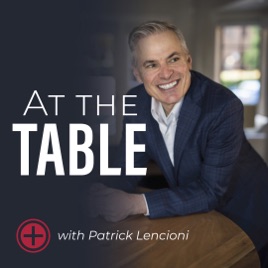
Advertise on podcast: At The Table with Patrick Lencioni
Rating
4.8from
This podcast has
288 episodes
Language
EnglishPublisher
Patrick LencioniExplicit
No
Date created
2019/07/25
Latest episode
2026/10/13
Average duration
24 min.
Release period
14 days
Description
Real conversations and practical advice for everyday leaders. Sit across the table from one of the foremost experts in leadership and business. In his simple and approachable style, Pat tackles every topic related to the world of work (and some that aren’t). From culture to teamwork to building world-class organizations, Pat brings his wisdom, humor, and insight together to provide actionable advice for leaders everywhere. For more on Pat and the Table Group, visit https://www.tablegroup.com
Unlock At The Table with Patrick Lencioni podcast Email contact info,
Listeners & Audience details
Email contact information
Direct podcast contact details

Listeners
Audience numbers & engagement insights

Audience details
Podcast Insights


Podcast episodes
Check latest episodes from At The Table with Patrick Lencioni podcast
Utopia Is A Myth
2026/10/13
How can you pursue excellence without becoming discouraged by imperfection?
Organizational health does not mean eliminating conflict, dysfunction, or difficult seasons forever. In episode 279 of At The Table, Pat Lencioni and Cody Thompson explain why leaders need to replace the pursuit of organizational perfection with resilience, learning to expect downturns while continuing to move toward greater health. When things get messy, the answer is not despair, but returning to what is true, recommitting to core principles, and getting incrementally better.
Topics explored in this episode:
(00:00) The Myth of the Perfect Organization
Pat explains why organizational health should never be confused with creating a perfect company, team, or family.The pursuit of utopia can distort expectations and cause leaders to see normal struggles as evidence that something has gone fundamentally wrong.
(02:56) When Healthy Organizations Get Messy
Pat and Cody discuss the danger of believing an organization will eventually eliminate politics, silos, conflict, and other problems forever.They argue that organizational health is better understood as resilience: the ability to work through inevitable problems instead of being defeated by them.
(06:02) Progress Is Not a Straight Line
Pat acknowledges that even after 29 years of focusing on organizational health, The Table Group still experiences real problems and difficult periods.Cody describes organizational progress as a jagged line moving upward, where temporary downturns can look disastrous until leaders zoom out and see the larger trajectory.
(09:31) The Danger of Expecting Perfection
Cody explains how unrealistic expectations can turn temporary difficulties into damaging conclusions such as believing you are a bad leader or your company will fail.Pat argues that leaders should continue striving to improve while simultaneously accepting that perfection will never actually be reached.
(12:42) Tomorrow Is a New Day
Pat and Cody encourage leaders and parents to return to what they know is true, recommit to their values, and begin again after difficult days.Growth never really ends, and progress comes from accepting imperfection while continuing to learn, change, and get incrementally better.
This episode of At The Table with Patrick Lencioni is brought to you by The Table Group: www.tablegroup.com. We teach leaders how to make work more effective and less dysfunctional. We also help their employees be more fulfilled and less miserable.
Subscribe for more content from Patrick Lencioni @PatrickLencioniOfficial
Stay Connected with Patrick Lencioni
LinkedIn: https://www.linkedin.com/in/patrick-lencioni-orghealth
Instagram: https://www.instagram.com/patricklencioniofficial
TikTok: https://www.tiktok.com/@patricklencioniofficial
X: https://x.com/patricklencioni
At The Table with Patrick Lencioni
Apple: https://tablegroup.me/apple
Spotify: https://tablegroup.me/sptfy
YouTube: https://tablegroup.me/youtube
Be sure to check out our other podcast, The Working Genius Podcast with Patrick Lencioni, on Apple Podcasts (https://workinggenius.me/apple), Spotify (https://workinggenius.me/sptfy), and YouTube (https://workinggenius.me/wgyt).
Let us know your feedback via [email protected].
This episode was produced by Story On Media: https://www.storyon.co.
The Horse That Isn't Dead Yet (Are You Serious)
2026/09/29
Are you treating teamwork as a real competitive advantage or simply something your company says it values?
In episode 278 of At The Table, Patrick Lencioni and Cody Thompson revisit the debate over remote work, arguing that there is an important distinction between hiring genuinely remote employees, offering reasonable flexibility, and allowing local teammates to avoid working together. They challenge leaders to consider whether policies built primarily around convenience are undermining trust, culture, productivity, and the competitive advantages that come from real human interaction. Ultimately, the episode asks leaders and employees to answer a more fundamental question: are they serious enough about their work and their teammates to prioritize being together when they can?
Topics explored in this episode:
(00:00) The Horse Still Isn’t Dead
Pat argues that teamwork requires people to actually know one another and spend meaningful time together.Pat and Cody introduce the recurring remote-work debate and distinguish local work-from-home arrangements from truly remote employment.
(03:16) When Work Becomes “Unserious”
Cody explains why allowing nearby employees to avoid the office can feel inconsistent with a company that claims to prioritize excellence and teamwork.They imagine comparing colocated and remote teams not only on productivity, but also on loyalty, relationships, health, and culture.
(06:07) Teamwork Requires Interaction
Pat compares workplace teams to sports teams, arguing that individuals cannot simply practice alone and expect the same team dynamics.They discuss practical flexibility while maintaining that regular interaction is essential when people have the ability to work together.
(09:14) Convenience Versus Competitive Advantage
Pat connects employees’ attitudes toward coming to work with the idea of hunger and commitment while cautioning leaders against enabling habits that weaken the team.Cody argues that trust, healthy conflict, culture, teamwork, and organizational health are all more difficult to develop when convenience consistently takes priority.
(11:46) Are You Serious?
Pat reframes the episode’s central question around whether people are genuinely serious about the work they are doing, comparing unnecessary remote work to taking an online class while already living on a college campus.Pat and Cody close by encouraging organizations to maintain flexibility and hire remotely when necessary while choosing to work together whenever circumstances make it possible.
This episode of At The Table with Patrick Lencioni is brought to you by The Table Group: www.tablegroup.com. We teach leaders how to make work more effective and less dysfunctional. We also help their employees be more fulfilled and less miserable.
Subscribe for more content from Patrick Lencioni @PatrickLencioniOfficial
Stay Connected with Patrick Lencioni
LinkedIn: https://www.linkedin.com/in/patrick-lencioni-orghealth
Instagram: https://www.instagram.com/patricklencioniofficial
TikTok: https://www.tiktok.com/@patricklencioniofficial
X: https://x.com/patricklencioni
At The Table with Patrick Lencioni
Apple: https://tablegroup.me/apple
Spotify: https://tablegroup.me/sptfy
YouTube: https://tablegroup.me/youtube
Be sure to check out our other podcast, The Working Genius Podcast with Patrick Lencioni, on Apple Podcasts (https://workinggenius.me/apple), Spotify (https://workinggenius.me/sptfy), and YouTube (https://workinggenius.me/wgyt).
Let us know your feedback via [email protected].
This episode was produced by Story On Media: https://www.storyon.co.
The Heart of Accountability
2026/09/15
Are you avoiding a difficult conversation because you care about someone, or because you are protecting yourself?
In episode 277 of At The Table, Pat Lencioni and Cody Thompson explore why accountability is consistently one of the hardest behaviors for teams and argue that avoiding difficult feedback is often selfishness disguised as compassion. They explain that real accountability comes from caring enough about another person to tell the truth, even when doing so risks discomfort, frustration, or temporary rejection. They also discuss the importance of trust, timing, leadership modeling, and practicing accountability until hard conversations become a normal part of a healthy team.
Topics explored in this episode:
(00:00) Why Accountability Is an Act of Love
Pat argues that avoiding difficult feedback is often selfishness disguised as compassion because it protects the person giving the feedback rather than helping the person who needs it.Pat and Cody introduce the idea that genuine accountability requires caring enough about someone to risk discomfort, rejection, or an unpleasant reaction.
(04:39) Accountability Is More Than Consequences
Cody connects accountability to parenting and explains why loving someone sometimes requires doing something they may not appreciate in the moment.Pat and Cody distinguish real accountability from simply punishing poor performance, explaining why leaders should address problems before they reach the point of firing or other consequences.
(09:43) Loving Someone Enough to Tell the Truth
Cody explains why accountability is ultimately about helping another person improve, both for the good of the team and for their own development.Pat discusses the personal cost of leadership, including the willingness to be temporarily disliked, and describes a progression for addressing problems directly before escalating them.
(14:32) Trust, Timing, and Knowing When to Speak
Pat and Cody explore the role of vulnerability-based trust in making difficult conversations possible and discuss circumstances when someone may genuinely not be ready to receive feedback.They explain why leaders should normally lean toward having the conversation while also recognizing that restraint and thoughtful timing can sometimes be the more loving choice.
(19:12) Run Toward the Red
Pat encourages leaders to examine their intentions, accept the inherent messiness of accountability, and move toward uncomfortable issues instead of avoiding them.Cody explains how consistently modeling accountability can create a culture of peer-to-peer accountability, before Pat challenges listeners to identify a conversation they have been avoiding and consider having it.
This episode of At The Table with Patrick Lencioni is brought to you by The Table Group: www.tablegroup.com. We teach leaders how to make work more effective and less dysfunctional. We also help their employees be more fulfilled and less miserable.
Subscribe for more content from Patrick Lencioni @PatrickLencioniOfficial
Stay Connected with Patrick Lencioni
LinkedIn: https://www.linkedin.com/in/patrick-lencioni-orghealth
Instagram: https://www.instagram.com/patricklencioniofficial
TikTok: https://www.tiktok.com/@patricklencioniofficial
X: https://x.com/patricklencioni
At The Table with Patrick Lencioni
Apple: https://tablegroup.me/apple
Spotify: https://tablegroup.me/sptfy
YouTube: https://tablegroup.me/youtube
Be sure to check out our other podcast, The Working Genius Podcast with Patrick Lencioni, on Apple Podcasts (https://workinggenius.me/apple), Spotify (https://workinggenius.me/sptfy), and YouTube (https://workinggenius.me/wgyt).
Let us know your feedback via [email protected].
This episode was produced by Story On Media: https://www.storyon.co.
Your Team Needs More Workplace Drama
2026/09/01
Are Your Meetings Too Comfortable?
Workplace drama has a bad reputation, but in episode 276 of At The Table, Pat Lencioni and Cody Thompson argue that genuine drama is often exactly what healthy organizations need. When teams allow real emotions, disagreements, fears, and convictions into the room, they can address difficult issues instead of letting them quietly grow. The challenge for leaders is learning to distinguish healthy drama from manufactured melodrama and then creating an environment where people can say what really needs to be said.
Topics explored in this episode:
(00:00) Why Workplaces Need More Drama
Pat and Cody challenge the assumption that all workplace drama is unhealthy, distinguishing genuine human emotion from exaggerated melodrama.They argue that organizations become more interesting, engaging, and effective when people are willing to address the emotional reality behind important issues.
(04:03) Putting Real Stakes Back Into Work
Cody compares healthy organizations to compelling movies, explaining that meaningful stakes and interpersonal dynamics are what make both stories and workplaces engaging.Pat explains how companies often drain emotion from strategic conversations even though excitement, fear, disappointment, conflict, and hope are naturally part of important decisions.
(08:47) Good Drama, Bad Drama
Pat and Cody explore how fear, disagreement, and other genuine emotions can help teams surface problems and address the elephant in the room.They distinguish legitimate workplace tension from manufactured or unnecessary emotion that may point to a personal struggle or dysfunctional behavior.
(13:18) Leaders Have to Run Toward the Danger
Cody explains that the most valuable consulting moments occur when teams move beyond models and finally surface the real problem they have been avoiding.Pat and Cody argue that leaders should become energized by meaningful tension and run toward important issues instead of quickly neutralizing or taking them offline.
(17:48) Mine for the Last Ten Percent
Pat shares a memorable prank involving a client team to illustrate how emotion and drama can make important organizational moments memorable and revealing.Pat and Cody encourage leaders to ask whether people are withholding the final 10% of what they think and to actively mine for genuine emotion and conflict.
This episode of At The Table with Patrick Lencioni is brought to you by The Table Group: www.tablegroup.com. We teach leaders how to make work more effective and less dysfunctional. We also help their employees be more fulfilled and less miserable.
Subscribe for more content from Patrick Lencioni @PatrickLencioniOfficial
Stay Connected with Patrick Lencioni
LinkedIn: https://www.linkedin.com/in/patrick-lencioni-orghealth
Instagram: https://www.instagram.com/patricklencioniofficial
TikTok: https://www.tiktok.com/@patricklencioniofficial
X: https://x.com/patricklencioni
At The Table with Patrick Lencioni
Apple: https://tablegroup.me/apple
Spotify: https://tablegroup.me/sptfy
YouTube: https://tablegroup.me/youtube
Be sure to check out our other podcast, The Working Genius Podcast with Patrick Lencioni, on Apple Podcasts (https://workinggenius.me/apple), Spotify (https://workinggenius.me/sptfy), and YouTube (https://workinggenius.me/wgyt).
Let us know your feedback via [email protected].
This episode was produced by Story On Media: https://www.storyon.co.
Where Do You Really Work?
2026/08/18
Where do you actually do your best and most important work?
Work does not always happen where, when, or how people expect it to happen. In episode 275 of At The Table, Pat Lencioni and Cody Thompson explore why thinking, brainstorming, reflecting, and solving problems should count just as much as the visible activity people typically associate with productivity. They challenge leaders to create cultures that measure people by meaningful contribution and results rather than how busy they appear at their desks.
Topics explored in this episode:
(00:00) Where Does Work Really Happen?
Pat questions whether traditional work hours and office spaces accurately reflect when people are actually doing their most valuable work.Cody expands the conversation by asking a more fundamental question: what should actually qualify as work?
(03:43) Making Space for Different Kinds of Work
Pat explains why choosing to stay away from the office for an hour of focused creative thinking can sometimes be more productive than immediately sitting at a desk.Pat and Cody discuss how personality, Working Genius, and the nature of a person's responsibilities can influence where and how that person works best.
(07:27) What Leaders Should Measure
Pat challenges CEOs to consider whether they want employees thinking about their work outside traditional work hours and argues that overly rigid boundaries can discourage that engagement.Cody pushes the idea further by questioning why computer work and task completion are so often treated as more legitimate than meetings, conversations, and creative thought.
(10:57) The Four Types of Work
Pat introduces a two-by-two framework that divides work into thinking versus doing and collective versus solitary.The conversation explores why each type of work may require a different setting and why organizations should deliberately create room for thinking rather than defaulting constantly to execution.
(14:32) Effectiveness Over Visible Productivity
Pat argues that healthy cultures can give people more freedom over how they work while still expecting meaningful results.Pat and Cody conclude that organizations should judge contribution by the work that actually needs to be accomplished rather than whether productivity is visibly demonstrated through desk time and constant activity.
This episode of At The Table with Patrick Lencioni is brought to you by The Table Group: www.tablegroup.com. We teach leaders how to make work more effective and less dysfunctional. We also help their employees be more fulfilled and less miserable.
Subscribe for more content from Patrick Lencioni @PatrickLencioniOfficial
Stay Connected with Patrick Lencioni
LinkedIn: https://www.linkedin.com/in/patrick-lencioni-orghealth
Instagram: https://www.instagram.com/patricklencioniofficial
TikTok: https://www.tiktok.com/@patricklencioniofficial
X: https://x.com/patricklencioni
At The Table with Patrick Lencioni
Apple: https://tablegroup.me/apple
Spotify: https://tablegroup.me/sptfy
YouTube: https://tablegroup.me/youtube
Be sure to check out our other podcast, The Working Genius Podcast with Patrick Lencioni, on Apple Podcasts (https://workinggenius.me/apple), Spotify (https://workinggenius.me/sptfy), and YouTube (https://workinggenius.me/wgyt).
Let us know your feedback via [email protected].
This episode was produced by Story On Media: https://www.storyon.co.
Let's Get Physical
2026/08/04
Why might physical work become more valuable as AI advances?
Physical, hands-on work may be entering a new era of relevance as artificial intelligence changes the future of desk-based careers. In episode 274 of At The Table, Pat and Cody explore how tangible work can provide economic stability, human connection, visible accomplishment, and opportunities for personal development. They also challenge leaders and parents to consider whether efficiency should always take priority over the dignity, growth, and satisfaction that meaningful work can provide.
Topics explored in this episode:
(00:00) Why Physical Work Is Becoming Cool Again
Pat introduces the growing appeal of physical, present, and tangible work as artificial intelligence begins replacing more computer-based tasks.Pat and Cody examine how previous generations encouraged young people to pursue white-collar careers rather than jobs involving physical skill or direct service.
(03:40) The Unexpected Value of a Tree Service
Pat shares the story of Rocky Hernandez, who built a successful tree-service business after coming to the United States without a formal education.Rocky’s son may discover that taking over and expanding the family business offers more opportunity and security than remaining in a high-tech career.
(07:17) The Satisfaction of Visible Results
Cody explains how physical work changes people by requiring them to do difficult things and experience the concrete results of their effort.Pat broadens the definition of physical work to include teaching, childcare, restaurants, healthcare, customer service, and other careers built around human presence.
(11:36) Work, Entrepreneurship, and Human Dignity
Cody contrasts an automated lawnmower with a 13-year-old neighbor who started a lawn-care business to earn money for a ski pass.Pat and Cody discuss why decisions about automation are also moral decisions involving personal growth, opportunity, dignity, and the kind of people work helps create.
(15:03) Learning Differently and Building Something Real
Pat considers how technology companies can preserve physical, customer-facing work while artificial intelligence reduces the need for certain technical roles.Pat and Cody predict changes in higher education and encourage families to recognize the practical wisdom of careers that produce tangible, visible results.
This episode of At The Table with Patrick Lencioni is brought to you by The Table Group: www.tablegroup.com. We teach leaders how to make work more effective and less dysfunctional. We also help their employees be more fulfilled and less miserable.
Subscribe for more content from Patrick Lencioni @PatrickLencioniOfficial
Stay Connected with Patrick Lencioni
LinkedIn: https://www.linkedin.com/in/patrick-lencioni-orghealth
Instagram: https://www.instagram.com/patricklencioniofficial
TikTok: https://www.tiktok.com/@patricklencioniofficial
X: https://x.com/patricklencioni
At The Table with Patrick Lencioni
Apple: https://tablegroup.me/apple
Spotify: https://tablegroup.me/sptfy
YouTube: https://tablegroup.me/youtube
Be sure to check out our other podcast, The Working Genius Podcast with Patrick Lencioni, on Apple Podcasts (https://workinggenius.me/apple), Spotify (https://workinggenius.me/sptfy), and YouTube (https://workinggenius.me/wgyt).
Let us know your feedback via [email protected].
This episode was produced by Story On Media: https://www.storyon.co.
First Impressions at Work
2026/07/21
Why can two people leave the same meeting with completely different understandings?
A newcomer’s perspective reveals something experienced professionals often forget: work is far messier and less logical than it appears from the outside. In episode 273 of At The Table, Pat and Cody examine how fear, nonverbal communication, personality differences, and unspoken assumptions cause even healthy teams to misunderstand one another. They also explain how stronger meeting discipline, good intentions, and greater grace can help organizations navigate that messiness and move in the same direction.
Topics explored in this episode:
(00:00) A Newcomer’s View of Work
Pat shares a surprising observation from his son Michael’s first summer working in an office environment.Michael notices that people can understand their jobs and speak the same language while still missing the deeper meaning behind one another’s words.
(04:31) Why Alignment Is So Difficult
Pat and Cody discuss why even successful companies are filled with the complications and misunderstandings that come with being human.Organizational health can become a significant competitive advantage, but getting everyone to row in the same direction requires more than frameworks and good intentions.
(09:15) Fear and the Things People Do Not Say
Electronic communication makes misunderstandings more likely, but even face-to-face conversations leave important meaning unspoken.Employees may withhold concerns because they fear appearing negative, losing relational capital, or being viewed as poor team players.
(13:49) Building Clarity Before the Meeting Ends
Teams can improve alignment by reviewing what they discussed, what they decided, and what needs to be communicated outside the room.Even disciplined teams should assume that some percentage of the apparent clarity in a meeting may be incomplete or misunderstood.
(18:14) Grace, Good Intentions, and Healthy Organizations
Personality differences can cause people to interpret the same words literally, generally, or metaphorically, creating frustration even among people who trust one another.Healthy organizations acknowledge the messiness of work while hiring humble, hungry, and smart people who can assume the best and work through misunderstandings.
This episode of At The Table with Patrick Lencioni is brought to you by The Table Group: https://www.tablegroup.com. We teach leaders how to make work more effective and less dysfunctional. We also help their employees be more fulfilled and less miserable.
Subscribe for more content from Patrick Lencioni @PatrickLencioniOfficial
Stay Connected with Patrick Lencioni
LinkedIn: https://www.linkedin.com/in/patrick-lencioni-orghealth
Instagram: https://www.instagram.com/patricklencioniofficial
TikTok: https://www.tiktok.com/@patricklencioniofficial
X: https://x.com/patricklencioni
At The Table with Patrick Lencioni
Apple: https://tablegroup.me/apple
Spotify: https://tablegroup.me/sptfy
YouTube: https://tablegroup.me/youtube
Be sure to check out our other podcast, The Working Genius Podcast with Patrick Lencioni, on Apple Podcasts (https://workinggenius.me/apple), Spotify (https://workinggenius.me/sptfy), and YouTube (https://workinggenius.me/wgyt).
Let us know your feedback via [email protected].
This episode was produced by Story On Media: https://www.storyon.co.
The Profit Problem
2026/07/07
What happens when your business starts treating profit as the goal instead of the indicator?
In episode 272 of At The Table, Pat and Cody challenge one of the most common assumptions in business: that maximizing profit should be the goal. They argue that profit is essential, but when leaders treat it as a company's purpose, they risk harming customers, employees, products, and culture. Leaders are invited to decide what is enough, invest in what matters, and build organizations that create value beyond the bottom line.
Topics explored in this episode:
(00:00) The Assumption Behind Profit
Pat introduces the problem with assuming that maximizing profit is the goal of business.
Cody points out how natural that assumption feels, even for people who have never studied business formally.
(03:00) Winning Without Running Up the Score
Pat compares business to football, explaining that the goal is to win, not to score as many points as possible.
Cody expands the analogy by explaining why eliminating competition can hurt innovation, customers, and the overall game.
(07:27) Value Beyond the Spreadsheet
Cody distinguishes between maximizing profit and creating value for customers, employees, and the broader organization.
Pat explains why some business decisions, like giving away bread at a restaurant, may create long-term value even if they do not show up neatly on a spreadsheet.
(10:29) The Damage of Extracting Too Much
Pat describes how companies can burn goodwill with customers when they constantly squeeze them for more revenue.
Cody and Pat discuss planned obsolescence, AI, and the danger of replacing human value with decisions driven only by financial gain.
(15:48) Purpose, Ownership, and Enough
Pat connects the conversation to The Advantage and the importance of knowing why a business exists.
Pat and Cody explain how The Table Group has chosen longevity, peace, and a healthy work experience over chasing maximum growth and profit.
This episode of At The Table with Patrick Lencioni is brought to you by The Table Group: www.tablegroup.com. We teach leaders how to make work more effective and less dysfunctional. We also help their employees be more fulfilled and less miserable.
Subscribe for more content from Patrick Lencioni @PatrickLencioniOfficial
Stay Connected with Patrick Lencioni
LinkedIn: https://www.linkedin.com/in/patrick-lencioni-orghealth
Instagram: https://www.instagram.com/patricklencioniofficial
TikTok: https://www.tiktok.com/@patricklencioniofficial
X: https://x.com/patricklencioni
At The Table with Patrick Lencioni
Apple: https://tablegroup.me/apple
Spotify: https://tablegroup.me/sptfy
YouTube: https://tablegroup.me/youtube
Be sure to check out our other podcast, The Working Genius Podcast with Patrick Lencioni, on Apple Podcasts (https://workinggenius.me/apple), Spotify (https://workinggenius.me/sptfy), and YouTube (https://workinggenius.me/wgyt).
Let us know your feedback via [email protected].
This episode was produced by Story On Media: https://www.storyon.co.
Time, Risk, and Innovation
2026/06/23
What would happen if your team was challenged to do something ridiculous on purpose?
In episode 271 of At The Table, Pat, Cody, and Matthew share the story of a risky, creative experiment from The Table Group’s annual consulting conference in Franklin, Tennessee. After giving teams one hour and $400 to create something ridiculous, outlandish, and loosely connected to organizational health, they watched their consultants produce original songs, recognize an ideal team player, rent an eight-foot tree, and even paint The Table Group office. The conversation reveals how time constraints, trust, risk, and freedom can unlock creativity in ways that careful planning often cannot.
Topics explored in this episode:
(00:00) The Power Of Limited Time
Pat introduces the idea that limiting time can actually increase innovation, creativity, and execution.Cody explains the purpose of The Table Group’s annual consulting conference and how the team wanted to create a short but meaningful offsite experience.
(04:03) One Hour, $400, And A Ridiculous Challenge
Pat and Cody describe the challenge: teams had one hour, $400, and a goal to create the most ridiculous, creative idea possible.They reflect on how quickly the consultants moved through the Working Genius process, from wonder and invention to discernment, galvanizing, enablement, and tenacity.
(05:47) Recognizing An Ideal Team Player
One team went to the hotel manager, taught the Ideal Team Player model, and asked her to identify someone on staff who embodied humble, hungry, and smart.The team honored the chosen employee with gifts, cake, and a standing ovation from the consultants.
(08:03) Songs, Trees, And Creative Chaos
Another team found a musician at a coffee shop and paid her to write and perform an original song about The Table Group in one hour.A different team rented an eight-foot tree as a callback to the “Plant Your Friggin Tree” episode and turned it into a memorable symbol of action and urgency.
(13:25) The Office Painting Risk
One team secretly entered The Table Group office and painted Matt’s podcast room red with references to the Five Dysfunctions, the Advantage model, and the Ideal Team Player.Pat, Cody, and Matt reflect on how the experiment proved that trust, risk, fun, and people-centered experiences can make business conversations more effective.
This episode of At The Table with Patrick Lencioni is brought to you by The Table Group: https://www.tablegroup.com. We teach leaders how to make work more effective and less dysfunctional. We also help their employees be more fulfilled and less miserable.
Register for “Why Your Spouse Acts That Way” here: workinggenius.com/marriage
Subscribe for more content from Patrick Lencioni @PatrickLencioniOfficial
Stay Connected with Patrick Lencioni
LinkedIn: https://www.linkedin.com/in/patrick-lencioni-orghealth
Instagram: https://www.instagram.com/patricklencioniofficial
TikTok: https://www.tiktok.com/@patricklencioniofficial
X: https://x.com/patricklencioni
At The Table with Patrick Lencioni
Apple: https://tablegroup.me/apple
Spotify: https://tablegroup.me/sptfy
YouTube: https://tablegroup.me/youtube
Be sure to check out our other podcast, The Working Genius Podcast with Patrick Lencioni, on Apple Podcasts (https://workinggenius.me/apple), Spotify (https://workinggenius.me/sptfy), and YouTube (https://workinggenius.me/wgyt).
Let us know your feedback via [email protected].
This episode was produced by Story On Media: https://www.storyon.co.
The More Things Change...
2026/06/09
Why does trust become even more important in a world shaped by AI?
In episode 270 of At The Table, Patrick Lencioni, Cody Thompson, and Matthew Lencioni discuss how much the workplace has changed across generations, from voicemail lights and computer labs to AI and virtual work. While the tools, speed, and structure of work have changed dramatically, they argue that trust, teamwork, clarity, and healthy culture have not changed at all. As technology becomes more accessible and commoditized, the episode argues that organizational health may be a greater competitive advantage than ever.
Topics explored in this episode:
(00:00) Technology Changes, But Leadership Doesn’t
Pat introduces the idea that the fundamentals of great relationships, teams, families, and organizations have not changed, even as technology has transformed work.Pat and Cody preview the episode’s core question: how much has work changed, and how much have leadership and organizational health stayed the same?
(03:32) Remembering the Pre-Digital Workplace
Pat describes starting work in 1987 with no email, no internet, no cell phones, and only a corded desk phone with a voicemail light.The conversation explores how slower communication, physical meetings, paper reports, and travel-heavy work shaped the way companies operated.
(07:15) The Shift Into Computers, Email, and AI
Cody reflects on his own early work experience with computer labs, Excel spreadsheets, landlines, and in-person college admissions fairs.Pat and Cody discuss how quickly technology has accelerated, especially as AI now allows people to do work that once required specialized technical knowledge.
(11:21) Why Organizational Health Matters More Now
Pat explains that dysfunction used to spread more slowly, but today, technology can magnify unhealthy behavior more quickly.The conversation turns to culture, trust, leadership, and teamwork as increasingly important differentiators in a world where products and information are easier to copy.
(16:06) The Future Hunger for Human Connection
Cody and Pat discuss how trust, nonverbal communication, healthy conflict, and interpersonal connection remain essential even in a virtual and technology-driven workplace.Matthew Lencioni joins the conversation to share his perspective on work, generational differences, and why in-person connection still matters.
This episode of At The Table with Patrick Lencioni is brought to you by The Table Group: https://www.tablegroup.com. We teach leaders how to make work more effective and less dysfunctional. We also help their employees be more fulfilled and less miserable.
Register for “Why Your Spouse Acts That Way” here: workinggenius.com/marriage
Subscribe for more content from Patrick Lencioni @PatrickLencioniOfficial
Stay Connected with Patrick Lencioni
LinkedIn: https://www.linkedin.com/in/patrick-lencioni-orghealth
Instagram: https://www.instagram.com/patricklencioniofficial
TikTok: https://www.tiktok.com/@patricklencioniofficial
X: https://x.com/patricklencioni
At The Table with Patrick Lencioni
Apple: https://tablegroup.me/apple
Spotify: https://tablegroup.me/sptfy
YouTube: https://tablegroup.me/youtube
Be sure to check out our other podcast, The Working Genius Podcast with Patrick Lencioni, on Apple Podcasts (https://workinggenius.me/apple), Spotify (https://workinggenius.me/sptfy), and YouTube (https://workinggenius.me/wgyt).
Let us know your feedback via [email protected].
This episode was produced by Story On Media: https://www.storyon.co.
I Assumed You Remembered
2026/05/26
What important message have you stopped repeating because you assumed people already knew it?
In episode 269 of At The Table, Patrick Lencioni and Cody Thompson make the case that people need reminders more than they need brand-new information. They explain why leaders often undercommunicate the most important things: they are afraid of sounding repetitive, annoying, or insulting. Through examples from work, church, family, and everyday life, they challenge listeners to stop assuming people remember and start repeating what matters.
Topics explored in this episode:
(00:00) Why Reminders Matter
Pat introduces the idea that people often fail to say important things because they assume others already know or remember them.Cody connects the topic to the broader need for reminders in work, leadership, strategy, church, and family life.
(03:19) Returning To The Basics
Pat explains that much of his work with leaders involves reminding them of simple truths they already knew but stopped applying.Cody points out that teams often chase new, sophisticated ideas rather than revisiting the foundational principles that provide clarity.
(07:57) Leaders As Chief Reminding Officers
Pat describes the CEO, parent, priest, and manager as “chief reminding officers” whose job is to transfer understanding, not entertain themselves.Cody shares how repeated stories and clarity questions help a team internalize values until they become part of decision-making.
(12:09) Repetition At Home And Work
Cody reflects on how repeated family traditions and repeated words of love create lasting memories and emotional certainty.Pat explains that appreciation, love, and organizational clarity should be repeated even when people seem to already know them.
This episode of At The Table with Patrick Lencioni is brought to you by The Table Group: https://www.tablegroup.com. We teach leaders how to make work more effective and less dysfunctional. We also help their employees be more fulfilled and less miserable.
Register for “Why Your Spouse Acts That Way” here: workinggenius.com/marriage
Subscribe for more content from Patrick Lencioni @PatrickLencioniOfficial
Stay Connected with Patrick Lencioni
LinkedIn: https://www.linkedin.com/in/patrick-lencioni-orghealth
Instagram: https://www.instagram.com/patricklencioniofficial
TikTok: https://www.tiktok.com/@patricklencioniofficial
X: https://x.com/patricklencioni
At The Table with Patrick Lencioni
Apple: https://tablegroup.me/apple
Spotify: https://tablegroup.me/sptfy
YouTube: https://tablegroup.me/youtube
Be sure to check out our other podcast, The Working Genius Podcast with Patrick Lencioni, on Apple Podcasts (https://workinggenius.me/apple), Spotify (https://workinggenius.me/sptfy), and YouTube (https://workinggenius.me/wgyt).
Let us know your feedback via [email protected].
This episode was produced by Story On Media: https://www.storyon.co.
Death by Offsite
2026/05/12
How can you design an offsite that your team actually values?
Most offsites fail because they are either too loose to be productive or too rigid to be meaningful. In episode 268 of At The Table, Patrick Lencioni and Cody break down what made their most recent offsite the best in decades. They reveal why the right mix of structure, vulnerability, and flexibility can transform an offsite into a powerful catalyst for alignment and trust.
Topics explored in this episode:
(00:03) Why Offsites Get a Bad Reputation
Offsites often fail because they mix too many meeting types into one session.Many teams dread them due to wasted time and lack of meaningful outcomes.
(02:23) The Stakes of a Great Offsite
Pulling people away from work and family raises the bar for value.A successful offsite must create alignment, trust, and forward momentum.
(07:38) Designing with Flexibility, Not Perfection
Leaders chose a few key topics but intentionally left space in the agenda.Real value comes from adapting to what’s happening in the room.
(12:10) Creating Trust Through Real Conversations
Simple exercises like sharing emotions can unlock deeper vulnerability.Organic discussions—not presentations—lead to better decisions and engagement.
(25:10) Blending Work, Fun, and Meaning
Social activities work best when lightly connected to the team and mission.The goal is for people to leave feeling known, aligned, and energized.
This episode of At The Table with Patrick Lencioni is brought to you by The Table Group: https://www.tablegroup.com. We teach leaders how to make work more effective and less dysfunctional. We also help their employees be more fulfilled and less miserable.
Subscribe for more content from Patrick Lencioni @PatrickLencioniOfficial
Stay Connected with Patrick Lencioni
LinkedIn: https://www.linkedin.com/in/patrick-lencioni-orghealth
Instagram: https://www.instagram.com/patricklencioniofficial
TikTok: https://www.tiktok.com/@patricklencioniofficial
X: https://x.com/patricklencioni
At The Table with Patrick Lencioni
Apple: https://tablegroup.me/apple
Spotify: https://tablegroup.me/sptfy
YouTube: https://tablegroup.me/youtube
Be sure to check out our other podcast, The Working Genius Podcast with Patrick Lencioni, on Apple Podcasts (https://workinggenius.me/apple), Spotify (https://workinggenius.me/sptfy), and YouTube (https://workinggenius.me/wgyt).
Let us know your feedback via [email protected].
This episode was produced by Story On Media: https://www.storyon.co.
Cults vs Cultures
2026/04/28
How can you tell if your company has a strong culture or just generic values?
Most companies don’t struggle with being cult-like; they struggle with having any real culture at all. In this episode, Patrick Lencioni and Cody Thompson break down the critical differences between strong cultures and actual cult behavior, highlighting why clarity and conviction matter. You’ll learn why great organizations embrace distinct values, even if it means not being the right fit for everyone.
Topics explored in this episode:
(00:00:00) Defining Culture vs. Cult
Culture is built on shared beliefs, customs, and behaviors within a group.A cult involves coercion, isolation, or dangerous practices, not just strong values.
(00:03:54) Why Most Companies Lack Real Culture
Many organizations operate with generic or weak cultural identities.Strong cultures naturally repel people who don’t align, and that’s healthy.
(00:08:24) The Role of Choice vs. Coercion
Healthy cultures invite people to opt in rather than forcing conformity.The difference lies in whether behaviors are celebrated or enforced.
(00:13:07) Core Values vs. Generic Values
Real core values require sacrifice and clear differentiation.Generic values like “integrity” often fail unless deeply defined and lived out.
(00:22:16) Culture Fit, Growth, and Personal Alignment
Strong cultures help people grow without forcing them to change who they are.Misalignment doesn’t mean rejection; it simply means the fit isn’t right.
This episode of At The Table with Patrick Lencioni is brought to you by The Table Group: https://www.tablegroup.com. We teach leaders how to make work more effective and less dysfunctional. We also help their employees be more fulfilled and less miserable.
Subscribe for more content from Patrick Lencioni @PatrickLencioniOfficial
Stay Connected with Patrick Lencioni
LinkedIn: https://www.linkedin.com/in/patrick-lencioni-orghealth
Instagram: https://www.instagram.com/patricklencioniofficial
TikTok: https://www.tiktok.com/@patricklencioniofficial
X: https://x.com/patricklencioni
At The Table with Patrick Lencioni
Apple: https://tablegroup.me/apple
Spotify: https://tablegroup.me/sptfy
YouTube: https://tablegroup.me/youtube
Be sure to check out our other podcast, The Working Genius Podcast with Patrick Lencioni, on Apple Podcasts (https://workinggenius.me/apple), Spotify (https://workinggenius.me/sptfy), and YouTube (https://workinggenius.me/wgyt).
Let us know your feedback via [email protected].
This episode was produced by Story On Media: https://www.storyon.co.
The Book That Almost Wasn't
2026/04/14
How do you know if someone truly belongs on your team?
In episode 266 of At The Table, Patrick Lencioni and Cody Thompson review the surprising origin of The Ideal Team Player and why its simple framework continues to resonate years later. You’ll learn how the combination of humility, hunger, and smarts defines great team members—and what happens when one is missing. You’ll walk away with practical ways to hire better, develop your people, and build a stronger, healthier team culture.
Topics explored in this episode:
(00:02:23) Origins of Humble, Hungry, Smart
Pat explains how the three values emerged from real-world leadership experience.The framework gained traction as clients recognized its universal relevance.
(00:07:24) Why the Model Works So Powerfully
The simplicity of the framework makes it easy to apply immediately in teams.The combination of all three traits, not just one, is what drives true effectiveness.
(00:11:14) Breaking Down the Three Traits
Humility, hunger, and smarts are defined with practical examples.The discussion highlights common misunderstandings, especially around “smart.”
(00:21:55) The Dangers of Missing One Trait
The team explains the “accidental mess-maker,” “lovable slacker,” and “skillful politician.”Each type shows how the absence of a single virtue can damage team health over time.
Get “The Ideal Team Player” today!
Take The Ideal Team Player Assessment here
This episode of At The Table with Patrick Lencioni is brought to you by The Table Group: https://www.tablegroup.com. We teach leaders how to make work more effective and less dysfunctional. We also help their employees be more fulfilled and less miserable.
Subscribe for more content from Patrick Lencioni @PatrickLencioniOfficial
Stay Connected with Patrick Lencioni
LinkedIn: https://www.linkedin.com/in/patrick-lencioni-orghealth
Instagram: https://www.instagram.com/patricklencioniofficial
TikTok: https://www.tiktok.com/@patricklencioniofficial
X: https://x.com/patricklencioni
At The Table with Patrick Lencioni
Apple: https://tablegroup.me/apple
Spotify: https://tablegroup.me/sptfy
YouTube: https://tablegroup.me/youtube
Be sure to check out our other podcast, The Working Genius Podcast with Patrick Lencioni, on Apple Podcasts (https://workinggenius.me/apple), Spotify (https://workinggenius.me/sptfy), and YouTube (https://workinggenius.me/wgyt).
Let us know your feedback via [email protected].
This episode was produced by Story On Media: https://www.storyon.co.
Miserable Employees
2026/03/31
How would your team’s culture shift if you started catching people doing their jobs well and celebrating those moments publicly?
In episode 265 of At The Table, Pat Lencioni and Cody Thompson revisit Pat’s book The Truth About Employee Engagement, arguing its lessons are crucial now. They unpack the three root causes of employee misery - anonymity, irrelevance, and immeasurement - and show how any manager can improve work experience by addressing these human needs. Through stories and takeaways, they emphasize that making employees feel known, valued, and empowered to measure success requires only intentional, consistent attention.
Topics explored in this episode:
(00:06:46) Why the Solution Works Everywhere
Cody reflects on how remarkable it is that the book’s solution applies equally to an airport fast-food worker and a Fortune 100 executive.Pat introduces the first sign of a miserable job, anonymity, explaining that employees who feel unseen and unknown by their managers simply cannot love coming to work, no matter how much they earn.
(00:12:25) Retention, Counterculture & Practical Advice
Pat and Cody discuss how knowing employees personally is a powerful and often overlooked retention strategy, noting that people rarely leave workplaces where they feel genuinely cared for as human beings.Why leaders should be vulnerable, admit the lapse openly, and invite employees to “catch you up” on their lives, then share what’s going on in your own.
(00:16:42) Why Every Job Must Matter to Someone
Pat introduces the second sign of a miserable job, irrelevance, and illustrates it vividly by describing how a manager at the airport restaurant could tell that young employee his real purpose: to introduce a moment of joy and kindness into otherwise stressed travelers’ days.Cody and Pat agree that the manager’s responsibility is not only to articulate why a job matters, but to actively “catch” employees making a difference and celebrate those moments, because what gets celebrated gets repeated.
(00:23:25) Immeasurement, the One-Minute Manager Demo & Closing
Pat introduces the third sign, immeasurement, arguing that every employee needs a way to assess their own performance that doesn’t depend solely on a manager’s subjective opinion.Pat is challenging listeners to immediately improve in one area of knowing their people, reminding them why their work matters, and helping them measure their success.
This episode of At The Table with Patrick Lencioni is brought to you by The Table Group: https://www.tablegroup.com. We teach leaders how to make work more effective and less dysfunctional. We also help their employees be more fulfilled and less miserable.
Subscribe for more content from Patrick Lencioni @PatrickLencioniOfficial
Stay Connected with Patrick Lencioni
LinkedIn: https://www.linkedin.com/in/patrick-lencioni-orghealth
Instagram: https://www.instagram.com/patricklencioniofficial
TikTok: https://www.tiktok.com/@patricklencioniofficial
X: https://x.com/patricklencioni
At The Table with Patrick Lencioni
Apple: https://tablegroup.me/apple
Spotify: https://tablegroup.me/sptfy
YouTube: https://tablegroup.me/youtube
Be sure to check out our other podcast, The Working Genius Podcast with Patrick Lencioni, on Apple Podcasts (https://workinggenius.me/apple), Spotify (https://workinggenius.me/sptfy), and YouTube (https://workinggenius.me/wgyt).
Let us know your feedback via [email protected].
This episode was produced by Story On Media: https://www.storyon.co.
Podcast reviews
Read At The Table with Patrick Lencioni podcast reviews
Yirok42 2026/01/18
New Listener
I was introduced to the Lencioniverse when my synagogue leadership team used the 5 dysfunctions book as a quarter’s study. Since then I’ve read the me...
MG1776KC 2026/01/06
Wholistic approach to leadership
You can only give others what you have received. Pat is on a journey of emotional, spiritual and physical healing. I am a Christian so I appreciate th...
timg246 2025/11/26
Big fan
I’ve been a Patrick Lencioni fan for many years. I imagine it’s hard for most not to resonate with his authentic and inspiring way to lead. Not just h...
better bro boss 2025/05/01
Love it!!
What an awesome 20 minute listen addressing many leadership & culture issues that impact everyone who works with others. Highly recommended for leader...
A. Maguire 2025/04/22
3 for now
I’ll listen to a few more episodes, but so far extremely middling, and the Teamwork NFL episode is really really gross. Clearly seeing the player as a...
bgyvju7osdn5cqz1wp4k6xt80f3i2a 2025/04/15
More dumb Republican ideas
God save us from these self-congratulatory bigots. 🇺🇸💙
Fell off the table 2024/11/12
.
.
Docmyron 2024/06/06
Practical wisdom
I teach a graduate class in servant leadership. I use much of the content from The Table Group in my course because so much of what is talked about on...
nmmdtx 2024/01/16
Jan 4 unpaid ads
I think the 2 unpaid ads are more similar than Pat suggested-because we need some external perspective to see the parts of ourselves that are hidden f...
Bonnie Artman Fox 2023/11/19
Courage to address real-world leadership challenges
Pat and The Table Group team consistently address the real-world challenges to create healthy organizations. With a unique combination of reality, vul...
Podcast sponsorship advertising
Start advertising on At The Table with Patrick Lencioni relevant audience podcasts
You may also like to advertise on these Podcasts

4.115946455
The Tucker Carlson Show
Tucker Carlson Network

4.828019449
Huberman Lab
Scicomm Media

4.240683
To Be The Man
Podcast Heat | Cumulus Podcast Network

4.41511262000
The Ben Shapiro Show
The Daily Wire

4.2155648
TENNIS.com Podcast
TENNIS.com Podcast/Tennis Channel Podcast Network

4.510839770
The Joe Budden Podcast
The Joe Budden Network

4.611621506
The Bulwark Podcast
The Bulwark

4.711470388
Matt and Shane's Secret Podcast
Matt McCusker & Shane Gillis

4.82503178
Smosh Reads Reddit Stories
Smosh

4.975152746
Small Town Murder
James Pietragallo, Jimmie Whisman