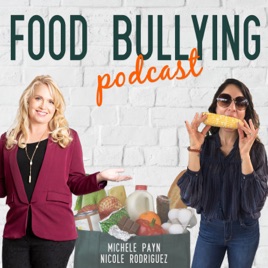
Advertise on podcast: Food Bullying Podcast
Rating
5from
This podcast has
123 episodes
Language
EnglishPublisher
Michele Payn & Nicole RodriguezExplicit
No
Date created
2019/08/21
Latest episode
2024/01/15
Average duration
30 min.
Release period
3 days
Description
Firsthand perspective from farmers about how food is grown. Author Michele Payn & RDN Nicole Rodriguez arm the dietitian community and those who love nutrition with the REAL stories of farming. Listening will empower you to help others feel more confident in their food choice, with tips about how people are bullied about nutrition. Michele & Nicole know nutrition experts are hungry for connection with those who grow, raise, and produce food. This Food Bullying podcast brings together voices from the agrifood sector to help you better understand the food you're so passionate about.
Unlock Food Bullying Podcast podcast Email contact info,
Listeners & Audience details
Email contact information
Direct podcast contact details

Listeners
Audience numbers & engagement insights

Audience details
Podcast Insights



Podcast episodes
Check latest episodes from Food Bullying Podcast podcast
Food labels & nutrition choices driven by dollars: Episode 121
2024/01/15
What’s the relationship between front-of-package food labeling and consumer choice, and how can it potentially impact grocery prices?
Dr. Chen Zhen is a professor in Food Choice, Obesity, and Health Economics at the University of Georgia. His research focuses on the impact of interpretative front-of-package labeling on consumer behavior and food prices. In this conversation, Zhen discusses policies that can discourage consumption of less nutrient-dense foods (such as taxation) versus those that focus on access (making more nutritious food more accessible and less nutritious food less accessible), as well as the potential confusion caused by nutrition facts panels.
While a combination of policies may benefit the nutritional intake of lower-income consumers, Zhen highlights a study that demonstrated how a soda tax reduced the consumption of sugary beverages among low-income individuals, while a fruit and vegetable subsidy did not have a significant impact on their overall nutrition score.
He discussed three categories of policies to address the issue of food prices and consumer choices. The first category is taxation, where the aim is to tax unhealthy food to discourage consumption. However, there are concerns about the potential costs and impact on consumer welfare. The second category is access policy, which involves making healthier food more accessible and less healthy food less accessible. For example, removing sugary drinks from schools. However, there can be compensation effects where people consume more unhealthy food outside of school. The third category is information provision policy, such as nutrition fact labels. Chen mentioned the recommendation for interpretative and summary nutrition labels on the front of packages to help consumers better understand the information. He also mentioned his research on yogurt and consumer confusion with labels.
He referenced a study on yogurt that examined the impact of a nutrition labeling change on sales. The study found that when a yogurt product received a lower nutrition score, its sales decreased. Conversely, when a yogurt product received a higher score, its sales increased. However, the study also discovered that retailers adjusted the prices of the yogurt products to offset the sales effects of the labeling change. After accounting for the pricing effect, it was found that about 40% of the labeling effect was offset by the retailer's pricing strategy. This suggests that the impact of nutrition labeling on consumer behavior can be influenced by pricing strategies implemented by retailers.
Chen mentioned that low-income individuals tend to purchase less healthy foods due to financial constraints. Chen also highlighted the potential impact of labeling and pricing strategies on nutritional disparities. He is now working on a USDA grant that aims to examine the nutrition disparity resulting from nutrition labels. The hypothesis is that if a product receives a lower nutrition score, retailers may lower the price, and low-income individuals may be more sensitive to these price reductions, leading to increased consumption of unhealthy foods. Chen also mentioned a study on pricing policies, where a soda tax was found to reduce the consumption of sugary beverages among low-income individuals, while a fruit and vegetable subsidy did not have a significant impact on their overall nutrition score. He suggested that a combination of taxes on unhealthy foods and subsidies for healthier options may be more effective in addressing nutritional disparities.
Dr. Zhen discussed three categories of interventions that policymakers can make to address the obesity epidemic: pricing strategies (such as soda taxes), access policies (making healthier food more accessible and less healthy food less accessible), and information provision policies (like nutrition labels). Chen emphasized that while taxes can be effective, they come with costs, so labels are often preferred by economis
A.I. in your food (cattle, not computers): Episode 122
2024/02/05
Brady Blackett is a 4th generation cattle producer from Utah who’s passionate about the cattle industry and its ability to contribute to a healthy and wholesome food system in the U.S. and abroad.
As the co-founder of IGA (Intermountain Genetic Alliance), Blackett is well-versed in the subject and application of AI (artificial insemination). In this episode, Blackett explains the many ways in which AI has a positive net impact on the environment and offers a wider array of consumer choices at the meat counter and in the dairy aisle.
For example, by selecting traits that improve feed efficiency, AI allows cattle to perform at the same level while consuming less feed. This means that they can produce meat and milk more efficiently, reducing the overall environmental footprint of cattle production.
Additionally, AI enables producers to breed animals with specific traits, such as shorter calving intervals, which can lead to more efficient land use and potentially shorter grazing times. These factors contribute to a more sustainable and environmentally friendly approach to beef production.
The science and research conducted in the field of reproductive technology in cattle, including artificial insemination (AI), has had significant benefits for humans. For example, advancements in fertility treatments and hormone therapies used in human reproductive medicine have been influenced by research conducted in cattle.
The similarities between bovine and human reproductive systems have allowed scientists to study and develop techniques such as in vitro fertilization (IVF) and embryo transfer, which have been successfully applied in human fertility treatments. Therefore, the knowledge gained from studying cattle reproduction has contributed to improving human reproductive health and assisting individuals and couples in achieving pregnancy.
In addition to his work throughout the beef industry, Blackett is father to three children and is an advocate for local agriculture. When feeding his own family, he buys local whenever possible - especially when the food in question is beef. When choosing beef, choose to buy from local producers. Local producers often lose a portion of the margin on beef thanks to a consolidated processing industry.
"If you buy directly from a local producer they capture more of the retail value of the beef. Furthermore, when you buy directly, you are keeping those dollars in your local economy while knowing exactly how that animal was raised."
You can learn more about the IGA on Instagram: @IGAbulls and Facebook.
Big bad agriculture: a transparent look at their science & safety
2024/02/19
“The biggest misconception about my work is that agriculture companies place pesticides or biotech products on the market without testing them for safety. The fact is that agriculture is one of the most strictly regulated and thoroughly investigated industries in the world. Agriculture companies must strictly follow local and international regulatory guidelines and conduct hundreds of safety studies before launching a product.
When a consumer has safety questions about pesticide residues or GMOs in their food, I hope all dietitians are well-equipped with knowledge about the agriculture regulatory processes, and help consumers make evidence-based food decisions.”
Dr. Meng Wang is the Transparency Lead at Bayer Crop Science. She makes the safety data of their products available and understandable to the public. On a personal note, food is her love language and she loves talking about food! Wang puts this passion to use in creating artisan macarons, which Michele reports they taste as good as they look.
Meng discussed the importance of transparency in making product safety data available to the public. She mentioned that about five years ago, they realized the public's interest in knowing if their food is safe and understanding how it's produced. As part of the transparency program, they decided to make safety data more accessible to the general public.
Bringing a new chemistry, such as a pesticide, to market typically takes around 11 years and costs approximately $300 million. This lengthy process involves conducting rigorous safety studies to ensure the product's safety for humans, animals, and the environment when used as directed.
Researching and approving a new genetically modified (GM) crop product takes approximately 16 years on average. This process involves extensive development and testing to ensure the product's safety, efficacy, and compliance with regulatory standards. The cost of bringing a GM crop to market is around $150 million. It's important to note that these timelines and costs may vary depending on the specific product and regulatory requirements.
Bayer Crop Science Crop Science creates new pesticides and genetically modified (GM)/bioengineered products to address the challenges faced by farmers – and to contribute to food security, sustainability, and productivity.
A growing global population brings a need to increase agricultural productivity, while also taking care of the environment. Bayer Crop Science Crop Science listens to the needs of farmers and develops products that can help them be more productive and address food security concerns. The development of new products involves significant investment and rigorous safety testing to ensure they are safe for humans, animals, and the environment. The goal is to provide innovative solutions that benefit farmers and contribute to a more sustainable and secure food supply.
Transparency, as explained by Meng, refers to the practice of making safety data and information about agriculture products available to the general public. In the past, safety data was primarily shared with regulatory authorities for approval purposes. However, with increasing public interest in understanding the safety and origins of their food, Bayer Crop Science recognized the importance of transparency. They believe that transparency allows consumers to make informed decisions and builds trust in the agricultural industry. By making safety data more accessible, Bayer Crop Science aims to address public concerns, promote understanding, and foster a more transparent and open dialogue about their products.
Transformational leadership, according to Dr. Meng Wang, involves inspiring and empowering people to reach their full potential. She believes in creating a culture where employees are motivated and encouraged to excel in their roles. Throughout her career, Dr. Wang has been fortunate to have managers and mentors who embraced this leadership style, allowing her t
Holistic animal agriculture for nutrition pros
2023/08/21
“All actions have some sort of impact on the system, but at times, people can assume reducing animal protein can have a vast and meaningful impact without considering other important tradeoffs that should be considered.”
Passionate about leaving the planet better than she found it and ensuring access to nutrient-dense foods including nutrient-dense animal proteins, Dr. Kim Stackhouse-Lawson works to clear up the misconception that animal agriculture isn’t sustainable.
“I wish people knew how dedicated farmers, ranchers, and producers are to raising high-quality food and that there are scientists, my team specifically, looking for solutions to continue to reduce food system impacts from animal ag. We have improved, but technologies are advancing quickly,” says Stackhouse-Lawson.
She is the Director of AgNext and a Professor of Animal Science at Colorado State University. As Director of AgNext, she brings together producers, industry partners, and researchers to innovate real-time solutions for sustainability in animal agriculture. Prior to her time at CSU, Kim was the Director of Sustainability for JBS USA where she was responsible for coordinating the North American sustainability program, inclusive of the company’s beef, pork, poultry, case ready, transportation, and branded product business.
Learn more about Dr. Stackhouse-Lawson here and visit AgNext on Facebook and Twitter. You can also connect with her at https://www.linkedin.com/in/kim-stackhouse-lawson-0108341a1.
Back to school with agriculture & nutrition: Episode 112
2023/09/05
With back to school in full swing, Michele and Nicole talk with Katie Pratt and Amanda Radke on the latest podcast episode. While each of these women wears many hats (farmers, mothers, and pillars of their respective communities), they both work to increase literacy about food, farming, ranching, and nutrition in the classroom.
As misinformation can spread early in life, Pratt keeps an open door (literally - as the host of many tours of her farm) and creates a safe space for elementary and junior high school students to learn more about where their food comes from.
“When a student asks a specific question about organic foods or corn syrup or gluten, it comes from a place of curiosity and one influenced usually by a social trend and not factual information,” says Pratt.
Radke, who in addition to ranching, retailing, parenting, and public speaking is also a published author of eight children’s books, shares how misconceptions and misinformation can impact the ag community at large.
“When these misconceptions permeate popular culture, it impacts politics, perceptions, consumer buying trends, food prices, regulations, etc.,” notes Radke.
Listen in for best practices on communicating with young consumers, empowering them to feel good about their food choices, and ideas on how RDNs can better engage youth in their nutrition choices.
Learn more about Katie at https://www.theillinoisfarmgirl.com/ and visit her on Facebook.
Visit Amanda at www.amandaradke.com, on Facebook, Instagram, Twitter, and TikTok.
Cheesemaking - Paving the whey for fine spirits
2023/09/18
Named after and guided by her parents, Jerry and Linda, Alise Sjostrom’s Jer-Lindy Farms produces award-winning cheeses. A graduate of the University of Minnesota and Vermont Institue for Artisan Cheese, Sjostrom is quick to point out the biggest misconception about her line of work - that being lactose intolerant means you can’t enjoy the fruits of her labor.
“Cheese is actually quite low in lactose compared to dairy products like milk, cream, and yogurt,” says Sjostrom. “Most contain less than 2g per one ounce serving, which is far less than the 12-13g found in a one cup serving of milk.”
Crediting the lessons she’s learned along the way from others in the cheese industry and her team of owners and employees, Sjostrom not only produces cheese with her team at Redhead Creamery, but the business is also making it foray into the spirits industry. Listen in to find out which by-product of the cheese-making process is making its way into cocktails.
To learn more about Sjostrom or to order Cheese, visit www.redheadcreamery.com. Find her on Facebook and Instagram.
Fish farming, fear, and your food
2023/10/02
Is “wild” fish somehow better for you than the farm-raised variety?
Mike Freeze, owner of Keo Fish Farm, conservationist, environmentalist, and naturalist, offers his perspective based on years of fish farming.
“For a variety of health reasons people need to consume more seafood and since we are fishing the oceans at maximum sustainable levels, only farmed seafood offers the possibility to increase seafood consumption,” says Freeze.
While “wild” fish might be perceived as being more nutritious or somehow better for the environment, Freeze notes that their more affordable, farmed counterparts may be overlooked, and the consumer might be skipping fish altogether - and not meeting recommended guidelines. He encourages RDNs and those who prioritize nutrition to consider fish an important part of their diet.
Listen in for more information on the safety and sustainability of farmed fish in the nutrition world, as well as Freeze’s take on purchasing American-raised seafood.
Gettin' figgy with it: Episode 114
2023/10/16
"A little sugar is not always a bad thing!”
Kevin Herman is a diversified farmer who grows crops you may have not heard much about, but his biggest crops are figs. And yes, there are more than one variety. He likens fig varieties to wine varieties - each with a distinct flavor and pairing opportunity.
A nutritional powerhouse of fiber, calcium, and potassium, Herman views figs as a great replacement for candy bars. In this episode, he sheds light on the different varieties and their nuances in flavor, texture, and eye appeal, and shares some of his favorite preparation methods. If you're an RDN or into nutrition, be sure to listen.
Herman also clears the air so to speak on the many ways in which farmers serve as environmentalists.
“We all recognize the need for trees to help clean our air and we not only be on the loss of the rain forest but also spend billions every year to plant trees, well what about farmers, we plant millions of trees every year that not only feed the world but also clean the air!”
To learn more about California-grown figs, visit californiafigs.com.
The great pumpkin! Episode 116
2023/11/06
Pick a pumpkin - but what kind? A self-proclaimed Professor of Pumpkinology, John Ackerman is the owner and operator of the farm bearing the same name that has been in his family for over a century. And while you may hear “pumpkin” and think of the jack-o-lantern variety, he and his wife grow an astounding number of breeds.
While Ackerman has opened his farm to the public each fall for the past 24 years, the long hours and devotion to his land are consistent throughout the off-season. Pumpkin season may be a given, but the weather can determine great fluctuations in the farm’s income.
A steward of his land, Ackerman shares his concerns with common misconceptions about farming practices.
“While organic food is certainly growing in popularity, I have concerns that its production may be hard on the environment,” says Ackerman.
Listen in for more reasons to eat a greater variety of pumpkins, how they’re grown, and just how many varieties are available.
Learn more about Ackerman and his farm at ackermanfamilyfarmsllc.com.
Talking turkey - hormones, breasts, nutrition: Episode 117
2023/11/20
The bird’s the word, but when we’re talking turkey, what do all those labels REALLY mean?
Peter Klaphake, a third generation turkey farmer from Minnesota, owns and operates turkey farms, a feed mill, and crop farming businesses. He’s also a current board member on the Minnesota Turkey Research and Promotion Council.
“Our birds are never raised with added hormones or steroids. In fact, it’s illegal,” explains Klaphake. And while he goes into great detail on labeling, antibiotics, and what he wish consumers knew about raising turkey, he is deeply passionate about raising turkeys, despite all the challenges.
“It is a very risky, demanding, and rewarding profession,” says Klaphake. “We either have to love what we do, are completely nuts, or a bit of both!”
Listen in and learn more about how this lean, nutrient-dense protein makes its way to your table. For more information, visit Klaphake Feed Mill.
Separating fact from fiction in food & farming: Episode 118
2023/12/04
Grocery store costs are crazy, but what costs have gone up on farms? Are fields sprayed with “such harsh pesticides” that workers can’t enter the fields? Is hydroponic farming the wave of the future when it comes to leafy greens? Should you be worried about lead in soil? Michele helps Nicole separate fact from fiction on these topics and more.
The co-hosts spend time reflecting on their personal favorite and eye-opening episodes from 2023, which include apple growing, dietitians, pumpkins, GMOs, mRNA vaccines, scientists, farmers, animal protein & sustainability, and more. They recommend episodes to help listeners learn more about their food and how it's grown to overcome the myths of the food plate. Michele and Nicole want to know: which experts do YOU want to hear them interview in the New Year? Leave your questions in the comments or message Nicole or Michele.
GMOs & bacon with a side of bullying
2023/12/18
“I wish people would take a little time to understand where their food comes from and also to trust the farmer.” A great perspective for RDNs to remember!
Wanda Patsche, alongside her husband Chuck, farms in southern Minnesota. They grow corn and soybeans and raise hogs. Patsche also utilizes her blog to tell her farming story. Unfortunately, she has recently experienced some food bullying as part of her efforts to help people understand farming.
“I think GMOs and organic foods are still widely misunderstood by the consumer,” says Patsche. “I also think the fear-based labeling food companies use such as labeling foods non-GMO when there isn’t a GMO option for that particular food causes further confusion.”
Listen in as Patsche shares her insights on how biotechnology has helped her use fewer inputs throughout the years, the use of antibiotics in swine, and why you should shop confidently - especially for meat - at any grocery store.
For more on Patsche, visit her on X and Instagram @MNFarmLiving and on Facebook MinnesotaFarmer. Be sure to check out her blog, https://www.mnfarmliving.
Podcast reviews
Read Food Bullying Podcast podcast reviews
TWLawyerFL 2019/11/20
Wonderful!
A great podcast vwith Michele, who is a great advocate for bridging the gap between farm and fork. She covers super interesting subjects that all shou...
b0shart 2019/09/19
Insightful
Power insight into the truth behind the marketing of foods and labeling. And explained with words we can all understand. Definitely recommended to tho...
Podcast sponsorship advertising
Start advertising on Food Bullying Podcast relevant audience podcasts
You may also like to advertise on these Podcasts

4.945216
What Was That? with Gabe Sanchez
Gabe Sanchez

51500
What An OddCast
Oddcast Network

4.7101133
HAUNTED: The Audio Drama
Impala Films

4.7310424
Hardly Initiated Podcast
Digital Mogul

4.7532314
Blocked Party
Stefan Heck & John Cullen

5951
Dieser eine Moment – Der Podcast mit Philipp Fleiter
Podimo & Philipp Fleiter

5132117
The Vegas Therapist - Ryan Wynder
Ryan Wynder

4.9456464
10ish Podcast
10ish Podcast

4.519666203
FiveThirtyEight Politics
ABC News, 538, FiveThirtyEight, Galen Druke

5197102
Best Morning Routine, Ever!
Lunide Louis