1483841274
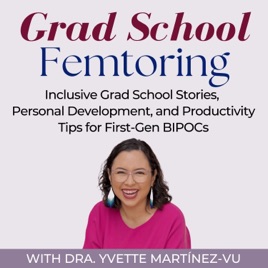
Grad School Femtoring: Inclusive Grad School Stories, Personal Development, and Productivity Tips for  First-Gen BIPOCs

Advertise on podcast: Grad School Femtoring: Inclusive Grad School Stories, Personal Development, and Productivity Tips for First-Gen BIPOCs

Rating
★★★★★
5
from
64 reviews
Categories
Country
United States
This podcast has
391 episodes
Language
English
Date created
2019/10/16
Latest episode
2026/09/28
Average duration
29 min.
Release period
8 days

Description

The Signal Award-winning Grad School Femtoring Podcast provides first-generation BIPOC students and professionals with conversations about graduate school and growth to help you sustainably achieve your goals.  I’m your host, Dra. Yvette Martinez-Vu, a first-gen Chicana, mama, neurodivergent, and chronically ill grad school and productivity coach, consultant, author and speaker. For over fourteen years I’ve been empowering first-gen students of color along their personal and professional journeys, and I’m really excited to support you too. Listen every Friday to solo and guest episodes where you’ll be listening in on inclusive grad school stories. You'll also learn more about grad school and academic success, career and professional development, personal development and mindset, productivity and time management, social justice and community building, wellbeing and mental health, money and financial literacy, first-gen student of color experiences, and more!  This podcast is a proud member of the Genuina Media network. Subscribe wherever you listen to podcasts and share this resource with a friend.

Unlock Grad School Femtoring: Inclusive Grad School Stories, Personal Development, and Productivity Tips for First-Gen BIPOCs podcast Email contact info,
Listeners & Audience details

Email contact information

Direct podcast contact details

Listeners

Audience numbers & engagement insights

Audience details

Podcast Insights

Podcast episodes

Check latest episodes from Grad School Femtoring: Inclusive Grad School Stories, Personal Development, and Productivity Tips for First-Gen BIPOCs podcast


391: How to Choose the Right Graduate Program Beyond Rankings and Prestige
2026/09/28
In this episode of the Grad School Femtoring Podcast, I share how to choose a graduate program based on the outcome you're seeking and the people you hope to learn from. When I help applicants build a program list, I encourage them to look beyond rankings and get clear on the conditions that will help them succeed. I walk through how to identify your non-negotiables, research potential faculty mentors, examine funding and program conditions, and learn from current students and alumni. This research takes time, especially when program information is hard to find, but it can help you build a list of schools you would seriously consider attending. In this episode, you will learn: How to distinguish your non-negotiables from strong preferences and bonuses.Why you should identify at least two potential faculty mentors at each program.What to ask about stipends, funding duration, health insurance, and other program conditions.How to connect with faculty, current students, and alumni for firsthand perspectives.How to track your findings and build a graduate program list that reflects your goals.Work with me If you would like support clarifying your goals and navigating graduate applications, explore my coaching services: https://gradschoolfemtoring.com/coaching/Free resource Download your Grad School Femtoring Resource Kit: https://gradschoolfemtoring.com/kit/Explore more Listen to more episodes on Applying to Grad School: https://gradschoolfemtoring.com/podcast_catergory/applying-to-grad-school/Support the podcast with a one-time or monthly donation: https://donate.stripe.com/bJedR8dGRcs6ewGdwq38401 Access transcripts and additional resources: https://gradschoolfemtoring.com/podcast/Audio and transcript edited by Yessi Sanchez: https://www.linkedin.com/in/yessisanchez/This podcast is a proud member of the Genuina Media network.The Grad School Femtoring Podcast is for educational purposes only and is not a substitute for therapy or other professional services. Hosted by Simplecast, an AdsWizz company. See pcm.adswizz.com for information about our collection and use of personal data for advertising.
390: Low-Energy Writing Strategies: How to Keep Writing with Limited Capacity
2026/09/21
In this episode of the Grad School Femtoring Podcast, I share low-energy writing strategies for college students, graduate students, and professionals completing major projects with limited capacity. Whether you are navigating chronic illness, disability, burnout, caregiving, sleep deprivation, travel, or an especially demanding season, these strategies can help you keep making progress to meet a hard deadline. I explain how to assess your capacity, match tasks to your available energy, break long-term projects into specific actions, and prioritize the work that matters most. I also discuss writing triage, a process for completing high-energy tasks during periods when higher-capacity moments may never come. In this episode, you will learn: How to assess your energy and focus using a low-, medium-, or high-capacity scaleHow to sort writing tasks according to the energy they requireHow to define a project’s starting point, required outcome, and short-term timelineHow to turn broad goals into specific, manageable actionsHow to reduce unnecessary scope and protect your highest-priority sectionsHow to complete demanding work through writing triage, scaffolding, and community supportWork with me Receive personalized structure and compassionate support for your academic, professional, or personal goals through one-on-one coaching: https://gradschoolfemtoring.com/coaching/Free resource Download your Grad School Femtoring Resource Kit: https://gradschoolfemtoring.com/kit/Explore more Listen to more episodes on Dissertation and Writing Strategies: https://gradschoolfemtoring.com/podcast_catergory/dissertation-and-writing-strategies/ Support the podcast with a one-time or monthly donation: https://donate.stripe.com/bJedR8dGRcs6ewGdwq38401 Access transcripts and additional resources: https://gradschoolfemtoring.com/podcast/Audio and transcript edited by Yessi Sanchez: https://www.linkedin.com/in/yessisanchez/This podcast is a proud member of the Genuina Media network.The Grad School Femtoring Podcast is for educational purposes only and is not a substitute for therapy or other professional services. Hosted by Simplecast, an AdsWizz company. See pcm.adswizz.com for information about our collection and use of personal data for advertising.
389: Dopamine, Rewards, and Novelty: How to Keep Writing When the Excitement Fades
2026/09/14
In this episode of the Grad School Femtoring Podcast, I discuss why the excitement surrounding a long-term writing project can fade and how dopamine, executive functioning, and your working conditions can shape motivation. I offer a more compassionate approach for academics, students, and other writers who are struggling to return to work that still matters to them. I share practical ways to make writing more approachable. You will learn how to build a personalized menu of writing tasks and rewards that reflects your energy and capacity while recognizing when you may need rest, accommodations, redistributed labor, or additional support. In this episode, you will learn: How dopamine, feedback, novelty, and executive functioning can influence your ability to begin and sustain writingWhy fading interest can point to your conditions, workload, health, access needs, or an unclear next stepHow to add supportive cues and sources of comfort, purpose, or connection before and during a writing sessionWays to make progress visible beyond word counts How to create novelty by changing your medium, environment, sequence, social setting, or level of challengeFour questions for building a flexible writing menu that includes options for low-capacity daysWork with me If you want structure and compassionate support as you work toward a dissertation, qualifying exam, writing project, career transition, or another important goal, learn more about one-on-one coaching: https://gradschoolfemtoring.com/coaching/Free resource Download your Grad School Femtoring Resource Kit: https://gradschoolfemtoring.com/kit/Explore more Listen to more episodes on Dissertation and Writing Strategies: https://gradschoolfemtoring.com/podcast_catergory/dissertation-and-writing-strategies/Support the podcast with a one-time or monthly donation: https://donate.stripe.com/bJedR8dGRcs6ewGdwq38401Access transcripts and additional resources: https://gradschoolfemtoring.com/podcast/Audio and transcript edited by Yessi Sanchez: https://www.linkedin.com/in/yessisanchez/This podcast is a proud member of the Genuina Media network.The Grad School Femtoring Podcast is for educational purposes only and is not a substitute for therapy or other professional services. Hosted by Simplecast, an AdsWizz company. See pcm.adswizz.com for information about our collection and use of personal data for advertising.
388: Exploring STEM PhD Careers Through a GSF Externship with Reem Salem
2026/09/07
In this episode of the Grad School Femtoring Podcast, I speak with Reem Salem, a fourth-year molecular engineering PhD candidate at the University of Chicago, about career development for STEM PhD students. Drawing from the research she conducted during her Grad School Femtoring externship, Reem shares why graduate students need greater access to career guidance, mentorship, and opportunities to explore the many paths available beyond academia. We discuss how to identify and communicate the transferable skills you are already developing through your doctoral training. Reem also offers practical steps for exploring careers that align with your strengths and values. In this episode, you will learn: What research reveals about the career development needs and pathways of STEM PhDsHow limited mentorship and professional networks affect historically excluded and first-generation graduate studentsHow to identify transferable skills within your doctoral research and trainingWhy career exploration can begin before you know exactly where you want to end upHow to approach career planning as a gradual and systematic process grounded in your strengths and valuesWork with me If you are exploring new career paths or navigating a major academic or professional transition, I offer personalized coaching to help you clarify your goals, communicate your strengths, and create an action plan aligned with your capacity and values. Learn more at: https://gradschoolfemtoring.com/coaching/Connect with today’s guests Connect with Reem Salem on LinkedIn: https://www.linkedin.com/in/reem-yasser-salemFree resources Download the Career Development Brief for STEM PhDs: https://gradschoolfemtoring.com/career-development-brief-stem-phd-students/Download the Grant-Writing Toolkit for STEM Graduate Students: https://gradschoolfemtoring.com/grant-writing-toolkit-stem-graduate-students/Download your Grad School Femtoring Resource Kit: https://gradschoolfemtoring.com/kit/Explore more Listen to more episodes on Career and Professional Development: https://gradschoolfemtoring.com/podcast_catergory/career-and-professional-development/ Support the podcast with a one-time or monthly donation: https://donate.stripe.com/bJedR8dGRcs6ewGdwq38401 Access transcripts and additional resources: https://gradschoolfemtoring.com/podcast/Audio and transcript edited by Yessi Sanchez: https://www.linkedin.com/in/yessisanchez/This podcast is a proud member of the Genuina Media network.The Grad School Femtoring Podcast is for educational purposes only and is not a substitute for therapy or other professional services. Hosted by Simplecast, an AdsWizz company. See pcm.adswizz.com for information about our collection and use of personal data for advertising.
387: Seven Graduate School Myths That Hold Students Back
2026/08/31
In this episode of the Grad School Femtoring podcast, I unpack seven common graduate school myths that can leave students questioning their abilities, belonging, support systems, timelines, and career prospects. These myths can be especially harmful for historically excluded students—including those who are first-generation, BIPOC, disabled, neurodivergent, chronically ill, parenting, caregiving, and nontraditional students—who are navigating uneven access to resources and insider knowledge. I explain why graduate school success depends on learned skills, supportive relationships, and sustainable practices rather than intelligence, independence, constant productivity, or a perfectly linear path. You will also learn how to treat struggle as information, build a broader support team, ask for help before challenges become a crisis, account for your changing capacity, and begin exploring career possibilities before the final year of your program. In this episode, you will learn: Why academic confidence often reflects prior exposure, resources, mentorship, and insider knowledge How to interpret struggle as information about the support, accommodations, strategies, or rest you may need Why one advisor cannot meet every need and how a broader support team can fill important gaps How to ask for help by sharing relevant context, explaining what you have tried, and making a specific request Why rest, revised timelines, pauses, and redirection can all be part of a successful graduate journey How to begin translating your skills and exploring career options before completing your degree Work with me Explore my coaching services for culturally relevant support as you navigate graduate school, build sustainable systems, strengthen your support network, and plan your next steps: https://gradschoolfemtoring.com/coaching/ Free resource Download your Grad School Femtoring Resource Kit: https://gradschoolfemtoring.com/kit/ Explore more Listen to more episodes on Grad School Hidden Curriculum: https://gradschoolfemtoring.com/podcast_catergory/grad-school-hidden-curriculum/ Support the podcast with a one-time or monthly donation: https://donate.stripe.com/bJedR8dGRcs6ewGdwq38401 Access transcripts and additional resources: https://gradschoolfemtoring.com/podcast/ Audio and transcript edited by Yessi Sanchez: https://www.linkedin.com/in/yessisanchez/ This podcast is a proud member of the Genuina Media network. The Grad School Femtoring Podcast is for educational purposes only and is not a substitute for therapy or other professional services. Hosted by Simplecast, an AdsWizz company. See pcm.adswizz.com for information about our collection and use of personal data for advertising.
386: How to Calculate the ROI of Grad School
2026/08/24
In this episode of the Grad School Femtoring Podcast, I explain how to calculate the return on investment, or ROI, of graduate school. As admissions season begins, many prospective students are asking whether an advanced degree makes financial sense. I walk you through the data you can use to make a more informed decision, including expected salaries, the full cost of attendance, lost wages, completion rates, and time to degree. I also invite you to consider the personal, professional, and community returns that may matter alongside salary. Through a simplified break-even calculation and a set of values-based questions, you can evaluate whether a particular program will bring you closer to the work, impact, autonomy, and long-term well-being you want. In this episode, you will learn: How to compare your earning potential with a bachelor’s degree and an advanced degree Which expenses to include when calculating the full cost of graduate school Why lost wages, retirement contributions, and time away from the workforce matter when calculating the ROI of grad school How completion rates, attrition, and time to degree affect a program’s potential return How to estimate the number of years it may take to recover your graduate school investment How to weigh financial outcomes alongside intellectual fulfillment, professional autonomy, community impact, and personal values Work with me Explore grad admissions consulting support as you clarify your goals and decide whether grad school aligns with the future you want: https://gradschoolfemtoring.com/consulting Free resource Download your Grad School Femtoring Resource Kit: https://gradschoolfemtoring.com/kit/ Explore more Read the full blog post on "How to Calculate the ROI of Grad School": https://gradschoolfemtoring.com/how-to-calculate-the-roi-of-graduate-school/ Listen to more episodes on Financial Literacy and Grad Funding: https://gradschoolfemtoring.com/podcast_catergory/financial-literacy-and-grad-funding/ Support the podcast with a one-time or monthly donation: https://donate.stripe.com/bJedR8dGRcs6ewGdwq38401 Access transcripts and additional resources: https://gradschoolfemtoring.com/podcast/ Audio and transcript edited by Yessi Sanchez: https://www.linkedin.com/in/yessisanchez/ This podcast is a proud member of the Genuina Media network. The Grad School Femtoring Podcast is for educational purposes only and is not a substitute for therapy or other professional services. Hosted by Simplecast, an AdsWizz company. See pcm.adswizz.com for information about our collection and use of personal data for advertising.
385: What I Wish I Knew Before Grad School: 3 Truths Every Student Should Know
2026/08/14
In this episode of the Grad School Femtoring podcast, I share three truths I wish I understood before starting graduate school. For first-generation, BIPOC, neurodivergent, and other students navigating unfamiliar academic spaces, graduate school can feel like entering a cultural system with its own language, expectations, hierarchies, and unwritten rules. I reflect on my experience of feeling behind and explain why struggling to understand the hidden curriculum does not mean you do not belong. I also explore how productivity culture can tie your sense of worth to your output and why mentorship, femtorship, and community care are essential parts of a sustainable graduate school experience. Through three reflection prompts, I invite you to name the expectations affecting your sense of belonging, identify where you may be overworking to prove yourself, and consider who you can reach out to for support. In this episode, you will learn: Why graduate school functions as a cultural system with unwritten rules beyond academic requirements. How unclear expectations, departmental politics, and unstructured time can affect your sense of belonging. How doing less, resting more, and setting boundaries can protect your wellbeing. Why mentorship, femtorship, and community care are essential to navigating graduate school. Three reflection questions to help you seek clarity, reduce overwork, and identify support. Work with me Explore 1:1 coaching for culturally relevant support as you navigate graduate school, protect your capacity, and build sustainable systems: https://gradschoolfemtoring.com/coaching/ Free resource Download your Grad School Femtoring Resource Kit: https://gradschoolfemtoring.com/kit/ Explore more Listen to more episodes on Grad School Hidden Curriculum: https://gradschoolfemtoring.com/podcast_catergory/grad-school-hidden-curriculum/ Support the podcast with a one-time or monthly donation: https://donate.stripe.com/bJedR8dGRcs6ewGdwq38401 Access transcripts and additional resources: https://gradschoolfemtoring.com/podcast/ Audio and transcript edited by Yessi Sanchez: https://www.linkedin.com/in/yessisanchez/ This podcast is a proud member of the Genuina Media network. The Grad School Femtoring Podcast is for educational purposes only and is not a substitute for therapy or other professional services. Hosted by Simplecast, an AdsWizz company. See pcm.adswizz.com for information about our collection and use of personal data for advertising.
384: Navigating Cancelled Grad Admissions and How to Create a Plan A, B, and C (Replay)
2026/08/07
In this episode of the Grad School Femtoring podcast, I discuss what to do in a  time when more graduate programs are pausing or cancelling admissions and why having a Plan A, Plan B, and Plan C matters more than ever. If you're applying to graduate school, especially master's or PhD programs, this episode will help you navigate an increasingly unpredictable admissions landscape with greater awareness. Drawing from my work supporting applicants for sixteen years, I explain why admissions outcomes are being shaped by broader institutional and funding challenges, not just your individual qualifications. I unpack the systemic factors contributing to paused admissions, including budget constraints and funding disruptions, and share practical strategies for adapting your application plans. You'll learn how to approach this admissions cycle strategically, how to strengthen your options if your original plans change, and how to make decisions that align with your long-term goals rather than reacting from fear or uncertainty. My hope is that you'll walk away with a stronger sense of agency and a reminder that you always have options, even when higher education feels unpredictable. In this episode, you will learn: Why some graduate programs are pausing or canceling admissions and what those changes mean for applicants. How to develop a strategic Plan A for applying during a competitive admissions cycle. How to use a gap year intentionally to strengthen your future graduate school applications. When gaining professional experience before graduate school may be the strongest long-term strategy. How to identify your graduate school non-negotiables and make values-aligned application decisions. Work with me If you're preparing graduate school applications and want personalized guidance throughout the process, I offer one-on-one graduate admissions consulting to help you build a strategic school list, strengthen your application materials, prepare for interviews, and evaluate funding offers Learn more about my graduate school consulting services here: https://gradschoolfemtoring.com/consulting Free resource Download your Grad School Femtoring Resource Kit: https://gradschoolfemtoring.com/kit/ Explore more Listen to more episodes on Applying to Grad School: https://gradschoolfemtoring.com/podcast_catergory/applying-to-grad-school/ Support the podcast with a one-time or monthly donation: https://donate.stripe.com/bJedR8dGRcs6ewGdwq38401 Access transcripts and additional resources: https://gradschoolfemtoring.com/podcast/ Audio and transcript edited by Yessi Sanchez: https://www.linkedin.com/in/yessisanchez/ This podcast is a proud member of the Genuina Media network. The Grad School Femtoring Podcast is for educational purposes only and is not a substitute for therapy or other professional services. Hosted by Simplecast, an AdsWizz company. See pcm.adswizz.com for information about our collection and use of personal data for advertising.
383: How to Plan Your Week Around Your Energy and Capacity Instead of Your To-Do List
2026/07/31
In this episode of the Grad School Femtoring podcast, I introduce a different way to think about weekly planning by changing your focus from simply managing your time to understanding your energy and capacity. This episode is for students and professionals who feel like they're constantly falling behind despite having a planner, calendar, or productivity system. Drawing from patterns I see in coaching and my own lived experience, I explain why traditional planning often overlooks the realities of balancing work, caregiving, disability, chronic illness, neurodivergence, and other responsibilities that impact just how much capacity we have in any given week. I explore the differences between time, energy, and capacity and explain why recognizing these distinctions can help you create a more sustainable planning process. I also share a practical framework for planning your week around your current capacity, discuss the planning fallacy and why buffer time matters, and encourage you to reflect on the expectations you've inherited about productivity. My goal is to help you build a planning system that reflects your values, supports your wellbeing, and allows you to make meaningful progress on your goals without constantly measuring yourself against an idealized version of what you think you should be able to accomplish. In this episode, you will learn: How to distinguish between time, energy, and capacity when planning your week. Why traditional planning systems often lead to frustration, guilt, and unrealistic expectations. A capacity-aware planning process for prioritizing meaningful work more sustainably. How to match cognitively demanding tasks to your highest-energy periods. Why buffer time and recovery should be planned intentionally rather than treated as an afterthought. Reflective questions to help you build a planning system that aligns with your current reality and long-term goals. Work with me If you're feeling stuck in graduate school or navigating a major professional transition, I offer one-on-one coaching to help you build sustainable systems, clarify your priorities, and make meaningful progress toward your goals. Learn more about my services here: https://gradschoolfemtoring.com/coaching/ Free resource Download your Grad School Femtoring Resource Kit: https://gradschoolfemtoring.com/kit/ Explore more Listen to more episodes on Sustainable Productivity Strategies: https://gradschoolfemtoring.com/podcast_catergory/sustainable-productivity-strategies/ Support the podcast with a one-time or monthly donation: https://donate.stripe.com/bJedR8dGRcs6ewGdwq38401 Access transcripts and additional resources: https://gradschoolfemtoring.com/podcast/ Audio and transcript edited by Yessi Sanchez: https://www.linkedin.com/in/yessisanchez/ This podcast is a proud member of the Genuina Media network. The Grad School Femtoring Podcast is for educational purposes only and is not a substitute for therapy or other professional services. Hosted by Simplecast, an AdsWizz company. See pcm.adswizz.com for information about our collection and use of personal data for advertising.
382: Is an MBA Worth It? The Pros and Cons of an MBA with Nicole Moreno-Deinzer
2026/07/24
In this episode of the Grad School Femtoring Podcast, I sit down with entrepreneur and MBA graduate Nicole Moreno-Deinzer to explore one of the most common questions I hear from students and professionals: Is an MBA actually worth it? If you're considering grad school as a way to advance your career, pivot into a new field, or strengthen your entrepreneurial skills, this conversation will help you think more critically about whether an MBA aligns with your goals, finances, and stage of life. Drawing from both Nicole's experience and the questions I frequently hear in my coaching practice, we unpack what this decision really involves. Together, we discuss the practical benefits and trade-offs of pursuing an MBA, including the knowledge you gain, the value of professional networks, and the realities of balancing grad school with work, family, and financial responsibilities. Nicole shares how she evaluated programs, why she ultimately chose an MBA, and what she wishes prospective students would consider before enrolling. Whether you're exploring entrepreneurship, pursuing leadership opportunities, or deciding if another graduate degree makes sense for you, this episode offers a thoughtful framework for making an informed decision. In this episode, you will learn: How to determine whether an MBA aligns with your long-term career or business goals. The academic, professional, and networking benefits that MBA programs can provide. The financial and time commitments you should evaluate before applying. Questions to ask when comparing MBA programs and identifying the right fit. Alternative pathways that may help you reach your goals without pursuing an MBA. Work with me If you're deciding whether graduate school is the right next step, I can help you evaluate your options, identify programs that align with your goals, and navigate the application process with confidence. Learn more about my grad admissions consulting services at: https://gradschoolfemtoring.com/consulting Connect with today's guest Nicole Moreno-Deinzer: https://justnicoleco.com Ala Mode Branding: https://alamodebranding.com/ Free resource Download your Grad School Femtoring Resource Kit: https://gradschoolfemtoring.com/kit/ Explore more Listen to more episodes on Career and Professional Development: https://gradschoolfemtoring.com/podcast_catergory/career-and-professional-development/ Support the podcast with a one-time or monthly donation: https://donate.stripe.com/bJedR8dGRcs6ewGdwq38401 Access transcripts and additional resources: https://gradschoolfemtoring.com/podcast/ Audio and transcript edited by Yessi Sanchez: https://www.linkedin.com/in/yessisanchez/ This podcast is a proud member of the Genuina Media network. The Grad School Femtoring Podcast is for educational purposes only and is not a substitute for therapy or other professional services. Hosted by Simplecast, an AdsWizz company. See pcm.adswizz.com for information about our collection and use of personal data for advertising.
381: How to Build a Flexible Note-Taking System for Academic Reading
2026/07/17
In this episode of the Grad School Femtoring Podcast, I show you how to build a flexible note-taking system that helps you read more strategically, retain information more effectively, and reduce cognitive overload. This episode is for students, academics, and professionals who may feel overwhelmed by academic reading, struggle to remember what they read, or find themselves rereading the same articles because their current system isn't working for them. I explain why note-taking should function as an external memory system rather than a record of everything you've read. I discuss how to create a centralized and sustainable system that supports your current capacity, introduce multimodal approaches for reading and annotating academic literature, and encourage you to design a process that works with your learning style, energy, and long-term goals. In this episode, you will learn: How to build a note-taking system that reduces cognitive load and improves information retrieval. Why centralized, consistent notes make qualifying exams, dissertations, and research or writing projects more manageable. How to create a customized reading template that captures the information most relevant to your work. Ways to adapt your reading and note-taking process using multimodal and accessibility-friendly strategies. How to design a flexible system that reflects your current capacity and circumstances. Work with me If you're looking for personalized support with building sustainable work systems, I'd love to support you through one-on-one coaching. Learn more at https://gradschoolfemtoring.com/coaching/ Free resource Download your Grad School Femtoring Resource Kit: https://gradschoolfemtoring.com/kit/ Explore more Listen to more episodes on Sustainable Productivity Strategies: https://gradschoolfemtoring.com/podcast_catergory/sustainable-productivity-strategies/ Support the podcast with a one-time or monthly donation: https://donate.stripe.com/bJedR8dGRcs6ewGdwq38401 Access transcripts and additional resources: https://gradschoolfemtoring.com/podcast/ Audio and transcript edited by Yessi Sanchez: https://www.linkedin.com/in/yessisanchez/ This podcast is a proud member of the Genuina Media network. The Grad School Femtoring Podcast is for educational purposes only and is not a substitute for therapy or other professional services. Hosted by Simplecast, an AdsWizz company. See pcm.adswizz.com for information about our collection and use of personal data for advertising.
380: Why You’re Stuck: Identifying the Hidden Bottleneck Blocking Your Progress
2026/07/10
In this episode of the Grad School Femtoring Podcast, I explore why so many of us feel stuck even when we're working incredibly hard toward our goals. If you've ever assumed that you simply need to try harder, better time management, or another productivity tool, this episode is for you. Drawing from patterns I've observed through coaching grad students, working professionals, and career changers, I explain how identifying the real bottleneck in your work can help you make meaningful progress with greater clarity and less frustration. I introduce the concept of bottlenecks and apply it to common challenges in graduate school, career transitions, and professional development. I walk through five hidden constraints that frequently emerge in my coaching conversations. Throughout the episode, I encourage you to shift your attention from treating symptoms to addressing root causes so you can make more sustainable progress toward the goals that matter most. In this episode, you will learn: How to identify the hidden bottleneck that is slowing your progress instead of treating surface-level symptoms. Why working harder or becoming more organized may not solve the real problem. How five common bottlenecks show up in graduate school, career transitions, and professional life. How cognitive offloading and external systems can reduce mental load and free up working memory. Why aligning your most demanding work with your highest energy can improve sustainable productivity. Work with me If you're navigating graduate school, a dissertation, or a major career transition, personalized coaching can help you identify your bottlenecks, build sustainable systems, and make consistent progress toward your goals. Learn more about 1:1 coaching: https://gradschoolfemtoring.com/coaching/ Free resource Download your Grad School Femtoring Resource Kit: https://gradschoolfemtoring.com/kit/ Explore more Listen to more episodes on Sustainable Productivity Strategies: https://gradschoolfemtoring.com/podcast_catergory/sustainable-productivity-strategies/ Support the podcast with a one-time or monthly donation: https://donate.stripe.com/bJedR8dGRcs6ewGdwq38401 Access transcripts and additional resources: https://gradschoolfemtoring.com/podcast/ Audio and transcript edited by Yessi Sanchez: https://www.linkedin.com/in/yessisanchez/ This podcast is a proud member of the Genuina Media network. The Grad School Femtoring Podcast is for educational purposes only and is not a substitute for therapy or other professional services. Hosted by Simplecast, an AdsWizz company. See pcm.adswizz.com for information about our collection and use of personal data for advertising.
379: Building a Meaningful Life Through Uncertainty: Lessons from Disability Culture
2026/07/03
In this episode of the Grad School Femtoring Podcast, I reflect on what disability culture has taught me about building a meaningful life through uncertainty while navigating one of the most difficult seasons my family has experienced. Drawing from my lived experience as a parent, caregiver, coach, and someone with chronic illnesses and neurodivergence, I explore how disability culture offers powerful ways of thinking about grief, adaptation, accessibility, interdependence, and self-determination. Whether you're navigating graduate school, a demanding career, caregiving, burnout, chronic illness, or another major life transition, this episode invites you to reconsider how you respond to uncertainty with greater compassion. Throughout this episode, I share reflections inspired by disability culture and the ways it has reshaped my understanding of identity, productivity, and what it means to build a meaningful life alongside changing circumstances. I discuss how grief and joy can coexist, why acceptance creates space for adaptation, and how accessibility and interdependence can help us participate more fully in our work and lives. I also explore how these ideas can support graduate students and professionals seeking more sustainable ways to pursue their goals while honoring their current reality. In this episode, you will learn: How disability culture offers a different framework for navigating uncertainty and life transitions. Why grief and joy can coexist and what that means for personal growth. How acceptance and adaptation can support sustainable progress without abandoning meaningful goals. What accessibility and interdependence can teach us about participating more fully in work, school, and everyday life. How to align your goals with your current energy, capacity, and circumstances to build a more sustainable future. Work with me If you're navigating graduate school, a career transition, leadership, burnout, or another major life change, personalized coaching can help you build sustainable systems that align with your goals and capacity. Learn more at: https://gradschoolfemtoring.com/coaching/ Free resource Download your Grad School Femtoring Resource Kit: https://gradschoolfemtoring.com/kit/ Explore more Listen to more episodes on Disability and Neurodivergence: https://gradschoolfemtoring.com/podcast_catergory/disability-and-neurodivergence/ Support the podcast with a one-time or monthly donation: https://donate.stripe.com/bJedR8dGRcs6ewGdwq38401 Access transcripts and additional resources: https://gradschoolfemtoring.com/podcast/ Audio and transcript edited by Yessi Sanchez: https://www.linkedin.com/in/yessisanchez/ This podcast is a proud member of the Genuina Media network. The Grad School Femtoring Podcast is for educational purposes only and is not a substitute for therapy or other professional services. Hosted by Simplecast, an AdsWizz company. See pcm.adswizz.com for information about our collection and use of personal data for advertising.
378: Compassionate Accountability for Academics and Creatives with Camila Lacques-Zapien
2026/06/26
In this episode of the Grad School Femtoring podcast, I sit down with my friend returning guest Camila Lacques-Zapién, a coach who supports academics, creatives, professionals, and leaders. Together, we explore what compassionate accountability really means and why so many first-generation, BIPOC, and community-centered individuals have learned to associate accountability with pressure, shame, or overwork instead of care and self-trust. Drawing from our coaching experiences, we discuss how creating supportive and relational spaces can help people reconnect with their values, honor their capacity, and reach their goals more sustainably. Throughout our conversation, we examine how accountability can be rooted in consent, self-awareness, and compassion rather than external expectations. We discuss common barriers that keep people feeling stuck, including burnout, fear, guilt, shame, and limited capacity, while also exploring how coaching creates space for reflection, creativity, and more grounded decision-making. Whether you're navigating graduate school, building a creative practice, leading others, or pursuing your next professional goal, this episode offers a framework for moving forward in a way that honors both your humanity and your aspirations. In this episode, you will learn: How to redefine accountability as a practice grounded in consent, self-trust, and compassion. Why separating your identity from your work can reduce shame and increase clarity. How to identify the underlying reasons you feel stuck before trying to push through. Why honoring your capacity can strengthen long-term progress and follow-through. How coaching creates space to reflect, build self-trust, and make values-aligned decisions. Work with me If you're looking for personalized support and sustainable strategies to help you navigate graduate school, your career, or a major project, I'd love to support you through coaching: https://gradschoolfemtoring.com/coaching/ Connect with today's guest Camila Lacques-Zapién’s website: https://alacamila.com/ Instagram: https://www.instagram.com/ala__camila/ Free resource Download your Grad School Femtoring Resource Kit: https://gradschoolfemtoring.com/kit/ Explore more Listen to more episodes on Sustainable Productivity Strategies: https://gradschoolfemtoring.com/podcast_catergory/sustainable-productivity-strategies/ Support the podcast with a one-time or monthly donation: https://donate.stripe.com/bJedR8dGRcs6ewGdwq38401 Access transcripts and additional resources: https://gradschoolfemtoring.com/podcast/ Audio and transcript edited by Yessi Sanchez: https://www.linkedin.com/in/yessisanchez/ This podcast is a proud member of the Genuina Media network. The Grad School Femtoring Podcast is for educational purposes only and is not a substitute for therapy or other professional services. Hosted by Simplecast, an AdsWizz company. See pcm.adswizz.com for information about our collection and use of personal data for advertising.
377: Graduate PLUS Loans Are Ending: What You Need to Know Before Accepting an Offer
2026/06/19
In this episode of the Grad School Femtoring Podcast, I discuss one of the most significant recent changes to graduate education financing: the end of Graduate PLUS loans and what this means for prospective and current graduate students. Drawing from years of experience supporting first-generation and BIPOC students through graduate admissions and funding decisions, I explain how this policy change may affect master's, PhD, and professional degree students and why understanding the true cost of graduate school matters now more than ever. I walk you through several funding scenarios, clarify common misconceptions about grad school loans, and share the questions every student should ask before accepting an offer of admission. Throughout the episode, I highlight the hidden curriculum of graduate school financing and offer practical strategies to help you make informed decisions about borrowing, funding gaps, and long-term financial planning. In this episode, you will learn: How the elimination of Graduate PLUS loans may affect master's, PhD, and professional degree students Why graduate student loans are typically unsubsidized and how interest accrual works How to calculate the full cost of attendance beyond tuition alone What funding gaps to identify before committing to a graduate program Which questions to ask financial aid offices about funding, loan disbursement, and support programs How to compare graduate school offers with greater financial clarity and confidence Work with me If you're applying to graduate school and want support evaluating funding offers, understanding financial aid packages, or making informed admissions decisions, learn more about my graduate admissions consulting services at https://gradschoolfemtoring.com/consulting Free resource Download your Grad School Femtoring Resource Kit: https://gradschoolfemtoring.com/kit/ Explore more Listen to more episodes on Financial Literacy and Grad Funding: https://gradschoolfemtoring.com/podcast_catergory/financial-literacy-and-grad-funding/ Support the podcast with a one-time or monthly donation: https://donate.stripe.com/bJedR8dGRcs6ewGdwq38401 Access transcripts and additional resources: https://gradschoolfemtoring.com/podcast/ Audio and transcript edited by Yessi Sanchez: https://www.linkedin.com/in/yessisanchez/ This podcast is a proud member of the Genuina Media network. The Grad School Femtoring Podcast is for educational purposes only and is not a substitute for therapy or other professional services. Hosted by Simplecast, an AdsWizz company. See pcm.adswizz.com for information about our collection and use of personal data for advertising.

Podcast reviews

Read Grad School Femtoring: Inclusive Grad School Stories, Personal Development, and Productivity Tips for First-Gen BIPOCs podcast reviews


5 out of 5
64 reviews
★★★★★
Mariana_Carrola 2026/09/07
TLDR: this is a great podcast!
I was listening to Dr. Yvette’s podcast this week (episode 385) and felt emotional. A mixture of gratitude and grief because it’s been a few years sin...
★★★★★
Leslie KW 2026/06/02
An excellent resource!
I was fortunate to be a guest on this excellent podcast. Dra. Yvette provides incredible insights for first-gen and BIPOC grad students. I wish I had ...
★★★★★
Stephanie774 2025/10/18
Keep Them Coming!
This is a great resource for folks featuring guest that inspire and content that is relevant and to the point. I came across this podcast when I first...
★★★★★
Dr. Janice Castro 2025/08/04
MUST LISTEN! Love it!
Wish I had this podcast when I was a first-gen college student. It would have saved me so much because I used to feel so lost and insecure. Dr. Yvette...
★★★★★
Ani Yesenia 2025/05/27
A very inspiring podcast that’s part of my daily routine
I love this podcast! I came across Yvette’s work through mutual connections, and I love how real and motivating her content is, especially as a female...
★★★★★
dove1604 2025/02/01
Thankful for this space!
I wish I had this podcast to listen to in my younger days! Doctora Yvette shares a much needed perspective and provides space for honest and inspiring...
★★★★★
A0987654321111 2024/10/16
Love it
I love this podcast and all the practical advice, openness of the host, Dr. Yvette, and appreciate everything about this centering BIPOC, non traditio...
★★★★★
Rachel in Seoul 2024/06/22
Love to hear it!
This podcast can be an important resource for BIPOC students navigating higher ed. So many of us are First-Gens, leaving us to figure it all out ourse...
★★★★★
Crafted By Nikita 2024/05/24
Always keeping it real
This podcast is great for anyone who is considering how to get through Grad school or even to go to grad school and every other aspect of your life an...
★★★★★
dianni faith 2024/04/18
Excellent Podcast!
Yvette is kind and helpful in how she approaches the different stop and shares invaluable information! Excellent podcast if you’re thinking about grad...
check all reviews on apple podcasts

Podcast sponsorship advertising

Start advertising on Grad School Femtoring: Inclusive Grad School Stories, Personal Development, and Productivity Tips for First-Gen BIPOCs relevant audience podcasts


What do you want to promote?