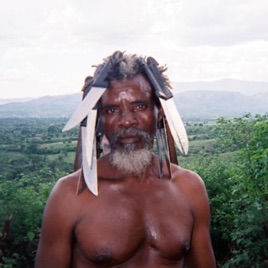
Advertise on podcast: WAKE ISLAND
Rating
4.9from
This podcast has
49 episodes
Language
EnglishPublisher
Paul KExplicit
No
Date created
2019/10/31
Latest episode
2026/10/07
Average duration
70 min.
Release period
78 days
Description
WAKE ISLAND IS A CONVERSATION SERIES ABOUT THE DARKENING UNDERCURRENTS OF CONTEMPORARY CULTURE WITH HOSTS PAUL K AND DAVID LEO RICE 🕳️ 🐇
Unlock WAKE ISLAND podcast Email contact info,
Listeners & Audience details
Email contact information
Direct podcast contact details

Listeners
Audience numbers & engagement insights

Audience details
Podcast Insights

Podcast episodes
Check latest episodes from WAKE ISLAND podcast
Zap, You’re Pregnant, That’s Witchcraft with Jarett Kobek
2026/10/07
In the early years of Wake Island, around 2020 and 2021, we talked constantly about portals. The pandemic felt like an exit from one era and an entry into another. Eventually we stopped talking about them. Maybe because nothing had changed as completely as we imagined or maybe because we’d already passed through the portal and forgotten there was ever a door.
Lately, I’ve started to feel another one opening. For thirty years we rebuilt huge parts of society around the assumption that everything would eventually move online, that the internet would become this infinite, searchable repository of human knowledge. Instead, the information itself is becoming synthetic, generated and regenerated by machines, mixed back into the human material it was trained on until the distinction starts to collapse. We may be approaching the end of the information age not because information becomes scarce, but because it becomes infinite and useless.
Which makes this a good moment to talk again with Jarett Kobek, one of the great obsessive writers/journalists working today. His first novel, Atta, originally published in 2011 and now being reissued, enters the consciousness of 9/11 hijacker Mohamed Atta and follows the architecture, ideology and alienation surrounding him toward his horrific conclusion.
His more recent book, Invocation of My Demon Brother, begins with Kenneth Anger’s eleven-minute 1969 film of the same name and expands outward into Anger himself, the occult, Bobby Beausoleil, the Manson orbit, and the strange network of people and ideas moving beneath the surface of the late sixties.
They’re very different books, but both are acts of obsession: taking something seemingly contained and following its connections until an entire hidden world opens around it.
The last time Jarett was on Wake Island, we talked about the Zodiac Killer and the death of the idealistic sixties. This time we move from Anger and the occult, through Atta and 9/11, into AI and an internet that may have already died without us quite noticing.
Intro music by Joseph E. Martinez of Junius.
Outro music: “Balancine” by Black Polygons.
Get full access to WAKE ISLAND at wakeisland.substack.com/subscribe
American Triage: From 9/11 to Fahrenheit 451
2026/09/11
This week on Wake Island, we spoke with Adam Axler, author of American Triage: From 9/11 to Fahrenheit 451, a memoir about more than two decades inside American emergency medicine. Adam was a paramedic at Ground Zero and went on to spend years working in emergency rooms before walking away from healthcare and into another life, selling and collecting vintage science fiction books.
What’s strange is that I’m moving in the opposite direction, a choice I’m still not sure is a smart one to be making this late in life. After twenty years working in images and media, I’m training to become an EMT. At times, reading his book had the uncanniness of being handed a map by someone walking the other way down the same trail. But speaking to Adam helped me frame this change as something I might be able to move through creatively, that being able to feel someone else’s pain and offer them more than sympathy might end up healing something in me too. Lord knows that after twenty years working for corporations I didn’t care about, and that didn’t care about me, made me cynical. Now that AI has forced me to step away, I should be happy about taking a detour away from corporate and spiritual entropy. Maybe learning a skill that few people have is worth being excited about. Maybe a few years from now I’ll look back on this time and decide it was a good idea. Hopefully, one day, it will make my daughter proud too.
I’m pausing here on the 25th anniversary of 9/11, in this year of America’s ambivalent 250th anniversary, to think about what it means that this event occurred 10% of our nation’s history ago. My entire adult life so far, a period when I’ve hardly ever stopped working, stopped chasing, stopped pushing myself to manifest more. To reach the potential that I know is inside me, and that I know I’ll die profoundly disappointed if I don’t reach.
Of all the things that 9/11 has meant, clearly one of them is that it set off a frenzy of activity in America, after the lull of the 90s, wrenching so many of us out of personal reveries and back into the grind of history. It caused frantic, delirious intervention overseas and unsatisfying soul-searching at home, a maddening discourse across a widening gulf that has only now, mercifully, dead-ended in silence. Of course it also set in motion the surveillance regime that eroded not only our privacy but even our innate sense of inner sovereignty, leading to the internet as it currently exists and paving the way for AI, trained on unfathomable quantities of personal data.
Listening back over our conversation with Adam Axler, who served as a medic on that day and then experienced total burnout in the medical field in the decades thereafter, I think about the frantic energy of a wounded, revenge-mad, self-cannibalizing America in this quarter century and how it covered over a growing torpor, a growing disorientation and exhaustion leading to despair, and I find, within this despair, just before the point where it becomes total, some mercy in the concept of Rest. Of slowing down and decoupling from the narrative, decoupling from the nation even, if need be: of leaving the macro American story behind for a while and burrowing into the micro, into the subtle but never quite hidden layers of American thought and tradition and eccentricity, of private madness, even, that endure beneath the public hysteria. The quiet but durable forces that have always given this country and those who sync up with its latent energies a unique potential, never quite realized but also never quite extinct.
I also think about the ceaseless, oceanic energies of the internet in 2026, the way that AI never stops processing, never stops sifting and combining and scanning for patterns to offer up in lieu of actual thought, and I realize how thought itself can never be forced or steered or even parsed: how every legitimately new and worthwhile human idea has to emerge in its own time, coaxed perhaps but never forced to the surface, and how allowing this time requires courage. It requires the courage to put your burden down for a while, as so many religions force their adherents to do on the Sabbath day, and to trust that your life won’t fall apart before you pick it up again. It requires the courage to trust that the currents you’re swimming in won’t dash you against the rocks if you slow your pace, and in fact it requires something deeper: trust that the current you’ve been fighting will actually take you where you need to go if you let it.
This is the beginning of a new series for paid subscribers: Blue Light Lounge. More soon.
Intro music by Joseph E. Martinez of Junius.
Outro music: “Espoe” by Black Polygons.
Get full access to WAKE ISLAND at wakeisland.substack.com/subscribe
Falling Out of the Frame with Gideon Jacobs
2026/08/18
Our guest today is Gideon Jacobs, a writer, performer and artist. I actually met Gideon over ten years ago when he was the creative director at Magnum and I was a photo editor at TIME. We were both working inside institutions built around photography and the idea that images, however complicated and subjective, had some direct claim on reality.
It’s surreal to reconnect now, at a moment when that whole photographic relationship is imploding.
Gideon recently wrote an essay for Spike, “All Images Are Quite Useless Now,” in which he says AI has finally severed the documentary relationship for good, and that this might not be the disaster it sounds like.
DEBRIEF:
This is what it’s like to stumble out of the internet after the prolonged adolescence of the past decade, the frothing, manic addiction that the internet forced us to go through in its death throes. I picture it like a mall shutting down, disgorging all the associates of my youth as the lights go off. With that whole entity dead behind us now, it’s time to trudge into the manure fields behind the mall, where new entities are being fertilized, growing in the late-summer darkness: this is what it feels like to understand that AI is our child now, ours to love and hate and try to understand as it grows, and perhaps ours to kill or be killed by if it turns out to be evil, or decides that we are.
These thoughts occurred to me while listening back on our conversation with Gideon Jacobs, and I found them relaxing and even hopeful as I ruminated on Gideon’s analysis of the evolution of photographic images and humanity’s relation to them, the way that first we saw these images as literal and concrete proof of events that had really occurred, and then we panicked as we came to see that this was not always the case (and perhaps never could have been), and then, finally, we strained toward a third phase, that of seeing images as entities unto themselves, beings with their own needs and their own life cycle and their own mysterious origin, beings that bear a relation to reality far stranger and slipperier than simply recording and preserving it. Beings that play in and toy with reality, beings that act in the world rather than simply letting us store it on a shelf.
Gideon puts a version of this same idea another way later in the conversation, talking about spiritual practice rather than photography, but it’s the same move, from content back to container:
“The medium is the message, to me, is a vertical koan, a koan that inspires vertical movement. When one meditates, or prays, or does almost any spiritual practice, they’re softening their focus on the contents of consciousness, so as to rest in the nature of the medium of consciousness itself. The container, rather than the contents. And the minute that container has contents, you’re not doing it anymore. You’re back in the contents of consciousness. You’re back looking at the image.”
An image that finally stops behaving like an image, that becomes a being instead of a picture of one, is the same event as a mind that stops looking at its own contents and rests in whatever’s underneath them. Both are a kind of falling out of the frame.
I thought of the notion of AI images emerging, for the first time, from the pitch darkness of data centers rather than serving as a record of light on film, and it occurred to me that this is how thought functions too, a mysterious process of images emerging from the pitch darkness of the mind, bubbling up from nowhere, or not from nowhere but from the unknowable murk of memory, perception, and whatever we really mean when we say “imagination.”
So let’s return to those manure fields behind the mall at the tail end of summer, trudging away from the arcade, the movie theater, the food court, the roller rink, and all the chain stores where I used to be so excited to go back-to-school shopping with my mom. Goodbye to all of that, and goodbye to the partisanship, the rumor-mongering, and the nonstop bitchery of the social media era. Something stranger awaits, something quieter, more rotten, and more filled with unknown potential, far inside these fetid fields, away from the highway and toward the high August corn… a realm seeded with new life forms that learn from everything we do and everything we think, everything we say to them and about them, and everything we try to keep secret. Beings that will learn from all the words we’ve written here.
A new objectivity, a new state of “it is what it is,” beyond the horizon where images lost all legitimacy, where they grew so divorced from the world they’d once promised to preserve that they had to be reborn as something else entirely, banished to a darkness from which they’ve returned in unrecognizable form… as, of course, have we.
...
If you enjoyed this conversation, the best way to support it is to subscribe. Paid subscriptions get you Landfall, my ongoing series about leaving media and working in EMS, plus:
* Book, movie, and dive bar recommendations
* Standing invitations to get blackout drunk with David and myself
* Reading and listening lists
* Wake Island Q&As in the Substack Chat
* Whatever else we end up making
If subscriptions aren’t your thing but you still want to help, send us a tip. It genuinely helps us keep producing Wake Island.
Outro music by Matti Bye: “Cascading Sun”
Get full access to WAKE ISLAND at wakeisland.substack.com/subscribe
Evil: A Study of Lost Techniques with Jason Bahbak Mohaghegh
2026/08/18
Wake Island is back. It’s been a long hiatus, a lot of life changes and transitions… the usual upheavals that seem to have hit everyone over the last year or so.
We’re kicking things off with past guest of the show, Jason Bahbak Mohaghegh, a philosopher, writer, and teacher, and a vector for a lot of the ideas that shape the tone and approach of Wake Island. What I love about listening to Jason is that he comes at things from the perspective of the avant-garde, whether it’s the after-dark, mania, or the apocalyptic imagination, he brings a level of sophistication to these ideas that I admire.
This episode we’re talking about his latest book, Evil: A Study of Lost Techniques from Scarlet Press. Jason doesn’t moralize evil in the ways we’re accustomed to. He treats it as a set of techniques that operate below the threshold of cognition, things that bypass your defenses, in the same way a lullaby ushers a child out of consciousness into the realm of sleep, or doomscrolling steals hours of your life before you realize they’re gone. It’s less a study of bad behavior than a diagrammatic map of how evil reclaims the world.
Also thank you to Matti Bye and Mambo Noir Trio & OONA Recordings for letting us use “Noir” to close out the episode.
Get full access to WAKE ISLAND at wakeisland.substack.com/subscribe
Teodor Mitew: Complexity, Collapse & the Myth of the Future
2026/07/31
Today’s guest is Dr. Teodor Mitew. He’s a systems thinker, historian, and digital media scholar at the University of Sydney, and the author of a new book called The Red Queen Trap: Complexity, Collapse, and the Myth of the Future, along with a volume of Balkan Neogothic short fiction called The Samodeva Queen and the Turbulence substack, where he focuses on complexity, systemic transformation, and the emerging architecture of the near future.
We discovered his work through a recent essay called “The Gated Age,” about the war in Iran and how it is likely to fracture whatever remains of the old Enlightenment dream of universal consensus, pushing us back toward a New Dark Age of mutually incompatible fiefs and sovereign realities. He argues that the Local -- material reality, food, plumbing, geography, and actual bodies -- always eventually wins out over abstract universalist ideology, no exceptions in history. Universalism, he argues, was always a kind of con, Enlightenment reason just replacing God as the guarantor of truth for a period of time that is now drawing to a close.
Now that the trapdoor beneath this waning universal order -- the sea lanes, the payment rails, the energy flows, the mutually incompatible eschatologies -- is finally visible, we’re moving from a world of sovereign equality into a world of gate permissions, a neo-medieval world of madmen, fools, and wanderers. A new Renaissance, if we’re lucky. Whoever controls the gate controls the future. As Teodor will now demonstrate, this isn’t altogether a bad thing...
Outro music by Teahouse Radio: “Dreaming Splendid Spaces.”
Enjoy the show? Buy us a coffee.
Wake Island is available on all platforms.
Get full access to WAKE ISLAND at wakeisland.substack.com/subscribe
The Sh*thole Opry Collector's Guide with Derek McCormack
2026/07/14
Our guest today is Derek McCormack, a writer, artist, and fashion connoisseur who’s spent three decades turning nostalgia into something profane and elevated.
His new book, a catalogue called The Sh*thole Opry Collector’s Guide, imagines Vivienne Westwood and Malcolm McLaren as hillbilly vampires designing punk-influenced jewelry for other vampires visiting the Grand Ole Opry, the emanation point of family-friendly country music, which grew out of a live radio barn dance first broadcast from Nashville in 1925 and officially became the Grand Ole Opry in 1927.
In Derek’s vision, the church of country music takes on the air of the avant-garde. It feels like walking into Dover Street Market or Barneys in its heyday, but with an aesthetic that honors the clean-cut facade of the Opry while perverting it into contemporary high fashion accessories.
Most of all, the Sh*thole Opry is a parody of the way fashion designers pirate the past for inspiration, while posing the question: what if the past stole from fashion the way fashion steals from the past?
In addition to The Sh*thole Opry Collector’s Guide, Derek’s first book of short stories, Dark Rides, was recently reissued by Pilot Press.
Enjoy the show? Buy us a coffee.
Get full access to WAKE ISLAND at wakeisland.substack.com/subscribe
Roddy Bottum: The Royal We
2026/06/26
Roddy Bottum is a co-founder and keyboardist of Faith No More, one of the most singular and important bands of my lifetime. I'll never forget how mesmerized and spooked out I was by Angel Dust — how it made everything else on the radio sound so bland by comparison. I'm genuinely grateful that a creative force like that was running wild during my teenage years.
But his memoir, The Royal We, isn't really about Faith No More, or Imperial Teen, or any of the other projects Roddy has been part of. It's about the city that made him, San Francisco in the 1980s. Back then it was a genuinely singular place, in its post-hippie trajectory of punks and queers and bike messengers, before the tech boom flattened it.
We get into this during the conversation, but there's no great book that properly mythologizes that counterculture, that specific San Francisco and the people who lived and died inside it. In some ways The Royal We is that book. Roddy came up inside that world as a young man, and we get into all of it, the cruising, the addiction, what it meant to be openly gay in a genre dominated by hair metal. It didn't occur to me while we were talking, but sitting with it in the edit I came to see the book as a eulogy for a city that was so formative to some of my favorite art and music.
Outro music: The Vault by Trigg & Gusset.
“This memoir of a rarefied world made me realize I was so lucky to live through it on the fringes—San Francisco in the eighties during the glory days of punk rock, written as if Salinger was there, queer, and started a band. A band I was actually in, but they rarely admitted! Roddy has been an incredible influence on my life, love, friendship, and language. A brilliant and gorgeous book—just like Roddy Bottum.”
—Courtney Love
“Thump, thump, thump went my heart as the words popped and the pages turned and I fell more and more in love with Roddy Bottum. Written with the right amount of flourish and punk abandon—what a treat.”
—Chloë Sevigny
“The Gen X Cancerian daddy king of California rock has delivered to us an oral history of a time when queer boys who rocked still played hard and RULED the underground. Emotionally charged, but never reckless (okay, maybe a BIT reckless), this book flows with an emotional IQ that only Roddy Bottum could give us. All the grit and grime aside, this is a story based in wisdom, recounting, and, above all, beauty.”
—Brontez Purnell, author of 100 Boyfriends
Get full access to WAKE ISLAND at wakeisland.substack.com/subscribe
CRY OF THE CONQUERED
2026/01/05
Written by David Leo Rice and Paul K
This is the final entry in our Substack project, which set out to explore the energy, sickness, and imagery of 2025.
If you enjoyed this entry, feel free to go back and read our previous passages.
We’re hoping to release more podcasts and Substack posts in 2026.
Get full access to WAKE ISLAND at wakeisland.substack.com/subscribe
Derek McCormack Christmas Special (rebroadcast)
2024/12/25
Derek McCormack is a small town pervert and the author of The Well-Dressed Wound and Castle F*ggot, both published by Semiotext(e). His most recent book is Judy Blame's Obituary. This collection brings together for the first time McCormack's fashion journalism. He writes about and interviews fashion figures that fascinate him, tracing the ways they inspire and inhabit his novels. The result is a sort of memoir in essays: as he writes, "My tribute to [Judy] Blame is about him and about me—there are lots of my own tales woven in with the topics I touch on. The writing here is a sort of autobiography, a life seen through a scrim, or a life as a scrim—my moire mémoire."
Judy Blame's Obituary contains twenty years' worth of reminiscences, reviews of fashion shows and books, interviews with writers about fashion, and interviews with fashion designers about writing. He talks to Nicolas Ghesquière about perfume, and to Edmund White about which perfume he wore as a young f*g in New York City. He inspects the clothes that Kathy Acker left behind when she died, and he summons the spirit of Margiela in a literary seance. He traces the history of sequins, then recounts the cursed story of Vera West, the costume designer who dressed the Bride of Frankenstein. These pieces were all previously published, some in Artforum, some in The Believer, and some in underground publications like Werewolf Express—what binds them together is a sense that though fashion victimizes us, this victimization is sometimes a sort of salvation.
In this Wake Island holiday special we talk about: my butthole, revealing the real Derek through writing about fashion, turning our ashes into jewelry, clothes as ectoplasm, Dodie Bellamy’s “Kathy Forest,” Vivienne Westwood’s imperial years, an outfit based on an advent calendar, sequins implantations, Margiela, being a small town pervert from Peterborough, our hometowns vs the hometowns of our minds, fistulas, Guy Maddin, the sadomasochistic beauty of being a writer, and we investigate - why does fashion abandon us?
Judy Blame's Obituary: Writings on Fashion and Death here.
Theme music by Joseph E. Martinez of Junius
Additional music by TRG Banks
Follow us on social at:
Twitter: @WakeIslandPod
Instagram: @wakeislandpod
David's Twitter: @raviddice
Derek's Twitter: @HillbillyBijoux
Derek's IG: @derek_mccormack
Get full access to WAKE ISLAND at wakeisland.substack.com/subscribe
Home Haunts with Dennis Cooper
2024/08/14
Daddy’s back.
ROOM TEMPERATURE, haunted houses, video games, childhood memories, publishing with an indie press, supportive teachers, Flunker, and more
Dennis Cooper's Blog.
FLUNKER, six fictions, 124 pp., c/o Amphetamine Sulphate: orders open. UK/Europe: orders open.
SOCIAL:
Twitter: @WakeIslandPod
Instagram: @wakeislandpod
David's Twitter: @raviddice
David's site: raviddice.com
Get full access to WAKE ISLAND at wakeisland.substack.com/subscribe
Grave Desire with Steve Finbow
2024/07/31
In this episode with Steve Finbow, we tease out the point at which a body ceases to be considered a person and chart the development of trauma over time, tracing the fine line between disgust and desire. We get into the motivations behind necrophilia and corpse desecration, examining the boundaries of how taboos can become normalized. We discuss the role of the soul or consciousness in elevating necrophilia to a mythic realm and the pursuit of the death drive in objects of beauty. We also consider art as both a method and a way of life, and whether societal breakdowns due to acceleration will increase instances of necrophilia in the future.
Necrophilia has shadowed humanity throughout its existence, from ancient Egypt, to the Moche culture of Peru, the exploits of the renowned Vampire of Montparnasse, the sexual murders of the Weimar Republic, through to serial killers such as Ted Bundy and Jeffrey Dahmer. This new edition of Grave Desire – with artworks by Karolina Urbaniak – delves unflinchingly into the myths, art and practices surrounding this taboo subject. Finding Juliet’s catatonic body and believing she had poisoned herself, it could have crossed Romeo’s mind to act out the unthinkable. Maybe Juliet, seeing Romeo’s corpse, considered a little sexual frottage before she stabbed herself with the phallic dagger. Repulsive yet real, disgusting and disturbing, this is an erotic book of the dead.
Buy Grave Desire from Infinity Land Press.
Steve Finbow’s non-fiction includes Allen Ginsberg: Critical Lives (Reaktion), Notes from the Sick Room (Repeater), Death Mort Tod (Infinity Land Press), The Mindshaft (Amphetamine Sulphate), Polaroid Haiku – with Jukka Siikala (Infinity Land Press), The Life of the Artist Niccolò di Mescolano (Alberegno Press). Sanbashi – a biography of the postwar Japanese photographer Toru Nakagami – will be published in 2024.
SOCIALS:
Twitter: @WakeIslandPod
Instagram: @wakeislandpod
David Leo Rice: www.raviddice.com
David's Twitter: @raviddice
Get full access to WAKE ISLAND at wakeisland.substack.com/subscribe
Guilty Creatures with Mikita Brottman
2024/07/15
From the critically acclaimed author dubbed “one of today’s finest practitioners of nonfiction” (The New York Times Book Review), a breathless true crime tale of sex, religion, and murder in the deep South.
Mike and Denise Williams had a tight knit, seemingly unbreakable bond with childhood friends, Brian and Kathy Winchester. The two couples were devout, hardworking Baptists who lived perfect, quintessentially Southern lives. Their friendship seemed ironclad. That is, until December 16, 2000, when Denise’s husband Mike disappeared while duck hunting on Lake Seminole.
After no body was found, everyone assumed that Mike had drowned in a tragic accident, his body eaten by alligators. But things took an unexpected turn when, within five years of Mike’s disappearance, Brian Winchester divorced his wife and married Denise. Their surprising romance set tongues talking. People began wondering how long they had been a couple, and whether they had anything to do with Mike’s death. It took another twelve years for the truth to come out—and when it did, it was unimaginable.
Now, the full, shocking story is revealed by Mikita Brottman, acclaimed true crime writer of the “enthralling” (San Francisco Book Review) An Unexplained Death. Through tenacious research and clear-eyed prose, she probes the psychology of a couple who killed and explores how it feels to live for eighteen years with murder on the soul.
A fascinating page-turner of modern noir, Guilty Creatures is destined to become an instant true crime classic.
Mikita Brottman is a writer and psychoanalyst living in Baltimore, Maryland. Her most recent book, An Unexplained Death, was shortlisted for the Gold Dagger Award for nonfiction by the Crime Writers Association of the UK. She has a DPhil from Oxford University and is a professor of literature at the Maryland Institute College of Art.
SOCIALS:
Twitter: @WakeIslandPod
Instagram: @wakeislandpod
David Leo Rice: www.raviddice.com
David's Twitter: @raviddice
Get full access to WAKE ISLAND at wakeisland.substack.com/subscribe
CHRIS ZEISCHEGG: ON ART AND UNBECOMING
2024/03/20
Christopher Zeischegg is a writer and filmmaker who spent eight years working in the adult industry as performer, Danny Wylde. He is the author of The Magician, Body to Job, The Wolves that Live in Skin and Space, and Come to My Brother.
His latest book CREATION spans a decade’s worth of writing on art, violence, sex work, and friendship. Acclaimed author, Christopher Zeischegg, confronts his past narratives, cruelty in auto-fiction, pornographic ambivalence, and transformative relationship to artist, Luka Fisher.
"Creation is a stunning new collection by one of the most exciting living writers. Reading a Christopher Zeischegg book is like stepping into a dream in which anything can happen—his particular combination of sex, death, beauty, and horror often feels downright transcendent." —Chelsea Hodson, author of Tonight I'm Someone Else
Theme music by Joseph E. Martinez of Junius
SOCIALS:
Twitter: @WakeIslandPod
Instagram: @wakeislandpod
David Leo Rice: www.raviddice.com
Chris's Twitter: @chriszeischegg
Chris's Instagram: @chriszeischegg
David's Twitter: @raviddice
Get full access to WAKE ISLAND at wakeisland.substack.com/subscribe
The World Below with David Peak
2023/11/15
Last year, David Peak released "The World Below," a midwestern gothic tale intertwining two rival families whose animosity sparks amidst a ritualistic occult murder mystery, amplified by heroic doses of LSD.
Published by Apocalypse Party, a rapidly acclaimed purveyor of top-tier horror, "The World Below" is a testament to their commitment to darkness.
This book seamlessly blends atmosphere and narrative, achieving the rare feat of being both immersive and a page-turner. David Peak's work aligns him with horror luminaries like Brian Evenson, Clive Barker, and Poppy Z Brite.
In this episode, we delve into reading as a psychedelic act, exploring how family feuds in small towns can evolve into an art form. We also dissect the drama and artistry of Jerry Springer, touch on the American mythology surrounding the West Memphis Three, and revel in the exhilaration of death metal and films like "Mandy."
"A brilliant and flayed slice of Midwest gothic. While one might find traces of Poppy Z. Brite or Michael McDowell here, The World Below is wholly its own beast. Peak laces the classic premise of feuding, cursed families with high-potency LSD, forming something fresh, potent, and filled with ache."
-B.R. Yeager, author of Negative Space
"Violent, noir-soaked horror infuses every page of David Peak's astonishing The World Below, coiling like a serpent around love: first and lost loves, love of family and the land, love of darkness and blood. Peak mixes the most primal of emotions like an alchemist, leaving every reader transformed."
-Livia Llewellyn, author of Furnace
SOCIAL:
Twitter: @WakeIslandPod
Instagram: @wakeislandpod
David's Twitter: @raviddice
Get full access to WAKE ISLAND at wakeisland.substack.com/subscribe
Three Nights at the Skylark Motel with Logan Berry
2023/10/25
Every city has that motel. The motel on the edge of town, the mythical place you dare not go. Logan Berry goes there.
In this episode, we calibrate a magical framework for understanding the world through a seance Logan conducted at the Skylark Motel. We get into cutting off spectral appendages, invoking chaos, exploring hoarder homes, practicing automatic writing, and Ultratheater.
Additionally, we discuss if relentless exposure to depravity makes us evil, and why occult commerce lacks the courage of its own convictions.
We also explore the possibility that these are the best times, or at least the only times we'll ever live in
Logan Berry is the author of Casket Flare (Inside the Castle), Run-off Sugar Crystal Lake (11:11 Press), and Transmissions to Artaud (Selffuck). He’s a playwright and theatre director. He lives in Chicago.
Theme music by Joseph E. Martinez of Junius
SOCIAL:
David's site: raviddice.com
Wake Island Twitter: @WakeIslandPod
Wake Island Instagram: @wakeislandpod
David's Twitter: @raviddice
Logan's Twitter: @lgnbrry
Get full access to WAKE ISLAND at wakeisland.substack.com/subscribe
Podcast reviews
Read WAKE ISLAND podcast reviews
Qnehpets 2023/04/04
Alas
Was one of my fav parasocial pod relationships
jokodean 2022/07/13
Perfect combination of culture and politics
Love it.
Vincentjames 2022/05/28
Weirdness and beauty
A peak behind the curtain of culture. Wake Island dissects the modern world through film, literature, art, and journalism, exemplifying the curiosity ...
Queequeg44 2021/05/07
Down a dark hole
These are the best kind of conversations. Paul’s guests are the most interesting writers and artists, and Paul knows their work so well. He’s gentle, ...
raviddice 2021/03/16
A truly insightful and engaging show
This is by far my favorite literary podcast — it digs into unique and profound aspects of literary culture and uses each author’s work as a jumping of...
el zarco mono 2020/09/15
One of my favorites
Paul K gets beyond the typical set question interview and skips a lot of biographical fluff - instead he gets to real questions and lets the conversat...
Blue Skies Red Eyes 2020/08/21
Finally!
Happy to hear a podcast dedicated transgressive works of art!
Gravelove 2020/08/21
Love
unusual and thought provoking
shlughslug 2020/07/19
Best
This is the best one
Harvey, J. 2020/01/12
My favorite episode thus far
Paul, this is by far my favorite episode thus far. Your conversation with Steve flowed so effortlessly and it was obvious the both of you were very co...
Podcast sponsorship advertising
Start advertising on WAKE ISLAND relevant audience podcasts
You may also like to advertise on these Podcasts
4.9247801444
Unashamed with the Robertson Family
Tread Lively
4.8121071000
Mind Pump: Raw Fitness Truth
Sal Di Stefano, Adam Schafer, Justin Andrews, Doug Egge
4.7292692000
The Michael Knowles Show
The Daily Wire
4.736021306
The Bonfire with Big Jay Oakerson and Robert Kelly
SiriusXM

4.762552000
The Lawfare Podcast
The Lawfare Institute
4.732651954
The President's Daily Brief
The First TV

4.629942035
Optimal Living Daily - Personal Development and Self-Improvement
Justin Malik

4.6652312197
The Charlie Kirk Show
Charlie Kirk

4.838332000
Entrepreneurs on Fire
John Lee Dumas of EOFire

4.619782875
All Ears English Podcast
Lindsay McMahon and Michelle Kaplan