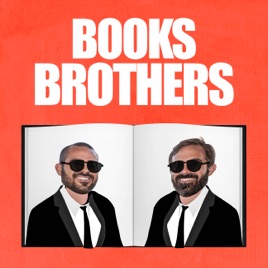
Advertise on podcast: Books Brothers
Rating
5from
This podcast has
25 episodes
Language
EnglishPublisher
booksbrothersExplicit
Yes
Date created
2019/12/18
Latest episode
2026/08/17
Average duration
72 min.
Release period
29 days
Description
Two brothers talk through the BEST non-fiction books about science, evolution, culture, history, complexity science, nature, cognitive neuroscience, artificial intelligence.
Unlock Books Brothers podcast Email contact info,
Listeners & Audience details
Email contact information
Direct podcast contact details

Listeners
Audience numbers & engagement insights

Audience details
Podcast Insights

Podcast episodes
Check latest episodes from Books Brothers podcast
The Same Two Sides Have Been Fighting Since 1642: American Nations Part 2
2026/08/17
Part 2 of our American Nations deep dive and this is where the book really opens up. We pick up right after independence and just keep going, all the way through the Civil War, the closing of the frontier, and straight into why the map still looks like this today.
Turns out the Revolutionary War wasn't really thirteen colonies teaming up against Britain, it was eleven different cultures with eleven different reasons for fighting (or not fighting). Then the country almost falls apart like five separate times before 1815 and nobody teaches you any of it. Vermont ran its own little country for fourteen years. Tennessee had a breakaway state called Franklin that banned lawyers. New England almost seceded during the War of 1812. We get into all of it.
Then our editor Chris pulls the map back up about a dozen times as we walk through how each of the 11 nations actually spread west, fought the Civil War, and ended up as the red state / blue state map you're staring at every election night.
Same as always, we're not historians, we're just two brothers who read the book so you don't have to.
Book: American Nations by Colin Woodard
Let us know in the comments if you're from the Deep South, this one's a little rough on you, we said it in the episode too.
American Nations and Albion's Seed: The Eleven Nations Hiding Inside America
2026/08/03
America isn't one culture, it's eleven. In this episode, we dig into Colin Woodard's American Nations (with a heavy assist from Scott Alexander's Slate Star Codex review of David Hackett Fischer's Albion's Seed) to trace how six distinct colonial cultures, Spanish El Norte, French New France, the Puritan Yankeedom, the Cavalier Tidewater, the Dutch New Netherland, the Quaker Midlands, the Deep South, and the clannish Scots-Irish borderlands of Greater Appalachia, each left a cultural fingerprint that still shapes American politics, regional identity, and even music, 400 years later. We cover Jamestown's brutal early death rate, the Puritans' "city on a hill" and their obsession with public confession, William Penn's jury-nullification trial, the origins of the Hatfields and McCoys, and how the French and Indian War set the stage for the Revolution.
Books & Sources Referenced
American Nations — Colin Woodard
Albion's Seed — David Hackett Fischer
Scott Alexander's review of Albion's Seed, Slate Star Codex
The WEIRDest People in the World — Joseph Henrich
The Righteous Mind — Jonathan Haidt (care/fairness moral foundations reference)
Why Nations Fail — Daron Acemoglu & James A. Robinson (extractive institutions reference)
The Odyssey: The Cultural Programming of Ancient Man
2026/07/06
Homer's The Odyssey, broken down book by book, and why Christopher Nolan calls it the "ur-text" of everything he's ever filmed. We get into the cultural programming of ancient man: guest friendship, homecoming, hubris, rank versus virtue, and what it actually meant to "be a man" in Dark Age Greece. Plus the Cyclops, the Sirens, the underworld, Achilles' brutal reversal on glory, the contest of the bow, and the slaughter of the suitors, with a running argument about how Nolan (and Matt Damon, Tom Holland, and company) will pull it off.
If you're new to Books Brothers, we read the big books so you don't have to, and break them down chapter by chapter.
Rules for Radicals: The Manual Both the Left AND the Right Use
2026/06/01
This episode, we crack open Saul Alinsky's Rules for Radicals, the 1971 organizing manual that has been studied by everyone from Tea Party activists to Hillary Clinton, and argued over ever since. Alinsky opens the book by crediting Lucifer as the very first radical, frames himself as the answer to Machiavelli's The Prince, and then lays out a worldview where power is the only currency and morality is mostly rhetoric. We walk through his three classes of society (the Haves, the Have-Nots, and the Have-a-Little, Want-Mores), his rules of ethics where the ends justify the means, the martyr strategy of getting branded as dangerous, and some genuinely wild tactics, including the Rochester "fart-in," the O'Hare "shit-in," and the proxy fights that echo in today's ESG battles. Along the way we ask the bigger question: is this a cynical, nihilistic guide to manipulation, or is it just an honest description of how politics has always worked? Either way, once you see the game being played, it gets a lot harder to unsee. Books covered and connected: Rules for Radicals by Saul Alinsky, with detours through Machiavelli's The Prince and Madison's Federalist No. 10.
Politics Without Ideology | The Machiavellians by James Burnham
2026/05/04
The Machiavellians: Defenders of Freedom by James Burnham (1943). a book about a book about five other books. Burnham picks six political philosophers (Machiavelli, Mosca, Sorel, Pareto, Michels, and himself) who all tried the same thing: study politics like a science. no ideology. no shoulds. just what actually happens when humans organize themselves. what we cover: why every revolution just swaps one elite for another. why the people who claim to hate power usually want it most. why political language never matches political action. and the most uncomfortable line in the book: “masses, you cannot rule yourselves.” our first attempt at “books broception”: a books brothers breakdown of a book that breaks down five other books. if that sounds insane, it is. it’s also one of the cleanest reads on power we’ve done.
Japan, India, China: What Kissinger Gets Right About the World's Next Superpower Fight
2026/04/06
In Part 2 of our coverage of Henry Kissinger's World Order, Andrew and JD turn the Eye of Sauron east, tracing how Japan, India, and China each entered (or were dragged into) the modern international order, and what that history means for how they behave on the world stage today. From Commodore Perry's gunboat diplomacy and Kautilya's ancient blueprint for global domination, to Mao's Cultural Revolution, Deng Xiaoping's economic pragmatism, and the Opium Wars that still shape China's worldview, this episode covers the deep historical roots of modern Asia's relationship with the West. Then we pivot to America itself: how Teddy Roosevelt's peace-through-strength realism and Woodrow Wilson's liberal internationalism became the two poles of U.S. foreign policy, how the League of Nations failed, and why the Straussian reading of Kissinger suggests that containment, not victory, has been America's real strategy ever since Korea. We wrap with the big question Kissinger leaves on the table: what is the right world order, and is the U.S. still the one to build it? 00:00:00 Intro and Asia overview 00:03:18 Japan: isolation, Commodore Perry, and the rise to empire 00:04:59 India: Kautilya, colonialism, and Cold War free agency 00:09:27 Chapter 6: China from the Qin dynasty to Mao and Deng 00:17:08 China vs. USA: sovereignty, human rights, and Kissinger's contrast 00:19:36 Chapter 7: The United States and Its Concept of Order 00:27:08 Woodrow Wilson, the League of Nations, and collective security 00:33:57 Chapter 8: Truman, NATO, Korea, and the question of what comes next 📖 Book covered: World Order by Henry Kissinger (2014) 🎙 Hosted by Andrew and JD Dennison Like and subscribe, and drop a comment telling us which book you'd like us to cover next.
Henry Kissinger's map of the Modern Political Landscape
2026/03/02
Everyone is talking about the world order right now. China, Russia, Iran, Nato, Ukraine. but if you don't know where the "world order" came from, you're just watching the news without a map. This episode is a map!
World Order by Henry Kissinger (2014): In this episode, we break down Kissinger's sweeping history of how nations have sought stability and power from the 1600s to today, chapter by chapter. Kissinger is one of the most influential and controversial figures in American foreign policy. You don't have to like him to learn from him. And right now, learning from him is the homework. We take you through the book start to finish: from the Peace of Westphalia (1648), the treaty that ended 30 years of religious war and literally invented the modern nation state, all the way through Napoleon, Bismarck, World War I, World War II, the Cold War, Iran, China, and the American moment. We also sit with Kissinger's predictions from 2014, many of which have already come true. This is Part 1 of 2. Part 2 drops in April 2026.
https://linktr.ee/booksbrotherspod #worldorder #kissinger #geopolitics #henrykissinger #booksummary #internationalrelations #historyexplained #booksbrothers #RiseOfStates #foreignpolicy #educationalpodcast #bookspodcast #learnhistory #PeaceOfWestphalia #coldwar
How Markets and Monogamy Built Modern Prosperity, Part 2 | Books Brothers
2026/02/02
Southern Italy is poorer than northern Italy because the Catholic Church never conquered it. And that's not a hot take, that's what the data says. Part 2 of our deep dive into how the Western church's marriage bans accidentally created modern psychology, and why understanding WEIRD culture matters for everything from trade to testosterone to trust. Not "quirky." Not "unique." Statistically, measurably, scientifically WEIRD (Western, Educated, Industrialized, Rich, Democratic). In Part 1, we covered how banning cousin marriage broke down clans. Now we go deeper into what happened next: charter towns, guilds, impersonal markets, monogamy lowering testosterone, and how commerce created moral norms without anybody planning for it. The church reached down and grabbed men by the testicles (that's an actual Henrich quote). Monogamy domesticated wild males, gave them kids, lowered their T, gave them a stake in the future. Crime rates dropped 35%. Meanwhile in China's one-child policy: 38 million surplus males, crime rates rose 14% per year 18 years later. This is Henrich's answer to Guns, Germs, and Steel. What you'll learn: 🤝 why southern Italy has the Mafia (kinship vs society) 🌾 rice farming in Asia = collectivist = non-WEIRD 🇨🇳 how Communist China in 1950 banned the exact same things the church banned a millennium before 💪 monogamy as a testosterone suppression method 🏛️ charter towns, guilds, universities as kin group replacements 🤝 how markets created interpersonal trust with strangers 📍 every hour closer to a town market = 15 percentage point increase in cooperation scores 🔄 impersonal markets reduce in-group sociality, increase prosocial behavior with strangers ✉️ the Republic of Letters and Europe's collective brain ⚙️ James Watt didn't invent the steam engine from scratch, he added a condenser 📚 why Enlightenment thinkers were just standing on the shoulders of a great society 🧬 cultural evolution shaped our genes, then institutions shaped our psychology Timestamps: 0:00 Intro: Henrik Stays in His Lane 2:01 Breakdown starts here: Southern Italy & the Mafia 4:07 Rice Farming = Collectivist Asia 6:21 Communist China Banned Cousin Marriage 8:03 Monogamy vs Polygamy 10:58 Poor Samuel's Problem 15:16 Monogamy Lowers Testosterone 16:49 China's One-Child Policy: 38M Surplus Males 19:34 Commerce and Cooperation 27:38 Charter Towns & Individual Property Rights 29:04 Domesticating Competition 37:05 Market Mentalities: Time & Clocks 43:18 Trust & Fairness Experiments 48:30 Self-Concept & Mental States 55:52 Law, Science, and Religion 58:31 Afghanistan Democracy Quote 1:01:21 Protestantism: Super WEIRD 1:06:30 Birthing the Modern World 1:14:50 James Watt & the Steam Engine 1:18:47 Dark Matter of History 1:20:37 Henrik's Final Quote 1:22:32 Wrap-Up Last quote from Henrich that sums up the whole book: "The much heralded ideas of Western civilization like human rights, liberty, representative democracy and science aren't monuments to pure reason or logic, as so many assume. People didn't suddenly become rational during the enlightenment of the 17th and 18th centuries and then invent the modern world instead. These institutions represent cumulative cultural products born from a particular cultural psychology that traces their origins back over centuries through a cascade of causal chains involving wars, markets, and monks to a peculiar package of incest taboos, marriage prohibitions, and family prescriptions that developed in a radical religious sect, Western Christianity." Based on The WEIRDest People in the World by Joseph Henrich, this episode explores cultural psychology, human evolution, and how institutions shape our minds. Books Brothers Season 2: The Rise of States examines how states cities and civilizations emerged. Previous episodes covered the Ancient City, Secret of our Success, Against the Grain, Guns Germs and Steel, Origins of Political Order, and the Medici. 📚 book: The WEIRDest People in the World by Joseph Henrich (2020) 🎙 hosts: Andrew and JD let us know in the comments if you're weird or not weird
The Weirdest People in the World: How Culture Rewired the Western Mind
2026/01/05
Why do people in the modern West think the way they do, and why does it feel so different from almost everyone else in history?
In this episode of Books Brothers, we dive into The Weirdest People in the World by Joseph Henrich, a bold and data driven exploration of how culture reshaped psychology in Western Europe, and how that psychological shift helped give rise to modern states, markets, science, and democratic institutions.
We explore what “WEIRD” really means (Western, Educated, Industrialized, Rich, Democratic), why cousin marriage graphs somehow explain half of world history, how literacy literally rewires the brain, and why abstract principles like justice and truth telling end up mattering more than kinship in some societies and not others.
This conversation sits right at the heart of our Rise of States series, connecting anthropology, psychology, religion, and political development into one big, strange, deeply human story.
If you enjoy this episode, please share it with a friend and leave a review. It genuinely helps more curious minds find the show.
And don’t forget: you can find Books Brothers on YouTube, where we post full episodes, clips, and visuals to go along with the conversations. Search Books Brothers and join us there.
Thanks for listening.
The Medici: How a Banking Family Built the Renaissance
2025/12/01
Episode 16: The Medici by Paul Strathern**
In this episode, we explore one of the most influential families in European history. Paul Strathern’s The Medici gives an inside look at the rise of a banking dynasty that shaped the Renaissance, shifted the balance of power in Italy, and helped lay foundations for the modern world.
We walk through the political chaos of medieval Italy, the forged documents that created whole kingdoms, the financial innovations that allowed merchants to outgrow monarchs, and the humanist ideas that resurfaced after a thousand years underground. Along the way we meet pirate-cardinals, ambitious bankers, master architects, and the thinkers who revived classical science and philosophy.
This book helps answer our season’s guiding question. Where did nation states come from, and how did modern governance begin? The Medici story shows how money, ideas, and institutions combined to move Europe out of the medieval world and into something recognizably modern.
Join us as we follow Giovanni, Cosimo, and Lorenzo through wars, councils, banks, libraries, and the creation of a cultural revolution that still shapes how we learn, think, and live today.
The Origins of Political Order by Francis Fukuyama
2025/11/03
If you’ve ever wondered how humans went from chaotic tribes to building governments, empires, and messy modern democracies, this episode is for you. 🏛️
Join JD and Andrew as they break down Francis Fukuyama’s The Origins of Political Order, a sweeping journey through history that asks:
Why do some societies build strong states while others crumble into corruption?
What’s the link between religion, warfare, and political trust?
And is democracy really the end of history… or just another experiment in the grand lab of human civilization?
Expect detours into Chinese bureaucracy, medieval church drama, chimp politics, and why ancient kings were the original startup founders.
It’s political philosophy meets anthropology meets “bro history,” and it’s surprisingly hilarious.
Stick around for the ending discussion, where the brothers wrestle with what “order” even means today.
Guns Germs & Steel - Episode 14
2025/10/06
Why did Europeans conquer the Americas instead of the other way around? In this episode, we dig into Jared Diamond’s Pulitzer Prize–winning classic Guns, Germs, and Steel.
Diamond sets out to answer Yali’s famous question: why do some societies have so much “cargo” while others don’t? His answer boils down to one word: geography.
We trace the story from the collision at Cajamarca, 168 Spaniards defeating tens of thousands of Inca warriors — back through the domestication of wheat, barley, and horses, the east–west axis of Eurasia, and the germs bred in crowded farming societies. Along the way, we wrestle with Diamond’s strengths, poke holes in some of his oversimplifications, and connect the dots to later works like Sapiens, Against the Grain, and The Secret of Our Success.
If you’ve ever wanted the big-picture story of how environment, food, animals, and disease shaped human history — this is it.
Against the Grain: How States Went Wrong | Ep. 13
2025/09/01
Yo! Let’s go. JD and Andrew are back in the Fertile Crescent, baby—where civilization supposedly “leveled up” but maybe just took a massive L. In this episode, the bros break down James C. Scott’s Against the Grain: A Deep History of the Earliest States, a book that argues farming, governments, and the rise of states weren’t exactly the glow-up history books made them out to be. We’re talking fire hacks, Homo erectus barbecue parties, stationary bandits (aka ancient mob bosses), marshland living, and why grain might be the world’s first “Big Tech monopoly.” JD digs into archaeology and science, Andrew keeps us grounded with the big cultural picture, and together they wrestle with whether civilization was really worth all the taxes, laws, and SWAT teams. As always, it’s educational, a little ridiculous, and super accessible. Hit play, grab a snack (non-taxable please), and find out what life was really like before the IRS showed up. Timestamps (Chapters): 00:00:00 – Intro hype + “barbecued cat bones & Homo erectus poop” 00:01:00 – What is this book? Scott vs. the State 00:03:10 – Bandit theory vs. coordination theory (why states even exist) 00:04:50 – Stationary bandits = ancient mob bosses 00:07:00 – Domestication of fire (and how it domesticated us) 00:10:30 – Fire as predator deterrent + the ultimate gang hangout tool 00:13:00 – Niche construction: ancient humans as ecosystem engineers 00:17:30 – Marshlands, mobility, and why early states hated swamps 00:22:00 – Grain: the world’s first surveillance + tax technology 00:28:40 – Bureaucracy, walls, and why early states kinda sucked 00:35:00 – Rebellion, resistance, and the “dark side” of civilization 00:42:00 – Closing thoughts: was the state really progress… or a trap? Listen if you’ve ever wondered: Was grain basically the original Facebook? Why did marshes make governments sweat harder than the IRS in April? Would you rather hang with Homo erectus around a fire… or Mesopotamian tax collectors? Stay tuned, stay curious, and remember—sometimes going “against the grain” is the smartest move.
The Secret of Our Success - Episode 12
2025/08/04
In this episode, we dive deep into Joseph Henrich's groundbreaking book "The Secret of Our Success: How Culture is Driving Human Evolution, Domesticating Our Species and Making Us Smarter." Discover why humans are the only species to dominate every continent with just ONE species (while ants needed 10,000+ species to do the same). We explore how cultural evolution became the primary driver of our genetic evolution, making us the ultimate "copycats" of the animal kingdom.
Key Topics Covered:
Why toddlers crush chimps and orangutans at social learning
How lost European explorers with 5 years of food died while locals thrived
The shocking study comparing human children, chimps, and orangutans
Why we evolved menopause (spoiler: it's about preserving cultural knowledge)
How cooking food literally changed our biology
The incredible story of persistence hunting and why we're the sweatiest species
Why blue eyes evolved in the Baltic Sea region
Cultural customs that save lives (even when people don't know why)
How arrow-making requires 14 steps, 7 tools, and 6 materials
From cassava processing in the Amazon to elephant grandmas remembering 60-year-old water sources, this episode reveals how culture - not individual intelligence - made humans masters of Earth. Subscribe for more deep dives into the books that explain our world! 📚 Other Books in Our Series: Sapiens, Behave, The Righteous Mind, Guns Germs & Steel, The WEIRDest People in the World, and many more!
The Ancient City - Episode 11
2025/07/14
🏛️ THE ANCIENT CITY: How Religion Built Civilization (Books Brothers Podcast) The oldest book we've ever covered reveals the SHOCKING truth about how cities actually formed! Forget everything you think you know about ancient Greece and Rome. French scholar Numa Denis Fustel de Coulanges drops a bombshell in this 1854 masterpiece: RELIGION wasn't just important to ancient people—it WAS their reality. Every law, every custom, every political structure came from one source: worshipping your dead ancestors. From sacred fires that could NEVER go out to marriage ceremonies that were basically religious conversions, this book explains how ancestor worship created the foundation of Western civilization. Plus: Why exile was worse than death, how Rome's secret sauce conquered the world, and the moment Christianity changed everything forever. Books mentioned: Sapiens, Behave, Righteous Mind, Origins of Political Order, and more from our reading list!
📚 CHAPTER MARKERS 00:00 - Intro: The Oldest Book We've Done 02:42 - Ancient Beliefs: Souls, Death & the Afterlife 07:15 - Worship of the Dead: Pour One Out for Grandpa 13:00 - Sacred Fires: Rule #1 - Never Let It Die 17:00 - Marriage = Religious Conversion (Wild Ancient Wedding Rituals) 22:00 - Family Continuity: Why Having Sons Was EVERYTHING 25:00 - Property Rights: How Sacred Land Created Modern Law 29:00 - The Gens: When Families Become Tribes 37:00 - BOOK 3: THE CITY - How Cities Were Actually Born 42:00 - City Founding Rituals: The Badass Story of Rome's Birth 48:00 - Gods of the City: Stealing Enemy Bones for Power 52:00 - Religion = Government (No Separation of Church & State) 58:00 - Citizens vs. Strangers: You're In or You're Out 1:02:00 - THE REVOLUTIONS BEGIN - When the System Breaks Down 1:15:00 - Rise of the Plebs: The First Labor Strike in History 1:20:00 - Tribune of the Plebs: The Untouchable Power Move 1:25:00 - Laws Written in Bronze: The 12 Tables Revolution 1:30:00 - Solon vs. Draco: Democracy's Poet vs. The Harsh Tyrant 1:35:00 - Athenian Democracy: When 5,000 People Actually Talked 1:40:00 - Alexander's Death & Rome's Rise: "To the Strongest!" 1:45:00 - Christianity Changes Everything: The End of Ancient Society Subscribe for more mind-bending books that explain how the world really works! 🧠⚡ #BooksBrothers #AncientHistory #Rome #Greece #Christianity #Philosophy #History #Podcast
Podcast reviews
Read Books Brothers podcast reviews
vbr1582 2020/04/12
Good stuff!
I’ve only listened to one episode (The Selfish Gene), but it was great! The hosts dissect complex topics and discuss them in relatable language, makin...
JaLazz 2020/04/10
Two Thumbs Up
Enjoyed listening to the podcast of The Righteous Mind. Not a book I would usually select. The format was great and the brotherly banter of these clea...
ctkevb 2020/04/10
For a good time, download this
The Books Brothers just sound like guys you want to hang out with. Sharp, witty and fun loving, if this podcast is the closest you can get these guys...
Jdenny2 2020/04/10
Enjoyed this podcast
Loved the banter between the brothers. They take difficult subjects and make them understandable, enjoyable and easy to keep listening
Digital Nomad 1 2020/04/07
Do yourself a favor and have a listen!
Two delightful brothers take complex topics and important issues and break them down in a way that is equal parts brilliant, insightful, and hilarious...
Cejusa1 2020/04/07
Pleasantly surprised!
Wow-definitely some more cerebral books than I typically select for light reading :-). That said....I loved the format....easy to follow, fun to liste...
NTurnbull 2020/04/07
Sapiens
Well thought out and easy to follow overview. They keep it light while poking and prodding through some of the deeper concepts of the book. Looking fo...
derek-15 2020/04/07
These guys seem smart
Even pretty funny!
Aa1005 2020/04/07
Awesome review!
The brothers review some of the best, though complex, non-fiction. Their content breaks down complex theories and ideas, making them easier to underst...
cadayrunner 2020/04/07
Great Book List and Reviews
If you want help finding a book that is going to push your understanding of life, business pursuits, technology and more listen to Andrew and JD! Gre...
Podcast sponsorship advertising
Start advertising on Books Brothers relevant audience podcasts
You may also like to advertise on these Podcasts
4.827973446
Huberman Lab
Scicomm Media
4.240683
To Be The Man
Podcast Heat | Cumulus Podcast Network
4.41511132000
The Ben Shapiro Show
The Daily Wire

4.2155648
TENNIS.com Podcast
TENNIS.com Podcast/Tennis Channel Podcast Network
4.510815766
The Joe Budden Podcast
The Joe Budden Network
4.611603506
The Bulwark Podcast
The Bulwark

4.711443386
Matt and Shane's Secret Podcast
Matt McCusker & Shane Gillis
4.82479176
Smosh Reads Reddit Stories
Smosh

4.975103743
Small Town Murder
James Pietragallo, Jimmie Whisman
4.8583398
Didn't I Just Feed You
Stacie Billis and Meghan Splawn