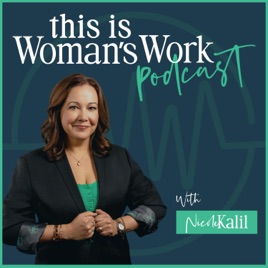
Advertise on podcast: This Is Woman's Work with Nicole Kalil
Rating
4.9from
This podcast has
468 episodes
Language
EnglishPublisher
Nicole Kalil + Airwave MediaExplicit
Yes
Date created
2019/12/30
Latest episode
2026/10/12
Average duration
38 min.
Release period
4 days
Description
Together, we're redefining what it means, looks and feels like, to be doing "woman's work" in the world today. From boardrooms to studios, kitchens to coding dens, we explore the multifaceted experiences of today's women, confirming that the new definition of "woman's work" is whatever feels authentic, true, and right for you. We're shedding expectations, setting aside the "shoulds", giving our finger to the "supposed tos". We're torching the old playbook and writing our own rules. Who runs the world? You decide. Because that is Woman's Work. Learn more at nicolekalil.com
Unlock This Is Woman's Work with Nicole Kalil podcast Email contact info,
Listeners & Audience details
Email contact information
Direct podcast contact details

Listeners
Audience numbers & engagement insights

Audience details
Podcast Insights

Podcast episodes
Check latest episodes from This Is Woman's Work with Nicole Kalil podcast
How to Prepare for an Emergency with Amy Edelman and Chris Begley, PhD | 442
2026/10/12
Somewhere along the way, emergency preparedness got hijacked by doomsday prepping, conspiracy theories, stockpiles of ammo, and a truly unnecessary amount of camouflage. But emergencies themselves? Not exactly far-fetched. Power outages, extreme weather, wildfires, floods, earthquakes, pandemics - shit happens. Being prepared for it isn’t paranoid. It’s practical.
Amy Edelman and Chris Begley are the co-authors of The Emergency Playbook: A Bunker-Free Guide to Disaster Preparation. Amy is the founder of IndieReader and Pretty Prepared, while Chris is an archaeologist, professor, wilderness survival instructor, National Geographic Explorer, and author of The Next Apocalypse. Together, they’re making emergency preparedness less about fear and more about confidence, common sense.
We explore:
How to create an emergency preparedness plan without spiraling into worst-case-scenario anxiety
The most likely emergencies households should actually prepare for
Why the best first step costs absolutely nothing: make a plan
What every household should have on hand for power outages and natural disasters and what belongs in a go bag
Why knowing your neighbors and building community may matter more than stockpiling gear
The survival skills that can be more valuable than expensive emergency equipment
How to prepare for pets, children, older family members, disabilities, and different mobility needs
Why freaking out and failing to plan are two of the biggest mistakes people make during an emergency
The surprisingly important role of chocolate, coffee, candy, and other morale boosters
The goal isn’t to prepare for every single terrible thing that could possibly happen. The goal is to prepare for what’s reasonably likely, build useful skills, communicate with the people who matter, and create enough of a plan that fear doesn’t get to run the show.
Thank you to our sponsors!
To see what Scribe could look like for your team, head to https://scribe.how/TIWW and mention TIWW for your first month of Scribe Capture free on select plans
Protect your loved ones without spying on them. Go to https://heypolo.com/work or use code WORK and get 70% off your first year
Connect with Amy & Chris:
Book: https://www.penguinrandomhouse.com/books/781838/the-emergency-playbook-by-amy-edelman-and-chris-begley/
Amy’s IG: https://www.instagram.com/pretty.prepared/
Amy’s Substack: https://prettyprepared.substack.com/p/how-to-stop-feeling-anxious-about
Chris’ Website: https://explorationfound.wixsite.com/chrisbegley
Related Podcast Episodes:
Survival Is Woman’s Work with Kathy Giusti | 391
Confidence Isn’t Born, It’s Built — Lessons from the Cockpit to Real Life with Michelle “MACE” Curran | 343
The Fourth Trauma Response You’ve Never Heard Of (And How It’s Running Your Life) with Dr. Ingrid Clayton | 342
Share the Love:
If you found this episode insightful, please share it with a friend, tag us on social media, and leave a review on your favorite podcast platform!
🔗 Subscribe & Review:Apple Podcasts | Spotify | Amazon Music | YouTube
Learn more about your ad choices. Visit megaphone.fm/adchoices
You Might Also Like: The Oprah Podcast
2026/10/12
Introducing Why Is America Different Than Every Other Country When It Comes to Guns? from The Oprah Podcast.
Follow the show: The Oprah Podcast
BUY THE BOOK!
The American Way of Killing by Malcolm Gladwell
https://amzn.to/4jvQMuE
Malcolm Gladwell - one of America’s foremost thought leaders - examines our country’s obsession with guns and the devastating toll gun violence has taken on our communities. In his new book, The American Way of Killing: The Invention of an Epidemic, Malcolm challenges some of our most deeply held beliefs about American gun violence: what we’re missing about the root cause of most violence, how modern medicine is obscuring the reality of the problem, why the answer might be more police—not less—and how we’ve lost sight of the historical context surrounding the Second Amendment. Oprah and Malcolm speak with a Chicago based E.R. doctor who lost 15 close friends and family members to gun violence. He teaches students as young as fourth grade how to treat a gunshot wound. This episode also offers some common sense solutions to a seemingly intractable problem.
00:00:00 - Welcome Malcolm Gladwell, author of “The American Way of Killing”
00:04:20 - European vs. American police
00:08:50 - Stats around more police
00:09:50 - Malcolm’s experience with guns
00:13:30 - Welcome Dr. Pratt
00:16:33 - Talking to kids about gun violence
00:19:15 - Changing gun violence
00:21:00 - Treating gun shot wounds
00:25:13 - The 2nd amendment
00:29:00 - Crime vs. violence
00:33:45 - Instrumental vs. expressive violence
00:40:00 - Are we learning from our mistakes?
00:43:00 - The gun problem is not unsolvable
Follow Oprah Winfrey on Social:
https://www.instagram.com/oprahpodcast/
https://www.facebook.com/oprahwinfrey/
DISCLAIMER: Please note, this is an independent podcast episode not affiliated with, endorsed by, or produced in conjunction with the host podcast feed or any of its media entities. The views and opinions expressed in this episode are solely those of the creators and guests. For any concerns, please reach out to [email protected].
Love Shouldn't Hurt with Nicole Brown Simpson's Sister, Denise Brown | 441
2026/10/07
Domestic violence doesn’t always start with a punch. It often starts quietly, with control disguised as concern, isolation disguised as love, and boundaries being chipped away so slowly that it can be hard to recognize what’s happening until the danger is very real.
Denise Brown knows this in the most devastating way possible. Her sister, Nicole Brown Simpson, was murdered in 1994 after experiencing domestic violence in her marriage. For more than 30 years, Denise has dedicated her life to domestic violence awareness, victim advocacy, education, and helping women recognize the warning signs she wishes she had understood then. Her new book, For My Sister Nicole: Love Shouldn’t Hurt, shares Nicole’s story while giving victims, survivors, families, and friends resources that could save lives.
In this episode, Nicole and Denise discuss:
Why domestic violence is about power and control—and why it can happen to strong, independent women
The early warning signs of an abusive relationship that are easy to dismiss or explain away
Why victims may hide abuse to protect their children, family, friends, pets—or even their abuser
The hope, shame, and fear that can make leaving an abusive relationship incredibly complicated
How friends and family can support someone experiencing domestic violence without trying to control their decisions
The importance of safety planning and working with domestic violence shelters when preparing to leave
Why calling 911, documenting abuse, and creating a paper trail can matter
The Domestic Violence Bill of Rights—and the reminder that everyone has the right to safety, respect, their own opinions, and the word “no”
This is a hard conversation, but it’s an important one. Because love should never require someone to live in fear, walk on eggshells, surrender their autonomy, or make themselves smaller to stay safe.
The National Domestic Violence Hotline has trained advocates available 24/7 at 1-800-799-SAFE, by texting START to 88788, or at TheHotline.org.
Thank you to our sponsors!
To see what Scribe could look like for your team, head to https://scribe.how/TIWW and mention TIWW for your first month of Scribe Capture free on select plans
Protect your loved ones without spying on them. Go to https://heypolo.com/work or use code WORK and get 70% off your first year
Connect with Denise:
Website: https://denisebrown.com/
Book: https://www.amazon.com/My-Sister-Nicole-Julie-McCarron/dp/B0FXYCGS99
FB: https://www.facebook.com/DeniseBrownToo
IG: https://www.instagram.com/DeniseBrownToo
LI: https://www.linkedin.com/in/denise-brown-6644762
Related Podcast Episodes
What Does a Woman Have to Do to Be Believed? Sexual Assault, Accountability & Double Standards with E. Jean Carroll | 363
High-Functioning Codependency: When Being “The Strong One” Is Slowly Killing You with Terri Cole | 341
What a “Good Divorce” Can Look Like with Erin Levine | 426
Share the Love:
If you found this episode insightful, please share it with a friend, tag us on social media, and leave a review on your favorite podcast platform!
🔗 Subscribe & Review:Apple Podcasts | Spotify | Amazon Music | YouTube
Learn more about your ad choices. Visit megaphone.fm/adchoices
The Charisma Myth with Olivia Fox Cabane | 440
2026/10/05
Charisma. Some people seem to walk into a room and just have it. People lean in, listen, remember them, and want more time with them. And for those of us who are introverts? Well, it can be easy to assume we were simply left out of the charisma lottery.
But what if charisma isn’t something we’re born with? What if it’s something we can actually learn?
In this episode, Nicole sits down with Olivia Fox Cabane, one of the world’s leading authorities on the science of charisma and bestselling author of The Charisma Myth. Olivia has taught and lectured at Stanford, Harvard, Yale, MIT, and the United Nations and has worked with leaders at companies including Google, Deloitte, TikTok, and Airbnb.
They discuss:
Why charisma is different from charm and likability
The science showing that charisma can actually be learned
Why there isn’t one “right” kind of charisma
The potential downsides of becoming more charismatic
Why introverts may have a major charisma advantage
The three components of charisma: presence, power, and warmth
Why self-criticism makes it harder to stay present and connected
How instant self-forgiveness can help us recover from awkward moments
Why mistakes can actually make us more relatable
Why taking up space matters when communicating power
How vocal patterns like uptalk can affect perceived authority and credibility
The difference between being nice and being kind
Why the harsher the message, the warmer the delivery should be
How intent and impact can help distinguish influence from harmful manipulation
How charisma can exist without likability
Why learning charisma doesn’t require becoming someone else
The goal isn’t to walk into a room and make everyone think, Wow, she’s charismatic. It’s to stop borrowing somebody else’s magnetism and start trusting our own.
Thank you to our sponsors!
Protect your loved ones without spying on them. Go to HeyPolo.com/work or use code WORK and get 70% off your first year
Connect with Olivia:
Website: https://www.oliviafoxcabane.com/
Book: https://www.charismamyth.com/
LI: https://www.linkedin.com/in/ofc/
Related Podcast Episodes
165 / The Introvert Who Could with Andreea Sandu
Be A Likeable Badass with Alison Fragale | 230
Powerfully Likeable with Dr. Kate Mason | 364
Share the Love:
If you found this episode insightful, please share it with a friend, tag us on social media, and leave a review on your favorite podcast platform!
🔗 Subscribe & Review:Apple Podcasts | Spotify | Amazon Music | YouTube
Learn more about your ad choices. Visit megaphone.fm/adchoices
How to Read the Room with Pamela Meyer | 439
2026/09/30
We spend a whole lot of time thinking about how other people perceive us. How we communicate, present, negotiate, network, make a good impression, say the right thing at the right time. Basically, we put a lot of effort into being interesting.
But what if we spent more time being interested?
Because entire conversations are happening around us that have nothing to do with what anyone is actually saying. And we might be missing all of it because we’re too busy planning the next brilliant thing we’re going to say.
In this episode, Nicole sits down with Pamela Meyer, a leading expert on deception detection who trains executives and institutional leaders on information elicitation, social observation, and insider threat mitigation. She’s also the author of How to Read the Room: The Art and Science of Social Observation.
They discuss:
Why being confident in our ability to read a room doesn’t mean we’re actually good at it
Why talking less can help us notice more
How our own ego, biases, and needs distort what we observe
Why asking “How can I make this room better?” can change an interaction
Pamela’s “Triple B” method: background, behavior, and beliefs
What to watch immediately after conflict happens
How to identify informal power and influence in a room
The back-pocket questions that can reveal what people are really thinking
Why crossed arms, eye contact, and other body language “rules” can mislead us
Why clusters of behavior matter more than individual gestures
Verbal and nonverbal signals that may warrant closer attention when deception is suspected
How to avoid confusing anxiety or nervousness with dishonesty
Why context, curiosity, and giving people the benefit of the doubt matter
Maybe the most powerful person in the room isn’t the one talking the most. Maybe it’s the one paying attention.
Thank you to our sponsors!
Protect your loved ones without spying on them. Go to HeyPolo.com/work or use code WORK and get 70% off your first year
Connect with Pamela:
Website: https://PamelaMeyer.com
Book: https://www.amazon.com/dp/1250378230?lv=shuf&channelId=500&plpRedirect=mhFallback
X: https://x.com/Pamela_Meyer
LI: https://www.linkedin.com/in/pamelameyer
Related Podcast Episodes
How To Listen with Emily Kasriel | 321
Pants On Fire (The Truth About Lying) with Lauren Handel Zander | 219
131 / Maximize Your Success By Managing Your Ego with Christie Garcia
Share the Love:
If you found this episode insightful, please share it with a friend, tag us on social media, and leave a review on your favorite podcast platform!
🔗 Subscribe & Review:Apple Podcasts | Spotify | Amazon Music | YouTube
Learn more about your ad choices. Visit megaphone.fm/adchoices
20 Minutes Is the New Hour with Fran Hauser | 438
2026/09/28
What if the problem isn’t that there aren’t enough hours in the day, but that we’re giving too many of them away?
For a long time, doing more was practically a badge of honor. More meetings. More preparation. More polishing. More yeses. More proving. And while all that effort might get results, it can also leave us burnt out, resentful, and wondering why the hell we’re working this hard when technology was supposed to make our lives easier.
In this episode, Nicole sits down with Fran Hauser, leading career expert, champion of women in the workplace, former President of Digital at Time Inc., startup investor, and acclaimed author of 20 Minutes Is the New Hour: The Ambitious Woman’s Guide to Doing Less and Achieving More.
They discuss:
Why 20 minutes might actually be enough for that hour-long meeting
The four P’s stealing our time: perfectionism, people pleasing, procrastination, and padding
How people pleasing creates overwhelm, burnout, and resentment
The power of pausing before automatically saying yes
Why saying yes to every opportunity can actually work against women professionally
How to recognize what’s underneath procrastination
Why starting messy can create momentum
How shorter timelines can force clarity and keep perfectionism from taking over
The difference between Chronos and Kairos
How leaders can experiment with shorter meetings and meeting-free time
Why doing less isn’t about caring less—it’s about being intentional with our most precious resource
The goal isn’t to reclaim 40 minutes from a meeting just to squeeze two more meetings into the space. It’s to stop giving away so much of our time to habits, expectations, and systems that don’t deserve it.
Thank you to our sponsors!
Protect your loved ones without spying on them. Go to HeyPolo.com/work or use code WORK and get 70% off your first year
Connect with Fran:
Website: https://www.franhauser.com/
Book: https://www.franhauser.com/twentyminutes
IG: https://www.instagram.com/fran_hauser/
LI: https://www.linkedin.com/in/franhauser/
Related Podcast Episodes
CLASSIC EPISODE: The 15-Minute Method To Getting It Done with Sam Bennett
The Ambition Trap with Amina AITai | 309
119. Realistic Time Management for High-Performing Women Entrepreneurs
Share the Love:
If you found this episode insightful, please share it with a friend, tag us on social media, and leave a review on your favorite podcast platform!
🔗 Subscribe & Review:Apple Podcasts | Spotify | Amazon Music | YouTube
Learn more about your ad choices. Visit megaphone.fm/adchoices
Resilient Optimism: How to Stay Hopeful When Life Is Hard with Michelle Gielan | 437
2026/09/23
“Just stay positive” might be some of the most useless advice ever given when life is falling apart.
Because resilient optimism isn’t pretending everything is fine, ignoring reality, or slapping a silver lining on something that just plain sucks. It’s believing that even when we can’t control what happens, we still have agency over what we do next.
Michelle Gielan is a positive psychology researcher, bestselling author of Broadcasting Happiness, former CBS Morning News anchor, and author of Resilient Optimism: The Science of Sustaining a Positive Mindset in Tough Times. Her research explores how optimism impacts happiness, resilience, performance, productivity, and our ability to navigate stress, uncertainty, setbacks, and change.
In this episode, Michelle and Nicole unpack why optimism isn’t just a feeling — it’s a behavior.
We explore:
What resilient optimism is — and how it differs from toxic positivity
Why optimism is a behavior we can practice, not just a personality trait
How to hold two truths at once with a “yes, and” mindset
Why our brains naturally focus on threats and negative information
The five trainable behaviors of resilient optimists
How to recalibrate perspective without ignoring reality
Why strategic rest and recovery can improve performance
The impact of negative news, social media, and our information diet
Why relationships and social connection are critical to happiness and optimism
Optimism isn’t believing everything will work out exactly the way we want. It’s believing there’s still something worth doing before we know how the story ends.
Thank you to our sponsors!
Protect your loved ones without spying on them. Go to HeyPolo.com/work or use code WORK and get 70% off your first year
Connect with Michelle:
Book: https://www.resilientoptimism.com/
Substack: https://michellegielan.substack.com/
LI: https://www.linkedin.com/in/michellegielan/
Related Podcast Episodes
Your Brain Is a Filthy Liar with Bizzie Gold | 361
The Stress Paradox: Why We Need Stress (and How to Make It Work for Us) with Dr. Sharon Horesh Bergquist | 294
Invite the Tiger to Tea: How to Turn Stress Into Strength with Dr. Rebecca Heiss | 340
Share the Love:
If you found this episode insightful, please share it with a friend, tag us on social media, and leave a review on your favorite podcast platform!
🔗 Subscribe & Review:Apple Podcasts | Spotify | Amazon Music | YouTube
Learn more about your ad choices. Visit megaphone.fm/adchoices
Closing the Fulfillment Gap with Dr. Helen Krug von Nidda | 436
2026/09/21
Work isn’t exactly working for women.
We have more opportunities, more impressive titles, more responsibility, and more ways to succeed than generations before us. And yet, a whole lot of successful women are exhausted, overwhelmed, underutilized, and wondering: Is this really as good as it gets?
Dr. Helen Krug von Nidda is an executive coach, licensed career counselor, Stanford University instructor, and author of Closing the Fulfillment Gap. She’s spent more than 20 years helping women navigate their careers and create work lives that actually fit who they are today — not who they were when they started climbing the damn ladder.
In this episode, Helen and Nicole unpack the “fulfillment gap” — the distance between what women expected successful careers to feel like and what they’re actually experiencing.
We explore:
Why women can be successful at work and still feel deeply unfulfilled
How autonomy, connection, and competence influence fulfillment
Why what fulfills women changes throughout different career and life stages
The MOVE framework for creating a more fulfilling career
How values can serve as breadcrumbs when the bigger vision isn’t clear
Why knowing what you don’t want can help clarify what you do
The surprising power of “weak ties” and expanding professional networks
Small career changes women can make now to start closing the fulfillment gap
Fulfillment isn’t something waiting at the top of the ladder, and it probably isn’t hiding inside the next promotion either. Women may not control every workplace, leader, system, or outcome — but they do have power over what they pursue, tolerate, change, and choose.
Thank you to our sponsors!
Protect your loved ones without spying on them. Go to HeyPolo.com/work or use code WORK and get 70% off your first year
Connect with Helen:
IG: https://www.instagram.com/with.dr.helen/
Book: https://www.amazon.com/dp/B0GT9YPC9C/
LI: https://www.linkedin.com/in/helenkrugvonnidda/
Substack: https://substack.com/@withhelen https://www.with-helen.com/
Related Podcast Episodes:
Work Shouldn’t Suck: How to Make It Good with Moe Carrick | 356
How To Know When It’s Time to Quit with Goli Kalkhoran | 266
How To Live A Fulfilling Life with Dr. Edith Eger | 251
Share the Love:
If you found this episode insightful, please share it with a friend, tag us on social media, and leave a review on your favorite podcast platform!
🔗 Subscribe & Review:Apple Podcasts | Spotify | Amazon Music | YouTube
Learn more about your ad choices. Visit megaphone.fm/adchoices
Breast Cancer, Self-Advocacy & Telling the Messy Truth with Allison Sweet Grant | 435
2026/09/16
We love a comeback story. The recovery after the diagnosis. The victory after the struggle. The inspiring lesson wrapped up with a pretty bow and, preferably, some flattering lighting.
But what about when you’re still in it?
Allison Sweet Grant was barely 40, a mother of three, and just beginning her literary career when she was diagnosed with breast cancer. Her memoir, Lump: A Memoir in Ineloquent Reflections, tells the truth about breast cancer treatment and recovery without cleaning it up for public consumption. There’s fear and hope. Gratitude and anger. Humor and grief.
In this episode, Allison and Nicole talk about the messy emotional reality of a breast cancer diagnosis, chemotherapy and cancer recovery, including the pressure to stay positive, the complicated role of caregivers, and why gratitude doesn’t cancel out grief.
We explore:
Why gratitude, grief, fear, anger, humor, and hope can all exist at once
The pressure cancer patients can feel to stay positive or find the “silver lining”
How cancer affects spouses, children, caregivers, and the entire family
Why humor and sarcasm can be powerful coping mechanisms during difficult experiences
How the need to be liked or seen as a “good patient” can keep women from asking important questions
Why bringing an advocate to medical appointments can make a difference
How fear influences major healthcare decisions — and why Allison wishes she had paused more
The ongoing fear of cancer recurrence and what it means to live in the complicated space between patient and survivor
Because the truth doesn’t need to be positive, polished, perfect, or profound to be worth telling.
Thank you to our sponsors!
Protect your loved ones without spying on them. Go to HeyPolo.com/work or use code WORK and get 70% off your first year
Connect with Allison:
Website: https://www.allisonsweetgrant.com/
Book: https://www.amazon.com/Lump-Reflections-Allison-Sweet-Grant-ebook/dp/B0GL1H4FJL/
Related Podcast Episodes:
Survival Is Woman’s Work with Kathy Giusti | 391
Joan Lunden on Reinvention, Leadership & Life Beyond the Script | 392
161 / Survivorship and Breast Cancer with Virginia Carnesale
Share the Love:
If you found this episode insightful, please share it with a friend, tag us on social media, and leave a review on your favorite podcast platform!
🔗 Subscribe & Review:Apple Podcasts | Spotify | Amazon Music | YouTube
Learn more about your ad choices. Visit megaphone.fm/adchoices
Raising Conscious Sons & Daughters with Dr. Shefali | 434
2026/09/14
Society doesn’t just tell girls who they’re supposed to be. It tells boys who they’re supposed to be too. Different rules, different consequences—but they’re still boxes asking our kids to perform who they’re supposed to be instead of discovering who they actually are.
In this episode of This Is Woman’s Work, Nicole Kalil welcomes back Dr. Shefali, world-renowned clinical psychologist, multiple New York Times bestselling author, founder of the Conscious Parenting Movement, and author of two new books, Raising Conscious Daughters and Raising Conscious Sons.
And while there’s plenty to say about raising confident girls, this conversation spends significant time on what boys need from parents in a culture sending them increasingly confusing messages about masculinity.
They explore:
What parents are getting wrong about raising boys today
What “integrated masculinity” looks like and why boys need healthier models of manhood
How parents can help boys navigate social media, pornography, the manosphere, and toxic masculinity
Why mentorship and positive male role models matter
What boys may be seeking through video games, online communities, and bro culture
How movement, purpose, contribution, and connection can support boys’ emotional health
How to help boys experience and express anger without shaming their emotions or allowing harmful behavior
How girls are still being taught to seek approval—even when it’s packaged as empowerment
Why parents need to examine their own emotional baggage and achievement expectations
Because raising kids who know who they are—and get to decide who they become—that’s the work of a parent.
Thank you to our sponsors!
Protect your loved ones without spying on them. Go to HeyPolo.com/work or use code WORK and get 40% off your first year
Connect with Dr. Shefali:
Website: https://www.drshefali.com/raisingconscious-daughters-sons/
IG: https://www.instagram.com/doctorshefali/?hl=en
YouTube: https://www.youtube.com/@doctorshefali
TikTok: https://www.tiktok.com/@doctorshefali
Related Podcast Episodes
FACTS About Raising Emotionally Intelligent Kids with Alyssa Blask Campbell M.Ed | 345
126 / The Parenting Map with Dr. Shefali
056 / A Radical Awakening with Dr. Shefali
Share the Love:
If you found this episode insightful, please share it with a friend, tag us on social media, and leave a review on your favorite podcast platform!
🔗 Subscribe & Review:Apple Podcasts | Spotify | Amazon Music | YouTube
Learn more about your ad choices. Visit megaphone.fm/adchoices
The 100-Year Life: Reinventing Your Career, Work & What Comes Next with Lynda Gratton | 433
2026/09/09
What if midlife isn’t the beginning of the decline, but the beginning of something entirely new?
We’ve been sold a pretty outdated life plan: learn, work, climb, achieve, retire. Preferably while raising children, maintaining friendships, exercising, drinking enough water, keeping our relationships interesting, remembering everyone’s birthdays, and figuring out what the f**k is happening to our hormones.
Yeah. That plan could use an update.
In this episode of This Is Woman’s Work, Nicole Kalil talks with Lynda Gratton, one of the world’s leading experts on the future of work, professor of management practice at London Business School, and author of Living the Hundred Year Life: How to Build a Career That Lasts and a Life You Love.
They explore:
Why the traditional learn-work-retire model no longer fits a 100-year life
How longer lifespans are changing careers, retirement, and the future of work
Why women have been living multi-stage careers long before workplaces caught up
The eight “threads” that help create a fulfilling, sustainable life and career
Why relationships, friendship, adventure, and calm are essential to avoiding burnout
Why calm may be one of the most neglected resources in women’s lives
How to create more calm without pretending we suddenly have hours of free time
The difference between the future self you hope for, expect, and fear
Why adventure doesn’t require blowing up your life or booking a trip around the world
Why you might want to take a little piece of retirement now instead of saving all of it for someday
So if you’re asking, “What’s next for me?” maybe you don’t need the entire answer yet. Maybe you get to keep weaving, experimenting, and choosing as you go.
Thank you to our sponsors!
Protect your loved ones without spying on them. Go to HeyPolo.com/work or use code WORK and get 40% off your first year
Connect with Lynda:
Website: https://www.livingthe100yearlife.com/
Book: https://www.amazon.co.uk/Living-100-Year-Life-build-career/dp/1399432966/ref=sr_1_1
LI: https://www.linkedin.com/in/lynda-gratton-3b179813/
Assessment: https://www.livingthe100yearlife.com/assessment
Related Podcast Episodes:
On Sabbaticals, Reinvention, and Getting Older | Unfiltered & Unhinged
JoySpan: A Smarter Way To Age Well (And Break Free From Anti-Aging Culture) with Dr. Kerry Burnight | 425
Why “Rewirement” Beats Retirement (and How to Do It Right) with Anne Chow | 350
Share the Love:
If you found this episode insightful, please share it with a friend, tag us on social media, and leave a review on your favorite podcast platform!
🔗 Subscribe & Review:Apple Podcasts | Spotify | Amazon Music | YouTube
Learn more about your ad choices. Visit megaphone.fm/adchoices
Stop Thinking Small: Moonshots, AI & Human Potential with Dr. Salima Bhimani | 432
2026/09/07
Somewhere along the way, a lot of us got way too practical. We learned what’s realistic, reasonable, and likely to work. We became responsible adults who pay the mortgage and don’t launch every half-baked idea that hits us in the shower.
Great. But what if being “realistic” is sometimes just fear with better branding?
In this episode of This Is Woman’s Work, Nicole Kalil talks with Dr. Salima Bhimani, moonshot architect, entrepreneur, former Alphabet Chief Strategist for Responsible Technology, CEO of 10x Responsible Tech, and author of Invent Now: The Next Leap in Moonshots.
Salima challenges the idea that innovation, AI, emerging technology, and moonshot thinking belong exclusively to Silicon Valley geniuses with billion-dollar budgets. Instead, she argues that human ingenuity exists everywhere—and that the future gets a hell of a lot more interesting when everyday people stop being passive recipients of technology and start participating in what gets built.
They explore:
What a moonshot idea actually is—and why it’s not just for tech billionaires
Why Salima believes we’re wasting enormous amounts of human genius and potential
How AI and emerging technology are lowering the barriers to innovation
Why humanity—not technology—is the real moonshot
How to stop underestimating your own ability to create change and make an impact
The importance of community and collaboration when solving complex problems
Why we tend to underestimate our own impact while wildly overestimating everyone else’s
How purpose and creativity can emerge during messy, uncertain seasons of life
Why friction, frustration, and problems may be exactly where the best ideas are hiding
What Salima calls the “third space,” where human ingenuity and technology come together
This isn’t about convincing everyone to cure cancer, build the next Google, or become an inventor. It’s about getting a little less impressed by what’s “realistic” and a lot more curious about what could be possible.
Thank you to our sponsors!
Protect your loved ones without spying on them. Go to HeyPolo.com/work or use code WORK and get 40% off your first year
Connect with Salima:
Website: https://salimabhimani.com/
Book: https://www.amazon.com/Invent-Now-Next-Leap-Moonshots/dp/1394394020
IG: https://www.instagram.com/moonshotmaven_salimabhimani/
Related Podcast Episodes
Pioneers: 8 Principles for Building a Business That Lasts with Neri Karra Sillaman | 383
AI, Hiring, and the Future of Work (Without Selling Your Soul) with Katie Fortunato | 395
AQ: The Intelligence You Actually Need (And Why IQ & EQ Aren’t Enough) with Liz Tran | 386
Share the Love:
If you found this episode insightful, please share it with a friend, tag us on social media, and leave a review on your favorite podcast platform!
🔗 Subscribe & Review:Apple Podcasts | Spotify | Amazon Music | YouTube
Learn more about your ad choices. Visit megaphone.fm/adchoices
Beyond Quick Fixes: Building Better Mental Health From the Inside Out with Dr. Celeste Birkhofer | 431
2026/09/02
We’re living in the age of the quick fix. Three steps to happiness. One habit to eliminate anxiety. A supplement for every symptom. Enough already.
Because grief is complicated. Mental health is complicated. Relationships are complicated. We are complicated. And when we reduce deeply human experiences into easy solutions, we don’t just oversimplify the problem—we risk making people believe they’re the problem.
In this episode of This Is Woman’s Work, Nicole Kalil talks with Dr. Celeste Birkhofer, clinical psychologist, adjunct clinical faculty member at Stanford Medical School, and author of Beyond Quick Fixes. Together, they explore the five inner resources that support mental health, emotional resilience, healthy relationships, and personal growth—and why strengthening ourselves from the inside out matters more than finding the next hack.
They explore:
The five inner resources that create a stronger foundation for mental health and well-being
How to develop a healthy sense of self, self-esteem, agency, and self-compassion
Why coping strategies learned in childhood may no longer serve us as adults
The difference between healthy coping and patterns of over-control, avoidance, numbing, or perfectionism
Why strong relationships—and learning to tolerate disappointment and repair ruptures—are essential to well-being
How to ask for the kind of support you actually need instead of expecting people to magically know
Why self-compassion and personal growth can (and should) exist at the same time
What the “wise self” is and how to strengthen and trust that internal voice
Why professional mental health support matters when life becomes painful or overwhelming
The work isn’t to constantly fix ourselves. It’s to know ourselves, strengthen ourselves, and build the inner resources that help us meet whatever life hands us with more capacity, compassion, resilience, and trust.
Thank you to our sponsors!
Protect your loved ones without spying on them. Go to HeyPolo.com/work or use code WORK and get 40% off your first year
Connect with Celeste:
Website: https://www.celestebirkhofer.com/
Book: https://www.amazon.com/Beyond-Quick-Fixes-Ingredients-Fulfilling/dp/B0GRWSRJLK
IG: https://www.instagram.com/celestebirkhofer
FB: https://www.facebook.com/celeste.birkhofer
LI: https://www.linkedin.com/in/celeste-birkhofer-phd-psyd-85525a9/
Substack: https://drcelestebirkhofer.substack.com/
Brainzmagazine: https://www.brainzmagazine.com/executive-contributor/celeste-birkhofer
Related Podcast Episodes:
Stop Saying “I’m Fine”: Nervous System Regulation for High-Achieving Women with Michelle Grosser | 372
The Biology Of Trauma - And How To Heal It with Dr. Aimie Apigian | 346
Grown-Up Goals: The 5 Pillars Of Being A Healthy Adult with Michelle Chalfant | 317
Share the Love:
If you found this episode insightful, please share it with a friend, tag us on social media, and leave a review on your favorite podcast platform!
🔗 Subscribe & Review:Apple Podcasts | Spotify | Amazon Music | YouTube
Learn more about your ad choices. Visit megaphone.fm/adchoices
Rethinking Negotiation: What Women Actually Need to Succeed with Joan Moon | 430
2026/08/31
Women have been told for years that they need to negotiate more—but what if that isn't the real problem?
In this episode, Nicole welcomes negotiation consultant, Harvard research fellow, and founder of Moon Negotiation, Joan Moon, to unpack what the research actually says about women and negotiation. Together, they challenge outdated myths, explore the impact of gender bias at the bargaining table, and share practical strategies that help women advocate for themselves without abandoning who they are.
From salary conversations to flexible work arrangements and everyday communication, this conversation reveals that negotiation isn't about becoming more aggressive—it's about becoming more strategic.
In This Episode Nicole and Joan Discuss:
Why the idea that women are "bad negotiators" is a myth unsupported by research.
How gender bias—not lack of skill—often influences negotiation outcomes.
Why women excel when negotiating for others but face different expectations when advocating for themselves.
The power of the win-win approach and how to frame requests around shared success.
How asking better questions leads to stronger negotiation outcomes, and why listening is often a negotiator's greatest advantage.
The importance of uncovering the other person's underlying interests instead of making assumptions.
How to negotiate non-salary benefits like flexibility, time, and professional support.
Practical strategies for performance reviews, raises, and promotion conversations.
Common negotiation mistakes women make—and how to avoid them.
Together, these insights offer a practical roadmap for approaching negotiation with confidence, clarity, and a win-win mindset.
Thank you to our sponsors!
Start your risk-free Greenlight trial today at Greenlight.com/TIWW. Don't wait to teach your kids real-world money skills!
Connect with Joan:
Website: ww.moonnegotiation.com
IG: https://www.instagram.com/moonnegotiation/
TikTok: https://www.tiktok.com/@moonnegotiation
LI: https://www.linkedin.com/in/joanmoon413/
Mini Online Course: https://course.moonnegotiation.com/fundamentals-of-negotiation-for-women-EXPRESS
Related Podcast Episodes
The 3 N’s - Negotiation, Networking & No with Kathryn Valentine | 327
162 / Compensation Myths with Kelli Thompson
How To Ask Better Questions with Elizabeth Weingarten | 347
Share the Love:
If you found this episode insightful, please share it with a friend, tag us on social media, and leave a review on your favorite podcast platform!
🔗 Subscribe & Review:Apple Podcasts | Spotify | Amazon Music | YouTube
Learn more about your ad choices. Visit megaphone.fm/adchoices
Are You Really “Too Sensitive”? Rejection, Resilience & the Science of Feeling Deeply with Dr. Sasha Hamdani | 430
2026/08/26
Women are told to be strong, but not hard. Confident, but not intimidating. Emotional, but for the love of God, don’t be too sensitive. Apparently, there’s some magical “just right” version of womanhood—but nobody seems to have the address.
In this episode of This Is Woman’s Work, Nicole Kalil talks with Dr. Sasha Hamdani, board-certified psychiatrist, mental health educator, and author of Too Sensitive about why feeling deeply isn’t a flaw to fix. They unpack rejection sensitive dysphoria (RSD), what happens when emotions hijack logic, how hormones impact sensitivity, and practical ways to regulate without stuffing, numbing, or apologizing for what’s being felt.
In This Episode:
Why sensitivity isn’t weakness—and can actually be a leadership strength
What rejection sensitive dysphoria is and why rejection can hit so damn hard
How to regulate emotions without suppressing them
Why hormones matter more than women have been taught
Why the goal isn’t thicker skin—it’s greater self-awareness and control
Feeling deeply isn’t the same as being fragile. The goal isn’t to become less sensitive—it’s to understand it, work with it, and stop shrinking perfectly human parts of ourselves just because they make someone else uncomfortable.
Thank you to our sponsors!
Start your risk-free Greenlight trial today at Greenlight.com/TIWW. Don't wait to teach your kids real-world money skills!
Connect with Sasha:
Website: https://www.drhamdanimd.com/toosensitive
Book: https://us.macmillan.com/books/9781250423764/toosensitive/
IG: https://www.instagram.com/thepsychdoctormd/
TikTok: https://www.tiktok.com/@thepsychdoctormd
Related Podcast Episodes
Stop Saying “I’m Fine”: Nervous System Regulation for High-Achieving Women with Michelle Grosser | 372
ADHD in Women, Nervous System Regulation & Getting Out of Fight-or-Flight with Jenna Free | 396
How To Listen When Your Parts Speak (IFS Therapy + Ancestral Wisdom) with Tamala Floyd | 376
Share the Love:
If you found this episode insightful, please share it with a friend, tag us on social media, and leave a review on your favorite podcast platform!
🔗 Subscribe & Review:Apple Podcasts | Spotify | Amazon Music | YouTube
Learn more about your ad choices. Visit megaphone.fm/adchoices
Podcast reviews
Read This Is Woman's Work with Nicole Kalil podcast reviews
CescaSun 2026/09/20
One of my faves
I love this podcast. Nicole has a gift for creating conversations that are honest, thoughtful, and genuinely useful. She asks great questions, gets be...
Dr. Birkhofer 2026/09/03
Amazing Podcast
Nicole is so full of wisdom herself, which made it such a pleasure to have a conversation with her about how to move beyond quick fixes and create mor...
Cateycat83 2026/07/23
Great show!
Nicole is an incredible interviewer and a charisma bomb!
AttiaQ 2026/05/14
Tailored and impactful for women
Nicole’s podcast is phenomenal. She makes sure to bring guests that drive high impact for her audience, and the content is fun, accessibly and witty. ...
Koni42 2026/05/05
Cutting through the BS with authentic empowerment
This podcast creates the kind of space all ambitious women need - facts, motivation, room for nuance, and calling out BS. Love it!
Kip50 2026/05/02
Keeps getting even better!
Has stayed on my “must listen” list for a while now, and with good reason. Funny, honest and real.
M406MelissA 2026/04/29
So genuine
If you’re looking for a place to get a good laugh, to learn something and to feel empowered, this is the podcast for you!!
Miss.Darling 2026/04/08
Affirming, Cogent, & Real
This podcast is a breath of fresh air! I appreciate how affirming the content feels—there’s both wisdom and honesty here, without pretense. Nicole is ...
Nderick 2026/03/27
Came for Ruchika, stayed for Nicole
I am a huge fan of Uncompete, by Ruchika Malhotra, since I interviewed her last fall. So
I had to listen to the most recent episode… and totally fell ...
InclusiveLeader 2026/03/26
Such a valuable podcast!
I am so glad I found this incredible podcast! Nicole is a master conversationalist and I learn so much from each guest! A must listen!
Podcast sponsorship advertising
Start advertising on This Is Woman's Work with Nicole Kalil relevant audience podcasts
You may also like to advertise on these Podcasts

4.639655
Only Murders in the Building Podcast
Straw Hut Media

4.7829517
The Home Service Expert Podcast
Tommy Mello: $200 Million Founder|Forbes, Inc., Entrepreneur Columnist

4.443431352
Something You Should Know
Mike Carruthers | OmniCast Media

4.7906254
Everything is Fine
Jennifer Romolini and Kim France

4.610812570
Serialously with Annie Elise
Annie Elise & Audioboom Studios

4.41171483
The Outlier Health Podcast
Matt Frazier, Matt Tullman, Isabelle Caputo, and Doug Hay

4.616125357
Giggly Squad
Hannah Berner & Paige DeSorbo

4.8219787
Imperfect Action
Steph Taylor

4.727499587
This Past Weekend w/ Theo Von
Theo Von

4.713004374
The Tim Dillon Show
The Tim Dillon Show