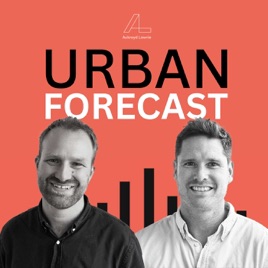
Advertise on podcast: Urban Forecast
This podcast has
99 episodes
Language
EnglishPublisher
Ackroyd LowrieExplicit
No
Date created
2020/01/16
Latest episode
2026/10/05
Average duration
38 min.
Release period
22 days
Description
The show where Ackroyd Lowrie's co-founder and director, Oliver Lowrie talks to the people defining the future of our cities. Discussing their background, what drives them and the insights they have learnt along the way. This is a show for investors, developers, planners, consultants and anyone who is interested in how we will work, live and play in the cities of the future and what that means for the property market today.
Unlock Urban Forecast podcast Email contact info,
Listeners & Audience details
Email contact information
Direct podcast contact details

Listeners
Audience numbers & engagement insights

Audience details
Podcast Insights



Podcast episodes
Check latest episodes from Urban Forecast podcast
Cllr Ross Garrod: Putting Merton on the Map
2026/10/05
In this episode of Urban Forecast, Oli Lowrie and Jon Ackroyd sit down with Cllr Ross Garrod, Leader of Merton Council, to talk about what it really takes to shape a London borough. Ross grew up in Mitcham and returned to local politics after the pandemic left him feeling powerless as decisions were made in Westminster. He explains how Merton is building council homes again for the first time in a generation, why the council stepped in to buy affordable homes and get a stalled gasworks scheme moving, and how selling a council-owned business for £186 million cut historic debt and funded a new legacy fund for residents. The conversation also covers temporary accommodation, London's Borough of Sport, the future of shopping centres, and the one national policy change that would make his job easier. It's a candid, practical look at local leadership for anyone working in property, planning or architecture.
KEY TAKEAWAYS
Ross came back to politics after Covid, having felt powerless watching Westminster decisions affect his community. Volunteering as a vaccinator helped, but he wanted to be part of the decision making.
Merton has claimed the title of London's Borough of Sport. Free swimming for under 16s and over 65s, free tennis courts and funded parkruns have helped around 6,000 to 7,000 residents become more active.
The council is building affordable homes itself again for the first time in a generation. It starts with 75 homes delivered with L&Q on former council car parks and a disused tin church site, and a ten-year housing delivery programme is on the way.
Merton's housing approach has three parts: self-delivery on small sites, partnerships with private developers on larger sites, and acquisitions to kickstart stalled schemes.
The former Mitcham gasworks scheme of almost 700 homes was approved with no affordable housing because of viability. The council chose to buy the affordable element to get work started on site.
Selling the council-owned business CHAS for £186 million cleared historic debt, which saves around £11 million a year. It also helped fund Morden regeneration and a £15 million Pride in Merton Legacy Fund that residents can bid into.
Merton has cut temporary accommodation numbers by 4%, against a London average of around 1%. It is buying street properties so residents can stay in the borough.
Asked what national policy he would change, Ross picked skills and resourcing in planning departments. Without them, the target of 1.5 million homes won't make it through the system.
BEST MOMENTS
"What I would always say to developers or people that do want to build in Merton is don't forget the residents that already live there."
"We're going to have to use every power, soft power, hard power, that we can use to really deliver those homes."
"There's no point going to market if it's going to fall flat on its face."
"If someone had a blueprint, I'm sure we would all try and take it."
VALUABLE RESOURCES
https://www.ackroydlowrie.com
EPISODES TO CHECK OUT NEXT
From Architects to Developers: Caswell & Dainow
Good Cities, Better Lives with Nicholas Falk of URBED
ABOUT THE HOSTS
Jon Ackroyd and Oliver Lowrie, the visionary hosts of Urban Forecast, bring their expertise from leading their innovative practice, Ackroyd Lowrie. Known for pushing the boundaries in urban design, Jon and Oliver use their podcast to delve into the future of cities, sharing insights from their work on projects that emphasise sustainability, community, and transformative architecture. Through Urban Forecast, they engage listeners with discussions on how architecture and design shape urban living, aiming to inspire new ways of thinking about the spaces around us.
CONNECT & CONTACT
Instagram
LinkedIn
Urban Forecast website
Email: [email protected]
Good Cities, Better Lives with Nicholas Falk of URBED
2026/09/21
In this episode of Urban Forecast, Oli Lowrie and Jon Ackroyd sit down with Nicholas Falk, Founder Director of URBED, for a wide ranging conversation spanning five decades of urban regeneration. From his early career at Ford and McKinsey to founding URBED with backing from Lord Sainsbury, Nick traces the projects that shaped his thinking, including Rotherhithe, Covent Garden, King's Cross, Hulme and the Jewellery Quarter. He shares the story behind URBED's 2014 Wolfson Economics Prize win, his ABC framework for successful placemaking (ambition, brokerage and continuity) and his outspoken views on the New London Plan, greenbelt development and where Britain's next generation of new settlements should go. It's a masterclass in patient, practical city building from someone who has spent a lifetime doing it.
Nicholas has also shared some further resources for anyone who wants to dig deeper after listening. There's a seven minute video on the transformation of King's Cross, plus a free copy of his book Why Not Social Cities?. His organisation URBED has recently launched a new website, urbedtrust.org, where all of URBED's reports and publications are freely available. Nick also gave us a preview of his latest project, Oxford Digital Intelligence, which combines different types of spatial data to help identify the best areas for growth, an approach that builds directly on the data led thinking he discusses in the episode.
KEY TAKEAWAYS
Nick's shift from business and economics into the built environment began in San Francisco, where he saw redundant buildings repurposed into thriving workspace and retail, sparking a lifelong belief that cities should make the most of existing resources rather than build new
His early career at Ford taught him that success comes from segmenting markets and copying what works, a principle he later applied to urban regeneration rather than risky reinvention
Practical, hands on projects in Rotherhithe in the 1970s, including the Brunel Exhibition Project and the Industrial Buildings Preservation Trust, showed him that people change their minds by seeing real examples, not by being told
URBED was founded with funding from Lord Sainsbury after Nick's Fabian pamphlet on the inner city economy caught his attention, and went on to work on Covent Garden, Little Germany in Bradford, the Jewellery Quarter in Birmingham and Hulme in Manchester
URBED's 2014 Wolfson Economics Prize winning entry argued that new settlements should grow existing cities rather than start from scratch, funded through patient capital and land value uplift rather than relying solely on home ownership
Nick is highly critical of how UK government picks sites for new towns, arguing for a data led approach he calls digital intelligence combined with genuine community engagement, which he is currently testing in Oxford
His decades long, largely informal involvement in King's Cross illustrates his theory of balanced incremental development, where each stage reduces risk and increases value, starting with the public realm before the buildings follow
He distils his approach into three principles, ambition, brokerage and continuity, arguing that the biggest barrier to successful regeneration in Britain is a lack of long term consistency compared with cities like Manchester or examples from Germany and the Netherlands
BEST MOMENTS
"It was that idea of reusing redundant buildings that really got me going, because I've long felt that to succeed, cities have to make the most of their existing resources and empty buildings."
"I remember Jim Callaghan, who was prime minister, came down to Rotherhithe, and I heard him afterwards, after spending ten minutes talking to a silversmith, saying we've really been too hard on the small business. That exemplified my idea that people change their mind by seeing things."
"I've spent my life trying to create models, not only ideas, but practical examples of what works... I'm still agonising as I get to the end of my life, which is why so many good ideas fail to go beyond the pilot. That, to my mind, is the challenge."
"I was told, oh, it's the Queen's favourite airfield. I said, well, the Queen's going to die someday."
VALUABLE RESOURCES
https://www.ackroydlowrie.com
ABOUT THE HOSTS
Jon Ackroyd and Oliver Lowrie, the visionary hosts of Urban Forecast, bring their expertise from leading their innovative practice, Ackroyd Lowrie. Known for pushing the boundaries in urban design, Jon and Oliver use their podcast to delve into the future of cities, sharing insights from their work on projects that emphasise sustainability, community, and transformative architecture. Through Urban Forecast, they engage listeners with discussions on how architecture and design shape urban living, aiming to inspire new ways of thinking about the spaces around us.
CONNECT & CONTACT
https://urbanforecast.ai/
Email: [email protected]
Inside the Draft London Plan with Dominic Grace
2026/09/07
In this episode of Prop Views, Nick Cuff and Oli Lowrie are joined by Dominic Grace to unpack three of the summer's biggest property stories. They start with Sadiq Khan's draft London Plan, debating whether its shorter length makes it bolder or simply more prescriptive, and dig into the housing targets, density matrix and affordable housing thresholds that will shape the capital for the next twenty years. From there, they turn to Prologis's recommended £14 billion takeover of Segro, the UK's largest REIT, and what it says about the shrinking pool of listed real estate businesses.
Finally, they assess Angela Rayner's return to the housing brief, her early decisions on major schemes, and whether she has the appetite for the radical intervention the sector says it needs. A candid, occasionally blunt conversation about what it actually takes to get Britain building.
KEY TAKEAWAYS
Sadiq Khan's draft London Plan, published 16 July, is nearly half the length of the 2021 version but Oli Lowrie argues it is more prescriptive, not less, particularly on building heights and density
The plan targets 558,000 new homes and reintroduces density matrices tied to height, with a baseline of four to nine storeys across most of the city and 100 metre towers permitted in only 17 locations
Dominic Grace calls the plan a "pathetic effort" for a market in crisis, arguing it needs radical intervention rather than incremental tweaks
Modelling referenced in the episode suggests only around 23 per cent of scenarios stack up financially once affordable housing requirements are applied, with a potential £28.3 billion funding gap for affordable housing delivery
Prologis has agreed a recommended £14 billion takeover of Segro, creating a combined business with roughly £269 billion of assets under management and expanding Prologis's European footprint by 47 per cent
The deal highlights how few listed UK real estate businesses remain, with private equity increasingly stepping in to fill the gap
Angela Rayner's return as housing secretary gets a mixed scorecard from the hosts, who cover her early decisions including consent for the Truman Brewery redevelopment and rejection of 3,500 homes and a stadium at Ebbsfleet over safety concerns
The episode ends on a rare positive note, with Building Safety Act gateway approval rates now at 91 per cent, up from around 25 to 30 per cent in the early years
BEST MOMENTS
"I'd liken it to a lady who, in polite society, just fainted in an Edwardian parlour, and someone gets out the smelling salts. What we actually need is a defibrillator, wired up to the mains, to shock the system back into delivering housing." — Dominic Grace on the draft London Plan
"I don't think it is bold. I think it's kind of more prescriptive. This version of government finds writing a plan that's pro development quite hard to be pro developer." — Oli Lowrie
"It's extraordinary how little we really understand about that world. When something like this happens, it's a bit of a jolt." — Dominic Grace on the Prologis and Segro deal
"The Building Safety Act approval rate is at 91 per cent. It was 25 or 30 per cent for the first couple of years. That's basically a coin toss. Now it's up at 91 per cent and it's happening faster." — Oli Lowrie
From Architects to Developers: Caswell & Dainow
2026/08/24
Charlie Caswell and Adam Dainow trained as architects but built their careers as small scale property developers, and on this episode of Urban Forecast they pull back the curtain on how that leap actually happens. They talk candidly about learning development the hard way, from early deals that lost money during Brexit to building a database of thousands of London sites by literally pinning locations on Google Maps while out running and cycling. Charlie and Adam explain why they deliberately stayed focused on 1 to 30 unit housing schemes rather than scaling into volume housebuilding, how they balance design ambition against commercial viability, and why they think the planning system, taxation and public perception of developers are holding back the small and medium sized housing that London desperately needs. It's an honest, sometimes funny conversation about risk, resilience and what it really takes to unlock tricky urban sites.
KEY TAKEAWAYS
Charlie and Adam both trained as architects before moving into development, and argue they now do more purely design focused work than they did in practice, because they get to choose the parts of the job they enjoy
Development pays for value added rather than time spent, which was the fundamental shift that pulled them away from the hourly billing model of architecture
Their first major deal nearly collapsed after Brexit caused a bank revaluation, teaching them early and painful lessons about de-risking and using other people's money carefully
The business was built on proactive site sourcing, starting with Adam physically spotting plots while running and cycling, which evolved into a database of around 25,000 potential London sites
They deliberately focus on schemes of 1 to 30 units because that scale allows site constraints to genuinely shape the architecture, rather than cookie cutter typologies
Architects are rarely taught business skills, and Charlie and Adam feel the profession doesn't see itself as part of the wider property industry despite being entirely dependent on it
Rising costs, lengthy planning timescales averaging 60 weeks, and taxes like CIL are described as major barriers stopping small and medium developers from delivering affordable housing
Both remain committed to the 1 to 30 unit niche despite the toughest market conditions of their careers, believing the current downturn is cyclical rather than systemic
BEST MOMENTS
"You have to relook at stuff... your spreadsheet doesn't even work anymore"
"Every day is a school day"
"It's not the ambition to be the next Barclays"
"There is no development school, you've got to kind of learn as you go"
VALUABLE RESOURCES
https://www.ackroydlowrie.com
EPISODES TO CHECK OUT NEXT
The Nuclear Bomb Moment in BIM Software with Antonio Gonzalez Viegas
Don't Waste Buildings with Will Hurst & Leanne Tritton
ABOUT THE HOSTS
Jon Ackroyd and Oliver Lowrie, the visionary hosts of Urban Forecast, bring their expertise from leading their innovative practice, Ackroyd Lowrie. Known for pushing the boundaries in urban design, Jon and Oliver use their podcast to delve into the future of cities, sharing insights from their work on projects that emphasise sustainability, community, and transformative architecture. Through Urban Forecast, they engage listeners with discussions on how architecture and design shape urban living, aiming to inspire new ways of thinking about the spaces around us.
CONNECT & CONTACT
Instagram
LinkedIn
Urban Forecast website
Email: [email protected]
The Nuclear Bomb Moment in BIM Software with Antonio Gonzalez Viegas
2026/08/10
In this episode of Urban Forecast, Oli and Jon sit down with Antonio Gonzalez Viegas, CEO of That Open Company, for a sharp look at what's really disrupting the BIM software industry. Antonio dismantles the idea that big incumbents are untouchable, using his own "nuclear bomb" analogy to explain how AI has levelled the playing field between giants and small challengers. He breaks down why BIM software has always been brutally hard to build, why most software companies are still playing a game with no future, and how his open source project grew from a weekend hobby into a business now trusted by over a thousand companies, including some of the industry's biggest names. From turning down venture capital to explaining why even his competitors want to work with him, this episode is a clear-eyed look at where construction software is heading next.
KEY TAKEAWAYS
The BIM software market has stayed dominated by a handful of players for decades because it demands a rare mix of construction knowledge and advanced 3D and maths expertise
AI has created a "nuclear bomb moment" where smaller firms can now seriously compete with entrenched incumbents who have spent decades accumulating technology
Most BIM software companies are still trying to sell software as a standalone product, a model Antonio believes has no long-term future
That Open Company's model flips the industry on its head, giving away the core technology for free and generating revenue through consulting, training and custom development
Over 1,000 companies now build on That Open Company's open source technology, including major names such as Cesium, Bentley Systems, Acciona and Ferrovial
Turning down multiple venture capital offers was a deliberate choice, built on the belief that forcing the business to be sustainable from day one is healthier long term
Large incumbents such as RIB have no incentive to fight the technology, since it saves them the cost of building and maintaining their own 3D viewers in-house
Building software is only half the problem, maintaining it over time is the far more expensive challenge, and open source spreads that cost across the whole industry
BEST MOMENTS
"The moment the nuclear bomb showed up, even a small country with no resources can suddenly be a huge threat to a big one."
"Every BIM software company had either created or acquired their technology. Apply that to any other industry and it's absolutely insane."
"I strongly believe that just selling software is not going to be enough."
"The more open source we do, the more we thrive economically, and the more open source we can do."
VALUABLE RESOURCES
https://www.ackroydlowrie.com
EPISODES TO CHECK OUT NEXT
Don't Waste Buildings with Will Hurst & Leanne Tritton
Barry Jessup on Building Places That Actually Work
ABOUT THE HOSTS
Jon Ackroyd and Oliver Lowrie, the visionary hosts of Urban Forecast, bring their expertise from leading their innovative practice, Ackroyd Lowrie. Known for pushing the boundaries in urban design, Jon and Oliver use their podcast to delve into the future of cities, sharing insights from their work on projects that emphasise sustainability, community, and transformative architecture. Through Urban Forecast, they engage listeners with discussions on how architecture and design shape urban living, aiming to inspire new ways of thinking about the spaces around us.
CONNECT & CONTACT
Instagram
https://www.instagram.com/ackroydlowrie/reel/CpcSrjlDreV/
LinkedIn
http://linkedin.com/company/urban-forecast-podcast
Email: [email protected]
Don't Waste Buildings with Will Hurst & Leanne Tritton
2026/07/27
Should we still be demolishing buildings when the climate, housing and economic cases all point towards reuse?
In this episode of Urban Forecast, co-hosts Oli Lowrie and Jon Ackroyd are joined by Will Hurst, Managing Editor of Architects' Journal and Co-Founder of Don't Waste Buildings, alongside Leanne Tritton, Founder of ING Media, Chair of The London Society and Co-Founder of Don't Waste Buildings.
Together, they explore why the UK's tax system continues to favour demolition over retrofit, how VAT is creating unintended consequences across the built environment, and why policy reform could unlock housing delivery, regeneration and economic growth.
From RetroFirst and embodied carbon to planning reform, viability and the role of government, this is a fascinating conversation about what needs to change if we are serious about creating more sustainable places.
Key takeaways
• Reusing existing buildings should become the default, not demolition and rebuild.
• The current VAT system often makes demolition financially more attractive than retrofit, despite higher environmental costs.
• Policy ambitions such as Net Zero and the 1.5 million homes target cannot succeed without addressing the financial realities facing developers.
• Better incentives, rather than additional regulation, could encourage more sustainable development across the UK.
• Local authorities, government and the private sector all have a role to play in removing barriers to regeneration.
• Consistent national policy would provide developers with greater certainty and encourage investment.
• AI is helping organisations analyse vast amounts of built environment data, creating stronger evidence for policy change.
• Collaboration across government, industry and campaign groups will be essential if meaningful reform is to happen.
Best moments
• "The whole tax system works against reuse of a building, which is the maddest thing ever."
• "We should try and make reuse of existing buildings the default, not knock buildings down and start again."
• "Every time you pick up a rock, you find some mad system that holds us back."
• "You can't blame people for making those decisions when the system financially rewards demolition."
VALUABLE RESOURCES
https://www.ackroydlowrie.com
EPISODES TO CHECK OUT NEXT
Could a RIBA President Actually Change Architecture? Jay Morton Makes her Case
Can Architecture Regain Its Influence? Russell Curtis Explains
ABOUT THE HOSTS
Jon Ackroyd and Oliver Lowrie, the visionary hosts of Urban Forecast, bring their expertise from leading their innovative practice, Ackroyd Lowrie. Known for pushing the boundaries in urban design, Jon and Oliver use their podcast to delve into the future of cities, sharing insights from their work on projects that emphasise sustainability, community, and transformative architecture. Through Urban Forecast, they engage listeners with discussions on how architecture and design shape urban living, aiming to inspire new ways of thinking about the spaces around us.
CONNECT & CONTACT
Instagram
https://www.instagram.com/ackroydlowrie/reel/CpcSrjlDreV/
LinkedIn
http://linkedin.com/company/urban-forecast-podcast
Email: [email protected]
Barry Jessup on Building Places That Actually Work
2026/07/13
In this episode of Urban Forecast, Oli Lowrie and Jon Ackroyd sit down with Barry Jessup, Managing Director at Socius and Founder and Chairman of Populate, to unpack what genuine impact looks like in large scale urban development. Barry explains the thinking behind Socius, why long term capital and patient investors matter more than ever, and how Populate's place management model brings schemes to life once the buildings go up. The conversation ranges across planning reform, viability pressures, the clustering of life sciences and tech occupiers, and a bold prediction about the future of universities in a post AI world. A candid, wide ranging look at what it actually takes to build places that work commercially and socially.
KEY TAKEAWAYS
Socius was founded four years ago as a purpose led developer, shaped by Barry's earlier career at Lendlease and First Base and a desire to move away from short term thinking
For Barry, "impact" spans environmental sustainability, community legacy, local enrichment and creating emotive, experiential places, not a single metric
Despite shifting political rhetoric in the US, Barry sees no drop in UK institutional commitment to long term, impact led investment, and believes it matters more than ever
Socius and Populate work in tandem: Socius as developer and investment manager on schemes typically worth £200 million to £1 billion, Populate as the place management arm that activates and animates the space
Getting the mix of uses right depends heavily on location, and successful schemes need genuine, locally sourced community engagement from day one, not just a planning tick box
Life sciences and tech occupiers cluster around talent, historically near universities, but Barry predicts further education colleges will grow in importance in a post AI world where judgment and experience outweigh raw knowledge
Planning remains a major bottleneck, with local politics often fixating on housing numbers at the expense of wider mixed use benefits, and recent NPPF changes have barely moved the dial
Real world examples including Mill Yard in Cambridge, the London Cancer Hub with Aviva and Botanic Place show that commercial strategy and network building often matter as much as architecture
BEST MOMENTS
"The economic delivery and the economic success of a project is 100% driven by the strength of the product to the occupier."
"No longer is it just okay to provide the keys and provide the bricks and mortar, the relationships we are now seeing are more around partnership."
"It's definitely an imprecise science, and we certainly don't claim to get it all right. We're certainly no crystal ball gazers."
"Learning and skills are very important, but almost not in a post AI world, where knowledge is being commoditised at the touch of a button. What won't be replaced is judgment and experience."
VALUABLE RESOURCES
https://www.ackroydlowrie.com
EPISODES TO CHECK OUT NEXT
The AI District: Simon Ruck and Jonathan Kendall on Future-Proofing Oxford North
Could a RIBA President Actually Change Architecture? Jay Morton Makes her Case
ABOUT THE HOSTS
Jon Ackroyd and Oliver Lowrie, the visionary hosts of Urban Forecast, bring their expertise from leading their innovative practice, Ackroyd Lowrie. Known for pushing the boundaries in urban design, Jon and Oliver use their podcast to delve into the future of cities, sharing insights from their work on projects that emphasise sustainability, community, and transformative architecture. Through Urban Forecast, they engage listeners with discussions on how architecture and design shape urban living, aiming to inspire new ways of thinking about the spaces around us.
CONNECT & CONTACT
Instagram
https://www.instagram.com/ackroydlowrie/reel/CpcSrjlDreV/
LinkedIn
http://linkedin.com/company/urban-forecast-podcast
Email: [email protected]
The AI District: Simon Ruck and Jonathan Kendall on Future-Proofing Oxford North
2026/06/29
In this episode of Urban Forecast, hosts Oli Lowrie and Jon Ackroyd are joined by Simon Ruck, Managing Director at Oxford North Ventures, and Jonathan Kendall, Partner at Fletcher Priest Architects, to explore one of the UK's most ambitious innovation districts in the making.
Oxford North is a one-million-square-foot mixed-use development on the edge of Oxford, backed by Saint John's College, Ontario Teachers' Pension Plan, and Stanhope. Far from a traditional science park, it has been conceived from the outset as a genuine piece of city -- one where homes, labs, offices, public park, arts, and amenity come together to create a place people actively want to be.
Simon and Jonathan discuss the philosophy behind the project, the challenge of designing for a rapidly shifting market, how the team navigated Covid and the life sciences boom, and why the rise of AI is now reshaping what innovation districts need to deliver. They also reflect on the lessons drawn from places like Boston's Kendall Square, and what it really takes to attract and retain world-class talent in a highly competitive global landscape.
KEY TAKEAWAYS
Oxford North is deliberately positioned as an urban district, not a science park -- rejecting the car-to-desk model in favour of pedestrian movement, public realm, and chance encounters.
The project is backed by an exceptional joint venture combining Saint John's College's academic vision, long-term capital from Ontario Teachers' Pension Plan, and development expertise from Stanhope.
Designing for uncertainty has been central throughout -- buildings needed to be adaptable enough to shift from offices to life science labs to AI facilities as demand evolves.
Covid redirected rather than derailed the project. The life sciences boom accelerated interest in the site and prompted a rethink of the first phase buildings to accommodate wet lab functions.
The AI wave is now driving new requirements around power, cooling, and security, with the team actively engaging Oxford University's world-leading computer science department.
Amenity is the strategy, not an afterthought -- from a two-acre public park to Olafur Eliasson's first permanent UK artwork, the project is designed to draw in people with no connection to science at all.
Serviced lab solutions are following the serviced office model, giving early-stage companies access to high-spec scientific infrastructure without heavy upfront commitment.
The team drew heavily on Boston's Kendall Square, identifying that the most successful innovation environments sit at the boundary between academia and city life -- not inside a campus bubble.
BEST MOMENTS
"People arrive at work, head up into their office or labs and go again at the end of the day -- they've not really connected with anyone. So this turns that whole philosophy on its head."
-- Simon Ruck
"We were really keen to create an environment where small can be mixed next to large, and small might grow into large -- and both really want to be next to one another."
-- Jonathan Kendall
"There's got to be a reason for people to return to work. It can't just be Pizza Thursdays and hopefully people are going to come into the office."
-- Simon Ruck
"We've got to design for that uncertainty. We don't know whether technology will change the way we live and work, or the nature of the buildings we need."
-- Jonathan Kendall
VALUABLE RESOURCES
https://www.ackroydlowrie.com
EPISODES TO CHECK OUT NEXT
Could a RIBA President Actually Change Architecture? Jay Morton Makes her Case
Can Architecture Regain Its Influence? Russell Curtis Explains
ABOUT THE HOSTS
Jon Ackroyd and Oliver Lowrie, the visionary hosts of Urban Forecast, bring their expertise from leading their innovative practice, Ackroyd Lowrie. Known for pushing the boundaries in urban design, Jon and Oliver use their podcast to delve into the future of cities, sharing insights from their work on projects that emphasise sustainability, community, and transformative architecture. Through Urban Forecast, they engage listeners with discussions on how architecture and design shape urban living, aiming to inspire new ways of thinking about the spaces around us.
CONNECT & CONTACT
Instagram
https://www.instagram.com/ackroydlowrie/reel/CpcSrjlDreV/
LinkedIn
http://linkedin.com/company/urban-forecast-podcast
Email: [email protected]
Could a RIBA President Actually Change Architecture? Jay Morton Makes her Case
2026/06/15
Jay Morton, Director at Bell Phillips Architects and candidate for the next RIBA President, returns to Urban Forecast for a wide-ranging conversation with Oli and Jon about what it will take to restore architecture's influence in public life. From banging on the doors of government ministers to championing city architects under every regional mayor, Jay makes a compelling case for why the profession needs to be louder, more unified and far more politically savvy. They get into the thorny questions too: AI and the risk of a lost generation of young talent, the broken economics of architectural education, protection of function, and whether the RIBA is truly serving its members or just the idea of architecture. If you care about where the profession is heading, this one's essential listening.
KEY TAKEAWAYS
Architecture's influence in public life has quietly eroded, and Jay believes the RIBA presidency has been underused as a platform to reverse that.
The RIBA needs to serve architects, not just architecture. Without a thriving collective, the profession cannot increase its voice or demonstrate its value.
Protection of function is fundamental. Until the architect's role is clearly defined and protected, progress on fees, recognition and public trust will remain limited.
AI is an opportunity, but the profession must act now to ensure junior architects still gain the experience needed to lead in the future.
Architectural education is too long, too expensive and is quietly locking working-class talent out of the profession.
City architects appointed under every regional mayor could deliver the consistent built environment expertise that outlasts political cycles.
Procurement culture remains broken. Too many public bodies still award work to the cheapest price, and practices need to challenge that more vocally.
The RIBA has 38,000 members and should be empowering them to advocate collectively, not just relying on the president to carry the whole profession's voice.
BEST MOMENTS
"You need to be loud and you need to insist to be heard."
"Without our collective, we can't increase our voice and demonstrate our value."
"If our business model cannot sustain paying people the living wage, then we need to look at our business model."
"We're not putting our young people out of their comfort zone enough."
VALUABLE RESOURCES
https://www.ackroydlowrie.com
EPISODES TO CHECK OUT NEXT
Russell Curtis: Can Architecture Regain its Influence
https://www.youtube.com/watch?v=JUhcd0C5QKM
Steve Watts: The Real Cost of Building London’s Skyline
https://www.youtube.com/watch?v=bghIBw5cmV4
ABOUT THE HOSTS
Jon Ackroyd and Oliver Lowrie, the visionary hosts of Urban Forecast, bring their expertise from leading their innovative practice, Ackroyd Lowrie. Known for pushing the boundaries in urban design, Jon and Oliver use their podcast to delve into the future of cities, sharing insights from their work on projects that emphasise sustainability, community, and transformative architecture. Through Urban Forecast, they engage listeners with discussions on how architecture and design shape urban living, aiming to inspire new ways of thinking about the spaces around us.
CONNECT & CONTACT
Instagram
https://www.instagram.com/ackroydlowrie/reel/CpcSrjlDreV/
LinkedIn
http://linkedin.com/company/urban-forecast-podcast
Email: [email protected]
Can Architecture Regain Its Influence? Russell Curtis Explains
2026/06/01
In this episode of Urban Forecast, Oli Lowrie and Jon Ackroyd sit down with Russell Curtis, Founding Director of RCKa Architects and Director of Project Compass CIC, for a wide-ranging conversation on the future of architecture, planning and city-making.
Russell reflects on his journey into architecture, the changing role of architects over the past 25 years, and why influence in the built environment increasingly sits upstream in policy and strategic planning. The discussion explores design and build procurement, the growing complexity of construction, the challenges facing SME developers, and whether architects have lost their position as custodians of quality.
The conversation also delves into London's housing crisis, suburban intensification, planning reform, design codes, public sector procurement, and the industry's struggle to communicate its value. Looking ahead, Russell shares his thoughts on artificial intelligence, the future business model of architecture practices, and why he remains optimistic about the next generation of architects.
A candid and thought-provoking discussion about power, policy, trust and the future of the built environment.
KEY TAKEAWAYS
Architects have gradually lost influence over the delivery of buildings, with decision-making increasingly shaped by developers, contractors and policy frameworks.
The issue is not necessarily design and build procurement itself, but a culture that can diminish architectural oversight and quality control.
Young architects are receiving less site experience, creating a risk that future generations become disconnected from how buildings are actually constructed.
Planning policy has become significantly more complex, resulting in a growing number of consultants and specialists involved in every project.
Russell argues that meaningful influence comes earlier in the process through planning policy, strategic thinking and city-scale decision-making.
Small site development and suburban intensification could unlock significant housing capacity if planning certainty is improved for SME developers.
The industry continues to struggle to communicate the long-term value that good design and architecture create compared with short-term cost considerations.
AI and emerging technology will fundamentally reshape architecture, but also create opportunities for new forms of specialist expertise and innovation.
BEST MOMENTS
"You can't design a building unless you know how it goes together."
"To have significant influence, you need to get in much earlier."
"We haven't found the metrics yet by which to talk about long-term value as opposed to short-term cost."
"The day of the generalist architect is probably over."
VALUABLE RESOURCES
https://www.ackroydlowrie.com
EPISODES TO CHECK OUT NEXT
Peter Murray OBE: Why London Needs a New Vision
https://www.youtube.com/watch?v=6K1MZvst3tk
Steve Watts: The Real Cost of Building London’s Skyline
https://www.youtube.com/watch?v=bghIBw5cmV4
ABOUT THE HOSTS
Jon Ackroyd and Oliver Lowrie, the visionary hosts of Urban Forecast, bring their expertise from leading their innovative practice, Ackroyd Lowrie. Known for pushing the boundaries in urban design, Jon and Oliver use their podcast to delve into the future of cities, sharing insights from their work on projects that emphasise sustainability, community, and transformative architecture. Through Urban Forecast, they engage listeners with discussions on how architecture and design shape urban living, aiming to inspire new ways of thinking about the spaces around us.
CONNECT & CONTACT
Instagram
https://www.instagram.com/ackroydlowrie/reel/CpcSrjlDreV/
LinkedIn
http://linkedin.com/company/urban-forecast-podcast
Email: [email protected]
Peter Murray OBE: Why London Needs a New Vision
2026/05/19
In this episode of Urban Forecast, Oli Lowrie and Jon Ackroyd sit down with Peter Murray OBE, one of the most influential voices in British architecture and urbanism. As co-founder of New London Architecture and former chairman of The London Society, Peter reflects on four decades shaping the conversation around London’s future and why he now wants to move from commentary into direct political action through his mayoral ambitions.
The discussion explores the housing crisis, the failures and opportunities within the London Plan, the role of design in city making, and why architects need to become better businesspeople and communicators. Peter also shares his thoughts on AI, the future of architectural education, pedestrianisation, driverless transport, and what still makes London one of the world’s greatest cities.
KEY TAKEAWAYS
• Peter Murray believes London has not delivered enough housing and argues City Hall has reacted too slowly to changing economic conditions and viability pressures.
• The private sector has become essential to delivering affordable housing, but policy must adapt quickly enough to keep projects viable and investment flowing.
• Small sites and smaller developers could play a major role in solving London’s housing shortage if planning barriers were reduced.
• Peter argues that design and architecture have slipped too far down the decision-making hierarchy in London governance.
• London’s greatest strength is its adaptability. Peter believes the city continues to reinvent itself through crises, cultural change and migration.
• AI will fundamentally reshape architecture and education, making creativity, critical thinking and cultural understanding more valuable than technical production skills.
• Architects need to think like entrepreneurs and business leaders, not just designers, if the profession wants greater influence and better fees.
• Cities must continue reducing the dominance of cars, reclaiming public space for pedestrians, cycling and better public transport.
BEST MOMENTS
• “London’s greatest strength is its adaptability.”
• “You cannot have a successful city when young people can’t afford to live there.”
• “We need STEAM, not STEM.”
• “Roads are public spaces and should have pedestrian priority.”
VALUABLE RESOURCES
https://www.ackroydlowrie.com
EPISODES TO CHECK OUT NEXT
Steve Watts: The Real Cost of Building London’s Skyline
https://www.youtube.com/watch?v=bghIBw5cmV4
Mike Reader MP on Fixing Britain’s Housing System
https://www.youtube.com/watch?v=HO6OiedDBy8&t=1s
ABOUT THE HOSTS
Jon Ackroyd and Oliver Lowrie, the visionary hosts of Urban Forecast, bring their expertise from leading their innovative practice, Ackroyd Lowrie. Known for pushing the boundaries in urban design, Jon and Oliver use their podcast to delve into the future of cities, sharing insights from their work on projects that emphasise sustainability, community, and transformative architecture. Through Urban Forecast, they engage listeners with discussions on how architecture and design shape urban living, aiming to inspire new ways of thinking about the spaces around us.
CONNECT & CONTACT
Instagram
https://www.instagram.com/ackroydlowrie/reel/CpcSrjlDreV/
LinkedIn
http://linkedin.com/company/urban-forecast-podcast
Email: [email protected]
Steve Watts: The Real Cost of Building London’s Skyline
2026/05/05
In this episode of Urban Forecast, Oli Lowrie and Jon Ackroyd sit down with Steve Watts, London-based cost consultant and Global Chair of the Council on Tall Buildings and Urban Habitat (CTBUH).
Steve shares a rare behind-the-scenes perspective on the economics, design logic and delivery challenges of tall buildings, drawing on decades of experience working on landmark projects like The Shard. From why skyscrapers are “irreversible financial commitments” to why so many London towers are stalled despite strong demand, this conversation cuts through the complexity of building high in today’s uncertain market.
The discussion explores the real drivers of cost and value, the tension between sustainability and viability, and why process, not design, is often where projects fail. Steve also makes the case for smarter, leaner design, earlier collaboration, and a shift towards delivering “more for less” in the next generation of urban development.
If you want to understand what really shapes city skylines, and why the future of tall buildings depends as much on people and process as it does on architecture, this episode is essential listening.
KEY TAKEAWAYS
Tall buildings are long-term, high-risk investments that can span multiple economic cycles, making early decisions criticalViability challenges are global, driven by rising construction costs, supply chain constraints, and ongoing uncertaintyShape matters more than height, with efficient design having a major impact on cost and deliverabilityLondon’s planning complexity produces high-quality buildings but contributes to higher costs and slower deliveryThe biggest inefficiencies in projects often come from poor upfront planning and misaligned teams, not design itselfSustainable design is no longer an open cheque book, requiring careful trade-offs between cost, carbon, and performanceModular construction and early-stage collaboration offer major opportunities to improve speed, cost, and qualityThe future of tall buildings will focus on delivering more value with fewer resources, supported by better processes and emerging technologies
BEST MOMENTS
“They’re like tankers. They’re irreversible financial commitments.”“Shape matters more than height.”“Projects don’t go wrong. They start wrong.”“The current phase is doing all of that, but for less.”
VALUABLE RESOURCES
https://www.ackroydlowrie.com
EPISODES TO CHECK OUT NEXT
Mike Reader MP on Fixing Britain’s Housing Systemhttps://www.youtube.com/watch?v=HO6OiedDBy8
Power, Politics and Property with Phineas Harperhttps://www.youtube.com/watch?v=8PxYmNLW4bk
ABOUT THE HOSTS
Jon Ackroyd and Oliver Lowrie, the visionary hosts of Urban Forecast, bring their expertise from leading their innovative practice, Ackroyd Lowrie. Known for pushing the boundaries in urban design, Jon and Oliver use their podcast to delve into the future of cities, sharing insights from their work on projects that emphasise sustainability, community, and transformative architecture. Through Urban Forecast, they engage listeners with discussions on how architecture and design shape urban living, aiming to inspire new ways of thinking about the spaces around us.
CONNECT & CONTACT
Instagram
https://www.instagram.com/ackroydlowrie/reel/CpcSrjlDreV/
Mike Reader MP on Fixing Britain’s Housing System
2026/04/20
Urban Forecast welcomes Mike Reader, British Labour Party politician and Member of Parliament, for a candid conversation on the realities of delivering change in the UK’s built environment.
Drawing on his background in construction and public sector delivery, Mike shares what it’s really like stepping into politics, and what the government is doing to increase the pace of change in the industry. The discussion dives into housing delivery, quality issues in new homes, and the balance between regulation and viability.
The episode also explores the future of construction through the lens of skills, AI adoption, and productivity challenges. From the risks of over-regulation to the opportunities for smarter policy and better data, this is a grounded and pragmatic look at how the UK can build better, faster and more sustainably.
Key Takeaways
The construction sector still struggles with productivity, and iwe question whether the industry itself is the main barrier to change
Skills are a critical issue, but data shows positive momentum with a growing proportion of younger workers entering the industry
AI presents major opportunities but adoption is slowed by concerns around intellectual property, liability and insurance
Housing quality remains a serious challenge, with widespread defects and snagging issues in new builds
Delivering homes is not just about quantity but also quality of place, product and user experience
Layers of regulation and policy often fail to deliver real-world value and can actively slow or prevent development- how can we make smart policies that do not add another layer of burden?
Long-term policy consistency is difficult in a political system where priorities can shift every election cycle
Best Moments
“Politics is a lot of process and scrutiny. That means the pace of change is really slow.”
“There are still too many homes built poorly, with too many snagging issues.”
“Can we make housing great again? Can we make developers want to build housing again?”
“Finding how we break through the legal quagmire of central government is the biggest challenge.”
ABOUT THE HOSTS
Jon Ackroyd and Oliver Lowrie, the visionary hosts of Urban Forecast, bring their expertise from leading their innovative practice, Ackroyd Lowrie. Known for pushing the boundaries in urban design, Jon and Oliver use their podcast to delve into the future of cities, sharing insights from their work on projects that emphasise sustainability, community, and transformative architecture. Through Urban Forecast, they engage listeners with discussions on how architecture and design shape urban living, aiming to inspire new ways of thinking about the spaces around us.
CONNECT & CONTACT
Instagram
https://www.instagram.com/ackroydlowrie/reel/CpcSrjlDreV/
LinkedIn
http://linkedin.com/company/urban-forecast-podcast
Email: [email protected]
Power, Politics and Property with Phineas Harper
2026/03/30
Urban Forecast host Oli Lowrie sits down with Phineas Harper, British writer, cultural leader, and Guardian contributor, to unpack the real forces shaping our cities.
From the myth that “ordinary people don’t care about architecture” to the uncomfortable truth about who really controls housing, Phineas challenges the narratives that dominate the built environment. The conversation dives into media influence, political power, global capital, and why architects might be thinking about their role all wrong.
Phineas argues that architecture isn’t just about design, it’s about activism, communication, and navigating messy political systems. Whether it’s the housing crisis, foreign investment, or the decline of grassroots practices, this episode exposes the deeper structures behind the places we live.
A sharp, honest discussion about power, responsibility, and what it really takes to create change in the built environment.
KEY TAKEAWAYS
Everyone in the built environment should act as an activist, using their platform to drive change and shape public debatePublic interest in architecture is far greater than the industry assumes, but it needs to be communicated in an accessible wayThe built environment has huge economic impact but fails to articulate its value compared to sectors like financeArchitects are largely absent from mainstream media and political discourse, limiting their influence on national decisionsThe dominance of large firms and procurement systems is stifling small practices, innovation, and diversity in the industryNot all investment is equal, and foreign ownership can extract value from the UK economy rather than reinvesting in itGood ideas alone are not enough, real change requires political strategy, communication, and coalition-buildingArchitects often overestimate their influence, while politics, capital, and policy are the true drivers of the built environment
BEST MOMENTS
“We should all be activists in whatever field we’re in.”“Ordinary people really care about architecture if it’s presented in the right way.”“It’s not good enough to have a good idea.”“Architects are so far down the food chain of decision making.”
VALUABLE RESOURCES
https://www.ackroydlowrie.com
ABOUT THE HOSTS
Jon Ackroyd and Oliver Lowrie, the visionary hosts of Urban Forecast, bring their expertise from leading their innovative practice, Ackroyd Lowrie. Known for pushing the boundaries in urban design, Jon and Oliver use their podcast to delve into the future of cities, sharing insights from their work on projects that emphasise sustainability, community, and transformative architecture. Through Urban Forecast, they engage listeners with discussions on how architecture and design shape urban living, aiming to inspire new ways of thinking about the spaces around us.
CONNECT & CONTACT
Instagram
https://www.instagram.com/ackroydlowrie/reel/CpcSrjlDreV/
LinkedIn
http://linkedin.com/company/urban-forecast-podcast
Email: [email protected]
The Future of Regenerative Development with Joe Jack Williams
2025/12/08
In this episode of Urban Forecast, Oli Lowrie sits down with Joe Jack Williams, Head of Regenerative Strategy at Bywater, to explore the future of low-carbon development, the realities of building in mass timber, and why the industry desperately needs better material literacy.
After 14 influential years at FCB Studios, Joe made the leap from architecture to development in pursuit of greater impact. He discusses the limitations architects face within client-driven briefs and why moving upstream gives him the ability to shape carbon outcomes from day one.
From embodied carbon blind spots to the challenges of moisture management, legislative misalignment, and the need for better data, Joe offers an unflinching yet optimistic view of how timber buildings can become the norm rather than the exception. He also shares insights from his RIBA-published Materials Book and Bywater’s unique partnership with Sumitomo Forestry.
This is a deep dive into how buildings are really made, how decisions ripple through the supply chain, and how the next generation of sustainable development must think in systems, not snapshots.
KEY TAKEAWAYS
Architects are often limited by client briefs, and shifting to the developer side allows far greater influence over sustainability outcomes.
Embodied carbon is rapidly overtaking operational carbon as the critical factor in building emissions, yet material impacts remain poorly understood across the industry.
Timber can significantly reduce embodied carbon, but success depends on rigorous detailing, moisture management, and cross-disciplinary collaboration.
Fire risk in timber buildings is often overstated; moisture poses a far greater challenge, accounting for the majority of insurance claims.
Current UK regulations, especially around residential heights and funding constraints, create unnecessary barriers to timber construction.
Bywater’s joint venture with Sumitomo Forestry demonstrates how global expertise can accelerate safe, scalable timber development.
Material decisions often have counterintuitive carbon implications; intuition alone is inadequate without robust data and scenario testing.
Creating safer, more innovative design cultures requires teams to admit what they don’t know and embrace research-led practice.
BEST MOMENTS
“Just because you can’t see it doesn’t mean there isn’t a hole in the ground attached to the project you’re making.”
“Fire isn’t the big risk. Ninety-seven percent of timber claims are about moisture.”
“We’re always on a learning curve, and it’s not always intuitive what the right answer is.”
“Architects are phenomenally bright. Once they understand the system, they’re really good in that system.”
VALUABLE RESOURCES
https://www.ackroydlowrie.com
EPISODES TO CHECK OUT NEXT
How to unblock the system of community funding with Mark Shearerhttps://www.youtube.com/watch?v=BwCPMHe1GUs
The 1 percent housing trap with Chris Worrall
https://www.youtube.com/watch?v=S2ujFO3E_RA
ABOUT THE HOSTS
Jon Ackroyd and Oliver Lowrie, the visionary hosts of Urban Forecast, bring their expertise from leading their innovative practice, Ackroyd Lowrie. Known for pushing the boundaries in urban design, Jon and Oliver use their podcast to delve into the future of cities, sharing insights from their work on projects that emphasise sustainability, community, and transformative architecture. Through Urban Forecast, they engage listeners with discussions
Podcast reviews
Read Urban Forecast podcast reviews
Podcast sponsorship advertising
Start advertising on Urban Forecast relevant audience podcasts
You may also like to advertise on these Podcasts
4.71275594
Bulwark Takes
The Bulwark

4.8583398
Didn't I Just Feed You
Stacie Billis and Meghan Splawn

4.4503509
Warfare
History Hit

4.8296581981
Fantasy Footballers - Fantasy Football Podcast
Fantasy Football

4.712831546
True Crime All The Time
Emash Digital

4.8160021996
Watch What Crappens
Ben Mandelker & Ronnie Karam

4.638801158
Modern Wisdom
Chris Williamson

4.66177305
True Crime with Kendall Rae
Mile Higher Media & Audioboom Studios

4.73412778
The Ancients
History Hit

4.89093310
The Why Files: Operation Podcast
The Why Files: Operation Podcast