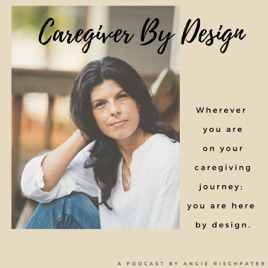
Advertise on podcast: Caregiver by Design
Rating
4.8from
This podcast has
53 episodes
Language
EnglishPublisher
AngieExplicit
No
Date created
2020/01/21
Latest episode
2022/06/15
Average duration
33 min.
Release period
30 days
Description
If you are a family caregiver of an adult with physical limitations, you deserve all the support you can get. Hi, I’m Angie, an occupational therapist with over 20 years of experience, and I’m sharing ways to make your day-to-day experiences less stressful, more effective, and teach you how to improve the wellness of your loved one. Covering topics of exercise, illness, most common challenges, and solutions; you will be prepared to engage in your caregiving journey with a unique therapeutic perspective and skill that is life-changing for both you and your loved one.
Unlock Caregiver by Design podcast Email contact info,
Listeners & Audience details
Email contact information
Direct podcast contact details

Listeners
Audience numbers & engagement insights

Audience details
Podcast Insights

Podcast episodes
Check latest episodes from Caregiver by Design podcast
Why skin breakdown can be life-threatening and how to avoid it.
2022/06/15
Skin breakdown can have a life-threatening impact and it can sneak up on you and your loved one. You can avoid it and you can also make quick changes to help promote the healing of this condition.
Here is what happens: pressure applied to the surface tension of the skin diminishes blood flow to the skin and can have very negative results in as little as 1-2hrs. A serious skin breakdown can develop into an open pressure sore within just one week. An advancing open sore can become serious and lead to complications within 1 month. Here are some examples of seriously negative complications from skin breakdown:
cellulitisbone and joint infectioncancersepsisRisk factors associated with the development of skin breakdown:
Immobility or decline in mobilityincontinence of urine and/or stoolimpaired sensation of skinpoor nutritionpoor blood flowYou can avoid the potential development of skin breakdown by making sure that your loved one can adjust their own position frequently and that they are not sitting on a hard surface for any period of time greater than an hour if they are at risk. If they can't reposition their own body, take a close look at why and how to help them develop this skill. (MORE on this to come, so stay tuned) .
Use non skin shearing surfaces to help mobilize them if you have to do all the work.
Use pressure-relieving cushions to help reduce the risk of pressure sores. (low air loss mattresses, chair cushions that are air-filled or gel-filled)
signs of skin breakdown in order
red skin that may be warm and your LO complains of itchy or burning sensation or painpurple colored skin that is more painful or may have lost some of the sensation open area has developed and may be oozing
Support the show
Have you tried these non medication pain interventions? I have, and they work.
2022/04/27
Pain is something that we all can relate to on some level. Unfortunately, it is one of the most limiting factors for our seniors and for those facing chronic illness or progressive disease. Did you know that the lack of joint mobility produced by getting up and moving around/walking or rolling in bed, increases a person's pain because of these factors?
fluid builds up around the joint when a joint is immobile muscle atrophy can cause painpain elicits fear which limits movement Intervention for pain is often a missed opportunity for the use of NONmedication/pharmaceutical options that work even better than the average go-to medication choice are discussed in this episode. The elderly population and those with chronic illnesses are at a disadvantage when it comes to pain management because of how medications are prescribed. What if you could ease their pain without adding another medication? I have seen it work and I encourage you to experience it as a recipient first so that you can possibly deliver relief to your loved one in the same way.
myofascial releasemeditationhypnosisYou can develop the skills to help your loved one with pain and see the relief they experience and then utilize their less painful state to increase their mobility. Remember the less they move, the more they feel the pain. So, don't be afraid to teach them how to move through some pain and to address the pain, validating it and attempting to find a solution for it, each and every time.
help with guided meditation @ the mindful movement: https://youtu.be/UWOwrPW5mqwpain management article sighted in this episode: https://www.practicalpainmanagement.com/treatments/pain-management-elderlybreathing video : (min 2:30 for diaphragmatic breathing) https://youtu.be/V5gfoxdv9k8get direct help/work with me: https://www.caregiverbydesign.com/coachinguse my therapy strategy at home: https://www.caregiverbydesign.com/freetraining
Support the show (https://angierischpater.mykajabi.com)
Episode 51: How to minimize falls without minimizing life.
2022/04/17
Episode 51
How can one person's fall destine them to nursing home placement while another suffers different injuries that could be seen as more limiting, yet they are able to return to their prior living situation? I share the differences between the factors of recovery in this episode
chronic and progressive illnessmotivation factorssupport systemsperspective environmental factorsHave you ever wondered what OT is and how it's different from PT? I have been an OT for 23 years and I still have to explain it to people. I discuss how an OT approaches solving the challenge that someone who has fallen and can't use their arms or their legs for mobility or daily activity, and how you, the caregiver, have the same potential. You just need to know where to start, what barriers to eliminate, and how to maximize potential at every point.
Too often, caregivers limit TOO much of their loved one's opportunities and in so doing, they contribute to increased risk of weakness, balance disturbance, endurance limitations, fear of mobility, and more. I share some tips with you here. I know that caregivers can successfully master a DIY rehab approach at home and avoid the avoidable costs of hospital stays, nursing homes, rehab costs, and related costs of illness and injury.
Wondering how to get more help? Learn how to set a clear goal with your personal needs as the main vision. Design your caregiving experience with intention. I have a free training here that I know will help you TODAY: https://www.caregiverbydesign.com/freetraining
When you are ready to jump-start your DIY rehab at home, join this coaching series: https://www.caregiverbydesign.com/coaching
Other media outlets where you can see me and interact: https://www.youtube.com/channel/UCkf3lSUFi2ER0_i33go5k2g
TikTok: https://www.tiktok.com/@thecaregiver
FB: https://www.facebook.com/caregiverbydesign
IG: https://www.instagram.com/caregive_bydesign
Support the show (https://angierischpater.mykajabi.com)
How one fall can land you in a nursing home
2022/04/10
I don't know of anyone who actually wants to go to a nursing home or wants to have their loved one require that level of care, but it happens. You have probably heard stories of people who fell, broke a hip, and then somehow never come home again. You might wonder how one thing, like a fall, leads to such an undesirable outcome. Well, I am going to tell you. Then, I am going to tell you what can be done differently to avoid that outcome.
Here are the major factors that lead to needing a higher level of care like a nursing home:
lack of additional support coming into the home as neededchronic illness/progressive illness or disease regression in mobility and strengthdecline in endudrancedecline in appetite/food intake/nutritionfailing to eliminate the cause of the initial fall/injury complacency repeat injury All of the above tend to occur but it doesn't take all of them to cause the need for long-term care. In this episode, I am sharing with you the story of someone who found themselves in this situation, and then I share what could have been done differently so that the long-term care option would not need to be considered.
You can make a HUGE difference in preventing injury at home with your loved one by keeping them moving, active, engaged, and inspired. If they have recently come home from rehab or the hospital, or completed home care therapy, you MUST keep it going. Don't let them become complacent and definitely do NOT do too much for them. If you do this, you are taking away opportunities for all the aspects that they need for further recovery: mobility, activity, endurance, strength, cognitive challenge and more.
If you are ready for learning a new perspective, my proven 5 step strategy to maximizing someone's quality of life and living your caregiving life without regrets please grab your free training here: https://www.caregiverbydesign.com/freetraining
When you want a tailor-designed approach, a DIY rehab at-home approach, for your loved one, so that you can live a life of freedom and they do too, this is for you: https://www.caregiverbydesign.com/coaching. You might be just right for this small group coaching series that will launch you into a life of coaching your loved one instead of caregiving all the time. Get more information at the link and get on the wait list today.
Support the show (https://angierischpater.mykajabi.com)
Why helping your loved one too much isn't really helping.
2022/01/27
60% of caregivers assist with ADLs - we are going to talk about the area that tends to require the most support today. LOWER BODY CARE
Contributing factors:
Limited hip mobilityBack painToo round in frontArthritic fingers and handsPoor visionImmobile anklesSwollen legsPoor sensation of LEParalysisIn most cases, every single one of these barriers can be worked around to allow for a person to be independent with dressing and washing lower extremities.
First, look at a few important facts:
Work from easiest to most challenging. For example it’s easier to pull loose pants than it is to put fitting pants on that have a button and zipper. Underwear vs pull-ups socks vs pantyhose slide on shoes vs laced Location! (where are they sitting) The height of the seated surface is very important. Higher means more reaching but it might be easier to lift the leg to clear the floor for getting it over the foot, however, reaching the foot for a sock is much harderIf you can cross one ankle over the opposite knee you have much more opportunity for successProcess: step back and do more watching, directing and add assistance as needed. Remember that the more you do leads to you doing more. If your LO can not assist more than lifting a leg while you put the sock on, then my goodness, work with that. Don’t miss an opportunity to use what they have and advance that as much as possible.
If they are limited because they are tight in a joint, take a minute to mobilize that area first. Work on that area daily to make more progress. How? Get help here.
https://www.caregiverbydesign.com/coaching
Free video training "Start living a life without regrets!" https://www.caregiverbydesign.com
Lower extremity muscle activation is a critical part to overall health. Don’t give up on this too soon. Even if your LO has hemiplegia or LE paralysis, you have to maintain mobility of the joints to help you and them with basic mobility. When you stop allowing your LO to use their lower body musculature to do basic ADLs, you are contributing to the overall decline of their lower extremity muscle strength and this leads to mobility limitations and overall health decline.
Pick a day this week during your ADL routine, and look at the clock. See how much time you are using to help with dressing and what part is taking the longest or is causing your body to work the most. I would guess that it is with LB care. Make a goal to shave some time off of this area by starting to involve your LO with it more so you can do something else while they work on it. OR, by making the task easier for you to do by changing the location, position, and/or approach
Do you believe that it’s possible? If you are saying no, I’ve tried everything; I want to you pause and really allow yourself room and permission to see things differently. Need help getting started, go to : https://www.caregiverbydesign.com and watch the video
LEAVE A 5 STAR REVIEW FOR THE PODCAST HERE (subscribe and scroll to the bottom. click on "leave a review" ) https://podcasts.apple.com/us/podcast/caregiver-by-design/id1495740802
Support the show (https://angierischpater.mykajabi.com)
The effects of immobility on health and what to do about it
2022/01/20
Let’s talk about the impact of illness or hospitalization on one’s health. I see it happen firsthand as a therapist working in the hospital. People lose their ability to walk and complete self-care with independence within a very short period of time, making it harder for them to go home without additional support. Consider this:
How at risk are you? How about your partner, the one you care for? We are moving less and getting out into nature less as we further develop our society. Too many hours spent in front of various screens is just 1 example and cause. RESEARCH article:
https://jamanetwork.com/journals/jamanetworkopen/fullarticle/2759840
The objective of therapists like myself is to discharge the patient to a SAFE environment with adequate support. Over the course of 1-2 weeks, I see patients move from a short-term rehab plan to a home plan when they are able to cooperate in strength, endurance, and self-care skill-building interventions with OT and PT. When they can’t participate (due to medical instability) or they refuse to participate, we see the loss of potential for home discharge The same thing can happen at home with an illness or during home recovery from a hospital discharge, so do everything you can to keep your LO moving with the intention. Look at what can happen to the body with immobility:
https://www.frontiersin.org/articles/10.3389/fnut.2021.633987/full
Are you seeing this happen with your loved one, either at home or at the hospital, and feeling helpless? Here is what you can do.
keep them moving and doing as much as they can for themselves so they are always at a starting point of advantage. Look at what your loved one can do easily. Any mobility or activity that you see them do like: sitting up at the side of the bed or without the support of the couch/chair. Standing up without losing balance, walking, any daily task they do well - have them do that MORE or for longer periods of time than they are currentlyThe HOW:
Start a simple movement and exercise program - do it at least once a day https://www.caregiverbydesign.com/seatedexercises (FREE DOWNLOAD VIDEO TO USE)Use the right support items to maximize safe mobility and self-care: walker, canes, adaptive tools, shower chairs, grab bars, toilet seats/ grab bars, etc CONSISTENTLYGet out of the house, stay social, keep the mind engaged and this includes problem-solving through basic daily tasks. Let's get you and your partner living the life you actually want by sorting out what your vision for living is, what the boundaries are and how to build strength, mobility, and independence for you both. https://www.caregiverbydesign.com/coaching Find out more at the link. I will contact you when we are ready to start.
Support the show (https://angierischpater.mykajabi.com)
Home from the hospital too soon? Why this is happening and what to do.
2022/01/11
Patients have been coming home from the hospital sicker, weaker, and with more complications than you might be prepared to manage at home for a few reasons and the burden on you might be bigger than you expected. This is a global situation.
What's going on out there?
Covid 19 has overburdened the global healthcare system by adding people requiring treatment to the normal flux of patients Covid 19 has stressed the labor pool of healthcare workers who have to take time off due to exposure, and in some regions of the world, can not work unless they are vaccinated. The lack of available beds in short-term rehab settings and long-term care/nursing homes makes discharging patients from the hospital to such a facility very prolonged. So, if it is possible to send them home with the support of the caregiver vs staying additional weeks, waiting on placement to STR or LTC, a possibility, then it becomes the planlimited options for some patients (lack of any support at the home and no funds for most facilities) means that there are some patients that end up "boarding" in the hospital until a spot opens up at a facility. This can take weeks to months. What to pay attention to and what to ask about with the consideration of a "home too soon" situation :
What are the caregiver's limitations (pain, mobility) and ability? What is the caregiver's availability and willingness to help with everyday activities? medications: knowing what the new ones are. What was added or discontinued? Side effects of medications and interactions. What to look for if the medication is not working correctly? community support for you and your partner/LO for the ongoing medical situation that they are dealing with. Community support for future planning and for financial support. Positioning and mobility: safety. How to assist them in a restorative way. Signs and symptoms of worsening health, flare-ups, reoccurrences. How to avoid these and what to look for. You are a vital part of the healthcare system as a caregiver and you should be informed and supported. That is what I am here for. I have 2 offers to further help you.
First: a free video training "Start living your life without REGRETS!". start living a life with vision and a plan every day while you help your LO become stronger and more independent https://www.caregiverbydesign.com
Join a limited group coaching opportunity to help make BIG impact with small changes that put your needs and vision in center focus. This is geared especially for partners, spouses who are caregivers and want to develop a strong relationship through the present challenge.
https://www.caregiverbydesign.com/coaching
Support the show (https://angierischpater.mykajabi.com)
Coming back from physical decline
2022/01/05
Seriously, you can help just about anyone come back from physical decline if you take the right approach and know where to start. First, consider some of the causes of physical decline: hearing loss, cognition changes, and prolonged inactivity
Check out some interesting facts about physical decline at https://www.who.int/news-room/fact-sheets/detail/physical-activityAlso, consider that it takes 3x the amount of time the body was inactive to regain the lost muscle strength so be patient and approach the retraining with care.
I have worked with many bed-bound and deconditioned patients lately and have discovered that just about anyone can make a commendable comeback from serious physical decline, and I am sharing with you how to do it right. I begin by re-establishing their connection to themselves and their environment. How?? Ignite the pilot light that is burning within them with oxygen. Use breath because as long as someone is breathing, they have something to work with. Waking up the body. Start moving the core, the limbs, head, and neck. Move onto isometrics if mobility is limited. Contracting muscles will increase blood flow, joint stability and help the brain-body connection. Evidence shows that isometrics are an effective approach to - improving physical endurance and posture by strengthening and stabilizing the muscles.
Listen to my account ( download the podcast) of a patient that I worked with who went from laying in bed with very little interaction with his environment and very poor social interactions to walking for the first time in weeks by the end of the session.
Where to start? It is absolutely unique to each person. I always start with the breath. How well do they control inhale/exhale? How much exhale power do they have? This tells me so much. If they are not breathing with force when needed, it shows a level of weakness that needs to be addressed first. Work on breathing techniques and move on from there. Use this simple exercise video to help get just about anyone moving. https://www.caregiverbydesign.com/getmoving. This is a free video for you to use as many times as you need it.
Check out how you can get even more help right here: https://www.caregiverbydesign.com/waitlist
Contact me with questions:
https://www.caregiverbydesign.com/contactme
TikTok: @thecaregiver
IG: carergive_bydesign
Support the show (https://angierischpater.mykajabi.com)
part 2 of "How to build a deeper connection with your partner"
2021/11/01
A follow-up conversation from episode 43. Taking a deeper look at the strategy needed to build connection through the challenges of caregiving.
After working with a couple the other day, I wanted to share a deeper perspective with you. Example of a couple working through a basic task that could otherwise cause stress and potential resentment; they discovered how to work together and develop a deeper connection.
How could this change your life? Well, consider this:
Your Types of strength:
PhysicalHealthRelationshipImagine improved strength in any one of those 3 areas. What does that look like in your life? What if all 3 areas were stronger. They are pillars for a well-balanced, healthy, fulfilled life.
First: what prevents effective connection? Take a listen to previous episode 43 “how to build a deeper connection with your partner” some examples:
Poor communicationResentment Loss of hope and visionHistory of arguments, poor outcomesLack of self-insight. You have to know yourself very well, identify your true emotions and the cause of them, to be an effective communicatorNext: opportunities for connection
co-Developing a plan for living life with a focus on fulfillment. not just existingBuilding trust that is developed through allowing your partner to try to do more OR to help them in areas that they need help with the way they ask you to ( pause your preconceived ideas, hesitations, expectations and let them lead for this. Learn together. Remember to be partners)Exercising together or coaching your partner through a program with a specific goalMeal planningCommunity outing/travelSocializing with friendsWhat do you need?
Insight (the capacity to gain an accurate and deep intuitive understanding of a person or thing.)Knowledge (facts, information, and skills acquired by a person through experience or education; the theoretical or practical understanding of a subject.PersistenceSupport the show (https://angierischpater.mykajabi.com)
Using touch to fight depression!
2021/10/18
October is national depression and health screening month: Did you know that 20% of family CG experience it? That is 2x the rate of the rest of the population! why?
October is national depression and health screening month. Did you know that 20% of family CG experience it. That is 2x the rate of the rest of the population! Some causes: limited socialization, lack of touch, isolation, and stress. https://screening.mhanational.org/screening-tools/depression/?ref=CAN
The one you are caring for may also be experiencing depression and is definitely at risk for experiencing it. They are more likely to face the risk factors that lead to depression due to life changes they feel out of control of, loss of independence, lack of socialization and getting out of the house with friends or engaging in hobbies, lack of exercise, etc .
1. Impact of isolation: https://www.nature.com/articles/s41598-020-58297-9. Depressive symptoms are associated with less social interaction, being with other depressed people, lacking group interactions, less time with friends. Research shows that social isolation increases the risk for coronary heart disease, stroke, and mortality, and can negatively influence psychological health leading to depressive symptom
2. Importance of touch in avoiding depression and dealing with depression: FROM ARTICLE https://www.medicalnewstoday.com/articles/touch-starved#complications
*affectionate touch promotes psychological well-being. * touch can also reduce the feeling of loneliness *Research also notes that those who report loneliness show dampened cognitive function and a higher chance of experiencing mental health conditions such as anxiety and depression. So, if you aren’t around people you probably aren’t getting enough physical human contact. Are you getting what your body needs? Too much cortisol, caused by stress, can cause:
AnxietyDepressionDigestive problemsHeadachesMuscle tension and painHeart disease, heart attack, high blood pressure and strokeSleep problemsWeight gainMemory and concentration impairmentOxyctocin is a neurotransmitter that acts like a hormone and it is released that is the counterbalance to cortisol. And guess what? It is released most potently with touch. We were created with the most effective tools to combat stress: skin and the ability to touch. So what can you do right now to minimize you and your partner’s risk for depression: 1. Minimize isolation : Find time to be with people. Connect in person. Find time to get out or have friends come over. Avoid isolation. This includes while being with your partner. Use your partner as a source of deep connection. Make your relationship meaningful beyond your current role. Serve each other. 2. Touch/interact using affective touch that helps your brain to release oxytocin, the hormone that combats cortisol, the stress hormone.
It is important to seek the help you need to stay healthy, taking care of your mental health needs to be a priority or you will not be able to provide the most effective caregiving. Talk to your doctor about stress and depression.
Make time every day for your mental health by socializing, getting physical interaction with others, and getting exercise. Your mental health impacts the rest of your body's functions.
Support the show (https://angierischpater.mykajabi.com)
How to build a deeper connection with your partner.
2021/09/05
First some facts:
61% of caregivers are women 1 in 5 Americans CG face declining health Here are some of the most common challenges faced by partners who are CGing:
ResentmentIsolationDepression (research shows that CG experience at a higher rate than their partners)AnxietyLoss of employmentFailed relationshipFamily strain impacting children and extended familyWhat causes this?
Focusing on limitations that face you and your partner vs possibilityLack of transparency with yourself about your feelingsNeglecting your interests, friends, activitiesNeglecting your partner’s needs that are beyond those related to health Missed opportunities to provide the support that grows your connectionRole reversalFinancesExercise to try: download a worksheet to help you here
Visualize yourself the way someone else would see you if they watched you for a few hours. How would they describe you? What energy do you put off? (sad, quiet, angry, frustrated, exasperated, chipper, positive, encouraging)
Now, what would you do to help or support this person? What would you offer them?
TAKE NOTE OF YOUR ADVICE, YOUR WORDS TO THIS PERSON. This is you! You need to care for yourself like this and avoid repeatedly going back to the state that you found this person in. What can you do to avoid that? What’s causing this problem? What activities, hobbies, interests would help you to make this connection/bridge to a healthier lifestyle.
Repeat this process for your partner. Look at them as if you are a stranger. Someone just walked into the house and is meeting your partner for the first time. What do they see? How would they describe them? What advice, support would they offer?
When seeing your partner through a 3rd party perspective: How would tomorrow be, how would it go, if you took time to see your partner in this perspective a few times a day? What emotions would you feel? It’s likely that you would have more patience and take things less personally. You might see areas of interest and activity or opportunity that your partner is missing out on that is contributing to the way they interact with you.
Last thing: how do these realizations make you feel and what don’t you like about them? There is more work for you to do here and it doesn’t happen overnight. This is uncomfortable but uncomfortable is good because it means that you are moving out into a new area of growth.
Need more help with this exercise: Check out the option for more support at https://www.caregiverbydesign.com/waitlist to help you to see your partner differently. Develop a clinical eye that will help you see their strengths and know what to do with them.
Support the show (https://angierischpater.mykajabi.com)
You found a backup caregiver. Now what? Training essentials that will build confidence
2021/07/27
Get ready to train your newly recruited caregiving backup with essential skills to build confidence. Consider these top 6 areas.
Comfort in physical contact: If there are any areas of injury, skin issues, tenderness issues: make these knownIf your LO has preferences about contact make that clearConversational skill and comfort with communications: asking the right questions and reading body language. If there is a certain way that you ask your LO something or an answer that they typically give you in response to a question you ask, make note of that. Write down topics that your LO easily talks about, interests, TV shows, history Bathroom confidenceShow by example then repeat with demonstration. Create a timed schedule of use of the bathroom while you are awayHave all areas accessible for different sized peopleMobility confidence / transfersStep by step approach with verbal prompts Maximize your LO participationYou can be the “test” case for them to practice on then repeat this with roles reversed so they can feel itMake avoidance of injury the goal. This is where injuries often occur ( shoulder, falls)Cooking or meal prep and mealsThe Where, What, and How. Don’t skip any details. What size are the bites? Do they cut their own? Do they use special utensils? What snacks (again, where what, and how)Drinks - make them aware of any risks for aspiration. The obvious is sometimes not obvious to others. Remember that liquid intake is usually a priority so don’t let them forget about this. Exiting the home/car transfersExiting the home should be a priority in case of emergency. Give them the easiest exit option. Car transfer should be a goal so they can go places if it is appropriate. Ready for change in your caregiving experience? Be one of the select students in a small group coaching series that helps you design the lifestyle that focuses on your needs and maximizes your LO strengths and independence. https://www.caregiverbydesign.com/waitlist
Support the show (https://angierischpater.mykajabi.com)
Podcast reviews
Read Caregiver by Design podcast reviews
dariankana 2021/05/29
My new BFF!
You are so appreciated!!! I appreciate all your advise and support! It is a lonely world in caregiving. But thanks to you, I have a new and better out...
Podcast sponsorship advertising
Start advertising on Caregiver by Design relevant audience podcasts
You may also like to advertise on these Podcasts

4.737501
Sports Open Line
Audacy

4.937688
Made by Mammas: The Podcast
Audio Always

4.81002724
Helping Writers Become Authors
K.M. Weiland

3.4306557
WEEI Afternoons
Audacy

4.82563423
F1 Beyond The Grid
Formula 1

4.189538
Karsch and Anderson
Audacy

4.9911222
Puttin' On Airs
Podcast Heat

4.9188189
Who Knew It with Matt Stewart
Do Go On Media

4.3401911
Talk Breakfast
Talk

4.892482
Intimate Conversations
Allana Pratt