1496899179
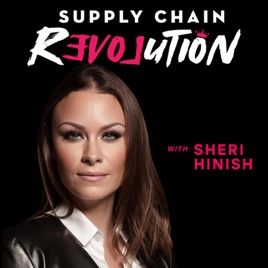
Supply Chain Revolution

Advertise on podcast: Supply Chain Revolution

Rating
★★★★★
4.9
from
58 reviews
This podcast has
93 episodes
Language
English
Date created
2020/01/29
Latest episode
2026/10/08
Average duration
24 min.
Release period
15 days

Description

Supply Chain Revolution®: Sustainability • Innovation • Technology Where sustainability meets innovation — real leaders, real strategies, real transformation. At the intersection of people, planet, and technology, Supply Chain Revolution® reveals how the world’s top innovators are transforming sustainability, AI, and supply chain strategy into advantage. Welcome to Supply Chain Revolution®, the global podcast redefining how we think about sustainability, technology, and transformation. Hosted by Sheri Hinish, known worldwide as the Supply Chain Queen®, this show explores what it takes to build resilient, regenerative businesses at the intersection of people, planet, and technology. Every episode challenges the status quo — unpacking how innovation, AI, and systems thinking are rewriting the rules of enterprise transformation. You’ll hear from executive leaders, technologists, scientists, policymakers, and changemakers driving sustainable growth and digital reinvention. Past guests include pioneers from Microsoft, SAP, IBM, Starbucks, Unilever, MIT, the Ellen MacArthur Foundation, and the world’s most exciting climate-tech startups. These are the conversations you won’t find in boardrooms or press releases. We go beyond buzzwords to reveal what actually works — and how bold thinkers are making sustainability profitable, scalable, and human. Listen to learn: • How to reduce Scope 3 emissions without breaking budgets • How AI and automation deliver returns in under six months • Circular-economy models that create new revenue streams • Digital-manufacturing strategies that eliminate inventory waste • Carbon-data innovations turning compliance into competitive advantage • Leadership mindsets redefining value creation for a regenerative economy Our “10 Big Ideas” series breaks down the breakthroughs reshaping industries — from sustainable finance and digital MRV to supply-chain decarbonization, regenerative agriculture, and AI-powered transparency. Each episode distills complex systems into actionable playbooks that separate market leaders from those still catching up. No fluff. No theory. Just truth, transformation, and practical insight from people who’ve built real change at global scale. Whether you’re a CEO, sustainability officer, technologist, policymaker, or student passionate about systems change, Supply Chain Revolution® is your backstage pass to the ideas and people redefining the future of business. New episodes monthly. Your competition is already listening — and learning. 🔗 Learn more + show notes: supplychainqueen.com 🎥 Watch full episodes + clips on YouTube: youtube.com/@supplychainqueen 💼 Follow Sheri Hinish (Supply Chain Queen®) on LinkedIn: linkedin.com/in/supplychainqueenLearn more: supplychainqueen.com 👑 About the Host Sheri Hinish is an award-winning executive strategist, board advisor, and global thought leader at the forefront of sustainability, AI, and digital transformation. Known as the Supply Chain Queen®, she helps Fortune 500 companies, governments, and institutions integrate sustainability, technology, and innovation into how they operate. She is the Founder of Supply Chain Revolution Global, and previously led sustainability solutions at EY and IBM. Her work has been featured in The Wall Street Journal, Bloomberg, The Economist, and Forbes. Recognitions include Top 250 Leaders in Sustainability (2025), Top 100 Women in Sustainability and Supply Chain (2024), and #1 Supply Chain Leader by Supply Chain Digital. Sheri frequently speaks at COP, NY Climate Week, Reuters Events, and other global forums.

Unlock Supply Chain Revolution podcast Email contact info,
Listeners & Audience details

Email contact information

Direct podcast contact details

Listeners

Audience numbers & engagement insights

Audience details

Podcast Insights

Podcast episodes

Check latest episodes from Supply Chain Revolution podcast


Climate Week NYC 2026 Recap: What Supply Chain and Sustainability Leaders Should Do Next
2026/10/08
Supply chain was rarely in the title at New York Climate Week 2026, but it was in every answer. In this Revolution Roundtable, recorded live on LinkedIn days after the week closed, Sheri Hinish brings together three practitioners to compare notes on what they saw, what felt real, what felt performative, and what executive teams should do differently on Monday morning. Sandy Leyva, co-founder of Sustainability Decoded, is an engineer who works at the intersection of supply chain and sustainability. Wesley Herche, PhD, co-founder of Sustainability Decoded, is a former U.S. intelligence officer who now works across solar, battery storage, EV charging infrastructure, and on-site power. James George, founder of Provocative Human and a Supply Chain Revolution collaborator since 2020, spent 12 years as a Royal Navy clearance diver before moving into circular economy work with the Ellen MacArthur Foundation. He now advises on critical minerals and rare earth supply chain risk in defense, aerospace, and automotive. Each panelist names the week in one word: locked in, interdependence, economics, and access. The conversation then moves to the investor who told a room to stop framing climate action as an environmental choice, the quiet disappearance of net zero, the rollback of the Chief Sustainability Officer role and its cost to technical expertise and to women in the C-suite, and whether every job is now both a technology job and a sustainability job. An audience question brings the missing Scope 3 stakeholder into the room: the small and mid-sized supplier asked to fund the transition on margins that cannot absorb it.  The roundtable closes with three decisions for Monday morning: price volatility itself, put critical materials on the risk register with a named owner, and treat disruption as information.  Chapter Markers: 0:00 Welcome to the post-Climate Week Revolution Roundtable 0:57 Introductions: Sandy Leyva, Wesley Herche, James George 3:53 One word for Climate Week NYC 2026 6:10 "Stop telling me we're doing this for environmental reasons" 8:28 Supply chain was in every answer 10:03 The value was in the room, not on stage 11:44 What changed: net zero fades from the agenda 12:51 What felt performative: folding in the CSO role 14:19 The double loss: technical expertise and women in the C-suite 18:15 Is every job a technology job? 21:52 Is every job a sustainability job? 25:22 Audience question: the SME supplier missing from Scope 3 29:05 One decision for executive teams on Monday morning 31:37 Final word: circularity as a resilience discipline   Key Topics: Climate Week NYC 2026, supply chain, sustainability, circular economy, critical minerals, material security, energy transition, price volatility, Chief Sustainability Officer, Scope 3, SME suppliers, just transition, ESG, AI, green jobs, Sustainability Decoded, Provocative Human   Connect and Learn More: Sustainability Decoded (Sandy Leyva and Wesley Herche): sustainabilitydecoded.beehiiv.com James George (Provocative Human): linkedin.com/in/james-george-20995b75 Sheri Hinish (Supply Chain Queen): supplychainqueen.com   Subscribe to Supply Chain Revolution on Apple Podcasts, Spotify, YouTube, and wherever you listen.
Community Ownership in Circular Supply Chains: The Cooperative Model | CSCC Series Finale (5/5)
2026/09/20
This is the series finale. Across five episodes, the Circular Supply Chain Coalition series has built the system around circular supply chains: coalition architecture, trusted networks, buyer-operator alignment, enabling policy. Episode 5 asks who owns the infrastructure, who has agency, and who benefits when reverse supply chains are built. Deirdre White is CEO of Pyxera Global with nearly 40 years in supply chain development and social impact, from oil and gas localization on Sakhalin Island in the Russian Far East to the Jiva program, a 10-year partnership with the John Deere Foundation in rural Rajasthan that transformed agricultural livelihoods, girls' education, and community governance. Deirdre frames community ownership as the opposite of extraction: local people building and retaining the assets that should be theirs. Nancy Charaya leads circular economy work at Pyxera Global India, with a decade of experience across tire, textile, plastics, and critical minerals value chains. Nancy built the Pride Cooperative in Guwahati, Assam, a female-led waste worker collective organizing 160 informal workers into a cooperative with collective bargaining power and shared governance. India has 4 to 5 million waste workers, up to 80 percent women working informally with zero agency. The cooperative model gives them a seat at the table. John Holm, SVP of Partnership Development at Pyxera Global, moderates and connects the five-episode arc, framing community ownership as the "Trojan horse" for circular supply chains at scale. Chapter Markers: 0:00 Introduction: from enabling policy to community ownership 1:05 John Holm: community benefit as the missing layer in circular supply chains 2:03 Deirdre White: 40 years of supply chain localization, from Sakhalin to CSCC 5:41 Jiva: 10 years with John Deere in rural Rajasthan 7:08 Why the changes held two years after the program ended 7:54 "Fall in love with the problem, not the solution" 8:25 India's waste sector: 4-5 million workers, 90% informal, 60-80% women 9:27 Pride Cooperative: 160 waste workers, collective bargaining, government access 10:26 The smart dustbin story: waste worker knowledge vs. high-tech design 11:21 Cooperatives in the global north: Land O'Lakes and hidden scale 12:37 Community-owned business: keeping equity local in reverse supply chains 14:44 Building trust: 36 person-weeks of listening in three villages 16:11 Pride as a female-led cooperative: agency and collective voice 17:15 Lightning round: misconceptions, capabilities, optimism 19:34 Series close: the complete blueprint for a circular economy Key Topics: Community ownership, cooperatives, circular supply chains, reverse logistics, waste workers, informal economy, critical minerals, cooperative governance, Pyxera Global, CSCC, Pride Cooperative, Guwahati, MSMEs, female-led enterprise, global south innovation Connect and Learn More: Circular Supply Chain Coalition: circularsupplychain.org Pyxera Global: pyxeraglobal.org John Holm: [email protected] Deirdre White: linkedin.com/in/deirdre-white Nancy Charaya: linkedin.com/in/nancycharaya Sheri Hinish (Supply Chain Queen): supplychainqueen.com Please subscribe and follow
Circular Economy Policy: How New Mexico and the EU Are Building Reverse Supply Chains | CSCC (4/5)
2026/09/13
Circular supply chains do not scale on corporate pilots alone. They require enabling policy: state-level incentives, workforce alignment, environmental regulation, capital pathways, and cross-border investment structures that make reuse-based business models viable. This is episode four of a five-part series with Pyxera Global and the Circular Supply Chain Coalition, exploring what the enabling environment looks like when policy moves from aspiration to implementation. Secretary James Kenney leads the New Mexico Environment Department, where he has built one of the most ambitious state-level circular economy strategies in the US. Under Governor Lujan Grisham, New Mexico offers free education from pre-K through university and trade school, universal child care, a 50-year water action plan backed by $400 million in annual investment, and PFAS legislation that listed discarded PFAS as hazardous waste with a consumer-facing label accessible to every New Mexican. The department created economic development positions whose only metric is jobs created and net income generated. Manuel Carmona Yebra is Deputy Head for Global Issues and Innovation at the EU Delegation to the United States. He has led EU-US circular economy engagement at the state level, engaging governors including Governor Wes Moore (Maryland), Governor Hobbs (Arizona), and Governor Lujan Grisham (New Mexico). His work has revealed that circular economy is bipartisan because it addresses economic development, environmental protection, employment, and supply chain security simultaneously. John Holm, SVP of Partnership Development at Pyxera Global and CSCC representative, frames the enabling environment strategy and explains why the coalition focuses on governor-level alignment rather than federal solutions. Together they unpack why states are laboratories for policy that scales and why the EU Circular Economy Act is expected to require 25% of critical minerals supply from recycling. Chapters: 0:00 Introduction: the enabling environment 1:00 John Holm: enabling environment in practice 1:33 Security economy framing 2:38 Why CSCC focuses on states and governors 3:42 Secretary Kenney: New Mexico's model 4:45 Free education, child care, workforce transition 5:46 50-year water action plan 6:19 Waste to marketplace: critical minerals 7:48 PFAS legislation and the consumer label 9:25 Consumer access to information about PFAS 10:08 Secretary Kenney on trade association lawsuits 11:12 EU Circular Economy Act and competitiveness 12:26 25% of EU critical minerals from recycling 13:04 EU-US state engagement 14:18 Why the EU engages US states directly 15:04 Circular economy as bipartisan 17:48 Replicability and interstate symbiosis 19:55 Sovereign supply chains, Mexico border corridor 21:01 How to engage Topics: Circular economy policy, PFAS, EU Circular Economy Act, critical minerals, economic development, workforce transition, bipartisan policy, reverse supply chain Connect: New Mexico Environment Department: env.nm.gov Manuel Carmona Yebra: linkedin.com/in/manolo CSCC: circularsupplychain.org Pyxera Global: pyxeraglobal.org John Holm: [email protected] Supply Chain Queen: supplychainqueen.com Subscribe on Apple Podcasts, Spotify, YouTube, and wherever you listen.
Circular Sourcing & Procurement: Critical Minerals Recovery w/ ABTC and Cummins | CSCC Series (3/5)
2026/09/04
This is episode three of a five-part series produced in partnership with Pyxera Global and the Circular Supply Chain Coalition. Recovering a material is only the beginning. For circular supply chains to scale, operators must understand what buyers can qualify and use, while buyers must create credible demand signals and procurement pathways for secondary materials. This episode covers the matchmaking layer: how the CSCC connects reverse supply chain operators with industrial buyers. Ryan Melsert is the co-founder and CTO of American Battery Technology Company (ABTC), which operates a battery recycling facility selling approximately one thousand tons per month of critical minerals back into the market. Ryan's career spans Tesla (where he helped design and build the first gigafactory) and the company is now BASF's exclusive battery recycling partner for all of North America. Rafael Vasquez Lombardo leads sustainability strategy and customer solutions at Cummins, a 100+ year industrial manufacturer with global remanufacturing operations. Anita Schwartz returns as CSCC co-founder. Together they unpack what it takes to move from collecting battery feedstock to producing materials that industrial buyers can evaluate, qualify, and integrate into established supply chains. Rafael outlines the performance-cost-trust triangle that governs sourcing decisions at scale, and Ryan explains why the qualification process will never get shorter (consumers demand zero tolerance for component failure). They close with a lightning round where Rafael delivers the episode's defining line: stop talking about circular sourcing, this is just sourcing. Chapter Markers: 0:05 Introduction: buyer-operator matchmaking in reverse supply chains 1:19 Meet Anita Schwartz (CSCC co-founder) 2:06 Meet Ryan Melsert (ABTC): Tesla, gigafactory, battery recycling 3:47 Meet Rafael Vasquez Lombardo (Cummins): engineering to circular economy strategy 6:33 From convening to active matchmaking: what changes 7:50 Operator perspective: from feedstock to buyer-ready supply 9:10 BASF partnership: becoming their exclusive North American battery recycling partner 10:51 Buyer perspective from Cummins: performance, cost, trust 15:04 After the introduction: what happens day-to-day 16:59 Data exchanges, audits, and the high-trust environment 17:33 Validation steps from pilot to production 20:07 Lightning round: what to stop, what data matters, optimism Key Topics:  Reverse supply chain, buyer-operator matchmaking, battery recycling, critical minerals, Cummins, ABTC, BASF, circular procurement, secondary materials, supply chain qualification, remanufacturing, performance specs, supply chain trust, CSCC, Pyxera Global Connect and Learn More: American Battery Technology Company: americanbatterytechnology.com Cummins: cummins.com CSCC: circularsupplychain.org Pyxera Global: pyxeraglobal.org Sheri Hinish: supplychainqueen.com
Circular Economy Network Building: Ellen MacArthur Foundation, Automotive Suppliers, and the Architecture of Reverse Supply Chain Collaboration | CSCC x Pyxera Global Series (2/5)
2026/08/24
This is episode two of a five-part series produced in partnership with Pyxera Global and the Circular Supply Chain Coalition. If episode one was the origin story, episode two is the architecture layer: who is showing up, which networks matter, and why convening existing conveners is more powerful than starting from scratch.  Featured Guests: Danielle Holly leads the Ellen MacArthur Foundation in North America. Kellen Mahoney is the executive director of the Suppliers Partnership for the Environment, an automotive industry leadership forum. John Holm returns as CSCC co-founder. Together they unpack how the CSCC network model creates value through pre-competitive collaboration, why tech companies are showing unprecedented eagerness to collaborate on supply chain resilience, and why the automotive industry needs alignment beyond its own value chain.  Danielle reveals that the critical minerals market is $770 billion and growing, that e-waste is the fastest growing waste stream with critical minerals embedded in it, and that secondary markets for critical minerals are now necessary because extraction alone cannot meet demand. Kellen outlines what automotive suppliers actually want: clarity, consistency, and an open lane of two-way communication.  Chapter Markers:  0:00 Introduction: the architecture layer  1:09 Meet Danielle Holly and Kellen Mahoney  2:07 Why convening conveners matters  4:02 Speed to trust through existing ecosystems  5:11 Target industries: automotive and technology  6:12 What suppliers want: clarity, consistency, communication  7:28 Unprecedented pre-competitive collaboration in tech  8:14 CSCC model: invite-only working groups, buyers consortium  11:59 Critical minerals: $770B market, e-waste as fastest growing waste stream  14:30 Data sharing, trust, and clarity of roles  17:29 Alignment on North Star over structure  20:09 Lightning round: myths busted  21:44 How to engage  Key Topics:   Circular economy, network architecture, Ellen MacArthur Foundation, Suppliers Partnership, pre-competitive collaboration, critical minerals, EV battery, automotive supply chain, e-waste, convening conveners, trust, CSCC, Pyxera Global  Connect and Learn More:  Ellen MacArthur Foundation: ellenmacarthurfoundation.org  Suppliers Partnership: supplierspartnership.org  CSCC: circularsupplychain.org  Pyxera Global: pyxeraglobal.org  Sheri Hinish: supplychainqueen.com  Subscribe to Supply Chain Revolution on Apple Podcasts, Spotify, YouTube, and wherever you listen.
Circular Supply Chain Strategy: How to Build Circular Economy Infrastructure from Coalition to Community | CSCC x Pyxera Global Series (1 of 5)
2026/08/10
This is episode one of a five-part series produced in partnership with Pyxera Global and the Circular Supply Chain Coalition (CSCC) to explore how to build a circular economy from coalition to community. The series covers origin story, network architecture, buyer-operator matchmaking, enabling policy, and community ownership. About CSCC: Anita Schwartz spent over ten years at Waste Management before building out the zero waste and circular economy practice at WSP. John Holm cut his supply chain teeth in Central and Eastern Europe before leading Pyxera Global's circular economy practice. They connected at a GreenBiz panel in 2021 and realized their complementary perspectives could form the architecture for something the market was missing: a coalition that convenes the entire value chain around reverse supply chains. Together they unpack why a single company cannot resolve the reverse supply chain on its own (the cost and impact of individual reverse logistics footprints negate the benefit), why everything after point of sale is "the dark side of the moon" with zero data visibility, why the CSCC frames circular economy as security economy rather than sustainability, and why 70 to 80 percent of the world already lives on reuse behavior. They close with a lightning round where Anita names the biggest misconception about circular economy (it is recycling) and John names the one thing companies should stop doing when they talk about circularity (lying). Chapter Markers: 0:00 Introduction: five-part series overview 0:31 Meet Anita Schwartz and John Holm: co-founders, CSCC 1:02 Anita's origin: Waste Management, WSP, and the reverse supply chain gap 2:35 John's origin: Central and Eastern Europe to Pyxera Global 4:01 Enabling environment: policy, subsidies, communities, and systems change 5:44 What was broken: why operators need shared infrastructure 7:50 The dark side of the moon: zero data after point of sale 8:46 The CSCC blueprint: coalition building at scale 12:45 What happens when companies try to build reverse supply chains alone 15:21 Competitors collaborating: specialty chemicals and cross-sector parallels 16:41 Aligning organizations with different incentives and timelines 17:46 What to expect from the full five-episode arc 20:00 Lightning round: biggest misconception, what to stop doing, optimism 21:01 How to engage with the CSCC Connect and Learn More: Circular Supply Chain Coalition: circularsupplychain.org Pyxera Global: pyxeraglobal.org John Holm: [email protected] | LinkedIn Anita Schwartz: LinkedIn Sheri Hinish (Supply Chain Queen): supplychainqueen.com Subscribe to Supply Chain Revolution on Apple Podcasts, Spotify, YouTube, and wherever you listen. Key Topics:  Circular supply chain, reverse supply chain, coalition building, circular economy, waste as resource, security economy, critical minerals, reuse, urban mining, local procurement, systems change, data visibility, post-consumer waste, infrastructure, CSCC, Pyxera Global
Supply Chain Career Growth: How to Build Community, AI Skills, and Confidence with Liz Raman, Supply Chain Gals Founder | Forbes 30 Under 30
2026/07/13
Supply chain is no longer a hidden career path. It is where strategy, technology, operations, consumer behavior, product management, data analytics, and resilience meet. In this episode of the Supply Chain Revolution podcast, Sheri Hinish sits down with Liz Raman, founder and CEO of Supply Chain Gals, Forbes 30 Under 30 honoree (Transportation and Mobility, 2025), MIT and Georgia Tech alum, and senior product manager in tech. Liz built Supply Chain Gals because the community she needed early in her career did not exist. Starting as a transportation analyst, she navigated her way to becoming one of the youngest supply chain directors at Nike by age 26, ran a multibillion-dollar third-party sales division at Amazon, and founded a 501(c)(3) nonprofit professional network that now connects over 20,000 women across career stages through workshops, mentorship circles, networking nights, case competitions, and a Slack-based membership with 120+ active members. Together, they explore why supply chain is the ultimate connector career for professionals who get bored easily and love learning new things, how Supply Chain Gals is building AI and technology fluency through hands-on workshops with leaders from Microsoft and Accenture, why community is career infrastructure (not just a nice-to-have), and how case competitions simulate executive-level decision-making that early-career professionals rarely get to experience. Liz closes with a lightning round that includes one of the most important career messages: go before you are ready. Chapter Markers: 0:00 Introduction: supply chain as the career 0:51 Meet Liz Raman: Forbes 30 Under 30, MIT, Georgia Tech, Supply Chain Gals 1:07 The gap: why Supply Chain Gals was built 2:48 Supply chain as a connector field: twenty careers in one domain 4:28 Every job is a sustainability job, every job is a technology job 5:08 Community as career infrastructure: workshops, mentorship circles, Slack 7:11 Building AI fluency: Microsoft and Accenture workshops 8:56 Case competitions as executive simulation 10:08 Lightning round: misconceptions, skills, talent, and going before you are ready 11:17 Where to find Liz and Supply Chain Gals Key Topics: Supply chain careers, women in supply chain, Supply Chain Gals, community building, career development, mentorship, Forbes 30 Under 30, AI literacy, technology fluency, supply chain talent, career infrastructure, case competitions, next generation leaders, supply chain education, professional networking, career growth Connect and Learn More: Liz Raman: @itsLizRaman on Instagram, TikTok, and LinkedIn Supply Chain Gals: supplychaingals.com Become a member and join the Slack community at supplychaingals.com Sheri Hinish (Supply Chain Queen): supplychainqueen.com Subscribe to Supply Chain Revolution on Apple Podcasts, Spotify, YouTube, and wherever you listen.
The AI Energy Reckoning: From Mega Data Centers to Small Local Models with IDC's Dan Versace
2026/07/10
AI workloads are forcing a reckoning. The mega data centers being built today will impact communities tenfold more than coal mines did during the Industrial Revolution, and most organizations still cannot answer a basic question: what is the carbon cost of their compute? In this episode of the Supply Chain Revolution podcast, Sheri Hinish sits down with Dan Versace, Senior Research Analyst for ESG Business Services at IDC, for a conversation about energy intelligence as the new operating discipline for AI, sustainability, and enterprise growth.  Dan brings an uncommon origin story to corporate sustainability. He started in environmental science, studying the effects of large operations on watersheds in New Hampshire. He then moved to the Cherokee National Forest in Tennessee to conduct invasive species and climate change research, where he spent a year working in a single four-square-mile plot. When he asked when they would move to the next area, the answer was ten years. That was the moment he decided to scale his impact, earned a sustainable innovation MBA from the University of Vermont, and joined IDC to lead their sustainability strategy and services research.  Together, they unpack the cynical and the hopeful answer for why AI is forcing enterprise leaders to rethink energy and infrastructure. Dan explains why sustainability linked to business value operates on two axes (brand and market cap on one side, operational efficiency gains on the other), why the talent retention argument for sustainability is underappreciated, and why the measurement gap for data center energy consumption remains one of the biggest obstacles to credible sustainability commitments. He makes the case for small local models (SLMs) as a counterweight to cloud-dependent AI, argues that sustainability subject matter experts need to be physically present in data centers, and delivers a lightning round that includes one of the most important metrics enterprise leaders should understand: energy consumption per rack.  Chapter Markers:  0:00 Introduction: energy intelligence as a new operating discipline  0:43 Meet Dan Versace: from environmental science to IDC sustainability research  2:40 Where organizations are connecting sustainability to business value  3:38 Two axes: brand/market cap and operational efficiency gains  5:38 The talent retention argument for sustainability  6:29 AI, automation, and the race for sustainability unicorns  8:40 Why AI workloads are forcing a rethink of energy and infrastructure  9:22 Mega data centers, community impact, and grid resiliency  10:18 Energy security, energy inequity, and social license to operate  10:42 Tenfold the Industrial Revolution: data centers in communities  11:37 Small local models vs. cloud: a sustainability pivot point  12:12 The measurement gap: why energy data is not granular enough  14:16 Cross-functional accountability: who owns energy intelligence?  14:54 Sustainability SMEs in the data center  16:56 Lightning round: biggest misconception, energy metrics, and optimism  18:14 Where to find Dan and the United in Green podcast  Connect and Learn More:  Dan Versace: linkedin.com/in/danielversace  IDC Sustainability Research: idc.com  United in Green Podcast (sustainability + soccer): available on podcast platforms  Sheri Hinish (Supply Chain Queen): supplychainqueen.com  Subscribe to Supply Chain Revolution on Apple Podcasts, Spotify, YouTube, and wherever you listen.  Key Topics:   Energy intelligence, AI sustainability, data center energy consumption, AI workloads, grid resiliency, energy equity, small local models SLM, ESG, sustainability ROI, talent retention, carbon measurement, energy consumption per rack, IDC, sustainable digital transformation, community impact, cloud sustainability, embodied carbon, Dan Versace, United in Green
#1 Industry 4.0 Thought Leader on What Manufacturers Get Wrong About Digital Transformation | Insights with Jeff Winter (Belden)
2026/06/28
Industry 4.0 is not a tool set you buy. It is a business transformation that requires the right strategy, storytelling, change management, and credible execution across both business and the plant floor. That is the thesis Jeff Winter has been refining for years, and it is why he has been ranked the number one global thought leader for Industry 4.0 by Onalytica, named the number one global influencer in manufacturing by Manufacturing Digital Magazine, and has amassed over 100 million views across more than 1,300 LinkedIn posts. In this episode of the Supply Chain Revolution podcast, Sheri Hinish sits down with Jeff, now VP of Commercial Strategy at Belden, for a conversation about what it actually takes to make Industry 4.0 real inside a manufacturing organization. Jeff traces his career from sales engineer to safety PLC turning point to the moment he stopped selling products and started selling visions, and how LinkedIn and storytelling transformed not just his career but his identity. Together, they unpack why manufacturers struggle to turn proven technologies into a clear path forward (most start with nouns like AI and IoT when they should start with verbs like reduce, accelerate, and standardize), the five prerequisites that must be true inside an organization before technology creates value, and the emerging concept of the "two factories" model where a physical factory makes the product and an AI factory produces the intelligence that runs it. Jeff also shares his framework for understanding Industry 4.0 as both an era and a destination, why every plant thinks it is special (and why that kills scale), and what connected intelligence looks like when done right. Chapter Markers: 0:00 Introduction: making Industry 4.0 real 1:03 Meet Jeff Winter: origin story and career arc 2:07 LinkedIn, storytelling, and 100 million views: building a movement 3:41 The safety PLC turning point: from selling components to selling the safe machine 8:40 Selling the product vs. selling the problem vs. selling the vision 10:21 Industry 4.0 defined: era vs. destination (and why both are right) 13:32 Why manufacturers struggle: starting with nouns instead of verbs 14:17 Cross-functional value, functional budgets, and the ownership gap 15:20 Industry 5.0 vs. 4.0: is 15 years enough for an industrial revolution? 19:27 What real digital transformation requires: five prerequisites 21:25 Every plant thinks it is special (and why that kills scale) 23:21 The next manufacturing operating model: from connected equipment to connected intelligence 24:51 Jensen Huang's two factories: the physical factory and the AI factory 25:14 Making intelligence operational: the real competitive advantage 26:19 Final words and how to find Jeff on LinkedIn Key Topics: Industry 4.0, digital transformation, IT/OT convergence, manufacturing strategy, smart manufacturing, physical AI, connected intelligence, NVIDIA two factories, Belden, change management, human centricity, cross-functional KPIs, manufacturing operating model, automation, IoT, digital twin, business case for transformation, plant floor to enterprise, operational technology, Jeff Winter Connect and Learn More: Jeff Winter: linkedin.com/in/jeffreyrwinter Belden: belden.com Sheri Hinish (Supply Chain Queen): supplychainqueen.com Subscribe to Supply Chain Revolution on Apple Podcasts, Spotify, YouTube, and wherever you listen.
From Silos to Systems Thinking: How Inchainge Is Rewiring Supply Chain Skills for the Age of AI and Circularity with Rada Lazarova
2026/05/29
Simulation is the missing layer in supply chain talent development. That is the thesis of this episode of the Supply Chain Revolution podcast, where Sheri Hinish sits down with Rada Lazarova from Inchainge, the company behind The Fresh Connection and The Blue Connection, the world's leading supply chain business simulations used by over 40% of the world's top 100 manufacturers and nearly half a million learners across more than 100 countries.  Rada, based in Utrecht in the Netherlands, brings a perspective shaped by her own journey from Bulgaria to Wisconsin to the Dutch experiential learning ecosystem. She explains why traditional supply chain education falls short: it teaches theory without context, creating professionals who understand frameworks but freeze when confronted with the cross-functional complexity of real supply chain decisions. Inchainge's simulations drop participants, whether university students or Fortune 500 executives, into virtual companies where they take on VP-level roles and discover, often painfully, that optimizing their own function can bankrupt the entire business.  Together, they explore why silos are the root cause of supply chain underperformance, how the human behaviors of students and C-suite executives are remarkably similar when placed in simulation environments, why sustainability thinking only takes hold when every decision is linked to impact metrics, and how Inchainge's new AI tutor responds like a teacher (with more questions, not answers) rather than a chatbot. Rada closes with a challenge to every supply chain leader: stop saving the day, start solving the problem.  Chapter Markers:  0:00 Introduction: simulation as the missing layer in supply chain talent  0:24 Meet Rada Lazarova: from Bulgaria to Wisconsin to Inchainge  1:29 Why traditional supply chain education falls short  2:21 Inside the simulation: VP-level roles, cross-functional decisions, and sandbox failure  3:58 The power of going bankrupt with no consequences  4:33 Context engineering in the age of AI and automation  5:08 Silos as root cause: how one client restructured their KPI system after training  5:57 40% of the world's top 100 manufacturers: students vs. executives in the simulation  8:06 Recovery in a simulation vs. recovery in the real world  8:26 New AI and circularity capabilities on the Inchainge platform  9:12 The sustainability hands-up moment: before and after the simulation  11:00 Circular metrics: return on material, circularity of inputs, alternative revenue models  11:52 The AI tutor: why it asks questions instead of giving answers  13:35 Rapid fire: the biggest misconception about supply chain talent today  14:18 What every supply chain leader should unlearn  15:29 Rotate, explore, get your hands dirty: career advice  15:39 What excites Rada most about the next five years of supply chain education  Key Topics:   Supply chain talent development, simulation-based learning, experiential learning, Inchainge, The Fresh Connection, The Blue Connection, supply chain skills gap, cross-functional KPIs, silo breaking, supply chain education, AI in education, circularity simulation, supply chain sustainability training, core skills, context engineering, supply chain gamification, workforce development  Connect and Learn More:  Rada Lazarova: linkedin.com/in/radalazarova  Inchainge: inchainge.com  The Fresh Connection (supply chain simulation): inchainge.com/learning-solutions  The Blue Connection (circular economy simulation): inchainge.com/learning-solutions  Sheri Hinish (Supply Chain Queen): supplychainqueen.com
The State of Sustainable Apparel: What North America Needs to Know with Christine Goulay | Innovation Forum Partnership
2026/05/11
In this episode of the Supply Chain Revolution podcast, produced in partnership with the Innovation Forum, Sheri Hinish sits down with Christine Goulay, founder of Sustainabelle Advisory Services in Paris. Christine brings 20 years of experience at the intersection of sustainability and fashion, including operational roles at Pangaea and the Kering Group (the luxury conglomerate behind Gucci and Balenciaga), advisory work with UNEP and the Textile Exchange, and board positions with traceability and materials startups including Fairly Made. Together, they unpack the honest state of sustainable apparel in 2026. Christine identifies three distinct tiers of brand behavior: the core leaders who are integrating sustainability as a risk reduction and customer engagement strategy, the compliance hedgers who are calculating whether to invest now or pay fines later, and the silent majority waiting to see which way the regulatory wind blows. She explains why regulation was the decisive differentiator in scaling reuse in France, why the same dynamic is now playing out with the California Textile Recovery Act and Digital Product Passport requirements in the EU, and why simply checking the compliance box builds adequate supply chains, not extraordinary ones. Christine introduces a powerful framework: the love language of sustainability. Borrowed from Gary Chapman's 1992 book, the concept is that sustainability leaders must speak the language of their audience, replacing terms like ESG with resilience when talking to procurement, framing impact as risk reduction for CFOs, and embedding sustainability KPIs alongside financial metrics so sourcing teams can make balanced decisions without career risk. She shares how France's EPR eco-modulation bonus returns 70 cents per garment for certified materials versus a five-to-seven cent average EPR cost, and how forward-thinking brands are embedding CO2 emissions data directly into RFPs. Connect with our guest: Christine Goulay, Founder, Sustainabelle Advisory Services LinkedIn: https://www.linkedin.com/in/christinegoulay/ Our partner for this episode: Innovation Forum Website: https://innovationforum.co.uk/conferences/sustainable-apparel-and-textiles-conference-usa/ LinkedIn: https://www.linkedin.com/company/innovation-forum-uk/posts/?feedView=all Join us at the Sustainable Apparel and Textiles Conference USA New York City | June 3–4, 2026 | 230+ leaders | Chatham House Rules Register: https://innovationforum.co.uk/conferences/sustainable-apparel-and-textiles-conference-usa/ Connect with Sheri Hinish (Supply Chain Queen®): Website: https://www.supplychainqueen.com/ LinkedIn: https://www.linkedin.com/in/sherihinish/ YouTube: https://www.youtube.com/@SupplyChainQueen Instagram: https://www.instagram.com/supplychainqueen/ Listen to Supply Chain Revolution on Apple Podcasts: https://podcasts.apple.com/us/podcast/supply-chain-revolution/id1496639064 Spotify: https://open.spotify.com/show/2yfqyaA8FtAcwjUDi2nrhe Key Topics: sustainable apparel 2026, textile regulation, EPR Extended Producer Responsibility, California Textile Recovery Act, Digital Product Passport DPP, circularity textiles, traceability, supply chain transparency, Kering Group, Sustainabelle, Innovation Forum, Sustainable Apparel and Textiles Conference USA, fashion supply chain, supplier de-risking, impact KPIs, love language of sustainability, Fairly Made, eco-modulation, total cost of ownership, procurement sustainability
Energy Is Not a Line Item; It is an Operating System: Rethinking Supply Chains on Earth Day with Wes Herche, co-founder of Sustainability Decoded
2026/04/22
In this special Earth Day episode of the Supply Chain Revolution podcast, Sheri Hinish sits down with Wesley Herche, Director of Energy and Sustainability Solutions at Prologis and co-founder of the Sustainability Decoded newsletter. Wesley brings one of the most unconventional career paths in the sustainability world, from civilian intelligence officer at the National Geospatial-Intelligence Agency (NGA) and deployment to Iraq, through BCG and Amazon, to his current role at the world's largest logistics real estate company. Wesley's thesis is as provocative as it is precise: there is no difference between GDP and energy. Every supply chain decision that appears to be about cost, resilience, or emissions is fundamentally an energy decision. He argues that organizations must stop treating energy like a procurement line item and start treating it as the operating system on which their entire supply chain runs. Together, they unpack why the discovery of fossil fuels created the sharpest inflection point in human development history, how Pakistan added 25 gigawatts of rooftop solar (most of it through DIY TikTok tutorials) to build energy resilience now larger than all other generation combined, and why the Strait of Hormuz crisis is revealing what has always been true: energy logistics are the invisible substrate of the global economy. Wesley breaks down the three energy services every business actually consumes (heat, propulsion, and electricity), how to evaluate alternative generation architectures across onsite solar, battery storage, green tariffs, and offsite renewables, and why treating emissions like product specs transforms procurement from a cost function into a strategic weapon. They close with the announcement of Sustainability Decoded as a new Supply Chain Revolution community partner. Follow Wes and Sustainability Decoded Key Topics: Earth Day 2026, energy supply chains, energy as operating system, renewable energy strategy, Prologis, Sustainability Decoded, Strait of Hormuz, electrotech, Scope 1 2 3 emissions, supplier decarbonization, onsite solar, battery storage, energy resilience, Pakistan solar revolution, GDP and energy, supply chain sustainability, green tariffs, climate strategy
The Strait of Hormuz Playbook: Navigating the Biggest Supply Chain Crisis Since COVID with Sam Achampong, CIPS
2026/04/20
The Strait of Hormuz crisis has become the largest disruption to global energy supply since the 1970s oil embargo, with ship transits collapsing by over 95% and an estimated 230 loaded oil tankers stranded inside the Persian Gulf. Fertilizer exports through the strait have plummeted by more than 90%, threatening global food production heading into planting season. So what does the recovery playbook actually look like for supply chain and procurement leaders whose operations run through the Gulf? In this episode, Sheri Hinish sits down with Sam Achampong, Regional Director for CIPS across the Middle East, Africa, and Asia Pacific, live from Dubai in the middle of the crisis. Sam brings over 18 years of experience operating in the Gulf region and offers an unvarnished, on-the-ground perspective that transcends the headlines. Together, they unpack how business continuity plans are holding up (and where they are falling short), why organizations are renegotiating payment terms with strategic suppliers to fund local sourcing pivots, and how the cash-flow circularity strategy is helping companies stabilize operations in real time. Sam shares hard-earned lessons on supplier relationship management, the critical difference between transactional and strategic partnerships, and why the best procurement leaders never become famous. They also explore the talent gap, the underinvestment in people skills relative to technical capabilities, and why context engineering is the true differentiator for AI-enabled supply chain decision-making. Sam closes with a powerful historical parallel: CIPS itself was founded in response to the Smoot-Hawley tariffs of the 1930s, proving that procurement professionals have been navigating geopolitical disruption for nearly a century. Key Topics: Strait of Hormuz crisis, Middle East supply chain disruption, procurement recovery playbook, business continuity planning, supplier relationship management, strategic sourcing, energy supply chain, petrochemical trade disruption, fertilizer supply crisis, AI in supply chain risk, talent development, CIPS, geopolitical risk management
How This CEO Built a $100M Business From Garbage and Redesigned the Circular Supply Chain | TerraCycle CEO Tom Szaky
2026/04/12
What if the $2.6 trillion in materials the world throws away every year is not a waste problem, but a supply chain design problem? What if there was a way to capture that value and build a 9 figure empire? In the Season 3 premiere, Sheri Hinish sits down with Tom Szaky, the founder and CEO of TerraCycle, a company operating in 20 countries that has recycled over 8 billion items the traditional waste system refused to touch. Tom dropped out of Princeton to build a business around garbage. Twenty-five years later, TerraCycle generates nearly $100 million in annual revenue and just announced a Reg A $75 million investment offering to scale its operations further.  In this episode, Tom breaks down why 95% of products have no viable recycling pathway (and why it has nothing to do with technology), why everything is getting less recyclable over time as products get cheaper, how Loop cracked the code on reusable packaging in France while it stalled in the US, and why waste is the least innovative industry in the world, making it the biggest blue ocean for entrepreneurs.  Sheri and Tom share insights on frameworks for circular supply chain design, extended producer responsibility, and the role of supply chain leaders as planetary systems architects. Whether you lead procurement, operations, logistics, or sustainability, this episode reframes waste as a competitive strategy conversation, not an environmental afterthought.  Connect with Tom Szaky and TerraCycle: Terracycle.com + Tom on LinkedIn + Learn more invest.terracycle.com Topics covered: circular economy, circular supply chain, waste economics, waste management, recycling, reuse, Loop, extended producer responsibility (EPR), packaging, zero waste, supply chain innovation, TerraCycle, regenerative supply chains.
Designing for Access: How Supply Chain Thinking Can Fix AI + the Talent Gap
2026/03/26
Join Sheri Hinish for the launch of Student Voices, a new curated conversation within the Supply Chain Revolution pod spotlighting standout student and early-career leaders shaping the future of supply chain, sustainability, and innovation. In this debut episode, Sheri sits down with Yaseen Ahmid, founder of Luna, to explore how more human-centered systems can unlock overlooked value in people, communities, and markets.  This conversation moves beyond resumes. Yaseen shares why he sees talent access, circular economy, and Africa-centered systems leadership as part of one larger operating philosophy: redesign the flow, restore agency, and build pathways to opportunity that are more inclusive by design.  Listeners will hear how Luna responds to an increasingly automated and impersonal hiring landscape, why human judgment still matters in talent development, and how supply chain thinking can help leaders rethink access, resilience, and value creation at scale.  Key Insights  • Why Yaseen views careers, circularity, and regional development as one connected systems challenge  • How Luna was built to restore agency in a job-search process that often feels automated and generic  • Why access should be treated as infrastructure, not as a matter of chance  • What global leaders still misunderstand about African markets, innovation, and supply chain potential  • How circular thinking applies not only to materials, but also to where value is created, captured, and shared  • What employers, students, and operators can do now to build pathways that are more fair, practical, and future-ready  What Listeners Will Learn  • How a supply chain lens can strengthen talent systems, sustainability strategy, and community impact  • Why personalized guidance can outperform one-size-fits-all career support when the stakes are identity and opportunity  • How young leaders can balance execution, systems thinking, and ecosystem building  • What it means to design opportunity systems that are both human-centered and scalable  Why This Conversation Matters  The episode frames opportunity as a design question. Rather than treating career access, sustainability, and regional development as unrelated topics, it shows how thoughtful system design can surface value that traditional models often miss.  Who Should Listen  Ideal for students, early-career professionals, hiring leaders, supply chain operators, sustainability advocates, and anyone interested in building more inclusive systems of opportunity.  About the Guest  Yaseen Ahmid is the founder and CEO of Luna, a personalized resume review service designed to help students and young professionals communicate their strengths with clarity and confidence. Across his broader work in consulting, circular economy, and student leadership, he brings a consistent focus on access, agency, and system redesign.  About the Series  Student Voices is a new curated conversation within the Supply Chain Revolution pod featuring emerging leaders whose stories, ideas, and operating philosophies can help shape the future of supply chain.  🔗 Connect & Learn More 🌐 Supply Chain Revolution® Podcast: www.supplychainqueen.com/podcast 💬 Follow Sheri Hinish (The Supply Chain Queen®): linkedin.com/in/supplychainqueen 📺 YouTube: youtube.com/@supplychainqueen 📸 Instagram: instagram.com/supplychainqueen 📱 TikTok: @supplychainqueen 🎧 Listen on Spotify: https://open.spotify.com/show/supply-chain-revolution 🎧 Listen on Apple Podcasts: https://podcasts.apple.com/us/podcast/supply-chain-revolution

Podcast reviews

Read Supply Chain Revolution podcast reviews


4.9 out of 5
58 reviews
★★★★★
oliviabaker13 2021/10/27
Truly the queen 👑
Informative, engaging, and inspiring. In order to progress, we must challenge paradigms - and Sheri is doing just that! Her passion for sustainability...
★★★★★
Salser007 2021/08/15
#1 supply chain podcast
Relevant, credible, and pushing boundaries in the industry. This is my go-to podcast to learn about the future of sustainable supply chain.
★★★★★
sensationwithin 2021/01/21
Solid Podcast!
As a woman in the Supply Chain world this podcast is a breath of fresh air. Great relevant content. Provides a good insight and hope towards the futur...
★★★★★
justgivingmytake 2020/11/09
Huge Fan!
First I love this is a woman hosted podcast especially in the area of supply chain. I absolutely love the podcast and look forward to every new episod...
★★★★★
GiGIHam65 2020/09/12
Dr. Goldston
Great show, very informative.
★★★★★
Laxcoachjeff 2020/03/24
You rock!!
I love the podcasts. Clear and and straight to the point. You do a great job distilling down to what is important and provide resources to support f...
★★★★★
206 north 2020/02/27
So impressed
Incredible to have two great hosts focusing on one of the important upcoming paradigms!! Highly recommend to all those in the field are who want to kn...
★★★★★
dani grl 043 2020/02/17
#Rebels
Yayyy!!! More rebels!! This was so refreshing!! As a fellow woman in supply chain I am so excited to follow this podcast. Get em ladies. ❤️
★★★★☆
brighteyeshv 2020/02/17
Excited to listen
I'm a female in construction purchasing and I'm excited to learn from your podcast and that the first episode was created on my birthday.
★★★★★
rebels 4 ever 2020/02/15
Love it
This podcast is ripe to disrupt and looking forward to watching it take off. Go rebels!
check all reviews on apple podcasts

Podcast sponsorship advertising

Start advertising on Supply Chain Revolution relevant audience podcasts


What do you want to promote?