Advertise on podcast: MFM SPEAKS OUT
Rating
5from
This podcast has
55 episodes
Language
EnglishPublisher
Musicians For MusiciansExplicit
No
Date created
2020/02/14
Latest episode
2026/05/15
Average duration
80 min.
Release period
97 days
Description
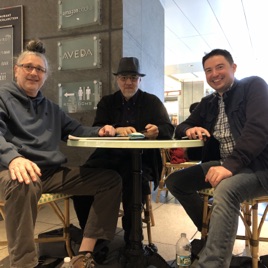
Launched on February 14, 2020, the MFM Speaks Out podcast seeks to further the mission of the musician's rights advocacy organization Musicians For Musicians (MFM). Episodes are released monthly and feature interview-style discussions on issues that affect the creative rights of musicians. MFM represents a strong voice in the fight for making music a legitimate profession. The main hosts are MFM members Adam Reifsteck and Dawoud Kringle supervised by MFM President Sohrab Saadat Ladjevardi.
Unlock MFM SPEAKS OUT podcast Email contact info,
Listeners & Audience details
Email contact information
Direct podcast contact details

Listeners
Audience numbers & engagement insights

Audience details
Podcast Insights

Podcast episodes
Check latest episodes from MFM SPEAKS OUT podcast
EP 54: Volker Goetze on Jazz, Kora & Cultural Connection
2026/05/15
In this episode of MFM Speaks Out, host Sohrab Saadat Ladjevardi (aka SoSaLa) speaks with internationally acclaimed trumpeter, composer, filmmaker, and educator Volker Goetze about his lifelong journey through jazz, West African griot traditions, flamenco, and socially conscious artmaking.
Volker reflects on discovering jazz in Cologne through artists like Miles Davis, Sun Ra, and Don Cherry, and how music became a spiritual and emotional refuge after the loss of his father at a young age. The conversation explores his deep connection to Senegalese and Mandé music, the cultural significance of the griot tradition, and his long-running collaborations with kora masters Ablaye Cissoko and Ali Boulo Santo Cissoko.
The episode also dives into the creation of Volker’s current project, Flamencora — a boundary-pushing trio blending flamenco guitar, kora, and trumpet jazz improvisation. Volker discusses the rhythmic and cultural complexities of flamenco, the influence of maqam and African polyrhythms on his trumpet playing, and the challenge of building authentic cross-cultural collaborations.
Upcoming Performances
May 28, 2026: FlamenKora at The Drome, NYC (same venue as duo's NYC premiere with Ablaye Cissokho) 4
May 30, 2026: FlamenKora at Tempo Arts Performance Base, Kingston (renovated church with adjustable reverb for electronic music/sound installations) 4
May 2026: 20-minute performance at Emily Harvey Foundation with Johanna Roa's poem for Sor Juana Inés de la Cruz (17th-century Mexican nun-intellectual); features flamenco singer Christian performing traditional siguiriya melody with Roa's text
Beyond music, Volker shares insights into his documentary filmmaking, including his acclaimed film Griot and socially engaged projects focused on homelessness and displacement. The conversation closes with a candid discussion about the realities of surviving as an independent musician in New York, the changing economics of the music industry, streaming, grants, cultural funding, AI, copyright concerns, and the importance of artistic community through organizations like Musicians for Musicians.
Topics Discussed
Volker Goetze’s early introduction to jazz in Cologne
The emotional and spiritual power of improvisation
Discovering West African music and the griot tradition
Opening for Youssou N'Dour in Senegal
The role of the griot as historian, storyteller, and cultural guardian
The deep musical connections between jazz and West African traditions
Falling in love with flamenco and learning its rhythmic language
The creation and evolution of Flamenkora
Collaborating with kora masters Ablaye Cissoko and Ali Boulo Santo Cissoko
Working with legendary percussionist Mino Cinelu
The influence of maqam, Indian rhythmic systems, and polyrhythms
Volker’s documentary films Griot and Displaced
Lessons from mentors, including Markus Stockhausen and Enrique Vargas
The realities of sustaining an international music career
Music grants, touring economics, and the collapse of CD revenue
AI, copyright, and the future of musicians’ rights
The importance of artistic community and Musicians for Musicians
Upcoming performances in New York
Artists & Influences Mentioned
Miles Davis
Billie Holiday
Don Cherry
Sun Ra
Paco de Lucía
Toumani Diabaté
Ali Farka Touré
Salif Keita
Randy Weston
Arturo O'Farrill
Joe Lovano
Subjects Covered
Jazz improvisation
Flamenco rhythm and harmony
Kora traditions
African diaspora and musical lineage
Cultural exchange in music
Documentary filmmaking
Music activism
Artist sustainability
Grants and independent funding
AI and copyright concerns
Community building among musicians
Featured Music
Bétiyata
Sadier
Toumaranke
CreditsProducer and host: Sohrab Saadat Ladjevardi aka SoSaLaPublisher: Musicians For Musicians (MFM), Inc.Technical support: Adam Reifsteck (MFM Board)
https://musiciansformusicians.org
EP 53: Kaleta on Afrobeat, Fela Kuti, and the Power of Collective Music
2026/01/23
Guest: Leon "Kaleta" Ligan-Majekodunmi (Afrobeat guitarist, composer, bandleader)
Host: Sohrab Saadat Ladjevardi, aka SoSaLa, MFM President
Key Topics & HighlightsKaleta’s early life in BeninGrowing up near the Nigerian borderSecretly learning guitar against family expectationsFirst musical breakthroughs through church and street performancesMoving to Lagos at age 15Learning English while building a music careerImmersion in juju, highlife, and early AfrobeatJoining King Sunny Adé’s band as a teenagerWriting and recording “E Ba Mi Dupe”Kaleta’s composition recorded by King Sunny AdéBreakdown of juju guitar techniquesJoining Fela KutiAuditioning at the ShrineLife inside Kalakuta RepublicAfrobeat as discipline, politics, and collective thinkingTouring globally with Fela through the 1980s and early ’90sImmigration and life after FelaStaying in the U.S. after Fela’s final tour (1991)Rebuilding from scratchFounding multiple Afrobeat projects in New YorkWorking with Lauryn HillA chance rehearsal encounter led to touring togetherAfrobeat’s influence across genres and generations“Country of Guns”Writing the song after witnessing gun violence news in the U.S.Music as social commentary, not just entertainmentAfrobeat in AmericaThoughts on Antibalas and non-African Afrobeat bandsAfrobeat vs. modern AfrobeatsAfrobeat as “roots music,” not museum musicMusic, organizing, and musicians’ rightsFESTAC 77 FESTIVAL and Pan-Africanism Why musicians must act collectivelyParallels between Fela’s activism and MFM’s missionMusic Featured in the EpisodeKing Sunny Adé – E Ba Mi Dupe (composed/arranged by Kaleta)
Zozo Afrobeat – Country of Guns
Kaleta & Super Yamba Band – Mr. Diva
Kaleta & Super Yamba Band – Ajogan Blues
CreditsProducer and host: Sohrab Saadat Ladjevardi aka SoSaLaPublisher: Musicians For Musicians (MFM), Inc.Technical support: Adam Reifsteck (MFM Board)
https://musiciansformusicians.org
WKCR INTERVIEW
2025/09/15
ABOUT THE EVENT
Musicians For Musicians Celebrates 10 Years of Music Advocacy with Star-Studded Performance Event at The Cutting Room
"In this crazy time with so much social-political-cultural turmoil happening here in the US and around the world,” says Ladjevardi, “I firmly believe that musicians' vital role is to speak out for their communities and come up with messages that will create solidarity among a particular group of people and unite them to fight for their cause. Musicians are the most powerful artists whose sounds can have an impact on people's conscience in a second." - Sohrab aka SoSaLa
Musicians For Musicians (MFM), a nonprofit association founded in 2015 by saxophonist and activist Sohrab Saadat Ladjevardi aka SoSaLa, emerged from a deep need to organize freelance musicians into a unified voice for fair compensation, labor protection, and industry recognition.
Advocating for the rights, recognition, and fair pay of freelance and independent musicians proudly announces its 10th Anniversary Celebration on Friday, September 5, at The Cutting Room in New York City. This special event kicks off at 9:00 p.m., with musical performances starting at 9:30 p.m. Tickets are free for MFM members and $20 for non-members.
Over the past decade, MFM has united musicians across genres and geographies under a single mission: to raise music from a passion to a profession through advocacy, education, and solidarity. From educational webinars and podcasts to championing the Freelance Isn’t Free Act and amplifying national campaigns for fair streaming royalties and AI protections, MFM has been a driving force in elevating music as a profession.
The highlight of the evening will be an exceptional performance by the MFM Unity Ensemble, featuring Grammy Award-winning saxophonist/band leader and educator Joe Lovano and 8x Grammy Award-winning pianist/composer/ band leader and Afro Latin Jazz Alliance founder Arturo O’Farrill. Their collaboration will celebrate both MFM’s mission and the power of collective musical expression.
Later in the evening, there will be another exceptional performance by New York’s Nu NO WAVE band SoSaLa — led by saxophonist/singer SoSaLa—featuring guitarist Mark C. (Live Skull) and drummer Andy Weintraub. Together, they will create music that transcends both rock and jazz.
The event will also include remarks from MFM board members, Advisory Committee representatives, and video tributes from supporters.
Supporters can support the organization by purchasing limited-edition MFM merchandise, including event-branded T-shirts. 100% of ticket and merch proceeds will go to benefit MFM’s ongoing programs and campaigns.
CreditsProducer and host: Sohrab Saadat Ladjevardi aka SoSaLaPublisher: Musicians For Musicians (MFM), Inc.Technical support: Adam Reifsteck (MFM Board)
https://musiciansformusicians.org
EP 52: SoSaLa and Dawoud Celebrating MFM's 10th Anniversary
2025/08/29
In this episode of MFMSpeaks Out, Dawoud Kringle and Sohrab Saadat Ladjevardi discuss the birth, history, mission, and future of Musicians For Musicians. Sohrab Saadat Ladjevardi's inspiration for founding MFM, the problems in putting the organization together, including how to define its objectives and methods, MFM's relationship with other musician organizations (such as the Musicians Union), how to attract and grow our membership, the economics of the music business and the importance of musicians getting paid fairly for their work, the state of mind many musicians are in where they do not understand how to turn their music into a profession, Sohrab's experience with Justice for Jazz Artists, MFM's accomplishments, MFM's services and value to our members, MFM's activism, the need for organization between musicians, the DYI method and operating as an independent musician, the future of the music business, the empowerment of musicians, and the future of MFM.
CreditsProducer and host: Sohrab Saadat Ladjevardi aka SoSaLaPublisher: Musicians For Musicians (MFM), Inc.Technical support: Adam Reifsteck (MFM Board)
https://musiciansformusicians.org
EP 51: 2023 Retrospective
2024/01/05
In this episode of MFM Speaks Out, Dawoud Kringle comes out of retirement to present a 2023 retrospective. We will share some of the content we brought to you in 2023, and enjoy a few other surprises as well.
Our guest for the January episode was Haana. Haana is a violinist, vocalist, electronic music artist, visual performer, and entirely self-contained as a one-woman orchestra. She played with Kanye West, and Alvin Ailey, as well as festivals such as Joshua Tree Festival and Coachella and others in the US, Canada, UAE, and Australia, Barack Obama's inaugural ball, and at Michael Jordan's wedding. Haana has endorsement deals with Ableton, Native Instruments, Even Headphones (manufactured by Blue Microphones), and Realist Violins. She appeared in ads for Intel, Harvey Nichols, Nike, Ferrari, and Apple Computers. In addition, she has experience as a film composer and does artist mentorship/marketing, branding, and production consultation.
In February, MFM board member and co-producer of this very podcast Adam Reifsteck joined us for a very fascinating discussion. Adam is a New York-based composer, electronic music artist, producer, entrepreneur, and music activist. He writes for small ensembles, produces electronic music, and performs improvised group compositions on Wi-Fi-connected laptops. He has collaborated with string quartets, university choirs, and visual and electronic artists. His approach to composition includes elements of improvisation. He is a recipient of grants from the Lower Manhattan Cultural Council, the Irving S. Gilmore Foundation, and the Kalamazoo (MI) Community Foundation. His music has been performed by the Attacca Quartet, Amernet String Quartet, Cadillac Moon Ensemble, Duquesne University Chamber Singers, Flutronix, Gaudete Brass Quintet, Mana Saxophone Quartet, Western Michigan University Chorale, and many other ensembles. Adam is also an active recording engineer and producer whose studio alias SONIC FEAR has become synonymous with lush, genre-bending sounds—from dance floor-ready tracks to downtempo meditations. He is the founder and CEO of Teknofonic Recordings, an independent record label and artist development platform providing electronic musicians with learning resources, networking opportunities, and career support. Adam holds a master’s of music degree in composition from Western Michigan University and a bachelor’s of music in music technology from Duquesne University. He is a member of Broadcast Music Inc., the Society of Composers and Lyricists, the Recording Academy, the Audio Engineering Society, and Musicians for Musicians.
Our March episode was a landmark. We interviewed Keyna Wilkins, the first MFM member from Australia. Wilkins holds a Master of Music Composition at Sydney Conservatorium, studied composition, classical and jazz piano, and classical flute with several prestigious instructors, and intuitive conceptual improvisation with Tibetan Buddhist musician Tenzin Cheogyal. holds an MA in Flute Performance at Bristol University (UK) in 2008. She is known as a soloist and leader of cutting-edge ensembles and has written over 60 compositions, including 4 major orchestral works. Her works have been commissioned and/or performed by ensembles such as The Metropolitan Orchestra, Syzygy Ensemble, Elysian Fields, The Sydney Bach Society, and many others. She has released 9 albums of original music on all streaming platforms including 4 solo albums. Wilkins is also an Associate Artist with the Australian Music Centre and has five tunes in the Australian Jazz Realbook. She also writes music for films and theatre including the short film "Remote Access" which won Best Short Film at the Imagine This International Film Festival in New York in 2019 and her works are featured on ABC, Triple J, Fine Music FM, Cambridge Radio, SOAS London and many more. Her music is published by Wirripeng and she is a member of Musicians for Musicians.
MFM member Sylvian Leroux was our guest in April. Sylvian is a flutist, saxophonist, guitarist, composer, arranger, bandleader, educator, inventor, and prominent member of Musicians for Musicians. Sylvain Leroux grew up in Montreal where he studied classical flute at Vincent d’Indy; and improvisation and composition in New York at the Creative Music Studio where he attended classes by luminaries Don Cherry, the Art Ensemble of Chicago, Karl Berger, Cecil Taylor, and many others. A pioneer of African/Jazz collaborations, Sylvain is a foremost player of the Fula flute, the traditional flute from Guinea. He was selected as “Rising Flute Star” by the Downbeat Magazine Critics’ Poll for many years, achieving the #2 spot in 2019. As a bandleader, he brought traditional West African music to Zankel Hall with his Fula Flute Ensemble and held the fort for more than a decade at New York City’s Zinc Bar with his African Jazz group “Source”. His 2002 CD “Fula Flute" achieved cult status, and stimulated a worldwide interest in the instrument. His 2012 album “Quatuor Creole” was hailed as “a perfect contemporary music release.” He curated New York’s “Griot Summits” which featured performances by 25 West African griots from five countries. He has performed and recorded with Emeline Michel, Adam Rudolph, Karl Berger, Hassan Hakmoun, Billy Martin, and many West African stars. As a maker and seller of Fula flutes around the world, he invented and patented the Qromatica, a Fula flute capable of chromatic functionality. This led him to initiate "L'ecole Fula Flute", a music literacy project that graduated many excellent young flutists who are now re-energizing an endangered flute tradition.
Our May 2023 episode featured Mark Chimples, a.k.a. Mark C. Mark is the guitarist and synthesizer player with Live Skull. Formed in 1982, Live Skull is considered by many aficionados to be the quintessential New York City noise band. Rising concurrently with bands such as Sonic Youth and Swans, Live Skull helped define the post-No Wave underground "noise rock" in the 1980s music scene in New York City. Over the following decades, Live Skull released five albums and three EPs with a rotating cast of 11 members, all of whom added new ideas to the group’s evolving sound. Themes of struggle and chaos permeated and inspired their music. Their constant progression inspired New York Times critic Robert Palmer to call them “as challenging, as spiritually corrosive, and ultimately as transcendent as Albert Ayler’s mid-’60s free-jazz or the implacable drone-dance of the early Velvet Underground. It’s one of the essential sounds of our time."
Music on this episode:
Haana - Bison Rouge
Adam Reifsteck / Sonic Fear - Aurora
Keyna Wilkins - Floating in Space
Sylvain Leroux - In Walked Bud
Live Skull - Party Zero
Spaghetti Eastern - Jungle Blue
Arturo O’Farrill and the Afro Latin Jazz Orchestra - Amidst the Fire and Whirlwind
Dave Liebman - Journey Around Truth
SoSaLa - Dadada Dadada Daa
Dawoud Kringle - Keep Trying
CreditsProducer and host: Sohrab Saadat Ladjevardi aka SoSaLaPublisher: Musicians For Musicians (MFM), Inc.Technical support: Adam Reifsteck (MFM Board)
https://musiciansformusicians.org
EP 50: Mark Chimples on the Origins of the "No Wave" Music Scene
2023/05/26
"We Had Changes We'd Never Thought of That Created Surprise and a Chaotic Feel."
Our guest for this episode of MFM Speaks Out is Mark Chimples, a.k.a. Mark C. Mark is the guitarist and synthesizer player with Live Skull. Formed in 1982, Live Skull is considered by many aficionados to be the quintessential New York City noise band. Rising concurrently with bands such as Sonic Youth and Swans, Live Skull helped define the post-No Wave underground "noise rock" in the 1980s music scene in New York City. Over the following decades, Live Skull released five albums and three EPs with a rotating cast of 11 members, all of whom added new ideas to the group’s evolving sound. Themes of struggle and chaos permeated and inspired their music. Their constant progression inspired New York Times critic Robert Palmer to call them “as challenging, as spiritually corrosive, and ultimately as transcendent as Albert Ayler’s mid-’60s free-jazz or the implacable drone-dance of the early Velvet Underground. It’s one of the essential sounds of our time."
Topics discussed:
The beginning of the No Wave scene and how it emerged from the savage and atavistic Lower East Side of New York City in the 70s and 80s, how Live Skull formed in 1982, where the term "No Wave" came from, Live Skull's relationship with other bands on the scene like Sonic Youth, The Swans, The Lounge Lizards, Theoretical Girls, Tone Death, Television. Suicide, Teenage Jesus and the Jerks, Lydia Lunch, how no wave influenced other art forms such as visual art, dance, and film, how no wave related / coexisted with other scenes such as Downtown music scene, punk, etc., some of the main venues the no wave scene thrived in, the artistic visions behind Live Skull's music videos, how Live Skull was received in other parts of the country, Live Skull's break up in 1990, Mark's involvement in Spoiler, Int'l Shades, Fuse, and SoSaLa, how they translated the No Wave aesthetic into the 90s, Live Skull's reunions, how logistics and economics of touring change since Live Skull began touring and how it works in the post-pandemic era, physical media releases vs. digital releases, music activism and Mark's involvement with MFM, the rise of AI in music and art and how musicians should deal with it, and Live Skull's cultural relevance in the mid 21st century.
https://liveskull.bandcamp.com/
Music featured in this episode:
1) Mad Kingship
2) Hit So Hard
3) Party Zero
(From the album "Party Zero by Live Skull. Used with permission)
CreditsProducer and host: Sohrab Saadat Ladjevardi aka SoSaLaPublisher: Musicians For Musicians (MFM), Inc.Technical support: Adam Reifsteck (MFM Board)
https://musiciansformusicians.org
EP 49: Sylvian Leroux Speaking on His Love for West African Trad Music and the Fula Flute
2023/04/28
"I Didn't Look For The Fula Flute; It Came And Got me!"
Our guest for this episode of MFM Speaks Out is Sylvain Leroux. Sylvian is a flutist, saxophonist, guitarist, composer, arranger, bandleader, educator, inventor, and prominent member of Musicians for Musicians.
Sylvain Leroux grew up in Montreal where he studied classical flute at Vincent d’Indy; and improvisation and composition in New York at the Creative Music Studio where he attended classes by luminaries Don Cherry, the Art Ensemble of Chicago, Karl Berger, Cecil Taylor and many others.
A pioneer of African/Jazz collaborations, Sylvain is a foremost player of the Fula flute, the traditional flute from Guinea.
He was selected as “Rising Flute Star” by the Downbeat Magazine Critics’ Poll for many years, achieving the #2 spot in 2019.
As a bandleader, he brought traditional West African music to Zankel Hall with his Fula Flute Ensemble and held the fort for more than a decade at New York City’s Zinc Bar with his African Jazz group Source. His 2002 CD Fula Flute achieved cult status, and stimulated a worldwide interest in the instrument. His 2012 album Quatuor Creole was hailed as “a perfect contemporary music release.”
He curated New York’s “Griot Summits” that featured performances by 25 West African griots from five countries. He has performed and recorded with Emeline Michel, Adam Rudolph, Karl Berger, Hassan Hakmoun, Billy Martin, and many West African stars.
As a maker and seller of Fula flutes around the world, he invented and patented the Qromatica, a Fula flute capable of chromatic functionality. This led him to initiate L'ecole Fula Flute, a music literacy project that graduated many excellent young flutists who are now re-energizing an endangered flute tradition.
Topics discussed:
Sylvain’s studies of classical flute at Vincent d’Indy; and improvisation and composition in New York at the Creative Music Studio under Don Cherry, the Art Ensemble of Chicago, Karl Berger, and Cecil Taylor, his time with Adam Rudolph's Orchestra, the jazz and world music Canadian music scene at that time and now, how he became interested in the Fula flute, his band “Source” and their time at New York’s Zinc Bar for over a decade. How the combination of Guinean music and jazz has been accepted among Jazz audiences, his 2002 release Fula Flute and how it was received, his new album Qromatica, why he chose Julia Haines on accordion and harp and Mamadou Ba on bass, his performances at Zankel Hall with the Fula Flute Ensemble and curated New York’s “Griot Summits”, his performances and recordings with Emeline Michel, Adam Rudolph, Karl Berger, Hassan Hakmoun, and some of the West African musicians he played with, how and why he founded music literacy program L'ecole Fula Flute, how Covid affected the people's spirit and economy in Guinea, government support of the arts, his business of making and selling Fula flutes, how he invented and patented the Qromatica, his activities in MFM, the present African/world music scene in NY, the cultural separation between African-American musicians and African musicians, NY's GlobalFest for presenting African bands to the US audience, the Visa fee raise proposal to Congress, and his future plans in the areas of music activism.
Music featured in this episode:
1) Zoe
2) Mane Gauche
3) In Walked Bud
"Zoe" and by Sylvain Leroux, used with permission. "In Walked Bud" composed by Thelonious Monk (EMBASSY MUSIC CORPORATION BMI), performed by Sylvain Leroux.
https://www.fulaflute.net/
CreditsProducer and host: Sohrab Saadat Ladjevardi aka SoSaLaPublisher: Musicians For Musicians (MFM), Inc.Technical support: Adam Reifsteck (MFM Board)
https://musiciansformusicians.org
EP 48: Keyna Wilkins on Being a "Musician with Attitude (MwA)"
2023/03/24
"I think Live Music Will Always be Very Exciting and There Will Always Be a Market For It."
Our guest for this episode of MFM Speaks Out is Keyna Wilkins. Wilkins holds a Master of Music Composition at Sydney Conservatorium, studied composition, classical and jazz piano, and classical flute with several prestigious instructors, and intuitive conceptual improvisation with Tibetan Buddhist musician Tenzin Cheogyal. holds an MA in Flute Performance at Bristol University (UK) in 2008.She is known as a soloist and leader of cutting edge ensembles, and has written over 60 compositions, including 4 major orchestral works. Her works have been commissioned and/or performed by ensembles such as The Metropolitan Orchestra, Syzygy Ensemble, Elysian Fields, The Sydney Bach Society, and many others. She has released 9 albums of original music on all streaming platforms including 4 solo albums. Wilkins is also an Associate Artist with the Australian Music Centre and has five tunes in the Australian Jazz Realbook. She also writes music for films and theatre including short film Remote Access which won Best Short Film at the Imagine This International Film Festival in New York 2019 and her works are featured on ABC, Triple J, Fine Music FM, Cambridge Radio, SOAS London and many more. Her music is published by Wirripeng and she is a member of Musicians for Musicians.
Topics discussed:
Wilkin's beginnings with the European classical tradition and her interest in the piano and flute, her interest in jazz, the influence indigenous Australian culture has on her music, details from her albums, including her modal jazz improvisations on the music of J. S. Bach on So What Bach, her use of natural sounds in several of her recordings, her collaboration and other projects, her work as a music educator, the effects the pandemic had on the Australian music scene, her methods of music distribution, funding for the arts in Australia, her upcoming US tour, her decision to join MFM and her association with music activism in Australia, and her views on the future of the music scene in Australia.
Music featured in this episode:
1) Air in Motion 6, Floating in Space
2) Bach Reflections 2, Little Prelude in D Minor
3) Set Me Free (music collaboration album with Ahwaz Arab (Iran) refugee poet Jalal Mahamede, made via zoom)
(All music by Keyna Wilkins. Used with permission)
keynawilkins.com
CreditsProducer and host: Sohrab Saadat Ladjevardi aka SoSaLaPublisher: Musicians For Musicians (MFM), Inc.Technical support: Adam Reifsteck (MFM Board)
https://musiciansformusicians.org
EP 47: Adam Reifsteck on Bringing People Together Through Music
2023/02/24
Our guest for this episode of MFM Speaks Out is Adam Reifsteck. Adam is a New York-based composer, electronic music artist, producer, entrepreneur, and music activist. He writes for small ensembles, produces electronic music, and performs improvised group compositions on Wi-Fi-connected laptops. He has collaborated with string quartets, university choirs, and visual and electronic artists. His approach to composition includes elements of improvisation.
He is a recipient of grants from the Lower Manhattan Cultural Council, the Irving S. Gilmore Foundation, and the Kalamazoo (MI) Community Foundation. His music has been performed by the Attacca Quartet, Amernet String Quartet, Cadillac Moon Ensemble, Duquesne University Chamber Singers, Flutronix, Gaudete Brass Quintet, Mana Saxophone Quartet, Western Michigan University Chorale, and many other ensembles.
Adam is also an active recording engineer and producer whose studio alias SONIC FEAR has become synonymous with lush, genre-bending sounds—from dance floor ready tracks to downtempo meditations. He is the founder and CEO of Teknofonic Recordings, an independent record label and artist development platform providing electronic musicians with learning resources, networking opportunities, and career support.
Adam holds a master’s of music degree in composition from Western Michigan University and a bachelor’s of music in music technology from Duquesne University. He is a member of Broadcast Music Inc., the Society of Composers and Lyricists, the Recording Academy, the Audio Engineering Society, and Musicians for Musicians (MFM).
Topics discussed:
Adam's beginnings with the European classical tradition and modern electronic music, his use of elements of improvisation, his methods of classical and electronic composition, how they overlap, and descriptions of a few of his pieces, the origins of the name Sonic Fear, his collaboration with artists such as She's Excited!, how he approaches the art of remixing, what he looks for in an artist and how he brings out the best in them, the ways he finds and creates ways to monetize his music, his label Teknofonic and what he sees as the most important aspects of running a record label, Teknofonic's distribution and promotion, his involvement with the iConcert project and the use of the Blind Ear software, his founding of the Music Producer's Alliance, their Mentorship program, courses, and instruction, the future plans for Teknofonic and MPA, new methods of promotion and marketing that have and will arise in light of new changes and innovations in business, economics, and technology (which include blockchain technology, cryptocurrency, NFTs, and Artificial Intelligence), how his longtime membership in MFM affected his career in a positive way, MFM's primary strengths and assets to musicians, and what MFM needs to do regarding its marketing and promotional methods in order to reach the larger music community it needs to survive, prosper, and empower itself and its members.
CLICK HERE to download the PDF guide "21 Income Streams for Music Producers" mentioned in this episode.
Music featured in this episode:
1) Gloria (from Misa Cor Inflammatus) featuring Western Michigan University Chorale, conducted by Karl Schrock
2) No Way Out (from Excursions for Clarinet, Violin, and Piano) featuring Michael Tolbert, Nelly Smukler, and JP Calitz
3) Aurora by Sonic Fear
(All music by Adam Reifsteck. Used with permission)
CreditsProducer and host: Sohrab Saadat Ladjevardi aka SoSaLaPublisher: Musicians For Musicians (MFM), Inc.Technical support: Adam Reifsteck (MFM Board)
https://musiciansformusicians.org
EP 46: Haana on Combining Classical with Electronic Music
2023/01/20
"When I Started to Consciously Put it all Together, I was Forging My Own Path and Creating My Own Way of Putting These Elements Together."
Our guest for this episode of MFM Speaks Out is Haana. Haana is a violinist, vocalist, electronic music artist, visual performer, and entirely self-contained as a one woman orchestra. She played with Kanye West, Alvin Ailey, as well as festivals such as Joshua Tree Festival and Coachella and others in the US, Canada, UAE, and Australia, and other gigs such as Barack Obama's inaugural ball and at Michael Jordan's wedding. Haana has endorsement deals with Ableton, Native Instruments, Even Headphones (manufactured by Blue Microphones), and Realist Violins. She appeared in ads for Intel, Harvey Nichols, Nike, Ferrari, and Apple Computers. In addition, she's experienced as a film composer, does artist mentorship / marketing, branding, and production consultation, and is an accomplished photographer (and used to be a managing editor for photo.net).
Topics discussed:
The topics discussed include Haana's inspiration to become a "one woman orchestra," her studies of contemporary composition at New England Conservatory and electronic music production at Dubspot NYC, the growing trend among many classically trained musicians to combine the European classical tradition with modern electronic music, how she incorporates her improvisational methods and Nordic and Icelandic elements into the context of electronic music / beats, the aesthetic concepts behind her music videos and her use of dancers and other visual elements in her live performances, how the presence of her skills as an instrumentalist are received among EDM audiences, her practice of yoga and meditation, and incorporate this into her musical endeavors including the Deepsonos by Haana project, her work as a film composer for the Heavy Water and The Cold Life projects, her work with Alvin Ailey performing for festivals in the US, Abu Dhabi, Canada, Portugal, Hungary, Australia, Mexico, at festivals such as Joshua Tree Music Fest and Coachella, her performances with Kanye West when he opened for The Rolling Stones at Gillette Stadium, and at Madison Square Garden for MTV, at Michael Jordan's wedding, and at Barack Obama's inaugural ball, her endorsement deals with companies such as Ableton, Native Instruments, and Realist violins, other ways she monetizes what she does, and her ideas on music activism.
Music featured in this episode:
"Ornate"
"Seli"
"Teardrop"
(All compositions by Haana Thiem. "Seli" is a collaboration between Haana and Bison Rouge. Used with permission)
CreditsProducer and host: Sohrab Saadat Ladjevardi aka SoSaLaPublisher: Musicians For Musicians (MFM), Inc.Technical support: Adam Reifsteck (MFM Board)
https://musiciansformusicians.org
EP 45: MFM Salutes 2022!
2022/12/23
"You inspire us to work hard to improve the service we do for the music community."
In this episode of MFM Speaks Out, Dawoud Kringle offers a retrospective of the progress of the MFM Speaks Out podcast in 2022. The guests mentioned, and / or whose music was included, include Ken Butler, Ariel Hyatt, Neel Murgai, Banning Eyre, Baba Don Eaton Babatunde, William Parker, Bruce Lee Gallanter, Jeff Slatnick, Hubert Howe, and April Centrone.
The progress and accomplishments of MFM as a whole during the year 2022 were also briefly discussed.
Topics discussed:
Our guest for episode 35 in January was musician, experimental musical instrument builder, and visual artist Ken Butler. He builds hybrid musical instruments and other artworks that explore the interaction and transformation of common and uncommon objects, altered images, sounds and silence.He is internationally recognized as an innovator of experimental musical instruments created from diverse materials including tools, sports equipment, and household objects.
February's episode 36 featured Ariel Hyatt. Ariel is a digital marketer, writer, and teacher who assists independent musicians in career development. She is the author of Music Success in 9 Weeks, Cyber PR For Musicians, Crowdstart, and other books. Hyatt worked at New York City's WNEW-FM, and the What Are Records? record label. She moved to Boulder CO, where she managed and handled publicity for the funk band, Lord of Word. She is also the founder and owner of the New York-based public relations firm Cyber PR. Her clients included the Toasters and George Clinton.
Neel Murgai was our 37th guest in March. Neel is a sitarist, overtone singer, percussionist, composer, teacher, and Co-Artistic Director of the Brooklyn Raga Massive, a raga inspired musician's collective.
Banning Eyre is a writer, guitarist and producer, and the senior editor and producer of the public radio program Afropop Worldwide. He has traveled and done music research in over 20 African countries, as well as in the Caribbean, South America and Europe. His latest initiative is the launch of Lion Songs Records, an independent label dedicated to uplifting overlooked, mostly acoustic music from the African universe. He is the author of several books, and the co-author of AFROPOP! An Illustrated Guide to Contemporary African Music. Eyre is a contributor to National Public Radio’s All Things Considered, and his writing has been published in Billboard, Guitar Player, Salon, the Boston Phoenix, College Music Journal, Option, The Beat, Folk Roots, Global Rhythm, and other publications. He also has a background in technology, and worked for 10 years as a software technical writer. Eyre is also on the Advisory Committee of Musicians for Musicians.
Baba Don Eaton Babatunde. He is a percussionist and master of African Drumming and the rhythms of the African Diaspora in the Americas. Baba Don has performed and recorded with Abidun Oyewole and The Last Poets, Pattie Labelle, Joe Henderson, Donald Brown, Jason Linder, Tyrone Jefferson, Tevin Thomas, James Spaulding, Ron Carter, George Clinton, Pharaoh Sanders, the Metropolitan Orchestra, Bill Laswell, and Philycia Rashadto name a few. His work with dance companies and choreographers includes The Dance Theatre of Harlem, Alvin Ailey Dance Theatre, Maurice Hines, Gregory Hines, Andy Williams, Chuck Davis Dance theatre, Frank Hatchet, Geoffrey Holder, Louis Johnson, and Pyramid Dance Company.
Episode 40 featured free jazz bass master William Parker. He has also performed and recorded with Cecil Taylor, Peter Brotzmann, Derek Bailey, John Zorn, Hamid Drake, Anthony Braxton, Milford Graves, Oliver Lake, Daniel Carter, Billy Bang, Andrew Cyrille, Matthew Shipp, Roy Campbell, Warren Smith, Joe McPhee, Roscoe Mitchell, Jemeel Moondoc, Joe Morris, Steve Swell, David S. Ware, Leena Conquest, and many others. He was the leader of the Little Huey Creative Music Orchestra and In Order to Survive, a member of the Other Dimensions in Music cooperative, and co-founder of the musician's non-profit organization Arts For Art.
Our guest for episode 41 was Bruce Lee Gallanter, the owner and proprietor of Downtown Music Gallery (DMG), a Manhattan based music store that specializes in new, used, hard to find, and out of print CDs, Vinyl, DVDs, and books. DMG was started in 1991 by David Yamner & Steve Popkin, with Gallanter working for the store. They remained in their first location on east 4th street in Manhattan for 12 years until 2003, and started having weekly free concerts, an idea that Gallanter had started with Manny Maris when they worked at Lunch For Your Ears. Gallanter became the owner in 1997. Around the time. he and Emperor Mike started the DMG newsletter, In 2003, they moved into a new store on the Bowery, not far from St. Marks Place, Tower Records, and Other Music.
Jeff Slatnick was our 42nd guest. Jeff has been an employee and later the owner of Music Inn for over 54 years. Music Inn is one of the oldest music stores in New York City (second in longevity only to Sam Ash). It is a landmark music store in the West Village of NYC specializing in imported world and western instruments, rare and exotic music items, and records. Music Inn has been described as “a museum, rich with music history from around the world.” Music Inn is also the headquarters of Limulus, a company that designs and manufactures unique solid body string instruments.
Hubert Howe graced the annals of our podcast as our 43rd guest. Hubert was one of the first researchers in computer music, and became Professor of Music and Director of the Electronic Music studios at Queens College in New York, where he was also Director of the Aaron Copland School of Music from 1989 to 1998, 2001 to 2002, and Autumn 2007. He taught at the Juilliard School from 1974 through 1994. In 1988-89 he held the Endowed Chair in Music at the University of Alabama. He has been a member of the Society of Composers, Inc. , President of the US section of the League of Composers / International Society of Contemporary Music, a member of the International Computer Music Association, and directed the International Computer Music Conference at Queens College, a member of Society for Electro-Acoustic Music, a member of BMI, and the American Composers Alliance since 1974 and served as their President from 2002 to 2011. He is a member of the New York Composer's Circle and has served as Executive Director since 2013. In 2009, he founded the New York City Electroacoustic Music Festival, and he continues as Director.
Our final guest for for 2022 was April Centrone. April Centrone is a multi-instrumentalist (specialising in the riqq, darbuka, frame drum, trap drum, and oud), co-founder of the New York Arabic Orchestra, teacher, composer, film producer and director, and music therapist. She is a Carnegie Hall World Explorer musician and educator, business owner and founder of 10PRL, arts/film/event space on the Jersey Shore. Shehas performed in venues such as the United Nations, NYC Opera House, Carnegie Hall and Lincoln Center, and has toured throughout Europe, the Americas, Middle East and Far East.
Music on this episode:
"Aurora" by Adam Reifsteck / Sonic Fear
"Building a Desert Blizzard" by Ken Butler
"Bagheshri Unbound" by Neel Murgai
"Today is a New Day" by Voyagers
"25 Years" by Abiodun Oyewole, featurning Baba Don Eaton
"Give Me Back My Drum" by William Parker
"Warm Arms to Hold You" by Dawoud the Renegade Sufi (a.k.a. Dawoud Kringle)
"Inharmonic Fantasy No. 7" by Hubert Howe
"New Moon" by April Centrone
"Welcome New Iran" by SoSaLa (a.k.a. Sohrab Saadat Ladjevardi)
(All music used by permission)
CreditsProducer and host: Sohrab Saadat Ladjevardi aka SoSaLaPublisher: Musicians For Musicians (MFM), Inc.Technical support: Adam Reifsteck (MFM Board)
https://musiciansformusicians.org
EP 44: April Centrone on Her Interest and Pursuit of Arabic Music
2022/11/25
"Our bedrock is education. We’re always intent upon creating beautiful alliances."
Our guest for this episode of MFM Speaks Out is April Centrone. April Centrone is a multi-instrumentalist (specialising in the riqq, darbuka, frame drum, trap drum, and oud), co-founder of the New York Arabic Orchestra, teacher, composer, film producer and director, and music therapist based in NY / NJ.
She has toured as a drummer and percussionist with Secret Chiefs, Ziad Rahbani, Marcel Khalife, Bassam Saba, and others.
She is a Carnegie Hall World Explorer musician and educator, business owner and founder of 10PRL, arts/film/event space on the Jersey Shore, and co-founder of the New York Arabic Orchestra, non-profit organization specializing in the performance and education of Arabic music. She has a Masters degree in Forensic Psychology from John Jay College, NYC.
As a youth educator, April worked closely with inner-city schools throughout NYC’s boroughs, teaching Arabic music and percussion and coordinating world music projects through Musicians For Harmony and Yo-Yo Ma’s Silk Road Connect.
As a music therapist, her work included her participation in a ‘Music Therapy Tour’ with the U.S. Embassy of Malaysia, holding workshops at Rohingya refugee youth centers and safe houses for young Malaysian women. During her residence in Lebanon from 2013 to 2016, she held Arabic music workshops for Syrian and Palestinian refugee youth through her project, Juthoor, with Nisreen Nasser.
She currently teaches world music at William Paterson University, leads group classes and workshops virtually and in NYC, and has held lectures in music therapy and Arabic music/percussion at Taipei University of the Arts, Lebanese American University and others.
Over her career, April has performed in venues such as the United Nations, NYC Opera House, Carnegie Hall and Lincoln Center, and has toured throughout Europe, the Americas, Middle East and Far East, performing at the Marciac Jazz Festival (FR), New Zealand World Music Festival Festival, Lincoln Center Out-of-Doors (NYC), Musicas Do Mundo, Sines (PT), Beirut Jazz Festival (LB), Taipei Chinese Orchestra Silk Road Conference (TW), and others. Her debut album ‘New Moon’ is available on CD Baby and Spotify.
Topics Discussed:
April's interest and pursuit of Arabic music, her meeting and work with Bassam Saba in founding the New York Arabic Orchestra, her philosophies on blending cultures, the artistic, cultural, and spiritual essence of Arabic music, her solo album New Moon, her teaching resume, her work as a music therapist, her charitable works, women's roles in Arabic music, the political situation in Iran and how if affects the music community, the business model of the New York Arabic Orchestra and their potential and actual collaboration and solidarity with the music community at large.
Music featured in this episode:
"Raqsat al-Atlas" composed by Abd el-Qader al Rashidi, performed by the New York Arabic Orchestra
"Fire and Blood" by April Centrone
"New Moon" by April Centrone
(All music used with permission)
Links:
April Centrone website: www.aprilcentrone.com
Instagram: @aprilcentrone
NY Arabic Orchestra: https://nyarabicorchestra.org/
DBDBD NY interview: https://doobeedoobeedoo.info/2011/03/02/interview-bassam-saba-and-april-centrone-speaking-about-their-baby-the-ny-arabic-orchestra/
CreditsProducer and host: Sohrab Saadat Ladjevardi aka SoSaLaPublisher: Musicians For Musicians (MFM), Inc.Technical support: Adam Reifsteck (MFM Board)
https://musiciansformusicians.org
EP 43: Hubert Howe on Finding Your Own Voice
2022/10/28
"You have to take yourself seriously and find your own voice."
Our guest for this episode of MFM Speaks Out is Hubert Howe. Hubert Howe grew up in Los Angeles, California, where he began his musical studies as an oboist. He was educated at Princeton University, studied with J.K. Randall, Godfrey Winham, and Milton Babbitt, and received the A.B., M.F.A. and Ph.D.. He was one of the first researchers in computer music, and became Professor of Music and Director of the Electronic Music studios at Queens College in New York, where he was also Director of the Aaron Copland School of Music from 1989 to 1998, 2001 to 2002, and Autumn 2007. He taught at the Juilliard School from 1974 through 1994. In 1988-89 he held the Endowed Chair in Music at the University of Alabama.
He has been a member of the Society of Composers, Inc. since its founding in 1965 and served on the Executive Committee from 1967 to 1971. He served as President of the US section of the League of Composers / International Society of Contemporary Music from 1970 until 1979. In 1980, he received a commission from the CSC at the University of Padua, Italy, for his composition Astrazioni (Abstractions), which was presented at the Biennale of Venice.
He is a member of the International Computer Music Association, and directed the International Computer Music Conference at Queens College in 1980. In 1994, he was the composer-in-residence at the Third Annual Florida Electroacoustic Music Festival at the University of Florida in Gainesville. He is also a member of Society for Electro-Acoustic Music, a member of BMI, and the American Composers Alliance since 1974 and served as their President from 2002 to 2011. He is a member of the New York Composer's Circle and has served as Executive Director since 2013. In 2009, he founded the New York City Electroacoustic Music Festival, and he continues as Director. He is also a member of the Association for the Promotion of New Music (APNM).
Recordings of his computer music have been released by Capstone Records, Ravello Records, and ABLAZE Records.
Topics discussed:
The topics discussed include studying composition at Princeton under people like Milton Babbitt and J.K. Randall, his opinions of Karlheinz Stockhausen, becoming a Professor of Music and Director of the Electronic Music studios at Queens College in New York and Julliard, his involvement with the New York Composer's Circle, how electronic music was and is accepted in the classical music world, his thoughts about the influence of electronics on American popular music, such as Progressive Rock, Hip Hop, EDM, and composers and improvisers like Frank Zappa, Brian Eno, or Miles Davis, how he approaches and draws inspiration composing for electronics as opposed to acoustic instruments, his thoughts on the unprecedented factor of Artificial Intelligence and its application as a compositional tool, how the domination of streaming the economics of a career as a professional music composer changed over the years, how recent changes in the sales and marketing structure of recorded music, coupled with the domination of streaming services affected composers of orchestral, chamber, and electronic music, thoughts of Modern Classical Music's relevance, and music in general, in contemporary American life, and in the near future, and his advice to aspiring composers.
Music featured in this episode:
Nocturne, Dance and Dream (a live performance featuring Craig Ketter on piano)
Inharmonic Fantasy No. 7
Harmonic Fantasy No. 5
(All compositions by Hubert Howe. Used with permission)
CreditsProducer and host: Sohrab Saadat Ladjevardi aka SoSaLaPublisher: Musicians For Musicians (MFM), Inc.Technical support: Adam Reifsteck (MFM Board)
https://musiciansformusicians.org
EP 42: Jeff Slatnick & Music Inn
2022/09/23
"I Like the Power of the Simple Expression of a Musical Idea."
Our guest for this episode of MFM Speaks Out is Jeff Slatnick. Jeff has been an employee and later the owner of Music Inn for over 54 years. Music Inn is one of the oldest music stores in New York City (second in longevity only to Sam Ash). It is a landmark music store in the West Village of NYC specializing in imported world and western instruments, rare and exotic music items, and records. Music Inn has been described as “a museum, rich with music history from around the world.” Music Inn is also the headquarters of Limulus, a company that designs and manufactures unique solid body string instruments.
Slatnick started at Music Inn in 1967 when it was a record and musical instrument store run by Jerry Halpern, the original owner (who'd opened the store in 1958). The Music Inn was frequented by the likes of Bob Dylan when he lived just a few doors down at 161 West 4th Street (and wrote the song “Positively 4th Street” about the time he lived there), as well as John Lennon, Jimi Hendrix, John Sebastian, Paul Simon, Ritchie Havens, and many others. In 1968, he left Music Inn to attend the Ali Akbar Khan School of Music in California. He studied under many of today’s acknowledged masters of Indian music, including Ali Akbar Khan, Nikhil Banergee, and Ravi Shankar. He returned to New York City in 1976 as an accomplished performer. In 1993, Halpren retired and Slatnick became the owner, in 1998.
They do musical instrument repairs, specializing in repairing instruments few others do.
In addition to maintaining Music Inn as an importer and distributor of musical instruments, he and Andy Dowty founded Limulus Musical Instruments. Limulus manufactures unique solid body sitars, sarods, ouds, tamburas, guitars, bass guitars, and custom built hybrid instruments.
Music Inn also hosts live performances and open mics.
Slatnick is also an accomplished music teacher, specializing in Indian raga.
Topics discussed:
Greenwich Village as a historical hub of musical creativity and why so much music and art came from that small geographic location, his beginnings working at Music Inn, mastering repairs on instruments from all over the world, interacting with musicians who frequented Music Inn such as Bob Dylan, Paul Simon, John Lennon, Dave Van Ronk, etc., Slatnick's time studying at the Ali Akbar College of Music, his eventual taking over ownership of Music Inn from original owner Jerry Halpren, the changes and innovations he made in the store's operations. him and Andy Dowty founding Limulus
Music on this episode:
"Bluegrass improvisation," by Adrian Koss and the Moonskippers
"Old City" by Good Judgement (a.k.a. Dina Pfifer)
All music used with permission.
CreditsProducer and host: Sohrab Saadat Ladjevardi aka SoSaLaPublisher: Musicians For Musicians (MFM), Inc.Technical support: Adam Reifsteck (MFM Board)
https://musiciansformusicians.org
EP 41: Bruce Lee Gallanter Speaking About His Beginnings with the Downtown Music Gallery and the Future of Music Retail
2022/08/26
"I find Joy in Discovery All the Time!"
Our guest for this episode of MFM Speaks Out is Bruce Lee Gallanter, the owner and proprietor of Downtown Music Gallery (DMG), a Manhattan based music store that specializes in new, used, hard to find, and out of print CDs, Vinyl, DVDs, and books. DMG was started in 1991 by David Yamner & Steve Popkin, with Gallanter working for the store. They remained in their first location on east 4th street in Manhattan for 12 years until 2003, and started having weekly free concerts, an idea that Gallanter had started with Manny Maris when they worked at Lunch For Your Ears. Gallanter became the owner in 1997. Around the time. he and Emperor Mike started the DMG newsletter, In 2003, they moved into a new store on the Bowery, not far from St. Marks Place, Tower Records, and Other Music. This was their most popular and successful location. They are presently located in Chinatown.
Their concerts at their different locations included musicians such as Elton Dean, Lol Coxhill, Derek Bailey, Peter Kowald, Joelle Leandre, John Zorn, Rod Poole, Ivo Perelman, Marc Ribot, Eugene Chadbourne, Haino Keji & Loren Mazzacane, Gong, Hatfield & the North, Present, Dr. Nerve, Kramer, Luscious Jackson, Fibre, Machine Gun, Thinking Plague, Dark Carnival, members of Henry Cow: Fred Frith, J.D. Parran, Tony Levin, Michael Moore, and many others. The Sunday night in-store series continues to this day.
DMG also devotes an entire 700-CD display to the Tzadik label (founded and owned by John Zorn), and operates the mail-fulfillment for the label. They also provide the telephone information service for The Stone performance space.
Gallanter is also a valued contributor to doobeedoobeedoo.info,
Topics discussed:
His beginnings with Downtown Music Gallery, the in-store concerts DMG presents, becoming the owner of DMG, DMG's relationship with John Zorn's Tzaddik label, the DMG/ARC label, DMG's relationship with The Stone, Arts For Art, and the VISION FESTIVAL, DMG's business model and how they survive as a brick & mortar store in the age of online music purchasing, Gallanter's views on musician's rights, his writings for doobeedoobeedoo.info and DMG's alliance with MFM, and the future of music retail.
Music on this episode:
1. Jamie Branch, Thomas Helton, and Michael Evans (recorded live at the Downtown Music Gallery Concert Series May 2021)
2. Sandy Ewen, Chris Pistons, and Nate Wooly ((recorded live at the Downtown Music Gallery Concert Series May 2021)
3. Francisco Mora Catlett & Same Newsome (recorded live at the Downtown Music Gallery Concert Series April 2021)
All tracks courtesy of Bruce Gallanter / Downtown Music Gallery
CreditsProducer and host: Sohrab Saadat Ladjevardi aka SoSaLaPublisher: Musicians For Musicians (MFM), Inc.Technical support: Adam Reifsteck (MFM Board)
https://musiciansformusicians.org
Podcast reviews
Read MFM SPEAKS OUT podcast reviews
32872 2020/06/12
Great program
Awesome monthly podcast.
Musicians need all the help they can get these days. This is a reservoir of good for the modern day musician.
Podcast sponsorship advertising
Start advertising on MFM SPEAKS OUT relevant audience podcasts
You may also like to advertise on these Podcasts

4.4503509
Warfare
History Hit

4.8296651983
Fantasy Footballers - Fantasy Football Podcast
Fantasy Football

4.712833547
True Crime All The Time
Emash Digital
4.8160011996
Watch What Crappens
Ben Mandelker & Ronnie Karam
4.638851160
Modern Wisdom
Chris Williamson

4.66182306
True Crime with Kendall Rae
Mile Higher Media & Audioboom Studios
4.73416778
The Ancients
History Hit
4.89101310
The Why Files: Operation Podcast
The Why Files: Operation Podcast

51088171
Middle Children
Jessie Jolles and Chris Burns
4.9265022000
Morning Wire
The Daily Wire