Advertise on podcast: Dr. Fred Clary's Podcast
Rating
4.7from
This podcast has
297 episodes
Language
EnglishPublisher
Dr. Fred ClaryExplicit
No
Date created
2020/03/01
Latest episode
2026/04/23
Average duration
22 min.
Release period
9 days
Description
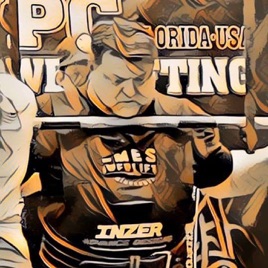
Dr. Fred Clary, founder of Functional Analysis Chiropractic Technique, world record holding powerlifter and gym chalk covered philosopher offers thoughts on the life sciences, the philosophy of biology, society, athletic performance, theology and becoming a top at what ever you choose.
Unlock Dr. Fred Clary's Podcast podcast Email contact info,
Listeners & Audience details
Email contact information
Direct podcast contact details

Listeners
Audience numbers & engagement insights

Audience details
Podcast Insights

Podcast episodes
Check latest episodes from Dr. Fred Clary's Podcast podcast
The High Cholesterol Myth — What Your Brain, Cells, and Life Actually Need
2026/04/23
Cholesterol is not a harmful invader but a vital, biologically essential molecule that supports cell structure, brain function, hormone production, and tissue repair; the real issue arises when chronic inflammation, oxidative stress, poor metabolic health, and dysregulated nervous system activity create an environment where cholesterol becomes involved in pathological processes like atherosclerosis. Rather than targeting cholesterol in isolation, a more accurate and effective clinical approach is to address the underlying drivers—systemic inflammation, impaired movement and breathing patterns, autonomic imbalance, stress physiology, and lifestyle behaviors—because cholesterol is often a responsive marker of the body’s attempt to heal and adapt; restore the system, and cholesterol returns to its proper role as a cornerstone of health rather than a symbol of disease.
Dr. Fred Clary, founder of Functional Analysis Chiropractic Technique and lifting/life coach/ gym-chalk covered philosopher talks about one of the most important things in your life - Cholesterol.
Your Comfort Zone Is Lying to You: It’s a Prison
2026/04/03
Your “comfort zone” isn’t comfort—it’s a neurologically efficient pattern your brain has learned to repeat. Through neuroplasticity and energy conservation, the central nervous system prioritizes familiarity over growth, wiring avoidance, fear, and limitation into default behaviors. Over time, this creates an invisible cage where both brain and body minimize change—seen in restricted movement, shallow breathing, and reduced adaptability. True freedom comes not from willpower alone, but from deliberately introducing controlled novelty, improving breathing and movement, and strategically leaning into discomfort. When you do that, you retrain the brain to see challenge not as threat, but as opportunity—transforming the “prison cell” back into a platform for growth.
Dr. Fred Clary, founder of Functional Analysis Chiropractic Technique and lifting/life coach/ gym-chalk covered philosopher talks about comfort zones.
You’re Not Wired for Everyone: The Science & Strength of Being Disliked
2026/03/21
This podcast explores the powerful truth that not everyone will like you—and why that’s not a flaw, but a sign of authentic living. Dr. Fred Clary breaks it down through the lenses of neurology, chiropractic care, and life coaching, explaining how the brain interprets rejection as pain, how the body physically contracts under the pressure of approval-seeking, and how true purpose requires clarity over popularity. By understanding and rewiring these responses, listeners are encouraged to stand confidently in their identity, shift from survival-based thinking to intentional living, and embrace the freedom that comes from being aligned rather than universally accepted.
Dr. Fred Clary, founder of Functional Analysis Chiropractic Technique and lifting/life coach/ gym-chalk covered philosopher talks about being disliked.
“I’d rather be the oldest person in the gym than the youngest person in the nursing home.”
2026/03/11
Modern neuroscience confirms something our bodies already know: the brain was designed to move. Physical activity stimulates brain-derived neurotrophic factor (BDNF), improves neuroplasticity, protects the hippocampus, and reduces the risk of cognitive decline. As a neurologist and chiropractor, I see the consequences of inactivity every day—degeneration of joints, loss of balance, neurological slowing, and early dependence on others for basic life functions. The truth is simple: movement is medicine for both the brain and the body.
That is why I say, “I’d rather be the oldest person in the gym than the youngest person in the nursing home.” Exercise is not about vanity or appearance—it is about independence. Strength preserves dignity, balance prevents falls, and physical challenge keeps the nervous system alive and adaptable. The gym is not a punishment; it is a commitment to your future self. Train today so that decades from now you can still walk, move, think clearly, and live life on your own terms.
Dr. Fred Clary, founder of Functional Analysis Chiropractic Technique and lifting/life coach/ gym-chalk covered philosopher talks about aging well.
Blind Spots: The Neuroscience of Unconscious Bias, Tribal Thinking, and Human Perception
2026/03/04
Unconscious bias often arises not from malice but from the normal functioning of the human brain. The brain is designed to conserve energy and process information quickly, so it relies on shortcuts such as pattern recognition, familiarity, and past experience. Structures like the hippocampus help the brain complete patterns from limited experiences, the amygdala rapidly evaluates familiarity and potential threat, and the reward system reinforces beliefs that feel correct. As a result, people may develop biases from small datasets of experience, limited exposure to different perspectives, incomplete information, or simple cognitive efficiency, leading them to assume that what they have seen represents the whole of reality.
Because humans evolved in small cooperative groups, the brain also developed tribal and social identity circuits that instinctively distinguish between in-groups and out-groups. These automatic responses occur before conscious reasoning, but they can be moderated by the prefrontal cortex, which supports reflection, curiosity, and analytical thinking. Fortunately, the brain’s neuroplasticity allows these biases to be reduced through deliberate effort: slowing down judgments, seeking broader experiences, questioning assumptions, examining evidence carefully, and cultivating intellectual humility. By expanding our mental datasets and engaging thoughtful reflection, individuals can move beyond automatic assumptions and develop more accurate and compassionate perceptions of others.
Dr. Fred Clary, founder of Functional Analysis Chiropractic Technique and lifting/life coach/ gym-chalk covered philosopher talks about seeing beyond the nose on your own face.
We need more beauty in the world...An interview with Jennifer Nash Kochevar
2026/02/23
Art and beauty exert a measurable influence on the human body and soul: exposure to harmonious form, color, proportion, and music has been shown to lower cortisol, reduce blood pressure, regulate breathing, and stimulate dopamine and oxytocin—chemicals associated with pleasure, bonding, and well-being—while simultaneously activating memory centers in the brain that connect us to personal and collective history. Beauty draws the nervous system out of chronic stress and into contemplative presence; it anchors us in the “now” while evoking echoes of the past through shared symbols, sacred architecture, ancestral music, and enduring masterpieces that generations have contemplated before us. In this way, art becomes both physiological medicine and cultural bridge: it calms the body, orders the emotions, elevates the mind, and binds us to those who lived centuries ago, reminding us that we stand within a living continuum of meaning, memory, and human dignity.
Jennifer Nash Kochevar is an art expert in Minnesota. She has a passion for bringing beauty, elegance, meaning and connection to the world.
Gallery 366 https://share.google/wni5LPFCAe705tW4i
Dr. Fred Clary, founder of Functional Analysis Chiropractic Technique and lifting/life coach/ gym-chalk covered philosopher interviews an art expert that helps bring quality and meaning to her clients' worlds.
Real Life Progress: Focus on What You Can Do Daily, Not What You Can’t Change Instantly
2026/02/11
Real, lasting change does not happen instantly — it happens daily. From a neurological standpoint, your brain thrives on small, repeatable actions that restore agency and regulate stress, not overwhelming attempts at massive transformation. Structurally, the body adapts through consistent input, just as posture, breathing, and alignment improve through repetition rather than urgency. As a chiropractor, neurologist, and life coach, I emphasize focusing on what you can control each day — your breathing, movement, discipline, and responses — because daily alignment builds nervous system stability, confidence, and long-term resilience. Win the day through small intentional actions, and over time, those actions reshape your brain, your body, and your life.
Dr. Fred Clary, founder of Functional Analysis Chiropractic Technique and lifting/life coach/ gym-chalk covered philosopher talks about Mastering Your Response to Disrespect!
Staying Calm and Powerful as your Superpower: Mastering Your Response to Disrespect
2026/02/04
This episode explores how staying calm when disrespected is not a matter of willpower or personality, but of nervous-system regulation. Drawing from chiropractic, neurological, and life-coaching perspectives, it explains why disrespect triggers fight-or-flight responses in the body before the mind can think clearly. The episode teaches listeners to regulate the body first—through breathing, posture, and grounding—so the brain can regain clarity and self-control. Calm is reframed as a physiological state that can be trained, not an emotional suppression or passive response.
The second half addresses what to do when calm is not respected. It explains why some people escalate when they encounter calm and how this reveals their inability to self-regulate. Listeners are guided to shift from emotional regulation to containment, using clear boundaries, reduced engagement, silence paired with action, and, when necessary, physical or relational distance. The episode concludes by emphasizing that calm combined with firm boundaries reshapes both personal identity and relationships, teaching the nervous system that safety does not require approval—and that self-control is the deepest form of strength.
Dr. Fred Clary, founder of Functional Analysis Chiropractic Technique and lifting/life coach/ gym-chalk covered philosopher talks about Mastering Your Response to Disrespect!
Trauma Bonding at a Societal Level: Why Chaos Can Make People Emotionally Attached to What’s Hurting Them
2026/01/29
Trauma Bonding at a Societal Level
Trauma bonding at a societal level occurs when entire communities become emotionally attached to ongoing stress, chaos, and threat through repeated cycles of fear and temporary relief. Constant exposure to crisis-driven narratives keeps the nervous system in a heightened state of activation, where cortisol remains elevated and the brain’s threat centers dominate decision-making. In this state, people often bond not to peace or truth, but to the very sources of stress that intermittently offer reassurance, identity, or meaning. Over time, this creates emotional dependence on narratives, movements, or media ecosystems that feel familiar and validating—even when they are harmful.
Neurologically and physiologically, societal trauma bonding erodes clarity and resilience. The prefrontal cortex becomes less effective, nuance disappears, and group identity replaces independent discernment. Communities begin to mirror trauma responses seen in individuals: rigidity, hypervigilance, emotional reactivity, and fear of separation from the group. Healing begins when individuals restore nervous system regulation, reconnect to local reality, and reclaim rhythm, coherence, and embodied presence. Calm, grounded truth—rather than outrage—becomes the antidote that slowly dissolves trauma bonds and allows cultures to recover stability and compassion.
Dr. Fred Clary, founder of Functional Analysis Chiropractic Technique and lifting/life coach/ gym-chalk covered philosopher talks about Community Gaslighting!
Community & Cultural Gaslighting: Protecting the Nervous System in an Age of Chaos
2026/01/28
Community & Cultural Gaslighting: Protecting the Nervous System in an Age of Chaos
When communities are flooded with conflicting narratives—each emotionally charged and claiming exclusive truth—the nervous system enters a state of chronic stress. This phenomenon, known as cultural gaslighting, destabilizes our sense of reality by overwhelming the brain’s threat-detection systems while suppressing the prefrontal cortex responsible for discernment and reason. The result is widespread anxiety, polarization, and emotional exhaustion—not because people are weak or uninformed, but because prolonged exposure to contradiction and fear dysregulates the brain, vagus nerve, and stress response. What feels like confusion is often a physiological signal that coherence and safety have been disrupted.
Protecting the mind and heart in such an environment begins with regulation before reaction. A calm nervous system restores clarity, allowing facts to be separated from emotional manipulation and complexity to replace binary thinking. Grounding in local reality, slowing the breath, limiting exposure, and refusing outrage-driven narratives help preserve both compassion and strength. True resilience is not numbness or anger, but the ability to remain embodied, thoughtful, and humane—anchored in truth without surrendering to chaos.
Dr. Fred Clary, founder of Functional Analysis Chiropractic Technique and lifting/life coach/ gym-chalk covered philosopher talks about Community Gaslighting!
You Warm Up for Sports -- but Not Life?
2026/01/21
Just as an athlete would never step into competition without warming up, we routinely step into life’s most demanding moments unprepared—relationships, work, school, and daily responsibilities—expecting clarity, patience, and high performance from a nervous system that is still “cold.” A true warm-up is not just physical; it is neurologic, physiologic, biologic, psychological, and spiritual. When we skip this preparation, the brain defaults to reactivity rather than regulation, allowing stress responses to dominate instead of thoughtful, intentional action.
Warming up for life means consciously preparing the body and mind before engagement: regulating breath, posture, and awareness so the nervous system shifts from survival mode to performance mode. It means entering conversations and tasks with intention rather than impulse, and alignment rather than urgency. When we learn to warm up—just as athletes do—we protect our health, improve our relationships, and show up as the person we are meant to be, not merely reacting, but choosing how we live and respond.
Dr. Fred Clary, founder of Functional Analysis Chiropractic Technique and lifting/life coach/ gym-chalk covered philosopher talks about Warming up for LIFE!
Ancestral Echoes: The Transmission of Collective Trauma
2026/01/15
Ancestral Echoes: The Transmission of Collective Trauma explores how trauma is not only a personal experience but a biological, neurological, and emotional legacy that can be passed through families and communities. Drawing on neuroscience and epigenetics, the episode explains how unprocessed trauma alters stress responses, emotional regulation, and nervous system patterns—often appearing generations later as anxiety, hypervigilance, emotional numbness, or unexplained fear. It also addresses modern forms of secondary trauma, showing how repeated exposure to violent or fear-based media can activate the brain’s threat systems, especially in children, and contribute to collective distress even without direct personal harm.
The episode emphasizes that while trauma can be inherited, healing can be inherited as well. By practicing nervous system regulation, limiting harmful media exposure, restoring healthy rhythms of life, and modeling emotional stability, individuals can protect themselves and their children from carrying forward unnecessary psychological burdens. The central message is one of responsibility and hope: each person has the power to interrupt cycles of inherited trauma and replace them with legacies of resilience, peace, and grounded strength that benefit future generations.
Dr. Fred Clary, founder of Functional Analysis Chiropractic Technique and lifting/life coach/ gym-chalk covered philosopher talks about The Transmission of Collective Trauma.
Escaping the Victim Mentality: Responsibility Without Denial
2026/01/11
Escaping a victim mentality does not mean denying hardship, injustice, or personal pain. From both a life-coaching and neurological perspective, victim mentality is often a survival strategy—one the brain adopts after repeated stress, trauma, or failure in order to conserve energy and avoid further harm. Over time, however, this protective mindset can turn into paralysis, shrinking motivation, narrowing future vision, and reinforcing beliefs that effort is pointless. The brain’s threat systems become overactive, stress hormones keep the mind in short-term survival mode, and learned helplessness replaces agency. This is not weakness or moral failure; it is a nervous system stuck in protection mode.
Freedom begins when responsibility is reclaimed without self-blame. Something can be not your fault and still be your responsibility to heal and move forward. Escaping the victim mindset means regulating the body, rebuilding proof of agency through small daily actions, and shifting focus from “why me?” to “what now?” It requires controlling mental inputs, upgrading inner language, and turning pain into training rather than identity. The goal is not pretending life is fair, but refusing to let unfairness write the story of your future. Through consistent, manageable actions, the brain relearns that effort matters—and forward movement becomes possible again.
Dr. Fred Clary, founder of Functional Analysis Chiropractic Technique and lifting/life coach/ gym-chalk covered philosopher talks about Escaping the Victim Mentality: Responsibility Without Denial.
Getting Rid of Unwanted House Guests : Evicting Character Flaws & Bad Habits
2026/01/08
This podcast reframes bad habits and character flaws as “unwanted house guests” living rent-free in the brain. Drawing from life coaching and neuroscience, it explains that habits are not moral failures but learned neural pathways formed through repetition, stress, and survival patterns. Because the brain is plastic, not fixed, these habits can be changed—not by force or shame, but through calm, strategic eviction. Understanding how the brain seeks efficiency, comfort, and familiarity allows listeners to stop fighting themselves and start working with how change actually happens.
The episode walks listeners through the most common unwanted “guests” such as procrastination, negative self-talk, perfectionism, overthinking, people-pleasing, and self-sabotage, offering simple, practical steps to replace each one. The core principle is clear: habits are never simply removed, they are replaced. By making small, consistent changes and installing healthier behaviors in their place, listeners learn how to reclaim mental space, restore personal agency, and create lasting transformation—one room of the house at a time.
Dr. Fred Clary, founder of Functional Analysis Chiropractic Technique and lifting/life coach/ gym-chalk covered philosopher talks about how to EVICT BAD HABITS from your brain.
Your Brain on January 1st: Why We Feel So Hopeful (and Why it Fades)
2025/12/31
On January 1st, the brain enters a uniquely hopeful neurological state driven primarily by dopamine—the neurotransmitter of anticipation, not pleasure. Novelty, symbolic separation from past failures, and the absence of immediate effort create a powerful reward-prediction signal. Planning and imagining change activate the same neural circuits involved in pursuit, making optimism feel vivid and convincing. This “fresh start” effect temporarily quiets self-criticism and gives the illusion of a new identity, even though the brain’s existing habit circuits remain fully intact beneath the surface.
As novelty fades and effort begins, dopamine naturally drops and the brain shifts into energy-conservation mode. Long-standing habits stored in the basal ganglia reassert themselves, while sustained willpower strains the metabolically expensive prefrontal cortex. Motivation doesn’t disappear because of weakness—it disappears because the brain prioritizes efficiency and safety. Lasting change occurs only when goals are small enough to avoid threat responses and are repeated consistently. True hope, neurologically speaking, is not sustained by excitement but by quiet evidence—small, repeatable actions that slowly rewire the brain over time.
Dr. Fred Clary, founder of Functional Analysis Chiropractic Technique and lifting/life coach/ gym-chalk covered philosopher talks about how to make Lasting Changes in the New Year!
Podcast reviews
Read Dr. Fred Clary's Podcast podcast reviews
Sanders 2012 2021/04/10
What the world needs!
Heard you on the Running Public and found a hidden gem... Good stuff, keep dropping knowledge on us.
Podcast sponsorship advertising
Start advertising on Dr. Fred Clary's Podcast relevant audience podcasts
You may also like to advertise on these Podcasts

4.7174773
The Whispering Woods : Real Life Ghost & Paranormal Stories
True, Scary, Paranormal, Folklore and Ghost Stories

4.7916140
First Date with Lauren Compton
YMH Studios

3.7400288
Nightline
ABC News

4.37264186
Hell and Gone
iHeartPodcasts

4.4503509
Warfare
History Hit

4254113
We Know Industry
Post Show Recaps

4.919481224
Social Proof Podcast
Social Proof Network

4.68555583
Moms and Mysteries: A True Crime Podcast
Moms and Mysteries Podcast

4.9189628
Capital Gains Tax Solutions Podcast
Brett Swarts

4.92958882
Life with Sally
Sally Clarkson