1501539079
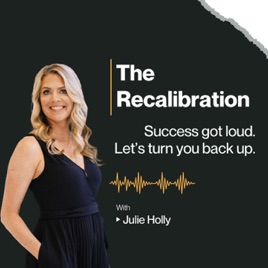
The Recalibration

Advertise on podcast: The Recalibration

Rating
★★★★★
5
from
184 reviews
This podcast has
848 episodes
Language
English
Publisher
Julie Holly
Explicit
No
Date created
2020/03/04
Latest episode
2026/02/03
Average duration
9 min.
Release period
1 days

Description

The Recalibration is a daily podcast for driven professionals who aren’t falling apart, but are quietly tired of holding everything together. A space for nervous system informed identity recalibration before burnout forces the issue. The Recalibration with Julie Holly is a daily podcast for high-performing professionals, leaders, and driven humans who are successful on paper, but feel worn down, disconnected, or quietly misaligned inside. Often, this isn’t because something is wrong. It’s because their nervous system has been carrying more than it was designed to hold. This show is for people who: Keep functioning at a high level, even when it costs them. Feel tired of hacks, habits, and strategies that no longer work. Aren’t in crisis, but know something isn’t sustainable. Sense clarity slipping even though effort remains strong. This isn’t mindset work. It isn’t productivity advice or performance optimization. The Recalibration introduces Identity-Level Recalibration, a psychology-backed, nervous-system-informed, faith-rooted pathway that realigns who you are at the root so your decisions, relationships, leadership, and energy begin to work again without pressure or self-erasure. Hosted by Julie Holly, researcher, coach, and creator of the Identity-Level Recalibration Pathway, each episode blends psychology, nervous system science, leadership insight, philosophy, and faith-forward reflection. The goal is simple and honest. To help listeners understand why success can keep working while something inside feels off, and how to recalibrate before burnout, disconnection, or collapse force the issue. What you will hear across the podcast: The difference between burnout and identity misalignment. Why nervous system fatigue disguises itself as motivation or discipline problems. How pressure erodes clarity, even for capable leaders. What aligned leadership, parenting, and relationships actually feel like. How to move from effort to alignment without losing your edge. How the podcast evolves by season: Season 1, Episodes 1 through 86. Foundations. What Identity-Level Recalibration is, why performance eventually stops working, and how identity drives behavior. Season 2, Episodes 87 through 170. Integration into life. Applying recalibration to relationships, boundaries, leadership, faith, and daily decision-making. Season 3, Episodes 171 through 254. For high performers. Focused recalibration for driven professionals navigating pressure, exhaustion, and internal dissonance, even as success continues. Season 4, Daily. Practicing the recalibration. A lived, embodied season walking through the recalibration process each week. Recognition. Release. Reclamation. Reinforcement. Renewed momentum. All applied to real relationships and real life. If you are not falling apart, but you are quietly tired of holding everything together, this podcast is for you. The previous 581 episodes are preserved as a living record, not of perfection, but of my own recalibration in real time as identity, faith, leadership, and nervous system alignment deepened over the years.

Unlock The Recalibration podcast Email contact info,
Listeners & Audience details

Email contact information

Direct podcast contact details

Listeners

Audience numbers & engagement insights

Audience details

Podcast Insights

Podcast episodes

Check latest episodes from The Recalibration podcast


#271 When Parenting Clarity Returns Without Forcing It
2026/02/03
When nervous system regulation replaces pressure, parental clarity returns. If parenting feels confusing or heavy despite your effort, this episode explores why clarity isn’t lost — it’s crowded — and how identity-level recalibration brings it back online. There is a particular kind of exhaustion parents rarely name — the fatigue of no longer trusting your own knowing. In this episode of The Recalibration, we move into the Reclamation stage of Identity-Level Recalibration — the moment when clarity begins to return, not because you worked harder, but because pressure eased. In this episode, we explore: Why parenting confusion is often a sign of nervous system overload, not a lack of wisdomHow sustained pressure crowds out discernment, even in capable, thoughtful parentsWhat begins to return when regulation replaces vigilanceWhy clarity often comes back quietly and without effortHow identity-level recalibration differs from mindset work, behavior change, or productivity strategiesWhat it feels like when your system starts trusting itself againThroughout Season Four, we’re practicing recalibration inside real areas of life rather than discussing it abstractly. This week’s focus is parenting — understood broadly, from the child lens, the parent lens, or both. When nervous system load decreases: Perspective widensValues become easier to accessDecisions take less energyYou stop rehearsing and start sensing what mattersThis episode gently reframes confusion as information — evidence that your system has been carrying too much for too long. This is not mindset work. It’s not optimization. And it’s not about becoming someone new. Identity-Level Recalibration begins with who you are, not what you do — because when identity is aligned, clarity doesn’t need to be forced. It returns. Today’s Micro Recalibration: Notice one place where clarity feels a little more accessible than it did before. No analysis. No explanation. Just recognition. Explore Identity-Level Recalibration → Join the next Friday Recalibration Live experience → Take your listening deeper! Subscribe to The Weekly Recalibration Companion to receive reflections and extensions to each week's podcast episodes. → Follow Julie Holly on LinkedIn for more recalibration insights → Schedule a conversation with Julie to see if The Recalibration is a fit for you → Download the Misalignment Audit → Subscribe to the weekly newsletter → Books to read (Tidy categories on Amazon- I've read/listened to each recommended title.) → One link to all things
#270 The Parenting Role That’s Quietly Exhausting You
2026/02/02
Parenting pressure can feel exhausting even when nothing is “wrong.” This episode explores the hidden roles parents step into, why they create strain, and how identity-level recalibration allows you to release responsibility without losing authority. Many parents feel exhausted without being able to point to a clear reason why. They’re still showing up. Still caring deeply. Still doing what needs to be done. And yet, something feels heavy. In this Tuesday episode of The Recalibration, Julie Holly guides listeners through the Release stage of identity-level recalibration — the moment when we begin to loosen the roles we’ve been carrying out of habit, not necessity. These roles often formed during seasons when stability, safety, or emotional regulation depended on us stepping in. They were not mistakes. They were intelligent responses to real needs. But what once protected something important can quietly become exhausting when it’s no longer required in the same way. This episode is an invitation to understand — without shame — the over-functioning parental roles many high-capacity humans step into, and how releasing them does not mean losing authority, care, or connection. In this episode, you’ll explore: Why parenting exhaustion often comes from roles, not effortHow over-functioning develops as a protective response, not a flawWhat happens in the nervous system when responsibility never clocks outWhy releasing a role does not mean disengaging or becoming less capableHow presence often becomes steadier — not weaker — when pressure easesJulie weaves together relational insight, nervous system awareness, and identity-level reframing to show why this work is not about doing less — but about releasing what no longer belongs. This is not mindset work. It’s not a productivity adjustment. And it’s not another parenting strategy. Identity-Level Recalibration (ILR) addresses the root — allowing pressure to release so clarity, authority, and ease can return naturally. This episode prioritizes orientation over urgency, understanding before action, and companionship over correction. Today’s Micro Recalibration Finish this sentence gently, without fixing or justifying: “One role I keep stepping into with my child that feels heavy is…” Awareness is enough for today. Explore Identity-Level Recalibration → Join the next Friday Recalibration Live experience → Take your listening deeper! Subscribe to The Weekly Recalibration Companion to receive reflections and extensions to each week's podcast episodes. → Follow Julie Holly on LinkedIn for more recalibration insights → Schedule a conversation with Julie to see if The Recalibration is a fit for you → Download the Misalignment Audit → Subscribe to the weekly newsletter → Books to read (Tidy categories on Amazon- I've read/listened to each recommended title.) → One link to all things
#269 When Parenting Pressure Feels Heavier Than It Should
2026/02/02
Parenting pressure can linger even when life feels stable. This episode explores why subtle tension isn’t failure, but information — and how awareness creates safety when identity-level misalignment has quietly replaced presence. Parenting pressure doesn’t always arrive during crisis. Often, it shows up after things have settled — when the hard season has passed, routines are working, and life looks “fine” from the outside. And yet, something feels tighter than it needs to be. In this Monday episode of The Recalibration, Julie Holly introduces the Recognition stage of identity-level recalibration through the lens of parenting — not as a strategy to improve, but as a relational environment where pressure and presence quietly shape everything. This conversation is for high-capacity humans who are still showing up, still caring deeply, and still holding responsibility — but noticing that it costs more than it used to. In this episode, you’ll explore: Why parenting tension often appears after survival mode endsHow subtle tightness is a form of awareness, not failureWhat the Recognition stage actually is — and why it always comes firstHow pressure quietly replaces presence without us realizing itWhy noticing does not obligate action or decision-makingHow nervous system safety is created through permission, not urgencyThe difference between being less capable and being less overextendedDrawing from nervous system wisdom, psychology, and lived experience, Julie reframes “feeling stuck” not as a lack of insight, but as a learned reflex to act too quickly on awareness — a pattern that keeps the system braced and prevents integration. This is not mindset work. It’s not productivity coaching. And it’s not another parenting approach. Identity-Level Recalibration (ILR) works at the root — creating the conditions where awareness is safe, pressure releases, and presence returns naturally. This episode is about orientation, not resolution. Recognition before release. Companionship instead of correction. Today’s Micro Recalibration: Complete this sentence, without analysis or fixing: “One place parenting feels tighter than it needs to be is…” Awareness is enough for today. Explore Identity-Level Recalibration → Join the next Friday Recalibration Live experience → Take your listening deeper! Subscribe to The Weekly Recalibration Companion to receive reflections and extensions to each week's podcast episodes. → Follow Julie Holly on LinkedIn for more recalibration insights → Schedule a conversation with Julie to see if The Recalibration is a fit for you → Download the Misalignment Audit → Subscribe to the weekly newsletter → Books to read (Tidy categories on Amazon- I've read/listened to each recommended title.) → One link to all things
#268 Being Known Without Performing in Your Closest Relationships
2026/02/01
Many relationships carry quiet pressure to perform in order to belong. This episode explores what happens when exhaustion, faith, and identity meet — and how being known without striving begins when love no longer has to be earned. There is a kind of exhaustion that doesn’t come from doing too much — but from trying to be loved by doing. After a week of releasing pressure and softening relational roles, many high-capacity humans arrive at a deeper question: Am I loved when I’m not performing? This Sunday episode turns toward that question gently, without urgency or instruction. This conversation centers on Vertical Alignment — the grounding that comes not from effort or clarity, but from being seen, known, and held by God. Drawing from Psalm 139 (NLT), we explore a faith-rooted truth that reshapes how intimacy works both spiritually and relationally: you cannot outrun God’s love, and you do not have to earn being known. Rather than offering advice or behavior change, this episode creates space for rest, recognition, and re-rooting identity beyond performance. When love is no longer something we extract from relationships, pressure loosens. Presence replaces striving. Intimacy becomes safer because it is no longer carrying the weight of being our source. This is not mindset work. It is not productivity or self-improvement. It is Identity-Level Recalibration — the root-level realignment that allows every other tool, boundary, and relationship to function with integrity. If you are faith-filled, faith-curious, or simply longing for a truer way of being, you are welcome here. Today’s Micro Recalibration: Place one hand on your chest. Take one slow breath. Orient to this truth: “I am already known — therefore I don’t have to perform to be loved.” Let your body receive it without trying to apply it. Explore Identity-Level Recalibration → Join the next Friday Recalibration Live experience → Take your listening deeper! Subscribe to The Weekly Recalibration Companion to receive reflections and extensions to each week's podcast episodes. → Follow Julie Holly on LinkedIn for more recalibration insights → Schedule a conversation with Julie to see if The Recalibration is a fit for you → Download the Misalignment Audit → Subscribe to the weekly newsletter → Books to read (Tidy categories on Amazon- I've read/listened to each recommended title.) → One link to all things
#267 When Relationships Shift and You’re Not Sure Who You Are
2026/01/31
Relationships can feel disorienting when roles shift and old patterns loosen. This episode sits with relational strain, uncertainty, and quiet fear — not as failure, but as an identity-level reorganization happening inside closeness. What happens when a relationship feels lighter — but also more uncertain? When roles loosen, effort drops, and clarity returns, many high-capacity humans don’t feel relief right away. They feel exposed. The questions that surface aren’t about communication skills or fixing the relationship. They’re about identity, belonging, and safety inside closeness. This episode is intentionally different. Instead of teaching or resolving, we slow down and stay with the real, lived questions that emerge when relationships recalibrate — especially for people who have long carried responsibility, emotional labor, and steadiness for others. In this extended Saturday episode, we gently walk through the questions that clients, friends, and leaders most often ask — sometimes out loud, often silently — as identity shifts inside relationship: “If I stop playing this role… will I still be chosen?”“If I stop over-carrying — if I stop holding the emotional center — what is my place in this relationship now?”“Who am I to us if I’m not the one stabilizing everything?”“If things feel lighter in this relationship… am I allowed to enjoy that without waiting for the other shoe to drop?”“If I relax into this ease, am I being naive about what could happen next?”“What if my partner doesn’t meet me here?”“What if mutuality doesn’t appear right away?”“What if my partner doesn’t change?”“How long does this feel awkward before it feels natural?”“How do I stay present in this relationship without compensating?”These questions aren’t signs that something is wrong. They are evidence that identity is reorganizing faster than relational patterns — and that the nervous system is learning how to stay present without bracing, performing, or disappearing. Drawing from years of coaching high-capacity humans, lived relational experience, and the Identity-Level Recalibration (ILR) pathway, this episode offers orientation rather than answers. We protect slowness. We honor grief for roles that once protected something real. We resist premature resolution. And we let the body feel what the mind is tempted to manage. Explore Identity-Level Recalibration → Join the next Friday Recalibration Live experience → Take your listening deeper! Subscribe to The Weekly Recalibration Companion to receive reflections and extensions to each week's podcast episodes. → Follow Julie Holly on LinkedIn for more recalibration insights → Schedule a conversation with Julie to see if The Recalibration is a fit for you → Download the Misalignment Audit → Subscribe to the weekly newsletter → Books to read (Tidy categories on Amazon- I've read/listened to each recommended title.) → One link to all things
#266 Why Relationships Feel Lighter When You Stop Over-Carrying
2026/01/30
Relationships can feel heavy when responsibility, pressure, and emotional labor fall on one person. This episode explores why lightness often returns not through effort, but when identity and relationship finally come back into alignment. There’s a moment many people notice quietly, almost cautiously: their relationship feels lighter. Not because they tried harder. Not because something dramatic changed. But because they stopped carrying what was never meant to be held alone. In this episode, we explore what happens in relationships when over-functioning loosens and identity begins to match how you relate. Many high-capacity, deeply responsible people learned early on that effort equals love—and that staying ahead of problems is how connection stays intact. Over time, that pattern can create pressure, emotional fatigue, and a subtle sense of misalignment, even in relationships that “work.” This conversation names a different experience: when tension clears faster, conversations don’t linger in your body, and you recover more quickly after hard moments—not because conflict disappeared, but because your nervous system no longer has to compensate for the relationship. This is what Renewed Momentum feels like in Identity-Level Recalibration. Not urgency. Not intensity. Believability. Rather than another mindset shift or communication strategy, ILR addresses the root level—where identity precedes behavior. When who you are and how you relate finally align, ease becomes information. Lightness becomes evidence. And commitment no longer requires collapse. This episode is an orientation, not a prescription. It offers language for recognizing when alignment is already working—so you don’t rush past it, explain it away, or brace for it to disappear. Today’s Micro Recalibration: Notice where your relationship feels lighter simply because you stopped over-carrying. Not because you disengaged or cared less, but because responsibility is finally being shared. Let that ease be information worth trusting. Explore Identity-Level Recalibration → Join the next Friday Recalibration Live experience → Take your listening deeper! Subscribe to The Weekly Recalibration Companion to receive reflections and extensions to each week's podcast episodes. → Follow Julie Holly on LinkedIn for more recalibration insights → Schedule a conversation with Julie to see if The Recalibration is a fit for you → Download the Misalignment Audit → Subscribe to the weekly newsletter → Books to read (Tidy categories on Amazon- I've read/listened to each recommended title.) → One link to all things
#265 When You Stop Explaining Yourself in a Relationship
2026/01/29
Relationships often strain under pressure when one person carries the emotional clarity. In this episode, we explore what changes when you stop explaining yourself — not as withdrawal, but as identity-level alignment returning to the relationship. There comes a moment in many relationships when explaining yourself no longer feels supportive — it feels exhausting. Not because you don’t care.  Not because you’re shutting down.  But because clarity no longer needs performance to feel safe. In this episode of The Recalibration, we explore what actually changes in a relationship when you stop over-explaining, over-functioning, or smoothing the emotional moment. Especially for high-capacity humans and deeply responsible people, explanation often became the bridge — the way connection stayed intact, misunderstandings were prevented, and closeness felt secure. But over time, that bridge can quietly become a burden. This episode sits in the Reinforcement stage of Identity-Level Recalibration, where alignment isn’t built through insight alone — it’s built through repetition. Not rushing to manage the moment. Not rescuing the space. Practicing steady presence without self-erasure. We explore: Why over-explaining was never about communication, but about safetyWhat “clean discomfort” feels like when you stop managing connectionHow nervous system regulation shows up as steadiness rather than silenceWhy consistency — not intensity — is what rebuilds relational trustThis is not about becoming distant or withholding.  It’s about allowing your presence to speak without justification. Unlike mindset work or communication strategies, Identity-Level Recalibration (ILR) doesn’t ask you to perform differently — it helps you be differently. When identity realigns, behavior follows naturally. That’s why this work feels quieter, slower, and more embodied — especially inside intimacy. This episode is part of a week-long relational arc exploring how recalibration unfolds in real relationships — and why stopping explanation isn’t abandonment, but alignment practicing itself. Today’s Micro Recalibration Notice where you feel the urge to explain yourself — even when you already know what’s true.  Don’t stop it. Don’t act on it.  Just stay present and see what steadiness communicates on its own. Explore Identity-Level Recalibration → Join the next Friday Recalibration Live experience → Take your listening deeper! Subscribe to The Weekly Recalibration Companion to receive reflections and extensions to each week's podcast episodes. → Follow Julie Holly on LinkedIn for more recalibration insights → Schedule a conversation with Julie to see if The Recalibration is a fit for you → Download the Misalignment Audit → Subscribe to the weekly newsletter → Books to read (Tidy categories on Amazon- I've read/listened to each recommended title.) → One link to all things
#264 When You Start Knowing What You Feel in Your Relationship
2026/01/28
Relationships can feel confusing when clarity returns without effort. If you’re noticing less pressure, less rehearsal, and more internal knowing, this episode explores why that’s not withdrawal—but identity-level realignment beginning to settle. There’s a moment in relationships when something quietly changes inside you. You’re no longer rehearsing what to say. You’re not scanning for emotional shifts. You’re not managing closeness the way you used to. Instead, you simply know what you feel. For many people—especially high-capacity, deeply responsible partners—this return of clarity can feel both relieving and vulnerable. Relief, because the internal noise has softened. Vulnerable, because awareness often brings memory: how much adapting once made connection possible, and how much energy that required. In this episode of The Recalibration, Julie Holly explores the Reclamation stage of the Identity-Level Recalibration process as it unfolds inside marriage and close partnership. This is not about fixing communication, having the “right” conversation, or making a decision. It’s about understanding why clarity returns when pressure drops—and why knowing what you feel again doesn’t mean you’re pulling away. Drawing from psychology, nervous system science, and identity development, Julie explains how internal authority comes back online when the body shifts from constant emotional management into felt safety. When the nervous system moves out of vigilance, truth becomes accessible again—without urgency or justification. This episode gently addresses the quiet questions many listeners carry: What if I’m changing and my partner isn’t here yet? Why does awareness feel tender instead of triumphant? Can I trust clarity if it feels ordinary? This is not mindset work or productivity advice. Identity-Level Recalibration is a root-level process that makes every other tool effective—because it begins with who you are, not what you do. Today’s Micro Recalibration Notice where in your relationship you feel a quiet sense of knowing—without needing to explain or act on it. Let clarity exist without urgency. Knowing what you feel isn’t a conclusion. It’s orientation. Explore Identity-Level Recalibration → Join the next Friday Recalibration Live experience → Take your listening deeper! Subscribe to The Weekly Recalibration Companion to receive reflections and extensions to each week's podcast episodes. → Follow Julie Holly on LinkedIn for more recalibration insights → Schedule a conversation with Julie to see if The Recalibration is a fit for you → Download the Misalignment Audit → Subscribe to the weekly newsletter → Books to read (Tidy categories on Amazon- I've read/listened to each recommended title.) → One link to all things
#263 When Your Marriage Works But You’re Still Exhausted
2026/01/27
Marriage exhaustion doesn’t always mean something is wrong. In this episode, we explore why relationships can function well and still feel heavy — and how quiet identity shifts, not failure, often explain the strain. Some relationships don’t break. They work. They stay intact, functional, and outwardly stable — and yet something inside feels increasingly tired. In this episode of The Recalibration, we explore a form of relationship exhaustion that doesn’t come from conflict, betrayal, or unresolved arguments. It comes from roles — especially the quiet, responsible ones that once kept connection safe. Many high-performing or deeply responsible people find themselves carrying the emotional center of a marriage or partnership without ever naming it. They anticipate tone, smooth edges, stabilize tension, and hold things together not because they were asked to — but because they could. Over time, that role can start to feel heavy. This episode walks through the Release stage of Identity-Level Recalibration (ILR) — the moment when awareness deepens and outdated relational roles begin to loosen. Not through blame or confrontation, but through compassion and understanding. We explore why: Letting go of a role doesn’t mean you care lessExhaustion is often information, not failureIdentity shifts inside relationships long before behavior changesIncreased awareness can temporarily surface tenderness, frustration, or emotional sensitivity — and why that’s a natural part of recalibration, not a regressionThis is not mindset work or another communication strategy. Identity-Level Recalibration is a root-level process — the internal realignment that makes every other tool effective again. Throughout the episode, we stay grounded in orientation rather than urgency, recognition before resolution, and companionship over instruction — trusting that clarity emerges as pressure softens. If you’ve ever wondered: Why am I so tired if nothing is technically wrong? Am I allowed to release this role without destabilizing what we built? What happens when I stop holding everything together? You’re not late. And you’re not alone. Micro Recalibration (today’s practice): Notice the role you instinctively step into when something feels off in your relationship. Not to stop doing it. Not to explain it. Just to recognize it — and gently remind yourself: This role protected me once. It doesn’t have Explore Identity-Level Recalibration → Join the next Friday Recalibration Live experience → Take your listening deeper! Subscribe to The Weekly Recalibration Companion to receive reflections and extensions to each week's podcast episodes. → Follow Julie Holly on LinkedIn for more recalibration insights → Schedule a conversation with Julie to see if The Recalibration is a fit for you → Download the Misalignment Audit → Subscribe to the weekly newsletter → Books to read (Tidy categories on Amazon- I've read/listened to each recommended title.) → One link to all things
#262 When Your Relationship Works — But Feels Heavier Than It Should
2026/01/26
High performers often sense something shifting in their relationships before they have words for it. When a relationship works but feels heavier than it should, this episode explores identity shifts, role confusion, and how awareness returns without urgency. Some of the most disorienting moments in relationships don’t come from conflict — they come from quiet awareness. In this episode of The Recalibration, we explore a subtle experience many high performers, leaders, and deeply responsible people recognize: a relationship that works, yet feels heavier than it should. Nothing is “wrong.” And yet, something is different. This episode focuses on the Recognition stage of the Identity-Level Recalibration (ILR) pathway — the stage where awareness returns without urgency, and identity begins to shift beneath familiar roles. Often, this heaviness isn’t dissatisfaction. It’s vigilance. When you’ve lived for a long time as the stabilizer, the emotional anchor, or the one who carries the relational load, your nervous system adapts. Responsibility becomes reflexive. Presence turns into monitoring. And what once felt natural begins to feel effortful. This is not a communication problem. It’s not a mindset issue. And it’s not a failure of gratitude. It’s a sign of identity realignment. In this episode, we explore: Why relationships can feel heavier during identity shiftsRole confusion and over-functioning in close partnershipsHow high achievers often carry emotional responsibility without noticingThe difference between functional relationships and alive onesWhy awareness itself is movement — not a demand for actionThis work is not about fixing your relationship. Identity-Level Recalibration is not another mindset tactic — it’s the root-level recalibration that makes every other tool effective again. It begins with who you are, not what you do. Today’s Micro Recalibration You don’t need to do anything with this — just notice. Where, in your relationship, do you feel a sense of responsibility that no one has explicitly asked you to carry? Not to change it. Not to justify it. Just to notice it. Recognition always begins here. Explore Identity-Level Recalibration → Join the next Friday Recalibration Live experience → Take your listening deeper! Subscribe to The Weekly Recalibration Companion to receive reflections and extensions to each week's podcast episodes. → Follow Julie Holly on LinkedIn for more recalibration insights → Schedule a conversation with Julie to see if The Recalibration is a fit for you → Download the Misalignment Audit → Subscribe to the weekly newsletter → Books to read (Tidy categories on Amazon- I've read/listened to each recommended title.) → One link to all things
#261 Burnout Recovery When Progress Feels Quiet
2026/01/25
High performance doesn’t always feel urgent. If burnout recovery, decision fatigue, or success feeling empty has left you unsure what’s next, this episode anchors identity beyond effort and reminds you that you are held — even in quiet seasons. This Sunday episode of The Recalibration explores Vertical Alignment — how identity is rooted beyond performance, pace, or visible progress. For many high-capacity humans, the most unsettling seasons aren’t chaotic — they’re quiet. When urgency fades and momentum slows, questions surface: Is anything actually happening? Am I falling behind? In this episode, Julie Holly offers a faith-rooted reframe for burnout recovery, success without fulfillment, spiritual exhaustion, and identity drift — especially when growth feels invisible. In this episode, you’ll hear: Why quiet seasons often signal less resistance, not less progressHow burnout recovery can feel unfamiliar when urgency disappearsWhy high performers struggle when success no longer requires self-pressureThe difference between effort-driven momentum and identity-rooted movementA biblical pattern of identity preceding action, illustrated through Jesus (Matthew 3:17, NLT)Why ILR is not mindset work, habit stacking, or productivity reframing — but a root-level recalibration that restores identity so every other tool can finally workThis episode gently reminds listeners that belonging comes before becoming, and that alignment deepens long before it shows up externally. Today’s Micro Recalibration There is nothing to fix or apply. Simply notice: Where did I stop pushing this week — and nothing fell apart? Let that noticing build trust. Explore Identity-Level Recalibration → Join the next Friday Recalibration Live experience → Take your listening deeper! Subscribe to The Weekly Recalibration Companion to receive reflections and extensions to each week's podcast episodes. → Follow Julie Holly on LinkedIn for more recalibration insights → Schedule a conversation with Julie to see if The Recalibration is a fit for you → Download the Misalignment Audit → Subscribe to the weekly newsletter → Books to read (Tidy categories on Amazon- I've read/listened to each recommended title.) → One link to all things
#260 Burnout Recovery Without Pushing: Why Quiet Still Counts
2026/01/24
Burnout recovery for high performers doesn’t always feel intense. If success feels quieter than expected, this episode explains why calm, steady movement is often a sign of real alignment—not stagnation. This Saturday episode explores Horizontal Alignment—how your internal state shows up in real life after a quieter week of recalibration. If you’re a high-capacity human navigating burnout recovery, decision fatigue, or a season where success feels less urgent than before, this episode helps you make sense of that shift without fixing or forcing anything. In this episode, you’ll explore: Why quiet weeks often signal less internal resistance, not a loss of momentumHow burnout recovery can feel calm when pressure and self-override are no longer driving youThe difference between capacity and the cost you’ve been paying to access itWhat it looks like to relate to yourself without constant self-managementWhy ease can be a sign of maturity—not complacency or disengagementThis is not mindset work or productivity advice.  It’s Identity-Level Recalibration (ILR)—a root-level realignment that begins with who you are, not what you do, and allows progress to emerge without pressure. Team / Leadership Recalibration (Horizontal Alignment) If you lead others, notice this week: Where conversations felt steadierWhere decisions required less urgencyWhere trust replaced pressureHorizontal Alignment shows up when leadership no longer relies on intensity to move things forward. Today’s Micro Recalibration There’s nothing to do today.  Simply notice one moment this week where you related to yourself with less force—and let that be enough. Explore Identity-Level Recalibration → Join the next Friday Recalibration Live experience → Take your listening deeper! Subscribe to The Weekly Recalibration Companion to receive reflections and extensions to each week's podcast episodes. → Follow Julie Holly on LinkedIn for more recalibration insights → Schedule a conversation with Julie to see if The Recalibration is a fit for you → Download the Misalignment Audit → Subscribe to the weekly newsletter → Books to read (Tidy categories on Amazon- I've read/listened to each recommended title.) → One link to all things
#259 Burnout Recovery: When Momentum Feels Calm, Not Urgent
2026/01/23
High performers often equate momentum with pressure. If burnout recovery has made things feel calmer instead of urgent, this episode explains why that’s not regression—it’s alignment. Learn how renewed momentum works at the identity level. Momentum doesn’t always feel intense. For many high-capacity humans, the most disorienting part of burnout recovery is realizing that progress no longer feels urgent. In this episode of The Recalibration, Julie Holly explores Renewed Momentum—the stage where forward movement begins to feel lighter, steadier, and more sustainable. In this episode, you’ll learn: Why calm momentum is often mistaken for stagnation or disengagementHow burnout recovery changes your internal signal for progressWhy urgency was never proof of effectiveness—just pressure in disguiseWhat’s actually happening in the nervous system when momentum feels easierHow identity alignment reduces friction, decision fatigue, and self-overrideWhy “lighter” movement often lasts longer than driven effortThis episode speaks directly to high performers navigating: burnout recovery, decision fatigue, role confusion, success without fulfillment, spiritual exhaustion, and identity drift. Julie introduces Identity-Level Recalibration (ILR) as the differentiator—not another mindset tactic, but the root-level recalibration that makes every other tool effective again. When identity is aligned, momentum no longer requires self-sacrifice. Team Recalibration (for leaders) Instead of asking “What’s next?”, try asking your team: “What’s already moving?” This reinforces progress without manufacturing urgency and builds trust without pressure. Today’s Micro Recalibration Notice one place this week where you moved forward without forcing it. No fixing. No optimizing. Just recognition. Explore Identity-Level Recalibration → Join the next Friday Recalibration Live experience → Take your listening deeper! Subscribe to The Weekly Recalibration Companion to receive reflections and extensions to each week's podcast episodes. → Follow Julie Holly on LinkedIn for more recalibration insights → Schedule a conversation with Julie to see if The Recalibration is a fit for you → Download the Misalignment Audit → Subscribe to the weekly newsletter → Books to read (Tidy categories on Amazon- I've read/listened to each recommended title.) → One link to all things
#258 Performance Pressure: How to Stay Aligned When Life Speeds Up
2026/01/22
High performers facing burnout and performance pressure often fear losing effectiveness when they slow down. In this episode, Julie Holly explores how to stay aligned as life keeps moving—without reverting to self-abandonment or urgency. Many high-capacity humans experience clarity during burnout recovery—then wonder if they can keep it once life speeds back up. The pressure returns. Expectations remain. And a quiet question surfaces: Can I stay with myself when nothing slows down? In this episode of The Recalibration, Julie Holly guides listeners through the Reinforcement stage of Identity-Level Recalibration (ILR)—where alignment is practiced inside real life, not protected from it. In This Episode, You’ll Learn: Why effectiveness and self-abandonment often became paired early onHow performance pressure, urgency, and role confusion trained your system to override itselfWhat the Reinforcement stage actually looks like in daily lifeHow to stay present, engaged, and effective without hardening or disappearingWhy alignment may change how others experience you—and why that doesn’t mean you’re doing it wrongJulie clarifies why Identity-Level Recalibration is not another mindset tactic or productivity strategy. ILR is the root-level recalibration that makes every other tool effective again, because it begins with identity—not effort. You’re not being asked to slow life down. You’re learning how not to leave yourself while it moves. Team Recalibration (For Leaders) Instead of asking: “How do we keep this going?”Try asking: “What would it look like to stay grounded while we move forward?”This reinforces identity over urgency and models leadership without self-erasure. Today’s Micro Recalibration Finish this sentence honestly: “When things start moving quickly, one way I can stay connected to myself is…” No fixing. No forcing. Just presence. Explore Identity-Level Recalibration → Join the next Friday Recalibration Live experience → Take your listening deeper! Subscribe to The Weekly Recalibration Companion to receive reflections and extensions to each week's podcast episodes. → Follow Julie Holly on LinkedIn for more recalibration insights → Schedule a conversation with Julie to see if The Recalibration is a fit for you → Download the Misalignment Audit → Subscribe to the weekly newsletter → Books to read (Tidy categories on Amazon- I've read/listened to each recommended title.) → One link to all things
#257 Burnout Recovery: When Clarity Returns Without Effort
2026/01/21
High performers in burnout recovery often expect clarity to come through effort. In this episode, Julie Holly explores why clarity returns naturally when pressure lifts—and how Identity-Level Recalibration helps you reclaim yourself without striving. Many high-capacity humans expect clarity to come from effort—more thinking, more fixing, more discipline. But during burnout recovery, clarity often returns a different way: quietly, when pressure lifts. In this episode of The Recalibration, Julie Holly walks listeners through the Reclamation stage of Identity-Level Recalibration (ILR)—the moment when your nervous system begins reorganizing and self-trust starts to return without force. This isn’t a breakthrough fueled by adrenaline. It’s what happens when identity stops being overridden by performance pressure. In This Episode, You’ll Learn: Why clarity doesn’t always arrive as insight, but often as relief, steadiness, or familiarityHow confusion is usually a sign of system overload, not lack of intelligence or disciplineWhat’s actually happening in your nervous system when pressure lifts and safety returnsWhy nothing new needs to be added for clarity to return—what’s happening is subtractionHow Reclamation restores access to discernment, creativity, and decision-making without effortWhy returning to yourself feels calm instead of dramatic—and why that’s a sign of alignmentWhat You’ll Gain: Relief from the belief that clarity requires strivingLanguage to understand burnout recovery without self-judgmentPermission to trust steadiness instead of chasing intensityA felt sense of identity returning beneath role confusion and success fatigueJulie also clarifies how Identity-Level Recalibration (ILR) differs from mindset work or productivity tools. This is not another tactic layered on top of exhaustion. ILR is the root-level recalibration that makes every other tool effective again—because when identity is aligned, behavior reorganizes naturally. Today’s Micro Recalibration Complete this sentence without overthinking it: “What feels like me again is…” No performing. No editing. Just noticing. Leadership / Team Extension If you lead others, try this today: Instead of asking what needs to be fixed, ask: “What’s becoming clearer right now?” Explore Identity-Level Recalibration → Join the next Friday Recalibration Live experience → Take your listening deeper! Subscribe to The Weekly Recalibration Companion to receive reflections and extensions to each week's podcast episodes. → Follow Julie Holly on LinkedIn for more recalibration insights → Schedule a conversation with Julie to see if The Recalibration is a fit for you → Download the Misalignment Audit → Subscribe to the weekly newsletter → Books to read (Tidy categories on Amazon- I've read/listened to each recommended title.) → One link to all things

Podcast reviews

Read The Recalibration podcast reviews


5 out of 5
184 reviews
★★★★★
RROSSHALL 2025/12/07
Well. Elevated beyond
On target! I’m staggered by how she crafts language so skillfully. The simple way she weaves contrast into every minute: This or That. Consistently mo...
★★★★★
thejulieholly 2025/09/04
🫶🏼 Grateful
Your feedback is rocket fuel to me! Grateful for everyone who is listening and supporting the show☺️
★★★★★
Jonna Weber 2025/03/20
Genuine value and inspiration!
I really love how Julie is able to share a holistic view to investing and life, and truly gives huge value to her audience, delivered with authenticit...
★★★★★
Kelly Resendez 2024/11/08
Next level show!
Love the content here! Highly recommend if you want to get to the next level. Great host and speakers!
★★★★★
Bekah T. 22 2024/11/08
Amazing podcast
Love this podcast & I learn something new every time I listen to it! 🙌 Julie has also been my business coach & I’ve gained a lot of wisdom/guidance/i...
★★★★★
Leeloo9999999 2024/11/01
Love this show.
I learn a lot from what Julie shares and I love her approach to investing and her positive mindset. Will keep listening in!
★★★★★
Beau Webb 2024/10/29
Incredible Value!
This show provides such value and incredible perspective from investors who care about MORE than just monetary returns!
★★★★★
LJL - Jane 2024/10/02
Julie is so easy to relate with
I am impressed with not only Julie's knowledge, but also the amazing guest she has on the podcast with her. Great Show
★★★★★
KellyHartman 2024/09/25
Insightful!
Love the concepts, insights and mindset upgrades shared in this podcast! A great listen for growing in all different facets of life including real est...
★★★★★
SUCZU 2024/09/12
Love the blend
I love the combo of real estate plus psychology, in the podcast. :) Your enthusiasm comes through in every episode and I think if I were watching th...
check all reviews on apple podcasts

Podcast sponsorship advertising

Start advertising on The Recalibration relevant audience podcasts


What do you want to promote?