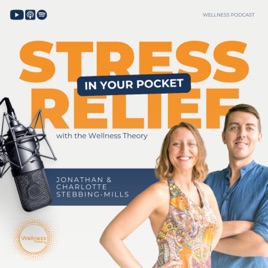
Advertise on podcast: Stress Relief in Your Pocket with The Wellness Theory
Rating
5from
This podcast has
265 episodes
Language
EnglishPublisher
Charlotte and JonathanExplicit
No
Date created
2020/03/05
Latest episode
2026/09/26
Average duration
16 min.
Release period
8 days
Description
Join the award-winning Wellness Theory Podcast to learn how to eliminate stress, feel in control of your emotions, and build a healthy life that lasts. Hosted by Co-Founders and Master Coaches, Jonathan Mills and Charlotte Stebbing-Mills, you'll discover the most effective natural ways to optimise wellness. Tune in for inspiring guest interviews and practical tips on how to let go of unhealthy stress and make a difference in your life and the world. Be well, mean well, make a difference that lasts and join the Wellness Theory movement today.
Unlock Stress Relief in Your Pocket with The Wellness Theory podcast Email contact info,
Listeners & Audience details
Email contact information
Direct podcast contact details

Listeners
Audience numbers & engagement insights

Audience details
Podcast Insights

Podcast episodes
Check latest episodes from Stress Relief in Your Pocket with The Wellness Theory podcast
#264 Why Nervous System Regulation Isn't Fixing Your Burnout
2026/09/26
If you want to understand what’s really driving your stress and burnout, take the free Stress-Less Scorecard here: bit.ly/3UCmNa1If you’re a high performer or leader doing all the “right” things — breathwork, meditation, exercise, better sleep, time off — but you still feel wired, exhausted or unable to switch off, this video explains what may be missing.Nervous system regulation can help you recover from periods of unhealthy stress. But sustainable performance and wellbeing also depend on understanding what keeps pushing your nervous system back into dysregulation in the first place.For many people, the real energy drain isn’t obvious. It’s over-responsibility. Perfectionism. People-pleasing. Suppressing emotions. Neglecting your own needs. Constantly feeling behind. Carrying everyone else while telling yourself you’ll deal with your own needs later.I call these invisible dysregulators — the hidden patterns quietly creating stress underneath otherwise healthy routines.QUESTIONS ANSWERED IN THIS VIDEO• Why isn’t nervous system regulation working for me?• Why do I still feel wired even when I’m doing everything right?• Why does breathwork or meditation only help temporarily?• What keeps causing nervous system dysregulation?• Can perfectionism and people-pleasing contribute to burnout?• Why can’t I switch off even when I’m exhausted?• How do I identify what’s actually draining my energy?• How can I recover from burnout without abandoning my responsibilities?KEY INSIGHTS / WHAT YOU’LL LEARN• The difference between healthy and unhealthy stress• Why regulation tools can help without addressing the source of dysregulation• How hidden behavioural and emotional patterns drain your energy• Why overfunctioning can keep high performers stuck in stress• How to identify your own “power leaks”• A simple daily question to uncover what’s actually draining youKEY CONCEPTS EXPLAINED•Invisible Dysregulators:Underlying patterns, behaviours and internal pressures that repeatedly push you back towards unhealthy stress.•Power Leaks:The moments, habits and patterns quietly draining your emotional and physical energy.•Power Ups:Activities and behaviours that restore energy, capacity and a sense of regulation.
#263 Burnout Recovery Not Working Look Deeper
2026/09/20
If you want to understand what’s really keeping you stuck in burnout and where to focus next, take the free Stress-Less Scorecard here:https://bit.ly/45MCvC2If you’re a high performer, leader, founder or purpose-driven professional who has been doing all the “right” things for burnout — resting more, regulating your nervous system, setting boundaries, sleeping better — but still don’t feel like yourself, this video is for you.Because burnout doesn’t only take your energy.It can affect your confidence, relationships, identity, sense of purpose, self-trust and even the future you thought you were building.Nervous system regulation matters. But sustainable burnout recovery often requires us to look at what sits underneath the symptoms too — including loss, grief, emotional regulation, identity change and the patterns that made an unsustainable way of living possible in the first place.QUESTIONS ANSWERED IN THIS VIDEO• Why do I still not feel like myself after burnout?• Why isn’t nervous system regulation fixing my burnout?• Can burnout cause grief or a loss of identity?• Why does burnout recovery feel so up and down?• What do high performers lose when they burn out?• How do I rebuild my confidence and identity after burnout?• How do boundaries affect relationships during burnout recovery?• How can I recover without going back to the person I was before?KEY INSIGHTS / WHAT YOU’LL LEARN• Why symptom relief and full recovery are not always the same thing• The obvious and less obvious losses burnout can create• Why changing boundaries can also change relationships• How grief and identity disruption can show up during recovery• Why feeling worse on some days doesn’t necessarily mean you’re going backwards• How to move between processing what happened and rebuilding your life• Five questions that can help you identify what burnout has really cost youKEY CONCEPTS EXPLAINEDLoss-Oriented Recovery:Making space to acknowledge what burnout cost you — including sadness, anger, regret, identity changes and lost expectations.Restoration-Oriented Recovery:Rebuilding routines, boundaries, relationships, work and identity in ways that support a healthier life.Dual Process Model:A grief framework developed by Stroebe and Schut describing how people move back and forth between processing loss and adapting to life after it — a useful lens for understanding why burnout recovery rarely feels linear.
#262 What Your 2AM Wake Ups Are Trying to Tell You
2026/09/20
If you want to understand what’s really driving your stress and burnout, take the Stress-Less Scorecard here: bit.ly/4gsd66R
If you’re a high performer or leader who keeps waking up at 2AM despite improving your sleep, the problem may not be your sleep at all.In this video, I unpack the story of “Dave” — someone recovering from burnout who had cut back at work, improved his sleep habits and started rebuilding his wellbeing, yet still couldn’t switch off.
What we uncovered was emotional exhaustion, unresolved grief and a nervous system that had spent years staying alert.This matters because sustainable performance isn’t just about managing the symptoms of stress. Sometimes recovery means understanding what’s keeping your body and mind switched on in the first place.
00:00 Introduction
01:17 Dave’s Story
03:37 Take the Stress-Less Scorecard
03:56 The Cause of Dave’s Burnout
04:38 The Stress-Performance Pyramid
05:23 Why your nervous system stays switched on05:41 Unresolved grief and emotional exhaustion
09:08 The Turning Point
12:57 Take the Stress-Less Scorecard
14:48 Game-Plan Session
15:13 Watch the Next Video: Do this to recover from burnout – most people recover wrong
QUESTIONS ANSWERED IN THIS VIDEO
• Why do I keep waking up at 2AM when my sleep habits are good?
• Can burnout cause you to wake up during the night?
• What does emotional exhaustion actually feel like?
• Why can’t I switch off even when I’m exhausted?
• Can unresolved emotions affect sleep?
• How does the nervous system affect burnout recovery?
• Why do high performers struggle to slow down?
• How do I recover from burnout without relapsing?
KEY INSIGHTS / WHAT YOU’LL LEARN
• Why sleep problems can be symptoms rather than causes
• How high performance can become a way of avoiding difficult emotions
• Why burnout can happen even when you love your work
• How unresolved stress can keep the nervous system on alert
• Why self-compassion and emotional processing matter during recovery
• How to think about sustainable burnout recovery beyond sleep hacks
KEY CONCEPTS EXPLAINED
• Emotional Exhaustion: The depletion that can develop when stress and emotion remain unresolved over long periods.
• Nervous System Regulation: Helping the body move out of persistent alertness and towards a more settled, resourceful state.
• Stress-Performance Pyramid: A framework for looking beyond visible life and health symptoms to the deeper patterns that may be driving them.
#261 The Guilt of Not Being Able to Switch Off at Home (DO THIS)
2026/09/06
If you want to understand exactly where stress is running your life — and what to do about it — take the free Stress-Less Scorecard here:https://bit.ly/4wrg1RRIf you’re a high performer, founder or leader who gets home from work but can’t mentally switch off, this video is for you. You may love your work and still feel guilty that your partner, children or family get whatever energy is left over at the end of the day.This isn’t simply a work-life balance problem. Burnout, chronic stress and emotional disconnection often happen because your nervous system is still carrying responsibility long after work has ended.In this video, I explain why your brain keeps replaying work, how rumination and unresolved “open loops” keep you activated, and five practical ways to create better emotional regulation, recovery and sustainable performance.QUESTIONS ANSWERED IN THIS VIDEO• Why can’t I stop thinking about work when I get home?• Why do I feel guilty that my family gets the worst version of me?• Why does my brain keep replaying meetings and unfinished tasks?• How does stress affect my relationship and family life?• Why does relaxing feel uncomfortable when I’m used to pressure?• How do I mentally switch off from work at the end of the day?• Can people-pleasing and over-responsibility contribute to burnout?• How can I be more present at home without becoming less ambitious?KEY INSIGHTS / WHAT YOU’LL LEARN• Why leaving the office doesn’t automatically deactivate your stress response• How unresolved responsibility keeps consuming mental and emotional energy• Why self-criticism can intensify an already overloaded nervous system• How repeated work rumination slowly creates disconnection at home• Why high-responsibility people can become conditioned to urgency• Five practical interventions across life, health and deeper psychological patternsKEY CONCEPTS EXPLAINEDWork Rumination:Repeatedly replaying work problems without reaching useful resolution, keeping your attention and stress response tied to work.Open Loops:Unfinished responsibilities your brain continues tracking because it doesn’t yet trust that they’ve been safely captured or resolved.Stress Optimisation:Understanding and regulating stress so you can sustain high performance without allowing pressure to undermine your health, relationships or wellbeing.
#260 Why Responsible People Burn Out Differently (And Pay the Highest Price)
2026/08/22
If you want to understand the stress patterns quietly pushing you towards burnout, take the free Stress-Less Scorecard here:https://bit.ly/4i5RazjIf you're the person everyone relies on, burnout can look very different from what you expect. High performers, leaders and deeply responsible people often keep functioning long after stress has started affecting their emotional regulation, nervous system, relationships and wellbeing.In this video, I walk through the six-stage cycle I repeatedly see in responsible, purpose-driven people — from becoming “the responsible one” to recognising why sustainable performance requires more than boundaries, self-care and better habits.Questions answered in this video• Why do responsible people burn out differently?• Why can high performers miss the signs of burnout?• Why does asking for help feel so difficult when everyone relies on you?• Why can burnout make you feel emotionally numb or disconnected?• Why do people relapse into burnout after learning better boundaries?• How does your nervous system respond to prolonged stress without enough recovery?• What if your environment is causing stress that self-care can't fix?• How do you break the cycle of being responsible for everyone?What you'll learn• How responsibility can shift from a behaviour into an identity• Why dependable people can become emotional and operational “shock absorbers”• How prolonged pressure can affect connection and emotional availability• Why individual burnout strategies sometimes stop working• How changing the system around you can reduce the pressure within youKey concepts explained• Responsibility Identity: When being dependable stops being something you do and becomes part of who you believe you must be.• Stress Regulation: Building the capacity to respond to pressure without remaining chronically activated, depleted or disconnected.• Systemic Burnout: When stress isn't only generated within the individual, but is continually reinforced by the family, workplace or wider system around them.
# 259 Questions That Fix 90% of Identity-Driven Burnout
2026/08/15
If you’ve stopped feeling like yourself — somewhere between your career, responsibilities, caring for other people and holding everything together — your burnout may be more than physical exhaustion.For high performers and leaders, burnout can become identity-driven. You’ve spent so long being responsible, capable and productive that your nervous system gets used to operating from pressure — while the parts of you that feel spontaneous, creative, energised or fully alive gradually disappear from view.In this video, I share 5 questions to help you separate who you’ve become from who you actually are, and explain why sleep, boundaries, slowing down and other lifestyle changes may only get you so far if the identity underneath your stress remains unchanged.If you want to understand what’s really driving your stress and burnout, take the free Stress-Less Scorecard here: https://bit.ly/4wmaL2r
#258 AI is Telling You You're Burned Out. Here's What It Misses
2026/08/08
If you want to understand what's really driving your stress—not just manage the symptoms—take the free Stress-Less Scorecard here: https://bit.ly/43OigCRHave you asked AI if you're burned out?Maybe it told you that you were. Maybe you followed the advice—rest more, set boundaries, meditate, take time off.But something still doesn't feel right.This video explores the missing level that AI—and many conventional burnout solutions—can't see.If you're a high performer, leader, changemaker, or someone who always carries responsibility for others, your exhaustion may not simply be burnout. It may be pointing towards something much deeper: chronic misalignment between your life, your values, your emotions, your nervous system, and who you've become.Rather than asking "How do I stop feeling like this?", this video explores a more important question:"What is this feeling trying to tell me?"You'll also discover why many recovery strategies fail, how stress can become valuable information instead of something to eliminate, and why sustainable performance begins long before you reach complete burnout.
#257 7 Identity Patterns Wiring You for Burnout
2026/08/01
Have you ever wondered why you keep ending up exhausted—even when you've tried meditation, breathwork, setting boundaries, or taking time off?This video is for high performers, leaders, professionals, and carers who feel like they're doing everything "right" but still can't seem to recover from burnout.The truth is, burnout isn't always caused by working too hard. Often it's driven by identity patterns that were wired into your nervous system long before adulthood. These unconscious coping strategies may have helped you feel safe growing up, but today they can quietly fuel chronic stress, emotional exhaustion, people-pleasing, perfectionism, and over-responsibility.In this episode, I explore seven common burnout identities, how they develop through early attachment and nervous system adaptation, why they keep showing up under stress, and what you can do to begin changing them without blaming yourself.Questions Answered• Why do I keep burning out?• Why doesn't stress management work?• Is people-pleasing fueling my burnout?• Why can't high achievers switch off?• How do childhood experiences affect burnout?• How can I break the burnout cycle?What You'll Learn• Why burnout starts with identity, not just workload• The hidden patterns keeping you stuck• How your nervous system shapes stress• Why willpower alone isn't enough• Practical steps for lasting recoveryKey Concepts• Burnout Identity Patterns• Nervous System Regulation• Attachment Patterns
#256 I thought burnout had broken me for good. It hadn't.
2026/07/25
Have you ever wondered, "Am I beyond repair?"If you're a high performer, leader, business owner, or someone who's spent months—or even years—feeling emotionally exhausted, mentally drained, and disconnected from the person you used to be, this video is for you.Many people living with chronic stress or burnout start believing they've permanently changed. They try holidays, self-care, supplements, exercise, meditation, or simply pushing through... yet nothing seems to create lasting recovery.After recovering from burnout myself and working with hundreds of leaders and professionals, I've discovered something important:Feeling beyond repair is not the same as being beyond repair.In this video, I explain why burnout distorts how you see yourself, why many recovery attempts fail despite good intentions, and how looking at stress through the right lens can completely change your path forward.You'll also learn about the Stress-Performance Pyramid—a practical framework that helps explain why so many people focus on the wrong level when trying to recover.Questions answered• Has burnout changed me permanently?• Can you fully recover?• Why doesn't rest fix burnout?• Why am I still exhausted after time off?• How does burnout affect identity?• What is nervous system regulation?• Where do I start recovering?What you'll learn• Why you're not broken• Why rest alone isn't enough• The patterns keeping you stuck• How to regulate your nervous system• The Stress-Performance Pyramid• Where lasting recovery beginsBurnout A state of physical, emotional, and mental exhaustion caused by prolonged stress that often changes how we see ourselves—not who we actually are.Nervous System Regulation The ability to help your body move out of chronic survival mode so energy, clarity, emotional balance, and sustainable performance can return.Stress-Performance Pyramid A framework that helps identify whether your challenges are happening at the life level, health level, or deeper root level—so you can focus on the interventions that create lasting change.
#255 Exhausted? What High-Functioning Burnout Actually Looks Like
2026/07/18
Have you ever looked like you're coping on the outside while quietly falling apart on the inside?This video is for high achievers, leaders, founders, professionals, parents, and anyone carrying significant responsibility who feels exhausted but keeps functioning anyway.High-functioning burnout doesn't always look like collapsing. More often, it looks like becoming less patient, less present, less joyful, and slowly disconnecting from the life you're working so hard to build.
In this video, I explain why high-functioning burnout develops, why caring deeply can actually increase your risk, the subtle warning signs that most people miss, and practical ways to begin recovering without walking away from your responsibilities.
We'll also explore how our modern lifestyles keep our nervous systems in a constant state of low-grade activation, why burnout isn't always an individual problem, and how leaders can create healthier environments that support sustainable performance rather than constant survival.
If you've been feeling like you're quietly cracking under the weight of responsibility, I hope this helps you recognise what's happening before the hidden costs become even greater.
Questions answered
• What does high-functioning burnout look like?
• Burnout or just tired—how can you tell?• Why do successful people burn out?
• Why am I exhausted even when I keep performing?• What are the early warning signs?
• Why won't my nervous system switch off?• How can I recover without quitting my job?
• Why do high performers quietly crack?
What you'll learn
• Why caring deeply can increase burnout risk
• Signs of high-functioning burnout
• How chronic stress affects decisions and relationships• Why your nervous system stays in survival mode
• Resilience vs. sustainable performance
• Practical burnout recovery strategies
• Why reducing pressure works better than adding more habits• How leaders can prevent burnout
Key concepts
• High-Functioning Burnout: Performing well while feeling emotionally exhausted and disconnected
.• Low-Grade Activation: Ongoing low-level stress that prevents full recovery.
• Sustainable Performance: Achieving long-term success by balancing effort with recovery.
#254 Stress Changed Your Personality (Here’s How to Reverse It)
2026/07/11
Have you started feeling less like yourself lately?Maybe you're still achieving, still showing up for everyone around you, but you feel more withdrawn, more irritable, less joyful, or strangely disconnected from the person you used to be.This isn't just burnout—and it doesn't mean your personality has changed forever.In this video, I explain how chronic stress quietly reshapes your behaviour, emotions, and identity through your nervous system. You'll discover why so many high performers and purpose-driven leaders mistake stress adaptations for personality traits, why this often creates an identity crisis, and most importantly, how to reverse it.If you've ever wondered why you don't recognise yourself anymore, this conversation will help you understand what's really happening beneath the surface—and why the real you is still there.Questions answered:• Why do I feel like I've lost my personality?• Can chronic stress change who you are?• Why do successful people stop feeling like themselves?• How does the nervous system affect personality?• What is identity grief?• Why do high performers become emotionally disconnected?• How do I recover from long-term stress and burnout?• Can you reverse personality changes caused by chronic stress?What you'll learn:• Why feeling "less like yourself" is a nervous system adaptation, not a personality flaw• How chronic stress changes behaviour, emotions, and relationships• Why high achievers mistake survival strategies for personality traits• The hidden cost of always being productive and composed• What meaning fatigue and identity grief are• How to reconnect with your authentic selfKey concepts explained• Stress Optimisation Learning how to regulate stress so it supports performance instead of quietly diminishing your wellbeing.• Meaning Fatigue The emotional exhaustion that develops when caring deeply for others leaves little energy for yourself or your own sense of purpose.• Identity GriefThe sadness and confusion that arise when prolonged stress makes you feel disconnected from the person you know yourself to be.If this video resonated with you, subscribe for practical insights into stress optimisation, burnout recovery, nervous system regulation, emotional intelligence, leadership wellbeing, and sustainable high performance.
#253 Your Stress Is Affecting People More Than You Think
2026/07/04
This video is for high performers, leaders and responsible professionals who look like they’re coping on the outside, but feel pressure building underneath. We explore how hidden stress can create “pressure leaks” — subtle ways burnout, emotional regulation struggles, nervous system overload and unsustainable performance start affecting your family, work and wellbeing.You may not feel like you’re breaking down. You may still be functioning, leading, delivering and caring for others. But stress does not disappear just because you keep going. It often leaks into your body, your tone, your patience, your decisions and your relationships.Questions answered in this video• How does hidden stress affect your family and relationships?• Why do high performers miss the early signs of burnout?• What are pressure leaks and how do they show up at work?• How does stress affect emotional regulation and patience?• Why does my nervous system feel overloaded even when life looks “fine”?• How can leaders protect their wellbeing without dropping responsibility?• What does sustainable performance actually require?Key insights / What you’ll learn• Why stress often shows up indirectly before it becomes obvious burnout • How hidden pressure affects your tone, energy, patience and decision-making • Why high-achieving professionals can appear calm while internally overloaded • How nervous system regulation supports emotional intelligence and leadership wellbeing • The difference between coping, performing and genuinely recovering • How to recognise early stress patterns before they damage your health or relationships Key concepts explained• Pressure Leaks:The small, often unconscious ways internal stress escapes into your behaviour, communication, body and relationships.• Nervous System Overload:A state where your body is carrying more demand than it can recover from, even if your mind keeps pushing forward.• Sustainable Performance:Performing well without sacrificing your health, emotional presence, relationships or long-term capacity.If this resonated, watch the full video and start noticing where pressure may be leaking before it becomes a crisis.
#252 Your Stress Is Affecting People More Than You Think
2026/06/27
This video is for high performers, leaders and responsible professionals who look like they’re coping on the outside, but feel pressure building underneath. We explore how hidden stress can create “pressure leaks” — subtle ways burnout, emotional regulation struggles, nervous system overload and unsustainable performance start affecting your family, work and wellbeing.You may not feel like you’re breaking down. You may still be functioning, leading, delivering and caring for others. But stress does not disappear just because you keep going. It often leaks into your body, your tone, your patience, your decisions and your relationships.Questions answered in this video• How does hidden stress affect your family and relationships?• Why do high performers miss the early signs of burnout?• What are pressure leaks and how do they show up at work?• How does stress affect emotional regulation and patience?• Why does my nervous system feel overloaded even when life looks “fine”?• How can leaders protect their wellbeing without dropping responsibility?• What does sustainable performance actually require?Key insights / What you’ll learn• Why stress often shows up indirectly before it becomes obvious burnout • How hidden pressure affects your tone, energy, patience and decision-making • Why high-achieving professionals can appear calm while internally overloaded • How nervous system regulation supports emotional intelligence and leadership wellbeing • The difference between coping, performing and genuinely recovering • How to recognise early stress patterns before they damage your health or relationships Key concepts explained• Pressure Leaks:The small, often unconscious ways internal stress escapes into your behaviour, communication, body and relationships.• Nervous System Overload:A state where your body is carrying more demand than it can recover from, even if your mind keeps pushing forward.• Sustainable Performance:Performing well without sacrificing your health, emotional presence, relationships or long-term capacity.If this resonated, watch the full video and start noticing where pressure may be leaking before it becomes a crisis.
#251 Why Being “The Strong One” Is Exhausting You
2026/06/20
You’ve become the person people rely on.The calm one.The capable one.The leader.The steady partner.The safe pair of hands.But what happens when being “the strong one” slowly becomes an identity you no longer feel allowed to step out of?In this video, we explore a pattern I see repeatedly in high performers, leaders, founders, caregivers and people carrying responsibility well on the outside while feeling stretched underneath.Because burnout doesn’t always look like collapse.Sometimes it looks like functioning. Delivering. Showing up.While quietly becoming more disconnected from yourself.Drawing from over 20 years supporting leaders and sustainable performance, I unpack why being dependable starts feeling heavier over time, how hidden pressure accumulates in the nervous system, and what helps you stay strong without sacrificing your wellbeing, relationships, identity, or long-term performance.QUESTIONS ANSWERED• Why resilient people burn out• Why being "the strong one" is exhausting• When responsibility becomes unhealthy• Why rest can feel uncomfortable• How emotional suppression fuels burnout• How to support others without carrying everything• Why you feel flat despite functioning• How to recover without losing ambitionWHAT YOU'LL LEARN• Why resilience and burnout can coexist• How responsibility becomes identity• The 3 "strong one" burnout patterns• Why suppressed emotions increase stress• The nervous system's role in burnout• Early signs of hidden overload• How to protect capacity without lowering standards• Why recovery is a performance strategyKEY CONCEPTS EXPLAINED• Stress OptimisationLearning to regulate and direct stress so it supports performance instead of silently eroding it.• Identity FusionWhen a role (leader, carer, achiever, protector) becomes so central that stepping back feels unsafe or unacceptable.• Shared ResponsibilitySupporting others without emotionally absorbing outcomes that were never yours to carry alon
#250 The Ultimate Stress Test (What 160KM Taught Me)
2026/06/13
Most high performers don’t burn out because they’re weak.They burn out because they’ve become too good at carrying pressure.In this video, I share what happened during a 160km kayaking expedition through remote Thai islands — the moment my nervous system stopped responding to pressure the way it always had before, and what that experience taught me about stress, burnout, emotional regulation, and sustainable performance.If you’re a founder, leader, entrepreneur, or high-achiever carrying invisible internal pressure while still functioning externally, this episode will help you understand why “pushing harder” eventually stops working — and what to do instead.We explore 10 practical ways to leverage stress more intelligently so you can perform better, recover faster, and protect your long-term wellbeing without losing your ambition.Questions Answered• Why high performers burn out• What prolonged stress does to the nervous system• Why pushing harder stops working• How to regulate stress without losing performance• Early signs of burnout• How to build sustainable performance• Can stress improve performance?• How to restore clarity and resilienceWhat You'll Learn• How chronic pressure affects decisions• Productive stress vs overload• How stress impacts leadership• Tools to recover clarity• Why emotional regulation matters• How to perform without burning out• Hidden patterns behind exhaustion• A framework for managing stress in real timeKey Concepts Explained• Stress OptimisationLearning how to regulate and direct stress so it supports performance instead of undermining it.• Functional BurnoutA state where someone still appears capable externally while internally running on depletion, emotional suppression, and chronic nervous system strain.• Nervous System RegulationThe ability to recognise, stabilise, and recover from stress responses so the body and mind can return to clarity and resilience.
Podcast reviews
Read Stress Relief in Your Pocket with The Wellness Theory podcast reviews
Amberly Lago 2022/09/23
Your dose of inspiration and tips for success
I love this podcast and listen every time I need some inspiration or to have my heart filled with joy! I learn valuable tips to level up my life and m...
Dan Stillman 2022/05/18
Awesome Hosts and Podcast
I really enjoyed being a guest on Charlott's and Jonathan's podcast. They were great hosts and asked meaningful questions that kept the conversation f...
Ice Cold Jenkinz 2022/02/04
Enlightening & Insightful
Charlotte and Jonathan operates an illuminating podcast. My experience as a guest on the podcast was phenomenal. From booking to final delivery of the...
Karolina Rz 2021/11/17
So Insightful
This podcast is so down-to-earth and yet shares so many valuable insights into improving your mental and physical wellbeing. I love listening to Jonat...
Bliss By Kate 2021/11/15
Great insights from committed, genuine folks
Jonathan and Charlotte really care about the work they’re bringing to the world. They ask insightful questions and interview many experts in wellness....
Chantal1808 2021/11/13
Exactly what the world needs to hear right now
Jonathan and Charlotte‘s vision is incredible and exactly what the world needs to hear right now. I was honored to be a recent guest and highly recomm...
Rob 🌱 2021/11/12
Great podcast, great hosts
I found out about wellness theory over a year ago and I have been incredibly impressed with both of them. They each bring practical knowledge and expe...
Podcast sponsorship advertising
Start advertising on Stress Relief in Your Pocket with The Wellness Theory relevant audience podcasts
You may also like to advertise on these Podcasts

4.913551952
Wholesaling Inc with Brent Daniels
Find distressed properties for pennies on the dollar and turn them for huge profits!

4.662792000
The Dr. Laura Podcast
Dr. Laura Schlessinger & SiriusXM

4.89021968
Catholic Sprouts: Daily Podcast for Catholic Kids
Nancy Bandzuch

4.723572000
Everything Everywhere Daily
Gary Arndt

4.723131945
Timeless Wisdom with Dennis Prager
Salem Podcast Network

4.7277952000
The Matt Walsh Show
The Daily Wire

4.91287932
About Progress
Cloud10

4.922602003
First15 Devotional
First15

4.8121021000
Mind Pump: Raw Fitness Truth
Sal Di Stefano, Adam Schafer, Justin Andrews, Doug Egge
4.629942052
Optimal Living Daily - Personal Development and Self-Improvement
Justin Malik