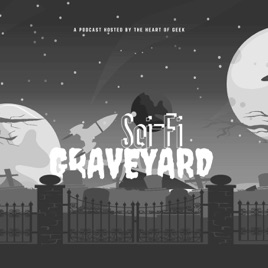
Advertise on podcast: Sci-Fi Graveyard
Rating
4.3from
This podcast has
54 episodes
Language
EnglishPublisher
Joseph GettingerExplicit
No
Date created
2020/03/19
Latest episode
2025/10/05
Average duration
61 min.
Release period
84 days
Description
A podcast that talks about old Sci-Fi movies and show. While some films we discuss what we like and what we don't. Other films will be asked if the film should, "Rise from the Grave", "Rest in Peace", or "Let it Die."
Unlock Sci-Fi Graveyard podcast Email contact info,
Listeners & Audience details
Email contact information
Direct podcast contact details

Listeners
Audience numbers & engagement insights

Audience details
Podcast Insights

Podcast episodes
Check latest episodes from Sci-Fi Graveyard podcast
Killer Klowns from Outer Space Review: Why This 80s Cult Classic Needs to Rest in Peace
2025/10/05
Summary
In this episode of Sci-Fi Graveyard, the hosts delve into the cult classic 'Killer Klowns from Outer Space,' exploring its origins, campy nature, and the impact it has had on horror culture. They discuss the film's box office performance, the evolution of horror films, and the significance of practical effects versus CGI in modern cinema. The conversation highlights the film's lasting appeal and its place in pop culture, especially during the Halloween season. In this engaging conversation, the hosts delve into the cult classic 'Killer Klowns from Outer Space,' exploring its unique charm, campy appeal, and the nostalgia it evokes. They discuss the film's special effects, the humor in its horror elements, and the potential for remakes and sequels in the horror genre. The conversation also touches on video game adaptations of horror films, the future of slasher games, and the enduring legacy of 'Killer Klowns.' Ultimately, they agree that the film stands as a perfect example of campy fun that should remain untouched by modern remakes.
Takeaways
Killer Klowns from Outer Space is a cult classic that gained popularity after its initial release.The film's budget was around $2 million, but it made $43 million at the box office.The movie is a campy homage to 50s B sci-fi films.Practical effects in Killer Clowns hold up well compared to modern CGI.The popcorn gun was the most expensive prop, costing $7,000 to make.The clown suits were so well designed that they were reused in other films.The film's humor and campiness contribute to its charm and appeal.The conversation reflects on the evolution of horror films and their budgets over the years.The hosts express a desire for more low-budget, campy films in today's cinema.The film's legacy continues to influence Halloween culture and horror fandom. The clown suits in 'Killer Klowns' are visually stunning.The humor in the film adds a unique charm to its horror.The film's short runtime necessitated some plot stretching.Nostalgia plays a significant role in the film's appeal.The campy nature of the film is celebrated by fans.Remakes of classic films often lack the original's magic.Video game adaptations of horror films can be hit or miss.The future of slasher games is promising but needs innovation.'Killer Klowns' is a perfect example of campy cinema.The film should remain untouched by modern remakes.
Sound bites
"I love campy stuff.""It's a good campy fun time.""We're on blue sky now."
Chapters
00:00 Introduction to Killer Klowns from Outer Space05:02 The Legacy and Impact of the Film11:16 Budget, Box Office, and Cultural Significance17:13 The Evolution of Horror Films and Practical Effects20:20 The Evolution of Movie Credits21:34 The Impact of CGI on Film Production22:44 The Balance of Practical Effects and CGI24:24 Character Development in Superhero Films25:53 The Legacy of George Romero's Films27:28 The Art of Practical Effects in Horror29:51 The Iconic Clown Suits of Killer Klowns30:52 Humor and Horror: The Clown's Unique Kill Methods32:53 The Cultural Impact of Killer Klowns from Outer Space35:32 Video Game Adaptations of Horror Films38:03 Innovative Game Concepts in Horror Genres41:20 Replayability and Game Mechanics42:53 The Campy Charm of Killer Klowns44:27 The Future of Killer Klowns and Sequels47:24 Upcoming Movies and Future Discussions
The Predator (2018) Review: Weaponized Autism and Iron Man Suits?
2025/04/21
In this episode of Sci-Fi Graveyard, the hosts review 'The Predator' (2018), discussing its characters, plot inconsistencies, and overall execution. They critique the performances, particularly highlighting Thomas Jane's role, while expressing disappointment in the film's writing and direction. The conversation delves into themes of evolution and intelligence, questioning the portrayal of autism in the narrative. Ultimately, the hosts share their final thoughts on the film's forgettable nature and lack of coherence. In this conversation, the hosts critique the latest Predator movie, discussing its storytelling flaws, character development, and overall execution. They express disappointment in the film's direction and compare it unfavorably to previous entries in the franchise, particularly 'Prey.' The discussion also touches on real-world parallels, such as autism and environmental issues, before concluding with thoughts on the future of the franchise and the importance of storytelling in film.
Takeaways
The Predator is the fourth movie in the franchise.Shane Black, who starred in the original, directed this film.Thomas Jane's character was a standout performance.The film's plot had significant inconsistencies.The portrayal of Olivia Munn's character raised questions.The movie attempted to address themes of evolution and intelligence.Critics felt the writing and direction were lacking.The film featured multiple sets of villains, complicating the narrative.The side characters provided some of the best moments.Overall, the film was deemed forgettable by the hosts. The latest Predator movie is considered a significant disappointment.Critics argue that the film's writing and storytelling were flawed.Character development was lacking, leading to a disjointed narrative.The hosts believe that previous films in the franchise, especially 'Prey,' were superior.Real-world issues, such as autism and environmental concerns, were discussed in relation to the film's themes.The conversation highlights the importance of coherent storytelling in movies.The hosts express a desire for the franchise to take a different direction in future films.There is a consensus that the film should not be revisited or celebrated.The hosts emphasize the need for better character arcs and plot development in sequels.The discussion reflects a broader critique of modern filmmaking and its disconnect from audience expectations.
Chapters
00:00 Introduction and Overview of The Predator
02:59 Character Analysis and Performances
06:00 Plot Holes and Inconsistencies
09:03 Themes of Evolution and Intelligence
11:58 Critique of Writing and Direction
14:58 Final Thoughts and Conclusion
21:51 Critique of the Predator Movie
26:07 Storytelling Flaws and Missed Opportunities
30:05 Thematic Elements and Character Development
36:32 Real-World Parallels and Speculation
43:51 Final Thoughts and Future Prospects
Prey (2022) Review: The Best Predator Movie Since the Original?
2024/11/18
In this conversation, the hosts discuss the movie 'Prey', a prequel in the Predator franchise, focusing on its cultural representation, character development, and storytelling techniques. They explore the dynamics between the protagonist Naru and the Predator, highlighting themes of gender identity and the significance of language. The discussion also touches on the connections to previous films in the franchise and the overall success of the Predator series compared to other franchises like Terminator. In this engaging conversation, the hosts delve into the evolution of iconic characters in the Terminator and Predator franchises, discussing the impact of character changes and the importance of continuity. They explore the blending of genres, particularly the action and horror elements in these films, and highlight the significance of strong female protagonists in modern cinema. The discussion also touches on the future of both franchises, the importance of storytelling, and the legacy of cult classics. The episode wraps up with reflections on physical media and the hosts' plans for future discussions.
Takeaways
Prey is a significant addition to the Predator franchise.Naru's character represents a strong female warrior identity.Cultural accuracy was prioritized in the film's production.The Predator's hunting style contrasts with Naru's resourcefulness.The film's pacing keeps the audience engaged throughout.Language plays a crucial role in character interactions.The film connects to iconic lines from the original Predator.The Predator franchise has seen more success than Terminator.The film explores themes of identity and survival.The dynamic between predator and prey is central to the story. Terminator 2 is often regarded as the best in the series.Character continuity is crucial for franchise success.Changes in iconic characters can alienate fans.Prey showcases a strong female protagonist in a compelling story.Franchises like Predator can thrive without reboots.Good storytelling is essential for engaging cinema.Cult classics often gain appreciation over time.Physical media is becoming less common in the digital age.Strong female characters can resonate with all audiences.Franchise longevity relies on fresh and engaging narratives.
Chapters
00:00 Introduction to Prey and Its Context
02:47 Character Development and Cultural Representation
06:08 The Predator's Hunting Style vs. Naru's Resourcefulness
09:02 Connections to the Original Predator Films
11:59 Themes of Survival and Proving Oneself
15:01 Pacing and Storytelling Techniques
17:59 Role Reversal: Predator vs. Prey
21:00 Franchise Comparisons and Future Possibilities
29:17 The Human Element in Horror Films
32:00 Franchise Comparisons: Predator vs. Terminator
36:00 The Evolution of the Terminator Series
40:12 Female Protagonists in Action Films
43:59 The Future of the Predator Franchise
53:46 The Longevity of Terminator
54:42 Pigeonholing in Storytelling
54:59 The Success of Prey
56:49 Classic Storytelling Elements
59:29 Cult Classics and Their Reception
01:03:35 The Future of Predator Franchise
01:07:03 The Importance of Physical Media
Predators (2010) Review: The Sequel We Deserved?
2024/05/27
Predators is the next movie in the Predator franchise, released in 2010. The film follows a group of people who find themselves in a jungle on an alien planet and must survive against the Predators. The movie was conceived by Robert Rodriguez and produced by his company Troublemaker Studios. It serves as a double entendre, describing both the hunters and the characters in the movie. The film introduces different classes of Predators and pays homage to the original 1987 Predator film. In this conversation, the hosts discuss the movie 'Predators' and share their thoughts on various aspects of the film. They talk about the plot, characters, and the overall quality of the movie. They also touch on the Predator franchise as a whole and compare 'Predators' to other films in the series. The hosts express their appreciation for the film's creative control and discuss the potential impact of studio interference. They also mention their other podcasts and upcoming projects.
Takeaways
Predators is set on an alien planet where a group of people must survive against the Predators.The film was conceived by Robert Rodriguez and produced by Troublemaker Studios.Predators introduces different classes of Predators and pays homage to the original 1987 Predator film.The movie explores the concept of survival and the predatory nature of both the hunters and the characters. The hosts enjoyed the movie 'Predators' and found it to be one of the better films in the Predator franchise.They appreciated the creative control that the filmmakers had and felt that it contributed to the quality of the film.The hosts discussed the potential impact of studio interference on movies and expressed their preference for films with creative freedom.They mentioned their other podcasts and upcoming projects, encouraging listeners to check them out.
Chapters
00:00 Introduction to Predators
02:33 The Double Entendre of Predators
08:07 Homage to the Original Film
12:29 The Twist with Topher Grace
39:05 Other Podcasts and Upcoming Projects
Predator 2 Review: The Sequel That Time Forgot
2024/02/12
In this episode, the hosts discuss the movie Predator 2. They talk about the cast, including Danny Glover and Bill Paxton, and the reasons for Arnold Schwarzenegger's absence. They also share trivia about the movie and discuss the controversy surrounding its release in South Africa. The hosts share their favorite predator kills and discuss the motivations of the characters. The episode concludes with a discussion about Bill Paxton's other notable movie, Twister. The conversation revolves around the film Predator 2 and its merits as a sequel. The participants debate whether it is a good follow-up to the original film and discuss the connections between Predator 2 and the novel Prey. They also explore the significance of the elder predator and the respect shown to Danny Glover's character. The conversation touches on the presence of predators on Earth throughout history and concludes with personal opinions on Predator 2 compared to the first film. Overall, the participants express an appreciation for Predator 2 that has grown over time. The hosts engage in casual conversation about movies and actors, discussing their favorite films and reminiscing about specific actors' roles. They then transition to planning future podcast episodes, including the movies they want to review. The conversation takes a somber turn as they remember the late actor Carl Weathers and express their appreciation for his work. The hosts conclude with final thoughts and recommendations, reflecting on previous podcast episodes and promoting their other podcasts and streaming activities. They end with closing remarks and discuss their plans for future episodes.
Takeaways
Predator 2 starred Danny Glover, Bill Paxton, and other notable actors.
Arnold Schwarzenegger did not appear in the movie due to various reasons.
The movie faced controversy in South Africa due to the political climate at the time.
The hosts shared their favorite predator kills and discussed the motivations of the characters.
Bill Paxton's other notable movie, Twister, was also mentioned. Predator 2 is a debated sequel to the original film, with some participants enjoying it as a follow-up and others preferring the first film.
The gun in Predator 2 has a connection to the novel Prey, and the participants discuss the significance of this connection.
The elder predator in Predator 2 shows respect to Danny Glover's character, indicating a deeper understanding of the predator's motivations.
The conversation explores the idea that predators have been present on Earth throughout history, adding depth to the predator mythology.
Personal opinions on Predator 2 vary, with some participants appreciating it more over time and others preferring the original film.
Chapters
00:00 Introduction and Cast
03:00 Reasons for Arnold Schwarzenegger's Absence
06:00 Trivia and Setting
09:00 South Africa Controversy
12:00 Danny Glover's Role and Other Cast Members
17:00 Favorite Predator Kills
22:00 Motivation of Characters
24:00 Bill Paxton and Twister
24:21 Debating if Predator 2 is a good sequel
27:10 The gun in Predator 2 and its connection to Prey
31:05 The significance of the elder predator and the respect shown to Danny Glover's character
34:31 Predators' presence on Earth throughout history
35:09 Personal opinions on Predator 2 compared to the first film
46:47 The appreciation for Predator 2 over time
51:35 Discussion about movies and actors
52:17 Planning future podcast episodes
53:25 Remembering Carl Weathers
54:36 Final thoughts and recommendations
56:08 Reflection on previous podcast episodes
57:03 Promotion of other podcasts and streaming activities
57:59 Closing remarks and future plans
Predator (1987) Review: "Get to the Choppa!"
2023/10/23
The conversation covers various aspects of the movie Predator, including the special effects, the work of Stan Winston, the possibility of a prequel, and the movie's box office success and legacy. The hosts also discuss funny moments in the movie and share personal connections and childhood memories associated with it. They conclude by recommending the movie to those who haven't seen it and expressing their love for the film.
Chapters
00:00 Special Effects and Blood of the Predator
29:00 Stan Winston and Special Effects
31:01 Possible Prequel
33:06 No Complaints about the Movie
35:06 Pacing and Special Effects
39:02 Box Office Success and Legacy
40:02 Inspiration from Rocky Joke
42:08 Funny Moments in the Movie
43:21 Personal Connection and Childhood Memories
46:11 Future Movies and Franchise
50:19 Final Thoughts and Recommendations
Superman: The Movie Review - The Standard for Superhero Films
2023/09/18
In this episode of Sci-Fi Graveyard, the hosts discuss the 1978 film Superman the Movie. They provide background information on the movie's production and cast, including Christopher Reeve's physical transformation for the role. They share trivia and behind-the-scenes details, such as Arnold Schwarzenegger's failed attempt to play Superman and the reuse of footage in Knight Rider. The hosts also explore the significance of Krypton's sun and the name Rao, as well as the impact of inflation on the movie's budget. They discuss the experience of watching movies in theaters and reflect on their first superhero movie experiences. The hosts highlight memorable scenes and characters, including Ned Beatty's performance as Otis and the iconic flying scene. They also discuss the ending and its continuity with Superman II, as well as references to real locations like Metropolis and Hackensack. The hosts share their favorite and least favorite scenes from the movie. In this episode, the hosts discuss the movie 'Predators' and express their appreciation for the film. They reminisce about their personal experiences with watching movies, including their childhood memories and the influence of their families. The episode concludes with announcements of upcoming episodes and promotions of other podcasts and content on their website. The hosts also acknowledge the challenges of balancing work and content creation.
Takeaways
Superman the Movie was a groundbreaking superhero film that had a significant impact on the genre.Christopher Reeve's physical transformation for the role of Superman was impressive and inspired the post-crisis Superman look in the comics.The movie's budget and box office success, when adjusted for inflation, demonstrate its popularity and cultural impact.The experience of watching movies in theaters has changed over time, with the availability of streaming platforms and shorter theatrical release windows.Memorable scenes and characters, such as Otis and the flying scene, have left a lasting impression on audiences. The hosts enjoyed the movie 'Predators' and expressed their admiration for its inventiveness.Watching movies together was a significant part of the hosts' childhoods, and they appreciate the freedom their parents gave them to explore different genres.The hosts promote their other podcasts and encourage listeners to check out their website for more content.Balancing work and content creation can be challenging, but the hosts are committed to delivering quality episodes and products.
Chapters
00:00 Introduction and Background
01:26 Superman's Origin and Journey
02:24 Trivia and Behind-the-Scenes
03:11 What If Arnold Schwarzenegger Played Superman?
04:09 Krypton's Sun and the Name Rao
05:23 Steven Spielberg's Offer and Richard Donner's Firing
06:53 The Song That Became an Inner Monologue
07:38 Christopher Reeve's Physical Transformation
08:25 The Budget and Box Office Success
09:36 The Impact of Inflation on the Budget
11:10 The Experience of Watching Movies in Theaters
12:23 The First Superhero Movie Experience
13:46 Revisiting Movies in Theaters
15:02 The Visual Effects and Filming Techniques
17:31 The Realism of Christopher Reeve's Superman
19:11 Memorable Scenes and Characters
25:12 The Ending and Continuity with Superman II
28:10 Metropolis and Hackensack References
31:03 Favorite Scene: Superman's Debut in Metropolis
31:39 Least Favorite Scene: Inconsistencies with Lex Luthor
01:00:12 Discussion about the movie 'Predators'
01:01:10 Personal experiences with watching movies
01:02:03 Conclusion and announcement of next episodes
01:03:23 Discussion about the horror movie podcast
01:04:12 Promotion of other podcasts
01:05:29 Promotion of website and content
01:06:15 Discussion about other content on the website
01:06:44 Challenges of balancing work and content creation
01:06:54 Closing remarks and farewell
Superman II: The Richard Donner Cut Review - The Version We Deserved?
2023/08/07
In this episode of Sci-Fi Graveyard, Joseph, Jeremy, and Josh fly back to the 1980s (via 2006) to review Superman II: The Richard Donner Cut. This version of the film restores director Richard Donner's original vision, which was famously compromised when he was fired and replaced by Richard Lester during the production of the theatrical release.
The discussion highlights the key differences between the two versions, such as the restoration of Marlon Brando's scenes as Jor-El (originally cut due to salary disputes), the removal of Lester's slapstick comedy, and the more serious tone of the villainous trio: General Zod, Ursa, and Non. The hosts debate the effectiveness of the screen test footage used to fill in gaps, noticing the changing glasses and hairstyles, but appreciating the effort to complete the story. They also critique the controversial ending where Superman reverses time (again), acknowledging it as a plot hole caused by the first movie using the original ending of the second. Despite the rough edges, the crew agrees that the Donner Cut is superior to the theatrical version, offering a more cohesive and emotionally resonant experience.
Key Highlights [02:00] Donner vs. Lester: Joseph explains the history behind the two versions, noting how Richard Donner was fired after filming 75% of the movie, forcing Richard Lester to reshoot scenes to get director credit. [04:22] Screen Test Footage: The hosts point out the use of screen test footage for scenes between Christopher Reeve and Margot Kidder, identifiable by Clark's changing glasses and hair. [13:51] "The Floaty Guy": Jeremy shares a funny moment where his son recognized Stellan Skarsgård's Baron Harkonnen as "the floaty guy" from the 1984 version, showcasing the character's iconic status. (Note: This seems to be a holdover from the previous Dune review discussion in the transcript, likely a tangent). [16:47] No Slapstick: A praise for the removal of Richard Lester's campy humor, such as the goofy powers in the Metropolis fight scene (like the teleporting and the "blowing people over" breath). [20:00] The Time Reversal Ending: The crew discusses the controversial ending where Superman reverses time to undo Zod's damage, acknowledging it was originally intended for Superman II but was used in the first film instead. [21:24] Jor-El's Return: A discussion on the emotional impact of restoring Marlon Brando's scenes, which adds depth to Superman's decision to give up his powers for Lois Lane.
Superman III Review: Campy Classic or Hot Mess?
2023/07/03
In this episode of Sci-Fi Graveyard, Joseph, Jeremy, and Josh continue their backward journey through the Superman film franchise, landing on the divisive 1983 sequel, Superman III. Directed by Richard Lester, this installment leans heavily into comedy, featuring legendary comedian Richard Pryor as computer genius Gus Gorman alongside Christopher Reeve's Man of Steel.
The discussion explores the film's drastic tonal shift from the epic scope of the first two movies to a campier, slapstick-filled adventure. The hosts debate the inclusion of Richard Pryor, with some finding his role puzzling and others enjoying the sheer absurdity of his character hacking weather satellites and building supercomputers. They praise the iconic "Evil Superman" arc, particularly the junkyard fight where Clark Kent battles his corrupted alter ego—a scene that stands out as the film's highlight. However, the crew is critical of the nonsensical plot involving synthetic kryptonite made with tar, the bizarre robot conversion of the villain's sister, and the lackluster special effects compared to the earlier films. Ultimately, they view Superman III as a mixed bag that hasn't aged particularly well, but still offers moments of nostalgic fun.
Key Highlights [02:46] Phone Number Trivia: Joseph points out a funny detail where a phone number shown on a matchbook is simply "12345678." [05:39] Office Space Connection: The hosts note that the "salami slicing" computer virus plot used by Richard Pryor's character to steal fractions of cents was the direct inspiration for the plot of the movie Office Space. [12:18] Evil Superman: A discussion on the film's most famous subplot, where synthetic kryptonite turns Superman into a selfish, vandalizing jerk who straightens the Leaning Tower of Pisa and blows out the Olympic flame. [13:13] Tar Kryptonite: The crew laughs about the ridiculous science behind the synthetic kryptonite, which fails because the computer substituted an unknown element with "tar" from a pack of cigarettes. [30:27] Junkyard Fight: The hosts praise the physical and metaphorical battle between Clark Kent and Evil Superman in the junkyard, calling it the best scene in the movie and a great showcase of Christopher Reeve's acting. [43:05] Robot Sister: A reaction to the horrifying (and somewhat out of place) scene where the supercomputer turns the villain's sister, Vera, into a cyborg, traumatizing a generation of kids.
Superman IV: The Quest for Peace Review - A Nuclear Mess?
2023/05/09
In this episode of Sci-Fi Graveyard, Joseph, Jeremy, and Josh fly back to the 80s to review the notorious Superman IV: The Quest for Peace. Starring Christopher Reeve in his final outing as the Man of Steel, the film sees Superman ridding the world of nuclear weapons, only to face Lex Luthor's latest creation: Nuclear Man.
The discussion centers on the film's disastrous production history under Cannon Films, which saw the budget slashed from $36 million to $17 million. The hosts laugh about the visible cost-cutting measures, including the repeated use of the same flying shot, the terrible green screen effects, and the nonsensical plot holes (like a woman surviving in space without a suit). They critique Nuclear Man's design (silver nails and all), the baffling "Great Wall of China repair vision," and the awkward pacing due to 45 minutes of cut footage. Despite the film's flaws, Joseph admits a nostalgic fondness for it, while the others vote to "Let It Die," viewing it as a sad end to a legendary era. They also touch on the "Superman Sequel Theory," arguing that franchises often peak at the second movie and decline by the fourth.
Key Highlights [02:15] Budget Cuts: Joseph explains how Cannon Films slashed the budget in half before production began, leading to reused special effects shots and cheap sets that doomed the movie's visual quality. [05:10] The Great Wall Repair: A breakdown of the infamous scene where Superman rebuilds the Great Wall of China using a never-before-seen "repair vision" beam from his eyes. [09:05] Physics Don't Apply: The hosts mock the scene where Nuclear Man drops a moon rock on Superman, who dodges it, despite being able to lift mountains. They also laugh about Mariel Hemingway's character breathing in the vacuum of space. [10:48] The Lois Lane Memory Wipe: A discussion on the continuity error where Lois seemingly remembers Clark is Superman, only to have her memory wiped by a kiss (again), confusing the audience. [20:05] Superman Soundtrack: Joseph expresses his wish to see Superman: The Movie performed live with a symphony orchestra, praising John Williams' iconic score which was largely absent or synthesized in this sequel. [52:00] Sequel Decay Theory: The crew debates their theory that most superhero franchises (Superman, Batman, X-Men) start strong, peak with the second film, and then suffer a massive drop in quality by the third or fourth installment.
Resident Evil: Welcome to Raccoon City Review - A Faithful Reboot or Another Misfire?
2023/02/21
In this episode of Sci-Fi Graveyard, Joseph, Jeremy, and Josh return to the streets of Raccoon City to review the 2021 reboot, Resident Evil: Welcome to Raccoon City. Directed by Johannes Roberts, this film attempts to steer the franchise back to its survival horror roots, combining the plots of the first two video games into a single narrative.
The discussion centers on the film's dedication to game accuracy, from the recreation of the Spencer Mansion and RPD station using Capcom's blueprints to the inclusion of iconic moments like the "Itchy Tasty" diary and the truck driver eating a burger. However, the hosts are divided on the execution. They critique the casting choices, particularly finding Leon S. Kennedy's portrayal as an incompetent rookie frustrating and questioning the characterization of Jill Valentine as a trigger-happy cop. They also debate the effectiveness of merging two distinct game storylines into a sub-two-hour movie, which leaves the pacing feeling rushed and character development thin. Despite these flaws, the crew appreciates the darker, more horror-focused tone compared to the action-heavy Milla Jovovich films, ultimately ranking it in their top three live-action Resident Evil movies.
Key Highlights [02:46] Game Accuracy: Joseph reveals that Capcom provided the filmmakers with the actual blueprints for the Spencer Mansion and the RPD station, explaining why the sets look so faithful to the games. [03:22] Jill Sandwich Reference: The hosts note the inclusion of the infamous "Jill Sandwich" line, albeit in a different context (Jill stealing a sandwich from Wesker in a diner) than the original game's ceiling trap scene. [11:07] Character Changes: A heated discussion on the drastic changes to the characters, specifically Leon S. Kennedy being portrayed as a bumbling idiot rather than a capable rookie cop, and Wesker being more of an anti-hero than a villain. [28:22] Code: Veronica Easter Egg: Joseph points out a scene where Alice runs from a helicopter that is a direct visual homage to the opening cinematic of Resident Evil Code: Veronica. [36:41] China Censorship: Trivia about the film having to digitally remove Soviet symbols for the Chinese release, highlighting the influence of international markets on film production. [52:53] Sequel Potential: The crew speculates on the future of the franchise, suggesting that a TV series format would be better suited for adapting the dense lore of the Resident Evil games rather than crammed movies.
Resident Evil: The Final Chapter Review - Is It Finally Over?
2022/11/28
In this episode of Sci-Fi Graveyard, Joseph, Jeremy, and Josh reach the end of the line with Resident Evil: The Final Chapter. Directed by Paul W.S. Anderson, this 2016 film brings Alice back to The Hive in Raccoon City to release an airborne antivirus and save what's left of humanity.
The discussion is a mix of relief and frustration as the hosts break down the film's blatant disregard for the continuity established in the previous five movies. They criticize the massive retcons regarding the T-Virus's origin (Dr. Marcus vs. Dr. Ashford), the Red Queen's motivation, and the unexplained disappearance of key characters like Jill Valentine, Leon S. Kennedy, and Ada Wong. The crew mocks the "Clone Saga" reveal, the illogical plot points (like the antivirus spreading instantly worldwide), and the underwhelming deaths of fan-favorite characters like Wesker. Despite the narrative mess, they acknowledge a few decent action beats and the finality of Alice's story. Ultimately, the group votes to "Let It Die," thankful that the convoluted saga of Alice has finally concluded, paving the way for the (also disappointing) reboot.
Key Highlights [02:12] On-Set Tragedies: Joseph somberly discusses the severe injuries sustained by stuntwoman Olivia Jackson and the tragic death of crew member Ricardo Cornelius during the film's production. [08:46] The Retcon Mess: The hosts vent about how this movie changes the origin of the T-Virus (now created by Dr. Marcus to cure progeria) and contradicts the lore established in Apocalypse and Extinction. [15:59] Wesker's Downfall: A critique of Albert Wesker's anticlimactic end, where he is fired by the Red Queen and crushed by a door, a far cry from the formidable villain of the games. [23:04] The Instant Cure: The crew laughs at the absurdity of the airborne antivirus instantly curing everyone in Raccoon City the moment the vial breaks, while Alice claims it will take years to spread globally. [30:04] The Clone Reveal: A discussion on the twist that Alice herself is a clone of Alicia Marcus, and how Dr. Isaacs has been using clones to run the show the entire time. [48:00] Let It Die: The verdict is unanimous: this franchise went on for too long, strayed too far from the games, and ended with a whimper rather than a bang.
Resident Evil: Retribution Review - A Parade of Clones and Video Game Characters
2022/09/26
In this episode of Sci-Fi Graveyard, Joseph, Jeremy, and Josh return to the Umbrella Corporation's testing grounds to review the fifth installment of the franchise, Resident Evil: Retribution. Directed by Paul W.S. Anderson, this 2012 sequel brings Alice (Milla Jovovich) to an underwater facility in Russia where she must fight her way through simulations of various cities to escape.
The discussion centers on the film's "Greatest Hits" approach, bringing back dead characters like Rain (Michelle Rodriguez) and One (Colin Salmon) as clones, alongside the live-action debuts of fan-favorite game characters Leon S. Kennedy, Barry Burton, and Ada Wong. The hosts have mixed feelings about the casting, with Josh criticizing the look of Leon and Barry while praising Bingbing Li's accurate portrayal of Ada. They debate the logic of the simulation plot, the introduction of the Las Plagas parasites, and the "daughter" subplot involving a deaf clone child. The crew also expresses their fatigue with the series' repetitive nature and the constant resetting of Alice's powers. Ultimately, the group agrees that while it has some fun action beats, the story is a mess, leading them to vote "Let It Die."
Key Highlights [02:37] Casting Game Characters: The hosts discuss the introduction of Leon S. Kennedy (Johann Urb) and Barry Burton (Kevin Durand), criticizing their look and lack of faithful characterization compared to the games. [05:03] Simulation Plot: A breakdown of the movie's setting—a massive underwater Umbrella facility that simulates Tokyo, New York, and suburbia for bioweapon testing—which allows for the return of dead characters as clones. [08:12] Ada Wong: The crew praises the casting of Bingbing Li as Ada Wong, noting that she looks the most like her video game counterpart, even if her evening gown isn't the most practical combat attire. [15:59] Las Plagas: Joseph explains the introduction of the Las Plagas parasite (from Resident Evil 4), which allows the Undead to use weapons and ride motorcycles, deviating further from traditional zombies. [30:04] The Clone Reveal: A discussion on the deleted subplot that would have revealed the entire strike team from the first movie were clones, foreshadowing the twist in the final film. [36:41] China Censorship: Joseph shares trivia about the film having to digitally remove all Soviet and Communist symbols from the Russian zombies and vehicles to secure a release in China.
Resident Evil: Afterlife Review - 3D Gimmicks and Slow Motion
2022/08/22
In this episode of Sci-Fi Graveyard, Joseph, Jeremy, and Josh reload for the fourth installment of the franchise, Resident Evil: Afterlife. Directed by Paul W.S. Anderson (who returns to the director's chair for the first time since the original), this 2010 sequel brings the action to Los Angeles—or rather, a prison surrounded by zombies in Los Angeles—and introduces 3D technology to the series.
The discussion centers on the film's heavy use of slow-motion and 3D gimmicks, inspired by Avatar and filmed with James Cameron's camera system. The hosts have mixed feelings about the visual style, noting that while some scenes (like the rain-soaked opening in Tokyo) look cool, the effects often feel dated and unnecessary. They debate the introduction of Chris Redfield (Wentworth Miller), finding his characterization a bit stiff and "ham-fisted," despite the actor's popularity from Prison Break. The crew also breaks down the fight with the Executioner (the giant axe-wielding majini from Resident Evil 5), criticizing the logic of the battle but enjoying the spectacle. They express frustration with the "Mary Sue" nature of Alice, who loses her powers early in the film only to survive a plane crash without a scratch, and the inconsistent timeline of the movie universe. Ultimately, the group is divided, with some finding it a fun guilty pleasure and others seeing it as the point where the series jumped the shark.
Key Highlights [02:40] 3D & Slow-Mo: The hosts discuss how Paul W.S. Anderson was inspired by Avatar to film in 3D, leading to an abundance of slow-motion shots (like the throwing stars and water droplets) that added 20% to the budget. [06:33] The Clone Opening: A breakdown of the opening sequence where Alice and her clone army attack the Umbrella HQ in Tokyo, only to be unceremoniously killed off in the first 20 minutes to reset Alice's power levels. [09:16] The Executioner Fight: The crew critiques the shower fight scene with the Axeman, noting the illogical moment where Claire shoots him with a shotgun to little effect, only for Alice to kill him with a similar shot moments later. [11:53] Chris Redfield: A discussion on Wentworth Miller's debut as Chris Redfield, with the hosts finding it odd that such a major game character appears in only one movie and feels somewhat out of place. [30:07] Prison Location Logic: Joseph nitpicks the location of the prison, pointing out that a maximum-security facility wouldn't likely be located in downtown Los Angeles, contradicting the movie's setting. [01:11:10] Sequel Theory: The hosts share their theory on movie sequels (using Superman as an example), arguing that franchises often peak at the second movie and decline sharply by the fourth, a trend they see happening here.
The Frighteners Review: Peter Jackson's Forgotten Cult Classic
2022/07/19
In this episode of Sci-Fi Graveyard, Joseph, Jeremy, and Josh dig up a cult classic for an "Outside the Graveyard" special: Peter Jackson's 1996 horror-comedy, The Frighteners. Starring Michael J. Fox in his last major live-action film role before returning to television due to his Parkinson's diagnosis, the movie follows a psychic con man who uses his ghost friends to scam people, only to find himself hunting a real spectral serial killer.
The discussion highlights the film's unique blend of humor and genuine horror, praising the performances of the cast—especially Jeffrey Combs as the bizarre and creepy FBI agent Milton Dammers. The hosts debate the studio's decision to push for an R-rating, which forced Peter Jackson to add more gore (like the exploding head scene) but ultimately hurt the film's box office potential by alienating the teen audience. They also touch on the groundbreaking visual effects by Weta Digital, which paved the way for The Lord of the Rings, and the emotionally resonant story that elevates it above a typical ghost movie. Despite its commercial failure at the time, the crew agrees that The Frighteners is a perfect film that should "Rest in Peace" without a remake.
Key Highlights [02:18] Cast Breakdown: The hosts discuss the stellar cast, including Michael J. Fox, Trini Alvarado, and character actor legends like Jeffrey Combs (Re-Animator, Star Trek) and John Astin (The Addams Family). [06:12] Tales from the Crypt: Joseph shares trivia that the script was originally intended to be a Tales from the Crypt movie before producer Robert Zemeckis decided it was strong enough to stand on its own. [07:53] R-Rating Mistake: A debate on how the forced R-rating hurt the movie's success, with the studio pushing for more gore instead of embracing the PG-13 tone that would have attracted a wider audience. [20:23] Michael J. Fox's Health: The crew notes a scene where Fox's hand is visibly shaking, discussing how he was secretly battling Parkinson's disease during filming, which led to this being his final leading film role. [24:40] Jeffrey Combs as Dammers: Praise for Jeffrey Combs' unhinged performance as the eccentric FBI agent, with Joseph calling him a "perverted version of Fox Mulder." [52:00] Peter Jackson's Career: The hosts theorize that the technical achievement and storytelling strength of this film are exactly what convinced New Line Cinema to hand Peter Jackson the keys to The Lord of the Rings trilogy.
Podcast reviews
Read Sci-Fi Graveyard podcast reviews
Elvin 2020/11/14
A fun podcast
A fun podcast where you can tell the host and his friends really enjoy talking about movies. They do go on tangents but you can hear how parts of one...
Podcast sponsorship advertising
Start advertising on Sci-Fi Graveyard relevant audience podcasts
You may also like to advertise on these Podcasts

4.86335544
Harry Potter and the Sacred Text
Not Sorry Productions

4.577142
Youth Soccer Coaching Player Development Podcast
MyFootballCoach
5146100
Learning with Leslie
Leslie Samuel

52341
Home Improvement
Audacy

4.2326500
Bet Sweats
Audacy
4.8231263
Black Like Me
Alex Gee

4.7203120
F1 Explains
Formula 1

42332000
The Maggie and Perloff Show
Audacy

516777
Music For Programming
Datassette

4.995298
The Create & Thrive Podcast
Jess Van Den