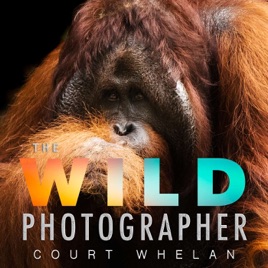
Advertise on podcast: The Wild Photographer
Rating
4.8from
This podcast has
91 episodes
Language
EnglishPublisher
Court WhelanExplicit
No
Date created
2020/03/21
Latest episode
2026/10/13
Average duration
44 min.
Release period
10 days
Description
Learn techniques, tips, and tricks for improving your wildlife, travel, landscape, and general nature photography with Court Whelan. Whether you consider yourself a beginner, serious hobbyist, or advanced professional, this is the way to rapidly understand and implement new skills to elevate your photography to new heights.
Unlock The Wild Photographer podcast Email contact info,
Listeners & Audience details
Email contact information
Direct podcast contact details

Listeners
Audience numbers & engagement insights

Audience details
Podcast Insights

Podcast episodes
Check latest episodes from The Wild Photographer podcast
Love 'em or Hate 'em? Five Pieces of Controversial Photography Gear Explained
2026/10/13
Can using a tripod actually make you a worse photographer? Are $15,000 super-telephoto lenses really worth it? And could a crop-sensor camera actually be better than full-frame for wildlife photography?
Photographers have surprisingly strong opinions about gear. But after years of guiding photography expeditions around the world, I've come to realize that some of the most passionately debated pieces of equipment don't have a clear right or wrong answer.
In this episode of The Wild Photographer, I'm diving into five surprisingly "controversial" pieces of camera gear, exploring why some photographers swear by them while others avoid them entirely. From giant wildlife lenses and teleconverters to tripods, crop sensors, and polarizing filters, I'll break down the advantages, disadvantages, and my own field-tested opinions.
The goal isn't to convince you to buy more gear—or throw anything out. It's to help you think more critically about the equipment you already have and make better decisions for the photography you actually do.
What You'll Learn in This Episode
Tripods: Essential or creativity killers? Why tripods are indispensable for long exposures, astrophotography, and certain landscapes, but can also slow you down and discourage experimentation with composition.Giant super-telephoto primes vs. zoom lenses: The extraordinary image quality and low-light advantages of 400mm f/2.8 and 600mm f/4 lenses versus the versatility, portability, and freedom of telephoto zooms.Crop sensors vs. full-frame for wildlife: Understanding crop factors, pixel density, the myth of "extra reach," and when a smaller sensor might actually put more useful pixels on your subject.Teleconverters: Brilliant innovation or optical compromise? Why I'm much more enthusiastic about 1.4x teleconverters than 2x versions, and when cropping your image might be the better solution.Circular polarizers: Amazing tools that are often overused: How polarizers can eliminate reflections and improve landscapes in ways editing software can't easily replicate—and why permanently leaving one on your lens might be a mistake.Bonus: The great UV-filter debate. Why I use high-quality protective filters on most of my lenses, despite understanding why other photographers won't touch them.Links & Resources Mentioned
Related Podcast Episodes and Photographers
Talking with Will Patino: The 4 Pillars of Landscape Photography, Simple Editing Techniques, and Why He Ditched the Tripod — My conversation with landscape photographer Will Patino, including his remarkable handheld landscape photography techniques.Will Patino Photography — Will's landscape photography, workshops, and educational resources.UV Filters Explained: Worth It, Overrated, or Essential Lens Protection? — My full deep dive into the pros, cons, and considerations of using protective filters.All About Camera Sensors: Understand Them and Improve Your Photography — A deeper explanation of sensor size, pixels, ISO, and image quality.Landscape Photography 101 & 102: Tips to Instantly Elevate Your Landscape Photos — More about tripod use, composition, and camera settings for landscapes.Lenses and Teleconverters Discussed
These are examples of the types of equipment discussed in the episode, rather than a definitive shopping list.
Canon RF 400mm f/2.8 L IS USMCanon RF 600mm f/4 L IS USMCanon RF 100–500mm f/4.5–7.1 L IS USMTamron SP 150–600mm f/5–6.3 G2Canon RF 1.4x TeleconverterCanon RF 2x TeleconverterPolarizing and Protective Filters
A few of the filter manufacturers and options I discuss:
PolarPro QuartzLine Filters — Circular polarizers and UV filters.Hoya HD3 UV Filters — Premium multi-coated protective filters.B+W UV and Clear Protection Filters — Including the MASTER series.Singh-Ray Filters — Premium specialty filters.Keep Learning Photography
For more photography tutorials, editing demonstrations, gear discussions, and lessons from the field, check out my YouTube channel, Court Whelan.
And I'd love to hear your thoughts on this episode! What's a piece of photography gear you absolutely love that everyone else seems to hate? Or something you think is completely overrated?
Head over to my YouTube channel and leave a comment. Your answer might just inspire a Part Two!
Remember: The best piece of camera gear isn't necessarily the most expensive, the sharpest, or the one other photographers tell you to buy. It's the one that helps you make the photograph you actually want to make.
Court's Websites
Check out my photo portfolio here: shop.courtwhelan.comSign up for my photo and conservation blog at www.courtwhelan.comFollow me on YouTube (@courtwhelan) for more photography tipsView my camera kit and recommended camera gearSponsors and Promo Codes:
MPB.com - Buy, Sell, or Trade Camera GearArtStorefronts.com - Mention this podcast for free photo website designBayPhoto.com - 25% off your first order (code: TWP25) ArtHelper.com - a photo community to learn, share and be inspiredArthelper.Ai - Smart tools to promo and showcase your art.LensRentals.com - WILD15 for 15% off
Wildlife Photography Gear for Beginners: Cameras, Lenses and Industry Trends with Allison McLaughlin
2026/09/29
What camera gear do you actually need for getting into wildlife photography? And perhaps just as importantly, what don’t you need?
In this episode, Court sits down with Allison McLaughlin for a deep dive into building a wildlife photography kit, particularly for beginner and intermediate photographers. They cover everything from why autofocus tracking and telephoto reach matter so much for wildlife, to the advantages of crop sensors, zoom lenses, used gear, and even sticking with a DSLR for a little longer.
They also get very specific, working through approachable camera bodies and wildlife lenses from Canon, Nikon, Sony, Fujifilm, and OM System/Micro Four Thirds. Along the way, Court and Allison talk about how much telephoto reach you really need, why a 600mm lens isn't automatically better than a 400mm lens, and why the wide end of a telephoto zoom can be every bit as important as the long end.
Perhaps the biggest lesson from this conversation is that your next camera does not have to be your final camera. Wildlife photography gear can get expensive very quickly, but there is a huge amount of excellent equipment available one or two generations back, particularly on the used market.
Connect with Allison: https://www.reddit.com/user/mpbcom/
Cameras Mentioned
Canon
Canon EOS R50
View the Canon EOS R50
Canon EOS R10
View the Canon EOS R10
Canon EOS 7D Mark II
View the Canon EOS 7D Mark II
Canon EOS 5D Mark IV
View the Canon EOS 5D Mark IV
Nikon
Nikon Z50 II
View the Nikon Z50 II
Nikon D500
View the Nikon D500
Nikon Z8
View the Nikon Z8
Sony
Sony A6100
View the Sony A6100
Sony A6400
View the Sony A6400
Sony A6600
View the Sony A6600
Sony A1
View the Sony A1
Sony A1 II
View the Sony A1 II
Fujifilm
Fujifilm X-T30 II
View the Fujifilm X-T30 II
Fujifilm X-S10
View the Fujifilm X-S10
OM System
OM System OM-5
View the OM System OM-5
Lenses Mentioned
Canon
Canon RF 100-400mm f/5.6-8 IS USM
A lightweight, relatively affordable RF wildlife zoom that Allison specifically highlights as a strong starting point.
View the Canon RF 100-400mm
Canon EF 100-400mm f/4.5-5.6L IS USM
The transcript does not specify which generation of the EF 100-400mm, so both versions are included here.
View the original Canon EF 100-400mm
View the Canon EF 100-400mm II
Nikon
Tamron 70-300mm f/4.5-6.3 Di III RXD for Nikon Z
One of Allison's budget-conscious recommendations for someone building a Nikon Z wildlife kit.
View the Tamron 70-300mm Nikon Z
Nikon AF-S Nikkor 200-500mm f/5.6E ED VR
An older F-mount wildlife favorite that can also be adapted to Nikon Z bodies.
View the Nikon 200-500mm
Sony
Sony E 70-350mm f/4.5-6.3 G OSS
Allison's standout recommendation for Sony APS-C wildlife shooters.
View the Sony 70-350mm G OSS
Sony FE 200-600mm f/5.6-6.3 G OSS
Discussed as an excellent example of the versatile long-telephoto range that works especially well for wildlife and birds.
View the Sony 200-600mm
Sony FE 400-800mm f/6.3-8 G OSS
An example of just how much reach modern wildlife lenses can provide, while also illustrating why the minimum focal length of a zoom matters.
View the Sony 400-800mm
Sony FE 100-400mm f/4.5-5.6 GM OSS
The Sony 100-400mm is also discussed when comparing versatile wildlife zoom ranges.
View the Sony 100-400mm GM OSS
Fujifilm
Fujifilm XF 70-300mm f/4-5.6 R LM OIS WR
Allison's pick for a compact Fuji wildlife setup, with stabilization and weather resistance.
View the Fujifilm XF 70-300mm
Micro Four Thirds / OM System
Olympus M.Zuiko 150-400mm f/4.5 TC1.25X IS PRO
The lens Court used in Namibia, giving a tremendous effective focal range on the Micro Four Thirds system.
View the Olympus 150-400mm
Olympus M.Zuiko Digital 75-300mm
Allison recommends the 75-300mm range as an especially compact way to get roughly a 150-600mm full-frame equivalent field of view. The episode does not specify which generation.
View the original Olympus 75-300mm
View the Olympus 75-300mm II
Panasonic Lumix G Vario 100-300mm
Another Micro Four Thirds option discussed for getting substantial wildlife reach without carrying a huge lens. The specific generation is not identified in the conversation.
View the original Panasonic 100-300mm
View the Panasonic 100-300mm II
Lens Adapters Mentioned
Canon Mount Adapter EF-EOS R
Allows Canon EF DSLR lenses to be used on Canon RF mirrorless bodies.
View the Canon EF-EOS R Adapter
Nikon FTZ Mount Adapter
Allows compatible Nikon F-mount DSLR lenses to be used on Nikon Z mirrorless cameras.
View the Nikon FTZ Adapter
Court's Websites
Check out my photo portfolio here: shop.courtwhelan.comSign up for my photo and conservation blog at www.courtwhelan.comFollow me on YouTube (@courtwhelan) for more photography tipsView my camera kit and recommended camera gearSponsors and Promo Codes:
MPB.com - Buy, Sell, or Trade Camera GearArtStorefronts.com - Mention this podcast for free photo website designBayPhoto.com - 25% off your first order (code: TWP25) ArtHelper.com - a photo community to learn, share and be inspiredArthelper.Ai - Smart tools to promo and showcase your art.LensRentals.com - WILD15 for 15% off
Making Photography Fun (Again?)
2026/09/14
Photography is supposed to be fun. But somewhere along the way, as we get better at it, acquire more gear, learn more techniques, and start expecting more from every photograph, some of that original excitement can fade.
In this episode, Court explores how to bring some of that playfulness, curiosity, experimentation, and excitement back into photography. This isn't really an episode about taking technically better photographs. In fact, that's sort of the point. It's about enjoying the process, trying things without worrying whether they'll work, and occasionally giving yourself permission to make some genuinely bad photos along the way.
From simplifying your camera kit and creating photo assignments to breaking your own habits, printing photographs, shooting with friends, and sometimes leaving the camera at home altogether, Court shares practical ways to reset your photographic brain and rediscover some of the excitement that probably got you hooked on photography in the first place.
In This Episode
Simplify your gear. Try heading out with one camera and one lens. Removing choices forces you to work a little harder creatively and spend less time managing equipment.Give yourself a very specific photo assignment. Photograph only shadows, reflections, textures, one color, things in motion, or subjects less than a foot off the ground.Limit yourself to one focal length. Even with a zoom lens, pick something like 35mm and don't touch the zoom ring.Pretend you're shooting film. Give yourself exactly 24 photographs, or tell a complete photo story using only five images.Make photographs you never intend to share. Take Instagram, portfolios, competitions, and other people's opinions completely out of the equation.Break your normal photographic habits. Photograph wildlife wide, landscapes with a telephoto, moving subjects at slow shutter speeds, or scenes at apertures you'd normally avoid.Learn one small new technique. Try focus stacking, panoramas, intentional camera movement, exposure bracketing, astrophotography, macro, or black-and-white photography.Try a completely different genre. Wildlife photographers can photograph architecture. Landscape photographers can try street photography. Travel photographers can spend an hour chasing insects and wildflowers.Stop waiting for perfect conditions. Instead of asking whether the light or weather is "good," ask what kind of photography those conditions make possible.Spend more time with fewer subjects. Pick one tree, flower, bird, landscape, or street corner and photograph it for 15 or 20 minutes. The interesting photographs often start after you've exhausted the obvious ones.Observe wildlife instead of simply collecting photographs of it. Once you've "got the shot," keep watching. Behavior, light, composition, and interactions can change quickly.Print your photographs. Even a simple 4x6, 5x7, or small collection of prints can completely change your relationship with an image.Photograph with other people. Seeing what catches another photographer's eye can reveal compositions and ideas you would have walked right past.Occasionally leave the camera at home. Experience a hike, sunset, wildlife sighting, or beautiful place without constantly evaluating it as a photograph.Remember why you started. Photography becomes a lot more interesting when you start asking "What if?" again.Mentioned in the Episode
Court Whelan on YouTube
Search "Court Whelan Photography" on YouTube for photography tutorials, editing videos, techniques, and photo-travel content.
https://www.youtube.com/@courtwhelan
FoxPrint
Small Polaroid-style photo prints and other easy ways to turn digital photographs into something physical.
https://www.foxprint.com/collections/square-prints
Court's Websites
Check out my photo portfolio here: shop.courtwhelan.comSign up for my photo and conservation blog at www.courtwhelan.comFollow me on YouTube (@courtwhelan) for more photography tipsView my camera kit and recommended camera gearSponsors and Promo Codes:
MPB.com - Buy, Sell, or Trade Camera GearArtStorefronts.com - Mention this podcast for free photo website designBayPhoto.com - 25% off your first order (code: TWP25) ArtHelper.com - a photo community to learn, share and be inspiredArthelper.Ai - Smart tools to promo and showcase your art.LensRentals.com - WILD15 for 15% off
Talking with Pete Ramsden - Techniques for Photographing in Challenging Conditions, Advice on Light Painting, Capturing the Northern Lights and More
2026/09/01
In this episode of The Wild Photographer, Court sits down with fellow photographer, naturalist and expedition leader Pete Ramsden for a wide-ranging conversation about what it actually takes to make great photographs in some of the more challenging environments on the planet.
They start in the rainforests of Borneo, where heat, humidity, and surprisingly low light can be challenging for both photographers and their gear. Pete shares some of the systems he has developed over years of guiding, including using silica gel and dry bags to fight moisture, acclimating cameras before heading outside, keeping lens cloths dry, and taking advantage of modern image stabilization to shoot at shutter speeds that would have seemed impossible not long ago. From there, the conversation moves north to the Arctic, with a deep dive into light painting and northern lights photography, including focusing in near-total darkness, composing around the aurora and experimenting with long exposures.
Court and Pete also get into the bigger picture of photography today. What does it mean to actually be "successful" as a photographer? How important is social media? How should photographers approach editing, culling thousands of images and traveling with increasingly complicated camera kits? Pete shares his Lightroom workflow, favorite travel tricks, current Sony setup and the one piece of gear that has become an unexpected game changer in the field.
Links & Resources Mentioned
Pete Ramsden
Pete Ramsden's Nat Hab bio, photography and upcoming tripsNat Hab Borneo Wildlife Photo ExpeditionLight Painting
Light Painting BrushesLight Painting Brushes Starter KitsLuminosify Choobs light-painting tubesTravel & Camera Carrying Gear
Pelican 1535 Air Carry-On CaseCotton Carrier G3 Camera HarnessPeak Design Capture Camera ClipPete's Camera Gear
Sony Alpha 7R VSony Alpha 7 VSony FE 200–600mm f/5.6–6.3 G OSSSony FE 70–200mm f/2.8 GM OSS IISony FE 14mm f/1.8 GMSony 2x TeleconverterSigma 24–70mm f/2.8 DG DN II ArtGear Court Mentions
Canon RF100–300mm f/2.8 L IS USMCourt's Websites
Check out my photo portfolio here: shop.courtwhelan.comSign up for my photo and conservation blog at www.courtwhelan.comFollow me on YouTube (@courtwhelan) for more photography tipsView my camera kit and recommended camera gearSponsors and Promo Codes:
MPB.com - Buy, Sell, or Trade Camera GearArtStorefronts.com - Mention this podcast for free photo website designBayPhoto.com - 25% off your first order (code: TWP25) ArtHelper.com - a photo community to learn, share and be inspiredArthelper.Ai - Smart tools to promo and showcase your art.LensRentals.com - WILD15 for 15% off
A Deep Dive into Memory Cards: Speed, Maintenance, Formatting and More
2026/08/18
Memory cards might be one of the least exciting things in your camera bag…right up until one fails, or a camera buffer "locks up" in the middle of an incredible wildlife moment, or you find your card simply isn't fast enough.
In this episode, Court does a deep dive into how memory cards actually work, what all those increasingly cryptic symbols on the front mean, and—more importantly—how to choose the right card for the way you photograph. The episode covers SD vs. CFexpress, read speed vs. write speed, UHS-I vs. UHS-II, V30/V60/V90 ratings, card capacity, camera buffers, dual-card setups, formatting, backups, field care, and a whole lot more.
At the end of the day, the best memory card is the one a photographer almost never has to think about. Court's advice is to choose something that matches the camera and the way it's being used, build a solid backup and formatting routine around it, take care of it in the field, and then get back to worrying about the much more interesting stuff happening on the other side of the lens.
A Quick Memory Card Cheat Sheet
General photography / landscapes / casual travel:
A good-quality SD card is usually plenty. If the camera supports UHS-II, it's worth considering, but there isn't necessarily a need for the fastest card available.
Wildlife, birds, and action:
Write speed becomes much more important. When shooting large RAW files at 15, 20, or 30+ frames per second, a slow card can become a bottleneck very quickly.
High-resolution cameras:
The bigger the files and the faster they're being captured, the more card speed matters.
Video:
Pay particular attention to sustained write speed. This is where V30, V60, and V90 ratings become important. Photographers should always check their camera's requirements for the specific video mode they're using.
CFexpress:
If a camera supports it and you're routinely shooting large RAW bursts, high-frame-rate wildlife, 4K/8K video, or RAW video, CFexpress can be a major performance upgrade.
Capacity:
For many still photographers, Court thinks 128GB–256GB is a great sweet spot. High-megapixel wildlife shooters and hybrid photo/video shooters may be happier around 256GB–512GB, while serious video shooters can very quickly find themselves looking at 1TB or more.
Court's 10-Point Memory Card Checklist
Buy the right card for the camera. Compatibility comes first.Prioritize write speed for shooting and read speed for transferring files.Pay attention to sustained write speed for video. Look at ratings such as V30, V60, and V90 and check what the camera requires.Don't bargain-hunt too aggressively. Buy good cards from reputable brands and trustworthy retailers.Use a real memory-card case. Loose cards rattling around in the bottom of a camera bag are asking for trouble.Have a system for full vs. empty cards. Face-up/face-down, separate cases, labels—whatever works. Just make it obvious.Format cards in the camera only after the photos are safely backed up.Import → Backup → Verify → FormatDon't remove cards while they're being accessed. Give the camera or computer a few seconds to finish its work.Retire suspicious cards. Court's philosophy is simple: if a card starts giving errors, transfer problems, or anything else that makes him nervous, it doesn't come on an important trip.Remember that a memory card is temporary storage—not an archive. Build a proper backup workflow for both the trip and when you get home.Products & Resources Mentioned
ProGrade Digital CFexpress Type B + SDXC Dual-Slot Card Reader
Court mentions ProGrade readers as a fast and reliable option for working with CFexpress and SD cards.
https://shop.progradedigital.com/collections/sd-readers/products/dual-slot-cfexpress-type-b-sdxc-reader
SD Association Memory Card Formatter
The official SD Association formatting utility mentioned in the episode.
https://www.sdcard.org/downloads/formatter/
Memory Card Brands Mentioned
Court mentions several established memory-card manufacturers in the episode. He doesn't recommend one specific card model for everyone because the right choice depends heavily on camera compatibility, burst rate, video settings, and card-slot type.
SanDisk Memory Cards
https://www.sandisk.com/products/memory-cards
Sony Memory Cards
https://electronics.sony.com/imaging/imaging-accessories/memory-cards-storage
Lexar Memory Cards
https://americas.lexar.com/product-category/memory-cards/
ProGrade Digital Memory Cards
https://shop.progradedigital.com/collections/memory-cards
Kingston Memory Cards
https://www.kingston.com/en/memory-cards
B&H Photo — Memory Cards
One of the reputable retailers Court mentions for purchasing cards.
https://www.bhphotovideo.com/c/buy/Memory-Cards/ci/1097/N/4093113320
Court's Websites
Check out my photo portfolio here: shop.courtwhelan.comSign up for my photo and conservation blog at www.courtwhelan.comFollow me on YouTube (@courtwhelan) for more photography tipsView my camera kit and recommended camera gearSponsors and Promo Codes:
MPB.com - Buy, Sell, or Trade Camera GearArtStorefronts.com - Mention this podcast for free photo website designBayPhoto.com - 25% off your first order (code: TWP25) ArtHelper.com - a photo community to learn, share and be inspiredArthelper.Ai - Smart tools to promo and showcase your art.LensRentals.com - WILD15 for 15% off
Talking with Shem Compion: Making Memorable Wildlife Photographs on Safari and Beyond
2026/08/04
When it comes to African wildlife photography, Shem Compion has done just about everything. He is an award-winning photographer, naturalist, author, and pioneering hide builder who has spent more than 25 years exploring and photographing the wild landscapes of Africa. He is also a professional photo guide where he helps photographers experience Africa with the timing, access and creative guidance needed to come home with something truly special.
In this episode, Shem and I dig into what separates a technically good wildlife photograph from one that stops people in their tracks. For Shem, much of it comes down to combining emotion with narrative. A photograph should make the viewer feel something, but it should also tell us where the animal lives, what it is doing and why that particular moment matters.
We also explore the enormous value of photographic guides, the temptation to photograph every animal you encounter on safari and why harsh midday light is rarely your friend. Shem shares the fascinating story behind the underground photography hides at Mashatu Game Reserve, including the new overnight hide that functions almost like a wildlife photography studio, complete with controlled lighting, beds and, crucially, a coffee machine.
From there, our conversation expands into visual storytelling, conservation photography, building a lasting body of work and organizing your image library so you can actually find those photographs 15 years from now. Shem also walks us through his current Nikon kit, his relatively light-handed approach to editing and the advice he wishes he could give his younger self: take more photographs, especially of the people, experiences and behind-the-scenes moments that make a journey memorable.
Links and Resources Mentioned
Learn More About Shem...
Shem Images — Shem’s photography, books, portfolio and backgroundShem Images on InstagramC4 Photo Safaris — Shem’s specialist African photography safari companyThe Rift: Scar of Africa — Shem’s long-form photography project documenting Africa’s Great Rift ValleyPurchase The RiftPhotography Hides and Safari Experiences
PhotoMashatu — Photographic experiences at Mashatu Game ReserveMashatu’s Underground and Overnight Hides — Information about the ground-level Matebole Hide and Lala Limpopo Sleep-Out HideC4 Photo Safaris at MashatuConservation Photography
Wildscreen ARK — Wildscreen’s nature education and visual storytelling platformThe ARKive Legacy — The original conservation image library referenced during the conversation. ARKive went offline in 2019, but its collection of more than 100,000 wildlife images and videos remains preserved by Wildscreen.Photo Books, Organization and Editing
Shutterfly Photo Books — One option for turning a personal photography project into a printed bookAdobe Lightroom and PhotoshopPhoto Mechanic — Photo-management software mentioned while discussing digital asset workflowsNik Collection and Silver Efex — The black-and-white editing software Shem uses for selected fine-art imagesShem’s Primary Camera Kit
Nikon Z8NIKKOR Z 180–600mm f/5.6–6.3 VRNIKKOR Z 24–120mm f/4 SNIKKOR Z 70–180mm f/2.8Court's Websites
Check out my photo portfolio here: shop.courtwhelan.comSign up for my photo and conservation blog at www.courtwhelan.comFollow me on YouTube (@courtwhelan) for more photography tipsView my camera kit and recommended camera gearSponsors and Promo Codes:
MPB.com - Buy, Sell, or Trade Camera GearArtStorefronts.com - Mention this podcast for free photo website designBayPhoto.com - 25% off your first order (code: TWP25) ArtHelper.com - a photo community to learn, share and be inspiredArthelper.Ai - Smart tools to promo and showcase your art.LensRentals.com - WILD15 for 15% off
Snapshot Episode: A Quick Guide to Ultra-Wide Angle Lenses
2026/07/28
Ultra-wide angle lenses may not take the majority of the photographs on a typical trip, but the images they produce can be some of the most immersive, useful and memorable. They are fantastic for astrophotography, Northern Lights, travel assignments, interiors and those experiential photographs that place the viewer right in the middle of the action.
In this episode, Court explores what qualifies as an ultra-wide angle lens, how crop-sensor conversions affect focal length, and why wider is not always better. He also compares prime and zoom lenses, explains the tradeoff between maximum aperture and field of view, and shares why approximately 20mm has become his personal sweet spot for many nighttime and travel-photography situations.
Court's Websites
Check out my photo portfolio here: shop.courtwhelan.comSign up for my photo and conservation blog at www.courtwhelan.comFollow me on YouTube (@courtwhelan) for more photography tipsView my camera kit and recommended camera gearSponsors and Promo Codes:
MPB.com - Buy, Sell, or Trade Camera GearArtStorefronts.com - Mention this podcast for free photo website designBayPhoto.com - 25% off your first order (code: TWP25) ArtHelper.com - a photo community to learn, share and be inspiredArthelper.Ai - Smart tools to promo and showcase your art.LensRentals.com - WILD15 for 15% off
All About Camera Sensors: Understand them and Improve your Photography
2026/07/20
In this episode of The Wild Photographer, Court takes a deep dive into one of the most important but often misunderstood parts of your camera: the digital sensor.
While camera sensors can sound technical at first, understanding how they work has a very real impact on the photos you make in the field. From ISO and noise to dynamic range, RAW files, megapixels, sensor size, rolling shutter, and even sensor dust, this episode breaks down the core concepts with practical advice in a photographer-friendly way.
Court explains the sensor as a light-gathering tool—the digital equivalent of film—and uses the helpful analogy of tiny “light buckets” to explain exposure, blown highlights, low-light performance, and why getting more real light to your sensor is often the key to better image quality.
Whether you’re photographing a jaguar at dusk, a polar bear on snow, birds in flight, or a sunrise landscape, understanding your sensor helps you make better decisions in the field. This episode is all about turning the technical side of photography into practical knowledge you can actually use.
Expect to Learn:
What a digital camera sensor actually doesThe difference between photosites and pixelsWhy high ISO creates noise—and why ISO is not the enemyHow sensor size affects low-light performance and dynamic rangeWhen more megapixels help, and when they can create trade-offsWhy protecting highlights matters so much in digital photographyHow RAW files preserve more of what your sensor capturesHow cameras interpret colorWhy a properly exposed high ISO image can beat an underexposed low ISO imageWhat ISO invariance and dual gain sensors mean in practical termsWhen to use mechanical vs. electronic shutterHow rolling shutter can affect wildlife and action photographyWhat BSI and stacked sensors mean for modern camera performanceWhy phone cameras are impressive—but still different from larger-sensor camerasHow to prevent and manage sensor dust in the fieldKey Takeaways:
Your camera sensor is not just a spec on a camera brochure. It is the heart of your digital camera and the thing that determines how your camera receives light. Once you understand how your sensor works, you can expose more intentionally, choose ISO more confidently, protect important highlights, shoot RAW when quality matters, and make better creative decisions in the field.
Court's Websites
Check out my photo portfolio here: shop.courtwhelan.comSign up for my photo and conservation blog at www.courtwhelan.comFollow me on YouTube (@courtwhelan) for more photography tipsView my camera kit and recommended camera gearSponsors and Promo Codes:
MPB.com - Buy, Sell, or Trade Camera GearArtStorefronts.com - Mention this podcast for free photo website designBayPhoto.com - 25% off your first order (code: TWP25) ArtHelper.com - a photo community to learn, share and be inspiredArthelper.Ai - Smart tools to promo and showcase your art.LensRentals.com - WILD15 for 15% off
UV Filters Explained: Worth It, Overrated, or Essential Lens Protection?
2026/07/14
UV filters are one of those deceptively simple pieces of camera gear that somehow manage to spark wildly passionate opinions.
Some photographers swear by them. Others won’t let them anywhere near their expensive glass. And somewhere in the middle are a whole lot of people wondering, “Wait… do I actually need one of these things?”
In this episode of The Wild Photographer, we’re taking a practical, field-tested look at UV filters: what they are, why they exist, why they mattered more in the film era, and why many photographers still use them today even though digital cameras don’t really need UV filtration in the same way.
The big shift is this: for most modern photographers, UV filters are no longer about filtering UV light. They’re about protection.
A good UV filter acts like a clear, protective layer in front of your lens. It can help shield your front element from scratches, smudges, dust, rain, mud, salt spray, and the occasional “oops, that branch was closer than I thought” moment. And for photographers who travel, guide, shoot in rough conditions, or frequently clean their gear in the field, that extra layer can provide a lot of peace of mind.
But there are trade-offs. Cheap filters can potentially degrade image quality, stacking filters can cause issues like vignetting or optical weirdness, and if you’re using extremely high-end prime lenses, there’s a very reasonable argument that you may not want to place a lower-quality piece of glass in front of a truly elite lens.
So this episode is less about declaring UV filters “good” or “bad,” and more about understanding when they make sense, when they don’t, and how to shop for one if you decide to use them.
UV Filter Product Links Mentioned
Here are the UV filter brands and shopping resources mentioned in the episode:
PolarPro QuartzLine UV Filters — a higher-end UV filter option with quartz glass, anti-reflection coatings, scratch protection, and no exposure adjustment needed.Hoya UV Filters at B&H Photo — Hoya offers a wide range of UV and protective filters, including multi-coated and higher-end HD options.Hoya HD3 UV Filter — a premium Hoya UV filter with nano multicoating, scratch resistance, water and oil repellency, and no exposure change.B+W UV-Haze MRC MASTER Filter — a high-quality UV protection filter with MRC nano coating and low reflective qualities.B+W Clear Protection Filter — a clear protective filter option designed to protect against dust, fingerprints, splashing water, and other field hazards.B&H Photo Protective and UV Filters — a useful place to compare UV, haze, and protective filters by size, brand, price, and coating type.Lensrentals — a place where photographers can research or rent gear, including filters depending on availability.Final Takeaway
UV filters are not magic. They will not transform your photos, make your colors explode, or really much of anything when it comes to look.
But a good UV filter can protect your lens, make cleaning easier, reduce stress in rugged field conditions, and help preserve resale value. For most lenses, especially everyday travel, wildlife, and landscape lenses, I think they’re a very smart investment.
The key is to buy a good one. Look for reputable brands, multi-coated glass, and a price point that matches the quality of the lens you’re protecting.
And when you’re stacking filters, working with ultra-premium glass, or chasing the absolute highest optical quality possible, that may be the time to take the UV filter off and let the lens do its thing.
Court's Websites
Check out my photo portfolio here: shop.courtwhelan.comSign up for my photo and conservation blog at www.courtwhelan.comFollow me on YouTube (@courtwhelan) for more photography tipsView my camera kit and recommended camera gearSponsors and Promo Codes:
MPB.com - Buy, Sell, or Trade Camera GearArtStorefronts.com - Mention this podcast for free photo website designBayPhoto.com - 25% off your first order (code: TWP25) ArtHelper.com - a photo community to learn, share and be inspiredArthelper.Ai - Smart tools to promo and showcase your art.LensRentals.com - WILD15 for 15% off
Wildlife Photography 102 and 103: Advanced Methods for Pro-Level Results
2026/07/07
There’s a big difference between taking a photo of wildlife and making a wildlife photograph.
That’s really the heart of this episode. In Wildlife Photography 102 and 103, we move beyond the basics and into the field-tested techniques that help transform a good wildlife sighting into a more captivating, artful, professional-looking image.
This isn’t about needing the fanciest camera or the biggest lens. It’s about learning how to stack the deck in your favor, first with Technique... choosing your angle, understanding light, reading behavior, waiting for the moment, managing your background, and dialing in the right settings so that when the magic happens, you’re ready for it. And, why the best wildlife photographers are often the ones who watch first and shoot second.
Then we shift into the Settings side of the equation: why shooting in RAW is such a game changer, why I love manual mode with Auto ISO, how to think about shutter speed for calm wildlife versus true action, and when to use burst mode or pre-record features to capture moments that happen faster than your brain can react.
The overall goal? To move past the “field guide shot” and create wildlife images that feel more alive, more intentional, and more memorable.
In This Episode
We cover:
How to avoid the classic “field guide shot”Why low angles create more intimate and aesthetic wildlife imagesHow telephoto lenses can help lower your effective shooting angleHow background separation creates that pro-level wildlife portrait lookWhy distance between the animal and background matters so muchHow to choose backgrounds based on color, texture, pattern, and layersWhy patience is often the secret ingredient in great wildlife photographyHow to wait for the best moment instead of settling for the obvious oneWhat catch light is and why it brings life into an animal’s eyeWhy shooting to edit can improve your compositionsHow golden hour, clouds, and dramatic weather can elevate your photosWhen spot metering can create more dramatic or unexpected exposuresWhy shooting in RAW is essential for advanced editingWhy manual mode plus Auto ISO is my favorite setup for wildlifeHow to think about shutter speed for different kinds of wildlife behaviorWhen to use motion blur creativelyHow panning can create streaky, dynamic wildlife imagesWhy burst mode is so useful for fleeting behaviorHow pre-record features can help capture pounces, takeoffs, breaches, and other split-second momentsFinal Thoughts
Wildlife Photography 102 and 103 is really about becoming more intentional and creating art vs. just documenting what you saw. It’s the shift from “I saw something amazing” to “I made something compelling out of the moment.”
That comes from little choices that add up: getting lower, watching the background, waiting for behavior, catching the light in the eye, choosing the right shutter speed, and giving yourself room to edit. None of these techniques require perfection. They just require awareness — and a willingness to slow down, observe, and make decisions before the moment disappears.
Court's Websites
Check out my photo portfolio here: shop.courtwhelan.comSign up for my photo and conservation blog at www.courtwhelan.comFollow me on YouTube (@courtwhelan) for more photography tipsView my camera kit and recommended camera gearSponsors and Promo Codes:
MPB.com - Buy, Sell, or Trade Camera GearArtStorefronts.com - Mention this podcast for free photo website designBayPhoto.com - 25% off your first order (code: TWP25) ArtHelper.com - a photo community to learn, share and be inspiredArthelper.Ai - Smart tools to promo and showcase your art.LensRentals.com - WILD15 for 15% off
Shutter Speeds Necessary for Various Types of Wildlife Movement
2026/06/30
There are few things more frustrating in wildlife photography than thinking you nailed the moment… only to later realize the animal is just a little bit soft. That is, you didn't freeze the wildlife movement.
In this episode of The Wild Photographer, we’re diving into one of the most practical, field-tested topics in wildlife photography: what shutter speeds you actually need to freeze motion.
But here’s the important part: not all movement is created equal. A sleeping polar bear, a restless lion, a nursing cub, a walking raccoon (any raccoon photographers out ther?), a sparring bear, a flying bird, and a twitchy little forest bird all require different thinking. And while faster shutter speeds are usually safer, they come with trade-offs: higher ISO, more noise, wider apertures, less depth of field, or the need to lean on de-noise software later.
We’ll start by separating two types of movement: camera movement and subject movement. Camera shake can sometimes be handled with the classic “one over focal length” rule, image stabilization, tripods, monopods, or good bracing technique. But subject movement? That’s a whole different beast — sometimes literally.
From there, we walk through practical shutter speed ranges for different wildlife scenarios, from resting animals all the way up to fast, frenetic movement like birds in flight, pouncing predators, or fast-twitch action. We also talk about when not to freeze motion, because intentional motion blur can be one of the most creative ways to make your wildlife photography stand out.
The goal here isn’t to memorize a rigid formula. It’s to build a mental field guide so that when the action starts, you can make fast, confident decisions — instead of fumbling with settings while the cheetah, bear cub, or twitchy bird does something spectacular and then immediately pretends nothing happened.
Here’s the summary list of shutter speeds discussed in the episode:
Wildlife Scenarios | Recommended Shutter Speed Range
Resting animal / no movement | 1/100 to 1/250 sec
Slightly restless animal / periodic movement | 1/200 to 1/320 sec
Restful interaction — nursing cubs, gentle behavior | 1/250 to 1/500 sec
Steadily moving but calm — slow bear, relaxed walking, gentle movement | 1/320 to 1/600 sec
Playful interaction — gorilla baby playing, active family behavior | 1/500 to 1/800 sec
Walking or trotting mammal | 1/800 to 1/1250 sec
Fast movement — sparring, chasing, rolling, running | 1/1600 to 1/2000 sec
Frenetic movement — birds in flight, pouncing, twitchy action | 1/1600 to 1/3200 sec
Extremely fast wings — hummingbirds, insects, wingbeats | 1/4000 to 1/8000 sec may help, but even this may not fully freeze wing motion
Twitchy birds on branches | Can range from 1/250 to 1/1600 sec, depending on timing
Intentional motion blur | Start around 1/40 sec, then experiment slower
Slow-motion blur experiments | Try 1/20, 1/10, 1/8, 1/5, or 1/2 sec
Panning wildlife | Often around 1/40 to 1/20 sec
Handheld landscapes | Absolute slow end around 1/50 sec, but often safer at 1/200 to 1/250 sec
Tripod landscapes | Much slower shutter speeds are possible because the subject usually isn’t moving, and tripods take out all hand movement.
Court's Websites
Check out my photo portfolio here: shop.courtwhelan.comSign up for my photo and conservation blog at www.courtwhelan.comFollow me on YouTube (@courtwhelan) for more photography tipsView my camera kit and recommended camera gearSponsors and Promo Codes:
MPB.com - Buy, Sell, or Trade Camera GearArtStorefronts.com - Mention this podcast for free photo website designBayPhoto.com - 25% off your first order (code: TWP25) ArtHelper.com - a photo community to learn, share and be inspiredArthelper.Ai - Smart tools to promo and showcase your art.LensRentals.com - WILD15 for 15% off
How Pros Travel with Camera Gear (Safely and Effectively!)
2026/06/23
In this episode of The Wild Photographer, Court digs into one of the most practical, important, and occasionally nerve-wracking topics in travel photography: how to travel with camera gear safely and effectively.
If you’ve ever walked through an airport with thousands of dollars of camera equipment on your back, you know the feeling. You don’t want that bag leaving your side, you don’t want your lenses rattling around, and you definitely don’t want to arrive in Botswana, Alaska, Borneo, or anywhere else only to discover that you missed packing something or have something break in transit.
After 20-plus years of traveling the world as a professional photographer, wildlife guide, and expedition leader, Court has developed a very practical system for getting gear from home to the field and back again. This episode covers everything from choosing the right camera bag to navigating airline restrictions, packing lenses properly, dealing with lithium batteries, deciding whether to bring a laptop, evaluating tripods and monopods, and keeping gear clean in dusty, wet, muddy, salty, or otherwise gear-hostile environments.
The big theme throughout this episode is that traveling well with camera gear is not about bringing every accessory you own or treating your equipment like a museum artifact. It’s about building smart habits, reducing risk, staying organized, and protecting the gear enough that it can do what it’s meant to do--help you make great photos in wild places.
Products Mentioned + Links:
Shimoda Designs Action X40
Camera backpack mentioned by Court as one of his favorite travel and field bags.
https://shimodadesigns.com/action-x40-v2-backpack-black/
Peak Design
Camera bags, clips, straps, tripods, and carry accessories.
https://www.peakdesign.com/
Peak Design Capture Camera Clip
Camera clip that attaches to a backpack strap or belt.
https://www.peakdesign.com/products/capture
Peak Design Camera Straps
Quick-release camera strap system.
https://www.peakdesign.com/collections/straps
Peak Design Carbon Fiber Travel Tripod
Compact travel tripod mentioned by Court.
https://www.peakdesign.com/products/travel-tripod
f-stop Gear
Adventure camera backpacks and modular camera inserts.
https://fstopgear.com/
ORTLIEB Waterproof Backpacks
Waterproof backpack options for wet, rainy, or boat-based travel.
https://us.ortlieb.com/collections/waterproof-backpacks
NOMATIC / McKinnon Battery Case
Battery case mentioned by Court for organizing three camera batteries.
https://www.nomatic.com/products/battery-case
PolarPro
Filters and camera accessories; Court mentions liking a sturdier PolarPro lens cloth that came with a filter.
https://www.polarpro.com/
ProGrade Digital Card Readers
Dedicated memory card readers for SD, CFexpress, and other card types.
https://shop.progradedigital.com/collections/sd-readers
Anker
Charging hubs and USB-C charging accessories.
https://www.anker.com/
Court's Websites
Check out my photo portfolio here: shop.courtwhelan.comSign up for my photo and conservation blog at www.courtwhelan.comFollow me on YouTube (@courtwhelan) for more photography tipsView my camera kit and recommended camera gearSponsors and Promo Codes:
MPB.com - Buy, Sell, or Trade Camera GearArtStorefronts.com - Mention this podcast for free photo website designBayPhoto.com - 25% off your first order (code: TWP25) ArtHelper.com - a photo community to learn, share and be inspiredArthelper.Ai - Smart tools to promo and showcase your art.LensRentals.com - WILD15 for 15% off
Snapshot: Why Every Photographer Should Own a Nifty Fifty Lens
2026/06/16
In this snapshot episode of The Wild Photographer, Court dives into one of the most beloved, affordable, and surprisingly powerful lenses in photography: the Nifty 50.
A “Nifty 50” is the nickname for a 50mm prime lens with a very fast aperture, often somewhere around f/1.8, f/1.4, or even f/1.2. These lenses are famous for being small, lightweight, relatively inexpensive, and capable of producing beautifully shallow depth of field. In other words, they can give your photos that dreamy background blur, strong subject separation, and low-light flexibility that usually comes with much more expensive gear.
While a 50mm lens may not seem like the obvious choice for nature and wildlife photography, Court makes the case that it deserves a permanent spot in just about every photographer’s kit. It may not be the lens you use all day, every day, but it can become your “X factor” lens — the one you pull out when you want a different look, a creative constraint, or a way to make images that feel a little more cinematic, intimate, or unexpected.
In this episode, Court explains what makes the Nifty 50 so useful, why it’s such a great lens for beginning photographers, how it can help you learn aperture faster, and where it fits into a travel, nature, portrait, cultural, or even video workflow.
Key Takeaways
A Nifty 50 is a 50mm prime lens with a fast aperture, often f/1.8 or f/1.4.It is one of the most affordable ways to experience very shallow depth of field.It is small, lightweight, and easy to keep in your camera kit.It is not the perfect lens for classic landscapes or traditional wildlife close-ups, but it can create fantastic, creative nature images.It excels at portraits, travel, culture, food, markets, low light, and video.It is especially valuable because it teaches aperture through real-world use.For many photographers, the inexpensive version is more than enough.Court Whelan on YouTube
Court shares weekly photography videos, editing tutorials, on-site video lessons, and practical tips for growing as a photographer.
https://www.youtube.com/@courtwhelan
The Wild Photographer Podcast
If you’re enjoying the show, please consider sharing the podcast with a friend and leave a review on Apple Podcasts, Spotify, or your podcast platform of choice. I truly appreciate it and and appreciate you for listening!
Court's Websites
Check out my photo portfolio here: shop.courtwhelan.comSign up for my photo and conservation blog at www.courtwhelan.comFollow me on YouTube (@courtwhelan) for more photography tipsView my camera kit and recommended camera gearSponsors and Promo Codes:
MPB.com - Buy, Sell, or Trade Camera GearArtStorefronts.com - Mention this podcast for free photo website designBayPhoto.com - 25% off your first order (code: TWP25) ArtHelper.com - a photo community to learn, share and be inspiredArthelper.Ai - Smart tools to promo and showcase your art.LensRentals.com - WILD15 for 15% off
When and How to "Break the Rules" and Think Different with your Wildlife, Landscape and Nature Photography
2026/06/09
In this episode of The Wild Photographer, Court follows up on his recent conversation about the “rules” of photography by exploring the equally interesting topic: when should we break them?
Photography rules exist for good reason. Things like the rule of thirds, sharp focus, proper exposure, level horizons, golden hour light, and clean composition all help us make stronger images more consistently. They give us a useful framework, especially when we’re learning or working quickly in the field. But as every photographer eventually discovers, those rules are not laws. They are shortcuts, not mandates.
At the end of the day, photography is art. A technically perfect image can fall flat, while a photograph that bends or completely ignores the rules can be the one that draws more attention and pop. Sometimes a slightly blurred subject, an "overly bright" exposure, a centered animal, a tilted horizon, or a chaotic scene full of visual clutter creates more feeling, more story, and more originality than the “correct” version ever could.
In this episode, Court walks through some of his favorite ways to break traditional photography rules with intention. He talks about exaggerated composition, center-weighted subjects, high-key and low-key exposure, motion blur, focusing somewhere other than the eyes, embracing bad weather, shooting at midday, experimenting with minimalism and maximalism, photographing the aftermath of a moment, and even leaning into star trails instead of trying to avoid them.
The big idea is not to throw every rule out the window and hope for the best. It’s to understand the rules well enough that you can recognize when breaking them might create a stronger photograph. When done thoughtfully, breaking the rules gives you more creative control and a way to make images that feel more personal, more memorable, and sometimes a whole lot more fun.
Court's Websites
Check out my photo portfolio here: shop.courtwhelan.comSign up for my photo and conservation blog at www.courtwhelan.comFollow me on YouTube (@courtwhelan) for more photography tipsView my camera kit and recommended camera gearSponsors and Promo Codes:
MPB.com - Buy, Sell, or Trade Camera GearArtStorefronts.com - Mention this podcast for free photo website designBayPhoto.com - 25% off your first order (code: TWP25) ArtHelper.com - a photo community to learn, share and be inspiredArthelper.Ai - Smart tools to promo and showcase your art.LensRentals.com - WILD15 for 15% off
Snapshot: A Simple Formula for Great Astrophotography
2026/06/02
In this snapshot episode of The Wild Photographer, Court shares a quick, practical guide to astrophotography — specifically, how to photograph the Milky Way with strong composition, sharp stars, and a plan for success.
Astrophotography can feel intimidating at first. You’re working in extreme low light, trying to make tiny points of starlight stand out in a big, dramatic way. Plus, you're likely using gear that is specialized, and let's face it, things are more challenging in the pitch dark.
But the good news is that with a solid plan, it's a fairly straightforward formula. With the right lens, a sturdy tripod, thoughtful foreground composition, and a few repeatable camera settings, you can create beautiful night sky images that will really help elevate your nature photography.
Links Mentioned in the Episode:
Sun Surveyor App
A planning app for tracking the sun, moon, and Milky Way, including augmented reality tools for scouting compositions.
https://www.sunsurveyor.com/
Timeanddate Moonrise and Moonset Calculator
Useful for checking moonrise, moonset, moon phase, moon direction, and timing for astrophotography planning.
https://www.timeanddate.com/moon/
Court Whelan on YouTube
Court’s YouTube channel includes photography tutorials, editing walkthroughs, and visual companions to topics discussed on the podcast.
https://www.youtube.com/@courtwhelan
Smallrig LED Light: https://amzn.to/3PlZvTT
Petzl Actik headlamp: https://amzn.to/4nUlwWE
Court's Websites
Check out my photo portfolio here: shop.courtwhelan.comSign up for my photo and conservation blog at www.courtwhelan.comFollow me on YouTube (@courtwhelan) for more photography tipsView my camera kit and recommended camera gearSponsors and Promo Codes:
MPB.com - Buy, Sell, or Trade Camera GearArtStorefronts.com - Mention this podcast for free photo website designBayPhoto.com - 25% off your first order (code: TWP25) ArtHelper.com - a photo community to learn, share and be inspiredArthelper.Ai - Smart tools to promo and showcase your art.LensRentals.com - WILD15 for 15% off
Podcast reviews
Read The Wild Photographer podcast reviews
S. Thomas Sullivan Photography 2026/08/20
Brewer to photography
I brew beer so am spoiled by podcasts that give a bunch of info. I was having trouble finding that w/ photography until I landed here. Great podcast! ...
mchase68 2026/07/01
Awesome pod
If you’re a photography nerd like myself this is the pod for you.
Johhny Po 2025/09/08
Great podcast
I am new to wildlife photography and this podcast has been an amazing resource for me. Thank you Court!!!
NY Tuck 2025/06/26
Great podcast
Court delivers valuable wildlife tips and insights in an unpretentious and not overly technical way. Great for beginners and intermediate/advanced ama...
Oregonian 2017 2024/12/02
Really helpful
The podcast is geared to relatively less experienced photographers in the sense that Court starts with a review and explaining the basic things then m...
masalserr 2024/11/16
A discovery
A wonderful and didactic podcast. Thank you
From Dom. Rep. / iphone6s plus 2024/11/09
So good
This podcast is so inspirational and informative.
2Up and Overloaded 2024/10/06
Love the show
Great tips and content that inspires me to learn more about how to become a better photographer.
Reviewer🌻 2024/09/20
Awesome Podcast for Photographers
Excellent- so clearly explained! Real-World Examples. Common sense solutions. ...
NCDaja 2024/09/12
Excellent Wildlife Photo Podcast
Recently discovered this podcast and have thoroughly enjoyed the episodes. Interesting interviews, good advice and tips, nerdy but not overly so. Part...
Podcast sponsorship advertising
Start advertising on The Wild Photographer relevant audience podcasts
You may also like to advertise on these Podcasts

4.6253402000
The Glenn Beck Program
Mercury Radio Arts

4.922321830
The Ten Minute Bible Hour Podcast
Matt Whitman

4.916151617
The Kristian Harloff Show
Kristian Harloff

4.853512000
Men In Blazers
Men In Blazers
4.847052000
Pat Gray Unleashed
Blaze Podcast Network

4.920391996
Brant & Sherri Oddcast
Brant Hansen

4.92001923
The Wright Report
Bryan Dean Wright

4.672732000
Timcast News
Timcast Media

4.6221662000
Mark Levin Podcast
Cumulus Podcast Network

4.6432771245
Verdict with Ted Cruz
Premiere Networks