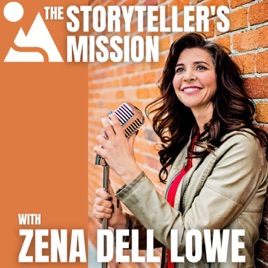
Advertise on podcast: The Storyteller’s Mission with Zena Dell Lowe
Rating
4.9from
This podcast has
260 episodes
Language
EnglishPublisher
Zena Dell LoweExplicit
No
Date created
2020/03/28
Latest episode
2026/04/23
Average duration
16 min.
Release period
9 days
Description
Zena Dell Lowe is a seasoned and engaging teacher with a passion for writers and storytellers. Her focused, concise, and practical episodes (all roughly 20 minutes) not only explore the nuts and bolts of the craft, but also dive deep into the inner life of the artist and the "why" behind creativity. If you believe that story matters, you'll want to give this podcast a listen.
Unlock The Storyteller’s Mission with Zena Dell Lowe podcast Email contact info,
Listeners & Audience details
Email contact information
Direct podcast contact details

Listeners
Audience numbers & engagement insights

Audience details
Podcast Insights

Podcast episodes
Check latest episodes from The Storyteller’s Mission with Zena Dell Lowe podcast
If I Had Legs, I’d Kick You — Why This Dark Film Feels True — But Isn’t
2026/04/23
What happens when a dark film feels emotionally true—but quietly removes the possibility of hope?
In this episode of Salt & Light, we examine If I Had Legs, I’d Kick You and explore a deeper tension in modern storytelling: the difference between honest depictions of suffering and narratives that present a hopeless worldview as “realism.”
We break down how films shape belief—often more than we realize—and why some stories leave us unsettled in ways we can’t quite name. Is it because they’re telling the truth… or because they’re teaching us something false about what it means to be human?
For writers, filmmakers, and thoughtful viewers, this episode unpacks how worldview operates beneath narrative structure—and why it matters more than ever.
Because stories don’t just entertain us. They form us.
Watch this episode on YouTube
Free Resources for Writers:
Seven Deadly Plot Points FREE TRAINING VIDEO
Free Video Tutorial for Screenwriting
Sign up for The Storyteller's Digest, my exclusive bi-monthly newsletter for writers and storytellers. Each edition delivers an insightful article or practical writing tip straight from me, designed to help you master your craft and tell compelling stories.
The Storyteller's Mission Podcast is now on YouTube. Subscribe to our channel and never miss a new episode or announcement.
📚 About The Storyteller’s Mission
The Storyteller’s Mission helps writers craft stories grounded in truth, meaning, and moral clarity — stories that shape culture rather than merely reflect it. We provide practical tools, writing tips, actionable lessons, and storytelling techniques to help you develop compelling stories, master story structure, build unforgettable characters, and polish your craft for personal and commercial success. Whether you’re writing novels, screenplays, or short stories, our bold, dynamic approach empowers you to execute your ideas with confidence and creativity—and maybe, just maybe, change the world.
Support the Show!
Contact us for anything else!
Send us Fan Mail
Support the show
Your “Fatal Flaw” Is Killing Your Hero
2026/04/17
Most writers are being taught a dangerous misconception about character development—and it’s quietly weakening their stories.
The idea that every protagonist must have a “fatal flaw” has become one of the most repeated rules in modern storytelling. But what if that advice is not just oversimplified… but fundamentally wrong?
In this episode of The Storyteller’s Mission with Zena Dell Lowe, we break down why many writers are mislabeling strong character traits as fatal flaws—and how that mistake can flatten your hero instead of deepening them.
We also explore how today’s anti-hero culture has reshaped what audiences and writers believe “depth” looks like, often confusing moral strength with weakness.
Here’s what you’ll learn in this episode:
Why not every difficult or disruptive trait is actually a flawThe critical difference between character traits, emotional wounds, and true fatal flawsHow anti-hero storytelling has distorted modern character developmentWhy conviction, loyalty, and moral clarity are often wrongly reframed as problemsThe practical test to determine whether a trait should be changed—or protectedIf you’ve been trying to make your protagonist more “complex” by breaking them down, this episode will challenge that instinct and give you a clearer framework for building stronger, more resonant characters.
Stop weakening your hero to make them interesting—and start building characters who are compelling because of what they stand for, not in spite of it.
Watch this episode on YouTube
Free Resources for Writers:
Seven Deadly Plot Points FREE TRAINING VIDEO
Free Video Tutorial for Screenwriting
Sign up for The Storyteller's Digest, my exclusive bi-monthly newsletter for writers and storytellers. Each edition delivers an insightful article or practical writing tip straight from me, designed to help you master your craft and tell compelling stories.
The Storyteller's Mission Podcast is now on YouTube. Subscribe to our channel and never miss a new episode or announcement.
📚 About The Storyteller’s Mission
The Storyteller’s Mission helps writers craft stories grounded in truth, meaning, and moral clarity — stories that shape culture rather than merely reflect it. We provide practical tools, writing tips, actionable lessons, and storytelling techniques to help you develop compelling stories, master story structure, build unforgettable characters, and polish your craft for personal and commercial success. Whether you’re writing novels, screenplays, or short stories, our bold, dynamic approach empowers you to execute your ideas with confidence and creativity—and maybe, just maybe, change the world.
Support the Show!
Contact us for anything else!
Chapters:
00:00 The Fatal Flaw Myth That’s Hurting Writers
01:02 Are You Ruining Your Protagonist Without Knowing It?
02:20 Why “Broken Heroes” Became the Standard
04:00 The Anti-Hero Trap in Modern Storytelling
05:40 Where the “Fatal Flaw” Idea Actually Comes From
07:05 Traits vs Flaws vs Character Wounds (Explained)
08:25 The Mistake That Flattens Your Hero Instantly
09:25 The Simpl
Send us Fan Mail
Support the show
Why Writing Great Characters Requires Emotional Work
2026/04/02
Writing compelling characters requires more than clever plots or witty dialogue—it demands emotional work. In this episode of The Storyteller’s Mission, Zena Dell Lowe explores how writers can deepen character arcs by understanding and owning their own emotional responses.
You’ll learn why conflict is the engine of character growth, how to translate emotional triggers into believable reactions, and the difference between context and justification in storytelling. This conversation is packed with actionable insights for novelists, screenwriters, and nonfiction writers who want to create deeply resonant, authentic characters.
Discover how mastering your own emotional awareness can transform your writing, create more realistic character interactions, and strengthen every story you tell. Whether you struggle with flat characters, weak emotional arcs, or conflict that falls flat, this episode gives you the tools to write characters readers will remember.
Watch this episode on YouTube
Free Resources for Writers:
Seven Deadly Plot Points FREE TRAINING VIDEO
Free Video Tutorial for Screenwriting
Sign up for The Storyteller's Digest, my exclusive bi-monthly newsletter for writers and storytellers. Each edition delivers an insightful article or practical writing tip straight from me, designed to help you master your craft and tell compelling stories.
The Storyteller's Mission Podcast is now on YouTube. Subscribe to our channel and never miss a new episode or announcement.
📚 About The Storyteller’s Mission
The Storyteller’s Mission helps writers craft stories grounded in truth, meaning, and moral clarity — stories that shape culture rather than merely reflect it. We provide practical tools, writing tips, actionable lessons, and storytelling techniques to help you develop compelling stories, master story structure, build unforgettable characters, and polish your craft for personal and commercial success. Whether you’re writing novels, screenplays, or short stories, our bold, dynamic approach empowers you to execute your ideas with confidence and creativity—and maybe, just maybe, change the world.
Support the Show!
Contact us for anything else!
Send us Fan Mail
Support the show
Everyone’s Praising Sinners… But They’re Missing This
2026/03/26
What is the real meaning behind Sinners (2025)? In this episode of The Storyteller’s Mission, we break down the hidden worldview, theology, and storytelling structure inside the Oscar-nominated film Sinners—and what it actually says about sin, truth, power, and redemption.
This is not just a film analysis—it’s a deep dive into worldview in storytelling. Every story communicates beliefs about reality, morality, and meaning. Sinners uses Christian language and imagery, but beneath the surface, it builds a completely different spiritual framework.
In this episode, we explore how the film reframes:
Sin as identity instead of moral failure
Community as salvation
Art and music as transcendence
Christianity as symbolic—but not true
Welcome to Salt & Light, a new series analyzing popular films, television, and stories through the lens of story structure, mythology, and worldview.
If you're a writer, filmmaker, or storyteller, this is essential:
👉 Because stories don’t just entertain—they teach.
👉 And if you don’t analyze worldview, you will unconsciously repeat it.
🔍 What You’ll Learn in This Episode
How Sinners uses Christian symbols while redefining their meaning
The concept of replacement theology in storytelling
Why music becomes the film’s true “religion”
How vampire mythology is altered to remove Christian power
The deeper message behind the film’s ending
Why worldview analysis is critical for writers
🎥 Watch this episode on YouTube
Free Resources for Writers:
Seven Deadly Plot Points FREE TRAINING VIDEO
Free Video Tutorial for Screenwriting
Sign up for The Storyteller's Digest, my exclusive bi-monthly newsletter for writers and storytellers. Each edition delivers an insightful article or practical writing tip straight from me, designed to help you master your craft and tell compelling stories.
The Storyteller's Mission Podcast is now on YouTube. Subscribe to our channel and never miss a new episode or announcement.
📚 About The Storyteller’s Mission
The Storyteller’s Mission helps writers craft stories grounded in truth, meaning, and moral clarity — stories that shape culture rather than merely reflect it. We provide practical tools, writing tips, actionable lessons, and storytelling techniques to help you develop compelling stories, master story structure, build unforgettable characters, and polish your craft for personal and commercial success. Whether you’re writing novels, screenplays, or short stories, our bold, dynamic approach empowers you to execute your ideas with confidence and creativity—and maybe, just maybe, change the world.
Support the Show!
Contact us for anything else!
CHAPTERS:
00:00 – Do You See the Worldview in Story?
00:30 – Introducing Salt & Light (New Series)
01:00 – What Sinners Sets Up (Film Overview)
02:20 – The Meaning Behind the Title “Sinners”
03:40 – Christianity as Restriction (Not Truth)
05:30 – The Shift to Ancestral Spirituality
08:00 – Vampire Mythology Rewritten
09:30 – Music as Transcendence (Core Theology)
11:10 – Community Replaces Salvation
12:20 – Why Christianity Has No Power in the Film
13:10 – The Lord’s Prayer S
Send us Fan Mail
Support the show
The Villain’s Favorite Weapon
2026/03/12
Breaking Shame: The Villain's Favorite, The Hero's Way Out
Shame can destroy stories—and characters—if writers let it dominate the narrative. In this episode of The Storyteller’s Mission, Zena Dell Lowe dives into why shame is the villain’s favorite weapon and how heroes must break its hold.
Learn how shame impacts character arcs, storytelling structure, and audience engagement, and discover the difference between shame and conviction in redemptive storytelling.
From coercion to clarity, we explore:
-Why writers are tempted to use shame
-How shame freezes character arcs and collapses moral nuance
-The distinction between shame and conviction
-How heroes preserve dignity, see complexity, & confront evil without becoming it
-A deep dive into the climax of About Schmidt and how it demonstrates redemptive storytelling
If you want to write stories with moral clarity, avoid turning your narrative into propaganda, and create arcs where shame loses its power, this episode is a must-watch.
Watch this episode on YouTube
Watch Ep06 first (optional for added context)
Free Resources for Writers:
Seven Deadly Plot Points FREE TRAINING VIDEO
Free Video Tutorial for Screenwriting
Sign up for The Storyteller's Digest, my exclusive bi-monthly newsletter for writers and storytellers. Each edition delivers an insightful article or practical writing tip straight from me, designed to help you master your craft and tell compelling stories.
The Storyteller's Mission Podcast is now on YouTube. Subscribe to our channel and never miss a new episode or announcement.
📚 About The Storyteller’s Mission
The Storyteller’s Mission helps writers craft stories grounded in truth, meaning, and moral clarity — stories that shape culture rather than merely reflect it.
Support the Show!
Contact us for anything else!
Chapters:
00:00 – Introduction: When Story Becomes Propaganda
01:18 – Part 1: Why Writers Are Tempted by Shame
03:25 – Part 2: How Shame Functions in Story
07:17 – Part 3: Shame vs Conviction
08:38 – Part 4: Why Shame is Anti-Story
09:43 – Part 5: Heroes Preserve Nuance
11:20 – Part 6: Example – About Schmidt
15:50 – Part 7: The Hero’s Way Out – Conviction & Repentance
18:30 – Part 8: The Storyteller’s Responsibility
Send us Fan Mail
Support the show
Writers: When Shame Kills Character Arc
2026/03/05
Storytellers often try to use shame to enforce a message—but doing so quietly destroys character arc. In this episode, Zena Dell Lowe explains why shame collapses characters into moral verdicts and turns storytelling into propaganda instead of discovery.
What’s the difference between guilt, shame, and conviction, and why does that difference matter for writers, filmmakers, and culture itself?
For writers, filmmakers, and storytellers, the misuse of shame collapses characters into verdicts instead of people. When a story tells the audience who is morally acceptable and who is not, character complexity disappears and true transformation becomes impossible.
In this episode you’ll discover:
• The critical difference between guilt, shame, and conviction
• Why shame drains human agency and moral clarity
• How shame is used as a tool of cultural control
• Why many modern films feel ideological instead of human
• The storytelling difference between theme and propaganda
• How writers accidentally destroy character arc
• Why dignity—not shame—is required for transformation
We’ll also examine how films like Don't Look Up, Milk, Boys Don't Cry, American Beauty, the classic It's a Wonderful Life, and the series Downton Abbey reveal the tension between human storytelling and ideological messaging.
For storytellers, this raises an urgent question:
Are we inviting audiences into discovery… or coercing them into agreement?
Because the moment shame replaces persuasion, storytelling stops being exploration and starts becoming propaganda.
And when that happens, character arc dies.
If you care about great storytelling, meaningful character development, and cultural honesty, this episode is for you.
About The Storyteller’s Mission
The Storyteller’s Mission helps writers craft stories grounded in truth, meaning, and moral clarity — stories that shape culture rather than merely reflect it.
Keywords / Topics Covered
storytelling craft, character arc, shame vs guilt, conviction and repentance, narrative psychology, propaganda in film, ideological storytelling, writing better characters, moral complexity in storytelling, story theme vs propaganda, storytelling philosophy, film analysis, writing advice for authors, screenwriting craft, storytelling and culture.
Free Resources for Writers:
Seven Deadly Plot Points FREE TRAINING VIDEO
Free Video Tutorial for Screenwriting
Sign up for The Storyteller's Digest, my exclusive bi-monthly newsletter for writers and storytellers. Each edition delivers an insightful article or practical writing tip straight from me, designed to help you master your craft and tell compelling stories.
The Storyteller's Mission Podcast is now on YouTube. Subscribe to our channel and never miss a new episode or announcement.
Support the Show!
Contact us for anything else!
Chapters
00:00 Introduction: When arguments become shame
00:46 The real problem behind online debates
02:05 What shame is actually doing to culture
02:29 Guilt vs shame vs conviction explained
04:00 Why sh
Send us Fan Mail
Support the show
Writers: It’s Not Post-Truth — It’s Post-Referee
2026/02/26
Storytelling is more than entertainment — it’s a moral act.
In this episode of The Storyteller’s Mission, Zena Dell Lowe explores the danger of stories replacing standards — and what that means for writers. When trust collapses and authority becomes unaccountable, storytellers are often asked to shape meaning and moral judgment. But assigning verdicts before exploring truth turns story into propaganda, even with the best intentions.
Learn how to:
Recognize the difference between moral clarity vs. moral coercionAvoid letting your story pre-judge or manipulate the audiencePreserve complexity, nuance, and consequences in fictionTrust your audience to wrestle with truth rather than forcing conclusionsWhether you write drama, historical fiction, or speculative worlds, this episode is a must-watch for writers committed to truthful, morally responsible storytelling.
Watch this episode on YouTube
Free Resources for Writers:
Seven Deadly Plot Points FREE TRAINING VIDEO
Free Video Tutorial for Screenwriting
Sign up for The Storyteller's Digest, my exclusive bi-monthly newsletter for writers and storytellers. Each edition delivers an insightful article or practical writing tip straight from me, designed to help you master your craft and tell compelling stories.
The Storyteller's Mission Podcast is now on YouTube. Subscribe to our channel and never miss a new episode or announcement.
📚 About The Storyteller’s Mission
The Storyteller’s Mission helps writers craft stories grounded in truth, meaning, and moral clarity — stories that shape culture rather than merely reflect it.
Support the Show!
Contact us for anything else!
0:00 – Intro: “I Watched the Video” and Narrative Authority
1:00 – When Trust Collapses: Moral Responsibility for Writers
2:00 – Truth, Authority, and Trust: Understanding the Differences
4:30 – The Post-Referee World: What Happens When Institutions Fail
6:00 – Storytellers as Witnesses, Not Judges
7:30 – How Stories Become Propaganda
8:30 – Narrative Replacing Standards: The Danger Point
9:30 – Fiction is Never Neutral: Moral Responsibility in Story
10:48 – How Truthful Stories Show Complexity and Consequences
12:00 – Closing Thoughts: Moral Force vs. Moral Coercion
Send us Fan Mail
Support the show
Writers: When the Verdict Comes Before the Story
2026/02/26
Free Video Tutorial for Screenwriting
What happens when a storyteller decides the conclusion before the story has earned it?
In this episode of The Storyteller’s Mission, Zena Dell Lowe explores the subtle moment when storytelling shifts from truth-seeking to narrative control. Many well-intentioned writers don’t set out to create propaganda—but when a message matters more than reality, story becomes an instrument of persuasion instead of investigation.
Using examples from The Dark Knight and a manuscript case study, this episode examines:
The difference between moral clarity and moral coercionWhy forcing a moral weakens your storyHow propaganda enters narrative craftWhy antagonists must make sense to themselvesThe five commitments of truthful storytellingIf you are a novelist, screenwriter, playwright, or serious storyteller wrestling with theme, message, and responsibility in your work, this conversation will challenge and strengthen your approach to character, conflict, and narrative integrity.
Story is powerful. And power requires restraint.
🔎 Topics Covered
storytelling craft
writing truth vs propaganda
character motivation
moral clarity in fiction
narrative structure
antagonist development
theme vs message
ethical storytelling
writer responsibility
narrative manipulation
If this episode resonates, consider subscribing to The Storyteller’s Mission for serious conversations about moral psychology, narrative authority, and the responsibility of storytellers shaping culture.
🔷 Chapter Markers
00:00 – When Story Becomes a Weapon
00:59 – The Dark Knight and the Crisis of Truth
02:59 – From Truth-Teller to Narrative Manager
03:47 – Why Good Intentions Feel Righteous
04:51 – Moral Clarity vs Moral Coercion
05:35 – When Story Becomes Strategy
05:39 – Case Study: The Slave Owner Manuscript
07:24 – The Verdict Before the Inquiry
08:35 – When Good Causes Justify the Method
08:50 – Five Commitments of Truthful Storytelling
09:00 – Begin With Reality, Not a Message
09:36 – Let Your Antagonist Make Sense
10:00 – Preserve Cause and Effect
10:25 – Don’t Manipulate Emotion
11:10 – Trust the Audience With Complexity
11:49 – Why This Matters for Storytellers
12:29 – A Framework Before You Write
13:15 – The Courage of Restraint
📚 About The Storyteller’s Mission
The Storyteller’s Mission helps writers craft stories grounded in truth, meaning, and moral clarity — stories that shape culture rather than merely reflect it.
Watch this episode on YouTube
Sign up for The Storyteller's Digest, my exclusive bi-monthly newsletter for writers and storytellers. Each edition delivers an insightful article or practical writing tip straight from me, designed to help you master your craft and tell compelling stories.
The Storyteller's Mission Podcast is now on YouTube. Subscribe to our channel and never miss a new episode or announcement.
Support the Show!
Contact us for anything else!
Send us Fan Mail
Support the show
Writers: Are You Telling the Truth — Or Writing Propaganda?
2026/02/12
Free Video Tutorial for Screenwriting
Propaganda isn’t just lying.
Some of the most persuasive propaganda in history has been factually accurate. The difference lies in framing — in beginning with a verdict and arranging reality to serve it.
In this episode of The Storyteller’s Mission, we explore the critical difference between witnessing reality and advocating a conclusion. For writers, novelists, and storytellers, this distinction is not political — it’s craft.
You’ll learn:
The difference between a witness and an advocateHow propaganda forms through preloaded moral certaintyThe craft warning signs your story may be manipulating instead of revealingWhy flattening characters weakens moral credibilityThe responsibility of storytellers in a culture where trust is collapsingStory doesn’t just entertain. It forms moral imagination.
The question is not whether you have convictions.
The question is whether your story trusts reality — or tries to control the outcome.
📚 About The Storyteller’s Mission
The Storyteller’s Mission helps writers craft stories grounded in truth, meaning, and moral clarity — stories that shape culture rather than merely reflect it.
Watch this episode on YouTube
Sign up for The Storyteller's Digest, my exclusive bi-monthly newsletter for writers and storytellers. Each edition delivers an insightful article or practical writing tip straight from me, designed to help you master your craft and tell compelling stories.
The Storyteller's Mission Podcast is now on YouTube. Subscribe to our channel and never miss a new episode or announcement.
Support the Show!
Contact us for anything else!
Send us Fan Mail
Support the show
Writers: Your Character’s Wound Isn’t the Flaw — The Lie Is
2026/02/05
Free Video Tutorial for Screenwriting
In this episode of The Storyteller’s Mission, Zena explores a foundational principle of character development: why a character’s wound isn’t their flaw — the lie they believe is. This episode is especially for writers, storytellers, and worldview-driven creatives working with trauma, redemption, and transformation arcs.
In great storytelling, a character’s problem isn’t just what happened to them. It’s the lie they believe because of it. And that distinction — between wound and lie — often determines whether a story actually moves forward or stays emotionally stuck.
In this episode, we explore:
Why wounds hurt, but lies imprisonHow false beliefs shape character behavior, identity, and plotWhy acknowledging trauma is not the same thing as redemptionWhat great stories like Good Will Hunting, Frozen, Jane Eyre, and The Lord of the Rings get right about character transformationHow confronting the lie — not just naming the wound — creates real narrative changeThis is essential viewing for:
Fiction writersScreenwritersStorytellersFaith-adjacent creativesWriters working with trauma, flaws, and redemption arcsIf you want to write characters who don’t just suffer — but transform — this episode will help you clarify the difference between what happened and what it meant.
📚 About The Storyteller’s Mission
The Storyteller’s Mission helps writers craft stories grounded in truth, meaning, and moral clarity — stories that shape culture rather than merely reflect it.
Watch this episode on YouTube
Sign up for The Storyteller's Digest, my exclusive bi-monthly newsletter for writers and storytellers. Each edition delivers an insightful article or practical writing tip straight from me, designed to help you master your craft and tell compelling stories.
The Storyteller's Mission Podcast is now on YouTube. Subscribe to our channel and never miss a new episode or announcement.
Support the Show!
Contact us for anything else!
Send us Fan Mail
Support the show
Stories Are the New Authority
2026/01/29
Free Video Tutorial for Screenwriting
Stories shape how we understand truth, authority, morality, and reality itself. In this Season 6 premiere of The Storyteller’s Mission, Zena Dell Lowe explores why storytelling has become one of the most powerful forces shaping modern culture—and why that power carries enormous responsibility for writers and storytellers.
We are living in a cultural moment where trust in institutions and expert knowledge has fractured. As authority collapses, narrative fills the vacuum. Story becomes the new source of meaning, identity, and belief. This episode examines the deeper epistemological crisis underneath modern culture and what it means for storytelling, writing craft, and moral responsibility.
This episode explores:
How storytelling shapes truth, authority, and belief systemsWhy narrative authority replaces institutional trustThe relationship between story, culture, and moral imaginationHow writers influence worldview through narrativeWhy storytelling becomes more powerful—and more dangerous—when truth loses its refereesThe ethical responsibility of storytellers in shaping realityIf you’re a writer, filmmaker, screenwriter, or storyteller who believes stories don’t just entertain—but form culture, shape belief, and influence justice—this season will change how you think about your craft.
Watch this episode on YouTube
Sign up for The Storyteller's Digest, my exclusive bi-monthly newsletter for writers and storytellers. Each edition delivers an insightful article or practical writing tip straight from me, designed to help you master your craft and tell compelling stories.
The Storyteller's Mission Podcast is now on YouTube. Subscribe to our channel and never miss a new episode or announcement.
Support the Show!
Contact us for anything else!
Send us Fan Mail
Support the show
Your Character Doesn’t Need to Change (Writers, Read This)
2026/01/22
Free Video Tutorial for Screenwriting
What if your character doesn’t need to change—at all?
Many writers misunderstand character arc and accidentally weaken their stories by forcing transformation where it doesn’t belong. In this episode of The Storyteller’s Mission, Zena Dell Lowe explains why some of the most iconic protagonists succeed precisely because they don’t change—and how digging in can be a far more powerful form of growth.
This episode explores:
The difference between changing characters and steadfast charactersWhy “digging in” can strengthen a hero instead of flattening themHow weakness, not selfishness, creates redeemable protagonistsWhy forced character change often feels false on the page or screenHow this principle applies to both heroes and villainsWhether you’re writing a novel, screenplay, or series, this episode will help you rethink character arc, avoid common storytelling traps, and write protagonists that feel authentic, grounded, and compelling.
Watch this episode on YouTube
Sign up for The Storyteller's Digest, my exclusive bi-monthly newsletter for writers and storytellers. Each edition delivers an insightful article or practical writing tip straight from me, designed to help you master your craft and tell compelling stories.
The Storyteller's Mission Podcast is now on YouTube. Subscribe to our channel and never miss a new episode or announcement.
Support the Show!
Contact us for anything else!
Send us Fan Mail
Support the show
Why Humor Makes Serious Stories More Powerful
2026/01/15
Free Video Tutorial for Screenwriting
What makes the stakes in a story truly matter?
In this episode of The Storyteller’s Mission, Zena Dell Lowe explains how to raise the stakes in your story without relying on gimmicks, artificial tension, or repetitive plot devices. This episode explores why high stakes are always tied to character, relationship, and consequence—and how meaningful escalation creates pressure that drives transformation.
From moral weight to relational cost to progressively harder choices, this conversation reframes how writers should think about stakes at every level of storytelling. Whether you’re working on a novel, screenplay, or short story, this episode provides a practical and timeless approach to making your story resonate more deeply with an audience.
Watch this episode on YouTube
Sign up for The Storyteller's Digest, my exclusive bi-monthly newsletter for writers and storytellers. Each edition delivers an insightful article or practical writing tip straight from me, designed to help you master your craft and tell compelling stories.
The Storyteller's Mission Podcast is now on YouTube. Subscribe to our channel and never miss a new episode or announcement.
Support the Show!
Contact us for anything else!
Send us Fan Mail
Support the show
How to Raise the Stakes in Your Story (Without Gimmicks)
2026/01/08
Free Video Tutorial for Screenwriting
What makes the stakes in a story truly matter?
In this episode of The Storyteller’s Mission, Zena Dell Lowe explains how to raise the stakes in your story without relying on gimmicks, artificial tension, or repetitive plot devices. This episode explores why high stakes are always tied to character, relationship, and consequence—and how meaningful escalation creates pressure that drives transformation.
From moral weight to relational cost to progressively harder choices, this conversation reframes how writers should think about stakes at every level of storytelling. Whether you’re working on a novel, screenplay, or short story, this episode provides a practical and timeless approach to making your story resonate more deeply with an audience.
Watch this episode on YouTube
Sign up for The Storyteller's Digest, my exclusive bi-monthly newsletter for writers and storytellers. Each edition delivers an insightful article or practical writing tip straight from me, designed to help you master your craft and tell compelling stories.
The Storyteller's Mission Podcast is now on YouTube. Subscribe to our channel and never miss a new episode or announcement.
Support the Show!
Contact us for anything else!
Send us Fan Mail
Support the show
Want Your Novel Adapted? Do THIS First.
2026/01/01
Free Video Tutorial for Screenwriting
What does Hollywood actually look for when adapting a novel into a film or series?
In this episode of The Storyteller’s Mission, Zena Dell Lowe explains why so many writers misunderstand the adaptation process—and how those misunderstandings can derail opportunities before they ever begin. From publishing credibility to audience validation to financial risk, this episode pulls back the curtain on how decisions are really made behind the scenes.
Whether you’re an author exploring adaptation for the first time or a seasoned writer considering next steps, this episode clarifies what must come first—and what mistakes to avoid—before pursuing film or television adaptation.
Watch this episode on YouTube
Sign up for The Storyteller's Digest, my exclusive bi-monthly newsletter for writers and storytellers. Each edition delivers an insightful article or practical writing tip straight from me, designed to help you master your craft and tell compelling stories.
The Storyteller's Mission Podcast is now on YouTube. Subscribe to our channel and never miss a new episode or announcement.
Support the Show!
Contact us for anything else!
Send us Fan Mail
Support the show
Podcast reviews
Read The Storyteller’s Mission with Zena Dell Lowe podcast reviews
Cyclic Farmer 2026/03/20
For Writers and Students of Story
Zena’s analysis and explanation of story essentials is unparalleled. Her podcast is equally great for writers and for people who want to better unders...
rmerrick64 2022/12/19
So helpful
Zena’s podcast episodes do more than help and encourage my writing—they also provide insight into the best practices of writing from a Christian world...
Kilecarr 2025/04/10
Going downhill
This used to be a great podcast on the art of writing. Now it’s become another preachy platform disguised as information. If you want to do an evangel...
Lsenick 2022/11/18
Literally beyond Grateful for this podcast!
Zena’s Storyteller’s Mission is transformative! I’ve learned a great deal about storytelling but also have been so encouraged by her convictions! I’ve...
rebeccaperson 2022/02/10
Meaty and Truthful
Packed with deep insights on character, story structure, writing techniques and the film/publishing industry, this podcast is may favorite thing about...
sadie220 2022/05/30
If I Had to Choose Just One Podcast ...
If I’m doing mundane tasks, my earbuds are in. Which means I’ve consumed a lot of podcasts—thousands of episodes across many genres since the days of ...
Firescribefire 2021/09/26
Incredible Value
Zena Dell Lowe packs tons of practical, valuable information into each session, useful for not just the creative storyteller but also the soul. Highly...
ChrissyHogueBartels 2021/08/31
Heart Racing Good
My heart is racing from excitement over the information I have been bingeing for the last hour. Lowe’s grasp on Character is insightful, unique, and i...
Word Smitty 2020/12/10
A podcast to sharpen my craft, while edifying my spirit!
Binging on this podcast is like reading a good book... “Maybe just one more chapter before I go to bed.”
I cannot recommend it highly enough.
Lots...
Speak UP Scott 2020/10/09
Like Sitting in Class at a Writers Conference
Wow, excellent words. Felt like I was sitting in a Writers Conference Workshop. I literally just took 15-minutes to painstakingly find my iTunes passw...
Podcast sponsorship advertising
Start advertising on The Storyteller’s Mission with Zena Dell Lowe relevant audience podcasts
You may also like to advertise on these Podcasts

54164
Warrior
Glasgow Warriors

4.6438744
Earn & Invest
Jordan Grumet (Doc G)

4.72201819
InSession Film Podcast
InSession Film

4.7196370
Life and Art from FT Weekend
Financial Times

4.2235500
Locked On Suns - Daily Podcast On The Phoenix Suns
Locked On Podcast Network, Brendon Kleen
4.5330197
Taylor Watch
Barstool Sports

4.76094390
The Intercept Briefing
The Intercept

4.8181989
Seattle Mariners Podcast
MLB.com
4.95981836
New Mindset, Who Dis?
Case Kenny

4.41350554
Sarah and Vinnie Full Show
Audacy