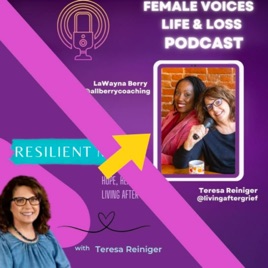
Advertise on podcast: Female Voices: Life and Loss
Rating
4.8from
This podcast has
291 episodes
Language
EnglishDate created
2020/06/23
Latest episode
2026/10/01
Average duration
31 min.
Release period
7 days
Description
Female Voice: Life & Loss. Our podcast is dedicated to women from all walks of life, providing a supportive and encouraging platform that addresses the various challenges they face. We aim to offer compassionate guidance, share diverse stories, and equip listeners with practical advice and resources to help them grow, heal, and thrive through every stage of their journey.
Unlock Female Voices: Life and Loss podcast Email contact info,
Listeners & Audience details
Email contact information
Direct podcast contact details

Listeners
Audience numbers & engagement insights

Audience details
Podcast Insights

Podcast episodes
Check latest episodes from Female Voices: Life and Loss podcast
Victoria DiGiovanni | What Happens When Grief Becomes a Song?
2026/10/01
Episode 15 ~What Happens When Grief Becomes a Song?
What happens when someone who has spent years supporting grieving people suddenly finds herself living the loss she understands professionally?
In November 2024, Victoria’s longtime partner died suddenly. As a music therapist and grief counselor working in hospice care, she knew the language and theories of grief. But experiencing it personally brought an entirely different understanding.
During a four-month leave, a lyric came to her during an intense grief burst: “Why does everything have to make sense when you’re gone?” One song grew into The Blue Album, a deeply personal musical project shaped around William Worden’s Tasks of Mourning.
Victoria and Teresa talk about grieving a partner, why tears do not mean someone is “stuck,” and how music can give emotions somewhere to go when words are difficult to find. Victoria also shares simple ways people can engage with music, even without musical experience, and why continuing a bond with someone who died can be part of moving forward rather than leaving them behind.
About Victoria:
Victoria is a music therapist and grief counselor working in hospice/palliative care. She is also conducting doctoral research exploring music, grief, songwriting, and heartbeat song recordings. As the artist SH3, she created The Blue Album from her own experience of partner loss.
In This Episode
● How losing her longtime partner changed Victoria’s understanding of grief as a professional
● How one lyric during a grief burst became The Blue Album
● William Worden’s Tasks of Mourning and why grief is not a linear process
● How intentional listening, improvisation, and songwriting can support emotional expression
● What continuing bonds can look like after someone dies
● How Victoria’s grief influenced her hospice work and doctoral research
What You’ll Take Away
● Tears are not proof that you are moving backward.
● Grief does not follow a neat sequence or timeline.
● Music can help express feelings that are difficult to name.
● You do not need musical training to use music meaningfully.
● Healing does not require ending your connection with someone you love.
Memorable Quotes
● Victoria: “You lose your best friend.”
● Victoria: “These emotions are just a human representation of the connection that we had.”
● Victoria: “Why does everything have to make sense when you’re gone?”
● Victoria: “You don’t need any music experience at all. The desire to engage in music is the only prerequisite.”
● Victoria: “This isn’t goodbye. It’s until we meet again.”
● Victoria: “Your tears are not a reflection of regression.”
Mentioned in This Episode
● The Blue Album — Victoria’s grief-centered music project / available on music streaming platforms ( https://www.dropbox.com/scl/fi/99wcci0tvnojcqoki3hi2/6.-Until-We-Meet-Again.mp3rlkey=f62euqytqruiwe4xkwjgfzkmt&st=11o88tbn&e=2&dl=0 )
● William Worden’s Tasks of Mourning
● Palliative and Hospice Care
● Romina Di Gasparo — Juno-nominated singer-songwriter and guitarist
💖 JOIN THE CONVERSATION
📩 Email: [email protected]
📘 Facebook: https://www.facebook.com/femalevoiceslifeandloss/
📸 Instagram: https://www.instagram.com/femalevoiceslifelosspodcast/
🎵 TikTok: https://www.tiktok.com/@femalevoiceslifelossYoutube: https://www.youtube.com/@FemaleVoicesLifeLossPodcast
🔔 Subscribe, share, and leave a review to help more women feel seen, supported, and less alone.
💖 CONNECT WITH OUR GUEST
📘 Facebook: https://www.facebook.com/sh3official
📸 Instagram: https://www.instagram.com/sh3official/
📩 Email: [email protected]
🌐 Website:https://www.sh3official.com/
What Happens After: Grief, Memory, and Empathy with Diane Namm
2026/09/24
Episode 14 ~ What Happens After: Grief, Memory, and Empathy
Grief does not need to be ranked, rushed, or explained away. Sometimes what a grieving person needs most is permission to feel what they feel, and someone willing to stay and listen.
In this episode of Female Voices: Life & Loss, Teresa Reiniger speaks with author and storyteller Diane Namm about grief, empathy, children, memory, and the story behind Diane’sillustrated book, What Happens After?
After her family experienced several significant losses within a few years, Diane saw how difficult it could be to find language that validated grief, especially for children.
Their conversation explores why adults can underestimate what children notice and carry, why guilt may show up after a death, and why remembering someone can become part of moving forward rather than “getting over” them.
Diane and Teresa also talk about listening without fixing, creating space for emotion, journaling as a way to process what is hard to say aloud, and simple rituals that help maintain a meaningful connection with someone who has died.
Diane Namm is an award-winning author and storyteller and the author of What Happens After?, a book created to open conversations about loss and validate grief across generations.
In This Episode● Why “loss is loss” and grief cannot be measured by outsiders● What children may absorb, question, and blame themselves for after a death● Why listening without judgment can be more helpful than trying to fix grief● How traditions, signs, letters, and memories can carry a relationship forward● Why grief has no deadline, and moving forward is different from getting over it● How journaling can create space to process feelings that are difficult to sayWhat You’ll Take Away● Your grief does not need to match anyone else’s timeline.● Children often understand and absorb more than adults realize.● Presence and listening can be meaningful forms of support.● Remembering someone can remain part of healing.● Writing can offer another way to express unfinished feelings.MEMORABLE QUOTES● Diane: “Loss is universal. Grief is personal.”● Diane: “You don’t always have to have a solution, but it is important to listen.”● Diane: “It takes as long as it takes.”● Diane: “There’s a move forward, but you bring them with you.”● Diane: “Loss is loss, and there is no timeline.”● Teresa: “Permission to feel, permission to remember, permission to grieve without a deadline.”EPISODE CHAPTERS01:05 — Why Talking About Loss Matters03:31 — The Story Behind What Happens After?07:09 — Why We Need to Stop Ranking Grief10:56 — What Genuine Empathy Looks Like14:41 — What Adults Can Miss About Children’s Grief18:32 — Grief Has No Deadline22:35 — Vulnerability, Emotion, and Feeling Safe24:43 — Writing and Journaling Through Grief28:12 — Letters, Goodbyes, and Continuing Bonds31:41 — The Audiobook as a “Verbal Hug”33:22 — The Message Diane Hopes Readers Remember34:03 — Where to Find What Happens After?Want to read What Happens After? 🤍Diane shared that listeners can visit: whathappensafter.store for a special Friends of the Author discount. The book is also available through Amazon, Barnes & Noble, and Bookshop.org.💖 JOIN THE CONVERSATION📩 Email: [email protected]📘 Facebook: https://www.facebook.com/femalevoiceslifeandloss/📸 Instagram: https://www.instagram.com/femalevoiceslifelosspodcast/🎵TikTok: https://www.tiktok.com/@femalevoiceslifeloss\🔔 Subscribe, share, and leave a review to help more women feel seen, supported, and less alone.💖 CONNECT WITH OUR GUEST📸 Instagram: https://www.instagram.com/dianenamm/📩 Email: [email protected]💼 LinkedIn: https://www.linkedin.com/in/dianenamm/🌐 Website: https://www.dianenamm.com/
Lauren Johnston | Childhood Grief, Relationship Loss & Starting Over After 60
2026/09/17
What happens when you’ve carried loss for so long that you stop realizing just how much you’ve survived?
Lauren Johnston experienced the death of her mother at 10, lost her father in her 20s, and lived through the deaths of several friends and loved ones across the years. For a long time, she simply thought of all that loss as normal life.
In this conversation, Lauren joins Teresa Reiniger to explore how early grief followed her into adulthood, especially through fears of abandonment, relationships, divorce, and the difficult realization that sometimes trying not to lose someone can mean losing yourself.
Lauren also shares how writing her memoir has brought memories and emotions back to the surface, why she has developed what she calls an “intimate relationship with grief,” and how leaving Austin after 40 years and moving to Belize at 60 opened an unexpected new chapter.
This episode is not about rushing past grief. It is about recognizing what you’ve carried, honoring what mattered, and allowing yourself to ask a new question: How do I want to live differently now?
Guest: Lauren Johnston
Lauren spent 18 years as a hairdresser before moving into more than 20 years of work as an intuitive life advisor and coach. She is currently writing a memoir and sharing personal essays through Substack about life, loss, love, and beginning again.
In This Episode
● How losing her mother at 10 shaped Lauren’s fear of abandonment in later relationships
● The moment she realized staying in a relationship meant abandoning herself
● Why accumulated grief can begin to feel like simply “normal life”
● Grieving relationships, a marriage, a city, friendships, and imagined futures
● Beginning again at 60 and building a new life in Belize
● How memoir writing brought old memories, grief, and emotions back to the surface
What You’ll Take Away
● Grief does not have to be compared or ranked.
● Early loss can quietly influence adult relationships.
● Choosing yourself is not the same as giving up on others.
● Beginning again does not require erasing your past.
● You can carry grief and still make room for joy, love, and possibility.
Memorable Quotes
Lauren: “By staying with John, I’m abandoning myself.”
Lauren: “As deep as I can feel grief is as deep as I can feel love and joy.”
Lauren: “Grief is grief. There’s no degree to it.”
Lauren: “We’ve got to step out of something in order to step into something.”
Lauren: “Pain means it mattered. And grief is the process of it.”
Lauren: “Don’t fear grief because it sits right next to love.”
💖 JOIN THE CONVERSATION
📩 Email: [email protected]
📘 Facebook: https://www.facebook.com/femalevoiceslifeandloss/
📸 Instagram: https://www.instagram.com/femalevoiceslifelosspodcast/
🎵 TikTok: https://www.tiktok.com/@femalevoiceslifeloss
Youtube: https://www.youtube.com/@FemaleVoicesLifeLossPodcast
🔔 Subscribe, share, and leave a review to help more women feel seen, supported, and less alone.
💖 CONNECT WITH OUR GUEST
📘 Facebook: https://www.facebook.com/laurenjohnstonvibrationelevation📸 Instagram
https://ww: w.instagram.com/laurenjohnstonlifecoach📩 Email: [email protected]
💼 LinkedIn: https://www.linkedin.com/in/lauren-johnston-59053519/
🌐 Website: https://laurenjohnston.me/
What to Say to Someone Who Is Grieving | Important Announcement
2026/09/10
Episode 12 ~ What to Say to Someone Who Is Grieving | Important Announcement
What if one of the most natural questions we ask after a death is also one we don’t always need answered?
When someone tells us a loved one has died, our instinct is often to ask, What happened? But for the grieving person, answering that question may mean returning to a hospital room, accident, diagnosis, phone call, or moment that changed everything.In this solo episode, Teresa Reiniger explores the difference between genuine compassion and curiosity—and why grieving people deserve to decide when, where, how, and with whom they share the details of their loss. Through experiences from her grief support and coaching work, Teresa talks about emotional safety, boundaries, privacy, the body’s response to painful memories, and why telling a difficultstory can sometimes feel healing and other times deeply exhausting.
Most importantly, she invites us to shift the conversation from “How did they die?” toward something more human: “Would you like to tell me about them?”
This episode is both permission for grieving people to protect their stories and guidance for anyone who wants to support someone with greater compassion.
About Teresa: Teresa Reiniger is a grief specialist, life transition guide, founder of Living After Grief, and host of Female Voices: Life & Loss.
In This Episode
● Why repeatedly answering “What happened?” can become emotionally exhausting.
● How safety, readiness, trust, and choice change the experience of sharing a painful story.
● Setting boundaries around who receives the tender parts of your grief.
● The difference between privacy and secrecy after loss.
● Why asking about someone’s life can create deeper connection than asking about their death.
● How the same lesson can apply to pregnancy loss, divorce, infertility, illness, and other life-changing losses.
What You’ll Take Away
● You do not owe everyone the details of your loss.
● Your body may give you useful information about when you’re not ready to share.
● Privacy can be a healthy form of choice.
● Compassion does not require knowing every detail.
● Sometimes a better question is simply, “Tell me about them.”
Memorable Quotes
Teresa: “Someone else’s curiosity does not mean you need to share.”
Teresa: “Your story belongs to you.”
Teresa: “Privacy can sound like, ‘I decide who knows.’”
Teresa: “One question asks for information. The other asks for connection.”
Teresa: “Maybe we need to start asking, ‘Tell me how they lived.’”
Teresa: “The person you love was so much more than the way they died.”
Episode Chapters & Timestamps
~00:00 — Do We Really Need to Know What Happened?~04:00 — Why Retelling the Story Can Feel Exhausting
~08:00 — Your Story, Your Choice, Your Boundaries
~12:00 — Privacy Is Not the Same as Secrecy
~15:00 — Ask About Their Life, Not Only Their Death
~19:00 — When Curiosity Shows Up in Other Kinds of Loss
~22:00 — Remembering the Whole Story
A Special Thank You to Wayna 🤍
We’re deeply grateful to Wayna for being part of the Female Voices journey and for the stories, conversations, insight, and heart she shared along the way. Her voice helped shape meaningful moments within this community, and we appreciate everything she brought to the podcast.
Thank you, Wayna, for being part of Female Voices: Life & Loss. We’re wishing you continued growth, joy, and success in everything ahead.
💖 JOIN THE CONVERSATION
📩 Email: [email protected]
📘 Facebook: https://www.facebook.com/femalevoiceslifeandloss/
📸 Instagram: https://www.instagram.com/femalevoiceslifelosspodcast/
🎵 TikTok: https://www.tiktok.com/@femalevoiceslifeloss
🔔 Subscribe, share, and leave a review to help more women feel seen, supported, and less alone.
💖 CONNECT WITH OUR HOST
📘 Facebook: https://www.facebook.com/LivingAfterGrief
📸 Instagram: https://www.instagram.com/livingaftergrief/?hl=en
🎵 TikTok: https://www.tiktok.com/@coachteresa5
Suzy McNamara | When Grief Begins Before Goodbye, Caring for a Spouse With Early-Onset Alzheimer’s
2026/09/03
Sometimes grief begins long before someone dies. It begins when the person you love is still beside you, but the life you knew together is already changing.
In this episode, Teresa Reiniger sits down with Suzy McNamara for an honest conversation about caregiving, anticipatory grief, identity, faith, and carrying more than one devastating loss at once.
Suzy spent five years as the primary in-home caregiver for her husband, Bob, after he was diagnosed with posterior cortical atrophy, a rare form of early-onset Alzheimer’s. She shares what it was like watching changes begin in his early 50s, protecting his dignity as his world became smaller, and slowly realizing that she was no longer only his wife, she had become his caregiver, advocate, and protector.Then, while Bob was entering the final stage of his illness, Suzy’s sister and best friend, Elizabeth, died. Suzy reflects on what happens when there is barely room to grieve because someone still depends on you.
This conversation offers validation for caregivers who feel unseen, people experiencing anticipatory grief, and anyone carrying layered losses.
About our guest:
Suzy McNamara is a widow, mother of four adult children, former primary caregiver to her husband Bob, and author of The Silkworm, the Magician, and the Sister Tree: A Tale of Love and Loss.
In This Episode
● How early-onset Alzheimer’s changed Bob’s identity, career, relationships, and independence.
● Why grief can begin while the person you love is still physically present.
● How Suzy’s identity shifted from wife to caregiver, advocate, and protector.
● Protecting a loved one’s dignity when others do not understand their limitations.
● Grieving Suzy’s sister Elizabeth while continuing full-time caregiving.
● How faith, writing, friendship, and a smaller support circle helped Suzy keep going.
What You’ll Take Away
● Anticipatory grief is real grief.
● Caregivers can lose parts of their identity, too.
● Protecting someone may require disappointing other people.
● Surviving one difficult day deserves recognition.
● You do not need a large circle—you need people who can truly stay.
MEMORABLE QUOTES
Suzy: “There are so many little tragedies in the big tragedy of Alzheimer’s.”
Suzy: “That’s when the grieving really begins.”
Suzy: “The caregiver loses their identity for sure.”
Suzy: “You do have to build sort of a wall around your heart.”
Suzy: “Getting through one day is a huge, huge accomplishment.”
Teresa: “Grief does not always wait for one loss to end before another one begins.”
EPISODE CHAPTERS
00:00 — When Grief Begins Before Death
03:33 — Bob’s Early-Onset Alzheimer’s Story
08:26 — The Fear and Shame Before Diagnosis
13:28 — When Alzheimer’s Arrives in Midlife
18:00 — Losing the Identity of Wife and Becoming Caregiver
19:48 — Protecting Bob’s Dignity and Safety
24:59 — Grieving a Sister While Caring for a Husband
28:16 — When Caregiving Leaves No Room to Grieve
29:26 — The Story Behind Suzy’s Memoir
33:30 — Finding the People Who Can Truly Stay
35:48 — Getting Through One Day Is an Accomplishment
39:32 — Suzy’s Book and Audiobook
42:19 — A Reminder for Caregivers Who Feel Unseen
💖 JOIN THE CONVERSATION
📩 Email: [email protected]
📘 Facebook: https://www.facebook.com/femalevoiceslifeandloss/
📸 Instagram: https://www.instagram.com/femalevoiceslifelosspodcast/
🎵 TikTok: https://www.tiktok.com/@femalevoiceslifeloss
🔔 Subscribe, share, and leave a review to help more women feel seen, supported, and less alone.
💖 CONNECT WITH OUR GUEST
📘 Facebook: https://www.facebook.com/suzy.mcnamara
📸 Instagram: https://www.instagram.com/mcnamara.suzy📩 Email: [email protected]
💼 LinkedIn: https://www.linkedin.com/in/suzymcnamara/
🌐 Website: https://suzymcnamara.com/
Teresa Reiniger | National Grief Awareness Day: What Grieving People Wish You Knew
2026/08/27
What happens when grief doesn’t just change your life—but changes the way you see yourself?
After a significant loss, the question may eventually shift from “How do I get through this?” to something much deeper: “Who am I now?”
In this solo episode of Female Voices: Life & Loss, Teresa Reiniger explores the often-overlooked connection between grief and identity. She talks about the widow who is no longer a wife or caregiver, the person grieving a pet, relationship, health, dream, career, or future, and the women who became “the strong one” simply because survival required it.
In recognition of National Grief Awareness Day on August 30, Teresa also shares what grieving people often wish others understood: you don’t need perfect words. Keep showing up.Keep inviting them. Say their loved one’s name. Don’t minimize a loss simply because you don’t fully understand it. Most importantly, this conversation offers permission to stop measuring healing by how closely you resemble who you were before.
Teresa Reiniger is a grief specialist, life transition guide, founder of Living After Grief, and host of Female Voices: Life & Loss. Through her work, she supports people navigating grief, identity changes, and major life transitions.
In This Episode
● Why grief can change your identity, roles, routines, and sense of the future
● How the brain continues expecting the life it knew before a significant loss
● Why grieving people need presence more than perfect words or advice
● How pet loss and other misunderstood losses deserve to be acknowledged
● Why continuing to invite someone matters, even when they repeatedly say no
● How the identity that helped you survive may not be the identity you need forever
What You’ll Take Away
● You don’t have to become your “old self” again.
● A loss doesn’t need anyone else’s approval to matter.
● Supporting grief can be as simple as staying present.
● Joy and grief are allowed to exist together.
● Healing can include discovering who you’re becoming.
Memorable Quotes
●Teresa: “Sometimes you’re grieving yourself too.”●Teresa: “Loss does not need public approval before your heart is allowed to hurt.”●Teresa: “You aren’t reminding us that they died. We haven’t forgotten.”●Teresa: “Grief isn’t either/or. It is so often both.”●Teresa: “Maybe healing is discovering the woman who is still here.”●Teresa: “Grief doesn’t need to be fixed. It needs to be witnessed.”
💖 JOIN THE CONVERSATION
📩 Email: [email protected]
📘 Facebook: https://www.facebook.com/femalevoiceslifeandloss/
📸 Instagram: https://www.instagram.com/femalevoiceslifelosspodcast/
🎵 TikTok: @femalevoiceslifeloss
🔔 Subscribe, share, and leave a review to help more women feel seen, supported, and less alone.
💖 CONNECT WITH OUR HOST
📘 Facebook: https://www.facebook.com/LivingAfterGrief
📸 Instagram: https://www.instagram.com/livingaftergrief/?hl=en
🎵 TikTok: https://www.tiktok.com/@coachteresa5
📩 Email: [email protected]
Teresa Reiniger | Why Am I Grieving More Now: Why Grief Doesn’t Always Hit Hardest at the Beginning?
2026/08/20
Episode 9 ~ What if your grief feels heavier now than it did when the loss first happened? Does that mean you’re going backward, or could something else be happening?
In this solo episode of Female Voices: Life & Loss, Teresa Reiniger explores a part of grief that can catch people by surprise: sometimes the deepest emotions arrive months, or even years, after a loss.
In the beginning, there may be funeral arrangements, paperwork, family responsibilities, phone calls, and decisions that simply have to be made. Your body may focus on one thing, surviving the day. But when life becomes quieter and everyone else begins returning to normal, grief can finally have room to surface.
Teresa talks about the difference between surviving a loss and living with a loss, why ordinary moments can suddenly become painful, and the guilt some people experience when laughter, joy, and hope begin returning. If you’ve wondered, “Shouldn’t I be doing better by now?” this episode offers a compassionate reminder: deeper grief does not necessarily mean you are moving backward. Sometimes your heart is finally safe enough to feel.
About Our Host
Teresa Reiniger is a grief specialist, women’s coach, and founder of Living After Grief. In this episode, she draws from her work alongside grieving women to offer reassurance, perspective, and hope for those learning how to carry both love and life after loss.
In This Episode
● Why grief may feel stronger months after a loss.
● How survival mode can postpone overwhelming emotions.
● The loneliness of watching the world return to normal while yours has changed.
● Why everyday routines and “firsts” can trigger unexpected waves of grief.
● The guilt that can come with laughing, enjoying life, or feeling hopeful again.
● What it means to begin living again without leaving your loved one behind.
What You’ll Take Away
● Feeling more grief later does not mean you are failing.
● Your body may wait until it feels safer before allowing emotions to surface.
● Grief includes mourning the ordinary life you shared.
● Joy and grief can exist together.
● Healing does not require forgetting or “getting over” someone.
Memorable Quotes
● Teresa: “In the beginning, you’re surviving the loss. Later, you’re living the loss.”
● Teresa: “Grief has been patiently waiting until we are finally still enough to feel it.”
● Teresa: “Every wave of grief is also revealing another place where love once lived.”
● Teresa: “Joy is not betrayal.”
● Teresa: “Laughter is not forgetting. Healing is not leaving someone behind.”
● Teresa: “What part of my heart is finally safe enough to feel?”
💖 JOIN THE CONVERSATION
📩 Email: [email protected]
📘 Facebook: https://www.facebook.com/femalevoiceslifeandloss/
📸 Instagram: https://www.instagram.com/femalevoiceslifelosspodcast/
🎵 TikTok: @femalevoiceslifeloss
🔔 Subscribe, share, and leave a review to help more women feel seen, supported, and less alone.
💖 CONNECT WITH OUR HOST
📘 Facebook: https://www.facebook.com/LivingAfterGrief
📸 Instagram: https://www.instagram.com/livingaftergrief/?hl=en
🎵 TikTok: https://www.tiktok.com/@coachteresa5
Teresa Reiniger | Am I Going Crazy or Is This Grief? Hearing or Sensing a Loved One After Loss
2026/08/13
Have you ever forgotten a familiar word, sensed your loved one nearby, or cried unexpectedly and wondered, “Am I going crazy?” You are not alone, and in many cases, you are grieving.
In this solo episode of Female Voices: Life & Loss, Teresa Reiniger explores the surprising ways grief can affect the brain, body, heart, and nervous system. Through compassionate stories and relatable everyday moments, Teresa explains why grieving people may struggle with memory, concentration, decision-making, exhaustion, emotional inconsistency, or the feeling that they heard, smelled, or sensed someone they lost.
She also discusses why grief can surface in ordinary places, from the grocery store to a quiet self-care appointment, and why having a good day does not mean you are forgetting the person you love. Listeners will receive reassurance that grief does not follow a straight line, healing is not measured by the absence of tears, and joy is not a betrayal of love.
Teresa Reiniger is a certified grief specialist, NLP master coach, life transition guide, founder of Living After Grief, and host of Female Voices: Life & Loss. She brings years of experience walking alongside women through grief, loss, identity changes, and life transitions.
In This Episode
● Why grief can affect memory, concentration, energy, and decision-making
● Why people sometimes hear, smell, dream about, or sense someone they lost
● How familiar routines remain wired into the brain after a loved one dies
● Why ordinary questions, objects, songs, and places can activate grief
● How the nervous system responds to loss, trauma, caregiving, and prolonged survival
● Why laughter, joy, and new memories do not erase love
What You’ll Take Away
● Forgetfulness does not automatically mean your mind is failing.
● A difficult day does not erase your healing.
● Grief and joy can exist together.
● Your grief does not need to look like anyone else’s.
● Self-compassion may help replace fear and shame.
MEMORABLE QUOTES
Teresa: “What if, instead of asking, ‘What’s wrong with me?’ you begin asking, ‘What has my heart been carrying?’”
Teresa: “Understanding what’s happening doesn’t erase grief, but it often removes fear.”
Teresa: “Your experience doesn’t need someone else’s permission to be meaningful.”
Teresa: “That isn’t failure. That’s attachment. That’s love.”
Teresa: “Joy is not betrayal. Healing is not forgetting.”
Teresa: “There isn’t one right way to grieve. There’s only your way.”
TIMESTAMPS
01:01 — Am I Going Crazy—or Is This Grief?
04:30 — The Experiences Grieving People Rarely Discuss
09:00 — Why the Brain Keeps Searching for Them
14:00 — When Grief Hides Inside Ordinary Moments
19:00 — Grief Brain, Forgetfulness, and Mental Exhaustion
24:00 — How the Nervous System Responds to Loss
29:00 — Why Grief Can Feel Unpredictable
34:00 — Healing Does Not Move in a Straight Line
39:00 — Joy Is Not a Betrayal
44:00 — When Years of Survival Affect the Body
49:00 — There Is No One Right Way to Grieve
54:00 — What Has Your Heart Been Carrying?
💖 JOIN THE CONVERSATION
📩 Email: [email protected]
📘 Facebook: https://www.facebook.com/femalevoiceslifeandloss/
📸 Instagram: https://www.instagram.com/femalevoiceslifelosspodcast/
🎵 TikTok: @femalevoiceslifeloss
🔔 Subscribe, share, and leave a review to help more women feel seen, supported, and less alone.
💖 CONNECT WITH OUR HOST
📘 Facebook: https://www.facebook.com/LivingAfterGrief
📸 Instagram: https://www.instagram.com/livingaftergrief/?hl=en
🎵 TikTok: https://www.tiktok.com/@coachteresa5
Dena Woulfe | Two Coaches, One Mission: Helping Women Find Themselves Again
2026/08/06
What happens when you have spent so many years caring for everyone else that you no longer recognize yourself?
In this episode, Teresa Reiniger welcomes returning guest and coaching partner Dena Woulfe for an honest conversation about identity, grief, people-pleasing, nervous-system regulation, and the hidden beliefs that shape how women move through life.
They explore why feeling exhausted, stuck, or disconnected does not mean you are weak. It may be the result of years spent surviving, carrying responsibilities that were never fully yours, or defining yourself through roles such as wife, mother, caregiver, helper, or fixer.
Teresa and Dena discuss how awareness, breathwork, supportive coaching, faith, healthy boundaries, and identity work can help women reconnect with the person beneath those roles. They also explain why the nervous system must feel safe before meaningful change can begin.
Listeners navigating grief, divorce, caregiving, burnout, an empty nest, relationship changes, or the loss of a familiar role may recognize themselves in this conversation and feel encouraged to begin choosing themselves again.
Meet the guest:Dena Woulfe is a registered nurse, holistic health coach, NLP master practitioner, business owner, and Teresa’s coaching partner. She brings a nursing, faith-centered, holistic-health, and nervous-system-informed perspective to helping women reconnect with themselves.
In This Episode
● Why coaching should never be one-size-fits-all
● How guilt, shame, rejection, and abandonment create repeating patterns
● Why the nervous system needs safety before change can happen
● How women lose themselves inside roles and responsibilities
● When helping others turns into people-pleasing
● What women can expect from The Woman I Used to Be retreat
What You’ll Take Away
● Survival patterns often began as protection.
● Awareness helps uncover hidden beliefs.
● Feeling “tired but wired” may signal high alert.
● You can help without carrying everyone’s burdens.
● Healing can mean remembering who you already are.
Memorable Quotes
●Dena: “You can’t change what you’re not aware of.”
●Dena: “Shift cannot happen with a nervous system on high alert.”
●Teresa: “We get very stuck in the labels and the roles we have carried for so long.”
●Teresa: “Put down everybody else’s backpack and let them carry their own stuff.”
●Dena: “How you show up for one thing is how you show up for everything.”
●Teresa: “Healing isn’t about becoming someone new. It’s about remembering the woman who has been there all along."
✨ Resources & Links:
👉 Visit our website page and see what we offer: https://livingaftergrief.com/podcast-page
📍 Upcoming Experience:
💛 The Woman I Used to Be - A Retreat to Help You Find Her Again
Click here: https://livingaftergrief.com/the-woman-i-used-to-be
🔗 CONNECT WITH THE GUEST
📘 Facebook: / holisticdenawellness
📸 Instagram: / denawoulfern
📧 Email: [email protected]
Join the Conversation
📩 Email: [email protected]
📘 Facebook: https://www.facebook.com/femalevoiceslifeandloss/
📸 Instagram: https://www.instagram.com/femalevoiceslifelosspodcast/
🎵 TikTok: @femalevoiceslifeloss
● Subscribe, share, and leave a review to help more women feel seen, supported, and less alone.
Rebecca Bunt | Decluttering After Loss: How to Sort Through a Loved One’s Belongings
2026/07/30
Episode 6 ~ Rebecca Bunt | Decluttering After Loss: How to Sort Through a Loved One’s Belongings
In this episode of Female Voices: Life & Loss, Teresa Reiniger speaks with Rebecca Bunt about the grief that can surface while downsizing, clearing a family home, or deciding what to do with a loved one’s belongings.
After Rebecca and her husband experienced the loss of three of their four parents, they found themselves sorting through decades of possessions, memories, family history, and unanswered questions. The experience showed Rebecca how exhausting and isolating this responsibility can become—especially while balancing work, parenting, and grief.
Rebecca shares practical ways to make the process feel more manageable, including starting with less emotional spaces, working in short blocks of time, grouping similar items together, and finding meaningful places to donate what no longer needs to be kept.
Teresa and Rebecca also explore the guilt that can come with letting go, the importance of sharing the stories behind treasured belongings, and why the memory connected to an object may matter more than the object itself.This conversation offers validation and gentle guidance for anyone facing a home filled with belongings, decisions, and love.
Guest Introduction
Rebecca Bunt is the co-owner of a Clutter Cleaner franchise in the St. Louis area alongside her husband, Tim. After a 25-year career in banking and mortgage services, Rebecca stepped into work supporting individuals and families through downsizing, decluttering, major life transitions, and clearing homes after a loss.
As an only child married to another only child, Rebecca brings personal experience to this work after she and her husband lost three of their four parents. Her perspective combines practical support with a deep understanding of the memories, relationships, and emotions attached to the belongings people leave behind.
In This Episode
● How losing three parents shaped Rebecca and Tim’s new purpose
● Why cleaning out a home can create decision fatigue and emotional paralysis
● How to begin with small, less emotional areas of the home
● Why families may disagree about which belongings should be kept
● How sharing the story behind an object can make letting go easier
● Ways donated belongings can support families and communities
What You’ll Take Away
● You do not have to clear everything at once.
● The memory can remain even when the object does not.
● Keeping something out of guilt may create more emotional weight.
● Ten focused minutes can be enough for one day.
● Asking for support does not make the loss less personal.
Memorable Quotes
● Rebecca: “Decision fatigue is real.”
● Rebecca: “Sometimes people just want to tell somebody the story behind the thing.”
● Rebecca: “It’s really not about the thing anymore. It’s about the memories attached to the thing.”
● Rebecca: “Keeping something out of guilt is not a good reason to keep it.”
● Rebecca: “We’ve been there. We know how overwhelming it can be.”
● Teresa: “You don’t have to do it alone.”
Join the Conversation
📩 Email: [email protected]
📘 Facebook: https://www.facebook.com/femalevoiceslifeandloss/
📸 Instagram: https://www.instagram.com/femalevoiceslifelosspodcast/
🎵 TikTok: @femalevoiceslifeloss
● Subscribe, share, and leave a review to help more women feel seen, supported, and less alone.
Connect With Our Guest
🌐 Website: cluttercleaner.com
📘 Facebook: https://www.facebook.com/profile.php?id=61586088629031
📸 Instagram: https://www.instagram.com/cluttercleanerofstl/
📩 Email: [email protected]
Jasmyne Cole | Legacy Is Built in the Ordinary: Grief, Faith, and Family Stories
2026/07/24
Episode 5: Legacy Is Built in the Ordinary: Grief, Faith, and Family StoriesWhat will the people you love remember—not only about what you accomplished, but about how you lived beside them every day?In this heartfelt conversation, Teresa Reiniger sits down with Jasmyne Cole to explore the quiet ways legacy is created through family, faith, grief, motherhood, storytelling, and ordinary moments.After losing her great-grandmother, Pearl, and her grandmother, Georgia, Jasmyne began reflecting on the wisdom these women carried and the ways their lives continue to shape her. She shares what she witnessed while helping her grandmother care for her mother, who was living with dementia, how grief helped her see the women in her family as whole people, and why their stories influenced the mother and woman she is becoming.Together, Teresa and Jasmyne discuss inherited beliefs, the pressure to remain busy, the importance of learning to rest, and how we can honor our families while choosing a different path when certain patterns no longer serve us.Listeners will be encouraged to pay closer attention to everyday moments, ask deeper questions, build supportive relationships, and remember that legacy is not something we only leave behind. It is something we are living right now.Guest IntroductionJasmyne Cole is a wife, homeschooling mother, storyteller, and contributing author to the anthology What My Mother Never Told Me. Through her writing and conversations, she is passionate about preserving the wisdom, faith, and stories that connect generations of women.In This Episode● How caring for her great-grandmother during dementia changed Jasmyne’s understanding of grief, womanhood, and legacy● The unspoken lessons passed down through Jasmyne’s great-grandmother, grandmother, and mother● Why writing her anthology chapter required Jasmyne to turn a complex family story into something honest and meaningful● How apologizing, laughing at mistakes, and being present can shape the legacy parents leave their children● Why inherited beliefs—especially those about productivity and rest—may need to be rewritten● How trusted relationships, mentorship, faith communities, and chosen family can help women recognize patterns they may not see aloneWhat You’ll Take Away● Legacy is created through everyday choices.● Grief can help us see loved ones more fully.● Rest is a need, not a reward.● You can honor your family without repeating every pattern.● Small, familiar activities can help you reconnect with yourself.Memorable Quotes● “Legacy is in the ordinary. It is in the day to day.” — Jasmyne● “My grandma was a daughter. This was her mom.” — Jasmyne● “One day, they will look at my life in reverse.” — Jasmyne● “Rest can be something you enjoy and something that you don’t always have to earn.” — Jasmyne● “It doesn’t have to look like your family to be your village.” — Jasmyne● “Not only is legacy built in the ordinary, but your life is valuable. It matters.” — JasmyneMentioned in This Episode● What My Mother Never Told MeAn anthology featuring Jasmyne Cole and other women sharing lessons, wisdom, and stories connected to mothers and influential women in their lives.The book is available on Amazon:https://www.amazon.com/dp/B0H1892HWKJoin the Conversation📩 Email: [email protected]📘 Facebook: https://www.facebook.com/femalevoiceslifeandloss/📸 Instagram: https://www.instagram.com/femalevoiceslifelosspodcast/🎵 TikTok: @femalevoiceslifeloss● Subscribe, share, and leave a review to help more women feel seen, supported, and less alone.Connect With Our Guest📘 Facebook: https://www.facebook.com/jasmyne.white.16📸 Instagram: https://www.instagram.com/mrs_j_cole2014/📩 Email: [email protected]
Teresa | The Stories We Carry: Introducing In Memory Of… and creating space for love to continue
2026/07/16
Episode 4 ~ The Stories We Carry: Introducing In Memory Of… and creating space for love to continueAfter someone dies, one of the quiet fears many people carry is this: Will people forget them?Their laugh, their voice, their traditions, their impact—will those memories still matter when the world keeps moving?In this heartfelt solo episode of Female Voices: Life & Loss, Teresa Reiniger reflects on the deep connection between grief, memory, storytelling, and love. She talks about why remembering someone we love does not keep us stuck, but can instead help us stay connected to the meaning of their life.This conversation is for anyone who has ever wished people would still say their loved one’s name, ask about them, or remember more than the way they died. Teresa invites listeners to think about the stories that still bring joy, the memories that still feel alive, and the things they hope future generations will never forget. You’ll also hear about the heart behind the new In Memory Of space, created to help preserve and honor the stories of loved ones with care.This episode is a solo reflection from Teresa Reiniger, host of Female Voices: Life & Loss. Teresa brings her personal and professional perspective from years of podcasting and grief work, offering a compassionate reminder that love does not disappear—and that stories are one way love continues.In This Episode● Why the fear of forgetting can become part of grief● How people often grieve connection, identity, and changed routines● Why remembering someone does not mean you are stuck● The power of telling stories beyond dates and circumstances● Why loved ones deserve to be remembered for how they lived● The heart behind the new In Memory Of pageWhat You’ll Take Away● Remembering can be part of healing.● Saying their name still matters.● Stories help preserve love and meaning.● Grief can include fear that others will forget.● Your loved one’s life deserves to be honored.Memorable Quotes● Teresa: “Grief isn’t love ending. Grief is love continuing.”● Teresa: “Remembering doesn’t keep us stuck. Remembering keeps us connected.”● Teresa: “You do not have to choose between carrying someone with you and continuing to live.”● Teresa: “People don’t only want their loved one remembered for how they died. They want them remembered for how they lived.”● Teresa: “Stories preserve more than memories. Stories preserve meaning.”● Teresa: “Stories are one way love continues.”Episode Chapters and Timestamps01:01 — The Fear That Others Will Forget02:05 — Grief Is Love Continuing03:02 — Why Remembering Keeps Us Connected03:50 — What Would You Want People to Know?04:45 — Remembering How They Lived05:45 — When Stories Help Us Reconnect With Love06:35 — Introducing In Memory Of07:35 — A Space to Say Their Name08:30 — What Story Still Deserves to Be Told?09:40 — Love Continues Through MemoryMentioned in This EpisodeResource● In Memory Of page — A new space created to honor, preserve, and share loved ones’ stories.Click here: https://livingaftergrief.com/formsid=6a3564af3b4f5c3c25606732💖 JOIN THE CONVERSATION📩 Email: [email protected]📘 Facebook: https://www.facebook.com/femalevoiceslifeandloss/📸 Instagram: https://www.instagram.com/femalevoiceslifelosspodcast/🎵 TikTok: @femalevoiceslifeloss🔔 Subscribe, share, and leave a review to help more women feel seen, supported, and less alone.💖 CONNECT WITH OUR HOST📘 Facebook: https://www.facebook.com/LivingAfterGrief📸 Instagram: https://www.instagram.com/livingaftergrief/?hl=en🎵 TikTok: https://www.tiktok.com/@coachteresa5
Teresa Reiniger | The Losses We Don’t Always Talk About
2026/07/09
Episode 3 ~ The Losses We Don’t Always Talk About: Understanding grief beyond death and finding language for what you’re carrying.
Loss does not always arrive with a funeral, a sympathy card, or people checking in. Sometimes it arrives quietly—and leaves you wondering whether what you are feeling even counts as grief.
In this solo episode, Teresa Reiniger explores the losses that are often minimized or left unnamed: infertility, miscarriage, changing health, caregiving, retirement, estrangement, an empty nest, career changes, altered dreams, and the loss of who you thought you would become.
Teresa explains why grief is not limited to physical death and how it can affect the whole person—emotionally, physically, mentally, spiritually, and relationally. Exhaustion, irritability, numbness, disconnection, difficulty concentrating, and brain fog may not mean that something iswrong with you. They may be signs that your mind and body are trying to adjust to a meaningful change.
Drawing from her own experiences with caregiving, losing both parents, changing dreams, and grieving changes in her health, Teresa invites listeners to stop comparing their pain and begin naming what they have been carrying.
This conversation offers gentle questions for reflection, reassurance for anyone who feels they “should be over it,” and permission to recognize that your grief does not have to be visible to be valid.
Teresa Reiniger is a host of Female Voices: Life & Loss. In this episode, she brings both personal experience and years of conversations with women navigating loss. Her perspective is shaped by caregiving for her parents, grieving their deaths, adjusting to health changes, and learning to acknowledge losses that do not always receive public recognition.
In This Episode
● Why society recognizes some losses while minimizing others
● The grief connected to infertility, health, caregiving, estrangement, retirement, and changing relationships
● How grief can affect the body, mind, identity, faith, and relationships
● Teresa’s experience grieving changes in her physical health
● Why comparing your grief can prevent you from acknowledging its meaning
● Reflection questions for naming the losses you have carried quietly
What You’ll Take Away
● Loss does not have to involve death to deserve compassion.
● Exhaustion, numbness, or brain fog may be connected to grief.
● You do not need to compare your pain to validate it.
● Naming a loss can make it feel less isolating.
● Healing can begin when you stop ignoring what changed
Memorable Quotes
“Loss doesn’t always arrive with the casseroles. Sometimes it arrives very quietly.” — Teresa
“Loss doesn’t have to involve death to deserve compassion.” — Teresa
“Sometimes grief sounds like, ‘I miss who I used to be.’” — Teresa
“Your body may not be failing. It may be adapting to what’s going on.” — Teresa
“Grief isn’t measured by comparison. It’s measured by meaning.” — Teresa
“Your grief doesn’t have to be visible to be valid.” — Teresa
💖 JOIN THE CONVERSATION
📩 Email: [email protected]
📘 Facebook: https://www.facebook.com/femalevoiceslifeandloss/
📸 Instagram: https://www.instagram.com/femalevoiceslifelosspodcast/
🎵 TikTok: @femalevoiceslifeloss
🔔 Subscribe, share, and leave a review to help more women feel seen, supported, and less alone.
💖 CONNECT WITH OUR HOST
📘 Facebook: https://www.facebook.com/LivingAfterGrief
📸 Instagram: https://www.instagram.com/livingaftergrief/
🎵 TikTok: https://www.tiktok.com/@coachteresa5
Why Stories Heal: The Conversations That Change Us
2026/07/02
Sometimes one honest story can reach a place that advice never could. It can give language to what we have carried quietly and remind us that we are not the only ones.
In this solo episode, Teresa Reiniger reflects on six years of podcasting and the stories that have shaped both Female Voices: Life & Loss and her own understanding of grief, resilience, motherhood, infertility, caregiving, divorce, identity, and healing.
Teresa shares why this podcast has never truly been about microphones, numbers, or downloads. It has always been about what happens when someone hears another woman’s experience and quietly thinks, “Me too.”
She revisits meaningful conversations with her daughters, granddaughters, husband, nonprofit leaders, and women from different parts of the world. Through these stories, Teresa has seen how grief can feel universal while the support surrounding it may look very different from one community to another.
This episode explores why people do not always need to be fixed or given an answer. Sometimes, they need a safe place to feel understood, ask better questions, and carry what they are facing differently. Listeners will be reminded that resilience does not always look bold or visible—and that sharing a story can change both the person telling it and the person listening.
Host Introduction
Teresa Reiniger is the host of Female Voices: Life & Loss. In this episode, she reflects on six years of podcasting and the hundreds of conversations that have expanded her understanding of grief, infertility, motherhood, resilience, community support, and life after loss.
Teresa brings both personal experience and the perspective of someone who has spent years listening to women share the experiences they often carry quietly. Her voice matters in this conversation because she understands that meaningful support is not always about providing answers—it is often about creating space for someone to feel seen and understood.
In This Episode
● Why personal stories can reach emotional places that advice cannot
● How hearing “me too” helps people feel understood and less alone
● What Teresa learned from her daughters’ infertility journeys
● Why resilience may look quiet rather than dramatic
● How grief feels universal but community support differs across cultures
● How podcast guests and listeners became a supportive community
What You’ll Take Away
● You do not need to be fixed to deserve support.
● Quiet persistence is still resilience.
● Feeling understood can be deeply healing.
● Someone else’s story may give language to your own.
● Hope does not have to mean “moving on.”
● Sharing your story can change you too.
Memorable Quotes
● “Stories have a way of reaching places advice never can.”— Teresa
● “There’s something powerful that happens when someone says, ‘Me too.’” — Teresa
● “Resilience doesn’t always look loud.” — Teresa
● “Sometimes resilience looks like holding hope and heartbreak at the same time.” — Teresa
● “Stories don’t just help listeners. Stories change the people telling the story.” — Teresa
● “Hope that says you can carry this differently.” — Teresa
💖 JOIN THE CONVERSATION
📩 Email: [email protected]
📘 Facebook: https://www.facebook.com/femalevoiceslifeandloss/
📸 Instagram: https://www.instagram.com/femalevoiceslifelosspodcast/
🎵 TikTok: @femalevoiceslifeloss
🔔 Subscribe, share, and leave a review to help more women feel seen, supported, and less alone.
💖 CONNECT WITH OUR HOST
📘 Facebook: https://www.facebook.com/LivingAfterGrief
📸 Instagram: https://www.instagram.com/livingaftergrief/
🎵 TikTok: https://www.tiktok.com/@coachteresa5
SIX YEARS LATER: What Loss, Healing, and Storytelling Have Taught Me | Teresa Reiniger
2026/06/25
Episode 1 ~ SIX YEARS LATER: What Loss, Healing, and Storytelling Have Taught Me
Some stories begin with a microphone. Others begin with a loss no one knows how to name.
In the Season 3 premiere of Female Voices: Life & Loss, host Teresa Reiniger reflects on six years of podcasting, storytelling, grief work, and creating spaces where women can feel less alone.
The podcast began in 2020 as Labor Pains: Dealing with Infertility and Loss, inspired by Teresa’s daughters’ experiences with infertility and seven pregnancy losses between them.
What started as an effort to give language to an often-silent form of grief gradually grew into conversations about caregiving, identity, family, death, life transitions, and the many losses that can change who we are.
Teresa shares how the podcast evolved into Resilient Moms and eventually became Female Voices: Life & Loss. She also reflects on her own experiences with caregiving, her mother entering hospice, settling her parents’ estate alongside twelve siblings, building a business, and deepening her professional work in grief support.
This episode also introduces the vision for Season 3: more resources, community opportunities, honest conversations, and a new tribute feature called In Memory Of, created to preserve and honor the stories of loved ones.
Whether you are grieving, starting over, searching for yourself after a major change, or simply feeling tired, this season offers a reminder: You do not have to carry everything alone.
In This Episode
-How Teresa’s daughters’ infertility and pregnancy losses inspired the original podcast
-Why infertility and pregnancy loss can create hidden grief
-The evolution from Labor Pains to Resilient Moms and Female Voices
-Teresa’s experiences with caregiving, hospice, family grief, and estate responsibilities
-Why grief can include changes in identity, relationships, work, dreams, and expectations
-What listeners can expect from Season 3
-The upcoming In Memory Of tribute feature
-A new free resource for women navigating life after loss
Key Takeaways
-Grief is not limited to death. It can also come from infertility, caregiving, identity changes, relationships, and unrealized dreams.
-Personal stories can give people language for experiences they may not know how to explain.
-Support should include connection, validation, and safe opportunities to share.
-Rest does not erase someone’s contribution. There can be space for both rest and return.
-Healing may begin when someone listens and reminds us that we are not alone.
Memorable Quotes
Teresa Reiniger:
-“Six years of conversation, six years of stories, six years of showing up imperfectly and continuing anyway.”
-“There were so many women quietly carrying the pain from infertility and pregnancy loss that no one could see.”
-“I didn’t know what I was doing. I just knew I wanted women to feel less alone.”
-“Loss isn’t only about death. Sometimes loss looks like the loss of identity.”
-“Women need more than information. They need to share their stories, and they need to hear other stories.”
-“There is space for both rest and return.”
-“Grief deserves space, and stories deserve somewhere to live.”
-“Maybe healing doesn’t always begin with answers. Maybe sometimes it begins with hearing someone say, ‘I understand. Me too.’”
-“You do not have to carry everything alone.”
Join the Conversation
📩 Email: [email protected]
📘 Facebook: Female Voices: Life & Loss
📸 Instagram: @femalevoiceslifelosspodcast
🎵 TikTok: @femalevoiceslifeloss
Subscribe, share, and leave a review to help more women feel seen, supported, and less alone.
Podcast reviews
Read Female Voices: Life and Loss podcast reviews
tanitsia 2023/02/16
Important Topic
This is such a relief podcast. Painful stories will give us hope and knowledge from their experiences.
Kristina Driscoll 2023/01/14
Great podcast
I went through infertility treatments 20 years ago. I wish a podcast like this had been available. Anyone experiencing infertility will find hope and ...
Darcy_Corc 2022/12/28
Such an Important topic
We never hear enough about this and Im so glad to have found supportive material on this topic ! Thank you!
Theresa Lear Levine ✨💕✨ 2022/09/20
Deep, helpful, compassionate sharing and healing!
I met Teresa only shortly before being a guest on her podcast (Ep 101) but I was so impressed by the individuality of each episode and the way that th...
Podcast sponsorship advertising
Start advertising on Female Voices: Life and Loss relevant audience podcasts
You may also like to advertise on these Podcasts

4.52255332000
The Joe Rogan Experience
Joe Rogan

4.498839908
Morbid
Ash Kelley & Alaina Urquhart

4.6908522
You Can Heal Your Life ™
Hay House

4.41164993
Extratime
Major League Soccer

4.8815227
ArtCurious Podcast
Jennifer Dasal/ArtCurious

4.9328041389
REAL AF with Andy Frisella
Andy Frisella

48972549
20/20
ABC News
4.91361709
The Learning Leader Show With Ryan Hawk
Ryan Hawk

4.92107498
the bossbabe podcast
Natalie Ellis

4.4384811967
The Megyn Kelly Show
SiriusXM