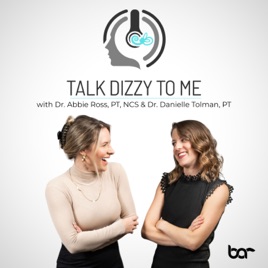
Advertise on podcast: Talk Dizzy To Me
Rating
4.9from
This podcast has
90 episodes
Language
EnglishPublisher
Balancing Act RehabExplicit
No
Date created
2020/07/21
Latest episode
2026/02/04
Average duration
49 min.
Release period
26 days
Description
We’re just two vestibuloholics excitedly bringing you a comprehensive view into the complex field of dizziness. Made for both clinicians and patients, we’re aiming to provide you with endless resources, tips & tricks, interviews with experts, and so. much. more. Hosted by Dr. Abbie Ross, PT, NCS and Dr. Danielle Tolman, PT
Unlock Talk Dizzy To Me podcast Email contact info,
Listeners & Audience details
Email contact information
Direct podcast contact details

Listeners
Audience numbers & engagement insights

Audience details
Podcast Insights

Podcast episodes
Check latest episodes from Talk Dizzy To Me podcast
Functional Neurological Disorder (FND) Explained: What It Is and How It Overlaps With Dizziness
2026/02/04
Functional Neurological Disorder (FND) is often misunderstood... but it’s real, common, AND treatable. In this episode of Talk Dizzy To Me, vestibular physical therapists Dr. Abbie Ross, PT, NCS and Dr. Carly Lochala, PT, NCS sit down with Dr. Julie Hershberg, PT, NCS to explain what FND is, why it’s been minimized in healthcare, and how it overlaps with dizziness, migraine, dysautonomia/POTS, hypermobility/EDS, and vestibular disorders.
They break down brain networks like the default mode network and salience network, discuss common clinical clues (variability, attention-related shifts), and explain how treatment often starts with nervous system regulation, trust-building, and whole-person care—not just exercises.
If you’ve been told your symptoms are “all in your head,” this episode is for you.
Guest: Dr. Julie Hershberg / Reactive PT Instagram: @reactivept
Resources: FND resources hub, reactivept.com/FNDresources
Hosted by:
🎤 Dr. Abbie Ross, PT, NCS
🎤 Dr. Carly Lochala, PT, NCS
For episode recommendations or requests, email us at: [email protected]
Connect with Us:
→ Book a free call with us
→ Get free resources straight to your inbox
→ Join The Dizzy Reset™ for FREE
→ Watch podcast episodes (and more) on YouTube
→ Follow us on Instagram
→ Follow us on TikTok
→ Follow us on Facebook
→ Disclaimer
→ Enjoying the podcast? Leave us a review!
Timestamps
00:00 Welcome to Talk Dizzy To Me (intro)01:42 What is Functional Neurological Disorder (FND)? How to explain it to patients02:08 FND as a brain network dysfunction (function vs structure)03:32 Why education improves outcomes in vestibular care + FND04:02 Why FND has been misunderstood/minimized in healthcare04:12 From “hysteria” and “conversion disorder” to modern neuroscience06:05 Harmful stigma: being told symptoms are “fake” + medical trauma08:19 What to look for when you suspect FND (clinical clues)09:13 Variability, attention-related shifts, symptoms “moving”10:35 Screening for other diagnoses + doing a thorough neuro screen11:04 Common comorbidities missed: migraine, EDS/hypermobility, POTS/dysautonomia, vestibular disorders12:53 What you’ll hear in the subjective history that suggests FND15:13 Why “one test” (like Hoover) isn’t enough + signs vary by symptom type16:54 Diagnostic criteria: what exists, what’s lacking, what needs improvement19:12 Risk factors & triggers: sex differences, pain, sleep, physical injury/illness21:01 Dizziness in FND: how common is it + vestibular system connection21:59 Autonomic + sensory overlap (vestibular sympathetic reflex, otolith sensitivity)24:44 Treatment approach: why there’s no one-size-fits-all protocol25:38 Whole-person assessment + “pie chart” contributors + education foundation29:00 Building trust, validation, and safety (especially after medical trauma)31:18 Why play, fun, and salience matter for nervous system regulation + motor learning32:45 Default mode network vs salience network explained simply37:48 Social media + FND: what we think vs what research shows41:26 Adapting vestibular rehab when FND is part of the picture44:26 Safety + motor symptoms: when you prioritize regulation over exercise48:18 Sensory inventory & building a regulation toolkit (OT-informed strategies)51:00 Not everyone needs “calm”—some people need safe movement to regulate52:18 “Mic drop” messages for people who feel stuck55:21 Where to find Dr. Julie Hirschberg’s FND resources
Vestibular Migraine, POTS, and the Road to Recovery with Laura Ehlers
2026/01/21
In this episode of Talk Dizzy To Me, vestibular physical therapists Dr. Abbie Ross, PT, NCS and Dr. Danielle Tolman sit down with Laura Ehlers to share a powerful, real-life story of chronic dizziness, plus the long road to obtaining answers in a healthcare system that often defaults to “it’s BPPV” or “it’s anxiety.”Laura walks us through how her symptoms evolved after being hit in the head and what her life looks like living with dizziness. She also shares the layered diagnoses that often show up together in complex dizziness cases—vestibular migraine, PPPD (Persistent Postural-Perceptual Dizziness), dysautonomia/POTS (Postural Tachycardia Syndrome), and hypermobility/EDS (Ehlers-Danlos Syndrome), as well as the strategies that have helped her rebuild capacity.You’ll hear practical, experience-based advice on:- How to advocate for yourself when you’re not being believed- Why the right healthcare provider can be a game-changer- Medication realities: from sensitivities to finding what works
Guest: Laura Ehlers Instagram: @laurasnaturallife
Hosted by:
🎤 Dr. Abbie Ross, PT, NCS
🎤 Dr. Danielle Tolman, PT
For episode recommendations or requests, email us at: [email protected]
Connect with Us:
→ Book a free call with us
→ Get free resources straight to your inbox
→ Join The Dizzy Reset™ for FREE
→ Watch podcast episodes (and more) on YouTube
→ Follow us on Instagram
→ Follow us on TikTok
→ Follow us on Facebook
→ Disclaimer
→ Enjoying the podcast? Leave us a review!
01:11 Laura’s background: chronic migraine, holistic health, and early dizziness tools02:37 Early warning signs: highway driving issues, tunnel vision, “is it anxiety?”03:05 Vision therapy → severe spinning vertigo onset04:33 Current symptoms: nonstop rocking/boat sensation + visual flow triggers04:59 Life impact: driving intolerance, travel limits, parenting challenges06:27 The advocacy problem: being believed, speaking the “right language”07:52 Misconceptions in healthcare: “If Epley didn’t work, you’re anxious”09:47 Resources that helped: clinicians online + vestibular education on social media10:42 Why primary care matters: getting treated even without a supportive specialist11:09 Diagnoses explained: vestibular migraine + PPPD + dysautonomia/POTS spectrum12:07 Layering issues: infections, mold gene, mast cell activity13:06 Clinician perspective: frustration when patients get conflicting medical input14:31 Hope vs acceptance: living in the chronic illness “seesaw”15:59 Biggest mindset tool: document wins to prove progress is happening17:35 “Early whispers” of symptoms20:58 What helped most: rehab principles + sensory integration focus21:20 Proprioception strategies: weighted inputs, holds, stomps, boots, blanket22:46 Hyperbaric oxygen: regaining ability to read23:15 Scaling exposure: “one sidewalk square at a time”24:14 Breakthrough: walking on grass increased capacity25:14 Histamine/mast cell stabilization: Zyrtec and sleep/sensory benefits26:35 EDS/hypermobility: why screening matters in the “triad” conversation28:40 Daily habits: caffeine consistency, electrolytes, potassium vs sodium insight29:10 Nervous system work: somatic therapy + staying committed to movement31:10 Mindset during flares: you’re not at square one; you’re stepping off the path36:19 Encouragement for beginners: slow progress still adds up37:45 Identity shift: grief + reinventing life (reading, painting, new interests)39:06 Community: why 1:1 connections can beat unmoderated groups41:30 Medication journey: fear, hesitancy, and why meds became a useful tool44:55 Rescue meds (Ativan): pre-treating to participate in life moments45:54 Micro-dosing approach: ultra-low starts + pharmacist check-ins46:52 LDN + Zyrtec wins; sensitivity to other meds48:40 Mic drop moments: what clinicians must understand + patient hope message
How to Treat BPPV, Neuritis, and VM/PPPD: A Practical Guide for the Vestibular Therapist
2026/01/07
If you’re a physical therapist treating dizziness (or a patient trying to understand what’s going on), this episode is packed with practical, clinic-ready guidance. Dr. Abbie Ross, PT, NCS and Dr. Dani Tolman, PT welcome Dr. Sara MacDowell, PT & Dr. Sydney Duhe, PT from Dizzy Diagnostics to break down real-world vestibular cases—including BPPV with lingering symptoms, acute vertigo after the ER (vestibular neuritis / hypofunction), and the common overlap of vestibular migraine (VM) + Persistent Postural-Perceptual Dizziness (PPPD) with visual motion sensitivity.
You’ll learn how to think beyond textbook presentations, how to avoid missing multi-canal or bilateral BPPV, how to build patient buy-in with education, and how to dose and progress VOR/gaze stabilization and visual desensitization exercises for busy environments like grocery stores.
Episode Resources:
-Follow Dizzy Diagnostics on Instagram: @DizzyDiagnostics
-Advanced Neurotherapy Education (ANTE): advancedneurotherapyed.com
Hosted by:
🎤 Dr. Abbie Ross, PT, NCS
🎤 Dr. Danielle Tolman, PT
For episode recommendations or requests, email us at: [email protected]
Connect with Us:
→ Book a free call with us
→ Get free resources straight to your inbox
→ Join The Dizzy Reset
→ Watch podcast episodes (and more) on YouTube
→ Follow us on Instagram
→ Follow us on TikTok
→ Follow us on Facebook
→ Disclaimer
→ Enjoying the podcast? Leave us a review!
Timestamps00:15 - Meet the guests: Sydney & Sarah (Dizzy Diagnostics) + their vestibular journeys05:18 - Case 1: BPPV treated… but lingering dizziness/imbalance remains06:39 - “First check: is BPPV truly resolved?” (all canals + short arm considerations)07:36 - Fear avoidance + habituation: getting patients moving again safely09:56 - Look beyond BPPV: hypofunction, migraine, cervicogenic contributors12:45 - Multi-canal BPPV: why it’s tricky + how to prioritize treatment14:36 - Treating multiple canals in one session19:49 - Do you always schedule a follow-up after “straightforward” BPPV?21:46 - Teaching self-treatment + “seeing is believing” re-check visits24:08 - Case 2: ER “vertigo,” meclizine, lingering unsteadiness weeks later25:35 - Full vestibular exam even with “negative imaging” 27:26 - What you expect in unilateral hypofunction: oculomotor, HIT/VHIT, balance, gait29:14 - Treatment: education first, then VOR + balance + functional head movement32:03 - Anxiety/fear avoidance: reframing dizziness as a “learning opportunity”33:59 - Time-crunched HEP: “stacking” exercises into daily life 36:47 - VOR progression: dosing, symptom monitoring, advancing complexity39:10 - The future of gaze stability: more specific dosing, unilateral work, wearables42:37 - Case 3: Mid-30s postpartum, floaty dizziness + visual motion sensitivity (VM + PPPD/3PD)44:03 - VM education: migraine features without head pain; hormonal shifts as triggers45:28 - PPPD/3PD overlap + early prevention 51:49 - Treating visual motion sensitivity: patterns, videos, salience, real-world exposure58:00 - Where to find Dizzy Diagnostics + resources
Stump the Clinicians: Vestibular Trivia with Dr. Jeff Walter PT, NCS
2025/12/03
In this special episode of Talk Dizzy to Me, vestibular physical therapists Dr. Abbie Ross, PT, NCS and Dr. Dani Tolman, PT sit down with two giants in the vestibular field: Jeff Walter, PT, DPT, NCS and Helena Esmonde, PT, DPT, NCS (Vestibular First).
Jeff tries to stump the group with vestibular questions covering:
-The history of John Epley and his contributions to the field
-Alexander’s law, Brun’s nystagmus, and the origin of the word nystagmus
-A precise definition of vertigo
-Advanced use of the bow and lean test for horizontal canal BPPV
-What happens when BPPV maneuvers go “wrong” (short arm, conversion, retesting)
-Practical use of the Rinne test, recruitment, and tuning forks in vestibular practice
-How to interpret CT scans that “show” superior canal dehiscence (SCD)
-A rare case of cough-induced nystagmus
-The reality that some dizzy patients don’t fit neatly into any diagnosis—and why that’s okay
Whether you’re a vestibular therapist, audiologist, ENT provider, or someone with dizziness hungry for answers, this episode is packed with clinical pearls, red flags, and pattern recognition tips for vertigo, BPPV, nystagmus, and beyond.
Episode Resources:
Jeff Walter, PT, DPT, NCS
-https://www.vestibular.today
-MedBridge Courses: https://www.medbridge.com/educate/instructors/jeff-walter-dpt-ncs
Helena Esmonde, PT, DPT, NCS
-https://vestibularfirst.com
-Journal Club: https://vestibularfirst.com/education/journal-club/
-Educational Resources/Handouts: https://vestibularfirst.com/education/resources/
-Vestibular First 's Journal Club- Clinical Pearls from an Unusual Case of Vertigo: https://youtu.be/ASjx5Yet1So?si=3qu5LkiD_pEDagHq
For more FREE resources, click here.
Hosted by:
🎤 Dr. Abbie Ross, PT, NCS
🎤 Dr. Danielle Tolman, PT
For episode recommendations or requests, email us at: [email protected]
Connect with Us:
→ Book a free call with us
→ Get free resources straight to your inbox
→ Join The Dizzy Reset
→ Watch podcast episodes (and more) on YouTube
→ Follow us on Instagram
→ Follow us on TikTok
→ Follow us on Facebook
→ Disclaimer
→ Enjoying the podcast? Leave us a review!
Timestamps
00:00 – Intro
00:15 – Meet the Hosts & Guests
02:09 – Education Resources & Journal Club
03:08 – History Lesson: Dr. John Epley
06:21 – Alexander’s Law Explained
09:39 – Gustav Alexander’s Shocking Death
11:10 – Origin of the Term “Nystagmus”
13:31 – Brun’s Nystagmus & CPA Tumors
15:10 – Defining Vertigo (ICVD-Based)
18:22 – Bow & Lean Test: Angles, Mechanics & Clinical Pearls
23:24 – Short Arm / Anterior Arm BPPV & Tricks to Get Crystals Moving
27:34 – Retesting Posterior Canal BPPV: When You Re-Create the Problem
32:23 – Short Arm Debris & “Wimpy” Persistent Torsion
35:08 – Maneuver Names, Variations & Confusion in the Literature
38:53 – Tuning Forks in Vestibular & ENT Practice
45:19 – CT & Superior Canal Dehiscence: Might vs Definitely
49:22 – Cough-Induced Nystagmus
51:39 – Pattern Recognition, Edge Cases & Not Knowing Everything
56:15 – Reassuring Patients & “Doing the Next Right Thing”
Understanding Cervicogenic Dizziness: Diagnosis and Treatment Explained
2025/11/05
Vestibular physical therapists Abbie Ross, PT, DPT, NCS, and Danielle Tolman, PT, DPT, sit down with Rob Landel, PT, DPT, FAPTA, to unpack cervicogenic dizziness (CGD) — what it is and isn’t, how to tell neck-driven dizziness apart from inner ear causes, and the clinical tools that actually make a difference.
They dive into the head–neck differentiation test, cervical joint position error (JPE) testing with a laser, and why CGD rarely causes vertigo or spinning. You’ll also hear how concussion, whiplash, BPPV, and migraine can overlap with neck-related dizziness — plus practical insights on manual traction, cervical strength and endurance training, “pain-first” strategies, and when a short-term collar might help (despite its bad reputation).
Episode Resources:
Website: skillworks.biz
Email: [email protected]
For more FREE resources, click here.
Hosted by:
🎤 Dr. Abbie Ross, PT, NCS
🎤 Dr. Danielle Tolman, PT
For episode recommendations or requests, email us at: [email protected]
Connect with Us:
→ Book a free call with us
→ Get free resources straight to your inbox
→ Join The Dizzy Reset
→ Watch podcast episodes (and more) on YouTube
→ Follow us on Instagram
→ Follow us on TikTok
→ Follow us on Facebook
→ Disclaimer
→ Enjoying the podcast? Leave us a review!
Timestamps:
00:00 – Welcome & show open
00:45 – Dr. Lindell’s background & early vestibular days
03:01 – How far vestibular rehab has come
03:58 – Defining CGD clinically
05:26 – Symptoms CGD
06:26 – CGD with vestibular or central issues; trauma link
07:25 – Secondary CGD from guarding & “moving in blocks”
08:31 – Is CGD over- or under-diagnosed?
12:11 – BPPV + trauma: when to probe the neck
14:10 – Migraine, vestibular migraine, cervicogenic headache—untangling overlap
16:26 – How neck input feeds spatial orientation
19:43 – Mismatch analogy: why CGD feels like seasickness
21:10 – History taking: get precise about “dizzy”
22:38 – Traumatic vs. atraumatic onset; red flags & neuro screen
26:28 – Exam flow once central/peripheral causes are ruled down
27:22 – Head–Neck Differentiation Test (separating head vs. neck motion)
30:17 – Cervical Relocation / Joint Position Error (JPE) Test with laser
33:27 – Testing extension: stabilizing neck vs. moving head in block
35:03 – Treatment blueprint: mobility, pain, motor control, strength/endurance
37:26 – Laser tracing progressions
38:20 – Timelines: why strength/endurance take the longest
46:18 – Why one therapist managing vestibular + MSK is ideal
49:18 – Evidence & experience with traction/manipulation for CGD
50:43 – “Heavy-headedness”
53:22 – Fatigue → increased sway; training normalizes it
54:48 – Wrap-up & future part 2 ideas
Rewiring the Dizzy Brain: Insights on Neuroplasticity, Dual Tasking, and Fear
2025/10/01
In this Talk Dizzy to Me episode, vestibular physical therapists Dr. Abbie Ross, PT, NCS and Dr. Dani Tolman, PT sit down with Dr. Mike Studer, DPT, MHS, NCS, CEEAA, CWT, CSST, CSRP, CBFP, FAPTA to unpack neuroplasticity—what it is, how it works, and how to apply it in vestibular rehabilitation. We cover dual tasking, prediction error, fear-avoidant vs. fear-adapted movement, motivational interviewing, and patient-directed dosage using the OPTIMAL theory of motor learning. Mike shares practical clinic and real-life examples (driving, grocery stores, cooking), mic-drop lines you’ll quote to patients, and how to talk to insurers using objective measures.
If busy visuals or movement bother you, consider listening on Apple Podcasts/Spotify.
-Neuroplasticity = learning. It’s not just more pathways; it’s stronger, faster, better-fed pathways that consolidate during sleep.
-Dose the meaningful. Intensity, repetitions, salience, and task specificity drive consolidation (“put a post-it on that memory”).
-Exposure works. Habituation/adaptation creates prediction error (“that wasn’t as bad as I expected”), reinforcing change via dopamine.
-Fear shows up in movement. Beyond fear-avoidant behavior, watch for fear-adapted movement (reduced head turns, co-contraction, slow/over-intentional strategies).
-Dual tasking is two goals, not ‘think-and-move’ toward one goal. Use cognitive+motor or visual+motor loads that are personally salient.
-Autonomy accelerates progress. Let patients choose dosage (keep, dial down, or push), using motivational interviewing and OPTIMAL theory.
-No expiration date. Neuroplastic change remains possible well beyond 1 year—set expectations and use objective measures to justify care.
Episode Resources:
Email: [email protected]
Website: mikestuder.com
Instagram: @MikeStuderDPT
Book: The Brain That Chooses Itself
For more FREE resources, click here.
Hosted by:
🎤 Dr. Abbie Ross, PT, NCS
🎤 Dr. Danielle Tolman, PT
For episode recommendations or requests, email us at: [email protected]
Connect with Us:
→ Book a free call with us
→ Get free resources straight to your inbox
→ Join The Dizzy Reset
→ Watch podcast episodes (and more) on YouTube
→ Follow us on Instagram
→ Follow us on TikTok
→ Follow us on Facebook
→ Disclaimer
→ Enjoying the podcast? Leave us a review!
Time Stamps:
03:29 Neuroplasticity defined
05:21 Core principles: intensity, repetitions, salience, task specificity, sleep consolidatio
09:35 Zooming into vestibular reha
10:06 VR as proof of neuroplasticity; predictive processing
11:32 Habituation/adaptation as exposure-based therapy; links to pain & psycholog
13:32 Fear, expectations, and patient education
14:28 Therapeutic alliance: precision starts with the person
17:42 Treating fear: exposure-response prevention & prediction error (dopamine wins)
20:05 Dosage variables + motivational interviewing + OPTIMAL theory
21:27 Threat perception, amygdala, and “roadblocking” fear pathways
24:13 Fear-avoidant vs. fear-adapted movement (new concept in progress)
26:11 Cognitive load, exhaustion, and dual-task intolerance
29:32 Building alliance between sessions (check-ins)
30:00 What dual tasking is (and isn’t): two separate goals
31:32 Clinic examples: cognitive+motor; visual+motor with busy backgrounds
34:51 Real life: driving with kids, grocery stores, cooking; task switching vs. dual tasking
38:40 Overtraining in clinic to empower life outside
39:10 Progression: patient-controlled dosage (autonomy)
43:27 Neuroplasticity at any age; caveats for degenerative conditions
45:26 “Road crew at night” metaphor; why sleep matters
47:13 The “1-year” myth; talking to insurers with objective measures
49:27 Mic-drop lines
Dizziness in the ED: An Inside Look from PT and Physician Perspectives
2025/09/03
Dizziness in the emergency department is common... and complicated. Today, we talk with Dr. Peter Johns (MD) and Dr. Rebekah Griffith, PT about what actually works in the ED: using the HINTS exam correctly, avoiding unnecessary imaging and meclizine-only discharges, knowing when to call the stroke team, and why physical therapists in the ED can transform safety, outcomes, and costs.
You’ll hear about how to triage dizzy patients, spot posterior circulation stroke red flags, treat BPPV efficiently, and keep patients safe when answers aren’t immediate. We also cover topics such as orthostatic hypotension, POTS, rapid-access dizzy clinics, and practical discharge planning.
Episode Resources:
Peter Johns, MD — Emergency physician and vertigo educator (creator of “Spin Class” vertigo course and a popular YouTube channel).
Dr. John's "Spin Class" CourseDr. John's YouTube Channel
Rebekah Griffith, PT, DPT — Emergency Department physical therapist and educator advocating for PT/OT presence in EDs nationwide.
Dr. Griffith's website Instagram
Key Takeaways:
Use HINTS to rule in peripheral vestibular dysfunctionBPPV is common and under-treated—confirm with positional nystagmus and treat with the correct maneuvers.Assess gait and orthostatics upright, not just vitals in bed; orthostatic hypotension is frequently missed.Embedding PTs in EDs improves safety, reduces unnecessary imaging and admissions, and boosts patient/provider satisfaction.Upstream PT access (outpatient/telehealth) prevents many ED visits and fear-avoidant patterns (e.g., PPPD risk).If this episode helped you, subscribe, like, and share. Comment with your biggest ED dizziness challenge—and we may just cover it in a future episode!
For more FREE resources, click here.
Hosted by:
🎤 Dr. Abbie Ross, PT, NCS
🎤 Dr. Danielle Tolman, PT
For episode recommendations or requests, email us at: [email protected]
Connect with Us:
→ Book a free call with us
→ Get free resources straight to your inbox
→ Join The Dizzy Reset
→ Watch podcast episodes (and more) on YouTube
→ Follow us on Instagram
→ Follow us on TikTok
→ Follow us on Facebook
→ Disclaimer
→ Enjoying the podcast? Leave us a review!
Time Stamps:
01:11 Dr. Johns: path to ED & vertigo education
02:41 Dr. Griffith: why PT belongs in the ED
04:01 What PTs actually do in the ED
06:52 Living with diagnostic ambiguity in the ED
07:21 How common is dizziness; risk of dangerous causes
08:17 PT share of dizzy patients in the ED
10:43 Why every ED should have PT (throughput, safety, cost)
13:27 ED goals for dizzy patients & discharge planning
14:52 Gait assessment as a safety linchpin15:22 Rapid Access Dizzy (RAD) clinic model
16:21 When PT flags central signs & stroke alerts
18:09 HINTS exam: when to use it in the ED
20:56 Why no HINTS without nystagmus23:23 Central “red flags” to screen before HINTS
25:18 Imaging realities: CT/CTA vs MRI, US vs Canada
27:36 How ED PTs cut holds, imaging, burnout
28:57 Discharging symptomatic but safe patients
30:21 When not to discharge: gait + no nystagmus
33:12 “Vertigo” isn’t a diagnosis—referrals that help
35:59 Most mismanaged: BPPV and posterior strokes
37:26 The sleeper culprit: orthostatic hypotension
39:24 POTS awareness & functional vitals in motion
42:12 Upstream care: keeping dizzy patients out of the ED
43:45 Training ED clinicians to manage dizziness46:11 PT/OT courses to build ED programs
47:37 Hands-on feedback for HINTS proficiency
#Dizziness #Vertigo #BPPV #HINTSExam #Stroke #EmergencyMedicine #VestibularRehab #PhysicalTherapy #POTS #OrthostaticHypotension #NeuroPT #TalkDizzyToMe
Concussion Care 101: Assessment, Treatment & Return to Life
2025/08/06
Dr. Abbie Ross, PT, NCS and Dr. Danielle Tolman, PT chat with the Concussion Queen herself, Dr. Becky Bliss, PT, DHSc to discuss all things concussion.
About the Guest:
Dr. Becky Bliss is a Clinical Associate Professor at the University of Kansas Medical Center and Program Coordinator for the University of Missouri’s Neurological Physical Therapy Residency. Board-certified in neurological PT with advanced certification in vestibular rehab, she has over 20 years of clinical experience specializing in concussion management since 2006. Becky is active within APTA’s Concussion Committees, provides national telementorship through the Missouri Telehealth Concussion ECHO program, and pursues research in best practices for concussion care, neuromotor control, and education.
WebsiteEmail: [email protected]
Like our shirts? Get your Vestibular First "Semicircular Interpreter" shirt here!
For more FREE resources, click here.
Hosted by:
🎤 Dr. Abbie Ross, PT, NCS
🎤 Dr. Danielle Tolman, PT
For episode recommendations or requests, email us at: [email protected]
Connect with Us:
→ Book a free call with us
→ Get free resources straight to your inbox
→ Join The Dizzy Reset
→ Watch podcast episodes (and more) on YouTube
→ Follow us on Instagram
→ Follow us on TikTok
→ Follow us on Facebook
→ Disclaimer
→ Enjoying the podcast? Leave us a review!
Advocating for the Invisible: A Candid Talk on Chronic Illness
2025/07/02
Dr. Abbie Ross, PT, NCS and Dr. Danielle Tolman, PT chat with Shruti Shivaramakrishnan. Shruti lives in Ontario, Canada and her career background is in patient engagement through strategic content and fostering validating communities. Her Instagram community, Chronically Meh, aims to support people who live with chronic illness, and my work with GetCopayHelp assists patients with affordable prescriptions.
Shruti has had migraines since she was a child, with occasional vestibular symptoms. After contracting COVID, the vestibular aspect became more pronounced and has caused ongoing health issues. The unpredictability of her symptoms is frustrating and makes them challenging to manage. While she is frustrated by the lack of effective treatments and general lack of understanding, she tries to focus on the hope advocacy brings, everyday glimmers, and live life fully - one breath at a time.
Where to find Shruti:
https://www.instagram.com/chronicallymeh/
For more FREE resources, click here.
Hosted by:
🎤 Dr. Abbie Ross, PT, NCS
🎤 Dr. Danielle Tolman, PT
For episode recommendations or requests, email us at: [email protected]
Connect with Us:
→ Book a free call with us
→ Get free resources straight to your inbox
→ Join The Dizzy Reset
→ Watch podcast episodes (and more) on YouTube
→ Follow us on Instagram
→ Follow us on TikTok
→ Follow us on Facebook
→ Disclaimer
→ Enjoying the podcast? Leave us a review!
Sorting Out Dizziness: A Deep Dive into Differential Diagnosis
2025/06/04
Dr. Anand Bery and Dr. David Hale join Dr. Abbie Ross, PT, NCS and Dr. Danielle Tolman, PT to discuss the process of differential diagnosis for vestibular dysfunction.
Dr. Anand Bery is a neurologist and otoneurologist, with unique subspecialty fellowship training in neuro-vestibular and balance disorders. He specializes in treating patients with dizziness, vertigo, double vision and imbalance. His clinical interests include vestibular neuritis, BPPV, vestibular migraine and nystagmus.
Dr. David Hale is a fellowship-trained neurologist specializing in neuro-visual and vestibular disorders. He diagnoses and treats patients with symptoms including dizziness, vertigo, oscillopsia, double vision and imbalance. Dr. Hale’s patient evaluations include vestibular testing.
Dr. Hale earned his medical degree at Pennsylvania State University and completed a neurology residency at the Johns Hopkins University School of Medicine. He remained at Johns Hopkins for fellowship training in vestibular and ocular-motor oto-neurology. He serves as the co-director of the Vestibular and Ocular-Motor Oto-Neurology Clinical Fellowship at Johns Hopkins.
Neurology Exam Prep Podcast Episodes:
Episodic Vertigo (episode 73) https://podcasts.apple.com/us/podcast/episode-73-episodic-vertigo/id1493745353?i=1000678790997
Acute Vestibulopathy (episode 68)
https://podcasts.apple.com/us/podcast/episode-68-acute-vestibulopathy/id1493745353?i=1000658289413
For more FREE resources, click here.
Hosted by:
🎤 Dr. Abbie Ross, PT, NCS
🎤 Dr. Danielle Tolman, PT
For episode recommendations or requests, email us at: [email protected]
Connect with Us:
→ Book a free call with us
→ Get free resources straight to your inbox
→ Join The Dizzy Reset
→ Watch podcast episodes (and more) on YouTube
→ Follow us on Instagram
→ Follow us on TikTok
→ Follow us on Facebook
→ Disclaimer
→ Enjoying the podcast? Leave us a review!
BONUS Episode! Making and Enjoying a Migraine-Friendly Cocktail with Karen Tartt
2025/05/14
Enjoy this fun bonus episode with Karen Tartt, who shares her expertise with a phenomenal and tasty migraine friendly cocktail she created. Dr. Abbie Ross, PT, NCS, Dr. Danielle Tolman, PT and Karen are also joined by Christine Moyer from the podcast Unsteady and Unfiltered.
First, prepare the "shrub"
Woody Pear Shrub
-1 ⅓ cup Pear Juice*
-⅔ cup Cane Sugar
-1 cup White Distilled Vinegar
-2 large sprigs of Rosemary
-4 bunches of Thyme
-3 Bay Leaves
Measure and add all ingredients into a pot on your stove.
Cover and turn heat to high.
Bring liquid to a boil.
Turn down the heat, take off the lid and stir until the sugar is completely dissolved.
Turn off the heat and let cool to room temperature.
Pour the contents of the pot into a sealable container and store in the fridge for several hours or overnight.
In the morning, strain steeped herbs out of the liquid using a wire mesh strainer or a nut milk bag.
Store finished shrub in a sealable container in the fridge until use for up to a month.
*Be mindful of the ingredient label when selecting a pear juice. You’ll want to find one that uses ascorbic acid (powdered Vitamin C) as the color protectant instead of lemon juice. Knudsen Juice is a widely available brand that is safe, although I’m sure there are many that are also okay.
Pear Cocktail
-1 ¼ oz 40% Clear Spirit (vodka, gin, blanco tequila, etc.)
-2 oz Woody Pear Shrub
-Soda Water
-Ice
*Measure ingredients into a Collins glass over ice. Using a spoon, gently stir to incorporate all ingredients. Garnish with additional herbs (rosemary, thyme & bay).
About Karen
In March of 2019, after 18 months of searching for answersto the seemingly mysterious symptoms Karen had been experiencing, she was diagnosed with Chronic Vestibular Migraine. Post diagnosis, she learned about the Johns Hopkins Migraine Diet through Dr. David Buchholz’s book, “Heal Your Headache”, and started to undergo the tedious elimination process to figure out her personal migraine triggers.
In May of 2020, during the Covid pandemic quarantine, Karen launched a blog focused on migraine-friendly cocktails for the at-home bartender, Tartt Drinks. This creative outlet, along with an online audience of fellow migraineurs, provided a space for her to explore the cocktails, flavorsand spirits that were missing from the lives of those affected by migraine.
Her migraine-friendly cocktails have since been featured in the Bombay Sapphire Artist Showcase, Speed Rack Trading Cards, Dizzy Cook’s first book release party, Miles for Migraine Social Events and an upcoming cocktail book.
She currently resides in San Francisco, CA and works at Wildhawk in the Mission District. She’s currently researching gas chromatography analysis in spirits to more clearly define what makes a spirit migraine-friendly. She’s also studying different ways to create more complete citrus alternatives.
Karen can be reached for consultations and inquiries at [email protected].
Hosted by:
🎤 Dr. Abbie Ross, PT, NCS
🎤 Dr. Danielle Tolman, PT
For episode recommendations or requests, email us at: [email protected]
Connect with Us:
→ Book a free call with us-hope and healing start now
→ Get free resources straight to your inbox
→ Watch podcast episodes (and more) on YouTube
→ Follow us on Instagram
→ Follow us on TikTok
→ Follow us on Facebook
→ Disclaimer
→ Enjoying the podcast? Leave us a review!
Managing Vestibular Migraine in Work, Life, and Social Settings
2025/05/07
In this episode, Dr. Abbie Ross, PT, NCS and Dr. Danielle Tolman talk with Karen Tartt about managing life with vestibular migraine symptoms in various settings. Her expertise in developing migraine-friendly cocktails will blow your mind!
About Karen
In March of 2019, after 18 months of searching for answersto the seemingly mysterious symptoms Karen had been experiencing, she was diagnosed with Chronic Vestibular Migraine. Post diagnosis, she learned about the Johns Hopkins Migraine Diet through Dr. David Buchholz’s book, “Heal Your Headache”, and started to undergo the tedious elimination process to figure out her personal migraine triggers.
In May of 2020, during the Covid pandemic quarantine, Karen launched a blog focused on migraine-friendly cocktails for the at-home bartender, Tartt Drinks. This creative outlet, along with an online audience of fellow migraineurs, provided a space for her to explore the cocktails, flavorsand spirits that were missing from the lives of those affected by migraine.
Her migraine-friendly cocktails have since been featured in the Bombay Sapphire Artist Showcase, Speed Rack Trading Cards, Dizzy Cook’s first book release party, Miles for Migraine Social Events and an upcoming cocktail book.
She currently resides in San Francisco, CA and works at Wildhawk in the Mission District. She’s currently researching gas chromatography analysis in spirits to more clearly define what makes a spirit migraine-friendly. She’s also studying different ways to create more complete citrus alternatives.
Karen can be reached for consultations and inquiries at [email protected].
Hosted by:
🎤 Dr. Abbie Ross, PT, NCS
🎤 Dr. Danielle Tolman, PT
For episode recommendations or requests, email us at: [email protected]
Connect with Us:
→ Book a free call with us-hope and healing start now
→ Get free resources straight to your inbox
→ Watch podcast episodes (and more) on YouTube
→ Follow us on Instagram
→ Follow us on TikTok
→ Follow us on Facebook
→ Disclaimer
→ Enjoying the podcast? Leave us a review!
Welcome to Unsteady & Unfiltered with Christine Moyer
2025/03/19
Welcome! Christine Moyer is the new host of a supplemental podcast to Talk Dizzy To Me. These easily digestible episodes will share a lighthearted, but informative, approach to various topics as they relate to living life with vestibular dysfunction. Having experienced it herself, Unsteady & Unfiltered episodes may include TDTM recaps, “hot takes” on trending issues, relatable stories, tips/tricks, and even the occasional special guest. Living with vestibular dysfunction is not easy, but Christine’s uplifting and grounding personality will surely bring listeners a moment of levity to a challenging situation.
Episode Resources:
Christine’s 2023 TDTM Episode: https://youtu.be/YisqP_Iop-0?si=Wg3zw_y3bkV-F5ZK
Hosted by:
🎤 Christine Moyer
Where to find Christine:
→ Email: [email protected]
→ Facebook: That Dizzzy Girl
→ Instagram: @thatdizzzygirl
→ TikTok: @thatdizzzygirl
For episode recommendations or requests, email us at: [email protected]
Connect with Us:
→ Book a free call with us-hope and healing start now
→ Get free resources straight to your inbox
→ Watch podcast episodes (and more) on YouTube
→ Follow us on Instagram
→ Follow us on TikTok
→ Follow us on Facebook
→ Disclaimer
→ Enjoying the podcast? Leave us a review!
Vestibular Migraine: Surprising Symptoms, Treatment Evolution, and What’s Next with Dr. Beh
2025/03/05
Can you believe it’s been 3 YEARS since we first had a conversation with Dr. Shin Beh about vestibular migraine? Dr. Abbie Ross, PT, NCS, and Dr. Danielle Tolman, PT catch up and discuss some new updates in vestibular migraine treatment approaches.
About Dr. Beh
Dr. Beh completed his neurology residency training at the University of Texas Southwestern Medical Center. His fellowship training consisted of: Neuroimmunology & Multiple Sclerosis, Neuro-otology, and Neuro-ophthalmology. His fellowship training was completed at three centers – the University of Texas Southwestern Medical Center, Johns Hopkins University Hospital, and New York University Medical Center. After completion of his fellowship training, he returned to the University of Texas Southwestern Medical Center to to set up its very first Vestibular & Neuro-Visual Disorders Clinic. This Clinic was built to help care for the many people suffering from neurological disorders that caused vertigo, dizziness, and imbalance. Initially, he divided his time between multiple sclerosis and vestibular disorders. After realizing there was a far greater need among people with vestibular disorders, he focused solely on this area, and joined the Headache & Facial Pain Program.
Where to find Dr. Beh: https://www.vestibularmd.com/
Hosted by:
🎤 Dr. Abbie Ross, PT, NCS
🎤 Dr. Danielle Tolman, PT
For more FREE resources, click here.
For episode recommendations or requests, email us at: [email protected]
Connect with Us:
→ Book a free call with us-hope and healing start now
→ Get free resources straight to your inbox
→ Join the waitlist for The Dizzy Reset wellness program
→ Watch podcast episodes (and more) on YouTube
→ Follow us on Instagram
→ Follow us on TikTok
→ Follow us on Facebook
→ Disclaimer
→ Enjoying the podcast? Leave us a review!
Creating and Validating Technology for Vestibular Patients
2025/02/12
Dr. Dara Meldrum, founder and CEO of Vertigenius, joins Dr. Abbie Ross, PT, DPT, and Dr. Danielle Tolman, PT, to discuss the role of technology in improving the effectiveness of at-home vestibular rehabilitation for patients.
About Dr. Dara Meldrum
Dr. Dara Meldrum is a physiotherapist and an Associate Professor at the Academic Unit of Neurology, School of Medicine, Trinity College Dublin, Ireland. With over 25 years of experience in clinical practice, research, and teaching, she specializes in vestibular and neurological rehabilitation. Clinically, she works at the Balance Centre in Dublin.
Dr. Meldrum's research focuses on applying technology in physical measurement and neuro-rehabilitation. She is the inventor and founder of Vertigenius™, a medical device incorporating a wearable head sensor, clinician platform, and patient app to aid in the treatment of dizziness, vertigo, and imbalance.
🔗 Learn more about Vertigenius:https://vertigenius.com/
Featured Research Articles
📄 Wearable Sensor and Smartphone-Assisted Vestibular Physical Therapy for Multiple Sclerosis: Usability and Outcomes (Frontiers in Rehabilitation Sciences, 2024)
🔗 Read the full article https://www.frontiersin.org/journals/rehabilitation-sciences/articles/10.3389/fresc.2024.1406926/full
📄 Telerehabilitation in Physical Therapist Practice: A Clinical Practice Guideline (American Physical Therapy Association, 2024)
🔗 Read the full article https://academic.oup.com/ptj/article/104/5/pzae045/7633220
📄 Toward a Digital Health Intervention for Vestibular Rehabilitation: Usability and Subjective Outcomes of a Novel Platform (Frontiers in Neurology, 2022)
🔗 Read the full article https://www.frontiersin.org/articles/10.3389/fneur.2022.836796/full
Hosted by:
🎤 Dr. Abbie Ross, PT, NCS
🎤 Dr. Danielle Tolman, PT
For more FREE resources, click here.
For episode recommendations or requests, email us at: [email protected]
Connect with Us:
→ Book a free call with us-hope and healing start now
→ Get free resources straight to your inbox
→ Join the waitlist for The Dizzy Reset wellness program
→ Watch podcast episodes (and more) on YouTube
→ Follow us on Instagram
→ Follow us on TikTok
→ Follow us on Facebook
→ Disclaimer
→ Enjoying the podcast? Leave us a review!
Podcast reviews
Read Talk Dizzy To Me podcast reviews
Yaykitties! 2025/09/27
Much needed podcast!
Few doctors know how to help patients with these invisible symptoms, so hearing the discussion among multi-disciplinary professionals all focused on t...
Almahill 2025/09/19
Fantastic!
I cannot say enough good things about this podcast. I have been a PT x13 years and I too am a “vestibuloholic”. Every episode has fantastic guests, is...
D. LeDon 2025/06/04
AMAZING!!
I really appreciate the variety of speakers and how effectively Dr. Abbie leads the conversations, making everything easy to follow and understand!!!
Briny crew 2025/06/01
The best!
This is the best pod about vertigo! No more meclazine!!!
Kassandra K. 2024/09/09
Amazing podcast!
I found this podcast after doing research regarding my own chronic dizziness I’ve been dealing with for almost a year now. The content and guests on t...
Treforte 2023/10/26
A MUST LISTEN if you want to learn more about vertigo!
I had so much to learn about vertigo and didn’t know where to go. I ended up giving their podcast a listen. They’re super helpful and knowledgeable. D...
Steph Looney 2023/01/25
Dr. Kostelnick
Excellent podcast with Dr. Kostelník. She is so knowledgeable and so helpful to have her as it is to be the warrior and clinician as well. A serendipi...
Vestibular Warrior 2022/11/19
Excellent podcast from two very dedicated clinicians!
I look forward to it each month!
Whitalley 2021/09/04
LOVE this podcast!
Talk Dizzy To Me is a favorite of mine! As a vestibular physical therapist, I love listening to Abbie and Danielle discuss the latest research, interv...
yoga.run.repeat 2021/09/03
Thank you!
Understanding vestibular disorders for the people in our lives in so so so hard. This podcast has been such a sweet space for them to understand a lit...
Podcast sponsorship advertising
Start advertising on Talk Dizzy To Me relevant audience podcasts
You may also like to advertise on these Podcasts
4.9830414
Sports Talk Chicago
Sports Talk Chicago
4.8445487
You Turn Podcast w/ Ashley Stahl
Ashley Stahl

4.33511434
I Don't Get It
Ashley Iaconetti, Naz Perez, Lauren Iaconetti - Wave Podcast Network
4.684100
The Pelvic Health Podcast
Lori Forner
51382
NFL in London
NFL in London
511536
Story Matters with Curt Mega
Curt Mega

51120
Zeit für History
Simon Kellner

4.8437494
Wild Health Podcast
Wild Health
4.688509
Only Friends
Solve For Why
545140
In Pursuit With Joseph Mencel
Joseph Mencel