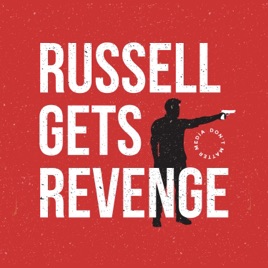
Advertise on podcast: Russell Gets Revenge
Rating
5from
This podcast has
59 episodes
Language
EnglishPublisher
Don't Matter MediaExplicit
No
Date created
2020/10/05
Latest episode
2026/10/11
Average duration
63 min.
Release period
8 days
Description
An eight episode black comedy fiction podcast about a mild-mannered accountant on a quest for vengeance. Written and created by Peter Hoffman Kimball, starring Josh Callahan, and featuring such voice talent as Ptolemy Slocum from HBO's Westworld and Emmy winner Neil Garguilo from MTV's Awkward.
Unlock Russell Gets Revenge podcast Email contact info,
Listeners & Audience details
Email contact information
Direct podcast contact details

Listeners
Audience numbers & engagement insights

Audience details
Podcast Insights

Podcast episodes
Check latest episodes from Russell Gets Revenge podcast
Introducing: "How To Make Films and Influence People" - Casablanca
2026/10/11
Send us Fan Mail
Peter and Andrew dive into Michael Curtiz’s 1942 classic Casablanca, unpacking how its sharp, endlessly quotable dialogue and moody, film noir–style shadows elevated an American studio production into an enduring masterpiece of cinema. They discuss the film’s unique production timing during World War II, Rick Blaine’s journey from cynical neutrality to active self-sacrifice for the greater good, and Claude Rains’ morally flexible Captain Renault serving as the essential bridge between the Allied resistance and German occupation.
In their remake scenarios, they tackle a set of blasphemous challenges: How do you adapt Casablanca as a family-friendly film? Could it work as a kid-led resistance story or an animated animal allegory in the vein of Zootopia? What would a no-budget indie look like—a dialogue-heavy single-room bottle drama set entirely in Rick’s Café, an immigration story set in the Spanish exclave of Ceuta, or a morally ambiguous drama set during the dissolution of Yugoslavia? Would it translate better as a Mexican border town TV series or an episodic, Mandalorian-style anthology following Rick's weekly encounters with refugees and scoundrels?
The hosts also share their current viewing habits—including Jake Johnson’s pickleball comedy The Dink, the Apple TV show Lucky, and the Anthony Bourdain summer-break biopic Tony—while referencing Challengers, The Mighty Ducks, The Great Dictator, To Be or Not to Be, Star Wars (and Han Solo's cantina roots), Children of Men, The Dark Knight, The Adventures of Robin Hood, The Fugitive, and Poker Face along the way.
Topics covered: The commercial and patriotic confluence of Operation Torch and the Casablanca Conference on the film's original release, why the reluctant-hero archetype hits harder when the choice comes in Act Three instead of Act One, racial dynamics and the nuanced role of Sam, and why the messy compromises of World War II gave early cinema a rare moral clarity.
Introducing: "How To Make Films and Influence People" - City of God
2026/10/04
Send us Fan Mail
Peter and Andrew dive into Fernando Meirelles and Kátia Lund’s 2002 Brazilian masterpiece City of God, examining how its kinetic editing, split screens, handheld camera work, and vibrant energy bring the poverty-stricken favelas of Rio de Janeiro to life. They analyze the film's unconventional, vignette-driven story structure, discuss Rocket’s evolving role as an embedded narrator, and debate how the cyclical, unrelenting violence involving young children challenges traditional Hollywood storytelling and empathy.
In their remake scenarios, they tackle a wild set of creative constraints: How do you adapt an unflinchingly violent crime saga into a family-friendly film? Could it work as an animated feature about a runaway chicken dodging danger, or a low-stakes turf war over contraband candy at a summer camp? What would a no-budget version look like told entirely in a darkroom through developing photographs, or an ultra-high-budget epic transported to the slums of ancient Rome? Would the sprawling favela dynamics be best served as an expansive, character-rich prestige TV series?
The hosts also catch up on what they've been watching, discussing the razor-sharp comedic plotting of A Fish Called Wanda (1988) and the baseball romance of Fever Pitch (2005), while also referencing Goodfellas, The Godfather, The Shawshank Redemption, Do the Right Thing, Come and See, The Secret Agent, and nature documentaries like Planet Earth.
Topics covered: Subverting traditional "Save the Cat" narrative formulas, balancing bleak thematic reality with visual style and vitality, the ethics and power of showing systemic cycles without moralizing, and why setting a city as the true main character creates an unforgettable cinematic world.
Introducing: "How To Make Films and Influence People" - Singin' in the Rain
2026/09/26
Send us Fan Mail
Peter and Andrew explore Stanley Donen and Gene Kelly’s 1952 musical classic Singin' in the Rain, unpacking how its high-energy choreography, vibrant Technicolor spectacle, and witty satire captured Hollywood’s turbulent transition from silent films to talkies. They discuss the film’s themes of genuine optimism, the artifice of celebrity image, and the evolution of entertainment technology, and debate whether its lighthearted jukebox musical structure and static stage-style camerawork still hold up as a towering work of cinema. In their remake scenarios, they tackle a lively challenge: How do you adapt an upbeat classic for families? Could it work as a 19th-century period piece about the arrival of city gaslighting, or a darker Babylon-style tragedy? What would a no-budget indie version look like, focusing on a celebrity hiring someone to secretly live out their social media life? Would it be better as an ongoing Glee-style musical series expanding on the supporting characters, or a meta backstage drama about the making of the film itself in the 1950s?
The hosts also answer a listener question about their most controversial overrated and underrated movie hot takes, share their current viewing habits—including Nirvana The Band The Show The Movie, the latest Spider-Man, and experiences on a film festival selection committee—while referencing The Wizard of Oz, Wicked, It’s a Wonderful Life, Solo: A Star Wars Story, Braveheart, Babylon, Hail, Caesar!, The Adventures of Robin Hood, The Sound of Music, and The Offer in their discussion.
Topics covered: The mechanics of turning pre-existing catalog songs into a cohesive movie, why unbridled 1950s post-war optimism is difficult to recreate today, the visual trade-offs between static full-body dance shots and modern kinetic editing, and why pure cinematic fun doesn't always need deep thematic complexity to endure.
Introducing: "How To Make Films and Influence People" - The Uprising
2026/09/19
Send us Fan Mail
Peter and Andrew kick off a new review format covering current theatrical releases, starting with Paul Greengrass’s medieval historical drama The Uprising. The hosts dig into the film's depiction of the 1381 English Peasants' Revolt against King Richard II, exploring Greengrass’s visceral direction, dynamic battlefield choreography, and Andrew Garfield’s turn as an unnamed rebel leader. In their spoiler-free review, they discuss the film’s lack of worldbuilding and character backstory, and evaluate who this muddy, action-heavy historical drama is really for.
Crossing into the spoiler zone, they discuss how the film actually worked, once you've seen the ending.
Topics covered: The narrative risks of skipping the setup and launching straight into a rebellion, why kinetic action directing can't always compensate for thin screenwriting, modern political subtext in historical epics, and why some films leave you admiring the craft while completely forgetting the characters.
Introducing: "How To Make Films and Influence People" - Goodfellas
2026/09/19
Send us Fan Mail
Peter and Andrew unpack Martin Scorsese's 1990 classic Goodfellas, exploring how its highly stylized editing and unique dual-narrator perspective redefined the gangster genre. They discuss the film’s themes of the illusion of mafia loyalty, the allure of the criminal lifestyle, and the reality of middle management incompetence, and debate whether its intense, stylized violence serves to intentionally desensitize the viewer.
In their remake scenarios, they tackle a ruthless challenge: How do you adapt an ultra-violent mob story for families? Could it work as a summer camp movie about a kid slinging contraband candy? What would a no-budget version set entirely inside Paulie's house or a single chaotic car ride look like? Would it be better as an ongoing TV series expanding on the unseen Lufthansa heist?
The hosts also celebrate their 40th episode by handing out awards for the past ten movies they've covered, while referencing The Godfather, The Sopranos, Donnie Brasco, The Office, Wet Hot American Summer, A Woman Under the Influence, Children of Men, Mulholland Drive, The Truman Show, Night of the Living Dead, Ran, Scott Pilgrim vs. the World, Cinema Paradiso, and Donnie Darko in their discussion.
Topics covered: The cinematic discipline of skipping a highly-anticipated heist scene, the unglamorous reality of cleaning up crime scenes in your own driveway, comparing ruthless mobsters to incompetent regional managers, and why some movies are better experienced as a fast-paced rollercoaster ride.
Introducing: "How To Make Films and Influence People" - A Woman Under the Influence
2026/09/13
Send us Fan Mail
Peter and Andrew unpack John Cassavetes's 1974 independent character study A Woman Under the Influence , exploring how its uncomfortably intimate filmmaking style and incredibly nuanced performances left a lasting mark on independent cinema. They discuss the film’s themes of mental illness versus idiosyncrasy, the dark underbelly of 1970s domestic life, and the messy reality of marriage, and debate whether its challenging, unresolved narrative still resonates in a modern world.
In their remake scenarios, they tackle an uncomfortable challenge: How do you adapt a harrowing domestic drama for families? Could it work as a Mary Poppins -style fantasy where a mother's erratic behavior translates into magical adventures for her kids? What would a no-budget "birthday party from hell" version told entirely from the perspective of an awkward visiting parent look like? Would it be better as a time-hopping TV series exploring the couple's early romance and the future lives of their children in the vein of This Is Us ?
The hosts also launch a new segment pitching auteur directors for bizarre brand movies (featuring Edgar Wright and John Milius takes on Crocs), and share their current viewing habits, including Shoresy and The Karate Kid (1984), while referencing Barbie, Battleship, Jumanji, Mean Girls, Red Dawn, Letterkenny, Cobra Kai, Black Swan, The Killing of a Chinese Bookie, Krisha, Blue Valentine, Saturday Night Live, Barry, and Entourage in their discussion.
Topics covered: The difference between a low-budget Hollywood film and true independent cinema, the dark cultural undertones of the 1970s, the ethics of the Cobra Kai dojo, the value of long, uncomfortable scenes, and why some masterpieces are deeply rewarding but incredibly unpleasant to watch.
Introducing: "How To Make Films and Influence People" - Night of the Living Dead
2026/09/05
Send us Fan Mail
Peter and Andrew unpack George Romero's 1968 independent horror classic Night of the Living Dead , exploring how its single-location tension and foundational zombie tropes created an entire cinematic genre. They discuss the film’s themes of interpersonal power dynamics, the futility of survival, and the dark irony of the rescue posse, and debate whether its straightforward, relentless narrative still holds up in a modern world saturated with undead copycats.
In their remake scenarios, they tackle a terrifying challenge: How do you adapt a story about flesh-eating ghouls for families? Could it work as a comedic movie about teenagers barricading their house to study for an AP test? What would a high-budget ancient Roman version set during the conquest of Gaul look like? Would it be better as an anthology TV series where the main cast dies every episode, or an X-Files-style detective show investigating petty grudges settled during the outbreak?
The hosts also kick off a new segment pitching auteur directors for Disney live-action remakes (featuring Robert Eggers and Christopher McQuarrie takes on Moana), and share their current viewing habits, including Christopher Nolan's The Odyssey and The Invite , while referencing Mission: Impossible, The Witch, Nosferatu, Who's Afraid of Virginia Woolf?, Carnage, Closer, Die Hard, Jaws, Shaun of the Dead, The Purge, and 28 Days Later in their discussion.
Topics covered: The logistical and financial realities of 1960s micro-budget filmmaking, the effectiveness of stripping away character backstories to heighten situational tension, the mechanics of a satisfying twist ending, and why the original blueprint of a genre is always worth revisiting.
Introducing: "How To Make Films and Influence People" - Children of Men
2026/08/31
Send us Fan Mail
Peter and Andrew unpack Alfonso Cuarón's 2006 dystopian masterpiece Children of Men , exploring how its gritty, ground-level visual style and masterful "show, don't tell" world-building elevate it beyond a standard action thriller. They discuss the film’s themes of societal collapse, the moral complexities of revolution, and the balance between random chance and miraculous faith, and debate whether its deeply cynical yet hopeful view of humanity still resonates in a modern world.
In their remake scenarios, they tackle an apocalyptic challenge: How do you adapt a bleak story about the end of human reproduction for families? Could it work as a fun adventure where a motley crew of animals helps the last pregnant sea turtle reach a sanctuary, or a quest to save the last growing plant? What would a no-budget version set entirely inside an abandoned Michigan strip mall look like? Would it be better as a gritty 10-episode sci-fi retelling of the biblical Nativity story?
The hosts also share their current viewing habits, including The Invite , while referencing The Godfather trilogy, Star Wars: A New Hope, The Lord of the Rings, 22 Jump Street, Paul Blart: Mall Cop 2, Pusher, Der Vorname, Who's Afraid of Virginia Woolf?, Carnage, Closer, The Bourne Identity, and Seinfeld in their discussion.
Topics covered: The rarity of truly great movie sequels, the effectiveness of a reluctant "common man" hero over an action superstar, the intricate background details of a collapsing society, and why some cinematic masterpieces are easily misjudged on a first watch because of their superficial accessibility.
Introducing: "How To Make Films and Influence People" - Donnie Darko
2026/08/23
Send us Fan Mail
Peter and Andrew unpack Richard Kelly's 2001 genre-bending cult classic Donnie Darko , exploring how its bizarre time-traveling rabbit and its ambiguous blend of sci-fi, horror, and dark comedy left a lasting mark on early 2000s cinema. They discuss the film’s themes of the isolating teenage experience, the blurred lines of mental illness, and the impact of personal sacrifice, and debate whether its cynical view of corrupt adults still resonates in a modern world.
In their remake scenarios, they tackle an apocalyptic challenge: How do you adapt a dark story about an imaginary doomsday rabbit for families? Could it work as a positive adventure where a happy bunny helps a teen fix his neighbors' hidden problems? What would a no-budget, computer screen-only "Screen Life" version look like? Would it be better as an ongoing TV series expanding the 28-day timeline to explore the bizarre lives of the town's side characters?
The hosts also share their current viewing habits, including HyperNormalisation and Jackass Best and Last , while referencing Zelig , What's Up, Tiger Lily? , Forrest Gump , It's a Wonderful Life , Mulholland Drive , Fight Club , 2001: A Space Odyssey , Ferris Bueller's Day Off , The Shining , and Missing in their discussion.
Topics covered: The creative use of archival footage in documentaries, the Buster Keaton-level visual comedy of Jackass stunts, the sinister camera framing used to introduce Donnie, and why some movies are destined to be subjective personal favorites rather than objectively the greatest films of all time.
Introducing: "How To Make Films and Influence People" - The Truman Show
2026/08/16
Send us Fan Mail
The Truman Show Peter and Andrew unpack Peter Weir's 1998 high-concept classic The Truman Show , exploring how its predictive look at reality television and its deeply philosophical allegory left a lasting mark on modern culture. They discuss the film’s themes of what constitutes reality, the ethics of entertainment, and the desire for genuine human relationships, and debate whether its premise of a 24/7 unedited observation still resonates in a modern world.
In their remake scenarios, they tackle an existential challenge: How do you adapt a story about a completely fabricated life for families? Could it work as a summer camp movie where the friendships are staged? What would a no-budget single-room birthday revelation version look like? Would it be better as a TV series about the backstage drama of the actors and crew producing the show?
The hosts also share their current viewing habits, including Voicemails for Isabelle and All Her Fault , while referencing The Matrix, The Real World, Edtv, The Hunger Games, The Running Man, Total Recall, Good Bye Lenin!, The Manchurian Candidate, and The Adjustment Bureau in their discussion.
Topics covered: The future of micro-payments and independent media, the logistical nightmare of a 30-year acting gig, the responsibility directors owe to their subjects, how the film introduced new vocabulary for existential delusions, and why some movies are essential to watch for their cultural significance even if you don't return to them often.
Introducing: "How To Make Films and Influence People" - Cinema Paradiso
2026/08/08
Send us Fan Mail
Peter and Andrew journey through Tornatore's 1988 Italian classic Cinema Paradiso , exploring how its deep love for the theater experience and its sentimental coming-of-age story left a lasting mark on film lovers everywhere. They discuss the film’s themes of the magic of movies, the limitations of growing up in a small town, and the censorship of human expression, and debate whether its straightforward, sentimental narrative still resonates in a modern world.
In their remake scenarios, they tackle a nostalgic challenge: How do you adapt a story about a kid growing up loving film for families? Could it work as a Pixar-style animated movie where films on the wall come to life, or an un-family-friendly bloodbath over censorship? What would a no-budget projection booth version focused on Alfredo look like? Would it be better as a period TV series exploring the eccentric characters of postwar Sicily, or a mystery series about the adult Toto returning to face his past?
The hosts also share their current viewing habits, including Four Weddings and a Funeral and Disclosure Day , while referencing Notting Hill , Nine Months , The Running Man , War of the Worlds , Alien , Arrival , Good Will Hunting , Inglourious Basterds , Luca , and Coco in their discussion.
Topics covered: The physical danger of early film reels, the universal desire to escape your hometown, the Hollywood reliance on clear villains, the subjective nature of rom-com chemistry, and why some movies are an easy recommendation even if they aren't considered the greatest of all time.
Introducing: "How To Make Films and Influence People" - Mulholland Drive
2026/08/02
Send us Fan Mail
Peter and Andrew journey through David Lynch's 2001 surreal psychological thriller Mulholland Drive, exploring how its dream logic and masterful subversion of cinematic language left a lasting mark on modern cinema. They discuss the film’s themes of identity, the dark side of the Hollywood system, and the blurred lines between reality and fantasy, and debate whether its highly open-ended, subjective narrative still resonates in a modern world.
In their remake scenarios, they tackle a surreal challenge: How do you adapt a dark story about Hollywood dreams and nightmares for families? Could it work as a straightforward mystery where helping an imaginary friend builds self-confidence? What would a no-budget, single-location version set entirely in a dingy office building look like? Would it be better as a world-expanding TV series exploring the bizarre backstories of side characters like the Cowboy and the hitman?
The hosts also share their current viewing habits, including the new season of Scrubs and the indie horror hit Obsession, while referencing The Usual Suspects, Swingers, Sunset Boulevard, La La Land, Nashville, Inception, Beau Is Afraid, I'm Thinking of Ending Things, He Loves Me... He Loves Me Not, Eraserhead, The Straight Story, All About Eve, Tully, Twin Peaks, and Good Will Hunting in their discussion.
Topics covered: Taking the leap to shoot your first short film, how David Lynch manipulates audience expectations with pacing and camera movement, writing scenes to showcase an actor's range, and why some movies are meant to be rewarding homework rather than casual viewing.
Introducing: "How To Make Films and Influence People" - Scott Pilgrim vs the World
2026/07/18
Send us Fan Mail
Peter and Andrew unpack Edgar Wright's 2010 hyper-kinetic cult classic Scott Pilgrim vs. the World, exploring how its video game-inspired aesthetic and perfectly synced visual comedy left a lasting mark on modern cinema. They discuss the film’s themes of adolescent narcissism, romantic baggage, and fighting for affection, and debate whether its highly stylized "you against the world" message still resonates with audiences today.
In their remake scenarios, they tackle a combo-breaking challenge: How do you adapt a stylized story about fighting evil exes for families? Could it work as an Inside Out-style story where Scott literally fights Ramona's fears and doubts? What would a no-budget, quiet room version focused on offering closure to the exes look like? Would it be better as a world-expanding TV series exploring the lives of all the side characters and their own relationship baggage?
The hosts also share their current viewing habits, including Perfect Blue and Inside Man (and their disappointment with Havoc), while referencing Black Swan, Den of Thieves, Blade Runner, Call Me By Your Name, and Napoleon Dynamite in their discussion.
Topics covered: The value of shooting 60-second micro-short films, capturing the emotional intensity of youth, comparing Edgar Wright's visual storytelling to traditional invisible editing, and why some comedies become generational touchstones while others fade away.
Introducing: "How To Make Films and Influence People" - Ran
2026/07/12
Send us Fan Mail
Peter and Andrew journey through Akira Kurosawa’s 1985 historical epic Ran, exploring how its breathtaking use of bold primary colors and massive practical battle sequences created an unparalleled visual spectacle. They discuss the film’s masterful adaptation of Shakespeare’s King Lear, its complex family dynamics, and debate whether its bleak, karmic message about building an empire on violence makes it a flawless masterpiece or a challenging watch.
In their remake scenarios, they tackle an epic challenge: How do you adapt a bloody tragedy about succession for families? Could it work as a Redwall-style animated animal adventure or a Viking coming-of-age story? What would a no-budget version focused solely on Lady Kaede's backroom political manipulations look like? Would it be better as a Game of Thrones-style TV epic or a prequel series exploring the warlord's initial rise to power?
The hosts also share their current viewing habits, including Rooster and The Audacity, while referencing The Office, Shrinking, Ted Lasso, Succession, Game Night, 10 Things I Hate About You, Lord of the Rings, The Departed, Seven Samurai, Gladiator, Braveheart, 2001: A Space Odyssey, Ladyhawke, The Secret of NIMH, Watership Down, How to Train Your Dragon, Shogun, Game of Thrones, Yellowstone, The Crown, and High School Musical in their discussion.
Topics covered: How watching films improves your own screenwriting, the value of mimicking writers like Aaron Sorkin to find your voice, the brilliant use of color to aid storytelling, the timeless impact of practical effects, and why some films are worth watching purely for their visual pageantry.
Introducing: "How To Make Films and Influence People" - 10 Things I Hate About You
2026/07/04
Send us Fan Mail
Peter and Andrew unpack Gil Junger's 1999 teen romantic comedy 10 Things I Hate About You, exploring how its smart adaptation of Shakespeare’s The Taming of the Shrew and its fast-paced, trope-filled character dynamics made it a defining film of the era. They discuss the film’s themes of teenage rebellion, dating expectations, and high school social hierarchies, and debate whether its stylized view of late-90s youth still resonates in a modern world.
In their remake scenarios, they tackle a structural challenge: How do you adapt a story about high school dating for families? Could it work as a much darker, R-rated thriller? What would a no-budget, one-location Breakfast Club-style version look like? Would it be better as an ongoing TV series about the fallout of Cameron's disastrous first date, or a sketch-comedy anthology of modern Shakespeare adaptations?
The hosts also celebrate their 30th episode by handing out awards to their past ten covered films, and share their current viewing habits, including The Celebration (Festen) and Deliver Me From Nowhere, while referencing Clueless, American Pie, The Breakfast Club, Milk and Cereal, and Fight Club in their discussion.
Topics covered: The value of Dogme 95 filmmaking restrictions, the challenges of writing realistic high school movies, the benefits of shooting a short film in Iceland, and why some movies are highly rewatchable and enjoyable even if they aren't considered traditional masterpieces.
Podcast reviews
Read Russell Gets Revenge podcast reviews
Jamie Cheval 2025/09/02
Darkly Funny and Witty
This podcast was hilarious. I laughed out loud every episode. Short and sweet, both darkly funny and witty. Well done.
Mitch Maker 2021/02/22
Cool story, Great voices
I love narrative podcasts. So this was great. Fictional, fun, great voices, and interesting dark comedy plot line. If you like true crime meets ear tv...
instaannebennett 2020/12/14
Brilliant!
Smart, funny, unexpected. You never know where it’s going to go. Hard to find a clean comedy that consistently delivers on the laughs but this nails i...
Nelson Linden 2020/11/28
Excellent Podcast!
This is great! The writing and acting are first rate. Have you considered how you would ever get revenge for a murdered spouse? This helps you throu...
Gingerman107 2020/11/24
Well done!
Compelling story and interesting twist with the humorous notes. Enjoying this a bunch!
KHLPAP 2020/11/23
Fun and funny
A super-listenable, winking original comedy podcast! I’m a huge podcast fan, and this is one of my new favs. And this sounds weird, but trust me — the...
AlexVPN 2020/11/22
Dark comedy
Grosse Point Blank vibes
MKlim5 2020/11/22
Hilarious!
So funny because everything is very grounded and real. Feels like a real story and all the characters feel very natural. Really hooked by the story to...
Jschmuck2 2020/11/22
Russell Gets...My Heart
What a great premise for a show! It’s very funny albeit extremely dark. Really interested to see where it goes next ☠️
DAnderson91 2020/11/22
Love this podcast!
I love the dark humor - the way it mixes hilarious dialogue with genuinely thoughtful, dark moments. Very smart, very funny. Great actors.
Podcast sponsorship advertising
Start advertising on Russell Gets Revenge relevant audience podcasts
You may also like to advertise on these Podcasts
4.713004374
The Tim Dillon Show
The Tim Dillon Show
4.115956456
The Tucker Carlson Show
Tucker Carlson Network

4.828023450
Huberman Lab
Scicomm Media
4.240683
To Be The Man
Podcast Heat | Cumulus Podcast Network
4.41511292000
The Ben Shapiro Show
The Daily Wire
4.2155648
TENNIS.com Podcast
TENNIS.com Podcast/Tennis Channel Podcast Network
4.510846771
The Joe Budden Podcast
The Joe Budden Network
4.611626506
The Bulwark Podcast
The Bulwark
4.711480389
Matt and Shane's Secret Podcast
Matt McCusker & Shane Gillis
4.82510178
Smosh Reads Reddit Stories
Smosh