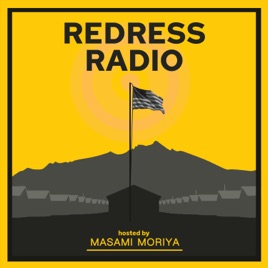
Advertise on podcast: Redress Radio
Rating
5from
This podcast has
73 episodes
Language
EnglishPublisher
Mas MoriyaExplicit
No
Date created
2020/10/08
Latest episode
2025/10/28
Average duration
9 min.
Release period
2 days
Description
A lo-fi archival podcast on the Japanese Americans during the WWII "internment" camps. In this podcast, we publish the audio archives from the Commission on Wartime Relocation and Internment of Civilians during the 1980s and more.
Unlock Redress Radio podcast Email contact info,
Listeners & Audience details
Email contact information
Direct podcast contact details

Listeners
Audience numbers & engagement insights

Audience details
Podcast Insights

Podcast episodes
Check latest episodes from Redress Radio podcast
When Nisei Soldiers Were Locked Up for Roosevelt’s Visit - Los Angeles (1981)
2025/10/28
Harry Kawamoto, a Nisei from San Diego drafted into the U.S. Army in February 1942, testified before the Commission about the contradictions and injustices he and other Japanese American soldiers faced during WWII. Although he did not experience incarceration himself, his testimony revealed how racism and mistrust followed Nisei even into military service.
Drafted Before Removal: Entered the Army just before mass evacuation began. While in training at Camp Robinson, Arkansas, requested furlough to visit his parents in Poston, Arizona, but was denied because “no persons of Japanese ancestry were allowed in that area.”
Denied Emergency Furlough: Recalled fellow Nisei soldier Albert Ito, whose brother was killed in the so-called “Manzanar riot.” Ito was refused permission to attend the funeral, with the same excuse given.
Roosevelt at Fort Riley: When President Roosevelt visited Fort Riley in 1943, Nisei soldiers were locked inside barracks under armed guard — while another group of Nisei, overlooked by officers, wandered freely outside. Kawamoto called this “a ridiculous security measure” that showed the government did not trust its own Japanese American servicemen.
Segregated & Distrusted: Nisei were often assigned to noncombatant units, further proof of government suspicion. Kawamoto argued that once drafted, Nisei should have been treated with full fairness and respect.
On Injustice: Declared that denying a soldier the right to attend his brother’s funeral could “never be justified.”
Redress & Reparations: Insisted no apology could erase such wrongs, and called on the Commission to recommend reparations “in the greatest degree possible.” Pointed out that Congress already had evidence after WWII to justify payments, yet ignored it.
Closing Plea: Affirmed that every person of Japanese ancestry — and others affected — suffered financial and psychological losses and deserved compensation, endorsing the proposals of the National Coalition for Redress and Reparations.
Voluntary in Name Only: A Family’s Nightmare in Utah - Los Angeles (1981)
2025/10/27
Akira Horiuchi, a 54-year-old Nisei from Los Angeles, testified before the Commission about his family’s decision to leave voluntarily rather than face forced incarceration, and the devastating personal tragedies that followed.
Father Arrested: On December 7, 1941, the FBI picked up his father while visiting friends on Terminal Island and held him for several days. That fear shaped the family’s decision to “voluntarily” leave Los Angeles.
Racism at School: As a teenager, he endured stares, insults, and hostility on public transportation, eventually biking to school to avoid harassment.
Utah Hardship: The family relocated to rural Utah as sharecroppers. For three years they lived under primitive, degrading conditions — no running water, no electricity, sleeping on bug-infested floors, laboring in fields and canneries. He described the work as “slave labor.”
Family Tragedies: His baby sister died after falling into an outhouse while everyone worked in the fields. Soon after, his mother died giving birth in a hospital for the first time in her life. Akira was still in high school.
Military Service: Drafted immediately after graduation, he served in the U.S. Army as an interpreter in the Occupation of Japan. He described the bitter irony of being pulled from “slave labor” only to be ordered to serve the same government that had uprooted his family.
Lingering Anguish: Questioned how any monetary value could be placed on the loss of his mother and sister, or the fear and humiliation that still haunted him.
Demand for Redress: Called for meaningful restitution from the U.S. government — at least $25,000 per individual — as the minimum recognition of the injustice.
33 Years in the Post Office, No Justice for Lost Time - Los Angeles (1981)
2025/10/24
Masaaki Hironaka, a WWII veteran and longtime postal worker, testified before the Commission about the injustice of being denied reinstatement to his job after military service, and the need for redress both in compensation and in constitutional principle.
Postwar Employment Struggle: After his 1946 discharge, returned to Chicago within the required 90 days and reapplied for his former postal clerk job. Postmaster Stewart refused to reinstate him. Appeals through the Union, Selective Service, and veterans’ groups failed.
Return to Fishing & Reentry: Worked in commercial fishing for a year, then retook the postal clerk exam. Only after Stewart’s retirement was he reappointed under a new postmaster.
Partial Restoration: The Post Office restored only his seniority and time worked — not his full status. Even when Congress passed legislation in the 1950s to reinstate Nisei veterans, he was already in the top grade and received no benefit.
Career & Retirement: Served 33 years with the Postal Service, retiring in 1975 as Manager of a Classified Station.
Redress Demand: Called for monetary compensation of no less than $25,000 per person, with funds for deceased incarcerees to go into community programs supporting families and heirs.
Constitutional Question: Urged the Commission to resolve the precedent of Korematsu, Hirabayashi, and Yasui, to ensure no government can ever again strip citizens of rights based on race.
Commission Reflections: Limits and Commitments
2025/10/23
After hearing testimony from Dr. Matsuo and other panelists, members of the Commission offered reflections on the process and their role. Their comments balanced empathy with reminders of the Commission’s limits.
Judge Marutani: Thanked panelists, admitted he could not disagree with their goals, but reminded them the Commission must deliver its final report by July of next year. Warned that “he who chases two rabbits catches neither” — urging focus on what can be achieved.
Dr. Flemming: Emphasized the importance of both individual and organizational testimony, noting that each story is unique and invaluable. Called incarceration a “flagrant violation of civil rights” and reassured witnesses that even seemingly repetitive testimony adds depth to the record. Urged people not to read too much into commissioners’ questions, which are sometimes meant to surface helpful evidence rather than signal conclusions.
Mr. Mitchell: Clarified that Justice Goldberg’s earlier remarks should not be misinterpreted as official positions. Stressed that commissioners share many of the community’s goals but must work within time and scope.
Chairman Lungren: Thanked the panel, noted Congresswoman Bobbi Fiedler’s written support for the Commission’s work, and announced a short recess before Judge Marutani would resume as chair.
Together, these remarks underscored both the constraints and the commitment of the Commission — balancing the urgency of testimony with the practicalities of producing findings and recommendations.
“Not American, Not Japanese”: The Generational Toll - Los Angeles (1981)
2025/10/22
Beth Shironaka, speaking as part of the San Diego Redress Reparations Committee, testified before the Commission alongside fellow members Masato Sato, Masaki Nurunaka, and Janet Takomura. Representing a diverse coalition of Issei, Nisei, Sansei, Yonsei, and allies, their statement focused on community dispersal, the generational impacts of camp, and specific remedies for justice.
San Diego Japantown Lost: Before WWII, San Diego’s Japanese community thrived with restaurants, groceries, hotels, barbershops, churches, and recreation halls clustered in Japantown. Forced removal destroyed this neighborhood; today only one lone grocery store remains. Without that hub, cultural and political life fractured.
Generational Impacts: Testimony stressed how incarceration disrupted transmission of language, culture, and history. Most Sansei and Yonsei grew up unable to speak Japanese or communicate with grandparents, disconnected from songs, dances, and traditions. Identity confusion left youth vulnerable in the 1960s–70s, with many turning to drugs or struggling with alienation.
Psychological Toll: They described feeling “not American and not Japanese,” denied roots by laws, racism, relocation, internment, redevelopment, and forced self-denial.
Remedies Demanded:
$25,000 per survivor, with heirs to receive funds for deceased, and an emergency fund for Issei.
Separate community fund for cultural, social, educational, and religious needs.
Legislation explicitly prohibiting future mass incarceration of any people.
Educational outreach — ensuring the true history of incarceration is taught in textbooks and schools.
Closing Vision: Rebuilding community centers would restore pride, preserve heritage, and strengthen the fight for equality and justice across generations.
Sue Embrey: From Silence to Pilgrimage - Los Angeles (1981)
2025/10/21
Sue Kunitomi Embrey, co-founder of the Manzanar Committee and lifelong educator, testified before the Commission about her own incarceration at Manzanar and her decades of activism to preserve memory and demand redress. Her testimony traced her journey from a teenage internee to the leader of pilgrimages that transformed silence into action.
Family Removal: Born and raised in Los Angeles, she was sent to Manzanar on May 9, 1942, with her widowed mother and six siblings. One brother volunteered for the Army from camp; three others later served in the U.S. military, including one killed in Korea.
Life in Camp: Worked making camouflage nets and became managing editor of the Manzanar Free Press. She described incarceration as “the most traumatic experience of my life.”
Breaking Silence: In 1969, helped organize the first Manzanar Pilgrimage with Asian American student activists. The event sparked requests for information and began to break the community’s silence.
Manzanar Committee: Formed to educate the public and secure recognition of the camps. Successfully pushed for Manzanar’s designation as a California Historical Landmark in 1972, despite resistance to using the words “concentration camp” and “injustice” on the plaque.
Pilgrimages & Exhibits: Annual pilgrimages and exhibits like Executive Order 9066 (Dorothea Lange photographs) and Months of Waiting (artworks) created spaces for community reflection, especially for Sansei who had grown up with little knowledge of camp.
Facing Resistance: Recalled painful moments, like Nisei elders walking out of a 1973 screening of Bob Nakamura’s film Manzanar, unwilling to confront memories.
Census Deception: Exposed how WWII census confidentiality was suspended, contradicting the Census Bureau’s claims and leaving her embarrassed as a government community specialist.
Vision of Justice: Declared that resettlement was never truly over, and that redress must go beyond apology. Reparations must be direct and monetary for the loss of civil rights, psychological damage, and destruction of community.
The NCRR Demands $25,000 — A Minimum Starting Point - Los Angeles (1981)
2025/10/20
June Kizu, representing the Southern California chapter of the National Coalition for Redress and Reparations (NCRR), delivered one of the most forceful organizational testimonies before the Commission. Speaking as part of a grassroots coalition formed in 1980, she called for justice rooted in history, law, and community experience.
Origins of NCRR: Began in Los Angeles when community groups joined forces; has since expanded nationwide with members from New England to Hawai‘i.
Historical Record: Cited testimony of constitutional violations, government abuse of power, racism, economic greed, and media manipulation. Asked directly: how will the government measure the scope of evacuation and legislate to remedy it?
Demands Beyond Property: Losses were not just financial but psychological, cultural, and social — “three years of people’s lives” stolen.
Concrete Proposals:
Ongoing public education so future generations understand and prevent similar injustice.
Overturning the legal basis for EO 9066 to ensure no branch of government can strip away rights again.
Including other communities harmed by wartime policies (Aleutians, Latin Americans of Japanese descent, and others).
Creation of a community fund for social damage.
Direct individual monetary compensation to each incarceree or heir, with $25,000 as a minimum starting point.
Survey Evidence: Referenced a 1981 survey of 3,700 Japanese Americans — 95% supported redress, nearly 90% supported direct payment.
Rejecting Excuses: Countered arguments against reparations, including claims that Japanese Americans had “made it anyway” or that heirs did not deserve compensation. Stressed that most heirs were Nisei still living with trauma and losses.
Principle of Justice: Declared monetary reparations the most principled and expeditious path, reaffirming citizenship and the rule of law.
Commission’s Duty: Criticized logistical failures in the hearings and demanded commissioners return to communities in person to explain their recommendations.
Final Plea: Urged commissioners to act with moral courage and not compromise justice: “Any compromise recommendation will be a compromise of justice.”
Why Apologies Alone Are Not Enough - Los Angeles (1981)
2025/10/17
Dave Toru Matsuo, representing Agape Fellowship and Asian American Journey, testified before the Commission with both gratitude and frustration. While thankful for the hearings, he challenged commissioners to go beyond data collection and confront the state’s moral guilt for incarceration.
Mixed Feelings: Expressed disappointment that more commissioners were absent in Los Angeles but appreciation for efforts to hold community sessions in Little Tokyo.
Purpose of the Commission: Questioned Justice Goldberg’s suggestion that the Commission’s role was limited to calculating reparations, arguing instead that its work must indict the state itself.
What’s Unsaid: Emphasized that many Japanese Americans remain silent out of fear, shame, or trauma. Urged commissioners to consider not only the testimonies presented, but also the absences — the voices unheard.
State Accountability: Insisted the issue was not just whether mistakes were made, but whether the state itself was wrong in enacting Executive Order 9066. Called it a “criminal action” requiring restitution.
Beyond Apology: Declared an apology alone was inadequate. Reparations were necessary as both corrective and preventative measures, ensuring such injustices could not be repeated.
For Heirs Too: Pointed out the generational trauma passed to children and grandchildren. Said heirs must be included in reparations, since families were fragmented and disintegrated by incarceration.
Moral & Compassionate Duty: Compared this Commission’s opportunity to the Kerner Commission, but with the chance to do more — not just identify racism, but mandate restitution. Called for courage and compassion in indicting the state and affirming justice.
The Father Who Never Came Home - Los Angeles (1981)
2025/10/16
Ewan Yoshida, born in Alaska in 1930, testified before the Commission with a deeply personal story of family separation and lifelong loss. His testimony centered on the disappearance of his father after Pearl Harbor and the decades of unanswered questions that followed.
Early Life in Alaska: Raised on Kodiak Island, the only Japanese American family there. His father was a commercial fisherman who built a new home and cared for his three sons after their mother’s early death.
Promise of Family: Remembered his father’s words — that one day he would take his boys out of the orphanage so they could live with him and fish together.
Pearl Harbor & Arrest: On December 7, 1941, his father and two uncles were arrested and sent to U.S. concentration camps. The family was never told where. Their house, boat, and fishing equipment were all lost.
Vanished Father: At just 11 years old, Yoshida never saw his father again. For 40 years he tried to trace what happened, finding only fragments that his father may have worked in agriculture in Idaho or Utah.
Bitter Legacy: Testified that the U.S. government “made me an orphan.” The loss left him angry, depressed, and permanently embittered.
Longing & Faith: Despite the bitterness, he held onto hope: if by God’s will he might find his father alive, the tears of joy would wash away decades of pain. For now, all he could do was “hope and pray.”
Commission Response: Commissioners asked for details of his father’s name and age, promising staff would search the records to assist in locating him.
“A Hellhole, Not a Relocation Center” - Los Angeles (1981)
2025/10/15
Mitsuru Sasahara, a Sansei from Los Angeles, testified before the Commission about his family’s journey from prewar community life, to incarceration at Manzanar, to postwar struggles in Los Angeles. His testimony wove together personal memory, family loss, and his call for reparations.
Family Background: Born in 1934, third generation. His father, born in Honolulu in 1900, built a life in California as a gardener after being displaced from farm work in Orange County. His mother was born in Los Angeles County in 1908.
Neighborhood Before the War: Grew up in Atwater and Glendale, in a mixed Anglo and Hispanic neighborhood with only a handful of Japanese families. Recalled a childhood of shared lunches—tortillas, beans, Campbell’s soup, and rice balls—an “international palate.”
Pearl Harbor & Shock: Parents were stunned by news of the attack; neighbors remained friendly. Children went to school without harassment, and the family planted a “victory garden” to show their loyalty.
Evacuation: On April 26, 1942, the family was forced onto buses with only what they could carry. Mitsuru gave his prized cap gun to his best friend before leaving.
Camp at Manzanar: Lived in a one-mile-square desert compound ringed by barbed wire and guard towers. As a child, he recalled endless boredom, no real schooling for a year, and wandering aimlessly around camp. He described the conditions as “a hellhole” — rejecting the euphemism “relocation center.”
Family Division: His father considered leaving for Japan out of disillusionment, but his mother refused: “If you leave, you go alone.” They stayed together. After camp, the family briefly lived in a Fresno tool shed before moving back to Los Angeles in 1946.
Postwar Hardship: In Los Angeles, they endured cramped kitchenette apartments, communal bathrooms, and years of instability before his father could resume gardening. His father died in 1952, “a broken man,” which Mitsuru believed was tied to the trauma of incarceration.
Call for Reparations: Urged compensation for both individuals and destroyed communities — a means of justice for families who returned home to find their neighborhoods and centers gone.
“They Can’t Do That to Me, I’m an American Citizen” - Los Angeles (1981)
2025/10/14
Arthur Tsuneishi, an ordained minister and pastor of the Los Angeles Holiness Church, testified before the Commission about his family’s removal, his service to his congregation, and his call for reparations as a Christian duty of the nation.
Early Life & Ambitions: Born in Monrovia, California in 1920, he studied at Pasadena City College, UCLA, and California Baptist Theological Seminary. He once dreamed of becoming an aeronautical engineer but was told “you can never get a job in that field in California” because of his race.
Family Fear: As a youth, he built model airplanes; after Pearl Harbor, his mother destroyed them out of fear the FBI would see them as incriminating.
Evacuation: His family of nine children obeyed Executive Order 9066, sent first to Pomona Assembly Center, then to Heart Mountain, Wyoming. He remembered the fairgrounds where he once enjoyed family trips becoming a concentration camp.
Camp Life: Spinal surgery for a tumor left him debilitated; his mother came to Poston, Arizona to care for him. He described the bitterness of incarceration, but also the turning point — converting to Christianity in camp and later dedicating his life to the ministry.
Family in Service: Despite their incarceration, five of his brothers served in the U.S. military in New Guinea, Okinawa, the Philippines, and Japan. His sisters taught Japanese to GIs in Army programs and served as translators in Tokyo after the war.
Legacy of Injustice: Stressed that their incarceration denied basic freedoms and human rights, and that only monetary reparations could address the losses suffered. As a pastor, he framed redress as America’s Christian responsibility.
Closing: Testified that he added his voice to call for reparations, not only for himself but for justice.
From Horse Stalls to Lifelong Asthma - Los Angeles (1981)
2025/10/13
Sumiko Seki, a 56-year-old Nisei from Long Beach and wife of a Purple Heart veteran of the 442nd Regimental Combat Team, testified before the Commission about the lasting pain of incarceration, the hysteria that tore apart her family, and her demand for justice.
Family & Roots: Born and raised in San Pedro, her parents worked as sharecroppers near White’s Point. They built a close-knit family after immigrating from Japan in 1907.
Hysteria & Arrests: After Pearl Harbor, FBI raids swept San Pedro. Her father narrowly avoided arrest, but her brother was jailed simply for being Japanese. Seeing neighbors held without cause became her “first lesson in prejudice.”
Evacuation & Loss: Forced to leave crops in the fields and 29 years of possessions behind. What they entrusted to friends was stolen. At Santa Anita, her family lived in horse stalls that still reeked of animals. She developed severe asthma from allergies there.
Fear & Violence: Recalled tanks and machine guns pointed at incarcerees during a search for contraband. Her younger brother, only 17, was jailed for sneaking out to see a movie and later shipped off under guard, not reunited with the family until 1945 — on his way to serve in the U.S. Army.
Postwar Struggles: Returning to California with little money and no home, she lived in government housing for 15 years. She described lifelong guilt and shame, saying people treated her “like I had leprosy.” Her family never recovered fully, and some refused to return to California.
Emotional Burden: Even decades later, she cried recalling the trauma her parents and siblings endured. She insisted no race in America should ever suffer what Japanese Americans did.
Call for Redress: Asked for monetary compensation of at least $25,000 tax-free for physical damages, emotional scars, lost property, lost education, and lost opportunities.
Commissioners’ Questions: Education, Farms, and Futures - Los Angeles (1981)
2025/10/10
Following Dr. Mazukazu “Jack” Fujimoto’s testimony, commissioners pressed him and others on issues of education and economic loss. Their questions reflected concern over how incarceration disrupted the futures of Japanese American youth and farm families.
Education Interrupted: Asked whether Japanese American youth were denied the right to attend college before the war, and how the camps shaped their opportunities afterward. Commissioners wanted to know if dispersal across the country created more or fewer chances for higher education.
Financial Barriers: Raised the question of how families, stripped of resources after release, could possibly afford college. Commissioners highlighted testimony that the lack of savings or property after camp closed doors for many.
Farm Losses: Noted that many testifiers came from farm families and asked whether the Farm Security Administration provided any assistance in selling equipment or property.
Follow-Up Request: Invited Dr. Fujimoto to submit a memorandum expanding on an idea he had mentioned in his statement, showing their interest in carrying his proposal further into the record.
Three Wrongs That Must Be Made Right - Los Angeles (1981)
2025/10/09
Bill Izumi Nakagawa, an architect from Washington, testified before the Commission about his family’s forced removal, their losses, and his own journey from the assembly centers to the 442nd Regimental Combat Team. His words drew from diary entries kept at the time, offering a vivid picture of daily life under incarceration.
Life Before the War: Lived with his family on a 25-acre truck farm in Bingen, Washington, across the Columbia River from Hood River, Oregon. Owned farming equipment, vehicles, and boats, all sold off at a fraction of their value under evacuation orders.
Cultural Fear: His mother burned her beloved Japanese records, fearing they might cause trouble. Their spring cabbage crop, nearly ready for harvest, was left to rot in the fields.
Evacuation at 19: On his birthday in May 1942, he and 600 others boarded trains from Hood River to Pinedale Assembly Center in California. He described the exhaustion of the train ride and first impressions of camp life in diary entries.
Work and Wages: Began working at Pinedale, enduring 110-degree heat for $4.99 a half month. He saved his first paycheck as evidence of their meager pay. Later transferred to Tule Lake, then Jerome in Arkansas.
Camp Conditions: Food was monotonous — “lamb stew, lamb stew, and lamb stew.” Despite hardships, he witnessed meetings where young men volunteered for the U.S. Army, defying block managers who questioned their loyalty.
Military Service: Passed his physical in Chicago but was restricted to the infantry due to discrimination. Joined the 442nd Regimental Combat Team; his brother Kiyoshi served in Military Intelligence.
After the War: Returned with no farm to go back to, settling in Kingsburg, California. His mother passed away young at 57, which he attributed to the strain of repeated uprooting.
On Injustice: Declared three main wrongs — the evacuation of U.S. citizens, the reclassification of draft status from 1-A to “enemy alien,” and the denial of his right to choose his military branch.
Redress Demands: Urged resettlement of unpaid claims from 1948, fair monetary compensation including for time lost in camp, and inclusion of incarceration in U.S. history textbooks so future generations would learn from the injustice.
Evacuated in 48 Hours, Treating 18,000 Patients - Los Angeles (1981)
2025/10/08
Dr. Yoshiko “Fred” Fujikawa, a physician born in San Francisco in 1910, testified before the Commission about the forced removal from Terminal Island and his work as a doctor inside the camps. His story highlights both the chaos of evacuation and the crushing conditions of providing medical care for thousands of Japanese Americans.
Life on Terminal Island: Practiced medicine from 1936 until February 1942. The community of 3,000 Japanese Americans, mostly fishermen and cannery workers, lived surrounded by shipyards, Navy installations, and military facilities.
Pearl Harbor & Crackdown: After December 7, soldiers blocked off access, jeeps patrolled with machine guns, and the FBI rounded up hundreds of men. He lost hospital privileges by mid-December, leaving him unable to fully care for patients.
48-Hour Evacuation: On February 25, 1942, residents were ordered off the island. With his family, he worked around the clock dismantling X-ray machines and packing medical equipment while neighbors were preyed upon by opportunists offering pennies for cars and furniture. His mother, in grief, burned family heirlooms and handmade furniture rather than see them stolen.
Emergency Medical Work: Recruited by the U.S. Public Health Service, Fujikawa set up the makeshift “hospital” in the horse stalls at Santa Anita, caring for 18,000 people with only six doctors. He described severe vaccine reactions, fainting, and diarrheal illness in long lines. Paid just $16 a month.
At Jerome Camp: Later transferred to Arkansas, where seven doctors cared for 10,000 people. Facilities were slightly better, but the scale of need remained overwhelming.
Life After Camp: Left in 1943 to work at a TB sanatorium in Missouri, eventually returning to Long Beach in 1949.
On Redress: Closed by saying many of those who most needed monetary support had already passed away, underscoring the urgency of reparations.
Podcast sponsorship advertising
Start advertising on Redress Radio relevant audience podcasts
You may also like to advertise on these Podcasts

4.7124668
10 to Life
Annie Elise
4.76746460
Criminology
Emash Digital & Mike Ferguson, Mike Morford

4.87488968
The Dr. John Delony Show
Ramsey Network

4.512539657
RedHanded
RedHanded
4.8224671785
The Andrew Klavan Show
The Daily Wire
4.959721991
Legal AF by MeidasTouch
MeidasTouch Network

4.942001993
Chente Ydrach
Chente Ydrach

4.9247491432
Unashamed with the Robertson Family
Tread Lively

4.897041427
The Graham Allen Show
Graham Allen

4.6652312197
The Charlie Kirk Show
Charlie Kirk