1535525151
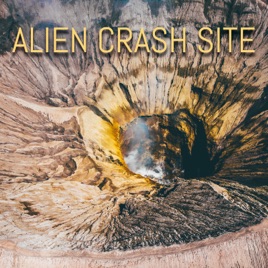
Alien Crash Site

Advertise on podcast: Alien Crash Site

Rating
★★★★★
4.6
from
11 reviews
This podcast has
26 episodes
Language
English
Explicit
No
Date created
2020/10/12
Latest episode
2021/12/24
Average duration
55 min.
Release period
18 days

Description

A new InterPlanetary interview series from the Santa Fe Institute takes a page from the Strugatsky brothers' classic Soviet sci-fi novel, Roadside Picnic, to discuss a variety of transformative alien artifacts. Thirteen years ago, an alien civilization visited our planet, and left behind myriad, mysterious materials in their crash sites. These areas, Zones, behave very strangely, but the interplanetary items they contain could change the trajectory of our technological advancement. What appears as a hoop might actually be a perpetual-motion machine. What appears as a slime might alter space-time. Spend too much time in the Zone and your genes might mutate, your bones might dissolve, your body might be ground into meat. If you’re lucky enough to make it out alive, you’ll likely be imprisoned. But a successful trip in and out of the Zone could alter human history. Do you dare? And for what? Hosted by Caitlin McShea.

Unlock Alien Crash Site podcast Email contact info,
Listeners & Audience details

Email contact information

Direct podcast contact details

Listeners

Audience numbers & engagement insights

Audience details

Podcast Insights

Podcast episodes

Check latest episodes from Alien Crash Site podcast


What can an asteroid tell us about our own Planet. #023 with Lindy Elkins-Tanton
2021/12/24
This week, Alien Crash Site invites Lindy Elkins-Tanton into the Zone. Lindy is a Foundation and Regents Professor at Arizona State University’s School of Earth and Space Exploration. She is the Vice-president of ASU’s InterPlanetary Initiative. And, she is the principal investigator of NASA’s Psyche Mission: an attempt to understand a metal rich asteroid located between Mars and Jupiter which may provide us with some clues about planetary formation.
#022 - Crossover episode with Complexity Pod: Gary Bengier
2021/12/07
After a career in Silicon Valley, Gary Bengier pursued passion projects, studying astrophysics and philosophy. He’s spent the last two decades thinking about how to live a balanced, meaningful life in a rapidly evolving technological world. This self-reflective journey infuses his novel, Unfettered Journey, with insights about our future and the challenges we will face in finding purpose. Before turning to writing speculative fiction, Gary worked in a variety of Silicon Valley tech companies. He was eBay’s Chief Financial Officer, and led the company’s initial and secondary public offerings. Gary has an MBA from Harvard Business School, and an MA in philosophy from San Francisco State University. In this special crossover interview, Complexity Podcast host Michael Garfield and Alien Crash Site hostess Caitlin McShea plumb the thematic depths at the foundation of this Gary's fictional exploration of humanity's here after.
Co-Ordination: On Time Between Worlds - an InterPlanetary panel on Complex Time
2021/11/18
SFI's InterPlanetary Project teamed up with New School Policy and Design for Outer Space to present this conversation on Complex Time, as part of the 2021 Venice Architecture Biennale. When imagining InterPlanetary life and human civilization in space, it's always a matter of time. Philosophers and physicists from Aristotle to Carlo Rovelli have deeply considered the nature of time. Given the scale of the social-technical systems required for any off-Earth endeavor, however, this age-old discussion requires broader input. Complex systems emerge from a multitude of time-scales, clocks, arrows of time, and therefore a multitude of rates at which things come together and fall apart. But our experience of time seems to vary with the perspective we take on a subject: the lifespan of an organism seems to be the result of constraints of mass and energy; a firm, the flows and stocks of capital and labor; a state, the developments of its people and their political economy. How do these different time-scales interrelate and inform one another on Earth today? What might a reconsideration of the complexity of time add to our collective effort to sustain life on and with other planets? And how can we create scalable yet adaptable social-technical systems that work together to achieve our interplanetary futures? This panel will bring together researchers, scientists and theorists to attempt an answer to these questions. They will explore the possible methods and tools for complex collaboration, and consider what it will take to support and grow life beyond Earth while keeping, at the center of it all, the beating heart of time. Participants Include Sean Carroll, Jeli's Laura Maguire, NASA's Zara Mirmalek, and Geoffrey West. The discussion will be moderated David Krakauer.
What are the best strategies for finding life in space? #021 with Natalie Grefenstette?
2021/10/28
Astrobiology is a paradoxically established and yet still burgeoning field that is reconsidering the fundamental boundaries of what we mean by "life," while simultaneously searching for that life beyond Earth. Past guests have outlined how difficult the search for life is; they've contributed new detection methods and measures, they've proposed new tools, and they're working to establish new standards of evidence in support of such a discovery. This week we ask SFI post-doctoral fellow, Natalie Grefenstette, how we can best equip ourselves to recognize life in space, given how little we know about life, at all. Natalie is working on the Agnostic Biosignature Project, a multi-institutional endeavor funded by NASA.
Special Announcement - InterPlanetary Panel on Complex Time
2021/10/16
Alien Crash Site is taking a small break, to return the week of October 24th. Why? Because SFI, in partnership with New School Policy and Design for Outer Space, are hosting an InterPlanetary panel discussion on Complex Time. October 21st, 10 am MDT. Free to attend.
How does size shape our understanding of and search for life? #020 with Chris Kempes
2021/10/01
Chris Kempes is a professor at the Santa Fe Institute. He is a mathematical biologist, who works on scaling laws, and is ultimately interested in where those scaling laws break down. What are their limits? What is the physiological constraint for life on earth? How small can life be? How big? How might that constraint change in other environments? He recently published a paper, along with David Krakauer, titled “The Multiple paths to Multiple Life” that attempts to reconfigure how we think about life forms, and life origins events. We discuss this provocative proposal at length, along with the scaling research I just described, before we shift to our venture into the Zone to pursue a totally disgusting but revelatory artifact, if we can even call it that. For more context on themes described in this episode, you might revisit past interviews with Nina Lanza who is seeking signs of life on Mars, Michael Lachmann who talks origins of life in general, Cole Mathis and his work on Assembly Theory, and our last interview with Heather Graham who worked on assembly theory as well as a stoichiometric approach to life detection in a paper she co-authored with Chris.
What to look for, when we don't know what we're looking for? #019 with Heather Graham
2021/09/03
What do we look for, when we don’t know what we’re looking for? As we announce more missions seeking life in the universe, and as we build new technologies to assist in that pursuit, how do we ensure we don’t miss it when we come across it? How can we best prepare ourselves to recognize life unlike our own? This week, Heather Graham fills us in on exactly how she is seeking out these “agnostic” Biosignatures. Heather is a researcher at NASA’s Goddard Space Flight Center. She’s an organic geochemist and she’s also an astrobiologist. Earlier this summer she published two papers proposing two very cool and very different methods for life detection. We discuss both in this conversation, as well as how easily fooled we might be in our pursuit of past life by the clues we have today. We talk about the rigorous ways space missions are managing contamination, the intersection of art and science, the difference between information and meaning, and we end with a discussion of heather’s ideal alien object, which could definitely change our understanding of the universe, so long as we handle it properly.
What Governance Structure Best Suits an InterPlanetary Humanity?" #018 with Timiebi Aganaba
2021/08/23
As we stand on the precipice of becoming an InterPlanetary Species, we need to think carefully about what an InterPlanetary governance structure looks like, and how it ensures that space is explored and protected for the benefit of all humanity. Dr. Timiebi Aganaba is the perfect person to walk us through all that's at stake in such a huge consideration. Timiebi Aganaba is an Assistant Professor at Arizona State’s school for the Future of Innovation in Society, with a courtesy appointment at the Sandra Day O’ Connor school of Law. She has worked at the Nigerian National Space Research and Development Agency. She has also worked as a space industry consultant for the Canadian Space agency. She holds a Masters of Science from the International Space University, and a Masters of Law and a PhD from the Institute of Air and Space Law at McGill University, and she was recently appointed to the Science Advisory Board at the SETI Institute. A true "space-governance" repository, coming at this not-so-distant future very thoughtfully and inclusively. In this episode, we discuss everything from current international law and it’s applications to future space law, space law that already exists, the trade-offs between optimization and speed of implementation, how to ensure diversity and representation of perspectives when creating new international and/or interplanetary law, the intersection of federal space agencies and the private sector, and how much money actually matters in the space game. Then we talk through a powerful piece of extraterrestrial technology that might allow us to address and correct a looming planetary problem.
What lies in the space between? #017 with Aerospace Engineer Ryan McGranaghan
2021/08/06
This week Alien Crash Site brings aerospace engineer Ryan McGranaghan into the Zone. Ryan currently works at NASA’s Jet Propulsion Lab as a Jack Eddy Post-doctoral research fellow. His work focuses on the application of data assimilation, complex systems analyses and data science to space science research…specifically work within the realm of the “space environment.” We spend this conversation talking about what lies in the “space between.” The space between planetary bodies, the space between research disciplines, the space between intention and expression, the space between interlocutors attempting to communicate, the “space between” that’s all around us. 0:00 intro 2:45 interview 40:28 Alien Crash Site Question
How Do Artifacts Inform Cultural Evolution? #016 with Vanessa Ferdinand
2021/07/09
This week, Computational Cognitive Scientist Vanessa Ferdinand provides us with her skeptical take on the very premise of Roadside Picnic. Given her research on cultural evolution, and how cultural artifacts are changed by the cognitive systems that perceive them, she had quite a few problems with the idea of finding and using an object created by an alien lifeform. She explains her reasoning, but she eventually suspends her disbelief, settles comfortably into the fiction, and describes an alien artifact that she believes will alter our understanding of ourselves, each other, these aliens, and the universe itself.
#015 with Cole Mathis
2021/06/24
This week, Cole Mathis, a computational and statistical physicist who is trying to figure out the origins of life, ventures into the Zone. His work includes an effort to find life elsewhere in the universe. We were curious to see what Cole would pick if he stopped seeking alien life, and instead sought out an artifact made by alien life. The timing could not have been better, given the recent publication of a paper on evaluating artifacts of potentially living systems in the universe, that he co-authored with Leroy Cronin, Sara Walker, Heather Graham and many others. We spend much of our conversation unpacking, or "breaking down", what's at stake in this new proposed method for detecting life: Assembly Theory. We shift into an evaluation of the "artifact" in science, in art, and in fiction. And then we hear what he would risk his life to unearth from the dangers of an Alien Crash Site, and what impact it would have on human civilization.
#014 with Natalie Elliot
2021/06/10
This week we bring Natalie Elliot into the Zone to discuss how art relates to science in the wake of a truly significant paradigm shift, and how Shakespeare grappled with such shifts throughout his career, and across many if not most of his plays. We speak a bit about Stalker, detecting lifeforms out in the universe, and speculate on how life emerged from lifelessness here on Earth, and elsewhere. Perhaps a clue lies in Natalie’s Alien artifact. Natalie is a tutor at St. John’s College in Santa Fe, where she teaches cross-disciplinary courses in classics, history of science, mathematics, literature, philosophy, and music. She is a story teller, a science writer, a frequent contributor to SFI’s parallax newsletter, short-story fiction writer and novelist. She is specifically interested in the intersection of literature and science, as we in the InterPlanetary project are, and she co-authors the Atlantis Dispatch series with me.

Podcast reviews

Read Alien Crash Site podcast reviews


4.6 out of 5
11 reviews
★★★★★
phil eagan 2021/09/08
A Unique Concept!
The lineup of guests for this podcast is impressive - authors, artists, astronauts, athletes and scientists of all flavors. Caitlin McShea, the host, ...
★★★★★
Ryan McGranaghan 2021/06/06
An uncommon and beautiful show
Alien Crash Site is unlike other podcasts out there. The premise and the conversations are spacious and wonderful. The guests are inspiring and Cait...
check all reviews on apple podcasts

Podcast sponsorship advertising

Start advertising on Alien Crash Site relevant audience podcasts


What do you want to promote?